Agyemang has been diagnosed with an Achilles tendon injury after he was stretchered off during a game for Derby.
By Reuters and The Associated Press
Published On 7 Apr 20267 Apr 2026
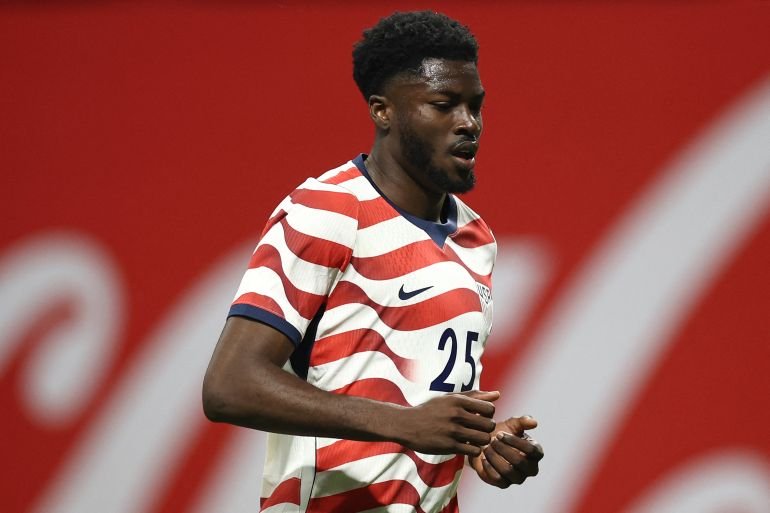
USA striker Patrick Agyemang will miss the upcoming FIFA World Cup after suffering an Achilles tendon injury, his English club Derby County has said.
“The club will provide Patrick with the highest level of medical care and rehabilitation throughout his recovery,” the club said in a statement on Tuesday.
Recommended Stories
list of 4 itemsend of list
Agyemang’s home World Cup hopes were thrown into doubt after he was carried off on a stretcher while playing for Derby in the English second-tier football league.
The 25-year-old landed awkwardly while bringing the ball down on his chest and collapsed to the grass during the English Championship match on Monday. He was visibly emotional as he was taken away, his right leg strapped.
“As a result of this injury, Patrick will unfortunately miss this summer’s FIFA World Cup. At this stage, it would be wrong to put a timeline on his recovery,” Derby said.
Agyemang has helped Derby rise into contention for promotion from the Championship thanks to a team-leading 10 goals since arriving last summer from Charlotte in Major League Soccer.
During the recent international break, he came off the bench for USA and scored in a loss against Belgium and got minutes against Portugal.
Those were his first appearances for the national team since starting in the semifinal and final of the 2025 Gold Cup in July. Overall, he has recorded six goals in 14 caps for the national side.
USA coach Mauricio Pochettino must name his World Cup squad by June 1. The United States is cohosting the tournament with Canada and Mexico. The home side will face Paraguay, Australia and Turkiye in Group D.
The US-Israel war on Iran has resulted in the widespread destruction of its cultural heritage sites, as well as educational institutions and science and research centres.
While the United States and Israel maintain they are striking military targets, the Iranian government’s data tells a story of cultural and scientific loss. At least 56 heritage sites, 30 universities and 55 libraries have been damaged so far, according to local media reports.
Recommended Stories
list of 3 itemsend of list
In an interview with Al Jazeera on April 1, Reza Salehi Amiri, Iran’s minister of culture and tourism, described the destruction during the US-Israel war on Iran as a “deliberate and conscious attack” on Iranian identity.
As the war continues to rage, we break down some of the key Iranian cultural and education centres targeted by the US and Israel so far.
Schools
The war on Iran began on February 28 with a strike on an elementary girls’ school, Shajareh Tayyebeh, in the city of Minab in southern Iran. At least 170 people, most of them girls aged between seven and 12 years, were killed when the missiles struck the school.
President Donald Trump initially denied that the US had attacked the school.
However, several independent investigations by media organisations, including Al Jazeera, and rights groups, including Amnesty International, have said the attack was likely deliberate and that a US-manufactured Tomahawk missile was used in it.
Universities and research centres
At least 30 Iranian universities have been attacked by the US and Israel since the war began on February 28.
On March 28, the Iran University of Science and Technology (IUST) was hit by what local media said were targeted Israeli-US strikes. It remains unclear what the damage and casualties from the strike look like.
A day later, a university in Iran’s central city of Isfahan said it was hit by US-Israeli air raids for the second time since the war erupted, leaving four university staff members wounded.
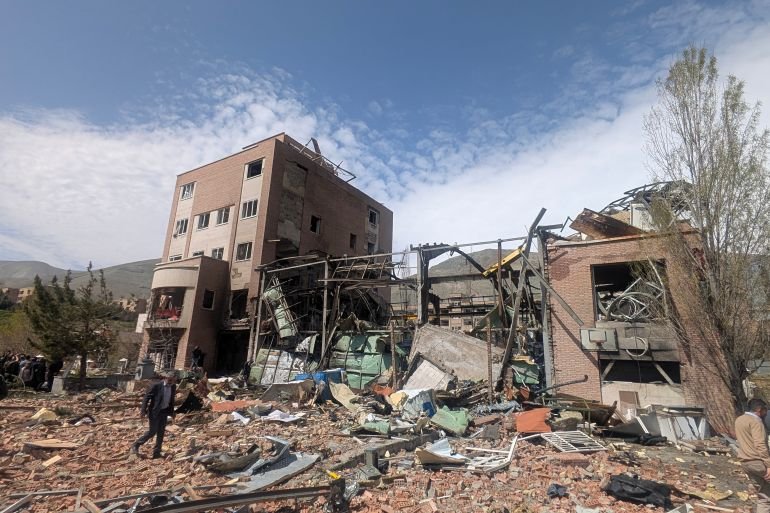
On April 4, the Laser and Plasma Research Institute of the Shahid Beheshti University in northern Tehran was bombed by US and Israeli warplanes.
“This hostile act not only targets the security of academics and the country’s scientific environment, but is also a clear attack on reason, research, and freedom of thought,” the university said in a statement, calling on international peers to raise awareness about similar strikes.
Hossein Simaei Saraf, Iran’s minister of science, research and technology, told reporters at the research centre on Saturday that Iranian scientists have been targets for decades. He pointed out that several Shahid Beheshti University professors were assassinated by Israel during the 12-day war in June 2025.
“Attacking universities and research centres means returning to the Stone Age,” the minister said, in reference to a threat by Trump to bomb Iran “back to the Stone Ages” by systematically hitting its infrastructure, including power plants.
A man takes pictures of the destroyed study equipment lying amid the debris of a damaged building of the Shahid Beheshti University following an attack, in Tehran [File: AFP]
The attacks on Tehran’s IUST saw one of its research centres reduced to rubble and other departments damaged in late March. The facility worked on developing domestically made satellites.
The US and Israel also attacked the Pasteur Institute in downtown Tehran, which was founded more than 100 years ago in collaboration with the internationally renowned Institut Pasteur in Paris, France, but now operates independently. The institute works on infectious diseases, producing vaccines and biological products and providing advanced diagnostics.
On April 6, 2026, US-Israeli attacks hit Sharif University of Technology in Tehran, one of Iran’s leading scientific universities, often compared with the US’s Massachusetts Institute of Technology (MIT).
Al Jazeera’s Tohid Asadi, reporting from Tehran, said the facility was severely hit, with extensive damage reported in the compound’s mosque and laboratories.
“The Sharif area has witnessed other attacks, including one on a gas facility,” Asadi said, adding that other civil facilities, including roads, power plants and bridges, were attacked across Iran.
“Iran’s Ministry of Science and Technology told us that at least 30 universities have been hit” since the beginning of the war on February 28, he added.
Mohammad Reza Aref, Iran’s first vice president, accused the US of deploying a “bunker-buster” bomb to target the university.
“The bunker-buster bomb attack on Sharif University is a symbol of Trump’s madness and ignorance,” Aref said in a post on X.
“He fails to understand that Iran’s knowledge is not embedded in concrete to be destroyed by bombs; the true fortress is the will of our professors and elites,” Aref, a Stanford University-educated engineer, said of Trump.
Libraries
Besides schools, universities and science and research centres, libraries have also been hit.
The head of Iran’s public libraries’ association said on April 4 that at least 55 libraries have been damaged, including two that have been destroyed by US-Israeli strikes, Iran’s Tasnim news agency reported.
Cultural heritage sites
Since the war on Iran began, the Ministry of Cultural Heritage, Tourism and Handicrafts has recorded damage to at least 56 museums, historical monuments and cultural sites. In Tehran alone, 19 locations have been hit. These included Golestan Palace, the Grand Bazaar and the former senate building.
The Golestan Palace, which was damaged on March 2, dates to the Qajar era. This 1789-1925 period was marked by the rule of a Turkic dynasty that unified Iran after decades of civil unrest. The Qajar dynasty made Tehran the capital of Iran.
Golestan is a walled palace built combining Persian craft and architecture with European motifs and styles. It features gardens, pools and ornaments. In Persian, “golestan” means “flower garden”.
Tehran’s Grand Bazaar, which was also hit, is a historic marketplace. Parts of it date back to the Qajar era.
The aftermath of the bombing that struck Golestan Palace [File: Al Jazeera]
Beyond the capital, the strikes have reached the heart of Iran’s Islamic golden age.
In early March, in Isfahan, the 17th-century Chehel Sotoun Palace and the Masjed-e Jame – Iran’s oldest Friday mosque – were also hit. According to UNESCO, the mosque “illustrates a sequence of architectural construction and decorative styles of different periods in Iranian Islamic architecture, covering 12 centuries”.
“Restoration, no matter how perfect, can never return an artefact to its starting point,” Amiri, Iran’s minister for culture and tourism, told Al Jazeera on April 1.
“When you lose the original stone of a Qajar palace or the 17th-century tilework of an Isfahan mosque, you lose a physical layer of history that cannot be manufactured again. Every crack is a permanent scar.”
On March 8, the Falak-ol-Aflak Castle in Khorramabad in Lorestan province was also damaged, according to the head of Lorestan’s heritage department, Ata Hassanpour, who added that the main structure of the castle remained intact.
Amiri, in his interview with Al Jazeera, also condemned the international community’s silence and explicitly called out UNESCO for failing to intervene, despite having the geographical coordinates of all heritage sites.
UNESCO has confirmed that it has verified damage to historic sites in Iran.
The UN agency said, before the war, it had provided all parties with the geographical coordinates of heritage sites so they could “take all feasible precautions to avoid damage”, The Associated Press news agency reported on March 12.
Is this all part of the US and Israel’s broader strategy in Iran?
Ali Vaez, the International Crisis Group’s Iran project director, told Al Jazeera that what Israel and the US are seeking by destroying Iran’s industrial and educational capacity is to prevent reconstruction in a bid to turn the country of 92 million people into a failed state.
But he added that “a civilisation that has survived several millennia cannot be erased with aerial bombardment”.
Christopher Featherstone, associate lecturer of politics and international relations at the University of York, said Washington’s public statements amid the US-Israeli air raids on cultural monuments and educational institutions were also a break from the past.
A different administration, he suggested, would have tried to portray such attacks “as exceptional and accidental”, he told Al Jazeera.
“For this administration, Trump’s extreme rhetoric is almost seeking to normalise them. Trump’s blatant attempts to suggest someone else was responsible for the strikes on the girls’ school a few weeks ago also show just how little effort he is putting in to establishing a narrative to justify this war,” he added.
Do the US and Israel have a history of such attacks in the Middle East?
Yes. The US and Israel have carried out similar attacks in the past, particularly in Gaza and Iraq.
Iraq
The 2003 US‑led invasion of Iraq set the stage for the looting of the Iraq Museum in Baghdad, where thousands of artefacts were stolen or destroyed.
The same year, US troops watched as looters plundered the Iraq National Library and Archive in Baghdad and set the building on fire. More than 90 percent of the rare books in the library were destroyed.
Gaza
In Gaza, according to UNESCO’s data this year, Israel destroyed or damaged nearly 200 heritage sites during its genocidal war on the Palestinian enclave, which began in October 2023. While a “ceasefire” has been in place since October 2025, Israeli attacks on Gaza continue.
Some of the heritage sites damaged include the Byzantine Church of Jabalia, which was built in 444 and whose floor was once decorated with colourful mosaics depicting animals, hunting scenes and palm trees. The church was destroyed in October 2023. The Anthedon Harbour, built in 800 BC, was destroyed by Israel in November 2023. After Roman temple ruins and mosaic floors were discovered on the 5-acre (2-hectare) archaeological site, it was placed by UNESCO on its Tentative World Heritage list in 2012.
Gaza City’s Great Omari Mosque, its largest and oldest, established in the seventh century, was also destroyed by Israel in December 2024.
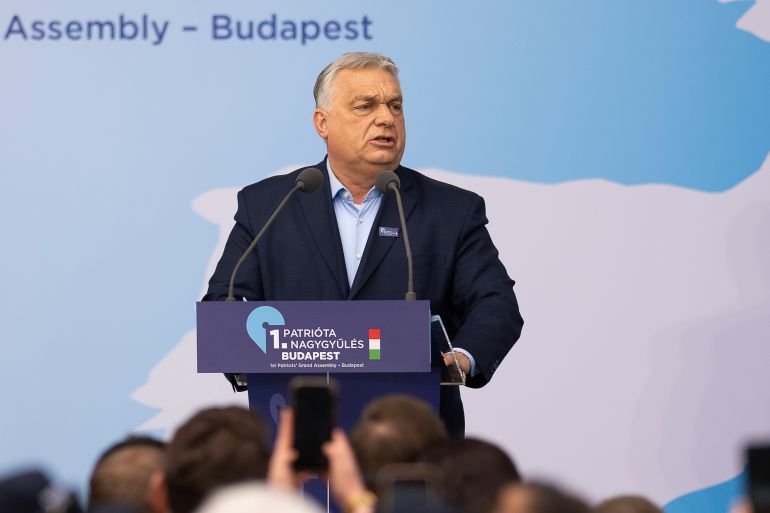
United States Vice President JD Vance is travelling to Budapest to bolster support for Hungarian Prime Minister Viktor Orban, whose Fidesz Party faces its most difficult election in over a decade.
The White House announced last week that Vance would arrive in Hungary on Tuesday and hold two days of bilateral meetings.
Recommended Stories
list of 3 itemsend of list
In February, US President Donald Trump endorsed right-wing leader Orban ahead of Hungary’s April 12 parliamentary elections, while US Secretary of State Marco Rubio visited the country that month to show support.
Kim Lane Scheppele, a professor of sociology at Princeton University in the US who has spent years as an analyst and critic of Orban’s government, says that the trip is meant to underscore the close relationship between Trump and his Hungarian counterpart.
“Orban will make a big deal out of the fact that he’s got Trump’s support. And that’s why Vance is coming,” she said, adding that she is sceptical that Vance’s trip will have a large impact on the outcome of the election.
“If you look at the polls in Hungary, they show the opposition with an 8 to 12 percent lead, in some recent polls up to a 20 percent lead. One visit by a relatively low-profile American vice president is not going to change that.”
Fidesz party voter Gergo Farkas takes part in Prime Minister Viktor Orban’s election campaign rally with his friends in Szombathely, Hungary, April 2, 2026 [Marton Monus/Reuters]
Robust opposition
Orban’s 16-year tenure has been marked by the erosion of the independence of institutions such as the judiciary and the media, as well as reforms that critics say have slanted the electoral system in favour of Orban and his Fidesz party.
But despite what the opposition has described as a deeply imbalanced electoral environment, most polls show the 62-year-old Orban trailing the 45-year-old opposition leader, Peter Magyar, and his Tisza Party.
Magyar is a former high-ranking Fidesz official who broke with the party two years ago and has emerged as a popular voice railing against Orban’s rule.
His campaign has focused on corruption, deteriorating social services, economic conditions, and Orban’s combative relationship with the European Union, which has often centred on immigration and support for Ukraine.
The European Union suspended billions of euros in funding for Hungary in 2022 over what it characterised as democratic backsliding and declining judicial independence.
Magyar has pledged a more cordial relationship with the European bloc, as well as reforms that could lead to the restoration of suspended funds.
While Orban has depicted the opposition as a destabilising force that will sell out the country’s national interests on behalf of Ukraine and the EU, Magyar’s right-leaning politics mean that policies on issues such as immigration would see little change.
“Magyar is centre-right; he’s basically a believer in much of what Orban has done, minus the corruption. In EU terms, he’s slightly eurosceptical but wants to get the money back,” said Scheppele.
Peter Magyar, Hungarian opposition leader of the ‘Tisza’ (Respect and Freedom) Party, delivers a speech at a demonstration during commemorations of the 178th anniversary of the 1948-49 Hungarian Revolution on March 15, 2026 in Budapest, Hungary [Janos Kummer/Getty Images]
Blueprint for the US right
While Orban’s approach to consolidating power and his embrace of far-right politics have mired his relationships in Europe, they have made him a source of inspiration for the US far right and prominent members of the Trump administration, such as JD Vance.
Hungary has previously hosted the Conservative Political Action Conference (CPAC), an annual summit where individuals and groups from across the US right and allies from other countries gather to discuss the future of the conservative movement.
When CPAC convened in Budapest in 2024, Trump sent a video praising Orban for “proudly fighting on the front lines of the battle to rescue Western civilisation”.
Shared ire for Muslims, immigrants, and centres of liberal politics such as universities has helped cement that bond, and Vance himself has enjoyed especially close relations with Orban’s government.
When he was selected as Trump’s running mate in July 2024, Orban’s political director shared a photo of himself posing with Vance, captioned: “A Trump-Vance administration sounds just right.”
Orban’s Hungary has been at the centre of the Trump administration’s shifting policy towards Europe, firmly aligning itself with far-right parties and immigration restrictionists in countries such as France and Germany.
Scheppele says that Orban’s relationship with the Trump administration and status as an icon of the global far right may be of limited use in an election that is mostly focused on domestic issues.
But she noted that more tangible steps, such as a pledge of US financial support from the Trump administration if Orban wins, could buoy his chances in the closing days of the race.
“The big thing to watch is that, when Orban came to the US recently, Trump appeared to promise a fiscal safety net if Orban wins,” said Scheppele, adding that the US took similar steps before the 2025 midterm elections in Argentina in order to bolster right-wing ally Javier Milei, now the country’s president.
“Trump hasn’t made that kind of formal promise, and he’s now denied that he made any specific promise. But the Orban people think that Trump is going to backstop them if they win the election,” Scheppele added. “If Vance makes that kind of announcement, it could be a real game-changer.”
US president says Washington, as the ‘winner’ of the war, has a ‘concept’ for charging a toll in strategic waterway.
Published On 6 Apr 20266 Apr 2026
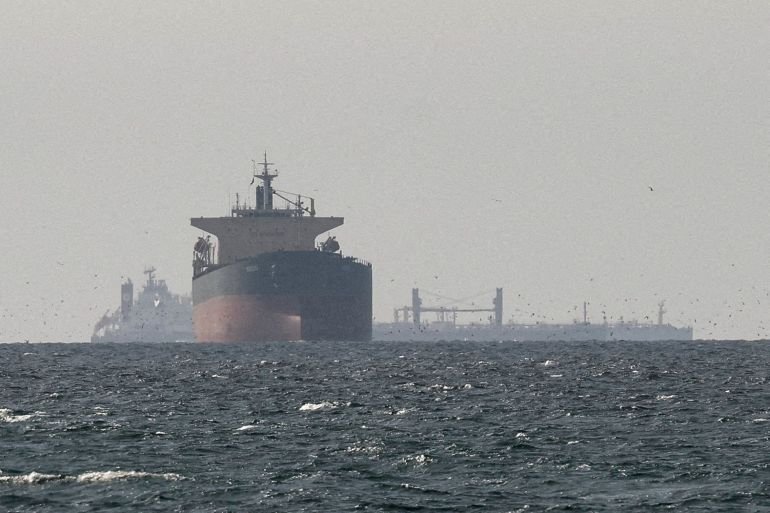
President Donald Trump has suggested the United States may be looking to charge a toll in the Strait of Hormuz after the war, a move that would likely require direct US military control over the strategic waterway.
Asked on Monday whether he would accept a deal that would allow Iran to take fees from ships to traverse the strait, the US president said: “What about us charging tolls? I’d rather do that than let them have them. Why shouldn’t we? We’re the winner. We won.”
Recommended Stories
list of 3 itemsend of list
Trump reiterated that Iran has been militarily defeated, a claim that he has been making since the early days of the war, despite Iran’s sustained drone and missile attacks across the region and its continuing blockade of Hormuz.
“The only thing they have is the psychology of, ‘Oh, we’re going to drop a couple of mines in the water.’ All right, no, I mean, we have a concept where we’ll charge tolls,” Trump told reporters.
Hormuz, which connects the Gulf to the Indian Ocean, lies mostly within Omani and Iranian territorial waters. About 20 percent of the world’s oil and liquefied natural gas (LNG) passed through the strait before the war.
Trump’s latest comments came as he issued what he called a “final” ultimatum to Tehran to reopen the strait and agree to Washington’s terms or face attacks against Iran’s civilian infrastructure, including bridges and power plants.
The US president told reporters on Monday that any deal with Iran must include reopening the Strait of Hormuz.
“We have to have a deal that’s acceptable to me, and part of that deal is going to be, we want free traffic of oil,” he said.
Reports have suggested that Iran is already charging a toll for some of the few ships it is allowing to pass through the strait.
“The Strait of Hormuz situation won’t return to its pre-war status,” Iranian Parliament Speaker Mohammad Bagher Ghalibaf wrote on X last month.
Iran’s Foreign Minister Abbas Araghchi has also called for “new arrangements” to manage the waterway after the war, ensuring safe passage for ships and protecting Iran’s interests.
“I believe that after the war, the first step should be drafting a new protocol for the Strait of Hormuz,” he told Al Jazeera in March. “Naturally, this should be done between the countries that lie on both sides of the strait.”
The White House said last week that Trump is considering asking Arab countries to pay for Washington’s expenses in its war on Iran.
A top adviser to Supreme Leader Mojtaba Khamenei has threatened that Iranian allies could shut the Bab al-Mandeb shipping route as Tehran has effectively done with the Strait of Hormuz.
The Bab-al-Mandeb connects the Red Sea to the Gulf of Aden and is a crucial waterway for global oil trade. Its importance has increased since Iran’s effective closure of the Strait of Hormuz – through which 20 percent of the world’s oil and gas is shipped in peacetime.
Ali Akbar Velayati, a former Iranian foreign minister and veteran diplomat known for his influence within the establishment, warned on Sunday on X that “the unified command of the Resistance front views Bab al-Mandeb as it does Hormuz”.
“If the White House dares to repeat its foolish mistakes, it will soon realize that the flow of global energy and trade can be disrupted with a single move,” Velayati wrote. Iran’s state-owned Press TV subsequently confirmed his warning.
It follows US President Donald Trump’s threats to bomb Iran’s power plants and bridges from Wednesday this week if Tehran does not agree to reopen the Strait of Hormuz. Iran has said that Hormuz is open to ships from countries that negotiate safe passage – apart from the US and Israel. Trump has previously threatened to bomb Iran’s desalination plants.
But if Bab al-Mandeb were closed, it would impact more than the ongoing war – it could compound the global energy supply crisis sparked by the conflict, deepening the economic turmoil being felt in factories, kitchens and at petrol stations around the world.
Where is the Bab al-Mandeb?
The strait is between Yemen to its northeast and Djibouti and Eritrea in the Horn of Africa to the southwest.
It connects the Red Sea to the Gulf of Aden, which then extends into the Indian Ocean. It is 29km (18 miles) wide at its narrowest point, limiting traffic to two channels for inbound and outbound shipments and is effectively controlled by the Iran-backed Houthis.
The Yemen-based group is a central part of Iran’s so-called “Axis of Resistance” – a coalition of groups ideologically or tactically aligned with Tehran which Velayati appears to have been referring to in his Sunday post on X.
Why is the Bab al-Mandeb important for the energy trade?
It is one of the world’s most important shipping routes.
The strait is a vital route through which Saudi Arabia sends its oil to Asia. When the Strait of Hormuz is open, it is also a crucial passageway for Gulf states besides Saudi Arabia to export their crude oil, gas and other fuel to Europe via the Suez Canal or the Sumed (Suez-Mediterranean) Pipeline on Egypt’s Red Sea coast.
In 2024, about 4.1 billion barrels of crude oil and refined petroleum products passed through the strait – that’s 5 percent of the global total.
If Bab al-Mandeb and the Strait of Hormuz were both shut, that would block 25 percent – or a quarter of the world’s oil and gas supply.
It’s not just oil: About 10 percent of global trade sails through the Bab al-Mandeb, including containers shipped from China, India and other Asian countries to Europe.
With the Strait of Hormuz shut, Bab al-Mandeb’s importance has only grown.
Saudi Arabia, which has traditionally also relied principally on the Hormuz strait to export its oil, has increasingly turned to its Red Sea port of Yanbu to ship crude out through the Bab al-Mandeb.
For this, it has turned to the East West Pipeline, running from the Abqaiq oil processing centre close to the Gulf to Yanbu. The 1,200km (745-mile) pipeline is operated by Saudi oil giant Aramco.
Where the East West Pipeline transferred an average of 770,000 bpd to the Red Sea coast in January and February, according to energy intelligence firm Kpler, Saudi Arabia cranked up its use in March, when Hormuz was shut. By the end of March, oil was flowing at the pipeline’s capacity of 7 million bpd – more than ever before.
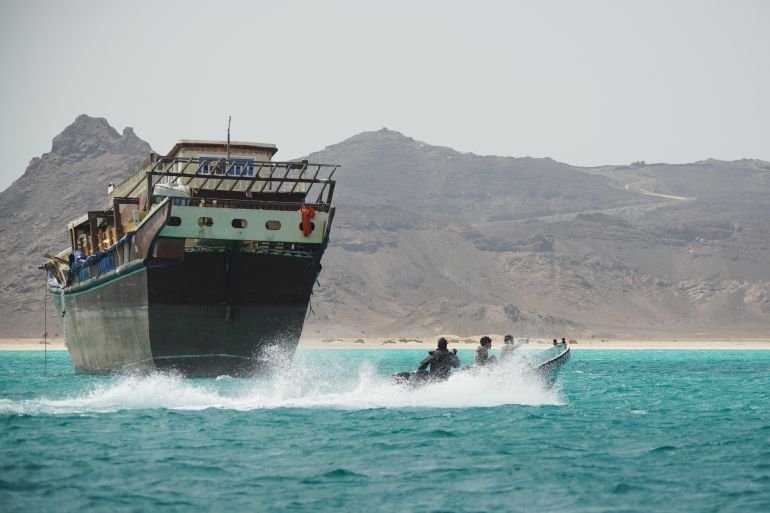
A Yemeni soldier stands guards in front of a commercial ship, ‘Al-Nuba’, which is docked for maintenance, on the coast near the strategic Bab el-Mandeb Strait, Yemen,on April 5, 2026 [File: Abdulnasser Alseddik/AP]
How could Iran and its allies shut it?
The Houthis have already shown they can do it. During Israel’s genocidal war on Gaza, they blocked the Bab al-Mandeb for what they described as ships associated with Israel or the US.
Because of frequent attacks on shipping, insurers refused to offer reducing traffic. In May 2025, the US and the Houthis agreed to a ceasefire and the Yemeni group has since opened up the Bab al-Mandeb again.
Recent days have shown how easy it would be for the Houthis to repeat the disruption during the war on Gaza.
Since late March, the Houthis have fired missiles and drones at Israel, pointing to their effective entry into the war – for now, against Israel, not the US.
But Nabeel Khoury, a former US diplomat, told Al Jazeera that the missile attacks launched by the Houthis against Israel amounted to “token participation, not full participation”.
“They have fired a couple of missiles as a warning because of all the talk of potential escalation. There are US troops on their way to the region. There’s been talk that if there is no agreement, there might be a full-scale attack on Iran as has not been seen so far,” the former deputy chief of mission in Yemen told Al Jazeera.
If the Houthis truly wanted to enter the war, their weapon would be the blockage of the Bab al-Mandeb.
“All they have to do is fire at a couple of ships coming through, and that would lead to the arrest of all commercial shipping through the Red Sea,” he said. “That would be a red line, and then you would see attacks against Yemen [from the US and Israel] very quickly.”
What would a closure of the Bab al-Mandeb mean for the world?
Elisabeth Kendall, a Middle East specialist and the president of Girton College at Cambridge University, told Al Jazeera that if the Red Sea strait is blocked, it would create a “nightmare scenario”.
“Because if you have restrictions on the Strait of Hormuz at the same time as restrictions are escalating in the Bab al-Mandeb, then you really will disrupt, if not cripple, trade toward Europe. So this is a knife edge, really, depending on what happens next,” she told Al Jazeera.
Kendall, however, said that while this was a “sweet spot” for the Houthis, the Yemeni group might not want to “provoke a Saudi or indeed a broader response.”
United States President Donald Trump says Washington had armed Iranian opposition groups and protesters during mass antigovernment demonstrations in December and January, in which thousands of people were killed during crackdowns by government forces.
Speaking with Trey Yingst on Fox News in a Sunday morning phone interview, the president said the US had been directly involved in efforts to destabilise and overthrow the Iranian government weeks before strikes were launched on February 28 by the US and Israel across Iran and as American negotiators were engaging with senior Iranian officials in Europe.
Recommended Stories
list of 4 itemsend of list
As the US-Israel war on Iran entered its 38th day, at least 2,076 people have been killed in Iran and 26,000 injured.
“President Trump told me the United States sent guns to the Iranian protesters,” Yingst reported on Fox News channel.
“He told me, ‘We sent them a lot of guns. We sent them to the Kurds.’ And the president says he thinks the Kurds kept them. He went on to say. ‘We sent guns to the protesters, a lot of them.’”
Trump has often framed the decision to strike Iran alongside Israel as partly inspired by his wanting to “free” Iranians from the rule of the Islamic Republic after it cracked down on those protests in January.
But his statements to Yingst could lend weight to Tehran’s own assertions that the protests were not organic and “foreign-backed terrorists” had instigated them. Still, analysts warned that Trump’s frequently shifting statements on Iran mean that it is hard to know with certainty the extent to which the US might have been involved in the protests.
Here’s what we know:
Protesters march against the government in Iran on January 24, 2026, in Berlin, Germany [Omer Messinger/Getty Images]
What happened during the protests?
Demonstrations started on December 28 among shopkeepers in downtown Tehran who were angry about a deepening economic crisis and the falling value of the Iranian rial.
Soon, they spread to big and small cities across the country, morphing into nationwide demonstrations as hundreds of thousands of people of all ages took to the streets. Some protesters by then had begun to call for a change in the government.
Rights groups said Iranian authorities cracked down on the protests, especially on January 8 and 9. Thousands of people, most of them young Iranians, were reportedly killed from gunshots and stab wounds, and tens of thousands of others were arrested.
Iranian authorities also cut off the internet “to conceal their crimes”, according to Amnesty International, throwing the country into an information blackout for days.
United Nations Special Rapporteur on Iran Mai Soto said at least 5,000 people were killed and the real death toll could be as high as 20,000.
At least four people have since been executed in connection with the protests, according to Amnesty, with several more people on death row.
The protests were the largest since the September 2022 women’s rights demonstrations that followed the death of Mahsa Amini in police custody. She had been arrested for not properly covering her hair. Amini’s death sparked nationwide demonstrations. Authorities were then also accused of firing at protesters and arresting and eventually executing some of them.
What did the Iranian government say?
Then-Supreme Leader Ali Khamenei said in a rare acknowledgement on January 17 that “several thousands” of people were killed in the protests after days of official hedging on casualty numbers as bodies piled up.
However, Khamenei blamed the deaths not on Iranian forces but on US- and Israel-backed groups that he said had hijacked the economic protests.
Khamenei accused Trump of being a “criminal” and of being personally involved in the instigation.
Tehran has long blamed its enemies, the US and Israel, for fomenting domestic crises, but alleged this time that the US involvement was deeper than usual.
“Those linked to Israel and the US caused massive damage and killed several thousands” during the protests that shook Iran for more than two weeks, Khamenei was quoted as saying by state media.
“The latest anti-Iran sedition was different in that the US president personally became involved,” he added.
Iranian officials later admitted the death toll was about 5,000, including at least 500 security personnel killed by “terrorists and armed rioters”.
An unnamed Iranian official told the Reuters news agency most of the violence and deaths occurred in Kurdish territory in northwestern Iran. That area has long been home to Kurdish separatists and has often recorded unrest.
The Iraq-Iran border crossing of Bashmaq near Sulaimaniyah in northern Iraq’s semiautonomous Kurdish region on March 11, 2026 [AFP]
What did the US government say about the protests?
About a week into the crisis, Trump warned Iran against targeting protesters.
“If Iran sho[o]ts and violently kills peaceful protesters, which is their custom, the United States of America will come to their rescue,” Trump posted on his Truth Social platform without giving details about what a “rescue” would look like.
“We are locked and loaded and ready to go,” the president added.
Then on January 13, he wrote, “Help is on its way,” appearing to address Iranian demonstrators. He urged them to “take over your institutions” while issuing threats to Iranian authorities if protesters were killed.
Trump’s warnings to Tehran came after the US bombed three of Iran’s most important nuclear sites during Israel’s 12-day war on Iran in June. Trump said then that the strikes “obliterated” Tehran’s nuclear capabilities. Iran launched retaliatory strikes on US military assets deployed at a base in Qatar.
After Trump confirmed on February 28 that the US and Israel had launched strikes on Iran, he said the primary goal of the war was to eliminate Iran’s nuclear weapons.
He also linked the action to the January protests.
Tehran had “killed tens of thousands of its own citizens on the street as they protested”, Trump said. The US was now “giving you what you want”, he said, addressing Iranians he said had been calling for US intervention.
Are Trump’s actions and words impacting the Iranian opposition?
Several Iranian Kurdish groups on Sunday denied Trump’s claims of arming them during the December and January protests.
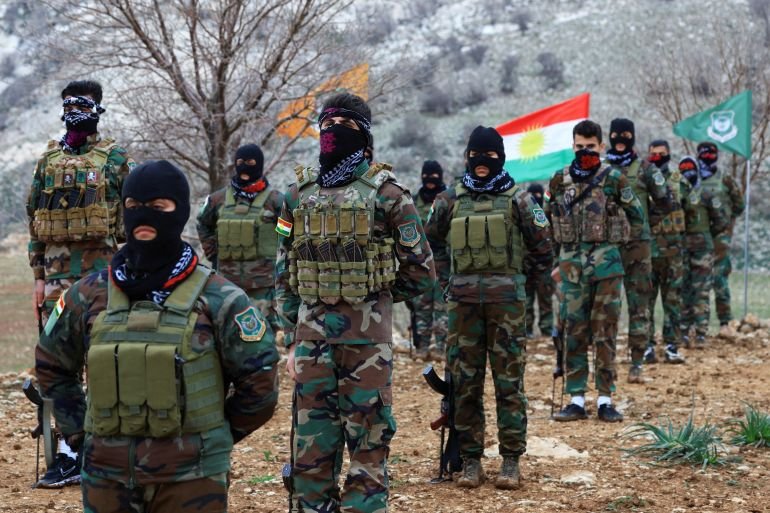
Iranian Kurdish groups have long opposed the government in Tehran and are seeking self-determination. They share close ties with Iraqi Kurds, who successfully fought for a semiautonomous region decades ago. Many operate along the Iraq-Iran border and in northern Iraq.
While they’ve long been fractured, several of the Iranian Kurdish groups banded together in a coalition days before the US and Israel launched the war.
In its first week, Tehran began hitting Kurdish positions in Iraq after US media reported that some Kurdish opposition leaders were speaking with Trump.
At the time, analysts speculated the US could be trying to support Iranian Kurds to seize parts of Iran bordering Iraq. The aim, they said, could be to create a buffer area that would allow invading Israeli or US ground forces to move in from Iraq.
However, so far, neither Israel nor the US has launched ground attacks. Opposition Democrats in the US Congress have spoken out against the war and have particularly opposed US ground troops being sent into Iran although the Trump administration has not entirely ruled it out.
On Sunday, a senior official of the Democratic Party of Iranian Kurdistan (KDPI) told the Iraqi broadcaster Rudaw that Trump’s statements to Fox were false.
The KDPI was one of the groups that the US media reported Trump had spoken with in March.
“Those statements made are baseless, and we haven’t received any weapons,” Mohammed Nazif Qaderi was quoted as saying. “The weapons we have are from 47 years ago, and we obtained them on the Islamic Republic’s battlefield, and we bought some from the market.”
The official added that KDPI’s policy is not to “make demonstrations violent and use harsh methods. Rather we believe we must make our demands in a peaceful and civil manner without weapons.”
Denials have also come from the Komala Party, another opposition group.
Iran analyst Neil Quilliam of the United Kingdom’s Chatham House think tank, told Al Jazeera that it’s hard to assign much weight to Trump’s statements because of the claims and counterclaims often coming from him and his administration.
“I don’t think it would be a surprise if it were later revealed that the US had lent support to protesters to try to encourage a revolt. In fact, I would expect them to do so,” the analyst said.
“However, Trump’s comment reveals nothing material and likely reflects more about him than anything else. His remark about the Kurds keeping the weapons sounded more like sour grapes because they refused to revolt right now rather than pocketing weapons supplies,” he added.
Still, the analyst said that even as a throwaway line, such statements from Trump are likely to affect the cohesion of Iranian opposition groups and their aim to overthrow the Iran’s government.
United States President Donald Trump has announced that the US military has rescued a missing American fighter jet crew member in Iran.
The Air Force officer went missing in a remote part of Iran after the downing of his F-15 jet on Friday. Its two crew members ejected from the plane. The pilot was quickly rescued by US forces, but a search had to be launched for the F-15’s weapons systems officer.
In a Truth Social post on Sunday, Trump wrote that the US had rescued the second “seriously wounded, and really brave” airman from “deep inside the mountains of Iran”. It was reported that a firefight between US and Iranian forces took place in Kohgiluyeh and Boyer-Ahmad province before the rescue. Iran has not confirmed this, however.
Here is how the complicated rescue mission unfolded:
What has Trump said about the rescue?
While the identity of the rescued airman has not been made public, Trump referred to him as “a highly respected Colonel”.
He added that the type of rescue mission that recovered him “is seldom attempted because of the danger to ‘man and equipment’”.
Trump said two raids had taken place, and the pilot was rescued in “broad daylight” during the second raid. It is unclear when precisely the pilot was rescued. The US president wrote that the rescue was “unusual, spending seven hours over Iran”.
In his post, Trump said he would talk more about the rescue mission during a news conference with the US military in the Oval Office of the White House on Monday at 1pm (17:00 GMT).
Trump wrote on Truth Social: “This brave Warrior was behind enemy lines in the treacherous mountains of Iran, being hunted down by our enemies, who were getting closer and closer by the hour, but was never truly alone because his Commander in Chief, Secretary of War, Chairman of the Joint Chiefs of Staff, and fellow Warfighters were monitoring his location 24 hours a day, and diligently planning for his rescue.”
Trump added that he had ordered dozens of aircraft carrying “lethal weapons” to be sent to retrieve the airman, who had managed to evade Iranian forces for two days.
Iranian state media released on April 3, 2026, images of what they said were fragments of a downed US fighter jet found in central Iran [Handout/IRIB via Reuters]
How did the search unfold?
On Friday morning, the US confirmed that an F-15E Strike Eagle had been shot down over southern Iran. The F-15 is a tactical fighter jet used by the US Air Force that first flew in 1972. Modern variants of the jet cost more than $90m each.
State media outlets in Iran showed photos of what they said was wreckage from the F-15 and what appeared to be an ejection seat with an attached parachute.
Trump suggested that the US knew the location of the plane’s second airman and was tracking him as the rescue mission unfolded.
Iran was also racing to locate the airman. Tehran called on the public to hand over the soldier to the authorities in what appeared to be an effort to secure an American prisoner of war.
Iran’s Islamic Revolutionary Guard Corps claimed on Sunday that Iranian forces had also destroyed two C-130 aircraft and two Black Hawk helicopters during the operation to rescue the US airman in southern Isfahan province.
What do we know about the two C-130 planes that Iran says it destroyed?
The C-130 Hercules and the newer C-130J Super Hercules variant were developed by the US weapons manufacturer Lockheed Martin. They are military transport aircraft primarily used for tactical airlifts, troop transport and medical evacuations.
The Wall Street Journal reported that each C-130 costs more than $100m.
The newspaper said in a report on Sunday that the US blew up the C-130 jets on the ground during the rescue operation, quoting an unnamed person familiar with the matter. This unnamed official did not explain how the jets were downed during the rescue operation but told the outlet that it was necessary to destroy them to ensure they did not fall into enemy hands.
Has the US lost other military assets or personnel?
Yes. This conflict has killed 13 US service members and wounded more than 300, the US military’s Central Command said, but no US soldiers have been taken prisoner by Iran.
Since the start of the war on February 28, the US has lost three F-15 fighter jets in what it said was a friendly fire incident over Kuwait. A US military refuelling aircraft also went down over Iraq last month, killing all six crew members.
According to the US military, the last US fighter jet to be shot down by enemy fire before the F-15 on Friday was an A-10 Thunderbolt II during the 2003 US invasion of Iraq.
At least one Black Hawk helicopter was hit during the initial rescue operation, US officials said, but it managed to stay airborne.
An A-10 Warthog aircraft was also hit near the Strait of Hormuz a short time after the F-15E on Friday, but its pilot was able to eject before the plane crashed and was subsequently rescued. Iranian media reported this aircraft was hit by Iran’s defence systems.
Iran has not yet confirmed that a firefight took place before the F-15 airman’s rescue. Al Jazeera’s Tohid Asadi, reporting from Tehran, said a firefight appeared to have occurred in Kohgiluyeh and Boyer-Ahmad province and nine people were reported to have been killed in “strikes” there although it was unclear if this was related to the US rescue mission.
Company says move amid US-Israel war on Iran comes after a request from the US government.
Published On 5 Apr 20265 Apr 2026
Satellite imaging company Planet Labs has said it will indefinitely withhold visuals of Iran and the region of conflict in the Middle East to comply with a request from United States President Donald Trump’s administration.
The US company announced the decision in an email to customers on Saturday, with news agencies quoting it as saying the government had asked satellite imagery providers to impose an “indefinite withhold of imagery”.
The restriction expands upon a 14-day delay on imagery of the Middle East that Planet Labs implemented last month, which extended an initial 96-hour delay, a move the firm said was meant to prevent adversaries from using the imagery to attack the US and its allies.
Planet Labs said it will withhold imagery dating back to March 9 and that it expects the policy to remain in effect until the end of the war, which began on February 28 when the US and Israel launched aerial attacks against Iran. The conflict has since spread across the region, with Iran firing missile and drone barrages at Israel and US assets, as well as civilian infrastructure across the Gulf.
Planet Labs, which was founded in 2010 by former NASA scientists, said in its email to customers that it would switch to a “managed distribution of images” deemed not to pose a risk to safety.
Under a new system, Planet Labs will release imagery on a case-by-case basis for urgent, mission-critical requirements or in the public interest.
“These are extraordinary circumstances, and we are doing all we can to balance the needs of all our stakeholders,” the California-based company was quoted as saying.
Military uses of satellite technology include target identification, weapons guidance, missile tracking and communications. Some space specialists say Iran could be accessing commercial imagery, including pictures obtained via US adversaries. Satellite images also help journalists and academics studying hard-to-reach places.
Authorities in New Iberia, Louisiana, have said the incident does not appear to be an intentional car-ramming.
Published On 4 Apr 20264 Apr 2026
An estimated 15 people have been injured in Louisiana’s Iberia Parish, after a car struck participants at a Lao New Year parade in the United States.
According to a statement from the Iberia Parish Sheriff’s Office on Saturday, some attendees were seriously injured.
Recommended Stories
list of 3 itemsend of list
“Based on the preliminary investigation, this does not appear to be an intentional act,” said Rebecca Melancon, a sheriff’s office spokesperson.
The Acadian Ambulance company confirmed on social media that it had taken 11 people to the hospital using ground transport, and another two victims were airlifted to seek urgent care. Ten ambulances and two medical helicopters were deployed to the scene.
The incident took place in New Iberia, a city of more than 28,000 in Iberia Parish, some 34km (21 miles) south of Lafayette, Louisiana. It is situated roughly 214km (130 miles) west of New Orleans.
The Louisiana Lao New Year Festival parade is an annual tradition on Easter weekend in the parish, and the celebration features live music, food vendors and a beauty pageant.
In the aftermath of the car crash, the festival issued a statement on social media, saying that all of its security resources had been surged to the scene.
“We are profoundly saddened by the news of the incident near the festival grounds,” festival organisers wrote. “We are awaiting additional details from authorities as they become available.”
They added that Saturday’s musical events were cancelled, though vendors were permitted to stay open until 9pm local time (2:00am GMT, Sunday).
“We are praying for the victims and for their families during this difficult time,” the organisers wrote. “As of now, and if security resources are restored for tomorrow (Sunday) we will reopen only the religious services of the festival, and vendors will stay open.”
The Lao New Year is a tradition typically associated with Buddhism, and it takes place each year in April, as the dry heat in Laos gives way to the wet monsoon season.
Louisiana is home to a small but vibrant Lao community. In New Iberia, one neighbourhood is called Lanexang Village — roughly translated to the “million elephants” village — and it is reportedly home to hundreds of Lao people.
Many arrived as a result of the Vietnam War, which bled into Laos, with communist and US-backed forces clashing over the course of nearly 16 years.
The Pathet Lao, a communist movement, ultimately took over the country in 1975, ending Laos’s monarchy. Hundreds of thousands of people fled in the aftermath, with many resettling in countries like Thailand and the US.
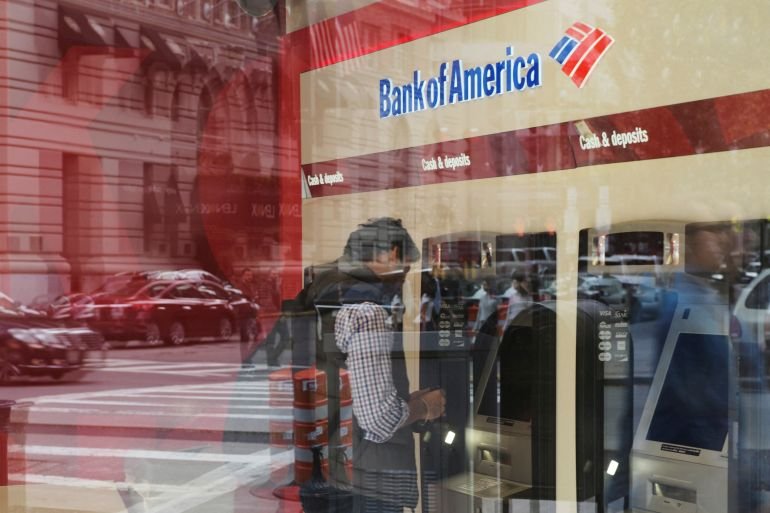
Lawyers have estimated that as many as 75 women may have a stake in the $72.5m settlement reached with Bank of America over accusations related to convicted sex offender Jeffrey Epstein.
United States District Judge Jed Rakoff had called on the lawyers to compile a broad list of publications by Friday that could be used to notify Epstein’s victims, who are believed to number in the hundreds.
Recommended Stories
list of 3 itemsend of list
Rakoff explained he wanted to make sure that “nobody is left out” of the settlement. A final approval hearing for the settlement is scheduled for August 27.
The settlement was first announced in court filings on March 27, after a proposed class action lawsuit against Bank of America was allowed to proceed.
In October, a woman who went by the pseudonym Jane Doe filed the lawsuit on behalf of herself and the other women and girls who say they were abused by Epstein.
She and her lawyers argued that Bank of America, the second-largest banking institution in the US, had ignored suspicious transactions related to Epstein’s sex-trafficking operations.
The lawsuit further alleged that Bank of America knowingly benefitted from its relationship with Epstein and obstructed enforcement of the Trafficking Victims Protection Act, a federal law designed to prosecute sex trafficking.
As part of the settlement, Bank of America reiterated its position that it did not participate in Epstein’s sex crimes.
“While we stand by our prior statements made in the filings in this case, including that Bank of America did not facilitate sex trafficking crimes, this resolution allows us to put this matter behind us and provides further closure for the plaintiffs,” its statement said.
Rakoff gave his preliminary approval to the settlement on Thursday, though he acknowledged that the gravity of Epstein’s crimes go beyond a dollar amount.
“While it’s perhaps extremely likely that the victims of Jeffrey Epstein’s monstrous acts can never be fully compensated, the victims are entitled to receive just compensation from any person or entity that knowingly, recklessly or otherwise unlawfully facilitated his sexual trafficking,” Rakoff said.
The Bank of America deal is the third such settlement with a major banking institution.
In 2023, two other financial organisations, JPMorgan Chase and Deutsche Bank, also agreed to settle with victims over accusations that they overlooked telltale signs of Epstein’s crimes. JPMorgan Chase agreed to pay $290m, while Deutsche Bank settled for $75m.
Judge Rakoff, however, dismissed a suit in January against the Bank of New York Mellon. Lawyers for Doe are appealing that decision.
Rakoff has argued that, while it is fair to seek compensation from those who facilitated Epstein’s crimes, not everyone associated with the convicted sex offender should be held liable.
“It’s not fair to penalize those persons or entities that were drawn into his wide orbit but had no role in assisting or benefiting from his egregious misconduct,” Rakoff said.
Prosecutors believe Epstein had been preying upon girls and young women for decades before his death in a New York City jail in 2019. His death was ruled a suicide.
A wealthy financier, Epstein had also cultivated a social circle inhabited by some of the most powerful figures in politics, arts and business.
They included figures like Andrew Mountbatten-Windsor, a disgraced former prince from the United Kingdom, and two United States presidents, Bill Clinton and Donald Trump.
Critics have long argued that Epstein’s influential associates helped shield him from accountability during his lifetime.
In 2008, Epstein struck a deal with prosecutors that saw him register as a sex offender and plead guilty to two state charges: solicitation of prostitution and procuring a minor for sex.
But through the deal, he avoided federal charges and a lengthy prison term. He ended up serving only 13 months of an 18-month sentence.
At the time of Epstein’s death in 2019, federal prosecutors had renewed their investigation into the financier and brought sex-trafficking charges against him.
One of the lawyers representing Doe, David Boies, said he believes there are at least 60 to 75 women who may be eligible to participate in the Bank of America settlement.
“There may be more we haven’t identified,” he added.