Tag: News – Al Jazeera

  • Trump’s endgame in Iran: Regime change without US ‘boots on the ground’

    Trump’s endgame in Iran: Regime change without US ‘boots on the ground’

    Washington, DC – Hours after the United States and Israel unleashed their bombing campaign against Iran on Saturday, President Donald Trump said that all he wants from the war is “freedom for the people”.

    Analysts say that despite this claim and other objectives articulated by US officials, Trump appears to be seeking to collapse the ruling system in Tehran.

    Recommended Stories

    list of 3 itemsend of list

    Kelly Grieco, senior fellow at the Stimson Center think tank, told Al Jazeera that achieving such a sweeping political shift will be difficult – if not impossible – without troops on the ground.

    “It seems like they’re not willing to pay certain costs to achieve regime change, so there’s sort of a set of secondary goals that perhaps will be enough if they can’t achieve that through air power alone,” Grieco said.

    After the opening US-Israeli strikes, Trump told the Iranian people that their “moment of freedom” is at hand.

    “When we are finished, take over your government. It will be yours to take,” he said, suggesting that the US will take down the Iranian regime.

    Matthew Duss, the executive vice president at the Center for International Policy, stressed that air strikes alone cannot collapse the Iranian ruling system.

    “You can damage buildings; you can damage the regime, but we don’t have examples of when air power alone has achieved regime change,” Duss said.

    A NATO-led air campaign in Libya in 2011 managed to dislodge Muammar Gaddafi from power, but Libyan rebels led the offensive on the ground that removed the regime.

    While Trump and other US officials have called on Iranians to rise up against their government, as of now, there does not appear to be any meaningful force on the ground capable of taking on the Islamic Republic system.

    Boots on the ground?

    While the US has kept the door open for the involvement of ground troops in the war, the move would pose an increased risk to American forces and mark a stark departure from Trump’s stated preference for swift military campaigns.

    “The war is already unpopular, even without any American boots on the ground in Iran,” said Duss.

    A recent Reuters survey suggested that only about one-quarter of Americans support the war.

    Duss drew a contrast between the ongoing conflict and the 2003 invasion of Iraq, which had more than 55 percent support from the US public, according to various polls.

    “I would imagine that as this war continues, especially if US troops are put on the ground, that support will drop even more,” Duss told Al Jazeera.

    On Tuesday, Democratic Senator Richard Blumenthal told reporters after a classified hearing with administration officials that he fears that the US may be heading towards a ground operation in Iran.

    “I am more fearful than ever after this briefing that we may be putting boots on the ground and that troops from the United States may be necessary to accomplish objectives that the administration seems to have,” Blumenthal said.

    Other objectives

    Over the past few days, US Secretary of State Marco Rubio and Pentagon chief Pete Hegseth have articulated more modest goals than regime change in Iran: destroying the Iranian nuclear and drone programmes as well as the country’s navy.

    Rubio has argued that Iran was building a large missile and drone arsenal to “achieve immunity” and deterrence against foreign attacks that would allow it to build a nuclear weapon.

    For his part, Hegseth has emphasised that the bombing campaign in Iran will not turn into a “forever war”.

    “We’re ensuring the mission gets accomplished, but we are very clear-eyed – as the president had been, unlike other presidents, about the foolish policies of the past that recklessly pulled us into things that were not tethered to actual, clear objectives,” he said.

    Grieco, however, noted that Trump’s own objectives have been unclear.

    “What is this all for? What are we trying to achieve? The administration certainly has not done itself any favours in the fact that they don’t seem to have a consistent narrative or message on this,” she told Al Jazeera.

    Senator Elizabeth Warren, a Democrat, emerged from a briefing with Trump officials on Tuesday with a similar assessment.

    “It is so much worse than you thought. You are right to be worried,” Warren said in a video message.

    “The Trump administration has no plan in Iran. This illegal war is based on lies, and it was launched without any imminent threat to our nation. Donald Trump still hasn’t given a single clear reason for this war, and he seems to have no plan for how to end it.”

    The US and Israel launched the bombing campaign against Iran early on Saturday, killing Supreme Leader Ali Khamenei, several top officials and hundreds of civilians.

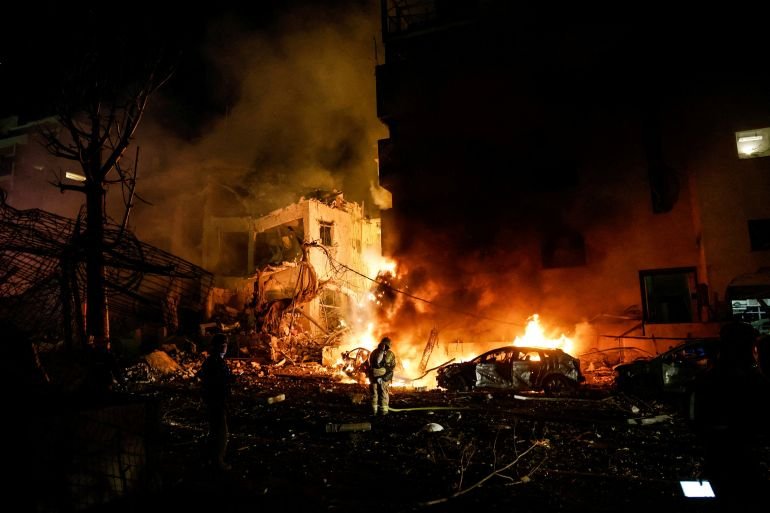
    The conflict quickly spread across the Middle East, with Iran lashing out against Gulf countries, launching drone and missile attacks at US assets as well as energy and civilian targets.

    Tehran has also been targeting Israel with missile volleys.

    Iran-allied groups in Iraq joined the war as well, claiming drone attacks against US-affiliated targets. Hezbollah in Lebanon also entered the fray amid reports that Israel was planning an invasion of the south of the country.

    Weeks or ‘far longer’

    Despite Hegseth’s insistence that the war is not open-ended, the Trump administration’s timeline for the conflict has been elastic.

    Trump has said that the US is ahead of schedule in completing its mission as the conflict expands. At the same time, he said the war could last four to five weeks and “far longer”.

    The US president’s allies have also been hailing the war as a success, predicting that the Iranian system will soon fold.

    “We are not there yet but, in my view, it’s not if this terrorist regime falls in Iran — it is only a matter of when,” Republican Senator Lindsey Graham wrote on X after a call with Israeli Prime Minister Benjamin Netanyahu.

    Graham said the “gateway to peace that would be opened” after the Iranian regime falls and ties between Israel and Arab states would take the region to a “new level of prosperity and security”.

    However, Duss said it is hard to assess US progress in the war because Trump “has not been clear yet what the objectives really are”.

    “You really can’t judge whether we’re ahead of time or behind time on those objectives. That’s the problem here,” he said.

    “They didn’t bother to build any case for why this war was necessary. They certainly did not bother to explain what they hope to achieve and how and when. So all we have is just this killing.”

    With the war still in its first week, it is starting to appear like a longer conflict than the decisive strikes Trump prides himself on, such as the abduction of Venezuela’s Nicolas Maduro in January and the strikes against Iran’s nuclear facilities in June.

    “I think the problem here is that he seems to have become enamoured with air power and what he thinks it can achieve,” Grieco said of Trump.
  • An outlier for condemning Israel’s Gaza genocide, Spain says no to Iran war

    An outlier for condemning Israel’s Gaza genocide, Spain says no to Iran war

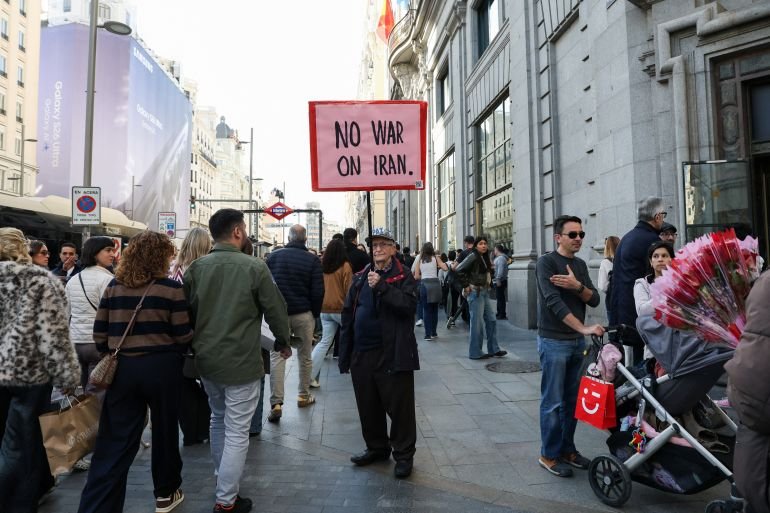
    Madrid, Spain – Spain has pledged to keep opposing the war waged by the United States and Israel on Iran after President Donald Trump said Washington would cut off all commercial links with Madrid.

    Trump’s rebuke on Tuesday came after Washington’s European ally refused to let the US military use its bases for missions linked to strikes on Iran.

    Recommended Stories

    list of 4 itemsend of list

    “Spain has been terrible,” the president told reporters on Tuesday during a meeting with German Chancellor Friedrich Merz, adding, “We’re going to cut off all trade with Spain. We don’t want anything to do with Spain.”

    Spanish Prime Minister Pedro Sanchez, one of the few left-wing leaders in Europe to condemn the US-Israel attack on Iran as “unjustifiable” and “dangerous”, said in a televised nationwide address on Wednesday that Spain’s position was “no to the war”.

    “This is how humanity’s great disasters start … The world cannot solve its problems with conflicts and bombs.”

    His position cements Spain’s status as an outlier in Europe; Madrid has been one of the few European nations to consistently condemn Israel’s genocidal war on Gaza.

    At the Patron Bar in Malasana, Madrid, Gema Tamarit watched Sanchez’s address on the television in the restaurant, which turned up the volume.

    “That Trump is mad. We are not afraid of him. Good for Sanchez for sticking up to him. Some more leaders in Europe should do the same,” said Tamarit, 53, a software engineer. “Of course, Iran is an awful regime, but is this the way to change things, by going to war like this?”

    A series of opinion polls suggests that more than half of Spaniards oppose Trump’s foreign policy.

    According to a poll published by Eurobazuka in February, 53 percent said they opposed the US president’s policies, the third highest group by nationality after the French and Belgians, with 57 percent and 62 percent, respectively.

    In another poll published in January, nearly 60 percent of Spaniards said they disagreed with the US president’s operation to arrest the former Venezuelan President Nicolas Maduro, according to a survey published by GESOP for Prensa Iberica media group.

    The Eurobazuka poll said 48 percent of Europeans considered Trump to be “an enemy of Europe”, compared with 10 percent who believed he was an ally.

    Trump’s trade threat

    Analysts said the US may not be able to inflict much commercial damage on Spain, as it is part of the European Union.

    Last month, the US Supreme Court declared Trump’s threat to impose a range of tariffs worldwide as illegal.

    Victor Burguete, an expert in trade and economics at the Barcelona Centre for International Affairs think tank, said the only way Trump could act against Spain would be to prove the US faced a situation of national emergency.

    “It is not likely that he can prove acting against Spain is a national emergency,” he told Al Jazeera. “I think this is more a threat than a real possibility of ending trade with Spain.

    The dispute erupted when the US relocated 15 aircraft, including refuelling tankers, from the Rota and Moron military bases in southern Spain on Monday after the country’s socialist government said it would not allow them to be used to attack Iran.

    Trump has also referred to Spain’s refusal to raise spending on NATO from 2 to 5 percent of gross domestic product, saying “Spain has absolutely nothing that we need.”

    Sanchez has provoked Trump’s anger with policies including refusing to let vessels transporting weapons to Israel dock in Spain and condemning Israel’s genocide in Gaza. Spain was among the first European nations to recognise a State of Palestine in 2024, along with Ireland, Slovenia and Norway.

    “Trump is just angry because Spain has refused to raise NATO spending and condemned the technology companies connected with social media. And done this publicly,” said Burguete.

    Spain last month announced it was considering banning children under 16 from accessing social media, and was studying legal action against Grok, Instagram and TikTok.

    Bruguete said he believed Sanchez took this stance against the war because he opposed the “strongman politics” of Trump, but also because it played well domestically before the general elections next year.

    “There is no doubt that the foreign policy of Trump is not popular in Spain,” he added.

    Spain is the world’s top exporter of olive oil and sells auto parts, steel and chemicals to the US, but is less vulnerable to Trump’s threats of economic punishment than other European nations.

    The US had a trade surplus with Spain for the fourth year in a row in 2025, at $4.8bn, according to US Census Bureau Data, with US exports of $26.1bn and imports of $21.3bn.

    The EU said on Wednesday it expected the US to abide by a trade deal with the EU, was “ready to act” to safeguard its interests, and stood in “full solidarity” with member states, but did not name Spain.

  • US Commerce Secretary Lutnick to testify before Congress about Epstein ties

    US Commerce Secretary Lutnick to testify before Congress about Epstein ties

    Lutnick’s relationship with the late financier and sex offender has come under scrutiny after files revealed closer ties than previously known.

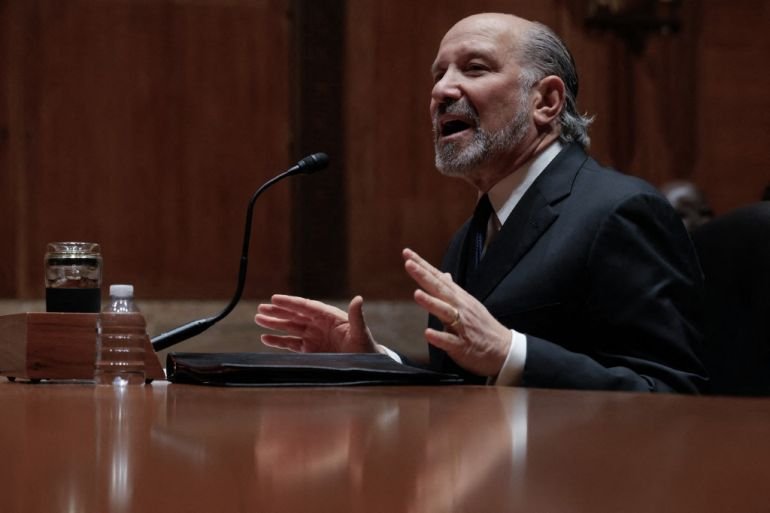
    US Secretary of Commerce Howard Lutnick has agreed to give testimony to lawmakers about his ties to Jeffrey Epstein, the head of a committee investigating the late sex offender has said.

    Lutnick, who lived next door to Epstein in New York for more than a decade, “proactively agreed” to provide a transcribed interview to the House Committee on Oversight and Government Reform, panel chair James Comer said on Tuesday.

    Recommended Stories

    list of 4 itemsend of list

    “I commend his demonstrated commitment to transparency and appreciate his willingness to engage with the Committee. I look forward to his testimony,” Comer, a Kentucky Republican, said on X.

    Axios, which first reported the commerce secretary’s intention to testify, quoted Lutnick as saying he had done nothing wrong and he wished to “set the record straight”.

    Lutnick’s relationship with Epstein, who died in 2019 while awaiting sex trafficking charges, has come under mounting scrutiny after he appeared to misrepresent the extent of his associations with the notorious financier.

    In a podcast interview last year, Lutnick said he decided to “never be in the room” with Epstein again following an uncomfortable encounter at the sex offender’s Manhattan penthouse in 2005.

    But files released by the Justice Department earlier this year showed that Lutnick met and communicated with Epstein for years after the reported 2005 encounter, and the commerce secretary later acknowledged that he visited the financier’s private island of Little Saint James in 2012.

    Comer said on Tuesday that he had also sent letters to seven individuals seeking written testimony about their knowledge of Epstein’s crimes, including Microsoft cofounder Bill Gates, private equity investor Leon Black, and top Goldman Sachs lawyer Kathryn Ruemmler.

    Gates, Black and Ruemmler have repeatedly denied wrongdoing in connection with Epstein, or having knowledge of his abuse of women and girls.

    The committee’s requests for testimony come after former US President Bill Clinton and his wife, ex-Secretary of State Hillary Clinton, appeared before lawmakers last week to answer questions about their ties to Epstein.

    Bill Clinton told the committee he did nothing wrong and “saw nothing that ever gave me pause” while interacting with Epstein.

    Hillary Clinton told lawmakers she had no recollection of encountering Epstein and that she never “flew on his plane or visited his island home or offices”.

  • Russia, China raise diplomatic voices against US-Israeli attacks on Iran

    Russia, China raise diplomatic voices against US-Israeli attacks on Iran

    China’s foreign minister tells Israel to end attacks; Russian FM Lavrov says no sign Tehran seeking nuclear bomb.

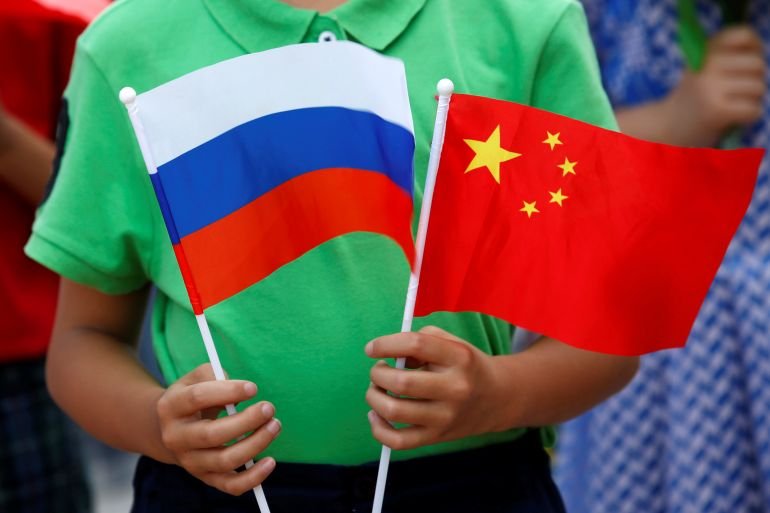
    Russia and China have criticised the US and Israeli attacks on Iran, with Moscow saying it had seen no evidence that Tehran was developing nuclear weapons, and Beijing demanding an immediate halt to the joint attacks.

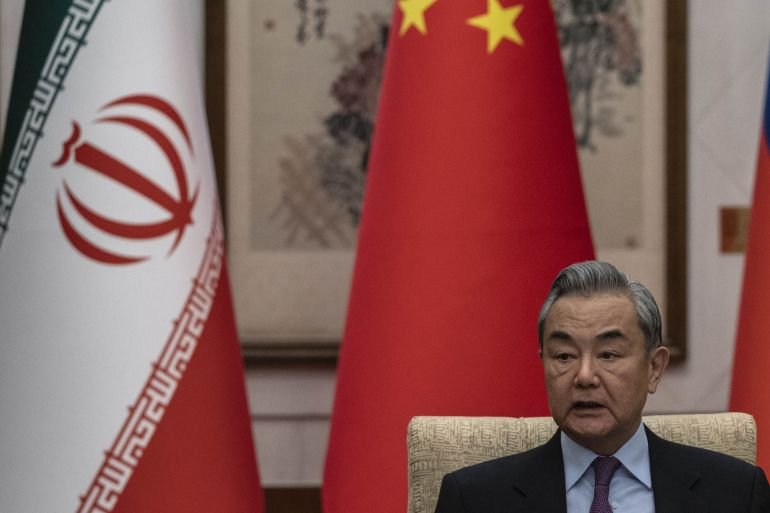
    Chinese Minister of Foreign Affairs Wang ⁠Yi told his Israeli counterpart, Gideon Saar, on Tuesday that the attack on Iran came as negotiations between Washington and Tehran had “made significant progress, including addressing Israel’s security concerns”, China’s Foreign Ministry said in a statement.

    Recommended Stories

    list of 4 itemsend of list

    “Regrettably, this process has been interrupted by military action. China opposes any military strikes launched by Israel and the US against Iran,” Wang told the Israeli foreign minister during a phone call, according to the ministry.

    “China calls for an immediate cessation of military operations to prevent the further escalation and loss of control of the conflict,” Wang said.

    “Force cannot truly solve problems; instead, it will bring new problems and serious long-term consequences,” he added.

    According to the Chinese Foreign Ministry, Saar agreed to a request from Wang to take “concrete measures to ensure the safety of Chinese personnel and institutions” in Iran.

    The call on Tuesday with Israel and Beijing’s apparent efforts to stabilise the spiralling regional situation followed calls Wang made on Monday to discuss the conflict with the foreign ⁠ministers of Iran, Oman and France.

    ‘US doesn’t attack those who have nuclear bombs’

    Russian Foreign Minister Sergey Lavrov also criticised the US and Israel on Tuesday, saying their war on Iran could lead to the very outcome they claimed they wanted to prevent: nuclear proliferation.

    Lavrov told a news conference that the logical consequence of the US and Israel’s actions could be that “forces will emerge in Iran… in favour of doing exactly what the Americans want to avoid – acquiring a nuclear bomb”.

    “Because the US doesn’t attack those who have nuclear bombs,” Lavrov said.

    Lavrov also said that Arab countries could now join the race to acquire nuclear weapons, given the experience of recent days and “the nuclear proliferation problem will begin to spiral ⁠out of control”.

    Israel is widely seen as the Middle East region’s only nuclear-armed state, which it neither confirms nor denies.

    “The seemingly paradoxical declared noble goal of starting a war to prevent the proliferation of nuclear weapons could stimulate completely opposite trends,” he said.

    Lavrov, who said that Moscow had still seen no evidence that Iran was developing ⁠nuclear weapons, spoke with his Iranian counterpart, ⁠Abbas Araghchi, on Tuesday, and said that Russia stood ready to help find a diplomatic solution to the conflict, while rejecting the US and Israel’s use of “unprovoked military aggression” in the region.

    As the US and Israel launched their first strikes on Iran on Saturday, Russia’s Foreign Ministry accused the close allies of carrying out a “premeditated and unprovoked act of armed aggression against a sovereign and independent UN member state”.

    The two countries had hidden their true intention of regime change in Tehran “under the cover” of negotiations to normalise relations with Iran, the ministry said.

    The US and Israel were “swiftly pushing the region toward a humanitarian, economic, and potentially even radiological disaster”, the ministry warned.

    “Responsibility for the negative consequences of this manmade crisis, including an unpredictable chain reaction and spiralling violence, lies entirely with them,” the statement added.

    Russia has faced its own accusations of aggression against a sovereign state after it launched a full-scale invasion of Ukraine, a war now in its fifth year.

  • How many countries has the US bombed since 2001, and how much has it cost?

    How many countries has the US bombed since 2001, and how much has it cost?

    Despite promising to end United States involvement in costly and destructive foreign wars, President Donald Trump, together with Israel, has launched a massive military assault on Iran, targeting its leadership and nuclear and missile infrastructure.

    Much like his predecessors, Trump has relied on military force to pursue US strategic interests, continuing a pattern that has defined US foreign policy for more than two decades.

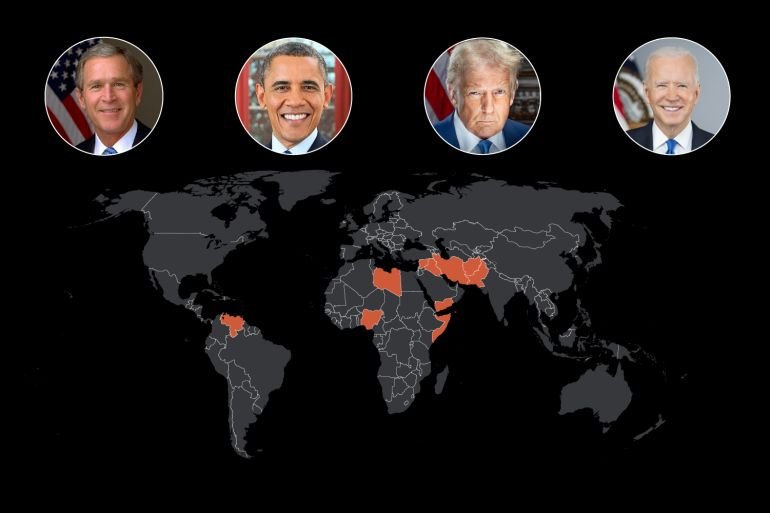
    Since the September 11, 2001, attacks on New York and the US capital, the US has engaged in three full-scale wars and bombed at least 10 countries in operations ranging from drone strikes to invasions, often multiple times within a single year.

    The graphic below shows all the countries the US has bombed since 2001.

    These may not include all military strikes, particularly covert or special operations.

    INTERACTIVE - US ATTACKS ON COUNTRIES SINCE 2001 bomb attack war iran iraq afghanistan-1772551549
    The US has bombed at least 10 countries: Afghanistan, Iraq, Yemen, Pakistan, Somalia, Libya, Syria, Venezuela, Nigeria and Iran since 2001. [Al Jazeera]

    The cost of decades of war

    In the aftermath of the September 11, 2001, attacks, President George W Bush launched what he called a “war on terror”, a global military campaign that reshaped US foreign policy and triggered wars, invasions and air strikes across numerous countries.

    According to an analysis by Brown University’s Watson Institute of International & Public Affairs, US-led wars since 2001 have directly caused the deaths of about 940,000 people across Afghanistan, Pakistan, Iraq, Syria, Yemen and other conflict zones.

    This does not include indirect deaths, namely those caused by loss of access to food, healthcare or war-related diseases.

    INTERACTIVE-COST OF WAR-The human cost of US-led wars Afghanistan Iraq Syria Yemen-1750770943
    (Al Jazeera)

    The US has spent an estimated $5.8 trillion funding its more than two decades of conflict.

    This includes $2.1 trillion spent by the Department of Defense (DOD), $1.1 trillion by Homeland Security, $884bn to increase the DOD base budget, $465bn on veterans’ medical care and an additional $1 trillion in interest payments on loans taken out to fund the wars.

    In addition to the $5.8 trillion already spent, the US is expected to have to lay out at least another $2.2 trillion for veterans’ care over the next 30 years.

    This would bring the total estimated cost of US wars since 2001 to $8 trillion.

    Afghanistan war (2001-2021)

    The first and most direct response to 9/11 was the invasion of Afghanistan to dismantle al-Qaeda and remove the Taliban from power.

    On October 7, 2001, the US launched Operation Enduring Freedom.

    The initial invasion succeeded in toppling the Taliban regime within just a few weeks. However, armed resistance groups mounted a prolonged resistance against US and coalition forces.

    The war went on to become the longest conflict in US history, spanning four presidencies and lasting 20 years until the final withdrawal in 2021, after which the Taliban regained control of Afghanistan.

    An estimated 241,000 people died as a direct result of the war, according to an analysis from Brown University’s Costs of War project. Hundreds of thousands more people, mostly civilians, died due to hunger, disease and injuries caused by the war.

    INTERACTIVE-Afghanistan claimed lives

    At least 3,586 soldiers from the US and its NATO allies were killed in the war, which is estimated to have cost $2.26 trillion for the US, according to the Cost of War project.

    Iraq war (2003-2011)

    On March 20, 2003, Bush launched a second war, this time in Iraq, claiming that President Saddam Hussein possessed weapons of mass destruction – a claim that proved to be false.

    On May 1, 2003, Bush declared “mission accomplished” and the end of major combat operations in Iraq.

    Bush USS Abraham Lincoln
    Bush on board the USS Abraham Lincoln aircraft carrier, where he declared combat operations in Iraq over on May 1, 2003 [Larry Downing/Reuters]

    However, the subsequent years were defined by violence from armed groups and a power vacuum that fuelled the rise of ISIL (ISIS).

    In 2008, Bush agreed to withdraw US combat troops, a process completed in 2011 under President Barack Obama.

    The drone wars: Pakistan, Somalia and Yemen

    Although not declared wars, the US has also expanded its air and drone campaigns.

    Beginning in the mid-2000s, the CIA launched drone strikes inside Pakistan’s tribal areas along the Afghan border, targeting al-Qaeda and Taliban figures believed to be operating there. These strikes marked the early expansion of remote warfare.

    Obama dramatically expanded the drone strikes in Pakistan, particularly in the early years of his presidency.

    At the same time, the US conducted air strikes in Somalia against suspected al-Qaeda affiliates, later targeting fighters linked to al-Shabab as that armed group grew in strength.

    In Yemen, US forces carried out missile and drone strikes against al-Qaeda leaders.

    Libya intervention

    In 2011 during an uprising against Libyan leader Muammar Gaddafi, the US joined a NATO-led intervention in Libya. American forces launched air and missile strikes to enforce a no-fly zone.

    Gaddafi was overthrown and killed, and Libya descended into prolonged instability and factional fighting.

    Iraq and Syria

    From 2014 onwards, the US intervened in the Syrian war with the stated goal of defeating ISIL. Building on its campaign in Iraq, the US conducted sustained air strikes in Syria while supporting local partner forces on the ground.

    In Iraq, US forces advised Iraqi troops, fought ISIL remnants and tried to counter Iranian influence, highlighted by a Trump-ordered 2020 strike that killed Iranian General Qassem Soleimani.

  • Trump admin offers scant evidence on Iranian threat in ‘America First’ war

    Trump admin offers scant evidence on Iranian threat in ‘America First’ war

    Washington, DC – As the US and Israeli militaries expand their strikes on Iran, the administration of US President Donald Trump has alternated its justification for the war between preventing immediate attacks and countering the long-term existential threat of a nuclear Tehran.

    This was on full display on Monday, with Trump and Pentagon chief Pete Hegseth appearing to make the case that the culmination of Iran’s regional policies in the 47 years since the Islamic revolution, coupled with the future of its ballistic and nuclear programmes, represented an immediate threat to the US.

    Recommended Stories

    list of 3 itemsend of list

    US Secretary of State Marco Rubio, meanwhile, argued that Washington’s close ally Israel was planning to attack Iran. In which event, the administration expected Iran to strike US assets, therefore justifying launching a preemptive attack, he said.

    To date, the administration has offered little clear evidence to support any of its claims, according to advocates and analysts, as well as Democratic lawmakers who have recently attended classified briefings.

    “The reality is, they’ve put forth very little evidence, and that’s a huge problem,” Emma Belcher, the president of Ploughshares, a group that advocates for denuclearisation, told Al Jazeera.

    “It says, one: They don’t think they need to [make the case] for the war; that they won’t necessarily be held to account for it,” Belcher said. “But it also says to me that the evidence quite possibly isn’t there, and that they want to avoid particular scrutiny.”

    Republicans have largely coalesced around the administration’s messaging, even as Democrats have pledged to force votes on war powers legislation to assert constitutional authority over the president’s military action.

    Still, the administration remains in a tenuous political position as Trump’s Republican Party stares down midterm elections in November. Early public polling indicates little outright support from the US public, even as Trump’s Make America Great Again (MAGA) base has been staid in its response.

    But the more days that pass, and the more US service members are killed, the more likely that Trump will be confronted with the contradictions to his past anti-interventionist promises.

    “The longer it goes on and the more costly it is in terms of lives… the more the lack of evidence becomes an albatross around the neck of the administration – one that it will have to account for come November,” according to Benjamin Radd, a senior fellow at the UCLA Burkle Center’s international relations department.

    A kaleidoscope of claims

    Speaking from the White House on Monday, Trump praised the “obliteration of Iran’s nuclear programme” in US strikes last June. But moments later, he claimed that efforts to rebuild that programme, coupled with Iran’s ballistic missile programme, represented a menace to the US.

    “An Iranian regime armed with long-range missiles and nuclear weapons would be an intolerable threat to the Middle East, but also to the American people,” Trump said. “Our country itself would be under threat, and it was very nearly under threat.”

    Trump also said that, if not for US and Israeli attacks, Iran “would soon have had missiles capable of reaching our beautiful America”.

    Daryl Kimball, the executive director of the Washington, DC-based Arms Control Association (ACA) said any claims of immediate or middle-term threats posed by Iran in terms of their ballistic and nuclear power are not supported by available evidence.

    That is significant, as such “imminent threats” are required for a president justify attacks on foreign countries under both US domestic law and international law, save for approval from Congress.

    “Iran did not possess, prior to this attack, the capability to quickly enrich its highest uranium to bomb grades, and then to convert that into metal for constructing a bomb,” Kimball told Al Jazeera.

    “At the soonest, it might have taken many, many months to do that, but Iran does not have access to its 60 percent highly-enriched uranium. Its conversion facility is damaged and idle. Its major uranium enrichment facilities have been severely damaged by the US strikes in 2025.”

    He explained that despite having “significant conventional short and medium range ballistic missile capabilities”, Iran has said it has imposed 2,000km (1,200-mile) limits on its ballistic missile range, and is not near having an intercontinental ballistic missile capability.

    The “latest [US intelligence] assessment is that Iran could, if a decision is made, have an ICBM capability by 2035. So Iran is nowhere close to having an ICBM threat that could be called imminent,” he said, referring to intercontinental ballistic missiles, which have a range of at least 5,000km (3,400 miles).

    Democrats say no new intelligence

    Secretary of State Rubio on Monday said there “absolutely was an imminent threat” presented by Iran.

    “We knew that there was going to be an Israeli action,” he said. “We knew that that would precipitate an attack against American forces, and we knew that if we didn’t preemptively go after them before they launched those attacks, we would suffer higher casualties.”

    But top Democrats who received classified intelligence briefings in recent days said they had not been provided with evidence to justify the attack.

    “I’m on two committees that give me access to a lot of classified information; there was no imminent threat from Iran to the United States that warrants sending our sons and daughters into yet another war in the Middle East,” Senator Tim Kaine, who sits on both the Armed Services Committee and the Foreign Relations Committee, told CNN on Saturday.

    Senator Mark Warner, who was briefed on classified intelligence related to Iran last week as part of the “gang of eight”, a collection of the top lawmakers from both parties in Congress, told the network: “I saw no intelligence that Iran was on the verge of launching any kind of preemptive strike against the United States of America”.

    Several sources speaking to both the Reuters news agency and the Associated Press, following a closed-door briefing of congressional staff on Sunday, said the administration presented no evidence that Iran was planning a preemptive strike, and had instead focused on a more generalised threat posed by Iran and its allies to US troops and assets in the region.

    Trump looking for quick success

    All told, the Trump administration appears to be arguing that “Iran has been a national security threat to the United States since 1979… that Iran was responsible for more American lives being killed than any other state or non-state actor; that Iran has never been held to account for this”, according to the Burkle Center’s Radd.

    Trump, therefore, appears to be taking the position that given the totality of Iranian actions, including during recent indirect nuclear talks, the US “has no choice but to perceive Iran as an imminent threat”.

    Oman’s foreign minister, who mediated the talks, had pushed back on the administration’s characterisation, maintaining that “significant progress” had been made before the US-Israeli attacks.

    Radd noted that under the War Powers Act of 1973, a US president has between 60 and 90 days to withdraw forces deployed without congressional approval. Therefore, Trump appears to be saying, “We’re not obliged to prove to Congress any of that if we can conduct and execute this operation within the 60 to 90 day window,” he said.

    Meanwhile, Ploughshare’s Belcher said that the administration’s own actions led to the current situation with Iran.

    She pointed to Trump’s withdrawal of The Joint Comprehensive Plan of Action (JCPOA) in 2018, which had seen the US impose maximum sanctions on Iran, and Iran, in turn, begin enriching uranium beyond the levels laid out in the agreement. Trump also derailed nuclear talks last year by launching attacks on Iran.

    “We’re in this situation precisely because President Trump gave up on an agreement that was negotiated by his predecessor,” Belcher said. “He gave up on diplomacy.”

    ‘America First’ war?

    In his speech on Monday, Hegseth, in particular, appeared to try to frame the war within Trump’s political worldview, pledging to “finish this on America First conditions”.

    He drew a contrast with the US invasion of Iraq, describing the attacks on Iran as a “clear, devastating, decisive mission”.

    “Destroy the missile threat, destroy the navy – no nukes,” he said.

    He also sought to draw a distinction between a “so-called regime-change war” and US attacks that happened to lead to regime change. As of Monday, US strikes had killed Iran’s supreme leader, Ayatollah Ali Khamenei, and several top officials, but the ruling government has remained intact.

    Hegseth said that the US is unleashing attacks “all on our terms, with maximum authorities, no stupid rules of engagement, no nation-building quagmire, no democracy building exercise, no politically correct wars”.

    It remains unclear how the message will resonate with the US public.

    A Reuters-Ipsos poll released on Sunday suggested dismal approval for Trump’s strikes, but also indicated that large swaths of Americans were unsure about the conflict.

    That could create opportunities for those challenging Trump’s actions and his justification for them.

    “I think it does seem as though the narrative is still up for grabs,” Belcher said.

  • Analysis – Trump’s foreign policy message in a nutshell: ‘We can reach you’

    Analysis – Trump’s foreign policy message in a nutshell: ‘We can reach you’

    United States President Donald Trump’s second term in office has been defined by the abduction of Venezuela’s left-wing President Nicolas Maduro, joint US-Israeli strikes on Iran that killed the country’s Supreme Leader Ayatollah Ali Khamenei, among hundreds, and new threats against other leaders from Latin America to even Europe.

    This policy is testing alliances, legal norms, and the idea that shock action abroad yields predictable outcomes at home. At its core is a message Trump repeats in different ways: “We can reach you – and we might not protect you if you do not do what we want.”

    Recommended Stories

    list of 4 itemsend of list

    Trump talks directly to foreign leaders, promising swift punishment or personal favour, and casts himself as the only US president “with the gloves off”.

    While his supporters see strength and candour, critics underline threats and deals aimed at domestic politics as much as foreign capitals.

    A doctrine built around enemies

    Trump’s decision to attack Iran has been described as the “biggest foreign policy gamble of his presidency”, with analysts saying he has pivoted from “swift, limited operations like last month’s lightning raid in Venezuela” to what could be a more protracted conflict that is already morphing into a wider regional war.

    His doctrine is anchored in identifying adversaries – Iran, China, Russia and North Korea – alongside a cluster of actors such as Venezuela, Cuba, certain Latin American leaders, as well as drug cartels, Hezbollah and Hamas.

    Analysts at the Atlantic Council say Trump’s National Security Strategy “elevates great power competition with China and Russia while casting Iran and North Korea as rogue regimes”, creating an organising map of enemies reflected in his rhetoric and operations.

    The Foreign Policy Research Institute describes Trump’s strategy as “a deeply transactional document”, arguing that security guarantees and pressure on adversaries are framed around what others “pay” or concede to the US.

    Iran and the regional spread of war

    The Pentagon has named its Iran campaign Operation Epic Fury, with Trump insisting the US “did not start this war”, but intends to finish it – a claim rejected by Iran’s foreign minister in an interview with Al Jazeera.

    Trump said US forces would “lay waste” to much of Iran’s military, deny Tehran a nuclear weapon, and “give Iranians a chance to topple their rulers”. Some media reports said he has privately claimed Iran would “soon have a missile that can hit the US”, even though intelligence assessments do not support that.

    Analysts say Trump is hoping the US-Israeli strikes would incite a popular uprising to oust Iran’s rulers, even though outside airpower has never directly achieved government change without ground forces. The Atlantic Council warns the Iran attack risks drawing Washington into a wider regional war “without a clear endgame”.

    A briefing from the Royal United Services Institute says if Iran’s retaliation causes significant US casualties, Washington will be under intense pressure to expand Operation Epic Fury into a larger military campaign.

    Interactive_Iran_US_Israel_March2_2026-01-1772448550
    (Al Jazeera)

    Meanwhile, hawks in Washington see an opportunity. A report by the Foundation for Defense of Democracies says the attacks on Iran provide “a historic opportunity to help the Islamic Republic fall”.

    Trump has told the US media the military operation could take “four weeks or less”, even as his defence secretary acknowledged it could be shorter or longer, depending on how Iran and its allies respond.

    Within days of the Iran strikes on Saturday, the war has spread across the region, with Israel on Tuesday saying it has launched ground operations in Lebanon. Meanwhile, Iran’s retaliatory attacks have targeted US assets and even civilian infrastructure in the United Arab Emirates, Saudi Arabia, Qatar, Bahrain and other Gulf nations.

    This is exactly the escalation experts had warned about: strikes framed as targeted decapitation of Iran’s leadership now pulling in a weakened Hezbollah and even Lebanese civilians, reinforcing the perception that the US is willing to put an entire region at risk to prove that it can reach one man or topple one regime.

    Like he did in Venezuela by capturing Maduro in an in‑and‑out raid in Caracas after a CIA tip – an episode analysts say emboldens similar thinking elsewhere.

    ‘Troubling precedent’

    The Caracas raid came on the back of a “maximum pressure” campaign, which saw sanctions, criminal cases and asset seizures in a high‑visibility operation. Maduro’s abduction gave the US considerable control over Venezuela’s vast oil reserves.

    The Center for Strategic and International Studies calls the Maduro operation “a military victory with no viable endgame”, arguing that while the exfiltration of the president was tactically successful, the structural drivers of Venezuela’s crisis remained in place.

    A Brookings analysis warned that the raid “sets a troubling precedent for US‑led regime change by special forces”, suggesting that other Latin American leaders may see it as a potential US “template” rather than a one‑off.

    Like Colombia, whose President Gustavo Petro was referred to by Trump as “sick”, suggesting a Venezuela-like intervention there “sounds good to me”, and warning Petro to “watch his a**”.

    Petro in January said the US was behaving like an empire that treats Latin American governments as subjects, warning that Washington risks shifting from “dominating the world” to being “isolated from the world”.

    The killing or abduction of leaders or prominent figures from other nations violates international law. Experts say Trump’s expanding “targeted killing” doctrine erodes the taboo on assassinating political leaders, making reciprocity more plausible.

    Protection as transaction

    With allies, Trump’s posture is less kinetic but equally blunt.

    Trump once boasted about telling a NATO partner, “You didn’t pay? You’re delinquent … No, I would not protect you. In fact, I would encourage [Russia] to do whatever the hell they want.”

    The comments triggered alarm in European capitals and prompted what analysts described as efforts to “Trump‑proof” NATO by locking in higher defence spending and deeper political commitments.

    The European Council on Foreign Relations alleges Trump has “exported MAGA to Europe”, turning NATO into “a protection racket in all but name” where security guarantees appear conditional on allies’ political and financial alignment.

    A declassified White House memo from 2019 remains the clearest example of how Trump’s transactional logic extends to partners. The memo shows Trump responding to Ukrainian President Volodymyr Zelenskyy’s request for more weapons.

    “I would like you to do us a favour though,” Trump purportedly said before asking Zelenskyy to investigate former US President Joe Biden and his son – a conversation that led to Trump’s first impeachment.

    Who could be next?

    Put together, the Maduro raid, the Iran attack, threats to Petro and pressure on NATO suggest who could be next: Latin American leaders labelled soft on drug cartels; the Iran‑aligned groups in Iraq, Syria and Lebanon; or smaller European nations branded “delinquent” by Trump.

    US media reports say Trump’s advisers have urged him to focus on the domestic economy, warning that a prolonged confrontation with Iran could alienate parts of his “America First” base that are sceptical of open‑ended wars.

    Meanwhile, Trump’s backers cite the rising NATO outlays, the Maduro raid and Iran strikes as proof that Trump “does what he says”. Some argue that degrading Iran’s nuclear programme, even without regime change, would still count as a victory for Trump.

    Critics, however, worry that the Iran campaign could escalate into the biggest US military campaign since the Afghanistan and Iraq wars, with some of Trump’s stated claims on Iran not backed by intelligence.

    Whether the US power produces durable outcomes without blowback – in Iran, Lebanon, Latin America and inside the US – is a key test for Trump in the days ahead.

  • Who is Ali Larijani, the Iranian official promising a ‘lesson’ to the US?

    Who is Ali Larijani, the Iranian official promising a ‘lesson’ to the US?

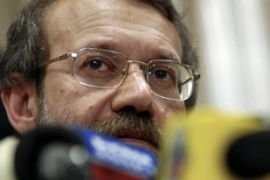
    For decades, Ali Larijani was the calm, pragmatic face of the Iranian establishment – a man who wrote books on the 18th-century German philosopher Immanuel Kant and negotiated nuclear deals with the West.

    But on March 1, the 67-year-old secretary of the Supreme National Security Council’s tone changed irrevocably.

    Recommended Stories

    list of 3 itemsend of list

    Appearing on state television just 24 hours after US-Israeli air strikes killed Supreme Leader Ayatollah Ali Khamenei and the Iranian Revolutionary Guard Corps (IRGC) commander, Mohammad Pakpour, Larijani delivered a message of fire.

    “America and the Zionist regime [Israel] have set the heart of the Iranian nation ablaze,” he wrote on social media. “We will burn their hearts. We will make the Zionist criminals and the shameless Americans regret their actions.”

    “The brave soldiers and the great nation of Iran will deliver an unforgettable lesson to the hellish international oppressors,” he added.

    Larijani, who accused US President Donald Trump of falling into an “Israeli trap”, is now at the centre of Tehran’s response to its biggest crisis since 1979.

    He is expected to have an important role alongside the three-man transitional council running Iran after Khamenei’s death.

    So, who is the man tasked with steering Iran’s security strategy as its war with Israel and the US continues?

    The ‘Kennedys’ of Iran

    Born on June 3, 1958, in Najaf, Iraq, to a wealthy family from Amol, Larijani belongs to a dynasty so influential that Time magazine described them, in 2009, as the “Kennedys of Iran”.

    His father, Mirza Hashem Amoli, was a prominent religious scholar. And like Larijani, his brothers have held some of the most powerful positions in Iran, including in the judiciary and the Assembly of Experts, a clerical council empowered with choosing and overseeing the supreme leader.

    Larijani’s ties to Iran’s post-1979 revolutionary elite are also personal. At age 20, he married Farideh Motahari, the daughter of Morteza Motahhari, a close confidant of the Islamic Republic of Iran’s founder, Ruhollah Khomeini.

    Despite his family’s conservative religious roots, his children have had a diverse trajectory. His daughter, Fatemeh, a medical graduate from the University of Tehran, completed her specialisation at Cleveland State University in Ohio, US.

    The mathematician philosopher

    Unlike many of his peers who came solely from religious seminaries, Larijani also has a secular academic background.

    In 1979, he earned a bachelor’s degree in Mathematics and Computer Science from the Sharif University of Technology. He later completed master’s and doctorate degrees in Western philosophy from the University of Tehran, writing his thesis on Kant.

    But it is his political positions that have been the centrepiece of his career.

    After the 1979 revolution, he joined the IRGC in the early 1980s, before transitioning to government, serving as culture minister under President Akbar Hashemi Rafsanjani between 1994 and 1997, and then as the head of the state broadcaster (IRIB) from 1994 until 2004. During his time at the IRIB, he faced criticism from reformists who accused his restrictive policies of driving Iranian youth towards foreign media.

    Between 2008 and 2020, he served as the Parliament (Majlis) speaker for three consecutive terms, playing a major role in shaping domestic and foreign policy.

    Return to the security fold

    Larijani ran for the presidency in 2005 as a conservative candidate, but did not make it to the second round. In the same year, he was appointed the secretary of Iran’s Supreme National Security Council, and the country’s chief nuclear negotiator.

    He resigned from those posts in 2007, after growing distant from then-President Mahmoud Ahmadinejad’s nuclear policies.

    Larijani entered parliament in 2008, winning a seat to represent the religious centre of Qom, and became the speaker. This allowed Larijani to grow in influence, and he maintained his connection to the nuclear file, securing parliamentary approval for the 2015 nuclear deal between Iran and world powers, known as the Joint Comprehensive Plan of Action (JCPOA).

    After leaving his position as parliamentary speaker and member of parliament in 2020, Larijani attempted to run for president for a second time in the 2021 election. But this time, he was disqualified by the Guardian Council, which vets candidates. He was disqualified again when he attempted to run in the 2024 presidential election.

    The Guardian Council gave no reason for the disqualifications, but analysts viewed the 2021 move as a way for the establishment to clear the field for hardliner Ebrahim Raisi, who won the election. Larijani criticised the 2024 disqualification as “non-transparent”.

    But he did return to an influential position in August 2025, when he was reappointed as secretary of the Supreme National Security Council by President Masoud Pezeshkian.

    Since taking the post, his stance has hardened. In October 2025, reports emerged that Larijani had cancelled a cooperation agreement with the International Atomic Energy Agency (IAEA), declaring that the agency’s reports were “no longer effective”.

    Diplomacy amid war

    Despite that tough stance, Larijani is often regarded as pragmatic and someone inside the Iranian system who may be willing to compromise, in part due to his past role in backing the 2015 nuclear deal.

    Just weeks before the current escalation, Larijani was reportedly engaged in indirect negotiations with the US.

    In February, during talks mediated by Oman, he stated that Tehran had not received a specific proposal from Washington, and accused Israel of trying to sabotage the diplomatic track to “ignite a war”.

    In an interview with Al Jazeera prior to the US and Israel’s attacks on Iran, Larijani described his country’s position on talks as “positive,” noting that the US had realised that the military option was not viable. “Resorting to negotiation is a rational path,” he said at the time.

    However, the air strikes, which began on February 28, have shattered the diplomatic window.

    In his latest address, Larijani assured the nation that plans were in place to arrange the leadership succession according to the Constitution. He warned the US that it was delusional to think killing leaders would destabilise Iran.

    “We are not intending to attack regional countries”, he clarified, “but we are targeting any bases used by the United States”.

    The more pragmatic tone appears to have disappeared – for now. Larijani has rejected media reports that he wanted new talks with the US, saying on Monday that Iran would “not negotiate” with Washington.

    Instead, with Khamenei gone and the region on the brink, Larijani has promised a response to the US and Israel with “a force that they have never experienced before”.

  • As bombing continues, Israel’s war aim in Iran becomes clear: Regime change

    As bombing continues, Israel’s war aim in Iran becomes clear: Regime change

    As its joint attack with the United States on Iran continues, Israel sees its task as the culmination of a longstanding policy on: ushering in regime change from within.

    Taking to the airwaves in the wake of the killing of Iranian Supreme Leader Ayatollah Ali Khamenei on Saturday, Israeli Prime Minister Benjamin Netanyahu addressed the Iranian people directly, calling on them in Farsi to “come to the streets, come out in your millions, to finish the job, to overthrow the regime of fear that has made your lives bitter”.

    Recommended Stories

    list of 4 itemsend of list

    “Your suffering and sacrifices will not be in vain. The help you wished for – that help has now arrived,” he said of the US-Israeli air strikes, which have already killed more than 555 people in Iran, including 180 at a girls’ school in the country’s south.

    “The Israeli authorities don’t spell it out, but it is clear that what they want to see is a regime change in Iran,” said Ahron Bregman, a senior teaching fellow at the Department for War Studies at King’s College London, who had returned to Israel to research a book before the latest round of strikes took place.

    “I’m stuck in Tel Aviv and spend many hours with Israelis in a local shelter. I’m taken aback by the strong support among these – mainly liberal – Israelis of the war,” he said. “They, like their leaders, believe that if you only topple the Iranian regime, the Middle East will totally transform for the better, which is, of course, nonsense.”

    But there is a question of how invested Netanyahu and his allies are in ensuring that regime change in Iran is smooth.

    Israeli officials know that Iran, including its opposition, has a diverse array of views and backgrounds.

    Many Iranians who have taken to the streets, including in the large protests that took place in January, are united only in their hostility to the government, with various factions calling for everything from the restoration of the monarchy to a full democracy. Others, however, are rallying on the government’s side after the attacks on their country and Khamenei’s killing.

    A plume of smoke acends after a military strike on the capital Tehran on March 2, 2026. The Israeli
    A plume of smoke ascends to the sky in Tehran after a strike on March 2, 2026 [Atta Kenare/AFP]

    Questions remain

    “I think there’s a public opacity to Israel’s war aims,” former Israeli government adviser Daniel Levy told Al Jazeera. “My sense is that Israel has no real interest in smooth regime change. I think most [Israeli leaders] regard that as a kind of fairytale, though that’s not something Netanyahu and allies might be ready to admit publicly.”

    “Israel’s more interested in regime and state collapse,” Levy noted. “They want Iran to implode, and if the spillover from that takes in Iraq, the Gulf and much of the region, so much the better.”

    “They’ll have removed a significant regional counter to their freedom to act, leaving Israel and its allies free to remake the regions and, critically, to continue both killing Palestinians, and possibly even move against Turkiye, which is the next logical step,” he said, reflecting a recent rise in anti-Turkiye rhetoric in Israel, with politicians even characterising the country as the “new Iran”.

    However, while public appetite for the war may be high, there is an understanding that the duration of that war might not be of Israel’s choosing.

    The bulk of Israel’s military spending is underwritten by the US, where the attack on Iran is proving less than popular. Equally, in a world where many states had belatedly grown critical of Israel’s genocidal actions towards Palestinians – in particular in Gaza – US diplomatic heft has been vital in protecting its ally from criticism, and even wider sanctions.

    How long the US’s allies in the Gulf are ready to withstand Iranian assaults on their territory in response to a war they had repeatedly cautioned against is far from clear. Equally, how long it might be before regional diplomatic pressure on US President Donald Trump begins to have an impact is also hard to predict, Levy warned.

    “It’s fitting that this is the holiday of Purim, which also marks the survival of the Jewish people over a threat from Persia 2,500 years ago, and we still celebrate it today. People understand that,” Barak said.

    “Israel going to war in tandem with our greatest ally and the world’s greatest power is unprecedented,” Barak continued. “It’s hard to make any predictions, but Trump has his own priorities and his own endgame, which might not be the same as ours. It could be that Trump pulls out and leaves Israel holding the bag. What happens then, I don’t know.”

    Public backing

    Iranian missiles may be hitting Israel, but analysts there say the general sentiment among the public is supportive of active hostilities against Iran, with the backing of the US.

    It stems from years – if not decades – of messaging that Iran and its allies are the main threats to Israel.

    From Netanyahu’s repeated warnings that Iran is on the brink of acquiring nuclear weapons, to the predictions from politicians of all stripes that Israel’s destruction at the hands of Iran is imminent, the outbreak of a conflict that many Israelis see as the final showdown with their enemy has almost been welcomed.

    Politicians from the right to the centre-left have backed the US and Israeli decision to attack Iran.

    Yair Golan, the leader of the centre-left Democrats, who, in May last year, outraged many Israelis by saying that the endless killing of Palestinians risked reducing Israel to a “pariah state”, welcomed the war, saying the Israeli military had his “full backing” in “removing the Iranian threat”.

    Other opposition politicians, such as the centrist Yair Lapid and the right-wing Naftali Bennett, have all fallen into line behind Netanyahu in his confrontation with Iran.

    “People here know Iran is a threat. They know it because Iran keeps telling us,” said Mitchell Barak, a political pollster who was an aide to Netanyahu in the early 1990s. “They [Iran] have the weapons, the will, and we know they’re ready to attack. Everyone is happy that the war is under way, and this time, it will be finished.

    “It gives Israelis a great sense of pride that it is a fully joint operation with the United States,” Barak, who spoke from a shelter in West Jerusalem, said. “The aim is regime change and protecting Israelis. They understand that. Israelis are hunkering down and resolved to see this through.”

  • Iran to do ‘utmost’ to protect China’s citizens amid US-Israel attacks: FM

    Iran to do ‘utmost’ to protect China’s citizens amid US-Israel attacks: FM

    Iranian Foreign Minister Abbas Araghchi holds calls with China’s Wang Yi amid Israeli-US attacks on Iran.

    The Iranian minister of foreign affairs has briefed senior members of China’s central committee and his counterpart, Wang Yi, promising to do everything to ensure the safety of Chinese citizens in the country amid the war launched by the US and Israel.

    Foreign Minister Abbas Araghchi made the comment in a call on Monday with Wang, which focused on the situation in Iran as Tehran defended “itself at all costs”, the Ministry of Foreign Affairs in Beijing said in a statement.

    Recommended Stories

    list of 4 itemsend of list

    “Seyed Abbas Araghchi noted that the Iranian side will do its utmost to guarantee the safety and security of Chinese personnel and institutions,” the Foreign Ministry said in a statement.

    Araghchi told Wang that Washington had “launched war against Iran for the second time during their ongoing negotiations”, despite the two sides having made “positive progress in the latest round of negotiations”.

    The US and Israel launched their surprise attack on Iran on Saturday, just after Oman’s foreign minister – who had mediated the last round of indirect talks between Washington and Tehran – said a peace deal was closer than ever.

    “A peace deal is within our reach,” Badr al-Busaidi said in an interview with CBS News just hours before the attack on Iran started.

    Tehran had “no choice but to defend itself”, Araghchi told his Chinese counterpart, adding that he hoped Beijing would play a role in preventing further escalation of the conflict in the region.

    “China values the traditional friendship between China and Iran and supports Iran in safeguarding its sovereignty, security, territorial integrity and national dignity and in upholding its legitimate and lawful rights and interests,” Wang told Araghchi, according to the ministry.

    “China has urged the US and Israel to immediately cease military actions to avoid further escalation of tensions and prevent the conflict from expanding and spreading to the entire Middle East region,” Wang said.

    The call between the ministers comes as China continues to maintain close relations with Iran and has worked in the past to end Tehran’s isolation on the world stage, including by granting Iran membership in BRICS+ – a bloc representing top emerging economies aiming to challenge the Western-led system – and the Shanghai Cooperation Organisation, according to the London-based think tank Chatham House.

    Ahmed Aboudouh, an associate fellow at Chatham House, said Beijing and Tehran are comprehensive strategic partners, having signed a 25-year strategic agreement in 2021.

    “China remains a lifeline for the Iranian economy” amid crushing sanctions, Aboudouh added.

    More than 80 percent of Iran’s shipped oil in 2025 went to China, making up about 13.5 percent of all the oil China imported by sea, Aboudouh wrote in a recent briefing paper.