Tag: News – Al Jazeera

  • Calls grow for independent probe into deadly Iranian girls’ school attack

    Calls grow for independent probe into deadly Iranian girls’ school attack

    ‘No excuse for killing girls in a classroom,’ UN experts say, amid push for justice after Minab primary school assault.

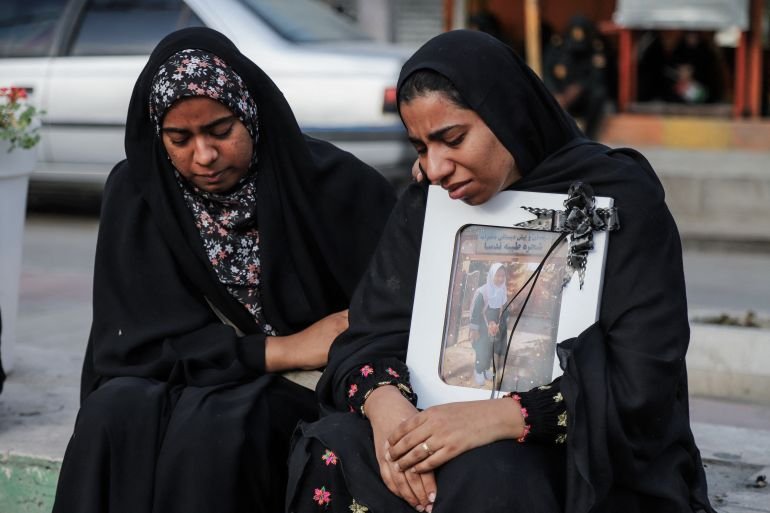
    Calls are growing for an independent investigation into an attack on a girls’ school in southern Iran that killed 165 young pupils this week, with United Nations experts denouncing the deadly bombing as “a grave assault on children”.

    In a statement on Friday, a group of UN experts said girls between the ages of seven and 12 were the main victims of the attack on the primary school in Minab on Saturday – the first day of the United States and Israel’s war against Iran.

    Recommended Stories

    list of 3 itemsend of list

    “An attack on a functioning school during class hours raises the most serious concerns under international law and must be urgently, independently, and effectively investigated, with accountability for any violations,” they said.

    “A strike on a school represents a grave assault on children, on education, and on the future of an entire community,” the experts said. “There is no excuse for killing girls in a classroom.”

    Rights advocates have pointed to the Minab school attack as evidence of potential war crimes being committed by Israel and the US in a war that legal experts say was launched in violation of the UN Charter and in breach of international law.

    They also say it is an example of the heavy toll Iranian civilians are paying amid the conflict, which has killed at least 1,332 people so far, according to the latest figures cited by Iran’s state media outlets.

    Iran’s UN envoy, Amir Saeid Iravani, told reporters on Monday that the school was “deliberately destroyed” in US-Israeli attacks against the country. “As a result, 165 innocent schoolgirls were martyred. I repeat it – 165 schoolgirls martyred,” he said.

    Investigations published in recent days suggest US President Donald Trump’s administration was responsible for the attack.

    The Reuters news agency, quoting two unnamed US officials, reported on Thursday that American military investigators believe it is likely that US forces were responsible.

    Using satellite imagery as well as verified videos and official statements, The New York Times also said US forces “were most likely to have carried out the strike” as they were attacking an adjacent naval base operated by the Islamic Revolutionary Guard Corps (IRGC).

    White House Press Secretary Karoline Leavitt told reporters on Wednesday that Washington was investigating the incident.

    “The Department of War and the United States armed forces do not target civilians,” she said.

    A coffin is carried during the funeral of mostly children killed in what Iranian officials said was an Israeli-U.S. strike Feb. 28 at a girls' elementary school in Minab, Iran, Tuesday, March 3, 2026. (Abbas Zakeri/Mehr News Agency via AP)
    A coffin is carried during the funeral of mostly children killed in the attack on the school in Minab, Iran, on March 3, 2026 [Abbas Zakeri/Mehr News Agency via AP Photo]

    UN human rights chief Volker Turk told reporters on Friday that, “whatever outcome there will be of the investigations, we hope they will be prompt and that they will be done in full transparency”.

    “We also expect accountability to be served because obviously mistakes were clearly made,” Turk said in Geneva, Switzerland, stressing that “accountability is absolutely critical” along with redress and compensation.

    “It is a lesson to be learned – a horrible, tragic lesson to be learned – when girls are killed in this way,” he said.

    “I hope there will be not only guarantees of non-recurrence, but a review of all the standard operating procedures when it comes to these issues, and especially when it comes to conduct of hostilities.”

    Meanwhile, DAWN, a US-based advocacy group, has urged Iran to give the International Criminal Court (ICC) jurisdiction over crimes committed on its territory since the war began.

    “From the killing of over 150 students and teachers to strikes on hospitals full of newborns, every day more and more evidence emerges pointing to the commission of grave war crimes in Iran since the start of the war,” said the group’s executive director, Omar Shakir.

    “Victims deserve justice. The mechanisms exist and the US has no veto over them.”

    In this picture obtained from Iran's ISNA news agency, mourners cry during the funeral of children killed in a reported strike on a primary school in Iran’s Hormozgan province, in Minab on March 3, 2026.
    Mourners cry during the funeral of 165 schoolgirls killed in the attack on a primary school, in Minab, on March 3, 2026 [AFP]
  • Kurdish opposition mulls whether to trust Trump after Iran uprising call

    Kurdish opposition mulls whether to trust Trump after Iran uprising call

    Uncertainty over US and Israeli war aims is slowing the Iranian Kurdish opposition groups urged by President Donald Trump to rise up against the Islamic Republic, Kurdish analysts have told Al Jazeera.

    From Trump’s call for Iranians to topple their government, to arguments from the United States that it was forced into attacking Iran by its ally Israel, to discredited claims that the strikes on Tehran were somehow defensive, Washington has yet to offer a clear explanation for its attacks on Iran or what its plans might be beyond them.

    Recommended Stories

    list of 4 itemsend of list

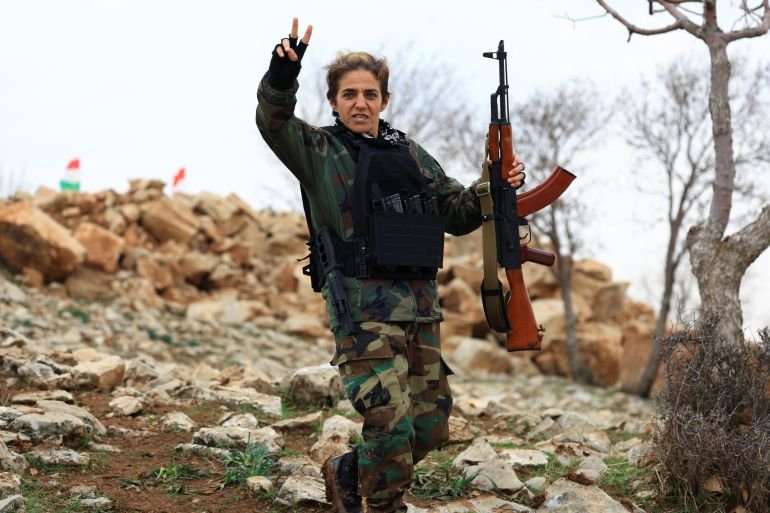
    That leaves potential allies, including Iranian Kurdish opposition groups, uncertain of what comes next. Of the various ethnic groups within Iran, it is the Kurds who are arguably the most organised and militarily experienced. Opposition sentiment towards the government in Tehran is also widespread.

    Iranian Kurdish opposition groups have established political networks, fought rebellions against central government forces, endured repression and splits, and gained combat experience alongside other Kurdish movements from other countries, making them one of the few organised armed challenges to the Islamic Republic.

    Kurdish opposition groups have also recently worked to heal divisions between themselves.

    The Coalition of Political Forces of Iranian Kurdistan, a forum allowing many of Iran’s Kurdish opposition groups to coordinate activity against the Iranian state from their strongholds in the semi-autonomous Kurdish region of Iraq, was announced on February 22, less than a week before US-Israeli strikes began on Iran, killing Supreme Leader Ayatollah Ali Khamenei.

    The strikes have devastated Iran, but many observers believe that a full defeat of the Iranian government is not possible with just air power. But with the US public largely opposed to the Iran war, and particularly the prospect of US soldiers on the ground following the Iraq war in the 2000s, the possibility of Iranian Kurdish forces leading the charge has been raised by Trump himself.

    Trump said that he would be “all for it” in comments made on Thursday,

    Several US media outlets have already reported that US officials have contacted leaders within the Kurdish region of northern Iraq, where many Iranian Kurdish opposition groups are based, to discuss facilitating a ground operation inside Iran.

    Massively outnumbered by Iranian ground forces, estimated at around half a million, Iranian Kurdish opposition groups could likely only muster a maximum of 10,000 fighters, leading analysts to believe that they would be heavily reliant on US or Israeli support, including air strikes and supplying weapons.

    However, given the experience of US alliances and the fickle nature of Trump, who has repeatedly shown himself willing to turn on even close allies, it remains unclear whether Iranian Kurds are prepared to risk the prospect of what Tehran warned on Friday would be widespread reprisals.

    Iran shows military might as tensions with Israel soar
    Iran’s army is estimated to number around half a million, dwarfing the 10,000 or so fighters analysts believe the combined Kurdish groups could muster [File: Vahid Salemi/AP Photo]

    Past betrayals

    “Kurdish political opposition to the Islamic Republic goes back decades,” Kamran Matin, a lecturer in international relations at the University of Sussex, told Al Jazeera.

    “Since the early 1990s, they’ve been pushed into northern Iraq, where they’ve established a kind of modus vivendi with the Kurdistan Regional Government [KRG, or Kurdish region of northern Iraq],” Matin, who is Kurdish Iranian, said. “Given the stakes, any Kurdish offensive on the Islamic Republic would need the KRG’s buy-in.”

    “If Trump declares victory halfway through and leaves a wounded republic in place, it will likely have both the means and the desire to punish the KRG and, importantly, the people there,” Matin added. “At the same time, they are not in a position to outright reject Trump’s request.”

    The Kurdish experience of past US operations in the Middle East is far from reassuring. In 1991, after President George HW Bush called upon Kurds to rise against Iraqi President Saddam Hussein, the ensuing rebellion went unsupported, resulting in tens of thousands of deaths and years of displacement.

    Later, during the fight against ISIL (ISIS), Syrian Kurds became key US partners, only to see US support falter during the fallout from the 2017 Kurdish independence referendum in Iraq and again in 2019, when partial US withdrawals from northern Syria exposed Kurdish forces to Turkish offensives, forcing mass evacuations and deepening political marginalisation.

    Frantic Kurdish refugees struggle for a loaf of bread during a humanitarian aid distribution at the Iraqi-Turkish border, April 5, 1991. REUTERS/Yannis Behrakis/File photo SEARCH "YANNIS BEHRAKIS" FO
    Frantic Kurdish refugees struggle for a loaf of bread during a humanitarian aid distribution at the Iraqi-Turkish border, April 5, 1991 [File: Yannis Behrakis/Reuters]

    Despite that, Shukriya Bradost, a Kurdish-Iranian security analyst and researcher at Virginia Tech University, said that there was “cautious hope” among opposition groups that Iranian Kurds would be supported by the US.

    “However, there is also concern that if Washington reaches an agreement with the remaining elements of the Iranian regime to end the war, Kurdish groups could once again be sidelined and left alone to face a new central government that might continue the same policies of repression,” Bradost said.

    Knock-on effect on Iraq

    The majority of the Iranian Kurdish armed opposition groups are based in the Kurdish region of northern Iraq, which operates a regional government largely autonomous from Baghdad. Those groups include the Democratic Party of Iranian Kurdistan (PDKI), the Kurdistan Freedom Party (PAK), Kurdistan Free Life Party (PJAK) and Komala.

    The groups have been exiled there since the 1980s and 1990s.

    Any move in response to Trump’s invitation could have serious consequences for the Kurdish region of northern Iraq, its fragile institutions, and its population of some 5 million people.

    A plume of smoke rises near Erbil International Airport in Erbil on March 1, 2026. Loud explosions were heard early on March 1 near Erbil airport, which hosts US-led coalition troops in Iraq's autonomous Kurdistan region, an AFP journalist said. (Photo by Shvan HARKI / AFP)
    A plume of smoke rises near Erbil International Airport in Erbil on March 1, 2026 [File: Shvan Harki/AFP]

    On Friday, Iran launched missile and drone strikes targeting the Democratic Party of Iranian Kurdistan.

    That followed comments from Ali Akbar Ahmadian, a member of Iran’s Defence Council, who told the semi-official Mehr news agency that Tehran could launch widespread attacks in the Kurdish region of northern Iraq, if local authorities failed to crack down on what he described as US and Israeli-backed rebel groups, allegedly plotting to enter Iran.

    “The KRG has been very clear that it does not want to be part of a war with Iran,” Bradost said. “As a non-sovereign entity within Iraq, it is one of the weakest actors compared to sovereign states in the region and has therefore been among the first targets of Iranian retaliation.”

    The Kurdish region of northern Iraq has faced repeated Iranian missile and drone strikes in recent years, Bradost said, with the United States offering little in the way of protection during those attacks.

    “In addition, after the 2017 Kurdish independence referendum, Washington ultimately supported the Iraqi central government and Iran-backed Shia militia forces that moved against Kurdish-controlled areas,” Bradost continued. “Because of this history, despite the KRG’s long and up-and-down relationship with the United States since the 1960s, there is deep caution about becoming involved in any US or Israeli confrontation with Iran.”

    However, despite that caution, as well as the ideological misgivings among many of the leftist Kurdish groups over partnering with the US and Israel, the timing may prove too great an opportunity to turn down.

    The years of war that have followed the October 2023 Hamas-led attack on Israel and Israel’s genocidal war on Gaza have seen Iran’s network of alliances throughout the region diminish in power. Likewise, the 12-day war of June 2025, allied to the current onslaught against Iran, have arguably made the Islamic Republic as weak as it has ever been.

    “They’ve been fighting against the Islamic Republic for about five decades, with 50 years of repression before that under the Pahlavi regime,” Hemn Seyedi, of the University of Exeter, said. “The distrust is very real, but this might be the opportunity they’ve been waiting for.”

    Mass protests across Iran in January – when thousands were killed – had shown the strength of feeling against the state, Seyedi said, and he believes many are likely to support a Kurdish rebellion.

    “Everything I’m hearing from the Iranian Kurdish opposition in the [Kurdish region of Iraq] suggests we may see something in the next few days,” Seyedi said.

  • In a bid to counter China, Trump hosts a summit for Latin America leaders

    In a bid to counter China, Trump hosts a summit for Latin America leaders

    Over the past two decades, China has quietly eclipsed the United States as the dominant trading partner in parts of Latin America.

    But since taking office for a second term, United States President Donald Trump has pushed to reverse Beijing’s advance.

    Recommended Stories

    list of 3 itemsend of list

    That includes through aggressive manoeuvres directed at China’s allies in the region.

    Already, the Trump administration has stripped officials in Costa Rica, Panama and Chile of their US visas, reportedly due to their ties to China.

    It has also threatened to take back the Panama Canal over allegations that Chinese operatives are running the waterway. And after invading Venezuela and abducting President Nicolas Maduro, the US forced the country to halt oil exports to China.

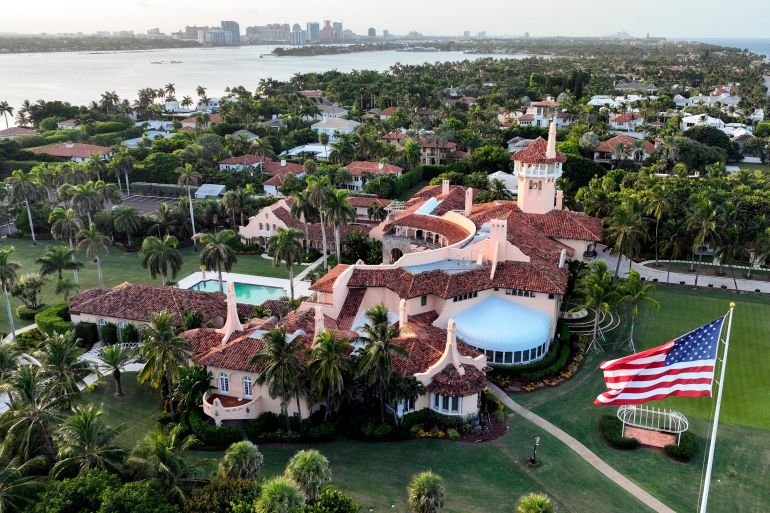
    But on Saturday, Trump is taking a different approach, welcoming Latin American leaders to his Mar-a-Lago estate for an event dubbed the “Shield of the Americas” summit.

    How he plans to persuade leaders to distance themselves from one of the region’s largest economic partners remains unclear.

    But experts say the high-level meeting could signal that Washington is prepared to put concrete offers on the table.

    Securing meaningful commitments from Latin American leaders will take more than a photo op and vague promises, according to Francisco Urdinez, an expert on regional relations with China at Chile’s Pontifical Catholic University.

    Even among Trump’s allies, Urdinez believes significant economic incentives are required.

    “What they’re really hoping is that Washington backs up the political alignment with tangible economic benefits,” he said.

    ‘Reinforcing the Donroe Doctrine’

    Already, the White House has confirmed that nearly a dozen countries will be represented at the weekend summit.

    They include conservative leaders from Argentina, Bolivia, Chile, Costa Rica, Ecuador, El Salvador, the Dominican Republic, Honduras, Panama, Paraguay, and Trinidad and Tobago.

    Mexico and Brazil, the region’s largest economies, have been notably left out. Both are currently led by left-leaning governments.

    In a post on social media, the Trump administration framed the event as a “historic meeting reinforcing the Donroe Doctrine”, the president’s plan for establishing US dominance over the Western Hemisphere.

    Part of that strategy involves assembling a coalition of ideological allies in the region.

    But rolling back Chinese influence in a region increasingly reliant on its economy will not be an easy feat, according to Gimena Sanchez, the Andes director at the Washington Office on Latin America (WOLA), a US-based research and advocacy group.

    The US “is trying to get countries to agree that they’re not going to have China be one of their primary trading partners, and they really can’t at this point”, Sanchez said.

    “For most countries, China is either their top, second or third trading partner.”

    China, after all, has the second-largest economy in the world, and it has invested heavily in Latin America, including through infrastructure projects and massive loans.

    The Asian giant has emerged as the top trading partner in South America in particular, with bilateral trade reaching $518bn in 2024, a record high for Beijing.

    The US, however, remains the biggest outside trade force in Latin America and the Caribbean overall, due in large part to close relations with its neighbour, Mexico.

    As of 2024, US imports from Latin America jumped to $661bn, and its exports were valued at $517bn.

    Rather than choosing sides, though, many countries in the region are trying to strike a balance between the two powers, Sanchez explained.

    Still, she added that the US cannot come empty-handed to this weekend’s negotiations.

    “If the US is very boldly telling countries to cut off strengthening ties with China”, Sanchez emphasised that “the US is going to have to offer them something.”

    What’s on the table?

    Trump has already extended economic lifelines to Latin American governments politically aligned with his own.

    In the case of Argentina, for instance, Trump announced in October a $20bn currency swap, meant to increase the value of the country’s peso.

    He also increased the volume of Argentinian beef permitted to be imported into the US, shoring up the country’s agricultural sector, despite pushback from US cattle farmers.

    Trump has largely tied those economic incentives to the continued leadership of political movements favourable to his own.

    The $20bn swap, for instance, came ahead of a key election for Argentinian President Javier Milei’s right-wing party, which Trump supports.

    Isolating China from resources in Latin America could also play to Trump’s advantage as he angles for better trade terms with Beijing.

    A show of hemispheric solidarity could give Trump extra leverage as he travels to Beijing in early April to meet with Chinese President Xi Jinping, Urdinez pointed out.

    Then there’s the regional security angle. The US has expressed particular concern about China’s control of strategic infrastructure in Latin America and the critical minerals it could exploit in the region to bolster its defence and technology capabilities.

    Bolivia, Argentina and Chile, for instance, are believed to hold the world’s largest deposits of lithium, a metal necessary for energy storage and rechargeable batteries.

    The Trump administration referenced such threats in its national security strategy, published in December.

    “Some foreign influence will be hard to reverse,” the strategy document said, blaming the “political alignments between certain Latin American governments and certain foreign actors”.

    But Trump’s security platform nevertheless asserted that Latin American leaders were actively seeking alternatives to China.

    “Many governments are not ideologically aligned with foreign powers but are instead attracted to doing business with them for other reasons, including low costs and fewer regulatory hurdles,” the document said.

    It argued that the US could combat Chinese influence by highlighting the “hidden costs” of close ties to Beijing, including “debt traps” and espionage.

    ‘More aspiration than reality’

    Henrietta Levin, a senior fellow at the Center for Strategic and International Studies in Washington, believes that many Latin American countries would prefer to deepen economic engagement with the US over China.

    But in many cases, that hasn’t been an option.

    She pointed to Ecuador’s decision to sign a free trade agreement (FTA) with China in 2023 after it failed to negotiate a similar agreement with the US under President Joe Biden.

    Some US politicians had opposed the deal as a threat to domestic industries. Others had encouraged Biden to reject it due to alleged corruption in Ecuador’s government.

    Critics, though, said the resistance pushed Ecuador into closer relations with China.

    “ When Ecuador signed their free trade agreement with China a couple years ago, their leader actually made quite clear that they had wanted an FTA with the US and would’ve preferred that,” said Levin.

    “But the US didn’t want to negotiate such an agreement, and China did.”

    As a result, Ecuador became the fifth country in Latin America to ink a free trade pact with China, after Chile, Peru, Costa Rica and Nicaragua.

    For Levin, the question looming over this weekend’s summit is whether the Trump administration will step up and provide alternatives to the economic engagement China has already delivered.

    Options could include trade agreements, financing for new development and investments with attractive terms.

    But without such offers, Urdinez, the Chilean professor, warns that Trump will face limits to his ambitions of checking China’s growth in Latin America.

    “Until Washington is willing to fill the economic space it’s asking countries to vacate, the rollback strategy will remain more aspiration than reality,” said Urdinez.
  • Messi censured for meeting and applauding Trump amid US attacks on Iran

    Messi censured for meeting and applauding Trump amid US attacks on Iran

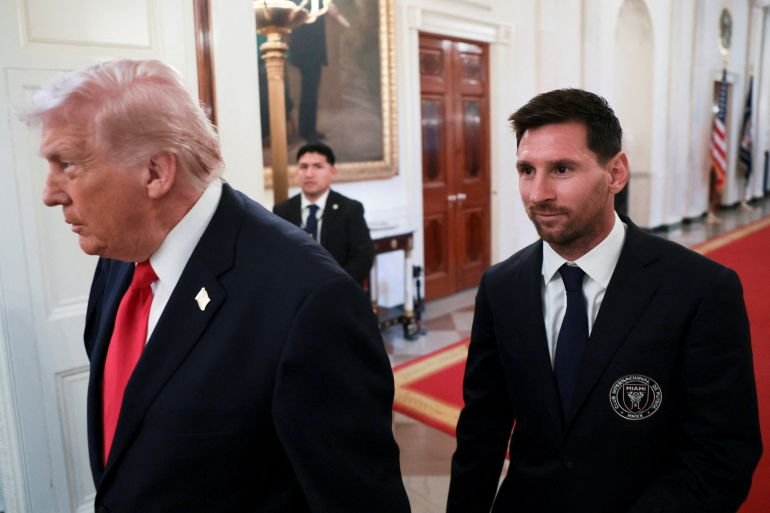
    Lionel Messi has been criticised for meeting United States President Donald Trump and applauding his latest brief on the Iran war at an White House event honouring the Argentinian superstar and his Inter Miami team.

    Messi drew high praise from Trump in Washington, DC on Thursday, but the Miami captain received backlash on social media for meeting and applauding the US president.

    Recommended Stories

    list of 4 itemsend of list

    Miami beat the Vancouver Whitecaps in December for the Major League Soccer (MLS) title, and Messi was named the league’s MVP for the second consecutive season.

    “It’s my distinct privilege to say what no American president has ⁠ever had the chance to say before: ‘Welcome to the White House, Lionel Messi,’” Trump said as the 38-year-old stood beside him.

    “Leo, you came in and you won, and that’s something very hard to do, very, very unusual and frankly, there’s a lot more pressure put on you than anyone would know, because you sort of expected to win, but almost nobody wins.”

    Messi, who entered the ceremony alongside Trump, joined Inter Miami in mid-2023 to great fanfare. He did not speak during the event, which opened with comments on military action with Trump addressing the war with Iran, extending the political address to highlight the situation in Venezuela and a possible future announcement regarding Cuba and tariffs.

    Trump began with a boast about the US and Israel’s ongoing attacks on Iran, which were launched on Saturday and have killed 1,230 people.

    Tehran responded by launching waves of missiles and drones at Israel and towards several military bases in the Middle East where US forces operate.

    “The United States military, together with the wonderful Israeli partners, continues to totally demolish the enemy, far ahead of schedule and at levels that people have never seen before,” ⁠Trump said as Messi stood next to him.

    The president concluded by saying: “Our people are doing a great job, again – the greatest military anyone has ever.”

    His words met with applause from Messi, the Miami squad, and others present in the room.

    However, the former Barcelona forward swiftly became the subject of criticism on social media, where he was slammed for being drawn into politics and applauding Trump as he boasted of the US military’s action in Iran.

    Referencing video clips of the event, Palestinian-American writer Ali Abunimah wrote: “Vacuous selfish people”.

    “Lionel Messi CLAPS when President Trump talks about his plan to defeat Iran. Messi fans?” the account Halal Nation – founder of the Halal Tribune with a purported 500,000 subscribers -wrote on X.

    Spanish journalist Leyla Hamed termed Messi and his team’s actions “bizarre” amid the ongoing conflict across the Middle East.

    “Donald Trump casually announces more illegal bombing of Iran in front of the entire Inter Miami squad,” she wrote.

    Hamed pointed out that hundreds of children have been killed in Iran in the last few days.

    The deadliest single incident, which occurred in the city of Minab in southeastern Iran on Saturday, killed 165 girls in an elementary school.

    “Trump knows exactly what he’s doing by using these athletes, and they allowed themselves to be dragged into it,” she added.

    “What’s the point of having so much influence and power if you can’t use it in moments like this.

    “To think most of these players have children…”

    A US football fan account on YouTube, Tactical Manager, also reacted to Messi and Miami’s presence in the White House. Messi’s former Barcelona strike partner, Luis Suarez, was also present.

    “I never thought I’d live to see Donald Trump talking about bombing another country with Messi and Suarez in the background,” the account wrote.

    Several other fans and fan groups expressed their displeasure.

    Messi presents Trump with signed Inter Miami ball

    Trump seemingly used the ceremony to bring together athletic prowess and military ⁠might.

    The president surveyed the squad before pausing to single out Argentinian midfielder Rodrigo De Paul, and asked: “Do you have any bad-looking players?”

    “I don’t like good-looking men,” Trump joked, “You ⁠don’t feel so good about yourself.”

    Addressing Messi – who famously avoids speaking out on politics – the president brought the conversation back to sport.

    “You could have gone anywhere in the world. You could have chosen any team in the world, and you chose to go to Miami. I don’t blame you. The weather’s extremely good. Do you go to Doral? You go to Doral and play golf?” Trump said, referencing a golf course he owns.

    “I just want to thank you for bringing us all on this ride, because you are hot and talented and a great person.”

    Inter Miami CF captain Lionel Messi and his team applaud while U.S. President Donald Trump speaks during an event to honor reigning Major League Soccer (MLS) champion Inter Miami CF players and team officials in the East Room of the White House
    Inter Miami CF captain Lionel Messi and his team applaud while US President Donald Trump speaks during the event [Jonathan Ernst/Reuters]

    Messi, an eight-time Ballon d’Or winner, led Argentina to the World Cup title in 2022. He is expected to play again for Argentina this summer when the tournament is hosted by Canada, Mexico and the US.

    However, football’s global showcase has been clouded by recent events, including the conflict in the Middle East and turmoil in Mexico following the death of cartel leader Nemesio Oseguera in a military operation.

    Having opened the ceremony with comments about the conflict with Iran, Trump did not mention the World Cup.

    Messi presented a signed Inter Miami football to Trump, who went on to reveal the affection his 19-year-old son Barron has for Messi.

    “My son said, ‘Dad, ⁠you know who’s going to be there today?’ I said, ‘No, I got a lot of things going on today,’” Trump said. “He said ‘Messi!’ He’s a big fan of yours. He thinks you’re just a great person. And I think you got to meet a little ‌while ago. So he’s a big soccer fan, but he’s a tremendous fan of yours. And a gentleman named Ronaldo. Cristiano is great. You’re great.”

    Cristiano Ronaldo, Messi’s longtime rival in European football, attended a White House event with Trump last year.

    Wading ⁠into the area of football history, Trump said to Messi, “You may be better than Pele,” and he asked those in attendance, “Who’s better?”

    Inter Miami co-owner Jorge Mas and coach Javier Mascherano presented the US president with a ‌team jersey ‌and watch.

    Miami are the first MLS team to be invited to the White House during Trump’s two terms in office.

  • ‘No deal with Iran except unconditional surrender,’ Trump says

    ‘No deal with Iran except unconditional surrender,’ Trump says

    US president stakes out maximalist war aims as conflict wreaks havoc across the region amid rising death toll.

    Donald Trump has stressed that any deal with Iran must result in the country’s “unconditional surrender”, setting maximalist war objectives for the United States.

    The US president’s remarks on his Truth Social platform on Friday appear to reject the prospect of a compromise, amid Iranian confirmation of diplomatic mediation to end the conflict.

    Recommended Stories

    list of 3 itemsend of list

    “There will be no deal with Iran except UNCONDITIONAL SURRENDER!” Trump wrote.

    “After that, and the selection of a GREAT & ACCEPTABLE Leader(s), we, and many of our wonderful and very brave allies and partners, will work tirelessly to bring Iran back from the brink of destruction, making it economically bigger, better, and stronger than ever before.”

    Iranian President Masoud Pezeshkian had said earlier that some countries are engaging mediation efforts to end the war, stressing that Iran is committed to peace in the region but prepared to defend itself.

    “Mediation should address those who underestimated the Iranian people and ignited this conflict,” Pezeshkian said in a social media statement.

    The conflict has spread across the Middle East, igniting Iranian attacks across the Gulf and a war between Hezbollah and Israel resulting in a mass displacement crisis in Lebanon.

    Iran has been launching missiles and drones at Israel and US interests and assets across the region. Iranian forces have also targeted energy and civilian infrastructure in Gulf countries, straining ties with the Arab World.

    The violence, which saw Iran largely succeed in closing down the Strait of Hormuz, has sent oil prices soaring across the world.

    Iranian officials have expressed defiance since the start of the war, stressing that they are ready for a long conflict and prepared to fend off a US ground invasion should it occur.

    Iran’s Foreign Minister Abbas Araghchi said in a message to Trump on Thursday that the US plan for a “clean rapid military victory failed”.

    “Your Plan B will be even bigger failure,” Araghchi wrote on X.

    On Friday, Iran’s top diplomat posted a photo of the caskets of a mother and child, the apparent victims of US-Israeli attacks. “Our Brave and Powerful Armed Forces will avenge each and every Iranian mother, father, and child who has been targeted by hostile forces,” Araghchi wrote.

    The war has killed at least 1,332 people in Iran, among them 181 children, according to UNICEF.

    The single deadliest incident was a strike on a girls’ elementary school in the southern city of Minab on the opening day of the conflict, which Iranian authorities said killed around 180 pupils and staff.

    The Trump administration has pushed to project confidence and dominance over Iran, with top officials saying that the US would “rain missiles”, “death and destruction” on the country.

    In recent days, Trump has stressed that he would like to replicate the Venezuela playbook in Iran – keeping the governing system in place but installing a leader who is friendly to US interests.

    On Wednesday, Trump said he has to be “involved” in choosing the successor of Supreme Leader Ali Khamenei who was killed in US-Israeli attacks on Saturday

  • Map shows how big Iran is compared with the 50 US states

    Map shows how big Iran is compared with the 50 US states

    The United States and Israel have continued to bombard Iran, killing at least 1,045 people since Saturday.

    Tehran has responded with drone and missile attacks on Israel and several Gulf countries, causing multiple fatalities.

    According to recent polling, only one in four Americans approves of the US strikes on Iran. Approval among supporters of President Donald Trump’s Republican Party is stronger but not resounding with 55 percent saying they approved of the strikes, 13 percent disapproving and 32 percent unsure.

    About 74 percent of Democrats disapproved of the strikes with 7 percent approving and 19 percent unsure.

    How big is Iran?

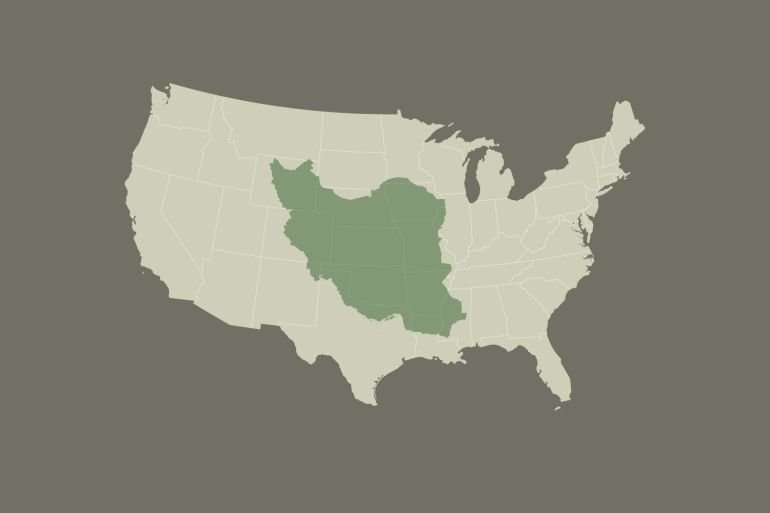
    Iran is the 17th largest country in the world by area, just behind Sudan and Libya. It covers about 1.65 million square kilometres (636,000sq miles).

    To put that into context, Iran is about one-sixth the size of the United States, about one-fifth the size of Australia, roughly half the size of India, about four times larger than Iraq and about 80 times larger than Israel.

    Iran is located in Western Asia and shares a land border with seven countries, the longest being with Iraq, followed by Turkmenistan, Afghanistan, Pakistan, Azerbaijan, Turkiye and Armenia.

    INTERACTIVE - How big is Iran - march5, 2026-1772713838
    (Al Jazeera)

    How big is Iran compared with the 50 US states?

    Iran is nearly as large as the largest state in the US, Alaska, and more than twice the size of Texas. To equal the landmass of Iran, you would need to combine the areas of Texas, California, Montana and Illinois.

    If you placed Iran over the US East Coast, it would swallow almost everything from Maine down to Florida.

    The map below shows how big Iran is compared with each of the 50 US states.

    INTERACTIVE -How big is iran compared to 50 us states - March 5, 2026-1772713882
    (Al Jazeera)

    Iran at a glance

    With 92 million people, Iran’s population represents about a quarter of the nearly 350 million people of the US. Most of the population live in the western half of Iran, where rugged mountains, fertile valleys and river basins sustain the population.

    The country is rich in oil and gas, ranking as the world’s ninth largest oil producer and third largest natural gas producer.

    Iran’s gross domestic product (GDP) is $375bn, ranking it 43rd globally, and it has an unemployment rate of about 9.2 percent.

    INTERACTIVE - Iran at a glance - March 5, 2026-1772714072
    (Al Jazeera)

    In the north, high-altitude areas endure long, bitterly cold winters. Farther south and east, the climate shifts dramatically. Iran’s central and southern provinces experience intense summer heat. The southwestern city of Ahvaz has recorded temperatures above 50 degrees Celsius (122 degrees Fahrenheit), among the highest ever measured.

    Iran’s vast central plateau is comparable to the arid stretches of Arizona or inland California, sparsely populated and shaped by a harsh desert climate.

    Where are Iran’s main population centres?

    With 9.6 million inhabitants, Tehran is the most populous city in Iran. Its scale is comparable to New York, the most populous city in the United States, which has 8.5 million residents within its city limits. Both serve as the cultural and economic hearts of their respective nations.

    INTERACTIVE - Iran population density - FEB26, 2026-1772104770
    (Al Jazeera)

    Tehran has been the capital since 1795, but the city’s history dates back more than 6,000 years.

    Mashhad in the northeast is Iran’s second largest city with 3.4 million people, putting it in the range of Los Angeles, which has about 3.8 million people.

    Mashhad has a history spanning more than 1,200 years and is a major religious and cultural centre. It is home to the Imam Reza Shrine, which attracts millions of pilgrims from around the world every year.

    Isfahan, the third largest city, is home to 2.3 million people and is comparable to Houston, which has roughly the same number of people.

    More than 2,500 years old, Isfahan was once the capital of the Safavid Empire, which lasted from 1501 to 1722. The city has major educational institutions and is a centre for textiles, steel, manufacturing, and the nuclear and aerospace industries. The wider region of Isfahan is home to one of the nuclear sites bombed by the US towards the end of the 12-day war between Iran and Israel in June.

    Other populous cities across Iran include: Shiraz (1.7 million), Tabriz (1.7 million), Karaj (1.6 million), Qom (1.4 million) and Ahvaz (1.3 million).

  • Iranians ‘ready to disgrace’ US troops if they invade, top official says

    Iranians ‘ready to disgrace’ US troops if they invade, top official says

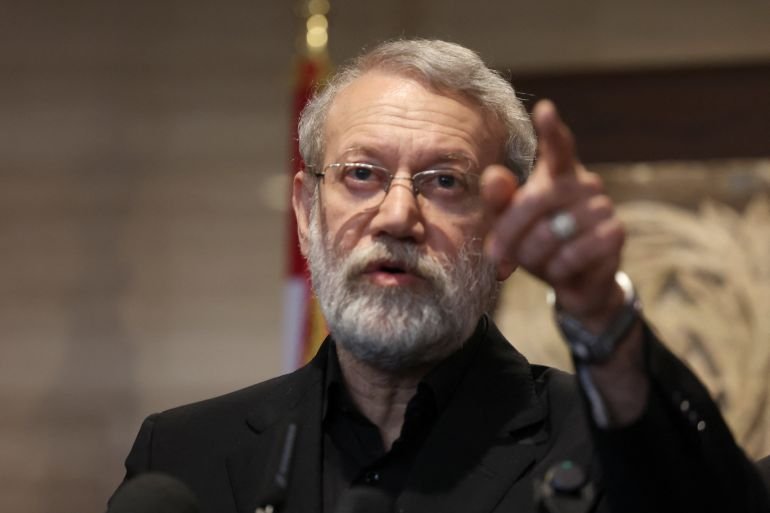
    Top Iranian official Ali Larijani has stressed that his country is prepared to confront a possible invasion from the United States, pledging to capture and kill US troops if they enter the country.

    Thursday’s statement comes as US officials, including President Donald Trump, refuse to rule out deploying forces inside Iran.

    Recommended Stories

    list of 3 itemsend of list

    Larijani, who serves as the secretary of the Supreme National Security Council of Iran, warned that such actions would have dire consequences.

    “Some American officials have stated that they intend to enter Iranian territory on the ground with several thousand troops,” Larijani said in a statement.

    He then added a pointed reference to Iran’s former supreme leaders, Ruhollah Khomeini and Ali Khamenei, the latter of whom was killed on Saturday in a joint US-Israeli strike.

    “The valiant sons of Imam Khomeini and Imam Khamenei are waiting for you, ready to disgrace those corrupt American officials by killing and capturing thousands,” he said.

    Larijani, who was a close adviser to the assassinated supreme leader, is believed to be one of the most powerful figures in Iran.

    Iran’s Foreign Minister Abbas Araghchi echoed Larijani’s remark on Thursday, saying that Iran is not afraid of a possible US invasion.

    “No, we are waiting for them,” Araghchi told NBC News, adding that a ground offensive would be a “big disaster” for US troops.

    Israel and the US have dropped thousands of bombs on Iran since the latest conflict began on Saturday, and Tehran has responded with missile and drone attacks across the Middle East.

    Trump has said that the war is proceeding better than expected, with the US and Israel in control of Iran’s skies and striking the country with no reprieve.

    But Tehran has projected defiance, vowing to continue fighting to avenge Khamenei and repel the US and Israeli attacks.

    “We will not negotiate with the United States,” Larijani said earlier this week.

    Venezuela as a model for Iran?

    In the aftermath of Khamenei’s death, there have been few signs that Iran’s new leadership is willing to work with Washington.

    But Trump has nevertheless expressed a desire to see Iran’s government follow the model set by his January 3 attack on Venezuela, which involved replacing the head of state with a figure who is friendly to the US.

    In Venezuela, US forces abducted Venezuelan President Nicolas Maduro and transported him to the US for trial. Within days, Maduro was succeeded by his vice president, Delcy Rodriguez, with the backing of the US.

    Rodriguez has since been cooperating with the US, including by allowing the Trump administration to sell millions of barrels of Venezuela’s oil. The rest of Venezuela’s government, meanwhile, has remained largely intact.

    “What we did in Venezuela, I think, is the perfect, the perfect scenario,” Trump told The New York Times on Sunday.

    On Wednesday, Trump added that he would like to be “involved in the appointment” of Khamenei’s successor, like he had been “with Delcy in Venezuela”.

    Trump also voiced opposition to Mojtaba Khamenei, the slain supreme leader’s son, who is believed to be one of the frontrunners to succeed his father as head of state.

    “Khamenei’s son is unacceptable to me. We want someone that will bring harmony and peace to Iran,” the US president told Axios.

    The next supreme leaders will be chosen by a body of religious scholars known as the Council of Experts.

    Later on Wednesday, Araghchi warned Trump that the plan for a quick military victory against Iran has failed.

    “Your Plan B will be even bigger failure,” Araghchi wrote on X.

    He then questioned whether Trump’s “America First” platform was prioritising US priorities — or Israel’s. The foreign minister also blamed the Trump administration for scuttling recent negotiations to deescalate tensions between the US and Iran.

    “The truth: Chance for unique deal burned after the ‘America Last’ cabal obscured ‘significant progress’ we made in negotiations. ‘Israel First’ always means ‘America Last’,” Araghchi wrote.

    The US and Iranian officials held talks in Geneva days before the Trump administration and Israel launched the war.

  • Iran war: What is happening on day six of US-Israel attacks?

    On the sixth day of US-Israeli attacks on Iran, the conflict is escalating as regional tensions rise.

    On the sixth day of the United States-Israeli war  against Iran, the situation is escalating inside Iran while regional tensions are intensifying across the Gulf, Lebanon and Iraq.

    Iran has threatened global shipping in the Strait of Hormuz, and fighting is spreading across multiple fronts in the Middle East. Further afield, a US submarine has sunk an Iranian warship off the coast of Sri Lanka.

    In Iran

    • Death toll: According to Iranian state media, the death toll from five days of US-Israeli attacks has reached 1,045, with more than 6,000 people wounded.
    • Next supreme leader: Mojtaba Khamenei, the son of Iran’s late Supreme Leader Ayatollah Ali Khamenei, has emerged as a leading contender to take up the country’s top post after years spent cultivating influence within the establishment and forging close ties with the powerful Islamic Revolutionary Guard Corps (IRGC).
    • Civilian infrastructure: Iran’s Ministry of Foreign Affairs has accused the US and Israel of strikes on 33 civilian sites across the country. These locations reportedly include hospitals, schools, residential areas, the Tehran Grand Bazaar and the historic Golestan Palace complex.
    • US submarine sinks Iranian warship: On Wednesday, a US submarine fired a torpedo and sank the Iris Dena, an Iranian frigate, in the Indian Ocean off the south coast of Sri Lanka, expanding the warzone. Sri Lanka’s navy said it had recovered 87 bodies and rescued 32 people.
    • Kurdish ground offensive: There are growing signs that Kurdish-Iranian armed groups have launched a ground offensive in northwest Iran against the Islamic government.
    • Iraqi Kurds possibly joining conflict: US officials have reportedly asked Iraqi Kurds to assist in cross-border military operations, and Kurdish forces in northern Iraq are currently said to be on “standby” to join the conflict against Iran.
    • Strait of Hormuz: On Wednesday, the IRGC announced the closure of the strait, where Iranian threats to attack ships have brought maritime activity to a virtual standstill.
    • Spain’s refusal to join: Iranian President Masoud Pezeshkian commended Spain for refusing to allow the US to use its bases for the war. US President Donald Trump threatened to cut off all trade with Spain.

    In Gulf nations

    • Retaliatory strikes: Iran’s counterstrikes are disrupting oil flows across the Middle East.
    • Saudi Arabia: The US secretary of state and the Saudi foreign minister discussed “the continued threats the Iranian regime poses to regional stability”, and the Saudi Ministry of Foreign Affairs condemned an Iranian drone attack on the US embassy in Riyadh on Tuesday.
    • Qatar: The Qatari government is evacuating residents who live near the US Embassy in Doha. Qatar’s Ministry of Interior stated this is a “temporary precautionary measure”.
    • Diplomatic pushback: Qatar’s foreign minister, Sheikh Mohammed bin Abdulrahman bin Jassim Al Thani, reached out to his Iranian counterpart, Abbas Araghchi, for the first time since the conflict began.
    • Sheikh Mohammed demanded an “immediate halt” to the strikes and said Iran was trying to drag neighbouring countries into a war that is not theirs.
    • Kuwait tanker explosion: An explosion was reported near a tanker anchored approximately 30 nautical miles (equivalent to about 56km) southeast of Kuwait’s Mubarak al-Kabeer.
    • Support from Ukraine: Ukrainian President Volodymyr Zelenskyy spoke with officials in Qatar and other Gulf nations about plans to deploy Ukrainian experts to the region to help defend against Iranian drone and missile attacks.
    Smoke rises after the state news agency reported missile attack on the service center of the U.S. Fifth Fleet, in Manama
    Smoke rises after the state news agency reported a missile attack on the service centre of the US Fifth Fleet, following strikes by the United States and Israel against Iran, in Manama, Bahrain [FILE: Reuters]

    In Israel

    • Intensifying strikes: Israel’s military has announced a new “wave of strikes” against military infrastructure in Tehran.
    • Military success: US and Western officials stated that the US and Israel have successfully destroyed a significant portion of Iran’s military capabilities. With air supremacy achieved, they said, Israeli and US jets are able to fly uncontested over Iranian territory.
    • Domestic impact: The Israeli military has slightly relaxed wartime safety rules, shifting from “essential” to “limited” activities.

    In the US

    • Congress and War Powers: On Wednesday, the US Senate voted 53-47 against requiring the Trump administration to obtain Congressional approval to continue the war with Iran, halting a bipartisan War Powers resolution.
    • Public opinion: Public support for the war appears to be low. According to a Reuters/Ipsos poll, only about 25 percent of respondents supported the US-Israeli attacks, while 43 percent disapproved.
    • The administration’s stance: The White House has strongly defended the military action. Press Secretary Karoline Leavitt stated that the administration’s goals are to eliminate Iran’s nuclear ambitions and destroy its navy.
    • President Trump himself claimed that Iran was close to obtaining a nuclear weapon, stating, “If we didn’t hit within two weeks, they would’ve had a nuclear weapon.”

    In Lebanon, Iraq, Turkiye, China

    • Lebanon conflict: The situation is escalating in Lebanon, with Israel attacking areas including Beirut and Khiam, and exchanging heavy fire with Hezbollah.
    • Iraq: A drone hit a building near Erbil airport, and Kurdish forces in northern Iraq are reportedly on “standby” for a potential cross-border operation into Iran.
    • Missile interception: NATO air defences in the eastern Mediterranean intercepted and shot down an Iranian ballistic missile that had entered Turkiye’s airspace. “This was a deliberate attempt by the Iranian military to shoot out of their country, into a country that is not directly associated with the Gulf,” Mark Kimmitt, a retired US general, told Al Jazeera.
    • China: China’s foreign minister called for an “immediate cessation” of the US and Israeli action in a phone call with his Israeli counterpart, the ministry said.
  • Canada PM Carney says unable to rule out military role in Iran war

    Canada PM Carney says unable to rule out military role in Iran war

    Canadian leader also said the US-Israeli attacks on Iran appear to be ‘inconsistent with international law’.

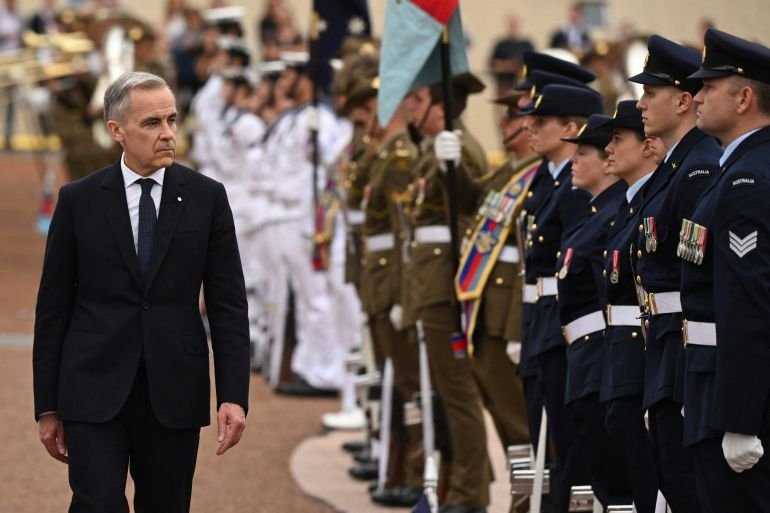
    Canadian Prime Minister Mark Carney said that he could not rule out his country’s military participation in the escalating war in the Middle East, after earlier saying that the US-Israeli strikes on Iran were “inconsistent with international law”.

    Speaking alongside Australia’s Prime Minister Anthony Albanese in Canberra on Thursday, Carney was asked whether there was a situation in which Canada would get involved.

    Recommended Stories

    list of 4 itemsend of list

    “One can never categorically rule out participation,” Carney said, noting the question was “hypothetical”.

    “We will stand by our allies,” he said, adding that “we will always defend Canadians”.

    Carney said earlier that he supported the strikes on Iran “with some regret” as they represented an extreme example of a rupturing world order.

    The Canadian prime minister also stressed that his country was not informed in advance of the US-Israeli attack on Iran, in his first remarks since the war was launched on Saturday.

    “We were not informed in advance, we were not asked to participate,” Carney told reporters travelling with him in Australia on Wednesday.

    “Prima facie, it appears that these actions are inconsistent with international law,” he said.

    “The United States and Israel have acted without engaging the United Nations or consulting with allies, including Canada,” he added, according to Australia’s SBS News, while also condemning strikes on civilians in Iran and calling for “all parties … to respect the rules of international engagement”.

    Whether the US and Israeli attacks on Iran had broken international law was “a judgement for others to make”, he added.

    Canada’s Foreign Affairs Minister Anita Anand said on Wednesday that efforts were under way to help more than 2,000 Canadians who have requested assistance from the government to leave the ⁠Middle East region since the war broke out on Saturday.

    Anand said about half of all inquiries for help were from Canadians in the United Arab Emirates, more than 230 from Qatar, at least 160 from Lebanon, more than 90 from Israel and 74 from Iran.

    Canada’s Foreign Ministry has been instructed to contract charter flights out of the UAE ‌in the coming days, contingent on approval from the UAE government to use its airspace, the minister said.

    Commercial ⁠air traffic remains largely absent across much of the region, with major Gulf hubs – including Dubai, the world’s busiest airport for international passengers – largely shut amid the conflict, in the biggest travel disruption since the COVID pandemic.

    Repatriation flights chartered by foreign governments, including Britain and France, were due to leave on Wednesday and Thursday, while the UAE opened safe air corridors to allow some citizens to return home.

    Under ⁠normal circumstances, thousands of commercial flights would depart the region each day.

  • Iran’s place in World Cup 2026 in doubt amid conflict, Trump’s dismissal

    Iran’s place in World Cup 2026 in doubt amid conflict, Trump’s dismissal

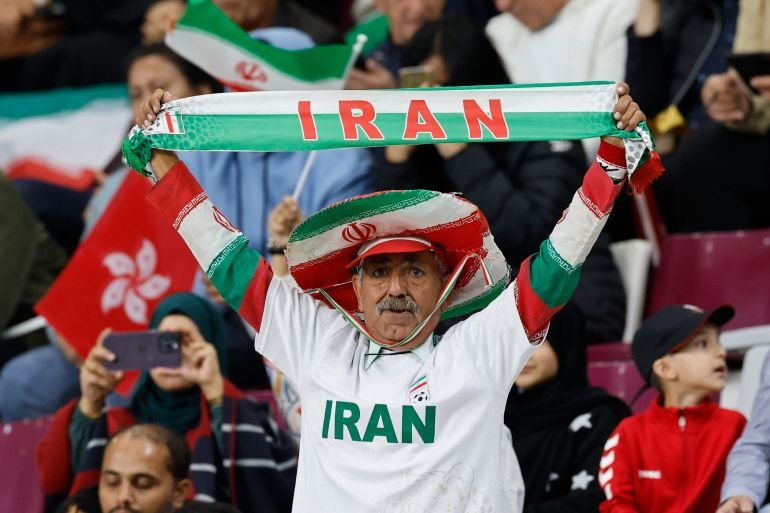
    Among the wide-ranging ramifications of the ongoing conflict in the Middle East, Iran’s participation in the FIFA World Cup 2026 has become a key talking point, with the tournament less than 100 days away.

    The global sporting event will be co-hosted by Canada, Mexico and the United States from June 11 to July 19, with Iran among the 48 nations expected to travel to North America at least a week prior to the opening game.

    Recommended Stories

    list of 3 itemsend of list

    US President Donald Trump says he doesn’t care if Iran participates in the World Cup or not.

    “I think Iran is a very badly defeated country. They’re running on fumes,” Trump told the American news site Politico on Tuesday.

    The US and Israel launched attacks on Iran on Saturday that have killed at least 1,045 people, including its Supreme Leader Ali Khamenei, and sparked a regional conflict that has spread to 12 countries.

    Tehran responded by launching waves of missiles and drones at Israel and towards several military bases in the Middle East where US forces operate.

    Following the escalations, Iran’s spot at the World Cup has come under question, and officials from the Iranian football federation and FIFA have been noncommittal on the world’s 20th-ranked football nation’s participation.

    “After this attack, we cannot be expected to look forward to the World Cup with hope,” Mehdi Taj, president of the Football Federation of the Islamic Republic of Iran (FFIRI), told local sports portal Varzesh3 on Sunday.

    Soccer Football - AFC Asian Cup - Semi Final - Iran v Qatar - Al Thumama Stadium, Doha, Qatar - February 7, 2024 Iran players pose for a team group photo before the match REUTERS/Rula Rouhana
    Iran were the first team to qualify for the FIFA World Cup 2026, but their position in the tournament has been thrown into question amid the ongoing conflict in the Middle East [File: Rula Rouhana/Reuters]

    Uncharted territory

    A leading expert on sports and geopolitics believes that Iran’s participation in the tournament is in serious doubt amid an armed conflict between one of the host nations and a participant.

    “Ultimately, the diplomatic solution [will be] that Iran itself just steps aside and withdraws from the tournament,” Simon Chadwick, a professor of Afro-Eurasian sport at the Emlyon Business School in Shanghai, told Al Jazeera.

    Chadwick said it’s “very difficult” to see the US allowing players, backroom staff and officials to enter the country.

    “The US will not be keen to admit [Iranian] players, officials or medics – who normally travel alongside teams to tournaments.

    “Given that they [Iran] are going to have to play their games in the US, I find it unlikely that they will be there.”

    Despite the logistical quagmire and its unlikely resolution in a timely manner, Chadwick said withdrawal will not be an easy option for Iran, who will think “very long and hard before walking away”.

    The last time a team pulled out of a FIFA World Cup due to political reasons was in 1950, when Argentina withdrew, citing disagreements with the Brazilian Football Confederation.

    “We are in uncharted territory here,” Chadwick explained.

    “We tend to associate boycotts and countries not participating in sport mega-events with the Olympic Games, where mass boycotts were seen in 1980 and 1984 during the Cold War.

    “Typically, that doesn’t tend to happen in World Cups.”

    Chadwick, who has written several books on the economy and politics of sport, believes the impact of withdrawal will not just be political, but also financial.

    “On the one hand, we are living in very complex and sensitive times, and arguably there are reasons for a country either to withdraw or be banned,” he said.

    “But we’re [also] living in highly commercial times, and the financial consequences of unilaterally walking away from what is arguably the world’s biggest sport mega event is an act of self-harm. We also don’t know how FIFA might react if a nation were to unilaterally walk away from its qualifying spot.”

    Can sport diplomacy save the World Cup?

    Despite the tournament being spread across three host nations, all of Iran’s matches are allocated to venues on the US West Coast.

    This could largely be due to the presence of a sizeable Iranian community, especially in Los Angeles, where Team Melli will play two of their three Group G games.

    According to Chadwick, had Iran been playing games in Canada or Mexico, the team could have swayed their decision to participate. But the organisers are unlikely to move the games out of the US now.

    “It would be extremely unusual to take games to another country to accommodate one particular country, particularly when the president of FIFA and the president of the US seem to be very close,” he said, adding, “the relationship between the US and Canada, and the US and Mexico is somewhat complicated, too.”

    While FIFA hasn’t made a clear statement on the issue, its Secretary-General Mattias Grafstrom has said the world football governing body is monitoring the conflict and the situation emerging from it.

    “We had a meeting today, and it is premature to comment in detail, but we will monitor developments around all issues around the world,” he said last week.

    With the tournament a little more than three months away, FIFA said it will “continue to communicate with the host governments”.

    Chadwick believes that FIFA will try to avoid an outcome where Iran is excluded, as it would cause a logistical headache and set the wrong precedent.

    “What we’re more likely to see is sport diplomacy really kicking in,” he predicted.

    “The last thing that FIFA will want is for a country to be excluded or simply not turn up because that does set precedent and puts pressure on FIFA.”

    ‘Sport’s cold war’

    With the conflict raging on for the fifth day and spreading further across the Middle East, it is unclear when the Iranian football officials will take a call on sending their team to the US.

    However, if Iran does opt to withdraw from the World Cup, it could lead to a sporting crisis.

    Chadwick thinks the consequences could be wide-ranging and long-term.

    “Politically, it would perhaps take us towards a new sports cold war, and what I find very interesting is that Russian President Vladimir Putin and Russia have been toying with the idea of creating a sports world championship called the Peace Games, that looks like the Olympic Games and sounds like the Olympic Games but it’s not the Olympic Games.

    “And Russia managed to recruit over 70 countries to participate in that sports event.”

    Such an event could find support from Iran, should it be left with no choice but to withdraw from the World Cup. It may even lead to the creation of a tournament similar to it, according to Chadwick.

    “It’s not inconceivable that at some stage in the future, countries could create their own equivalent of a football World Cup, especially with FIFA being an organisation established by Europeans, having its headquarters in Europe, and its presidents typically being European.”

    “Some countries may take this as an opportunity to think about alternative ways of staging global football competitions – almost like a football cold war.”

    Despite the current scenario and the conflict’s expansion in the past few days, Chadwick believes organisers and leaders could still find a way to include Iran in the World Cup.

    “If, at the end of the conflict, a new Iran emerges – in which big apparel companies can sell their products without sanctions or broadcasters can win big contracts – then the World Cup could play a role in building that diplomacy between the US and Iran, as well as reintegrating Iran into the international community.”