Tag: News – Al Jazeera

  • No, MAGA is not divided on the Iran war

    No, MAGA is not divided on the Iran war

    Sometimes, journalists indulge in myths and delusions they claim to decry.

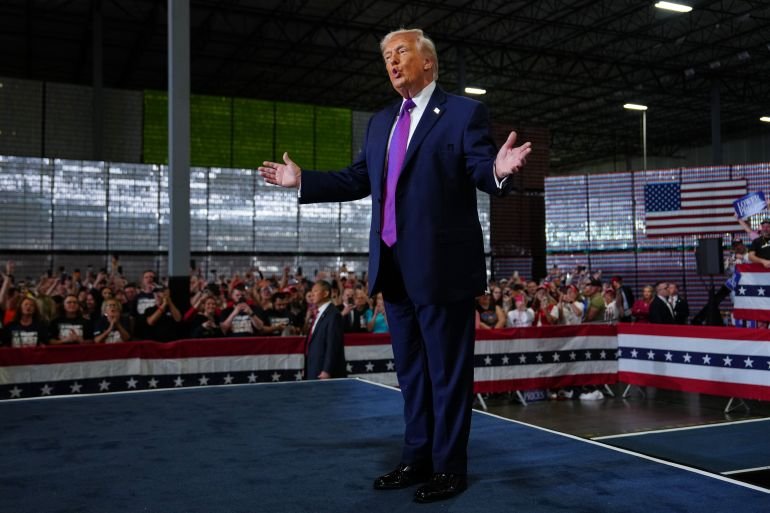
    This grating inclination has been on almost giddy display in the still evolving aftermath of United States President Donald Trump’s rash decision to join Israeli Prime Minister Benjamin Netanyahu in launching a war with Iran.

    Like falling dominoes, a “narrative” gathered momentum among the America’s “progressive” commentariat, insisting that Trump’s order to go to war offended large swaths of the MAGA movement and set off a seismic split in his ardent base.

    It is a silly myth and a seductive delusion.

    Sure, a handful of familiar MAGA personalities have grumbled that another Middle East conflict betrays the “America First” pledge that helped propel Trump back to the White House.

    Conservative commentator Megyn Kelly has questioned whether the US is drifting, yet again, into an endless war without purpose or meaning. Podcaster Joe Rogan has talked about the conflict’s disastrous, unintended consequences. Former Fox News host Tucker Carlson has warned that the unprovoked attack could trigger chaos across an already volatile region.

    Trump, of course, parried the backlash with trademark coarseness. He lashed out. He dismissed the naysayers. He mocked allies who briefly turned detractors.

    Headlines blared that a domestic quarrel threatened to engulf his MAGA disciples in a “civil war.”

    The idea that MAGA has fractured is fantasy. Disquiet is not rupture. Dissent is not rebellion.

    The MAGA “movement” is not a conventional coalition held together by consensus around a coherent, considered set of principles or policies.

    MAGA remains what it has always been: a political phenomenon built to burnish one man’s ego and narcissism. As long as that man is Trump, the “movement” bends to his designs and whims. It adjusts; and, inevitably, snaps back into loyal line.

    That loyalty remains the movement’s signature force.

    For nearly a decade, Trump has tested its limits. He has weathered scandals that would have devoured most politicians. Two impeachments. Criminal convictions. A litany of controversies, including his close and lengthy friendship with the architect of a worldwide sex trafficking ring, the notorious paedophile, Jeffrey Epstein.

    Through it all, MAGA has, if anything, tightened its loving embrace of Trump.

    The notion that a fraternal dispute over foreign policy would shatter the vice-like bond is absurd. That bond is emotion. It is visceral.

    For his embittered supporters, Trump is the embodiment of grievance-fuelled defiance. He is a charismatic champion against enemies in Washington — the gilded establishment, the media, the global order who treats them with derision and contempt.

    Within that parochial framework, Trump’s actions at home and abroad are filtered through the prism of fidelity. When Trump unleashes a war that he once opposed, his devout followers accept his shifting rationales — however obtuse or contradictory. They believe he sees threats others ignore. They believe he acts when others hesitate.

    Indeed, polls confirm their steadfast confidence in Trump’s judgement and his enduring appeal.

    The Republican Party has always harboured different instincts. Some supporters lean towards isolationism. Others favour aggressive displays of the America’s unparalleled power.

    While there may be hints of unease among Republicans about the prospect of a long, costly war with Iran, that unease has not led, and likely will not lead, to a broad revolt anytime soon.

    Trump’s standing within the Republican Party remains strong. His approval among Republican voters remains high. They trust him.

    That trust trumps the simmering doubts raised by a small, albeit prominent, slice of MAGA fawning pundits and a few recalcitrant members of Congress.

    Kelly knows it. Rogan knows it. Carlson knows it.

    The trio understands that they operate inside a MAGA universe fashioned and controlled by Trump. Their popularity and influence depend on staying there. They know the defining rule of Trump’s gravitational pull: stray too far and you will be cast out.

    Predictably, Carlson avoided escalation.

    Instead, he declared his allegiance. He made plain that he still “loves” Trump. He reminded listeners that Trump had reshaped American politics.

    Kelly and Rogan may question the risks and dangers of war, but neither would wage a sustained attack on the president. Neither would dare tell Trump’s loyalists to abandon him.

    A fleeting disagreement over Trump’s reckless adventure in Iran will not translate into a lasting break.

    Even the most high-profile MAGA hucksters recognise that confronting Trump invites retribution and disaster. Their audiences overlap. Their reach thrives in the same ideological ecosystem.

    Picking an ultimately losing fight with the ecosystem’s vengeful anchor is rarely good business.

    So, MAGA is, at the moment, experiencing a touch of turbulence. It will pass.

    Which is why the constant search by establishment media for a dramatic MAGA schism keeps producing the standard result.

    Nothing much changes.

    Every time Trump sparks outrage, the same prediction appears. This time, the base will rebel. This time, the coalition will splinter.

    This forecast is a tired ritual. It ignores the fundamental nature of the MAGA compact. That connection is not rooted in briefs or blueprints. It is a secular religion where the leader is never wrong.

    Myopic scribes mistake a fracas for a collapse. They see tension and hope for a divorce. The believers are not preoccupied with the logistics of war or the mercurial logic of “America First”. They care about the man who gave them a voice.

    Once the friction fades, the sceptics will retreat. They have nowhere else to go. The undeniable magnetism of Trump’s celebrity and command of MAGA reels most reluctant strays back.

    To leave that agreeable orbit permanently is to vanish into irrelevance — a bleak fate for provocateurs who have forged lucrative careers amplifying Trump’s ignorance, intolerance, and fury.

    The views expressed in this article are the author’s own and do not necessarily reflect Al Jazeera’s editorial stance.

  • Sabalenka wins first Indian Wells title with victory against Rybakina

    Sabalenka wins first Indian Wells title with victory against Rybakina

    World number one’s triumph against Elena Rybakina avenges her loss to the Kazakh in the 2026 Australian Open final.

    World number ‌one Aryna Sabalenka finally conquered her Indian Wells demons on Sunday, defeating Elena Rybakina 3-6, 6-3, ⁠7-6(6) in a breathless ⁠final to claim the desert title for the first time and secure her 23rd career crown.

    The victory was sweet redemption for the Belarusian, who had lost her previous two Indian ⁠Wells finals, including to Rybakina herself in 2023, and had begun the year with a defeat to the Kazakh 26-year-old in the Australian Open final in January.

    Recommended Stories

    list of 4 itemsend of list

    A two-time Grand Slam champion, Rybakina dominated the opening exchanges ⁠of the first set, breaking Sabalenka to surge into a 4-2 lead and exploiting the Belarusian’s backhand to close it out. It was the first time Sabalenka had dropped a set in the tournament.

    The second set began no more comfortably, with Sabalenka letting out an audible yell as Rybakina broke her in the opening game. But the four-time ‌Belarusian Grand Slam champion dug deep, responding with a love hold to level at 1-1, and gradually turned the tide.

    A second break in the fourth game gave Sabalenka a commanding 4-1 lead, and although Rybakina pressed, the Belarusian’s intensity proved too much as she took the set with four aces and conceded nine unforced errors to Rybakina’s 13.

    Aryna Sabalena reacts.
    Sabalenka fought back from a set down to outlast Rybakina in three sets at the Indian Wells [Clive Brunskill/Getty Images via AFP]

    The decider was a match in itself. Sabalenka broke early to lead 3-1, only for Rybakina to claw back, level at 5-5 and take the lead for the first time ⁠in the set. Sabalenka responded immediately to force a tiebreak, where the score ⁠reached 6-6, before she pulled clear to seal it at 8-6.

    With that final point, Sabalenka dropped to her knees – the relief of a champion who had waited three years and endured three finals to finally get her hands on the trophy.

    “I want to congratulate Elena. I ⁠know we’ll face each other many more times,” Sabalenka said before receiving the trophy. “Thanks to everyone who made this tournament possible. It is truly a tennis ⁠paradise. I’m always happy to come here every year and thank God ⁠I got this trophy.”

    The win caps an extraordinary week for the 27-year-old, who arrived in the Coachella Valley having recently got engaged to her Brazilian fiancée, Georgios Frangulis.

    “This is a dream come true. I want to thank my team for always being there, and my ‌fiancée – what a week! Getting a puppy, getting engaged, and winning a title. I’ll remember it for the rest of my life,” she added.

    With their rivalry set to define the women’s game for years to come, ‌Sabalenka ‌now has the edge with a 9-7 head-to-head lead. Both players are separated by one ranking place – Rybakina’s run to the final will lift her to number two in next week’s rankings.

    Aryna Sabalenka and Elena Rybakina react.
    Sabalenka, left, was a two-time runner-up at Indian Wells (2023, 2025) before Sunday’s maiden victory against Rybakina [Robert Prange/Getty Images]
  • One Battle After Another’s big night: Key takeaways from the 2026 Oscars

    One Battle After Another’s big night: Key takeaways from the 2026 Oscars

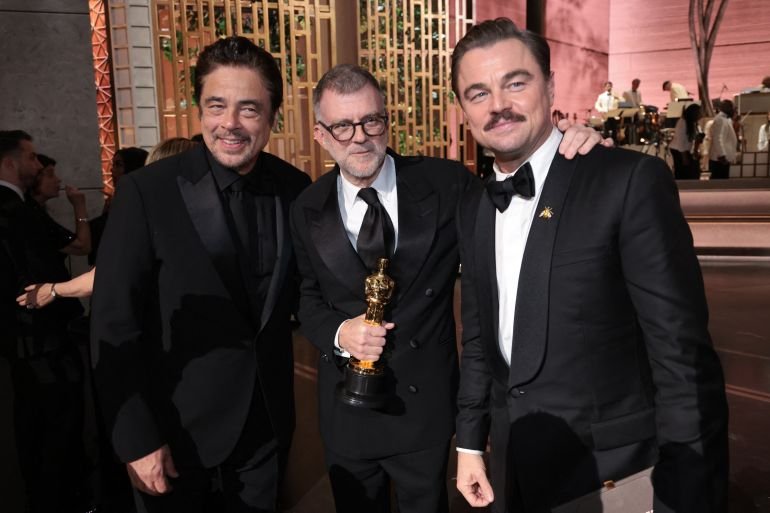
    As anticipated, it ended up being One Battle After Another’s night at the 98th annual Academy Awards, with the political thriller carting away six Oscars out of a total of 13 nominations.

    But while Paul Thomas Anderson’s magnum opus continued its march towards awards-season domination, there were moments of genuine surprise and subversion in Sunday’s ceremony.

    Recommended Stories

    list of 3 itemsend of list

    Some of those moments had to do with the current political climate in the United States.

    Host Conan O’Brien and his fellow presenters deftly avoided mentioning President Donald Trump by name, but their barbs took direct aim at his policies since returning to office.

    Other surprises came from within the filmmaking community itself. For only the seventh time in Oscar history, a tie was announced: two films had gotten an equal number of votes for Best Live Action Short.

    As a result, both the surrealist thriller Two People Exchanging Saliva and the moody bar-room drama The Singers shared the Academy Award.

    Here are six key takeaways from the night.

    (L/R) US actor Michael B. Jordan holds the Oscar for Best Actor in a Leading Role for "Sinners" and US director Ryan Coogler holds the Oscar for Best Writing (Original Screenplay) for "Sinners" in the press room during the 98th Annual Academy Awards at the Dolby Theatre in Hollywood, California on March 15, 2026. (Photo by VALERIE MACON / AFP)
    Actor Michael B Jordan, left, holds the Oscar for Best Actor next to director Ryan Coogler, who earned an Oscar for Best Original Screenplay [Valerie Macon/AFP]

    A two-horse race between Sinners and One Battle

    The vampire film Sinners came into Sunday night’s ceremony with a record 16 Oscar nominations. But the big question of the night was: how many nods could it actually convert into wins?

    Its biggest competition was, of course, Anderson’s One Battle After Another, which had the second-highest tally of nominations.

    Sinners director Ryan Coogler and Anderson were in direct competition in several top categories, including Best Picture and Best Director.

    In both cases, Anderson came out ahead, though he acknowledged how fickle such awards can be.

    “ I just want to say that, in 1975, the Oscar nominees for Best Picture were Dog Day Afternoon, One Flew Over the Cuckoo’s Nest, Jaws, Nashville and Barry Lyndon,” the four-time Best Director nominee said, listing films now considered to be Hollywood classics.

    “There is no best among them. There is just what the mood might be that day.”

    In the categories for Best Supporting Actor and Best Film Editing, One Battle After Another also triumphed, as well as for the inaugural award for Best Casting.

    But in a sign of how well matched their two films were, both Coogler and Anderson emerged from the night with writing Oscars.

    Anderson picked up the Best Adapted Screenplay award for his use of the Thomas Pynchon novel Vineland, while Coogler made off with the Best Original Screenplay Oscar for Sinners, a work inspired by his uncle’s love of the blues.

    US cinematographer Autumn Durald Arkapaw poses in the press room with the Oscar for Best Cinematography for "Sinners" during the 98th Annual Academy Awards at the Dolby Theatre in Hollywood, California on March 15, 2026. (Photo by VALERIE MACON / AFP)
    US cinematographer Autumn Durald Arkapaw poses with her Oscar for Best Cinematography [Valerie Macon/AFP]

    Jordan dunks on Chalamet in Best Actor race

    Sinners, which won four Academy Awards overall, earned some of the most emotional, nail-biting victories of the night.

    In the Best Cinematography category, for instance, Autumn Durald Arkapaw became the first woman to top the field.

    It was her first nomination and first win, with Arkapaw besting veteran cinematographers like Marty Supreme’s Darius Khondji and Frankenstein’s Dan Laustsen, both multiple nominees.

    Another big win for Sinners came in the form of Michael B Jordan, the actor whom Coogler has cast in every film since his directorial breakout in 2013’s Fruitvale Station.

    Jordan, 39, was in a tight race for Best Actor with another young performer, 30-year-old Timothee Chalamet of the ping-pong drama Marty Supreme.

    But Chalamet’s aggressive campaigning may have ultimately sabotaged his prospects. Multiple cracks were taken throughout the night at Chalamet’s recent comments disparaging opera and ballet.

    “Nobody cares any more” about either art form, Chalamet said in an interview last month.

    “We can change society through art, through creativity, through theatre and ballet and also cinema,” director Alexandre Singh said pointedly during his acceptance speech for Best Live Action Short.

    O’Brien, meanwhile, acknowledged the backlash with a joke about heightened security at the night’s Oscar ceremony.

    “I’m told there are concerns about attacks from both the opera and ballet communities,” O’Brien said, before turning to Chalamet. “They’re just mad you left out jazz.”

    This handout picture courtesy of the Academy of Motion Picture Arts and Sciencies (AMPAS) shows Irish actress Jessie Buckley during the 98th Annual Academy Awards at the Dolby Theatre in Hollywood, California on March 15, 2026.
    Irish actress Jessie Buckley celebrates her win during the 98th Annual Academy Awards [AFP]

    A conga line of snubs

    Given the dominant performances from Sinners and One Battle After Another, plenty of critically acclaimed films left empty-handed, or nearly so.

    Guillermo del Toro’s Frankenstein, as expected, earned three wins in technical categories, including Best Production Design, Best Costumes and Best Hairstyling and Makeup.

    Netflix’s smash hit KPop Demon Hunters, meanwhile, also fulfilled expectations that it would dominate in its categories, Best Animated Feature and Best Original Song.

    But then there were former frontrunners like Hamnet that failed to generate much traction, including for director Chloe Zhao, a past Oscar winner. Out of eight nominations total, it came away with only one win: a Best Actress trophy for Irish performer Jessie Buckley.

    Marty Supreme and the Brazilian film The Secret Agent fared worse, however. Despite having nine nominations and being considered an early shoo-in for Best Actor, Marty Supreme scored no wins.

    The Secret Agent, which swept the Best Actor and Best Director categories at the 2025 Cannes Film Festival, also earned nothing at this year’s Oscars.

    The same was true for the quirky kidnapping drama Bugonia, from Oscar darling Yorgos Lanthimos.

    South Korean-US singer Ejae poses with the Oscar for Best Music (Original Song) for "Golden" from "KPop Demon Hunters" during the 98th Annual Academy Awards Governors Ball at the Dolby Theatre in Hollywood, California on March 15, 2026. (Photo by ANGELA WEISS / AFP)
    South Korean-US singer Ejae poses with the Oscar for Best Original Song for the film KPop Demon Hunters [Angela Weiss/AFP]

    Fears about artificial intelligence

    The ceremony, however, did occasionally veer away from the competition to discuss issues facing the film industry and the country as a whole.

    Among those concerns was the creeping growth of artificial intelligence (AI) in the creative sector.

    In the weeks leading up to the 98th Oscars, an AI-generated video clip went viral, appearing to show Hollywood icons Brad Pitt and Tom Cruise in a rooftop brawl worthy of a James Bond movie.

    The clip was generated through AI software developed by the Chinese firm ByteDance, and Hollywood leaders quickly denounced it as a threat to their livelihoods, not to mention a copyright infringement.

    Those concerns reverberated on the Oscar stage on Sunday, with O’Brien and others addressing the growing use of AI.

    “Tonight we are celebrating people, not AI, because animation – it’s more than a prompt,” actor Will Arnett said emphatically as he introduced the animation awards.

    O’Brien, meanwhile, joked that, by next year, his hosting gig would be taken by “a Waymo in a tux”.

    US Comedian host Conan O'Brien performs onstage during the 98th Annual Academy Awards at the Dolby Theatre in Hollywood, California on March 15, 2026. (Photo by Patrick T. Fallon / AFP)
    Host Conan O’Brien performs onstage during the 98th Annual Academy Awards [Patrick T Fallon/AFP]

    Trump skewered for threatening free speech

    Another concern looming over the night’s Oscar ceremony came in the form of President Donald Trump, who has courted controversy by launching deadly military attacks in Venezuela and Iran, as well as leading a violent immigration crackdown in the US.

    At no point was Trump mentioned by name. But his leadership was alluded to throughout the night.

    O’Brien, the host, set the tone early on with his oblique jabs at the Republican president in his opening monologue.

    “When I hosted last year, Los Angeles was on fire,” the two-time Oscar emcee said in remarks dripping with sarcasm. “But this year, everything’s going great.”

    Fellow comedian Jimmy Kimmel was even more direct. Last September, his show was briefly suspended after Trump criticised the comedian.

    The head of the Federal Communications Commission, a Trump appointee, subsequently threatened the broadcasting licence of the TV channel on which Kimmel performs.

    “There are some countries whose leaders don’t support free speech. I’m not at liberty to say which. Let’s just leave it at North Korea and CBS,” Kimmel quipped, referring to another channel that cancelled a fellow late-night comedy show.

    Several filmmakers honoured at the Oscars likewise waded into the controversies surrounding Trump.

    Best Documentary winner David Borenstein, for instance, implied a parallel between his film — an exploration of authoritarianism in Russia — and what is currently happening in the US.

    “Mr Nobody against Putin is about how you lose your country,” Borenstein explained.

    “What we saw when working with this footage is that you lose it through countless small, little acts of complicity: when we act complicit, when a government murders people on the streets of our major cities, when we don’t say anything, when oligarchs take over the media.”

    Indian actress Priyanka Chopra and Spanish actor Javier Bardem present the award for Best International Feature Film onstage during the 98th Annual Academy Awards at the Dolby Theatre in Hollywood, California on March 15, 2026. (Photo by Patrick T. Fallon / AFP)
    Indian actress Priyanka Chopra and Spanish actor Javier Bardem present the award for Best International Feature Film [Patrick T Fallon/AFP]

    Political speeches avoid mention of Iran war

    The Oscars come roughly seven months before the pivotal midterm elections in the US, which could see Trump’s Republican Party lose its majorities in Congress.

    But while several filmmakers did hint at their anti-Trump stances, few explicitly denounced his policies.

    For example, Norway’s Joachim Trier, the winner of the Best International Feature category, veiled his criticism in a James Baldwin quote about the duty to protect children.

    “Let’s not vote for politicians who don’t take this seriously into account,” Trier said.

    No artist specifically referenced the US and Israeli war against Iran either, though its effects were felt among the participants of this year’s Oscar crop.

    Writer-director Jafar Panahi, whose work was up for two Oscars on Sunday, has already said he plans to return to his native Iran after the awards season concludes.

    Meanwhile, Iranian politician Sara Shahverdi — the subject of a nominee in the Best Documentary Short category — was prevented from attending the Oscars at all due to Trump’s ban on visas for 39 countries.

    Palestinian actor Motaz Malhees, star of the Oscar-nominated The Voice of Hind Rajab, likewise told media outlets he could not be present due to the travel ban.

    Most acknowledgements of the US-led and US-backed conflicts in the world were brief.

    When Spanish actor Javier Bardem took the Oscar stage to present an award, he offered up six words, “No to war, and free Palestine!”

    Russian filmmaker and former school teacher Pavel Talankin made a similar appeal to the audience. “In the name of our future, in the name of all of our children, stop all of these wars now,” he said.

    But by and large, the Oscar winners and presenters kept their remarks vague, emphasising global unity over political criticism.

    “If I can be serious for just a moment, everyone watching right now around the world is all too aware that these are very chaotic, frightening times,” O’Brien told the audience at the outset of the night.

    “It is at moments like these that I believe that the Oscars are particularly resonant. Check it out. Thirty-one countries across six continents are represented this evening, and every film we salute is the product of thousands of people speaking different languages.”

    Cinema, he and others argued, transcends borders. The talent on stage was not the US’s alone.

  • Top Trump adviser says Iran war price tag at $12bn so far

    Top Trump adviser says Iran war price tag at $12bn so far

    Pressure grows on the US president’s administration as war costs spiral and the mission’s endgame remains unclear.

    The United States has spent $12bn on its war against Iran since launching joint strikes on the country with Israel on February 28, Trump’s top economic adviser said, as domestic concerns grow over the Middle East conflict’s burgeoning economic impacts.

    Kevin Hassett, director of the White House National Economic Council, gave the figure on CBS’s Face the Nation on Sunday saying it is the latest he’s been briefed on so far.

    Recommended Stories

    list of 4 itemsend of list

    He was forced to clarify mid-interview after initially appearing to present it as a projected total for the entire war. CBS anchor Margaret Brennan noted more than $5bn in munitions alone was spent in the first week, a challenge Hassett did not directly address.

    Hassett was nonetheless dismissive of the war’s economic threat to the US. Financial markets pricing future energy contracts, he said, were already anticipating a swift resolution and sharply lower energy prices, contradicting consumer alarm in the US over rising fuel costs at petrol stations.

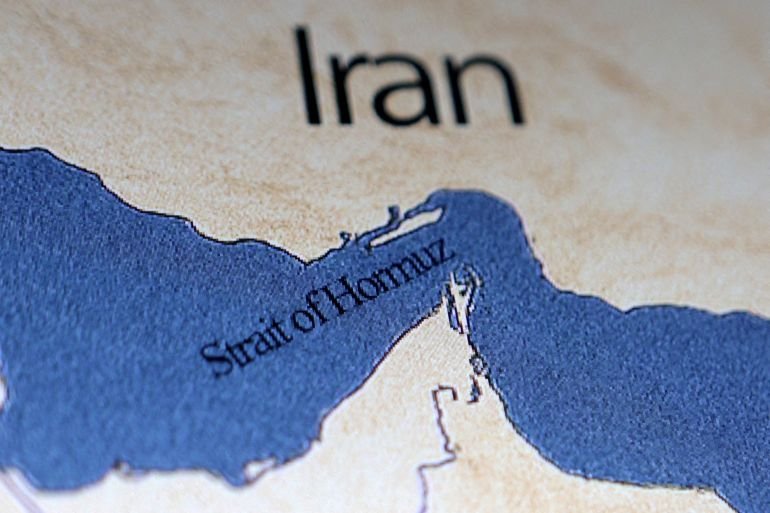
    Markets remain jittery after Iranian threats to the Strait of Hormuz, through which about 20 percent of the world’s oil supplies traverse.

    Any disruption to Gulf shipping, he argued, would hurt countries dependent on the region’s oil far more than the US.

    “America is not going to have its economy harmed by what the Iranians are doing,” he said, adding that unlike the 1970s, the US is now a major producer. “We have lots and lots of oil.”

    ‘Mission creep’

    Secretary of Defense Pete Hegseth, meanwhile, warned that the bombardment of Iran is “about to surge dramatically”, suggesting the bill is heading in one direction only.

    The cost confusion sits alongside the deepening uncertainty about the war’s purpose.

    The Trump administration’s statements on the goals of the war have shifted from dismantling Iran’s nuclear programme, to degrading its missiles, to now threatening its oil infrastructure over Strait of Hormuz shipping.

    After a classified Senate briefing in early March, Senate Minority Leader Chuck Schumer said he was “truly worried about mission creep”, calling the session “very unsatisfying” and saying that the administration gave “different answers every day” on why the strikes were ordered.

    Last week, Senator Chris Van Hollen told Al Jazeera that the US had taken “the lid off Pandora’s box without any idea where this will land”.

    At least 1,444 people have been killed in Iran since strikes began on February 28. Thirteen US soldiers have been killed, and more than 140 have been wounded. The fighting has also spread to Lebanon, and Gulf countries continue to face repeated drone and strikes by Iran.

    Some countries, such as India, have begun bypassing Washington to negotiate directly with Tehran on securing safe passage for its tankers through the Strait of Hormuz.

  • Why is NYC’s Mamdani facing criticism over response to attacks on wife?

    Why is NYC’s Mamdani facing criticism over response to attacks on wife?

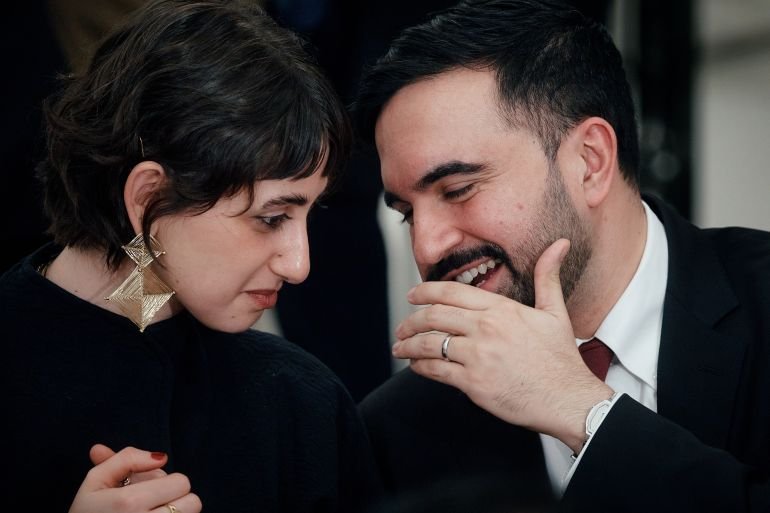
    New York City Mayor Zohran Mamdani has found himself at the centre of a political firestorm over his wife’s past illustration work related to Palestine.

    The imbroglio began last week, when several right-wing news outlets reported on New York City First Lady Rama Duwaji’s past work connected to Palestinian author Susan Abulhawa and several incendiary comments Abulhawa has made.

    Recommended Stories

    list of 3 itemsend of list

    But the response from Mamdani, who has since decried Abulhawa’s past statements as “abhorrent”, has sparked blowback from some of his own supporters, who say he risks reinforcing harmful narratives that conflate support for Palestinians with anti-Jewish sentiment.

    Some critics also say the situation underscores a broader double standard in the US, one in which the first Muslim mayor of the country’s largest city faces heightened scrutiny, even as high-profile elected lawmakers launch blatantly Islamophobic attacks with little recourse.

    Here’s what to know:

    What was the work in question?

    Duwaji’s ties to Abulhawa were first reported by the conservative news site the Washington Free Beacon last week.

    It said that 28-year-old Duwaji, a freelance illustrator, had provided an illustration for an “essay” compiled by Abulhawa as part of a collection from writers in Gaza titled “Every Moment is a Life” published online by “Everything is Political”.

    Abulhawa later clarified that the piece was actually a short story written by a resident of Gaza displaced during Israel’s genocidal war. Titled “A Trail of Soap”, it detailed the difficulties and indignities of using a public, makeshift restroom in the war-torn enclave.

    Mamdani said Duwaji had been commissioned by a third party and had never “engaged with or met with” Abulhawa, a claim Abulhawa later confirmed.

    The Free Beacon report, as well as subsequent reports by the New York Post and Jewish Insider, highlighted past comments made by Abulhawa.

    Some critics have maintained that a handful of Abulhawa’s posts appear to reference all Jewish people, a position that Abulhawa has rejected.

    She has maintained that the statements are a reflection of the pain she felt as a Palestinian who has twice travelled to Gaza for aid work during Israel’s genocidal war, which has killed more than 72,000 Palestinians since October 2023.

    In one article published on The Electronic Intifada website, Abulhawa described the October 7, 2023 attacks on southern Israel by Palestinian fighters as a “spectacular moment that shocked the world”.

    On social media, Abulhawa decried what she called “Jewish supremacist slaughter” in Gaza, writing, “these sons of satan will taste what they meted to us”.

    She has condemned Israeli foreign influence, describing “Jewish supremacist ghouls” and “vampires” and, in one instance, calling a commentator a “Jewish supremacist cockroach”.

    How did Mamdani respond?

    At a news conference last week, Mamdani said that beyond Duwaji having never met Abulhawa, she had also not seen the social media posts in question.

    “And we stand in our administration, and I can tell you, our administration –  which is separate from the first lady, she doesn’t have a role within it – is against bigotry of all forms … unflinchingly,” he told reporters.

    “I think that that rhetoric is patently unacceptable. I think it’s reprehensible,” he added, in reference to Abulhawa’s posts.

    What has Abulhawa said?

    In a lengthy video statement released on Saturday, Abulhawa said she hoped to clear things up for “Mr Mamdani, for his supporters and detractors alike, for the reporters, for my readers, for my own friends, and for the public in general”.

    She rejected that her comments represented either anti-Semitism or anti-Jewish racism, saying she was responding to a Zionist power structure and its proponents from the perspective of a Palestinian who has experienced the ravages of that system.

    “Israel and by extension, Israelis – since, as we’re constantly told, they’re the only democracy in the region – have destroyed, shattered and robbed my family of everything,” she said.

    “They have committed the genocide in full view of the world, the wholeness of its blood and gore, its apocalyptic horror, its generational injury and its moral harm to all of humanity,” she said.

    Abulhawa further described “the feelings [Palestinians] have of pain, rage, contempt or hatred, coupled with the impotence to make the suffering stop”.

    She added she would continue to use the “privilege of having a voice … to speak forcefully for those who are defenceless against hateful colonial state violence”.

    Why has Mamdani been criticised?

    Several commentators who have in the past supported Mamdani questioned the mayor’s decision to engage with the reports, arguing that it only fed disingenuous narratives.

    Activist Shaiel Ben-Ephraim described Mamdani as “stupid for apologising and explaining”.

    “Nothing will ever be enough for Zionists anyway,” he wrote. “Stand tall.”

    Palestinian writer Mohammed El-Kurd pointed to Mamdani’s own account of being motivated to enter politics by the issue of Palestinian rights, writing that it was “fair to hold him to his word”.

    Craig Mokhiber, a former United Nations human rights official, also urged Mamdani to take a stand, adding he should “forget what your aides are telling you”.

    “Fear is not a sound basis for politics at this moment in history,” he said in a post on X.

    For her part, Abulhawa said she was not personally “mad” at Mamdani, but that the situation should be a learning experience.

    “You succumbed to forces that seek to pick away at you, at your talented, beautiful wife, and [are] clawing harder with each apology or concession you make,” she said.

    “If you are not careful, they will siphon your soul before you even realise it.”

    What’s the wider context?

    Mamdani faced a wave of Islamophobia during his meteoric political victory last year. He has regularly been accused of anti-Jewish sentiment for condemning Israel’s policies and for describing its actions in Gaza as a “genocide”. He has repeatedly said he is a leader for “all New Yorkers”.

    Mamdani has also alienated some supporters by saying during the campaign that he would “discourage” the term “globalise the intifada”, in what some saw as a capitulation to those making unfounded claims against him.

    Some critics have decried a double standard in the intense scrutiny Mamdani has faced for his political views and his family’s peripheral connections.

    That recently included answering questions over his wife’s “liking” of social media posts that praised Palestinian resistance in the wake of the October 7, 2023 attacks.

    In turn, several lawmakers have seen little recourse for blatantly Islamophobic posts about Mamdani.

    Republican US Senator Tommy Tuberville, for instance, has faced little rebuke from his own party for repeatedly attacking Mamdani’s faith.

    In a post on X last week, Tuberville responded to a photo showing Mamdani celebrating iftar next to a photo of the September 11, 2001, attacks on the World Trade Center.

    “The enemy is inside the gates,” Tuberville wrote.

  • Trump calls for naval coalition to open Strait of Hormuz: Can it work?

    Trump calls for naval coalition to open Strait of Hormuz: Can it work?

    United States President Donald Trump has called for a naval coalition to deploy warships to secure the Strait of Hormuz, through which one-fifth of world oil shipments transit, as oil markets reel from supply disruptions caused by the US-Israeli war with Iran.

    What is essentially the closure of the Strait of Hormuz by Iran in response to the attacks by the US and Israel has sent oil prices soaring to more than $100 per barrel.

    Iran’s new supreme leader, Mojtaba Khamenei, has promised to keep the maritime artery closed while another top official in Tehran warned that oil prices could shoot up beyond $200 per barrel.

    Trump said he hoped a naval coalition could secure the vital waterway, which connects the Gulf to the Gulf of Oman and the Arabian Sea. Iran has struck more than a dozen ships trying to sail through the narrow waterway since the hostilities started two weeks ago.

    But will Trump’s solution work?

    hormuz
    A tanker sits at anchor in Port Sultan Qaboos in Muscat, Oman, as oil shipments through the Strait of Hormuz have plummeted [File: Benoit Tessier/Reuters]

    What has Trump said?

    The US president has been facing domestic pressure over starting the war alongside Israel with no endgame or off-ramps in sight.

    “On the strait of Hormuz, they had NO PLAN,” US Democratic Senator Chris Murphy wrote in a post on X. “I can’t go into more detail about how Iran gums up the Strait, but suffice it [to] say, right now, they don’t know how to get it safely back open.”

    After threatening to bomb Iran more, Trump called on China, France, Japan, South Korea and the United Kingdom to send warships to secure the strait.

    Trump claimed “100% of Iran’s military capability” had already been destroyed but added that Tehran could still “send a drone or two, drop a mine, or deliver a close-range missile somewhere along, or in, this waterway”.

    “Hopefully China, France, Japan, South Korea, the UK, and others, that are affected by this artificial constraint will send ships to the area so that the Hormuz Strait will no longer be a threat by a nation that has been totally decapitated,” Trump wrote in a post on his Truth Social platform.

    “In the meantime, the United States will be bombing the hell out of the shoreline, and continually shooting Iranian Boats and Ships out of the water. One way or the other, we will soon get the Hormuz Strait OPEN, SAFE, and FREE!”

    Not long after, Trump returned to the keyboard, extending the invitation to all “the Countries of the World that receive Oil through the Hormuz Strait” to send warships, adding that the US would provide “a lot” of support to those who participated.

    trump
    Israeli soldiers walk by a billboard commissioned by the evangelical Christian group Friends of Zion during the US-Israel war on Iran in Tel Aviv, Israel [File: Nir Elias/Reuters]

    What has Iran said?

    Alireza Tangsiri, commander of the Islamic Revolutionary Guard Corps Navy, said in a statement that claims by the US about destroying Iran’s navy or providing safe escort for oil tankers were false.

    “The Strait of Hormuz has not been militarily blocked and is merely under control,” he said in a statement.

    Iranian Foreign Minister Abbas Araghchi later doubled down on this, saying the strait remained open to international shipping except for vessels belonging to the US and its allies.

    “The Strait of Hormuz is open. It is only closed to the tankers and ships belonging to our enemies, to those who are attacking us and their allies. Others are free to pass,” Araghchi said.

    Khamenei – son of the late Supreme Leader Ali Khamenei, who was killed on the first day of the US-Israeli strikes – suggested in his first statement since taking power that the Strait of Hormuz would remain closed to provide leverage for Iran during the conflict.

    iran
    F-18 combat aircraft are parked on the deck of the USS Abraham Lincoln aircraft carrier in the Gulf of Oman near the Strait of Hormuz during a 2019 deployment [File: Ahmed Jadallah/Reuters]

    What are the challenges in the Strait of Hormuz?

    The strait, which is just 21 nautical miles (39km) wide at its narrowest point, is the only maritime passage into the Arabian Gulf (known as the Persian Gulf in Iran). Shipping lanes in the waterway are even narrower and more vulnerable to attacks.

    It separates Iran on one side from Oman and the United Arab Emirates on the other.

    In brief, there is no way in or out by sea when the Strait of Hormuz is closed.

    Alexandru Hudisteanu, a maritime security expert who served 13 years in the Romanian navy, told Al Jazeera that in the type of coalition that Trump is hinting at, “interoperability is the biggest hurdle.”

    “That’s the ability of cruises to work together or with different units and different doctrine when basic communication would be an issue,” he said.

    Then, there is the geography of the Strait of Hormuz: “a very unforgiving environment to sail with this type of wartime threats”, Hudisteanu said. “Especially difficult under missile threats and these asymmetric potential mines or unmanned systems that could damage or destroy ships.”

    Providing escorts to ships would be a costly option, and it would pose risks to participating foreign warships from possible Iranian attacks, which would likely further drag more countries into the ongoing war.

    From Iran’s point of view, “the fact that the shoreline is so close and the actual maritime passage is highly congested and confined is an advantage by default,” Hudisteanu added. Geographically, Iran keeps it as a gauntlet, with no way out for the ships unless Tehran allows it.

    Another major challenge for any naval coalition trying to secure the passage would be the timeline of any operation.
”The security of the strait could be achieved. It’s just a matter of how much time you need and how many assets you need,” the analyst said. Rushing through it “could have negative implications for the security of the mission and the region”.

    Smoke rising from a ship after an attack.
    Smoke rises from the Thai bulk carrier Mayuree Naree near the Strait of Hormuz after an attack on March 11, 2026 [Handout/Royal Thai Navy via AFP]

    How have countries responded?

    No country has so far publicly agreed to Trump’s call to send warships to secure the Strait of Hormuz.

    London said it is “intensively looking” at what it can do to help reopen the maritime passage. British Energy Secretary Ed Miliband said: “We are intensively looking with our allies at what can be done because it’s so important that we get the strait reopened.”

    Chinese Ministry of Foreign Affairs officials said Beijing is calling for hostilities to stop and “all parties have the responsibility to ensure stable and unimpeded energy supply.”

    Japan said the threshold is “extremely high” to send its warships on such a mission. “Legally speaking, we do not rule out the possibility, but given the current situation in which this conflict is ongoing, I believe this is something that must be considered with great caution,” said Takayuki Kobayashi, policy chief of Japan’s ruling Liberal Democratic Party.

    France also confirmed that it will not send ships. The Ministry for Europe and Foreign Affairs said in a statement on Saturday: “Posture has not changed: defensive it is,” in reference to President Emanuel Macron’s assertion that France will not join the war against Iran.

    South Korea, which imports 70 percent of its oil from the Gulf, said it was “closely monitoring” Trump’s statements and “comprehensively considering and exploring various measures … to ensure the safety of energy transport routes”.

    INTERACTIVE - Strait of Hormuz - March 2, 2026-1772714221
    (Al Jazeera)

    Are countries negotiating with Iran?

    Some countries have been negotiating with Iran to secure passage for their petroleum shipments.

    Two Indian-flagged tankers carrying liquefied petroleum gas (LPG) have sailed through the Strait of Hormuz. New Delhi depends on this passage for 80 percent of its LPG imports.

    The war on Iran has caused a critical shortage of cooking gas for India’s 333 million households. New Delhi has long had ties with Iran, but the government of Prime Minister Narendra Modi has not condemned the killing of Ali Khamenei. It has condemned Iran’s retaliatory attacks on Gulf countries, where millions of Indian citizens work and send $51bn in remittances home every year.

    Iran’s ambassador to India, Mohammad ⁠Fathali, said Tehran had allowed some Indian vessels to pass through the Strait of Hormuz in a rare exception to the blockade but did not confirm the number of vessels.

    A Turkish-owned vessel was similarly granted permission last week after Ankara negotiated passage directly with Tehran. Fourteen more Turkish vessels are awaiting clearance.

    France and Italy also reportedly opened talks with Iranian officials to negotiate a deal to allow their vessels through the strait, but there has been no official confirmation yet.

    “Iran is affecting maritime supply,” Hudisteanu said. “It’s affecting the maritime security of the region and the entire ecosystem and bringing the entire world to the table as the global price for oil and gas increases.”

  • Strategic oil release may calm markets but cannot fix Hormuz disruption

    Strategic oil release may calm markets but cannot fix Hormuz disruption

    Hundreds of tankers sit idle on both sides of the Strait of Hormuz as Iran has effectively closed the waterway, pushing oil prices above $100 – the highest since 2022, after the start of the Russia-Ukraine war.

    Oil tanker traffic in the strait, through which one-fifth of global oil passes, has plunged after Israel and the United States launched attacks on Tehran on February 28. Asian countries, including India, China and Japan, as well as some European countries, source large portions of their energy needs from the Gulf. A disruption in supply will rattle the global economy.

    With an aim to cushion from the shock, the International Energy Agency (IEA) has decided to release 400 million barrels of oil from emergency reserves, the largest coordinated drawdown in the agency’s history. But it has failed to push the prices down.

    The agency had released about 182 million barrels after Russia’s invasion of Ukraine to stablise the oil prices.

    According to the agency, oil shipments through the strategic waterway have fallen to less than 10 percent of pre-war levels, threatening one of the most critical arteries in the global energy system.

    IEA members collectively hold about 1.25 billion barrels in government-controlled emergency reserves, alongside roughly 600 million barrels in industry stocks tied to government obligations.

    A large number in a massive market

    The figure may appear vast, but it shrinks quickly against the scale of global energy demand.

    “This feels like a small bandage on a large wound,” energy strategist Naif Aldandeni said, describing the world’s largest coordinated emergency oil release as governments scramble to steady markets shaken by war.

    The US Energy Information Administration (EIA) estimates world consumption of petroleum and other liquids will average 105.17 million barrels per day in 2026. At that rate, 400 million barrels would theoretically cover just four days of global consumption.

    Even when compared with normal traffic through the Strait of Hormuz – around 20 million barrels per day – the released oil equals only about 20 days of typical flows.

    Aldandeni told Al Jazeera that emergency reserves can calm panic in markets but cannot replace the lost function of a disrupted shipping corridor.

    “The release may soften the shock and calm nerves temporarily,” he said, “but it will remain limited as long as the fundamental problem — the freedom of supply and tanker movement through Hormuz – remains unresolved.”

    Oil prices reflect those anxieties. Brent crude ended trading on Friday at $103.14 per barrel, after surging to nearly $120 earlier as fears of disrupted production and shipping intensified.

    Geopolitical risk premium

    Oil expert Nabil al-Marsoumi said the price surge cannot be explained by supply fundamentals alone.

    “The closure of the Strait of Hormuz added roughly $40 per barrel as a geopolitical risk premium above what market fundamentals would normally dictate,” he told Al Jazeera.

    From that perspective, releasing strategic reserves serves primarily as a temporary tool to dampen that premium rather than fundamentally rebalance the market.

    Prices above $100 per barrel are uncomfortable for major consuming economies already struggling to curb inflation and protect economic growth.

    Recent EIA projections suggest global demand has not yet declined significantly because of the war, remaining close to 105 million barrels per day. The market pressure, therefore, stems less from falling consumption and more from fears of supply shortages and delays in deliveries to refineries and consumers.

    Threats to oil infrastructure

    The latest escalation could deepen those fears.

    United States President Donald Trump said on Friday that the US Central Command (CENTCOM) had “executed one of the most powerful bombing raids in the History of the Middle East and totally obliterated every MILITARY target in Iran’s crown jewel, Kharg Island”.

    He added that “for reasons of decency” he had “chosen NOT to wipe out the Oil Infrastructure on the Island”, but warned Washington could reconsider that restraint if Iran continues to disrupt shipping through the Strait of Hormuz.

    CENTCOM confirmed the operation, stating US forces had struck “more than 90 Iranian military targets on Kharg Island, while preserving the oil infrastructure”.

    Iranian officials have meanwhile warned they would target energy facilities linked to the US across the region if Iranian oil infrastructure comes under direct attack.

    Kharg Island is not simply a military location. It serves as the primary export terminal for Iranian crude, making it a critical node in the country’s oil supply network.

    If attacks move from obstructing shipping to targeting export infrastructure itself, the crisis could shift from a chokepoint disruption scenario to one involving direct losses of production and export capacity.

    In such circumstances, the oil released from emergency reserves would act only as a temporary bridge rather than a lasting solution to lost supply.

    Major oil companies such as QatarEnergy, the world’s largest producer of liquefied natural gas (LNG), Kuwait Petroleum Corporation and Bahrain state oil company Bapco have shut production and declared force majeure, while Saudi Aramco, the world’s largest oil producer, and UAE state oil company ADNOC have shut down their refineries.

    Limits of emergency reserves

    Even under a less severe scenario – where maritime disruption persists but infrastructure remains intact — the ability of strategic reserves to stabilise markets remains constrained by logistics.

    The US Department of Energy said the US Strategic Petroleum Reserve held 415.4 million barrels as of 18 February 2026. Its maximum drawdown capacity is 4.4 million barrels per day, and oil requires about 13 days to reach US markets after a presidential release order.

    That means even the world’s largest emergency stockpile cannot flood the market with crude immediately. The release must move through pipelines, shipping networks and refining capacity before reaching consumers.

    Aldandeni said the current intervention would likely produce only a temporary stabilising effect, while al-Marsoumi warned that prolonged disruption in the Strait of Hormuz – or the spread of threats to other chokepoints such as the Bab al-Mandeb Strait in the Red Sea could quickly send prices further higher.

  • Bahrain and Saudi Arabia F1 race cancellations confirmed due to Iran war

    Bahrain and Saudi Arabia F1 race cancellations confirmed due to Iran war

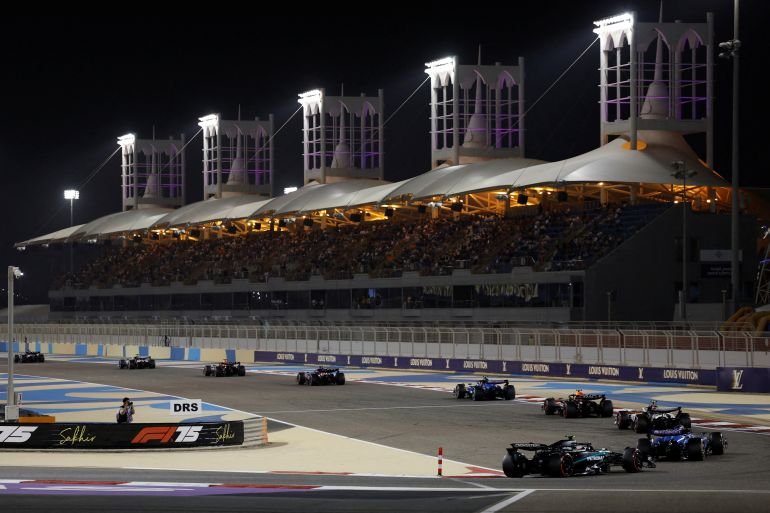
    Bahrain and Saudi Arabia’s Formula One Grands Prix races will not be held in April on safety grounds due to the war.

    Formula One and its governing body, FIA, said the Grands Prix races in Bahrain and Saudi Arabia will not happen in April due to safety concerns related to the Iran war.

    Both countries have been hit during Iran’s retaliatory attacks after the United States and Israel launched a wave of strikes on Iran.

    Recommended Stories

    list of 4 itemsend of list

    The announcement was made early on Sunday morning in Shanghai ahead of the Chinese Grand Prix.

    “Due to the ongoing situation in the Middle East region, the Bahrain and Saudi Arabian Grands Prix will not take place in April,” F1 said. “While several alternatives were considered, it was ultimately decided that no substitutions will be made in April.”

    F1 was due to race in Bahrain on April 12 and in the Saudi Arabian city of Jeddah on April 19.

    “While this was a difficult decision to take, it is unfortunately the right one at this stage considering the current situation in the Middle East,” said Stefano Domenicali, president and CEO of F1.

    “The FIA will always place the safety and well being of our community and colleagues first. After careful consideration, we have taken this decision with that responsibility firmly in mind,” FIA’s president, Mohammed Ben Sulayem, said.

    The FIA did not explicitly rule out rescheduling the races and, along with F1, did not use the words “cancel” or “postpone” in announcing that the series would not be in Bahrain or Saudi Arabia next month.

    “Bahrain and Saudi Arabia are incredibly important to the ecosystem of our racing season, and I look forward to returning to both as soon as circumstances allow,” Ben Sulayem said.

    The promoters of the races in Bahrain and Saudi Arabia said they supported the decision.

    F1’s packed schedule does not have any obvious open dates for rescheduled races this year.

    Calling off the Bahrain and Saudi Arabian races means there will be a five-week gap from the Japanese Grand Prix on March 29 and the next race, the Miami Grand Prix, on May 3. Without any rescheduling, the 22-race schedule would be the shortest since 2023.

    The two Middle East races were not to happen until next month, but F1 faced making a decision earlier because it typically flies in the first staff and cargo to tracks weeks in advance. F1 was also faced with the difficulty of selling tickets at short notice, which makes it almost impossible to set up a replacement race in other countries.

    Kimi Antonelli, the Mercedes driver who qualified on pole position for Sunday’s race in Shanghai, said his thoughts were “with the ones that are suffering from this situation” and that safety needed to be the priority.

    “I’m sure they will do the right thing,” he said of FIA and F1.

    The schedule is a joint matter for FIA and for F1’s commercial rights holder, and teams had signalled a willingness to follow their lead.

    “I think we follow the guidance of the FIA and Formula 1, as we always do. They’ve always led us in the right direction,” Audi team principal Jonathan Wheatley said on Friday. “Nobody’s going to compromise on anything that would put teams into an uncomfortable situation.”

    Bahrain had already hosted two preseason F1 tests this season, before Israel and the US launched attacks on Iran. A smaller-scale test of wet-weather tyres was called off in the immediate aftermath of the strikes.

    A travel shutdown affecting major airports in the Middle East also caused disruption for Europe-based F1 and team staff heading to Melbourne for the season-opening Australian Grand Prix.

    The last time a scheduled F1 race was cancelled was in 2023, when the Emilia Romagna Grand Prix in northern Italy was called off at short notice due to deadly floods in the area.

    In 2022, F1 continued with its race weekend in Saudi Arabia, even after Yemen’s Houthi rebels attacked an oil depot during a practice session, with black smoke visible from the Jeddah circuit.

    The same year, F1 cancelled the Russian Grand Prix’s contract after Russia’s full-scale invasion of neighbouring Ukraine.

  • Trump administration to drop charges against US veteran who burned flag

    Trump administration to drop charges against US veteran who burned flag

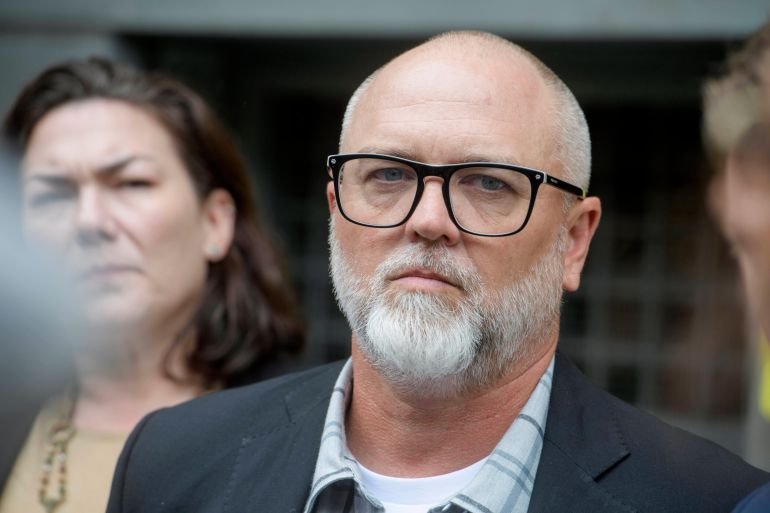
    The administration of President Donald Trump has moved to end its prosecution of a United States Army veteran who burned a national flag to protest one of the president’s executive orders.

    Court filings this week show that the Department of Justice has moved to drop the charges against defendant Jan “Jay” Carey, following his motion to dismiss last October.

    Recommended Stories

    list of 3 itemsend of list

    Carey had been charged with two misdemeanours: one for lighting a fire outside of designated areas, and the second for lighting a fire in a manner that creates a public safety hazard or threatens property.

    The incident unfolded on August 25, in the hours after Trump signed an executive order calling for the prosecution of flag-burners.

    The Supreme Court has long upheld flag burning as an act of protected free speech. In the 1989 case Texas v Johnson, for instance, the high court held that “flag desecration is inconsistent with the First Amendment”, which protects free speech.

    It reaffirmed that decision a year later in 1990, when Congress passed a new Flag Protection Act to outlaw such destructive behaviour. The high court struck down that law as unconstitutional.

    But Trump has maintained that flag burning is akin to the incitement of violence, which is not protected under the First Amendment of the US Constitution.

    Since his first term, he has pushed for steep prison sentences for any protester who knowingly destroys a US flag.

    “If you burn a flag, you get one year in jail,” Trump said as he signed his executive order last August. “No early exits, no nothing.”

    Though his executive order acknowledged the Supreme Court’s precedents protecting flag burning as an act of free speech, it nevertheless called on the US attorney general to “prioritise enforcement to the fullest extent of our Nation’s criminal and civil laws”.

    In short, critics say it calls on the attorney general to prosecute flag-burners by searching for laws that fall outside the First Amendment’s scope.

    In an interview last year with the Al Jazeera programme UNMUTE, Carey explained he had been outraged that the president would seek to circumvent the free-speech rights he had fought for as a veteran.

    “I served for over 20 years. I defended that flag, served under that flag, fought for that flag,” Carey told Al Jazeera.

    “The flag is a symbol. It’s not our democracy. I didn’t burn it to desecrate the flag or protest America. I did it as a direct reaction to what our treasonous, fascist president did by signing that executive order.”

    Carey recalled that, after seeing the executive order, he turned to a friend. “I was like, I think I need to go burn a flag in front of the White House.”

    Video captured the incident that followed. At about 6:20pm US Eastern time (22:20 GMT) on August 25, Carey appeared in Lafayette Park, directly across from the White House.

    He took out a bullhorn and identified himself as a US veteran, protesting Trump’s executive order. He then placed a US flag on a brick pathway in the park and set it alight, using rubbing alcohol as an accelerant.

    Four federal law enforcement agents then approached Carey. One used a fire extinguisher to put out the flames. The others handcuffed Carey and led him away.

    Body camera footage released by law enforcement showed the four officers discussing Trump’s executive order as they detained Carey.

    “So the president just today signed an executive order [that] says we’re arresting him,” one says. “We got that going for us.”

    The Partnership for Civil Justice Fund, a legal nonprofit, ultimately took up Carey’s defence, arguing that charging the veteran was evidence of “vindictive prosecution”. It also called the Trump administration’s actions “a direct attack on dissent”.

    Carey himself pleaded not guilty to the charges in September.

    In his interview with Al Jazeera, Carey emphasised that Trump’s executive order is unenforceable — but that it does threaten to dampen free speech.

    “This executive order was nothing but a bunch of fluff,” Carey said. “The First Amendment means that I am able to exercise my rights, my voice, my opinions. I can protest peacefully and have my grievances redressed.”

    “As long as I’m not causing violence, I’m well within my rights within the First Amendment.”

  • US Embassy in Baghdad, Iraq attacked with missile that hits helipad

    The missile attack causes damage on the mission, according to sources, as smoke is seen rising from the building.

    The United States Embassy in the Iraqi capital Baghdad has been hit by a missile attack that caused smoke to rise from the building.

    An Iraqi security source told Al Jazeera on Saturday that the attack destroyed part of its air defence system, without giving further details.

    Recommended Stories

    list of 4 itemsend of list

    A missile struck a helipad inside the US Embassy in Baghdad, two security officials told The Associated Press news agency.

    The projectile landed within the embassy’s boundaries in the Green Zone, the heavily fortified district in central Baghdad that houses Iraqi government institutions and foreign embassies, added the security officials, who spoke on condition of anonymity as they are not authorised to speak with the press.

    There was no immediate comment from the US Embassy in Baghdad.

    Videos posted by social media users showed smoke rising from the compound after the attack.

    Al Jazeera’s Mahmoud Abdelwahed, reporting from Baghdad, said there was no immediate statement on whether there were casualties or the exact extent of damage in the attack.

    “But we understand that Iran-aligned armed groups in Iraq have always pledged to attack US facilities, especially the embassy,” he said, adding that they want to avenge the death of Ayatollah Ali Khamenei, the former supreme leader, who was assassinated, along with family members, by a US-Israeli air strike at the beginning of this war.

    “In fact, yesterday, they issued a statement putting $100,000 as a reward to anyone who provides information leading to any US diplomatic personnel inside the country,” our correspondent said, adding that some of the personnel were “taking shelter in civilian houses”.

    Second attack

    It is the second time the US Embassy has come under attack in Baghdad since the start of the war.

    On Friday, the embassy renewed its Level 4 security alert for Iraq, warning that Iran and Iran-aligned armed groups have previously carried out attacks against US citizens, interests and infrastructure, and “may continue to target them”.

    The sprawling embassy complex, one of the largest US diplomatic facilities in the world, has been repeatedly attacked by rockets and drones in the past.

    Several Tehran-backed armed groups, which Washington has designated as “terrorist organisations”, allied under an umbrella movement known as the Islamic Resistance in Iraq, have claimed daily drone and rocket attacks against US bases in the region.

    Since the start of the war, several attacks against members of those groups across Iraq have been blamed on the US and Israel.

    Saturday’s attack took place shortly after two strikes hit the powerful Iran-backed group Kataib Hezbollah and killed two of its members, including a “key figure”, according to security sources speaking to the AFP news agency.

    Iraq has seen attacks from both sides of the conflict: Iran and its proxies target US bases while the US has bombed pro-Iran groups.

    Iraq, long a proxy battleground between the US and Iran, was quickly dragged into this sprawling Middle East war triggered by US and Israeli strikes on Iran on February 28.