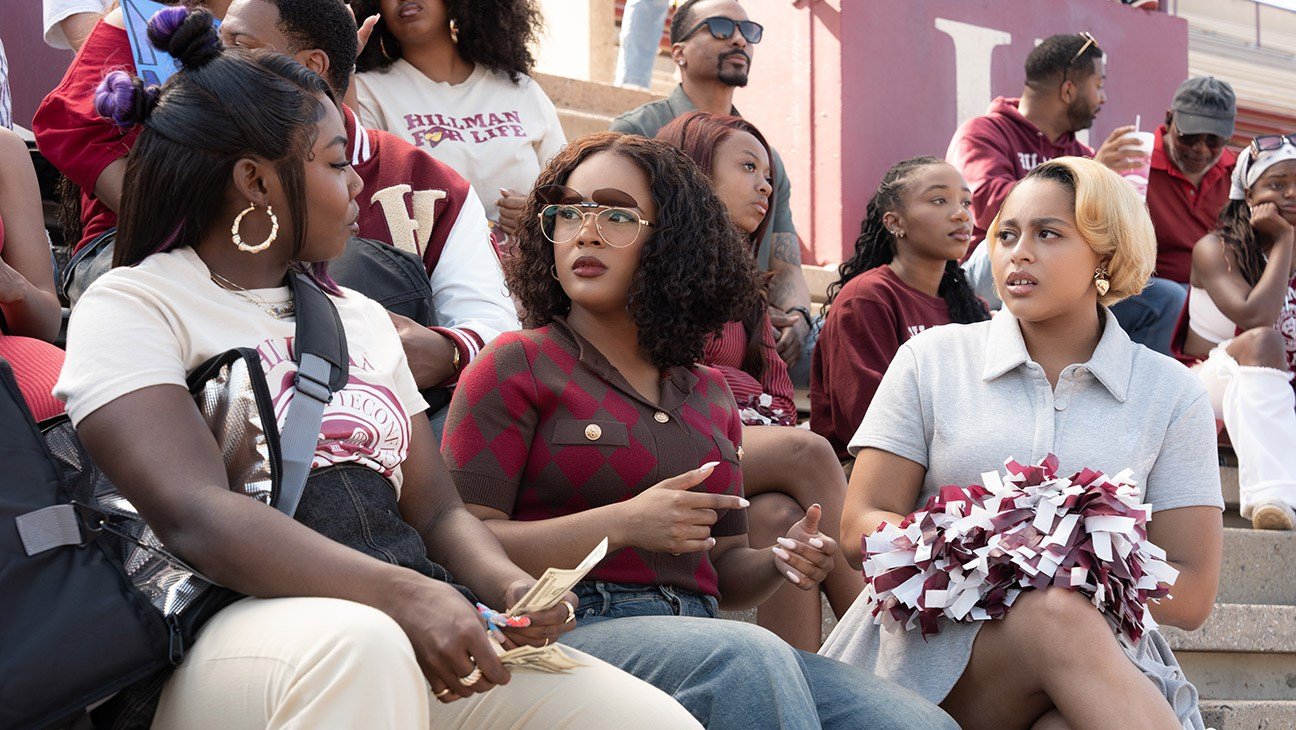
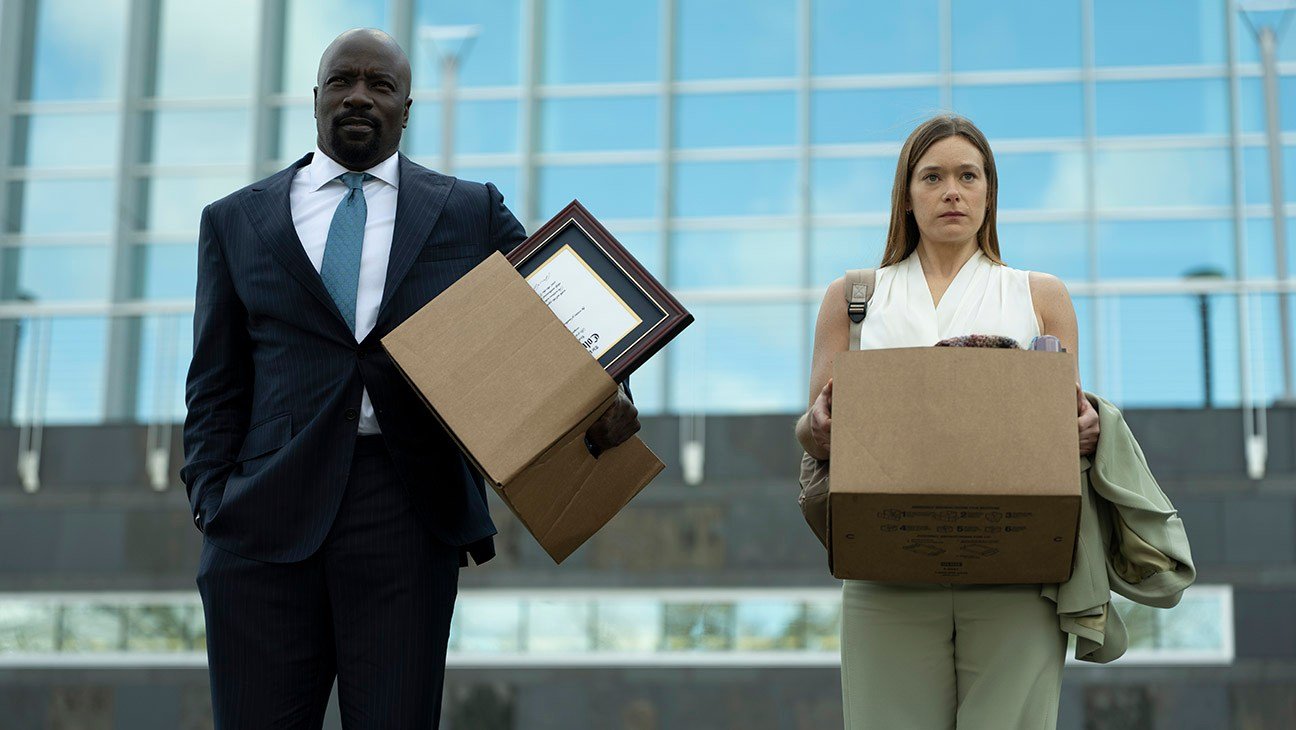
Sure, the Hillman College we first encountered in the 1980s looks different now, full of modern young people with their modern concerns and their modern fashions and their modern music (beginning with an updated opening theme by Brandy). But with so many familiar faces from the earlier A Different World onscreen, rehashing so much of their familiar dynamics, the new spinoff-sequel-reboot thing might appear upon first impression like more of the same.
A Different World
The Bottom Line
Fun, thoughtful and a bit messy — just like college should be.
Airdate: Thursday, Sept. 24 (Netflix) Cast: Maleah Joi Moon, Alijah Kai, Cornell Young IV, Jordan Aaron Hall, Kennedi Reece, Chibuiken Uche, Jasmine Guy, Kadeem Hardison, Darryl M. Bell, Cree Summer Creator: Felicia Pride
It’s not until this A Different World begins to come out from under the shadow of its parent that it really starts to flourish — but then flourish it does, aided by an endearing young ensemble and smart, heartfelt storytelling. By the end of its first season, it not only cements itself as a worthwhile standard-bearer for its predecessor, but proves ready to leave a mark of its own.
As is typical for one of these many-decades-later brand extensions, our new protagonist is a literal descendant of the old protagonists. College freshman Deborah (pronounced Deh-BOH-rah, never “Debra,” and played by the irresistibly radiant Maleah Joi Moon) is the youngest daughter of Whitley (Jasmine Guy), now a cosmetics mogul, and Dwayne (Kadeem Hardison), now the school provost. She’s also something of the family’s black sheep, the well-meaning but impulsive one who can’t seem to stop getting into trouble.
Said trouble often though not always involves Shaquille (Cornell Young IV), a childhood friend turned serious NFL prospect and fellow Hillman freshman, who just so happens to be the son of Whitley and Dwayne’s college buddy Ron (Darryl M. Bell). Around these two families, creator Felicia Pride, along with returning director Debbie Allen, builds out a whole updated universe that’s rich with Hillman history at every turn: from the returning characters (among others, Cree Summer’s Freddie recurs as a professor), to the buildings named after non-returning characters (Vernon Gaines Library, Walter Oakes Stadium), to the dialogue referencing the decades-old exploits of all of the above.
This clear affection for the source material is simultaneously one of A Different World’s biggest draws and, at least initially, one of its more worrisome hurdles. On one hand, anyone who loved the original as much as Pride and Allen obviously do will surely relish catching up with old friends (between move-in day, homecoming and a funding crisis, the first three episodes offer no shortage of excuses for alumni to pop by) or diving into the poignant current drama with Dwayne and Whitley, who find themselves on the brink of divorce after over 30 years of marriage.
On the other, anyone less familiar with the original — including, presumably, most of the Gen Z target audience — may wonder why we’re lingering so long on middle-aged guest stars reminiscing about decades-old gossip. Especially when that time could be directed to a central ensemble bursting with more than enough charm, chemistry and appropriately youthful folly to generate plenty of tea on their own.
But much like a freshman settling into a new identity at a new school, A Different World benefits from a bit of patience. It’s around the fourth installment, a fun and frisky half-hour about the advent of cuffing season, that the show properly zeroes in on the younger characters, leaning on the sweet but star-crossed romances that are the show’s dramatic bread and butter — whether it’s the tumultuous history between Shaquille and Deborah, or the instant sparks between their roommates Kojo (Chibuiken Uche, adorable), an extroverted Ghanaian-Nigerian fashion major, and Rashida (Alijah Kai, even more adorable), an ambitious criminal justice major from Compton.
And it’s around the fifth episode, set during a finals week interrupted by a bomb scare, that A Different World really starts to fire on all cylinders. Like the earlier series, this one readily acknowledges how real-world horrors can puncture even a relative safe space like Hillman. It gives Freddie the opportunity to point out that HBCUs like it have always been under threat in America, “not just because of what students do but because of who you might become.” It grants Deborah the space to vent her frustration about the same in the moment, and revel in the community that got her through it in the aftermath.
But it also understands the way more mundane concerns can coexist even with such major crises. Deborah’s prim-and-proper buddy Hazel (Kennedi Reece) can pray that God leads the Hillmanites to safety and also that, once He has done so, He might consider moving them to vote for her in the dorm beauty pageant. Hazel’s bestie Amir (Jordan Aaron Hall) might as well take advantage of the lockdown to corner the guy who’s essentially ghosted him after a great night together. Life goes on, in all its quirks and intimacies and frivolities, no matter what horrors might lurk on the horizon.
For the rest of the season, the worst complaint I could muster about A Different World is really more a compliment in disguise: There simply isn’t enough of it. At just 10 half-hours, the season is over too soon after it hits its stride. Meanwhile, I couldn’t help wonder how many of the occasionally rushed-feeling plot points we do get would have benefited from a 20+ episode season, like its forerunner got. There would have been more room to let the romances simmer, to explore the nuances of each friendship, to flesh out some of the supporting characters.
As it is, A Different World still manages the trick of going from looking like an exercise in Xennial nostalgia to delivering a portrait of youth that feels at once fresh and timeless. Even its reverence for the old guard evolves from a distraction to a crucial element in the bigger picture it’s painting about the legacy of Hillman, as a place where the young minds of yesterday went to shape the world that nurtured the young minds of today, who will someday go on to shape the world for the young minds of tomorrow.
If that sounds like a lot to put on a comedy whose episodes are still mainly filled with college kids breaking up or making up or sneaking into clubs or sneaking back into their dorms after curfew, the show wears it easily — grounding bigger themes in intimate character work, balancing heavier emotions with bursts of lighthearted humor or displays of simple joy.
As Deborah ecstatically puts it after escaping a crisis: “We are studying, we are partying, and we are living our best young gifted Black talented lives right here in our space.” Maybe they aren’t doing all those things in exactly the way their moms and dads did once. But the new A Different World is doing things its own way, and is all the more winning for it.
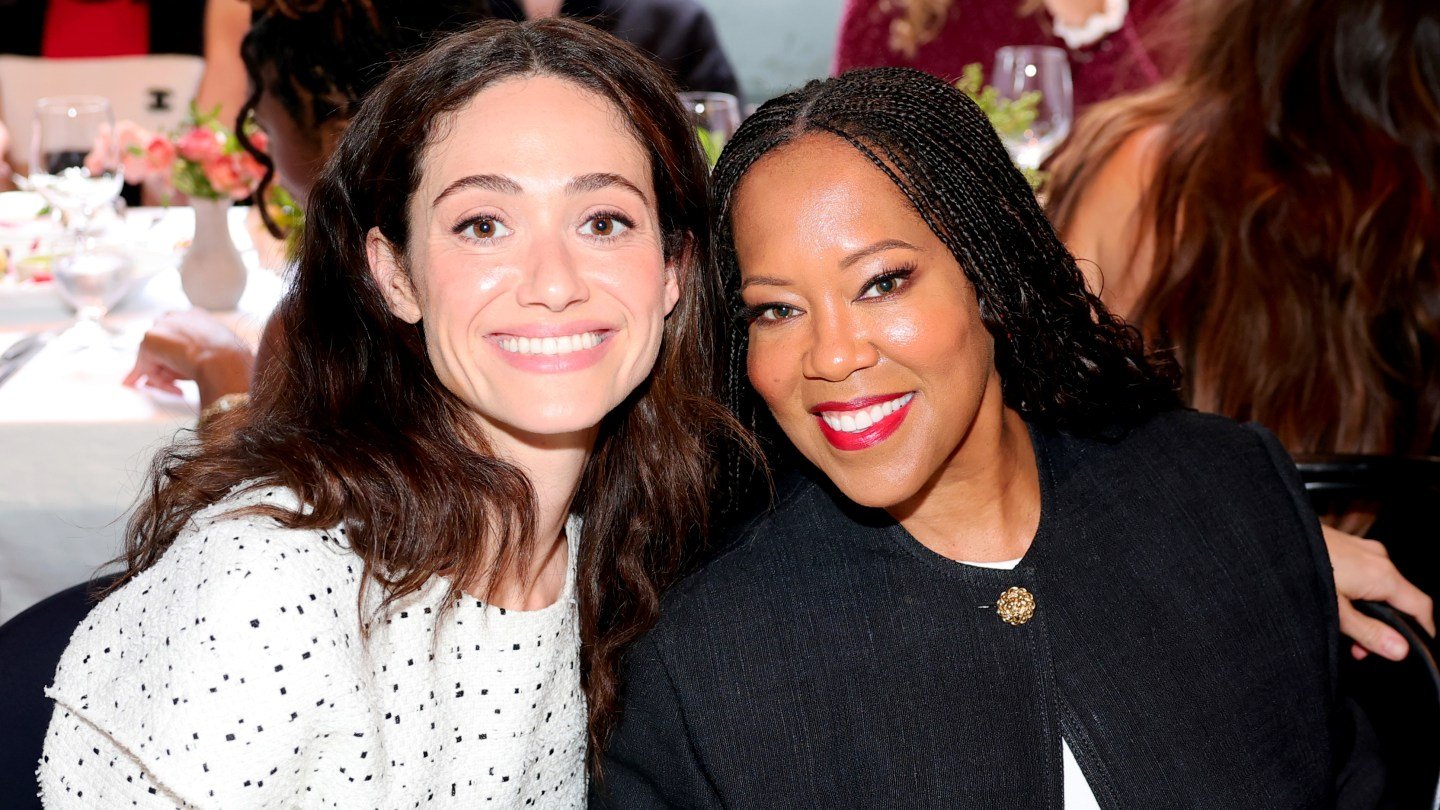
Halle Berry, Regina King, Celine Song, Aleshea Harris, Gina Prince-Bythewood, Patty Jenkins and H.E.R. were among the artists and filmmakers who attended the 11th annual Chanel and Tribeca Enterprises’ Through Her Lens luncheon in New York City on Tuesday afternoon.
Hosted at Locanda Verde by Tribeca Enterprises co-founder and co-chair of the board Jane Rosenthal, the annual event brought together the latest class of emerging nonbinary and women filmmakers for an intimate lunch with industry heavy hitters. Among this year’s jury is Ryan, Berry, King, Autumn Durald Arkapaw and Ella Rubin, with mentorship from Song, Aleshea Harris, Prince-Bythewood, Ellen Goldsmith-Vein and Fala Chen. Conversation leaders include H.E.R., Jenkins, Laura Karpman, Miyako Bellizzi, Cassandra Kulukundis and Riva Marker.
“This is at the core of what we do, which is support the independent filmmaking community and artists who want to come together to support the art form and get people a leg in. Everyone who’s involved — the jurors, mentors and [conversation leaders] — are really committing their time, whether it be actresses in front of the camera or creatives behind the camera,” said Rebecca Glashow, CEO of Tribeca Enterprises. “The support is not just in name only. [Program participants] are spending time with all these directors when it’s very challenging to get into this space, and they’re giving them actionable guidance and support.”
Just a day ahead of the luncheon and workshop, which has helped launch the careers of talent like A.V. Rockwell (A Thousand and One) and Nikyatu Jusu (Nanny), the Warner Bros. Discovery and Paramount merger cleared one of its biggest and final hurdles. The move will have sweeping implications for the production ecosystem and opportunities for filmmakers, and has come amid a year where lower-budget films — predominantly directed by men — have defined the box office. Meanwhile, new data has revealed the stagnation or recession of women being hired or represented in production, both in front of and behind the camera.
Tribeca co-founder Robert De Niro with Jane Rosenthal.
Dimitrios Kambouris/WireImage
Inside the lunch, Rosenthal recalled an experience early in her career when there “weren’t many women and there were even fewer women in positions where they could actually make decisions.” In a role where she was able to develop stories, she came across the script for The Burning Bed, the true story of Francine Hughes, a woman abused by her husband for years. The story was eventually made for TV and starred Farrah Fawcett, becoming “part of the national conversation about domestic violence,” the producer and Tribeca co-founder shared.
That was after she initially took it to her male boss at the time, whose response was demeaning and dismissive of her as well as domestic abuse survivors. Rosenthal found a way around him, and it got produced anyways.
“Domestic violence wasn’t new, women had been living with that forever. Their stories weren’t being told. And sometimes people deciding on which stories matters couldn’t even imagine that reality of their lives,” she told the crowd. “That woman taught me something very early. It matters who’s in the room. It matters even more who has the power in the room and who is willing to use that power to say yes.”
“Years later, my dear friend, Paula Weinstein, who produced over 30 movies herself, founded Through Her Lens with Chanel and I. We wanted to create a place where women filmmakers would be given resources, mentorship, access and freedom to tell the stories of their own and on their own terms,” the producer continued. “History is erased when contributions go unrecognized and when women are missing from the decisions about our culture and what our culture chooses to remember. We cannot pretend that we’re in another cycle here. That’s why Through Her Lens matters. For years we’ve talked about giving women a seat at the table. I don’t think a seat is enough anymore. We need our own fucking tables.”
Michelle Monaghan and Sarah Catherine Hook.
Dimitrios Kambouris/WireImage
For Golden Globe nominee and star of Hulu’s Furious Emmy Rossum, creating her own production company was her way of creating that table amid Hollywood’s historical hiring and representation issues.
“My goal with [company] Composition 8 is to tell stories that investigate contemporary womanhood, and the best way to do that is by hiring more women behind and in front of the camera. We are the majority of the overall population, so I do not understand why we are not reflected as such in the art that we are creating. It doesn’t make any sense to me, but I think the desire is there for it,” she told THR on the carpet ahead of the luncheon. “I’ve always felt like the walls are always going to be there. You just have to decide that you have to make something happen and get scrappy with how you’re going to do it. So it’s amazing to have a program like this that is funding the opportunity to make those connections to do that.”
Rosenthal also points to programs like the larger Tribeca Festival as key to ensuring voices don’t get erased amid an industry shift and studio consolidation. “Festivals can identify new work and new voices that the general audience doesn’t typically find, and we do that by helping curate and identify projects that whatever company then buys or hires their filmmaker. I think that’s why festivals are important,” she noted.
For Daisy Jones and the Six actress and director Riley Keough — who co-created In Process, a limited series inspired by the Through Her Lens filmmaker program — the dynamics of the current moment have left her focused on trying to be “hopeful or else I would stop working,” she joked. “There are so many cool films that are blowing up, and there have been a couple of moments this year of amazing theatrical success. But at the end of the day, in order to be effective, someone has to be on the ground helping shepherd young filmmakers and young women. Chanel’s commitment to that is so amazing, and it is effective. These kinds of things really help people start their careers. When people are saying we need more female filmmakers, that’s how you have to do it. You have to start from the ground up.”
Francesca Scorsese, who says Rosenthal has supported her in her own career, added, “Making connections with all these new creatives and creatives in general in the same industry as you is so important. It’s such a big part of it. You never know who you’re going to meet and who you’re going to be inspired by. When that leads to future partnerships or creative endeavors together, that’s amazing.”
Gina Prince-Bythewood, Regina King and Halle Berry.
Dimitrios Kambouris/WireImage
The Emmy and Oscar-winning King sits on this year’s jury, in a position that gives her the power to help unlock the gate for the next great female or nonbinary filmmaker. It’s a position she describes as “a little nerve-wracking because there’s a part of you that just wants the opportunity to be available for all of them.” The One Night in Miami director noted that over the next three days, she’ll be “trying to approach it as if I am a juror, but I’m not judging, and that’s a really fine line to walk. It’s not seeing them in comparison to someone else because that’s so hard for us.”
On the carpet, King called this particular industry moment that the program’s filmmakers are launching into “a really interesting time,” adding that “this is not the first of these types of mergers, but there’s a lot of money that was being lost from Warner Bros. before these conversations. The understanding is that they will still operate as separate studios, though that remains to be seen,” she told THR. “You also have the conversation about AI that, in a lot of ways, can be a helpful tool, but in a lot of ways we’re watching when it comes to the arts it already starting to replace artists. It’s terrifying, so I am right now trying to keep my energy high and expectations low.”
Rosenthal described the current state of the studio system as “limping along.” Alongside it, a potentially new pipeline has emerged, championed as the era of the YouTube creator, something Tribeca Festival has already embraced through offerings like the Creators Market. For Rossum, one of the under-acknowledged lessons from this year’s successes is that it’s not going to be different models that save storytelling. Regardless of whatever pipeline Hollywood uses, she said, the solution to finding good stories is the same: Access and hiring.
“It’s not a model problem, it’s a hiring problem. There are lots of incredible, amazing filmmakers that are just not getting those shots. We have to stand alongside them and say, ‘We want to make those movies’ and help them get them made. I made a movie this summer with a first-time feature filmmaker, Hanna Gray Organschi, who’s one of the most exciting directors that I have worked with in the last decade. She is ready to make a huge movie. She’s ready to make lots of movies,” Rossum explained. “We just need more shots to be taken and more people to write checks so that women can tell stories.”
But much to Jordan’s chagrin, Cruise immediately found himself at the center of a casting-related nightmare. It wouldn’t be the last time he faced scrutiny over playing an iconic literary character, but his go-round nearly two decades later as Jack Reacher came with one notable distinction.
Jack Reacher series author Lee Child endorsed Cruise’s casting at the time, despite the actor not matching the physical description of his massive ex-Army investigator. It wasn’t until 14 years later, amid the success of Reacher, the hit Amazon Prime series starring 6-foot-3, 240-pound Alan Ritchson, that Child ultimately conceded that readers were right to protest the 2012 and 2016 movies’ lack of fidelity to the title character’s imposing presence.
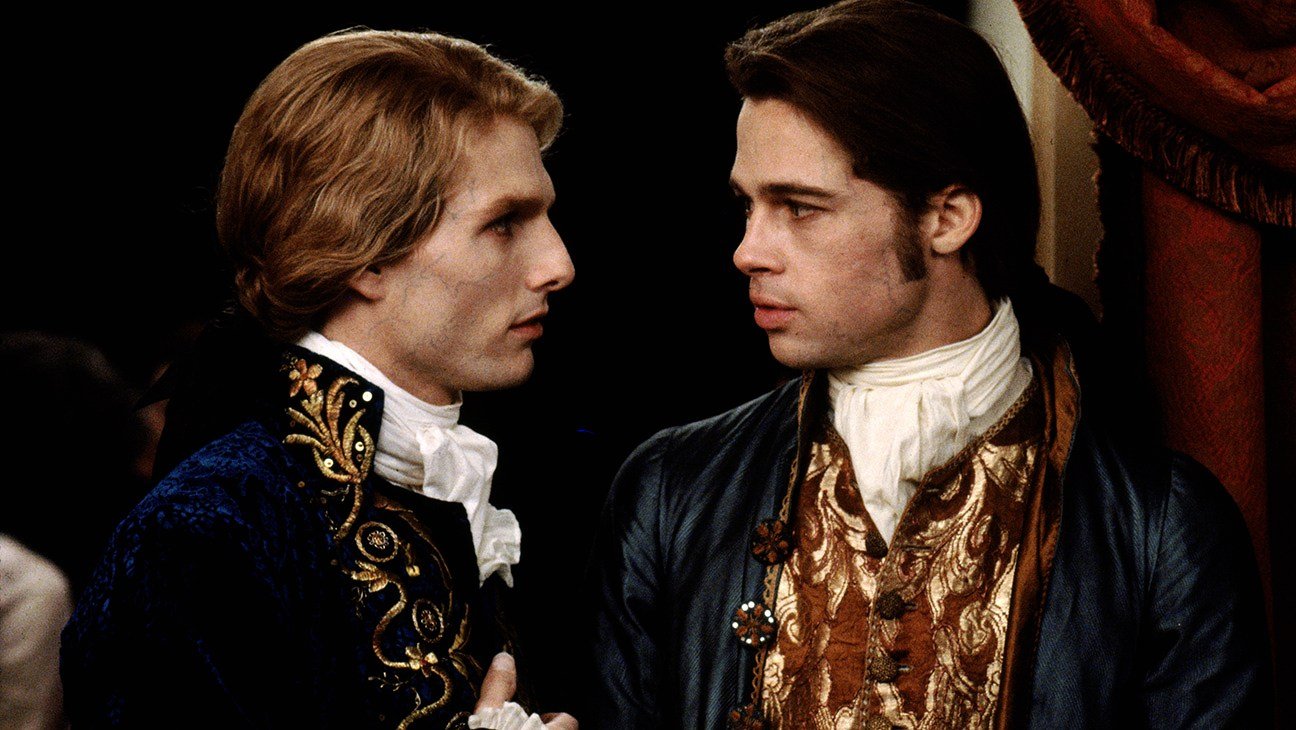
In the case of Interview with the Vampire, the call came from inside the house. Novelist and screenwriter Anne Rice led the charge against Cruise’s casting as Lestat de Lioncourt, a French theater actor in the 1700s who’d already become an immortal vampire by the time he’s introduced. Rice had been tied to the movie’s development since the late ’70s, and over the years, she’d envisioned a bevy of names to play the tall, blonde bloodsucker, including Rutger Hauer, Julian Sands, Daniel Day-Lewis, John Malkovich, Tom Hanks and several others.
While Rice later went to great lengths to apologize to Cruise after seeing his performance, even commissioning a two-page spread in various outlets to heap praise on him, Jordan says the circumstances created an unwanted dynamic on set.
“It was a pain in the ass for me as a director, for him as an actor and for the entire production, when the whole world was saying, ‘Oh, you’re wrong,’” Jordan tells The Hollywood Reporter in support of Interview with the Vampire’s new 4K Blu-ray release. “The opposition that Anne Rice took to his casting was an absolute distraction. It wasn’t a welcome thing at all.”
As one would expect, Cruise was fueled by the naysayers.
“When everyone told him he was not the right choice for the part, he liked the challenge of proving them wrong,” Jordan says. “He was just beginning to explore the non-Tom Cruise aspects of himself, and there are a lot of sides to Tom that he has yet to explore, let me put it that way.”
Rice even suggested Cruise and Pitt swapping roles, something Pitt may have been open to in retrospect. Nobody complained when Pitt received the part of Louis de Pointe du Lac, a wealthy plantation owner in the late 18th century whom Lestat would eventually sire after Louis is consumed by grief over the death of his wife and child. But the strain of playing a vampire during a nocturnal production and its unusual makeup process drove Pitt to the brink of asking producer David Geffen how much it would cost for him to vacate the role mid-shoot. (The answer was $40 million.)
“It’s all my fault. We had intense discussions about it. We shot six months at night in New Orleans, Paris and New York. He found it very oppressive in a way that Louis himself found it oppressive,” Jordan shares. “The combination of the part and Brad’s unease about shooting constantly at night — and me hanging him upside down and painting the veins on his face and putting haptic lenses in his eyes — maybe all that got to him a little bit.”
Bear in mind, Pitt was on the verge of superstardom at the time. He was coming off Thelma & Louise, as well as A River Runs Through It. He’d also just filmed Legends of the Fall, which, along with Interview, were destined to cement his movie star status by the end of 1994. Jordan theorizes that his dissatisfaction with playing the submissive Louis opposite the dominant Lestat may have influenced the choices he’d make from there.
“When we later see Brad Pitt in Fight Club, Se7en and the Quentin Tarantino movies, he’s much more muscular, aggressive and all-American,” Jordan says. “So maybe that’s the direction he wanted to go in, but at the time, he was between directions in a way.”
Across its theatrical and home video releases, the sumptuous vampire drama would go on to gross over four times its $50 million to $60 million production budget. Warners soon contracted Jordan to write a sequel, The Vampire Lestat, based on Rice’s second installment in her The Vampire Chronicles series. However, Cruise’s then-lack of interest in sequels — and in reprising the role — has kept that script in a drawer ever since.
In 2022, AMC began adapting The Vampire Chronicles as a TV series, starting with two seasons devoted to Interview with the Vampire. The third season evolved into The Vampire Lestat, exploring Lestat’s time as a rock star in a modern context alongside his origin story in the 18th century. Jordan says his sequel would have focused more on the latter.
“I wasn’t as interested in Lestat as a David Lee Roth, Iggy Pop kind of rock star with leather pants and a muscular torso. It seemed a little bit cornball to me,” Jordan reveals. “The bulk of the script that I wrote was about Lestat’s story in the 18th century, how he was turned into a vampire against his knowledge and against his will. I would’ve loved to have done that. I would’ve opened it on the Golden Gate Bridge [like the end of Interview with the Vampire].”
Below, in a conversation with THR, Jordan also discusses remaining faithful to Rice’s Interview with the Vampire despite reworking what he considered to be a “limp” ending.
***
It’s always interesting to revisit movies many years later. We process them differently with time and distance, and I imagine filmmakers have a particularly unique version of that experience. What struck you most when you opened Interview with the Vampire back up for the new 4K release?
When I watched it again, I really was just glad I was allowed to make it. I like the movie, and it still seems like the kind of movie that studios don’t normally make.
Following The Crying Game, you probably had multiple doors you could’ve gone through at the time. Do you remember the circumstances that led you through this one?
I was being asked to do very many things by different people. I wasn’t going to direct another IndianaJones, although I suppose now I’d be doing a Marvel movie, wouldn’t I?
The jump from indies to franchises is often how it goes now.
I wouldn’t have done that. I’m Irish. I liked the vampire thing. I liked the challenge of turning a vampire movie into a huge historical epic, all at night. The visual challenges of it really excited me, and I liked Anne Rice’s book and the script she had written. A decade earlier, I had made a movie called The Company of Wolves with [novelist-screenwriter] Angela Carter, and it was a fantasy — a fairy tale gone dark, wrong and weird. Before she died in 1992, she wanted to make a movie that she was going to call Vampirella. So I saw The Interview with the Vampire as a companion piece to what myself and Angela had done all those years before. That was it, basically. It was a weird thing, but it was cool and lovely.
Kirsten Dunst‘s Claudia, Brad Pitt’s Louis and Tom Cruise’s Lestat in Neil Jordan’s Interview with the Vampire
Courtesy of Warner Bros.
Casting Tom Cruise and Brad Pitt was the coup of all casting coups, especially since Cruise’s character is absent for a 40-minute stretch in the second hour. Considering he was, and is, the biggest movie star in the world, did Cruise voice any concern at the time?
No, he didn’t. Not at all. He just liked the challenge of playing a flamboyant monster. When everyone told him he was not the right choice for the part, he liked the challenge of proving them wrong. It’s a great part, and he’s a great actor. He was just beginning to explore the non-Tom Cruise aspects of himself, and there are a lot of sides to Tom that he has yet to explore, let me put it that way.
The backlash to his casting included the aforementioned author and screenwriter Anne Rice, so he used that as bulletin board material?
It was a pain in the ass for me as a director, for him as an actor and for the entire production, when the whole world was saying, “Oh, you’re wrong, you’re wrong, you’re wrong.” You don’t want the challenge of having to prove yourself right. You want the challenge of making the character work and the movie work. So the opposition that Anne Rice took to his casting, and stuff like that, was an absolute distraction. It wasn’t a welcome thing at all. But I don’t think it was a contributing factor to what he did with the part. I think he did what he thought was interesting.
I mentioned the 40-minute stretch in which Lestat does not appear, but there are rumors of deleted scenes where he teamed up with the Théâtre des Vampires to get revenge against Louis and Claudia. Did you actually shoot any material with Cruise for that Paris section?
Yeah, I did. I shot one little scene, but it wasn’t very good. It wasn’t very interesting. I don’t know why. But when we met him again in New Orleans, it was fucking great. We’ve included deleted scenes on the [4K Blu-ray].
Yes, I watched them. I wondered if Lestat’s Paris scene would be among them, but now I know why you didn’t include it.
It didn’t make sense, really. The character would not have been that weak [in the Paris scene]. It was more interesting to find him in that abandoned house in New Orleans. There was something ghoulish and denatured about him in some strange way. That was much more interesting than seeing him with a bunch of strange … The fact of the matter is, the Theater of Vampires displayed itself best in the scenes in the theater itself. This coven of vampires living in these crypts was only interesting when you began to chop them with a scythe like Brad Pitt eventually did.
Of all the deleted scenes, is Louis’ confession the one you regret not including the most?
I cannot work out why that’s not in the finished movie. I’m sorry about that. I just can’t work it out. It’s been 30 years. I had long discussions with the editor about it. We were trying to track down our very first cut, and we couldn’t find it in the Warners vaults. But we did find these deleted scenes, some of which are interesting. So that’s why I’ve included them.
Neil Jordan and Brad Pitt on the set of Interview with the Vampire
Courtesy of Warner Bros.
Brad, in hindsight, talks about how miserable he was shooting nights in the makeup and being hung upside down to drain the blood from his face.
It’s all my fault. All of that.
So it’s not retroactive exaggeration?
No, I sensed it at the time. We had intense discussions about it. You’ve got to face it. We shot six months at night in New Orleans, Paris and New York. Then we got some respite on the Pinewood set we used. But the problem is that the character suffers. Interview with the Vampire is Louis’ account of how he was turned into this thing by somebody who jumped him in the middle of the night. And he has spent the rest of his life trying to understand what this thing is. So that’s the part that Brad played, and he found it very oppressive in a way that Louis himself found it oppressive. So the combination of the part and Brad’s unease about shooting constantly at night — and me hanging him upside down and painting the veins on his face and putting haptic lenses in his eyes — maybe all that got to him a little bit.
He’d done Thelma & Louise, Legends of the Fall and A River Runs Through It. He was on the cusp of defining what kind of actor he wanted to be. When we later see Brad Pitt in Fight Club, Se7en and the Quentin Tarantino movies, he’s much more muscular, aggressive and all-American. So maybe that’s the direction he wanted to go in, but at the time, he was between directions in a way. He was still quite a young actor, but a great actor.
Kirsten Dunst’s character, Claudia, really tells it like it is, and from my interaction with her, Kirsten herself is also a straight shooter. Was she direct and forthright even as an 11-year-old kid?
She was a kid, but the minute I met her and tested her, I knew she’d be acting for the rest of her life. I didn’t feel the normal trepidation one has when casting a kid. I said to her mother at the time, “You do realize she’ll be acting for the rest of her life?” And her mother said, “Yes, she knows that.” So we cast a kid who was not only a superb actor, but she also played one of the most interesting parts in the whole story. Claudia is a child who is never able to grow up, and there’s something fairy tale-ish and ghoulish about it. There’s something of a porcelain doll about it. Of all the dilemmas that all the characters faced, it was the most interesting dilemma.
Kirsten Dunst as Claudia in Interview with the Vampire
Courtesy of Warner Bros.
Nowadays, so many movies set themselves up for sequels, but in the ’90s, it was a rare occurrence. And to me, the ending in the Mustang always felt like it was setting up another movie. Were you actually thinking about a potentialThe Vampire Lestatmovie when you shot it?
No, I just wanted to bring the character back in. I thought the ending of the book was kind of limp. [Christian Slater’s] Molloy says, “I want to be what you are.” And Louis says, “You’ve not listened to anything I’ve said, have you?” Then he vanishes, and Molloy runs down the street without knowing what he’s done. I just thought it was a bit limp. So I wrote this fun ending to bring Lestat back into the picture because I enjoyed the Lestat that Tom Cruise gave birth to in the earlier sections of the film. It was great to see him back again.
There was a conversation with [producer] David Geffen. He’d bought the rights to the whole string of [The Vampire Chronicles books]. After we made the movie, Warners asked me to write a script for the second book, The Vampire Lestat, which I did. But I wasn’t as interested in Lestat as a David Lee Roth, Iggy Pop kind of rock star with leather pants and a muscular torso. It seemed a little bit cornball to me, but I did write a script.
The bulk of the script that I wrote was about Lestat’s story in the 18th century, how he was turned into a vampire against his knowledge and against his will. He was an actor in the Commedia dell’arte troupe, and it was fascinating to me. His mother gets sick, and he turns her into a vampire. It was kind of cool. I would’ve loved to have done that. If I had done that, I would’ve opened it on the Golden Gate Bridge [like the end of Interview with the Vampire].
[Writer’s Note: At that point, Cruise not only didn’t make sequels to his own movies, but he also declined the chance to reprise Lestat, effectively ending the short-lived follow-up idea.]
Christian Slater’s Daniel Molloy interviews Brad Pitt’s Louis in Interview with the Vampire
Courtesy of Warner Bros.
There’s been a lot of debate this year about creative license in adaptations.The Odysseyin particular received so much guff for its changes, but a movie adaptation is not meant to be a 1:1 translation. So how did you approach that tug of war between the source material and doing what’s best for the movie?
Well, there was no tug of war at all, really. When I was given the project, it had been hanging around for years. I just heard that Anne Rice spoke to Tom Hanks about playing Lestat at one point [n ’93], and there was an earlier version of it where she apparently wanted to change the character of Louis to a woman and have Cher play that role.
[Writer’s Note: Rice’s novel was optioned upon its release in 1976, but the project stalled in development, which she believed was largely due to its homoerotic themes. As a last-ditch effort to get the film greenlit in the ’80s, she gender-swapped the role and heterosexualized the Louis-Lestat relationship. Geffen then approached her in 1992 for a more faithful adaptation.]
The novel was beautiful, and I could feel the atmosphere of it. I could touch it almost. But a lot of stuff had been taken out of the existing script. So when Geffen and Warners asked me to do it, I said, “I’d love to do it, but will you let me do my own pass on the script?” And they did. So I went back to Anne’s book and reintroduced a lot of elements from the book.
One of the main changes that Anne had introduced in the script was Louis lamenting not the death of his brother, but the death of his wife, when the story opens. It’s not a huge change, really, but I do think the movie is as accurate to the book as a movie can probably be without turning it into a version of James Joyce’s Ulysses. I tried to reproduce exactly the feeling I had when I returned to that novel, so I think it’s pretty accurate.
The metaphor of two men, sexuality and blood is intact. The fact is that it’s a gay family with a child at the center of it. The child is created to keep this family together. It’s all there, really. The most dynamic aspect of the book was this family. There’s Lestat, the dominant; Louis, the passive; and Claudia, the kid. That was it. So I thought I’d make a movie about the story of this family, and it’s as accurate to the book as I could make it. I can see how you could take that material and go anywhere with it, but I regarded my job to reflect the novel itself.
*** Interview with the Vampire is now available on 4K Blu-ray.
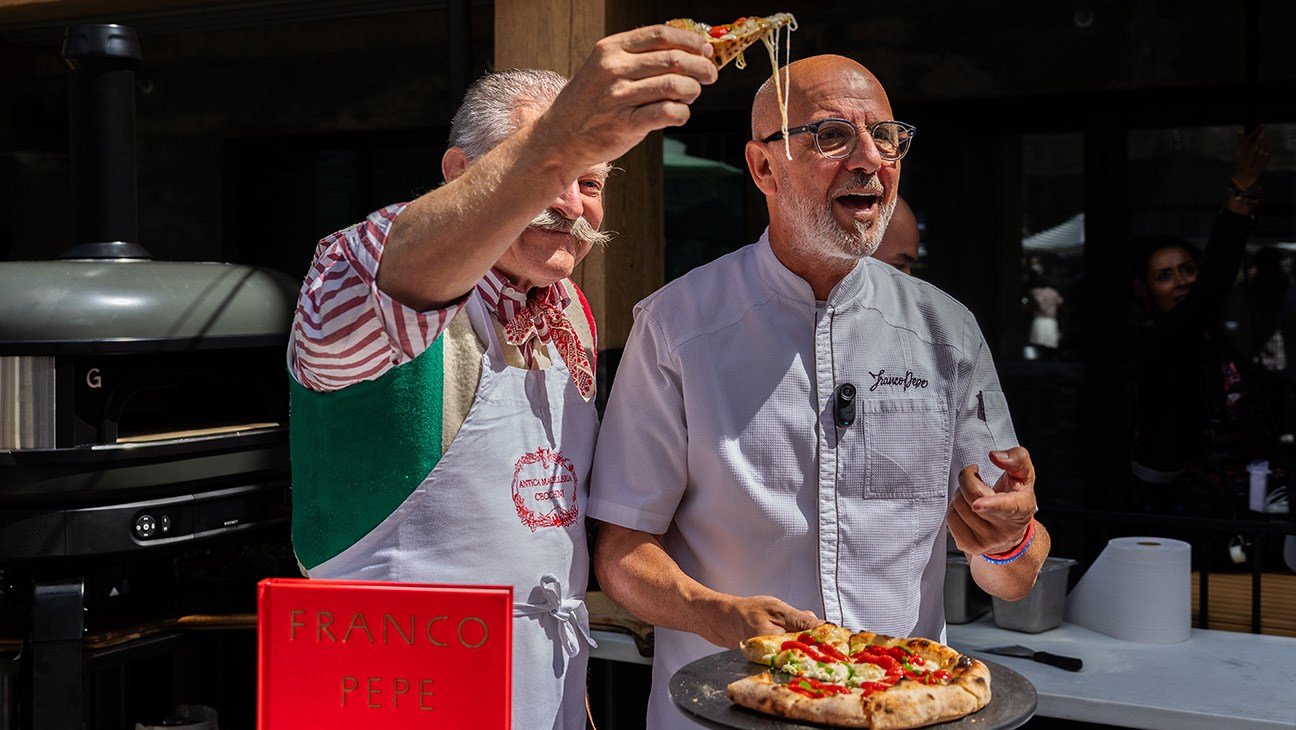
During August’s inaugural Chef’s Table Festival in Park City, David Gelb watched Massimo Bottura, one of Italy’s most celebrated chefs, rescue a pizza. A cook working with Franco Pepe was about to discard a pie that hadn’t met the pizzaiolo’s standards when Bottura intervened and told him to fold it into a calzone. Then Bottura started saucing it, slicing it and feeding event attendees who had gathered to watch the spectacle unfold.
“I felt like it was scripted,” says Gelb, creator of Netflix’s Chef’s Table. Bottura was the series’ first subject in its 2015 premiere, and starred again in episode four of Chef’s Table: Pizza in 2022.
The four-day Utah festival and its follow-up Vegas weekender, Wynn Revelry by Chef’s Table, which ran Sept. 18–20, brought chefs and viewers together for restaurant takeovers, collaborative dinners and a firsthand look at how the show is made. For Gelb, seeing its subjects cook together felt like an Avengers-style team-up. “Each episode of Chef’s Table is the individual story of a chef, and now it’s like a crossover where we have so many chefs from the show collaborating, hanging out,” he says.
Chef’s Table alumni with creators creators Andrew Fried and David Gelb at the first-ever Chef’s Table Festival
In Vegas, Bottura DJed the marquee event, The Feast, and then cracked open a massive wheel of cheese onstage, making it rain Parmigiano Reggiano all over the crowd. Thomas Keller also hit the decks at Wynn’s Encore Beach Club, alongside DJ Clutch.
Bottura, who declines cooking at most food events nowadays, was driving when Gelb called to invite him to Utah and Las Vegas. “I didn’t even look at the calendar. I said yes because I trust them,” he says. That confidence stemmed from Gelb’s thoughtful, artful approach to Bottura’s original Chef’s Table episode.
In 2013, Gelb developed Chef’s Table after directing Jiro Dreams of Sushi. “Chef’s Table was a vision about telling not just how chefs cook, but why they cook,” he says. Netflix was the only outlet willing to take the pitch: a food show without a celebrity host, filmed with cinema cameras and lenses, with the drama coming from the chefs and their stories.
For years after its 2015 debut, Gelb had heard from viewers who wanted to taste the food onscreen but couldn’t get a reservation or make the trip to the restaurants featured on the show.
Daniel Hadida from Restaurant Pearl Morissette, one of North America’s Best Restaurants, participated in Wynn Revelry.
Courtesy of Wynn Las Vegas
“We were always limited by the fact that audiences would only be able to see and hear the show,” Gelb says. “It has always been a dream to bring Chef’s Table to life in a way where people can experience it with all of their senses.”
Justin Connor, president of Chef’s Table Projects, approached Gelb and fellow executive producer Andrew Fried several years ago about taking Chef’s Table “360.” United Airlines now serves chef-designed menus in Polaris international business class on select long-haul routes, including Nancy Silverton’s burrata with braised leeks and beef brasato on flights departing Los Angeles. In-flight videos explain how the dishes came together. Through Airbnb, guests can make cavatelli with Kirby Shaw, executive chef of Michelin-starred Osteria Mozza, then sit down to a family-style meal.
“The brand itself is so low-ego, and it’s just an amplifier for incredible chef talent,” Connor says.
Netflix’s response when Gelb began taking the concept beyond its platform was highly supportive. “Their commentary was, ‘Can I come?’” Gelb says. Many of the executives who work on the series attended both events.
Other streaming hits have moved offscreen: Bridgerton’s Queen’s Ball invited fans into a Regency-style evening of music and dancing, while Stranger Things: The Experience combined live performances, effects and interactive adventures in Hawkins. Connor senses a wider appetite behind those shifts. “People are tired of a wholly digital experience,” he says. He envisioned the Park City and Vegas concepts as a food “un-festival,” seeking something different from the familiar circuit of tasting tents, small bites and plastic forks. Italy’s Ein Prosit provided a model in which visiting chefs cook in local restaurants, and guests choose whom they want to spend an evening with rather than racing between booths to sample everything.
“The culinary industry isn’t about the meet and greet,” Connor says. “It’s about experiencing hospitality, and it’s about getting to connect with people as they tell you their story, whether it’s in person or it’s through their food.”
Ian Somerhalder tippled his Brother’s Bond Bourbon at Wynn’s Icon’s Buffet.
Chef’s Table Festival
Across seven days in Park City and Las Vegas, Chef’s Table’s first two outings encompassed more than 100 events. Connor says Park City drew more than 80 visiting chefs for its four-day run, while Wynn’s three-day Revelry featured more than 30 chefs from five continents. The culinary baseline, Connor says, was that “every single bite needed to be amazing.” Beyond that came what he calls the “unscripted, emergent moments” — encounters among chefs and guests “that you can’t plan for and that you can’t pay for.”
Gelb also brought in the filmmaking process. During live food shoots, his team demonstrated how it creates the series’ “food symphony” sequences, using cinema lenses and a camera dolly moving along tracks. Guests could eat a dish, then look at a monitor and see how the camera transformed it.
‘Chef’s Table’ behind the scenes at the festivals.
The team recorded podcasts and chef roundtables and filmed dishes for Plates, a video format developed with American Express and Resy. The shorter format gives Gelb another way to introduce chefs who haven’t had full episodes. But he says any expansion depends on protecting what attracted viewers in the first place, including giving chefs the ingredients and support to cook properly.
Sarah Thompson, executive chef of Casa Playa at Wynn Las Vegas and the 2026 James Beard Award winner for Best Chef: Southwest, saw firsthand how closely guests had followed the series. “The show has done something rare, and it’s made people feel like they know a chef before they’ve ever sat down at their restaurant,” Thompson says. “People aren’t just there for the food. They want to feel like they’re part of the story, too.”
Through their participation in both cities, Thompson met Serigne Mbaye, the 2026 James Beard Award winner for Best Chef: South and chef-owner of Dakar NOLA. “Honestly, I don’t go to festivals because I love being at the restaurant,” Mbaye says. “My restaurant’s busy, and I try to be there as much as I can.” Chef’s Table was different. “When they told me about it, I thought, what an opportunity to meet all the people who inspired me over the years,” he says.
Serigne Mbaye, the 2026 James Beard Award winner for Best Chef: South.
At Wynn Revelry, Thompson cooked at the Icons Dinner and The Feast, while Mbaye participated in The Feast and, for a select group gathered in a Wynn villa, shared the Senegalese ataya tea ritual that closes the tasting menu at Dakar NOLA.
Aaron Paul was one of the fans of the series willing to travel for a taste. “When Chef’s Table landed on Netflix, it was such an obsession of mine,” says the Breaking Bad star. “Not only was I watching every episode, but I was tracking down those restaurants whenever I was traveling. I would make sure, ‘OK, is there a spot I learned about on Chef’s Table near me?’ It really had that impact on me.”
Paul arrived in Park City with Ambassadors Clubhouse, the Punjabi restaurant from the team behind two-Michelin-starred Gymkhana and one of New York’s most in-demand reservations. He brought two of his companies: The Only Caviar and Dos Hombres, the mezcal brand he co-founded with Breaking Bad co-star Bryan Cranston.
In Las Vegas, Paul and Cranston joined chef Sarah Glover to cook a massive seven-bone tomahawk ribeye over an open fire. Cranston leaned into the theatrics, taking a drill to the bone to the delight of onlookers. At the Icons Dinner, The Vampire Diaries actor and Brother’s Bond Bourbon co-founder Ian Somerhalder held court, sipping bourbon and mingling with guests as they made their way through the star-chef buffet.
Bryan Cranston and Aaron Paul joined fire queen Sarah Glover.
Chef’s Table Festival
Nancy Silverton, the 2014 James Beard Outstanding Chef winner behind Michelin-starred Osteria Mozza in Los Angeles, was profiled in volume three, episode three, in 2017 and still sees the show’s effect in her dining rooms. She says “a large percentage” of the diners in her restaurants are there because of Chef’s Table. Some guests tell her they have watched her episode dozens of times; others cry as they explain what it meant to them.
“No matter what level you’re at, what Chef’s Table did for all of us was priceless,” says Silverton.
Kwame Onwuachi, the 2019 James Beard Rising Star Chef of the Year behind Tatiana in New York and Maroon at Sahara Las Vegas, was the subject of the second episode of volume seven in 2024. He participated in Park City after opening Maroon this spring; it is now one of Las Vegas’ hottest tables.
“Not everybody’s going to read a book. Not everybody’s going to read every single article, but some people are going to watch a TV show,” he says. “I think it expanded my audience.”
Kwame Onwuachi at Chef’s Table Park City.
On Sept. 22, Onwuachi celebrated the release of his cookbook, All Hours: Crazy Good Food for Whatever, Whenever, at Lincoln Center Theater with cooking and conversation presented in the style of a late-night show. He is also building the team for a screen adaptation of his memoir, Notes From a Young Black Chef, first announced with A24.
An episode is not a prerequisite for being invited to cook at the festivals. Most of the chefs who participated at Wynn had not been featured on the series. The wider roster introduced attendees to internationally established and rising talent, including Mark Iacono of Lucali, one of New York’s most sought-after pizzerias; Rodolfo Guzmán of Boragó in Santiago, No. 23 on the 2025 World’s 50 Best Restaurants list; Alejandro Chamorro of Nuema in Quito, No. 10 on the 2025 Latin America’s 50 Best Restaurants list; Álvaro Clavijo of El Chato in Bogotá, No. 1 on the 2025 Latin America’s 50 Best Restaurants list; and Ukrainian architect-turned-pastry artist Dinara Kasko of Dinara Kasko Pastry Art, internationally known for geometric desserts created with 3D modeling.
“If I were able to, I would shoot 100 episodes per year,” Gelb says. The selection criteria remain “a chef who cooks with passion and purpose and tells a story with their cuisine.”
In Vegas, Friday’s sold-out, $1,000-a-ticket Icons Dinner at The Buffet marked 80 years since El Rancho introduced the first Strip buffet. Thomas Keller, featured in episode three of Chef’s Table: Legends in 2025, and Chutatip “Nok” Suntaranon, whose Philadelphia restaurant, Kalaya, won the 2026 James Beard Award for Outstanding Restaurant, anchored the connection to the series. Suntaranon opened Chef’s Table season seven in 2024. They were joined by eight-time James Beard Award winner Marcus Samuelsson of Red Rooster; James Beard Best Chef: South winner Nina Compton of Compère Lapin; three-time James Beard Award winner Alfred Portale of Zero Bond and Sartiano’s; and Doug Psaltis of Asador Bastian, a New York Times Best Restaurant in America.
Mason Royal, the chef at Phil Rosenthal and Silverton’s Max & Helen’s — one of Los Angeles’ most talked-about new restaurants, where waits can stretch four hours — brought his pancakes, which have a cult following, to Sunday’s Grand Revelry Brunch at Mizumi. (With no wait.)
L.A.’s Mason Royal from Max & Helen’s served his cult-following pancakes at Mizumi Las Vegas
Courtesy of Wynn Las Vegas
The alumni’s role in deciding who enters this elite circle of talent became more formal in Las Vegas with the inaugural Chef’s Table Honors ceremony. Hosted by comedian Tom Segura, the invitation-only “chefs honoring chefs” event featured 2022 James Beard Outstanding Chef winner Mashama Bailey of The Grey in Savannah, as well as Bottura, Keller, and Silverton. Silverton honored Keith Corbin, the James Beard Award-nominated chef-owner of Alta Adams in Los Angeles.
The Chef’s Table Festival will return to Park City in summer 2027, and Wynn Revelry by Chef’s Table will return to Las Vegas next year as well. Connor says additional cities could be announced in the coming months, while the United Airlines and Airbnb collaborations will continue. Gelb’s team also has footage, podcasts and conversations from Park City still to release.
“Is it possible to have too much of a good thing?” Gelb asks. “We’ll continue to experiment with that.”
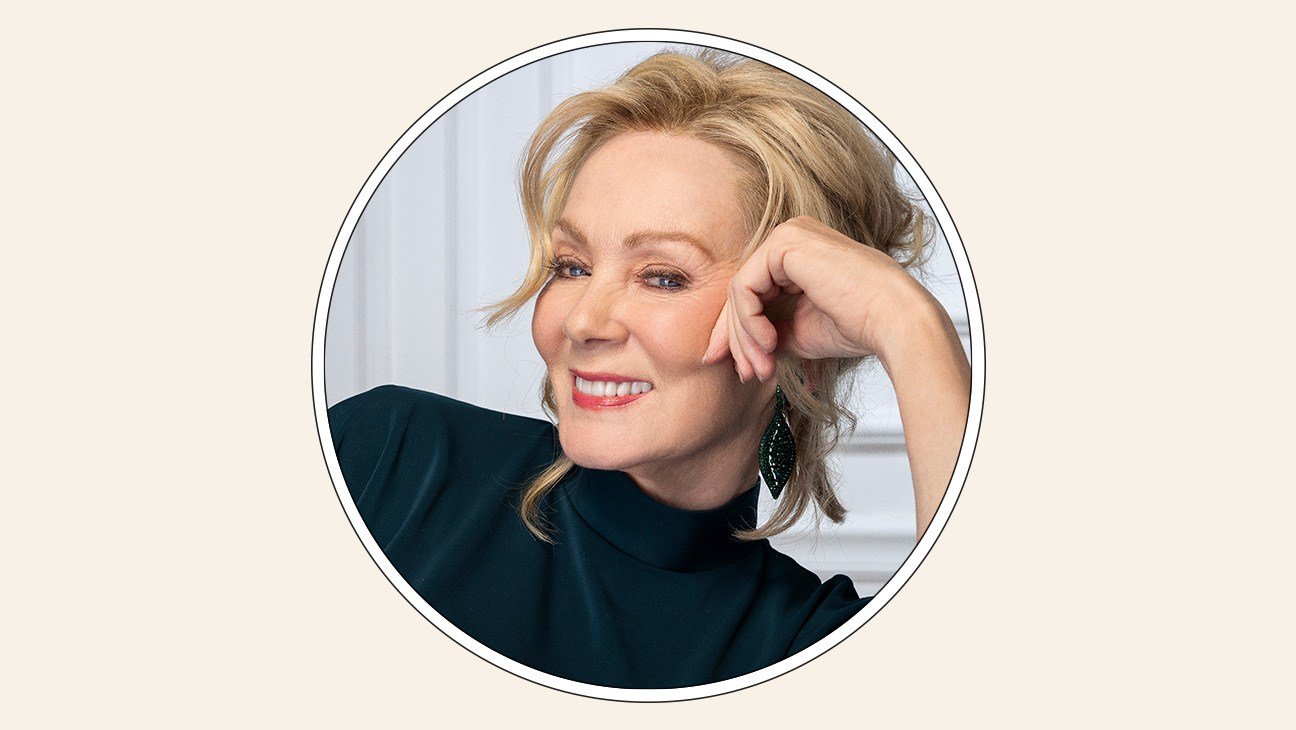
Jean Smart is joining the Stone family for the holidays.
On the heels of her fifth Emmy win for her portrayal of Deborah Vance in Hacks earlier this month, Smart has been cast in Searchlight Pictures’ sequel to the 2005 holiday classic The Family Stone, which sees much of the original cast set to return.
Titled The Families Stone, the sequel will see Claire Danes return as Julie Morton, Rachel McAdams as Amy Stone, Dermot Mulroney as Everett Stone, Craig T. Nelson as Kelly Stone, Sarah Jessica Parker as Meredith Morton, Luke Wilson as Ben Stone, Tyrone Giordano as Thad Stone, Elizabeth Reaser as Susannah Stone, Paul Schneider as Brad Stevenson and Brian White as Patrick Thomas.
Thomas Bezucha, who wrote and directed the original film, is also returning to write and direct the sequel. Principal photography is set to begin this fall in New York.
Here’s the official logline for The Families Stone: “Twenty years after their mother’s passing, the Stone family reunites for Christmas only to face the season’s biggest surprise: their father has unexpectedly invited the woman he’s fallen in love with to meet the family.”
The 2005 film followed Everett (Mulroney), the eldest son of the Stone family, as he brought his uptight girlfriend, Meredith (Parker), home to meet his parents — played by Diane Keaton and Nelson — and siblings — played by Wilson, McAdams, Giordano and Reaser — for Christmas. Everett planned to propose to Meredith, but after she became overwhelmed by the family’s hostile reception, she asked her sister, Julie (Danes), to join her for support, sparking a chaotic holiday visit.
Keaton’s Sybil Stone dies of a terminal illness at the end of the original movie. Keaton died of primary bacterial pneumonia in October 2025 at age 79. “After the death of Diane Keaton, it’ll be even more meaningful because she was so great to be around on the first one,” Wilson said to Entertainment Tonightin July.
The Family Stone grossed $92.9 million worldwide and has since become a holiday staple.
Smart, a veteran actress, has earned numerous accolades over the course of her career, including eight Emmys, three SAG Awards, two Golden Globes and six Critics Choice Awards.
She most recently wrapped the fifth and final season of Hacks. Smart is also known for Babylon, Garden State, Sweet Home Alabama, Mare of Easttown, Watchmen and Fargo. Up next, she will co-star in the romantic comedy Egg Baby from Amazon MGM Studios.
The Families Stone producers include Michael London and Shannon Gaulding for Groundswell Productions, Parker and Alison Benson for Pretty Matches Productions.
Smart is repped by WME and Untitled Entertainment.
The Ada County Sheriff’s Office in Boise, Idaho has finally figured out the real identity of “The Unknown Wanderer,” a man who went by the alias William M. Toomey and died by suicide in a local church in 1982. It’s cool to close any cold case, but this previously unsolved mystery looks like it may crack an even bigger one: Toomey, whose real identity was revealed on Wednesday to be Dr. Mathew Francis Betkouski, an organic chemist, may also be the infamous Tylenol Murderer. Enter: Unsolved Mysteries.
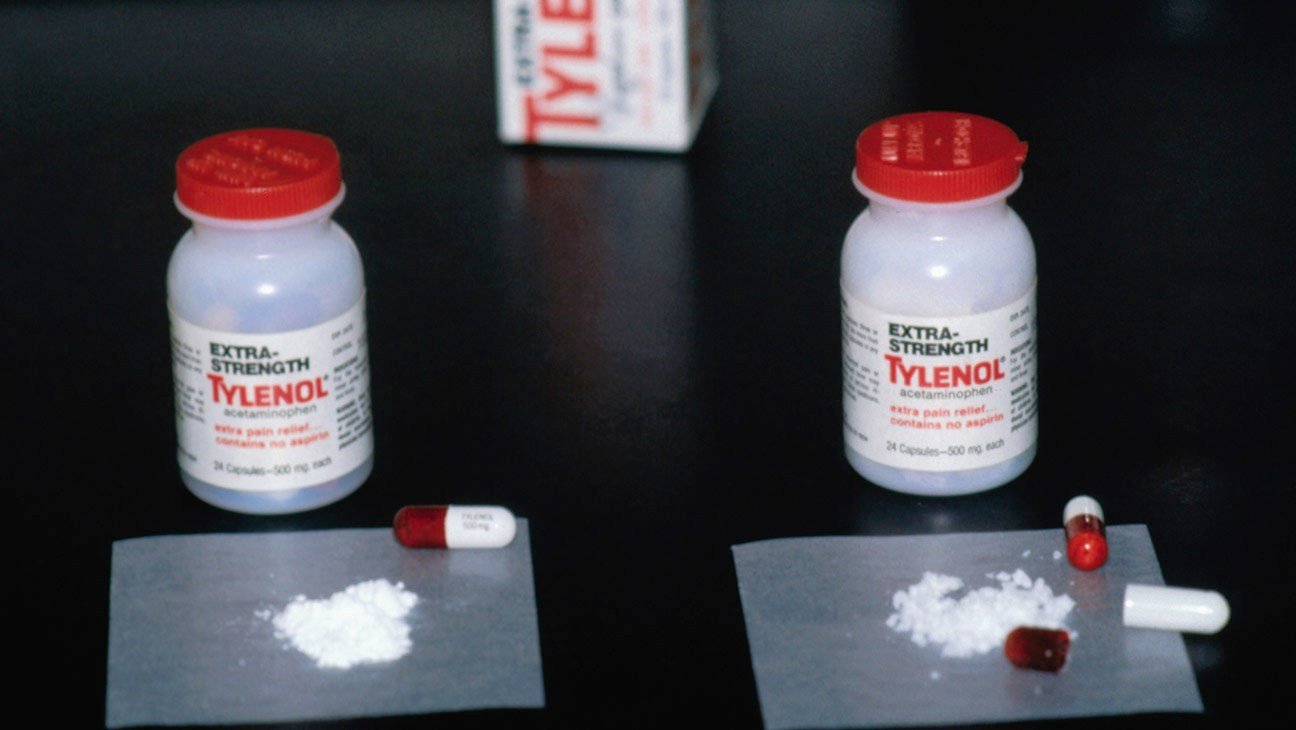
Today’s press conference was a joint effort between Ada County Sheriff’s Office and the long-running true crime brand, which is a bit unusual. Unsolved Mysteries was there not for “The Unknown Wanderer” necessarily, but for his potential ties to the Chicago-area poisonings that left at least seven people dead. In 1982, the Tylenol Murderer uncapped bottles of the popular pain medicine at various stores, dumped the powder contents of capsules out, replaced it with cyanide, and returned the bottles to store shelves. (This was before the advent of the safety seal and directly led to its widespread adoption.)
Betkouski’s cause of death was deemed to be cyanide ingestion. Betkouski went through a lot of effort to change his appearance prior to his suicide, and it is believed by some that he made confession in Sacred Heart Catholic Church, where his body was discovered. The Tylenol Murders were never solved.
“He was a brilliant man, but he struggled to connect with people in life,” Ada County Sheriff’s Office Det. Tim Cooper said of Betkouski on Wednesday. “Dr. Betkouski had a documented fascination with chemistry and the use of explosives from a young age, and did put others at risk on more than one occasion.”
“In 1974, Dr. Betkouski sustained a traumatic brain injury, which caused some of his problems to manifest in more concerning ways than they had before,” Cooper continued. “In 1975, Dr. Betkouski worked for a flavors and fragrances company in the Jacksonville area, and after about three years, concerns mounted after coworkers reported Dr. Betkouski discussing the perfect crime and how cyanide could be used as a less messy means of taking one’s life.”
It gets worse: Betkouski was fired by Lockhead in 1982 “following an incident at a local pharmacy.” Betkouski “attempted to obtain some type of pills or capsules…for an experiment,” Cooper said.
“Where this leaves us is while our office may have identified some possible connection between Dr. Betkowski and the [Tylenol Murders], we’re not naming him as a suspect, and we cannot say he was in Chicago during the final week of September 1982,” Sullivan said. “More information does exist in this case that we won’t be releasing today.”
All of this and more is covered in documentary Unmasking the Tylenol Killer, which premieres on The Roku Channel on October 9, 2026. Cooper and his work are the stars of the show.
“This case and everything you’ve heard today is going to be the subject of a brand-new Unsolved Mysteries documentary called Unmasking the Tylenol Killer. It streams October 9 on the Roku Channel, and it’s going to go into detail we simply don’t have time for today,” Sheriff Matt Clifford said at the press conference. “Our goal in working with Unsolved Mysteries was simple: we wanted more tips, and we wanted more evidence to come forward.”
It is not on Ada County to name Betkouski as a suspect in the Tylenol Murders as that is a Chicago case. The Idaho police did share all of their findings with the Chicago PD.
If this all sounds familiar, that’s probably because Netflix tried it. In 2025, Joe Berlinger’s Cold Case: The Tylenol Murders attempted to solve the now-44-year-old killing spree. Directors Yotam Guendelman and Ari Pines (well, really it was producer Molly Forster) got the FBI’s lone suspect James Lewis to participate in the three-part series, but it now appears Lewis is probably not their man.
Lewis was never charged in the poisonings, but he was convicted of extortion for sending a letter to Tylenol maker Johnson & Johnson taking responsibility for the deaths and demanding $1 million to stop them. Lewis said later that his letter was an attempt to point authorities to his wife’s former boss. Lewis got a 10-year prison sentence, and died shortly after the three-part Netflix series wrapped.
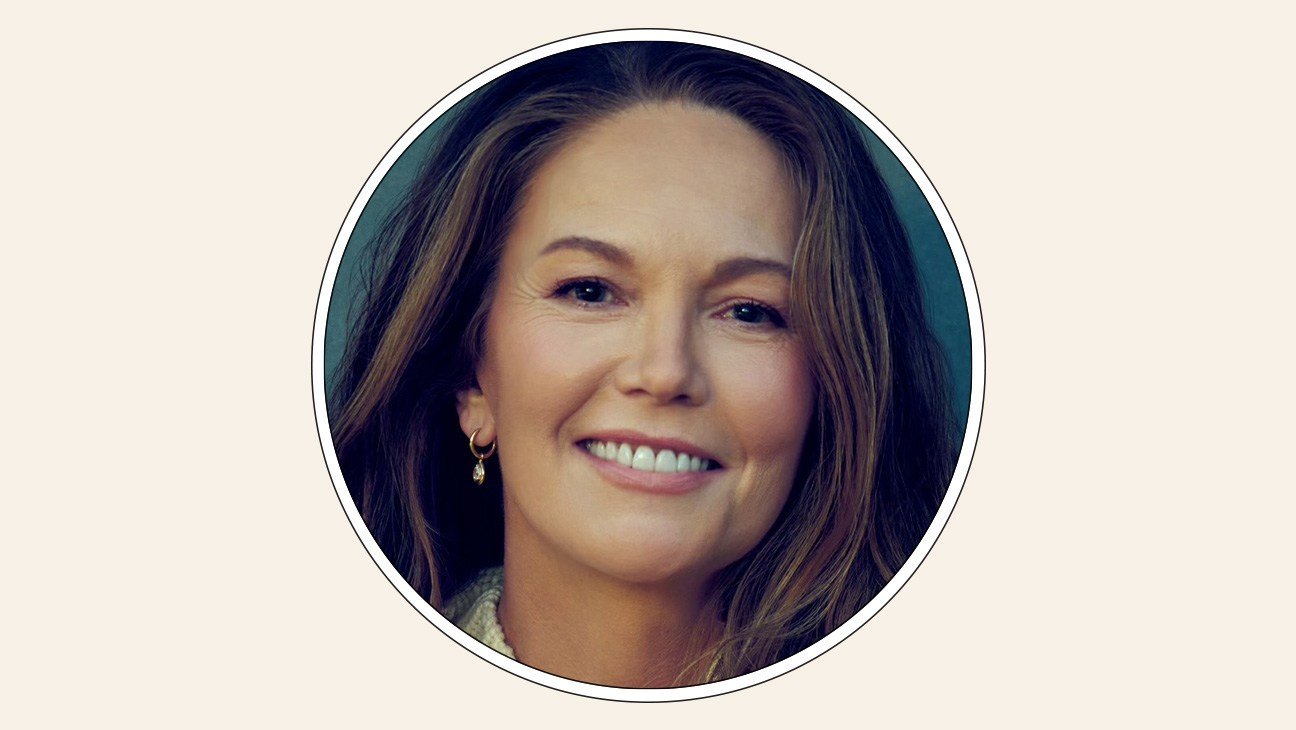
Diane Lane is joining Hulu’s upcoming limited series Victoria.
Lane joins as Lee Calloway a “savvy venture capitalist accustomed to getting what she wants and has worked too hard to let anyone stand between her and the win,” the streamer and Onyx Collective announced Wednesday. She joins Li June Li, seen on screens recently in Spider Noir and Sinner, who’s playing Maxine Tao, described as a sophisticated yet cunning woman who finds herself in the high-stakes world of venture capital.
The logline for the series reads, “Set in the cutthroat world of San Francisco’s elite, Victoria is an erotic thriller about a brilliant con artist who finds herself in a dark web of power, luxury and the crosshairs of a seductive killer who knows her secrets.”
It Ends With Us screenwriter Christy Hall created the series and serves as the show’s showrunner, executive producer and writer. Geeta Vasant Patel will direct the pilot and executive produce. Disney’s Onyx Collective and Counterpart Studios serve as the studio. Lilly Burns, Elise Henderson and Tony Hernandez executive produce for Counterpart. Li is set to co-produce.
Hulu announced that they had greenlit the series earlier this month, sharing at that time that Li was set to star in the project.
Lane is represented by CAA, Range Media Partners and Weintraub Tobin. Li is represented by Gersh Agency, Authentic Talent and Literary Management and Jackoway Austen Tyerman Wertheimer Mandelbaum Morris Bernstein Trattner Auerbach Hynick Jaime LeVine Sample & Klein. Hall is represented by CAA, Untitled Entertainment and Yorn Levine Barnes.
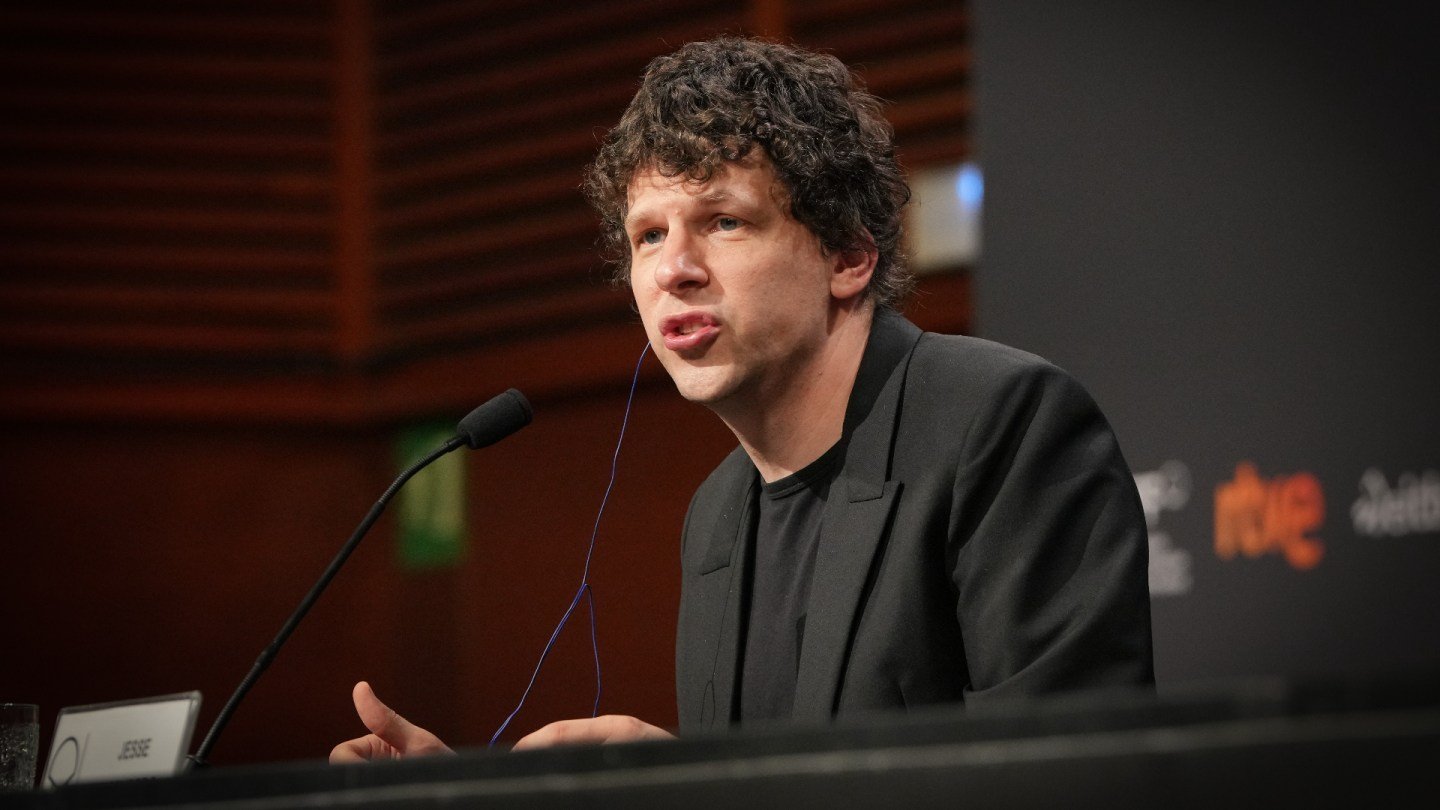
Jesse Eisenberg regaled a room of journalists with brilliant — but slightly tragic — tidbits from his childhood and career while discussing his latest feature, The Debut.
Julianne Moore, Paul Giamatti, Halle Bailey, Havana Rose Liu, Bernadette Peters, Colton Ryan, Lilli Cooper, Maulik Pancholy and Bonnie Milligan join Eisenberg in The Debut, following a shy woman (Moore) who is unexpectedly cast in a local production of an original musical. Under the spell of the strong-willed and enigmatic director (Giamatti), she loses herself in the role and the high-stakes world of this community theatre production.
The film is premiering at the San Sebastian Film Festival, where an extremely polite Eisenberg (“thank you so much,” he said after each question) appeared for a press conference on Wednesday.
The actor-writer-director, whose last film A Real Pain was nominated for multiple Oscars, said The Debut is partially autobiographical as it pulls on his own experience joining community theater. “The movie takes place in 1990 in central New Jersey, and when I was in central New Jersey in 1990, I was like [Moore’s character] Mona Friedman. I was so shy. I was depressed, and I didn’t have friends. And then I walked into this community theater when I was seven years old, and suddenly everybody was so nice, and they hugged me,” he said, prompting giggles from the room. “Going from a kid who was made fun of in school because I have the same hair as you, curly hair, and the kids were saying mean things to me. And then I walked into the community theater, and everybody said, ‘Wow, your hair is so amazing! Come this way, you should play with me!’”
Jesse Eisenberg is asked why he chose not to reprise his role as Mark Zuckerberg for Aaron Sorkin’s #TheSocialReckoning at the San Sebastian Film Festival:
“It just didn’t feel like something I wanted to act in again. But that’s nothing to do with how great the movie is… Jeremy… pic.twitter.com/frYHOls2BF
The experience was, to say the least, transformative. “Suddenly it was like I walked into an alien planet where everybody was nice, and then just like Julianne Moore’s character, I took it too far and became crazy. So really, the movie is charting my life when I was a child. But I just thought it would be so much better to make it about an older woman because Julianne’s amazing, and it’s more emotionally impactful to see a woman.”
Such is his admiration for Moore — who starred in Eisenberg’s first directorial feature, 2022’s When You Finish Saving the World — that she changed his long-held view of acting. “I used to have this negative opinion about acting because I was an actor and I just thought, ‘This is just such a ridiculous job. They pay us too much. We’re vain,’” said Eisenberg. “We want to look pretty in the morning, we want to stay in the nicest places, and we want to not ever lift anything on movie sets, and then we want all the credit for the movie! I was always like, ‘This is a weird job, and it’s not fair.’ And then on my first movie, I saw Julianne Moore rehearsing for a scene.”
He saw her on the monitor, preparing for an office scene. “She was going through a real, deep emotional process to get ready for the scene. I remember looking at it, and I go, ‘Oh, wait a second, that’s really hard.’ Like we’re all out here joking, and I’m having a donut, and she’s in there suffering. I realized, ‘Oh, maybe acting is actually a really valuable thing. Maybe difficult. Maybe it’s challenging. Maybe it takes a lot. And suddenly, in [one] moment, my entire opinion on acting changed because I saw somebody else doing it, and it wasn’t just about me.”
Moore and Giamatti, he said, are two of his favorite actors. “And the movie has this element of a romance, which was not in the script at all,” revealed Eisenberg about Giamatti’s onscreen magnetism. “His character is not supposed to be romantically charming. He’s more supposed to be scary and mysterious. But he just brought this warmth to it, and it plays great in the movie.”
Naturally, the filmmaker was also asked about his refusal to return to the role of Mark Zuckerberg in Aaron Sorkin’s hotly anticipated Social Network (2010) follow-up, The Social Reckoning, which will instead see Succession alum Jeremy Strong in the role. “It’s ironic because people associate me with this website, but they know way more about the website than I do, and I like to keep it that way,” replied Eisenberg about the Facebook founder.
“I’ve talked about it a lot, and Aaron Sorkin’s talked about it a lot. I loved his script, and he’s a genius,” continued the star. “And the movie, I’m sure, is incredible. But for me, it just didn’t feel like something I wanted to act in again. But that has nothing to do with how great the movie is. The movie will be a great movie, and Jeremy Strong will be amazing in the movie. I’m sure. I just didn’t feel like it’s something I wanted to do again.”
The 2026 San Sebastian International Film Festival runs Sept. 18-26.
Cineplex has put itself up for sale while unveiling former Landmark Cinemas head Bill Walker as its new CEO, replacing a retiring Ellis Jacob.
“As part of the strategic review, the board will consider a range of alternatives, including, but not limited to, a potential sale of the company. The board has engaged Goldman Sachs and TD Securities as co-financial advisors in connection with the strategic review,” Cineplex, the Canadian exhibition giant, said in a statement via its board of directors.
Cineplex operates around 1,606 movie screens at 156 locations across Canada, and is a major launchpad for Hollywood tentpoles and other films screening north of the border. Putting up a for sale sign gets Cineplex back to where it was the last time Jacob sought an exit from the exhibition giant in 2019.
At that point, U.K. exhibition giant Cineworld Group unveiled a deal to acquire Cineplex for $2.1 billion to create a company with more than 11,200 movie screens globally. But a year later, as the pandemic took hold on the exhibition industry, Cineworld abandoned the movie theater deal to create one of the world’s largest cinema companies.
Cineplex was subsequently awarded damages of $1.236 billion in lost synergies from the abandoned takeover deal, but was unable to collect those funds after Cineworld went through a Chapter 11 bankruptcy process in the U.S.
That left Jacob and his executive team at Cineplex having to manage their balance sheet and greatly disrupted business in Canada during the pandemic. The latest attempt to possibly sell Cineplex comes amid better times for the Canadian exhibitor as it rides a Hollywood box office rebound.
Jacob, a Canadian exhibition industry pioneer, in mid-2025 announced he will stay on at the movie theater chain until the end of 2016 to assist a transition to new leadership. That includes Walker being named as the new CEO. Walker previously served as CEO of Landmark Cinemas, Canada’s second-largest theatre exhibitor, which operates as part of Kinepolis Group NV, a publicly traded cinema company based in Belgium.
Walker helped seal Landmark’s sale to Kinepolis in 2017, while continuing to run the company under Kinepolis’ public ownership. Jacob will become a special advisor to the Cineplex board as it looked to strategic alternatives to maximize returns to shareholders.
“Bill brings a unique combination of industry expertise, operational leadership, transaction experience and strategic perspective. Given his deep understanding of the theatrical exhibition industry and proven leadership experience, the board is confident that Bill is exceptionally well positioned to lead Cineplex. At the same time, the board believes it is appropriate to conduct a comprehensive review of strategic alternatives available to the company,” Cineplex board chair Phyllis Yaffe said in a statement.
Cineplex added no timetable for its strategic review process has been set as the company added “there can be no assurance” that a transaction will follow as the company continues to operate as usual.
“Having spent much of my career in the exhibition industry, I have great respect for what the Cineplex team has built. I believe the company possesses an exceptional platform for growth, a powerful brand and meaningful opportunities to create value. I fully support the Board’s commitment to evaluating strategic alternatives and look forward to working closely with the board, management team and other stakeholders as the strategic review progresses,” Walker added in his own statement.
The 21st century has not been terribly kind to broadcast TV. The DVR, a spike in cable original programming and, most recently and seriously, the rise of streaming to become the primary way people consume TV, have battered the network model for the past couple of decades.
The stats don’t lie: Over the past year, broadcast networks have averaged only about 21 percent of all TV use in the United States, based on Nielsen’s Gauge measurement. The Oscars are moving to a streaming platform, and the Emmy Awards may follow. Late night shows are suffering deaths by a thousand cuts (or, in CBS‘ case, one big one).
Obviously, there’s a “but” coming, and here it is: Despite the structural forces weighing on the network business, there’s also a good deal of optimism among those who work there. Network shows don’t draw the on-air ratings they once did, but they make up a lot of the difference when they hit streaming platforms. The media giants that own both networks and streaming services seem to have figured out that the two platforms can support one another. And among the people who actually make the shows, there’s a growing sense that the network model of producing shows on a set schedule is a good way to do business.
UTA partner and TV literary agent Mickey Berman, who represents several writers and showrunners, puts things pretty succinctly: “When you look at the combined package, the shows are working and people are watching them.”
Part of the appeal of network TV, both for audiences and creatives, is its consistency: The expectation is that they’ll be on the air every year, usually with 12 to 22 episodes per season. The early years of the streaming boom promised a reprieve from the admittedly grueling schedule of a full network season — but as that model has moved from still fairly regular (if shorter) seasons to eight or 10 episodes every couple of years, the network model has come back into vogue (see also: The Pitt and HBO Max’s recently ordered How to Survive Without Me and FX and Hulu’s The Bear, among other streaming series that have approximated the network model).
“I think for a while, people were a bit seduced by streaming and enjoyed some of the creative freedom and other things about it,” Lisa Katz, president scripted content for NBC and Peacock, tells The Hollywood Reporter. “But over time, broadcast shows have continued to show they’re consistent, and I think that they continue to be high in quality and bring in fans. There’s something about it — maybe the new thing felt great, but NBC is celebrating its 100th anniversary, and there’s a reason it’s had the staying power and the legacy that it has.”
Berman also notes the “tremendous amount of stability” in working on a network series. For writers, actors, directors and other crew members, “They know that if a show works, they’re going to be shooting or writing for a certain period of time with more episodes and hopefully more seasons.”
Michelle and Robert King, the creators and showrunners of The Good Wife, The Good Fight and CBS’ freshman drama Cupertino (among other shows), have moved back and forth between broadcast and streaming. The network business has its pluses, they say.
“Selfishly, one thing about doing broadcast shows is they don’t get lost,” Michelle King says. “There are a few streaming shows that one hears about, but there are so very many that seem to just get lost that no one has heard of. Broadcast shows tend to get marketed. People have heard of them, and people get to see them. We’re super proud of Cupertino, so we’re thrilled that people are going to get to see it.”
Robert King adds that he’s found — somewhat counterintuitively — that they have more control over a network show than they might on a streaming series.
“You don’t have a lot of non-writing producers looking over your shoulder because of the speed with which everything needs to be done,” he says. “I mean, they talk about streaming doesn’t know how to do 20 episodes a year anymore. Writers do. It’s just the non-writing producers want to [sweat] everything. … I like doing 20 episodes because you can be intuitive in the writing and the stories you tell.”
Amy Reisenbach, the president of CBS Entertainment who greenlit Cupertino, says she has fielded calls from creators and showrunners looking to return to a broadcaster after making streaming shows.
“There is nothing like waking up the next day, from a writer’s perspective and executive’s perspective, in my mind, to getting the ratings and getting a [glimpse] into what you did last night,” she says. “And when you’re waking up to 8 million-ish viewers for Tracker and Marshals the next day … I don’t think you can underestimate the power in that and knowing how many people tuned in for your show the night before.”
The stability of network TV extends to the number of scripted series at the networks as well: 56 shows are due to air on the big four broadcasters in the 2026-27 season, up from 50 (plus one limited series, Fox‘s The Faithful) last season. ABC, CBS, Fox and NBC combined canceled only six scripted series (ABC kept all 10 of its shows), while adding a dozen to their rosters.
“There’s been a renewed interest from the talent base in broadcast because of the stability, because of the quicker turnaround, because of the opportunity for more episodes and more seasons, and that’s not just financial,” Berman says. “It’s also about building a relationship with the audience, where they fall in love with characters and can see them on a schedule that they expect. Grey’s Anatomy has been on the air for so long. People love those characters. But even [for shows that haven’t been on for as long], people want to grow with those characters.”
NBC’s Katz also led the charge for a mini-revival of pilot season in the spring, making eight of them and picking up four (dramas Line of Fire and The Rockford Files and comedies Newlyweds and Sunset P.I.). Networks continue to develop shows year-round and using various methods to develop shows, from smaller pre-pickup writers rooms to straight-to-series orders. But the pilot process has a lot of upside, from Katz’s perspective.
“It benefits the show and gives us the opportunity to launch it in the most successful way possible, and to make some adjustments, whether it be in casting or a storyline, when we still have time to do it,” she says. “That’s one of the things I’ve loved about broadcast that’s really challenging in streaming. In streaming, the way that we’re doing it, you have maybe three weeks left of shooting when you’re seeing the first cut. It’s very hard to make adjustments.”
One other key factor fueling the optimism around network shows is that in the past few years, media giants have recognized that broadcast and streaming can be complementary rather than mutually exclusive. That network shows bring in sizable audiences when they reach streaming is hardly new information, but better Nielsen measurement of streaming — and the public release of more data — has helped bring the point home.
For the 2025-26 season, about half of the top 25 shows in cross-platform ratings originated on broadcast networks. Nine network series (not including sports and news programs) averaged 10 million or more cross-platform viewers, and four others came in just below that threshold. With ABC, CBS and NBC’s parent companies each owning a big streaming service (Hulu/Disney+, Paramount+ and Peacock, respectively), the broadcast-streaming symbiosis is good for both aspects of the business. (Fox has a next-day streaming deal with Hulu for its shows, and some are also available on its own platforms, free streamer Tubi and the year-old Fox One subscription platform.)
“We have always considered Paramount+ and CBS parts of a larger ecosystem that includes Pluto as well,” Reisenbach says. “We have a great partnership with Cindy [Holland] and Jane [Wiseman]. They’re obviously working on their shows, which are very different than our shows, but we’re conscious of wanting to be complementary. I’m so appreciative of how grateful they have been for the next-day programming from CBS. They totally get what we do and the kind of shows that we make, and they have created this lane for us.”
The network-streaming relationship and the uptick in series orders has Berman feeling good about the next couple of years for his clients, and for network TV.
“I think in the next couple years, there’s going to be tremendous opportunity to capitalize on that [momentum], and hopefully new models come from that about how our clients participate,” Berman says. “I’m really optimistic. I feel like the worst is definitely behind us, and I’m glad we have a four-year [labor] deal so that we can really build some momentum toward the future.”