Tag: HollywoodReporter

  • What David Ellison Is Really Up to

    What David Ellison Is Really Up to

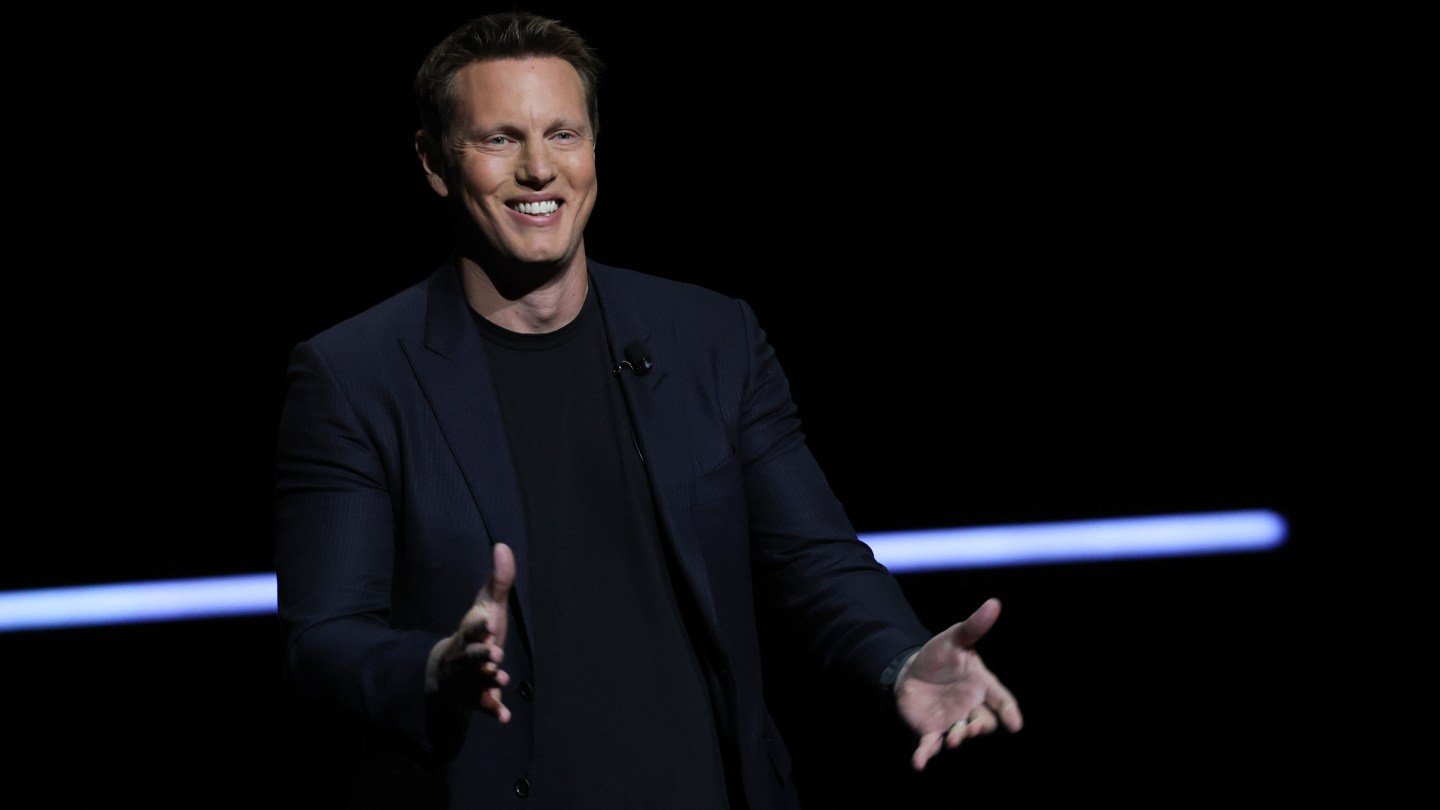
    At first it just seemed like a happy coincidence — a Hollywood agency mogul supporting a Hollywood corporate merger. Ari Emanuel published an op-ed in The Wall Street Journal last Tuesday saying David Ellison buying Warner Bros. was a good idea and that those 12 Democratic AG’s who have sued to stop the deal were on the wrong warpath. 

    “The attorneys general should drop this case and get back to enforcing the laws as they are written,” the WME chief wrote, as he extolled a Paramount-WB tie-up and said it would be good for the business. 

    Sure, Ellison had committed last year to pay Emanuel’s TKO $7.7 billion to broadcast UFC fights, a fact he conveniently neglected to mention. And the timing certainly benefited Ellison — earnings were coming, a time when Wall Street would be paying close attention and could express its worry financially about a deal falling through. But still, just a nice little stocking-stuffer under the mogul’s tree.

    Over the past week, however, the support has started to look a lot less like passive presents and a lot more like an active strategy. That strategy? Make it seem like a lot of Democrat-approved personalities have no problem with the merger, isolating Rob Bonta, Tish James and the rest of the dozen AGs suing to block the deal as a bunch of regulatory crazies. Never mind that these are some of the country’s most decorated legal enforcers, with many decades of experience, from places as different as Arizona and Massachusetts. 

    The maneuvers unfolded like a stunt pilot’s careful course-plotting. A few days after the Emanuel op-ed came an anonymously sourced story Friday in the Journal about how one of the preeminent national Democratic leaders, California governor Gavin Newsom, was behind the deal foursquare, according to “people close to the suit.” “Newsom’s office has encouraged Attorney General Rob Bonta’s office, which has independent authority to file such suits, to find a resolution out of court,” the paper said. 

    Never mind that Newsom has a long history of deferring to giant corporations (remember his 11th-hour pro-Big Tech capitulation on Scott Wiener’s AI bill in 2024?) — this merger was going to create jobs! (“State employment would suffer” without a deal, the paper said Newsom has told colleagues, never mind that no credible economist has supplied such evidence.) Another happy coincidence. Or, given that the paper was pointedly not citing sources close to Newsom, perhaps part of an Ellison-led strategy.

    Then today, an op-ed of Ellison’s own in a redoubt of mainstream liberalism, The New York Times. He trotted out all the usual arguments for mergers these days, and against his own naysayers — if we don’t do this the tech companies win, movie theaters should survive, Hollywood should be employed. “What I can promise is the work, and more of it,” he wrote, using the noun four times, which is four times more than he used the noun Donald Trump. (Los Angeles County has determined that determined that the merger will likely lead to less work.)

    Meanwhile, Ari has been hitting the hustings, appearing on CNBC Tuesday morning to rattle off a series of Ellison talking points and praising the mogul. “This is a guy who said ‘hey I’m going to make 30 movies a year, 45-day release,” Emanuel said. “He’s gonna spend he says 30 billion in content a year. We need that for the economy of Hollywood.” The comments wouldn’t have been out of place on the Paramount investor earnings-call Tuesday, where executives touted all these numbers and used words like “pro-competitive” to describe the deal. If there’s one thing we know about capitalism, it’s that combining  two major companies leads to more competition.

    These media hits that aimed to buck the headwinds even involved a literal plane —  the day Bonta and the AGs were suing, Ellison jetted to Washington to lobby for a federal tax credit, a news stunt meant as much to lobby support among Hollywood as to win over legislators. One story the move overshadowed that week: ProPublica’s bombshell report that Paramount allegedly provided gifts to FCC commissioners reviewing the deal.

    More of these pieces and columns are no doubt coming. More foot soldiers arguing for the value to the business, or the First Amendment. Never mind that the WGA — those fierce opponents of free expression! — have just sued to stop the  deal. Doesn’t the world’s richest family have the right to own CNN? Isn’t that enshrined in the Constitution?

    It’s a shrewd flyer, and you need to give Ellison’s team credit for landing it so effectively.

    You also hardly need an advanced radar beacon to see what’s happening. Having courted MAGA and Donald Trump to get the deal federal approval — how many Kennedy Center boxes and UFC ringside seats can one centibillionaire’s son fill? — Ellison is now pivoting to work on Dems to take care of the state challenge.

    Not regulatory-minded Dems, as that group, from Elizabeth Warren to Cory Booker to Adam Schiff, have all been fiercely critical of the deal and asked hard questions about combining the country’s third and fourth biggest pure-play entertainment companies. Not these decorated and often landslide-winning AGs.

    But if you get enough people like Newsom and the Kamala-donating Ari on your side, maybe people won’t notice all the Democrats who aren’t. Or enough of their consistuents will lose interest, causing AGs to do the same.

    Maybe people will magically forget that no fewer than 1,000 creatives, from  Bryan Cranston to J.J. Abrams to Glenn Close to Lin-Manuel Miranda, all signed a letter this spring opposing the deal, noting how a merger “would further consolidate an already concentrated media landscape, reducing competition at a moment when our industries—and the audiences we serve—can least afford it” and lead to “fewer opportunities for creators, fewer jobs across the production ecosystem, higher costs, and less choice for audiences in the United States and around the world.” But an agent told me it was good for creativity?

    There’s a reason Paramount needs the deal to happen. Warner Bros. Discovery turned in a profit of $1.2 billion this past quarter once you strip out all the money they have to pay as part of the acquisition. That’s a lot of profit for a company like Paramount, which revealed Tuesday that in the same quarter it netted $41 million.

    And there’s a reason Paramount needs the deal to happen soon. Starting Oct. 1, Paramount must pay Warners shareholders $7 million every day until the deal closes. By the second week, they’ll have wiped out all the measly profits they earned this quarter. By the spring, they’ll have wiped out the profits of the company they’re buying. One can’t imagine a lot of joy on Melrose, then, when the word came down Tuesday that the trial won’t start until March.

    Also, the deal is partly bankrolled by Larry Ellison and his significant AI investments. And can that boom go on forever?

    The reality is the AGs may not just have the law on their side — they have the leverage. And with every week that passes they have more of it. Could they extract a major settlement — possibly even carving out CNN? Don’t rule it out, no matter how many UFC fights Ellison attends with the president.

    “Winning comes down to having the best stories,” Paramount CFO Dennis Cinelli told investors on the earnings call Tuesday. Ellison and his allies will keep telling them. That doesn’t mean it will result in victory.

  • Disney Sells Its Stake in A+E to Hearst for $1.2 Billion

    Disney Sells Its Stake in A+E to Hearst for $1.2 Billion

    The Walt Disney Co. has sold its 50 percent equity stake in A+E Global Media to Hearst for $1.2 billion in cash, ending the joint venture that was first created in 1984.

    The deal will see Hearst take full control of the media company formerly known as A+E Networks, which owns brands like A&E, History and Lifetime, including cable TV channels, content studios, and streaming offerings. A+E has also invested in companies like Vice, Propagate Content, Atlas Obscura and Philo TV.

    A+E will become a part of Hearst’s entertainment group upon closing later this year.

    “We thank our Disney colleagues for decades of successful partnership,” said Steven R. Swartz, president and CEO of Hearst. “We look forward to supporting Paul Buccieri and A+E Global Media’s leadership team as they continue to make must-see programs and innovate around the great HISTORY, Lifetime and A&E brands.”

    Paul Buccieri has led A+E since 2018.

    “In a media environment defined by fragmentation, A+E Global Media’s advantage is the strength and versatility of our brands, our strong partnerships and our vast library of owned assets,” added Buccieri, president and chairman of A+E Global Media. “As we continue extending our storytelling globally across all platforms with IP that travels to every screen and form-factor, we believe we are well suited for whatever opportunities may come next. I also want to express my deepest thanks to Hearst, The Walt Disney Company and to our board members — both recent and past — for their guidance and support over the years.”

    The company was founded in 1984 (the Arts & Entertainment Network was its original cable brand), with Hearst and ABC each owning a slice alongside other investors. NBC obtained a minority stake in 1993. The company expanded with an acquisition of Lifetime Networks in 2009. Lifetime was also a JV of Disney and Hearst.

    Disney and Hearst had been equal partners in A+E since 2012, when they bought out NBCUniversal’s minority stake. The company had begun to explore its options a year ago, hiring Wells Fargo to market it. Since then, of course, Comcast spun out its cable channels into Versant while Warner Bros. Discovery has inked a deal to sell itself to Paramount Skydance.

  • Paramount Reports Mixed Earnings Results With Warner Bros. Takeover In Limbo

    Paramount Reports Mixed Earnings Results With Warner Bros. Takeover In Limbo

    Paramount reported mixed second-quarter earnings Tuesday as its takeover of Warner Bros. Discovery remains in limbo.

    Still, CEO David Ellison sought to reassure shareholders in the letter saying, “We continue to prepare for our proposed combination with Warner Bros. Discovery, while staying focused on executing our standalone strategy and delivering strong results.”

    The company reported revenues of $6.9 billion, up 1 percent from its predecessor company a year ago, while net earnings fell to $41 million, or four cents per share after $57 million, or eight cents a share, a year ago.

    Paramount’s TV media segment, which includes CBS and its cable networks, continued to fall, dropping 9 percent year-over-year to $3.1 billion, while direct-to-consumer revenue rose 9 percent to $2.5 billion. Studio revenue rose 16 percent to $1.3 billion, thanks to content licensing deals and TV production arm as well as the success of Scary Movie.

    Revenue at Paramount+ rose 16 percent to $2.1 billion, as the company said Q2 was its best quarter for retention ever on Paramount+ thanks to Dutton Ranch, UFC and the FIFA World Cup. The streaming services added 2 million new subscribers to hit 81.6 million worldwide, up 6 percent year over year. 

    Paramount is raising its full-year outlook range to $3.8 billion to $3.9 billion in adjusted EBITDA and now expects free cash flow conversion of at least 10 percent. The company added that it had seen “double-digit growth in commitments” across the company after its Upfronts presentation, but did release further specifics.

    “We continue to make progress on our transformation at Paramount, and we now expect to deliver over $2.7 billion of run-rate efficiencies by the end of 2026 versus $2.5 billion previously, and continue to expect $3 billion-plus in efficiencies from the Skydance-Paramount combination,” the letter continues.

    Paramount won the bidding war for Warner Bros. Discovery in February with its $111 billion offer, after Netflix declined to raise its offer. But the merger is currently on pause, as Paramount has since been hit with several lawsuits, including from 12 state attorneys general who claim the acquisition will kill competition in the film and television industries. The company has agreed to delay the billion takeover of Warner Bros. Discovery until June 1, 2027, or until the antitrust lawsuits brought by state attorneys general are resolved. Ellison has told staff he remains “highly confident” in the completion of the merger.

    But just after earnings were released Tuesday, the judge overseeing the states’ lawsuit scheduled the trial to start in March, rather than November as the studio had requested. Starting Oct. 1, Paramount will have to pay a ticking fee of roughly $7 million per day to Warners shareholders until the deal closes.

    The earnings also come the same day that an op-ed from Ellison appeared in The New York Times, in which the executive argued that his political leanings and proposed takeover of CNN are the root cause of the lawsuits filed by a dozen state attorneys general and the Writers Guild of America.

    “I believe this fight is not really about market share … I believe a plainer worry sits beneath the briefs and the news releases: the news. The issue is whether I can be trusted as a steward of Warner’s CNN. There has been speculation about my politics, my loyalties, my intentions,” Ellison wrote. “Unfortunately, I can’t give anyone a view into my heart and mind, but I can share this: I have regularly voted for candidates of both parties; I hold some views that would be called conservative and others that would be called liberal, just like most Americans; and when it comes to our news operations, I do not aspire to lead these companies to bend their newsrooms to my views. I believe that news should be based on facts and truth.”

    More to come.

  • Paramount-Warner Bros. Trial to Start in March 2027 in Blow to David Ellison’s Team

    Paramount-Warner Bros. Trial to Start in March 2027 in Blow to David Ellison’s Team

    The judge overseeing a lawsuit from a coalition of 12 states looking to block Paramount‘s $111 billion takeover of Warner Bros. Discovery has scheduled a trial to start in March.

    The decision marks a blow for the studio, which pushed to start the trial in November. Starting on Oct. 1, Paramount will have to pay a ticking fee of roughly $7 million per day to Warners shareholders until the deal closes. It’ll likely be on the hook for upwards of $1.5 billion, accounting for the time it takes for the court to issue a ruling on the antitrust trial.

    Last week, Paramount urged the court to start the trial in November while the states proposed to set it for April.

    The trial will last 12 days, beginning on March 2 and ending on March 19. It will run from 8:30 am to 1:30 pm. The final pretrial conference will be held in February, with both sides completing briefing by the beginning of April.

    Paramount’s legal team is led by Beth Wilkinson, who successfully defended Microsoft’s bid to acquire Activision Blizzard after the FTC sued. She joined last month a deep bench of lawyers for Paramount that includes Jeffrey Kessler and Paul Clement.

    Facing lawsuits from the states, the Writers Guild of America and Paramount shareholders looking to stop the deal, Paramount’s bid to acquire the legacy studio is in limbo. In a New York Times op-ed, Ellison stressed that the merger has been politicized, with the states primarily looking to stop him from owning CNN.

    “I believe this fight is not really about market share … I believe a plainer worry sits beneath the briefs and the news releases: the news. The issue is whether I can be trusted as a steward of Warner’s CNN. There has been speculation about my politics, my loyalties, my intentions,” Ellison wrote. “Unfortunately, I can’t give anyone a view into my heart and mind, but I can share this: I have regularly voted for candidates of both parties; I hold some views that would be called conservative and others that would be called liberal, just like most Americans; and when it comes to our news operations, I do not aspire to lead these companies to bend their newsrooms to my views. I believe that news should be based on facts and truth.”

  • Gotham Week Sets 2026 Programming Lineup (Exclusive)

    Gotham Week Sets 2026 Programming Lineup (Exclusive)

    The 2026 Gotham Week programming lineup is set.

    This year’s event includes the annual Project Market, the U.S.’ oldest and largest curated marketplace for film and TV creators, presented as a meetings-driven forum with 80 narrative and documentary projects in the works.

    Notable works in the Project Market this year include features from Reservation Dogs alum Kawennáhere Devery Jacobs‘ (High Steel) and the Liz Cardenas (A Ghost Story)-produced The Curse of Silver, which has Lily Gladstone attached to star, and documentaries executive produced by The Perfect Neighbor helmer Geeta Gandbhir (Taxi Driver and two others), Katie Couric (Zoe Potkin’s Daddy’s Girls), Julianna Margulies (Emily Harrold’s Sister Senators from Oscar-winning producer Robin Hessman) and Rachel Maddow (Nancy Kates’ An Everyday Riot). The Project Market also includes a shorts to features section with feature versions of short films produced by Lin-Manuel Miranda (Joel Perez’s Villa Encanto) and Sam Rockwell with Ramy‘s Laith Nakli (Julian Joslin’s Otherwise Innocent) and one executive produced by Bob Odenkirk and Jane Schoenbrun (She’s Nonbinary). There’s also a Global Producers Hub section in partnership with NFVF South Africa, Telefilm Canada, EAVE, French in Motion and Red Sea International Film Festival, along with projects from producers in Cannes and Rotterdam programs.

    The full list of the projects and filmmakers in this year’s Project Market is available here.

    “The Gotham Week Project Market has long been a longstanding launching pad for outstanding film and media creators,” The Gotham managing director Kia Brooks said of the 2026 Project Market. “This year’s cohort showcases an exciting range of genres, distinctive creative voices and filmmakers from a variety of backgrounds, all united by compelling, ambitious work. We’re proud to bring this group together with the industry decision-makers who can advance these projects to the next stage and support the filmmakers as they build lasting careers.”

    Recent Project Market alumni include Sean Wang’s Dìdi (弟弟) (Focus Features), Raven Jackson’s All Dirt Roads Taste of Salt (A24), Erica Tremblay’s Fancy Dance (Apple TV+), Laurel Parmet’s The Starling Girl (Bleecker Street), Michael Dweck & Gregory Kershaw’s The Truffle Hunters (Sony Pictures Classics), Julia Reichert and Steven Bognar’s American Factory (Netflix) and Barry Jenkins’ Moonlight (A24).

    In addition to the long-running film and TV project market showcase, this year’s event includes Gotham Week Honors (set for Wednesday Sept. 30), a full day of artist and industry conversations presented by Filmmaker Magazine, opportunities for the Gotham Edu community including screening winning short films from the past two years’ editions and the Gotham Week Expo, which will bring together partners from the Gotham’s expanding communities initiative to provide both leadership on topics relevant to film and media creators and resources for nonprofits as well as a day of connections between nonprofit partners, colleges, universities and film offices.

    The 2026 edition of Gotham Week is set to run from Sept. 27-Oct. 3.

  • Fashion Keeps Debating John Galliano. It’s Ignoring Its Jewish History.

    Fashion Keeps Debating John Galliano. It’s Ignoring Its Jewish History.

    When the Metropolitan Museum of Art announced a blockbuster exhibition celebrating John Galliano, the designer whose career collapsed after a drunken antisemitic tirade in which he professed admiration for Adolf Hitler and told two café patrons their ancestors “would all have been fucking gassed,” it reignited a debate over redemption, accountability and whether fashion was embracing one of its most infamous offenders at a moment of heightened concern over antisemitism.

    For Hadley Freeman, those questions are more than academic. The London-based author, Sunday Times columnist and former fashion reporter grew up hearing stories of her great-uncle Alex Maguy, a Jewish couturier who hired a young Christian Dior, escaped deportation during the Holocaust and later rebuilt his career with Dior’s help. Freeman chronicles her family’s extraordinary story in her 2021 memoir House of Glass.

    Drawing on both that family history and decades covering the fashion industry, Freeman sat down with The Hollywood Reporter to explain why she believes Galliano’s rehabilitation should not be conflated with today’s rise in antisemitism, while arguing that fashion has done far too little to recognize the indispensable role Jews played in building the industry.

    Let’s start with the headline. What was your reaction when you heard the Costume Institute was mounting an exhibition devoted to John Galliano?

    I wasn’t surprised. Anna Wintour has been a big supporter of his for a long time and played a big part in helping his rehabilitation after that whole scandal. I’m not a punitive person. I don’t believe he should be drummed out of society. He has addressed what he did and seems genuinely sorry. He’s a brilliant designer who made a terrible mistake while struggling with terrible addictions. As long as it wasn’t brushed under the carpet, and I don’t think anyone can say that it was, I’m fine with him being appreciated for his work.

    You don’t see the exhibition as problematic?

    Not really. It happened a long time ago. He expressed sorrow. He lost his job at Dior. Since then he’s worked very quietly. I don’t think he needs to be driven from public life forever.

    I also don’t think the exhibition reflects the rise of antisemitism we’ve seen around the world since October 7. I see those as two separate things.

    Is there no one else worth feting? Is Galliano simply that important as a designer?

    He really is. There are other great designers, but Galliano is a unique talent. The only real equivalent from that generation was Alexander McQueen, and the Met has already done a McQueen exhibition. Galliano could have been a designer in any era. He was extraordinary.

    His life was completely derailed by what happened that night in Paris. I think he deserves to be appreciated for his talent, while also acknowledging what he did.

    You covered Galliano’s trial in France.

    I did, and it was terrible. It was also good to see how seriously France took it. Their antisemitism laws are very strong. Dior dropped him immediately even though he had been their golden child, and that was the right thing to do.

    People joke about “canceled” comedians disappearing for two years and then coming back with a world tour. That’s not what happened with Galliano. It completely changed his life. He worked anonymously at Maison Margiela. He never gave some big self-pitying interview. He stayed behind the scenes and focused on the work.

    Anna Wintour was one of the people who early on supported his return. Was that troubling?

    At the time I did think people rushed too quickly to defend him, not just Anna but others too. I think she viewed him through the lens of addiction. For me, what he said was completely shocking. Addiction can make you do many things. I don’t think it makes you become a bigot.

    But Galliano isn’t comparable to Kanye West. Kanye has made antisemitic statements repeatedly over a long period of time. Galliano seems to have had one catastrophic public episode and immediately suffered enormous consequences.

    You don’t think this is a questionable decision in light of what’s happening today regarding the global rise of antisemitism?

    No. The Galliano incident had nothing to do with Israel or the kinds of excuses some people are using today for antisemitism. It happened 15 or 16 years ago and feels separate from this moment. If a designer today were making openly antisemitic statements in the current climate, that would be a different conversation.

    One thing that struck me is that fashion owes so much to Jews, yet that history often feels overlooked.

    Absolutely. It’s actually personal for me. My great-uncle Alex was a Polish Jewish refugee who came to Paris in the 1920s. His brother became a tailor in the Marais, which is what many Eastern European Jews did. Alex wanted to become a couturier.

    He needed someone to draw his designs because he couldn’t draw, so he hired a young aspiring artist who had been disowned by his wealthy family for wanting to become an artist. That young artist was Christian Dior. They remained friends for years.

    Your family story during the war is remarkable.

    Alex and his brother were deported. His brother was murdered. Alex escaped from the deportation train. When I was researching my book, I discovered the records proving he had boarded the train but never arrived at Auschwitz. I tracked down the French family that hid him during the war, and their daughter showed me the attic where he and his boyfriend, another Jewish designer, survived in hiding.

    Growing up, Alex always simply said he had escaped from the train. He never mentioned the boyfriend or the attic. I never really believed the story until I found the documentation.

    And Christian Dior remained loyal to him after the war?

    Yes. During the occupation Dior was working for Lucien Lelong, like many designers who remained in Paris, making clothes for the wives of Nazi and Vichy officials because those were essentially the only clients left. After the war, when my great-uncle returned, everything he owned had been taken. Christian Dior helped him rebuild his career.

    What’s fascinating is that Dior’s own family reflected France’s contradictions. His sister Catherine was a resistance hero who survived Ravensbrück, a concentration camp. But another member of the family enthusiastically supported the Nazis. France was an incredibly complicated place during the occupation.

    How should we think about Coco Chanel’s wartime record?

    I understand the pressures people were under, but Coco Chanel made choices she didn’t have to make. She had a relationship with a Nazi officer. What she did was terrible. I think there’s still a tendency to whitewash that history. There was a film about her years ago that did that, and more recently an exhibition that barely mentioned it or suggested she was somehow secretly working against the Nazis. I don’t think that’s true. We should acknowledge what happened.

    You make the point that Jews were the backbone of the industry.

    Exactly. A lot of Eastern European Jewish refugees arrived in France after the pogroms and worked as tailors and seamstresses for the couture houses. Many settled in the Marais, which was the Jewish neighborhood of Paris. Those artisans were essential to the industry, but during the occupation they were also among the first people Vichy targeted for deportation. They were the first to be sent to the camps before the authorities turned to French Jews. It’s an industry that has always relied on Jewish skill to a certain extent, but it hasn’t necessarily acknowledged that history. 

    Even today you have figures like Ralph Lauren, whose story I find fascinating. Here’s a Jewish kid from Brooklyn who creates this idealized vision of American WASP life and then sells it back to America. It’s similar to what Jewish founders did in Hollywood. They created an image of America that they themselves had largely been excluded from.

    That sounds very much like Neal Gabler’s thesis in An Empire of Their Own.

    Exactly. It’s one of my favorite books. You can make the same comparison with Hollywood, with Condé Nast under Si Newhouse, and with Ralph Lauren. It’s a fascinating tradition of outsiders creating the culture they were excluded from.

    The Academy Museum recently expanded its recognition of Jewish founders after criticism. Should fashion do something similar?

    I would love to see that. Some of the most important figures in 20th Century fashion were Jewish, from designers to editors to department store pioneers. Jewish immigrants played an enormous role in building the industry.

    The Costume Institute recently mounted an exhibition about Black style. I’d love to see one devoted to the history of Jews in fashion because it’s every bit as rich and important. While I don’t think Galliano should be driven from public life forever, I do think museums could do a much better job acknowledging the role Jews have played in creating the fashion industry itself.

  • ‘Monster: The Lizzie Borden Story’ Unveils First Look, Sets Netflix Release Date

    ‘Monster: The Lizzie Borden Story’ Unveils First Look, Sets Netflix Release Date

    Netflix‘s Monster anthology is returning this fall with its first female “monster.”

    The streamer has released the first look photos (below) and premiere date for season four of its Emmy-winning anthology series, which stars Ella Beatty (Feud: Capote vs. The Swans, If I Had Legs I’d Kick You) as Lizzie Borden. All eight episodes premiere Sept. 17 on Netflix.

    Beatty stars as the accused axe murderer who was tried and acquitted in the 1892 killings of her father and stepmother in Fall River, Massachusetts. The case has inspired several retellings over the years, including the 1975 TV movie The Legend of Lizzie Borden, Lifetime’s 2014 Lizzie Borden Took an Ax and 2018’s Lizzie starring Chloë Sevigny and Kristen Stewart.

    Vicky Krieps stars as Bridget Sullivan, Rebecca Hall plays Abby Borden and Charlie Hunnam portrays Andrew Borden. Billie Lourd, Joey Pollari, Sarah Paulson and Jessica Barden round out the cast.

    Here’s the official logline: “When the repressed daughter of a wealthy New England family and her rebellious maid find themselves trapped in a house built on humiliation and cruelty, they escape into a fantasy of sex, power and revenge. The gruesome unsolved murders that follow don’t just shock the world — they give birth to an icon who refuses to live imprisoned in a cage, choosing instead to forge her own legend: shocking, monstrous and gloriously free.”

    Every season of Monster follows a different murderer. Season one starred Evan Peters as Jeffery Dahmer, earning him an Emmy for outstanding supporting actor in a limited or anthology series or movie. Season two followed Cooper Koch as Erik Menendez and Nicholas Alexander Chavez as Lyle Menendez, while season three starred Hunnam as Ed Gein.

    The anthology has also sparked conversations over its dramatizations of real-life crimes and victims.

    As for taking on the role of Borden, Beatty told Tudum, “I am so excited for viewers to experience our exploration of Lizzie Borden’s story and the questions that her life animates to this day. It has been a dream come true to investigate this complicated person’s psychology and to examine an American crime that feels almost mythic in proportion. This season gives us our first female Monster and delves into female rage and repression which I’ve found to feel strikingly relevant, and I cannot wait to share it with the world.”

    Ian Brennan (Monster anthology, Glee, Scream Queens) serves as creator, writer and executive producer. Max Winkler directs all eight episodes and co-directs episodes four and six with Sarah Adina Smith. Ryan Murphy, Winkler, Eric Kovtun, Scott Robertson, Louise Shore, Nissa Diederich, Todd Kubrak, Carl Franklin, Tanase Popa also executive produce.

    Oliver Spenceman as Stephen and Charlie Hunnam as Andrew Borden.

    Rebecca Hall as Abby Borden.

    Vicky Krieps as Bridget Sullivan.

  • Bowen Yang to Make Broadway Debut in ‘Oh, Mary!’ This Fall

    Bowen Yang to Make Broadway Debut in ‘Oh, Mary!’ This Fall

    Bowen Yang will be the next Mary Todd Lincoln in Oh, Mary! on Broadway

    This marks the Saturday Night Live star’s Broadway debut, after appearing in films such as Wicked and Fire Island, and marks one of his biggest projects since Yang departed SNL in December 2026. He takes over from current Mary, Meg Stalter, for a run starting Sept. 15 and ending Dec. 6. 

    “My friendship with Cole has brought me many places over the years: late-night pizzerias, cross-borough social-distance walks, a tough production of Les Misérables sung in Dutch,” said Yang. “But being part of their deranged and profound masterpiece, Oh, Mary! is my favorite one by far. I will spend the rest of my life thanking them for the best Broadway debut a cis gay guy with limited singing ability could ask for.”

    Yang will join continuing cast members Phillip James Brannon (‘Mary’s Husband’), Barrett Foa (‘Mary’s Teacher’), Bianca Leigh (‘Mary’s Chaperone’), and returning original cast member Tony Macht (‘Mary’s Teacher’s Assistant’). Yang is a coproducer on Titanique on Broadway, but this marks his stage acting debut.

    The production, which opened at the historic Lyceum Theatre in July 2024, has put a new block of tickets on sale through July 2027. 

    Written by Cole Escola and directed by Sam Pinkleton, the play reimagines the former first lady as a wannabe cabaret singer with a predilection for drinking and disdain for her husband, the President of the United States. Since Escola originated the role, a number of big names have taken on Mary, including Maya Rudolph, Jinkx Monsoon, Tituss Burgess and Jane Krakowski. Understudy Hannah Solow will play the role of ‘Mary Todd Lincoln’ on Sept. 13, before Yang begins in the role.

  • Netflix Oscar Hopeful ‘La Bola Negra’ Will Receive Company’s Longest Release in Theaters Before Streaming

    Netflix Oscar Hopeful ‘La Bola Negra’ Will Receive Company’s Longest Release in Theaters Before Streaming

    La Bola Negra, the sweeping Spanish-language epic that Netflix acquired out of the Cannes Film Festival for an awards season push, will be given a platform theatrical release in U.S. theaters starting on Oct. 16 and will subsequently begin streaming on Dec. 2, the company announced Tuesday.

    That 47-day period of theatrical exclusivity before streaming will be the longest yet for any Netflix film, surpassing the 31-day period accorded to Noah Baumbach’s Marriage Story in 2019. (A new record is expected to be established in 2027, with Greta Gerwig’s Narnia: The Magician’s Nephew set to be released in theaters on Feb. 12 and then begin streaming on April 2, a 49-day period.)

    La Bola Negra, which recounts the story of three generations of queer men whose lives are connected through love and loss, was written (with Alberto Conejero), directed and produced by Los Javis, the Spanish duo Javier Calvo and Javier Ambrossi. It became the subject of a competitive bidding war following its May 21 world premiere in Cannes, where Los Javis were awarded the fest’s best director prize for the film in a tie with Paweł Pawlikowski for Fatherland.

    The film stars Spanish music sensation Guitarricadelafuente, in his acting debut, alongside Elite star Miguel Bernardeau, Carlos González, Milo Quifes, Lola Duenas, Julio Torres and, in relatively small but memorable parts, two of Hollywood’s biggest names, Penélope Cruz and Glenn Close.

    The film is set to have its Canadian premiere at September’s Toronto International Film Festival, where Cruz will be feted at the TIFF Tribute Awards on Sept. 13.

  • ‘Manhunt’ Director Says His Haunting Exploration of Alienation, Masculinity Is “a Film About Fascism”

    ‘Manhunt’ Director Says His Haunting Exploration of Alienation, Masculinity Is “a Film About Fascism”

    Michif filmmaker Wayne Wapeemukwa isn’t afraid to use visceral visuals and sound to question the world we’ve built, training his spotlight on those pushed to society’s margins.

    His debut feature, Luk’Luk’I, followed five residents of Vancouver’s poverty-stricken Downtown Eastside during the 2010 Winter Olympics, with a screenplay the Canadian writer-director developed alongside his actors. The film won best Canadian feature at the Toronto International Film Festival in 2017, and Wapeemukwa took home the Directors Guild of Canada’s DGC Discovery Award.

    This week, he opens the international competition at the 79th edition of the Locarno Film Festival with his sophomore feature, Manhunt — a mesmerizing, unsettling journey into social and psychological terrain that’s likely to shake viewers to the core.

    Inspired by real-life murders in Canada in 2019, the film follows two young men on a road trip through the country’s northern frontier, fleeing their dead-end lives. Rather than reconstruct the facts behind the killing spree, Manhunt asks harder questions — about disconnection, alienation, modern masculinity, far-right and digital fantasies, and colonial echoes — to probe where such violence actually comes from.

    As the two men drive through empty towns and vast forests, their lives dissolve between digital fantasy and offline reality. The Locarno website teases what’s ahead: “Reframing true crime as a parable, Manhunt probes loneliness, masculinity and the colonial dream of beginning anew — until the search for meaning erupts into violence.” Or, as the press notes put it more bluntly: “Two boys discover they can’t outrun what they’ve become.”

    Sorrow curdles into hatred; the longing for connection turns violent. In the end, the two men find not salvation, but the barren land inside themselves.

    Manhunt, which Wapeemukwa wrote with Anna-Lena Theobald, stars Harris Lowe, Landon Tunold, Bianca Foscht and Dilara Foscht, with cinematography by Jonathan Glendon and editing by Coline Debray. Wapeemukwa produced alongside Nathan Drillot and Matt Drake. Vaka Street Casting — also behind the Canadian hit Blue Heron — handled casting. Cinetic Media acquired North American sales rights, while Aspect Ratio is handling international sales.

    ‘Manhunt’

    Courtesy of Locarno Film Festival

    Locarno artistic director Giona A. Nazzaro, in a recent interview with THR, praised Manhunt as a film that “questions the colonial myth of what is beyond the frontier and how this myth still affects people.”

    Ahead of the film’s Locarno premiere, Wapeemukwa spoke with THR about his deep dive into human emptiness, darkness and fascism, how his Michif heritage shapes his thinking on disconnection from land, and his growing interest in genre work.

    Manhunt is inspired by Northern British Columbia murders in July 2019. Why did you want to make a film about them and why in the specific way you chose, which is very different from traditional true crime narratives?

    At the same time as the actual events that unfolded in 2019, I was road tripping through my indigenous homeland. My dad’s white, and my mom is Michif, and so I was going through places in Saskatchewan and Manitoba, while watching this unfold at the same time in cafes and bars and whatever. I guess I was meditating a lot at the time about themes similar to my first feature — about how our attention in society is diverted away from certain problems and towards other kinds of low-hanging fruit.

    So, I was meditating on these events with these two young boys and why our society focuses so heavily on this sort of violence, which is terrible. I do not want to diminish the significance of this at all in any way, shape, or form, but it’s interesting to me that our attention, especially in Canada, so gravitates towards that spectacle versus the ongoing femicide of Indigenous women, for example.

    Why do you think that is?

    That’s a very complicated question. … If the question is why do we block out an understanding of that versus other narratives, why is our attention so misdirected, I think there are a lot of reasons for that. Fundamentally, it’s to do with the fact that our society in Canada persists because of that ignorance. If that ignorance was really confronted in what it really meant, Canada as a country, as an idea, would become intolerable.

    The press notes for Manhunt mention that you feel that there is a lack of connection to land that is one of the drivers behind the two young men we follow in the movie. Is that something you thought about as a Michif filmmaker or where does this idea come from?

    In my research for this film, which took place over seven years, I was talking about it with elders in my community and getting their take. And one of the elders mentioned to me that when she thinks about these boys, she thinks about how they have no connection to land, and that doesn’t just mean some sort of blood and soil connection. Indigenous peoples generally understand connection to land in much broader normative terms, and what I understood her to be actually saying was: “These young men are disconnected from community.”

    ‘Manhunt’

    Courtesy of Manhunt Productions

    It’s about a communal way of relating with each other and relating to the environment and where we are from. In my subsequent empirical research about these boys that the 2019 story is animated around, I couldn’t see anything otherwise. They worked at Walmart; they were disconnected; there were lots of social pressures on them. Society disconnected them through poverty, etc. And as I researched other mass murderers and white supremacists, I found that this was actually a lot more common than I had first anticipated.

    Do you think of Manhunt as a timely universal tale more than a specific Canadian story?

    I consider it as a sort of parallax, as both. There’s a similarity with my first feature as well. It is a story that’s super localized and grounded, but at the same time is stretching at least for a global and especially an international audience. This is a reason why I feel so privileged to be invited to open the competition at Locarno. This was a film that I intended from the very beginning to reach beyond Canada.

    Oftentimes, I find that Canadian cinema is provincialized and sequestered, but I wanted to do something beyond that, and, unfortunately, the topic of white supremacy is especially international.

    Can you maybe share some more of your thoughts on that?

    It really seems like the Nazis are back, and I do not say that enthusiastically in any way, shape, or form. And this film effectively became something about that. The film is its own fictional portrayal of the actual 2019 story, right? It became, for me, a film about fascism and also, because of my politics, anti-fascism. What we’re witnessing here in my movie is a homegrown form of Canadian National Socialism or Canadian Nazism. There’s a sort of boomerang effect in the way that [Afro-Martinican French poet, author and politician] Aimé Césaire was talking about, except the fascism has gone from Africa to Europe and now finally to the Americas. And we see these young men as sort of stand-ins for figures we see all around the world.

    I grew up in Austria, where we learned about World War II and the Holocaust. But I guess education in history is not enough…

    I’ll speak to Canada. I obviously can’t speak to your experience, although I do know a thing or two about how the Holocaust was taught in Germany because I read a lot of German Critical Theory. But the understanding that we have is one that’s ideological and educational. But really, the things that gave birth to fascism in the 20th century were systemic and economic, and those problems haven’t gone away. Therefore, we see the problem repeating itself again and in worse form.

    I read that you had a personal experience with a friend who became a white supremacist or nationalist?

    Yeah, it’s sad. I grew up on the West Coast in Canada, and my indigenous homelands are more in the interior. So I grew up with culture and with cousins and people who practice Métis culture, but we all grew up away from our homelands. So we grew up in a diasporic setting that was extremely white, extremely rural, and, at the time I did not know this, poor also. And I suppose there was just really big cultural amnesia and ignorance about these sorts of issues, growing up in an environment like that. Then learning otherwise and growing and developing myself gave me a better perspective on this topic.

    ‘Manhunt’

    Courtesy of Locarno Film Festival

    I witnessed a friend I grew up with in high school who, because of the poverty and social crisis related to drugs, turned to prejudice as an explanation. It reminds me a lot about — you have to forgive me, I’m a philosopher — Jean-Paul Sartre’s Anti-Semite and Jew. My friend didn’t really have a prejudice against people on the basis of their race, but it became something to do with drugs. We often look for scapegoats and people to blame when we’re not doing well ourselves. And that’s not to say there isn’t anyone to blame. I do think there are people to blame, specifically the sorts of people who are in charge of our society, not a racial group nor a gendered or sexual group. But fascism thrives on distracting us from the real culprits and directing our attention to those social categories.

    I experienced the imagery and visuals in Manhunt as beautiful and also scary at times. You also include video game scenes as a virtual world. And I noticed that in the beginning and at the end, you show Indigenous people who don’t have a bigger role elsewhere in the film. I assume having them on the periphery was a conscious choice?

    You’re absolutely correct. I decided to bookend the film with a sort of Indigenous prologue and epilogue. And yes, you noticed that in the entirety of the middle section of the film, there are no Indigenous people. What we have instead is evidence of their presence, such as empty tipis and, sadly, missing and murdered signs. So what we see in the middle is an absence. What I’m trying to think through here is an idea of Indigenous dispossession and Indigenous genocide through absence.

    But in the very beginning and the very end of the film, of course, there is no lack. Our focus is on an Indigenous woman who is a Secwépemc, or Shuswap, medicine woman and her husband, who is a white guy, but I cast him as a Métis person by giving him some Indigenous jewelry. I feel okay with that because I’m Métis myself.

    The idea of putting the Indigenous content at the beginning and the end of the film came to me from an Indigenous anthropologist. Her name is Audra Simpson, and she’s Kanien’kehá:ka, which is the Indigenous way of saying Mohawk. In her book Mohawk Interruptus, she describes the Mohawk Nation as nested between settler states in Canada and the United States in a sort of zero-sum relationship, where one begins where the other ends. And I wanted to convey that cinematically in my film by positioning Indigenous peoples at the beginning and the end of the project as bookends, as people who border and who are actually containing the settlers for once.

    Writer-director Wayne Wapeemukwa on the set of ‘Manhunt.’

    Courtesy of Emilia Voudouris

    What do you want audiences to feel and take away from Manhunt? Or are you more of the persuasion that you have made your film, and now it’s up to audiences to decide what they make of it?

    I definitely am in the branch of caring about how my audience feels, even though my films tend to be bleak and traumatizing, and this is intentional. So the question is: Why is it that I want to make people feel “bad”? It’s not that I want to punish people. I’m not a sadist. I actually, as far as I can, try to have the identical perspective that your fellow Austrian Michael Haneke does. Haneke is on a different, galactic level than me, but he is my North Star on this issue. So, for me, the question isn’t whether the audience feels good or bad, but their relationship to the violence on screen.

    Because I want to make political cinema. I have political things to say. But I also know that despite my philosophical education, cinema is not a thesis-driven medium, and that the form of cinema at its best is feeling and emotion. So I need to have my audience work through emotions in order to process what’s happening on screen. So actually, my relationship to this subject is more psychoanalytical than it is philosophical.

    A lot of the films that tackle this subject matter don’t talk to people that the film’s about in a way that’s legible to them. You were describing the sort of nihilism at the heart of these boys’ lives. Online, we call it being blackpilled. So this is a film that is trying to actually be at that level with people like this in order to show them that filmmakers can understand and talk to them, and that as a matter of fact, the problems that are animating these boys’ lives, their choices are reprehensible and awful, but the causes to their actions are objective, and they exist in our society and need to be talked about seriously. So that’s the wager that I want to take with this film.

    ‘Manhunt’

    Courtesy of Locarno Film Festival