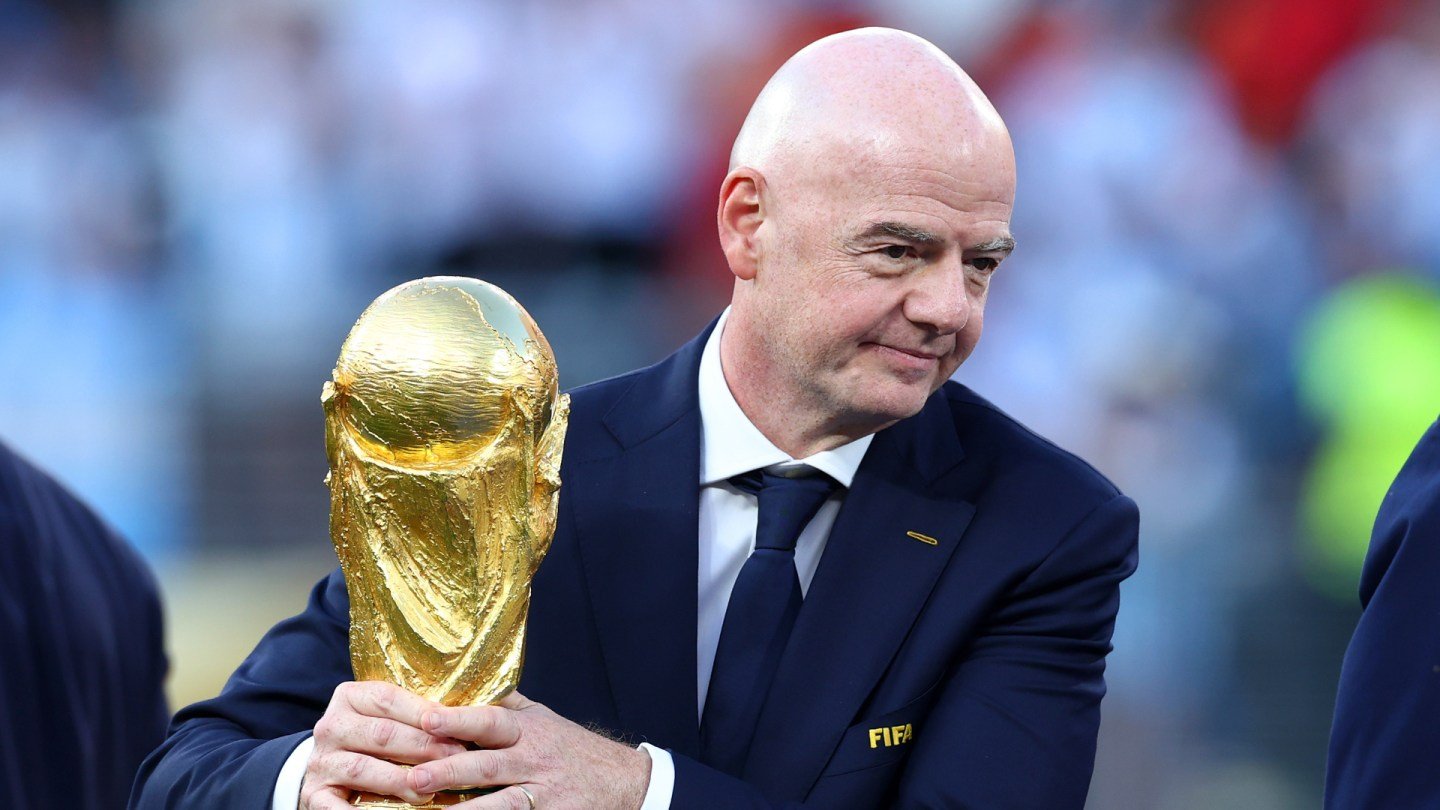
FIFA president Gianni Infantino appears to have snatched defeat from the jaws of victory.
A month after the final of 2026 World Cup, which earned FIFA a record $15 billion in revenues, Infantino is fighting to keep his job. His controversial plan to sell off a stake in the World Cup to a group of private investors led by Joshua Kushner, the brother of President Trump’s son-in-law Jared Kushner, sparked a global backlash that shows no signs of abetting. The past week, soccer legends, sports authorities and even world leaders have called for Infantino to resign.
“Infantino must go,” wrote Portuguese soccer legend Luis Figo in an op-ed for the Daily Mail. “The Infantino era is over,” added Javier Tebas, president of Italy’s La Liga, an interview with French newspaper Le Monde. “It should be fatal,” said Canadian Prime Minister Mark Carney, on Infantino’s misstep with the sell-off plans. “Certainly I don’t have confidence in Mr. Infantino.”
The pile on has continued despite Infantino dropping his plan, officially ditching the proposal on July 31. The deal would have seen FIFA, a 96-year-old nonprofit, spin off its commercial interests into a new division, FIFA Forward Enterprise (FFE). Kushner’s private equity group Thrive Capital would then buy a 21 percent stake in FFE for $4.2 billion. FIFA had argued the arrangement would raise billions to fund global sports development.
European soccer body UEFA called it an attempt to sell “the soul” of soccer and threatened to boycott future FIFA tournaments if the deal went through. The Asian Football Confederation and CONCACAF, which represents national organizations in North America, Central America and the Caribbean. also rejected the proposal.
FIFA quickly backed down. UEFA has not. Last week it said its boycott is still in place. The group reiterated its position that it has “lost confidence in Gianni Infantino’s presidency.” UEFA’s boycott will be tested at FIFA’s Under-20 Women’s World Cup, which kicks off in Poland Sept. 5.
On Friday, Norwegian soccer association directly called for Infantino to resign. “The trust is now gone for us,” Norwegian Football Federation president, Lise Klaveness, told The Guardian. “There is no way back for Infantino.”
Adding to the pile on was a report on Friday that a female employee alleged to have been in a relationship with Infantino when he was general secretary at UEFA, received a six-figure “departure payment.” UEFA confirmed the payment but FIFA said the allegations of inappropriate conduct by Infantino are “categorically untrue” and “defamatory,” adding that “no employee at UEFA and FIFA has ever raised a complaint regarding Mr Infantino’s behavior because there never was an incident where he was involved.”
FIFA on Saturday fired back at Infantino’s critics, accusing them of trying, “through allegation, insinuation or misinformation” to undermine “FIFA’s established democratic processes” by trying to oust Infantino before presidential elections next March.
UEFA is reportedly seeking support from other soccer confederations to call an emergency FIFA Congress to trigger a vote of no confidence in the president. UEFA, with 55 members, easily meets the threshold of 43 votes to call an emergency meeting. To topple Infantino, however, would require a majority of FIFA members, or 106 of the 211 national associations. The Confederation of African Football and South American confederation CONMEBOL have both publicly announced their backing for Infantino. Last week, Mexico broke with North American confederation CONCACAF to support FIFA’s beleaguered president.
The pressure is mounting on Gianni Infantino, but there is still time on the clock for him to turn this defeat back into a win.
Open Doors, the Locarno Film Festival’s Locarno Pro-organized co-production platform and talent development program for filmmakers from regions where artistic expression is at risk, has wrapped up its 24th edition, its second with a focus on the African continent. And on Monday, its winners were unveiled.
Following a three-year cycle dedicated to Latin America and the Caribbean, the program’s current focus is on voices from Africa through its Projects, Producers, and Directors programs. It provides training, mentoring, and networking opportunities.
Open Doors Grant A total of CHF 50,000 sponsored by visions sud est (with the support of the Swiss Agency for Development and Cooperation), the City of Bellinzona, and the Open Doors initiative.
CHF 20’000 to A Vineyard for A Lobster by Talemwa Pius, produced by Emmanuel Gashumba (Gripmagic Uganda Limited), Uganda.
Synopsis: “The equatorial village of Rukumba has endured months of drought when suddenly snow falls overnight, an impossible event blanketing the land in white. Kamuturaki (48), a failed trader once mocked for selling winter jackets under the blazing sun, becomes an overnight success. Byeitaka (40), a disgraced preacher, declares the snow divine and sells melted snowflakes as holy water to frightened followers. Kagoro (38), the timid chairman, watches his authority erode as the village reorganizes itself around the miracle. When British envoys arrive promising support for Rukumba’s independence from Uganda in exchange for access to the snow for scientific research, the village committee embraces the deal as progress. As competing ambitions take hold across the village, tensions rise and unrest erupts, forcing Ugandan military forces to intervene. By the time the snowfall melts, Rukumba is no longer a community but a collection of competing interests, each convinced the miracle belongs to them.”
CHF 20’000 Accept My Plea for Burial by Mohammed Sheikh, produced by Kadir Harbi (Aleel Films), Somalia/Djibouti .
Synopsis: “In a remote Somali pastoral village, two 12-year-old boys, Waasuge and Warmooge, spend their days herding goats and playing games. Their playful rivalry turns tragic when Warmooge dies after falling into a steep dry riverbed during a game. No one sees exactly what happened, and the only witness, a mentally unstable man, gives conflicting accounts that deepen the uncertainty. As the village gathers, grief hardens into accusation. Warmooge’s mother, Saluugla, refuses to bury her son without justice, believing burial without accountability would erase his death. The elder, Alamagan, attempts to resolve the conflict through customary law and religious counsel, but the absence of truth fractures the community. Rituals are performed, oaths proposed and broken, and tensions escalate as the unburied body decays. Despite Waasuge’s age and the lack of evidence, the village demands resolution. Understanding what the adults cannot admit, Waasuge makes a choice that ends the conflict.”
CHF10’000 Too Much Music by Aseye Fiagbe, produced by Aseye Fiagbe (Aseye Fiagbe Creative Studio), Ghana.
Synopsis: “Too Much Music is a feature documentary about Kiki Gyan, a Ghanaian keyboard prodigy who rose to international fame as a teenager with Afro-rock pioneers Osibisa. As his musical contributions expanded without recognition, tensions around credit and ownership led him to leave the band and pursue a solo career across London, Lagos and New York, shaping African disco and funk in the process. Over time, the same system that profited from his brilliance proved indifferent to his vulnerability, and his life became reduced to a singular narrative of addiction and demise. Through archival material and testimonies from family and collaborators, the film reconstructs the forces that shaped his journey and asks how artists are remembered, who controls their stories, and what is lost when brilliance is reframed as failure.”
CNC Development Grant The CNC development prize is an incentive for the development of a project for the value of 8,000 euros.
Chapa 100 by Ique Langa, produced by Lara Sousa (Kulunga Filmes), Mozambique.
Synopsis: “In the busy streets of Maputo, 80-year-old flower vendor Sitóe offers brief moments of beauty to strangers passing through the city’s crowded “chapas”, the local minibuses that carry thousands of people every day. One morning, he meets Valentina, a vegetable seller in her seventies, and a simple flower sparks a quiet romance. Together, they dream of owning a small piece of land where flowers and vegetables can grow side by side. When a thief steals Valentina’s rented wig, Sitóe runs after him and is struck by a speeding chapa. The city moves on, but Sitóe does not. His spirit becomes tied to the very minibus that killed him, traveling through Maputo day after day among passengers carrying their hopes, grief, and exhaustion. Flowers slowly begin to bloom inside the vehicle, subtle signs of his lingering presence. One day, Valentina boards the chapa carrying the flower Sitóe once gave her. Surrounded by the quiet traces of his spirit, she feels his love beside her once again.”
Jury statement: “By awarding the CNC grant to the fiction project Chapa 100, directed by Ique Langa, the jury aims to support the development of a work imbued with genuine sensitivity and poetry. The jury was particularly moved by the film’s portrayal of a love story between two elderly characters – a rare theme in cinema – set against the vibrant backdrop of Maputo. Furthermore, the project’s artistic potential is reinforced by the director and producer’s strong commitment to establishing a robust international distribution strategy that would match the film’s universal appeal.”
ARTEKino International Award Providing an incentive for the development of a project for the value of 6,000 euros.
The Ones With the Tempered Flowers by Neema Ngelime, produced by Ivy Kiru (LBx Africa), Tanzania/Kenya.
Synopsis: “For Neema, being a woman has always meant a script: school, marriage, babies. When a doctor tells filmmaker Neema having children might be hard, she doesn’t expect it to confuse her. Those expectations wound her. Raised in a multi-religious home, her identity was forged by questions of what is haram and what would please Jesus. All Neema cared about was which hell she’d end up in. To her, the older women in her family are a mystery beyond work and family. Their lives feel prophetic to her own. Her sister and her try to rewrite their scripts through tarot. Her father taught her that anything is possible. Now he reminds her of her fate. She stages performances with her family, reenacting fragments of their lives. They believe these are fictions. But they’re memories, repurposed, hidden truths surfacing through play. This is the story of a woman studying her body’s relationship to self, society, and the political weight placed on women’s bodies in Tanzania, challenging duty masked as love.”
Jury statement: “ARTEKino aims to support emergent contemporary cinema through the ArteKino International Award and the ARTEKino festival. ARTE has decided to reward a young director, whose project is a performative essay and a personal journey that explores the expectations placed on women by family, society and tradition. This is the story of a woman studying her body’s relationship to self, society and the political weight placed on women’s bodies in her country.”
Sørfond Award The prize consists of the participation at the Sørfond Pitching Forum at the Films From the South festival for one of the Open Doors Projects, which will be held in November this year in Norway.
The Ones With the Tempered Flowers by Neema Ngelime, produced by Ivy Kiru (LBx Africa), Tanzania/Kenya .
EAVE Award Together with the Film Fund Luxembourg, professional training organization EAVE will offer a scholarship for the EAVE Marketing Workshop worth EUR 4,000.
Tabakalera-San Sebastian Film Festival Residency Award The prize consists of a residency in Tabakalera and taking part in the industry activities of the San Sebastian Film Festival, given in collaboration with the International Culture Center Tabakalera and San Sebastian Film Festival.
I Live in V.I., by Ugochukwu Azuya, produced by Olubunmi Ogunsola (ENSEMBLE), Nigeria
Jury statement: “We wanted to highlight the following project because it follows a great story that is set and represents a unique and specific spot of its country and has the power to connect with universal concerns like displacement, class struggle and housing and labor pressures. It is also a project that could benefit from the platform of our festival so that it can open new ways of collaboration, and searching partnerships that allow the film to strenghten and fulfill its necessities. And also: because we believe that every each of us carries a little Florence that tries to make its way in a varied and complex world, we want to welcome the team behind I Live in V.I., so that its producer Olubunmi Ogunsola can come to San Sebastian and make it through with their amazing project.”
Rotterdam Lab Award In collaboration with IFFR Pro, a participant from the Open Doors Producers will have the chance to take part in the training workshop Rotterdam Lab in January 2027, together with a delegation of more than 70 emerging international producers.
Adja Mariam Mahre Soro(Studio KÄ), Ivory Coast
Jury statement: “For her highly professional approach to her work as a producer and entrepreneur, and for the integrity and commitment she has demonstrated in building and developing her company. Her dedication to strengthening the local ecosystem through training initiatives and international collaborations is equally remarkable. She is now ready to build meaningful collaborations and co-productions across the continent and throughout Europe.”
Organisation Internationale de la Francophonie (OIF) A consultancy prize to one selected feature film or series project directed by a national of an OIF Member State within the French-speaking Global South, produced or co-produced by a production company based in one of those same Member States.
Sarah, by Pocas Pascoal, Angola
Jury statement: “A film of revolution and independance, based on a moment in life of a revolutionary and independent woman, one of the first Black female filmmakers: Sarah Maldoror. Sarah by Pocas Pascoal is very promising narratively and visually and it will give space to a beautiful, multilingual, coproduction between several countries from Africa and Europe.”
AFP Critics Prize Presented by African Film Press (AFP) LLC, a cross-regional publishing alliance covering the African film, television, and digital media markets. The AFP Critics Prize comprises a USD 500 cash award, a certificate, and ongoing editorial coverage of the recipient and their future work across AFP’s three founding publications: Akoroko, Sinema Focus, and What Kept Me Up.
Submergido, by Ariel Añez, produced by Joseph Mata, co-produced by Ariel Añez (Maochas Filmes), Mozambique
Jury statement: “Sad and poignant yet ultimately hopeful, it offers a moving and incisive exploration of the human cost of conflict, especially for those whose loved ones are directly involved in war.”
[This story contains MAJOR spoilers from the House of the Dragon season three finale.]
“Do not trust the queen. Aegon has returned. His dragon lives. Your unborn child is a hostage, a prize by which she can hold power over her enemies. She will never release you.”
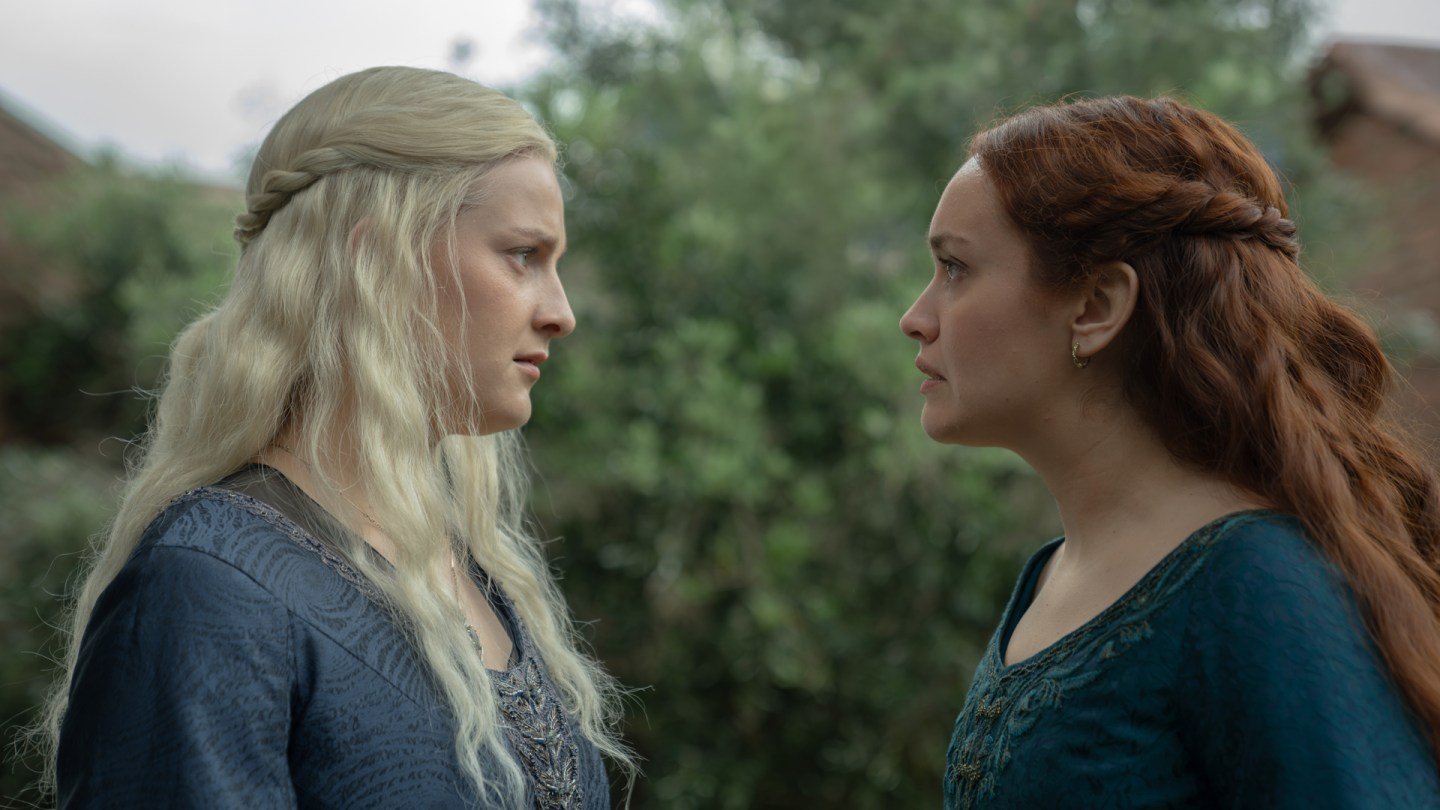
These end up being among the final words Queen Helaena Targaryen ever hears. In the House of the Dragon season three finale, a newly ousted Mysaria (Sonoya Mizuno) issues her stark warning to the recently imprisoned Helaena (Phia Saban), who internalizes that information and weaponizes it: first, by way of speaking ugly truths about Rhaenyra (Emma D’Arcy) right to her face, and then, finally, by way of an open Red Keep window. Just as King Tommen once plummeted from that very same location in Game of Thrones, so too now has Helaena fallen. The season ends with Rhaenyra coming upon Helaena’s vacant quarters, while Team Green’s queen herself lies on the ground below, impaled on spikes.
It’s a haunting image, perhaps appropriately so, given Helaena as a character who knows a thing or two about nightmares and dreams. It’s also a hinge upon which much of the rest of House of the Dragon will turn, according to the folks behind the scenes. In a press event held ahead of the season finale, D’Arcy spoke about Helaena’s death and what it means for the show’s future: “Helaena is sort of the moral heart of the show, I think. She’s maybe the only character who has a proximity to power, but remains kind of uncontaminated. And so, I think her death sort of condemns Rhaenyra to the path she’s chosen. I think there’s sort of no way back after that.”
If there’s a way back, it exists somewhere far beyond the fallen Helaena. Below, Phia Saban chats with The Hollywood Reporter about building out the dream-seeing queen’s final chapter.
***
How much did you know about Helaena’s fate in advance?
When I got the job, I spent a lot of time Googling and searching the Wikis, so I’ve always known this was coming. Plus, there are so many fans out there in the world, and I know so many people who knew and would make a point to tell me about what was going to happen to me.
When it’s a show this big with a character fate this crucial, is it pretty much impossible to avoid that kind of spoiler on your end?
Totally. It was never an option not to know. I’m just happy I made it three seasons!
You’ve had a lot of time to think about her death, then. What are some of your first thoughts when you think about the character, now that her arc ends in this way?
Objectively, it’s very sad. The story is sad. I love Helaena. I feel for Helaena. I try to find hope, by thinking she felt as though she had been killed already in many ways, but… it’s very sad. But for me? Kind of a bucket list thing: I got to die on TV! (Laughs.) I got to do the thing where you keep your eyes open… everyone wants to do that!
How was that experience?
The prosthetics were amazing. It made me want to do a thing where I’m entirely in prosthetics. It was so genius, getting to work on that. You really work with the most talented people on House of the Dragon. I could go through every department right now and tell you all about them, but the people I had never really worked with much before were the prosthetics people, and it was amazing. I sat there while they created my neck, which had this incredible spike, and they painted it on me in a way that was so lifelike. It was so fun.
What went into crafting the force-feeding scene?
It involved a few weeks of what we’d call “gruel meetings.” I would try all these different slops, and they would say, “Choose the one you want to get force-fed.” The one we picked, it was a dal, low spice level. It was okay!
Before that goes down, literally, you have one final scene with Emma. What do you remember about it?
I really loved it, because it came from a conversation I had with executive producers [Ryan Condal and Sara Hess] about it. I felt a lot of ownership over Helaena and have loved building that character. And I felt it was important to get across some of the things that I had always had as Helaena mantras in my mind in that moment. And I felt like that was the justice for Helaena. So we spoke a lot about Joan of Arc, and this idea that there’s more to life than not being dead. I found it really delicious that Helaena could be like, “There are things in the world that you’ll never know how beautiful they are, and they’re not even beautiful.” And that’s truly what she wants to get back to: having a relationship with the world and not being kept and silenced and used.
That links up with the scene in the courtyard, when Helaena looks out at all the birds in cages being taken away.
Is there a shot of her holding something in her hand? If there isn’t, what might be some context is that when we shot that scene, I was holding a dead caterpillar. To me, that moment became more about her relationship with nature, mourning her freedom and how strongly she feels for her creatures — and exactly as you say, how it strikes her that to see something that won’t live and fly again. I think to me, that’s what that was about, but they might’ve done some clever editing and just not got me holding it.
What was your last day on set like?
I saw Fabien talk about this, and I wonder how much it’s clever scheduling from the team, but the last thing I shot was my death shot. I was on a soundstage surrounded by spikes feeling pretty proud of myself in my prosthetics, trying to keep my eyes open with the whole team. And then Ryan came out and he said some nice things and lots of lovely people were there. And yeah, it was really amazing. It’s very hard in the moment to take in the finality of it. This is something I’ve been working on, and a character I’ve been caring for, for five years now. But there is joy in this. There’s pride and there’s excitement. It will probably hit me once I see the full episode and it’s out there, or perhaps when they all get back to work without me.
***
House of the Dragon season three is now streaming on HBO Max; read THR‘s finale coverage.
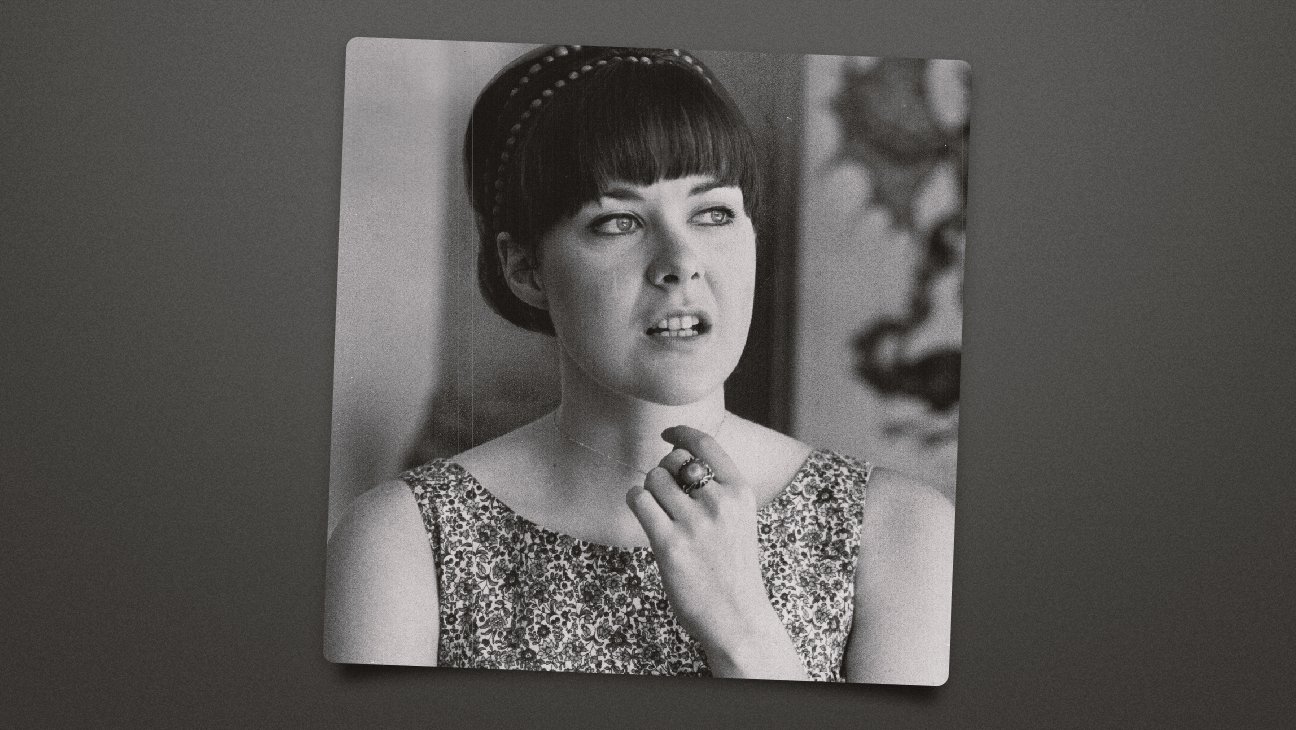
Tedde Moore, an actress who is best known as playing young Ralphie Parker’s teacher in A Christmas Story, has died. She was 79.
Moore died Wednesday in Huntsville, Ontario, according to a post on her Facebook page. A cause of death was not given.
“On Wednesday August 5th under sunny skies overlooking Fairy Lake, Tedde passed away surrounded by family physically and spiritually in her beloved Huntsville Muskoka,” the post reads. “Her bravery in this choice was almost overwhelming, beyond beautiful and also difficult. Forever the teacher, she had a quote for every occasion and a special way of touching the lives and hearts of everyone she met. Her magic and love will be remembered by all she took under her generous and welcoming wings.”
Moore played Miss Shields in the 1983 Christmas classic opposite Peter Billingsley. She memorably gives Ralphie a bad grade on his paper about wanting the Red Ryder BB gun for Christmas and also has to deal with Flick (Scott Schwartz)’s getting his tongue stuck on a ice-cold flagpole. Moore was nominated for a Genie Award, presented by the Academy of Canadian Cinema and Television, for best performance by an actress in a supporting role. She reprised her role for 1994’s My Summer Story, which, like A Christmas Story, was based on Jean Shepherd’s semi-autobiographical stories.
Her other TV appearances include spots on Friday the 13th: The Series, RoboCop: Prime Directives, Odyssey 5 and This Is Wonderland.
Moore played Mrs. Claus in the 2011 TV movie Mistletoe Over Manhattan and also portrayed Nanny Shaw in the miniseries The Kennedys that same year. According to iMDB.com, her final credit was the 2017 TV movie Magical Christmas Ornaments.
Born April 11, 1947, Moore was the daughter of Darwina Faessler Moore and actor Mavor Moore, best known for playing the title role in a Canadian radio drama adaptation of Nero Wolfe in 1982. Her grandmother was Canadian theater pioneer Dora Mavor Moore.
She attended the Royal Academy of Dramatic Art in London, graduating in 1967 with the Principal’s Medal of Honor. After graduating, she starred opposite Christopher Walken in the Stratford Festival production of A Midsummer Night’s Dream.
In 2009, Moore was diagnosed with multiple sclerosis.
Moore had two children with Canadian film and television director Donald Shebib, who directed many documentaries, including 1970’sGoin’ Down the Road and 1973’s Between Friends. Their children are daughter Suzanna, a child actor (Are You Afraid of the Dark?) turned teacher, and Noah, a child actor (Goosebumps) turned Grammy-winning music producer, also known as “40,” who is a frequent collaborator of Drake’s. 40, who produced the Drake hits “Hold On, We’re Going Home,” “One Dance,” “God’s Plan,” “Toosie Slide” and “Take Care,” was diagnosed with multiple sclerosis in 2007, two years before his mother.
Moore has another daughter, Zoë, from a previous relationship with actor Patrick Christopher Carter, and raised a foster daughter, Chaunce Drury.
The couple reportedly welcomed a baby daughter in late July, according to reports. TMZ posted photos of the actress carrying a baby in New York after seeing Death of a Salesman on Sunday, which marked Abbott’s last performance.
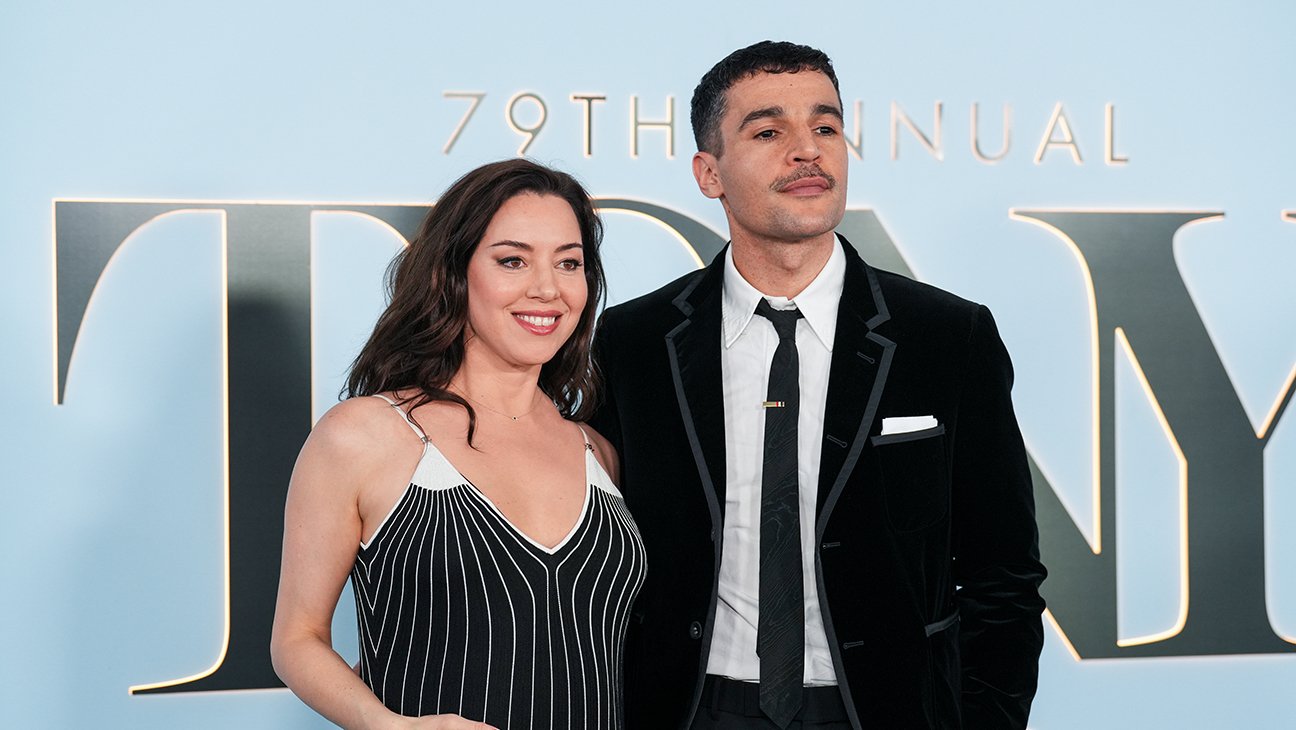
Abbott played Biff Loman in the Broadway revival of Arthur Miller’s classic play opposite Nathan Lane and Laurie Metcalf; he earned his first Tony Award nomination for the role, and they attended the ceremony as a couple (see photo above).
Plaza, meanwhile, earned an Emmy nom for best supporting actress in a drama series for her role in The White Lotus in 2023. She also was the co-creator of Prime Videos animated series Kevin. Her other credits include Agatha All Along and Parks and Recreation.
News first surfaced in April that Plaza was pregnant with her first child. The couple have worked together previously, in the 2020 movie Black Bear as well as in the off-Broadway play Danny and the Deep Blue Sea.
She was previously married to writer-director Jeff Baena (Life After Beth), who died by suicide in January 2025.
Ingeborg and Adam are visionary hand surgeons who are bound by love, control and irresistible fixations. Ingeborg, for one, feels compelled to steal objects. Adam longs to become one.
But after an accident, their well-choreographed lives suddenly face a force that could upset the careful balance that has long defined their relationship: the enigmatic Gaia. With her arrival, unexpected desires start springing up.
With Objet a, her new mind-bending and visceral feature, Berlin-based visual artist and filmmaker Ann Oren (Piaffe) returns to Locarno. It is a stylized cinematic exploration of the fragile relationships between humans, as well as humans and nature. And it is likely to make you look and think at control, desire, intimacy, identity – and kleptomania – in a different way.
Objet a, world-premiering in the international competition of the 79th edition of the Locarno Film Festival on Tuesday, Aug. 11, stars Aenne Schwarz (All Is Well, Every You Every Me) as Ingeborg, Louis Hofmann (All the Light We Cannot See, The Forger, Dark) as Adam, and Simone Bucio (Piaffe, The Ivy) as Gaia. Georg Friedrich (Great Freedom) and Sofia Kokkali (Our Wildest Days) also feature.
“I’m interested in human desire and how it connects us to other species,” Oren says in a director’s note. “The human body is the starting point for my cinematic language: the more control we have over it, the more we separate ourselves from the natural world.”
Oren wrote the screenplay for Objet a with Geoffroy Grison. The cinematography is courtesy of Juan Sarmiento G. (The Voice of Hind Rajab, A Poet), with editing by Hansjörg Weißbrich (Rose, Late Shift). The film is produced by Schuldenberg Films in co-production with Tarantula, asterisk* and ERT. A theatrical release in Germany through Grandfilm is scheduled for the first quarter of 2027. Oscilloscope Laboratories has acquired the North American rights. Bendita Film Sales is handling international sales.
Ahead of the Locarno premiere of Objet a, Oren, Schwarz and Hofmann talked to THR about the serious and fun sides of the production, how they collaborated on its choreography and how timely its themes are if you look close enough.
Ann, what gave you the idea for this film and this story?
ANN OREN Several things, but what I was starting with was the sense of touch. I make very visceral films. My first feature film, Piaffe, dealt with the sense of sound. I start with the experience of the human body today in order to understand the human condition today. Here, I was thinking about the sense of touch today and what happens when we touch flat screens more than we touch our lover’s skin. A lot of experiences have flattened down to touching this plexiglass most of the day, so what is happening to our fingertips? I think they’re really deprived, and I was imagining zombie-like, hungry fingers – hungry to touch something. And then I had this idea of a couple that is living a very bubbled life and communicating emotionally through objects.
‘Objet a’
Courtesy of Juan Sarmiento G./Schuldenberg Films
I am curious, Aenne and Louis, how Ann pitched this project to you. To me as a viewer, Objet a sometimes felt a bit like a dance choreography that was very body-driven and that I could “feel” physically while watching.
AENNE SCHWARZ When I read the script, I felt a real longing to become part of this genuinely faraway world, which, at the same time, felt somehow familiar. What was very intense was when Ann talked us through the script. I remember when we all met, she had such a precise and full vision of what she wanted. And then, yes, it was a very physical experience. I experienced it like diving in, and at the same time, you had to hold the line and be very straight because they’re such delicate characters.
LOUIS HOFMANN I remember that in our first rehearsal, the term dance popped up quite a few times. The way we moved around one another was, I guess, testing out how near you could be to one another and what distance you could create. I remember that there were only a few moments where the characters would actually touch. But most of the time, it was about playing with the distance between them, creating tension, and playing with that tension.
SCHWARZ Yes. The gaze was part of the tension between us. You never lose each other. But sometimes, you are very far and sometimes much closer. It’s always a thin line holding us together.
HOFMANN And that longing for the touch is, I think, omnipresent, and that created the tension.
Interesting how you both describe this. Now it makes more sense to me why I sometimes felt that you two were almost moving like marionettes. Ann, are you happy if viewers get that sense?
OREN Absolutely, because this is exactly the type of work that I’m doing. I see working with actors as being about a very physical performance. There is also the psychology, but what I’m actually interested in is how the characters make decisions, not rationally, but rather through gut feeling. I look at human beings as the species that they are. In everyday life, it happens to everybody that we are compelled to do something, although we don’t really understand why. And I think it’s very exciting for a viewer to see that in a character and see that things are charged with this kind of tension.
In the psychoanalytic theory of Jacques Lacan, “objet a” is an unattainable object of desire. Aenne, Louis, were you familiar with this term, or did Ann go through some of this theory? Or was it not really that important to understand such concepts?
HOFMANN My girlfriend mentioned it to me. I wasn’t aware of it, but she was. And then during rehearsals, we touched on it a little bit. My character Adam has this desire of wanting to be a desired object for someone else. But then through his journey, he is also developing a sense of what he wants to be for himself. For me, that was a very beautiful journey to go on.
‘Objet a’ film still, courtesy of Juan Sarmiento G./Schuldenberg Films
AENNE I saw the title and remembered that a long time ago I studied literature, and Lacan was a topic in one seminar. I remember that I was very excited about it, and so I got a little bit into it. A close friend of mine is a Lacanian psychoanalyst. I felt I had a very intense meeting with this “objet a” myself during filming. The film became this object, in a way. I also wanted to touch it. I also wanted to have it, to own it, and it was also slipping away. So for me, it was a very personal experience with the theme.
HOFMANN You mentioned marionettes. I sometimes felt that the way I was being, or we were being directed, I felt so secure and so safe. In Ann’s world that she created, we just kind of obeyed her vision in a very beautiful way. I don’t mean that we had no say in it anymore, because it was quite the opposite. She was still welcoming all of our ideas.
Do you remember any examples?
HOFMANN When I tried to find the character, I very much went through voice. It was an impulse. I’d read somewhere that the soul of a character is placed in the voice, and I’ve never really gone through that, using the voice in particular to create the character. During rehearsals, I was reading Georg [Friedrich]’s part with Aenne, and I was mimicking, for fun, Georg’s [Austrian] accent and dialect. And then Ann was like: “Wait, I love this voice for you.” And I said: “Hang on, I can’t really have Georg’s voice when being in a film with Georg.” But I then took that placement of the voice, where his voice sits. That’s just an example of how playful we were with one another while being in that very safe and secure environment of Ann’s vision.
Ann Oren, courtesy of Björn Melhus
Courtesy of Björn Melhus
Ann, as a filmmaker, how do you think about colors? I noticed, or maybe I should say “felt,” colors quite a bit in Objet a…
OREN This is the bread and butter of my language. I don’t even have to sketch it out. It just comes to me. What would be the color palette of the film, and how does that support the mood that I would like to bring across? For this film, I wanted to reduce colors. Actually, we only have natural colors in the film until, slowly, green becomes the guest and the star color in the film. You have to work very hard to reduce color, actually, especially when you’re shooting outside, and then you slowly introduce it. So when you have a sequence in the end, it’s really ecstatic.
So we made sure in the production design and in the costumes that the range was from whites and beiges into the deep browns. The red color was used only in the bedroom … and [in another location] in the background. When I see Adam and Ingeborg within these natural colors, it really makes me think of them a little bit more like animals.
I felt the desire inside, or below the surface, of the couple without the characters having to talk about it. Is there a trick to tap into that to make us viewers sense this desire?
SCHWARZ With Ingeborg, what I thought was very exciting about her was that her fingertips and her eyes are her sensual organs. And I really tried to dive into these sensations. The crutch she [gets for one of her legs as the film unfolds] became part of my body. It was exciting for me to really open to the world that an object can become so strong. And with Gaia, she also has a sense she never had before, and she can’t control it. That is like an earthquake for her. She goes into a direction she never went before, and she can’t understand it.
She basically has things in order. She knows what she wants. She’s very sensitive and delicate, but also very clear in what the object has to do for her. And then this kind of melting starts when her body breaks. When her leg is broken, something breaks into pieces.
‘Objet a’ film still, courtesy of Juan Sarmiento G./Schuldenberg Films
HOFMANN I remember that the objects, the crutch, as well as a corset I use, had an immense effect – not only on us but on the whole team. There was a fascination with the beauty of how they were built, and maybe how we got attached to them. We treated them as extended parts of ourselves, and there was this fascination coming from the team as well.
I also remember us, as actors, acting differently when we had our objects with us. There was more to us, and it was also kind of between us. This film is about these two people who are symbiotic and living their life in a very symbiotic way, doing everything with one another – working together, living together, loving each other – and then there are these new elements popping up that are so disturbing at first, and so irritating, and so frightening. And then they slowly but surely start to go with those impulses, and they don’t really know where they’re coming from.
SCHWARZ One thing that was very special was that this was very playful, and also funny in a way. And that gave us also a lot of freedom. We were having fun. We were laughing.
HOFMANN At first, I wondered, “Is this going to become not body horror, but is it all going to be really dark, scary and just full of doom?” But I felt it was quite endearing, and so sweet, no matter how strange these desires might appear to other people. At the end of the day, they are very endearing, sweet desires. And I found the characters so endearing.
SCHWARZ Yes, there’s a tenderness.
Ann, can you share how you think of rituals as part of your storytelling?
OREN That has a lot to do with obsessions with control. You see that with both of them, especially with Adam’s character. He’s obsessed with controlling his body, developing his body, and then he wants his body to also get attention. But the more control we have over our bodies, the more we are disconnected from the natural world that we are a part of. And I think this is a very contemporary condition.
The need for rituals, historically, first of all, is that they are relaxing. It doesn’t have to be a religious ritual, but it can be about the things that you have to do in the morning or the things that you have to do before you leave the house. I think that the need for it also has to do with forgetting ourselves and connecting with something larger than ourselves. If in the beginning, the characters are connected to controlling their lives and to objects, towards the end, it opens up to a psychedelic experience that is like ecstasy. And ecstasy has always been a need for humankind. Today, there is a renaissance of psychedelics in the world because we’re so controlled – the need to forget ourselves, to have a moment of ego loss, and to connect to something larger than ourselves. I didn’t want to have a didactic experience for the audience, but rather lure them into something through passion.
Speaking of passion, Adam and Ingeborg really try to control that when we first meet them…
OREN I built the sexuality between the couple so that they were canceling parts of their bodies; they’re not including their genitals. It’s all about this exchange of the experience of touching and being touched, but in the most clinical way, which makes it absurd and interesting and a very particular choice for the two of them, which makes them suit each other very well. I think we live so bubbled today, and we’re trying to control everything, and it’s becoming about maximizing the length of your life, but you forget to live your life.
The film starts with thinking about the human condition, our bubbled life, and what, in a way, leads us to the disaster that we are in right now. We’re living in times of war, climate catastrophe and tech fascism, and it starts from that. So, the film is something very fantastical, and I have very particular characters. But it touches on living in the world right now, and I hope that it’s going to resonate and be absorbed this way. I like to work with ambiguity, so I don’t want a person to come out of the film and be able to describe it with one sentence. That would make it rather boring.
Writer-director Natalka Vorozhbyt (Bad Roads) decided to face the Demons to explore the roots of the war between Russia and Ukraine. Now, she is unleashing the Demons at the 79th edition of the Locarno Film Festival, where the film will world-premiere in the Filmmakers of the Present competition program on Aug. 13.
Here is how a synopsis describes the movie: “In the 1990s, Slavik, a homeless drifter from Russia with a blurred past who claims to be a writer, wanders into a remote village in central Ukraine. Nina, a strong and independent woman much older than Slavik, takes the stranger into her home. At first, their strange companionship resembles an unlikely love story. But as their relationship unfolds, love turns into betrayal, and the village begins to reveal its hidden rules — a place where witches may live next door, and the dead sometimes speak with the living.”
The creator of the film highlights that it unfolds on three interconnected levels. “The first is the relationship between a man and a woman within a traditional society,” Vorozhbyt explains in a director’s statement. “The second is socio-political, where this relationship becomes a metaphor for the relationship between Russia and Ukraine. The third is mystical, exploring the connection between the living, the dead, and the otherworld.”
In case you wonder: Nina seems to be the embodiment of post-Soviet Ukraine and the country’s independence. So, you’ll want to look out for any danger to her.
Ruslana Pysanka, Aleksey Mitin, Tatiana Stepanova, Ruslan Garmash and Mykola Ponomarenko feature in the cast. Demons was filmed by cinematographer Volodymyr Ivanov, with editing by Milenia Fiedler and Andriy Gulyanych. Celluloid Dreams is handling international sales.
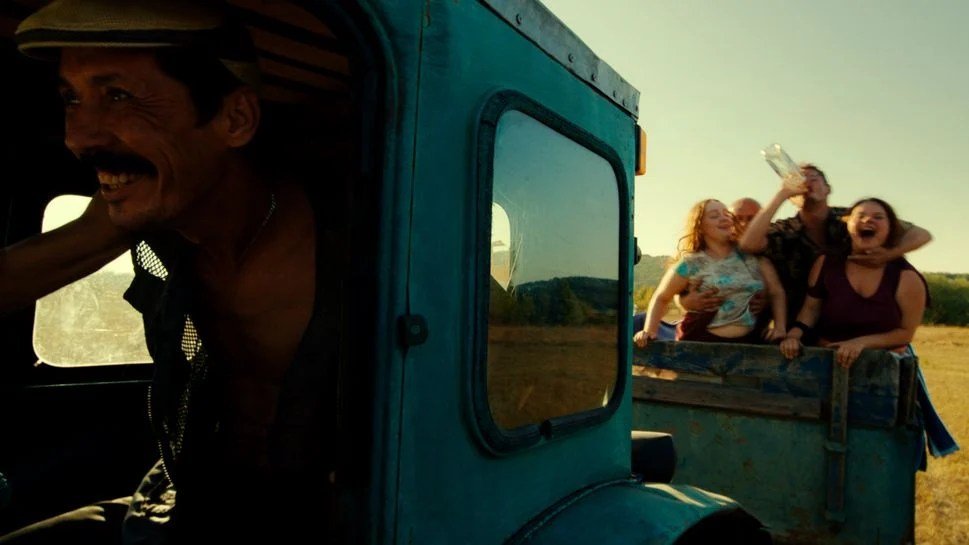
THR can now exclusively premiere the trailer for Demons. Don’t expect any exorcizing of demons here! Instead, it is time for a drink and “fire in the belly.” You look confused! To change that, watch the trailer for Demons right here.
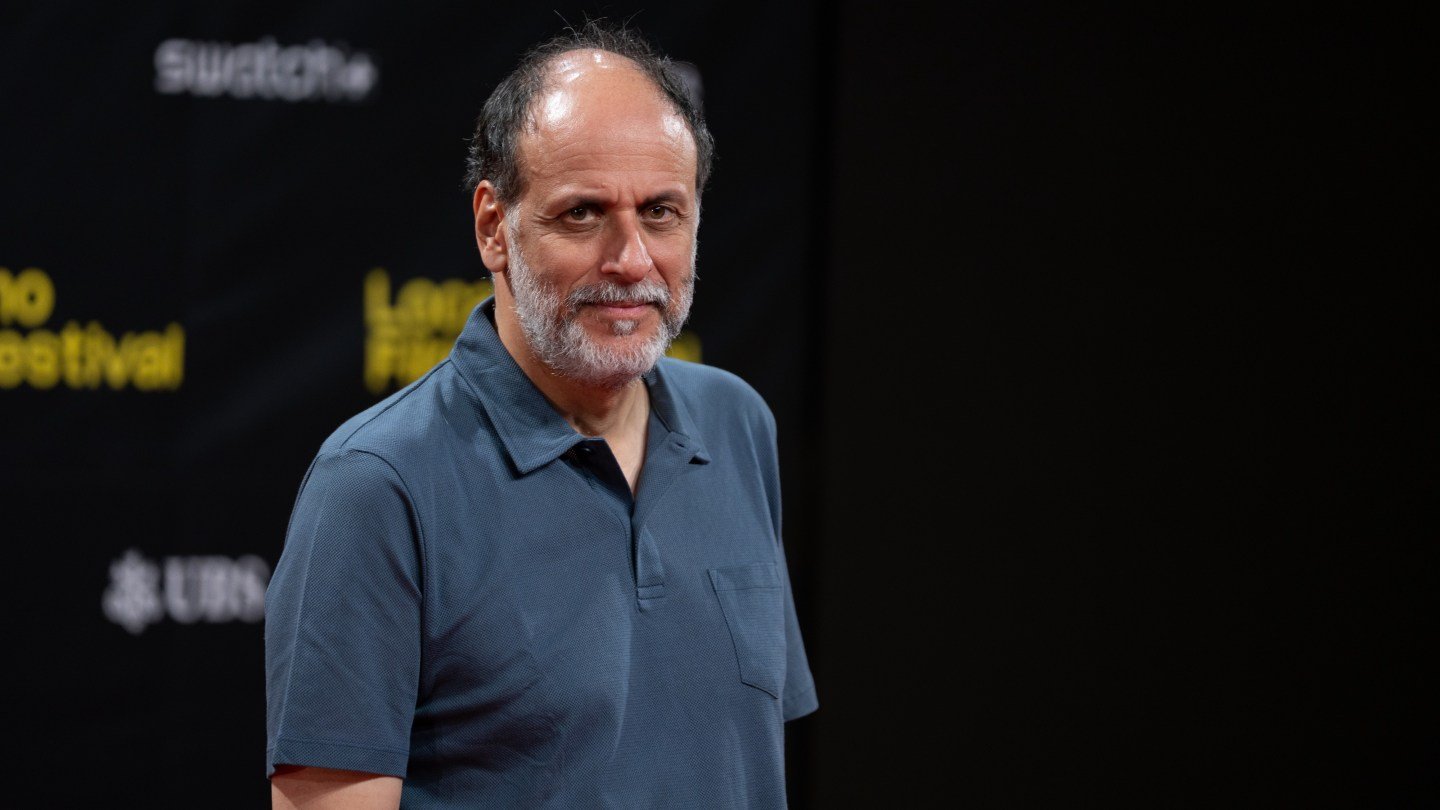
To be precise, Guadagnino came to Locarno, in Italian-speaking Switzerland, to discuss Ketticè, the sophomore feature of his former assistant, writer-director Giovanni Tortorici (Diciannove). The coming-of-age drama stars Salvatore Gallina, Rachele Testagrossa and Monica Bellucci. And yes, the movie’s list of producers includes Guadagnino.
Set in Palermo, Sicily in 2012, the era of media mogul-turned-politician Silvio Berlusconi, the movie revolves around Giulio, a listless and dissatisfied 16-year-old who drifts through his days without any enthusiasm for school and no real future prospects. But his encounter with Ketty, a more self-assured peer, offers him an escape from the monotony. The two form a close friendship, which a synopsis describes as “a shared refuge in their search for freedom, far from the judgmental gaze of the adult world.”
The film’s title refers to Ketty’s nickname in the Sicilian dialect. Bellucci plays Giulio’s mother in an aristocratic Sicilian family that leaves her feeling oppressed. The cinematography is by Camilla Cattabriga, with editing by Marco Costa. PiperPlay is handling international sales.
Guadagnino was asked by reporters about Italy’s rich cinematic history and if his decision to produce Tortorici’s movie was his way of keeping that tradition alive. “Most definitely,” he replied. “I think that we can agree that historically, Italian cinema, from the silent times until the ’70s, generated some of the most important personalities in the history of cinema, but also as an industry, had created a system that was the envy of many other countries. There were many different kind of films being made.”
‘Ketticè’
Courtesy of Locarno Film Festival
But then, something happened with “the advent of private TV and the Berlusconi empire,” Guadagnino offered. “It dried [up], and most of what was produced for cinema became TV. Genre was killed. A pretension on authorship became such that the great idea of cinema as authorship became basically people writing scripts and shooting their own scripts so that they could define themselves as authors.” In the end, “the movie industry shrunk and the perspective shrunk and the cinema of Italy became sterile and totally devoid of an idea of language and of an idea of life.”
That’s where Tortorici comes in. “So when you meet a personality like Giovanni, who, of course, is an Italian filmmaker working in Italy, but I like to think that he’s a filmmaker, period, when you meet someone that is a complete rarity in the landscape of Italian cinema, you must protect it,” Guadagnino concluded. “You must make sure that every stone is not left unturned in order to give him the means to express himself. For me, introducing films such as Giovanni’s movies is a way to … set up a pavement into the future.”
And he emphasized: “It’s about the mindset. The mindset means how you do your stuff, what stories you want to tell, how you understand reality, how you interpret reality. How you run away from falseness is intoxicating for all its truth, all its incredible, vivid reality.”
As a producer, Guadagnino shared that he likes to watch a movie and experience it like anyone else in a movie theater. His audience take on Ketticè: “As an audience member, I feel the movie really speaks in a very universal way.”
‘Ketticè’
Courtesy of Locarno Film Festival
Tortorici said his film explores how institutions, such as school, family and the state, fail kids. “I think the guilty ones are the adults,” he told reporters. “I think they just live in a cultural context of the ultra-capitalist contest and a mediatic world.”
Does Tortorici have any vision for his cinematic future after two autobiographically inspired films? “In my next movie, I’m going to explore something that is very far from me,” he offered. “Shooting this movie, I met a lot of people in Palermo, even coming from difficult neighborhoods with difficult life experiences. I find in these stories the possibility to continuing to explore this struggle of young people with authorities.”
Continued Tortorici: “I think the big problem of society is the structure of, for example, the family. I think family is the structure that [creates] the next repressed person. So I would very much like to explore these different experiences in all parts of society, family in particular.”
The author, who wrote the novels that the show is based upon, took to Instagram Friday to weigh into online debate about the casting of the characters Troy Barrett and Harris Drover in the upcoming season. It was announced Friday that Charlie Gillespie was cast as Troy, a professional hockey player who is traded to the Ottawa Centaurs in Reid’s source material, while Justice Smith was cast as Harris, the team’s social media manager.
“Thinking about all the people last summer who told me the casting for Ilya and Shane was wrong and bad…” she wrote on an Instagram story.
Some fans online were criticizing the decision to cast a “skinny” actor to play the character of Harris, who was described as chubbier than the hockey players of the book.
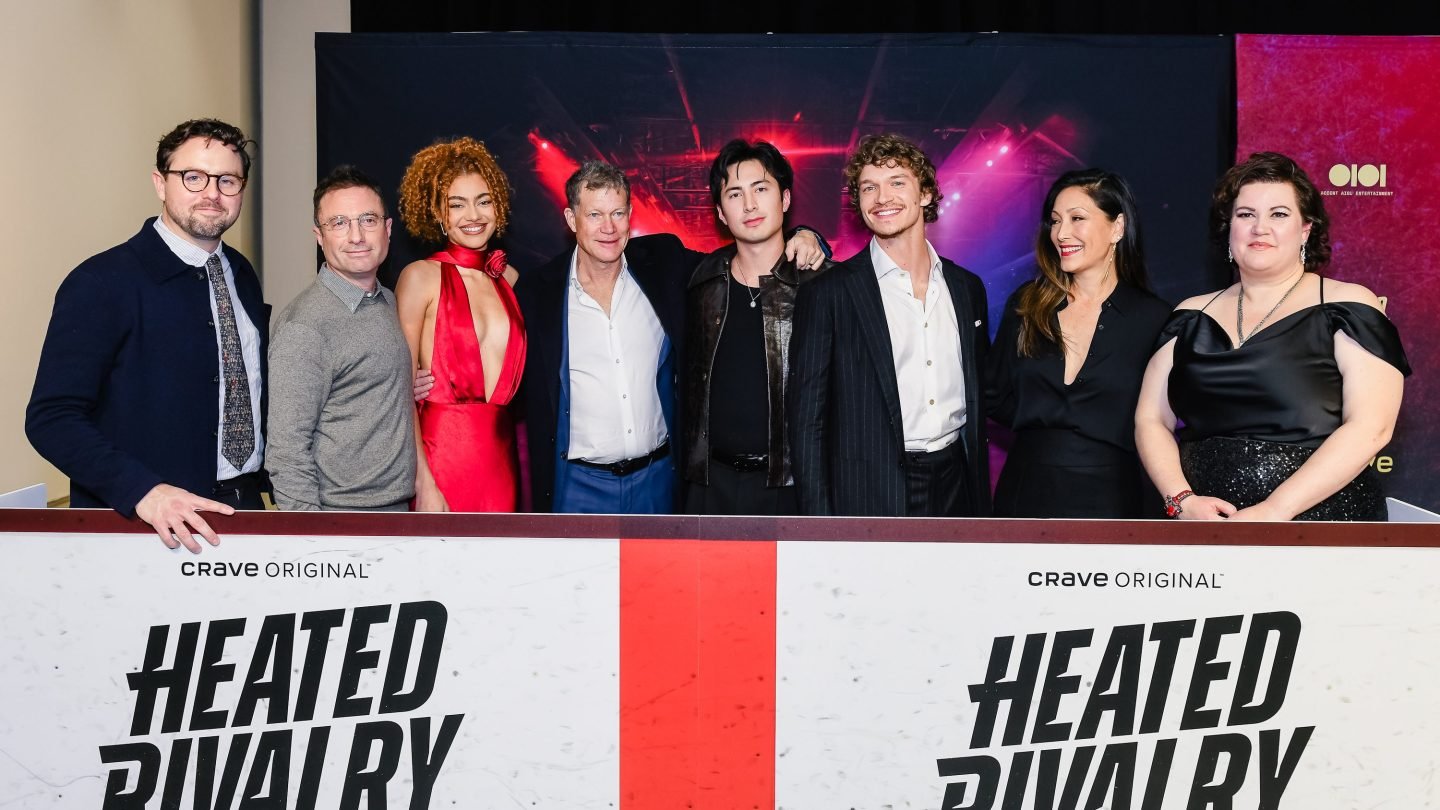
Harris and Troy’s budding relationship drives Reid’s novel Role Model, the fifth installment of her Game Changers series, which Heated Rivalry the series is based on. “Rachel Reid has given us two beautifully layered characters in Harris and Troy who you can’t help but root for,” showrunner Jacob Tierney and executive producer Brendan Brady said in a release about the casting.
“From the start of the casting process, we knew we were looking for actors who could create something truly special together and bring that same depth and heart to the screen. Justice and Charlie do exactly that,” the statement continued. “They immediately connected with the vulnerability and resilience at the core of these characters, bringing an instinctive understanding of who Harris and Troy are.”
Ottawa is expected to be the season two home for main character Ilya Rozanov, played by Connor Storrie, who moves to the low-ranking Canadian team. The Russian hockey player made the decision to move to the team in the finale of the show’s first season to be closer to Heated Rivalry’s other main character and his now-boyfriend, Shane Hollander, played by Hudson Williams.
Tierney serves as writer, director and executive producer on the series. Brady and Jayme Alter Wilson serve as executive producers, alongside Lori Fischburg and Liane Cunje as producers. Reid serves as a consulting producer. Mike Goldbach joins season two as co-writer alongside Tierney.
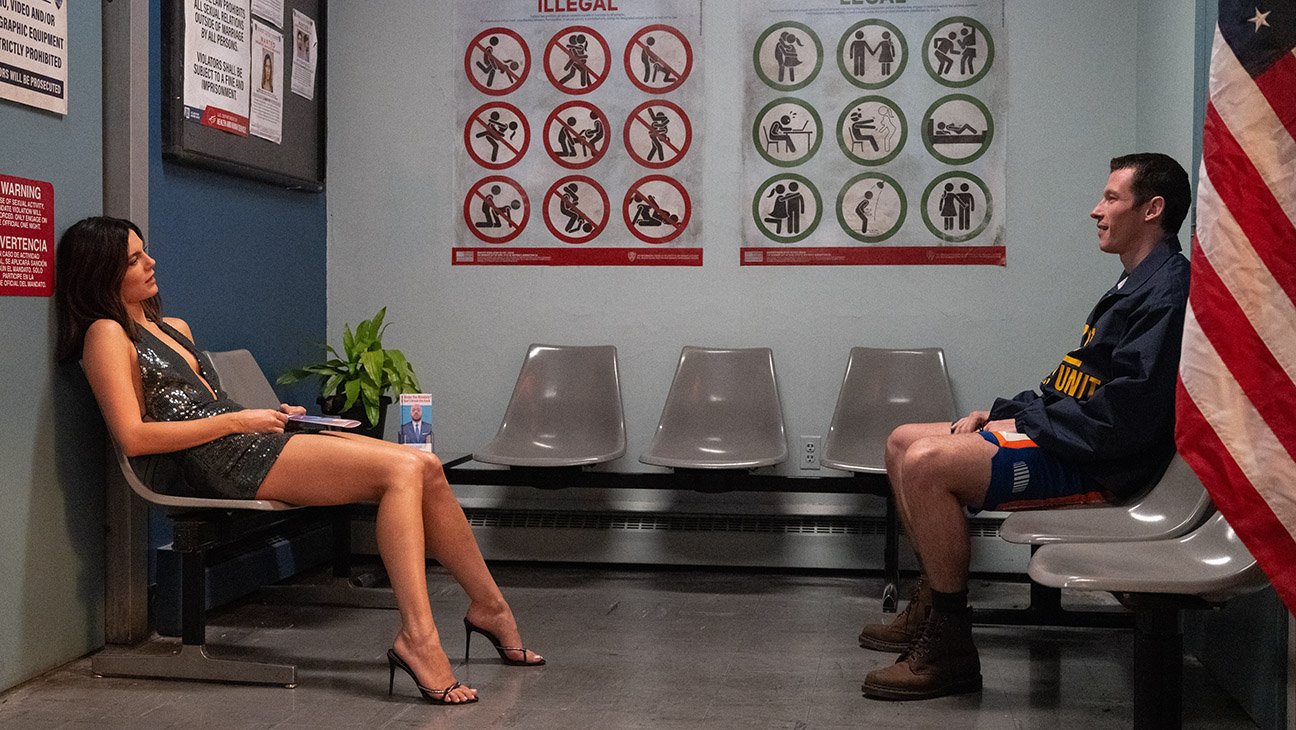
Ever since the official trailer dropped for the Callum Turner–Monica Barbaro rom-com One Night Only, quickly racking up millions of views on its way to its nearly 40 million total, internet commentators have had a lot ofquestions about the film’s central premise in which premarital sex is illegal apart from one 12-hour period a year.
How is this law enforced? Are people breaking the law? How did this legislation pass? What counts as “sex” under this new mandate? Are marriage (and divorce) rates skyrocketing? What about affairs?
Rest assured: Some of those questions are answered in the movie, and explanations are starting to trickle out online for those unconcerned about spoilers. Beyond that, One Night Only writer, Travis Braun, who saw his screenplay top the 2024 Black List, has answers, but they’re not all in the Will Gluck-directed Universal movie now in theaters.
“I set out to write a movie about the circus that is modern dating, and I thought how fun if we could set that all in one night, and I have answers to those questions, and some of them are in the movie,” Braun told The Hollywood Reporter at the One Night Only premiere earlier this week in New York.
Braun said he definitely thought about the specific rules of the film’s alternate reality, framed as three years on from the no-sex act being passed, but didn’t want to get too deep into the politics of the world of the movie.
“There’s a big mythology that I’ve built out and then as you develop a movie you start to pare down and you go: What does an audience really care about, and what are they showing up to see? For me the answer is always a love story, romance,” he told THR. “I hope they can come in and we’ll show them how this world functions, and then they can just enjoy the movie and have fun. The whole focus of this was love story and romance first, and the world-building obviously has to make sense and has to be there, but ultimately we weren’t interested in getting into the politics of it. We wanted to tell a story about these two incredible people trying to find love on this crazy night.”
Producer Jacqueline Monetta, who brought Braun’s script to Gluck, said they didn’t want moviegoers to have all of the answers.
“I had a million questions. I was like, ‘What does this mean? What does this world look like? How do people communicate? What’s different?’ And that’s I think what’s so smart about it,” she said of One Night Only‘s “big idea, high-concept” premise. “We don’t answer every question in the movie, purposefully, because we want those questions to be had on the car ride home. We want people to keep talking about it and really think about what would this mean for our world, what does it mean for our world now. But I think Will and I were really specific on what questions we wanted to answer.”
In a recent Reddit AMA, Gluck also detailed how he and his team approached the world building of the movie while not wanting it to be all about the mandate and offered prospective moviegoers hints for where to find the answers to their questions.
“We spent a lot of time talking about the rules of the world, and if you’ve seen the movie, or when you see the movie, you’ll see that the rules of the world and the world building are all in the background,” he said. “It’s on TVs, signage, in thrown-away lines, because we didn’t want to give the world short shrift, but we didn’t want the movie to be about that. It’s another way I want people to see this. If they see it more than once, they’ll pick up so many more rules of the world in the background. A lot of the questions that I’ve been getting after people have seen the movie are actually answered in the movie, which is by design because I want people maybe not to know them. So, yes, it was a tricky tightrope to have them there, but not for the movie to be about it.”
Turner meanwhile echoes Braun’s advice for curious prospective moviegoers: “Go see the film!”
“You’ll realize pretty quickly what the realm is that you’re working within and it’s a comedy,” Turner says of what inquisitive filmgoers will find. “There are no great political undertones, I don’t think. This is just a place where you can escape for an hour and a half, two hours and enjoy and laugh your head off.”
One Night Only is now in theaters.
Callum Turner and Monica Barbaro at the One Night Only premiere on Monday.