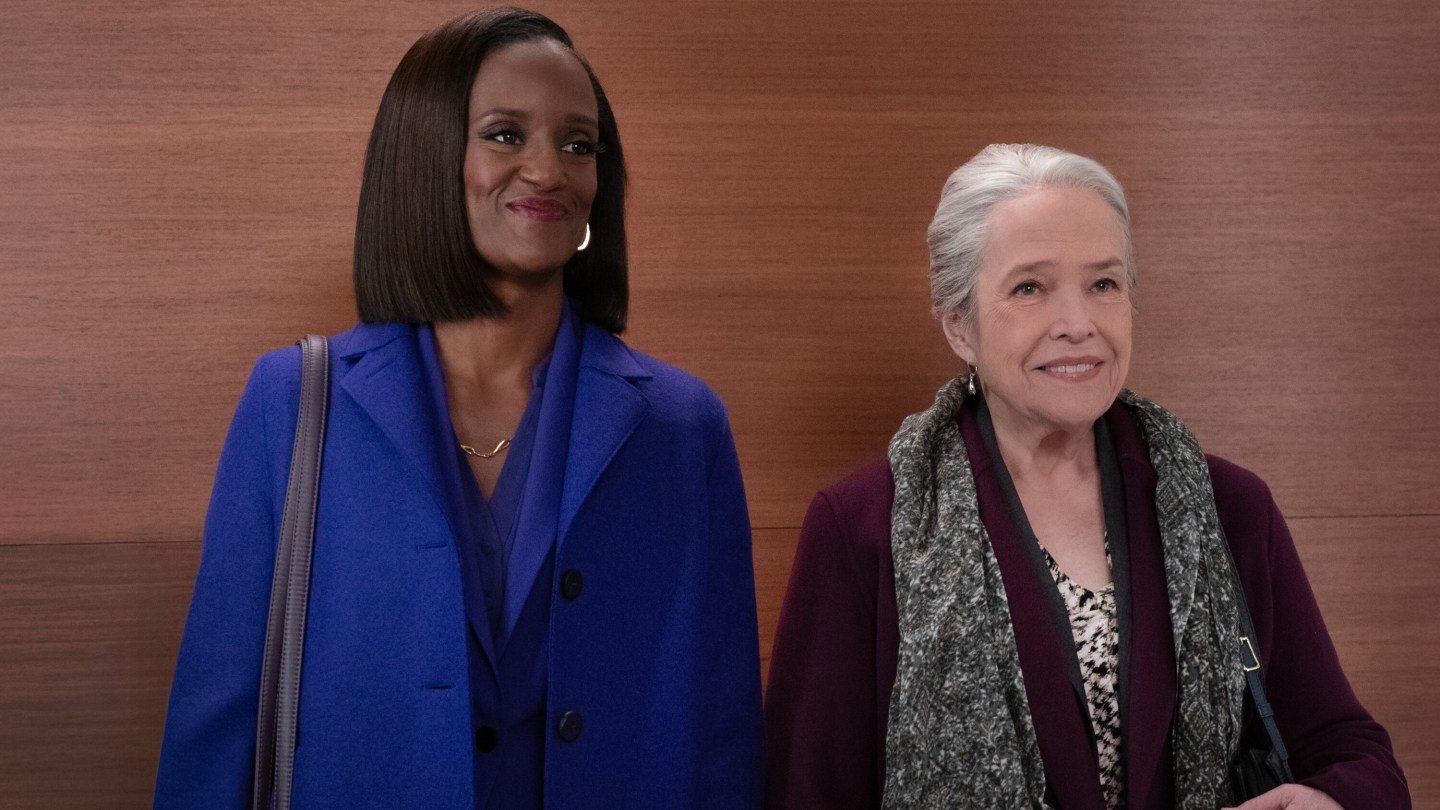
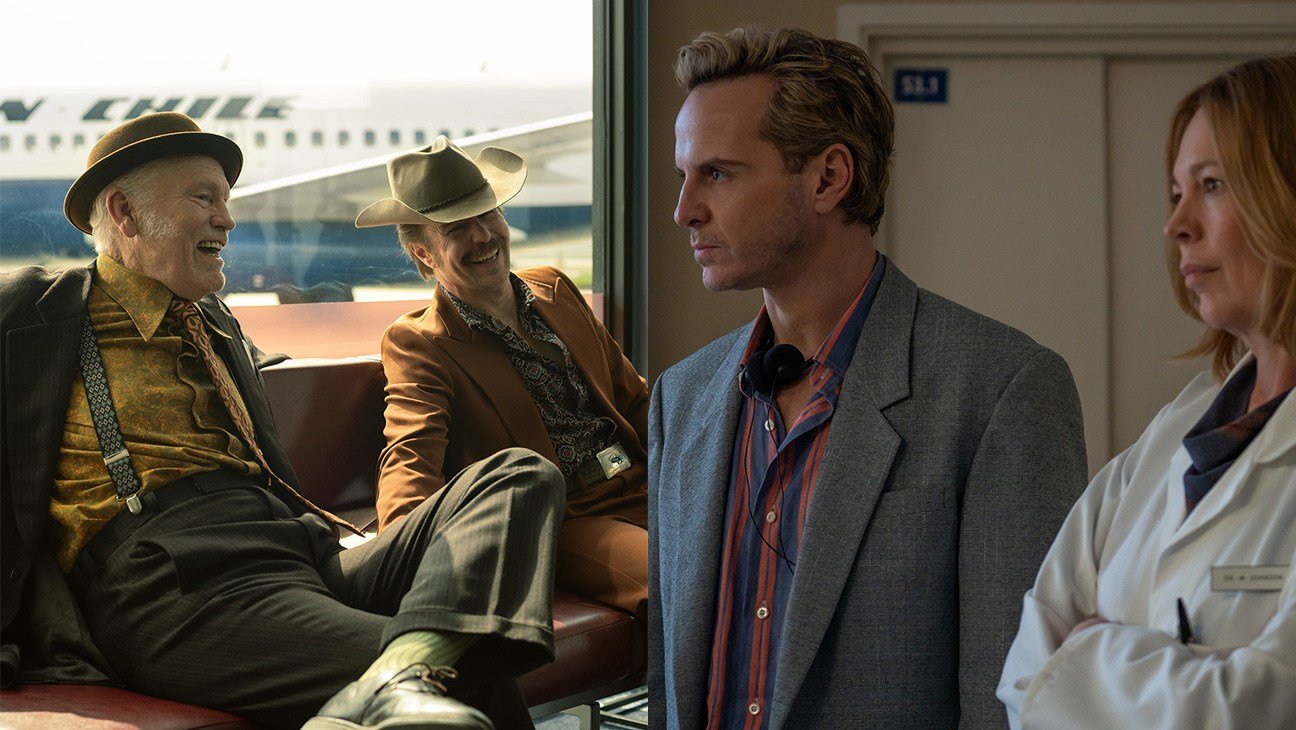
CBS Television Studios is claiming First Amendment protections in a bid to dismiss some claims in a lawsuit from a writer on Matlock, who accused the show’s top brass of directing disparaging racial and sexual comments at him and other Black cast and crew members.
The writer, John Lowe, accused Matlock‘s showrunner and executive producers of creating a hostile work environment “permeated by sexually explicit and discriminatory conduct.” He was allegedly terminated after allegedly reporting an incident in which his supervisor referred to Juneteenth as “Coonteenth.”
In a statement, a CBS Studios spokesperson said the company is “confident that Lowe’s accusations are demonstrably inaccurate and maliciously fabricated” and that it “will not allow them to go unchallenged.”
“False allegations are deeply damaging, both to those wrongly accused, and to anyone with a serious and legitimate claim of discrimination,” the statement added. “We stand firmly behind our producers and look forward to the truth coming to light.”
On Friday, CBS moved to toss the complaint under a California law that allows for the early dismissal of claims intended to chill free speech. The thrust of its argument: Its decision to cease using employing Lowe, who alleged retaliatory termination, as a writer is a creative choice protected by the First Amendment. It stressed that he wasn’t actually terminated but rather that it declined to extend his contract, which guaranteed 20 weeks and then continued week-to-week at CBS’ discretion.
“A writer who is performing well and having a positive impact on the scripts may be extended, while a writer who is not performing well is generally let go earlier,” wrote Adam Levin, a lawyer for CBS, in the motion. “Those judgments are creative, because the composition of the room determines the content of the scripts that are shot for exhibition to the public.”
CBS extensively detailed Lowe’s shortcomings in the writers’ room. Some alleged examples: He failed to follow writing assignments; his outlines failed to incorporate notes and didn’t capture the show’s tone; and he came to set late and left during shooting.
In a court declaration, executive producer Nicki Renna said she reviewed an outline Lowe delivered and concluded the flashbacks he wrote “did not work” and “another scene did not make sense.” His performance issues were extensively documented with human resources, according to the motion.
Matlock showrunner Jennie Snyder Urman, in another court declaration, also said the claim she called Juneteenth “Coonteenth” was “made up” by Lowe.
Between 2009 and 2015, Dutch filmmaker Tom Six gained unexpected global fame with The Human Centipede trilogy, a cult film franchise that infiltrated pop culture and far transcended the film’s actual viewership powered by the explosion of meme culture. Talk show hosts used the title and concept as a punchline, to the knowing, “we’re all in on the sick joke” laughter of the studio and home audiences. Beavis and Butt-Head and the South Park kids riffed on it. The eccentric cult auteur from the Netherlands had improbably created a 21st century myth.
For years, Six’s follow-up to The Human Centipedewas much anticipated by a global fan base. And he knew the stakes. So, when he announced in 2019 that he had completed what he promised to be an even more transgressive feature, The Onania Club, everyone — especially him — assumed that finding a distributor would be a trivial matter. After all, IFC had taken a gamble with Centipede and its success had proven that the world was hungry for Six’s signature blend of anarchic social satire, grand guignol extreme imagery and dark gallows humor. His work was exactly the kind of psychotronic exploitation that End Stage Capitalism seemed to be asking for: the perfect midnight movies for brains soiled by endless Epstein headlines.
But then everything went from bad to worse, for Six and for The Onania Club. The film follows a circle of wealthy Los Angeles women who can only be aroused by the suffering of others, and who require increasingly extreme exposure to it. Think The Real Housewives of Beverly Hills by way of Brian Yuzna’s 1980s body-horror satire Society, arriving at the height of the Epstein cultural moment.
Presented with Onania, former and prospective distributors kept telling him that “the market had changed” since the triumph of the Centipede. For seven years, Onania has sat in Six’s Amsterdam vault, unseen by anyone bar a few critics and influencers who were shown a rough cut in hopes of drumming up distribution support. A brief trailer exists somewhere in the netherworlds of the Internet.
Meanwhile, the 53-year-old Six has been battling multiple sclerosis, a debilitating, incurable disease that worsened during his professional ordeal. The director blames the stress he endured over the market censorship of his would-be magnum opus for accelerating his physical deterioration and speaks throughout the documentary and this interview as a man with very little time left.
Although MS is not generally understood as a terminal illness, life expectancy can be shortened through complications rather than the disease itself. Six, however, wants his final artistic act to be the narration of what he calls his own impending end. Whether clear-eyed self-assessment or final performance is for the audience — his witness — to decide.
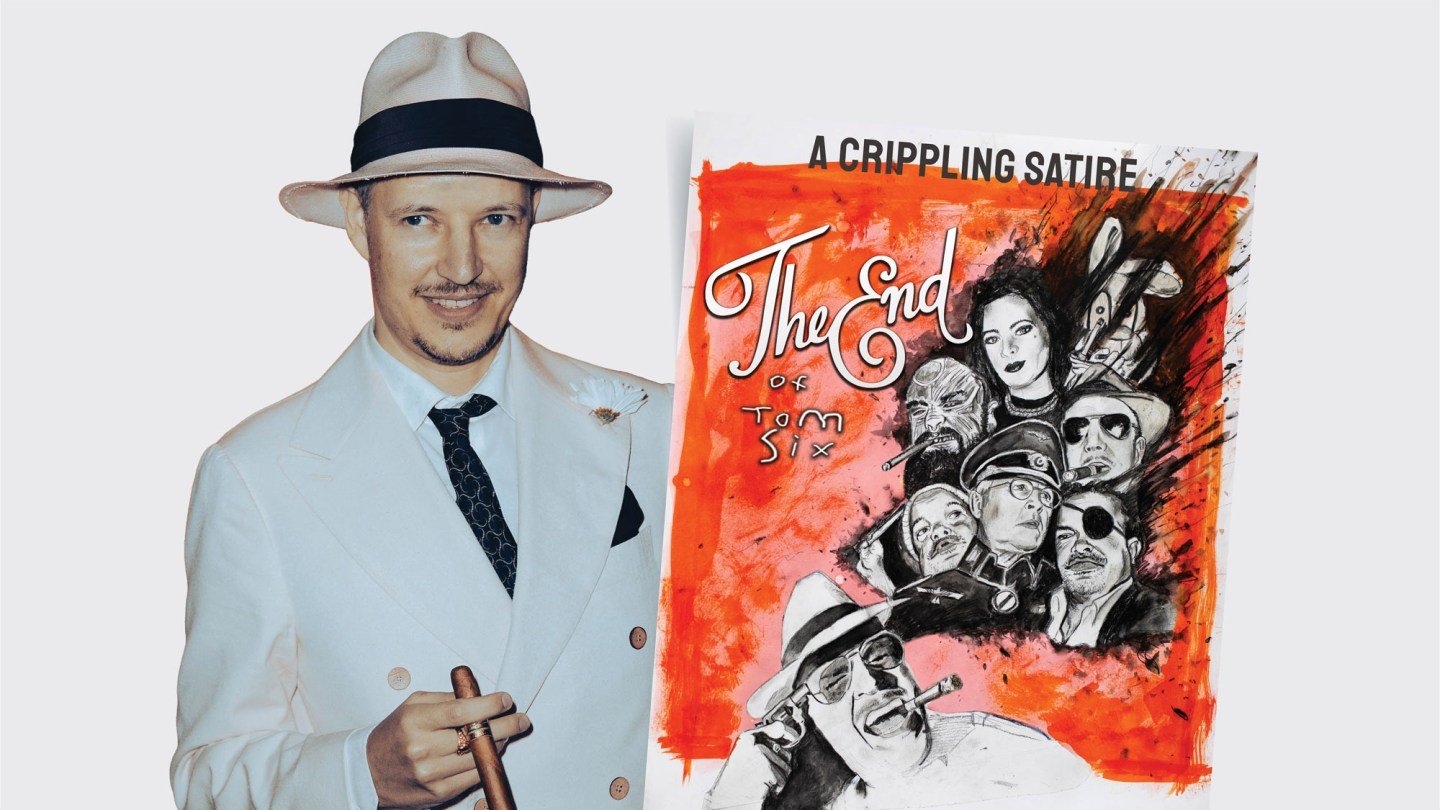
Over the past year, Six completed a self-made, black-and-white documentary called The End of Tom Six,created from a recumbent position on his antique opium bed. The whole sordid tale is there, chronicled by Six with the same macabre sensibilities that catapulted him to worldwide fame.
The End of Tom Sixis being distributed by Six and his partner, Maartje Willems, through YouTube, preceded by a “pay what you feel like” menu of darkly humorous options (“$20: Really enjoyed your misery, thank you.”).
The Onania Club is still seeking professional distribution.
Tom Six granted an exclusive interview to The Hollywood Reporter to reflect on his current situation, and what he thinks that means for the state of cinema and culture. He dictated his answers to Willems earlier this month, as he reports being “dizzy from the heavy medication and in a lot of pain and in a way worse condition than as I appeared in the doc.”
“I can’t type anymore because my hands are on fire,” he added. “These are my final words, the only interview about The End of Tom Six and the very last interview I’ll ever do. Why? In the documentary I said everything there is to say.”
“What is the best thing about knowing you will die soon?” Six reflected. “You have nothing left to lose and you don’t have to hold back.”
The documentary shows Six tormented by faceless distributors (he has chosen to not name any of them, as he thinks the issue is not personal but systemic) who repeat, “The market has changed, sorry.”
“Film distribution today has become about: does the film have the right message, will it scare anyone off, does it send the wrong signal? Will our company look bad if we release it?” Six says, comparing the situation to two decades ago. “They are afraid of the backlash, the hashtag uprisings and digital pitchforks. If a filmmaker — one who has already created a pop culture phenomenon — literally gives his life for his film, wouldn’t they realize that they’re dealing with something truly unique and at least consider releasing it? Then they would have a hit and I can rest in peace.”
He has been making this argument for at least five years — he said much the same thing to Vice in 2021, two years into the search for a distributor — though he now claims to detect movement. “Audiences are getting fed up with being force-fed all that political correctness and crave challenging movies. They are getting louder and the industry is starting to notice but very slowly. One distributor has to become the hero that leads the rest. But it has to be soon or it will be too late for me.”
The combative vocabulary — bravery in the face of official cowardice, standing up against hidden agendas pushing conformity, a digital world of angry global villagers armed with social-media pitchforks — runs through the documentary and through this interview. Never mind that in 2026 that point of view is the house style of the most-downloaded podcasts in America, the presidential X feed, and many of the “disruptive” policies endorsed by the party currently running all three branches of the federal government. The film stubbornly presents Six as a lone dissident, even if his brand of dissent is currently very much en vogue and in power.
On the one hand, The End of Tom Six is a personal documentary about the feelings one artist has about his struggle (Six in raconteur mode shares, “My life was reduced to one obsession: selling The Onania Club,” and promises to display “my complete downfall in glorious 4K”). But it is also about a larger cultural point, one that goes beyond Tom Six and Onania. Six posits that “The market has changed” is less an excuse than “a fucking agenda” and “an industry code word for woke cowardice.”
“Woke is the biggest enemy of art,” Six declares, and the Onania situation is “the same reason why bold cinema is dying.” Six sees the personal, the professional and the cultural issues all intertwined as part of a life-destroying whole.
Was his original intent with The End of Tom Sixto make something personal or something more like a manifesto about society at large, or was it a combination of both?
“One caused the other,” he states. “My personal deterioration due to the MS is inseparable from being unable to sell The Onania Club, which, in the end, proved to be a lethal and highly entertaining combination for a documentary. [The End of Tom Six] is a satire on the current agendas, political correctness and also on indie filmmaking itself. The [character of the] Censor Nazi represents all forms of censorship and political correctness, and the other characters are my take on inclusivity.”
Decadence is the documentary’s organizing aesthetic. Six is introduced in a louche Den of Decadent, name checks Oscar Wilde and Gabriele D’Annunzio and describes himself as “decaying in style.” It is a considerably more flattering frame than the alternative, which is a sick man in a bedroom in Amsterdam who cannot sell his movie.
“From a young age,” he tells THR, “I’ve always had a certain life philosophy: Life is a short, sadistic joke and I always wanted a larger-than-life existence. Give it all till the guillotine will fall. I hate mediocrity. I hate bourgeois conventionality and in the decadents of the 19th-century […] I found kindred spirits. They lived life with intensity, style and excess but they knew it came at a high cost. All decadents end up in ruins.”
The End of Tom Six also plays with stereotypes and tropes of classic Hollywood film directors, those dictatorial, imposing colossi like Preminger, Lang, Huston, Ford, Welles, etc., but here reduced to raging impotently against the Cinema Machine from an antique opium smoker’s bed.
“I jokingly call myself a film dictator because I do everything myself,” Six explains. “I don’t think making movies is a democracy. Someone has to have the final vision and the balls to protect it. Hollywood directors from the 1940s and 1950s were the ultimate caricatures of film directors, real authority figures, and some even dressed like dictators with their puffy pants, military high boots and even batons. I find that darkly funny. Today’s filmmakers look like accountants and don’t have those big personalities anymore. And they are afraid to say the wrong things.
“My personality is not an act. This is who I am. I have always worn light colored (linen) suits and (Panama) hats,” Six says. “My grandfather was my hero and my father figure and he always wore a suit and hat. Now I wear silk pajamas because any other fabric is too painful on my skin. I have smoked cigars since I was 16 years old. I think I was born in the wrong time period. I have a bad case of nostalgia. I miss the rebels. There aren’t many left, if any. There is no outrage, no eccentricity. It is all so dull and restrained. That’s not for me. I feel like I don’t belong here anymore.”
The assumption that the world will eventually watch — and love — The Onania Club, but that its visionary will no longer be around to enjoy the praise is part of the black comedy of The End of Tom Six. After all, Warner Bros. Clockworkis currently promoting the impending re-release of Ken Russell’s long-lost controversial nuns-in-heat masterpiece The Devils with a large marketing campaign. Pasolini’s taboo-busting Salò — feared and loathed since its 1975 premiere as a compendium of degeneracy — is in the Criterion Collection and accessible to every movie lover at home with a Criterion Channel subscription. Does Six think the system is only kind to mavericks, visionaries and cult auteurs after they’ve passed on and several decades have gone by? Will Onania be revived with a large marketing campaign by a future Meta-Palantir-Paramount-LVMH studio around 2086?
“100 percent” he replies. “I have always said that. Long after I am dead, they will celebrate The Onania Club for the powerful, sharp satire it is and my balls to create it.”
The obvious problem, which the documentary never quite confronts, is that we have to take Six’s word for the revolutionary nature of his film. The Onania Club has been seen by a handful of critics and industry people in a rough cut and by almost no one else. The distributors who passed may have passed for the reasons Six says they did. They may also have decided it wasn’t good, a possibility the film treats as unthinkable. But there’s some meaningful evidence that Six may be right: John Waters, one of the few who saw an earlier cut of it, named The Onania Club to his Artforum 2021 best films list.
Six returns to the subject of Hollywood itself, declaring Tinseltown as plagued by “the most dangerous combination: intelligence, creativity and unlimited money.”
“It’s the perfect pressure cooker for that kind of decadent, detached excess. The city itself becomes a part of the satire,” he says. “If I was going to tell a story about rich women needing more and more misery to get aroused by, it needed to be set in Hollywood.”
“I think many artists that push boundaries are misunderstood at first because they are too far ahead. People simply don’t get it yet. And after they’re gone, suddenly they become the hero. Pasolini’s work can be celebrated safely now because they are accepted films from the past. Nobody is in trouble if they say they love Salò. But if I [created] Salò now, nobody would want to touch it. It is so hypocritical. Many distributors proudly state that they celebrate bold and boundary-pushing cinema but if you give them actual boundary-pushing cinema now, they ignore it. So yes, the pattern feels cyclical.”
Commenters online, rallying behind the #ReleaseTheOnaniaClub hashtag, keep asking Six why he doesn’t crowdfund the distribution among his worldwide fanbase.
“Crowdfunding is good for when you need funding to make the movie itself,” he explains. “It doesn’t work with distribution. For that you need a professional distribution company with a good track record that has experience, the resources, the reach and the infrastructure. People who know the deals, the theaters, streaming services, the press and have a marketing team to reach the audience. When we finished The End of Tom Six, we approached many distributors. Only two responded with rejections and nobody actually watched it. It felt like the same hell all over again but with my declining health, I couldn’t fight that fight anymore. So we decided to release it on YouTube and give people the choice of paying what they want with a darkly funny menu. The documentary was very low-budget so the financial risk was low. The response to the film has been amazing. People love it, call it a masterpiece but only a small percentage actually pays anything. It only confirms what I already knew: you need a proper distribution partner.”
Born in 1973, Six is very much peak Gen X, and his fanbase skews heavily toward Gen X and Millennial men — the demographic for whom this particular countercultural pose has become the ruling culture. The documentary goes further than mere anti-woke grievance-airing, though. The insistently anti-elite auteur uses the exact vocabulary of the base that currently backs the people in power: “plandemic,” “New World Order,” adrenochrome conspiracies. Six describes himself as an “out of the box” thinker, but many of these ideas are the box right now.
In a move that would please fellow “woke culture” critic Bret Easton Ellis — who famously called the second Centipede “the grossest movie ever made” on Twitter early on, fueling the trilogy’s notoriety — Six steers away from probing that contradiction.
“The problem of these times is that everyone wants to make everything political,” he replies. “Every opinion lands you in a certain corner. It is very narrow-minded wanting to put everything and everyone in boxes. I am my own, unique, creative person and I don’t belong in any box or to any group. I am a lone wolf and the most open-minded guy you will ever meet. I don’t care about politics. I fight what hurts me and what is the enemy of art. Whether that is a left or right standpoint is not interesting.
“Woke started out as a positive thing but it grew into a monster. It has turned into restrictions, checklists, finger-pointing, virtue signaling and excluding anyone that doesn’t agree with it, which is comically ironic. It doesn’t do inclusivity justice at all. I have always been inclusive in my films. I love all birds of paradise. I never needed an obligatory checklist for that.”
The documentary spells out The Onania Club‘s main theme as “Schadenfreude,” defined as “enjoying others’ misery.” But the same definition could also be applied to Six’s Human Centipede fans (they are deriving pleasure from depictions of suffering) and could also serve as a pitch for The End of Tom Six and its unflinching depiction of career tragedy amidst body decay. Are all these forms of Schadenfreude an auteurial signature for Six’s whole career?
“Schopenhauer said: ‘Schadenfreude is devilish’,” he replies. “It is a part of human evil, which all my movies are about, on different levels. Schadenfreude is the most disgusting kind of evil. It fascinates me, because everyone enjoys the misery of others to some degree. Tabloids, clickbait headlines, the car crash on the other side of the road. A celebrity has cancer and it’s filed under entertainment news.
“I like to hand people a mirror and watch them get uncomfortable, that is my kind of Schadenfreude. In the documentary I split myself into two characters — the duality of man. I am both the suffering object and the director that pushes for the misery because he knows that it sells. He calls it: elevated exploitation. People don’t want to watch a pure success story. They prefer the misery so they feel a little bit better about theirs. I don’t mind; it is just human nature so I give people what they want.
“My current situation has not really changed that outlook. Being in pain constantly and having to deal with my decline has only confirmed what I already thought: Life is a sadistic joke and the universe is completely indifferent about our existence.
“I was born to make movies. Creating this documentary has literally kept me alive. Now there is nothing left but to stare in the abyss, knowing my end is near.”
In the first and best of many late ‘70s needle drops that punctuate Being Heumann, the punchy guitar groove of Iggy Pop’s “The Passenger” starts out over a close-up of wheels turning on pavement before the camera pulls back to take in disability rights activist Judy Heumann, maneuvering her wheelchair around crowded city streets and refusing to be intimidated even when a bus driver is bearing down on her with his hand clamped on the vehicle’s horn.
As played here with an iron will and a take-charge attitude by British actress Ruth Madeley, Judy is a tenacious figure with uncommon gumption. But all the pluck and determination etched across her face don’t obscure the point of the opening sequence — to encapsulate the enormous challenges faced by people with disabilities in places with inadequate concern for accessibility.
Being Heumann
The Bottom Line
Earnest but effective.
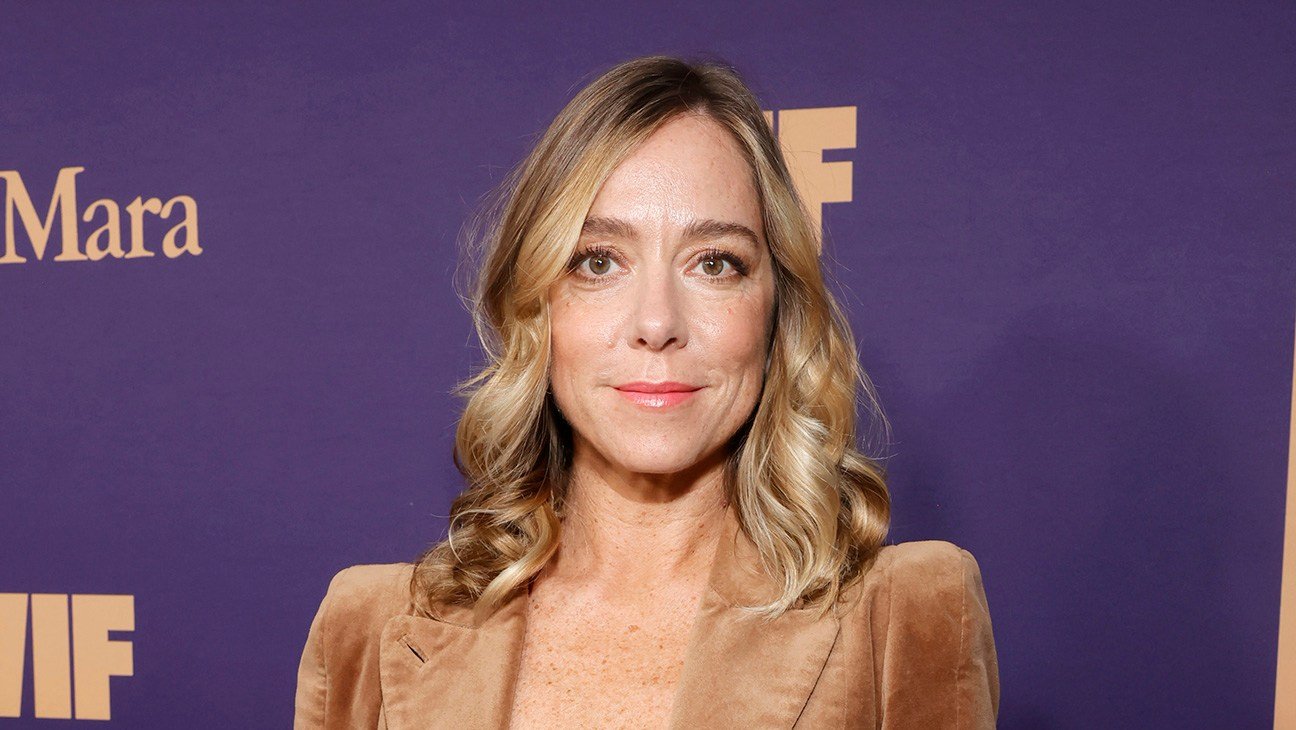
Venue: Toronto International Film Festival (Gala Presentations — Opening Night) Release date: Friday, Nov. 6 (streaming Nov. 13) Cast: Ruth Madeley, Mark Ruffalo, Dylan O’Brien, Madeline Delp, Roberta Colindrez, Jon Beavers, Antwan Tolliver, Ray Fisher, Andrew Pilkington, Michael Patrick Thornton, Russell Harvard, Daniel Durant Director: Siân Heder Screenwriters: Siân Heder, Rebekah Taussig
2 hours 7 minutes
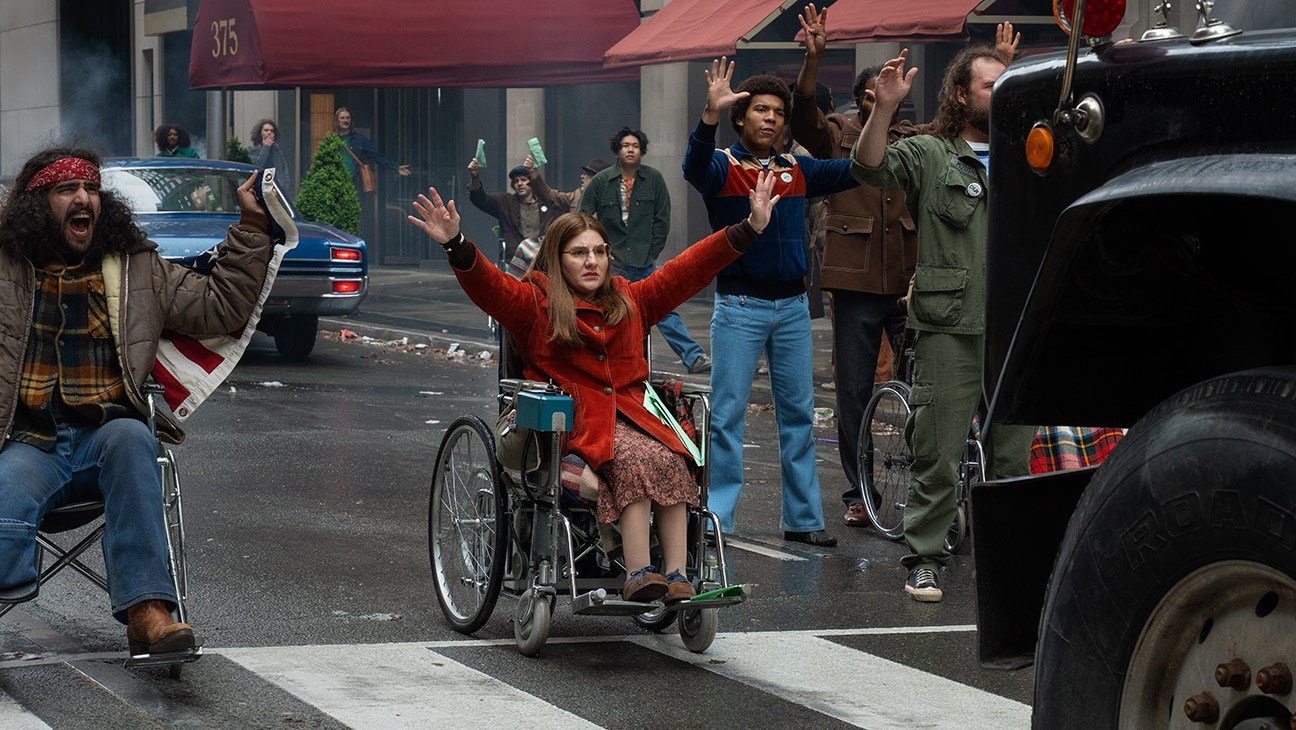
The first feature from director Siân Heder since her coming-of-age drama CODA went all the way from Sundance to a best picture win at the 2022 Oscars, Being Heumann follows a similar inspirational playbook, albeit lifted from a chapter in the American civil rights annals rather than drawing on real-life experiences to craft a fictional narrative. As with CODA, in which Heder cast deaf actors as deaf characters, the new film’s winning hand is the use of actors with disabilities to play the ragtag coalition led by Heumann in 1977 in what became the longest occupation of a federal building in U.S. history.
Previously covered in the Oscar-nominated 2020 documentary Crip Camp, the 504 sit-in took its name from that section of the Rehabilitation Act of 1973, the first U.S. federal civil rights protection for people with disabilities. Given that four years had passed since the signing of the bill but zero government action had been taken to put it into practice, Heumann spontaneously led a large group of fellow protesters when she stormed the San Francisco office of the U.S. Department of Health, Education and Welfare. The sit-in lasted an unprecedented 28 days.
People who have seen Crip Camp might not gain a ton of new insights here, but Heder and co-writer Rebekah Taussig deserve credit for telling the story in an easily digestible, emotionally effective way that stands to reach a wider audience when it debuts Nov. 13 on Apple TV, after opening a week earlier in theaters.
Even if it sometimes has the feel of an old-school issues-driven TV movie, Being Heumann asks and answers questions that remain amply relevant today, about whether protests and collective action still matter. Where it will be most illuminating is in opening the public’s eyes to the basic human rights systematically denied people with disabilities before legal protections were put in place. The Trump administration’s efforts to weaken those protections adds timeliness to Heder’s film.
The depiction of courage, commitment and cooperation is stirring stuff, with people from across the disability spectrum — blind and deaf Americans as well as wheelchair users — overcoming heated in-fighting and political bullying tactics, banding together to galvanize change that would benefit millions.
Some of the most moving sections are the testimonies of the activists when they finally get face time with government reps, detailing the years in which they were denied schooling and declined jobs for which they were eminently qualified. Perhaps the saddest note is the mention of countless people with no access to assistance, ensuring their invisibility by keeping them confined to their homes.
The chief antagonist standing in the way of long-delayed regulations is HEW Secretary Joseph Califano (Mark Ruffalo, doing a somewhat buffoonish impersonation), who argued that the $2.4 billion in taxpayer dollars it would take to implement the regulations required a more extensive review. On the supportive side is Democratic Congressman George Miller (Rob Delaney) and local TV news reporter Evan White (Dylan O’Brien), whose coverage gets picked up by national news networks, much of it filmed while he is embedded with activists in the occupied San Francisco building. Both Delaney and O’Brien sport fabulous ‘70s staches the size of caterpillars.
Heder and Taussig are careful not to make Miller and White — and ultimately Califano when he caves in to pressure and signs — into ableist saviors. The backbone of the film is very clearly the coalition led by Heumann, who frequently rubs fellow activists the wrong way — “I’m not an asshole. I’m just from Brooklyn,” she protests at one point — but is fully acknowledged as the driving force they need.
Among the key people involved in the occupation is Kitty Cone (Madeline Delp), whose insistence on civility prompts Judy to call her a Pollyanna; their friendship evolves in fits and starts with a lovely payoff in the closing scenes.
Antwan Tolliver has strong moments as Brad Lomax, a member of the Black Panthers with multiple sclerosis, who calls in reinforcements from the party to deliver food in a memorable scene. And Andrew Pilkington injects welcome humor into his portrayal of Hale Zukas, a pioneer in the Berkeley movement for independent living, who communicates with a pointer antenna attached to his head and an alphabet board — these were the days before smart tablets. “Disability is not a tragedy,” Hale writes, putting a key theme into words. “It’s a tremendous hassle.”
Among the allies, handsome military vet Jim Pechin (Jon Beavers) and out-and-proud lesbian Joni Breves (Roberta Colindrez) make warm impressions, both of them attracted to Judy’s “radical crip” energy. It’s a little obvious, but lobbing in the raucous Ramones classic “Judy Is a Punk” gives an extra kick to a breakthrough moment, and the wonderful Madeley earns it.
The dramatic momentum flags a little as the sit-in goes from days to weeks and the film nudges past the two-hour mark. But the characters and the disabled actors playing them are so engaging in their unbroken perseverance and their levity even in the face of harsh setbacks — a late-night raid by cops is especially hair-raising — that it’s impossible not to keep rooting for them. Their irrepressible joy is a tonic, and every sit-in should have a “sex tent” made of protest banners and American flags.
Art helped us process 9/11 in so many ways right after the attacks. But for me the breakthrough wouldn’t come for nearly five years, at a midtown Manhattan movie theater.
The Tribeca Film Festival had decided in 2006 to open with a premiere of Paul Greengrass’ United 93, despite puzzling murmurs of “too soon.” (Is there a reverse statute of limitations for when artists can make sense of trauma?) Tribeca organizers — Robert De Niro, producing partner Jane Rosenthal and the rest of the staff of the healing-minded Manhattan film gathering — invited not only Greengrass and the many terrific workaday actors featured in the film but the family members of the victims and heroes of that titular flight’s hijacking.
Covering the event for my employer at the time, I approached the old Ziegfeld Theater with a mix of curiosity and anxiety. I had lived through 9/11 — watched the towers burn from a downtown apartment window, stood in Union Square as people streamed in soot-filled and shell-shocked. Was a movie recalling, let alone reclaiming, that day what I needed?
I couldn’t have been ready for what followed. The answer was a resounding yes, in ways impossible to anticipate.
I felt it immediately, stepping on to the red carpet, as it were, with the family members clearly eager to share with me or anyone who would listen their memories of those who died. I wouldn’t call them happy or even content, but a certain relief seemed to light their eyes as they opened themselves up, for the first time or maybe the 500th time, to talk about the men, women and children who died on that plane as a sidewalk-full of reporters eagerly listened.
The movie of course was dramatically effective, cinema at its urgent finest. Greengrass bringing us along, gently holding our hands from the early moments of Tuesday-morning banality, to the terror upon the realization of what was happening, to the activation that something had forever changed — a metaphor in celluloid for what we all went through in the lead-up to and aftermath of that incogitable day. Sitting through the film I couldn’t believe what the director and his cast had achieved — couldn’t believe that something that lived so abstractly in our minds could so viscerally be created in front of our eyes.
And then, the film’s ending — the plane spins down, the screen goes dark, the sound stops. In any other theater the room would have fallen into a reverent silence. But the room wasn’t silent. It was filled with wailing. Waves and waves of wailing.
I was sitting in the main section of that grand 20th-century palace, the loge right behind me. The family members were mainly sitting in that loge. When the movie ended they let out the most heartfelt, soulful, painful cries, each of them with their own rhythm and cadence, all combining into a tragic cacophony that, if I’m being honest, I still hear in my nightmares. Just the loudest crying and sobbing you’ve ever heard, coming from dozens and dozens of people, cascading like a surging river, unending, unavoidable.
As the cries washed over me and everyone else who didn’t lose people on that day, they bridged a gap, between the victims and the onlookers, bringing all of us in the latter group into their grief in a way that I have never been brought into another’s grief before. It hit me then what Greengrass had done — he hadn’t just re-created a terrible event. He had given victims a chance to see their family members one last time. While we were watching a movie, they were watching their loved ones eat, talk, live, fight and, yes, die. (One compelling moment, in a darkly comic way, arrived in a crowded restroom after the screening when an actor who played a hijacker came face to face with a family member. You could feel the room bubble with tension — it was only a second of silence but it felt like an hour — until the family member put his hand gently on the actor’s shoulder and said “you were very brave.”)
And then it hit me what Tribeca had done too: Invited all of these family members to experience that last-glimpse together. To turn private mourning into public bonding.
The moment stands out as one of defining cultural experiences of my life. And it stands as a defining cultural experience of the Tribeca Film Festival, which like the tragedy that spawned it marks its 25th year in 2026.
A lot of the talk about art “helping us heal” can feel hollow. The only thing that truly makes us heal is time, and maybe therapy. But Tribeca’s stated goal of using art to ease the pain of a city and a nation landed as genuine that springtime day. And, frankly, on many other days.
Founded — as the new Matt Tyrnauer documentary Tribeca 25 dropping on Netflix Friday shows — in the months after the attacks by De Niro, Rosenthal and Rosenthal’s then-husband Craig Hatkoff, the Tribeca Film Festival soon became more than just a one-off benefit. It became, as Graydon Carter says in the film, part of the cultural calendar of the city. (You can watch an exclusive clip of the movie below.)
From the Nelson Mandela and Bill Clinton appearances at the first edition to Nas, George Harrison, Aretha Franklin and other performers taking the stage in later years, Tribeca has turned into a curious kind of mainstay — like downtown itself, always changing, sometimes for the better, sometimes for the less-better, but somehow still here and strong all those planned obituaries later. (After a somewhat odd period owned by James Dolan, Tribeca for the past seven years has been owned by James Murdoch’s investment group.)
No one would accuse Tribeca of hewing closely to a single identity. Over its quarter-century it has sometimes lurched between indie films and studio movies (did a festival really need a Spider-Man 3 premiere?); between feature discoveries (the enduring gem City Island) and features you’ll never hear about again; between worthy docs and foreign films ((Taxi to the Dark Side, early Asghar Farhadi) and too many authorized-celebrity nonfiction boondoggles to count. Not to mention the cool if unruly experiments in VR, multimedia and, this year, AI.
This wasn’t all of the festival’s doing; Sundance and SXSW usually had first looks at the best of the indie film crop, forcing Tribeca to other pastures. But that kind of ecumenism, whether born of ideology or necessity, is exactly what makes Tribeca keep on, the let’s-just-try-it-what-the-hell-ism. Film people sometimes like to shade the gathering, but New Yorkers rarely do, and I find that telling: faced with tragedy, residents of this city simply want to get together and talk about something in front of them, whether that something is joyous or odd or even just re-lives the worst day of their lives. Like the city after that terrible day, simply being together is enough.
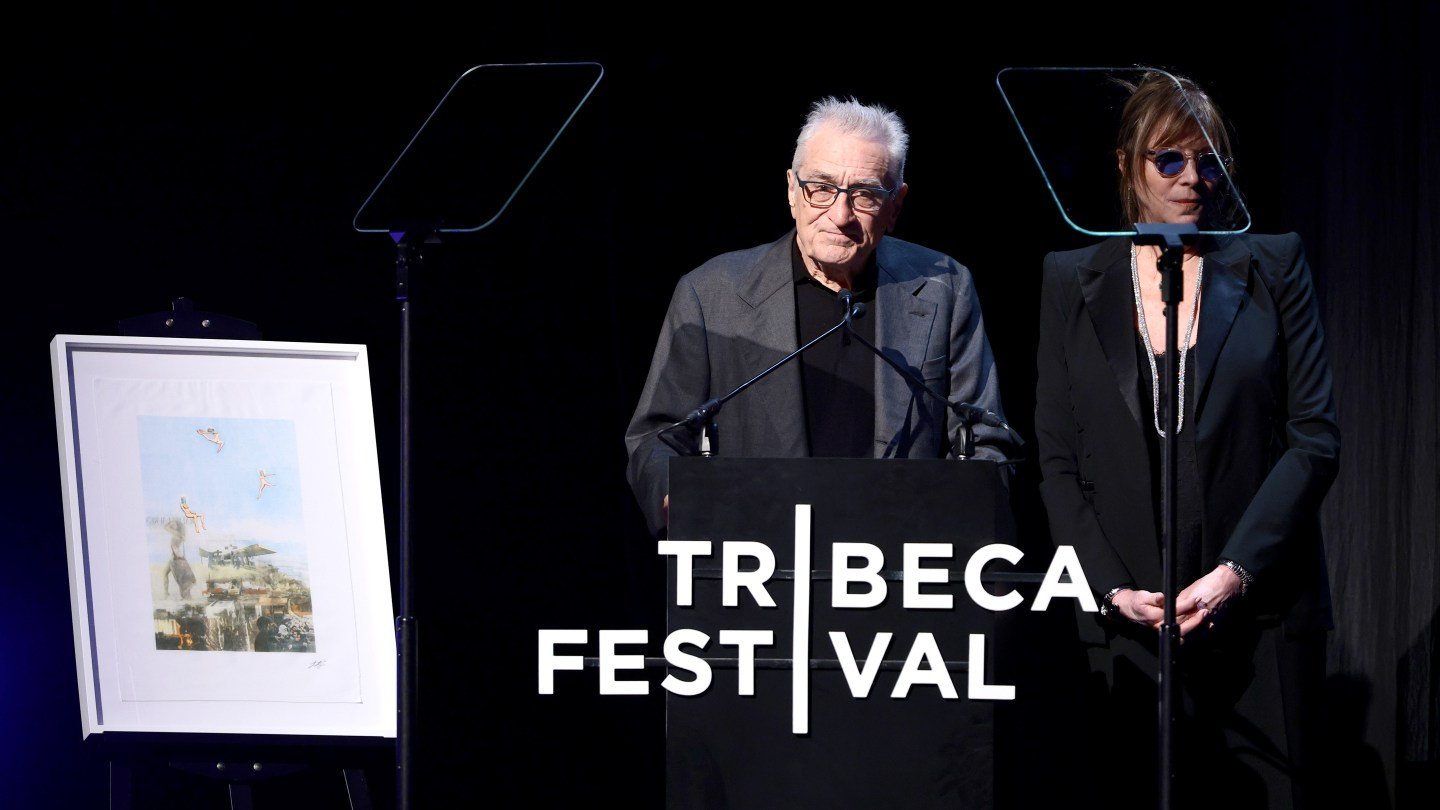
To mark the 25th anniversary of 9/11 and the release of the doc, I sat down this week with De Niro and Rosenthal at CBS News headquarters in midtown Manhattan (fresh off a Gayle King hit) to talk to them about 9/11, the anniversary and the festival’s place in both.
Let’s talk about that night of the United 93 premiere, which was unlike anything I’ve ever felt in a movie theater. How did it play for you guys?
Jane Rosenthal: It was very special and one of the highlights of the past 25 years. You have to remember that the Shanksville [PA] families haven’t already felt like they were included as much as some the others. So we were just trying to give them a community, a place where they can come together and remember.
The tone of it feels so hard to strike — is this a celebration? A commemoration? A memorial? Almost, perhaps, like a microcosm of the festival itself.
JR: We had a lot of questions about how to do it. Like, would we have a red carpet? Who would we invite? It’s really uncharted territory. But I think in the end we got it right and it was one of the most special moments in the history of the festival.
Bob did that moment stand out to you? Or is there another that really embodies Tribeca in your mind?
Robert De Niro: It’s hard to pick one. But I do remember that first year, right when we started, standing on the roof [at Tribeca headquarters and De Niro offices on 375 Greenwich] and looking down and seeing thousands of people coming out and thinking “we really have something.” We had no idea if it would work. And then I’m thinking “downtown can come back.” I don’t know if anything will compare to that feeling.
Jane, creating something out of nothing seems hard for anyone with a film-festival dream, let alone in a place that was the site of a major terrorist attack with nothing but rubble and rescue workers around. What was the scale of the challenge?
JR: It really did seem impossible. I mean, we were walking into movie theaters with hazmat suits because they were telling us it was unsafe. We really didn’t know if anyone would come. And winging it doesn’t really begin to describe it. George Lucas had a new Star Wars movie coming out. Bob walks into my office and says, “George tells me the movie won’t be ready in time.” And I said “maybe we just push the festival back? It’s not like anyone is waiting for it.” So that’s what we did. We had no rules, no business plan. We just knew we needed to do something.
RDN: New York seemed stuck. Downtown seemed dead. The only thing we could do is try to change that.
JR: It’s a feeling about being part of a community. That’s what they were trying to take away with the attacks. So that’s what we tried to bring back.
Bob you talk movingly in the film about your experiences on the day. We all had them but to think that a celebrity was basically feeling what we all were feeling brings a strange kind of comfort.
RDN: It was surreal. I was supposed to go to California later that day. I was coming back from a meeting in Midtown and my son called me in the car and said a plane hit the Twin Towers. Then he called me again and said another plane hit. I get to my office, which is nine blocks north of the Towers. I have a big picture window and saw them burning. Then they just pancaked down.
That’s one of the most striking moments in the movie, where you say that even though you watched it out the window with your own eyes you didn’t believe it. I think a lot of us felt that way.
RDN: I couldn’t believe what I was seeing — I had to watch CNN just to confirm it, as strange as that sounds. Right at the moment it felt like nothing could ever go on as usual. “We are in the middle of an apocalypse,” I kept thinking.
There’s been some stir in recent days here in New York about whether Mayor Zohran Mamdani should attend the memorial, a protest movement led by Rudy Giuliani, George Pataki, former FDNY commissioner Thomas von Essen and a few families, because — as they see it — he’s had associations with people who minimized the tragedy. Do you think he should be there?
RDN: I don’t see why he shouldn’t come. He’s the mayor. I haven’t heard him say or do anything yet that would disqualify him from being there. Maybe I’m naive but you have to give the guy a chance. He’s not a part of what happened.
Do you understand why families of victims would find it problematic or does the logic not track for you?
RDN: [pauses to think] I understand their pain but I still think he should be there.
JR: I think this stems from tension he’s had with the fire department and the comments about defund the police, which I don’t think he really meant.
RDN: Well he did say it. And of course it’s ridiculous. You can’t defund the police. It’s not going to happen. But I still think he should be at the memorial.
JR: He should use it as a baton to unite the city.
RDN: As a bridge.
Speaking of partisan politics, you’ve been outspoken on Trump…
RDN: We have to stop him. It’s insane. We have to send people to voting booths and make sure they can go in. Just watch to keep them safe. It’s crazy we’re here but this is where we are. We have to protect our elections.
As we speak Alex Gibney’s Elon Musk documentary is premiering in Venice. One of the things it’s about is how Musk himself could put his thumb on the scale with the election.
RDN: He’s a monster. I don’t know how else to say it. So many of the tech barons. They were supposed to be helping us and now look at what they’ve done to us. And they’re doing things not to other countries but here, in America, to America, in our own backyard. It’s unbelievable.
You’ve actually had a very interesting relationship with tech and deepfakes as an actor; Marty used it in a groundbreaking way to de-age you in The Irishman. That was more than seven years ago. Do you like where AI has gone?
RDN: I have a lot of concerns about where it’s gone. Where it’s going. I did that thing at CAA — The Vault (a partnership between the agency and YouTube to give performers more agency over their likeness). I have control over my image now. You need my consent. If you do it right and I’m involved I don’t think I’d have a problem with it. But a lot of it is not that. It’s things I’d never say.
JR: I think The Vault is very good but we have a long way to go to get control.
RDN: You know every year Apple asks me to take a picture and then they’ll give me an iPhone if I do. And I’m never doing that; I’m not going to help them sell their technology. I always say no. I’m very polite about it. But they know.
Before we break, I have to ask: what does the future of Tribeca look like — what do you think will be said about it after the next 25 years?
RDN: Well I won’t be here for that. Maybe you will.
You’re saying you don’t think Bryan Johnson can give you immortality and you can be here that way?
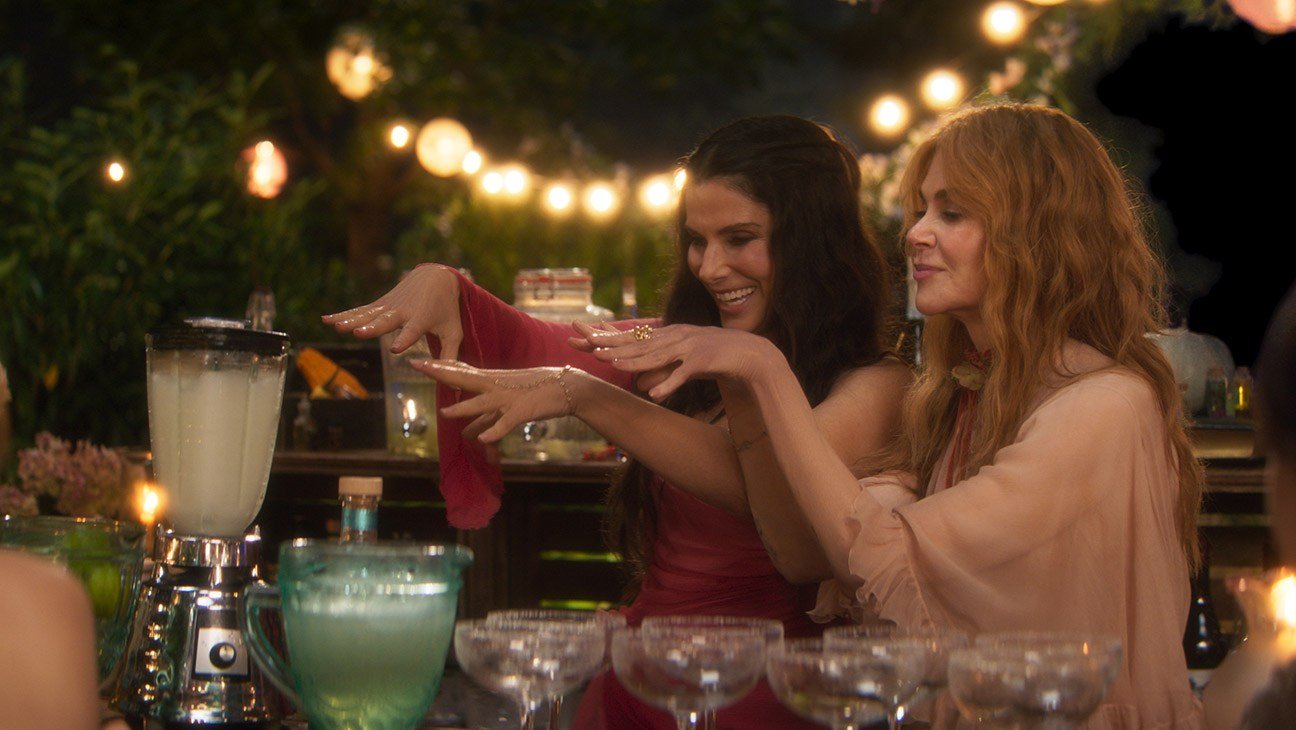
Warner Bros. Pictures‘ Practical Magic 2 debuts in over 4,000 theaters and arrives 28 years after Sandra Bullock and Nicole Kidman originated their roles as the Owens sisters in the first film. The studio projects director Susanne Bier‘s feature to gross between $30 million and $35 million from North America in its opening weekend, with an additional $18 million to $23 million overseas.
The initial movie collected a total of $46 million domestically from its theatrical run that began Oct. 16, 1998, meaning that the sequel has a chance to surpass this in its debut frame. Adapting the work of author Alice Hoffman, Practical Magic 2 centers on witches Sally (Bullock) and Gillian (Kidman), who aim to break the curse that has prevented their family members from finding love. Joey King, Maisie Williams and Lee Pace round out the cast.
Critics have not felt the film’s magic, as the sequel holds a 36 percent approval rating on Rotten Tomatoes. In her review for The Hollywood Reporter, critic Angie Han wrote that the movie “works better the less you look for any sense of logic, and the more you just lean into the transient joys of watching these [two] actresses bounce off each other.”
Sony Pictures’ Spider-Man: Brand New Day has led the domestic box office for six consecutive weeks, but that streak will come to an end this weekend.
Still, the Tom Holland-led film that hails from Marvel Studios continues to make its mark, as the record-setting movie is on its way to becoming the top title on the all-time North American chart. The feature is expected to soon surpass the $936 million domestic total for 2015’s Star Wars: Episode VII — The Force Awakens, which should happen either this weekend or the following one.
Also opening this weekend are Angel’s Runner, starring Alan Ritchson and Owen Wilson; Focus Features’ Andrew Garfield-led The Uprising; and Inaugural’s The Fix, with Liam Neeson and Zachary Levi.
Oscar-winning CODA director Sian Heder argues Being Heumann, her new film about disability rights that opened the 51st Toronto International Film Festival, is timely because “collective action matters.”
“We are living in a time when a lot of groups of people are getting left behind,” Heder told festivalgoers at the Roy Thomson Hall on Thursday night. “The rights that many people fought for in the 1970s are under threat, and it is easy to feel helpless,” she added before a local audience showing a groundswell of patriotism amid Donald Trump’s cross-border trade and tariffs war with Canada.
“I have been out on street with a cardboard sign many times this year, and thought does this even matter, does this protest matter. There’s so many battles on so many battles, it’s hard to know where to fight,” Heder said. She spoke to introduce Being Heumann, her Ruth Madeley-starring drama about protest leader Judy Heumman, who led a historic 1977 campaign that launched the disability-rights revolution in the U.S., which eventually led to the Americans With Disabilities Act.
“This film is what happens when people refused to be invisible,” Heder added before a post-premiere Q&A saw her bring onto the stage her cast of disability actors that played disabled people in her crowd-pleasing movie for Apple Original Films.
Madely said she was inspired by the opportunity to bring Judy Heumann’s ferocity and humor to the big screen.“Thank you for so much for trusting me with something so huge,” Madeley also told Heder after being offered her dream role.
Toronto Mayor Olivia Chow was also in attendance to help open the 2026 edition of TIFF. Chow didn’t name Trump directly, but pointed to the U.S. president recently renaming one of the Great Lakes on the U.S.-Canadian border as “Lake America” amid stalled efforts to negotiate a new cross-border trade deal.
“I am pleased to say our magnificent waterfront will always be Lake Ontario,” Chow said to loud applause. Trump’s trade war with Canada is expected to overshadow TIFF as around two-thirds of Canadian film and TV series exports go to the U.S. market, even as Canadians consume a host of Hollywood film and TV content north of the U.S. border.
Of the sadly many dwindling artforms whose slow (or rapid) declines we’ve been mourning over the years, the original musical is high on my list of sorrows. Broadway struggles to launch successful new works — meaning, ones not based on a movie we’re nostalgic for, or built around the jukebox catalog of a beloved artist — and they’re practically non-existent on film, save for some arthouse stuff like Leos Carax’s Annette or Joshua Oppenheimer’s The End. We’re starved for new stories set to new songs.
Culture has also been doing some fretting about the state of the movie star, as one class ages into their golden years and not terribly many actors seem poised to replace them. In that regard, I’ve long been invested in Jodie Comer, a Brit who burst onto the scene in the television series Killing Eve. Following that show’s success, Comer delivered a series of film performances that, in combination with her boggling stage work in the awards-bedecked Prima Facie, had me boldly considering a possibility reserved for a precious few performers: Could she be the heir apparent to Meryl Streep?
Stuffed
The Bottom Line
A gnarly romance set to even gnarlier songs.
Venue: Toronto International Film Festival (Discovery) Cast: Jodie Comer, Harry Melling Director: Theo Rhys Writers: Theo Rhys, Joss Holden-Rea
1 hour 57 minutes
She’s just so captivating and chameleonic, so different in The Bikeriders from how she is in The Last Duel, finding such distinction between one post-apocalypse movie (The End We Start From) and another (28 Years Later). There’s a determination in her eyes, a fiercely committed fire to her choices, that makes me think of a young and hungry Streep in her wild run in the late 1970s and 1980s. The trouble is, Streep first found her footing in a very different kind of Hollywood, one that, amid a lot of junk, made enough films to showcase her prodigious talent. Comer, on the other hand, has arrived in a much more uncertain time in the industry. Good roles are scarcer, financial success has been tethered to franchise output. She has not gotten the roles she deserves, I don’t think, the ones that could finally, for all to see, confirm her as a next great hope.
With those two concerns in mind — a longing for original musicals and a wary optimism about Comer’s best-of-a-generation prowess — I went into Comer’s new movie-musical Stuffed wanting it to be a smash. Though it is based on a short film, Stuffed is really a new thing altogether, conceived by director Theo Rhys and his co-writer Joss Holden-Rea, who also wrote the music. Maybe the film could serve a noble double purpose, putting Comer on the right career track and giving a jolt of energy to a languishing medium.
Alas, the film is instead a discouraging slog, a mess of cheap shocks and painful lyrics. It seems inspired by some mix of Sweeney Todd and the dreadful true-crime case of the German guys who set up a date so one of them could eat the other. It’s an icky musical, but one that endeavors to find the sweetness — the romance, even — in the muck. To admit to some bias, that particular genre has never really been my cup of tea. But Stuffed serves up an especially acrid brew, plodding along unmelodiously until its foregone conclusion.
Comer plays Araminta, a bizarre loner who lives in what could be called, by many standards, a house of horrors, full of taxidermied animals and body parts in jars of vinegar. She’s feared and loathed by the locals, who think she ate her mother’s corpse after she died, and is fixated on her dream of turning a human being into one of the stuffed creatures that keep her company. She puts feelers out online, but it’s mostly fetishists and trolls who reach out to her.
Across town, there’s lonely sad-sack Bernie (Harry Melling), a loveless young man who works at a food processing plant and drops in for visits to his dementia-addled mother, with whom he used to be inseparable. He desperately longs to be special, to be remembered, to make an impact on the world somehow. Understandably then (I guess), he’s intrigued by Araminta’s pitch to make him something of a pioneer — the first person to live forever. (In Araminta’s notion of life, anyway.)
And thus the two meet creepy-cute, embarking on preparations for Bernie’s great transition and occasionally singing bland and repetitive songs. While Holden-Rea’s core melodies can be pretty, his lyrics are woefully simplistic, as if they were churned out by a rhyming dictionary bot that traffics in the broadest, most generic of sentiments. It’s one thing to hear a character clunkily sing their motivation once, it’s another to hear it time and time again, with so many of the same rhymes.
The film is also far less risqué than it perhaps thinks it is. Much of the humor relies on the audience chuckling at the discordancy of sweet music scoring talk of death and guts and tissue, amused by the idea these two freaks living in such an ugly and forbidding place could see any of it, or each other, as beautiful. But we’ve been down that juxtaposition road before, in Sweeney Todd, in Tim Burton films, in Urinetown, in Tim Burton’s film version of Sweeney Todd. Disappointingly, Stuffed is not guided by much fresh perspective or narrative ingenuity; a mere oddball premise is not enough on which to hang a whole film. It all wears pretty thin, pretty quickly, and then there’s another hour to go.
On the Comer front, at least, the news is better. She finds a way to distinguish Araminta from myriad other weirdos we’ve seen in similarly-hued films, and keenly locates the actual person under all the mannered characterization of the script. She sings quite well too, working hard (and sometimes successfully!) to elevate the banal lyrics to something like poetry. She’s well matched by Melling, who has a voice like an angel, though were I on his management team I might advise him to seek out some more varied roles going forward. Too often in Stuffed, it feels like we’re watching Melling’s character from Pillion unravel after his breakup with Alexander Skarsgard. (And I wouldn’t blame him one bit.)
The film is to be commended for building itself from the ground up, but the work is dismayingly slapdash. Rhys creates some nice images and certainly knows his way around a sequence; if only he had stronger material to support all that visual panache. He certainly had a tremendous collaborative asset in Comer, though; she carries the carcass of the film — its inert mass of canned provocation — as far as humanly possible. We leave Stuffed hungry only for more of her.
When The Hollywood Reporter first caught up with writer-director Zach Cregger in the lead-up to Barbarian’s 2022 release, he detailed the struggles he faced in getting the inventive horror movie off the ground. The film was part of a larger effort to reboot his career after, by his own admission, he wasn’t particularly proud of his previous co-directorial work in the 2010s comedy space.
Since then, Cregger has gone on one of the most charmed runs of any filmmaker in town. He followed Barbarian’s critically acclaimed, highly profitable release with Weapons, another well-regarded genre film that grossed $270 million against a $38 million budget and featured an Oscar-winning performance from Amy Madigan as Aunt Gladys. A prequel about Madigan’s character is now deep into development.
Like Weapons, Cregger’s current film, Resident Evil, and his upcoming Steven Spielberg-produced sci-fi picture, The Flood, were each the subject of furious bidding wars. That kind of demand cements a remarkable career turnaround for a filmmaker who had to scratch and claw to get Barbarian financed just five years ago. But it’s also a subject that Cregger is reluctant to dwell on, given how “here today, gone today” the entertainment industry can be.
“If there’s one thing that is the law of Hollywood, it’s that what goes up must come down,” Cregger tells THR in support of Resident Evil’s Sept. 18 theatrical release. “These things are very, very temporary, and while it’s very, very flattering, I don’t have any illusions that this is my permanent place. I am not Martin Scorsese. I am just me.”
During his professional whirlwind the last handful of years, Cregger often decompresses with video games, and the Resident Evil franchise, particularly Resident Evil 4, has been one of his go-tos. Thus, when it came time to pitch his take on a Resident Evil movie, he aimed to capture his love of the gameplay experience on the big screen. And instead of adapting an existing game narrative, he chose to tell a new, original story about a medical courier named Bryan (played by Cregger’s Weapons actor, Austin Abrams), whose attempt to deliver precious, time-sensitive cargo to Raccoon City General Hospital collides with the franchise’s inciting T-virus outbreak.
Similar to The Odyssey and Lanterns’ brain trusts, Cregger has received no shortage of guff from the Resident Evil faithful for utilizing artistic license in his adaptation. He knew that this type of criticism is part and parcel with major IP, but he’s said elsewhere that he “underestimated” just how much appetite there is for legacy character stories, particularly one involving Leon S. Kennedy. The backlash has even prompted Cregger to previously say that Resident Evil will be the first and last franchise he tackles.
“I cannot be worried about whether I am pleasing enough of every spectrum of fandom. If I tried to please everybody, I’d end up pleasing nobody. That much is obvious,” Cregger says. “I just have to be okay with people voicing their opinion. I’m a grown-up. When I took this on, I understood what I was walking into. So it would be weird for me to act surprised or bent out of shape that the thing that was obviously going to happen is now happening.”
Barbarian and Weapons both succeeded in their masterful ability to strike a balance between horror and comedy without allowing either element to detract from the other. However, test screenings for Resident Evil made Cregger aware that the ratio was more lopsided than expected.
“I learned that people really liked the movie, but they thought it was too funny. So over the course of my testing, I stripped out as much of the jokes as possible,” Cregger shares. “I then found that not only did the audience enjoy the movie more, but I also liked the movie a lot more. A little bit of humor goes a long way in a horror movie, and there’s not a single joke I took out of this movie that I miss.”
Below, during a conversation with THR, Cregger also discusses the personal reasons why Resident Evil was his most challenging shoot yet, before teasing the impactful ending that has been highly protected thus far.
***
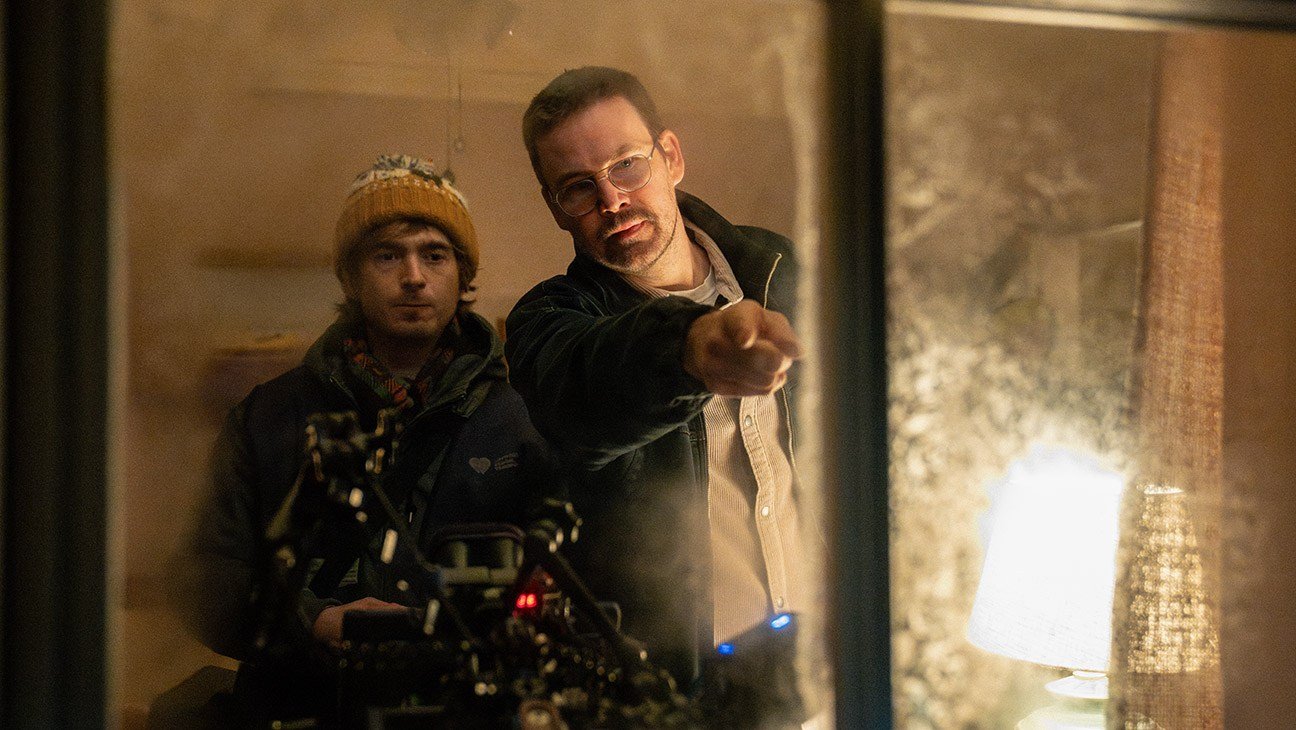
Director Zach Cregger (right) on the set of Resident Evil
Dušan Martinček/Sony Pictures
I know I just introduced myself, but I have to point out that it’s Brian with an i, the proper spelling of the name Brian.
I like that you’re starting there. My assistant’s name is Zac with just a c, and I can’t wrap my head around it, man.
That’s unacceptable.
Yeah, I think so.
You remain the belle of the ball. Every week, it seems like there’s a new bidding war involving you and massive sums of money. You’ve also written and directed an Oscar-winning role. And, most notably of course, THR just named you the top genre filmmaker working today. How do you not let all this go to your head?
I don’t know, man. I try not to put too much brain power into it. If there’s one thing that is the law of Hollywood, it’s that what goes up must come down. These things are very, very temporary, and while it’s very, very flattering, I don’t have any illusions that this is my permanent place. I am not Martin Scorsese. I am just me. It’s a fickle industry. and it would be foolish to think of it any other way. So I’m honored, but I have to only give it so much attention.
That being said, I’ve also felt a great deal of sympathy for you this year.
(Laughs.)
You, Christopher Nolan and the Lanterns team have all endured an extraordinary amount of bellyaching over the creative license you’ve taken with your respective adaptations. This isn’t anything new, but why do you think it feels particularly extreme this year?
I can’t speak to what the other guys are going through, but in this case, there are different kinds of Resident Evil fans. There are fans like me who love the experience of playing the games and think there’s never been a movie that has represented what it feels like to play ResidentEvil. That’s how I categorize myself as a fan.
Then there are fans of the games who specifically love the lore and the characters and the nitty-gritty details of the backstory. But my movie is not spending a lot of currency on those things. I’m not putting any of the legacy characters into this movie. So if that is what you love about these games, then you’re going to feel a certain way about it. Here comes yet another Hollywood movie, and they’re once again not doing Leon and all the characters I was hoping they were going to do.
I understand that perspective, but at the same time, I can’t let that affect my output. I have to make the best version of this movie that I’m capable of making and devote myself entirely to it. I cannot be worried about whether I am pleasing enough of every spectrum of fandom. If I tried to please everybody, I’d end up pleasing nobody. That much is obvious.
I just have to be okay with people voicing their opinion. I’m a grown-up. When I took this on, I understood what I was walking into. So it would be weird for me to act surprised or bent out of shape that the thing that was obviously going to happen is now happening.
I don’t know about you, but the pandemic reset my priorities. Seeing how fragile this house of cards is — the industry and country alike — I just can’t imagine ever getting worked up over details like you deciding to have snowy streets instead of rainy streets.
When I read the news and see the insane things that the people in power are doing in this country, it is honestly terrifying. That makes me really put things in perspective when somebody is mad at me for the weather in my ResidentEvil movie. I’m like, Alright, dude. Let’s just adjust our priorities a little bit.
Austin Abrams stars as Bryan in Zach Cregger’s Resident Evil
Dušan Martinček/Sony Pictures
People also took issue with you using iPhones?
Yeah, because it’s set in 2026. I’m sorry I’m not making a period piece. I’m taking a liberty.
When you listen to a cover of a well-known song, you want to hear the band or artist’s spin on the material. Nobody criticized Johnny Cash for turning Nine Inch Nails’ “Hurt” into a gothic country ballad. So I just don’t understand why movies or series are expected to be carbon copies of their source material.
That’s an excellent point — and well made.
Thanks, Zach.
(Laughs.) No, thank you. This is a really fun interview for me.
Your relationship with Brian Duffield, who also spells his first name correctly, is largely built around sharing memes together.
That’s not accurate. (Laughs.)
I was just making a Siren Head joke.
Got it!
Have you guys had a chance to discuss who made Austin Abrams suffer the most last year?
Wow, great question. We have not had that conversation yet, but I would love to get Austin in a room with me and Brian. I would have him tally up the points because I think we both gave him a real run for his money.
You previously said that a falling blood bag nearly killed Austin on the Resident Evil set, so I wonder if Brian has his own death-defying moment on the Whalefall set.
I don’t know if he does or doesn’t. After I started telling that story about how Austin almost got killed by a blood bag, I very quickly was like, I don’t feel great about that. I’m not stoked that somebody who worked on my movie was in harm’s way. But also, he wasn’t. He was in line. It was just a little too close for comfort, and we’re being a little dramatic. But I’m glad he’s fine. I’m glad he was unscathed. I’ll just leave it at that.
Austin Abrams stars in Zach Cregger’s Resident Evil
Courtesy of Sony Pictures
Austin’s character, Bryan with a y …
Now I see what we’re doing here! I’m just now realizing “Brian with an i” was aimed at me. (Laughs.)
Yes, you set Bryan up to have questionable morals, but then he does something to help someone else that quickly reversed my initial impression of him.
Yeah, he’s a rascal, but he’s a good person.
Austin does a type of, dare I say, feminine scream in certain moments.
(Laughs.) Yes, he does.
Did you hear it one day and urge him to double down on it?
I never urged him. He was in the zone and doing it. I probably laughed really loud, and laughter is the way Austin and I communicate a lot of the time. So I probably encouraged him in that way. But it’s such a wonderful aspect of his character. There is no machismo here. He is just a dude who is embarrassingly panicking his way through the apocalypse, and I think that’s great.
His character works for Lightfoot Medical Transport. What is Lightfoot a reference to, if anything?
We just had to put something on his vest. We were in prep, and they were like, “Come up with five different medical courier company names so we can see if one of them passes legal.” So I wrote a handful of names, and I’m sure it was in a moment of like, “What do I have to do? Really? Fine. Blah, blah, blah, blah, blah.” Then they came back and were like, “Lightfoot is legal.” And I was like, “Great, put it on the vest.” There was no more thought to it than that.
What about the picture of Bryan’s girlfriend Michelle on his iPhone? Is that a random Czech actor?
No, that’s one of Austin’s friends. Austin was like, “Could it be her?” And I was like, “Yeah!”
The film is often shot in the style of third-person gameplay. Admittedly, when I first heard you were going for a gamer POV, I worried that Resident might be another HardcoreHenry. While technically impressive, I thought that movie’s first-person perspective limited the narrative. That’s not the case here, but did you have any rules for when you’d break your gameplay approach?
No rules. I went moment by moment, and I tried to pick the angle that is going to honor the moment. That is the beginning and the end of my concern. I tend to think that the third-person perspective that the games utilize is wildly effective, and so that ended up being the movie’s predominant visual language. The movie is stronger for it. But it’s only inspired by the games; there wasn’t any sort of rule. So I jumped from third person to first person to objective all the time, and it’s a blend. It’s a moment-by-moment thing. You saw the first half hour, so did it feel gimmicky?
Not at all. It felt thoughtful and considered.
That’s good to hear. And that’s how it is for the rest of the movie. It lives in that ratio for the duration. I remember seeing the trailer for Doom, and there was a first-person-shooter shot. And I remember thinking, Dude, I wish they did that for the whole movie. That would be so cool. And I also remember when HardcoreHenry came out and being like, If they pulled this off, that would be so cool.
But when it was time for me to make ResidentEvil, there was never even a consideration that I would be adherent to a video game style all the way through. I just knew that I would be failing in many, many moments. So I’m still hoping for a movie that does [third-person for the entirety], but I’m not the guy to do it.
I love when horror movies light a number of fuses that could detonate at any moment, and you’ve done that here with various elements, such as the hour timer on the package.
I agree with you. It’s Hitchcock’s bomb-under-the-table analogy. So I was like, Let’s put a lot of bombs under the table and let’s show all of them. It can only help.
A couple guys named Bill Hader and David Fincher gave you great notes throughout Weapons. Did they contribute to this one?
Dave has been making his own movie, and so we have not had the same idea exchange. Bill read the script, and while he was very complimentary, he was also in the throes of making his own movie. So we didn’t work on anything together. This one has been more straightforward.
No one new entered your orbit with some brilliant piece of advice?
I would love that, but no.
Since I’ve only seen Resident’s first 30 minutes, can you describe the last 30 minutes in a word?
In a word, bigger. But I want to say so much more. I also think it’s surprising. I love the ending, and I’m very excited for people to see the ending. It’s so hard for me not to talk about it. The ending packs a punch. I’m really proud of it.
Will it make sense why the studio is withholding the ending as long as possible?
(Cregger responds without hesitation.) Yes.
On the Weapons set, the few days devoted to the kids tearing Gladys apart also tore you apart. You felt like you’d lost control of the wheel. Did you avoid that feeling on Resident?
Yes, I did. However, on this one, I had pneumonia for the first half, and I had Campylobacter jejuni for the back half. So I was very, very ill for the whole production, and everything felt so barely in control because my body was failing me. But I had wonderful, talented department heads, and I had a single actor who is one of the most can-do, positive people I’ve ever met. I was spoiled by the people around me.
What was hard about this one wasn’t the chaos of the children, but the chaos of the weather and being nocturnal for however many months. We froze our asses off in the north of the Czech Republic. And when you walk in snow, you’ve walked in snow, so how are we going to do take two [without seeing those previous footprints]? Those sorts of things were a whole new flavor of crazy-making, but that’s every movie. Every movie that’s ever been made is kind of crazy-making. So at this point, I just have to say it goes with the territory.
Director Zach Cregger on the set of Resident Evil
Dušan Martinček/Sony Pictures
What did you learn and apply from test screenings?
I learned that people really liked the movie, but they thought it was too funny. So over the course of my testing, I stripped out as much of the jokes as possible. I then found that not only did the audience enjoy the movie more, but I also liked the movie a lot more. A little bit of humor goes a long way in a horror movie, and there’s not a single joke I took out of this movie that I miss. So that perspective was really helpful.
I thought the first 30 minutes had an optimal ratio of laughs to scares.
There you go. That’s a testimony to the effectiveness of the feedback.
Between Shay Hatten co-writing Resident Evil and Zach Shields writing the Aunt Gladys prequel, is this your way of shortening the turnaround time between movies? Or is it your way of saying you can’t do it all anymore?
I can’t do it all myself. I’m already starting on my next movie [The Flood], and my workload has to be somewhat reasonable so I can devote the appropriate amount of energy to one thing at a time. And I love those guys. They’re talented writers. I’m picking people that I think are up to the task. So, as much as I would love to just go off and be nothing but a writer, I want to be the director. I want to make the movies, and that’s just incredibly time-consuming.
Was there a specific tipping point when you realized this?
Yeah, there was. I was going into production on a movie, and I had an outstanding script assignment. I’m not going to name it, but it’s a script I’m not going to make. So I found myself in a situation where I was not doing a good job on this script, and it was stressing me out. I was already prepping a movie, which is exhausting and totally overwhelming, and then I would come home and feel like I was alsobehind on my homework. So I was like, This is a way to burn out. This is not a way to do good work, and I’m going to make both things worse if I continue this way. I have to recognize the limits of my abilities and my time.
The Flood is your next film, and you’ve described it as the “last film of this chapter of your life.”
Yes.
Are you suggesting that you’re leaving genre right after THR named you the top genre filmmaker working today?
(Laughs.) No, I’m not suggesting that. I’m just saying that Weapons, Resident Evil and Flood came out of a single burst. I wrote these three scripts after Barbarian in one kind of prolonged chapter of my life. I love them all. And by the time I finish making Flood, years will have passed since I wrote those scripts. So I will be a different person when I sit down to write whatever is going to come next.
Henchman is a DC-related script of yours that you wrote before Barbarian. Is there still no action on that?
No, none. Believe me, I love Henchman. My love of that script persists, but there’s been no action.
Well, congratulations on the best short film of the year. I can’t wait to see the feature adaptation soon.
Thank you, Brian with an i.
*** Resident Evil opens September 18 in movie theaters nationwide.
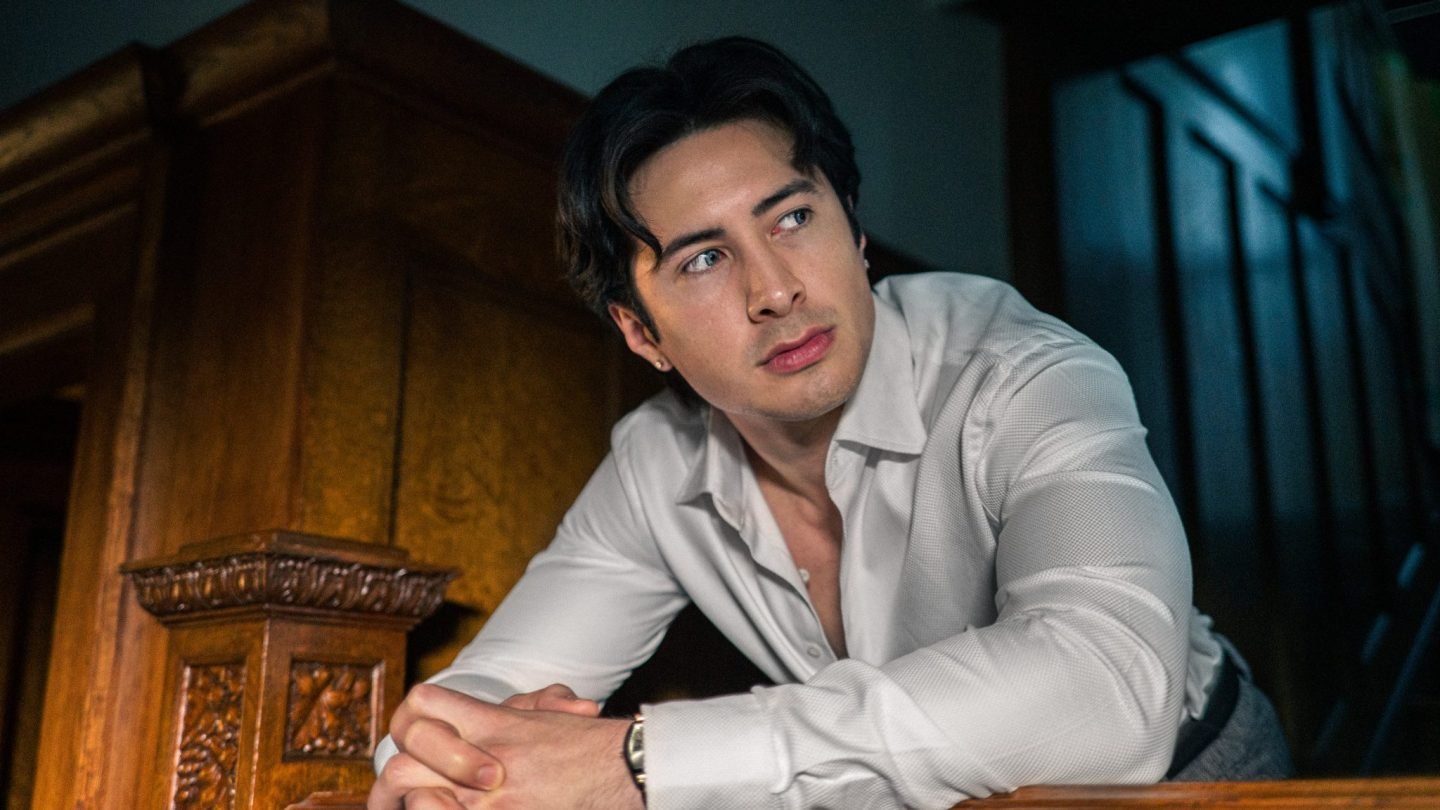
The Heated Rivalry breakout is set to take on the roles of both Henry and Logan in the half-hour mystery thriller, the Canadian streamer said on social media Thursday. “Seeing double? You should be,” the post read, adding a side-eye emoji. “Hudson Williams takes on TWO roles in #YAGA. Meet Henry and Logan. Coming this October on @cravecanada.”
Yaga, which is set to air on AMC+ in the U.S., stars Carrie-Anne Moss, Noah Reid, Clark Backo and Williams. The show premiered its first look and teaser this summer at a San Diego Comic-Con panel. It premieres in October.
Yaga is based on the play by Sandler, who serves as the show’s writer and showrunner, and reimagines the myth of Baba Yaga in a coastal town. Crave dubbed the series “not your grandmother’s Baba Yaga” in a recent Instagram post.
The show follows private investigator Rapp, played by Reid, as he heads to a small coastal town to investigate the disappearance of Henry Park, played by Williams, the young heir to a powerful fishery. The show’s synopsis reads, “[Rapp] finds himself at odds with an apprehensive local detective, Carson (Backo), a charismatic university professor with a taste for younger men, Katherine (Moss) and a labyrinth of enigmatic suspects, secret lives and ancient magic.”
Sadler said in an initial release that the series has evolved from “myth to stage” to her first greenlit series, “reclaiming the wicked witch and reshaping her as an incendiary feminist antihero for our time.” She continued, “It reflects the kind of storytelling I love: propulsive, accessible, dark, funny and unapologetically bold.”
Sheila McCarthy, Megan Follows, Ezra Franky, Patrick Gilmore, Katharine Isabelle and Hiro Kanagawa also star in the series, along with Emilija Baranac, Georgia Acken, Anisa Harris and Sam Krochmal.
Yaga is produced by Front Street Pictures and Blink49 Studios. Mackenzie Donaldson, Andrew Miller and Moss serve as executive producers, and Charles Cooper serves as a producer. Sandler is showrunning the series, with David Frazee and Rachel Talalay directing.