Tag: HollywoodReporter

  • ‘Re/Pair’ Review: David Schwimmer, W. Kamau Bell and Van Jones Lead Pragmatic Doc About the Past and Present of Black-Jewish Relations

    ‘Re/Pair’ Review: David Schwimmer, W. Kamau Bell and Van Jones Lead Pragmatic Doc About the Past and Present of Black-Jewish Relations

    The coalition between Blacks and Jews was integral to shaping 20th-century America, steering entertainment, sports and politics as two groups often “othered” within our cultural tapestry found power in unity. But where shared values and purpose led to joint fights against fascism and prejudice, events like the Crown Heights riots and the aftermath of the tragedies of October 7, 2023, exposed schisms.

    The relationship has been so crucial to the identities of both groups and to our country that Henry Louis Gates Jr. produced Black and Jewish America: An Interwoven History, which premiered on PBS in February of this year. It’s a great docuseries, though one that feels like it’s barely scratching the surface of this interwoven history in four hours.

    Re/Pair

    The Bottom Line

    So-so as history, but a potent conversation-starter.

    Venue: Toronto International Film Festival (TIFF Docs)
    Director: Lacey Schwartz Delgado

    1 hour 41 minutes

    It’s no surprise, then, that Lacey Schwartz Delgado’s Re/Pair, a new 101-minute documentary premiering at the Toronto International Film Festival, feels important but short of essential.

    If you haven’t seen the Gates series and don’t know the history of Blacks and Jews in America in any particular depth, Re/Pair offers only a faint whiff of that history, rushing through or eliding information that’s crucial to understanding and appreciating the surrounding issues. Watch the Gates doc first.

    If, however, your foundational knowledge is sufficient, the conversations that Delgado stages will be a potent complement to that knowledge, illustrating the very human gaps that could be bridged if we were all smart, sensitive and forced to engage in debate in perfectly lit spaces with cameras rolling.

    Delgado’s film begins with the Martin Luther King Jr. quote, “People fail to get along with each other because they fear each other. They fear each other because they don’t know each other. They don’t know each other because they have not properly communicated with each other.”

    Her approach, then, is to stage that communication with 19 paired dialogues, bringing together groups of Black and Jewish artists, pundits, spiritual leaders and more. Some of the pairs are longtime friends, some are former collaborators and others are just meeting for the first time, though I wish those parameters were more clearly acknowledged in each case.

    The documentary’s title acknowledges both the format and the concept of Tikkun olam, the repairing of the world.

    There are interview subjects whom everybody will know, including David Schwimmer and Harry Lennix, whose relationship dates back to their shared time at Northwestern, and many more who are generally known, including the likes of W. Kamau Bell, Robert Klein, Susan Orlean, Matisyahu and Van Jones (also an executive producer). Then there are are wide assortment of “if you know, you know” thinkers and personalities who are beloved or revered (or in a few cases, detested) in their particular spheres.

    The interview environs are simple and casual — chairs in a dark room, perfectly shot, with no apparent suggested dress code. Delgado is largely unheard, so the interview prompting seems to have been minimal. I can’t say if the subjects were asked questions, given brief prompts or shown some of the documentary’s historical background footage, which is generally adequate, but probably not more than that.

    The overall feeling is incredibly loose and, in some cases, almost certainly too loose. Nineteen pairings means meeting 38 subjects, making it hard to imagine achieving equal balance in less than two hours, but at least a third of the pairings are barely featured at all or are featured through only one side of the back-and-forth. I wonder if a more assertive directing hand would have led to more involvement or, in some cases, pushed the conversations into slightly more provocative territory. There are some chats in which follow-up questions might have been ideal, with at least one subject coming across as fairly antisemitic in a way that I’m not convinced they intended — but since there’s no pursuing the issue, it’s left unclear.

    Some of the conversations are complicated, but remain on safe terrain, with Matisyahu and Che “Rhymefest” Smith talking about musical appropriation and authenticity.

    Some are couched in history, with several subjects discussing the impact of Jesse Jackson’s notorious “Hymietown” comments, including Rev. Jackson’s daughter Ashley.

    Some struggle to reckon with decades of shifting Black allegiances and American Jewish responsibilities relating to Israel and Gaza.

    Intersectionality plays a key role in many or most of the best conversations, particularly the ones with subjects who identify as both Black and Jewish.

    There are definitely standout pairings, like the clergy double-bill of Rabbi Sharon Brous and Rev. Michael-Ray Mathews or the respectful debates between Black Lives Matter co-founder Patrisse Cullors and Rabbi Susan Goldberg.

    Then there are the people who have nothing at all to say, some of them from that group of big names. I’m not going to call them out, but you can practically feel Delgado’s disappointment at getting nearly nothing of use from some of her subjects.

    And, as befits a subject this contentious, anybody who tunes in with a deeply personal connection to either side will probably experience moments of discomfort, feel put on the spot or ignored or prioritized at different points. This was the case with An Interwoven History as well.

    “Solidarity is about growing our ability to be more compassionate toward each other,” Cullors observes. Re/Pair isn’t a perfect recap of history, but it’s an effective cog in a valuable empathy machine, capturing at least the path that leads us to the path forward.


  • ‘Cute’: Danish Drama Tackling Sexual Taboos Launches Trailer Ahead of San Sebastian Premiere (Exclusive)

    ‘Cute’: Danish Drama Tackling Sexual Taboos Launches Trailer Ahead of San Sebastian Premiere (Exclusive)

    The Hollywood Reporter can unveil the trailer for Marlene Emilie Lyngstad’s debut feature Cute, set to premiere at the San Sebastian Film Festival this week.

    The Danish film, a bold confrontation of sexual taboos, fetishisation and adult attraction to children, is written by Lyngstad and Emilie Koefoed Larse. It follows a man called Richard (Jan Gunnar Røise) who is troubled by forbidden feelings for his seven-year-old stepdaughter. He decides to leave his girlfriend and retreats to his childhood home to renovate it ahead of its sale, but his self-imposed exile is disrupted by the childlike presence of his mother’s caregiver, Stella.

    Richard soon discovers her double life as a Lolita camgirl, and the two develop a transgressive surrogate father-daughter relationship. Their constructed reality begins to unravel when the stepdaughter he left behind reaches out.

    The Nordisk Film Production, co-producing with Film i Väst and Amarcord, co-stars Gina Jaqueline, a social media influencer and OnlyFans creator making her feature film debut. Karin Bertling, Molly Kirk Rasmussen and Kitt Maiken Mortensen also feature.

    “I have accepted that I am unable to ignore the things that scare and sadden me,” said the Norwegian filmmaker Lyngstad. “This is why, through my films, I attempt to reshape apathy and melancholia into curiosity.”

    “Something that especially scares me is the blurred line between romantic love and fetishisation. Cute is an attempt to examine this line,” she continues. “It is a story of two people who, more than anything, long for authentic intimacy, but who can’t avoid humiliating each other in their pursuit of it.”

    Carl Osbæck Adelkild’s serves as producer, alongside co-producers Thomas Robsahm, Thomas Heinesen, Kristina Börjeson, Evelina Jacobsson and Johanna Bergenstråhle.

    Cute will premiere at the San Sebastian Film Festival on Sept. 20 in the New Directors section. The Spanish festival runs Sept. 18-26.

    Check out the trailer below.

  • Operation Varsity Crew: Olivia Jade Sports a College Sweatshirt in Reformation’s Subtlety-Free Fall Campaign

    Operation Varsity Crew: Olivia Jade Sports a College Sweatshirt in Reformation’s Subtlety-Free Fall Campaign

    If you purchase an independently reviewed product or service through a link on our website, The Hollywood Reporter may receive an affiliate commission.

    With its classroom-set imagery, blunt website copy, back-to-school-esque styling and that heather gray “College” crewneck, Reformation’s fall campaign, Good Sport starring Olivia Jade, is laying it all out there, whether you like it or not.

    Debuting online on Sept. 16, the sustainable fashion brand’s seasonal edit sees the content creator and daughter of actress Lori Loughlin and fashion designer Mossimo Giannulli front and center, accompanied by a campaign description reading, “We brought her back to campus for a lesson in dressing for sport.”

    Central to the clothing capsule is the limited-release College Crew that “suits her better than the other kind,” per Reformation’s website copy. (As mentioned, the campaign is deeply unambiguous and not at all subtle.)

    Olivia Jade pairs College Crew ($128) with Jill Cropped Knit Pant ($128) and Calista Flat ($328).

    Reformation

    All net proceeds from said sweatshirt will go to YES Scholars, a nonprofit with the mission to identify “high-potential students from low-income communities in Los Angeles, New York City and rural Appalachian North Carolina, and provide them with the long-term support, resources and educational access required for success through high school, college and career.”

    Other pieces in the Fall Prep drop, all modeled by Giannulli, include midi dresses, sweaters, outerwear and a small assortment of accessories: a shoulder bag, a pair of kitten heels and an embossed leather clutch. Visit Reformation.com to see the full campaign.

  • Unauthorized Book on Bob Iger’s Disney Power Struggle Gets Release Date (Exclusive)

    Unauthorized Book on Bob Iger’s Disney Power Struggle Gets Release Date (Exclusive)

    An upcoming and unauthorized book about Bob Iger and his tenure atop The Walt Disney Co. has Hollywood buzzing.

    The book, titled The House of Mouse: Bob Iger and The War of Succession at Disney, is slated for release on Dec. 1, 2026, The Hollywood Reporter has learned, with a provocative cover design featuring a Mickey Mouse-adorned crown sitting atop a red pillow (with a conspicuous bite taken out of one of the ears).

    Authored by Wall Street Journal reporter Robbie Whelan, THR hears that among the topics set to be covered will be Iger’s friendship-turned-rivalry with former Marvel chief Ike Perlmutter. Iger of course orchestrated the $4 billion Marvel deal in 2009, making Perlmutter one of the company’s largest shareholders.

    They are said to have been close, with Iger providing notes on Marvel projects and griping about compensation issues to the comic book impresario (both topics expected to be addressed in the book). Ultimately, of course, the two would be at odds, with Perlmutter helping his friend Nelson Peltz lead an activist campaign against Disney and Iger, with the billionaire being shown the door from Disney in 2023.

    According to the The House of Mouse’s description from publisher HarperCollins (owned by Rupert Murdoch’s News Corp., for those wondering), Whelan’s book relies “on hundreds of interviews with key figures in Iger’s orbit and thousands of pages of documentary evidence, including sensitive corporate communications and internal memos that have never been reported before.”

    “Whelan unspools the tale of how Iger molded Disney so tightly in his image that he became convinced that only he could run the company,” the description continues. “Iger’s reluctance to give up control led to a decade-long, Machiavellian power struggle for which Disney executives, employees, and shareholders ultimately paid dearly.”

    Whelan’s book concerned Disney enough that the company is said to have hired attorney Charles Harder to push for fact-checking and details on what it contains, with speculation about who some of Whelan’s sources may be, according to Puck.

    “At its heart, The House of Mouse is a deeply human story about the tension between creative human endeavors and the harsh realities of running a media business in the twenty-first century, and how one man struggled—as the monarch of any great kingdom must—to balance the needs of the many constituencies who love and depend on Mickey, Minnie, and the rest of Disney’s stable of beloved stories, characters, experiences, and products,” the HarperCollins description adds.

    Disney, it turns out, is becoming ripe fodder for the publishing world. Former CEO Bob Chapek, who was Iger’s successor in 2020 only to be ousted two years later when Iger returned, has his own tell-all called Behind the Castle Walls, which will be released later this month.

    “Was he really given a fair shot or was he set up to fail? What drove his ousting and Bob Iger’s return? What happened behind the scenes at Disney during COVID, and how did those decisions impact what we see today?” Chapek’s publisher says of that book.

    And Iger himself is said to once again be working on another book (it would be his second after the 2019 memoir The Ride of a Lifetime), though there is no title or release date as of yet.

  • ‘Neagley’ Review: Amazon’s ‘Reacher’ Spinoff Delivers Similarly Pulpy Pleasures, Despite Filler and Questionable Character Choices

    ‘Neagley’ Review: Amazon’s ‘Reacher’ Spinoff Delivers Similarly Pulpy Pleasures, Despite Filler and Questionable Character Choices

    In Lee Child’s ongoing series of novels focused on outsized American ronin Jack Reacher, Frances Neagley is perhaps the character Reacher trusts the most and — in a franchise whose protagonist wanders the country picking up only a small selection of new allies in each installment — one of the few to recur across 30 books.

    Still, her presence is only occasional, since Reacher’s lone wolf status is nearly as important as his size. If Reacher needed Neagley as part of every adventure, the series would be Reacher & Neagley. It is not.

    Neagley

    The Bottom Line

    Thrives on action, stumbles on exposition — just like ‘Reacher.’

    Airdate: Wednesday, September 16
    Cast: Maria Sten, Greyston Holt, Jasper Jones, Adeline Rudolph, Matthew Del Negro, Damon Herriman, Alan Ritchson
    Creators: Nick Santora, Nicholas Wootton

    In adapting Reacher for television, though, Nick Santora made Neagley (played by Danish actress Maria Sten) into a much more integral part of the mythos, working her into the first three seasons and then, not exactly surprisingly, giving her a spinoff series. (It was announced in July that Child and collaborator Yasmin Angoe will publish at least two Frances Neagley novels as well.)

    Neagley, developed for TV by Santora and Nicholas Wootton (Child was sensible enough to make his primary partner on the book series a woman of color, while Santora… did not make a similar choice), arrives precisely as the fourth Reacher season is wrapping up on Amazon.

    The two series are not narratively connected, though Alan Ritchson makes multiple Neagley appearances so that Reacher can give Neagley his blessing to have her own onscreen existence.

    They are, however, qualitatively connected in the sense that Neagley is, like Reacher, inextricably dependent on the screen presence of its star and probably asks more of Sten as an actor than Reacher has ever demanded of Ritchson, who has always been excellently and purposefully monotonous. More than that, though, Neagley follows in its predecessor’s footsteps by being a satisfying series when it keeps its focus on well-executed action beats, but becomes tedious and, at times, close to unwatchable when the focus shifts to plot and demands exposition.

    I’ve thought that each Reacher season was a perfect six-episode season padded out to eight episodes with rarely-successful filler. Neagley is the same. Sten anchors the series well and Neagley has been surrounded with a likably evolving ensemble, but the second half of the season, especially the sixth and seventh episodes, get bogged down in the increasing ridiculousness of the season-long arc, as well as a highly questionable attempt to flesh out its hero’s backstory.

    After a prologue featuring the first of Ritchson’s brief appearances, the season functionally begins with a dazed young man stepping off a platform on Chicago’s L and walking toward an oncoming train and his death.

    The young man turns out to be Tommy (Jhaleil Swaby) and Tommy turns out to have been a childhood friend to one Frances Neagley, the only family she ever knew other than her ailing ex-cop father.

    Neagley works out of a bustling Chicago private investigations office despite not being a team player. She’s good enough at her job and brings in enough money that her boss has little choice but to acquiesce when Neagley decides to investigate Tommy’s death on her own.

    In no time, Neagley’s snooping puts her in contact with Hudson Riley (Greyston Holt), a Chicago PD detective with a checkered family history, and the mononymous Keno (Jasper Jones), a resilient young street urchin with a long record of crime-adjacent activity and a connection to Tommy’s death.

    Forced into an uncomfortable partnership with Riley, Keno and Renee (Adeline Rudolph), receptionist at the PI office, Neagley makes her way to Echo Canyon, a farming community just outside of town. Echo Canyon sells fresh produce at Chicago street markets, but the farm is operationally closer to a wellness cult, under the spiritual guidance of Lawrence Cole (Damon Herriman), an English professor turned folk singer turned guru, whose primary business is being carried out in a heavily secured barn monitored by pharma executive Pierce Woodrow (Matthew Del Negro).

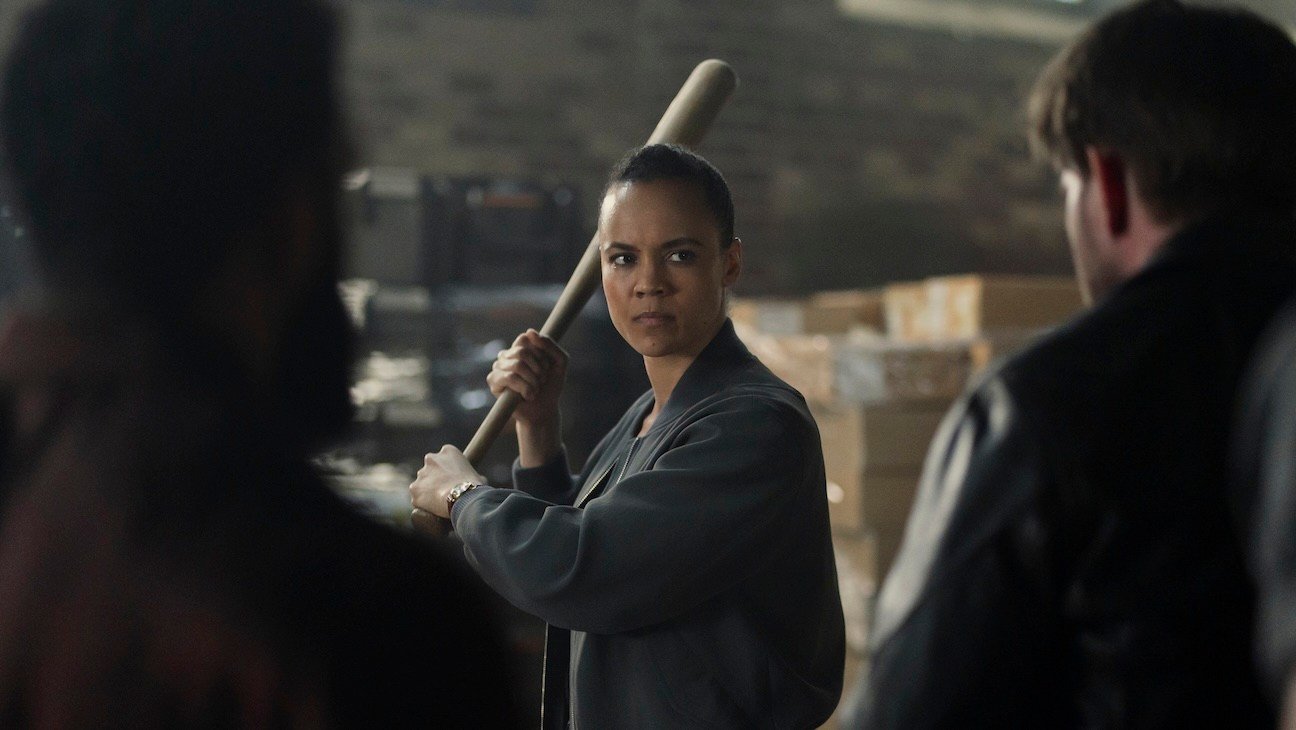
    Neagley served under Reacher with the 110th military police, and she shares her mentor’s keen powers of observation — but also his refined sense of justice, which often intersects with vengeance. She talks tough, thinks nothing of resorting to torture and is amply physically capable in a fight, but she lacks Reacher’s daunting physicality. Instead, Neagley has exceptional dexterity, which Sten captures well, plus she’s a convincing onscreen runner, which cannot be said for Ritchson, who has committed so thoroughly to Reacher’s Mack truck presence that he often seems incapable of moving like an ordinary human.

    With Santora steering the storytelling, plus a directing team led by Reacher veterans Sam Hill, Gary Fleder and MJ Bassett, Neagley looks and feels like Reacher, right down to the way its chosen location (Chicago) generally looks more like the place it was filmed (Toronto). One quickly forgets that fact when people are getting punched in the face.

    The first Neagley season starts off familiar and gets increasingly dumber, hitting a nadir in the penultimate episode before the finale turns its attention to blissfully cartoonish badassery — including an obligatory scene in which our main characters walk away from an exploding building in slow-motion as if this were a wholly original visual idea. Sure it’s a cliché, but it’s an enjoyable cliché.

    The most distinctive thing about Neagley as a person is her haphephobia, or her fear of being touched. On the page, it’s a disorder that exists more than anything as an explanation for why Reacher, an unapologetic man-whore who sleeps with roughly half the introduced female characters, and Neagley have a relationship that’s entirely platonic. Readers have theorized that Neagley (and Reacher, for that matter) is perhaps somewhere on the autism spectrum and/or that her phobia has its origins in a traumatic backstory, but Child has gone out of his way to avoid spelling anything out.

    Rather than exploring new elements of Neagley’s personality or leaning into the psychological uncertainty, the series steers aggressively into the origin story for her haphephobia. Treating Neagley as a character fundamentally in need of solving is the sort of thing that books, TV shows and movies do much more frequently when it comes to assertive and strong women than men — as if a man could become Reacher-esque by virtue of size and training, but a woman would only become Reacher-esque through trauma, which plays a pervasive and frequently coincidental role in most of the season’s stakes.

    The solving of Frances Neagley is so psychologically simplistic that it made me yearn for the previous “draw your own conclusions” approach, because the things we learn about Neagley make her more obvious and self-consciously “written” instead of more complex and human. At least the writers understand that “solving” Neagley isn’t the same as “fixing” her, though separating those sides of the coin just means that we’re looking at additional seasons that dwell exclusively on this one part of her past and personality.

    The trauma is predictable and perfunctory, but at least Sten plays it well, digging beneath the character’s robotic exterior. Sten and Holt, playing Riley as a man whose polish and decency are an overcompensating response to how the world treats his origins, have good chemistry, which produces its own uncomfortable beats. Explaining Neagley because you want viewers to understand and empathize with a character is one thing. Explaining Neagley because you want the character to be part of a formulaic flirtation is less creative and less satisfying.

    Jones, who resembles several of the young stars of Stranger Things to a distracting degree, adds some matter-of-fact humor and pairs extremely well with Rudolph, who makes Renee’s transition from background extra to supporting contributor to assertive and versatile action co-lead much more believable and organic than anything suggested in the writing.

    Herriman is one of those great supporting actors whose presence I generally relish, but if you’re using a cult compound as your primary adversarial setting, going with a performer who has played Charles Manson on multiple occasions is not a way to avoid charges of familiarity. Herriman plays slick and slimy and persuasive extremely well, but Lawrence Cole is exactly what convention leads you to expect and Herriman hasn’t been given any variations of note. It’s the writing that also undermines my two favorite supporting performances from the farm, by Rebecca Liddiard as the leader’s right-hand woman and Jessica Clement as a glassy-eyed cult neophyte, both characters hinting at interesting wrinkles before going to either predictable or illogical places.

    Storytelling missteps aside, Neagley promises pulpy, action pleasures and, by the end, achieves though never exceeds those expectations. It won’t fully work for viewers whose exclusive reason for watching can be boiled down to “Very Big Man Punches Stuff,” but it’s a generally entertaining potboiler of the sort that Amazon does frequently and well enough.

  • ‘The Remarried Empress’ Trailer: Shin Min-a, Ju Ji-hoon Face Royal Betrayal in Disney+’s Lavish K-Drama

    ‘The Remarried Empress’ Trailer: Shin Min-a, Ju Ji-hoon Face Royal Betrayal in Disney+’s Lavish K-Drama

    “For the first time, I began to wonder — Do I love my husband?”

    So begins the gently salacious first full trailer for Disney+ and Hulu’s sumptuous Korean romantacy series The Remarried Empress, which dropped Wednesday ahead of the series’ Nov. 4 streaming launch. (Watch the full trailer below.)

    The 10-episode show is a big-budget adaptation of the hit Naver Webtoon of the same name, which has accumulated nearly 3 billion views worldwide. The series ranks among Disney’s biggest Korean projects to date and was filmed across European locations as well as elaborate purpose-built palace sets.

    Shin Min-a stars as Navier, the beloved empress of the fictional Eastern Kingdom, whose seemingly impeccable royal marriage to Emperor Sovieshu (Ju Ji-hoon) begins to unravel when he falls for Rashta (Lee Se-young), a runaway slave newly arrived at court. As romantic loyalties shift and palace ambitions collide, Navier finds herself increasingly drawn toward Crown Prince Heinrey (Lee Jong-suk), heir to the rival Western Kingdom.

    When Sovieshu ultimately seeks to cast his wife aside, Navier agrees to his demands on one audacious condition: that she be permitted to remarry Heinrey. The ensuing romantic and political entanglement threatens not only the four characters’ relationships but the balance of power between their kingdoms.

    The show is directed by Cho Su-won, whose previous credits include I Can Hear Your Voice, Pinocchio and Still 17, from scripts by Yeoh Geena and Hyun Choong-yeol.

    Among Disney+‘s most anticipated international titles of 2026, The Remarried Empress will debut with four episodes Nov. 4 on Disney+ and Hulu, followed by two new installments each Wednesday through Nov. 25.

    Before its streaming launch, the series will make its world premiere at the Busan International Film Festival in October, where three episodes — running a combined 151 minutes — will screen in the festival’s On Screen section.

  • ‘Pride and Prejudice’ Premiere Date Set at Netflix, Full Cast Photos Unveiled

    ‘Pride and Prejudice’ Premiere Date Set at Netflix, Full Cast Photos Unveiled

    Bonnets at the ready: The six-part Pride and Prejudice is coming to Netflix Dec. 3.

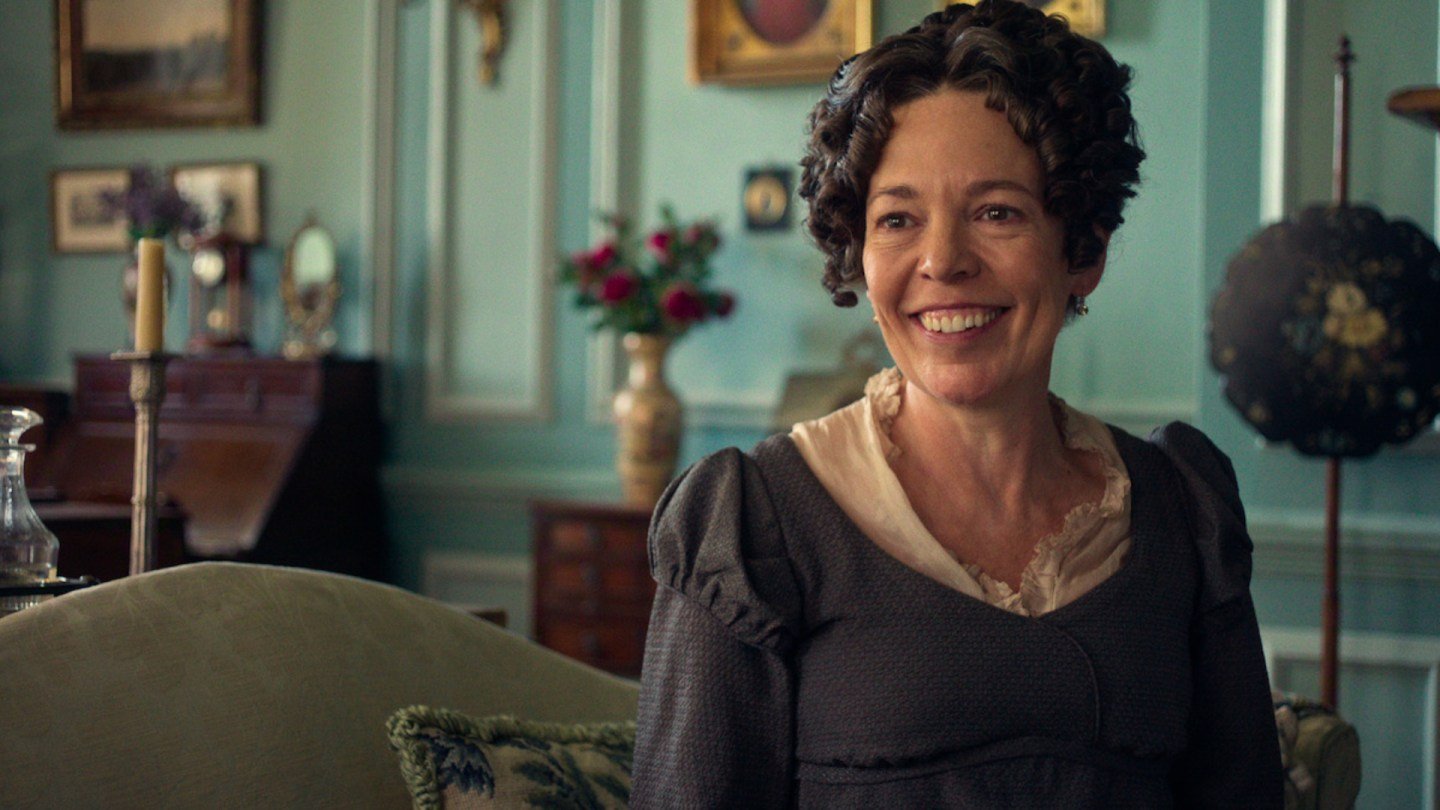
    Series writer Dolly Alderton (Everything I Know About Love, Ghosts) gave the Jane Austen Festival in Bath, England the first full look at every single cast member, including Olivia Colman as Mrs. Bennet, Rufus Sewell as Mr. Bennet and Louis Partridge as the roguish Mr. Wickham.

    Also photographed below are Emma Corrin as our beloved protagonist Lizzy Bennet, Jack Lowden as the stony Mr. Darcy and Daryl McCormack as the doe-eyed Mr. Bingley. Freya Mavor co-stars as Jane Bennet alongside Jamie Demetriou as Mr. Collins, Rhea Norwood as Lydia Bennet, Siena Kelly as Caroline Bingley, Fiona Shaw as Lady Catherine de Bourgh, Hopey Parish as Mary Bennet and Hollie Avery as Kitty Bennet.

    Emma Corrin as Elizabeth Bennet in Netflix’s ‘Pride and Prejudice’

    Justin Downing/Netflix

    Jack Lowden as Mr. Darcy

    Justin Downing/Netflix

    In a year rife with regency drama for loyal fans — the world premiere of Focus Features’ Sense and Sensibility took place just last night, where THR caught up with stars Daisy Edgar-Jones and George MacKay — the series will “join the yearn-aissance in the autumn to faithfully bring Jane Austen’s iconic story back to life for audiences that cherish it, whilst inspiring a new generation to fall in love with it for the first time,” said Netflix.

    The streaming platform also confirmed on Wednesday that the six episodes “will hew closely to the 1813 novel — which has captivated readers for centuries with its ever-relevant social commentary, razor-sharp wit, and indelible love story — but also take some thoughtful creative turns.”

    Alderton said when the trailer was released in February: “Once in a generation, a group of people get to retell this wonderful story and I feel very lucky that I get to be a part of it. Jane Austen’s Pride and Prejudice is the blueprint for romantic comedy — it has been a joy to delve back into its pages to find both familiar and fresh ways of bringing this beloved book to life.”

    Check out the rest of the photos from Netflix’s Pride and Prejudice below.

    Rufus Sewell as Mr. Bennet

    Justin Downing/Netflix

    Daryl McCormack as Mr. Bingley

    Justin Downing/Netflix

    Louis Partridge as Mr. Wickham

    Justin Downing/Netflix

    Freya Mavor as Jane Bennet and Emma Corrin as Lizzy Bennet in Netflix’s ‘Pride and Prejudice’

    Justin Downing/Netflix

  • ‘Dancing With the Stars’ Kicks Off Season 35 Premiere With the Male Celebrities: See the Scores, Who Went Home (Updating Live)

    ‘Dancing With the Stars’ Kicks Off Season 35 Premiere With the Male Celebrities: See the Scores, Who Went Home (Updating Live)

    [This story contains spoilers from the season 35 premiere of Dancing With the Stars.]

    Dancing With the Stars is finally back for season 35, and the festivities for the new season have kicked off with a special two-night premiere.

    As previously announced, the premiere episodes are split by gender, with the slate of eight male celebrities performing on Tuesday night, as the eight women celebrities will follow on Wednesday night. With a cast of 16 competing couples, the split premiere will ensure each celebrity and their professional dance partner get time to shine during the season 35 premiere.

    Coming off a dynamic, Emmy-nominated 34th season, the cast is full of reality stars, Olympians and (ABC) television stars a plenty. For both nights, the celebrities will dance to a No. 1 song from the year they were born, and yes, someone will be eliminated.

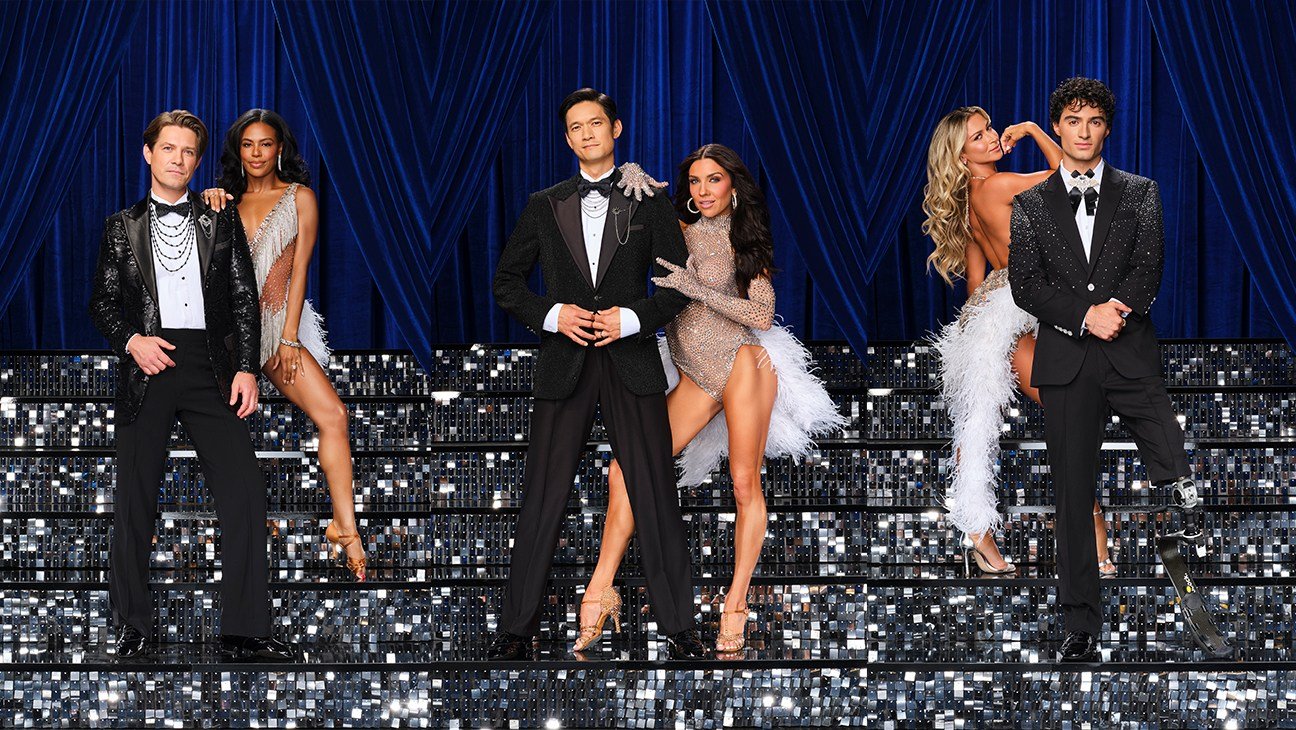
    Competing on Tuesday night is The Bachelorette alum Tyler Cameron; Paralympic gold medalist Ezra Frech; “Hanson” band member Taylor Hanson; Secret Lives of Mormon Wives‘ star Whitney Leavitt’s husband Conner Leavitt; Savannah Bananas baseball star Jackson Olson; Jimmy Kimmel Live! star Guillermo Rodriguez; Grey’s Anatomy actor Harry Shum Jr.; and influencer/comedian Connor Wood.

    After the second dance of the night, performed by Tyler and Sharna Burgess, host Julianne Hough revealed that voting was down on ABC’s website, and that viewers should send in their votes via text. Alfonso Ribeiro announced after Conner’s performance that website voting was still down, and the show was only accepting votes via text for Tuesday night’s premiere.

    During Tyler’s critiques, Derek Hough mistakenly called him Dylan. Despite the name mishap from the judge, Tyler was the early leader of the night, scoring a 17/30. However, Ezra took over that lead, earning the first two sevens from the judges, bringing his total to 20/30

    The rest of the cast who will compete on Wednesday night includes The Fresh Prince of Bel-Air star Tatyana Ali; celebrity chef and Food Network host Giada De Laurentiis; The Rookie and Step Up star Jenna Dewan; Olympic gold medalist Amber Glenn; reality star (Love Island, The Traitors) Maura Higgins; Summer House star Ciara Miller; Love Thy Nader reality star Sarah Jane Nader; and 10 Things I Hate About You actress Julia Stiles.

    The couple with the lowest combined total of judges’ scores and viewer votes is eliminated at the end of each DWTS episode. Live voting takes place during the East Coast airing of each show and ends shortly after the final performance is completed; that means if you’re a West Coast viewer and want to vote for your favorite couple, you must do so between 5 p.m. PT to roughly 7:45 p.m. PT, as voting ends after the final performance.

    See the full list of scores for the first premiere episode of DWTS season 35, featuring only performances from the male celebrities, below.

    Jackson Olson and Emma Slater: 15/30
    Tyler Cameron and Sharna Burgess: 17/30
    Conner Leavitt and Adele Zaikman: 12/30
    Guillermo Rodriguez and Witney Carson: 10/30
    Ezra Frech and Daniella Karagach: 20/30
    Connor Wood and Rylee Arnold
    Taylor Hanson and Britt Stewart
    Harry Shum Jr. and Jenna Johnson

    Season 35 of Dancing With the Stars premieres on Tuesday and Wednesday at 8 p.m., simulcasting across ABC and Disney+, and streaming the next day on Hulu. Check out all of The Hollywood Reporter‘s DWTS coverage here.

  • ‘American Idol’ Moving Production From L.A. to Georgia

    American Idol is packing up and making a big move across the United States.

    ABC’s long-running music competition series is relocating from Los Angeles to the Atlanta area, producer Fremantle confirmed to The Hollywood Reporter on Tuesday.

    American Idol‘s move is a hit to L.A.’s production landscape, especially in scripted television, a space that has seen episode counts shaved and overall orders cut over the past several years. The city saw a nearly 13 percent drop in shoot days from April to June compared to the same period last year and an 8 percent drop compared to the previous quarter, according to the latest report from permitting office FilmLA.

    On the state level, California Gov. Gavin Newsom signed a bill last year that increased the cap on film and television tax incentives from $330 million to $750 million a year. But production advocates in state and local offices have countered that that’s the first step, not a cure all, to keep film and TV cameras rolling in Hollywood’s historic home.

    Competition from other states, including Georgia, New York, New Jersey and New Mexico, as well as international markets (like Canada, the United Kingdom and Australia) has only increased on the incentives front.

    The relocation of American Idol to Georgia is a coup for the state, given that the long-running broadcast series (season 24 had a 16-episode run) offers relative stability compared to one-off features that may shoot on-location. In late July, the Georgia film office disclosed 280 productions filmed in-state over the last fiscal year, including Warner Bros.’ Superman sequel, series like Will Trent and Chad Powers, as well as Tyler Perry Studios’ productions.

    Georgia is one of the largest production hubs stateside, following California and New York, but has also seen spending from film and TV shoots decline in recent years after Marvel decamped to shoot its superhero fare in the U.K. In the second quarter of 2026, Georgia saw $405 million in production spending, down 40 percent year-over-year, per figures from industry tracker ProdPro. In the latest quarter, California, for comparison, saw $1.3 billion in production spending, up about 5 percent year-over-year.

    Local officials have pledged to find ways to cut more red tape in L.A. and bolster incentives. Mayor Karen Bass said in July that she’s “doubling down” on the subsidy program by “fighting for an uncapped tax credit,” in addition to pushing for competition reality TV series to be eligible for incentives. “We’ll keep cutting red tape and slashing permit fees at the local level, because this industry is core to the history, culture and economic power of Los Angeles,” she added at the time.

  • ‘Closing Night’ Review: Sarah Paulson and Naomi Watts Lead a Deluxe Cast in a Shrill Family Melodrama in Search of a Binding Tone

    ‘Closing Night’ Review: Sarah Paulson and Naomi Watts Lead a Deluxe Cast in a Shrill Family Melodrama in Search of a Binding Tone

    Is actor-turned-director Cody Fern’s debut, Closing Night, intended as a refraction of John Cassavetes’ Opening Night, the 1977 Gena Rowlands vehicle about an actress grappling with a debilitating personal crisis? Seems likely, though that would be just one of several instances of the filmmaker’s aim exceeding his reach. For at least half the movie’s running time, the desired style appears to be the heightened melodrama of Pedro Almodóvar’s tales of turbulent motherhood scarred by traumatic family secrets. But Fern lacks the firm grasp of tone to pull that off, or to smoothly navigate the eventual transition into anguish and sorrow.

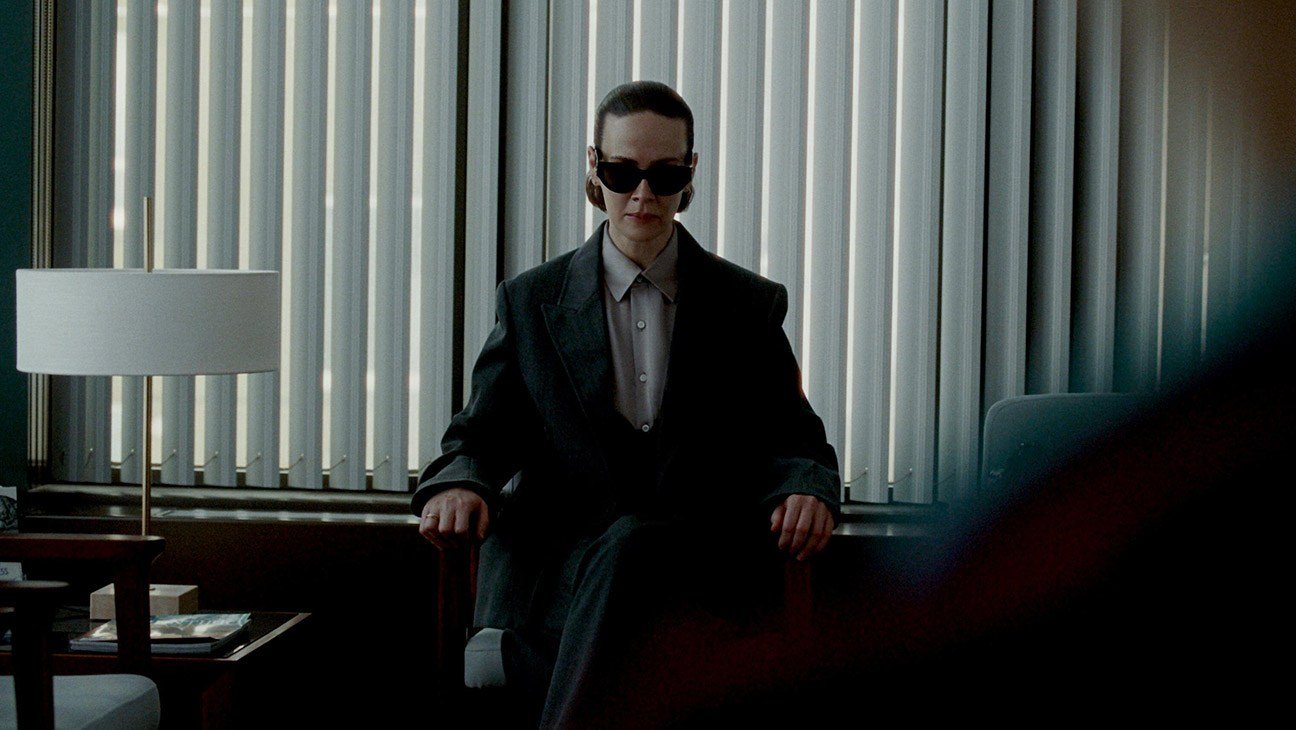
    The other key influence — intentional or not — appears to be Ryan Murphy, with whom Fern has worked frequently as an actor. There’s a kinship in the arch tone, though sadly, none of the camp. Unless you count Sarah Paulson as celebrated star of stage and screen Sandra Vale, played with a death-stare severity that might be appropriate for her sadistic psycho-nurse in Murphy’s Ratched. All of which is to say that no matter how accomplished the cast, the self-conscious movie only really starts half-working once it gets out of its own way.

    Closing Night

    The Bottom Line

    A soft-impact lurch from archness to angst.

    Venue: Toronto International Film Festival (Special Presentations)
    Cast: Sarah Paulson, Naomi Watts, Dianne Wiest, Toby Wallace, Odessa A’zion
    Director: Cody Fern
    Screenwriters: Cody Fern, Devon Bostick

    1 hour 55 minutes

    Sandra is in rehearsals for her Broadway return in Brecht’s Mother Courage — and therein lies the first clue to her festering secret — but the seasoned pro is having uncharacteristic trouble remembering her lines and motivation. Nonetheless, she sends out formal invitations to her estranged family to attend the play’s opening.

    Her jittery sister April (Naomi Watts) bristles at being “summoned” to a reunion after three decades of silence. But she can’t get there fast enough, concerned that her rudderless son Theo (Toby Wallace), who’s living in New York, should be kept away from his self-absorbed aunt. Before April can run interference, Theo drops a bombshell by revealing that he has already connected with the black-sheep diva. The scowling posters of Aunt Sandra all over town suggest that encounter was all but preordained.

    April and Sandra’s tart-tongued, boozing mother Diane (Dianne Wiest, in brilliant form) takes a hard pass on the trip from their distant hometown, where she owns a shabby hair salon. But once April starts reporting back, the blowzy old woman — still pissed about Sandra sleeping with April’s boyfriend when she was 15 — hops on a plane.

    The first big news to emerge is that Toby’s girlfriend Lucy (Odessa A’zion, wasted in a nothing role) is pregnant, a fact discovered by April when she’s snooping in their bathroom and finds a positive home pregnancy test. (She also randomly steals a hairbrush, the result of a klepto habit that doesn’t add much.) Then when Sandra starts slurring and scrambling her lines before collapsing on the stage, she receives a shattering diagnosis, which helps move along the thaw between her and April — though not so much with crotchety Diane. The biggest secret, however, pertains to Theo and the reason Sandra distanced herself from the family all those years ago. If you can’t guess what that is, seriously, wake up!

    The script by Fern and fellow actor Devon Bostick takes a solemn turn in the final act, when Sandra resolves to take a drastic step and enlists April’s support to go through with it. Those developments become lugubrious, though not without affecting moments. But the leap from the seriocomedy of the early action to the sadness and self-recrimination of the concluding stretch is not something the filmmakers negotiate gracefully.

    It’s also hard to feel too much for the characters when only Theo, his emotions bounced about among the women, and Diane, who amusingly specifies while making her travel plans that she wants a hotel room with a minibar, seem like real people.

    While it’s always a pleasure to watch Paulson and Watts work, Fern forces them to work way too hard. (Certainly harder than they have to work on Murphy’s risibly awful legal soap, All’s Fair, in which performance integrity seems irrelevant.) Sandra and April are characters who might almost have been more at home in some kind of chewy Southern Gothic that didn’t have to rely so heavily on Diane to inject a bit of much-needed humor. That said, Watts does prompt a wicked smirk or two when April instantly appropriates Sandra’s misfortune as her own.

    Ultimately though, whether it’s going for caustic dysfunctional family chaos or somber drama, any movie with this lineup of female talent ought to be a lot juicier.