Tag: Entertainment – Variety

  • Enhypen Lands First No. 1, Dolly Parton Reenters Top Five on Albums Chart

    Enhypen Lands First No. 1, Dolly Parton Reenters Top Five on Albums Chart

    Enhypen has scored its first No. 1 on the Billboard 200 with “The Sin : Bliss,” while Dolly Parton reentered the top 5 with “Ultimate Dolly Parton” following news of her death earlier this week.

    K-pop group Enhypen moved 98,000 equivalent album units in their first week with “The Sin : Bliss,” marking their seventh top 10 over the past four years. Enhypen previously reached No. 2 on the albums chart with “The Sin : Vanish” earlier this year, and also reached the same position with 2024’s “Romance : Untold.”

    Additionally, Parton returned to the top 10 with “Ultimate Dolly Parton,” which re-entered the chart at No. 5 with 59,000 equivalent album units. The country icon released the greatest hits collection in 2003 and peaked at No. 112 in 2019. With the resurgence of “Ultimate Dolly Parton,” the singer notches her fourth top 10 and her second-highest-charting album ever.

    Parton, who died at 80 after a short battle with cancer, saw a sharp increase in streams following news of her death. On Spotify, total streams increased over 1,260% globally and 2,320% in the United States in the first 24 hours after her death was announced. “Jolene” had the biggest surge with 630% globally and 1,225% in the U.S., while “9 to 5” increased 620% globally and 1,030% in the U.S. and “Islands in the Stream” increased 525% globally and 1,235% in the U.S.

    Elsewhere in the top 10, Ella Langley’s “Dandelion” lands at No. 2 followed by Olivia Rodrigo’s “You Seem Pretty Sad for a Girl So in Love” at No. 3 and Morgan Wallen’s “I’m the Problem” at No. 4. Rounding out Nos. 6 through 10 are Katseye’s “Wild,” Noah Kahan’s “The Great Divide,” Stray Kids’ “This & That,” Drake’s “Iceman” and Ariana Grande’s “Petal.”

  • Korea’s Showbox Launches Microdrama Label Showbite, Sets Sights on Global Markets (EXCLUSIVE)

    Korea’s Showbox Launches Microdrama Label Showbite, Sets Sights on Global Markets (EXCLUSIVE)

    Showbox, the Korean film and content studio, has launched a new microdrama label, Showbite, and will begin rolling out original short-form content in September, spanning genres from romance and comedy to revenge, action-thriller, period drama, fantasy, mystery and horror.

    The romance slate includes “Taste of You,” a BL enemies-to-lovers story set in the world of culinary competition, and “Love in Thailand,” a romantic comedy set at a golf resort. Also on the slate are “The New Hire Is Too Hot to Handle,” an office romance built around a high-concept premise; “Love, Again,” which follows a second-chance romance involving lost memories and a reunion; and “My Ex-Bias Problem,” a romantic comedy centered on an arrogant K-pop idol whose life changes after he is sent to a remote island village.

    Showbite’s female-driven revenge titles include “The Fallen Heiress Returns Wicked,” “They Messed with the Wrong Daughter-in-Law” and “Contract Marriage: The Heir’s Hound.” The label will also release the action crime-thriller “Asura: Return of the Reaper.”

    The slate extends into historical and fantasy territory with “The Secret Wife Exchange,” a period drama set in Joseon society, and “Her Royal Queen Energy,” a reincarnation fantasy set in an alternate modern Korean monarchy.

    Mystery and horror also feature prominently. “Bridal Shower: The Missing Bride” is a mystery comedy built around a string of twists, while “The Fallen Idol Is Possessed!” blends K-pop, romance and supernatural elements. “Lucky Horror Live Show” is a horror thriller centered on a livestream that turns terrifying.

    Showbox said the label is designed to pair its background in storytelling with the pace of short-form drama, bringing Korean stories to audiences around the world.

    Showbite will attend Broadcast Worldwide in Seoul, and the Busan International Film Festival‘s Asian Contents & Film Market, where it plans to meet with partners at home and abroad to expand its distribution network.

    The label will launch official TikTok, Instagram and YouTube accounts under the Showbite name in early September, with updates on upcoming titles to follow through those channels.

  • ‘Lanterns’ Stars Aaron Pierre, Jasmine Cephas Jones on John’s Backstory Episode and How Being Black Informs His Quest to Become Green Lantern: ‘Fear Is Instilled in Our Ancestry’

    ‘Lanterns’ Stars Aaron Pierre, Jasmine Cephas Jones on John’s Backstory Episode and How Being Black Informs His Quest to Become Green Lantern: ‘Fear Is Instilled in Our Ancestry’

    SPOILER ALERT: This article contains spoilers for Season 1, Episode 3 of “Lanterns,” now streaming on HBO Max.

    From the series’ opening scene, “Lanterns” sets up John Stewart’s (Aaron Pierre) calling to one day step into his own as Green Lantern. But it’s not until Sunday’s episode that we learn just how long John has been preparing and training — at the direction of his parents — to one day take Hal Jordan’s (Kyle Chandler) title.

    “It was a gift to have the opportunity to explore each of these characters with such enormous depth,” Pierre tells Variety of filming Episode 3. “It’s not a given that you get to have this much experience with a character, and live this much with a character in your portrayal.”

    In the latest “Lanterns” episode, John is grilled about his difficult life choices by one of the Guardians (Laura Linney) to see whether he’s worthy of replacing Hal. It’s the moment John has been waiting for all his life — the moment he gets to prove exactly why he is worthy of the ring.

    “I know exactly why me,” John says at the beginning of the interview.

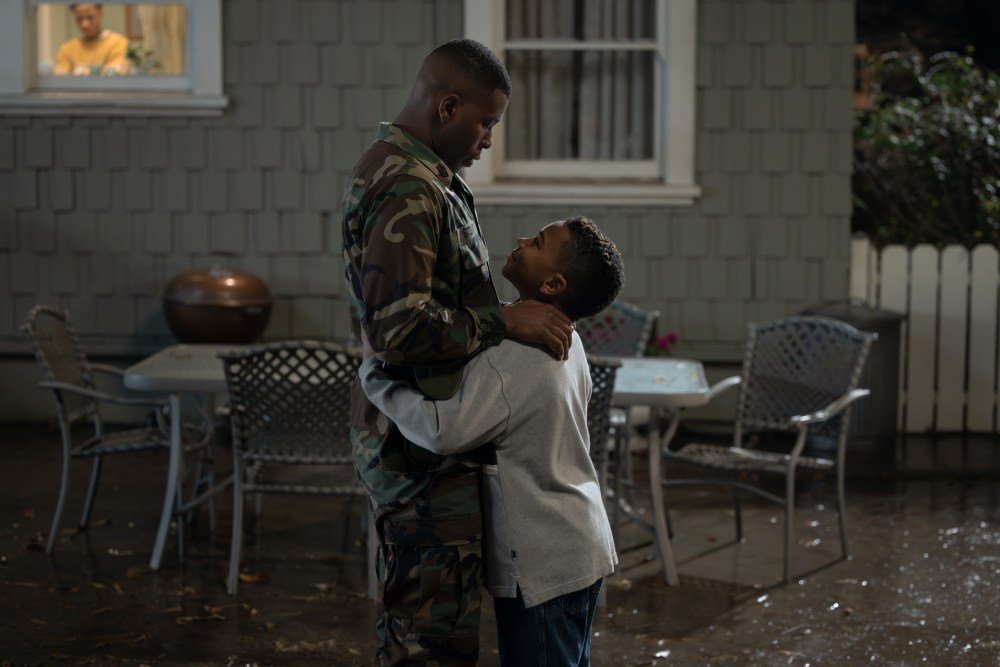
    The episode cuts back and forth between John’s tense interview and his upbringing, revealing how John was conditioned to be fearless from a young age. The flashbacks show how desperate his parents become after John Stewart, Sr. (J. Alphonse Nicholson) is tested by the Guardians in the middle of the night, ultimately failing to become Green Lantern because he shows fear. Investing in John’s future is how the family finds salvation.

    As the son of somebody who had real potential to become Green Lantern, both John’s father and Bernadette (Jasmine Cephas Jones), his mother, recognize that if they do everything in their power, John will be the perfect candidate. In order to test him during his childhood, his parents do everything from shooting an apple off his head to leaving him stranded in a dangerous part of town, forcing John to fend for himself. They also lie, and tell him that the Guardians are always watching over him through birds.

    Knowing how everything John has done in his life has been with the goal of one day becoming Green Lantern, including joining the Marines and isolating himself from other people in his life, informed how Pierre played his budding dynamic with Chandler from the beginning.

    “He’s had a wealth of life experience, more life experience than people twice, three times his age have even come close,” Pierre says.

    Jones wanted to show that despite her stern attitude with John and forcing him to grow up, her love for her child always comes through.

    “I really wanted to show that militant side of her, and that she made that decision at a very young age for him, and that is his destiny,” Jones says. “No matter what happens, she’s gonna stick with it.”

    The biggest challenge was showing those moments of vulnerability when her character doesn’t speak, Jones says: “Like telling him to shoot a gun off of his father’s head, but then seeing in her face how much that breaks her.”

    When a young John learns that his parents lied to him about the Guardians always watching over him, he grapples with the reality that he wasn’t chosen, and will have to work harder than most people around him to prove that he’s worthy. At one point, Bernadette even tells him: “Sometimes, a Black man has to raise his own hand. Doesn’t mean you’re not good enough, doesn’t mean you’re not better. It just means they don’t see us.”

    “The importance of having no fear in a society, and also being a person of color in this country, fear is instilled in our ancestry as well,” Jones says. “That was also an important piece to talk about. How do we extract that for him to become the Green Lantern?”

    Nicholson adds: “It’s real, man. Yeah, I know we all want to escape from it but sometimes those questions need to be addressed even in our fictional worlds, right? Why do they make us have these feelings or why do they exist? And so just asking the questions sometimes allows room for people to talk about it. I think that’s what great writers do.” 

    The idea of raising John to be the next Green Lantern is largely born out of his father’s trauma. Investing in his son, and doing everything he can to give John the highest odds possible, becomes the only way he knows how to move forward.

    “He doesn’t want to let his son down. Essentially, he felt like he let himself down, he let his community down, let his wife down, so now it’s up to him to make sure that his son doesn’t feel that way and doesn’t go into the same spiral of depression,” Nicholson says. “It’s really cool to see him protect his son in a really tough way, but it’s tough love.”

    The major turning point in the episode comes when John takes matters into his own hands by shooting an apple off his mother’s head. He’s finally become exactly who his parents raised him to be.

    “It’s him taking a step into his own lane and really showing how fearless he is because that’s a huge risk, right?” Nicholson says. “He showed an immense amount of confidence, and I’m proud as his father to have shown him how to have that confidence early on.”

    As Pierre looks back on filming, one of the most enjoyable parts of the episode was getting to work with the child actors, including Jayce Eiland and Cairo Cash Lee, who play the younger versions of John.

    “They really need to be celebrated, acknowledged and commended for delivering all of the emotion and beyond that was necessary,” Pierre says. “It was very rare that we were working on the same location or on the same day because it’s a completely different timeline, but anytime I had the opportunity, I would definitely give them a fist and just tell them how proud I was.”


  • Inside the Global Rise of CJ ENM’s ‘The Legend of Kitchen Soldier’

    Inside the Global Rise of CJ ENM’s ‘The Legend of Kitchen Soldier’

    When “The Legend of Kitchen Soldier” was selected as the only K-drama in the Special Screening section at Series Mania in Lille earlier this year, it marked an early signal that something unusual was happening with a show that had started life as a calculated creative gamble. By July 31, when the series took best drama series at the Fifth Blue Dragon Series Awards, that signal had become a verdict.

    The 12-episode series – produced by Studio Dragon and released as a TVING original on CJ ENM‘s Korean streaming platform – follows Kang Seong-jae, played by Park Ji-hoon, a young man who joins the military to escape a difficult reality. His trajectory shifts when a virtual quest screen appears before him, redirecting him toward life as an army cook. As he completes each mission, buried secrets within the military base begin to surface.

    The show’s international performance has been striking across multiple platforms. It reached No. 2 overall on Disney+ Japan, ranked among the top three Korean drama titles on HBO Max across 17 countries and territories – performing especially strongly in Indonesia, Malaysia and the Philippines – and landed in the Rakuten Viki top five across the Americas, Europe, Oceania and MENA. On Sept. 15, chief producer Kim Tae-hoon will take part in a creator talk at K-Brand Week in Poland, extending the show’s reach into a new European market.

    None of this was treated as a foregone conclusion during production. The creative team at Studio Dragon made a series of deliberate formal choices that broke with K-drama convention, and they knew it.

    Central among them was the editing. Rather than using visual style as a background element, the production foregrounded it as part of the show’s identity – building the virtual quest screen into the fabric of the series, and adopting a lo-fi, high-energy aesthetic that amplified the comedy rather than simply serving the narrative.

    “I believe the success of ‘The Legend of Kitchen Soldier’ revolves around how experimental it was, especially in its direction and never-before-seen editing style, which hooks audiences instantly,” said Lee Hye-young, executive producer of “The Legend of Kitchen Soldier” at Studio Dragon. “However, it was also important for us to maintain depth in the show’s narrative. That’s why we incorporated the ‘over-the-top’ elements to an extent that would not interfere with the story’s cohesiveness.”

    The challenge of holding that balance extended to the cast. Led by Park and Lee Sang-yi, both of whom carry established international fanbases, the ensemble also includes Han Dong-hee as Lieutenant Cho Ye-rin and Lee Hong-nae as Senior Sergeant Yoon Dong-hyun.

    “While maintaining the extreme editing style, we also wanted to make sure the cast was not overwhelmed by these elements,” said Kim Tae-hoon, chief producer at Studio Dragon. “Thanks to all the cast members’ remarkable performances, we were able to bring our creative vision to life.”

    The show also made a structural bet that distinguished it from the bulk of globally travelling K-drama: it placed comedy at the centre without a romance narrative to anchor it. K-drama’s international rise has been built substantially on romantic melodrama, and a straight comedy with no rom-com scaffolding represented a genuine departure. The series made that departure without sacrificing character depth – each member of the ensemble was given distinct motivation and a narrative arc, allowing audiences to build investment across the run.

    The IP extended beyond the screen through Migak Boys, an in-universe K-pop group formed around the drama’s characters and their reactions to Kang Seong-jae’s cooking. The device brought together K-drama, K-pop and food culture within a single property, adding a layer of audience engagement beyond conventional viewership.

    “The success of the TVING original ‘The Legend of Kitchen Soldier’ demonstrates that fresh genres and original storytelling can resonate with audiences both in Korea and around the world,” said Choi Bo-hyun, chief contents officer at TVING. “Building on TVING’s bold creative vision and CJ ENM’s content capabilities, we will continue to expand the diversity and global competitiveness of K-content.”

    The Blue Dragon win and the Poland screening suggest the show’s impact is still accumulating. Sebastian Kim, head of the content business Unit at CJ ENM, said the series had opened a door the company intends to keep pushing through.

    “The success of ‘The Legend of Kitchen Soldier’ is proof that diverse genres of K-dramas can succeed in the global entertainment market, opening a new era in which global audiences are ready to embrace unconventional storytelling,” Kim said. “Standing at the forefront of K-culture’s global expansion, CJ ENM will continue to challenge ourselves to develop stories that are different, unique, and unexpected for global fans, delivering consistent surprises and new experiences to audiences around the world.”

  • ‘Sea of Glass’ Review: A Widow’s Coastal Healing Retreat Turns Into a Stately, Moody Greek Tragedy

    ‘Sea of Glass’ Review: A Widow’s Coastal Healing Retreat Turns Into a Stately, Moody Greek Tragedy

    There are Greek waves aplenty lapping at the forlorn beachside setting of “Sea of Glass,” though they’re not especially weird ones. Amid a national cinema that has become internationally recognized for perverse plotting and deadpan absurdism, writer-director Alexis Alexiou‘s third feature stands out for its stark storytelling and earnest emotional intensity. There is more than a nod to classical Greek tragedy here, and the film — a contemporary tale of dysfunctional parent-child relationships with escalatingly brutal consequences — doesn’t wear it lightly. But a spirit of feminist independence also infiltrates these dark proceedings: Alexiou namechecks “Thelma and Louise” among his inspirations, and though “Sea of Glass” is never quite so rousing or rowdy, it’s finally a moving study of female allyship across generations.

    It’s been 11 years since Alexiou’s last feature “Wednesday 04:45,” a sleek, Michael Mann-indebted thriller that, despite its ticking-clock narrative setup, really led with heavy neon-nights ambience — and toured the festival circuit extensively following its Tribeca premiere. “Sea of Glass,” which recently bowed out of competition at Edinburgh, is similarly stern with its neo-noir inflections, though its script, by Alexiou with Afroditi Nikolaidou, branches out effectively into raging family melodrama. The results are absorbing, but at 130 minutes, could stand some tightening: A slow-burning setup takes rather too long to segue into the stirring, high-stakes female friendship portrait at the film’s heart.

    Though the louring atmospherics here are a leading attraction, “Sea of Glass” also serves as a strong showcase for veteran actress Evangelia Andreadaki (recently seen in last year’s Greek Oscar submission “Arcadia”), who’s charged with telling much of her character’s backstory in weary silence. In her mid-sixties, Vangelio’s days are spent caring for her older, bedridden husband, with little time or thought for herself, beyond perusing old tourist guidebooks with idle yearning; one introductory scene limns a life of under-appreciated, routine-bound service.

    When the old man dies, her numb reaction appears caught between grief and relief, though her two adult sons show little understanding of her emotional state. Impulsively, Vangelio decides on some alone time, on her own terms — booking an off-season vacation at a coastal resort on the Greek island of Evia. Presumably overrun with holidaymakers in the summer, it’s chilly and dolefully quiet when she arrives, as is the shabby hotel she checks into: Excellent sound design, in particular, captures the lonesome reverberations of weather and water in this wintry limbo. Still, the rundown mood of the place suits Vangelio’s own. Here, at last, is somewhere she can productively do nothing.

    Or it would be, if the hotel didn’t have its own drama of oppression and liberation brewing downstairs. 23-year-old Vicky (Christiana Matelska Toka) runs the establishment thanklessly and almost single-handedly, with little help from its owner, her boorish father (Michalis Iatropoulos). Dad is an abusive alcoholic, prone to berating and even assaulting his daughter in front of guests, of which Vangelio is currently the only one. That draws her into this domestic crisis whether she likes it or not; she soon forms a tacit bond with the desperately withdrawn Vicky, who’s visibly grateful for a maternal figure to confide in. Women have little voice in this community of stale, disappointed men, including the local cops who are her father’s best friends.

    Vicky could run away, but feels an unconditional obligation to look after the man holding her down; Vangelio, recognizing something of the life she just escaped in the young woman’s plight, in turn feels duty bound to help her out of it. Freedom, when it comes, comes violently, cuing a final act that exhilaratingly changes the pace, location and emotional scale of proceedings. It’s Andreadaki’s weathered, keenly watchful performance, and her galvanizing connection with her younger, more recessive co-star, that keep things grounded as the story ramps up in severity and consequence.

    The biblical title, drawn from a description in the Book of Revelation of the passage to heaven, also fittingly conjures the film’s aesthetic: DP Simos Sarketzis shoots in the softly frosted blues, greens and browns of glass shards faded and rounded by time and tide. Alexiou’s film feels defined by water, as the characters increasingly take to the ocean and stormy weather sets in from above. There is much pain, dirt and blood here to be washed away.

  • ’17’ Review: Harrowing Teen Pregnancy Drama from Macedonia Could Be the Feel-Bad Movie of the Year

    ’17’ Review: Harrowing Teen Pregnancy Drama from Macedonia Could Be the Feel-Bad Movie of the Year

    From the first frame, Kosara Mitić’s “17” refuses to pull any punches, plunging us immediately into the traumatic moment when a hookup between high-school student Sara (Eva Kostić) and two boys takes a violent turn. From here, this nervy teen drama from Macedonia picks up several months later and follows the withdrawn Sara over the first two days of a class trip to Greece, where one of her assailants is among the unruly group of youngsters. Winner of the Best Actress prize at Sarajevo after premiering in the Berlinale’s Perspectives section, the film has a bleak, unflinching gaze that sometimes skims the edges of shock-value miserablism. In the end, however, Mitić’s intrepid approach is undeniably bracing, and held together at its core by Kostić’s simmering performance. 

    In the most superficial sense, “17” resembles one of this year’s more auspicious festival breakouts “La Gradiva”: Both follow a raucous senior class to a foreign country and in the process unearth dark truths about the gang via restlessly fluid camerawork that, in extended close-ups, mercilessly lays bare its protagonist’s anxieties. Also partly filled with nonprofessional young actors, Mitić’s hair-raising debut makes that French first feature look sunny by comparison. There’s a practical reason for this darkness beyond the obvious Eastern European somberness: The first day of the trip, and the bulk of the film, takes place in a stopover hotel in Bitola that cinematographer Naum Doksevski casts in dim jaundiced lights and long shadows. 

    When the group arrives by bus, Sara is a conspicuously surly presence in her baggy sweatshirt and dragging jeans; her classmates, brusque, yappy, and shockingly entitled as they constantly talk back to their two teacher-chaperones, both grossly resigned to their students’ insolence. Denied the private room she paid double for because of a mix-up by hotel management, Sara must room with her guileless, overly eager friend Lina (Martina Danilovska) and her cool-girl ex bestie Nina (Eva Stojcevska). Nina is now dating the apish Filip (Dame Joveski), Sara’s ex and one of her rapists — unbeknownst to everyone, of course. 

    By teasing out the dynamics between Sara, her classmates and her teachers, the script by Mitić and Ognjen Sviličić highlights a culture of shame and straight masculine privilege; a don’t-ask-don’t-tell world where girls, especially, are peer-pressured to party and surrender their bodies to (often brutal) male whims. Worse yet, in these girls’ heads, is the slut-shaming and bullying that would ensue should this cruel code of silence be broken.

    And so, there’s a reason Sara is cagey, though Kostić’s remarkable breakout performance adds to this frayed reticence a coiled rage that comes out each time she lays eyes on Filip. That explodes into action in one startlingly seedy scene involving a rape in full view of revelers at a hotel party. When a hotel worker gets a beating from the sociopathic Filip and his juiced-up cronies, this sadism pushes the limits of credulity, though a comment from a teacher — that the kids better behave in Greece, a civilized country with real rules — reveals that Mitić might somewhat be thinking in metaphors.

    In any case, it’s not just that Sara, whose terrible secret is concealed by the straps cinched around her rounded belly, feels dirtied and disgraced; there are layers to her knowing gaze. A smirk she gives to Nina, who chalks up Sara’s bad attitude to jealousy over Filip, conveys the pity of a veteran soldier talking down to a fresh recruit.

    But because Sara is indeed only 17, wisdom is tempered by a quivering vulnerability as the reality of her pregnancy presses upon her, body and soul, forcing her to open up to Lina and discover the possibility of solidarity. Along with a brief moment of tenderness Sara experiences with her class’s resident dork, this feminine camaraderie makes for a nugget of niceness in a sea of despair. And at a border control checkpoint, a symbolic crossroads if there ever was one, Mitic has Sara decide in a bracing, breath-held final scene: Bury her truth at all costs or embrace it, haters be damned. 

  • Owner of ‘Heated Rivalry’ Cabin Needed to Do Some ‘Soul Searching’ Before Inviting the Show Back for Season 2

    Owner of ‘Heated Rivalry’ Cabin Needed to Do Some ‘Soul Searching’ Before Inviting the Show Back for Season 2

    Michael Kutryk, the owner of the now-famous cabin featured in “Heated Rivalry” Season 1, said he needed to do some “soul searching” before allowing the HBO production to come back for Season 2.

    “I did a little bit of soul searching about allowing them to come back,” Kutryk told HGTV. “I know they need it, and I realize I [could] be difficult and try to squeeze them, but I [couldn’t] bring myself to do that.”

    He continued, “When they called, they said, ‘How much do you want?’ First, I told them they scratched my table, then I named a very reasonable price. They were shocked and appreciative. I actually didn’t even get them to replace my table.”

    Kutryk’s house was featured in the “Heated Rivalry” Season 1 finale, titled “The Cottage,” in which Shane Hollander (Hudson Williams) brings Ilya Rozanov (Connor Storrie) to his remote family cabin for a private getaway. Kutryk, a Toronto doctor, said he was shocked when he first listened to Rachel Reid’s “Game Changer,” on which the show is based, on audiobook.

    “My jaw just dropped as I listened. The pretty explicit nature of the book made me wonder just what they’d be filming … and showing!” Kutryk said. “I just thought, OK, they’re gonna film what they’re gonna film. What’s done is done.”

    “We’ll see after Season 2 airs what demand is like,” he added. “It’s still true: I’m a private guy. This is my retreat. I built this to get away from the world, so I don’t know how much longer I’ll continue to share it.”

    “Heated Rivalry” Season 2, which was greenlit in December 2025, is expected to release in April 2027. The HBO Max and Crave series follows up-and-coming professional hockey stars Shane Hollander and Ilya Rozanov, who maintain a facade as fierce competitors on the ice while engaging in a secret romance.

  • Harry Styles Pokes Fun at Ex Taylor Swift’s Wedding During Madison Square Garden Show

    Harry Styles Pokes Fun at Ex Taylor Swift’s Wedding During Madison Square Garden Show

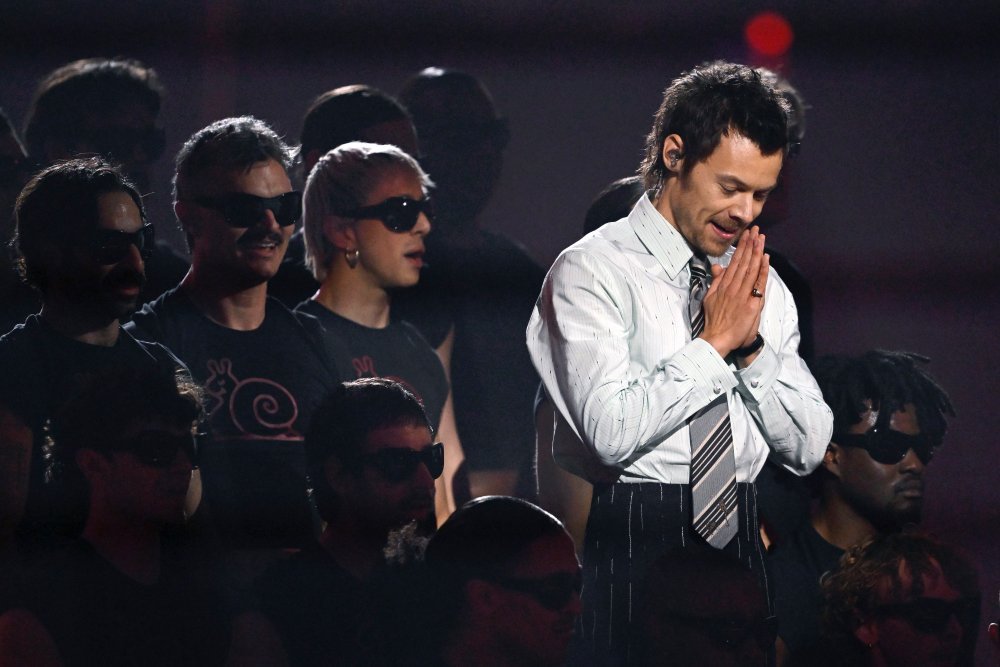
    On the opening night of his 30-concert residency at Madison Square Garden, pop superstar Harry Styles paid tribute to the late, great Dolly Parton. And at the tail end of Saturday night’s show, he shouted out his ex-girlfriend Taylor Swift’s wedding to Travis Kelce.

    “We’re at Madison Square Garden, home of the world champion New York Knicks!” Styles announced to loud applause, before adding, “And they also do weddings.”

    Styles famously dated Swift from November 2012 to January 2013 and served as the inspiration for Swift’s chart-topping 2014 song “Style.” According to Variety, Styles even “received an invitation” to Swift’s wedding to NFL star Travis Kelce on July 3 at Madison Square Garden, but sources said that “Styles is currently on tour and will not make it to MSG.” However, Styles’ fiancé, Zoe Kravitz, did end up attending the Swift-Kelce mega-wedding.

    There appears to be no bad blood between the two exes. Styles even gave a cheeky nod to Swift’s wedding during his record-breaking Wembley residency on July 3, performing his 2017 song “Two Ghosts,” which is believed to be his response to her tune “Style,” as he sings: “Same lips red, same eyes blue / Same white shirt, couple more tattoos.”

  • Chris Hansen Says Robert Pattinson’s ‘Primetime’ Performance Is ‘Overly Dramatic,’ But His Wife and Kids Think It’s a ‘Pretty Good Imitation’

    Chris Hansen Says Robert Pattinson’s ‘Primetime’ Performance Is ‘Overly Dramatic,’ But His Wife and Kids Think It’s a ‘Pretty Good Imitation’

    Chris Hansen recently gave his reaction to Robert Pattinson’s impression of him in the upcoming A24 drama-thriller “Primetime,” which chronicles Hansen’s stint as host of Dateline NBC’s “To Catch a Predator.”

    “I mean, obviously he has practiced imitating me, and while I think it’s overly dramatic, I think there is a pretty good imitation there in the trailer,” Hansen told Entertainment Tonight. “It’s not so much what I think; it’s what other people think. And you know, my wife [and] my family seem to think it’s a pretty good imitation.”

    “He’s saying things I never said and doing things I never did, and that’s not who I am. I’m a nice guy, except when it comes to criminals and predators,” he added. “I think people should remember that it is a work of fiction, only based on real-life events.”

    Reps for Pattinson did not immediately respond to a request for comment regarding Hansen’s comments.

    Hansen recently told Fox News’ “Jesse Watters Primetime” that when he showed up at the A24 offices for a private screening of the film, he was asked to sign a legal agreement that would sign away several of his personal rights.

    “The lawyers at A24 wanted me to sign away my rights to my name, image and brand, essentially, as well as any potential legal rights that would come out of the movie,” Hansen claimed. “I couldn’t sign that, so they didn’t show me the film. I went all the way over there.”

    A source close to A24 said at the time that Hansen was asked to sign an NDA that every preview audience must adhere to for an unreleased project.

  • ‘Borges and Me’ Review: Gentle, Nostalgic Literary Road Movie Is More Perky Than Poetic

    ‘Borges and Me’ Review: Gentle, Nostalgic Literary Road Movie Is More Perky Than Poetic

    American author Jay Parini’s 2020 memoir “Borges and Me: An Encounter” read as a charming extension of an anecdote any writer would dine out on for the rest of their life: the tale of how Parini, as a college student in the 1970s, was somehow partnered on a winding road trip through the Scottish Highlands with the venerable Argentine literary icon José Luis Borges. Like any good anecdote, it feels healthily embellished — Borges was doubtless a character, but is fashioned on the page into a Character — in ways that director Marc Turtletaub‘s enjoyable, good-natured screen adaptation appears to build upon. As a feature film, “Borges and Me” is perhaps extended beyond its natural capacity: It feels both a tall story and a thin one. But the charm is still there.

    Benefiting considerably from the tawny, textured splendor of its Scottish locations — shot with dewy autumnal crispness by DP Christopher Norr — this is mellow, quietly sentimental fare that was ideally suited to its home-turf world premiere at the Edinburgh Film Festival. It will likely please plenty more crowds on the festival circuit en route to global arthouse-crossover distribution, assisted by the mixture of British, South American and North American drawcards in a transatlantic co-production. Those include its deliberately mismatched leads: Chilean veteran Luis Gnecco (“Neruda”) as the twinkly genius, and Fionn Whitehead (“Dunkirk”), an actor eternally English in his uprightness but appealingly cast an Anglophile American, as his exasperated minder.

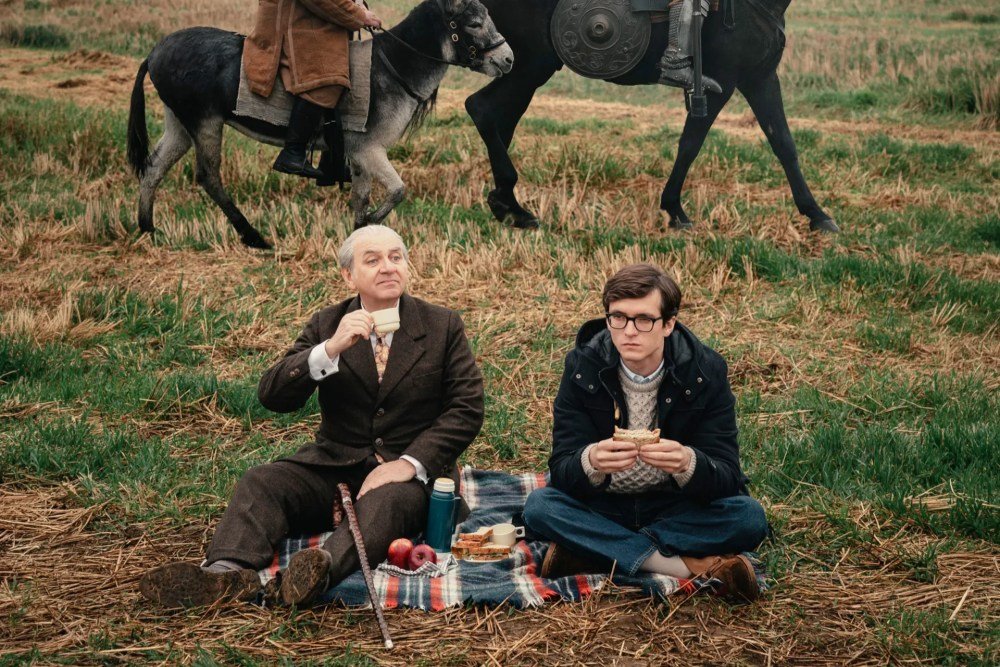
    As played by White, the young Parini may be fairly advanced in his studies — as an English literature doctoral student at St. Andrew’s University in Scotland — but he exudes an unworldly freshman quality in his just-askew tortoiseshell glasses and oversized duffel coat. A native Pennsylvanian, and still very much a fish out of water, his shy, sweet earnestness makes him an easy target for good-humored ribbing by his breezily bohemian supervisor, the poet Alastair Reid (Alan Cumming, on pleasingly Alan Cumming form). A scholar of South American literature and a leading translator of Borges’ work, he invites the Chilean to stay with him at his ramshackle coastal cottage; joining them for a day, Parini is both bewildered and a little enraptured by the brilliant, eccentric and sightless septuagenarian visitor.

    He’s not, however, prepared to be Borges’ babysitter — which is precisely what he becomes when Reid heads off on a last-minute trip to London, leaving some pointers regarding the writer’s various medications, but not much else. It also happens to be the week when Parini was planning to drive up into the Highlands to interview his Ph.D subject, the elusive and hermetic poet George Mackay Brown (Peter Mullan, in a mischievous extended cameo). Cue a cross-generational odd-couple road trip, with rather more sightseeing detours than Parini had planned for. Borges may not be able to see the scenery, but delights in every scrap of local color, to a degree that the American — tasked with describing everything to his elder, in suitably lyrical terms — finds quite wearisome.

    Audiences might relate to some extent. In a sprightly performance rife with oddball mannerisms, Gnecco gives Borges equal parts impish wisdom, earthy vulgarity and childlike wonder, rarely letting a moment’s silence go unfilled with eager chatter. When the virginal Parini — who thus far has read romantic poetry without truly feeling it — hits it off with smart, kindly pub worker Ailith (a wonderful Freya Mavor) and they steal away for a time, the film positively breathes in the old man’s absence.

    Borges’ presence accounts for some amusing and even poignant adventures: a bumbling boat excursion on Loch Ness, or a fanciful, hallucinatory visit to a long grassed-over battlefield. But the film’s most affecting moments are its quietest ones, largely centered on Parini and his interior anxieties, which include his less academically-inclined brother’s travails as a soldier in Vietnam. Whitehead gives “Borges and Me” the stillness it needs to avoid feeling mawkish or shticky, but screenwriter Oren Moverman (working from an earlier adaptation by Parini and Ross Clarke) pivots between moments of graceful poetry and others of simpler feelgood sentiment.

    The final balance slightly favors the latter: There’s little engagement with Borges’ own writing, for example, though audiences so inclined have the upcoming five-hour-plus documentary “Life of Jorge Luis Borges” for that. (Perhaps the two films’ eventual distributors could put their heads together and work out a complementary release strategy.) Full of warm feeling and fuzzy nostalgia for the porous, knowledge-gathering naïveté of youth, “Borges and Me” treats the author as a general, buoyant, heavily imagined spirit rather than a historical subject, and likably so.