Kuku, which has built a substantial presence in Indian digital entertainment through its audio and short-form video platforms, is stepping into theatrical cinema for the first time with “Indian Institute of Zombies,” a Hindi-language horror comedy due in cinemas on May 8.
The film unfolds on an elite engineering campus, weaving together zombie horror, youth comedy and social satire. Kuku is positioning it as a genre first for Indian cinema, with the theatrical setting central to its strategy – the company sees the communal big-screen experience as distinct from, rather than an extension of, its existing digital offerings.
The ensemble cast includes Jessie Lever, Anupriya Goenka, Mohan Kapur, Ranjan Raj, Shivani Paliwal, Shantanu Anam, Rose Sardana, Sachin Kavetham and Tanishq Chaudhary, among others. The screenplay was written by Hussain Dalal and Abbas Dalal, whose previous credits include “Brahmāstra: Part One – Shiva” and “Farzi.” Direction is by Gaganjeet Singh and Alok Dwivedi of Low Gravity Productions, a team with a background in streaming series and ad films.
The story originated internally at Kuku, with the project framed as the opening move in what the company intends to be a growing theatrical slate.
Kuku’s two main platforms occupy distinct corners of the Indian digital market. Kuku FM has scaled into a major destination for audio storytelling, while Kuku TV has carved out a following among younger audiences through the microdrama format, delivering narratives built for mobile viewing.
“Kuku has always been obsessed with how India consumes stories,” said Lal Chand Bisu, CEO of Kuku. “We built scale in personal consumption through Kuku FM and created a new microdrama category in India with Kuku TV. Theatres for us represent the next frontier and we are excited to make our first steps in it. ‘Indian Institute of Zombies’ marks the first of our many, rooted in youth culture, genre innovation and mass Indian tastes.”
Alongside its creative ambitions, the company is also making a case for artificial intelligence as a structural part of how it makes films. Rather than deploying AI at the margins, Kuku says it has built the technology into the project’s foundations – informing how the story was developed and structured, how production logistics were modelled, and how creative decisions were tested and refined throughout the process.
Kunj Sanghvi, senior VP at Kuku, explained the thinking behind both the genre choice and the technology strategy. “‘Indian Institute of Zombies’ is a film for everyone who has ever been on a college campus. We hope our audiences get to experience their adventurous and brave side as they watch this hilarious film on zombies. We observed the success rates of horror comedies at the cinemas, the lack of a breakout Indian zombie film yet and the insatiable appetite for campus stories across age groups in India,” he said.
“We don’t see AI as a replacement for creativity, but more as an amplifier. By deeply integrating AI into our filmmaking process, we’re able to iterate faster, visualize better and make sharper decisions earlier,” he added.
“NCIS” has not been shy about letting some of its tertiary characters die a dramatic death, but when it comes to letting any of the show’s main cast come to a sad end, there’s been more of a historical hesitation there. So the fandom was little prepared when the big surprise of the show’s 500th episode Tuesday night turned out to be Director Leon Vance, portrayed by Rocky Carroll, going gentle into that good night.
Much of the episode focuses on Vance flashing back on recent events to a seemingly antagonistic interrogator, who eventually reveals himself to be a young version of Ducky, the coroner whom, of course, the director knows to have gone on to the great beyond. At that point, Vance slowly but surely comes to accept his fate, even cracking a joke as he wonders whether having a blinding white light is a little bit “on the nose.”
Will the audience accept it as readily as Vance? And more importantly for our immediate purposes, has Rocky Carroll? With pun definitely intended, Carroll has been a rock of the show through his 18 seasons, gradually being built up from a recurrent player to a mainstay few fans imagined they’d have to learn to live without. But the actor says he is fully reconciled, having had a few months to consider it. Plus, he didn’t have to have a tearful farewell when he filmed his final shots; Carroll is a frequent director on the show, and already has returned to the set to film an episode yet to air in this, season 23.
Carroll got on with Variety for an in-depth exit interview, showing much of the good humor and grace that endeared him to “NCIS” showrunners for 18 years (and possibly more seasons to come, if, in true “NCIS” fashion, he is likely to return in flashbacks or as someone’s conscience).
First off, when did you film this farewell episode, and was it hard to keep it a secret in the weeks or months since?
As we get closer to the air date, my biggest concern has been, because of the advent of social media, being able to keep a secret like this, when sometimes leaks come from the most unsuspecting sources. So the fact that this hasn’t been blasted over the internet so far, or that the majority of people outside of CBS and a small circle of people still don’t know about it, is pretty cool. I think it’s gonna be a huge shock for people. I’ve been able to wrap my mind around it and come to terms with it because I’ve known about this since November, when I was first told about what was going to happen. And the last scene, where Director Vance realizes that he’s been talking to basically the grim reaper, the angel of death, and walks toward the light, that was shot on Dec. 11. And we’re in the middle of March, so I’ve had a little time to wrap my mind around it and come to terms with it.
Brian Dietzen, Rocky Carroll and Gary Cole in episode 500 of NCIS
CBS
And how do you feel now, having had that little bit of time to accept it?
I’ve been able to kind of come full circle with it. And I really think it’s a great episode. I’m not just saying this to be a team player, but if you’ve gotta send a character off, what a way to go. It really is exactly what our executive producer, Steven D. Binder, said. He wanted to write not only a great episode, but a real love letter to the character that really summarized his journey and his impact on the show, and I think we achieved that.
For selfish reasons, I have to remind people: I’ve been a character on this series for 18 years. Most Hollywood careers don’t last 18 years. So to be able to play one character on one of the most popular shows in the world for 18 seasons, that’s the equivalent of living to be 105. You know, if you’ve known somebody who lived to be 105, when you go to that funeral, there’s a part of you that’s like, “OK, yeah, this is sad, but I mean, geez! The guy lived to be 105.” So I feel that way with my character.
With the series, eventually all things do come to an end, and my character’s end came before the end. It would be wonderful to say, “Yeah, I was there for the the very last take of ‘NCIS’ when they finally boarded up the windows and said, ‘OK, that’s it. No more. Everybody go home.’” But, you know, the show was already on the air for five seasons before I started. And I’ve said this many times before: When I came on the show at the end of season 5, I literally thought to myself, “Well, at least you made it on the tail end of the series. It’ll probably go seven seasons — if you’re lucky, maybe eight — and at least you will have gotten a couple good seasons out of it.” That was literally my thought process when I joined the cast. So by that math, the last 16 years have basically been overtime for me.
For people who are O.G. “NCIS” viewers, there may still be a few of them who think of you as one of the new guys, even though you have been around for at least 80% of the series’ life. That’s partly because it wasn’t clear at all when you came in that you were going to be a key cast member.
It was a slow feeling-out process, because when my character came in, he was very, very much an unknown character. He and Gibbs, Mark Harmon‘s character, were very adversarial. You didn’t know: Is this a wolf in sheep’s clothing? Is this a bad guy that’s eventually going to wreak havoc? So the fact that this character, who originally kind of in as the boss from hell, like the stepdad nobody wants, suddenly over the years has become a real member of this “NCIS” family, is a real testament to the writing. And when Steve Binder, the executive producer, told me what the storyline is, he said, “One of the reasons why we selected Vance to meet his demise is because of who you are and what you mean and how significant your character is. As macabre as this sounds, who better to kill off than somebody that everybody would go, ‘Oh no, not him’? You got the most ‘Oh no, not him’ votes. And that’s when we knew we had to do it.”
You sound like you had understandable moments of doubt about whether you were ready to go.
All this happened pretty quickly. I was told in November that “two episodes from now, we’re shooting this episode where your character meets his demise.” And I was like, this is happening in two episodes? So I’ve got basically about four weeks to get ready to do this.” So I had this kind of knee-jerk response, where I remember one of the first things I was saying to our executive producers was: “We lose characters all the time, but we sent Gibbs off to Alaska. Tony and Ziva, Bishop, all these characters, they were all able to kind of go on their own free will, always with the thought that they’re gone, but not not dead. So if you wanted this character to go, why are we being so final about it, when everybody else just gets sent off to another country?” So, yeah, that was my rebuttal.
And what was the answer to that? Obviously, they had to be telling you that it would not have the same impact just to make you another character we imagine retired and living happily ever after.
Yes, absolutely. And again, it’s the 500th episode — the studio, the network, everybody involved said, “We don’t have to put this show on the map — it’s on the map — but we have to remind people why it is one of the most watched shows in the world and has been on as long as it has. Let’s do something spectacular for the 500th episode. And this is what we’ve come up with.” Once the creative in me and the director in me read the script and got a real good gist of it, I was like, “It actually is a great idea.” It’s a terrific storyline. And you know, actors love dying on camera anyway. And I would say the great thing about dying on camera is that weeks later, you get to sit and do an intervie and talk about it.
Look, if this had happened in my third season playing this character, I’d be devastated. But if somebody had told me 18 years ago, “Here’s the deal: We’re gonna hire you to play this character. We’re gonna give you 18 consecutive seasons of work on the most watched show in the world. At the end of season 18, something’s gonna happen to your character. Will you accept this offer?” — there’s not a single actor on the planet who wouldn’t say, “Oh, hell yeah. Sign me up. Eighteen years of work. Are you kidding me?”
From talking to Steve Binder before speaking with you, it sounds like this idea had been brought up a long time ago and they just couldn’t pull the trigger, so to speak.
NCIS – 23-504 – “All Good Things” – Rocky Carroll on NCIS, Tuesday, March 24 (8:00-9:00 PM, ET/PT) on the CBS Television Network.
CBS
It was a very macabre compliment, but he said, “Because of who you are, Rocky, and because of what you brought to the character, we’ve been talking about killing off Vance for the last 10 years. This idea didn’t just come about in 2025. We’ve been thinking about killing this character or having this character meet some sort of untimely death for over a decade. But we couldn’t because it was you.” And I think they figured, “Look, 23 seasons in, who knows how much more time we have. If we don’t do it now, there may not be a season that allows us to do something of this magnitude, because we’re in overtime here.”
They were clearly trying to figure out a way to make it a happy ending, in its fashion. having set up the death of Vance’s wife so long ago…
If your grandfather precedes your grandmother in death, then once your grandmother goes, the first thing we say is, “Oh, they’re together now.” Or it’s “Ronnie and Nancy are together again.” It’s the first thing we think whenever somebody that we love dies: they’re gonna be with the other people that we’ve lost and cared about in the circle, together on the other side now.
What did you think of the idea of having a young Ducky break you the news? The things that it brought to mind were kind of a combination of “It’s a Wonderful Life” with the “Twilight Zone” where Robert Redford turns out to be the very nice angel of death.
Yeah, my mind went immediately to “It’s a Wonderful Life.” Were David McCallum still with us, he would’ve been the ultimate. But I love how Steve Binder structured it. We brought back Adam Campbell, who plays young Ducky, because in the spirit world, you get to pick how old you want to be when you come back. It worked on so many different levels, and just having that little bit of a plot twist of saying that in the afterlife you get to come back whatever age you want. It’s like how you can eat what you want and not gain weight — there’s some upsides to being on the other side.
Let’s talk about the evolution of your character a little bit, which also goes back to the question of the longevity that was not anticipated by any anyone.
Even to this day, I’ve never been in all the shows produced [in a season. Because Don Bellisario, who creatied this show, basically commissioned the writer at the time, Jesse Stern, to create this character. There had already been two other NCIS directors, one played by Alan Dale and the other played by Lauren Holly. It’s one of those posts where, in real life, the NCIS director, their tenure is about three years. So in the real NCIS world, the running joke is, “You are the longest tenured director in history.”
The character was meant to be this character who occasionally would come down from his office and whip people into shape. It was never supposed to be a key component to the show. And part of the thing that I had going for me — I tell people this all the time — was that I didn’t know much about the show and didn’t know 99% of the people connected to the show. But the one person I did know was Mark Harmon, because we had done “Chicago Hope” together, so if you’re only gonna know one person on a hit show, it’s good that it’s the lead actor, and somebody that you had a great relationship with. And I think whatever chemistry we were generating as these characters, once that started to make itself apparent, the writers said, “Hey, this is fun to play off of. There are so many unspoken elements about the dynamic — the male dynamic, the race dynamic, all the different things that we don’t even have to hang a light on, that just are.”
Showrunners past and present have described a warmth you have that was too good to ignore in terms of bringing the character forward. And it’s fun for audiences to see someone who you think of as a badass warm up.
Yeah. Over time is, we were able to craft it so the character didn’t just become this stock “here comes the boss from hell; here comes Mr. Slate from ‘The Flintstones,’ breathing fire.” I tried to infuse it with an undercurrent of humor, where it’s the boss from hell who kind of does it with a wink and a nod. He kind of relishes it, and he only uses it when he has to, but if you catch him in a candid moment, you know you might actually get something funny out of it. So we played with that. And you know, my first foray here in Hollywood was doing a sitcom, so that was the world I came from, so I wanted to kind of ride the rails with this character.
There has always has been so much comedy in the show with the wisecracking of the core cast. But of course, you were not doing one-liners initially. Do you remember when the point came where you were finally allowed to be a little bit funny too?
I think one of the first episodes where we did that was an episode called “Knockout.” It might have been the first or second full season of my character, where you got to see his home life and his family and his wife and kind of see him in domestic bliss. And the wife is the one that when he walks in the door, it’s like, “Hand me the toothpick, take it outta your mouth.” We domesticated the character a little bit, and Vance got to see him in the world where he didn’t rule his house with an iron fist the way he does NCIS. That was the beginning of it, and we just started to kind of have more fun with it.
I thought as this character went on, it’s gonna get old very quick if he’s just adversarial with everybody. But if there’s a wry sense of humor behind it, where he kind of enjoys putting people in the hot seat and has has fun with it… just an undercurrent of that where it’s less about really trying to undress somebody verbally and more about, “Just remember who’s the boss. Remember who has the upper hand. When all is said and done, you may win the argument, but I could still reassign you to the NCIS desk in Alaska if I wanted to. So just take that with you.” You always had that kind of quirk about it, and we started to revel in that and allow the character to be much more three-dimensional and humorous and candid.
But I think the biggest thing that gave us the longevity with the character is that once Vance’s wife died, he and Gibbs now had the same tragedy in common. They both lost their wives, and any issues between them were sort of secondary now because of the grief and tragedy of sharing that. Suddenly it humanized that character more than anything else could have.
Do you have a favorite episode, or is that too tough?
Because I’m well over 300 episodes, it’s hard. It’s like asking Tom Brady, “Do you remember your favorite pass?” Like I said, it’s 18 years of being able to go to work and having a great job doing what you love to do.
I think it’s baked into our business: When you’re an out-of-work actor, or when you’re auditioning and you’re trying to land a show, or you’re on a show and you don’t know if it’s gonna go more than one season, or it may go six episodes and get canceled, there’s always such uncertainty. And when something like this happens, and finally there’s a bit of stability — we’re around for five years; we’re around for 10 years; now, we’re in season 15; now we’re in season 20 — it’s so easy to self-sabotage in our business. Because when you finally get into a scenario where the grass is green, either the actor or somebody who represents the actor suddenly plants the seed that maybe there’s a shade of green that’s even nicer. “I know this is what you think is your dream job, but maybe you’re not as happy as you think you are. Maybe we need to push all our chips in the middle of the table and say, ‘I can’t work under these conditions! Even though I’ve been begging for this job for my entire life.’” We do this to ourselves. Or all of a sudden, our agent goes, “OK, we know you love your job and you love the cast and the writing, you love everything about it, but you must be miserable. They’re just not servicing you enough. You’re not getting enough lines …”
So having for the last 18 years I have been able to say, “You know what, I’m doing exactly what I love to do, and I love my job. And I’m sorry for the people who work for me or who represent me, but I’m not that guy who wakes up every day and goes, ‘How can I get a bigger trailer? How can I get more lines? How can I get more? How can I have a greener pasture than the one that I’m I’m sprawled in right now?” I’ve been able to just really be present and enjoy it. And I think for most creative people, it’s just baked into the business: Very seldom do you realize just how good something is until it’s over. And I was determined to really enjoy and relish this and be present while I was doing it, not 10 years after the show when I’m doing some retrospective with the cast and I’m going, “Man, that was a really good time. I wish I had really embraced it.” It’s like, no, no, that wasn’t gonna be me.
At “NCIS” they like their ghosts and apparitions. So do you think the door would certainly be open for your return on that level? Because they have brought Mike Franks back for cameos and people like that who suddenly pop up. Do you foresee that happening with you, or would you rather just be done with it?
Oh, I think we coined the term ghost stars. We have more ghost stars on our show than anybody. So I absolutely foresee it. And I also direct three, sometimes four episodes every season. And I think that will continue. So for me, it’s really goodbye for now. It’s not as final as as it feels. Even when I shot the final scene on Dec. 11, when we finished the episode and shot the final scene, and all of us as a crew were all saying goodbyes and hugs, I just remember saying, “Guys, I’ll be back in a month to start doing prep work and pre-production for the episode that I’m directing.” So, I’m not here for every meal now as a relative, but I come back for Thanksgiving and Christmas. I’ll be around.
So you have already been back to direct?
The answer is yes. Literally a month after we shot this show, I was back in January to direct what I think is maybe the third-to-last episode of this season.
Do you have the impulse to try to jump into another series as a regular, at all?
No, my impulse now is to is to do exactly what I did while I was on the show. … I’ll be in New York when the episode airs doing a live Q&A at the SAG screening room in midtown Manhattan. There’re gonna be 150 SAG members who’ve not seen the episode; it’s gonna air in real time at 8 p.m. and then the lights are gonna come up and I’m gonna walk out and go, “Well, that just happened. What do you guys think?” And we’re gonna talk about it and I’m just gonna have fun with it.
And I’m gonna be able to do what most actors never get to do, and have the luxury and the wherewithal to not worry about “God, I hope the phone rings and somebody calls me. I gotta get another gig.” If the next six months or five years go by and I’m not on a call sheet, working 12-hour days, it’ll be okay. You know, fortunately, 18 years of consistent work on the most watched show in the world gives you a little bit of cushion. I might be doing a production in a 50-seat theater somewhere in Hollywood and having the time of my life. For the last 18 years, I’ve had the best part-time job in Hollywood. So there’s not a whole lot to be upset about.
Disney+ has begun production on “The Koreans,” a reimagining of the acclaimed FX series “The Americans,” with Lee Byung-hun and Han Jimin set to star as North Korean spies living undercover in South Korea.
Set against the wave of democratization and cultural modernization that swept through South Korea in the early 1990s, the series centers on a middle-class family concealing a treasonous secret. Though appearing to be ordinary citizens to their friends, neighbors and even their own children, both parents are in fact elite North Korean operatives working to destabilize the South from within. The series will track the pair as they are pulled between allegiance to their homeland, their sense of self and their bonds as a family, while a relentless Korean counterintelligence agent edges closer to exposing them.
Lee Byung-hun, known for “Squid Game” and “No Other Choice,” and Han Jimin, of “Heavenly Ever After” and “Love Scout,” lead the cast. Ahn Gilho, whose credits include “The Glory” and “Memories of the Alhambra,” directs. The series is produced by Imaginus, behind “Tempest,” “Typhoon Family” and “Can This Love be Translated?,” alongside Studio AA, a co-producer on “Tempest.”
The screenplay is adapted by Park Eunkyo, known for “Made in Korea” and “Mother,” from the original FX series created by Joe Weisberg and showrun by Weisberg and Joel Fields, which starred Keri Russell and Matthew Rhys. The original series took home the Golden Globe for best drama in 2019 and earned AFI TV Program of the Year honors in each of its first five seasons, from 2014 to 2018.
“The Koreans” will release exclusively on Disney+ internationally and on Hulu in the U.S..
The announcement positions the series as the latest addition to Disney+’s expanding Korean content slate, which currently includes “Made in Korea,” “Tempest” and “The Tyrant.” The streamer also has several further Korean originals in the pipeline, among them “Perfect Crown” starring IU and Byeon Wooseok, “Portraits of Delusion” (working title) with Suzy and Kim Seonho, and “The Remarried Empress” starring Shin Mina, Ju Jihoon, Lee Jongsuk and Lee Seyoung, as well as second seasons of “A Shop for Killers” and “Made in Korea.”
The O2 Silver Clef Awards have revealed this year’s first honorees: Lily Allen, Sam Fender, Max Richter and Ludovico Einaudi.
Put on by Nordoff and Robbins, the U.K.’s largest music therapy charity, the 2026 ceremony will bestow Allen with the Icon Award (sponsored by Barclays), Fender with the Best Live Act Award (sponsored by Uber Eats Music Hall), “Hamnet” composer Richter with the Contemporary Music Award (sponsored by PPL) and Italian pianist Einaudi with the Innovation in Music Award (sponsored by Oak View Group).
This year’s O2 Silver Clef Awards will take place at London’s Royal Albert Hall on July 9. It is consistently Nordoff and Robbins’ biggest fundraising event and has raised over £17 million ($22.7 million) since 1976.
As a press release states: “Funds raised from the event have played a key part in fueling the charity’s growth from a London-based operation delivering music therapy to hundreds of people, to a nationwide organization that supported 15,500 people through 48,000 music therapy sessions in 2025, partnering with over 300 organizations including schools, hospitals and care homes across the U.K.”
Past recipients of the O2 Silver Clef Awards include David Bowie, Annie Lennox, Ed Sheeran, Stormzy, Shirley Bassey, Paul McCartney, George Michael, Kylie Minogue, the Rolling Stones, Oasis and Coldplay.
“I’m honored to receive the Icon Award at the O2 Silver Clef Awards, especially as it marks their 50th anniversary,” Allen said in a statement. “Music therapy is such an essential resource and I’m proud to support something that has such a profound impact on people’s lives.”
Added Fender: “It’s an honor to receive the Best Live Act Award at this year’s O2 Silver Clef Awards. I’m so lucky to do this as a job. This award is especially meaningful because of the incredible work in music that Nordoff and Robbins do.”
Sandra Schembri, CEO of Nordoff and Robbins, said: “It is a real honor to have such an eclectic mix of talented artists receiving O2 Silver Clef Awards in this special anniversary year. Right now, with rising costs and a difficult fundraising landscape, the O2 Silver Clef Awards are more important than ever for us. Through the support of these amazing artists and our music industry peers, we can keep raising awareness of our mission and hope to raise as much money as possible, helping us continue training music therapists and supporting people through music therapy. We look forward to seeing you all at the Royal Albert Hall this July.”
Two years ago, when news anchor Huw Edwards – one of the BBC’s highest paid and best known journalists – was convicted of making indecent images of children, some believed to be as young as 7, almost the entirety of the U.K. was stunned.
Edwards, who’d spent his entire career of almost 40 years at the broadcaster by the time of his arrest, had been one of the most reliable faces on television: the man who was trusted to tell the world Queen Elizabeth II had died in September 2022.
But his arrest and conviction in 2024 had been preceded a year earlier by a strange story that appeared in the press and then disappeared almost as quickly. In July 2023 British tabloid The Sun published a scoop that an unnamed senior BBC presenter had been paying a teenager for sexual images. The rumor mill went into overdrive with numerous household names accused on social media before eventually Edwards’ wife made a statement on his behalf in which he admitted to being the perpetrator and saying he had checked into an inpatient facility on mental health grounds. The public quickly turned on The Sun for effectively outing Edwards.
Now a new drama from Paramount-owned U.K. network Channel 5, “Power: The Downfall of Huw Edwards” shows that in fact the story of the teenager and the conviction for making indecent images are linked by a convicted pedophile whom Edwards knew. It was the pedophile who sent Edwards the images of children being sexually abused in exchange for monetary gifts (Edwards denied he was paying for the images) and it was the pedophile who introduced him to 17-year-old “Ryan” (Ryan’s real identity has never been revealed).
The 90-minute film is produced by Wonderhood Studios, written by Mark Burt (“The Trial”) and directed by Michael Samuels (“The Windermere Children”). “Wuthering Heights” star Martin Clunes plays Edwards.
Ahead of the show airing on Channel 5 on March 24 (it will also be available on Paramount+), Variety sat down with the network’s commissioners Guy Davies and Paul Testar to find out how – and why – they decided to bring the downfall of Huw Edwards to the small screen.
Where did the idea for the film come from?
Guy Davies: Wonderhood came to us with the idea of doing the Huw Edwards story. And then that developed into a conversation about how you do it, bearing in mind that one of the key sources can’t be identified. And I think we came around to the idea that a dramatic treatment of the story was the way to progress.
Did you approach it almost like a piece of factual content?
Davies: Well, I think in the sense that there was clearly somebody at the heart of this, the Ryan character, who was vulnerable, who was traumatized. And I think one of the great things that Wonderhood had managed to do is to keep that relationship and the duty of care to Ryan and that is the thing you do in a factual show.
Paul Testar: Mark Burt took the same approach and shared the same mentality as Wonderhood, of putting Ryan and his and his story and his perspective and his wellbeing right at the center of this story… This is such an emotional story, and one of the most important things about telling it as a drama was to convey the emotion of what this grooming experience was like for this poor boy, and Mark took that incredibly seriously.
The debacle was hugely embarrassing for the BBC, particularly the fact they continued to pay Edwards after his arrest while he was awaiting trial. Was there any consideration internally about doing this story given that the U.K.’s broadcasting scene isn’t very big?
Davies: I don’t think there was, to be honest. The story was always the story for us, about power, about grooming, about how that process happens. The BBC investigation is a confidential inquiry, we didn’t have access to that. And we didn’t want to make a drama about the BBC. We wanted to make a drama about a powerful person and how they came to be involved with a young man in this way and who abused their power. And also the other story, of Edwards’ conviction, was again not a BBC story.
Testar: I think it was quite an early editorial decision as well that this story reaches a broader audience when its focus isn’t on the BBC. Because I think as much as would interest us who work in television, it’s less likely to be of interest to the broader public. The story of how a vulnerable person is groomed by a powerful person, and what it’s like for the family of that boy as well, is something that gives the story a broader reach.
Because the story is told in that way, there might be some criticism that you’ve gone too soft on the BBC, particularly given what they knew about Edwards’ arrest months before the public became aware. What would your response be to that?
Testar: Editorially, I think it would have stuck out quite awkwardly at the point at which the arrest takes place in the drama, I think to then start, at that point, to interrogate what the BBC may or may not have known and when, I think just wouldn’t have worked in the story.
Davies: I think it’s how you create the part of the story which is about not being heard. And I think that Mark was very perceptive in using what we knew about the frustration that the family felt, particularly in Wales, when they tried to complain and found the BBC putting up all sorts of conditions as to wanting to get information about it and [so] they just went to the papers.
Testar: It’s the frustration of an ordinary person trying to navigate a complex bureaucracy.
Let’s talk about some of the legalities of making the show. First the disclaimer credit, which reads: “This drama is based on extensive interviews with the victim, his family and the journalists who revealed his story. Some scenes, characters and text messages have been dramatized.” In a post “Baby Reindeer” era, do you have to be more careful of exactly how you’re phrasing that?
Testar: I think you do have to be careful how you phrase it. And I think there isn’t a one size fits all disclaimer for every show. I think each one is dependent on the story and the and the source material. Personally, I think it’s something people were very careful about before the “Baby Reindeer” scandal.
At the end there is also a credit noting Edwards was offered the opportunity to comment and declined. Were you expecting him to make a statement?
Davies: Well, we didn’t make it as a collaboration with him, had never intended to.
Did you see the statement he put out on Monday in which he condemned the dramatization? Is there anything you’d want to add to the statement Channel 5 already put out in response?
Davies: I don’t think so. Because I think that statement is about our position, really, that [the film] was based on the research, and that ourselves as the channel, our legal team Wonderhood’s legal team, were all happy that this has been made in accordance with Ofcom and the Broadcasting Code, which I know Huw has mentioned in his statement, and that we were very clear to give all of the allegations that would be looked at in the film in ample time, when it came to the Ofcom rules, which is what we did. So I think that’s it.
He has said he is also planning to “produce his own account.” Is that something that Channel Five might be interested in?
Davies: No.
Did making the film give you any insight into why he did what he did?
Davies: I don’t think I can comment on that, you’d have to ask him. … I mean, the insight from the psychiatric reports is his explanation to a degree. But I wouldn’t want to try and interpret his psychology.
Did you pay Ryan for his life rights?
Davies: I don’t think we should talk about that to be honest. I think that any relationship we have with him, or Wonderhood has with him, to be accurate is a matter that is between them. I don’t want to get into that. I don’t think we need to expand on that. I know Huw has asked about it.
The film opens with Edwards reporting Queen Elizabeth’s death and ends with him announcing his own conviction, which was obviously a dramatic license. Why did you choose to start and end there?
Testar: It was one of the very first things that Mark reacted to in this story, which was that there is no more trusted emblem of the establishment in our society than the person who’s given the responsibility of telling the public that the Queen had died. … And also somebody who is responsible for not just the Queen’s death, but had reported many other stories and scandals and convictions.
Davies: [He was] incredibly trusted by the public, and in a way, that trust became a bit of a metaphor in the film, because that’s also about power and the abuse of power. And that’s why I think it’s such an interesting story, hopefully for viewers, because I think they will be taken aback by some of the texts, for example. The other side to that figure of trust, that’s why it’s such an interesting story to explore that idea of power and trust. Because you’ve got it there in the actual research.
Did you always know the film was going to end with him reading out his own conviction as a news reader?
Testar: It was pretty early on, but it wasn’t in the very first draft… it felt like a very important thing to end the story on, to remind the audience what the scale and detail of Edward’s crimes were.
Davies: And being, you know, finally accountable to the public in the medium which he worked in.
I remember from covering the conviction and the court case that it was such a strange thing that this guy who for so long had been the face of the news had become the news.
Testar: I think that this story and this scandal was quite a significant moment in the public’s general view of its institutional and establishment figures. I think it has contributed to a questioning of establishment figures, simply because of what the role that Edwards had and all of that. So I think that was another part of why that device was important.
Katy Arnander, director of programming at SXSW London, teased this year’s conference program Tuesday evening at an event at a hip bar in the uber-cool neighborhood of Shoreditch, East London, where the festival is staged. The bar’s name, Equal Parts, neatly reflected the nature of SXSW London, as outlined by Arnander.
The festival, whose second edition runs June 1-6, revealed its live music component last week, and on Thursday it’ll be the turn of its conference lineup, with speakers drawn from the worlds of business, tech, politics and the arts. The film and series program will be unveiled next week.
Its programming chiefs – Katarina Sherling, head of conference, Anna Bogutskaya, head of screen, and Adem Holness, head of music – were all present at Tuesday’s stylish shindig.
First, for the uninitiated, Arnander drew a distinction between the London festival and the original in Austin, Texas, which celebrated its 40th edition this month.
“Essentially, we’re not exactly a clone from Austin – so we haven’t transported the full Austin vibe to London, but what we have done is we’ve decided to create our own vibe here in Shoreditch,” she said.
“That means that we’re leaning very heavily locally, not only Shoreditch, but also East London and London generally, which means that our program has got this flavor, if you like, that comes through being in this part of London, which is a highly convergent part of London. We have music, screen, there’s the City of London down the road [the financial district], big business; there’s Silicon Roundabout [Old Street], tech; there’s designers, creativity, fashion and, of course, visual artists, and all of those are based heavily in this part of London.”
She added, “What we like to say is that South by Southwest provides a lens by which you can look into all of these areas that I’ve just mentioned. So, it’s not just a festival of tech, it’s not just a festival of music, it’s not just a festival of screen, not just a festival of business, but it actually transcends and transgresses all of those areas, and that’s why we’re doing it here in Shoreditch.
“It’s the kind of lens around convergence that brings the energy to the work that we do, and this creates an ecosystem around the festival, which means that our delegates have this experience that allows them to travel across the neighborhood, across our various venues, and have these different experiences.”
Looking back at last year’s edition, Arnander said that they had over 25,000 audience visitors, delegates and companies from over 86 countries, 34 venues, and over 1,000 speakers.
Speakers last year included Deepak Chopra, Jane Goodall, Idris Elba, Wyclef Jean, Nile Rodgers, Björn Ulvaeus of ABBA, Asif Kapadia, Julian Lennon, Joseph Fiennes, Katharine Hamnett and Sophie Turner, and VIP guests included Tom Hiddleston, Orlando Bloom, Bryce Dallas, Nick Mohammed and King Charles.
Looking ahead at this year’s edition, Arnander said, “We’re doubling down on what we did last year in terms of the content that we’re leaning into, but what we discovered last year was there are areas where we’re going to lean much more deeply into. One of them that we know is very important for an event like South by Southwest is connecting, networking, putting people together. Putting people from the film industry together with the tech industry, putting people who work in AI together with fashion designers. Putting musicians together with fintech. All of these are opportunities to mix and mingle and share and create ideas.”
From listening to their audience and drawing from their learnings from last year, the programmers have zeroed in on six themes “that are pertinent and that people really want to hear about,” she said.
One theme is about “AI and the new power structure,” Arnander said. “Last year, we were all about AI. Everybody wants to know about AI. This year, we now know AI is here to stay, and we’re all using it. So we’re actually delving a little bit deeper into what that means,” she said. “What does AI mean in terms of government? What does it mean in terms of information, misinformation?”
Another theme is “living longer, living better,” Arnander said, pointing to discussions about “the development of new drugs, high-speed R&D processes with AI,” among other related topics.
Yet another theme is: “How culture can save humanity,” she said. “I think a lot of us here are connected to the cultural sector, and I think more and more culture provides us with a lens by which we can manage and cope with AI, because one will not exist without the other.”
Other themes include the importance of free speech, creativity in the algorithm age, and futurism in practice, including areas like robotics and space travel.
Alan Ritchson won’t face criminal charges after an alleged physical dispute between the “Reacher” star and his Tennessee neighbor, the Brentwood Police Department, which was investigating the altercation, announced in a statement.
“After reviewing available evidence, including video footage and witness statements, authorities determined that no criminal charges will be pursued. Mr. Ritchson’s actions were found to be in self-defense,” Brentwood Police Captain Steven Pepin said in a statement to Entertainment Weekly.
Pepin explained that a “reckless endangerment charge was considered,” but Ritchson “declined to pursue charges” against his neighbor. He added that “the case is now closed, and no further action will be taken.”
In an interview with TMZ, which first reported the conflict, Ritchson’s neighbor, Ronnie Taylor, said the quarrel started to bubble over on Saturday morning, when he “heard this [incessant] revving” from the actor’s motorcycle. Then on Sunday afternoon, Ritchson came around again on his bike, along with his two children. After Ritchson rounded the block two times, Taylor allegedly went to confront the “War Machine” star.
“He rode past once, twice. On the second time, I walked outside in front of him and said, ‘You’ve got to stop,’” Taylor recalled to TMZ.
The video of the fight appears to show Ritchson hitting Taylor, who is on the ground, trying to return to his feet. Sources close to Ritchson told TMZ that the actor did not instigate the fight. The outlet reported that moments before the video was taken, Taylor caused Ritchson to fall off his bike and proceeded to push him to the ground.
Nuclear warship murder thriller ‘R91,’ Kyrgyz action drama ‘Red Pants’ and Latin dancing dramedy ‘Chacachá!’ won big Tuesday night at France’s Series Mania, Europe’s biggest TV festival, scooping the prizes offered by its three biggest industry events, the Series Mania Forum’s Buyers Upfront and Co-Pro Pitching Sessions and SeriesMakers.
All suggest a broader audience ambition while broadly building on the three genres that are the favorites of global internet users, Ampere Analysis suggested at Series Mania on Tuesday: Crime and thrillers, comedy and action and adventure.
‘R91’ An ambitious high-concept thriller set and now shooting on France’s nuclear aircraft carrier Charles de Gaulle, “R91” kicks off with a female crew member being found dead just hours after departure. As the killer strikes again, the series evolves from murder investigation to espionage thriller to full-scale military crisis,” Ramy Nahas, SND, director of international distribution noted just before the Buyers Upfront.
Series marks the first-ever co-acquisition between Amazon Prime Video France and leading free-to-air channel M6. Created by Henri Debeurme (“Marianne, Missions”) and Mathilde Arnaud, “R91” is directed by Julien Despaux (“Black Spot,” “Paris Police 1900”). SND announced its high-profile cast just before the Buyers Upfront led by Elodie Yung (“Marvel’s Daredevil,” “The Cleaning Lady,” “The Hitman’s Bodyguard”) and Alban Lenoir, star of Netflix global hit franchise “Lost Bullet.”
“The Charles de Gaulle is the most powerful warship in the French arsenal, and a floating city operating by its own laws, hierarchies and power dynamics,” said Debeurme. “It is the perfect arena for an entertaining story about trust, legitimacy and the price of command.”
‘Red Pants’
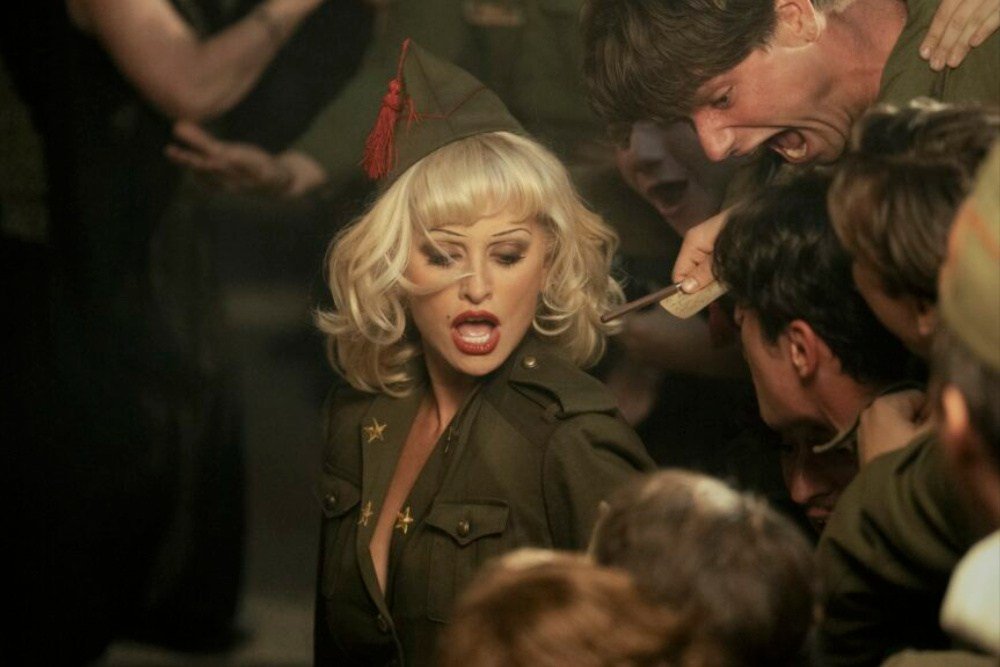
Receiving a €50,000 ($58,000) prize, “Red Pants”, from Kyrgyzstan, is set in late 1970s Soviet Kyrgyzstan, where Aisha, a military officer’s daughter, forms the ‘Red Pants’ first female criminal gang, made up of teens, to avenge her father’s death and challenge the oppressive regime.
Based on true events, “‘Red Pants,’ created by Kyrgyz voices, reveals a rarely explored chapter of Soviet Central Asia while speaking to a universal struggle for dignity, agency and survival. The project stands out for its emotional rawness and its fearless young female protagonists,” co-producer Pavel Feldman told Variety.
“I was born in Issyk-Kul, the region where the events of this project unfold. What matters to me in this story isn’t just the crime plot: it’s the deeper exploration of power, identity and female agency within a rigid, patriarchal and controlling system,” said creator Tilek Cherikov.
“The title comes from an awkward moment when their leader’s jeans were stained with menstrual blood,” he added. “The girls transformed this into an act of solidarity by dyeing their own pants red, turning it into a symbol of strength, unity and womanhood without shame.”
‘Chachachá!’ An eight-part dramedic half hour, “Chachachá!” follows a Gen X woman whose sky-high blood pressure finally brings home to to her how out of touch with herself she has become. “She turns to Latin dancing – not for fun, but for survival – igniting chaos with her family,” the synopsis runs.
Behind the Apple TV, AmazonPrime and HBOMax-streamed “Ariel Back to Buenos Aires” Fairweather Murray teams with Weiss, producer of movies by Sarah Polley (“Away From Her”), Brian de Palma (“Redacted”), Atom Egoyan (Adoration”) and most lately Molly McGlynn (“Fitting In”).
“‘Chachachá’ won us over with its light‑hearted, authentic, and sincere tone. It tackles important universal themes of society with humor. We believe this is exactly the kind of story international audiences need right now,” said Ferdinand Dohna, head of content & co-production at Beta, which partners on SeriesMakers with the Series Mania Institute.
Chip Taylor, the Songwriters Hall of Fame inductee who is best known for writing the classic hits “Angel of the Morning” and “Wild Thing,” died Monday at age 86.
The death was reported on social media by his friend, singer Billy Vera, who said that Taylor passed away while in hospice care. No immediate cause of death was given.
Although it sometimes came as a surprise to music fans who knew of his songwriting legacy but not his lineage, Taylor was part of a famous family, being the brother of actor Jon Voight and uncle to Angelina Jolie. Voight was on hand to help induct his brother into the Songwriters Hall of Fame when Taylor received that honor in 2016.
The New York-bred artist was born James Wesley Voight on March 21, 1940. He was a singer in his own right and released numerous singles and albums over the decades, beginning in the late 1950s as a member of the Town Three or under the name Wes Voight before adopting Taylor as his stage name. As a recording artist, his top-charting single was 1975’s “Early Sunday Morning,” which peaked at No. 28 on the country chart.
“Wild Thing” was a No. 1 hit on the Billboard Hot 100 for the Troggs in 1966, helping usher in a wave of what was often referred to as garage-rock. Its rawness made it ripe for cover versions over the years, including Jimi Hendrix’s live rendition at the Monterey Pop Festival in 1967, as captured in the documentary about the gathering, where the guitarist gets wild enough to light his instrument on fire. It was later recorded as a single by the L.A. punk band X and included in the film comedy “Major League.”
The far gentler “Angel of the Morning” also had an extensive life of its own, reaching its peak moment when Juice Newton had a No. 4 Hot 100 hit with it in 1981. The song also reached No. 1 on the AC chart and charted on country radio as well. The song was originally recorded by Evie Sands in 1967 but drew little attention at the time. The first hit version was by Merrilee Rush, whose version reached No. 4 in 1968. It was later recorded by Nina Simone, Olivia Newton-John and the Pretenders, among others.
Some filmgoers who were not around for the original chart runs of “Angel of the Morning” learned it through the licensing of Newton’s version for the opening of “Deadpool” or the closing of “Angel of the Morning,” in both cases for ironic effect. Additionally, Shaggy used it as the springboard for his 2001 hit “Angel.”
With “Wild Thing,” given the song’s simplicity, music fans did not have a hard time believing Taylor when he said he wrote it in a matter of minutes, at the request of a producer who was working on a project by the first group to record it, Jordan Christopher and the Wild Ones. Their version was considered tame, and bombed, before Britain’s Troggs took it on.
“I was a little afraid to play it for people because it was so different than anything I’d done before,” Taylor said. “It wasn’t one of those pretty little country songs. And it was very sexy.”
Taylor told an interviewer he bought into the contention that “Wild Thing” was the first punk record. “Sounds like it to me,” he said. “The way I was doing my rock ‘and’n’ roll stuff and ‘Wild Thing,’ that was all in the same kind of honest energy that would come with the Velvet Underground and Joan Jett and all those people. The demo is very garage-sounding, very punk-sounding. And the recording of it is very garage-sounding and probably the first record that was done like that. … ‘WIld Thing‘ is a therapeutic song. It lets you relax. And I think that’s the secret to it. It’s simple and it feels good. It’s sweaty. Sweaty things are good.”
He told Rock Cellar of his favorite cover versions, “Hendrix heard the Troggs’ version. He told his girlfriend that he’d just heard a song that was his favorite song that he had ever heard. The next morning he was taking a shower and it came on the radio and he jumped out of the shower butt naked and said, “That’s the song I’m talking about!” He used to play it all the time, so his versions were wonderful because he had the same strum, the same thing that I do hitting the strings with the upstroke with my thumb in the same simple man’s way of playing the guitar.” So I loved his version and I also loved the version done by X, which was very true to the feel of it. They did a wonderful version.”
Prior to that, Taylor had been a staff writer at April-Blackwood Music, CBS’ publishing arm of CBS, and had had country songs recorded by artists like Willie Nelson, who recorded his “He Sits at My Table.”
Linda Ronstadt popularized “I Can’t Let Go” with a 1980 recording. it was another number he had written for Evie Sands.
Billy Vera’s post noted that he and Taylor co-wrote “some good ones,” including “Make Me Belong To You” (recorded by Barbara Lewis and Fats Domino), “Storybook Children” (recorded by Vera along with Nancy Sinatra and Lee Hazelwood, plusDon Williams) and “Papa Come Quick (recorded by Bonnie Raitt).
From the ’90s forward, he made an impact largely on the Americana scene as a singer-songwriter.
In 2012, Taylor got back in touch with his wild side with his presciently named group Chip Taylor & the New Ukrainians, issuing an album titled “F**k All the Perfect People.” The title song was featured in the Netflix series “Sex Education.” In 2019, he got rootsier again with a new album, “Whiskey Salesman.”
Vince Vaughn has some thoughts about late-night television.
On a new episode of Theo Von’s podcast “This Past Weekend,” the two got to talking about how comedy has become more political in recent years, with Vaughn saying it’s “part of the job because you’ve got to talk about current events, but you don’t want to become part of a group and feel like you’re a champion for one ideology. You want to make fun of everybody.”
Von said Hollywood is a “liberal place” and Vaughn added an addendum: “But not really. It’s more like, ‘We’re smart and got it figured out, and if you don’t agree then you’re an idiot.’” He continued, “There was definitely a culture that if you didn’t agree with these ideas, you were looked at as bad.”
This attitude, said Von and Vaughn, bled into the late-night TV landscape, plaguing the programs hosted by Jimmy Fallon, Jimmy Kimmel, Seth Meyers and more. (Vaughn and Von did not name names.)
“A lot of the late shows have struggled because … the only person they could make fun of at a certain point was white, redneck kind of people, and then everything tanked after that,” said Von.
“The podcasts have gotten so much more popular with less production, less writers, less staff. And the reason is … people want authenticity,” added Vaughn. “The talk shows, to a large part, became really agenda-based. They were going to [evangelize] people to what they thought. And so people just rejected it because it didn’t feel authentic. It felt like they had an agenda. It stopped being funny, and it started feeling like I was in a fucking class I didn’t want to take. I’m getting scolded.”
While many believe the reason late-night shows are in decline is shifting viewing habits and the move away from linear television, Vaughn thinks the main problem is the shows themselves.
“The phenomenon isn’t what they say. They always blame technology, but the reality is it’s the approach,” he said.
“People are going to tune into a podcast more so because they want to feel like people are having a real conversation. It’s interesting to them,” Vaughn added. “But if you look at what happened to the talk shows and why their ratings are low, it’s got only to do with the fact of what you just said, which is they all became the same show. They all became so about their politics and who’s good and who’s bad.”
Von asked Vaughn — who has previously identified as a “libertarian” and visited Donald Trump in the Oval Office — if he ever felt “ostracized” in Hollywood.
“I always got along with people … and try to be honest about who I am,” Vaughn said, adding, “I have opinions on both sides” of the political aisle. He said his early relationships in Hollywood were not colored by politics because “we weren’t 23 sitting around talking about fucking taxes.”
He added, “If you’re constantly worried what someone else thinks of you and you’re only around them a couple hours a day, you’re miserable most of the time. You’ve got to find the way to be yourself, but be respectful.