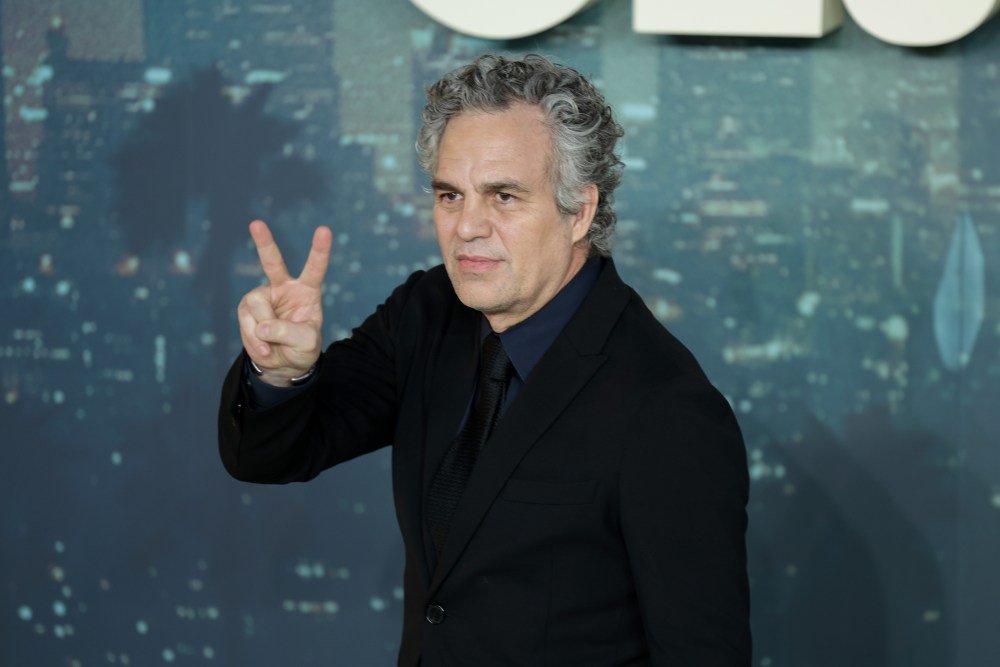
“Don’t you dare, [Rob Bonta], do not cave,” Ruffalo wrote on X. “5,670 filmmakers put their necks on the line for you to fight this merger. Another 75,000+ and counting have signed to tell you not to concede in just 3 weeks. You work for the people — the very people who will be hurt if you let this lousy deal filled with empty promises go forward. Please sign to send a message to the AGs and Paramount. Reject the deal. The people don’t want it!”
Ruffalo is one of Hollywood’s most outspoken stars about opposing the merger. He recently found himself in a back-and-forth with Paramount, in which a studio rep called him “antisemitic” for calling out the Ellisons’ connection with Israel.
Paramount Skydance’s $111 billion deal for Warner Bros. was approved by the Department of Justice in June. However, the deal was put on hold thanks to the antitrust lawsuit from Bonta and his team of state AGs. The Wall Street Journal, citing anonymous sources, reported Friday that Paramount Skydance and Bonta are in “advanced talks” to reach a settlement.
Ruffalo isn’t the only one asking Bonta to hold his ground. Democratic Sen. Elizabeth Warren of Massachusetts wrote on Facebook Saturday morning that President Donald Trump banning CNN from the White House is a warning of things to come if Paramount Skydance swallows Warner Bros. (Trump also banned MSNOW and Politico).
“As Trump tries to ban CNN from the White House, it would be a massive mistake to cave on the Paramount merger,” Warren wrote. “The last thing we need is another Trump-controlled media conglomerate abusing its power to stomp out competition. This is a dangerous merger.”
Celebrating its 30th anniversary this year, Portugal’s preeminent Queer Lisboa – International Queer Film Festival kicked off Friday with a vast program showcasing the latest in LGBTQ cinema, from established filmmakers to new voices, and a look back at the underground counterculture and revolutionary works of activist filmmakers on both sides of the Atlantic.
Lisbon’s oldest film festival, Queer Lisboa launched in 1997 at the Cinemateca Portuguesa as the Lisbon Gay and Lesbian Film Festival, opening with the 1950 short film “Un chant d’amour,” the only film ever directed by French novelist and playwright Jean Genet, whose works included “Querelle de Brest,” famously adapted by Rainer Werner Fassbinder.
Ana David and João Ferreira
Credit: Joana Linda/Nuno Ferreira Santos
The festival’s origins at the Portuguese Cinematheque is one of the factors that has distinguished it from other queer festivals across Europe, Queer Lisboa artistic director João Ferreira tells Variety.
“From the very beginning, I would say that the festival was not envisioned as a kind of niche or festival only for the LGBTQ community because of the institutional support that it already had from day one. So I think it’s a very particular case for a queer festival in Europe. It was certainly not the case with some festivals that started more or less at the same time, like Madrid or Paris.
“The audience was from the very beginning, a very broad audience and an audience interested in film, a cinephile audience,” Ferreira adds. “But of course, also because in the first three years it was organized by the Portuguese chapter of ILGA [the International Lesbian, Gay, Bisexual, Trans and Intersex Association], it also had this very important community aspect to it.”
The festival’s perception of queer cinema has never been based merely on narrative, Ferreira notes. “It was much broader than that. We were interested in a queer gaze at the world. We were interested in a camp aesthetic. So we were looking for very different kinds of films that could fit in this idea.” It was a view that shaped what the festival ultimately became, he adds. “Then the festival was called the Gay and Lesbian Film Festival, but the idea was already queer at the time, the way we looked at film.”
With a total of 94 feature, documentary and short films, the 30th edition of Queer Lisboa takes place at its regular venues, the Cinemateca Portuguesa and Cinema São Jorge, running Sept. 18-26.
Boasting a strong lineup that includes some of the year’s top LGBTQ titles, the festival opens with the Portuguese premiere of Rami Malek-starrer “The Man I Love” from Ira Sachs, whose previous films, “Passages” and “Peter Hujar’s Day,” likewise screened in Lisbon. Leah Nelson’s acclaimed animated drama “Tangles” closes the event.
Papaya
‘Papaya’ was among the first films to receive Screen Brasil distribution support. Credit: Priscilla Kellen
With nearly a dozen sections, including five competition categories and six non-competitive sidebars, the festival offers a broad showcase. New this year is Queer Family, dedicated to kids and their families, with a focus on culturally enriching independent films that explore themes of inclusion and identity. Two Brazilian features make up the program, Allan Deberton’s Berlinale award-winner “Gugu’s World” and Priscilla Kellen’s animated “Papaya.”
It’s been a long-standing goal to attract younger audiences, says Ana David, programmer and director at Queer Lisboa.
Gugu’s World
Courtesy of Jamille Queiroz
The new section is aimed directly at families and the festival has already received positive feedback from interested parents.
“We’ll see if it’s the kids bringing their parents, or if it’s the parents bringing their kids. It’s important for us to work with young audiences who will also become the adult audiences of the festival in the future,” David says. The new section also provides the opportunity for parents and their children to have an intergenerational experience and to even talk about things after the screening, she adds.
The festival has already sold a large amount of tickets for the Queer Family screenings. “We think it’s going to work out really well,” David says.
With the increasing growth and appeal of LGBTQ cinema, Queer Lisboa has sought to find a balance between popular mainstream works, new discoveries and the more radical experimental films that have long defined queer cinema.
“We want this spectrum, the big films and very small films,” says Ferreira. “It’s part of our joy as programmers to discover these smaller and more independent, sometimes more DIY filmmakers and filmmaking, and we try to put all that in the program. It is challenging.”
While it’s much easier now to acquire films than it was 30 years ago, it’s become more difficult to filter through the huge amount of available titles and curate the 90-plus films that the festival presents, Ferreira adds.
Bound
Courtesy of Queer Lisboa
Offering a rare treat for its 30th anniversary is an expanded Retrospectives section with 19 titles, including such works as the Wachowskis’ 1996 debut film “Bound”; Sally Potter’s “Orlando” (1992), Lisa Cholodenko’s “High Art” (1998), Patrice Chéreau’s “The Wounded Man” (1983), Kim Longinotto and Jano Williams’ British doc “Shinjuku Boys” (1995) and, from West Germany, Frank Ripploh’s 1980 classic “Taxi to the Toilet” (“Taxi zum Klo”).
This year’s showcase is especially interesting as Queer Lisboa is hitting 30 at the same time BFI Flare in London turns 40 and San Francisco’s Frameline turns 50, David notes. Those festivals, along with Paris’ Chéries-Chéris, “served as inspirations for the birth of Queer Lisboa.”
“It speaks to the longevity of queer cinema, but also the festivals that have for a long time now been promoting and expanding on the knowledge and appreciation of queer cinema,” David notes.
Orlando
Courtesy of Queer Lisboa
For Queer Lisboa, it was an opportunity to look back at early films that are rare exhibitions in Portugal even if they’re already considered canon films within queer cinema. “We wanted to offer some classic titles that people know and can engage with the retrospective, but then also offer something new for them to learn about and that can expand on their knowledge,” David adds.
An important element of that is to present the films in restored or digitized versions.
It’s the first time that “Orlando” screens at the Cinemateca Portuguesa, David points out. “And they actually have a 35mm print, so it’s amazing that we can offer an excuse for this film to be shown.”
“And to take it out of the closet,” Ferreira quips.
Fatucha Superstar
Courtesy of Queer Lisboa
Also presented will be a newly restored version of João Paulo Ferreira’s 1976 subversive queer musical comedy “Fatucha Superstar,” inspired by Andrew Lloyd Webber’s “Jesus Christ Superstar.”
Made in the wake of the revolution that swept away Portugal’s authoritarian dictatorship, the film blasphemously ridicules in ultimate kitsch fashion one of the main pillars of the former regime, the apparition of Our Lady of Fátima and the Christian symbolism that surrounded it.
Along with Óscar Alves, João Paulo Ferreira was part of the rebellious and independent gay filmmaking movement that produced the first queer films in post-revolution Portugal. Together they founded the film collective Cineground and screened their Super 8 films in Lisbon’s queer bars and night clubs in the 1970s.
Maspalomas
Maspalomas Film Factory Entertainment
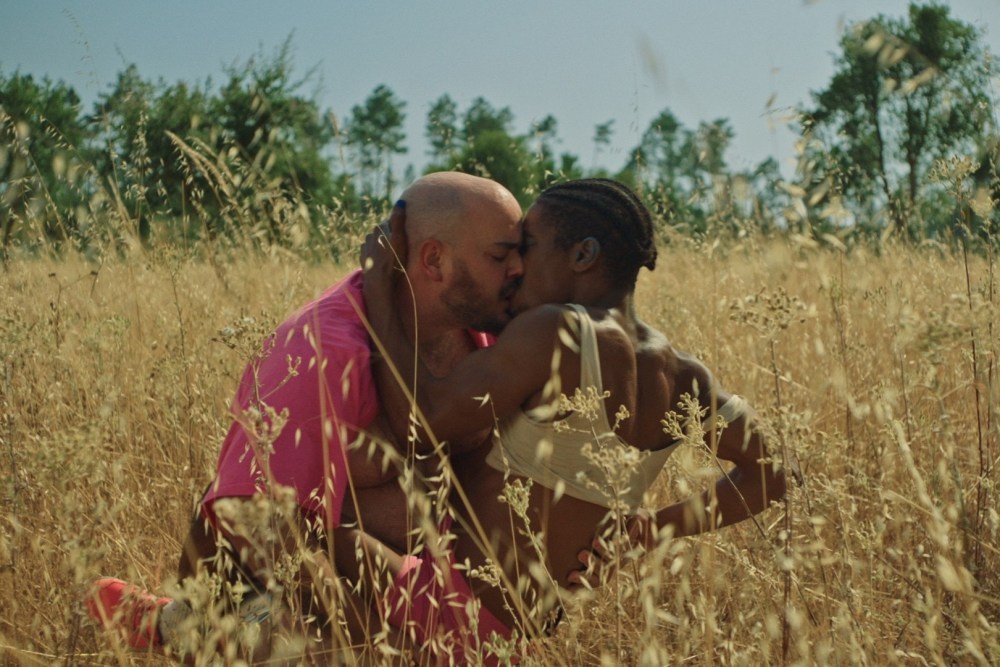
Among the returning talents and exciting discoveries this year are Portuguese filmmaker André Godinho and the world premiere of his debut feature “Nothing Left,” described as a Portuguese queer version of “Punishment Park”; and German artist duo Benjamin Ramírez Pérez and Stefan Ramírez Pérez with the world premiere of “Life Is About Losing Everything,” their hybrid doc on the life and work of Canadian poet Lynn Crosbie, likewise a first feature. Both films unspool in the Queer Art Competition, which showcases experimental, boundary-busting works that “explore the limits of cinematic languages, genres, and narratives.”
Other highlights include Swiss-French feature “Summer Drift,” by Céline Carridroit and Aline Suter, and the European premiere of “Public Access,” David Shadrack Smith’s look at the people who transformed New York City TV into a groundbreaking space for self-expression during the 1970s and 80s.
“Ninjago Legends: Duskfall” is premiering in Korea this weekend ahead of a worldwide release on Lego’s YouTube channel.
The anime-style shorts feature some of “Ninjago’s” most beloved characters as they encounter new challenges and new battles while bringing back some familiar voices from the original show as well as “Ninjago Dragons Rising.”
The series of three interconnected shorts, each three-minutes long, premiered Friday at a “Ninjago Legends” Duskfall” fan event at the Park Mall Yongsan in Seoul. The shorts will be released on the Lego Group’s YouTube channel on Saturday, Sept. 19.
The three shorts are titled “The End Begins,” directed by David Cazeaux and Charles Lefebvre, “Terminus,” directed again by Cazeaux and Lefebvre, and “Epilogue,” directed by Cazeaux, Lefebvre and Hugo Cierzniak.
Andrew Francis reprises his role as Cole alongside Kelly Metzger as Nya and Vincent Tong as Kai. Also returning to the franchise are Brian Drummond as Diviner and Runt, Adrian Petriw as Scott and Sabrina Pitre (the voice of Sora in “Dragons Rising”) as a reporter.
In a trailer for the shorts series, it opens with a female voice saying “Kai, if you make it out of this, promise me you’ll walk away.” It then cuts to plenty of action before Kai, in his red ninja outfit, says: “Save the Elementals, I’m coming.”
The female voice then says: “We’re not fighting demons or monsters anymore, they call us warriors. Protectors. Ninja.”
Created to mark the fifteenth anniversary of the “Ninjago” franchise, the shorts offer fans who’ve grown up the show an opportunity to watch the characters in a new way, with many hoping the anime-style shorts will be expanded into a full series. Ninja, watch this space.
World-premiering in San Sebastián main competition, Javier Ruiz Caldera’s time-warping drama ‘5 More Minutes’ (‘5 Minutos Más’) suggests one way an on-the rocks relationship may come closer together again: by plunging them into the makings of a global apocalypse.
Writer-star Berto Romero (“The Other Side”) and Belen Cuesta (“The Endless Trench”) play a couple who are trying to repair their frayed marriage, retreating to an idyllic vacation home in Spain’s exquisite Girona countryside. There they are handed the keys by Carlos, a property manager, played by the ever-popular Javier Cámara (“Talk to Her”) in a rare, less simpático role. Not long after he hands over the keys, time jumps back five minutes.
Actor-writer Berto Romero and Belen Cuesta in ‘5 More Minutes’
QUIM VIVES
As time continues to jump back for them, again and again, they grow increasingly paranoid. Catalonia has always looked to France for inspiration. This is a film which melds the great French and Catalan tradition of questioning the civilized manners of the bourgeoisie, rcast in a thouroughly modern genre blender, part excriciating comedy, part min-bending sci-fi, and part a shockingly violent thriller, driven by the logic of nightmares.
A potential breakout, “5 More Minutes” is produced by Movistar Plus, El Terrat, part of The Mediapro Studio, and Ikiru Films. Filmax handles domestic distribution in Spain and internatonal sales.
Ruiz Caldera and Romero both spoke to Variety in the run-up to San Sebastian’s world premiere.
What was it about this project that compelled you to take it on, particularly after your previous film?
Ruiz Caldera: I always want my next film to differ from the previous one and present a new challenge. Berto Romero’s script offered that, combining the genres I love most: fantasy, thriller and irresistible humor. I immediately wanted to make it.
The choice of music framing the film is striking. What informed the decision to open and close with Roy Orbison’s “In Dreams,” and what did you hope that musical motif would evoke?
Ruiz Caldera: Finding the right song was difficult. We wanted something hypnotic and mysterious that signaled this wasn’t simply a comedy. Then “In Dreams” clicked. Many will remember it from David Lynch’s “Blue Velvet,” and I hope that association adds an intriguing layer.
The performances feel remarkably spontaneous despite the film’s highly choreographed structure. How much latitude did you allow the actors to improvise, particularly Belén Cuesta, whose role is especially dialogue-heavy?
Ruiz Caldera: We rehearsed extensively and improvised during preparation, but the actual takes were highly choreographed. The film consists of five-minute takes, so everything had to be timed precisely. Making it look spontaneous was the goal, and Javier Cámara, Belén Cuesta and Berto Romero made that possible.
The film navigates an unusually delicate tonal terrain between black comedy, suspense and the fantastic. How did you calibrate those elements without allowing one to undermine the others?
Ruiz Caldera: Humor helps release tension before catching the audience off guard again. Given the characters’ extreme situation, black humor also feels natural—a way of protecting themselves from anxiety and fear.
The setting in Girona plays a significant atmospheric role. What drew you to this particular location, and how did its familiarity and natural beauty inform the film’s darker impulses?
Ruiz Caldera: It was shot in a beautiful valley in Girona, Catalonia, at a friend’s house I’ve known since childhood. It’s a paradise – an ideal setting for a nightmare.
The decision to construct the film around precisely five-minute takes presents a formidable formal and technical challenge. What motivated this constraint, and how did you coordinate the cinematography, production design, costume, sound, visual effects and production teams to sustain identical conditions across every sequence?
Every sequence shot had to last exactly five minutes, no more or less. We wanted audiences to genuinely feel the weight of those five minutes without relying on editing. After months of testing, every sequence was filmed at exactly 6:35 p.m., with identical light. Close coordination between cinematography, art, costume, sound, visual effects and production made the technical feat possible.
How has the involvement of Movistar Plus, a producer with El Terrat and Ikiru, helped to empower “5 More Minutes” in production terms. And how should it help its distribution potential in Spain?
Romero: I have worked with Movistar Plus on several productions over the years and have built a strong relationship of trust with their creative and production teams. The same is true of El Terrat, with whom I have worked in film and television for more than two decades. Together with Ikiru Films, they have supported the project from the beginning and given us complete creative freedom.
For distribution in Spain, having Filmax on board gives us great confidence. Their experience, knowledge of the market, and ability to connect films with audiences are a major advantage. Together with the support of Movistar Plus, El Terrat and Ikiru Films, we have a strong foundation to give ‘5 More Minutes’ visibility and reach a broad audience.
“5 More Minutes” blends sci-fi, survival thriller and excruciating (in the best sense) comedy. What attracts you to genre mixes?
I have always been drawn to stories that blend genres. Life itself is a good example: it can move from comedy to horror, thriller or drama in a matter of seconds. To me, that feels natural.
I like to follow the story I want to tell and let the genres emerge organically. I come from stand-up comedy and television, where I have worked for 30 years, so my way of seeing the world is naturally influenced by humor. At the same time, I have always loved genre stories, especially horror, thrillers, science fiction and fantasy.
I think my writing is a mix of everything I enjoy, filtered through my own view of life. With ‘5 More Minutes,’ I never set out to make a comedy. But in the end, humor, much like life in ‘Jurassic Park,’ found a way.
A considerable number of top Spanish directors – Rodrigo Sorogoyen, Alberto Rodríguez – use genre. Is there something about Spain or Spanish cinema which explain this predilection in auteurs?
I don’t feel qualified to speak for other writers or define a characteristic of Spanish cinema. For me, it is simply a personal preference as a storyteller. I find it fascinating to use genre conventions, subvert them and take audiences somewhere they don’t expect. I think this fascination with genre is more international than uniquely Spanish, though that may just be my own bias. In my case, it is a purely instinctive and irrational impulse when I write.
David Ellison’s Paramount Skydance is in “advanced talks” with California Attorney General Rob Bonta to settle the 12-state antitrust suit that’s holding up its takeover of Warner Bros. Discovery, the Wall Street Journal reported Friday, citing anonymous sources.
A Paramount spokesperson declined to comment. A rep for Bonta’s office said, “Potential settlement talks are confidential. We cannot confirm or deny whether settlement talks are occurring or their alleged substance.”
Per the Journal’s report, the talks are “ongoing and there is no guarantee that an agreement will be reached.” Paramount and the California AG have “discussed compromises including Paramount agreeing to operate the two companies’ movie studios separately for a period rather than immediately combining them,” according to the WSJ article.
However, Bonta has previously said that running the two companies separately — but under common ownership — would be a mere “behavioral” remedy, and that he is looking for a structural remedy that would entail separate ownership.
A judge has scheduled a trial in the matter for March 2027. Paramount had requested that the 12 states — and the Writers Guild of America, which also has filed an antitrust suit seeking to block the Paramount-WBD deal — post a $1.88 billion bond to cover its potential losses from a “ticking fee” payable to WBD shareholders (starting as of Oct. 1 at a rate of $7 million per day) if Paramount ends up prevailing in court. A hearing on the bond motion is set for Sept. 24.
David Ellison has internally told Paramount execs he’s seriously considering relocating the company’s operations — including, over a longer time horizon, its studio — out of California if Paramount is unable to close the Warner Bros. deal by the end of September. He’s floated the possibility of moving the company to Tennessee, Texas or Georgia.
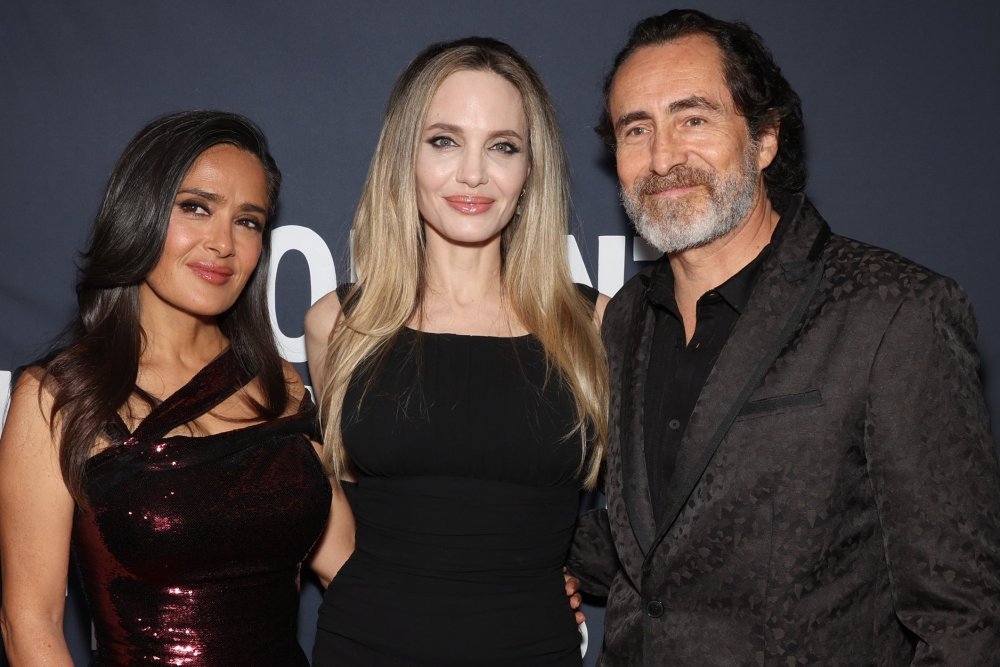
In “Without Blood,” written and directed by Angelina Jolie, Salma Hayek plays Nina, a woman who spends her adult life looking for the three men responsible for the wartime murder of her father and brother when she was just a child.
In two of the cases, her revenge is fatal. But then she meets the third accomplice, Tito (Demián Bichir), now a clerk in a newspaper kiosk at a train station.
The movie is in many ways a two-hander featuring Nina and Tito talking over drinks with flashback scenes chronicling both of their sometimes harrowing lives.
“I was afraid that I couldn’t play this part, and also I was afraid to go so far every day at work and go into this really difficult place,” Hayek says during a joint interview with Jolie. “At the beginning, I wasn’t sure that Angelina was directing. I thought she was just producing. I’m like, ‘Oh no, I don’t want to suffer like that. I don’t want to.’ And then she started talking to me about the importance of the piece. And then you have to understand that Angelina is an extraordinary director.”
“Without Blood” is an adaptation of Italian writer Alessandro Baricco’s novella of the same name. Like the book, the movie doesn’t specify the time or the location where the story takes place, nor identify the war at the center of the story. The characters speak English and Spanish.
“I wanted it to be that anyone watching it from anywhere could identify with it,” Jolie says. “Even if it wasn’t an actual war or a conflict, there’s something beautiful in the book where it says, ‘We return to where we break.’ So part of the conflict and the idea of the film is that anybody can identify with something in your life where something happened where it broke you and changed you, and how much you wish you could sit across from that person and have answers and have some kind of say your piece and hope that they could see you and hope that it gives you some kind of healing or closure. Of course, sometimes it doesn’t give you what you think you’re looking for or doesn’t heal those.”
This isn’t the first time Jolie has made a film about war and conflict. Her directorial debut was the Bosnian war drama “In the Land of Blood and Money” in 2011. “Unbroken” (2014) told the story of American prisoners-of-war during World War II. The life of Cambodian author and human rights activist Loung Ung under the rule of the Khmer Rouge was the subject of “First They Killed My Father” in 2017.
“In ‘First They Killed My Father,’ we had trauma therapy tents because a lot of people there had been through war and I’ve learned that everybody’s been through some level of trauma,” Jolie says. “What we did on this was the time spent with everybody discussing it. We all ended up spending a lot of time talking about our pain, talking about our losses, our traumas. Obviously, community can be very, very healing.”
Jolie and Hayek Pinault first worked together five years ago when they co-starred in the Marvel movie “Eternals.” Next, Jolie will serve as a producer on Hayek Pinault’s directorial debut, “Arena,” an epic romantic adventure that the “Frida” star also wrote.
“In a way, she’s my partner,” Hayek Pinault says. “I’ve written two different scripts with two different pens that she gave me. It’s a really good, enriching and artistic relationship. That is hard to find. It’s such a gift.”
I asked Jolie if she’s ever been tempted to direct lighter material like a comedy. “We’ve laughed a lot. We fantasized about making different comedies together,” Hayek Pinault says.
Jolie laughs, “My comedies tend to be a bit dark. I think I have a dark sense of humor.”
Hayek Pinault turns to Jolie and says, “You’re funny. So funny. She just keeps it a secret.”
Jolie isn’t sure she has what it takes to helm comedy. “I don’t know how good I’d be. You have those things that we think, as an actress, you like to try everything and then you get to a point you realize other actors are good at certain things and there are many who are better at comedy than I am. But I do think I’m a pretty good straight person, like the ‘Maleficent.’ I’m a good straight.”
If you purchase an independently reviewed product or service through a link on our website, Variety may receive an affiliate commission.
It’s week two in the NFL season and we’re already seeing a big rivalry game between two NFC North teams. Although both the Vikings and the Bears are 1-0 on the season, this game has a little more weight since it’s a division matchup. Whichever teams wins this Sunday, they’re one step closer to winning the division and having better placement in the NFL Playoffs in January 2027.
On Sunday, Sept. 20, you can watch Minnesota Vikings vs. Chicago Bears at Soldier Field in Chicago, Illinois. Kickoff is at 1 p.m. ET/10 a.m. PT, while the NFL game broadcasts on FOX.
Want to watch the game online? FOX is a network available via Sling Blue.
Right now, Sling Blue goes for $54.99 per month, while the streaming package comes with FOX for the Vikings vs. Bears game. It’s the best plan for the best news and entertainment. Sling Blue comes with ABC and NBC (in select markets), as well as more than 40 other channels, like Bravo, Cartoon Network, Discovery Channel, E!, FOX Sports, FX, FOX News, MS Now, NFL Network, National Geographic, SYFY, TLC, USA Network, A&E, AMC, BBC America, BET, CNN, Comedy Central, Food Network, Fuse, HGTV, History Channel, IFC, Lifetime, Nick Jr., QVC, TBS, TNT, Travel Channel, Vice and many others.
Meanwhile, a subscription to Sling Blue also gets you access to the FOX One streaming service at no extra cost (a $19.99 per month value).
Additionally, you can get the Sling TV Season Pass, which starts at $199.99 when you prepay for five months of service. It’s ideal for the NFL season to watch more games online. It comes with the higher tier Orange + Blue plan, as well as the Sling Sports Extra, which comes with more sports channels, like NFL RedZone, NBA TV, NHL Network, MLB Network, ACC Network, Big Ten Network, SEC Network, ESPNews, ESPNU and others. With Sling TV Season Pass, you’ll get more than 60 channels for NFL games and other live sports.
All Sling TV plans have live TV over the internet, on-demand movie and TV shows, 50 hours of cloud DVR storage and up to three streams across devices, such as smart TVs, smartphones, tablets, laptops and web browsers, at the same time.
On Sunday, Sept. 20, you can livestream Minnesota Vikings vs. Chicago Bears, with a start time of 1 p.m. ET/10 a.m. PT on FOX with Sling Blue, below:
Barcelona’s soccer players packed out Spain’s FIFA World Cup winning team. Now Catalonia, the northeast region of Spain counting on Barcelona as its capital, accounts for a very significant chunk of the Spanish films playing this year’s San Sebastián Festival, one of its principal draws. Some 150 Catalan companies, no less, will be in San Sebastián.
The bullish Catalan presence can be put down to an exciting new generation of Catalan directors and producers exploding on the scene over the last decade, since Carla Simón’s “Summer 1993.”
Key, also is Catalonia’s drive into pan-regional co-production, as many movies tap funding from around Spain. Also at play is a step-up in ambition among Catalan films at large and far larger mobility on the part of talent. So “Saints,” one of the big new Catalan films, is directed by Basque but Barcelona-based Mikel Gurrea, and one of the standout films by a Catalan director at San Sebastián, Carla Simón’s short feature “Flamenco,” is produced by Madrid’s Mamma Team.
“5 More Minutes” (Javier Ruiz Caldera, Movistar Plus, El Terrat, Ikiru Films, Spain)
‘Five More Minutes’
Courtesy of San Sebastián Film Festival
An on-the-rocks couple is caught in a time loop at a rural getaway. Part sometimes excruciating dark comedy, part sci-fi mindwarp and part suspense thriller whose grip bids fair to surprise at San Sebastián. Written and starring Berto Romero, one of Spain’s top stand-ups, playing opposite Belen Cuesta (The Endless Trench”) and an ineffable Javier Camara (“Talk to Her”). Spanish pay TV/SVOD colossus Movistar Plus, El Terrat, a Mediapro Studio company, and Ikiru Films, produce a typical genre cocktail for Romero, much directed with virtuosity by Javier Ruiz Caldera as a series of millimetrically calculated five-minute sequence shots. Filmax handles world sales. JH
“Saints,” (“Sants,” Mikel Gurrea, Lastor Media, Nocturna Pictures, Deloris Films, Kino Produzioni, Spain, Italy)
Courtesy of M-Appeal
Played by Victoria Luengo, who starred opposite Javier Bardem in “The Beloved,” Lali cares for her dying mother Glòria, as she falls in with a gang who steals statues of saints, giving much of the proceeds to the needy and forsaken. Gurrea’ second feature, a step-up in style, shot with a continuous visual pulse, varying in tone from scene to scene. Produced by Barcelona’s Nocturna Pictures, Deloris Films and Lastor Media and Kino Produzioni, the latter two both behind Berlin Golden Bear winner “Alcarràs,” another exploration of an alternative economy. JH
Special Screenings
“Pray for Us,” (“Ruega for nosotras,” Daniel Monzón, Arcadia Motion Pictures, Ikiru Films, Spain)
The latest from the still underrated Monzón, director of the breakout blockbuster “Cell 211” and the memorable “The Laws of the Frontier,” a five-time Goya winner that played out of competition at 2021’s San Sebastián. Set in 1974, after a night on the tiles, Ana, 19, is dispatched by her wealthy family to Spain’s Women’s Protection Board, a Francoist state-backed institution confining young women in the guise of moral “reform.” Arcadia Motion Pictures, behind the Oscar-nominated “Robot Dreams” and Sorogoyen’s “The Beasts,” produces. Picked up by Film Factory Entertainment for international, Elastica for Spanish distribution. JH
Horizontes Latinos
“Ashes,” (Diego Luna, La Corriente del Golfo, Animal de Luz Films, Inicia Films, Perro Azul)
Lauded actor Diego Luna (“Y tu mamá también,” “Andor”) steps behind the camera to helm the adaptation of Brenda Navarro’s critically acclaimed feminist novel “Eating Ashes.” The film stars Anna Diaz (“La Cocina”) and Adriana Paz, who shared the Cannes best actress award with Zoe Saldaña, Selena Gomez and Karla Sofía Gascón for “Emilia Pérez.” The heartfelt drama trails Lucila, a young woman who leaves Mexico with her young brother to reunite with their distant mother in Madrid. Luna also produces via his La Corriente del Golfo label, founded alongside Gael García Bernal. Luxbox handles sales. RSR
Paraguay’s submission to the Oscars, the eight-country co-production “Narciso” began its lauded festival journey at the Berlinale, where it won the Fipresci Award at the Panorama section. Martinessi’s sophomore feature is set in 1959, where the charismatic titular performer returns to Buenos Aires at the height of a strict military regime. When the popular young man is found dead after a show, the culprit becomes even harder to find within this regime built on silence and fear. Luxbox handles world sales. RSR
Zabaltegi – Tabakalera
“Far From the Trees,” (Meritxell Colell, Allegra Films, EXIT Media, Animalita Cine, Spain)
A Locarno 2026 Fipresci Prize winner. Adela, a sound artist recording endangered languages travels to the Peruvian highlands in a film which weaves present and past – collective and personal memory and archive footage of the Catalan diaspora after the Spanish Civil War – speaking about family, forced exile, roots, memory and hybrid identity. “A richly contemplative journey of physical and mental meanderings, beautifully combining 4K digital with Super 16,” says Variety. “Ambitious in scope yet intimate in focus,” Far From the Trees” “could well become an arthouse sleeper,” it adds. JH
“Flamenco Sketches,” (“Jaleos,” Isaki Lacuesta, Lastor Media, Goroka Contents, with La Termita Films, Spain)
Courtesy of San Sebastián Film Festival
Sharing with Francis Ford Coppola the rare honour of two San Sebastián Golden Shells, Isaki Lacuesta returns to the festival fresh from co-directing HBO Max’s acclaimed series “Ravalear.” “Flamenco Sketches” is a restless ride through cinema, machines, Nazism, Civil War, and avant-garde art. The film shows how flamenco has often swallowed disruption whole only to morph itself anew. “Always dying, never dead.” one of the many contributing voices in the doc tells us. CM
The latest by the Silver Bear winner of “The Empire” premiered at Directors’ Fortnight in Cannes and tells the tale of two gangs of kids who compete in the dangerous game of cliff jumping in the French Riviera. Dumont worked with a cast of non-professional actors, adopting a documentary-like approach to the film, shot against the cliffs and open waters of the Mediterranean. The lauded director won two Grand Prix awards at Cannes for “Humanity” and “Flanders.” Luxbox handles world sales. RSR
Made in Spain
“Alive” (“Viva” Aina Clotet, Ikiru Films, Funicular Films, La Terraza Films)
In the intimate “Viva,” which earned its director-star Clotet the Louis Roederer Foundation Rising Star Award, follows 40-something Nora as she finds a new lease of life following cancer treatment. The heartfelt drama explores relationships, as well as the dilemmas brought in by climate change, with a standout performance by the established Clotet, whose 2024 series “This is Not Sweden” racked up several awards and found great success with audiences. The director produces under her Funicular Films label, alongside veteran Edmon Roch of Ikiru Films. Loco Films handles sales, while Caramel Films distributes in Spain. RSR
“The Good Daughter,” (Astra Pictures, Avalon, Krater, Spain, Belgium)
The sophomore feature of Julia de Paz Solvas, also a co-writer on Alauda Ruiz de Azúa’s “Querer,” plumbing gender violence from the untutored perspective of Carmela, the daughter of a direct victim. A trenchant portrait of self pitying, violent male narcissism and an uplifting take on teen female friendship which swept the Tallinn Black Nights Festival in November, sweeping its Grand Prix, actress (Kiara Arancibia) and Audience Awards. JH
“Sixteen Moments of My Life” (Albert Serra, Idéale Audience, Andergraun Films, Weltfilm, Spain, France, Germany)
The latest by irreverent Catalan maverick Albert Serra (“Pacifiction,” “Afternoons of Solitude”) premiered at Locarno. It documents a one-off performance by legendary German film actress and singer Ingrid Caven – known for her collaborations with then-husband Rainer Werner Fassbinder – at the Théâtre des Bouffes du Nord in Paris. Neither a biopic nor a concert movie, “Sixteen Moments of My Life” puts forward a fascinating portrayal of creatives on creatives. Serra’s Andergraun Films label produces and handles sales. RSR
Bowing at least year’s Toronto, a home-run from Isabel Coixet, Adapting a short story collection by Italy’s Michela Murgia, who died of cancer at 51. Alba Rohrwacher “dazzles in a humane, heartfelt drama” as the “luminous center of a charmingly bittersweet and life-affirming movie,” Variety wrote. “In other hands, this would cue a standard disease-of-the-week weepie, but Coixet keeps the tone lightly wistful and wise,” it added. JH
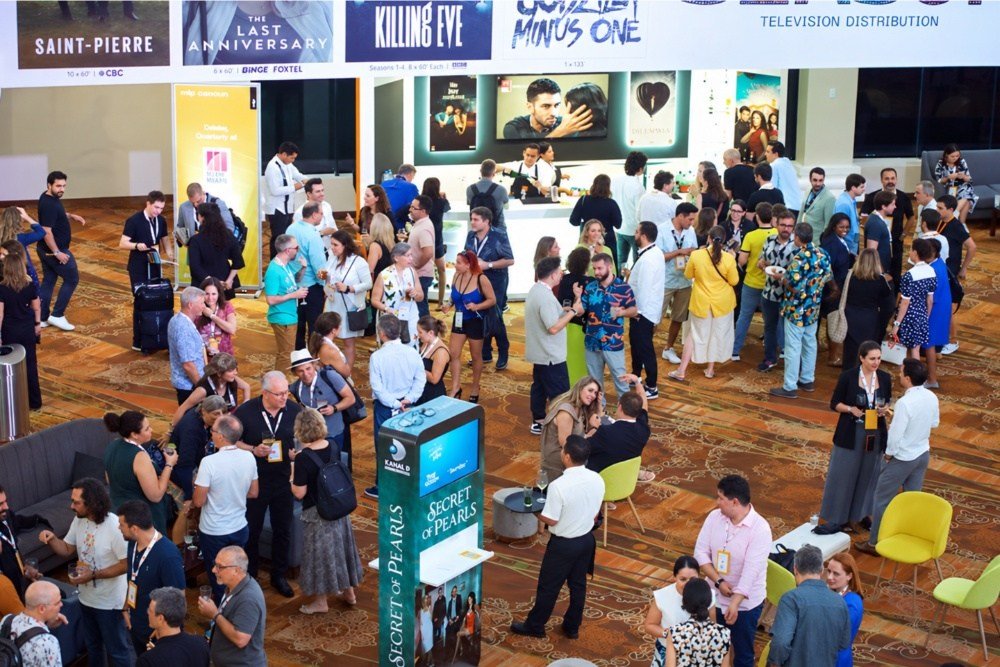
Ten major Japanese broadcasters are joining forces for the first time to send a joint delegation to MipCancun, marking the country’s first coordinated television market presence outside Asia.
The “All-Japan” initiative is organized under the Japan Commercial Broadcasters Association (JBA) in collaboration with Japan’s Ministry of Internal Affairs and Communications (MIC) and the Broadcast Program Export Association of Japan (BEAJ). JBA represents commercial broadcasters operating television and/or radio services across the country, and the initiative is designed to promote Japanese IP and expand business opportunities across the Latin American content market. MIP Cancun is marking its 13th edition this year.
The delegation includes Tokyo-based key stations TBS Television, Nippon TV, TV Asahi, Fuji Television Network, Inc. and TV Tokyo, along with Wowow Inc., BS Asahi, Tokai TV, MBS, Inc. and Yomiuri Telecasting Corp. A dedicated Japan Pavilion will be set up within the market’s matchmaking zone, giving each company its own table for meetings with Latin American buyers.
While Japan remains best known internationally for anime, the delegation will emphasize live-action content, particularly television drama, a category the Japanese government is now specifically targeting for overseas growth.
“As IP development and co-productions become increasingly vital in the entertainment market, the industry is reaching a major turning point,” said Maria Perez Bellière, director of MipCancun. “We have high expectations for this initiative to introduce the appeal of Japan’s new content and firmly establish the ‘Japan brand’ in Latin American countries, with whom Japan shares a long history. We are deeply honored that Japan has united to leverage the unique Latin American market opportunities that MipCancun has spent 13 years building here in Cancun.”
A “Japan Content Showcase” screening event will run Nov. 18 in the Cancun Theater Room, spotlighting programming from the participating broadcasters with a focus on Japanese drama for Latin American industry professionals. A networking cocktail reception will follow, giving the visiting companies and local buyers additional time to talk business.
The push into Latin America comes as the Japanese government has named the content industry one of the country’s core growth sectors. Tokyo has set a target of expanding the overseas market for Japanese-origin content from JPY5.8 trillion ($37 billion) in 2023 to JPY20 trillion ($129 billion) by 2033, with a specific target of JPY0.5 trillion ($3.2 billion) for live-action content overseas by 2033.
Latin America brings its own long history of serialized television drama, rooted in telenovelas that have been produced across the region since the 1950s and have traveled widely across borders. The continued growth of streaming in the region is also opening new pathways for international scripted content to reach audiences.
Organizers frame the delegation as a way for Japanese networks to strike deals with Latin American buyers, distributors and producers when the market runs in November.
MipCancun is a content market and conference serving Latin American and U.S. Hispanic television, bringing together acquisition, distribution and production companies to close content deals in the region’s growing TV markets.
Fans yearning to drive like Dominic Toretto or Letty can finally strap into a Dodge Charger or a Toyota Supra at Universal Studios Hollywood, as the long-awaited “Fast & Furious: Hollywood Drift” ride officially opened Sept. 16 at the park.
The much-anticipated outdoor roller coaster features four iconic cars from the $7 billion franchise — the Dodge Charger, Mazda RX-7, Nissan Skyline GT-R and the Toyota Supra — that propel riders on a “unique dual-launching, split-ride track,” according to Universal Studios Hollywood. The cars spiral over and under portions of the park’s multilevel escalator, and include four launches, an inverted dive loop, twisted pretzel loop, an inverted stall and other thrills, reaching speed of 72 mph. Riders experience force of up to 3.6 Gs along 4,100 feet of aerial track constructed with sound-reduction technology while drifting at 360-degrees in their individual ride vehicles, according to Universal Studios Hollywood.
“Fast & Furious: Hollywood Drift’ is officially open, and we are so excited to be able to put guests in the driver’s seat of one of the most celebrated film franchises in history,” said Scott Strobl, executive VP and general manager, Universal Studios Hollywood. “The debut of this first-of-it-kind roller coaster is a literal game changer for Universal Studios Hollywood, and we look forward to sharing this thrilling experience with fans of the ‘Fast’ saga and our guests visiting from around the world.”
The ride is anchored by an original mural created by artist Tristan Eaton, which depicts the finale street racing action scene in 2001’s “The Fast and the Furious,” the film that kicked off the franchise, which is celebrating its 25th anniversary this year.