Tag: Entertainment – Variety

  • ‘One Night Only’ Director Will Gluck Cut Out ‘So Much Nudity’ Because People Dislike Sex on Screen: ‘It Takes You Out of the Movie’

    ‘One Night Only’ Director Will Gluck Cut Out ‘So Much Nudity’ Because People Dislike Sex on Screen: ‘It Takes You Out of the Movie’

    One Night Only” director Will Gluck doesn’t want you to overthink it.

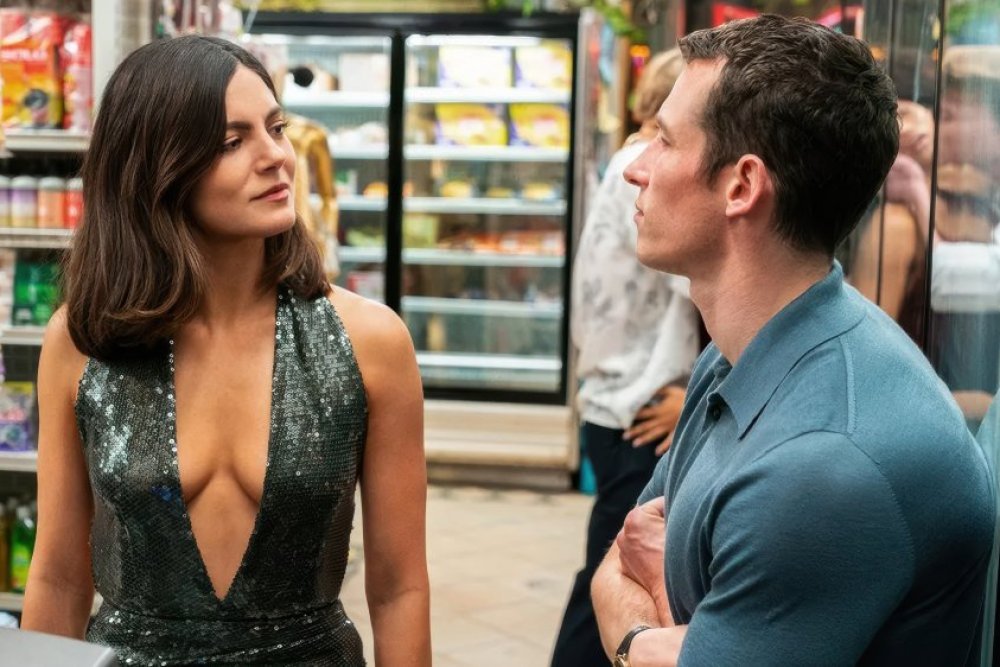
    The filmmaker has been fielding a lot of inquiries about the premise, logic and loopholes of his new movie, a raucous romantic comedy about the one night a year where premarital sex is legal. (Think “The Purge,” but for banging instead of murder.) Monica Barbaro (“A Complete Unknown”) plays Allie, an aspiring singer who channels her talent through embarrassing jingles in drug commercials. Callum Turner (“Eternity”) portrays Owen, a pizza shop owner whose long-term girlfriend decides she wants to sleep with other people on this holy night. The two strangers keep running into each other during 12 hours of messy mayhem in New York City.

    Gluck is aware the movie’s setup is sparking more questions — Why does the ban exist in the first place? What happens to people who break the law? How, exactly, is the government even tracking who’s getting it on? — than answers. But he maintains the particulars of this reality aren’t really the point.

    “You can’t really describe this movie,” Gluck says. “[The cast] goes on talk shows and spends 80% of the time explaining the rules of the world, and that’s not what the movie is about. We have to just let people see it. That’s the best tool we have, especially for something that’s this crazy.”

    Gluck, best known for directing 2010s teen classic “Easy A” with Emma Stone, knows all that matters is that people are talking about the film in the first place. Word-of-mouth fueled the success of his last rom-com, 2023’s box office sleeper hit “Anyone But You,” starring Sydney Sweeney and Glen Powell.

    “I learned from my last movie that people are going to discover this and say, ‘Wow, that’s not what I thought it was going to be,’” Gluck says. “You know how the acronym for word-of-mouth is WOM? I’m calling it a WOM-com.”

    Ahead of opening weekend, the director spoke to Variety about why audiences have become prudish about on-screen sex, his love of putting “cringe” songs in his movies, and why the theatrical rom-com isn’t dead, after all.

    How did you decide how much backstory to include to set up your premise?

    I did a lot of thinking about it, a lot of world building. These characters are living this little alternative world that could easily happen. We have to talk about it. But I really wanted the world to live in the background. I didn’t want the movie to be about that. It’s more about how our characters navigate life.

    What conversations did you have about the origin of the no-sex mandate?

    Someone asked me “why don’t people just get divorced?” Well, there’s municipal signage very prominently in the movie that says you cannot get divorced unless you were married for one year, plus one day. It’s like when COVID [started], there were rules, and then people started to do other stuff, so then more rules came out, right? That’s what I imagine when this mandate was passed. They had to keep doing amendments to these rules because, yes, the obvious idea would be just get married and divorce.

    Recent studies have found that Gen Z and Gen Alpha don’t want to see sex on screen. Was that a concern while making this movie?

    The answer is 100% yes. I went through this on two movies. I have long pages of empirical data about it. The only thing is I don’t think it’s just Gen Z and Gen Alpha. I believe it’s been a societal shift from taking nudity in adult situations and putting them on your phones at home for everybody. Now it’s more of a private, intimate thing that people don’t want to see when they’re in a shared experience. Whenever people now see nudity or very adult situations in a big theater, they get uncomfortable.

    How does that change your approach as a filmmaker?

    Once I’ve learned that, which was all through the editing process for my last movie, I applied it to this movie. But even so, I didn’t apply it enough. I cut out so much. There was so much nudity in this movie that we shot on the streets. I felt we needed to show the world that way. As we started to show it to audiences, we felt it takes you out of the movie. You’re engaged in the characters and what’s going on, and then you pan over and there’s two naked people having sex, and you watch the audience … it’s a physical thing. They turn to who they’re with and … the benefits do not nearly outweigh the negatives of it. So we just kept editing it out until we got a balance, and those comments went away.

    Did you use an intimacy coordinator? So many scenes had extras having sex in the background.

    Yes, we had an incredible intimacy coordinator. And we cast real-life couples in various stages of relationships. It was never like we met an extra and were like, “you guys are kissing.” It was fun because there were married couples, people who broke up during the movie and people who became couples so they could do that.

    There are a lot of fun and funny posters and advertisements about “the mandate” and “one night” all around the city. Were those actual props, or were they edited in later?

    This is all practical. That was the fun part of the world building. We had a huge document with every scene, not only what signage was there, but what graffiti was there and who would be in the background kissing. And the funny thing about the products, I’ve gotta stop reading the internet, but everyone says, “It’s a product placement fiasco. How much money did they make on that?” It was the opposite. We had to beg products to allow us to take them and twist it to the “one night.” Because, as you can imagine, not every corporate America consumer product was into this idea. So when I read stuff, like, “How much money did they get from Dunkin or Durex?” I’m like “Nothing!”

    So you had to get permission to make the fake ads?

    Of course. You can photograph anything that’s in the real world, but you can’t take something like Coke ad and say “there’s dirt in it.” We had a big list and it was “no, no, no, no.” And then we were surprised — well, the condom companies didn’t surprise us that they said yes — but Duolingo sure did. That was a shock. I was like, “Really?” So that’s why you have products like Duolingo, Red Bull, Dunkin and Equinox. Every time they would say “yes,” I’m like, “They did?” And then they would have to approve our take on it.

    What are some of the challenges of filming in New York City?

    Many times, we had actors in a car, half naked, and you’d have people just walking and staring. We’d say, “Hey, do you mind moving on?” A couple of people said, “No, we’re not going to move.” We were like, “Well, if this really did happen in real life, people would be staring.” So there are a couple scenes where people are looking in the windows.

    How much of Monica’s character was built around her actually being able to sing?

    I always rewrite the script completely once I have the actors. Once I cast Monica, I was like, “She has to be a singer.” We talked for a long time, and she does have some stage fright, which is crazy, because she has the best voice. So I just wrote that for her. And I’ve always been obsessed with drug commercials, so it was this great confluence.

    Did Callum actually learn how to make pizza?

    Yes, he spent five days at that pizza place being taught how to make pizza. He was really good at it. The one bummer about pizza is it doesn’t look great on film. It’s impossible because pizza gets cold so quickly. During that scene, we were constantly putting out a new fresh pizza. That’s a lesson for me. From now on, I’ll choose a different food that does not congeal that quickly.

    How quickly did everyone get sick of pizza?

    You can tell during that scene but Monica and Callum, they ate. They didn’t chew and spit. Because I don’t cut. I just keep rolling. They were both at the end like, “Oh my god.”

    Sydney Sweeney and Glen Powell, your stars from “Anyone But You,” don’t exactly have cameos, but they pop up in funny, unexpected ways. Did you get their permission to include them in the movie?

    Yes, I did. They were both trying to do cameos, but their schedules didn’t work out. So this was great.

    Music plays a big part in many of your films. I can’t hear “Pocket Full of Sunshine” without thinking of “Easy A,” and “Unwritten” went viral on TikTok after the release of “Anyone But You.” How do you choose which songs to feature?

    For the drug commercials, I have a pretty good take on songs that were really popular that people think they hate, but they can’t stop singing. I’m kind of obsessed with those songs, and a lot of my movies have them in it. You’ve mentioned some of them, and I think it’s because people don’t want to admit they like popular music, so they call it cringe or lame. But they’re bangers. After my last movie, if you ever go to any bar or club all over the world, when “Unwritten” comes on, it’s like the biggest banger in the world. It always was, but now for some reason, it’s now OK to be a banger. I love those songs.

    People often say the theatrical rom-com is dead. What were your takeaways from the box office success of “Anyone But You”?

    If you’re not a superhero movie or gigantic IP, it’s really hard to cut through. The only way you really can cut through, if at all, is letting the audience do it. No matter how much you market it or tell people what it is, you have to let them see it and tell their friends and family about it, which is scary. If you’re spending all this money on something, you can’t just hope people talk about it. But the key is telling people it’s going to be in theaters for a while. And I think this one is going to be in theaters for a while.
  • Werner Herzog to Be Honored at San Sebastián Film Festival

    Werner Herzog to Be Honored at San Sebastián Film Festival

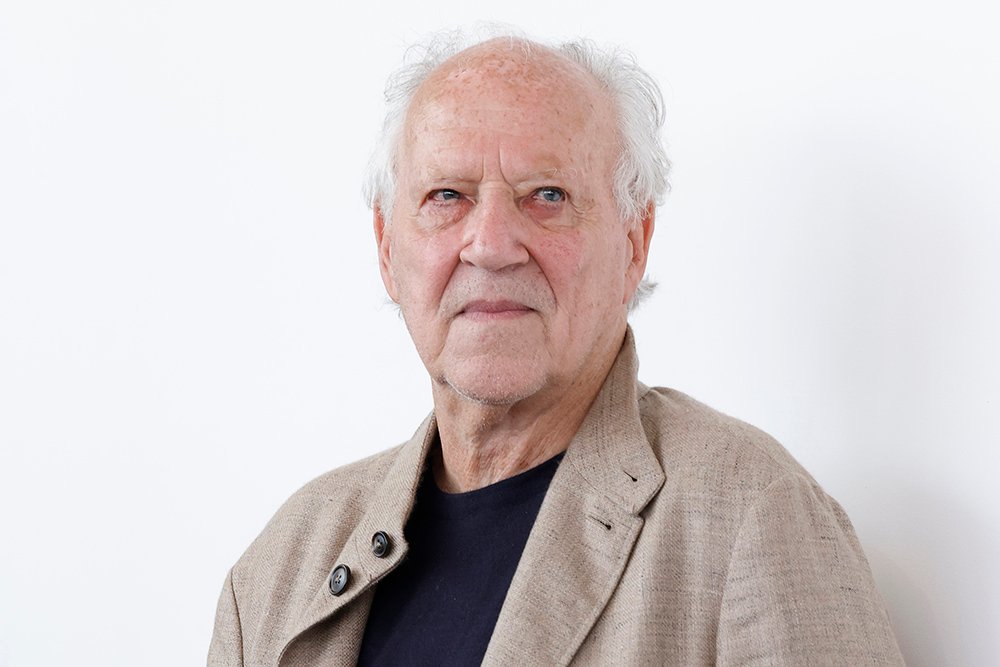
    Prolific filmmaker Werner Herzog will receive the San Sebastián Film Festival’s prestigious Donostia Award during its 74th edition in September.

    The German director will be honored at the Spanish festival’s opening gala and will screen his latest film “Bucking Fastard,” following its world premiere at Venice Film Festival.

    “Over a career spanning six decades, Werner Herzog has become one of the most influential figures in contemporary cinema, building an extraordinary body of work ―around 80 films― shaped by obsession, extreme situations and the contradictions of human nature,” San Sebastián Film Festival said in a statement. “His films, both fiction and non-fiction, are populated by dreamers and conquerors confronted with extreme landscapes and forces beyond their control. Guided by his concept of ‘Ecstatic Truth,’ Herzog advocates a cinema that transcends the mere observation of facts to reveal a deeper, more poetic dimension of reality.”

    Regarded as a pioneer of New German Cinema, Herzog’s credits include “Aguirre, the Wrath of God” (1972), “Fitzcarraldo” (1982), “Grizzly Man” (2005) and “Cave of Forgotten Dreams” (2010). He was nominated for a best documentary Oscar in 2008 for “Encounters at the End of the World” and has won prizes at the Cannes, Berlin and Venice film festivals.

    Starring sisters Rooney and Kate Mara, “Bucking Fastard” tells the “unusual story of twins whose extraordinary bond leads them to speak in unison, love the same man and share the same dreams,” according to its official synopsis.

    The San Sebastián Film Festival will take place from Sept. 18 to 26.

  • Luca Guadagnino to Receive Cartier Glory to the Filmmaker Award at Venice Film Festival

    Luca Guadagnino to Receive Cartier Glory to the Filmmaker Award at Venice Film Festival

    Luca Guadagnino will receive the Cartier Glory to the Filmmaker Award at this year’s Venice Film Festival.

    The Italian director, who is premiering his seven-hour Bernardo Bertolucci documentary “Joie de Vivre” at this year’s festival, is being honored as “a personality who has made a particularly original contribution to the contemporary film industry,” according to a press release. Guadagnino will be presented the award in a ceremony on Sept. 8 before the premiere of “Joie de Vivre.”

    “It might seem like a rhetorical gesture to say I am honored to receive the Glory to the Filmmaker award, but it is the plain truth for many reasons,” Guadagnino said in a statement. “To be honored for one’s craft or life as a filmmaker is an ambition that no one who makes films could ever presume to imagine achieving — especially by joining a group of filmmakers who have received this prestigious honor before me and to whom I owe so much of my development. So, I want to emphasize once again what an honor it is to receive this award, especially from Alberto Barbera and La Biennale di Venezia. Thank you, thank you!”

    Added Barbera: “The Glory to the Filmmaker Award celebrates in Luca Guadagnino an author who has managed to transform his curiosity into a form of creative freedom. Defying alignment with any single school or movement, he has established himself as a global director, capable of working with leading international actors and producers. He has navigated diverse genres — from melodrama to horror, coming-of-age to psychological thriller — while maintaining a consistent and recognizable voice, without ever losing a deeply Italian identity in portraying bodies, settings and history. His is a vital cinema that does not shy away from risk: nomadic, sensual, sophisticated yet widely accessible, where intellectual provocation and emotion, memory and modernity coexist brilliantly. Glory to the Filmmaker honors the originality of a vision that has succeeded in renewing the language of contemporary cinema, celebrating a career that has brought Italian auteurship into a true dialogue with the entire world.”

    Guadagnino is no stranger to Venice Film Festival, and most recently presented his film “After the Hunt,” starring Julia Roberts and Andrew Garfield, at last year’s edition. His other credits include “Challengers,” “Bones and All” and “Call Me by Your Name,” and he recently wrapped “Artificial,” a drama about OpenAI founder Sam Altman (played by Garfield) that was dropped by Amazon MGM after they struck a deal with the tech company. The film was then picked up by Neon, which is planning a campaign for the upcoming awards season.

  • Starz Revenue Declines 4% in Q2 as Streaming Stabilizes, Company Takes $147 Million Charge Related to Ending Universal Output Deal

    Starz Revenue Declines 4% in Q2 as Streaming Stabilizes, Company Takes $147 Million Charge Related to Ending Universal Output Deal

    Starz saw total revenue slide again in the second quarter of 2026 — but the media company reported its first year-over-year growth in streaming revenue in 18 months. Company execs believe the business is turning around, and they’ve raised their outlook for adjusted OIBDA (operating income before depreciation and amortization) growth for full-year 2026 from low single-digits to mid single-digits.

    Total revenue in the second quarter was $307.9 million, down 4% year over year. OTT revenue as reported was $221.3 million, up ever so slightly from $221.1 million in the year-earlier period. However, Starz said, streaming revenue would have increased 1.4% in the June 2026 quarter excluding $3 million of OTT revenue related to Canadian operations that was recorded in Q2 2025. (Starz transitioned its Canadian operations from a distribution partnership with Bell to a content-licensing model at the end of 2025.)

    Net loss ballooned to $189.4 million, compared with a loss of $42.5 million in Q2 2025. Starz reported an operating loss of $175.5 million (vs. $26.9 million a year earlier).

    Taking a big bite out of Starz’s earnings: The company took a restructuring charge of $147 million in the second quarter of 2026 in association with the termination of its pay-2 film output agreement with Universal Pictures in April. The wind-down of the Universal deal was previously announced by Starz president and CEO Jeff Hirsch, who cited “lower viewership than we originally projected.” In prepared remarks Friday, Starz CFO Scott Macdonald said, “We continue to expect this to be the final content restructuring charge of this magnitude going forward, which sets the company up for meaningfully lower restructuring activity from here.” Given the timing of Starz’s final cash payments to Universal in 2028, Macdonald said, “we believe 2029 is shaping up to be a significant year for free cash flow growth relative to the trajectory we see across 2026 through 2028.”

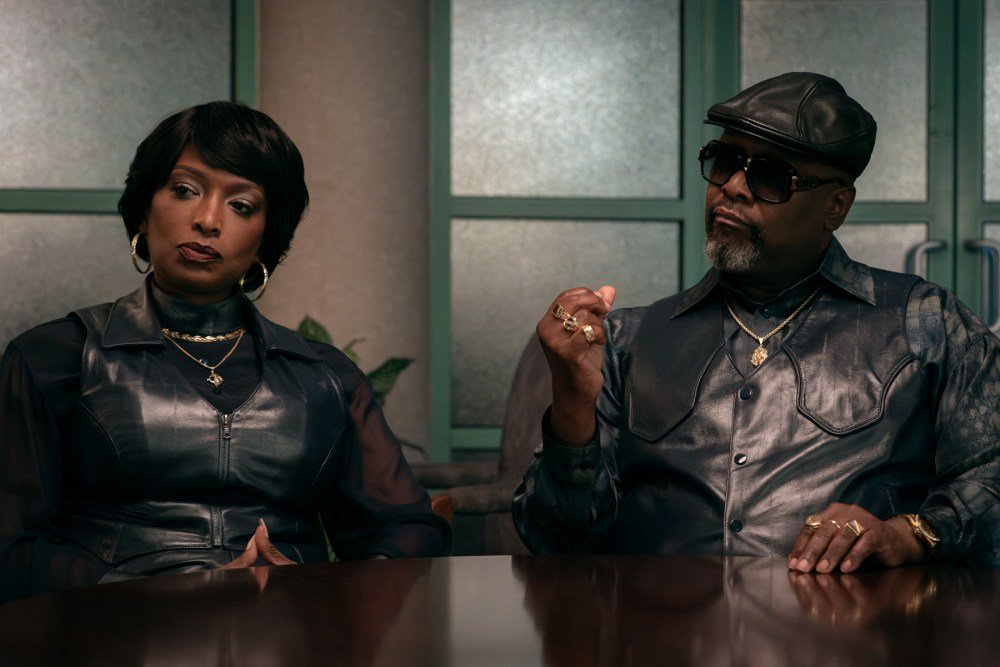
    In Q2, Starz’s stop-performing titles were the finale of “Outlander”; the premiere of “Power Book III: Raising Kanan” Season 5 (pictured above); and “The Housemaid,” Lionsgate’s psychological thriller starring Amanda Seyfried and Sydney Sweeney, which debuted April 1 on Starz.

    In prepared remarks, Hirsch said “Raising Kanan” Season 5 grew its audience from the first season five years ago, “a rare achievement in today’s television landscape.” In addition, he said, the July 31 premiere of “Fightland,” the boxing crime drama series produced by 50 Cent, was Starz’s No. 2 best-rated original IP launch of all time (after the Season 1 premiere of “BMF” in 2021).

    “Our second-quarter results reflect the momentum we are building across the business and the strength of our content portfolio,” Hirsch said in a statement. “We delivered another quarter of strong audience engagement and OTT revenue growth, and the success of the ‘Fightland’ premiere validates our ownership strategy.”

    Hirsch said the company’s improved visibility into the second half of the year and the early performance of “Fightland” have served to “increase our confidence that 2026 is shaping up to be a more significant inflection year for Starz than we initially anticipated.”

    During the second quarter, Starz launched a new partnership with NBCUniversal’s Peacock that makes Starz available as an add-on subscription to the platform for the first time. And last week, Starz announced a new discounted bundle with Crunchyroll on Prime Video.

    Upcoming programming coming to Starz includes the return of “P-Valley,” the continued expansion of the “Outlander” universe through “Blood of My Blood” Season 2, and the upcoming biopic “Michael” following its record-breaking theatrical run. Further out, Hirsch said, “we continue to build our owned content pipeline beyond ‘Fightland’ with the ‘Untitled Black Rodeo Show,’” which is starting production this month. and several other Starz-owned projects in development.

    Adjusted OIBDA was $60 million for the quarter, ahead of Starz’s expectations and up from $33.4 million in the year-ago period. The company expects Q3 adjusted OIBDA to be in the mid-$30 million range. That “will be our lowest quarter of the year due to higher programming amortization” from the airing of “Raising Kanan” S5, “Fightland” S1 and “Blood of My Blood” S2 all during Q3, according to Macdonald. Starz expects Q4 to “finish the year strongly in the mid-60s.” As such, the company is raising 2026 adjusted OIBDA growth guidance from low single-digits to mid single digits, “and we remain confident in achieving our 20% adjusted OIBDA margin target in the back half of 2027,” the CFO said.

    In the second quarter, Starz’s unlevered free cash flow was negative $15 million and equity free cash flow was negative $33 million “given the timing of content payments,” Macdonald said. Free cash flow still came in ahead of expectations, he added.

    Cash content spend was $182 million for the second quarter. With the exit of the Universal agreement, Starz expects to report full-year 2026 cash content spend below $600 million.

    Net debt was $566 million as of June 30, 2026, and adjusted OIBDA leverage ratio was 2.9 times. Starz has obtained commitments to increase its credit facilities by $100 million, comprised of a $67 million increase to its Term Loan A and a $33 million increase to its revolving credit. Even after incorporating the additional $67 million of debt, Starz continues to expect to end 2026 with adjusted OIBDA leverage of approximately 2.7 times.

  • ‘Michael 2’ Eyes Filming Start ‘Towards the End of this Year’ or Early 2027 as Lionsgate Teases Release Date

    ‘Michael 2’ Eyes Filming Start ‘Towards the End of this Year’ or Early 2027 as Lionsgate Teases Release Date

    Lionsgate is working on the sequel to “Michael” and hopes to start rolling the cameras soon on the second biopic about Michael Jackson.

    The studio hopes to begin production in late 2026 or early 2027, Lionsgate’s motion picture chief Adam Fogelson said on Thursday’s earnings call, with the hopes of releasing the final product at the end of next year or in the first half of 2028.

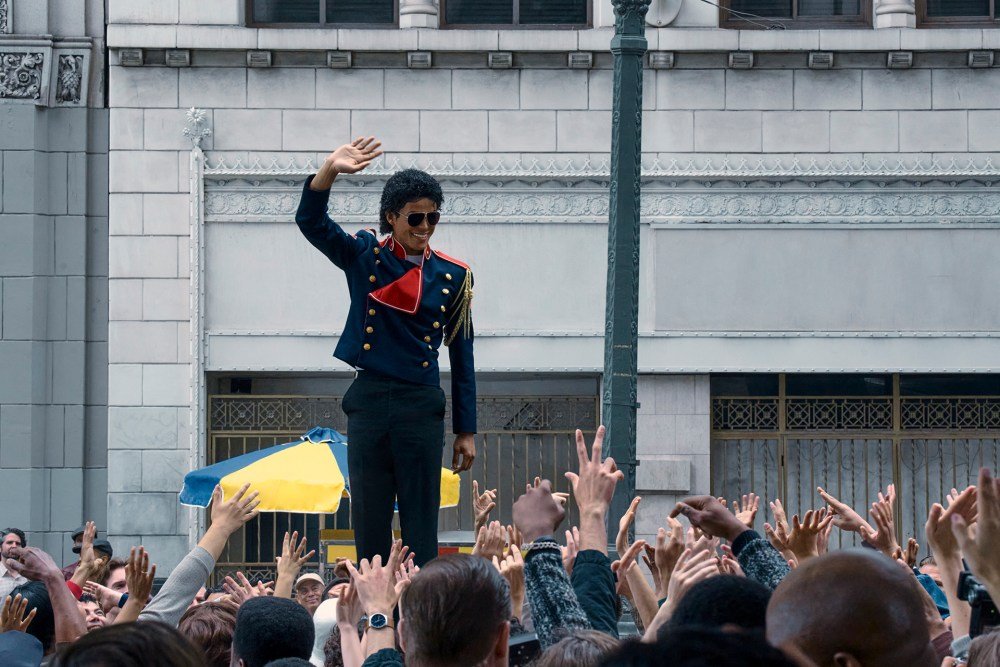
    Although the studio waited to officially greenlight the follow-up film, this spring’s “Michael,” which became a box office juggernaut with $1 billion globally, ends with the words “His Story Continues” — making it clear that audiences hadn’t seen the last of the King of Pop.

    Antoine Fuqua directed “Michael,” which chronicles the performer’s journey from the Jackson 5 to superstar status. The first film, starring the singer’s real-life nephew Jaafar Jackson, wraps up with 1987’s “Bad” tour. It’s unclear what period in Jackson’s life the second movie will cover, though the filmmakers can mine material including his hit album “Dangerous” as well as the multiple allegations of child sexual abuse that followed Jackson for the rest of his life.

    Due to a last-minute legal dispute, “Michael” ended up omitting the most controversial aspects of Jackson’s life. The movie was supposed to address the molestation accusations, but those plans had to be scrapped after attorneys for the Jackson estate discovered a clause in the settlement with one of the accusers that barred the depiction of him in any movie. That forced the filmmakers to retool much of the story, though Fogelson said that some of the material that was cut could be used in the sequel.

    “We have a number of sequences, particularly some big musical sequences, that were shot previously, that are almost sure to be incorporated,” Fogelson said on Thursday’s call. “We are mostly focused right now on how to make sure we can deliver, at the right price, the biggest, best sequel. That is what the audience is going to want and deserve after the experience we gave them the first time.”

    Fogelson said he’s “not ready to give guidance on the budget yet” but said the company will be able to use some material that was previously shot.

  • LISTEN: Fear, Loathing and Endless Potential: AI4 Conference Takes Stock of Transformative Technologies

    LISTEN: Fear, Loathing and Endless Potential: AI4 Conference Takes Stock of Transformative Technologies

    On today’s episode of “Daily Variety” podcast, Variety’s Corbin Bolies reports from Las Vegas where he is covering the AI4 conference with a slew of top leaders and true believers. The excitement around generative AI is still as hot as the temperature in Sin City, but the polarizing effect of the technology is evident as well, Bolies reports.

    Bolies, who joined Variety earlier this year as our first AI beat reporter, made the trek to Las Vegas in part to moderate a session with filmmaker Scott Mann, who heads the AI tech firm Flawless. There is

    Mann’s focus is on guiding the creative community to an understanding of “just how people can navigate this conversation in a way that amplifies filmmaking and creativity, while keeping humans at the forefront in this era of AI slop,” Bolies explains. “You have Hollywood studios and creatives afraid of just what AI’s impact on the industry can be, from both the models that are trained and scraping their copyrighted work to generated content that people fear may take the place of traditional films and traditional TV shows.”

    Flawless focuses on tools that help filmmakers more easily handle dubbing of content for various markets. Mann emphasizes the benefits of that AI tech can offer in handling certain post-production functions that can otherwise be very costly.

    “When people hear the word AI, their first thoughts are the extremes, and Scott’s hoping that Flawless and other filmmakers who are working in the same space as him can break through that noise and show that AI can be additive to Hollywood and helpful while keeping humans and creatives working in partnership with them,” Bolies says.

    The AI4 conference, held at the Venetian Las Vegas, casts a wide net on AI’s impact well beyond entertainment and content creation. Bolies says the coming wave of robotic devices will be capable of mind-blowing functions.

    “I’ve seen at least three different types of humanoid robots today alone — one that looks straight out of Will Smith’s [2004 thriller] ‘I, Robot,’ ” he says. “They looked a little freaky to me, but it just shows what the mobility of these robotics are. We’ve seen AI on a software level, but on a hardware level, that’s going to be a big impact.”

    Listen to Daily Variety on iHeartPodcastsApple Podcasts, Variety’s YouTube Podcast channel, Amazon MusicSpotify and other podcast platforms.

  • ‘The Big Bang Theory’ Star Melissa Rauch on Her Larger-Than-Life Surprise Role on ‘Stuart Fails to Save the Universe’

    ‘The Big Bang Theory’ Star Melissa Rauch on Her Larger-Than-Life Surprise Role on ‘Stuart Fails to Save the Universe’

    SPOILER ALERT: This story contains spoilers from “Stuart Fails to Save the Universe” Season 1 Episode 3, now streaming on HBO Max.

    Things get witchy in Episode 3 of “Stuart Fails to Save the Universe,” and a scary, 60-foot Bernadette (Melissa Raush) makes a guest appearance.

    The aptly titled episode, “Spoiler: Bert Is Magic,” kicks off with Bert (Brian Posehn) tied at the stake and about to be burned alive. Then he begs for it to rain — and it does. That’s the first sign that in this universe, Bert really is a wizard with magical powers. He can turn regular Coke into Diet Coke at the flick of a wrist, and hocus pocus up a cute puppy.

    Back in the comic book store (in this case, it’s called “The Wizard’s Sleeve” and more like a store filled with powerful, spellbinding books), Stuart (Kevin Sussman) tries to explain to the Denise (Lauren Lapkus) from last week’s universe what is exactly going on with the machine that’s transporting them across the multiverse.

    Kripke (John Ross Bowie), who had seen Bert on the stake, makes his way back to the store. “Stuart, we have to leave here. The people in this world think science is evil.” Cracks Stuart: “How’s that different from our world?”

    Because this universe doesn’t obey the laws of physics, Kripke realizes they need magic to make the teleportation machine work. They ask Alexa where they can find someone to help — and up pops a little demon named, of course, “Alexa” (played by Louis Mustillo). Alexa points them to Bernadette Rostenkowski, “master sorceress.”

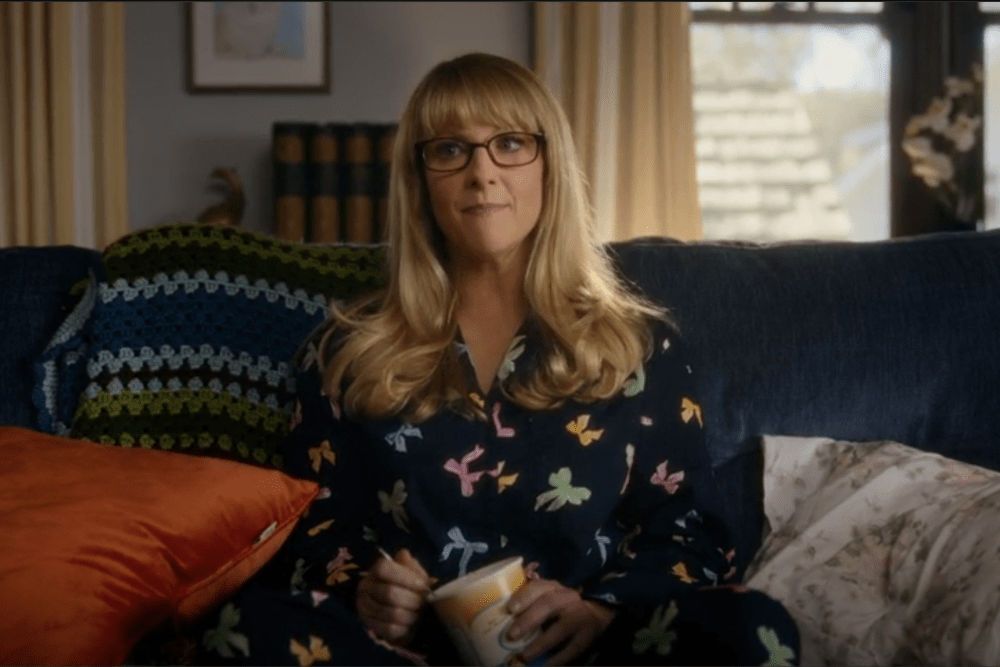
    At first, it seems like normal Bernadette from “The Big Bang Theory.” She says she’s out of business, because the “Wizards Guild of America claimed I used my powers while we were on strike.” She tells them about a reversal spell that could get her powers back — but she needs the “blood of an innocent.” Having had just one girlfriend, Stuart works.

    Bert is back at the store, and turns Kripke into a penguin as revenge for leaving him at the stake. But then they’re interrupted by Wil Wheaton, who’s a wizard in this universe. He shows up to warn Stuart not to trust Bernadette. (Wheaton, of course, was frequently seen on “The Big Bang Theory” playing himself.) Turns out Bernadette is actually a demon. Bert and Wil get into a sorcery battle — and Bert wins. At the same time, Bernadette makes her potion and turns into a 60-foot monster, destroying Pasadena. She wants to rule the universe and take the machine — but Bert, with his powers, manages to get the four of them out just in time.

    “I remember a while ago getting a call from Chuck [Lorre] and he shared what the premise was, and I remember him saying that ‘you would be Bernadette, but not really, just a different version of Bernadette. So it’d be extremely different from anything you ever played.’ ” Rauch tells Variety. “And then he told me the cast, and I was just absolutely ecstatic. Because I love Kevin and Lauren and Brian and John so much, both as human beings and also just fans of theirs as actors. I think each of them is just a comedic laser in their own right.”

    In reprising Bernadette with a twist, Rauch says, “it was just so wonderful to not only be able to step back into Bernadette’s sensible loafers and her glasses, but then to be able to have this new layer to Bernadette. It sort of made some sense in this alternate universe. There’s always been this edge to Bernadette. So the fact that they then cranked that up a million notches, and now she’s also a demon, just tickled me.

    “I just thought it was so fun to play,” she adds. “And my gosh, the fact that I get to play 80 feet tall when I’ve barely reached five feet in real life, is very thrilling. I’ve never done that sort of motion capture before. Just the scale of everything that they did there is truly extraordinary. They built an entire miniature city of Pasadena that I was able to walk through and crush and pick up little versions of people and yell at them. It was a blast.”

    Rauch says she wore a motion capture suit for the scene and “got a real high from it. Now I feel like I just want to walk around and crush things. I felt very powerful!”

  • Ryan Murphy on Toning Down Sex in ‘The Shards’ and Why L.A. Mayor Karen Bass Could Do a ‘Much Better Job’ Bringing Productions Back to Hollywood

    Ryan Murphy on Toning Down Sex in ‘The Shards’ and Why L.A. Mayor Karen Bass Could Do a ‘Much Better Job’ Bringing Productions Back to Hollywood

    FX’s “The Shards,” Ryan Murphy‘s adaptation of the Bret Easton Ellis thriller novel, is a love letter to Los Angeles. Filming there, he told his producers, was a non-negotiable.

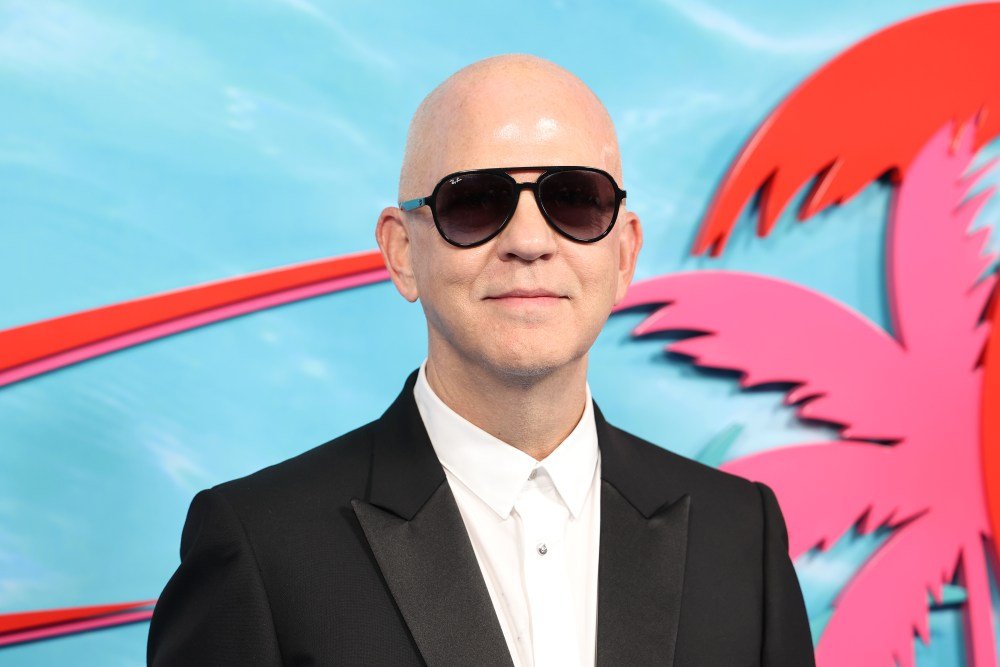
    “We shot it in L.A. and, of course, it could have shot in Canada,” the showrunner told Variety at “The Shards” New York premiere on Monday night. “I could have made it for cheaper, but I said absolutely not. My partners were like, ‘Great, let’s roll up our sleeves and make it work.’ And we did.”

    Hollywood, once the epicenter of American film and television productions, has been grappling with production fleeing California in search of more competitive tax incentives. Despite recent efforts from state and city officials to increase tax incentives, Los Angeles production volume dropped 3.1% in the second quarter of 2026.

    During a rare interview with Variety, Murphy explains why he “demanded” his next two projects shoot in Los Angeles, and how he was “very conscious” about the way sex was portrayed in “The Shards.”

    A UCLA study from a few years ago found that nearly half of Gen Z doesn’t want sexual content in film and TV. I asked Olivia Wilde about this, and she told me that’s because sex hasn’t always been portrayed authentically. What’s your take on that?

    Well, that’s interesting because one of the first things I did was “Nip Tuck.” It’s funny, I directed the pilot and worked on all the episodes, so I don’t consider that there’s a lot of sexual content in it. 

    What I like about this show is that it has a lot of romantic relationships that turn into romantic triangles. At the heart of the show, there are several strong romances that — in success — would carry on over three seasons. But I was very aware, and I made it about that idea. So, I think the key is not a lot of graphic-ness, but then you see something like “Heated Rivalry,” which was done so beautifully. And everyone’s obsessed with it.

    The key is that it’s not about the sexual content; it’s about whether [the audience] likes the characters and what they’re doing. This show is different than [“Heated Rivalry”]. This is a high school show: first times, first kiss, first break-up. So I think that generation of young people will like it for that reason. I hope so, but I was very conscious about that when I was making it.

    Homer Gere stars in “The Shards.” He just had a breakout role in “Euphoria.” Is that where you found him?

    No, I did not know Homer. He auditioned, and I saw his audition. We auditioned close to 500 people for these parts [over] many, many months. He just gave an incredible audition. I mixed and matched him with the cast. All of these actors earned those parts. I would never have dug them up.

    You watched “Euphoria,” though?

    Well, afterward, when we were shooting [“The Shards”]. And I’m friends with Sam Levinson. [Gere] had just done one episode, but he was cast before I knew about “Euphoria.” I thought, “Well, good for Sam. Homer’s a star and a great actor.” What Homer did in that show was incredible. Very brave. People had a lot of opinions about that, as they do. But no, I had my own relationship independent of seeing that show. But I watched that show as a fan. I love that show. I always have. It’s incredible.

    The biggest Hollywood story of the year is the Paramount-Warner Bros. merger. Do you feel confident that creators will continue to thrive amid the potential industry consolidation?

    Well, I think they will always continue to thrive, right? There have been many of those [mergers] in our history. The thing that I’m very conscious about and would like to protect is the jobs. Keep the jobs, and more specifically, my next tranche of work is bringing filming back to Los Angeles. It’s ridiculous. It’s a travesty. I think the mayor [Karen Bass] could do a much better job than she’s done, for one.

    That’s also on the filmmakers to figure out the economic troubles and how to make things in L.A. so that our crews and cast can sleep in their home city, go home and have meals with their families. I have two things shooting, and they’re both going to be in L.A. I demanded that. I made that work economically. The most important thing to me is that it’s up to the individual showrunners and filmmakers to say, “Hey, we want this.” In my experience, as long as you can figure out a will, there’s a way. And they’re the first people to say, “Great, we’d love for it to shoot in L.A.”

    I don’t think that’s the obstacle. It’s always the tax credits. The tax credit in L.A. should be better. It should be made more interesting and inviting to the studios. That starts with the government. I’ve spoken to the governor about this. He’s a friend, Gavin [Newsom]. He agrees. I haven’t spoken to Mayor Bass about this. I’d love to, but I think start there. Do that. That’s what matters.

    I think they’re making progress. Do you have faith they can pull it off and bring back more productions?

    I hope so. I started working in Hollywood in 1995. There’s nothing more haunting than walking on those beautiful soundstages that are ghost towns. It’s upsetting, and it doesn’t have to be that way. Everybody wants to shoot in L.A.

    And this show is a love letter to L.A.

    Right. And we shot it in L.A. Of course, it could have shot in Canada. I could have made it for cheaper, but I said absolutely not. My partners were great about that. They were like, “Great. Let’s roll up our sleeves and make it work.” And we did.

  • ‘The Batman 2’ and ‘The Batman 3’ Are Not Filming Back to Back, Says James Gunn: ‘I Can Deny’ That Online Rumor

    ‘The Batman 2’ and ‘The Batman 3’ Are Not Filming Back to Back, Says James Gunn: ‘I Can Deny’ That Online Rumor

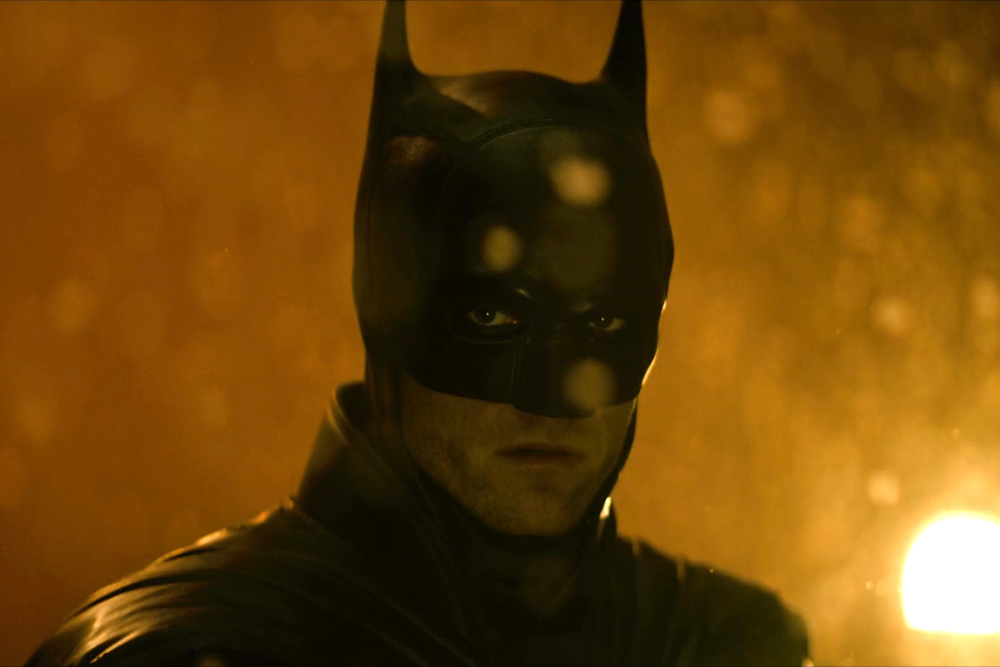
    DC Studios co-chief James Gunn is putting to bed one of the more popular online rumors about the upcoming “The Batman 2,” directed by Matt Reeves and once again starring Robert Pattinson as the Dark Knight. Social media has been convinced that Reeves is filming “The Batman 2” and “The Batman 3” back to back, alleging this is one of the reasons his sequel to 2022’s “The Batman” spent so many years in development. Not so fast.

    Gunn was asked on Threads to confirm or deny the rumor about two “Batman” sequels shooting back to back, to which he bluntly answered: “I can deny.”

    It’s not uncommon in Hollywood for studios to shoot sequels back to back as one huge production. This is how “The Matrix Reloaded” and “The Matrix Revolutions” were filmed after the blockbuster success of the “The Matrix,” for instance, as were “Pirates of the Caribbean: Dead Man’s Chest” and “At World’s End” following the huge reception for “The Curse of the Black Pearl.” Marvel shot “Avengers: Infinity War” and “Avengers: Endgame” as one production over the course of an entire year.

    Warner Bros. recently delayed the release of “The Batman 2,” which is now in production in London. The movie will open in theaters on Feb. 18, 2028, nearly six years after the March 2022 opening of “The Batman.” Joining Pattinson in the long-delayed sequel are Scarlett Johansson and Sebastian Stan, plus Charles Dance, Brian Tyree Henry and Sebastian Koch. Reeves co-wrote the sequel’s screenplay with Mattson Tomlin. Plot details remain under wraps, as do the roles being played by the film’s supporting cast.

    “The Batman Part II” was originally supposed to open Oct. 2, 2026, before Warner Bros. delayed it to Oct. 1, 2027. Moving the film to 2028 gives Reeves additional time in post-production.

  • Eric Roth, Brian Kavanaugh-Jones and Cate Blanchett’s Dirty Films to Exec Produce Paparazzi Tragicomedy ‘The Present Times’ (EXCLUSIVE)

    Eric Roth, Brian Kavanaugh-Jones and Cate Blanchett’s Dirty Films to Exec Produce Paparazzi Tragicomedy ‘The Present Times’ (EXCLUSIVE)

    Screenwriter Eric Roth (“Forrest Gump,” “Dune: Part One”), Brian Kavanaugh-Jones (“Longlegs,” “A Complete Unknown”), Andrew Upton of his and Cate Blanchett’s production company Dirty Films (“The New Boy”) and Anne Peters are on board as executive producers of the fable-like tragicomedy “The Present Times.”

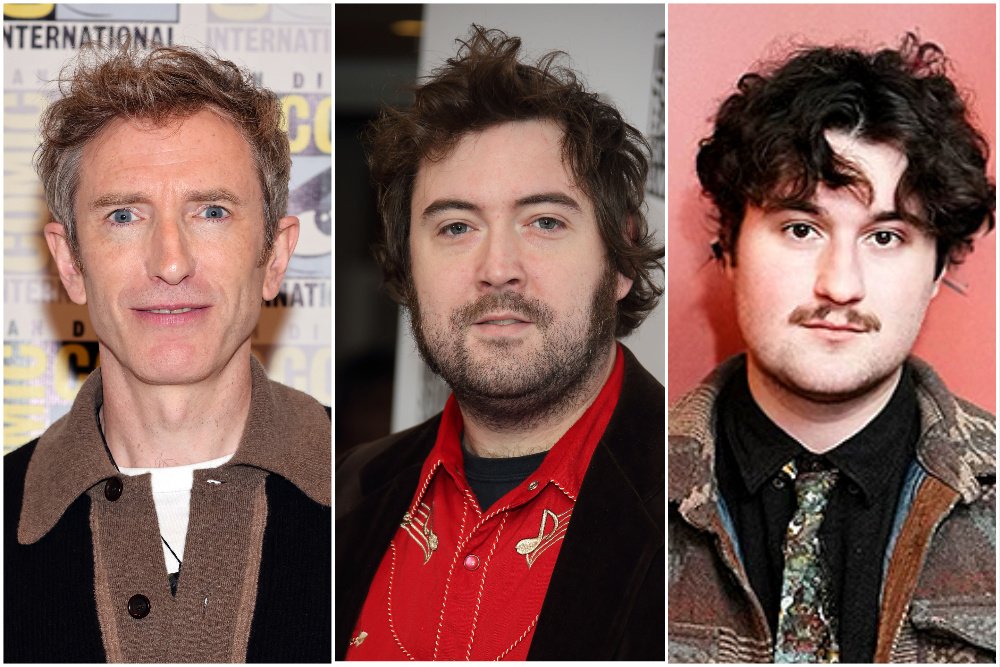
    The upcoming feature film, directed by Noah Stratton-Twine, stars Daniel Weyman, who plays Gandalf in “The Lord of the Rings: The Rings of Power,” and standup comedian and actor Nick Helm (“Uncle”).

    Weyman and Helm play embittered paparazzi Roy and Ian, respectively, who face the consequences of their intrusive profession when confronted by an immoral scheme and an otherworldly presence.

    Joining them in the cast are Paul Kaye (“Game of Thrones”), Raffey Cassidy (“The Brutalist”), Emma McDonald (“Moonhaven”) and Jay Simpson (“Chernobyl”), supported by an ensemble that includes Ada Player (“The Running Man”), Os Leanse (“Artificial”), Ivy Freeman-Attwood (“Elden Ring”), Nish Nathwani (“Surge”) and Luke Rollason (“Supergirl”) — who starred as the lead in Stratton Twine’s first feature “Two Big Feet.”

    Stratton-Twine describes the film as “an ode to both Britain’s wealth and history of championing character actors, larger-than-life performances in often ludicrous yet wholly innate and resonant scenarios, and London as a singular and diverse cinematic city, prior and still championed by heroes of mine like Mike Leigh.”

    This is the third feature written, directed, edited and scored by Stratton-Twine, who is currently touring his co-directed effort “The Peril at Pincer Point,” which received the Neon Auteur Award at SXSW 2026 and is set to play at Fantasia, Edinburgh Intl. Film Festival and many others, having since screened and won awards at Fantaspoa and Sydney Film Festival.

    Also featured in the cast are Kim Durham, Anna Acton, Bron Weigh, Richard Keep, Corinna Marlowe, Ignatius Upton, Andrew Upton, Andi Da Silva, Andre Lillis, Oxa Hazel, Sabira Stanisavljevic, Kenichiro Thomson and Jack Redmayne, who previously led Stratton-Twine’s “The Peril at Pincer Point.”

    “The Present Times” is produced by Dashiell Upton, Lev Petrov, Jake Kuhn and Timofey Stolov. Casting by Marta Nogeura. Cinematographer Murray Zev Cohen returns for his third collaboration with Stratton-Twine. The production companies are Right Off Films and Gittes-Cross Pictures.

    Principal photography wrapped in May in London.