Tag: Entertainment – Variety

  • Locarno Open Doors: Talemwa Pius’ ‘A Vineyard for a Lobster’ and Mohammed Sheikh’s ‘Accept My Plea for a Burial’ Win Top Prizes at Festival’s Africa Industry Focus

    Locarno Open Doors: Talemwa Pius’ ‘A Vineyard for a Lobster’ and Mohammed Sheikh’s ‘Accept My Plea for a Burial’ Win Top Prizes at Festival’s Africa Industry Focus

    Ugandan Talemwa Pius’ striking magic realist fable “A Vineyard for a Lobster” and “Accept My Plea for a Burial,” a Somalia set critique of ancient custom, emerged triumphant at Locarno’s 2026 Open Doors, winning its two biggest cash prizes.

    Neither prize comes as a surprise. 

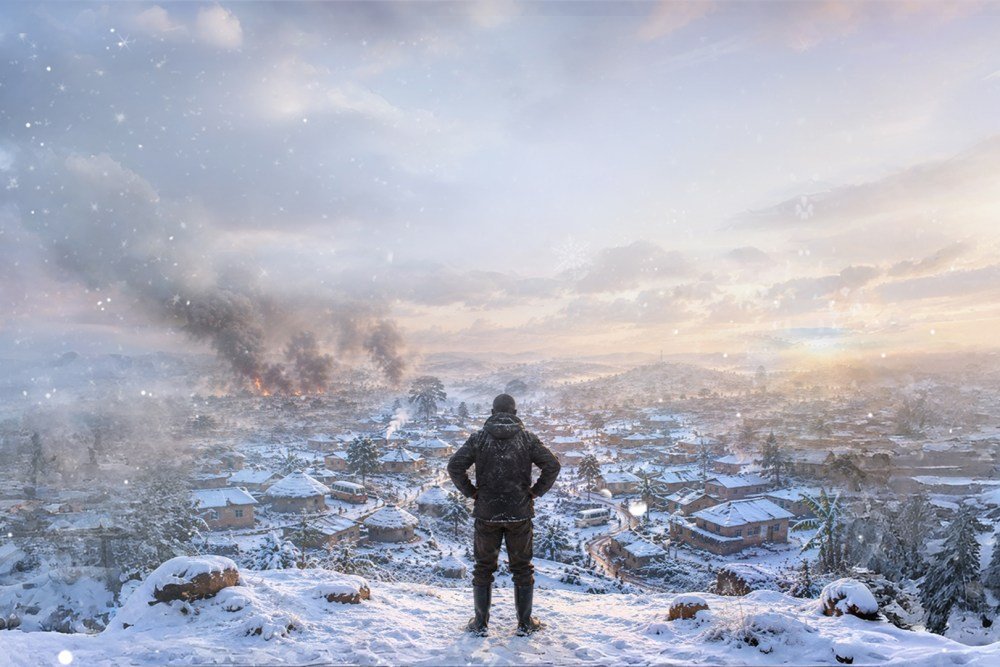
    Picturing a miraculous snowfall in a drought-ridden Ugandan village, in “A Vineyard for a Lobster,” Pius cleverly spins a political fable of broader collective breakdown, as characters – a desperate trader, a disgraced priest and a reluctant chairman – react to the miracle in self-serving ways rather than thinking about any common good. As their ambitions escalate, the village threatens to fall apart. From Kampala-based Gripmagic, “in the film, an impossible snowfall in a Ugandan village becomes a political allegory, echoing colonial intrusion,” Pius told Variety

    A €20,000 cash prize was also granted by Open Doors to “Accept My Plea for Burial” (“Baryo Aas Iga Gudoon”), by Mohammed Sheikh a Djibouti, Somalia and Qatar. It kicks in when Warmooge, 12, falls to his death while playing with Waasuge, a fellow goatherd. The village elder fails to resolve the case via customary law and religious counsel. Minnesota-based U.S.-Somali filmmaker Sheik’s follow-up to “Barni,” screening at Locarno, this is “a morally complex story where there is no clear truth, told through a rarely seen Somali cultural framework,” Sheikh told Variety.

    Aseye Fiagbe’s “Too Much Music,” a rehabilitating music doc bio of Kiki Gyan, a Ghanaian keyboard prodigy, took in the same prize. Notably, however, Open Doors prizes announced Aug. 10 at Locarno Pro, the industry zone of Switzerland’s Locarno Film festival, were spread pretty evenly, every single titles among its six project focus walking off with some kind of compensation. 

    That prize sweep took in a development grant from France’s CNC national film board for “Chapa 100,” an endearing advanced age love story from Mozambique’s Ique Langa, who impressed with his Rotterdam main competition entry “The Prophet.”

    An ArteKino International Award and a Sørfond Award went to “Tempered Flowers,” a diary-like essay, Tanzania’s Ngelime told Variety. It will use constructed archives, cinema verité performances with her family and stop motion to explore, respectively, Neema’s 1990s childhood, today and imagined future.     

    An EAVE Award was won by Burkina Faso’s Mamounata Nikiema at Pilumpiku Production, a prestigious documentary producer behind multiple doc-features, such as “Djeliya, Memory of Mandingo,” an ambitious, five-county co-pro. 

    “Exploring the lost hope of the Nigerian dream,” “I Live in V.I.,” a social class satire by Ugochukwu Azuya set on Nigeria’s luxurious Victoria Island, won a Tabakalera-San Sebastian residency. The high-energy Adja Soro at the Ivory Coast’s animation-focused Studio KÄ scored an invitation to the Rotterdam Lab.  

    More to come

  • ‘House of the Dragon’ Star Emma D’Arcy and Creator Ryan Condal on Rhaenyra-Daenerys Finale Connection and What All That Death Means for Season 4

    ‘House of the Dragon’ Star Emma D’Arcy and Creator Ryan Condal on Rhaenyra-Daenerys Finale Connection and What All That Death Means for Season 4

    SPOILER ALERT: This article contains spoilers for the Season 3 finale of “House of the Dragon,” now streaming on HBO Max.

    HBO’s “House of the Dragon” ended its third season Sunday with a bang, then a whimper.

    Following a slew of casualties (including James Norton’s Ormund Hightower) during a massive battle between the Blacks and the Greens at Tumbleton, Helaena Targaryen (Phia Saban) jumps to her death off screen in King’s Landing.

    While players on both sides of the battle for the Iron Throne are to blame for the carnage, Season 3 of the “Game of Thrones” prequel has put forward the quickly unraveling Queen Rhaenyra Targaryen (Emma D’Arcy) as the one most responsible for the fire and blood. And “House of the Dragon” co-creator and showrunner Ryan Condal is prepared for Rhaenyra’s heel turn to be compared to that of her descendant Daenerys Targaryen (played by Emilia Clarke) in 2019’s “Game of Thrones” series finale.

    “I think that’s wonderful if people draw parallels between this and the original series,” Condal said during a press conference Friday. “For sure, there’s going to be mirroring and echoes and reflections across the two series, and people will see things that are either intentional or subliminal. And I will just say that I think this is a one of those existential themes that goes across this entire universe, which is the draw of the Iron Throne — what it does to a person in its thrall, or the people that are trying to get to it.”

    Condal notes the “big difference” here is that “Daenerys only got to the Iron Throne at the very end, after she had destroyed the city,” while “Rhaenyra goes through this experience of having the throne, trying to hold it and being, in a way, turned and changed by it — altered by the experience.”

    “They’re very different things, but I think the parallels do call to the greater themes of the ‘A Song of Ice and Fire’ universe, which is pride and power, and how power corrupts, and how far it corrupts. And it can change good people into corrupted people,” Condal says. “It can take corrupted people and make them real villains, and other people, like Viserys, it can simply just destroy.”

    It seems the Iron Throne is doing a mixture of both to Rhaenyra by the end of the third season of “House of the Dragon.” She’s been pricked and bloodied by it, and is now making the choice to turn violent herself, becoming responsible (directly or inadvertently) for more than one death in the finale.

    “I really wanted to make sure that that journey was a legible one,” D’Arcy says. “I think, broadly, if we’re to be more practiced at protecting democracy, which seems increasingly fragile at times, we have to be smarter about understanding the behaviors of dictatorial leaders. I think Ryan and I both, this was an opportunity to attempt to try and make a certain type of behavior at least understood by an audience. And from an acting perspective, it felt much more playable to think about empathy and the sort of empathetic machine and how that gets damaged and affected by events, than it did to sort of solely think about her relationship with authoritarianism or something.”

    Rhaenyra orders Daemon (Matt Smith) to take Tumbleton, and kill every Hightower he can while leaving its people as unharmed as possible. Daemon brings troops and his dragon Caraxes, but holds out on laying siege for as long as possible, especially as Ormund has stationed children on the battlements and in front of the gates to the city. Eventually, Daemon uses Caraxes to burn down the entrance so that the Blacks can storm the town in search of Ormund and his Rhaenyra’s latest rival, Daeron (Benjamin Evan Ainsworth). The plan is to take those Hightowers out before turning to the matter of a revived Aegon (Tom Glynn-Carney) and his dragon Sunfyre.

    By the end, many of Rhaenyra’s supporters, including Northmen Roddy the Ruin (Tommy Flanagan), have been killed by a traitorous Ulf (Tom Bennett) and his dragon Silverwing — but so has Ormund, who went up in flames when Ulf double-crossed him, too.

    Daemon, Corlys (Steve Toussaint) and Hugh (Kieran Bew) make it out alive, and the last we see of Ulf, he is being chased by Daemon on Caraxes and Hugh on Vermithor. Back in the burnt Tumbleton, Gwayne Hightower (Freddie Fox) is barely left standing, while the fate of Daeron and his dragon Tessarion are unknown.

    “All season long, we’re setting up this classic medieval siege, which is really where we wanted to get to, and the fun of that, the concept of that battle was that Ormund had basically done all he could to blunt the threat of Rhaenyra’s greatest power — which is that she has, or had, six dragons, under her command at that point,” Condal says. “So how do I take the dragons off the board and make this an even fight, man-to-man? And he sees his army as better trained and better suited than the rivermen that are coming to attack. He knows the ground, he’s inside the city, they have to come over the walls, sacrifice a bunch of their men. It was a very, very, very complex thing to fold all together, but we wanted to do a classic Medieval siege. That was the elevator pitch for the finale.”

    Back in King’s Landing, Rhaenyra is making moves she thinks will keep her firmly on the Iron Throne as long as Daemon and his team pull through. She kicks Mysaria out of the Red Keep, and has a captive, pregnant Helaena forcefed to keep her alive. Rhaenyra dons some Joan of Arc-esque armor, and has Alyn (Abubakar Salim) escort her and her young son and new heir Joffrey (Oscar Eskinazi) to the sept, where she demands to be annointed as the queen in front of all her people. When the High Septon refuses this request yet again, in favor of supporting Aegon’s return, she orders his execution.

    Then Rhaenyra takes to the streets, and tells the people of King’s Landing the prophecy her father, Viserys, entrusted to her: Aegon the Conqueror’s “A Song of Ice and Fire” vision of the Targaryens and their dragons being the only ones who can defeat the whitewalkers in the future. She tells the crowd (which Mysaria is hiding in) that she is the “prince that was promised,” and they look on in shock, confusion and fear.

    It’s a big moment for fans who will recall the importance of this prophecy to the original “Game of Thrones” series, and how “House of the Dragon” has incorporated it into its own mythology in a break from its source material, George R.R. Martin’s “Fire & Blood.”

    “It’s not in the book, and it’s not in the history, but there is a bunch of talk about how Rhaenyra became very despotic, and became a tyrant at the end, and was very unpopular with the people,” Condal says. “So we saw it as, this could just be something that happened, and there was disagreement over exactly, what it was, so it didn’t make the historical record. My glib toss-off from the historians is, ‘Oh, well, Targaryens say crazy shit all the time.’ But so much of their existence is this self-aggrandizement. And for the stonemasons standing there in the crowd just looking up at this, it could just sound like somebody trying to make something of themselves, because they have no idea of all the quote-unquote real history that went into Rhaenyra making that speech.”

    Condal says the scene was written into the “House of the Dragon” storyline because the writers wanted “a real seismic change, a sea change in Rhaenyra’s relationship to her people” leading into the final season.

    “She’s seen to the death of their religious leaders, she’s standing outside of the church of the faith of most of the people standing there, as a member of a totally different faith, this old Valyrian faith of dragons and fire gods and blood magic,” Condal says. “And [she’s] pronouncing herself this chosen one, the leader that is going to take them through the fire and out of the darkness.”

    When Rhaenyra returns to the Red Keep, she receives the terrible news that Helaena has jumped to her death. (Read Variety‘s interview with Phia Saban here.) In Helaena’s room, Rhaenyra finds a tapestry Helaena had just finished sewing that predicts a dark and fiery end for Rhaenyra in the future. Now, she’s left to wonder how the people — including Helaena’s traveling mother, Alicent (Olivia Cooke), her childhood best friend — will react when they learn of Helaena’s death. And who they will blame.

    The “House of the Dragon” team has already broken the “superstructure” story for the final season, and Condal has handed in a draft of the first episode to HBO, but there’s no timeline for when Season 4 will air just yet. Condal says he has been on a break throughout the airing of Season 3.

    “No, I’ve actually taken time off,” Condal says. “I needed to step away from all of this. But we have an incredible season coming. As crazy and big as Season 3 was, I think Season 4 is going to be even bigger.”

    Condal adds: “It’s a great privilege to be able to tell a story, and to be able to control and write the ending, and to control when and where that happens. This is not a given in making television, certainly. So, we’re very excited to get back in, and we have new characters, and new dragons and new locations all to come, that I think are gonna make it a very worthy, final season.”

    For more of Variety’s “House of the Dragon” finale coverage, read this interview with Phia Saban, who plays Helaena Targaryen and this interview with James Norton, who plays Ormund Hightower. This interview has been edited and condensed.
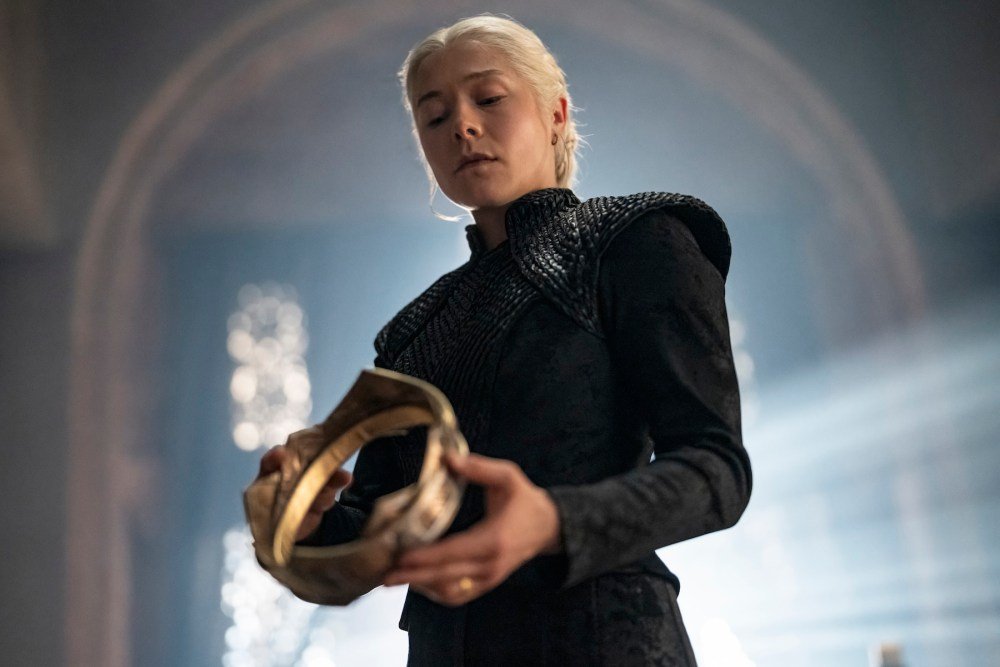
  • ‘House of the Dragon’ Star Phia Saban on Helaena’s Finale ‘Tragedy’ and Changes to Maelor Storyline

    ‘House of the Dragon’ Star Phia Saban on Helaena’s Finale ‘Tragedy’ and Changes to Maelor Storyline

    SPOILER ALERT: This article contains spoilers for the Season 3 finale of “House of the Dragon,” now streaming on HBO Max.

    HBO’s “House of the Dragon” lost its moral center with the death of Helaena Targaryen (Phia Saban) in Sunday’s Season 3 finale.

    The pregnant Helaena takes her own life by jumping from her window in the Red Keep when left alone in her room. It’s a death many fans saw coming following a season of Helaena’s ominous visions and deep depression over being secluded from her young daughter, Jaehaera, in King’s Landing. Queen Rhaenyra (Emma D’Arcy) discovers Helaena’s suicide just before the episode ends.

    “It’s a tragedy. That’s definitely the arc of Helaena’s story,” Saban tells Variety. “But I think, as she says earlier, ‘This is my body, and this is my baby — and both of those things have been forsaken as long as I’ve lived.’ And she doesn’t want to live the way she’s living anymore, and she feels that she wants to protect the children that she does have. She’s just trying her best.”

    Before she died, Helaena left behind the final piece of a tapestry she’s been embroidering throughout all of “House of the Dragon” Season 3 for Rhaenyra to find. After the image of Rhaenyra jumping to her own death and landing on spikes, Rhaenyra sees a depiction of her on the Iron Throne with blood streaming down from the crown on her head and surrounded by dragon flames.

    HBO

    During a press conference, D’Arcy called Helaena the “moral heart of the show” and predicted how her death will affect Rhaenyra heading into “House of the Dragon”’s fourth and final season.

    “She’s maybe the only character who has a proximity to power, but remains kind of uncontaminated,” D’Arcy says. “And so, I think her death, condemns Rhaenyra to the path she’s chosen. There’s no way back after that. There’s certainly no route back to a more moderate form of leadership. And, I mean, I don’t know where we go from here, but I imagine it’s likely to be impassable in her relationship with Alicent, which I think also means Helaena’s death condemns Rhaenyra to be alone in her pursuit for power.”

    While creator Ryan Condal has deviated on “House of the Dragon” from the source material in author George R.R. Martin’s “Fire & Blood,” Helaena’s arc has had some of the most significant changes, including the exclusion of her youngest child, Maelor. In Martin’s version, Helaena dies by suicide after Maelor — who survived the “Blood & Cheese” incident in Season 2 — is brutally murdered while she’s locked up in the tower. And she is not pregnant at the time of her death.

    Saban says these book plot points didn’t affect her performance of the character on “House of the Dragon.”

    “I think you can only play the story that you’re telling,” Saban says. “So really it’s the character that I built, and the story that Ryan and Sarah [Hess] and all the writers were creating, that was really all that felt relevant. But I know that there are differences in the stories, and I think that some of those differences are really cool. And I don’t think that Helena would have been maybe such a juicy part for me personally to play if there weren’t some of the differences that have been made. So you kind of just roll with the punches.”

    See below for more from Variety‘s interview with Saban about the “House of the Dragon” Season 3 finale.

    I don’t know how much you follow stuff online, but Helaena has been a deeply beloved character, and even more so this season. I think people just want her to be with her chickens and her babies, so I know they are going to take this very hard, and it really mirrors what happens in the book “Fire & Blood,” because the smallfolk will take Helaena’s death so hard. How do you personally feel, knowing that this is all coming? Helaena’s death is really a turning point in this series.

    It’s very nice to hear that, and that people care. I guess that’s really what you can hope for. That one way or another, people sort of care whether you live or die. So that’s very nice to hear.

    During the finale conversation between Helaena and Rhaenyra, Helaena tells the story of a beetle she likes, and Rhaenyra’s like, “That’s great. You could show me sometime.” And Helaena says, “You don’t care. You’re pretending. You’re ugly.” Does she now dislike Rhaenyra more than she doesn’t like Aegon? What brought her to this point with Rhaenyra, and would she have previously chosen Rhaenyra as the “better” one?

    Interesting. I don’t know about the comparison. I think the context is so different for both of them. It’s very hard to compare. The feeling from Rhaenyra is that she feels extremely violated. She feels her freedom’s been violated by her and her relationship to freedom and to nature and to all of the things that feed her as a person have been taken away. So I suppose it’s more than a punishment — I feel it’s more like a home truth. You’re looking for what’s useful to you, and there are things in the world that are fascinating and beautiful, despite how they relate to like power struggles in the kingdom. And I think she just is making a point about that. That there’s more to life. And actually, I think she’s proud that that’s how she feels.

    Do you think Helaena reaches her breaking point because of Mysaria’s warning to her? If she hadn’t had that interaction with Mysaria, would she have kept going as she was?

    I don’t think it wouldn’t have happened if Mysaria didn’t say it, but I do think it’s just another addition to the descent. There’s a confirmation of what Helaena already feels, which is that she is never going to live a life again in which she feels alive. And that’s kind of what Helaena says to Rhaenyra. She’s like, “There’s more to life than not just not being dead. Like, the bar is on the floor. I have higher dreams and hopes and feelings for the world than that.” In a sense, maybe some might say that she takes power from what she does. That she can, rather than being killed by a vision, she can choose that for herself.

    We’ve gotten a lot of Helaena’s visions this season. Which one did you enjoy performing the most? What did you think was the most powerful?

    I love all of them. I can’t say that I didn’t love being on the dragon. That’s like a bucket list thing. We’re on the dragon show — I had to get in there. So I’m very grateful that was written for me. And I loved it. It was so fun.

    Helaena chose to stop working on her tapestry and leave it behind where Rhaenyra will presumably find it. It looks like Rhaenyra is bleeding from the crown in that final embroidery — is that what you think that is?

    I think Helaena’s embroideries blend a sort of dreamlike and literal. It’s an art form, so I don’t think she’s subscribing to necessarily always realism. But yes, it didn’t look like a great portent, did it? Wish her all the best, though!

    For more of Variety’s “House of the Dragon” finale coverage, read this recap and story about the press conference with co-creator Ryan Condal and star Emma D’Arcy and this interview with James Norton, who plays Ormund Hightower. This interview has been edited and condensed.
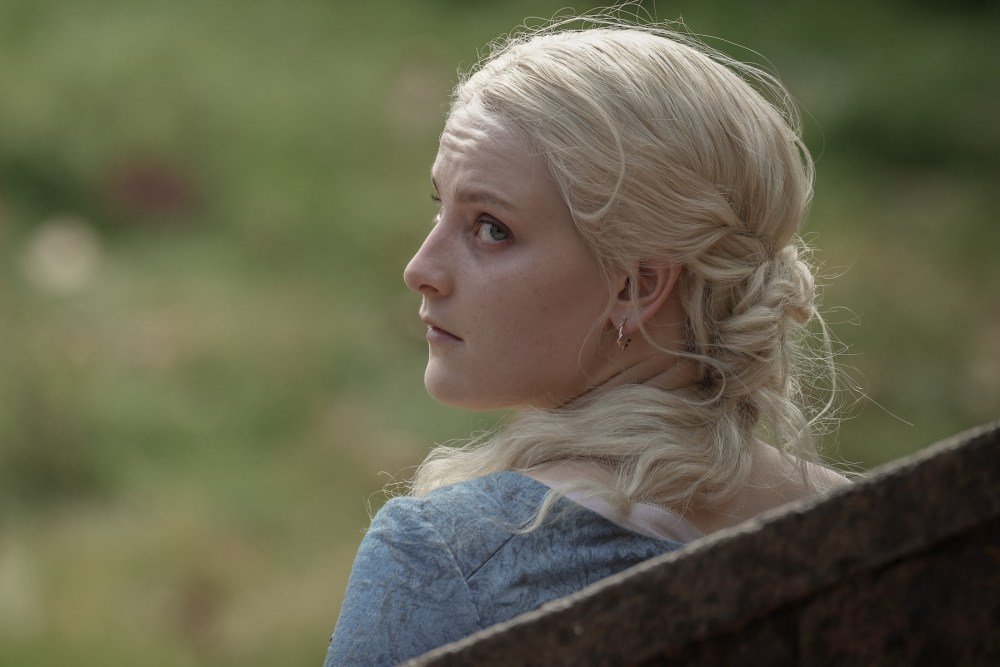
  • Kiran Abbavaram’s Mythological Action-Fantasy for India’s Zee Studios Reveals Title as ‘Indraputra’ (EXCLUSIVE)

    Kiran Abbavaram’s Mythological Action-Fantasy for India’s Zee Studios Reveals Title as ‘Indraputra’ (EXCLUSIVE)

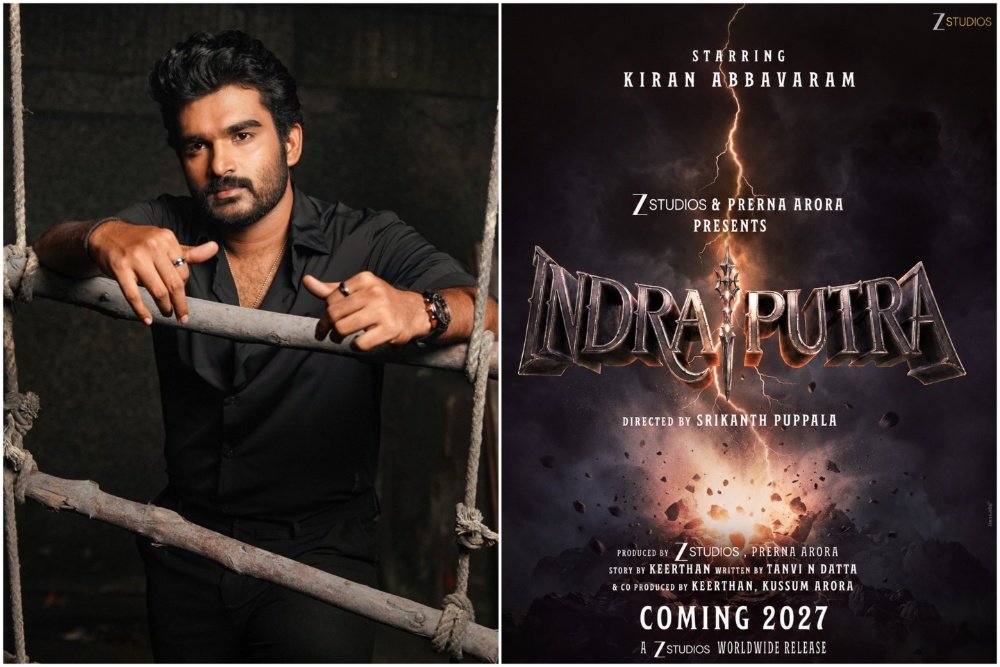
    Kiran Abbavaram‘s mythological action-fantasy for Zee Studios has revealed its title as “Indraputra,” with the pan-Indian project, directed by Srikanth Puppala, set to begin principal photography in October.

    Abbavaram takes on a mythology-rooted part built around the conflict between dharma, the principle of righteous duty and moral order in Hindu philosophy, and adharma, its violation. The film is designed as a pan-India release intended to reach audiences across languages, and is positioned as the opening chapter of a broader mythological universe.

    “‘Indraputra’ is very different and unconventional from anything I have done before,” Abbavaram said. “The moment I heard the story, I realized it was a film that would stimulate me further as an actor and it very well aligns with my cinematic vision. The role requires both emotional depth and physical changes, and I am excited to bring this character to life. I am thankful to Zee Studios and Srikanth garu for believing in me. I can’t wait to start this amazing journey.”

    Abbavaram made his acting debut in 2019 with the romantic comedy “Raja Vaaru Rani Gaaru.” 2021’s “SR Kalyanamandapam,” which he also wrote, built his wider profile. He went on to star in “Sebastian P.C. 524” and “Sammathame” in 2022, followed by three releases in 2023 including “Vinaro Bhagyamu Vishnu Katha,” with “K-Ramp” and “Chennai Love Story” being his most recent releases.

    “Indraputra” is produced by Zee Studios and Prerna Arora, and co-produced by Keerthan. The film is now in pre-production ahead of an October start, with the supporting cast, technical crew and release date to be revealed imminently.

    “Indraputra” marks Puppala’s feature directorial debut. He previously worked in the direction teams of “Kudi Yedamaithe,” “Katamarayudu” and “Gopala Gopala,” and most recently served as first assistant director to Rishab Shetty on “Kantara: A Legend – Chapter 1.”

    “‘Indraputra’ is a dream that has been close to my heart for a very long time,” Puppala said. “Our mythology is filled with timeless stories, and with this film, we aim to present one such epic on a scale that is both visually spectacular and emotionally relevant to the audiences across the country. Having Kiran Abbavaram lead this journey is truly exciting, as he brings sincerity, intensity, and conviction to the character. I thank Zee Studios for placing their faith in this vision, and I am really looking forward to taking ‘Indraputra’ on floors this October.”

    Arora’s credits include “Toilet: Ek Prem Katha” and “Dhundh.” She has an existing relationship with Zee Studios, having previously produced “Jatadhara” for the studio.

    “‘Indraputra’ is the beginning of a world we have been passionately building,” Arora said. “Inspired by the richness of Indian mythology, infused with a contemporary vision, the film marks the first chapter of a very expansive mythological universe.”

    “Indraputra” joins a run of pan-India projects built around interconnected mythological worlds, following Ele Animations’ “Mahaprabhu Jagannath,” the launch title of its planned Sanatan Universe, and Hombale Films and Kleem Productions’ “Mahavatar Cinematic Universe,” an animated franchise built around the 10 avatars of Vishnu, spanning seven features from 2025’s “Mahavatar Narsimha” through 2037.

  • Mahesh Babu’s Look in S.S. Rajamouli’s ‘Varanasi’ Unveiled

    Mahesh Babu’s Look in S.S. Rajamouli’s ‘Varanasi’ Unveiled

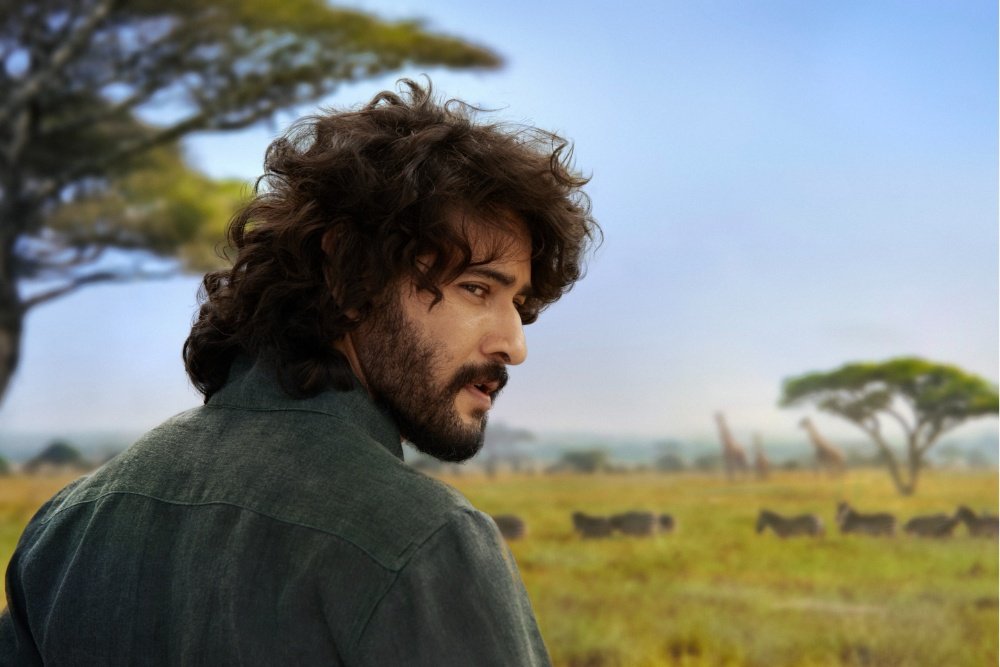
    Two new character stills of Mahesh Babu from S.S. Rajamouli‘s “Varanasi” were released Sunday to mark the actor’s birthday, showing his character Rudhra on location in Africa.

    The film’s story spans thousands of years and traverses multiple continents, with locations ranging from Antarctica to Africa to the titular Indian city. Babu plays the dual roles of the protagonist Rudhra and Hindu God Rama, Priyanka Chopra Jonas plays a character named Mandakini and the main antagonist Kumbha is played by Prithviraj Sukumaran.

    The images were shot at the Kilimanjaro and Maasai Mara locations, two of the African settings featured in the film. In one still, Mahesh Babu reclines on a bamboo raft in a jungle setting, dressed in a loose olive-toned shirt and dark cargo trousers, with tousled curly hair and a full beard. The other image shows him in profile against the African savannah, with giraffes and zebras visible in the background.

    Mahesh Babu – “Varanasi”

    Sri Durga Arts/Showing Business

    Rajamouli described the character’s dual nature in a note accompanying the stills. “Rudhra was born to fulfil a purpose much larger than himself. He carries a destiny he did not ask for. He is witty, he is vulnerable, and he is fierce. That is what Mahesh brought to him. Anyone can play fierce. Very few can play fierce and fragile in the same breath,” he said in an Instagram post.

    The director also reflected on the Africa shoot itself. “These frames are from our Africa schedule, and the land gave us something no set could. Shooting around Kilimanjaro and in the Masai Mara, I was stunned. There were mornings I felt even the 1.43:1 Imax frame could not hold what was in front of us,” he said.

    The stills mark the latest in a series of character reveals from the production, following images of Priyanka Chopra Jonas released for her birthday.

    Babu, who spent a year preparing for the role, underwent three months of Kalari martial arts training solely to adjust his posture for the character’s period-appropriate bearing. “I’m playing Lord Rama’s character, it required posture… you can’t stand like modern characters,” he has said to Variety.

    He also trained with a track and field team for several months to modify his running style. “When I saw the shot, I was really happy. It was worth it, because that six months of training for that one shot was really worth it,” he said. “The way I walked changed, the way I stood changed, everything changed.”

    “Varanasi” is Rajamouli’s follow-up to the Academy Award-winning “RRR.” M.M. Keeravani, who won the Oscar for “RRR’s” “Naatu Naatu,” is returning to score the new film.

    “Varanasi” opens in theaters worldwide on April 7, 2027.

  • Naseeruddin Shah, Gurvinder Singh Turn a Village’s Real Grief Into Locarno Competition Title ‘Rehmat’: ‘It’s Important That These Films Get Made’

    Naseeruddin Shah, Gurvinder Singh Turn a Village’s Real Grief Into Locarno Competition Title ‘Rehmat’: ‘It’s Important That These Films Get Made’

    The family living in the house that “Rehmat” uses as Rashid Ali’s ancestral home lost a son to a drug overdose shortly after Indian filmmaker Gurvinder Singh and his crew first met them.

    Singh tells Variety, “The actual family that lives there lost their 19-year-old son after we met them for the first time. When I looked at him, the first thought that ran in my mind was that he was on drugs. And he died of an overdose within two months. What else do I need to say? How can that not affect you as a filmmaker planning a film in that scenario. How can you avoid depicting such a state of affairs?”

    “Rehmat” has its world premiere in the Concorso Internazionale, the main competition of the 79th Locarno Film Festival. It is the only Indian feature in the section this year and will compete for the festival’s top honor, the Pardo d’Oro.

    Adapted from short stories by the Punjabi writer Ajeet Cour, “Rehmat” weaves three narratives set in present-day Punjab around themes of displacement and inherited grief. Singh says the material resonated with him directly through family history. “She has written about many themes, uprootedness being one of them, and she belongs to my grandparents’ generation that migrated from Lahore or other parts of west Punjab to Delhi,” he says. “That was the sort of affinity I had with her stories.”

    Three decades after he began documenting Punjab’s folk ballads and oral histories, and 15 years after his debut feature “Anhey Ghorhey Da Daan” premiered in Venice, Singh says the film has given him something he didn’t expect. “I never experienced the Partition, but did feel a sense of trauma during the years of militancy and the anti-Sikh carnage in Delhi in 1984,” he says. “Frankly speaking, this film offers me a closure. I feel it has brought out all that I needed to express about the divided land and its people.”

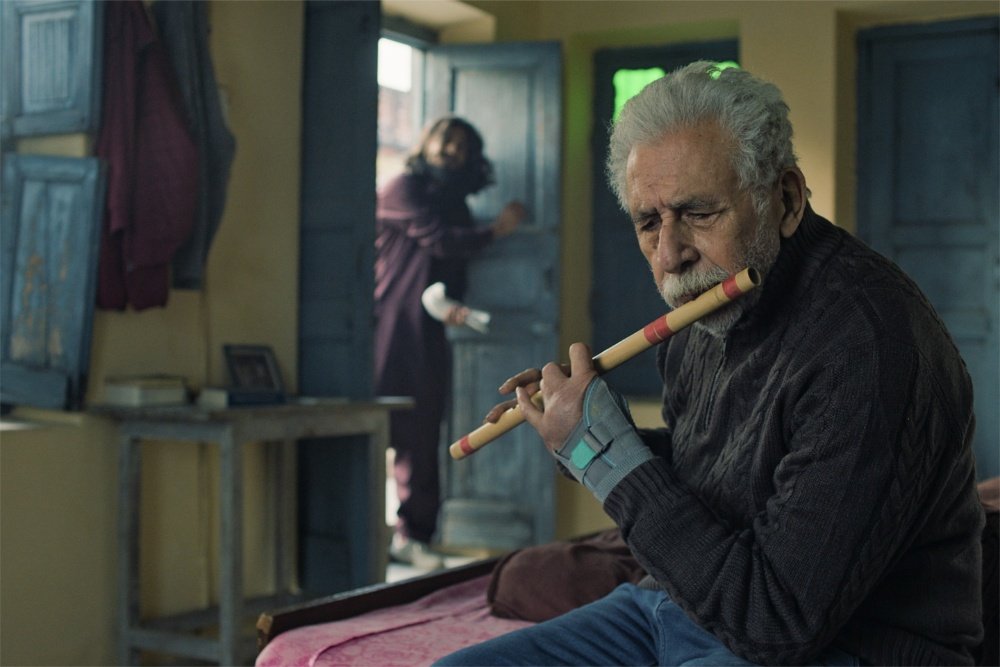
    The film stars revered Indian thespian Naseeruddin Shah as Rashid Ali, a Punjabi Muslim man whose family left before Partition and who returns to his birthplace after a lifetime in England. Shah says he committed to the role before knowing any of its specifics. “I’d seen and been deeply moved by Gurvinder’s films,” Shah tells Variety. “His cinematic sensibility and his take on the turmoil in his home state made profound statements. I just thought I’d like to be part of such films.”

    That leap of faith went both ways. Singh says, “I approached Naseer without having written the script, only having a vague outline of the character of Rashid in my mind. His acceptance gave me the possibilities to expand and flesh it, knowing the kind of conviction, intellect and charisma he will bring into it. The responsibility became a flight of imagination. It was a new territory for me.”

    Of working with Shah on set, Singh says, “I had decided that I would initially observe him in front of the camera and then figure out my approach. But I kept doing that and hardly needed to direct him,” describing how the actor’s “use of the body, gestures, handling of objects” turned Rashid “into his own personal expression.”

    Shah, who is not Punjabi and does not speak the language fluently, says, “I agree I don’t have the Punjabi heartiness and I don’t look Punjabi. But I think that helped to identify Rashid as an outsider. I don’t speak Punjabi fluently but practice helped.” On the ambiguity of a character who initially introduces himself to the village as God, Shah adds: “A character doesn’t have to be understood by the actor playing him. Actors aren’t psychoanalysts. One must be able to empathize with the character’s situation.”

    Singh’s preference for long, unbroken takes runs through the film, including the opening shot that establishes Seema’s world. Singh says, “The sense of uninterrupted time that the long take affords, both with the static and the mobile camera, is highly involving for me as a spectator, and my first instinct is to attempt that. But there are scenes where you know it will not be practical or even desirable, hence the montage has to be employed. Both create a different quality of attention and being. And perhaps life is also like that. Our ways of seeing and engaging keep altering.”

    Shah adds, “I love long takes. It fits beautifully with my stage work. Frankly I don’t believe there’s a great difference between stage and film acting if truth is what you’re looking to find.”

    Beyond the ancestral house, Singh says the village itself, with its crumbling 19th-century school building and untended lanes, reshaped the narrative during location scouting. Asked how he views Punjab today, Singh says, “Bleak from the perspective of lack of imagination among the youth or those of my generation, not because of any lack of compassion. People are sticking to the glory of ownership of land and the caste they belong to. It has given them a false sense of bravado and entitlement. And the gender discourse is abysmal, especially in the villages. No wonder so many young girls are escaping to the West.”

    Alongside Shah, the cast includes Suvinder Vicky, Mita Vashisht, Navjot Randhawa and Diya Kamboj, plus the celebrated Punjabi poet Jaswant Zafar, making his screen acting debut at 60 as Harjap. Of casting Zafar, Singh says, “Whenever I have cast a non-actor in a major role, it is fully knowing that the person will play himself or herself on screen. So Zafar became Harjap for me. He has all the natural qualities I had imagined in Harjap and a profound sense of the feelings that he carries, both as a common man and as an intellectual.”

    “Rehmat” is produced by Singh and Arpana Caur, with Andrei Cosmin Illes and Némésis Srour serving as co-producers. The film is a co-production between India’s Vahao Studio and Paris-based Pavo Films, the outfit Illes and Srour launched earlier this year, with “Rehmat” as its debut project.

    Shah, whose career stretches back to the parallel cinema movement of the 1970s, says, “My early work prepared me for a film like this. I think Gurvinder has surpassed other contemporary filmmakers in India.” Of the film’s Partition-era subject matter, he says, “I believe it’s important that these films get made. Even if not widely seen now, they will remain as a testament.”

    Asked what he’s working on next, Singh says, “I am not sure what I want to do after this. I came to the cinema through some conspiracy of the universe. I grew up painting and writing. I am painting again these days.”

  • ‘Donkey Princess’ Review: A Princess Escapes the Kingdom, but Not the Patriarchy, in an Inventive, Shape-Shifting Fairytale

    ‘Donkey Princess’ Review: A Princess Escapes the Kingdom, but Not the Patriarchy, in an Inventive, Shape-Shifting Fairytale

    Chilean duo Cristobal León and Joaquín Cociña made a dream nightmare debut with “The Wolf House,” a stop-motion fantasy that turned heads both with its wholly original design — incorporating claymation, puppetry and papier-mâché to palpably handmade but immersively surreal effect — and its trajectory from a seemingly juvenile storybook premise to very grownup recesses of horror and trauma. Their 2024 follow-up “The Hyperboreans” captured fewer imaginations with its dense, narratively abstruse melange of history, psychology and political theory, but still dazzled with technique, adding live-action cinematography to the filmmakers’ varied visual quiltwork. In their beguiling third feature, “Donkey Princess,” León and Cociña split the difference between their first two, continuing their singular exploration of hybrid live-action cinema, but fruitfully returning to adult fairytale terrain.

    Premiering in the international competition at Locarno, this is distinctive, aesthetically rich filmmaking that consolidates its helmers’ auteur status, and has the right balance of accessible and avant-garde components to ensure a life beyond the festival circuit — though the substance of its story lingers slightly less in the mind than its remarkable presentation. “Donkey Princess” doesn’t quite match “The Wolf House” for darkly enveloping atmosphere and gnawing emotional impact, but not much does; still, its portrayal of a mythic princess, whose tortured daddy issues follow her even after she’s spirited into the real world, builds to a climax both touching and disquieting.

    As suggested by the title, the script (written, like “The Wolf House,” by the directors in collaboration with novelist Alejandra Moffat) riffs on the 17th-century Charles Perrault tale “Donkeyskin” — not one that Disney ever dared touch, giving its discomfiting incest-themed premise, though Jacques Demy gave it delightfully offbeat film treatment in 1970. More downbeat in its whimsy, “Donkey Princess” centers on Princess Diana (“Hyperboreans” star Antonia Giesen), who doesn’t bear any resemblance to her famous British namesake, save for the fact that she’s suffocated by the demands of her very patriarchal kingdom.

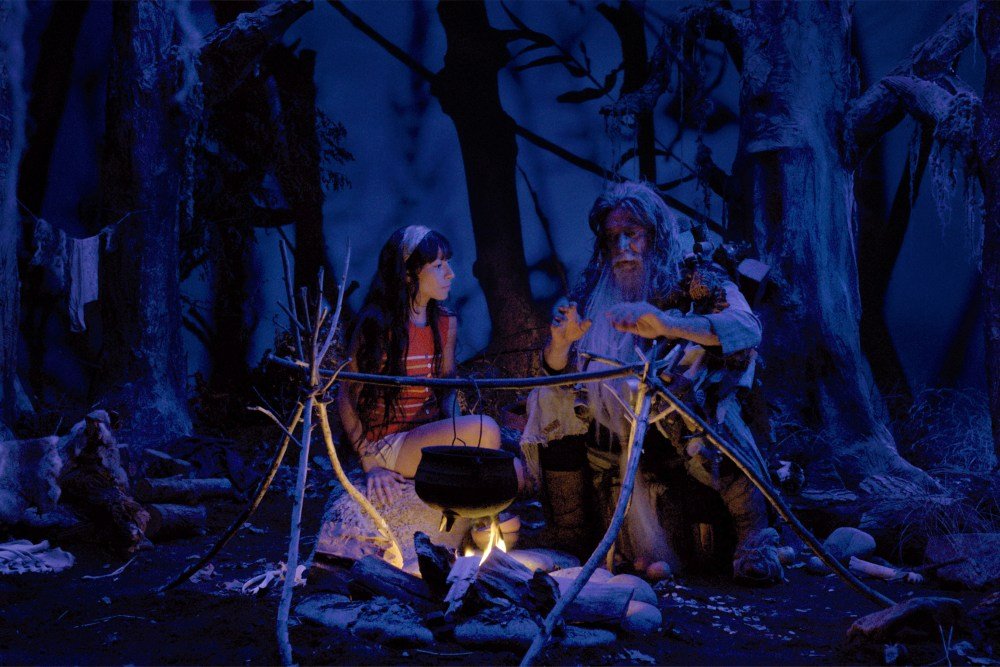
    Said kingdom is realized in a mixture of animated imagery and winningly ramshackle production design by Natalia Geisse: toadstool-shaped castle turrets rendered in what looks like cake frosting, fiberglass mountain formations and forests forged from stray, dry branches, accessorized with the odd flurry of 2D cartoon butterflies and birds. (Fans of the directors’ stop-motion interlude in Ari Aster’s “Beau is Afraid” will spot some familiar landscape textures here.) Tinted in queasy shades of turquoise and puce, it does not look like a world made to last, and for Diana, it isn’t. Guarded obsessively by her father (Francisco Melo) since her mother’s untimely death, she yearns for escape from his clutches; when she meets charming commoner Lalo (Andrew Bargsted), she falls swiftly in love, both with him and the prospect of life outside the royal court.

    For the King — who really has taken very badly to widowed life, having outlawed love throughout the land — this will not do. Lalo is swiftly banished to an orange-skied hellscape strewn with thorns and vultures: a witty fusion of silhouette animation and tactile set construction. Before he goes, however, he gives Diana a bracelet said to grant wishes across space and time; in short order, she’s transported to the urban bustle of contemporary Chile. There, she and Lalo live together as parallel versions of themselves, also working alongside each other in the pest control business. If this seems a pretty compromised happily-ever-after, there’s also the fact that her father, too, has been teleported to this new realm: an aging invalid stripped of his powers, but still plenty burdensome.

    That’s not the last dimensional shift in “Donkey Princess,” as Dina is shuffled through various lives and personae, but is never quite free or happy in any of them: The naïve yet despairing time-travel mechanics of Bertrand Bonello’s recent “The Beast” come to mind here, as its various temporal paths do eventually converge into a single, climactic tragedy, with the open-ended possibility of freedom. León and Cociña’s storytelling style can be opaque — the film’s opening salvo, in particular, feels hurried and scrambled — but it gains in grace and clarity, with a concluding shift in register toward near-total realism. That’s the biggest surprise from these most feverishly world-building of filmmakers, even if their most satisfying feature to date remains their most animated one. “Donkey Princess” might lack “The Wolf House’s” intensity of vision and purpose, but it feels an intriguingly transitional work in an oeuvre that could go anywhere from here.

  • Andrew Lloyd Webber Is ‘Gutted’ on ‘Cats: The Jellicle Ball’ Closing Night: Producing on Broadway Is ‘Unsustainable’

    Andrew Lloyd Webber Is ‘Gutted’ on ‘Cats: The Jellicle Ball’ Closing Night: Producing on Broadway Is ‘Unsustainable’

    Ahead of tonight’s final “Cats: The Jellicle Ball” show, composer Andrew Lloyd Webber is speaking out about how producing on Broadway has become “unsustainable.”

    “I’m gutted that the wonderful Broadway production of ‘Cats: The Jellicle Ball’ is closing today,” Lloyd Webber wrote on Instagram. “I’m immensely proud to have been a part of an incredibly daring production whose cast and creative team broke new ground on Broadway and gave 17 actors their Broadway debut.”

    He also took the opportunity to call out the larger issues affecting the industry: “Maybe the show’s closing just might be remembered as the moment that caused everyone involved with Broadway to come to their senses and address the unsustainable cost of producing and running any new show now on The Great White Way, let alone doing new work.”

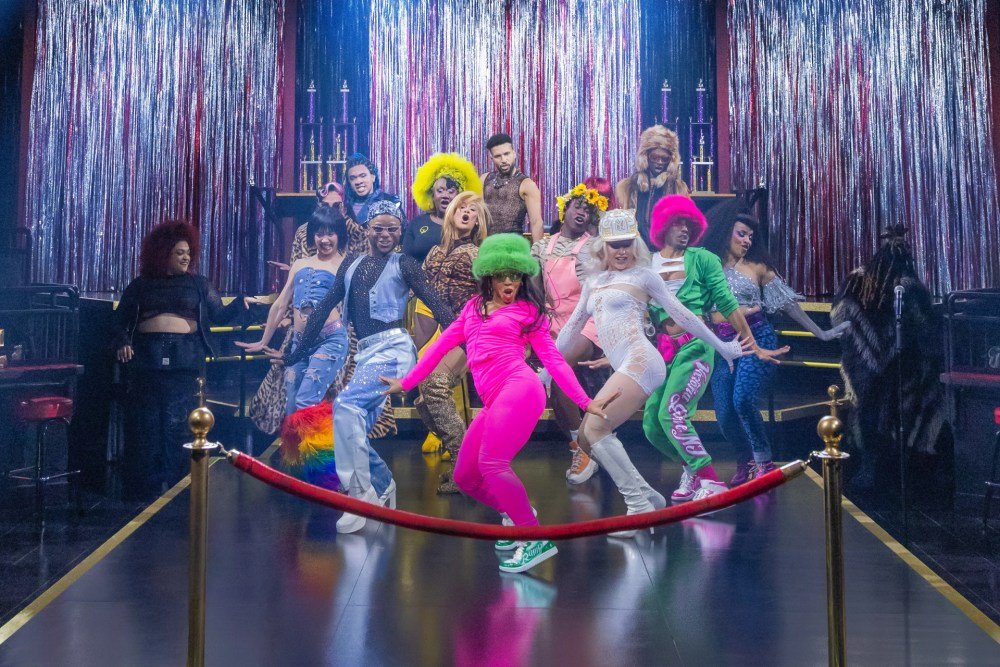
    “The Jellicle Ball” breathed new life into “Cats” by restaging the popular show as a fierce competition between drag performers. Webber’s original show premiered on Broadway back in 1982 and ran through 2000, winning seven Tony awards. In 2019, it was infamously turned into a critically panned film from “The King’s Speech” director Tom Hooper.

    But despite the Tonys awarding “The Jellicle Ball” three awards for best costume design, best direction of a musical and best choreography, strong reviews and online buzz didn’t stop the show from closing five months before planned at the Broadhurst Theatre.

    “The Jellicle Ball” started as an off-Broadway production in June 2024. When it premiered on Broadway back in April, the show was initially earning between $900,000 to $1 million a week. But those numbers dropped sharply after “The Jellicle Ball” lost the best revival of a musical Tony Award to “Ragtime.”

    This isn’t the first time Lloyd Webber has spoken out about the show’s premature end. In July, he wrote on Instagram: “Without action, Broadway risks rivaling Hollywood’s empty soundstages: increasingly dark theatres where bold new work once lived.”

    “The painful truth is that, with things as they are, bringing almost any new show to Broadway makes little financial sense,” Lloyd Webber continued. “The costs are immense. Creators, writers and directors are often forced to accept minimal royalties simply to get work staged.”

    Next up, Lloyd Webber and “Sunset Blvd.” director Jamie Lloyd are working on bringing “Evita” with Rachel Zegler to Broadway after its successful West End run.

  • Gina Prince-Bythewood Discusses the Worldbuilding of ‘Children of Blood and Bone’ and Praises Author Tomi Adeyemi as a ‘Genius’

    Gina Prince-Bythewood Discusses the Worldbuilding of ‘Children of Blood and Bone’ and Praises Author Tomi Adeyemi as a ‘Genius’

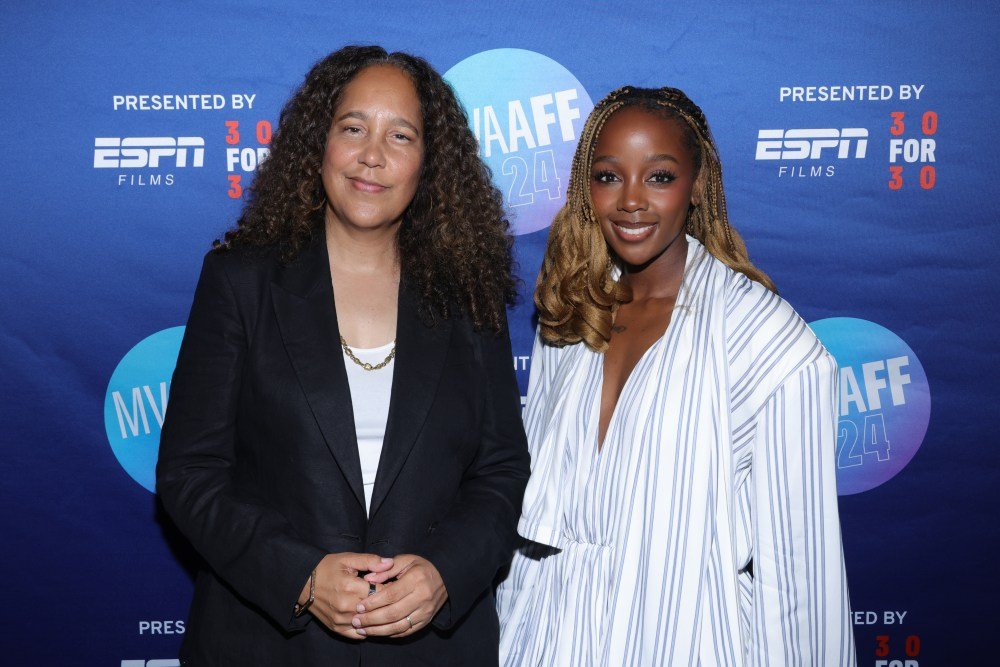
    For the opening night of the 24th annual Martha’s Vineyard African American Film Festival (MVAAFF), “Children of Blood and Bone” director Gina Prince-Bythewood and star Thuso Mbedu shared never-before-seen clips of the forthcoming African fantasy film and dished about making the movie.

    “Obviously films like this don’t get made very often,” Prince-Bythewood told “The View’s” Sunny Hostin during the Q&A. “They say 70% of directing is casting, and that’s what this was. To be able to put together a cast like this. There are no skips. Everybody is amazing. … And as I was working on the script, I started to envision people that I wanted.”

    Based on Tomi Adeyemi’s acclaimed 2018 novel of the same name, Paramount’s “Children of Blood and Bone” was shot on location in South Africa, which subbed in for the fictional kingdom of Orïsha, where magic has been prohibited. There, the logline explains, “a young woman goes on a quest to reclaim the magic that was violently stolen from her people. She and her brother ally with the daughter and son of the king to fight back against his brutal rule.”

    Mbedu (“The Underground Railroad,” “The Woman King”) stars as Zélie Adebola, the young woman in question, who has the power to command the undead. Starring alongside her are Damson Idris as Prince Inan, Amandla Stenberg as Princess Amari, Tosin Cole as Zélie’s brother Tzain and Regina King as Queen Nehanda. Lashana Lynch, Idris Elba, Cynthia Erivo and Viola Davis round out the A-list cast.

    Mbedu was thrilled to return to her native South Africa to work, and she began preparing for the role — including her stunt training — nearly one year before filming began. “I leaned into the source material a lot,” she said. “I don’t know how many times I read and reread the book, putting it next to the screenplay.” (Prince-Bythewood and Adeyemi share screenplay credit.)

    “Tomi created a massive world, a huge world,” Mbedu continued. “We don’t have enough hours to put everything on screen. So finding the moments where, even if we’re not seeing it on screen, how am I bringing the reality of the history or the backstory of what we might have meant into the next moment.”

    Thuso Mbedu, Gina Prince-Bythewood and Sunny Hostin attend the “Children of Blood and Bone” clips and conversations event during the Martha’s Vineyard African American Film Festival in Oak Bluffs, Mass.

    Arnold Turner/Getty Images for Paramount Pictures

    Though the film does not debut until Jan.15, 2027, Adeyemi, who also served as an executive producer on the film, recently announced that she will not watch the finished product. On social media, Adeyemi shared that she left the “Children of Blood and Bone” set “hyperventilating and sobbing” and that she is “still being antagonized behind the scenes.” Neither Prince-Bythewood nor Mbedu directly addressed Adeyemi’s claims at MVAAFF, but the director of “The Woman King” did speak positively about the novelist and the world she crafted.

    “Tomi’s a genius,” Prince-Bythewood said. “It’s a beautiful book, incredible characters. And this time when I read it, I was so connected to Lali’s character. And this young woman who was fighting to bring magic back- and we know what magic means for us. And her resilience, her fight and her search for purpose just spoke to me.”

    The “Love and Basketball” director also spoke about casting Stenberg as Princess Amari. When the actress’ hiring was announced, there was an outcry over allegations of colorism due to Stenberg’s mixed-race status and lighter skin tone. Additionally, in a now-deleted TikTok video [via the L.A. Times], Adeyemi posted what appeared to be a group chat that included Stenberg. The author wrote, “Do not ever use my name in an interview or video again. Do not text me. Do not call me” and appeared to block the actor. Prince-Bythewood did not address the drama onstage.

    “I’ve admired [Amandla’s] work since ‘Colombiana,’” Prince-Bythewood told Hostin and the MVAAFF audience. “But I auditioned every young actor for that role of Amari, and Amandla took it, grabbed it.”

    Though the “Children of Blood and Bone” premiere is still several months away, “The Old Guard” director is content to let the work speak for itself until then.

    “You’re going to feel every human emotion in this,” she said. “You’re going to be angry, you’re going to laugh, you’re going to cry, you’re going to dance, you’re going to cheer, you’re going to feel hope at the end. And that’s why I hope we go to movies, to feel something, to be moved. So I’m so excited about that. And as we know, these films are rare. I’m so proud of this movie, so excited about this movie and the thing that it can do for us when we see ourselves in this way.”

  • Whitney Houston Gets Her Own Barbie, Recreating Iconic ‘I Wanna Dance With Somebody’ Look

    Whitney Houston Gets Her Own Barbie, Recreating Iconic ‘I Wanna Dance With Somebody’ Look

    If you purchase an independently reviewed product or service through a link on our website, Variety may receive an affiliate commission.

    Whitney Houston is ready to dance with somebody — in Barbieland.

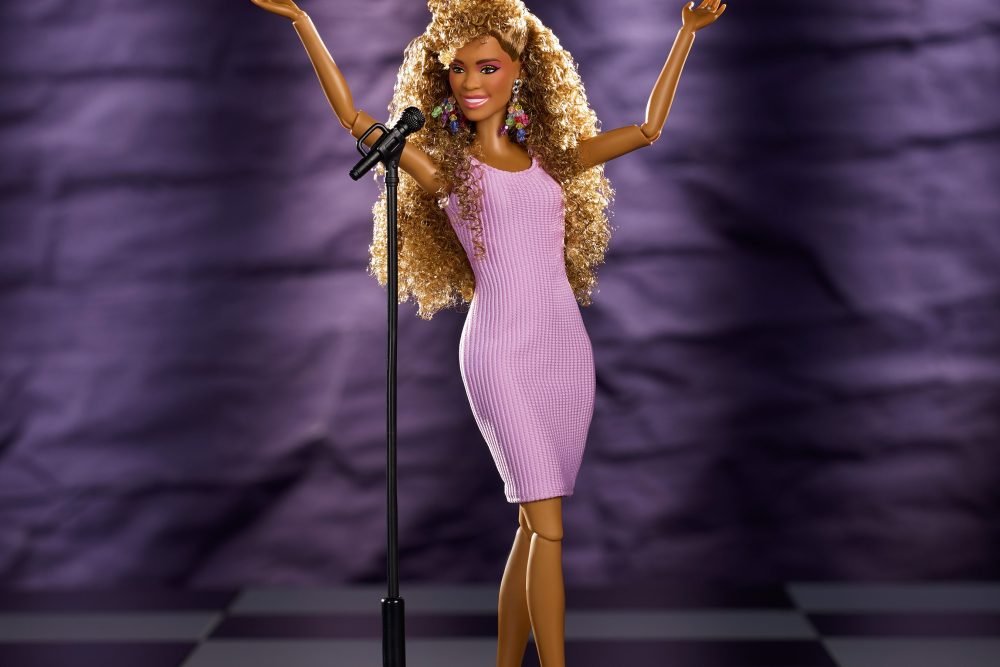
    Mattel is honoring the late pop icon with a new Barbie Signature doll inspired by Houston’s colorful look from the 1987 music video for “I Wanna Dance With Somebody (Who Loves Me).” The $60 collectible launches Aug. 8 at Target stores and online at Amazon, Walmart, Target and Mattel Creations.

    Whitney Houston Barbie Doll 'I Wanna Dance With Somebody': Shop Online

    The doll recreates Houston’s instantly recognizable ensemble from the video, complete with a purple tank dress, colorful drop earrings and bright eye makeup. Naturally, she also comes performance-ready with her own microphone stand.

    Houston’s estate worked closely with Mattel on the collectible. Pat Houston, executor of the Estate of Whitney E. Houston and president of the Whitney E. Houston Legacy Foundation, collaborated with the Barbie design team alongside Primary Wave Music, weighing in on everything from the doll’s wardrobe to the singer’s signature glam.

    The Whitney Houston Barbie will make its official debut Saturday at the fifth annual Legacy of Love Gala in Atlanta, an event hosted by the Whitney E. Houston Legacy Foundation. Its arrival comes as Houston’s estate continues to celebrate more than four decades since the singer first emerged as one of pop music’s most formidable voices.

    Released as the lead single from Houston’s sophomore album, “Whitney,” “I Wanna Dance With Somebody” became one of the singer’s defining hits and earned her the Grammy for best female pop vocal performance in 1988. The album itself made history as the first by a female artist to debut at No. 1 on the Billboard 200, while the song was part of Houston’s still-unmatched run of seven consecutive No. 1 singles.

    The new release joins Barbie Signature’s growing roster of dolls modeled after musicians and cultural icons, which has previously included Tina Turner, Stevie Nicks, Gloria Estefan and Mariah Carey.

    Shop the Whitney Houston Barbie here.