The United States was always going to have a good Winter Games. The country jumped from sixth in the medal count to second between the 1998 Nagano Games and the 2002 Salt Lake Games and has been holding in the top five ever since — thanks to impressive results in relatively newer disciplines like snowboarding and curling and newfound competitiveness in classic realms like bobsledding and speed skating.
In Milan Cortina, the United States managed 33 medals, good for second overall and the most ever for the country at a Games outside North America. When you’re out-medaling Germany and the Netherlands at winter sports, you’re doing something right.
But it’s not just how many you win — it’s how you win. And the U.S. had some truly wild and miraculous triumphs, from a figure skater who had been retired just two years go to a cross-country skier who raced with a badly damaged rib to a TikToker who waited at the last possible moment to grab his gold. Here in ascending order are Team USA’s seven most inspirational moments (from among many) as they played out on Peacock/NBC over the past two weeks. Read it and feel all over again.
7. The U.S. Women’s Hockey Team Wins Gold By Beating Canada in OT
In one sense, the U.S. women’s hockey gold was not a surprise: The team had come in a favorite and only got hotter from there, outscoring opponents 31-1 in the six games entering the final. But in another sense, the victory over Canada on Thursday night at Santagiulia Arena was a stone-cold shocker. The U.S. was down 1-0 to its archival with the clock coming up on two minutes and superstar goalie Aerin Frankel heading to the bench. Canada had beaten the U.S. in five of the previous seven gold-medal games they played, and it was about to be a sixth.
Then the improbable happened. Veteran captain Hilary Knight tipped in a Laila Edwards shot to tie the score with 2:04 left and send the game into OT. That led to the snapshot moment: Taylor Heise springing Megan Keller with a stretch pass that the streaking defender took before deking a Canadian defender and tucking the puck into the goal on her backhand. Narrative reversed — the U.S. now had its third gold medal and a possible sendoff of sendoffs to a possibly retiring Knight. It was just a prelude of what was to come between the two hockey powers, but it was plenty gratifying in its own right.
6. Jessie Diggins Skis 10 Kilometers — and Medals — While in Agonizing Rib Pain
Remember that time you had a cold and didn’t go to work? Jessie Diggins may have something to say to you. The decorated U.S. cross-country skier (she previously was a part of the best television Olympics moment of the 2010s with the stir-to-patriotism “Here comes Diggins” in PyeongChang) had badly bruised a rib in a nasty crash in skiathlon at the start of this Games. She seemed done, destined to head into retirement with her memories and three previous medals. “It’s easy to stress and think ‘this isn’t how it was supposed to happen,’” she posted meditatively on Instagram. “But there are always so many things that are totally out of our control.”
Yet just days later, Diggins skied the 10 km freestyle and somehow ended up finishing in bronze position; at the finish, she collapsed, writhing in more pain than James Caan when Kathy Bates picked up that ax in Misery. “I thought i was gonna maybe pass or die. it would have been nicer if I could have passed out,” she said later. Fortunately she didn’t, and got to experience the bronze as it happened. Us too.
5. Alex Ferreira Wins His First Gold Medal on His Last-Ever Olympic Run
Some Olympic athletes are phenoms. Then there’s Alex Ferreira. At 31, Ferreira had been a professional halfpipe skier for more than a decade, including at three Olympics. The ski TikToker landed on plenty of podiums, but he never has won an Olympic gold medal. After two runs at the freestyle halfpipe ski run, that didn’t seem likely to change — he was in fifth place and ready for the double cork 1260 in the sky (or, like, the exhibition circuit). But the halfpipe just takes your best run, and Ferreira came out for his third and and laid out exactly that — a beauty — in the final run of his final Olympics to take a gold.
How did he do it? Risk taking and technical skill, of course. But also, a mantra. “I am greatness, and this is my moment,’” he would tell himself at the top of the halfpipe before the runs. “I can feel it in my bone marrow.”
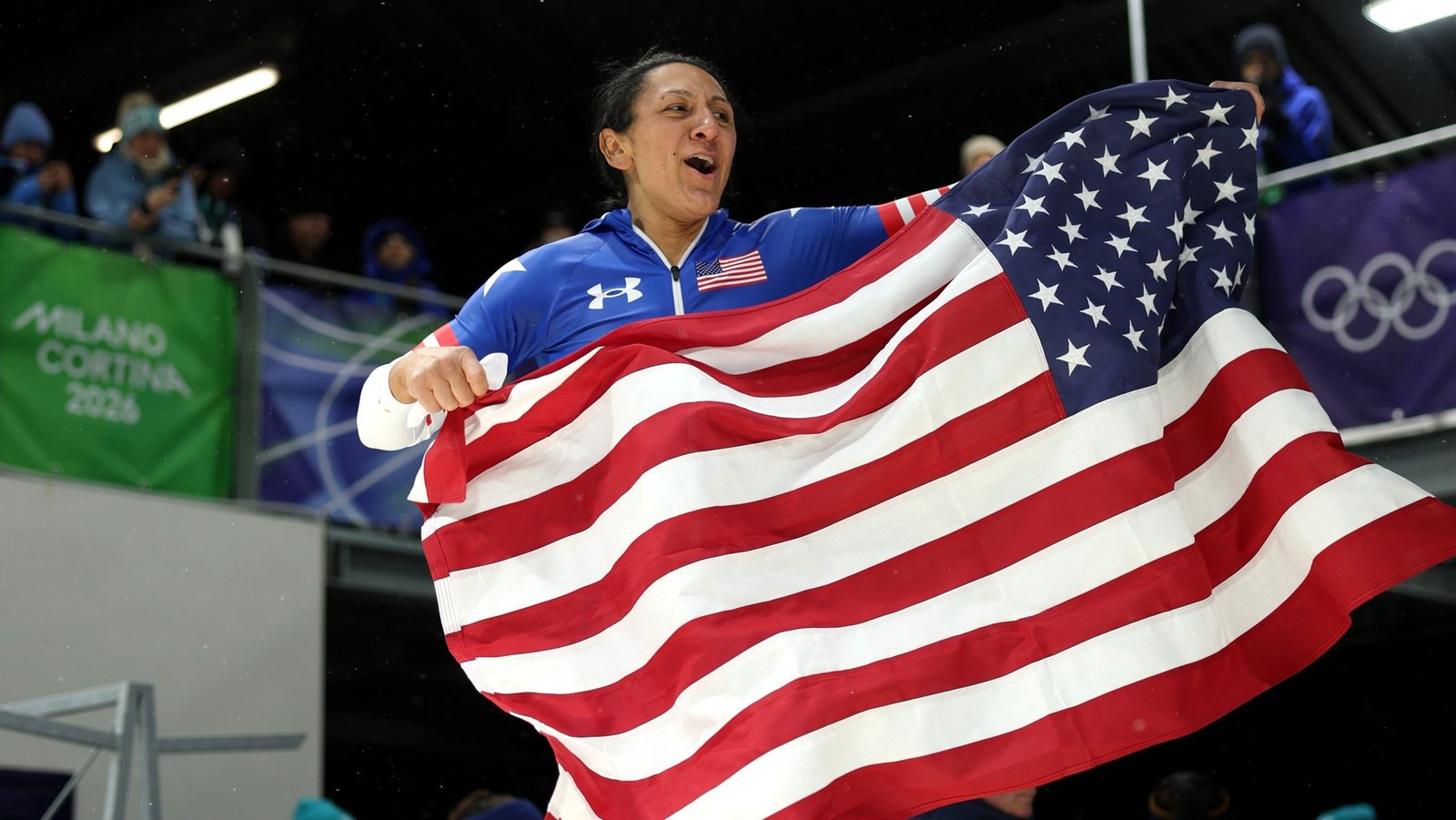
4. Elana Meyers Taylor Wins Gold Medal for Her Deaf Toddler Sons
Speaking of waiting a while for gold, consider Elana Meyers Taylor. The 41-year-old bobsled mainstay was entering her fifth Games and, despite five previous medals, had never won a gold. Yet somehow in the new sport of monobob — one pilot doing everything — she finished four one-hundredths of a second faster than the 27-year-old German competitor Laura Nolte to win her first gold and become the most decorated Black athlete in Winter Games history.
If Meyers Taylor’s win along wasn’t enough to tug at the heartstrings, the athlete is mom to two deaf toddlers, Noah and Nico (he also has Down syndrome), who come with her and her husband-coach Nic to many of their competitions and were present at the sliding track in Cortina. Meyers Taylor spoke with NBC’s Mike Tirico about how all the training and triumphs were for her sons, prompting an “I’m not crying, you’re crying” outpouring on social media. “Parenting my two sons with disabilities has done everything for me,” she said, “If I win medals or lose medals, it doesn’t matter because I’m still mom to them.” Then she added, “Hopefully when they’re older they’ll look back and realize what actually happened. I was just so happy to be able to hug them and hold them for a brief moment while everything played out.” (We can’t embed this one but check out the interview here.)
3. Corinne Stoddard Posts That She’s “Embarrassed” By How She Keeps Falling — Then Goes Out and Grabs a Bronze
Corinne Stoddard is currently ranked third in short track for 500 and 1,000 meters. She became known for something else for much of the Milan Cortina Games — she fell a shocking four times during races and wrote a self-lacerating Instagram post that “Part of me thinks I haven’t been able to handle the pressure and expectations I put on myself” and said that she feels “embarrassed by how much I’ve choked on the Olympic stage over and over again.” (She also fell in Beijing in 2022.)
But on Friday in the 1,500-meter race, her last, she pulled off a third-place finish for bronze after holding off a pair of hometown heroes, including Italian legend Arianna Fontana. Stoddard has has been public about her battles with anxiety and insomnia, and the sight of her battling through to reach the podium gave hope to anyone familiar with mental-health struggles. Stoddard’s tearful parents were mirrored by broadcaster Katherine Reutter-Adamek, who choked up with emotion. “Forgive us if we all join the parents in shedding a tear,” play-by-play man Ted Robinson said.
It would be the first individual medal for a U.S. woman short-track athlete in 16 years. “Every person on that ice understands what Stoddard lived through,” Robinson said.
“It’s not how you start, it’s how you finish,” Reutter-Adamek said.
2. Alysa Liu Skates Like No One Is Watching and Reminds Us Why We Do This
We could use words to describe what Alysa Liu — barely two years ago retired because she didn’t find figure-skating pleasurable anymore — pulled off with her gold-medal skate on Thursday. But nothing compares to the contact high from just watching her pull off the most joyous figure-skating performance in modern memory.
On an Olympics stage where competitors can be uptight, dour and neurotically serious because of the pressure placed on them, Liu reminded us what events should really be all about: fun. Watch the skate here and your day will instantly become 37 percent better.
1. The U.S. Men’s Hockey Team Wins Gold By Beating Canada in OT
Where to start with one of the best hockey games ever played, talent-wise, and also the one with the most TV storylines?
The United States’ first-ever gold medal win in hockey over Canada? The fact that it happened on the anniversary of the Miracle on Ice, aka the event widely regarded as the best TV moment of the 1980s? The vengeance against Canada from last year’s Four Nations tournament? The sheer wizardry of Matt Boldy and Connor Hellebuyck? The touching tribute to the late Gaudreau brothers? The dominance of the ascendant Hughes brothers? The fact that one of said brothers, Jack, poked the puck away from Cale Makar and then sniped the winning shot in OT after having a few teeth knocked out on a high stick near the end of regulation?
Hughes’ goal was the burst of unity and the palliative we need at this moment — not, with the Miracle on Ice, to heal a country fractured by the Cold War but to heal a country fractured by itself. (“I’m so proud to be an American today,” he said.) Plus who doesn’t love a good sports-dentistry story? “Would you trade a couple of broken teeth for a gold medal?” broadcaster Kenny Alert asked. Fortunately for America, Hughes would.
After Sam Spruell’s indelible turn on Fargoseason five, it was only a matter of time before another high-profile television universe scooped him up. The British actor now finds himself as a prickly Targaryen prince on Ira Parker and George R.R. Martin’s Game of Thrones prequel series, A Knight of the Seven Kingdoms. (Spruell also appeared on a couple episodes of Dune: Prophecy,which he shot before the world saw his portrayal of a “500-year-old sin-eater” on Fargo.)
Spruell’s Prince Maekar Targaryen serves his royal dynasty roughly 90 years before the mothership series and nearly 80 years after House of the Dragon. He’s a widowed single father who’s badly missed the mark in raising his three sons, Daeron, Aerion and Aegon (“Egg”). He’s also long lived in the shadow of his more popular older brother, Prince Baelor Targaryen (Bertie Carvel), the heir to the Iron Throne. Maekar’s personal shortcomings reach their peak in and around season one’s central event: the jousting tournament at Ashford Meadow.
That’s where Maekar and Aerion (Finn Bennett) discover that Aegon (Dexter Sol Ansell) and Daeron did not arrive at the tourney as scheduled. Ser Duncan “Dunk” the Tall (Peter Claffey) then butt heads with the lunatic that is Aerion over the latter’s assault of a puppeteer, prompting Aegon to intervene on behalf of the hedge knight he’d secretly been squiring for under the alias of Egg. The drunken Daeron is soon found nearby and to clear himself of neglecting Aegon, he falsely accuses Dunk of kidnapping his youngest brother. Aerion proceeds to challenge Dunk to a “trial of seven,” in which the accused and the accuser each recruit six champions for combat.
Sensing the injustice being wrought by his own family, Baelor joins Dunk’s side in the trial. And following a hard-fought battle, Dunk compels Aerion to withdraw his accusation. Afterwards, Dunk bends the knee to Baelor before the prince unexpectedly drops dead from a fatal head wound he received at the hand of Maekar. In the finale, Maekar insists that the Gods know it was an accident, but Spruell believes his character is just telling himself what he needs to hear.
“Maekar is so susceptible to self-delusion. How handy that you can refer to the Gods knowing it’s an accident to absolve you of your crimes?” Spruell tells The Hollywood Reporter. “Kings and rulers of lands have been doing that for years, saying, ‘Well, God thinks I’m innocent,’ when clearly they’re guilty. So it’s a very good depiction of corrupt power.”
Acting on Egg’s fondness for Dunk, Maekar tries to find a compromise by offering Dunk a home at Summerhall. He can train Egg as his squire and complete his own training by way of the castle’s master-at-arms. Citing royal exhaustion, Dunk rejects Maekar’s offer and later counters by asking if he can take the young lad on the road with him. But Maekar refuses to let his royal blood live like a “peasant.”
“[Aegon] is his last chance to have an heir that’s worth anything at all and isn’t a drunk or a violent psychopath. Aegon is his last chance to succeed as a dad. That’s why he makes Dunk an offer and rejects Dunk’s offer. He wants to control it,” Spruell says. “Everything Maekar touches doesn’t work out for him, and there’s enormous vulnerability there.”
Spruell with Ser Duncan “Dunk” the Tall (Peter Claffey) in Knight of Seven Kingdoms.
HBO
In the end, Egg gives his family the slip again in order to roam across the lands with a faux hedge knight who’s every bit as honorable as the most genuine knights in Westeros. However, he lies to Dunk about receiving Maekar’s permission to be his traveling squire. The season then concludes with Maekar yelling, “Where the fuck is he?”
“It says something about Aegon’s judgment of where he’s going to get the best paternal figure. There is a wisdom to Dunk that comes naturally and instinctually, and I don’t think Maekar will ever get close to it,” Spruell shares. “[Aegon] can see that if he’s to be the person that he wants to be, he must follow Dunk rather than his own father, which is unbelievably upsetting for Maekar. So I hope that some of that upset and humiliation will be explored potentially in future books or seasons of the show.”
While it may not be a surprise to readers of Tales of Dunk and Egg, Martin’s series of novellas about the odd pairing, Spruell confirms he will not appear in season two. “Never say never, but I’m pretty sure that there will be other stories to tell [with Maekar],” Spruell adds.
Below, during a spoiler conversation with THR, Spruell also discusses his overall thoughts on the creative “give-and-take” between source material and adaptation.
***
I had Bisquick this morning in your honor.
(Laughs.) This sounds ridiculous, but Bisquick sent me a massive supply. It went to my manager, and I’ve still got to pick it up. But it’s so funny that the Bisquick references have stuck around. I love it.
For the uninitiated, that was a reference to your unforgettable role on Fargo season five. Would you say that there’s been a Fargo effect on your career? Is A Knight of the Seven Kingdoms an example of it?
Fargo is predominantly one of the best bits of work that I’ve done. I got to work on such good writing. It may not have the sheer size of the Game of Thrones’ world and audience numbers and fan zealotry, but I’m sure there was some effect. Nothing has ever really smashed [my career] open. Most of us actors, we chip away at trying to do good work with really good people like Noah Hawley or Ira Parker. You just carry on working and hopefully something breaks it open wide enough to either get you the next job or move you up a rung into a sustained run of really good parts.
Sam Spruell as Ole Munch on Fargo season five.
Some actors avoid source material in case it conflicts, even minimally, with the scripted material. Which way did you go with regard to Tales of Dunk and Egg, specifically The Hedge Knight?
I certainly read the latter novella that the first season is based on. The scripts and the novella are actually really close. The fans of the books seem to love the fact that the scripts follow the book so closely. So it made sense for me to read the book, and then you just have to act the script. It was not an easy one, but I knew what I was doing with it. I’m essentially playing a dysfunctional father to three quite difficult children who remind him of his own failings. So I really felt in touch with the domestic nature of it, separate from the Targaryen-Game of Thrones world.
TV actors also seem to be split on how much they should know about their long-term character arc. Some prefer to only know what their character knows at any given moment. But it sounds like you don’t seem to mind knowing the big picture.
Yeah, I see what you’re saying. Your job as an actor is to be in the moment of what your character knows at that time. So I really don’t find it confusing to know the full story and then play the scene as it should be played with the character’s existing knowledge at that point. So, no, I don’t mind it. In fact, I prefer it. The stories you hear of scripts being [withheld] from actors for certain jobs, I’m not really into that. I like to get a sense of what the piece is as a whole. You are working not just for the intricacies and development of your own character, but you are also understanding the piece as a whole and what its tone is and what other people are doing. So knowing the wider project hopefully gives me and my acting a greater depth of understanding.
George R.R. Martin did a cover story with THR recently, and his personal experience with each of the Game of Thrones’ adaptations has been a mixed bag. I do sympathize with him, but his books were once considered unadaptable due to their scale, so concessions are inevitable. Do you have any thoughts on the eternal tug of war between source material and adaptation?
I feel like that tug of war represents the creative process — not just between the source material author and the showrunner of an adaptation — but between actors, between showrunners and actors, between directors and actors. Any creative process that involves relationships is give-and-take. It is a collaboration that involves the offering and rejection of ideas, and not everyone winds up wholly satisfied in the process.
Ira has proven himself very good at keeping everyone’s ideas alive and carefully plotting a course using as many of them as he can. With regard to his relationship with Martin, he made a decision that he was going to stick very closely to the books. I think that made George happy, and it’s turned out great, so maybe there is a lesson in that.
But we’ve also witnessed adaptations that have strayed away from the source material, and they’ve still been fantastic. So I don’t think there’s any hard-and-fast rules on this. It’s just the creative process. You either get lucky and make a good piece of work, or you get less lucky. But you’ve got to try. You’ve got to risk it for a biscuit and see what turns out.
In the penultimate episode, Maekar accidentally kills his older brother Baelor (Bertie Carvel) with his mace. They only quickly showed the death blow during the trial in order to preserve the surprise for later. But did you guys still shoot a version that was more prominent in case editorial changed their mind about how they wanted to present it?
I think they were clear with what they wanted to do, but maybe they did. I wasn’t involved in that. That was my stunt double. I’d love to say that I was on the horse doing all those fights, but at that point, it became a stunt show, which I thought they did fucking fantastically. They probably would’ve had different versions where it was a more obvious, more clean presentation of what you saw.
What’s especially tragic is that Dunk had the fight wrapped up before the death blow happened. It wasn’t officially over, but it was essentially over.
Maekar, even though he knows he’s dealt that fatal blow, there’s something in him that doesn’t want to completely own up to it. He’s probably got conflicting feelings about his brother’s death anyway. He’s sad and he also knows what opportunity his death represents for his own future. So I love that ambiguity about a brother’s death meaning something tragic and also something progressive about your own life.
Yeah, Maekar later says that the Gods know it was an accident, but does he truly believe that deep down?
What I love is that you don’t really know. Maekar is so susceptible to self-delusion, and he doesn’t want to even get close to admitting that it may have been on purpose. And how handy that you can refer to the Gods knowing it’s an accident to absolve you of your crimes. Kings and rulers of lands have been doing that for years, saying, “Well, God thinks I’m innocent,” when clearly they’re guilty. So it’s a very good depiction of corrupt power.
Sam Spruell.
Gerald Matzka/Getty Images
How much did his guilt affect his decision-making in the finale? Is his offer to Dunk an example of that? What about his rejection of Dunk’s own offer?
I don’t think guilt impacted his decision-making a great deal. His youngest son, Aegon [Egg], is his last chance to prove himself as a father. He’s his last chance to have an heir that’s worth anything at all and isn’t a drunk or a violent psychopath. Aegon is his last chance to succeed as a dad. So his judgment is more clouded by a need to not fail again. That’s why he makes Dunk an offer and rejects Dunk’s offer. He wants to control it. Everything Maekar touches doesn’t work out for him, and there’s enormous vulnerability there. He is pretty much a failure as a father. I’m a dad myself, and not all of parenting is a success. So I can relate to making mistakes, but Maekar’s parenting leaves a lot to be desired.
Egg runs away to be with Dunk, but he lies to Dunk about it being approved by Maekar. His youngest son would rather spend his days with an impostor hedge knight than his own royal family. That’s got to be a real gut punch for Maekar on the heels of killing Baelor.
Yeah, exactly. It says something about Aegon’s judgment of where he’s going to get the best paternal figure and where he’s going to learn about the world in a more morally stable way. There is a wisdom to Dunk that comes naturally and instinctually, and I don’t think Maekar will ever get close to it. That’s what makes Dunk’s heroic nature so compelling. It is just in him in a way that it’s not in Maekar. So Egg can see that as well. He can see that if he’s to be the person that he wants to be, he must follow Dunk rather than his own father, which is unbelievably upsetting for Maekar. So I hope that some of that upset and humiliation will be explored potentially in future books or seasons of the show.
For those of us who are unfamiliar with the books, how much do you know about season two?
Very little. I just know that it follows the book. So, if you know the source material, then you’ll know what to expect. There will always be a slight twist on what you’ve read, and there is also more of an earthy feel to this show. There are no dragons. There is just the land and the people on it. The stripped bareness of season one will certainly maintain in season two. If anything, I think it will be stripped more bare, and you’ll really see the fabric of their being. So season two is going to be really interesting, and they’re shooting it right now.
Are you shooting something else first?
I’m not going to be in season two.
Wow, I really should read these books. Based on the finale, I assumed Maekar was going to be hot on Dunk and Egg’s heels throughout season two.
Well, we’ll see. Never say never, but I’m pretty sure that there will be other stories to tell.
Before Maekar concludes season one by asking, “Where the fuck is he [Egg]?” an updated title card appears on the screen: A Knight of the Nine Kingdoms. Do you know if that’s the official name of the show going forward?
I don’t, no. I wish I could tell you more on that, but I don’t know.
As far as your known future goes, I believe you just shot your first genuine horror movie.
Yeah, I just shot my first horror movie with a brilliant director [Jacob Chase], and it is part of the Insidious franchise [Insidious: The Bleeding World]. I play the completely deranged villain of the piece, and I loved doing it. I love being a part of the franchise because there are so many fun characters in it. It was shot in a way that was brilliantly inventive and brilliantly collaborative. I think it’s going to be great actually. We had a lot of fun with this character I played. He’s a kind of cult leader who’s a complete narcissist and completely obsessed with his own power. I just adored playing him, which might say something about me, I’m afraid.
*** A Knight of the Seven Kingdoms is now streaming in full on HBO Max.
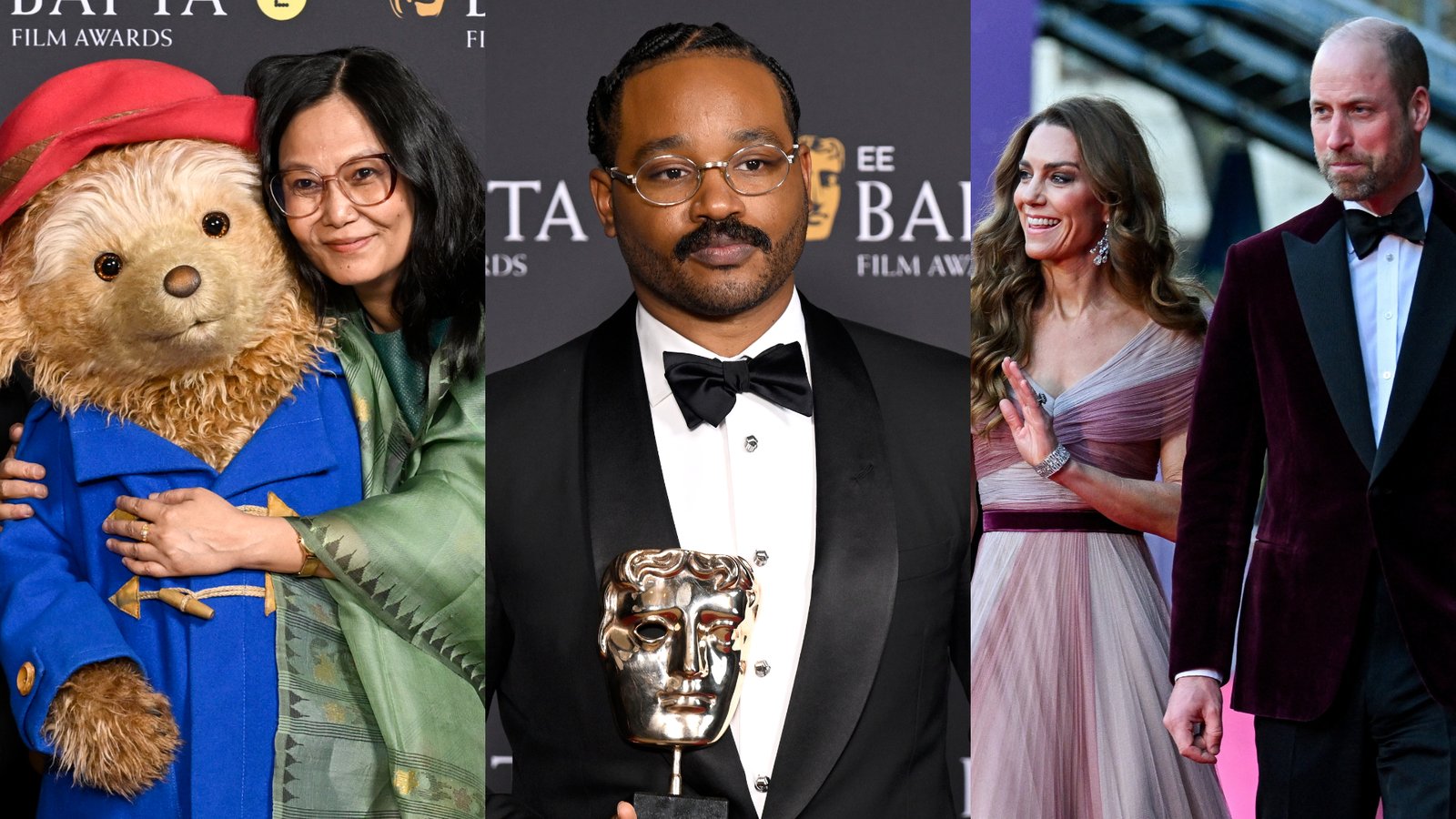
It was a vibrant night at London’s Royal Festival Hall on Sunday as the world of film descended on the British capital for the 2026 BAFTA Film Awards.
It wasn’t just A-listers like Leonardo DiCaprio, Jessie Buckley, Kate Hudson, Chloe Zhao, Paul Thomas Anderson, Timothée Chalamet and Kylie Jenner waiting with bated breath to see who’d get pulled up onto stage and thrusted a shiny gold BAFTA mask — the Prince and Princess of Wales were also in the house (William is BAFTA president, after all).
The host for the evening was The Traitors U.S. star Alan Cumming, who loosened guests up by asking the entire room to let out a primal scream on the count of three. He soon struck up a reliably humorous bit with Paul Mescal, red-faced next to partner Gracie Abrams, as Cumming repeatedly asked the Hamnet star if he’d heard of various industry professionals. “No,” was usually Mescal’s answer, bar one time when Cumming caught him on his phone.
Behind the scenes, it was quite literally a rotating door of talent as award winners made their way on and off the stage, up and down the stalls. Ryan Coogler and Joachim Trier were particularly drawn to each other throughout the evening, routinely going out of their way to give one another a celebratory hug (Sinners made BAFTA history with three wins, while Sentimental Value nabbed best film not in the English language). Coogler even thanked his “mentor” Trier in his best original screenplay acceptance speech.
Things got slightly hairy when Cumming was made to repeatedly read out Tourette’s disclaimers. John Davidson, a Tourette’s campaigner and inspiration behind the BAFTA-nominated I Swear, was heard shouting and cursing at presenters through the opening 20 minutes of the ceremony. “Tourette’s Syndrome is a disability, and the tics you’ve heard tonight are involuntary,” said Cumming, “which means the person who has Tourette’s Syndrome has no control over their language. We apologize if you are offended tonight.” Davidson eventually left the room, which The Hollywood Reporter understands was of his own accord.
One of the lighter moments of the show came when Paddington Bear himself came on stage to present the award for best children and family film, which went to Lakshmipriya Devi’s Boong. The U.K. icon — currently the star of Paddington The Musical, in which he is played by a young woman in a bear suit, Arti Shah — apologized for getting spoonfuls of marmalade over the BAFTA he was dishing out. As he exited, Cumming fawned over Paddington’s cuteness, saying he wanted to take him home. “It wouldn’t be the first time I’ve taken home a South American bear,” added the host, prompting raucous laughter.
The best of Cumming’s antics came around the midway point when he began handing out British snacks as though he were a flight attendant walking down the plane aisle. Kylie Jenner, partner of Marty Supreme‘s Chalamet, was asked, “Have you ever had your gums around a jammy dodger?” Well, it turns out, she has not. DiCaprio, meanwhile, was given hobnobs, Emma Stone hulahoops, and Rose Byrne twiglets (for our non-U.K. readers, this jibberish is simply various chips and biscuit-adjacent confectionery).
Then came the hotly anticipated performance from the singing trio of KPop Demon Hunters, Huntrix, who performed their first live show outside of the U.S. One Battle After Another‘s Chase Infiniti knew all the words to “Golden” and was seen dancing in the front row.
But the evening belonged to Paul Thomas Anderson, who took home best director, best adapted screenplay and the top prize: best film. He had guests captivated as he dedicated his best director honor to Adam Somner. The late U.K. native was a producer and assistant director to PTA for 20 years.
“You may think that your greatest export is Alfred Hitchcock or Charlie Chaplin, but it wasn’t,” Anderson told the Brits in the room. “To me, it was Adam Somner. … He came over to America, and the line was out the door of people who wanted to work with him because he made us all better. About three weeks into our film, he found out he was sick, and he made it through production. If you’ve ever gone to work before with someone who’s very ill, there’s something miraculous that makes you pay attention and reminds you the privilege of the work that we do. So thank you for sending him to me.”
While closing the show with his win for best film, Oscar nominee Anderson took the opportunity to express his moviemaking optimism: “Anybody that says movies aren’t any good anymore should piss right off,” he said to whoops and applause. “I want to say thank you, and I know that there’s a bar somewhere. I think we should all go there. It’s been a long evening, but we have so much to celebrate. … Let’s keep making things without fear,” he added, quoting pianist, singer-songwriter, and activist Nina Simone. “It’s a good idea. See you at the bar!”
The political talk was kept to a minimum at this year’s BAFTA Film Awards. The most notable mention came from Akinola Davies Jr., who won the award for outstanding British debut by a writer, director or producer for the Nigeria-set My Father’s Shadow. He thanked his family, co-writer and brother Wale Davies for “nurturing the spark and writing this story.”
Davies Jr. finished his speech with a dedication to “all those whose parents migrated,” as well as to those suffering through “persecution, genocide … your stories matter more than ever,” he said, adding “Free Palestine.” His final remark was reportedly cut from the BBC’s broadcast, though the BBC did not respond to a request for comment on this matter.
Best celebrity cameo had to go to Emma Thompson, who appeared alongside Christopher Nolan, Steven Spielberg and Tom Cruise in a video lauding the career of BAFTA Fellowship honoree and NBCUniversal chair Dame Donna Langley. Before Langley accepted her trophy from William, the Prince of Wales, Academy Award winner Thompson popped up on the looming screens.
She was the only contributor to film her message for Langley on a phone, her fluffed-up blonde hair charmingly askew. “I look like Boris Johnson,” she began, referencing the former Conservative Prime Minister. The left-wing Britons in the room ate up the sly political dig.
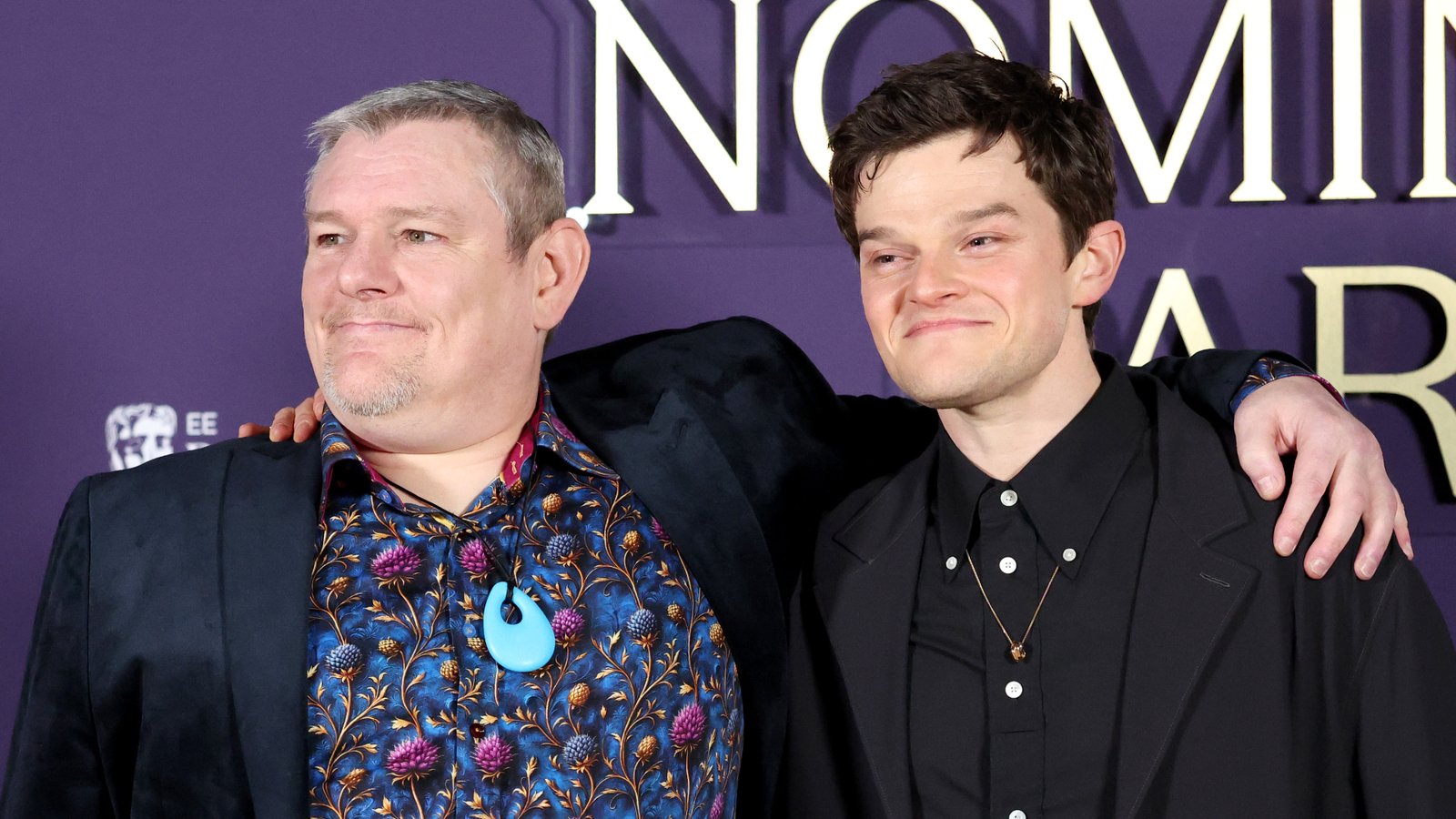
As the 2026 BAFTA Film Awards drew to a close — with a shock win for I Swear‘s Robert Aramayo, as well as strong outings for One Battle and Sinners — talk began to turn to the lavish parties planned. The hottest ticket? Netflix’s bash at the Twenty Two on Grosvenor Square, where three separate DJ sets awaited the glitterati. Among some of the surprise guests spotted at the smoky, candlelit venue were Machine Gun Kelly, Pete Davidson, Patrick Dempsey, Laura Harrier, Vittoria Ceretti, Iris Law, Damson Idris and Damian Lewis. Hollywood titan Ted Sarandos was also seen working the room. It seemed as though most BAFTA attendees decided that was where their night was to end.
A debate has been sparked among BAFTA Film Awards attendees and online after a Tourette’s campaigner, John Davidson, was heard cursing throughout the show.
Davidson is the inspiration behind the BAFTA-nominated I Swear. Robert Aramayo, who depicted the Scotsman in Kirk Jones’ widely acclaimed film, nabbed the BAFTA for best actor on Sunday night — over Leonardo DiCaprio, Timothee Chalamet, Ethan Hawke and Michael B. Jordan.
The film follows a man’s struggle growing up with Tourette’s syndrome, a condition characterized by sudden, involuntary and repetitive movements or sounds. These are known as tics, and they often manifest as outbursts such as loud swearing, which occurred numerous times over the first 20 minutes of the BAFTA ceremony as Davidson shouted, “Boring!” while guests were taken through some of the housekeeping rules before the show began, and “Bullshit!” when people were asked not to curse.
He also exclaimed, “Shut the fuck up,” while BAFTA chair Sara Putt made her introductory remarks and, later, prompted gasps when he said the n-word as Michael B. Jordan and Delroy Lindo presented the award for best visual effects to Avatar: Fire and Ash.
In keeping with the celebratory tone of the evening, Cumming interrupted his hosting several times across the show to remind viewers: “You may have noticed some strong language in the background. This can be part of how Tourette’s syndrome shows up for some people as the film explores that experience,” he said, referencing I Swear. “Thanks for your understanding and helping create a respectful space for everyone.”
After Davidson leftthe ceremony at London’s Royal Festival Hall around 25 minutes into the proceedings — which The Hollywood Reporter understands was of his own accord, and not the result of being asked to by BAFTA — Cumming said again: “Tourette’s Syndrome is a disability and the tics you’ve heard tonight are involuntary, which means the person who has Tourette’s Syndrome has no control over their language. We apologize if you are offended tonight.”
Guests were also notified before the awards show began that they might occasionally hear Davidson’s tics. A floor manager welcomed him, saying: “John has Tourette’s Syndrome, so please be aware you might hear some involuntary noises or movements during the ceremony.”
BAFTA referred THR to the BBC when asked for a statement about the incident, though the broadcaster, airing the show on a two-hour delay across the U.K., did not immediately respond.
But the incident has prompted discussion among the film community in attendance at the BAFTA Film Awards, with many Brits maintaining that Tourette’s is a deeply misunderstood condition. Others, including those from across the pond, were seemingly less tolerant of Davidson’s outbursts.
Aramayo, who also won the BAFTA Rising Star Award on Sunday, told the crowd while accepting the prize: “John Davidson is the most remarkable man I ever met. He’s so forthcoming with education and he believes there should be still so much more we need to learn about Tourette’s.”
“For people living with Tourette’s, it’s us around them who help them define what their experience is,” Aramayo said. “So, to quote the film, they need support and understanding.”
The discussion moved online, where some users commented that Tourette’s is “debilitating” and “really, really awful.”
Netflix on Monday revealed a buzzy addition to its already expansive Korean content slate: rom-com feature Messily Ever After, starring Kim Min-ha and Noh Sang-hyun.
Production on the film is now underway in Seoul, with the project reuniting the two actors after their shared appearance in Apple TV+’s Pachinko, this time placing them at the center of a contemporary relationship comedy that tracks a couple over the ups and downs of a romantic-but-rocky decade together.
The story follows Su-hyun (Kim) and Hyun-tae (Noh), college sweethearts whose long-term romance oscillates between devotion and exasperation as the years accumulate. Rather than dwelling in the early intoxication of love, the narrative leans into the more complicated terrain that follows: “Messily Ever After (working title) explores what it really means to stay together after the honeymoon phase has long ended — capturing the messy mix of loyalty, irritation, desire and doubt that comes with truly knowing someone,” Netflix’s official summary says.
Kim plays a perfectionist museum curator whose professional composure falters when jealousy and emotional uncertainty intrude, while Noh portrays an installation artist fiercely committed to his creative identity and resistant to compromise.
The film marks the feature directing debut of emerging filmmaker Seo Jung-min. Producers Bombaram Film — the Seoul-based banner behind the youth romance Love Untangled and the socially resonant hit Kim Ji-young, Born 1982 — are backing the project, which Netflix positions as part of its ongoing effort to elevate new voices in Korean cinema.
The project adds to Netflix’s characteristically ambitious Korean slate for 2026. As previously announced, the streamer is rolling out a 33-title lineup spanning scripted series, feature films and unscripted formats, ranging from star-driven romantic comedies like Boyfriend on Demand (led by Blackpink’s Jisoo) to large-scale genre projects such as the superhero drama The Wonderfools starring Park Eun-bin and Cha Eun-woo, and prestige fare including Lee Chang-dong’s long-awaited latest feature Possible Love. The slate also leans heavily on returning franchises — with new seasons of hits like Singles Inferno, Culinary Class Wars and The Devil’s Plan — alongside big-name scripted projects such as Tantara, pairing Song Hye-kyo and Gong Yoo.
A release date for Messily Ever After has not yet been announced.
[This story contains major spoilers from the season three finale of The Night Agent.]
Peter Sutherland (Gabriel Basso) may now be taking a leave of absence from being the titular Night Agent. But naturally, he will not be able to resist being away from the action for very long.
In the third season of Netflix’s hit spy action thriller, after making a deal with the devil, intelligence broker Jacob Monroe (Louis Herthum), to thwart a terrorist attack on the UN at the end of season two, Peter found himself investigating a wider conspiracy involving the Financial Crimes Enforcement Network (FinCEN), a terrorist organization — and even the White House.
While grappling with the guilt of his past choices, Peter hunts down Jay Batra (Suraj Sharma), a junior FinCEN analyst accused of murdering his supervisor and stealing classified intelligence. After tracking Batra down in Istanbul, Peter discovers that the analyst is actually a whistleblower who uncovered a massive financial conspiracy involving Suspicious Activity Reports. These documents revealed that American shell companies, managed by Monroe, were used to launder money for the LFS terrorist organization responsible for downing a civilian airliner. As Peter shifts into a more protective role, he teams up with financial journalist Isabel De Leon (Genesis Rodriguez) — who is later revealed to be Monroe’s estranged daughter, born from a tragic CIA operation in the 1990s.
The conspiracy reaches the highest levels of government, specifically involving President Richard Hagan (Ward Horton) and First Lady Jenny Hagan (Jennifer Morrison). To secure her husband’s election, the future first lady struck a deal with Monroe to exchange laundered campaign funds for classified access to presidential daily briefs. When a White House butler involved in the scheme attempted to back out, he was killed in a confrontation orchestrated by Jenny to look like an assassination attempt. This web of corruption is finally exposed through Monroe’s secret hard drive, which was encrypted with a personal code known only to Isabel. Although the Hagans ultimately use a presidential pardon to escape legal consequences, their crimes are broadcast to the world by a corrupt banker, Freya Myers (Michaela Watkins).
In the aftermath of the scandal, Peter chooses to temporarily step away from Night Action to find the personal balance he has lacked since the series began. But at the end of the finale, FBI Deputy Director Aiden Mosley (Albert Jones) informs Peter that a potential new partner has already been selected for his next mission, leaving the door open for Peter to stage a return sooner rather than later.
In the wide-ranging chat below, creator and showrunner Shawn Ryan answers all of THR’s burning questions after the season three finale. He explains his controversial decision to not bring back Luciane Buchanan’s Rose Larkin, why he never saw Peter’s new connection with Isabel as anything more than platonic, how he decided which characters would live and which ones would die, and whether he thinks this show can survive without his male lead Basso: “There’s a lot of evolution for Peter that I’d want to explore before exploring the world without him.”
***
When we spoke last year, you mentioned that Peter found season one “logistically difficult but morally easy.” For season two, you wanted to maintain those same logistical challenges while making things more “morally difficult.” What intrigued you most about how Peter is continuing to wrestle with the morality of being a Night Agent in season three?
One of the things we discussed was the challenge of growing into leadership. The idea that he’s growing into the responsibility of that job; that he’s understanding the drawbacks and sacrifices that come with it. He’s still having difficulty balancing all the various aspects of his life, and that’s something in the writers room of season four that we’re currently working on and talking about. But as it relates to season three, he’s a little less naïve.
If you look at Breaking Bad, very famously, they talked about [Walter White] going from science teacher to Scarface over the arc of that show. [With Night Agent] we talk about a guy who begins the show answering the phone in the basement who gains more and more responsibility and has to live with the consequences of his decisions more and more. Season three in our overall series arc is about him embracing being a Night Agent, embracing those responsibilities, and still understanding that it’s not 100 percent a fulfilling life. There are aspects he’d like to figure out, but those things are for future seasons.
You also told me after season two that the last thing you would want to do is “manufacture crisis after crisis season after season” to keep Peter and Rose together. Peter talks about her in passing this season, but he almost has to shut off that part of his brain to avoid going down that road, because he knows that reaching out to her could put her in danger. Why did you decide against bringing Rose back this season? Was it purely a creative choice? Did it come down to scheduling?
No, listen, it wasn’t scheduling. It wasn’t that we were unhappy with Luciane in any way. She was wonderful. As we told that story in season two, it felt like an ending in that moment. I still have hopes and intentions that Rose isn’t done on our show. But we started off in the writers room with the idea of, “How would a Peter/Rose-centric season three work?” [We were] hitting some roadblocks and not getting to where we wanted to be. We asked, “Well, how would a Peter-centric season three without Rose work?” And ultimately, that was the most creative, satisfying thing.
Now, that leads to not my favorite [kinds of] conversations. I called up Luciane, and I explained [the situation]. She was really wonderful about it, and had a sense from how season two ended that this was a possibility. She has a very successful show on Apple [called Chief of War] that I know she’s really proud of. I was clear to her on the phone call: “Listen, we’re actually intending to bring Chelsea [the Secret Service Agent played by Fola Evans-Akingbola] back in season three after she wasn’t in season two, other than one cameo scene near the end. This is the kind of show where people can drop out and come back in, and I really want to hold open the possibility that Rose will return in the right situation, and I hope you, Luciane, will be open to it.” She seemed to be [interested]. She can speak for herself, but we never want The Night Agent to become formulaic. We never want it to become repetitive.
One of the things I like so much about the show is that each new season is kind of a new world — has a lot of new characters, new storylines. With our flashbacks, you can always go back to moments with characters. So it was a creative decision I made that the studio and network supported, based on what we thought was creatively best for the show. We know there will be people who were very invested in Rose who will be disappointed. I understand that. I don’t blame them for feeling that way, but hopefully, when people see the season, they’ll understand what we did. I’m really proud of the third season, and I think the creative team did a fabulous job.
Genesis Rodriguez in The Night Agent season three.
Christopher Saunders/Netflix
You introduced Genesis Rodriguez as Isabel de Leon, a financial journalist who, as viewers learn midway through the season, is the estranged daughter of Jacob Monroe. When did you come up with that twist in the writers room, and how did you think about building up to that twist when you were creating the character?
I like to give a lot of credit to the writers room because so many of the great ideas on the show emanate from them and are presented to me. I will egotistically say for one second that what you’re talking about was my idea before the season began. (Laughs.) When I was thinking about season three and how we were going to wrap up the broker storyline, I thought about [Peter] meeting a woman who we didn’t know right away was [Monroe’s] daughter.
I didn’t have all the specifics, and in fact, those things were developed in collaboration with all the writers, [like] the journalist angle. I wanted to explore the financial world. I came into the season with a thesis statement that we put in the mouth of Isabel at one point — that all the horrible things that happened in the world couldn’t really happen without the cooperation and work of these financial institutions that hid their money and facilitated their illegal activities.
I was interested in humanizing Jacob Monroe. I think one of the things our show has done well over all three seasons is, we don’t have villains play pure villains. We see them as human beings. We understand their motivations; what drives them. And to give the writers room credit, they’re the ones who came up with and pitched me the idea of doing this extended flashback in episode seven in Mexico City, where we see the origin stories of the broker, how he came to meet Isabel’s mother, how the various levels of betrayal led him to his life now and to their estrangement.
There were some viewers who cynically believed that Isabel was replacing Rose as Peter’s love interest, but Peter and Isabel never crossed that line. Did you ever consider making them more than just friends and allies?
While the character of Rose isn’t in season three, the shadow of Rose hangs over a lot of season three. One of the things I fought for in the writers room was the idea that, as far as Peter was concerned, Rose wasn’t just disposable. It wasn’t just like, “Oh, well, we had a thing in those couple seasons, but now I’ll move on.” We wanted him to carry the weight of the sadness of that [relationship ending]. One of my favorite scenes in the season is in episode four, where he and Isabel are playing pool and asking each other questions, and he comes cleaner than he otherwise might [to someone else] about the weight of losing Rose and having to give her up.
Everyone loves a little romance, and the Peter/Rose romance was very successful, but we never viewed Isabel as a “replacement” for Rose. I think that would cheapen what Rose meant to Peter. Not that he can’t ever find love or romance again, but I just felt it was emotionally true to have him still carrying the weight of that lost relationship. So I don’t know if it was ever pitched or discussed, but if it was, we never seriously considered a romance. The things that they were involved in were too serious. The whole reason why [Peter and Rose] weren’t together was that it was too dangerous in his job. And to have another woman who’s romantically involved in danger, at least in season three, didn’t feel right to us.
Luciane Buchanan’s Rose Larkin with Basso in season two.
Christopher Saunders/Netflix
This season, compared to past seasons, doesn’t have as high of a dead body count, but there are still two pretty shocking deaths: Peter’s mentor-slash-handler Catherine (Amanda Warren) dying in an explosion staged by Monroe in episode two, and Peter’s partner Adam (David Lyons), who was previously Hagan’s commanding officer in the military, secretly shooting Monroe in the head in episode eight. Can you walk me through the thought process behind which characters you chose to kill off this season? Did you have any others that you considered killing off in the room?
We always discuss killing off everyone! You never want the deaths to feel like wallpaper. You never want them to feel gratuitous. You think about ways that you can earn them. Early on, we talked about Peter growing into being a leader. One of the ways that can happen is when you lose your leader, and you have to step up.
So it was out of those conversations that we talked about Catherine’s death — and all credit to Amanda Warren who played her so well. She didn’t have to come and do those two episodes. We had a contract [option] to either employ her for all of season three or not at all, so it had to be a negotiation for her to come back and just do the two [episodes]. She was truly lovely, and I explained to her what that death would mean for the show, what it would mean for Peter, and she really embraced it and was wonderful.
The Jacob Monroe death was something that the room pitched to me that I think is a great twist for Adam, who starts off as an ally for Peter. He’s someone who grew up believing that, as he said, “Generals question so that we don’t have to,” and [Adam] starts finding himself in the gravitational pole of a corrupt presidential administration by which he begins to be corrupted. I liked that there was some reticence and hesitation from him about doing what he did [by killing Monroe] and almost a little instant regret, because there are a lot of good aspects of Adam.
So both those deaths came out of [the idea that] you have a political thriller, it’s a dangerous world. There are some characters that aren’t going to survive. That’s just one of the signatures of this genre. You always want it to be surprising but inevitable, and I think the game that Jacob Monroe was playing inevitably led to his demise. I don’t think he was destined to die by cancer. I would say that you smartly put your finger on something — we did lean a little bit more into tension in season three. A little less violence, and a little more tension, was an intentional calibration for this particular season that we were interested in.
Peter gets dangerously close to dying multiple times this season — most notably at the hands of his Night Action partner Adam, who is actually an old friend of the corrupt POTUS. Why do you think Adam ultimately lets Peter go after initially shooting him in the finale?
Despite his actions in the last three episodes, I think Adam is ultimately a decent person, and what he was ordered to do, with increasingly less and less justification, reached the point where [he thought to himself] “Am I the person that’s going to sit here and shoot an unarmed man who is just trying to do the right thing?” That was the line that Adam couldn’t cross. He was led to believe erroneously that it was Peter who was off the rails, and then when he gets confirmation that Freya was helping the president and the first lady launder their money, [he realizes] that this isn’t about national security anymore. This is about protecting their own interests, not protecting the nation. That was the last straw for Adam.
Again, I think our villains are multifaceted. They’re not just there to do the evil thing. I think Adam had a lot of points in the season — saving Peter at the end of episode four, working with Peter in episodes five and six — that revealed him to be someone that wanted to be on the forces of good. He thought for a while he was on the forces of good, even if he was asked to be doing tough and violent things. I think when confronted finally with that evidence, that was the line for him that said, “I can’t just shoot and kill this man, in this instance.”
You gave almost all of the surviving characters some kind of coda, but what exactly happens to Adam after he lets Peter go? Where is he? Is he coming back next season?
[Pauses.] The reason why I pause sometimes when I’m answering your questions is that I’m living in this world where I’m getting asked questions about season three, but I’ve been spending the last few months working on season four. I will tell you that the answers to your questions exist in season four, as it relates to Adam.
Stephen Moyer in The Night Agent season three.
Christopher Saunders/Netflix
Peter and Isabel’s investigation into Monroe puts them on a direct collision course with a hit man (played by Stephen Moyer) with a young child, who he seems to have kidnapped on one of his other ops and has now raised on his own. Does this unnamed assassin have a name, or is he just called The Father?
No, we always referred to him as The Father. He gave a fake name to Freya in that bar at the end. That’s not his name. The son tells Peter his name is Orion, but we know that’s a code name he was given. One of the things that I was thinking about, and the other writers were thinking about, is how often kids and parents don’t really use each other’s names in real life. (Laughs.) We just liked the mystery of that.
That’s one of my favorite storylines that we’ve done in all three seasons of the show. I thought Stephen Moyer was so fantastic. Callum Vinson, who played the son, was the real discovery for us all. Credit to the casting department at Sony. He had been in Long Bright River, [another] show of [the studio, Sony Pictures Television], and they recommended that we take a look at him for this role, and he was so, so good. The two of them were so good together. I loved writing that. I loved working on that in the editing room — seeing the two of them work together, and then seeing that all come together in episode eight in the interrogation scenes between the father and Peter, and then seeing the son appear there later in the episode.
The Father has a crisis of conscience as a hit man over the course of the season. And as soon as he sees Peter using “Orion” as a bargaining chip for his own survival in that episode, The Father realizes that he is not cut out for this lifestyle anymore. The last time we see The Father onscreen, he is impersonating a British man who flirts with an unsuspecting Freya, who now goes by Nina, at a restaurant on the boardwalk. Are we meant to interpret the fact that he pulled out a vial of clear liquid from his pocket as proof that he poisoned Freya and presumably killed her?
Yeah, I think we’re meant to interpret that he poisoned her the same way that he poisoned [Isabel’s newspaper boss] Mike in episode two. She threatened his family. There’s one thing about going away, but there’s another about leaving that threat hanging over you and your son. So I think that was him closing the last loophole before walking off — literally — into the sunset on the boardwalk with his son.
We’ve spoken quite a bit about what next season will look like, but The Night Agent hasn’t officially been renewed yet. Where exactly are you in terms of renewal talks with Netflix about season four?
We’re not officially picked up yet, but we’ve been actively working on the writers room. So I just want to be super clear that there’s no news to report on that front. We are just focused on the creative, and when the time comes for Netflix to pick up, they’ll let you guys know.
But what I will say is that [Netflix executives] really do care a lot about the viewer experience, and they understand that fans don’t always like it when there’s too much time between seasons. So I think one thing on their more successful shows is that they’ll allow the writing process to get going a little bit so that when they do pick up a show officially, we can get into production quicker. We can finish the episodes and we can release them to the public with a more regular cadence than we otherwise might be able to if we were waiting for an official pickup to happen before the writing process [begins].
How many seasons of The Night Agent would you ideally want to make, and do you think this show could go on without Peter — or Gabriel — at the center of the action?
I haven’t really considered that a lot. There’s a lot of evolution for Peter that I’d want to explore before exploring the world without him. What you’re talking about is partly creative, but it’s also partly business. I certainly have business partners in Sony and Netflix, so I’d be hesitant to go on the record about what those plans are. I do think, as you’re talking creatively about season four, it’s natural to talk about: Where do we think we’re going in the long-term? You hope you’re the kind of show that would be granted a clear and final season by Netflix so that you could wrap it up. We just saw Stranger Things get a chance to wrap up their storyline after a number of successful years. We saw The Crown get a chance to wrap things up. My hope would be that our show, with the success that we’ve had, would get a chance to do that.
I imagine if and when the time comes, there’ll be a conversation that involves creative and financials. These shows always get more expensive the longer they go on, but because of the nature of the ever-revolving and changing worlds, I do think the show has the potential for longevity. That doesn’t mean it’s Law & Order: SVU 25 seasons and counting, but I think there are more stories to tell — and I hope we’ll get the chance to tell them.
***
The first three seasons of The Night Agent are now streaming on Netflix.
After drawing social media backlash for suggesting filmmakers should “stay out of politics,” German director Wim Wenders and his fellow jurors at the 76th Berlin Film Festival delivered a pointed rebuttal of sorts, awarding the festival’s top prizes to a number of overtly political films.
Top prize, the Golden Bear for best film, went to Ilker Çatak’s Yellow Letters, a drama following Derya (Özgü Namal) and Aziz (Tansu Biçer), two Turkish theater artists who lose their jobs due to political persecution from Turkey’s authoritarian government. Though set in Ankara and Istanbul, Yellow Letters is shot entirely in Germany, with Çatak making no effort to disguise the fact, hinting that what has happened in Ankara can also happen in Berlin.
Awarding the Golden Bear, Wenders called Yellow Letters, a drama of “the political language of totalitarianism as opposed to the empathetic language of cinema.”
Çatak is the first German director to win the Golden Bear in Berlin since Fatih Akin. Akin, like Çatak a German-born director of Turkish immigrant parents, took the top prize for Head-On in 2004.
The Silver Bear for best performance went to German star Sandra Hüller for her gender-bending turn in Rose, from Austrian director Markus Schleinzer, in which she plays a woman trying to pass as a man in 17th century rural Germany. The black-and-white feature was inspired by hundreds of comparable documented cases throughout history. It’s another stand-out role for Hüller, who was Oscar-nominated for her turn in Anatomy of a Fall, and is about to make the leap to Hollywood, starring alongside Tom Cruise in Alejandro G. Iñárritu’s hotly anticipated dramedy Digger, and together with Ryan Gosling in the sci-fi feature Project Hail Mary from Phil Lord and Christopher Miller.
Hüller did a variation of the Adrien Brody/Halle Berry Oscar kiss, giving jury member Ewa Puszczyńska, her producer on Zone of Interest, a smooch on the lips before accepting her trophy.
The best supporting performance prize was awarded to British acting icons Anna Calder-Marshall and Tom Courtenay for playing an aging couple in Lance Hammer’s Queen at Sea. The drama, also featuring Juliette Binoche and Florence Hunt, sees Calder-Marshall playing a woman with severe dementia, with Courtenay playing her loving husband and caregiver. Queen at Sea also won the Silver Bear Jury Prize.
The awards ceremony of the 76th Berlin International Film Festival got off to politically-changed start, as several filmmakers used the stage to denounce Israeli military actions in the Middle East and call to “free Palestine.”
Opening the gala event, Berlinale director Tricia Tuttle acknowledged that this year’s edition had “felt raw and fractured,” saying grief and anger over global events belonged within the festival community and that debate was part of democracy. But as prizes were handed out, the political temperature rose. Lebanese filmmaker Marie-Rose Osta, accepting the Golden Bear for best short film for Someday a Child, condemned Israeli bombings and what she called a collapse of international law, while Abdallah Alkhatib, winning the Berlinale Documentary Award for Chronicles From a Siege, brought a Palestinian flag onstage and ended his speech with a call to “free Palestine.”
Syrian director Ameer Fakher Eldin, head of the short film jury, urged artists to “insist on complexity” and resist reducing festival spaces to parliamentary floors, arguing that direct statements and politically engaged bodies of work could coexist. Wenders, largely silent since the initial controversy, addressed what he called an “artificial discrepancy” between critics and organizers before announcing the competition winners, saying most of those in the room applauded the artists speaking out.
British filmmaker Grant Gee took best director honors for Everyone Digs Bill Evans, a fragmented bio-drama on the influential jazz pianist who was shattered by the tragic loss of his bassist in a car accident. Norwegian actor Anders Danielsen Lie (Sentimental Value) plays Bill Evans, with Laurie Metcalf and Bill Pullman as his parents.
The Silver Bear for best screenplay went to Nina Rozafrom Quebecois director Geneviève Dulude-de Celles, the story of a Bulgarian immigrant who returns to his native land to search for an 8-year-old artistic prodigy.
Anna Fitch’s formally experimental documentary Yo (Love Is a Rebellious Bird), in which the director uses puppets, collages and scale models to recount the life of her friend, the Swiss immigrant Yolanda “Yo” Shea, won the Silver Bear for extraordinary artistic achievement.
The Grand Jury Prize went to Emin Alper’s Salvation, a drama that charts the escalation of violence in an isolated village community in the Turkish mountains following the return of an exiled clan.
Alper used his speech to express solidarity with oppressed people everywhere. “The people of Palestine, you are not alone. The people of Iran suffering under tyranny, you are not alone, the people of Kurdistan [you] are not alone,” he said. “And my people, you are not alone.”
But one of the most eloquent speeches on the issue of politics at this year’s Berlinale came from one of the producers of Yellow Letters. Calling out the arguments that had pitted “filmmaker against filmmaker, artist against creatives,” he reminded the crowd that “we are not enemies. We are allies. The real threat among us is not among us. It is the autocrats, the right-wing parties, the nihilists of our time. Let us not fight each other. Let’s fight them.”
Tricia Tuttle ended the night on an optimistic note, saying that “hope and love” were the common themes through all the award speeches tonight. She welcomed the criticism of the festival, saying critics “just want us to be better,” adding that “all are welcome” in the Berlinale community.
Full list of winner below.
GOLDEN BEAR FOR BEST FILM Yellow Letters, dir. Ilker Çatak
SILVER BEAR GRAND JURY PRIZE Salvation, dir. Emin Alper
SILVER BEAR JURY PRIZE Queen at Sea, dir. Lance Hammer
SILVER BEAR FOR BEST DIRECTOR Grant Gee, Everyone Digs Bill Evans
SILVER BEAR FOR BEST LEADING PERFORMANCE Sandra Hüller, Rose
SILVER BEAR FOR BEST SUPPORTING PERFORMANCE Anna Calder-Marshall and Tom Courtenay, Queen at Sea
SILVER BEAR FOR BEST SCREENPLAY Nina Roza, dir. Geneviève Dulude-de Celles
SILVER BEAR FOR OUTSTANDING ARTISTIC CONTRIBUTION Yo (Love Is a Rebellious Bird), dir. Anna Fitch
PERSPECTIVES
GFF FIRST FEATURE AWARD Chronicles From the Siege, dir. Abdallah Alkhatib
Special Mention Forest High (Forêt Ivre), dir. Manon Coubia
BERLINALE DOCUMENTARY AWARD
If Pigeons Turned to Gold, dir. Pepa Lubojacki
SHORTS
Golden Bear Best Short Film Someday a Child, dir. Marie-Rose Osta
Silver Bear Jury Prize (Short Film) A Woman’s Place Is Everywhere, dir. Fanny Texier
CUPRA Filmmaker Award Jingkai Qu, dir. Kleptomania
Hilary Duff is sort of responding to Ashley’s Tisdale’s claims from her essay in The Cut, in which she explained that she had to leave her “toxic mom group.”
In an interview with the Los Angeles Times, published on Friday, Duff was asked about the drama that stemmed from Tisdale’s essay last month and if it led her to pause reentering the pop world. The High School Musical actress’ essay described how she ended relationships in her mom group circle because she felt left out and that it was becoming toxic.
Even though Tisdale didn’t name drop anyone, she and Duff have been photographed together as being a part of the same mom group. And after Tisdale’s essay was published, Duff’s husband and singer-songwriter, Matthew Koma, fired back by posting a photo to his Instagram Story of himself photoshopped onto Tisdale’s body with a fictional headline that reads: “When You’re The Most Self Obsessed Tone Deaf Person On Earth, Other Moms Tend To Shift Focus To Their Actual Toddlers.”
“This is not new for me,” Duff told the Los Angeles Times regarding the drama. “I’ve had this since I was maybe 15 and starting to get followed around by paparazzi. Everything starts getting documented and everyone knows my life and all the players in it. So the stories that get news pickup — it’s not what happens to a normal person who maybe became an actor as an adult.”
She continued to explain that attention is now escalated by spreading information on TikTok. “It’s hard because you’re like, ‘Wait, whoa, that person kind of got it right,’ and ‘Whoa that person doesn’t know what they’re talking about,’” Duff said. “I saw something that was like, ‘None of the moms at school actually like her and neither do the teachers,’ and I was like, ‘First of all… By the way, the women at school are lovely and I’m obsessed with all of them.”
In Tisdale’s essay, she explains what led her to break up with her friend group. “I remember being left out of a couple of group hangs, and I knew about them because Instagram made sure it fed me every single photo and Instagram Story,” she wrote. “Another time, at one of the mom’s dinner parties, I realized where I sat with her — which was at the end of the table, far from the rest of the women. I was starting to feel frozen out of the group, noticing every way that they seemed to exclude me. At first, I tried not to take things personally. It’s not like people aren’t allowed to get together without me — and maybe there were perfectly good reasons that I hadn’t been invited. We were all busy, life was hectic.”
She also said she didn’t know why she was being left out, but it made her feel like she was “in high school again” and “totally lost.” Tisdale reached out to members of the group and recalled that it “didn’t exactly go over well.
“Some of the others tried to smooth things over. One sent flowers, then ignored me when I thanked her for them. Another tried to convince me that everyone assumed I’d been invited to gatherings and just hadn’t shown up,” she wrote before adding, “You deserve to go through motherhood with people who actually, you know, like you. And if you have to wonder if they do, here’s the hard-earned lesson I hope you’ll take to heart: It’s not the right group for you. Even if it looks like they’re having the best time on Instagram.”
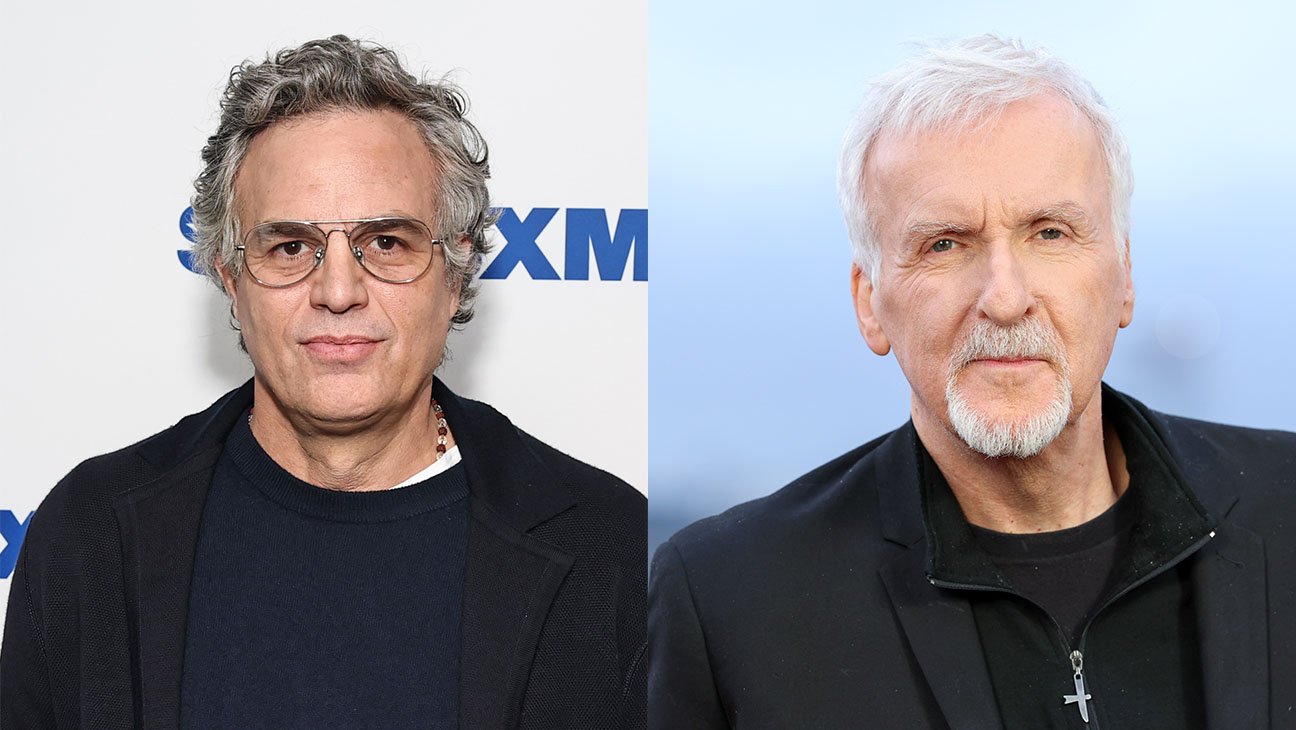
“So… the next question to Mr Cameron should be this… ‘Are you also against the monopolization that a Paramount acquisition would create? Or is it just that of Netflix?’” the four-time Oscar-nominated actor wrote on Threads Saturday. “I think the answer would be very interesting for the film community to hear and one that should be asked immediately. Is Mike Lee against the Paramount sale as well? Is he as concerned about that as he is the Netflix sale?”
Ruffalo concluded, “We all want to know .…Speaking on behalf of hundreds of thousands of film makers world wide.”
In Cameron’s letter, which is dated Feb. 10 but began making headlines on Thursday and was sent to to Sen. Mike Lee (R-Utah), the Avatar director voiced concerns about the future of films being released in theaters if Netflix acquires Warner Bros.
“The business model of Netflix is directly at odds with the theatrical film production and exhibition business, which employs hundreds of thousands of Americans,” Cameron wrote “It is therefore directly at odds with the business model of the Warner Brothers movie division, one of the few remaining major movie studios.”
Netflix co-CEO Ted Sarandos swiftly fired back against Cameron’s claims on Friday. “I’m particularly surprised and disappointed that James chose to be part of the Paramount disinformation campaign that’s been going on for months about this deal,” he said in an interview on Fox Business Network’s The Claman Countdown.
Sarandos also responded to Cameron’s claims that he plans to shift films to having a 17-day theatrical window. “I have never even uttered the words 17-day window. So I don’t know where it came from or why he would be part of that machine,” he added.
“Movies go into the theaters for 45 days, a healthy, robust slate of films every year, that is going to continue,” Sarandos said. “This deal is contingent on that for us to — for it to work.”
The Netflix co-CEO additionally sent Lee a letter in response to Cameron’s, where he wrote that the Titanic director “knowingly misrepresents our position and commitment to the theatrical release of Warner Bros. films.”
Michael Lynton, the former CEO of Sony Pictures Entertainment, is looking back on the 2014 film The Interview with deep regret.
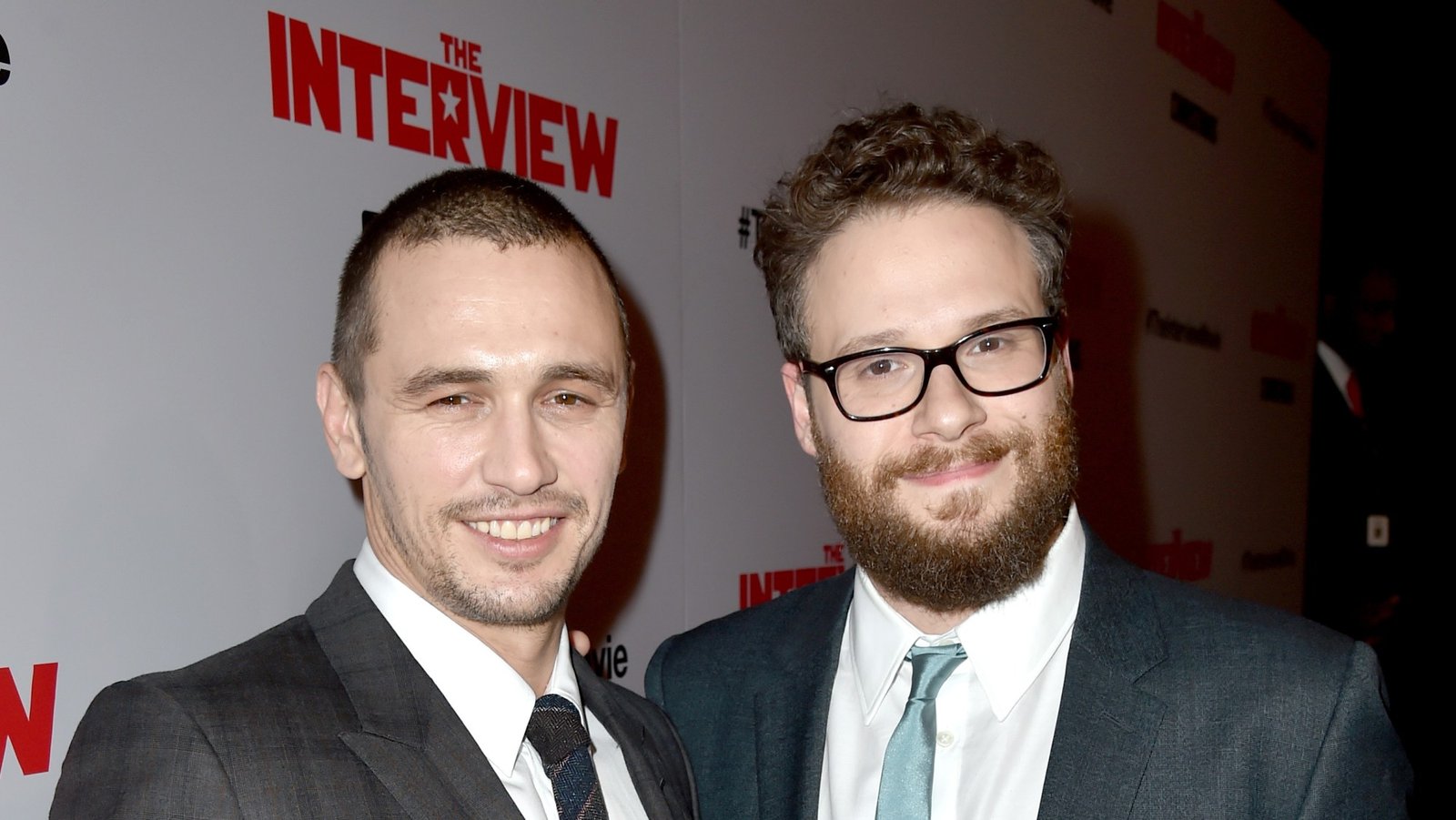
In a recent excerpt from Lynton’s upcoming memoir From Mistakes to Meaning: Owning Your Past So It Doesn’t Own You, published recently in the Wall Street Journal, he opens up about how greenlighting The Interview, a dark comedy starring Seth Rogen and James Franco about a plan to assassinate North Korean leader Kim Jong Un, was the “biggest mistake of my career,” because it led to the infamous Sony hack.
Lynton was made aware on Nov. 17, 2014, by the head of IT reporting that 70 percent of Sony’s servers were irreparably damaged. Hackers released stolen emails that had confidential scripts and personal information. The FBI became involved with evidence suggesting that North Korea was most likely behind the attack to axe the release of the film.
The movie was pulled from the U.S.’s major theater chains ahead of its Dec. 25 release after threats from hacker groups implied that moviegoers would be in danger at screenings, The Hollywood Reporter reported at the time.
According to Lynton’s memoir, eight months after the FBI investigated the cyberattack, they knew that North Korea was behind it.
The fallout resulted in the studio having its relationships ruined with prominent industry figures, including Will Smith, Adam Sandler and Angelina Jolie. Former President Barack Obama even called Lynton to tell him, “What were you thinking when you made killing the leader of a hostile foreign nation a plot point? Of course that was a mistake.”
Lynton can now acknowledge that his biggest mistake was “my decision to greenlight a project on the fly.”
He admits that his motivation for allowing the film to be made in the first place stemmed from his “desire to belong” and from his care for the “opinions of others.”
“Just for a moment, I wanted to join the badass gang that made subversive movies,” Lynton wrote. “For a moment, I wanted to hang — as an equal — with the actors. I had grown tired of playing the responsible adult, of watching the party from the outside while I played Risk.”
He added, “My middle-school self took over, and my adult self lost the courage to disappoint the other kids. The party got out of hand, and the company, its employees, my family and I all paid dearly.”