Tag: Entertainment-HollywoodReporter

  • For the Tourette Syndrome Community, the BAFTAs Brought on a Familiar Dread-Like Feeling

    For the Tourette Syndrome Community, the BAFTAs Brought on a Familiar Dread-Like Feeling

    When the advocate Jess Thom heard about a person with Tourette’s “ticcing” the BAFTAs, she had a familiar feeling: dread.

    Thom has Tourette Syndrome and when she got word of what happened with John Davidson, it brought to the surface many of the misunderstandings and confused reactions she has spent her life trying to fight.

    “There are a lot of myths and oversimplifications about Tourette Syndrome, and a global frenzy is not the best place to have a conversation about them,” the U.K.-based Thom, 45, said by Zoom from her home Monday evening as she reflected on the events. “And it’s all happening in a climate with increased hostility to disabled people, with threats to Medicaid and the ADA.”

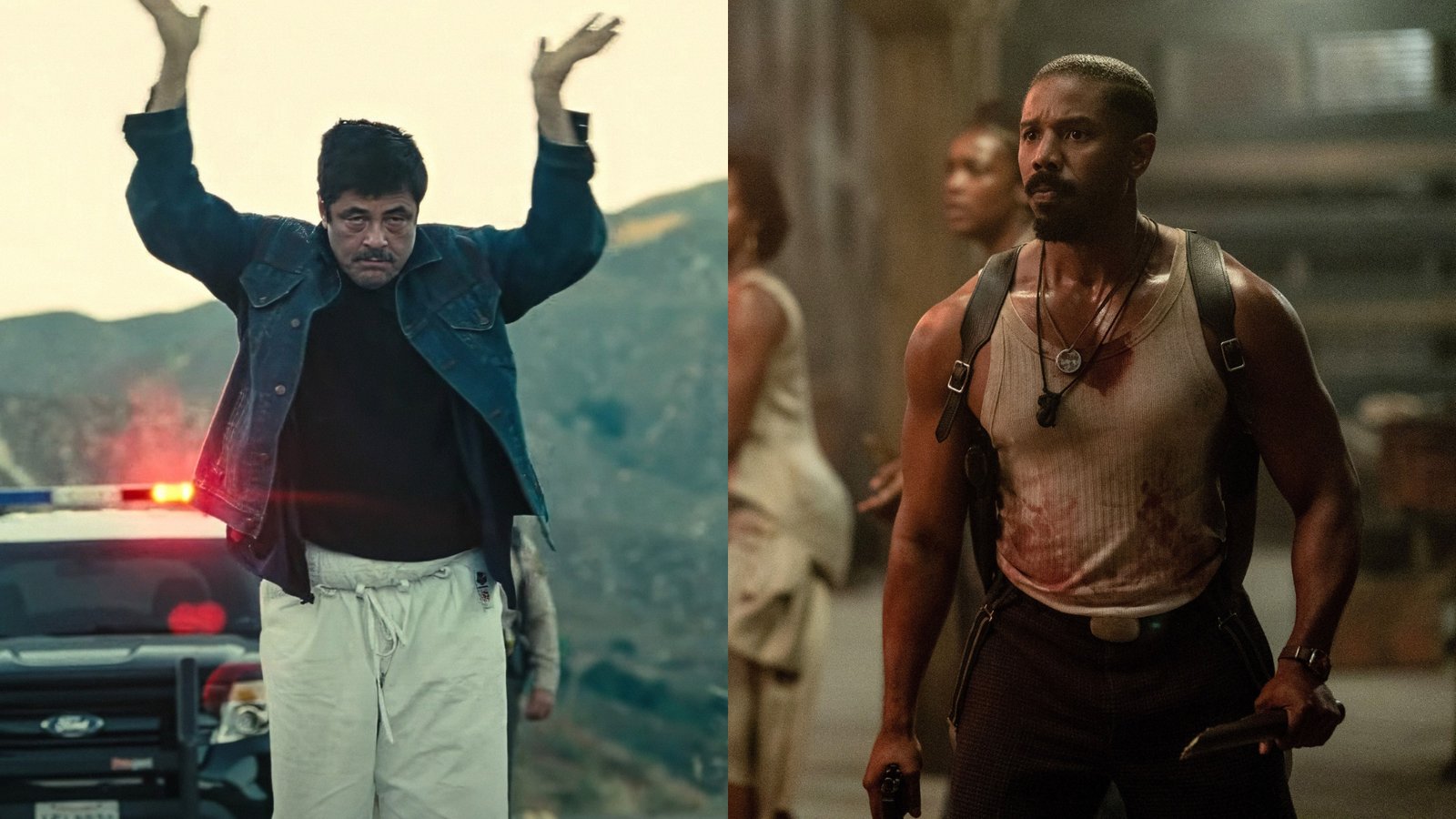
    Davidson at the ceremony engaged in “ticcing,” the term for when people who have Tourette Syndrome, or TS, involuntarily say or do something that can have the effect of making others uncomfortable. In this case, the executive producer and inspiration for the Tourette’s-focused winner, I Swear, called out a series of curses and insults, as well as a racial slur when Black presenters Delroy Lindo and Michael B. Jordan were on stage. The moment blew up after the BBC kept it in the tape-delayed broadcast two hours later and even for a time on a streaming replay. (It has since been edited out of the latter; the BBC apologized for “strong and offensive language.”)

    Thom and others in the community say the award-show kerfuffle raises the lack of understanding they feel has beset the Tourette’s community for years. Among the biggest misconceptions is over “oppositional ticcing,” which essentially involves saying the worst possible thing one can say in the room (the involuntary urge to yell “bomb” in an airport, for instance).

    “People don’t understand that it’s contextual, and that part of the ticcing is saying that exact damaging thing,” Thom said. Instead, people assume it’s being said because someone “secretly” believes it or is mindfully trying to hurt somebody. Thom founded the advocacy group Tourettes Hero, which, among other things, seeks to help people understand the background and also fights for disability benefits on behalf of people with TS.

    The U.K. TS charity Tourette’s Action sought to clarify this with their own statement on Monday as they also expressed disappointment with how the story was playing out.

    “[I]t is vital that the public understands a fundamental truth about Tourette syndrome: tics are involuntary. They are not a reflection of a person’s beliefs, intentions, or character,” the organization said. People with Tourette’s can say words or phrases they do not mean, do not endorse and feel great distress about afterwards. These symptoms are neurological, not intentional, and they are something John, like many others with Tourette’s, lives with every single day.

    “The backlash from certain parts of the media has been extremely saddening, particularly given how hard John works to raise awareness and understanding,” the org continued. “What should have been a night of celebration for him became overwhelming, and he made the difficult decision to leave the ceremony halfway through. This moment reflects exactly what I Swear shows so openly: the isolation, misunderstanding and emotional weight that so often accompany this condition. People with Tourette’s manage their physical and social environments and symptoms on a constant basis. The price of being misunderstood is increased isolation, risk of anxiety and depression and death by suicide.”

    Another misconception is around what the medical community terms “coprolalia,”  which involves the use of obscenities or other inappropriate words and gestures, which Davidson also engaged in. Though there is a firm neurobiological basis, people can react to it, advocates say, in a way that does not fully take that into account and believe there is some intent to shock.

    The New York City public advocate Jumaane Williams posted on social media Monday that his own experience with TS made him want to correct misperceptions. “As the first known person to be elected with #Tourettes. As a person who has #coprolalia and also tics the “N-word.” As a Black man I have some lived views and thoughts to share tomorrow. #StayTuned #bafta  (Feel free to google coprolalia before then),” he wrote.

    TS is a condition that involves both motor and vocal tics. A very high number — composing about 1 percent — of all young people worldwide are believed to have it, with about 10-15 percent of those also having coprolalia. For many, the severity dramatically decreases as they reach adulthood, but the CDC still estimates that an estimated 1.4 million people, children and adults, have TS in the United States.

    The entertainment industry has sought to spotlight many forms of neurological conditions in the past decade, such as with the autism-centric film Wonder or the ABC series The Good Doctor. Historically, though, Tourette’s has often more been seen on-screen as a one-off novelty, as with a famous vintage L.A. Law episode.

    A breakthrough of sorts occurred in 2006 with a Big Brother U.K. contestant, Pete Bennett, who has TS and brought visibility to it. And pop-culturally, the syndrome has become especially better known in the last few years thanks to Baylen Dupree, a Gen Z woman with TS who gained a TikTok following and, last year, a TLC reality show about her experience as someone who has TS, along with Billie Eilish, who has said she has it too.

    A spokeswoman for Eilish said she was not available Monday to comment on the BAFTAs but pointed a reporter to previous videos, which included an interview with David Letterman on his Netflix show in 2022 in which she began ticcing and then told a sensitive Letterman that it was something whose response could get under her skin.

    “The most common way that people react [to a tic] is they laugh, because they think I’m trying to be funny,” she said. “And I’m always left incredibly offended by that.” She said she hoped talking more about it could lead to wider acceptance and a realization of how common it was. “So many people have it that you would never know,” she told Letterman.

    Part of the challenge with the condition is that the ticced words can do real harm even as the person causing the harm deeply wishes not to do so. In a culture simultaneously concerned with accountability on one hand and taking into account the marginal on the other, that can mean a difficult line to walk.

    On Monday, the BAFTAs attempted such a tiptoe. The organization released a statement that “one of our guests, John Davidson MBE, has Tourette syndrome and has devoted his life to educating and campaigning for better understanding of this condition. Tourette syndrome causes involuntary verbal tics, that the individual has no control over. Such tics are in no way a reflection of an individual’s beliefs and are not intentional.” 

    But it also said that “our guests heard very offensive language that carries incomparable trauma and pain for so many. We want to acknowledge the harm this has caused, address what happened and apologize to all,” adding that it was apologizing “unreservedly” for the “profoundly offensive term.”

    From the stage, the man who plays Davidson, Robert Aramayo, who won lead actor, tried to simply urge sympathy for the man who inspired his character. “John Davidson is the most remarkable man I’ve ever met. Tonight especially, I just want to say that the people living with Tourette syndrome,” he said upon receiving a different honor. “For people living with Tourette’s, it’s us around them who help them define what their experience is. So, to quote the film, they need support and understanding.”

    Davidson himself released a statement that said, “I am and always have been deeply mortified if anyone considers my involuntary tics to be intentional or to carry any meaning,” adding that “I chose to leave the auditorium early into the ceremony as I was aware of the distress my tics were causing.”

    Thom said that the best way to handle a situation in which a person with Tourette’s will be present is for organizers to prepare everyone in the room so that there are as few shocks as possible. She attended the BAFTAs several years ago due to a pilot she had made about TS and felt organizers did a good job, ensuring a smooth night for all; she is less sure, she said, if all attendees and presenters were sufficiently prepared Sunday night, given the reaction. 

    She described the “emotional complexity of living with a body and a mind that behaves in ways that are shocking and unexpected and that does not reflect who you are.” 

    Thom hopes that, for all the ways the incident has been misunderstood, it ultimately helps people realize that those living with TS are not just experiencing an occasional incident but are in a state of ongoing challenge.

    “It can be sensational and surreal and strange,” to have Tourette Syndrome, she said. “But you have to realize that John would have been ticcing before the ceremony and ticcing at the ceremony and ticcing on the subway home. People with Tourette’s are constantly managing it.”

  • ‘Awards Chatter’ Pod: Jessie Buckley on Her Presumptive Oscar Turn in ‘Hamnet’ and Maggie Gyllenhaal’s Upcoming ‘The Bride!’

    ‘Awards Chatter’ Pod: Jessie Buckley on Her Presumptive Oscar Turn in ‘Hamnet’ and Maggie Gyllenhaal’s Upcoming ‘The Bride!’

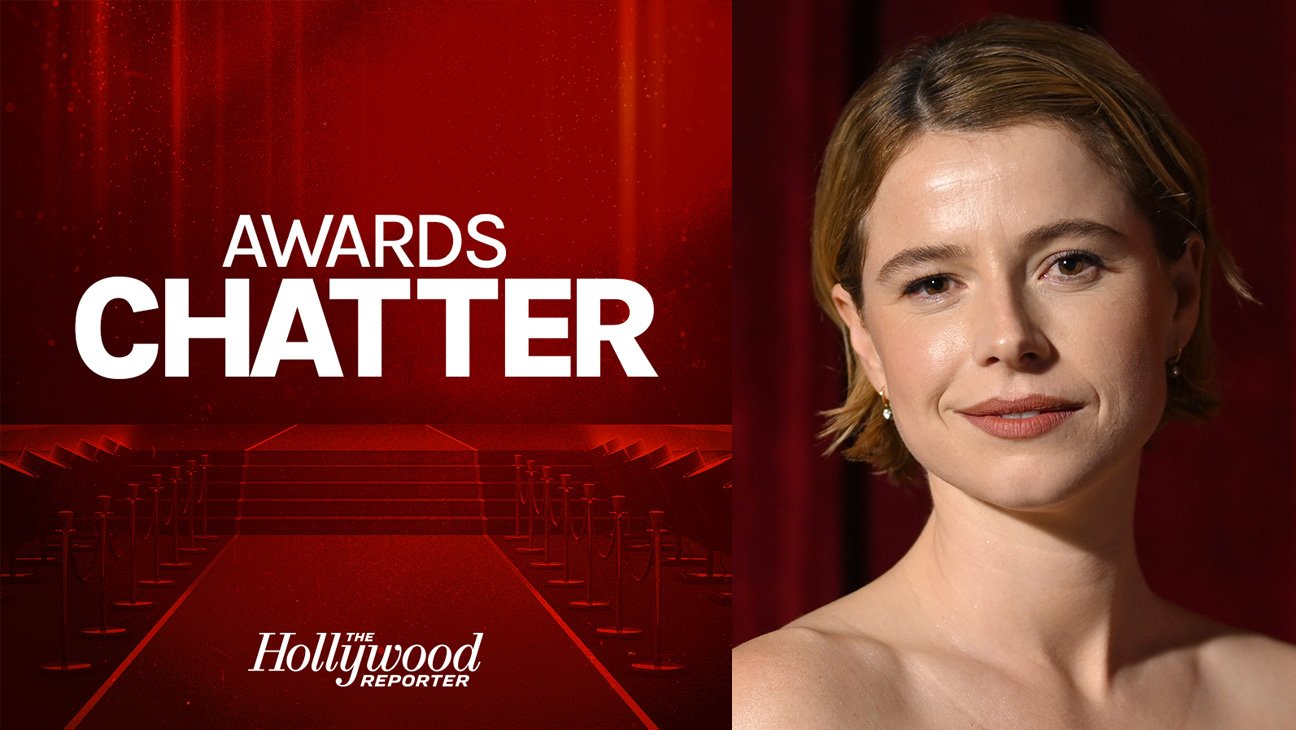
    Jessie Buckley, this year’s best actress Oscar frontrunner for her portrayal of Agnes Shakespeare in Chloe Zhao’s Hamnet and the guest on this episode of The Hollywood Reporter’s Awards Chatter podcast, is an Irish stage and screen actress who has been described by The Observer as “one of the most exciting actors of her generation,” by Vanity Fair as possessing “both dazzling charisma and a remarkable authenticity” and by The New York Times as having “a reputation for playing complicated roles with devastating power,” adding, “Few other actresses of her generation can gain access to such a wide spectrum of emotions, or seem as willing to risk being disliked for exploring the tougher ones.”

    Over just a decade on the big screen, Buckley, 36, has already given a host of memorable performances. She earned particular acclaim for her work in 2018’s Wild Rose, in which she played a Scottish ex-con who dreams of being a country music star, and for which she received a best actress BAFTA Award nomination; 2021’s The Lost Daughter, in which she played a young academic feeling conflicted about motherhood, and for which she received best supporting actress BAFTA, Spirit and Oscar noms; and 2022’s Women Talking, in which she played one of the women in a Mennonite community who debate what to do after discovering that the community’s men had been drugging and raping them, and for which she received a best supporting actress Critics Choice Award nom and she and her castmates received a best ensemble Actor Award nom.

    But it is her turn in Hamnet, as the earthy wife of playwright William Shakespeare and the mother of their three children, that has catapulted her career to another level — Rolling Stone, in its review of the film, wrote, “They will be talking about Jessie Buckley’s performance for years” — and her to the center of the awards conversation. Indeed, she has already won best actress Golden Globe, Critics Choice and BAFTA awards, and is nominated for best ensemble and best actress Actor awards, to say nothing of the best actress Oscar, which she is widely expected to win.

    Over the course of a conversation earlier this month in Santa Barbara, where Buckley was being honored with a career retrospective at the Santa Barbara International Film Festival, she reflected on how she wound up, at just 17, as a finalist on a BBC talent show, and how that, in turn, led her to relocate to London, where she ultimately was accepted at the Royal Academy of Dramatic Art; what she learned from early jobs in the theater alongside the likes of Dame Judi Dench; how her Hamnet performance was shaped by her prior filmmaking experiences, including The Bride!, Maggie Gyllenhaal’s reimagining of Bride of Frankenstein opening March 6, plus much more.

    You can listen to the conversation via the audio player above or read a lightly edited version of it below.

    * * *

    Jessie, thanks so much for doing the podcast. Can you share where you were born and raised, and what your folks did for a living?

    I was born in Cork, which is the county next to where I grew up. I grew up in Killarney, which is this beautiful town on the west coast of Ireland surrounded by lakes and mountains. In the beginning of my life, I lived in the shed behind my dad’s guest house. Me and my brother and my mom and dad lived in the shed, one bed, rambling around this guest house.

    The guest house was like a hotel?

    Yeah. I think there were 28 rooms. It was an exotic place to grow up because these people from outside of your world come in. Me and my family were reminiscing the other day about what this guest house would bring in. I remember at one point there was this American barbershop quartet that arrived, and I can still remember the song that they were singing [sings it]; and then we’d be part of serving and making the beds. Yeah, it was really a bit like an Alice in Wonderland place, but it was also a job.

    We just got a sampling of your beautiful voice. Vocal talent runs in the family as well?

    Well, my mom is a musician. She works as a music psychotherapist for people in palliative care, and she is a harpist and a singer. When I was a tiny baby, she had gone to London to try and become an opera singer, and we lived in this convent in Roehampton in London, because obviously every Irish family has a nun in their family. [Laughs] I remember she’d go off to do workshops in Covent Garden, and I’d be looked after by the nuns, my dad waiting around London. And her singing and how she performed — it’s what I’ve always tried to reach for in telling stories, needing to tell a story as a way of emancipating something in yourself that you probably don’t even understand what it is. But I have such a strong memory of seeing her sing in church and feeling like it was essential to her. I viscerally remember how she would touch people so much that these strangers would come up with tears in their eyes and want to say, “Thank you.” And that was probably the beginning of me going, “Whatever that is, I want to do that.”

    Could you just as easily have wound up focusing on singing as acting?

    I honestly never thought I would be just an actress. I never in a million years thought I’d make a movie.

    Even with all the Irish greats like Maureen O’Hara?

    No, that was like a fairy tale. Nobody gets to do that! I was exposed to music, but I was also, very early, exposed to theater and musical theater, because there was an amateur dramatics company in my hometown. I really remember going to see my first play, Jesus Christ Superstar. I thought music had the capacity to hold the amount of feeling I felt inside me when I was a kid — until I met Shakespeare.

    From what I’ve read, you started doing school plays and summer theater programs and things like that from a pretty early age. Were teachers and classmates saying, “You should become an actress”?

    They were. Largely people really encouraged me, especially my parents. There was never, “You should do something safe.” I think they saw how much this meant to me, even at such a young age. Obviously, a few people would be like, “Just make sure you get all your exams…” But I found school incredibly stressful. I just couldn’t learn linearly like that. And formulaically, I mean, my mind is wild.

    There are fork-in-the-road moments in many people’s lives, and it seems like there was one for you around the time you first auditioned for drama school. Can you take me through that?

    First, to preface it, I used to watch, on repeat, Judi Dench sing “Send in the Clowns.” If you haven’t watched it, you should — the one in Royal Albert Hall, at a Sondheim event — because it’s such a powerful performance, such a simple performance. She just sits on a stool and there’s a spotlight. I might be wrong, but I think she had just lost her husband. And you see somebody distill themselves down to the rawness of their own humanity inside the vessel of a story, and at times you think she’s not going to survive. You can also see her reaching out, like there’s a journey that’s happening beyond herself. I couldn’t understand it. I just wanted to do that. It was so pure. I think I’d heard that she’d gone to one of these drama schools, Mountview or Guildford, the two best musical theater drama schools in the UK, so I applied and went over to do the auditions. My first audition was at the Guildford School of Music and Drama, and that was the one I really wanted to go to. And they wouldn’t let me in. They told me right away.

    That was crushing?

    Yeah, it broke my heart. But those moments are really important because I think you begin to have a conversation with yourself about, That it’s a long journey. It’s a marathon, your life. It’s not something that just instantaneously happens. And they were absolutely right not to let me in.

    Why do you say that?

    Because I wasn’t ready, and it wasn’t probably meant to be for me — musical theater — like just that. But it crushed me. I had another audition, for Mountview, coming up the following weekend. But on the weekend that I didn’t get into Guilford, there was an open audition for a TV talent show called I’d Do Anything, which was looking for somebody to play Nancy in a West End production of Oliver Twist. Andrew Lloyd Webber and Cameron Mackintosh and Barry Humphries were involved. I joined the queue for that on the weekend that I didn’t get into Guilford, to practice for my Mountview audition that was coming up, with no expectation at all. And I ended up coming in second.

    This was in 2008, you were 17, the show aired on the BBC over the course of 12 weeks, right, starting with thousands of contestants, then 12, and then two. On the one hand, getting to the final two must have felt like an incredible achievement. On the other hand, you’ve said that you came away from that whole process rather depressed.

    I don’t think I was depressed because of the show. I think depression — I’ve used that word in a way to protect myself, but I think it’s a bit general around what I was experiencing outside of what that show was, which was a woman discovering herself — a young woman discovering her body, being out in a world, and really asking questions about who she was, what she wanted to say, what her mind thought about things, what she was going to offer the world. Not from an idea of what it is to be accepted by the world, but actually really from the inside of herself. And for me, that was a very uncomfortable moment of self-discovery. There were moments of huge lows and huge highs, in a very public space.

    Was your family throughout this whole time able to be with you in London, or were they back in Ireland?

    They were back at home, because my mom had just had a baby. But in the best way, I was getting to peek behind the curtain — I thought I would at least have to be 50 to be allowed to be peek behind the curtain — and all of a sudden I was doing the thing that I saw my mom do, that I experienced when I saw my first ever play. I was part of it! That was extraordinary to me. I was very raw with my feelings at that time, and I had no structure or technique around me, and I was in this new city, which was incredibly exciting because I could reinvent myself, and I did. And if somebody said, “Do you want to come through that door?” I’d be like, “Yeah, sure. What’s behind that door?” And sometimes that was dangerous and I probably shouldn’t have gone through that door, but it was a real moment of discovery. I’ve become a mom recently, and the thing that it’s reminded me of is awe. Awe isn’t just like bliss. It’s actually quite a vulnerable state because you’re in such discovery. And in many moments of my life, I’ve felt that rawness of discovery and of awe. I look at that young woman and I think, “You are so brave.” I don’t know if I would be able to do that now in such an open-hearted way. I hope I would, but I don’t know.

    So you didn’t get to play the part of Oliver, but it seems like Cameron Mackintosh still had significant interest and confidence in you. How did RADA — the Royal Academy of Dramatic Arts in London — enter the picture?

    RADA entered the picture from Cameron Mackintosh, in such an incredible generous act. After I finished doing the show [I’d Do Anything], he offered to send me to do a Shakespeare workshop in RADA for four weeks during the summer.

    Now, this was not something he was doing for every contestant. He did it because he saw something in you.

    Yeah, I guess he wanted to nurture something he saw in me. And I went and it changed my life, and it changed how I saw myself. It was the moment that I really recognized myself as an actress, because the power of Shakespeare’s words were bottomless. Music was my only experience of something to fill the fire that I felt inside me until I met Shakespeare and his words, which were just like liquid lava.

    You did attend and graduate from RADA, but there was an interregnum between this four-week session there and then going back 2010 to 2013. What was going on then?

    I never moved back to Ireland after I’d Do Anything. Once I was in London, I just ended up there. It was a great time of my life. My first-ever job was A Little Night Music in the Menier Chocolate Factory with Maureen Lipman, Hannah Waddingham and Alex Hanson. Hannah actually reminds me often that she told me to pick up my costume off the floor, which is very good life lesson. [Laughs] I did many things — worked in markets, sang jazz — but I wanted to go back and train. I wanted to mess up in private. I wanted to study scripts. I wanted to know what cinema was. I wanted to go to the pub on a Friday evening with people my own age.

    I read that, yet again, something about you inspired a belief in somebody else, and you were able to go back to RADA as a full-fledged three-year student?

    Yeah, I am from a family of five, and my parents always did their best, but when you were out [of the home], you were out. I loved that responsibility, but it was hard to live in a city like London and be able to afford it. At the Ivy Club [where she performed], there was a man called Tony who had seen me sing, and he loved theater, and he wanted to support young talent. He said, “I want to help you.” And he very kindly paid for my training at RADA and staying in London. If he didn’t, I probably wouldn’t have been able to stay.

    That’s great that he’s gotten to see that he bet on the right —

    — horse!

    You graduated from RADA in 2013, and quickly began working at a high level in the theater. Your first job was doing Shakespeare at the Globe. Then Henry V with Jude Law and working with Judi Dench in The Winter’s Tale. Would you have been content to spend the rest of your career like that, or was there always an ambition to see what was possible in screen acting as well?

    I don’t know if I’ve ever had my eyes on the horizon like that. I feel like I arrive where I’m at, and I want to be absolutely there. I remember doing Winter’s Tale with Judi Dench and realizing my education hadn’t finished. Every single night, I’d run down to the wings when Judi Dench was doing her piece as Paulina and I’d watch her — I never missed it. I would sit and just watch her and be like, “Come, spirits of Judi Dench, come.”

    Were you able to figure out what makes her so good?

    She’s just deeply human and mischievous. I mean, I don’t know. I just think she has a river to her heart that is in motion, and her container is gigantic.

    Were you curious about screen acting?

    I was definitely curious about it, and I remember those early years in London getting possessed by early cinema — going to the BFI and buying all of Katharine Hepburn’s films and watching The Philadelphia Story, and watching a lot of Spencer Tracy, Barbara Stanwyck and Bette Davis. And when I was at RADA, this librarian, James, introduced me to Lars Von Trier and Dancer in The Dark and Breaking the Waves, which is the first time I saw Emily Watson [later her costar in Hamnet]. I was probably shy of it. I remember my agent calling me when I was about 22 or 23 saying, “Do you want to go to America? Like do you want to meet some American agents?” I said, “No, I’m not ready.” I think what I meant by that is, “I need to get to know myself in order to meet what that might be. I don’t want to go and not have something to say in that world.”

    That’s a level of self-awareness or humility that’s highly unusual.

    I guess I didn’t really know what that meant anyway, like, “Do you want to go to America?” In the scripts that I choose and the people I work with, I want a visceral reaction that feels embodied. I am nothing without the people that have come before me. Maybe that’s why I watched Katharine Hepburn and Judi Dench; their stories were my education, and I just hadn’t metabolized that yet in myself. But then I do remember the moment I got the script Beast (2017). Those moments are so special and so rare in a career, where the alchemy of where you are meets the alchemy of a story and where that character was — it was such an incredible entry point. It was Michael Pearce’s first film. It was my first film. We were like, “There’s no money. There’s no consequence. You’re making art.” [Laughs] I was playing a young woman who was, I would say, imprisoned in a pretty conservative idealism, and she meets a man who is wild, dangerous, feral, has a monster inside him. I think she recognized something monstrous inside her, too. This collision is very intense, but full of life and disobedience, and ruptures morality. … I’d read that Marion Cotillard had kept the script of Rust and Bone under her bed, so I put the script of Beast under my bed until I got the part.

    Then came the limited series War & Peace (2016) and your breakthrough project, the 2018 film Wild Rose, which was directed by Tom Harper. After that, you were nominated for best newcomer at the British Independent Film Awards and best rising star at the BAFTA Awards. What stands out for you when you think back on that?

    It was my first mother. I’ve played quite a few mothers — disobedient, naughty mothers — and the struggle of that role when you also want to be in the world. It was very small film, but I was surrounded by these incredible musicians. It was such an amazing thing to study country music and the great country music singers like John Prine, Emmylou Harris and Bonnie Raitt, who was a huge thing for me during this.

    The next year, you played an aide to Judy Garland (Renee Zellweger) in Judy, and you were also in an excellent limited series that won a lot of Emmys, Chernobyl, playing a pregnant woman who, along with her husband, was affected by the meltdown.

    What I really remember of working with Renee was how she led a set — that she could do what she did and go to the places that she went, but be in contact with every single person who was working on that set, whether that be the extras or the crew or me. And Chernobyl was a pretty extraordinary experience. The word “Chernobyl” was very much present in my childhood because in Ireland, they have this scheme called Chernobyl Children, where children who had been affected by the nuclear explosion would come and be fostered by Irish families, so I had a really strong relationship with just the word and what that was. But I remember the feeling on set, how it was directed, how it was shot — it felt giant, but also curated. It had a point of view and was a little bit dangerous and beautiful. I loved playing her, this uncompromising lover.

    The next year was I’m Thinking of Ending Things, a very surreal film from Charlie Kaufman in which you’re playing a young woman going to meet her boyfriend’s parents, but then characters’ names and all sorts of things start changing; I’ll also note that it was shot by Łukasz Żal, who later shot Hamnet. And then also that year was season four of TV’s Fargo, in which you played a nurse who was not always great with her patients.

    I’m Thinking of Ending Things — I loved doing that. I mean, I got to go to work with David Thewlis, Jesse Plemons, Toni Collette and Charlie Kaufman every day! And Charlie’s worlds are so broad. I think that was probably the first moment where I started working more as an artist than an actor, in a way, because he was questioning so many things, it was really alive. And Fargo? My instinct with her walk came super clearly. I just was like, “She’s a bird [as far as her walk] — she’s obsessed with Edith Piaf [who was nicknamed “The Little Sparrow”] — and also it’s going to be freezing, so I can walk really quickly between takes.” Yeah, it was great fun, that.

    Another big milestone was The Lost Daughter, Maggie Gyllenhaal’s directorial debut, in 2021. You play the younger version of the academic whom Olivia Colman plays at a later stage of her life. You were, I believe, suggested to Maggie by Olivia, whom you already knew?

    We’d met at a festival, we’d got drunk. [laughs]

    Always good way to break the ice! In giving the performance that brought you your first Oscar nomination, was there any sort of coordination between you and Olivia, in playing the same character at different stages of her life?

    Other than the accent — that’s all we talked about — and I love Maggie not shoehorning us in. Maggie has been and is one of the most important women in my life, because I think she’s looking to fill the spaces that we [women] are not allowed to fill or haven’t been allowed to fill. She wants the full story. She wants the shadowy bits to come to the surface so that as a woman, you’re not deciphered off. And especially in this role. This is a woman who really is hungry. Her mind is hungry, her body’s hungry. I felt she loves being a mother, but she also wants to be a woman in the world. And that’s the truth, right? It’s not always going to be easy. I think Maggie provoked the most uncomfortable questions in order to realize something.

    That same year going into the next year, you had a real triumph on the stage with Eddie Redmayne in Cabaret, winning the Olivier for that. That led into 2022, in which the theme of your projects was toxic masculinity, between a movie called Men, written and directed by Alex Garland, and then a movie called Women Talking, written and directed by Sarah Polley, which took a similar path to the one later taken by Hamnet, from Telluride to the Oscars.

    Yeah, that was really interesting. In Men, it’s a fable, it’s a fever dream, it’s a genre piece, but a kind of nightmare, in which a woman is invaded by toxic masculinity. And then I got offered Women Talking at the same time, and Mariche was a woman who was actually in the opposite place of where (Men‘s) Harper was. She was a woman who was defending her experience in a patriarchy and in a violent space. I was very curious about what both these things might reveal to me.

    Both of these films were coming right on the heels of the beginning of the #MeToo era. That’s not a coincidence, right?

    No. I believe the stories came from the culture that was surrounding us at that time, and it was super interesting, and I loved doing them. I mean, they were very intense pieces to do, and Women Talking and playing that character shook me in a way that I didn’t expect. When I got that script, I almost didn’t believe that it could be possible — I was like, “Who’s going to watch women talking? Twelve women in an attic in Mennonite dresses?” It was a pretty amazing experience.

    We will soon see you in Maggie Gyllenhaal’s next film, The Bride!, which is apparently a new interpretation of Bride of Frankenstein.

    I think doing Bride and playing in a sandpit that was bigger than I had played in many ways — in working with Christian [Bale] and with Maggie, it’s the biggest budget film I’ve ever done — it felt like it was such an embodied experience that something got born in me a little bit. In other iterations, she’s born to be a wife, but without any autonomy, with no voice, with not even an option to say “No” — she just screams, which, if you didn’t get the picture from that, we’ve got some serious problems! They didn’t do The Bride 2 after that; they were like, “Oh, shit. We’re in some dodgy territory here. This girl is screaming? Shut it down!” [Laughs] Really, this is about love: “If you really want to love, and if you really want to be in a relationship with me, how much of me can you actually love? Not just the nice bit, the bit that’s palatable to you. You want to know the truth? This is the truth.” It cracked me wide open and brought me to my knees. Maggie was ferociously in it with me and demanding of me. And Christian was the same.

    Would you have played Hamnet‘s Agnes the same way had you not done The Bride! right before?

    I think she would have been absolutely different if I hadn’t done The Bride! before. And I had two weeks after I finished Bride going into Hamnet — that’s all I had. I came to rehearsals with bleached eyebrows — they were having production meetings about my eyebrows, wondering if they’d grow back or change color. And actually, the [creative] muscle was very alive. [Laughs] It was a gift. I had this love, and I also was deeply, uncompromisingly embodied in myself, which Agnes is. She is in touch with her elemental force.

    I believe that you and Chloé Zhao, Hamnet‘s director, first crossed paths at the Telluride Film Festival that you attended with Women Talking. Maybe Paul Mescal was there, too, that year —

    I think he was there for Aftersun that year.

    Did you two know each other before you were cast in this? Was there any test before you were cast?

    We knew each other a little bit. We’d both been in Lost Daughter, but we hadn’t actually worked together in that. And then just from being Irish. But we didn’t know each other. We did do a chemistry test together. And that was very, very exciting. It was actually a great way to start that relationship, because there was unknowability and incredible possibility and a real care and trust and a meeting of minds. There was no hierarchy. We were going to jump off the cliff. And wherever either of us was being led, I think we both instinctively felt that we would hold each other in that exploration and go there with each other. And that’s how we moved through the whole filming.

    As you alluded to earlier, you’ve recently become a mother for the first time, so congratulations on that. When you made Hamnet, you had not yet become a mother. Was that important? I mean, you weren’t previously the bride of a monster either.

    I have never died and been reinvigorated, for any of our listeners who are concerned how Method I was. [Laughs] Sometimes as an actor, you do those stupid things where you buy a book on how to be a Tudor, and you read a page and you think, “Oh no, it’s pointless,” and it lives on your shelf and gathers dust. The midwife in the film was actually a real midwife, so she came and spoke to us and talked about that, and that was helpful. But when I was working on this and when I was really trying to find Agnes’s language in her unconscious, I did a lot of writing and I really was listening to my dreams a lot, using my dreams as compasses for the scenes and for the relationships.

    From talking to Chloe, you were the one who inspired her to incorporate dream work with everyone on Hamnet, right?

    Yeah.

    There are things that I’ve heard about her doing with the actors — and everybody — on the set that I’d never heard of anyone else doing on a film, like a guided meditation or something to start the day. There’s a behind-the-scenes photo that’s been released of you preparing to do one of the birthing scenes out in the forest, and Chloé seems to be lying down next to you. That’s not exactly conventional, but it clearly worked! It seems like you and Chloé are on the same wavelength, in terms of being open to outside-the-usual-box ideas.

    Yeah. I want to ground what that might sound like, because that feels a bit untangible. In the same way with school, I’m not good with linear thought and a projected idea, I don’t know who my character is until I’ve lived inside them. But you still have to stir the waters a little bit. And I find dreams, or even taking a scene in a script as if it was a dream, and writing around that in an abstract way, just stirs the water to help you enter into an essence of where you think you might travel. Because in the best moments, you don’t know where your final destination is going to be, which happened time and time again on this set — like the end, and the scream at [her character’s son] Hamnet’s death.

    The scream — was that in the script?

    No, that wasn’t in the script. And also, those moments don’t come from just an empty space. We’d gone on an absolute ginormous journey by the time I got to that place, and I was in a really strong relationship with Jacobi [Jupe, who played Hamnet]. But I don’t know, man, you look into his face and you’ve gone on this journey? I think that scream came out on the second of three takes, and I didn’t expect that. We all know grief, in a way, and I don’t know how to describe what that was. It was out of body, but absolutely catalyzed by this incredible young boy in front of me who was with me every step of the way, and vice-versa. And those moments — they’re very rare, and they’re an amazing thing to even touch the side of it.

    And then the scene at the end, which is single-handedly responsible for the stock of Kleenex skyrocketing, with your hand reaching towards the stage. I wonder, again, where, emotionally, that came from, and if Agnes has ever seen her husband’s work on the stage before that day.

    No, I didn’t believe she had seen her husband’s work. I mean, their relationship was really incredible. And I think she had the foresight to know that this man has so much inside him that is bigger than the place that they live, and even their relationship, and he needs somewhere to share that. But I was intimidated by that. Was it [intimidating] to walk into that place, the Globe, where you have access to heaven and earth and 400 strangers who are holding a piece of paper that contains the name of your son who’s lost, and you can’t find him? Yeah, it was hard. Where the pin dropped is, you are in the most intense, isolated experience of grief, where you’ve really, you can’t find your son, you can’t find your husband in your heart. And I realized through Max Richter’s music, “On the Nature of Daylight,” on day four, that I was not on my own, I was surrounded by 400 other people who’ve probably experienced grief. And she realizes that her husband has pulled off the greatest magic trick of her life, that he has reincarnated her lost son through the vessel of a story, that he’s immortalized in his nature by this story. Which I think when we get affected by a story in a film or in a piece of theater, that’s our experience. We can’t even really understand why, but it’s touched us. I think that’s what got revealed in us as we were moving through that last sequence.

    For Hamnet, you have won a ton of awards and are nominated for an Oscar. Everybody in this business has seen the film and is talking about it. But my sense is that you’re quite a private person and not really seeking attention. So what are you making of this moment? Are you able to enjoy it?

    I have very different moments at different times. Sometimes you can’t take it in. Sometimes you’re just changing a nappy, and you’re really grateful for that nappy, like, “I’m a real person, I’m a real person!” And then you have moments where you’re like, “What?! This doesn’t happen in a life.” I had that moment yesterday at the Oscar Nominees Luncheon, when everybody was getting up on that stage to be in the class photograph. There was something so innocent about it, but also, I’m there with Paul Thomas Anderson and Chloe and Delroy Lindo, these incredible artists. In my wildest imagination when I was a young woman, I never thought I would be remotely near that. And yes, the Critics Choice and Golden Globes, they’re scary: People spend two hours after you’ve changed a nappy trying to make you look great, when you feel like, “I wish the ground would swallow me up” or “How am I meant to be in these rooms? I shouldn’t be here.” But then you get into these rooms and you know that everybody’s just made something, and to make anything at all is an absolute triumph. I’m so proud and honored to stand beside these incredible artists who have inspired me throughout my life in ways that I don’t think I have the vocabulary or the ability to tell them. This is like a moment in time, and I’ll move on, and I’ll make more things. We only get one life. And I think when I look back I will go, “Oh my God!”

  • ‘One Battle After Another’ Named Best Film of 2025 by Vancouver Film Critics Circle

    ‘One Battle After Another’ Named Best Film of 2025 by Vancouver Film Critics Circle

    Paul Thomas Anderson’s One Battle After Another was named best picture of 2025 by the Vancouver Film Critics Circle on Monday night, while Sean Penn won best supporting male actor for his role in the politically-charged thriller.

    One Battle After Another earlier received seven nominations from the Vancouver critics.

    The film about an ex-revolutionary group was nominated for best picture, best director and best screenplay and received acting nominations for star Leonardo DiCaprio and supporting castmembers Benicio Del Toro, Teyana Taylor and Penn.

    Related Stories

    Other winners from the Vancouver film critics include Sinners writer-director Ryan Coogler, who won best director and best screenplay for his slick vampire film.

    Both One Battle and Sinners are Oscars front runners, with the latest accolades continuing to build their momentum ahead of the 2026 Academy Awards.

    In other acting categories, the best male actor crown went to Timothée Chalamet for his star turn in Josh Safdie’s ping-pong caper Marty Supreme, while Jessie Buckley was named best female actor for her role in Hamnet, Chloé Zhao’s Shakespearean heartbreaker.  

    And the best supporting female actor honor went to Amy Madigan for her performance as a creepily clownish aunt in Zach Cregger’s Weapons.

    In other prize-giving on Monday evening in Vancouver, local film critics gave the best documentary prize to Geeta Gandbhir for The Perfect Neighbor, about the consequences of Stand Your Ground laws as shown through a deadly 2023 shooting, and the best international film in a language other than English went to Iranian filmmaker Jafar Panahi’s It Was Just an Accident.

  • ‘Awards Chatter’ Pod: Jessie Buckley on Her Oscar-Tipped Turn in ‘Hamnet’ and Upcoming Reunion With Maggie Gyllenhaal ‘The Bride!’

    ‘Awards Chatter’ Pod: Jessie Buckley on Her Oscar-Tipped Turn in ‘Hamnet’ and Upcoming Reunion With Maggie Gyllenhaal ‘The Bride!’

    Jessie Buckley, this year’s best actress Oscar frontrunner for her portrayal of Agnes Shakespeare in Chloe Zhao’s Hamnet and the guest on this episode of The Hollywood Reporter’s Awards Chatter podcast, is an Irish stage and screen actress who has been described by Sight & Sound as “born to be a star,” by The Observer as “one of the most exciting actors of her generation,” by The Guardian as “reliably excellent,” by Vanity Fair as possessing “both dazzling charisma and a remarkable authenticity” and by Interview magazine as “one of Hollywood’s brightest stars, capable of delivering performances that burn hot and contain multitudes.” The New York Times, for its part, has noted that she has “a reputation for playing complicated roles with devastating power,” adding, “Few other actresses of her generation can gain access to such a wide spectrum of emotions, or seem as willing to risk being disliked for exploring the tougher ones.”

    Over just a decade on the big screen, Buckley, 36, has already given a host of memorable performances. She earned particular acclaim for her work in 2018’s Wild Rose, in which she played a Scottish ex-con who dreams of being a country music star, and for which she received a best actress BAFTA Award nomination; 2021’s The Lost Daughter, in which she played a young academic feeling conflicted about motherhood, and for which she received best supporting actress BAFTA, Spirit and Oscar noms; and 2022’s Women Talking, in which she played one of the women in a Mennonite community who debate what to do after discovering that the community’s men had been drugging and raping them, and for which she received a best supporting actress Critics Choice Award nom and she and her castmates received a best ensemble Actor Award nom.

    But it is her turn in Hamnet, as the earthy wife of playwright William Shakespeare and the mother of their three children, that has catapulted her career to another level — Rolling Stone, in its review of the film, wrote, “They will be talking about Jessie Buckley’s performance for years” — and her to the center of the awards conversation. Indeed, she has already won best actress Golden Globe, Critics Choice and BAFTA awards, and is nominated for best ensemble and best actress Actor awards, to say nothing of the best actress Oscar, which she is widely expected to win.

    Over the course of a conversation earlier this month in Santa Barbara, where Buckley was being honored with a career-retrospective at the Santa Barbara International Film Festival, she reflected on how she wound up, at just 17, as a finalist on a BBC talent show, and how that, in turn, led her to relocate to London, where she ultimately was accepted at the Royal Academy of Dramatic Art; what she learned from early jobs in the theater alongside the likes of Dame Judi Dench, and how she then moved into screen acting; how her Hamnet performance was shaped by her prior filmmaking experiences, including a film that she shot right before Hamnet but that won’t be released until March 6, The Bride!, Maggie Gyllenhaal’s reimagining of Bride of Frankenstein; plus much more.

    You can listen to the conversation via the audio player above or read a lightly edited version of it below.

    * * *

    Jessie, thanks so much for doing the podcast. Can you share where you were born and raised, and what your folks did for a living?

    I was born in Cork, which is the county next to where I grew up. I grew up in Killarney, which is this beautiful town on the west coast of Ireland surrounded by lakes and mountains. In the beginning of my life, I lived in the shed behind my dad’s guest house. Me and my brother and my mom and dad lived in the shed, one bed, rambling around this guest house.

    The guest house was like a hotel?

    Yeah. I think there were 28 rooms. It was an exotic place to grow up because these people from outside of your world come in. Me and my family were reminiscing the other day about what this guest house would bring in. I remember at one point there was this American barbershop quartet that arrived, and I can still remember the song that they were singing [sings it]; they used to practice in the back for hours, and me and my brother would sit and watch, and then we’d be part of serving and making the beds. Yeah, it was really a bit like an Alice in Wonderland place, but it was also a job.

    We just got a sampling of your beautiful voice. Vocal talent runs in the family as well?

    Well, my mom is a musician. She works as a music psychotherapist for people in palliative care, and she is a harpist and a singer. She wanted to be an opera singer. When I was a tiny baby, she had gone to London to try and become an opera singer, and we lived in this convent in Roehampton in London, because obviously every Irish family has a nun in their family. [laughs] I remember she’d go off to do workshops in Covent Garden, and I’d be looked after the nuns, my dad waiting around London. And her singing and how she performed — it’s what I’ve always tried to reach for in telling stories, needing to tell a story as a way of emancipating something in yourself that you probably don’t even understand what it is. But I have such a strong memory of seeing her sing in church and feeling like it was essential to her. I remember how she would touch people so much that these strangers would come up with tears in their eyes and want to say, “Thank you.” I really viscerally remember seeing that. And that was probably the beginning of me going, “Whatever that is, I want to do that.”

    Could you just as easily have wound up focusing on singing as acting?

    I honestly never thought I would be just an actress. I never in a million years thought I’d make a movie.

    Even with all the Irish greats like Maureen O’Hara?

    No, that was like a fairy tale. Nobody gets to do that! I was exposed to music, but I was also, very early, exposed to theater and musical theater, because there was an amateur dramatics company in my hometown. I really remember going to see my first play, Jesus Christ Superstar. I thought music had the capacity to hold the amount of feeling I felt inside me when I was a kid — until I met Shakespeare.

    From what I’ve read, you started doing school plays and summer theater programs and things like that from a pretty early age. Were teachers and classmates saying, “Obviously, Jessie’s going to become an actress” or “you should become an actress” or things like that?

    They were. Largely people really encouraged me, especially my parents. There was never, “You should do something safe.” I think they saw how much this meant to me, even at such a young age. Obviously, a few people would be like, “Just make sure you get all your exams…” But I found school incredibly stressful. I just couldn’t learn linearly like that. And formulaically, I mean, my mind is wild.

    There are fork in the road moments in many people’s lives, and it seems like there was one for you around the time you first auditioned for drama school. Can you take me into the 48 hours around that?

    Well, first to preface it, I used to watch, on repeat, Judi Dench sing “Send in the Clowns.” If you haven’t watched it, you should watch it — the one in Royal Albert Hall, at a Sondheim event — because it’s such a powerful performance, such a simple performance. She just sits on a stool and there’s a spotlight. I might be wrong, but I think she had just lost her husband. And you see somebody distill themselves down to the rawness of their own humanity inside the vessel of a story, and at times you think she’s not going to survive. You can also see her reaching out, like there’s a journey that’s happening beyond herself. I couldn’t understand it. I just wanted to do that. It was so pure. I think I’d heard that she’d gone to one of these drama schools, Mountview or Guildford, the two best musical theater drama schools in the UK, so I applied and went over to do the auditions. My first audition was at the Guildford School of Music and Drama, and that was the one I really wanted to go to. And they wouldn’t let me in. They told me right away.

    That was crushing?

    Yeah, it broke my heart. But those moments are really important because I think you begin to have a conversation with yourself about— That it’s a long journey. It’s a marathon, your life. It’s not something that just instantaneously happens. And they were absolutely right not to let me in.

    Why do you say that?

    Because I wasn’t ready, and it wasn’t probably meant to be for me — musical theater — like just that. But it crushed me. I had another audition, for Mountview, coming up the following weekend. But on the weekend that I didn’t get into Guilford, there was an open audition for a TV talent show called I’d Do Anything, which was looking for somebody to play Nancy in a West End production of Oliver Twist. Andrew Lloyd Webber and Cameron Mackintosh and Barry Humphries were involved. I joined the queue for that on the weekend that I didn’t get into Guilford, to practice for my Mountview audition that was coming up, with no expectation at all. And I ended up coming in second.

    This was in 2008, you were 17, the show aired on the BBC over the course of 12 weeks, right, starting with thousands of contestants, then 12, and then two. On the one hand, getting to the final two must have felt like an incredible achievement. On the other hand, you’ve said that you came away from that whole process rather depressed.

    I don’t think I was depressed because of the show. I think depression — I’ve used that word in a way to protect myself, but I think it’s a bit general around what I was experiencing outside of what that show was, which was a woman discovering herself — a young woman discovering her body, being out in a world, and really asking questions about who she was, what she wanted to say, what her mind thought about things, what she was going to offer into a world. Not from an idea of what it is to be accepted by the world, but actually really from the inside of herself. And for me, that was a very uncomfortable moment of self-discovery. There were moments of huge lows and huge highs, in a very public space.

    Was your family throughout this whole time able to be with you in London, or were they back in Ireland?

    They were back at home, because my mom had just had a baby. But in the best way, I was getting to peek behind the curtain — I thought I would at least have to be 50 to be allowed to be peek behind the curtain — and all of a sudden I was doing the thing that I saw my mom do, that I experienced when I saw my first ever play. I was part of it! That was extraordinary to me. I was very raw with my feelings at that time, and I had no structure or technique around me, and I was in this new city, which was incredibly exciting because I could reinvent myself, and I did. And if somebody said, “Do you want to come through that door?” I’d be like, “Yeah, sure. What’s in that door?” And sometimes that was dangerous and I probably shouldn’t have gone through that door, but it was a real moment of discovery. I’ve become a mom recently, and the thing that it’s reminded me of is awe. Awe isn’t just like bliss. It’s actually quite a vulnerable state because you’re in such discovery. And in many moments of my life, I’ve felt that rawness of discovery and of awe. That was definitely a moment of that. And I look at that young woman and I think, “You are so brave.” I don’t know if I would be able to do that now in such an open-hearted way. I hope I would, but I don’t know.

    So you didn’t get to play the part of Oliver, but it seems like Cameron Mackintosh still had significant interest and confidence in you. How did RADA enter the picture?

    Well, RADA entered the picture from Cameron Mackintosh, in such an incredible generous act. After I finished doing the show [I’d Do Anything], he offered to send me to do a Shakespeare workshop in RADA for four weeks during the summer.

    Now, this was not something he was doing for every contestant. He did it because he saw something in you.

    Yeah, I guess he wanted to nurture something he saw in me. And I went and it changed my life, and it changed how I saw myself. It was the moment that I really recognized myself as an actress, because the power of Shakespeare’s words were bottomless. Music was my only experience of something to fill the fire that I felt inside me until I met Shakespeare and his words, which were just like liquid lava.

    You did attend and graduate from RADA, but there was an interregnum between this four-week session there and then going back 2010 to 2013. What was going on then?

    I never moved back to Ireland after I’d Do Anything. Once I was in London, I just ended up there. I was doing lots of stuff. It was a great time of my life. Like I did my first ever job, which was A Little Night Music in the Menier Chocolate Factory with Maureen Lipman, Hannah Waddingham and Alex Hanson. Hannah actually reminds me often that she told me to pick up my costume off the floor, which is very good life lesson. [laughs] I did many things — worked in markets, sang jazz — but I wanted to go back and train. I wanted to mess up in private. I wanted to study scripts. I wanted to know what cinema was. I wanted to go to the pub on a Friday evening with people my own age.

    And the fact though, that you were able to go back to RADA as a full-fledged three-year student — I think I read that, yet again, something about you inspired a belief in somebody else that made them want to support your dreams, no?

    Yeah, I am from a family of five, and my parents always did their best, but when you were out [of the home], you were out. And I loved that responsibility, but it was hard to live in a city like London and be able to afford it. At the Ivy Club [where she performed], there was a man called Tony who had seen me sing, and he loved theater, and he wanted to support young talent. He said, “I want to help you.” And he very kindly paid for my training at RADA and staying in London. If he didn’t, I probably wouldn’t have been able to stay.

    That’s amazing. And is he still around?

    Yeah.

    That’s great that he’s gotten to see that he bet on the right—

    —horse!

    You graduated from RADA in 2013, and quickly began working at a high level in the theater. Your first job was doing Shakespeare at the Globe. Then Henry V with Jude Law. Then, in a full-circle moment, working with Judi Dench in The Winter’s Tale. When you think back to that time, what did you make of it all? And would you have been content to spend the rest of your career like that, or was there always an ambition to see what was possible in screen acting as well?

    I don’t know if I’ve ever had my eyes on the horizon like that. I feel like I arrive where I’m at, and I want to be absolutely there. I remember doing Winter’s Tale with Judi Dench and realizing my education hadn’t finished. Every single night, I’d run down to the wings when Judi Dench was doing her piece as Paulina and I’d watch her — I never missed it. I would sit and just watch her and be like, “Come spirits of Judi Dench, come.”

    Were you able to figure out what makes her so good?

    She’s just deeply human and mischievous. I mean, I don’t know. Do you know why some people are really good and some people aren’t? I just think she has a river to her heart that is in motion, and her container is gigantic.

    I believe she spent the majority of her career primarily in the theater, and then had this amazing second and third act of screen acting. Were you curious about screen acting?

    I was definitely curious about it, and I definitely remember those early years in London getting possessed by early cinema — going to the BFI and buying all of Katharine Hepburn’s films and watching The Philadelphia Story, and watching a lot of Spencer Tracy, Barbara Stanwyck and Bette Davis. And then when I was at RADA, this librarian, James, introduced me to Lars Von Trier and Dancer in The Dark and Breaking the Waves, which is the first time I saw Emily Watson [later her costar in Hamnet]. I was probably shy of it. I remember my agent calling me when I was about 22 or 23 saying, “Do you want to go to America? Like do you want to meet some American agents?” And I said, “No, I’m not ready.” And I think what I meant by that is, “I need to get to know myself in order to meet what that might be. I don’t want to go and not have something to say in that world.”

    That’s a level of self-awareness or humility that’s highly unusual.

    Well, I guess I didn’t really know what that meant anyway like, “Do you want to go to America?” In the scripts that I choose and the people I work with, I want a visceral reaction that feels embodied. I am nothing without the people that have come before me. Maybe that’s why I watched Katharine Hepburn and Judi Dench; their stories were my education, and I just hadn’t metabolized that yet in myself. But then I do remember the moment I got the script Beast. Those moments are so special and so rare in a career, where the alchemy of where you are meets the alchemy of a story, and where that character was and where I was — it was such an incredible entry point. And it was such a pure experience making that. And it was Michael Pearce’s first film. It was my first film. We were like, “There’s no money. There’s no consequence. You’re making art.” [laughs] I was playing a young woman who was, I would say, imprisoned in a pretty conservative idealism, and she meets a man who is wild, dangerous feral, has a monster inside him. I think she recognized something monstrous inside her too. And this collision is very intense, but full of life and disobedience, and ruptures morality.

    And this was the first screen project that you were sent or the first one that you reacted to?

    I can’t remember if it was the first screen project that I was sent, but it was definitely the first script that I got sent that I became obsessed with. I’d read that Marion Cotillard had kept the script of Rust and Bone under her bed, so I put the script of Beast under my bed until I got the part.

    That was your first film, released in 2017. But the first screen work of yours that anyone saw, I believe, was the limited series War & Peace, which came out in 2016. And then the project that really was a breakthrough for you was the 2018 film Wild Rose, which was directed by Tom Harper, who had directed War & Peace. After that, you were nominated for best newcomer at the British Independent Film Awards and best rising star at the BAFTA Awards. What stands out to you when you think back to that one?

    It was my first mother. I’ve played quite a few mothers — disobedient, naughty mothers — and the struggle of that role when you also want to be in the world. It was very small film, but I was surrounded by these incredible musicians. It was such an amazing thing to study country music and the great country music singers like John Prine, Emmylou Harris and Bonnie Raitt, who was a huge thing for me during this — their stories are about every man, every woman, and their struggle. It’s so simple. There’s no flounce. It really is distilled down to the essence of how you just be alive and love with a weight on your back. And that was a great lesson: how can you distill what you’re trying to say down in the simplest way?

    The next year, you had two projects that a lot of people saw you in. You played an aid to Judy Garland in Judy, for which Renee Zellweger wound up winning her second Oscar, so a lot of people in the business also saw you in it. And you were also in an excellent limited series that wound up winning a lot of Emmys, Chernobyl, playing a pregnant woman who, along with her husband, was affected by the meltdown.

    God, this is a real trip, Scott! It was so beautiful to see Renee do what she did on that film. Also, what I really remember of working with her was how she led a set with so much generosity, and that she could do what she did and go to the places that she went, but be in contact with every single person that was working on that set, whether that be the extras or the crew or me — there was just this generosity and bravery. And Chernobyl was a pretty extraordinary experience. I mean, it’s hard to know what you’re doing when you’re in the middle of it. I was in Lithuania putting a wig on and a pregnant belly, and my husband’s got these wild scars on, and you’re just in the moment of it. The word “Chernobyl” was very much present in my childhood because in Ireland they have this scheme called Chernobyl Children where children that had been affected by the nuclear explosion would come and be fostered by Irish families, so I had a really strong relationship with just the word and what that was. But I remember the feeling on set, how it was directed, how it was shot — it felt giant, but also curated, and it had an identity. It had a point of view and was a little bit dangerous and it was beautiful. I loved playing her, this uncompromising lover.

    The next year was I’m Thinking of Ending Things, a very surreal film from Charlie Kaufman in which you’re playing a young woman going to meet her boyfriend’s parents, but then characters’ names and all sorts of things start changing; I’ll also note that it was shot by Łukasz Żal, who later shot Hamnet. And then also that year was season four of TV’s Fargo, in which you played a nurse who was not always great with her patients.

    I’m Thinking of Ending Things — I loved doing that. I mean, I got to go to work with David Thewlis, Jesse Plemons, Toni Collette and Charlie Kaufman every day! And Charlie’s worlds are so broad. I think that was probably the first moment where I started working more as an artist than an actor, in a way, because he was questioning so many things, and the possibility to create from his brilliance is endless. It was really alive. I mean, I remember the first note he ever gave me, for the camera test that I sent in, and feeling like, “Whoa, I’m in a different territory here of myself and my work, and this is really exciting.” And I remember doing that scene with David Thewlis up in the attic, and the beauty of him as an artist, and just feeling so lucky. And Fargo? She was a laugh. My instinct with her walk and all that came super clearly. I just was like, “She’s a bird [as far as her walk] — she’s obsessed with Edith Piaf [who was nicknamed “The Little Sparrow”] — and also it’s going to be freezing, so I can walk really quickly between takes.” Yeah, it was great fun, that.

    Another big milestone was The Lost Daughter, Maggie Gyllenhaal’s directorial debut, in 2021. You play the younger version of the academic who Olivia Colman plays at a later stage of her life. You were, I believe, suggested to Maggie by Olivia, who you already knew?

    We’d met at a festival, we’d got drunk. [laughs]

    Well, that’s always good way to break the ice! In giving the performance that brought you your first Oscar nomination, was there any sort of coordination between you and Olivia, with or without Maggie, as far as playing the same character at different stages of her life? And what was it about the heavily female set that caused you to grow a lot as a person, according to other things you’ve said?

    We didn’t have any conversations about this character, other than the accent — that’s all we talked about — and I love Maggie not shoehorning us in. I think it would’ve become less alive. Maggie has been and is one of the most important women in my life, because I think she’s looking to fill the spaces that we [women] are not allowed to fill or haven’t been allowed to fill. She wants the full story. She wants the shadowy bits to come to the surface so that as a woman, you’re not deciphered off. And especially in this role. This is a woman who really is hungry. Her mind is hungry, her body’s hungry. I felt she loves being a mother, but she also wants to be a woman in the world. And that’s the truth, right? It’s not always going to be easy. I think Maggie provoked the most uncomfortable questions in order to realize something.

    That same year going into the next year, you had a real triumph on the stage with Eddie Redmayne in Cabaret, winning the Olivier for that. That led into 2022, in which the theme of your projects was toxic masculinity, between a movie called Men, written and directed by Alex Garland, and then a movie called Women Talking, written and directed by Sarah Polley, which took a similar path to the one later taken by Hamnet, from Telluride to the Oscars.

    Yeah, that was really interesting. In Men, it’s a fable, it’s a fever dream, it’s a genre piece, but a kind of nightmare, in which a woman is invaded by toxic masculinity. And then I got offered Women Talking at the same time, and Mariche was a woman who was actually in the opposite place of where Harper was. She was a woman who was defending her experience in a patriarchy and in a violent space. I was very curious about what both these things might reveal to me.

    Both of these films were coming right on the heels of the beginning of the #MeToo era. That’s not a coincidence, right?

    No. I believe the stories came from the culture that was surrounding us at that time, and it was super interesting, and I loved doing them. I mean, they were very intense pieces to do, and Women Talking and playing that character shook me in a way that I didn’t expect. When I got that script, I almost didn’t believe that it could be possible — I was like, “Who’s going to watch women talking? Twelve women in an attic in Mennonite dresses?” It was a pretty amazing experience.

    We will soon see you in Maggie Gyllenhaal’s next film, The Bride!, which is apparently a new interpretation of Bride of Frankenstein. I don’t know too much about it yet — I don’t know that anybody does — but the fact that it was shot right before you went and shot Hamnet, I imagine, must have, in some ways, shaped your performance in Hamnet, no?

    I think doing Bride and playing in a sandpit that was bigger than I had played in in many ways — in the character, in what I had to create, in working with Christian [Bale] and with Maggie, it’s the biggest budget film I’ve ever done — it felt like it was such an embodied experience that something got born in me a little bit. I guess, the confidence to take a space, to tell a story from a female point of view. In other iterations, she’s born to be a wife, but without any autonomy, with no voice, with not even an option to say “No” — she just screams, which, if you didn’t get the picture from that, we’ve got some serious problems! They didn’t do The Bride 2 after that — they were like, “Oh, shit. We’re in some dodgy territory here. This girl is screaming? Shut it down!” [laughs] And really, this is about love. “If you really want to love, and if you really want to be in a relationship with me, how much of me can you actually love? Not just the nice bit, the bit that’s palatable to you. You want to know the truth? This is the truth.” It cracked me wide open and brought me to my knees. Maggie was ferociously in it with me and demanding of me. And Christian was the same. And we were the same with each other. It really was the most intense ride of my life and made me, I think, step into a different body of myself.

    I don’t know how much longer after that you went to go do Hamnet. But would you have played Agnes the same way had you not done The Bride! right before?

    I think she would have been absolutely different if I hadn’t done The Bride! before. And I had two weeks after I finished Bride going into Hamnet — that’s all I had. I came to rehearsals with bleached eyebrows — they were having production meetings about my eyebrows, wondering if they’d grow back or change color. And actually, the muscle was very alive. [laughs] It was a gift. I had this love, and I also was deeply, uncompromisingly embodied in myself, which Agnes is. She is in touch with her elemental force.

    I believe that you and Chloé first crossed paths at the edition of the Telluride Film Festival that you attended with Women Talking, which she was attending as a movie buff. What did she say to you about why she thought you were the person who should play Agnes?

    I don’t know if she has ever said. She just asked me to do it, and I was like, “Yes.”

    Maybe Paul Mescal was there too that year—

    I think he was there for Aftersun that year.

    Did you two know each other before you were cast in this? Was there any test before you were cast, or did they just say, “Hey, it’s two great actors, let’s see what happens.”

    We knew each other a little bit. We’d both been in Lost Daughter, but we hadn’t actually worked together in that. And then just from being Irish. But we didn’t know each other. And we did do a chemistry test together. And that was very, very exciting. It was actually a great way to start that relationship, because there was unknowability and incredible possibility and a real care and trust and a meeting of minds. There was no hierarchy. We were going to jump off the cliff. And wherever either of us was being led, I think we both instinctively felt that we would hold each other in that exploration and go there with each other. And that’s how we moved through the whole filming.

    As you alluded to earlier, you’ve recently become a mother for the first time, so congratulations on that. When you made Hamnet, you had not yet become a mother. Was that important, or is it all imagination? I mean, you weren’t previously the bride of a monster either.

    I have never died and been reinvigorated, for any of our listeners who are concerned how Method I was. [laughs] Sometimes as an actor, you do those stupid things where you buy a book on how to be a Tudor, and you read a page and you think, “Oh no, it’s pointless,” and it lives on your shelf and gathers dust. The midwife in the film was actually a real midwife, so she came and spoke to us and talked about that, and that was helpful. But when I was working on this and when I was really trying to find Agnes’s language in her unconscious, I did a lot of writing and I really was listening to my dreams a lot, and using my dreams as compasses for the scenes and for the relationships.

    I think, from talking to Chloe, you were the one who inspired her to incorporate dream work with everyone on Hamnet, right?

    Yeah.

    There are things that I’ve heard about her doing with the actors — and everybody — on the set that I’d never heard of anyone else doing on a film, like a guided meditation or something to start the day. And there’s a behind the scenes photo that’s been released of you preparing to do one of the birthing scenes out in the forest, and Chloé seems to be literally lying down next to you. That’s not exactly conventional, but it clearly worked! It seems like you and Chloé are on the same wavelength, in terms of being open to outside the usual box ideas.

    Yeah. I want to ground what that might sound like, because that feels a bit untangible. I think what that offered on set was presence, a way to enter into a world and to be out of your head and in your body. In the same way with school, I’m not good with linear thought and a projected idea. I don’t know who my character is until I’ve lived inside them. And I think the more I’ve done it, the braver I’m trying to be, to really get out of my own way. But you still have to stir the waters a little bit. And I find dreams, or even taking a scene in a script as if it was a dream, and writing around that in an abstract way, just stir the water to help you enter into an essence of where you think you might travel. Because in the best moments, you don’t know where your final destination is going to be, which happened time and time again on this set — like the end, and the scream at Hamnet’s death.

    It’s so funny you say, because those are the two specific moments I wanted to ask you about. First, the scream — was that in the script?

    No, that wasn’t in the script. And also, those moments don’t come from just an empty space. We’d gone on an absolute ginormous journey by the time I got to that place, and I was in a really strong relationship with Jacobi [Jupe, who played Hamnet] and with the other kids and with Emily and with Paul and with Chloe and Stash, our camera operator. We were really vibrating on a level together. Are those scenes scary when you meet them on the day or preceding them? Yes. You’re like, “Okay. Right. How do I gently move towards this place?” I like to use music quite a lot, and we had found a piece of music that, on most of the scenes, we would play, so really, we were all moving together at a moment. Jacobi Jupe is an incredible actor, an extraordinary little man, and his heart and our hearts were so available to each other. And I am also conscious, as an actress who’s done it longer than him, to protect him, because it is make-believe and children are so in the belief. And we were able to step out of it and come into it. But I don’t know, man, you look into his face and you’ve gone on this journey? I think that scream came out on the second of three takes, and I didn’t expect that to come out. I don’t know where grief begins and ends. We all know grief, in a way, and I don’t know how to describe what that was. It was out of body, but absolutely catalyzed by this incredible young boy in front of me who was with me every step of the way, and vice-versa. And those moments — they’re very rare, and they’re an amazing thing to even touch the side of it.

    And then the scene at the end, which is single-handedly responsible for the stock of Kleenex skyrocketing, with your hand reaching towards the stage and the whole way that one goes down. I wonder, again, where, emotionally, that came from, and if Agnes has ever seen her husband’s work on the stage before that day.

    No, I didn’t believe she had seen her husband’s work. I mean, their relationship was really incredible. And I think she had the foresight to know that this man has so much inside him that is bigger than the place that they live, and even their relationship, and he needs somewhere to share that. But I intimidated by that. Was it better, the devil you know, to walk into that place that in its very name, the Globe, is intimidating, where you have access to heaven and earth and 400 strangers that are holding a piece of paper that contains the name of your son who’s lost, and you can’t find him? Yeah, it was hard. And there were moments that I was lost as an actress, but also she was lost. And I think Chloé felt the same, in terms of how to land the plane of this moment. But I think the thing that where the pin dropped is even if you are in the most intense, isolated experience of grief where you’ve really, you can’t find your son, you can’t find your husband in your heart. You’re kind of floating in midair. And I guess, when I realized through Max Richter’s music “On the Nature of Daylight” on day four, that I was not on my own, I was surrounded by 400 other people who’ve probably experienced grief. And for some reason we have come to this place like we come to cinema or a theater or listen to piece of music or a book in an unconscious way to need the vessel of a story to hold the parts of ourselves that are too hard to hold in her own, and to use that space, to use that theater. And when she realizes that her husband has pulled off the greatest magic trick of her life, that he has reincarnated her lost son through the vessel of a story, that she can actually touch him again, she can see him again, that he’s immortalized in his nature by this story. Which I think when we get affected by a story in a film or in a piece of theater, that’s our experience. It’s like we can’t even really understand why, but it’s touched us. And I think that’s what got revealed in us as we were moving through that last sequence. And that wasn’t on the page, there was no reaching out. Even the camera operator at the beginning, there was cranes and big objects and probably fear. And I think by day four, Chloe, to go to the producers being like, “Yeah, we don’t want any of them anymore. Sorry, I know that costs lots of money.” And we ended up shooting the whole thing on a ladder and a handheld camera, and brought right back down to humanity.

    For Hamnet, you have won a ton of awards and are nominated for an Oscar. Everybody in the world, or at least “our world” of this business, has seen the film and is talking about it — I mean, I’ve never heard anything like what Jane Fonda said about it and you at the recent Palm Springs International Film Festival’s Awards Gala. But my sense is that you’re quite a private person and not really seeking attention. So I just wonder, what are you making of this moment? Are you able to enjoy it? Is it fun? Is it intimidating? What’s your state of mind?

    I have very different moments at different times. Sometimes you can’t take it in. Sometimes you’re just changing a nappy, and you’re really grateful for that nappy — you’re like, “I’m a real person, I’m a real person!” And then you have moments where you’re like, “What?! This doesn’t happen in a life.” I had that moment yesterday at the Oscar Nominees Luncheon, when everybody was getting up on that stage to be in the class photograph. There was something so innocent about it, but also, I’m there with Paul Thomas Anderson and Chloe and Delroy Lindo, these incredible artists. In my wildest imagination when I was a young woman, I never thought I would be remotely near that. I had a moment where I was like, “Whoa, don’t for a second take for granted what this is.” And it is a community. And yes, the Critics Choice and Golden Globes, they’re scary — people spend two hours after you’ve changed a nappy trying to make you look great, when you feel like, “I wish the ground would swallow me up” or “How am I meant to be in these rooms? I shouldn’t be here.” But then you get into these rooms and you know that everybody’s just made something, and to make anything at all is an absolute triumph. I’m so proud and honored to stand beside these incredible artists who have inspired me throughout my life in ways that I don’t think I have the vocabulary or the ability to tell them. This is like a moment in time, and I’ll move on, and I’ll make more things, and I’ll try and be brave, and I hope I can continue to work with the people who’ve really woken me up to my life in working with these people. In so many ways I’m changed by what I do, and I want to offer something into that world. We only get one life. And I think when I look back I will go, “Oh my God!”
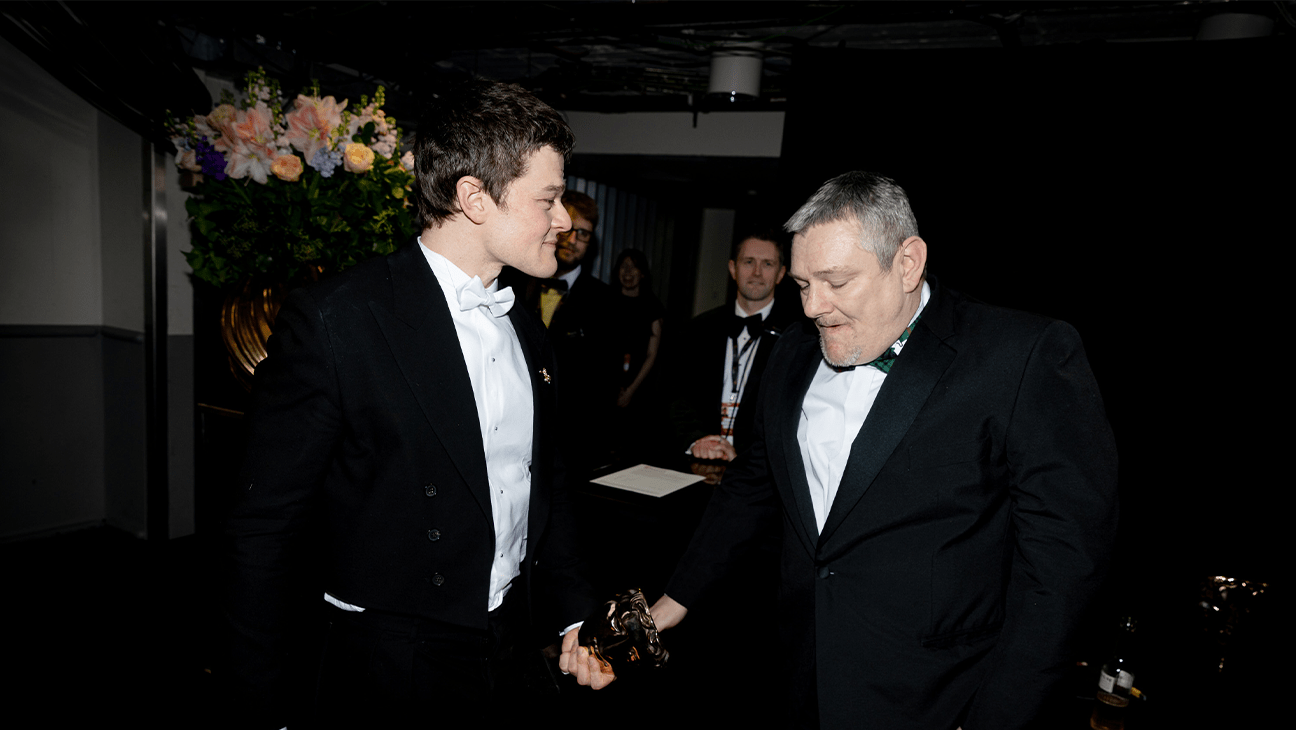
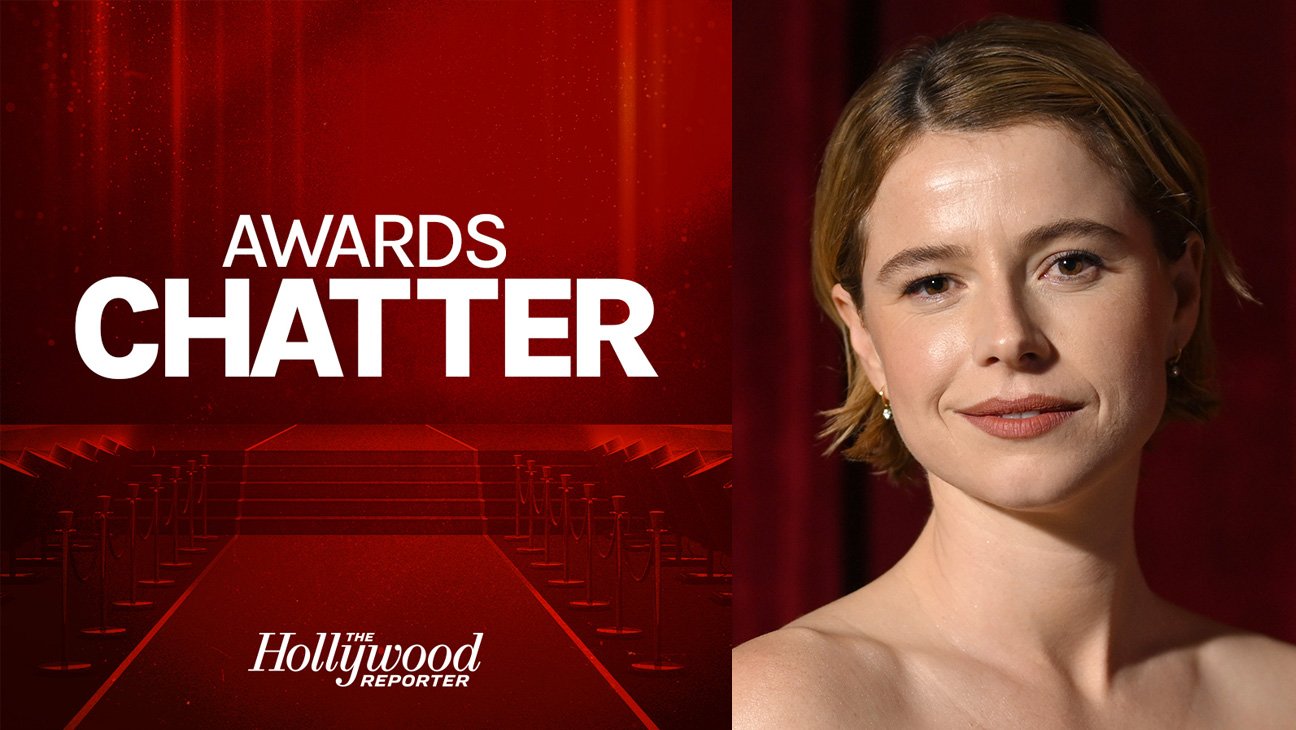
  • L.A.’s Graffiti Towers Finds Buyer in $470 Million Deal

    L.A.’s Graffiti Towers Finds Buyer in $470 Million Deal

    The unfinished Oceanwide Plaza complex in downtown Los Angeles is looking at a new buyer who plans to complete the $1.2 billion project.

    KPC Development Co., whose founder, Kali Pradip Chaudhuri, is building a $300 million hotel next to SoFi Stadium, on Monday entered into a $470 million deal with Lendlease, the original contractor for the project, according to court documents. The figure represents a bid, which sets a price floor for the plaza, that will be tested at auction. If no higher offers come in, the bankruptcy court can approve the sale.

    The stalled project has emerged as a major priority for Los Angeles ahead of the 2028 Olympic Games, which have provided a much-needed sense of urgency and a hard timeline to set up a transaction. The structure — dubbed the Graffiti Towers after taggers covered the trio of skyscrapers from top to bottom once construction was halted in 2019 — has become an eyesore on the city skyline that could embarrass the city’s global brand.

    “Our priority remains ensuring the site is refreshed and activated in Olympic-ready condition ahead of the 2028 Olympic and Paralympic Games,” a spokesperson for Mayor Karen Bass said in a statement.

    Last month, a settlement among creditors of the residential complex cleared the way for a potential sale. Under the $470 million acquisition by a joint venture between KPC and Lendlease, $70 million is earmarked to resolve outstanding debts, including back taxes, after which the property will be transferred to KPC Development.

    In a statement, Oceanwide chief restructuring officer Bradley Sharp said the transaction offers the “best possible outcome given the challenging circumstances around this property.” He added, “It will be the shortest path to completion, and as the city looks forward to the Olympics in 2028, this iconic location across the street from L.A. Live will be a source of pride for Angelenos and a shining example of L.A.’s vibrant culture.”

    Oceanwide Plaza, located directly across Crypto.com Arena, is part of a yearslong effort to transform part of downtown L.A. into a Times Square-esque destination. The project encompasses three high-rise towers occupying a city block: two 42-story towers and a 52-story tower that includes plans for a luxury hotel. Each tower will have parking, retail, dining and office space, plus a massive LED screen that will wrap across multiple streets.

    A cyclist passes beneath the so-called Graffiti Towers, where graffiti writers tagged 40 floors of an unfinished luxury skyscraper development last month, and Crypto.com Arena, on March 20, 2024 in Los Angeles, California.

    Mario Tama/Getty Images

  • Isaac Hayes’ Estate Reaches Settlement With Trump for Unauthorized Use of “Hold on, I’m Coming”

    Isaac Hayes’ Estate Reaches Settlement With Trump for Unauthorized Use of “Hold on, I’m Coming”

    The family of Isaac Hayes has reached a settlement with Donald Trump after suing the president and his campaign for the unauthorized use of the Sam & Dave hit song “Hold on, I’m Coming.”

    Isaac Hayes III, the late soul icon’s son, shared on social media Monday that his father’s estate was “satisfied with the outcome” following a legal battle over copyright infringement. “All parties stipulate to the voluntary dismissal of this action with prejudice with all parties bearing their respective fees and costs,” according to court documents obtained by The Hollywood Reporter. The terms of the settlement were not disclosed.

    “The Hayes family and the Estate of Isaac Hayes, Jr. announce that the lawsuit filed against Donald John Trump and Donald J. Trump for President 2024, Inc., regarding their use of ‘Hold On, I’m Comin’ has been mutually resolved, and we are satisfied with the outcome,” Hayes’ estate shared in a statement. “This resolution represents more than the conclusion of a legal matter. It reaffirms the importance of protecting intellectual property rights and copyrights, especially as they relate to legacy, ownership, and the responsible use of creative works.”

    They continued, “Isaac Hayes, Jr. dedicated his life to his craft, and his contributions to music and culture carry enduring value. As stewards of his legacy, we remain committed to ensuring that his work is respected and properly protected. We are proud that this matter has helped further a broader conversation surrounding intellectual property rights and the obligation to honor creators and their estates. Protecting ownership is not only about the past, it is about preserving dignity, value, and accountability for future generations.”

    In August 2024, the Grammy and Oscar-winner’s estate sued Trump and his campaign for continued unauthorized use of the 1996 hit song — which was written by Hayes and his songwriting partner David Porter — at the president’s campaign rallies from 2022 to 2024.

    “Hold on, I’m Coming” was featured at more than 130 Trump rallies during that period, often playing before and after his stump speech, as well as at the 2024 Republican National Convention.

    The following month, U.S. District Court Judge Thomas Thrash Jr. issued an emergency injunction in Atlanta federal court, ordering Trump to stop using the musician’s songs at his rallies.

    Isaac Hayes III previously said that his family was trying to distance his father’s work from the Trump campaign, as he did not want it used as “a tool for promoting hatred or bigotry.”

    “Donald Trump epitomizes a lack of integrity and class, not only through his continuous use of my father’s music without permission but also through his history of sexual abuse against women and his racist rhetoric. This behavior will no longer be tolerated, and we will take swift action to put an end to it,” Isaac Hayes III previously wrote on Instagram. “We stand in solidarity with all musicians whose work has been co-opted without consent by divisive political campaigns. A musical performer’s art is a reflection of their soul, not a tool for promoting hatred or bigotry. It’s time for all artists to unite and demand respect for their creative legacies.”

  • NAACP Image Awards: Michelle Obama, Will Packer and Kendrick Lamar’s Super Bowl Halftime Show Among Night One Non-Televised Winners

    NAACP Image Awards: Michelle Obama, Will Packer and Kendrick Lamar’s Super Bowl Halftime Show Among Night One Non-Televised Winners

    The first winners of the 2026 NAACP Image Awards were announced Monday in the non-televised literary, short-form and creator award categories.

    Michelle Obama, who received a total of five NAACP Image Award nominations this year, received the prize for outstanding literary work — biography/autobiography for The Look, her retrospective on her fashion choices as former first lady of the United States.

    Rapper Kendrick Lamar, who received a total of six nominations overall — including entertainer of the year — and the most nominations in the music recording categories, won the award for outstanding short-form series or special for his Apple Music Super Bowl LIX Halftime Show.

    Filmmaker and producer Will Packer also won for outstanding literary work — instructional for his 2025 self-help book Who Better Than You? The Art of Healthy Arrogance & Dreaming Big.

    The awards were announced during the first of a three-night virtual event hosted by actress and writer Angel “ThatChickAngel” Laketa Moore and actor and rapper Khleo Thomas exclusively on the NAACP Image Awards‘ YouTube channel. Additional non-televised awards will be announced on Tuesday and Wednesday, with Rev. Dr. Jamal-Harrison Bryant set to be presented with the Mildred Bond Roxborough Social Justice Impact Award at the 57th NAACP Image Awards Creative Honors on Thursday and A$AP Rocky receiving the Vanguard Award at the NAACP Image Awards Reception & Fashion Show on Friday night.

    The 57th NAACP Image Awards, hosted by Average Joe star and comedian Deon Cole, will air live on Saturday, Feb. 28, at 8:00 PM ET/PT on BET and CBS from the Pasadena Civic Auditorium. Special honorees include Viola Davis, who’ll receive the Chairman’s Award, and Colman Domingo, who’ll be presented with the President’s Award.

    The complete list of night one non-televised winners follows.

    Outstanding Literary Work – Biography/ Autobiography

    • 107 Days – Kamala Harris (Simon & Schuster)
    • The Look – Michelle Obama (Crown) (WINNER)
    • Toni at Random – Dana A. Williams (Amistad, HarperCollins)
    • Truly – Lionel Richie (HarperOne)
    • Uncommon Favor: Basketball, North Philly, My Mother, and the Life Lessons I Learned from All Three – Dawn Staley (Black Privilege Publishing (Atria Books, Simon & Schuster))                  

    Outstanding Literary Work – Non-Fiction

    • A More Perfect Party: The Night Shirley Chisholm & Diahann Carroll Reshaped Politics – Juanita Tolliver  (Legacy Lit/Hachette Book Group) (WINNER)
    • Born in Flames – Bench Ansfield (W. W. Norton & Company)
    • From These Roots – Tamara Lanier (Penguin Random House, Crown)     
    • Hidden Hospitality: Untold Stories of Black Hotel, Motel, and Resort Owners from the Pioneer Days to the Civil Rights Era – Calvin Stovall Jr. (Brown Books Publishing Group)
    • I Am Nobody’s Slave – Lee Hawkins (HarperCollins Publishers)

    Outstanding Literary Work – Instructional

    • American Soul: The Black History of Food in the United States – Anela Malik (National Geographic Partners, LLC)
    • Braided Heritage: Recipes and Stories on the Origin of American Cuisine – Dr. Jessica Harris (Penguin Random House/Clarkson Potter)
    • We the Pizza: Slangin’ Pies and Savin’ Lives – Muhammad Abdul-Hadi (Penguin Random House/Clarkson Potter)
    • Who Better Than You? – Will Packer (Penguin Random House) (WINNER)
    • Wine Pairing for the People – Cha McCoy (Harvest, an imprint of WilliamMorrow, HarperCollins)

    Outstanding Literary Work – Journalism 

    • “As Black New Yorkers Move Out, N.Y.C. Politics May Be Reshaped” – Maya King (Newspaper)
    • “Audra McDonald Took The Stage and Rewrote The Rules” – Adam Davenport (Online)
    • “Black joy and boots: How line dancing is fanning cultural connection” – Lisa Respers France (News Service)
    • “HBCUs Reel as Trump Cuts Black-Focused Grants: ‘This Is Our Existence’” – Jasper Smith (Online)
    • “On Borrowed Time” – Anissa Durham (Online) (WINNER)

    Outstanding Literary Work – Debut Author

    • Anela Malik – American Soul: The Black History of Food in the United States (National Geographic Partners, LLC)
    • Charles B. Fancher – Red Clay (Blackstone Publishing) (WINNER)
    • Dr. Judith Joseph – High Functioning: Overcome Your Hidden Depression and Reclaim Your Joy (Little, Brown Spark)
    • Lorna Lewis – A Sky Full of Love (Lake Union)
    • Zoe B. Wallbrook – History Lessons (Soho Crime)

    Outstanding Literary Work – Fiction

    • Can’t Get Enough – Kennedy Ryan (Forever/Grand Central Publishing/Hachette Book Group)      
    • Chronicles of Ori: An African Epic – Harmonia Rosales (W. W. Norton & Company)
    • Death of the Author – Nnedi Okorafor (William Morrow) (WINNER)
    • Happy Land – Dolen Perkins-Valdez (Berkley, Penguin Random House)
    • Harlem Rhapsody – Victoria Christopher Murray (Berkley, Penguin Random House)        

    Outstanding Literary Work – Poetry

    • “Death of the First Idea” – Rickey Laurentiis (Alfred A. Knopf)
    • “Florida Water” – Aja Monet (Haymarket Books)
    • “The Grace of Black Mothers” – Martheaus Perkins (Trio House Press)
    • The Intentions of Thunder: New and Selected Poems” – Patricia Smith (Scribner) (WINNER)
    • “We Look Better Alive” – Ali Black (Burnside Review Press)

    Outstanding Literary Work – Children

    • Black Boy, Rise – Brynne Barnes (Chronicle Books)         
    • Black Diamond Kings: Heroes of Negro League Baseball – Charles R. Smith Jr. (Candlewick Press)
    • My Quiet Place – Monica Mikai (Chronicle Books)
    • The History of We – Nikkolas Smith (Penguin Young Readers)
    • Yvonne Clark and Her Engineering Spark – Allen R. Wells; Illustrated by DeAndra Hodge (Farrar Straus Giroux Books for Young Readers/Macmillan) (WINNER)

    Outstanding Literary Work – Youth/Teens

    • (S)Kin – Ibi Zoboi (HarperCollins/Versify)
    • Nic Blake and the Remarkables: The Book of Anansi – Angie Thomas (HarperCollins/Clarion Books) (WINNER)
    • The Scammer – Tiffany D. Jackson (HarperCollins – Quill Tree Books)
    • The Story of My Anger – Jasminne Mendez (Penguin Young Readers)
    • Through Our Teeth – Pamela N. Harris (HarperCollins/Quill Tree Books)

    Outstanding Literary Work – Graphic Novel

    • Creaky Acres: A Graphic Novel – Calista Bril (Penguin Young Readers)
    • Defiant: The Story of Robert Smalls – Rob Edwards (Stranger Comics)
    • One Crazy Summer: The Graphic Novel – Rita William-Garcia (HarperCollins/Quill Tree Books)
    • Parable of the Talents A Graphic Novel Adaptation – Octavia E. Butler, adapted by Damien Duffy, Illustrated by John Jennings and David Brame (Abrams ComicArts) (WINNER)
    • They Choose Violence – Sheldon Allen (AWA Studios)    

    Outstanding Short Form Series or Special – Reality/Nonfiction/Documentary

    • College Gameday: Michael Vick (ESPN)
    • Glam Through The Ages (KeyTV Network)
    • Noochie’s Live From The Front Porch (YouTube TV)
    • The Apple Music Super Bowl LIX Halftime Show starring Kendrick Lamar (FOX) (WINNER)
    • The Daily Show: After The Cut (Comedy Central)           

    Outstanding Digital Content Creator – Gaming/Tech

    • Berlin Edmonds – @Berleezy (WINNER)
    • Cory Kenshin     – @CoryxKenshin
    • Gerard Williams – @Hiphopgamer
    • Jay Ann Lopez – @blackgirlgamers
    • Khleo Thomas – @khleothomas

    Outstanding Digital Content Creator – Fitness/Wellness/Food

    • Alex Hill – @justaddhotsauce
    • Jeanette Jenkins – @msjeanettejenkins
    • Keith Lee – @Keith_Lee125 (WINNER)
    • Kimberly Villalobos – @KimmysKreations.1       
    • Massy Arias – @Massy.arias
  • How to Get Sold-Out BTS World Tour Tickets

    How to Get Sold-Out BTS World Tour Tickets

    If you purchase an independently reviewed product or service through a link on our website, The Hollywood Reporter may receive an affiliate commission.

    BTS are quickly approaching their long-awaited return to live performing following the completion of South Korea’s mandatory military service. The Arirang World Tour, the seven-member supergroup’s fourth worldwide tour, includes 80+ shows throughout 2026 and 2027, kicking off on April 9, in Goyang, South Korea. The tour’s 12 North American stops (across 28 dates) include Tampa; El Paso, TX; Mexico City; Stanford, CA; Paradise, NV; East Rutherford, NJ; Foxborough, MA; Baltimore; Arlington, TX; Toronto; Chicago and L.A.

    While primary tickets for the North American and European legs have quickly come and gone on Ticketmaster, fans can still find seats on third-party resale platforms, including TicketNetwork, Vivid Seats, StubHub, Ticket Liquidator, SeatGeek, Gametime and Viagogo. Plus, The Hollywood Reporter has exclusive promo codes for select sites, listed directly below.

    Discount Codes for BTS Concert Tickets: 2026-2027 World Tour

    • TicketNetwork: Get $150 off orders of $500 and up with promo code THR150, or $300 off $1,000 and up with code THR300.
    • Vivid Seats: Use code THR30 to save $30 on purchases of $300 and above.
    • SeatGeek: New customers can use promo code HOLLYWOOD10 to save $10 on purchases of $250 and up.

    At a Glance: How to Buy BTS World Tour Tickets 2026-2027

    • Dates: April 9, 2026-March 14, 2027 (full schedule listed below)
    • Locations: Goyang; Tokyo; Tampa; El Paso, TX; Mexico City; Stanford, CA; Paradise, NV; Busan; Madrid; Brussels; London; Munich; Saint-Denis, France; East Rutherford, NJ; Foxborough, MA; Baltimore; Arlington, TX; Toronto; Chicago; Los Angeles; Bogotá; Lima; Santiago; Buenos Aires; São Paulo; Kaohsiung, Taiwan; Bangkok; Kuala Lumpur, Malaysia; Singapore; Jakarta; Melbourne; Sydney; Hong Kong; Manila
    • Buy tickets online: TicketNetwork, Vivid Seats, StubHub, Ticket Liquidator, SeatGeek, Gametime, Viagogo, Ticketmaster

    Where to Buy BTS Concert Tickets for Arirang World Tour 2026-2027

    Learn more about each ticketing site — and their corresponding promo codes — below. At time of publish, primary tickets have gone on sale for all stops between Goyang (April 9) and Los Angeles (Sept. 6).

    TicketNetwork has tickets available for BTS’ 2026 tour dates, and right now, THR readers can get an exclusive $150 off orders of $500 and up with promo code THR150, or $300 off $1,000 and up with code THR300.

    Use code THR30 to save $30 on purchases of $300 and above at vividseats.com.

    BTS concert tickets are also available for sale on StubHub.

    Score deals on Arirang World Tour tickets at SeatGeek when you use promo code HOLLYWOOD10 to save $10 on purchases of $250 and up (new customers only).

    Tickets for BTS’ concert tour are available at Gametime starting at $88.

    Tickets to see BTS live are also available at Viagogo.

    BTS Concert Tour 2026-2027: Arirang World Tour Dates, Cities

    See all of BTS’ 2026 and 2027 tour dates and locations below.

    • Goyang, South Korea — Goyang Stadium — April 9, 11, 12
    • Tokyo, Japan — Tokyo Dome — April 17, 18
    • Tampa, FL — Raymond James Stadium — April 25, 26, 28
    • El Paso, TX — Sun Bowl — May 2, 3
    • Mexico City, Mexico — Estadio GNP Seguros — May 7, 9, 10
    • Stanford, CA — Stanford Stadium — May 16, 17, 19
    • Paradise, NV — Allegiant Stadium — May 23, 24, 27, 28
    • Busan, South Korea — TBA — June 12, 13
    • Madrid, Spain — Riyadh Air Metropolitano — June 26, 27
    • Brussels, Belgium — King Baudouin Stadium — July 1, 2
    • London, United Kingdom — Tottenham Hotspur Stadium — July 6, 7
    • Munich, Germany — Allianz Arena — July 11, 12
    • Saint-Denis, France — Stade de France — July 17, 18
    • East Rutherford, NJ — MetLife Stadium — Aug. 1, 2
    • Foxborough, MA — Gillette Stadium — Aug. 5, 6
    • Baltimore, MD — M&T Bank Stadium — Aug. 10, 11
    • Arlington, TX — AT&T Stadium — Aug. 15, 16
    • Toronto, Canada — Rogers Stadium — Aug. 22, 23
    • Chicago, IL — Soldier Field — Aug. 27, 29
    • Los Angeles, CA — SoFi Stadium — Sept. 1, 2, 5, 6
    • Bogotá, Colombia — TBA — Oct. 2, 3
    • Lima, Peru — TBA — Oct. 9, 10
    • Santiago, Chile — TBA — Oct. 16, 17
    • Buenos Aires, Argentina — TBA — Oct. 23, 24
    • São Paulo, Brazil — TBA — Oct. 28, 20, 31
    • Kaohsiung, Taiwan — TBA — Nov. 19, 21, 22
    • Bangkok, Thailand — TBA — Dec. 3, 5, 6
    • Kuala Lumpur, Malaysia — TBA — Dec. 12, 13
    • Singapore — TBA — Dec. 17, 19, 20, 22
    • Jakarta, Indonesia — TBA — Dec. 26, 27
    • Melbourne, Australia — TBA — Feb. 12, 13
    • Sydney, Australia — TBA — Feb. 20, 21
    • Hong Kong — TBA — March 4, 6, 7
    • Manila, Philippines — TBA — March 13, 14
  • Winter Olympics Close With Nearly Double the Viewers From 2022

    The 2026 Winter Olympics continued their ratings momentum through their final weekend.

    The games averaged 23.5 million viewers across NBCUniversal and Versant platforms from Feb. 6-23, based on Nielsen ratings and Adobe Analytics streaming data — a huge improvement on the lightly watched 2022 Winter Olympics. The 2026 audience, which combines live afternoon telecasts on NBC and Peacock (and sometimes Versant’s USA Network and CNBC) and primetime replays, nearly doubled the average of the 2022 games (12 million). That average may grow a little as it includes preliminary Nielsen numbers for the final few days of the games.

    The 2026 Winter Olympics are the most watched winter games since 2014, NBC says. The Olympics averaged more than 20 million viewers for all 15 full days of competition from from Feb. 7-20, and for the opening ceremony on Feb. 6.

    The Milan-Cortina Olympics became the most streamed winter games ever less than a week into the competition, with Peacock racking up ever bigger numbers over the remainder of its coverage. The games ended with 16.7 billion minutes of streaming time, more than double the combined total for all previous Winter Olympics (which prior to 2022 came via NBC apps and websites).

    “The success of the Milan Cortina Olympics, Super Bowl LX in Santa Clara and the 2026 NBA All-Star weekend in Los Angeles could not have happened without the enormous cooperation and support from across Comcast NBCUniversal — including Peacock, NBC Entertainment, NBC News, Telemundo, local owned-stations, NBC affiliates, our exceptional ad sales and distribution teams, and Xfinity. And, of course, our great partners at the IOC, USOPC, NFL and NBA,” NBC Sports president Rick Cordelia said in a statement.

    The gold medal women’s hockey game between the U.S. and Canada on Feb. 21 drew 5.3 million viewers, a record for any women’s hockey contest in the United States. Ratings for the men’s final, also a U.S. overtime victory over Canada, will be available Tuesday.

    Peacock had its best month ever in February, unsurprisingly. The streamer (and other NBCU digital platforms) averaged 3.3 million daily viewers for the “Milan Prime” (2-5 p.m. ET) and U.S. primetime main telecasts, which accounts for about 14 percent of the 23.5 million all-in average. The Super Bowl, Olympics and NBA programming also had a halo effect on Peacock’s entertainment offerings: The Burbs launched to strong viewing numbers on Super Bowl Sunday, and shows including The Traitors, Ponies and All Her Fault saw viewing lifts compared to the weeks prior to the Super Bowl and Olympics.

  • ‘The Louis Theroux Podcast’ Returning for Series 7, Sets Launch Date (Exclusive)

    ‘The Louis Theroux Podcast’ Returning for Series 7, Sets Launch Date (Exclusive)

    The Louis Theroux Podcast will return for a seventh series.

    Spotify and Mindhouse have confirmed that the popular interview show, hosted by the beloved British broadcaster and documentary-maker, will launch Tues., Mar. 3.

    Theroux is back opposite some of the most intriguing names in entertainment, film, sport and more, including tennis maverick Boris Becker, Twin Peaks‘ detective Kyle Maclachan, singer Lulu, comedian Stewart Lee, Icelandic singer-songwriter Laufey, and investigative journalist and author Patrick Radden Feefe. A bonus episode and more guests will be announced in due course.

    “Someone once said to me that the key to a great conversation is genuine curiosity. ‘Could you repeat that?’ I replied. ‘I wasn’t listening,’” Theroux joked to The Hollywood Reporter. “But seriously — who could fail to be curious when faced with guests as fascinating, whose lives and work are as full of incident, insight, and artistry, as Boris Becker, Lulu, Stewart Lee, Laufey, Kyle MacLachlan, Patrick Radden Keefe, and Yorgos Lanthimos?”

    “Each one, it strikes me now, comes from a different area of professional life, but all of them practise their art forms at the highest levels,” he continued. “It’s a real pleasure having these conversations, and being allowed the space to let them flow and go in surprising directions, and with no topics off the tables. Thanks for watching!”

    Since its launch in 2023, The Louis Theroux Podcast has cemented Theroux as one of the U.K.’s most successful podcasters. Last year, it was the third most-listened-to podcast overall in the U.K., according to Spotify Wrapped data — climbing from sixth place in 2024.

    Series six saw Florence Pugh dissecting the pros and cons of intimacy coordinators, Steve Coogan got candid on his most challenging role yet, and Malala Yousafzai discussed her university experience as a Nobel prize winner.

    The podcast’s back-catalogue also boasts recordings with Little Simz, Ed Sheeran, Michael Cera, Nick Cave and Tracey Emin, alongside headline-making episodes with Jimmy Carr, Bella Ramsey and many more.

    The Louis Theroux Podcast is a Spotify podcast from Mindhouse, available on all podcast platforms, with video episodes exclusively on Spotify. Series 7 launches Tues, Mar. 3, 2026.