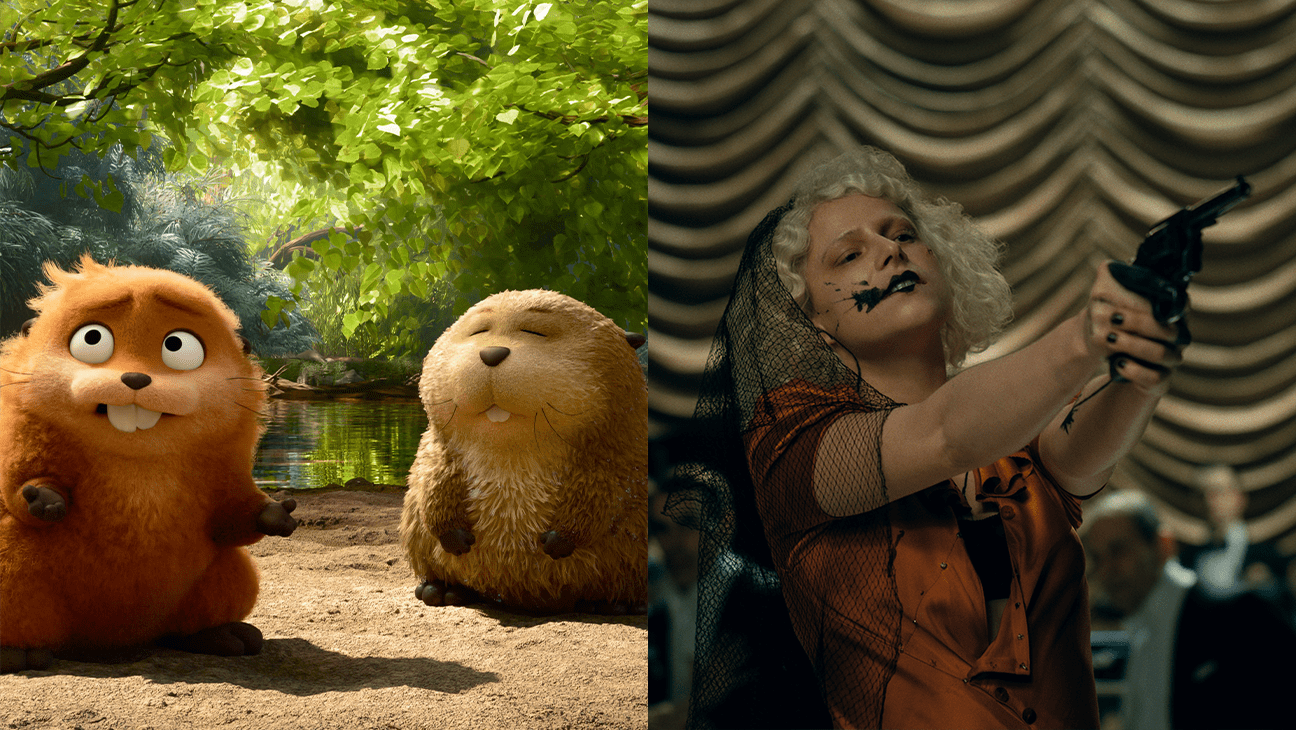
Pixar is most assuredly preparing to celebrate the opening of Hoppers, which is safely on its way to a first-place finish at the weekend box office with an opening of $40 million or more domestically. That would deliver the biggest launch for any Hollywood animated original film since 2017’s Coco, also from the Disney-owned studio.
Globally, Hoppers is looking at a worldwide start of $85 million or more, a strong number for Pixar and its parent company. As of early Saturday morning, Hoppers‘ critics score on Rotten Tomatoes was 94 percent, the same as the audience score. It also boasts an A CinemaScore and a perfect five-out-of-five stars on PostTrak exits. Audience reactions from early access screenings have been similar, with moviegoers also applauding the film’s creativity and humor.
In the comedy-adventure, animal lover Mabel (Piper Curda) seizes an opportunity to use a new technology to “hop” her consciousness into a life-like robotic beaver and communicate directly with animals. As she uncovers mysteries beyond anything she could have imagined, Mabel befriends a charismatic beaver named King George (Bobby Moynihan), and must rally the entire animal kingdom to face a major, imminent human threat: smooth-talking local mayor Jerry Generazzo (Hamm). The ensemble voice cast also features Kathy Najimy, Dave Franco, Meryl Streep, Eduardo Franco, Aparna Nancherla, Tom Law, Sam Richardson, Melissa Villaseñor, Isiah Whitlock Jr., Steve Purcell, Ego Nwodim, Nichole Sakura, Karen Huie and Vanessa Bayer.
Hoppers is directed by Daniel Chong, with Nicole Paradis Grindle producing and Mark Mothersbaugh providing the original score. It earned $13.4 million on Friday, including previews.
The weekend’s other new film, Maggie Gyllenhaal’s The Bride!, earned just $3 million Friday, including $1 million in previews, after getting butchered by both audiences and critics. Warners is still hoping for an opening in the $8 million to $10 million range, but rivals show it opening to as low as $7 million for a third-place finish behind Scream 7, which could fall as much as 70 percent to 74 percent in its second weekend (that’s not unexpected).
Heading into the weekend, the studio was forecasting $16 million to $18 million for the Bride!, which marks the end of a remarkable, year-long winning streak for studio heads Michael De Luca and Pamela Abdy, who are committed to taking bold, original swings. At the March 16 Oscar ceremony, they have two films in the best-picture race, Sinners and One Battle After Another.
The Bride’s audience score on Rotten Tomatoes is a terrible 71 percent, while the critics’ score is 60 percent. Also, the $80 million film was slapped with a C+ CinemaScore.
The R-rated, gothic romance made headlines on Wednesday for comments Gyllenhaal made on a podcast, saying she was asked by Warners movie studio chiefs Pamela Abdy and Michael De Luca to remove some of the film’s more violent scenes (she also gave a shout out to Abdy for “understanding me”).
Starring Jessie Buckley and Christian Bale, The Bride! draws inspiration from the 1935 film The Bride of Frankenstein and is Gyllenhaal’s second directorial outing after the award-winning indie drama The Lost Daughter, starring Olivia Colman and Buckley. All three women were nominated for a slew of awards by various orgs, including Oscars noms for best adapted screenplay (Gyllenhaal), best actress (Colman) and best supporting actress (Buckley). This year, Buckley is nominated for an Oscar for best actress for her performance in Hamnet.
Jeremy Larner, whose experience as a speechwriter for 1968 presidential candidate Eugene McCarthy informed his Oscar-winning screenplay for the Robert Redford-starring The Candidate, has died. He was 88.
Larner had been ill for some time and died Feb. 24 in a nursing facility in Oakland, California, his son Jesse Larner told The Hollywood Reporter.
For his only other produced screenplay, Larner adapted his 1964 novel Drive, He Said, for the audacious basketball-centric 1971 film of the same name that marked the feature directorial debut of Jack Nicholson.
Larner had joined McCarthy on the campaign trail in March 1968, with the Minnesota senator, running on a platform to end the U.S. involvement in the Vietnam War, attempting to secure the Democratic Party’s nomination for president.
McCarthy appeared on his way to victory, but following the withdrawal of President Lyndon Johnson from the race and the assassination of fellow candidate Robert F. Kennedy, the nomination would go to Vice President Hubert Humphrey.
After writing Nobody Knows: Reflections on the McCarthy Campaign of 1968, a book that gained traction when it was serialized in Harper’s magazine in 1969, Larner was approached by Redford and director Michael Ritchie to write the script for The Candidate (1972).
In the Warner Bros. film, Redford stars as idealistic young liberal Bill McKay, a poverty lawyer and son of a wheeling-dealing governor (Melvyn Douglas) who is groomed by a political consultant (Peter Boyle) to run against Republican incumbent Crocker Jarman (Don Porter) for senator in California.
McKay speaks his mind, figuring he has no chance of winning — until he does, prompting him at the end to ask Boyle’s Marvin Lucas, “What do we do now?”
Redford and Ritchie “had a few ideas of what they wanted it to be about, and of the ending as well,” Larner recalled in an extensive 2016 Brooklyn Magazine interview with Steve Macfarlane about his work on the film. “One of the reasons they approached me was, I was one of the very few writers who had written speeches for a presidential campaign, and a screenwriter at the time as well.
“Here’s what I said the first time I met with [them]: I said, to me, a politician was like a movie star. He could lose himself in a character — it’s true of many stars, and was even truer then — who resembles himself, only larger than life, as a symbol of what’s beautiful and what’s true. I was aware, of course, that Redford was that kind of a symbol. As I said this, I thought to myself: ‘You are now definitely losing the job.’
From left: Melvyn Douglas and Robert Redford in 1972’s ‘The Candidate.’
Courtesy Everett Collection
“This is where my experience with McCarthy came into it: I would write a speech, hear McCarthy deliver my words as part of his stump speech, and see the response he got from it. He’d say things that enabled people to cheer themselves by cheering him.
“I thought a campaign was like drifting downriver on a raft, where everything is beautiful: then you begin to hear the roar of the falls up ahead, but it’s too late. You go over the falls, you lose yourself, you become eternally confused by the difference between yourself and who your public thinks you are. And it’s a disarming, dissociative experience. And Redford played that very well: the better McKay gets at campaigning, the more he loses himself.”
Jeremy David Larner was born on March 20, 1937, and raised in Indianapolis, where he won the city’s high school tennis championship while attending Shortridge High. His father, Martin, was president of the Jewish Community Center Association.
Larner graduated from Brandeis University in 1958, where his classmates included soon-to-be activist Abbie Hoffman, then attended the University of California at Berkeley for graduate work on a Woodrow Wilson fellowship.
He moved to New York when he was 22 and stayed throughout the 1960s, working as a freelance journalist for such publications as Life — for whom he covered the 1968 Mexico City Olympics — The New Republic and Harper’s.
Larner also authored two novels and three nonfiction books during this period, including Poverty: Views From the Left; Drive, He Said; The Addict in the Street; and the LSD-centric The Answer.
During the McCarthy campaign, Larner penned a radio commercial for Paul Newman that played in Indiana, and he ghost-wrote a magazine article for the actor talking about why he was impressed with the senator.
Larner’s Drive, He Said novel revolved around two Ohio University roommates, one an alienated basketball star (played by William Tepper in the film) and the other a revolutionary (Michael Margotta). Its title is taken from a quote from the Robert Creeley poem I Know a Man.
In 1968, Nicholson phoned Larner and said, “Jer, I’m gonna be a star, and they’re gonna let me direct a picture. I want you to come out and write it,” he toldLos Angeles Magazine in 1996. So Larner left Boston — he was working at Harvard at the time — to come to L.A.
Larner said he wrote the first draft of Drive, He Said and then rewrote Nicholson’s rewrite. (Also contributing to the script: Terrence Malick and Robert Towne, both uncredited.)
From left: William Tepper and director Jack Nicholson on the set of 1971’s ‘Drive, He Said.’
Courtesy Everett Collection
By the time production had wrapped on the R-rated film — it was dismissed at Cannes and played mere weeks in theaters before being pulled — Nicholson was indeed a star with Easy Rider in his pocket, and Larner had returned to Harvard before The Candidate opportunity arose.
“I came down to New York,” he told Macfarlane. “Redford and Ritchie saw 10 different writers with experience on political movies, or with experience as speechwriters. I figured I would not get the job, especially because I had kind of long hair and a beard at the time [Laughs]. But I figured I was free to say what I wanted to say, and to my surprise they called me back.
“Then they came up to Cambridge … and we worked mostly in my kitchen — I think we went out to dinner a couple times. We worked out the nature of the story, and I told them stories of my experience with McCarthy, some of which I put directly in the script. For example, the moment when somebody hands McKay a Coke and a hot dog, so his hands are occupied, and then slugs him in the face — that really happened to McCarthy!”
For additional research, Larner spent a week with Democratic Sen. John V. Tunney, who had recently been elected a California senator. One of Tunney’s lines — “I have a confession to make: I ate all the shrimp” — made it into his script.
Given a month to write the screenplay, Larner said it took him two weeks, working from noon to 3 a.m. very day to come up with 180 pages. Then, he was on set of the $1.1 million picture every day, rewriting constantly.
“I’m a little surprised the ending worked out OK — more than OK, he said. “That line, ‘What do we do now?,’ is probably not something a real politician would say. They think they know what they’re doing as a rule, even when they don’t!”
On Oscar night in 1973, Larner in his acceptance speech thanked “the political figures of our time who’ve given me terrific inspiration. I think as long as they continue to do the things they do and to use the words that they use, words like ‘honor,’ there’ll be better pictures and sharper pictures even than The Candidate.”
Larner went on to write about a dozen screenplays but never had another onscreen writing credit. “I was much better paid for them and I thought some of them were far better than The Candidate, but I could never get any of them made,” he said. Those included several drafts of North Dallas Forty (1979) and an adaptation of Joseph Conrad’s Victory for Sydney Pollack.
“I thought I was the exception to the rule in terms of writers having clout, but writers don’t have any clout unless they get to be Paddy Chayefsky,” he said. He did pen environmental speeches for Redford, speak on college campuses and write Chicken on Church & Other Poems, published in 2006.
Survivors include his sons, Jesse and Zachary, and his brother, Daniel. He was married to Brandeis classmate Susan Berlin from 1960 until their 1968 divorce.
In his interview with Macfarlane, Larner said that during the making of The Candidate, many people working on the film didn’t understand his script, and he noted he was “constantly explaining myself.”
“It made sense to Redford and Ritchie, I always thought, but then again I was always reminding them of where the scenes fit together, and it was a constant concern of theirs to make sure the scenes did,” he recalled.
“But the idea for the movie predated the script. When Redford and Ritchie approached me, McKay would be the son of a former governor, trapped into an uncomfortable position, and surprised when he wins. Kind of like me winning the Oscar.”
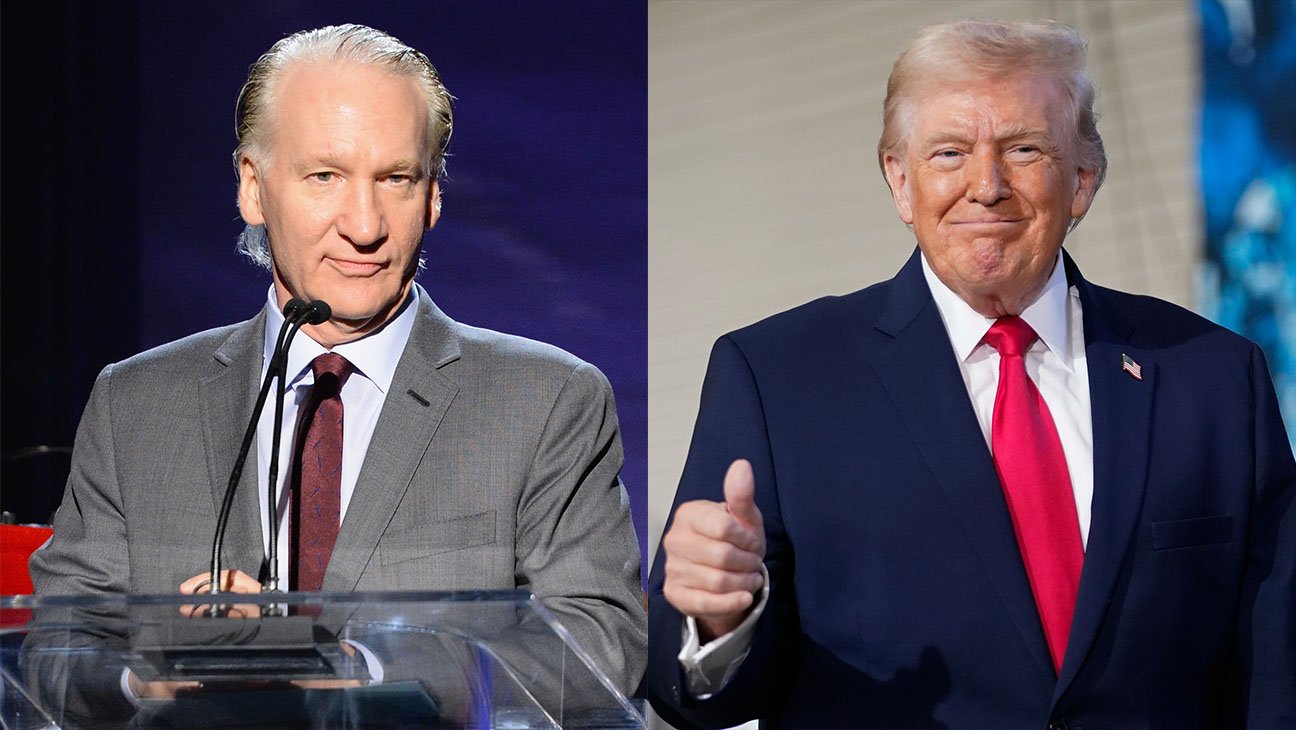
Nearly three weeks after Donald Trump spent part of his Valentine’s Day lashing out at Bill Maher, claiming that he wasted his time having dinner with the Real Time host last year, Maher offered a detailed rebuttal, complete with clips, of just where he stands with the president, revealing that he has both criticized and praised him.
At the end of his “New Rules” segment, Maher said that despite what the president wrote on Truth Social, he doesn’t “suffer from Trump Derangement Syndrome.” Instead, the comedian says, the president, who has continued to post to social media about Maher as recently as Friday amid an ongoing conflict with Iran, has “Bill Maher Derangement Syndrome.”
First Maher corrected some facts from Trump’s Truth Social post about the dinner, noting he didn’t ask for it, he was invited by their mutual friend, Kid Rock, on his podcast, and that he “had a drink before dinner and then a couple more during.”
“I was having a good time,” he said. “So were you, Don, because we were talking like real humans, not like that crazy act you put on in public, but I know that’s what you do. You are, if anything, a man who wears his heart on his sleeve. And so you did here, listing your accomplishments and how hurt you feel that people, including me, have not recognized them enough. I understand that feeling.”
He went on to explain that shortly after the dinner Trump texted him “complaining I was still part of the lunatic left” and insisting that he should have “won a Nobel Prize for ending wars.”
Maher said he replied with, “Yeah, and I should have won 20 Emmys.”
“We argued for a while, and [Trump] ended by saying, ‘Bill, you know what? Don’t change. I wouldn’t know what to do with you if you did OK.’ That’s the normal human being I saw the night we broke bread,” Maher said. “And as long as I think there’s even a spark of a possibility to bring that guy out more, I will not consider the dinner a waste of time, even, as I now see we’re back to name calling and that I have some new ones, like ‘highly overrated lightweight’ to add to the list you signed. Thank you. I’ll be by with the new one.”
He then went through what he felt Trump should get credit for, showing clips of when he’s supported those initiatives on his show.
First, Maher said “despite all the hate I got from my side,” I “never threw [Trump] under the bus.”
“You say no mention of the perfect border,” Maher added. “The border is a win. You mentioned the mass removal of stone cold criminals. This is what got Trump elected. We’re going to get the gangs out.”
He went on to say that he supported Trump bombing the nuclear facility in Iran over the summer and didn’t “hate” the U.S. military operation removing Nicolás Maduro from power in Venezuela earlier this year.
And he listed a number of other Trump initiatives that he supported including ones related to animal rights, marijuana, the White House ballroom, the “golden dome missile shield” and that Trump “wasn’t wrong” about making NATO members pay “their fair share.”
He added, “About the Nick Fuentes Jew-hating wing of the Republican Party, [cutting to a clip of an earlier episode] Trump is the one who said, and I give him credit for this, he said, ‘We don’t want you.’”
And Maher showed a clip of him admitting he was wrong when he said he thought by July 4 “the economy would be in the shitter.”
“See, that’s the difference between you and me, Don, I can admit when I’m wrong and I can be honest,” Maher said as he started to share some tough love with Trump. “In fact, I may be the last person from the lunatic left that is still an honest broker when it comes to you.”
He added, “It’s a shame you can’t take criticism, because in an alternative universe where we could have further honest conversations, I could say things to you that might be quite helpful, like, Don, I’m going to level with you. I’m going to give it to you straight. Some people don’t like you. … I always want the American president to succeed, and I do give credit when you have, but there’s lots of stuff you do that is not my idea of success, and I have every right to say so in a democracy.”
He went on to list what he thought were Trump’s failures including the current manifestation of ICE: “Yeah, I’m glad you got rid of stone cold criminals, but no one wanted the sadism and stupidity that went along with it.”
Elon Musk’s DOGE, Maher added was “a complete disaster. People died for no reason, and it cut no government waste.”
Other Trump positions Maher opposed included the president’s stance on coal “not beautiful or clean,” “taking the side of autocrats instead of democratic allies around the world” and hating “Canada and wind.”
“Criminalizing dissent is wrong, and so is the juvenile trolling and suing people into silence,” he added.
“It’s not derangement for me to be always calling out the election-denying obsession you have or the pardons-for-my-friends-and-punishment-for-my-enemies mode of governing or the side deals for your family that always seem to be part of everything,” he said. “We see how rich you’ve all become, but the people of West Virginia don’t seem to be feeling the winning. A Democratic senator recently said, of your administration, ‘they are the elites they pretend to hate.’ Free advice, if the Democrats ever learn to weaponize that message, your MAGA movement is in big trouble.”
In his initial Truth Social post on Feb. 14, Trump said, taking issue with some of Maher’s criticism the night before, “Sometimes in life you waste time! T.V. Host Bill Maher asked to have dinner with me through one of his friends, also a friend of mine, and I agreed. He came into the famed Oval Office much different than I thought he would be. He was extremely nervous, had ZERO confidence in himself and, to soothe his nerves, immediately, within seconds, asked for a ‘Vodka Tonic.’ He said to me, ‘I’ve never felt like this before, I’m actually scared.’ In one respect, it was somewhat endearing! Anyway, we had a great dinner, it was quick, easy, and he seemed to be a nice guy and, for his first show after our dinner, he was very respectful about our meeting — But with everything I have done in bringing our Country back from ‘OBLIVION,’ why wouldn’t he be?”
Then Trump objected to Maher’s Real Time for “devolv[ing] into the same old story — Very boring, ANTI TRUMP.”
Of Maher, Trump said, comparing him to late-night hosts that he’d criticized, “he is no different than Kimmel, Fallon, or Colbert.”
Maher briefly addressed Trump’s comments on his Feb. 20 show before promising a more detailed response when he returned from a one-week break on March 6.
“He went off on me and said the dinner we had was a waste of time — well, I didn’t think it was — and that I’m a jerk, and I’m a low-rent lightweight, and all this … because I never stopped criticizing him,” Maher said on Feb. 20. “I never said I would! I know how women feel now: A guy buys you dinner and then expects you to put out. I’m not that guy.”
Maher spoke about his dinner with Trump, which happened in the spring of 2025 on the April 11, 2025 episode of Real Time, saying that during their meeting, the president was “gracious and measured,” and not like the “person who plays a crazy person on TV.”
“The guy I met is not the person who the night before the dinner shit tweeted a bunch of nasty crap about how he thought this was a bad idea and what a deranged asshole I was,” Maher said. “I read it and thought, ‘Oh, what a lovely way to welcome someone to your house.’ But when I got there, that guy wasn’t living there.”
Maher’s willingness to have dinner with Trump sparked backlash from some circles, with Larry David even penning a satirical essay for The New York Times, mocking Maher’s visit to the White House, titled “My Dinner With Adolf.”
Throughout his years of development, Connor Hines was concerned that nobody was even going to notice his passion project. Then, last summer, test shots of stars Paul Anthony Kelly as John F. Kennedy Jr. and Sarah Pidgeon as Carolyn Bessette became an Instagram lightning rod, and he realized that attention wasn’t going to be an issue.
Over its first six episodes, FX’s Love Story has captivated and divided viewers — with debates about historical accuracy, the treatment certain still-living figures have received and, still, the clothing. As a first-time showrunner who’d been fascinated by Bessette and Kennedy long before Ryan Murphy announced plans for their TV treatment, he seems to still be processing his show’s outsized role at the watercooler. “I put it on my bucket list and assumed that I would not be able to write it until much later in my career,” says Hines. “When it was announced that Ryan was doing this new anthology, I pursued the job as I’ve never pursued anything in my life.”
I was obsessed with The Crown and the fact that we don’t have anyone equivalent in the U.S, really, except for the Kennedys — in terms of a dynasty that’s known the world over. I went down a rabbit hole, starting with Joe Kennedy, working my way through the generations. For a while I thought I was going to write something dating back to the beginning of the family. There’s no shortage of stories and trials and tribulations. But reaching John and Carolyn’s generation, specifically their story, I remember texting my manager at the time. I couldn’t believe nobody had done a limited series about the two of them. I put it on my bucket list, assumed that I would not be able to write it until much later in my career. When it was announced that Ryan Murphy was doing this new anthology, I pursued the job. I’ve never pursued anything in my life.
I’d imagine that people haven’t done it before because there’s a certain amount of fear in tackling such a sensitive subject…
Yeah, but I was so struck by the disconnect between the narrative that surrounded their marriage at the time — especially Carolyn — and the woman that her friends described as being this incredibly fun, loving, vivacious woman. Of course, you see a myriad photos of her and she looks quite withdrawn or frightened or shut down. I just thought, “Oh, I want to know who the woman was that nobody got to see, who the woman was before she met JFK Jr.” She had a very storied career at Calvin Klein, starting with folding sweaters at the mall in Boston to being one of his most trusted advisors in the C-suite.
What was your awareness of them growing up?
I grew up right outside of New York City. My dad commuted in every day, so he’d always bring home a copy of the New York Post. I have all of these memories of seeing their photos everywhere. I specifically remember, in Page Six, they always bold the celebrity names. It was constantly their names and images. And I come from two very large Irish Catholic families outside of Boston, so I was already familiar with the Kennedys. My grandmother basically had a shrine to the President and Jackie…
Paul Anthony Kelly as John F. Kennedy Jr., Naomi Watts as Jackie Kennedy Onassis in Love Story.
Eric Liebowitz/FX
Oh, the Kennedy obsession is very real in Irish American families.
One-hundred percent. He was our first Catholic president, which meant a lot to that community. It meant a lot to my grandparents. [Jackie] was just a rockstar in her own. I don’t think people really give her enough credit for the role she played in the Camelot of it all. She specifically crafted that narrative as, I think, a service to her husband. She was so much more savvy than I think people realized. People think of Jackie Kennedy and they think grace, poise and style. But, and I say this in a positive way, she was a very calculated, savvy person. A political operative.
A lot has been said about your decision not to interview anyone in the family, which operates under this rather hilarious assumption that any of them would talk to you.
Correct. In what world would they want to be like, “Yeah, let’s sit down and kiki!” Obviously, the family has been apprehensive about the show — which I understand. But it’s not like I was screening their calls. I think it was understood from the very beginning that there would not be a collaboration between us. That’s best for everybody involved. You have to be as objective as possible when you tell a story. I know myself well enough that if I started developing personal relationships with members of the family, it would’ve absolutely clouded the way that I wrote the show.
This family still looms large in the American psyche, not just because one member is currently involved in decisions that a lot of us don’t agree with. There is a nod to RFK Jr. in one episode, it’s very subtle. But was there any temptation to have more fun with that?
We are already dealing with a sensitive subject matter as it is. I didn’t have much interest in inviting any more controversy or discussion. I thought that was something we should just steer clear of. Plus, I didn’t really to distract from what the show was about. Anything surrounding him would create headlines that I certainly didn’t want. We’re trying to celebrate different members of the family.
The majority of this show is scenes between two of them, John and Carolyn, in private. Talk to me about the process behind the artistic liberties that you take. These are scenarios in which we don’t know what was said, so what guardrails did you establish?
Basically, you do as much research as humanly possible. You nail down a timeline for each episode, and each episode has a milestone — whether it be a wedding or the engagement. You gather as much information about those periods of times, what their friends and family were saying about the state of their marriage. So much of the volatility was captured by the media, but the loving moments between them, the respect and admiration, they had for each other was not making news. Our job was to recreate that. You just had to have an understanding based off of everything you read about where they were in their journey emotionally, where Carolyn was in the journey with her fame and celebrity, where John was with his career, with George, with his family. Take all the variables that were surrounding them, you gain a sense of how they would be feeling about themselves and therefore towards each other. And then, with that, you take a creative liberty and extrapolate as best you can.
Sarah Pidgeon as Carolyn Bessette Kennedy in Love Story.
Kurt Iswarienko/FX
But there was this huge kerfuffle, mostly sartorially, when that test shot came out last summer.
I don’t know what you’re talking about. (Laughs.) I haven’t heard about this. This is the first I’m hearing about the test shots.
So, what happened?
It was very preliminary. We were still playing around with the aesthetics for these characters. It wasn’t really anything more than that. Once they were released, I don’t think we anticipated everybody feeling as strongly as they did about the looks. More specifically, I think we just got a sense of how protective and, to some extent, obsessed people still were with the two of them. I’ve been living with this show for four years. I did not think anybody was going to care about it until it came out — and that’s the best case scenario. To have the internet create this massive dialogue surrounding their aesthetics before we even started shooting and have paparazzi show up week one, I was just sort of like, “Oh god, I can’t believe how much people still care about these two.” If anything, it gave me a hope that there was an audience that would be waiting for us when the show came out.
I was shocked at how large that, specifically, the Carolyn Bessette Kennedy fandom is. There are Instagram accounts devoted to her with like half a million followers. Were you aware of that when you decided on her as your point of entry?
I was aware there remains this evergreen presence in the fashion world. She’s a very unique. There are not many people that became as famous as she did that had no interest in fame. We’re so accustomed to people capitalizing on fame, monetizing fame. She was the antithesis of that. She wasn’t going to let you in. She did not give interviews. She did not pose on the cover of any magazines. She did not capitalize on it. If anything, she married him in spite of it. It only adds to the mystique of this woman that, on top of being classically stylish, we never really knew her.
And, despite all that, she remains this hugely famous figure.
But one of the more intriguing parts of telling this story is that she’s so memorialized as this one-dimensional fashion icon. There was just a giant life behind this person and an incredible career and friendships and relationships and a city that she loved and made her own. She was so much more. I appreciate the fact that her legacy has lived on, but she should be remembered for a lot more. This is a rare Ryan Murphy production in which he does not have a writing or directing credit. Knowing that, and knowing that this was something that he was very interested in, what did he tell you about how he envisioned this project?
He was very influential from the beginning. He just really responded to it, and our visions for the show really aligned. When I gave him the first couple scripts, he was very supportive and encouraging. I think he has a dedication to his audience and that our ability to entertain them is a privilege that shouldn’t be wasted. He just has his finger on the pulse in that he’s well aware that when people are watching a show, they could be turning the channel at any moment or picking up their phone. We have a responsibility to keep people engaged. And when it came to the style and the aesthetic of the show, that’s just Ryan. He’s an incredibly visual person. I was very much fixated on the emotional beats of the show. But when we would meet and talk, he sees everything so vividly in a way that I don’t. In that way, we complemented each other. Ss soon as I would give him pages, he knew exactly how he wanted it all to look.
This is a high-profile project that, in many ways, is introducing you as a writer. And it is a huge moment for your two leads, who were in no way household names going into this. How were they prepped for all of the attention that was going to be on them? On my drive in today, I passed five billboards, that I counted, bearing their images.
That’s certainly not me preparing them. (Laughs.) I have no idea what this must feel like [for them]. That’s more Ryan’s wheelhouse: preparing people for stardom. But I can’t tell you how many days I sat on set, watching the two of them and thinking, “Oh, they have no idea how much their life is going to change.” People are going to want to watch the two of them for a very long time. I’ve never had that experience — working with someone that you’re friends and then thinking, “Oh, these people are going to be superstars.” But they’re taking it all in stride. All they wanted was for people to feel that they did justice to John and Carolyn, because they knew it was a very high bar. And I think people are responding positively.
I was literally asking Uber drivers and people on the street if they wanted to read for John. In my mind, if we didn’t find this person, then this show that I’d spent three years working would not come to fruition. We weren’t just looking for somebody that looks like John, which is hard enough as it is. You have to find somebody who looks like they vacation on Cape Cod, launched a magazine, can command a room and hold court with dignitaries. And their mother is Jackie Kennedy. There were so many variables that an actor had to possess in addition to looking like him. But when he came into the room and people saw him in person, it was like, “Oh, this is what we had in mind.”
You were originally an actor before you started writing. What do you consider yourself at the moment?
I grew up doing theater. I studied at a conservatory in New York after college. Performing on stage was always my first love. But, as you know, you very quickly realize how hard it is showing up to auditions for student films — that you weren’t being paid for — with tyrannical 18-year-old directors from Columbia and NYU. I was thinking to myself, “Oh, I don’t know if this is going to be for me.” Even the things I was booking I didn’t want anyone to see. When I started writing, it flipped a switch. It’s like I get to play every character in the script in my head.
Do you know what’s next for you?
I do, but I’m scared to say it out loud in case it doesn’t come into fruition. But it’s a different genre. I don’t know if I could write another love story right now, because I was so in love with the two of them and this project. I feel like I’m reeling from a breakup.
***
Love Story releases new episodes Thursdays at 6 p.m. PT/9 p.m. ET on FX/Hulu, streaming on Hulu.
For well over 100 years, Hollywood’s entertainment industry was the center of the cultural universe – both geographically and as probably one of the greatest brands in history. It had everything: glamour, intrigue, stars and talented people creating some of the most wonderful stories by way of the very best films and television shows ever produced.
People have historically come from all over the world to visit the big studios, to see where the stars lived and died, to be a part of the magic. At the risk of sounding too nostalgic, it was unlike anything else.
I admit I too was enamored and wanted to be a part of it all. After time on Wall Street, I moved to Los Angeles and established The Lippin Group in 1986 with the vision of creating a strategic, business-focused agency that specialized in entertainment and media. Over the last 40 years, we have worked with clients around the world, developed and implemented corporate and publicity campaigns across all platforms as they evolved.
But the Hollywood I experienced when I first arrived on the West Coast no longer exists. From the streaming wars and the rise of YouTube to a global pandemic, labor unrest and disruption generated by AI and M&A — not to mention the political climate and even destructive wildfires — the industry’s view of this “Roaring ’20s” is far different from the last one a century ago. But I believe we are still a long way off from pulling the plug. My optimism stems from this being an inspiring business and an essential part of our culture, something definitely worth saving.
Today, technology is largely seen as the culprit in this whodunit despite it having brought our industry unparalleled progress, including democratized influence, broadband audio and video access and never-before-available revenue opportunities. The issue is that while AI is increasing efficiency at unprecedented levels, it is also forcing us to change the fundamental foundations of the industry: human capital and creativity.
Or at least we think so. Is it possible to have the best of both worlds?
If we approach this with a different mindset anything is possible. One only needs to recall how following AOL’s disastrous acquisition of Warner Bros. a quarter century ago the entertainment industry concluded Hollywood and Silicon Valley were bad fits and the industry just wrote it off to a terrible decision.
Cut to today, with Paramount (with help from the visionary founder of tech giant Oracle, which recently acquired a stake in TikTok), soon to acquire the iconic Warner Bros. studio and its symbol of prestige TV, HBO. The consolidation has elicited Armageddon-like emotions in the creative community. This follows on the heels of Amazon’s acquisition of MGM and its prestigious library and IP, as well as Disney’s deal for 20th Century Fox assets.
While this technological takeover was happening, the industry was too busy to consider what it all meant because it was obsessively focused on meeting Wall Street’s quarterly earnings reports, including its demands for mass layoffs and production cuts to finance massive leveraged mergers. No long-term strategy needed.
Now that our industry is at a crossroads, let’s remember what kept our business on a straight and narrow course over the last 60 to 70 years — predictability resulting from a variety of secondary tiers after TV shows and movies had their network and theatricals runs. The 10 percent of deficit-financed network shows lucky enough to make it past four seasons would enter syndication or the international market with a hundred episodes, with the top sitcoms and episodic dramas poised to make billions of dollars for their creators. Successful theatrical films would go onto earn respectable pay TV and home entertainment dollars, meanwhile.
Streaming changed all of that. With a business model centered around generating tens and hundreds of millions of subscribers rather than ratings, Netflix bought up all the windowing rights so it would have the content in perpetuity.
Having said that, let’s recognize some opportunities:
— Hollywood risk takers must come back and accept less money upfront in exchange for backend rights. In essence, content producers, by foregoing large upfront compensation, could reap the rewards of long-term content ownership over an increasing number of distribution platforms as, for many years, the producers of network television series have done. They have produced their shows at a deficit, later realizing the greatest financial rewards when those shows were distributed in syndication. Taking risks like this would serve as a significant incentive to many producers and increase the supply of great content. And that would help keep Hollywood employed and subscribers pouring into streaming services.
— We have to also find ways to bring predictability back to our industry, while also being flexible so we can let the unpredictability work for us. For example, a serious analysis of content windowing is needed, not to force things to be what they once were, but to best balance consumer expectations with maximum revenues, while not throwing away what works to spite ourselves. Looking at this from a marketing point of view, we need to take a step back and see what works to maximize attention for content that costs billions to make, yet can be promoted so much better. Outside of the industry, I regularly find myself in conversations about the best shows and movies I’m watching, and more time is spent answering questions (What network is it on? How can I watch it? Is it released weekly or all at once?) than talking about the amazing work itself.
I’m not here to criticize the different business models that dictate the disparate strategies of each media company, but rather am espousing the need to find a way to swing the pendulum back to some form of predictability. That would not only make marketing messages easier to convey but allow companies investing so much in this content to maximize their ROI. The result would be increased revenue rather than mass layoffs of the very marketing and publicity teams who are charged with shining a spotlight on it.
And let’s not forget about all of the focus recently on theatrical windows. We are risking losing sight of the marketing benefits of having films in theaters, and the symbiotic relationship theatrical can have with streaming. People who see a giant billboard for a new movie but wait for it to become available on streaming are still seeing the giant billboard for a new movie.
— Let’s figure out how to lean into technology and make it work for us, while also embracing regulation of AI, collaboratively and across borders. We can’t ignore the tools in front of us that can allow us to spend more time strategically and analytically thinking about what’s next to make our business(es) thrive. But we must fight to protect name, image and likeness rights of individuals to ensure that guardrails are up that preserve the truth and punish malicious creation of deepfakes or revenge porn.
— Finally, we must look at the industry more globally than we already are. The world is flatter than ever, and international production is posing a risk to traditional Hollywood via tax incentives, etc., but also brings opportunities in terms of shared storytelling, breaking down cultural boundaries, and eliciting empathy.
Yes, it’s a challenge that productions are moving to other markets. But it’s also an opportunity for us to find amazing stories that we could bring to our audiences wherever they are. The reality is that “international” productions, even if subtitled or dubbed, are so much more accessible than they once were, universal storylines that translate across borders are being embraced, and people, especially younger generations, see all of the above as a net positive, not a burden.
To be successful today, we must take a cue from these consumers, and identify creativity wherever it resides – doing even more business with companies around the world. By the way, we can embrace this reality while also looking to, of course, preserve jobs and opportunities domestically. It isn’t a zero sum game.
The disruption of the entertainment world has been massive, but this isn’t new — Hollywood has faced disruption and claims of imminent extinction before. Can we recover from what has occurred? It is possible but only if the tech world and the traditional studio leaders who still hold high ranking positions in the industry get together and work out ways that are mutually beneficial – and do so with the entire international marketplace in mind. Then, and only then, will we see perhaps the greatest brand revival ever.
Dick Lippin is founder, chairman and CEO of The Lippin Group, a premier communications agency that specializes in representing companies, creators and content.
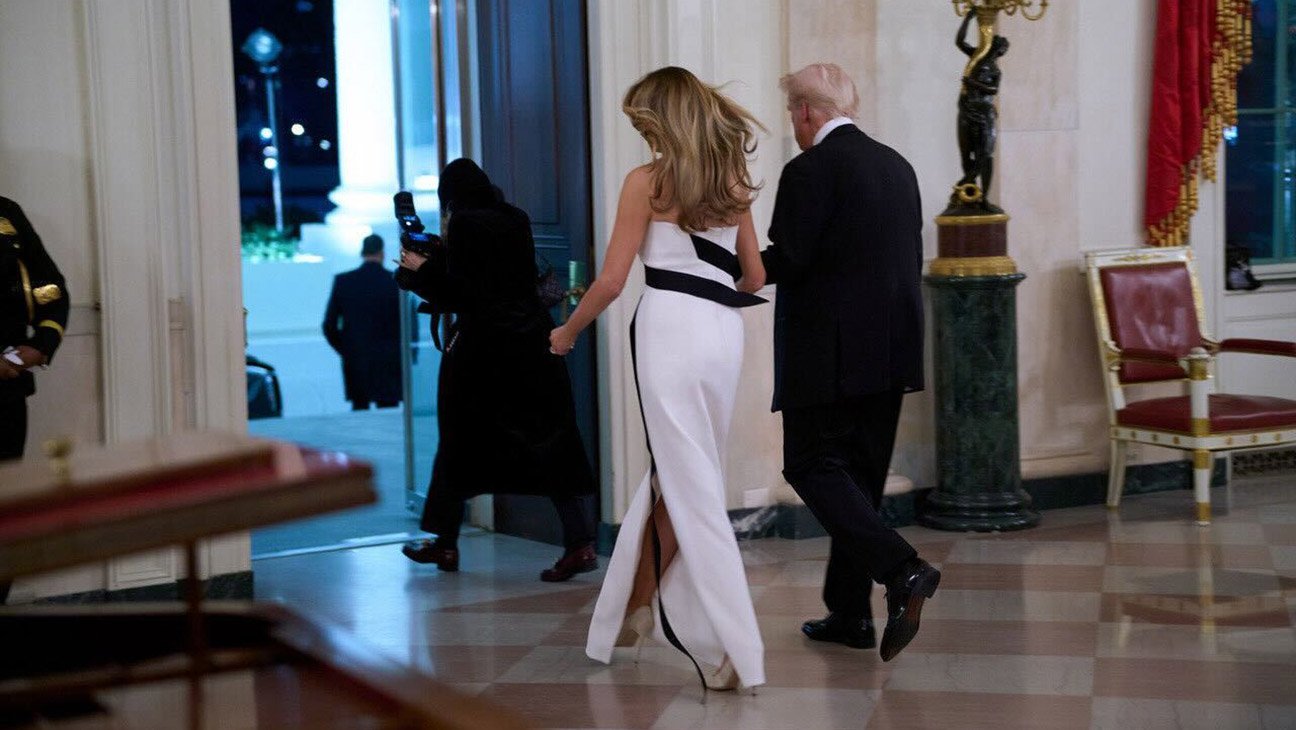
The first lady’s much-discussed documentary Melania will debut March 9 on Amazon’s streaming service Prime Video after quietly winding down its run in theaters, where it has earned north of $16.4 million domestically.
The doc chronicles the 20 days before Trumps second inauguration as president, and is directed by Brett Ratner in his first film since he was accused of multiple incidents of sexual misconduct (he denies any wrongdoing).
The doc started off its box office run with something of a bang over the Jan. 30-Feb. 1 weekend following a world premiere at the Trump-Kennedy Center in Washington, D.C., attended by the president. Melania opened in third place with a better-than-expected $7 million from 1,778 theaters, the best showing in a decade for a nonfiction title, excluding concert pics and Disney nature titles. And it beat Jason Statham‘s new action pic, Shelter, which opened to $5.5 million.
However, the momentum didn’t last, but the pic did deliver a victory for the overall business in attracting older females. Melania dropped off a steep 67 percent in its sophomore outing. By its fourth weekend, it was shedding theaters because of diminished demand, and was available in only 505 locations, followed by 100 cinemas over the Feb. 27-March 1 weekend, when it placed No. 34 with $56,000.
Melania hoped to be a major player overses, where Film Nation was brought on to handle getting the doc cinto theaters but foreign grosses were never reported.
Awards season can be tough. You’re at the forefront of every red carpet, every show, doing every interview, and marketing yourself as best you can while promoting a film. All eyes are on you, and it unfortunately leaves you wide open to criticism — take a look at best actress Oscar frontrunner Jessie Buckley, who this week is catching flak on social media for admitting that she asked her now-husband to re-home his cats when they started dating.
Despite his successful Marty Suprememarketing moves, Timothée Chalamet is also not exempt from the online furore. In a resurfaced clip from his live conversation with Interstellar co-star Matthew McConaughey for Variety, the duo discusses audiences’ eroded attention spans and whether there is an appetite for slower-paced films.
Chalamet said there is among younger fans, citing Netflix’s Frankenstein, adding: “It does take you having to wave a flag of, ‘Hey, this is a serious movie,’ or something, and some people do want to be entertained and quickly. I’m really right in the middle, Matthew,” he continued, “I admire people, and I’ve done it myself, who go on a talk show and say, ‘Hey, we’ve got to keep movie theaters alive, we’ve gotta keep this genre alive,’ and another part of me feels like if people want to see it, like Barbie, like Oppenheimer, they’re going to go see it and go out of their way to be loud and proud about it.”
The Academy Award nominee then says, “I don’t want to be working in ballet or opera where it’s like, ‘Hey! Keep this thing alive, even though no one cares about this anymore,’” he laughs. “All respect to the ballet and opera people out there… I just lost 14 cents in viewership. I’m taking shots for no reason.”
This is the part that has done the rounds on social media and left opera houses and ballet dancers a little fired up. In a statement to The Hollywood Reporter on Friday, a spokesperson from the U.K.’s flagship opera house countered Chalamet’s claims.
The Royal Ballet and Opera said: “Ballet and opera have never existed in isolation — they have continually informed, inspired, and elevated other art forms. Their influence can be felt across theatre, film, contemporary music, fashion, and beyond. For centuries, these disciplines have shaped the way artists create and audiences experience culture, and today millions of people around the world continue to enjoy and engage with them.”
American opera singer Isabel Leonard also responded to the clip. She wrote in a comment about the Chalamet video: “Honestly, I’m shocked that someone so seemingly successful can be so ineloquent and narrow-minded in his views about art while considering himself as [an] artist as I would only imagine one would as an actor.”
“To take cheap shots at fellow artists says more in this interview than anything else he could say. Shows a lot about his character,” she continued. “You don’t have to like all art but only a weak person/artist feels the need to diminish in fact the VERY arts that would inspire those who are interested in slowing down, to do exactly that.”
Elsewhere, Canadian opera singer Deepa Johnny called it a “disappointing take” and said: “There is nothing more impressive than the magic of live theatre, ballet and opera. We should be trying to uplift these art forms, these artists and come together across disciplines to do that.”
Irish opera singer Seán Tester posted on his Instagram to say that Chalamet’s choice of words “is the kind of reductive take you hear when popularity is mistaken for cultural value.”
“They are not outdated art forms. They are living ones, constantly reinterpreted, constantly evolving… It’s always fascinating when artists with global platforms dismiss opera and ballet as irrelevant. Opera and ballet have survived wars, […] To call these art forms irrelevant says far less about the art itself than it does about how little time someone has spent truly experiencing it.”
THR took a deep dive into Chalamet’s widely speculated Oscar hopes this week, exploring how his Marty Supreme campaign lost momentum in the lead-up to the 98th Academy Awards on Mar. 15.
With perhaps one notable exception, women ruled the night at the Actor Awards, in both style and social media conversations.
By a wide margin, the ladies of Hollywood outdistanced men in earned engagement at the March 1 event, according to the latest results from The Hollywood Reporter‘s Red Carpet Power Rankings, in collaboration with Launchmetrics. While that’s not unusual — women’s fashion always sparks more online attention than men’s — Bad Bunny’s strong numbers from the Grammy Awards proved that it is indeed possible for a guy to vault to the top of the list. And while one man created an undeniable frenzy when his name was called — Michael B. Jordan, who picked up the best actor trophy for Sinners and in that moment became the Oscar favorite — it didn’t move the needle in social engagement across style categories. (Jordan looked terrific in Tom Ford by Haider Ackermann regardless.)
While Netflix, which streamed the awards, historically doesn’t reveal viewership data, the Red Carpet Power Rankings may offer an indication of the event’s audience popularity via its overall numbers. Across five categories — fashion, jewelry and watches, and accessories, as well as the top five women and the top five men — Power Rankings results totaled $71.7 million, up from $67.71 million in 2025. The numbers jumped in two categories in particular: jewelry and watches and the top five women on the red carpet. Statistics for the top five men were slightly down from last year, but more on that in a moment.
THR‘s Red Carpet Power Rankings are an exclusive partnership between The Hollywood Reporter and data firm Launchmetrics. Now in its third year of spotlighting brand engagement on red carpets, the Power Rankings measure the impact of both stars and the brands they wear during the awards season’s five major events: Critics Choice, Golden Globe Awards, Grammys, the Actor Awards (formerly SAG Awards) and the Academy Awards, plus May’s Met Gala. Launchmetrics employs its proprietary Media Impact Value (MIV) algorithm to analyze and rank both brands and stars at each event. By assigning a monetary value to every post, social media interaction and editorial story, Launchmetrics determines a brand’s influence and earned engagement, quantifying for the first time the value of red carpet placements.
Who topped the list in style and social media strength? Here’s a look at the women and men who led the rankings in the penultimate awards show of the 2026 season.
Top 10 Fashion Brands: Louis Vuitton Casts a Stylish Group
Getty Images
By THR‘s count, Louis Vuitton dressed nine stars for the Actor Awards, including brand ambassadors Emma Stone and Jeremy Allen White — though One Battle After Another‘s Chase Infiniti stood out partly due to her custom headpiece, a delicate beaded cap that felt inspired by the evening’s requested dressing theme, “Reimagining Hollywood Glamour from the ’20s and ’30s.” Fold in the other six stars in Louis Vuitton, many in custom designs — Keri Russell and Matthew Rhys, Miles Caton, Wunmi Mosaku, Rhea Seehorn and Erin Doherty — and it’s unsurprising that the iconic French label nabbed the top spot with $6.3 million in Media Impact Value.
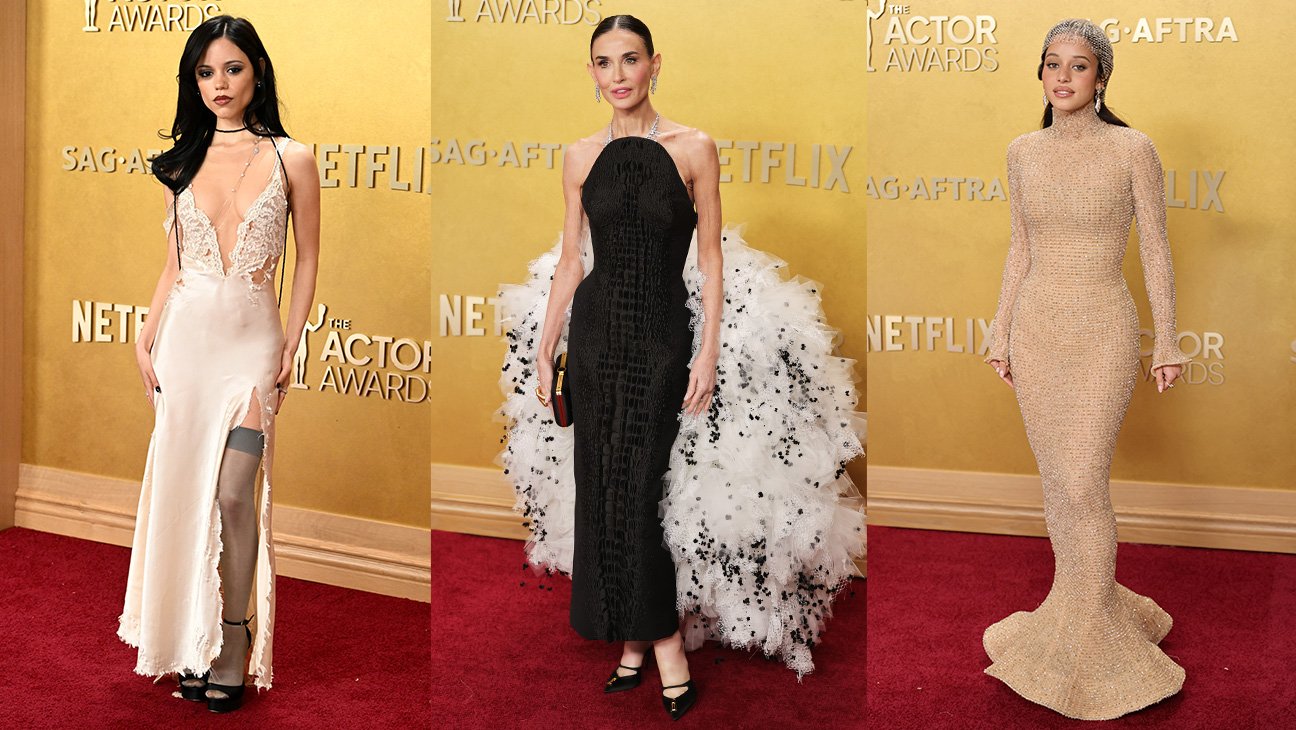
Of course, that makes Demi Moore’s results all the more impressive. Literal gasps could be heard from the red carpet commentators upon Moore’s arrival in a custom look by Daniel Roseberry for Schiaparelli Haute Couture. Her bustier dress in black wool crepe was embellished with a trompe l’oeil embroidery of a crocodile tail down its front, while the back was finished with a bustle-like white tulle “cloud” accented with roughly 20,000 beads and crystals. Part of Roseberry’s spring/summer 2026 haute couture collection for Schiaparelli, the gown’s handwork required more than 7,700 hours of embroidery. The details surely were as delightful to viewers as the finished look on Moore, earning Schiaparelli $5 million in MIV.
Balenciaga’s top-three finish, meanwhile, can be credited to a combination of Actor Award winners — Jessie Buckley and Noah Wyle — as well as the star of one hot show: Ryan Murphy’s Love Story on FX, with Sarah Pidgeon wearing a look from Pierpaolo Piccioli’s summer 2026 collection. Yerin Ha, Sarah Catherine Hook and Michelle Randolph also wore Balenciaga, earning the house an MIV of $4.7 million.
Like Moore and her Schiaparelli, Thom Browne’s fourth-place finish can be credited to one woman: Teyana Taylor, whose gown featured an intarsia torso bodice that social media praised as “the naked dress that wasn’t,” earning Browne’s label an MIV of $4.6 million.
Top 5 Women on the Red Carpet: Demi Moore Brings the Drama
Getty Images
The one-two punch of Moore and Taylor is likewise reflected in the category of top five women, further cementing the idea that this pair of looks, the only gowns seen on the red carpet by their respective designers, were among the night’s most popular. The combination of Moore and Schiaparelli earned $4.5 in MIV, while Taylor and Thom Browne garnered $4.1 million in earned engagement.
Also in the top five: Jenna Ortega embraced the night’s dressing theme with her bias-cut gown by Christian Cowan, which the Wednesday star wore with Mikimoto pearls, thigh-high stockings and Jimmy Choo platform sandals. The much-discussed look earned the actress and her gown’s designer an MIV of $3.1 million. (Cowan placed highly among fashion brands not only for Ortega’s look, but also for Kristen Wiig’s sleek black gown.
Emma Stone’s lilac slip dress with matching cardigan by Louis Vuitton placed star and brand squarely in fourth place, while Infiniti’s look rounded out the list — together, that alone is $5.1 million in earned engagement for the French label.
Ultimately, the top five women’s listings solidly bested the men’s statistics, with the latter’s combined earned engagement, $5.03 million, representing less than 30 percent of the ladies’ performance, which totaled an impressive $16.9 million (a marked increase from the 2025 total of $13.45 million).
Top 5 Men on the Red Carpet: Connor Storrie Extends the Heated Rivalry Streak
Getty Images
Hudson Williams blew up the Power Rankings results for January’s Golden Globe Awards, and now it’s his Heated Rivalry co-star Connor Storrie’s turn. Storrie placed first among top five men on the carpet in a Saint Laurent tuxedo, then circled back to the number-three spot with his Tiffany & Co. jewels as well. (His choice not to wear a shirt under that Saint Laurent jacket surely thrilled the iconic jewelry house, as it made his Mixed Cluster necklace in diamonds and platinum stand out that much more.) Together, the actor earned the brands $2.8 million in MIV.
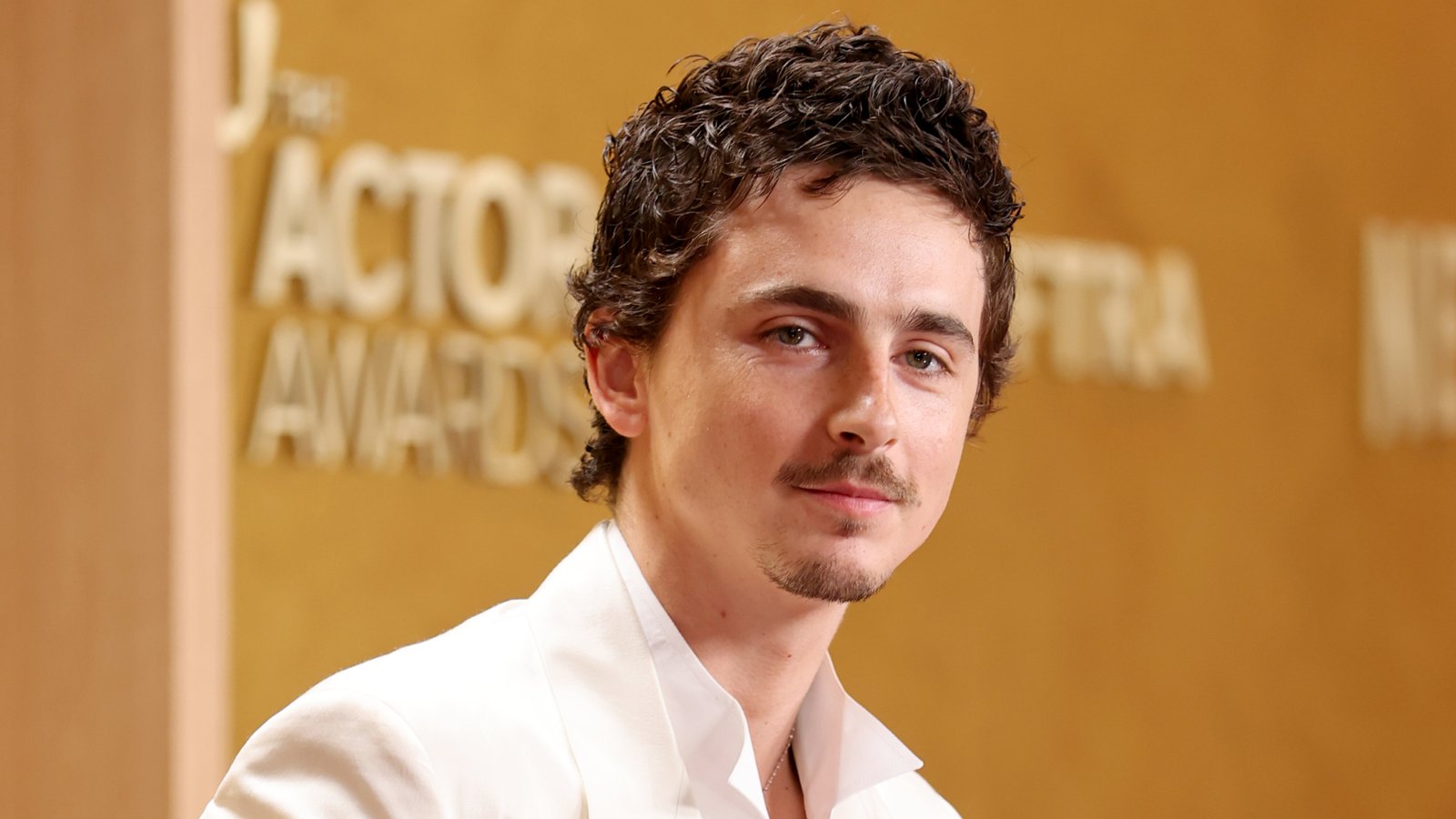
Timothée Chalamet’s 21.4-million Instagram followers likely contributed to the Marty Supreme star’s second-place finish — though, notably, his account rarely posts his red-carpet appearances. His stylist, Taylor McNeil, however, often does. To finish out the list, The White Lotus‘s Sam Nivola finished fourth with $476,000 in earned engagement for his Dior tuxedo, while Jeremy Allen White dropped a couple spots from the 2025 Power Rankings, placing fifth in Louis Vuitton with an MIV of $451,000.
Top 10 Jewelry & Watches: Tiffany & Co. Wins the Night
Getty Images
Storrie, of course, is among the reasons Tiffany & Co. finished first among jewelry and watch brands; the house also outfitted Teyana Taylor, Quinta Brunson, Kristen Wiig, Chase Sui Wonders and Hamnet director Chloé Zhao in the brand’s diamonds and gold. The result was a solid first-place finish, with $3.6 million in MIV.
Amid such high-wattage brands, a high ranking for an independent designer is always welcome news, and such was the case with the number-two and -three positions among jewelry and watches: Los Angeles-based Emily P. Wheeler, who provided Kate Hudson with diamonds to pair with her Valentino gown and cape, and London-based Jessica McCormack, who provided a suite of jewels to accent the Hamnet star’s Balenciaga gown. The placements netted earned engagement of $1.3 million and $1.25 million, respectively.
Meanwhile, Belperron’s fourth-place finish partly may be the result of a happy accident — quite literally. Gwyneth Paltrow wore a pair of vintage 1930 turquoise earclips from the house on the red carpet with her custom Givenchy gown by Sarah Burton — but much was made of the fact that, when the Marty Supreme co-star appeared onstage as a presenter, she was missing the one seen dangling from her left ear minutes earlier. Luckily it was located soon after the onstage segment, but the resulting stories that night and the next morning surely helped to propel the design by Suzanne Belperron into one of the top-five spots, earning an MIV of $1.1 million for the New York-based house.
Top 5 Accessories: Jimmy Choo Places First — with an Assist from Jenna Ortega
Getty Images
Jimmy Choo dressed a healthy number of stars in its stylish shoes for the Actor Awards, including Aimee Lou Wood, Odessa A’zion, Dove Cameron and Chris Perfetti, but Jenna Ortega’s appearance in a Christian Cowan bias-cut gown with high slit surely helped to put the brand’s “Max” platform sandals in the spotlight. The combined result was a first-place finish with $726,000 in MIV.
Christian Louboutin placed a close second, dressing a similar number of stars that included Sarah Catherine Hook, Mindy Kaling, Tyler James Williams, Britt Lower and Janelle James. It’s reasonable to surmise that Jimmy Choo’s placement with Ortega, who currently boasts 38.9 million Instagram followers, helped the brand edge past Louboutin’s red soles.
A solid third-place finish by Tyler Ellis once again can be credited to the Los Angeles-based designer’s ability to provide stylish, Italian-made clutches to a variety of actresses, which at the Actor Awards included Ali Larter, Mindy Kaling, Emily Watson and Regina Hall, resulting in earned engagement of $382,000. Actor Awards host Kristen Bell is likely a key reason René Caovilla earned a fourth-place spot with $119,000 in MIV, while Milan-based footwear brand Paris Texas benefited from Sarah Paulson’s appearance on the carpet and onstage, wearing a ankle-length gown that was a vintage Yves Saint Laurent design from 1979. That placement edged the brand into fifth place with earned engagement totaling $104,000.
Up next: The climax of the 2026 awards season, the 98th Academy Awards, set for Sunday, March 15 at Hollywood’s Dolby Theatre and airing on ABC and Hulu beginning at 7 p.m. ET.
The mogul, whose Allen Media Group owns The Weather Channel, a production company, local TV stations and streaming platforms, is buying a significant stake in the premium pay-TV brand Starz.
Allen has acquired a 10.7 percent stake in Starz through his investment firm and family office Allen Family Capital. According to a filing with the Securities and Exchange Commission, Allen is paying $25 million for the stake, acquiring it from the investment fund Liberty 77, led by former Treasury Secretary Steven Mnuchin.
Starz, of course, was spun out from Lionsgate last year. Mnuchin had been a major investor in that company, and joined Lionsgate’s board earlier this year. His interest, however, seems to be on the studio, not in the pay-TV and streaming business that Starz is in, hence the sale.
Allen, however, remains a big believer in the TV business, as the rest of his holdings underscore. Starz has been growing its streaming business in recent quarters as it seeks to offset the challenges facing the linear TV business.
Allen has been making moves: Last year he put his local TV stations up for sale, and sold some of them to Gray Media. He has also set his sights on CBS late night, inking a deal to have his Comics Unleashed (which he also hosts, as a comic himself) on at 12:30, with an eye toward 11:30 once Stephen Colbert exits.
A notice filed in connection with his purchase of the Starz stake adds that he may continue to add to his stake, and take a more active approach with the company.
“Consistent with such investment purposes, Allen may engage in communications with, without limitation, one or more shareholders of Starz, management of Starz and/or one or more members of Starz’s board of directors and may make suggestions or proposals concerning Starz’s operations, prospects, business and financial strategies, strategic transactions, assets and liabilities, business and financing alternatives, the composition of the board of directors and such other matters as Allen may deem relevant to the investment in Starz,” his family office wrote.
The Love Story currently playing out across FX’s streaming partners has captivated a sizable audience.
The limited series has racked up more than 25 million hours (or 1.5 billion minutes) of viewing for its first five episodes on Hulu and Disney+, FX says — a record streaming number for an FX limited series. The show airs on the FX cable channel as well, but virtually all of its audience has come on the two streaming platforms.
The show has also been building week to week. While FX isn’t sharing precise viewing data (and Nielsen’s streaming ratings haven’t yet caught up to the show’s Feb. 12 premiere), the outlet says Love Story: John F. Kennedy Jr. and Carolyn Bessette’s most recent episode drew 51 percent more viewing time than the series premiere. The season is set to conclude on March 26.
As the title says, Love Story tracks the relationship, marriage and tragic deaths of JFK Jr. and Carolyn Bessette Kennedy during the 1990s. The show has drawn praise for its meticulous re-creation of ‘90s New York — and also scorn from members of the Kennedy family and mixed reactions from others who knew the couple. Reviews have leaned positive, and the latest FX … Story series from Ryan Murphy has also spread across social media. FX cites some 21 million posts on TikTok with the #lovestory hashtag in the past month.
Connor Hines created the series and executive produces with Ryan Murphy, Nina Jacobson, Brad Simpson, Eric Kovtun, Nissa Diederich, Scott Robertson, Monica Levinson, Kim Rosenstock, D.V. DeVincentis and Tanase Popa. Max Winkler directed and executive produced the first episode.