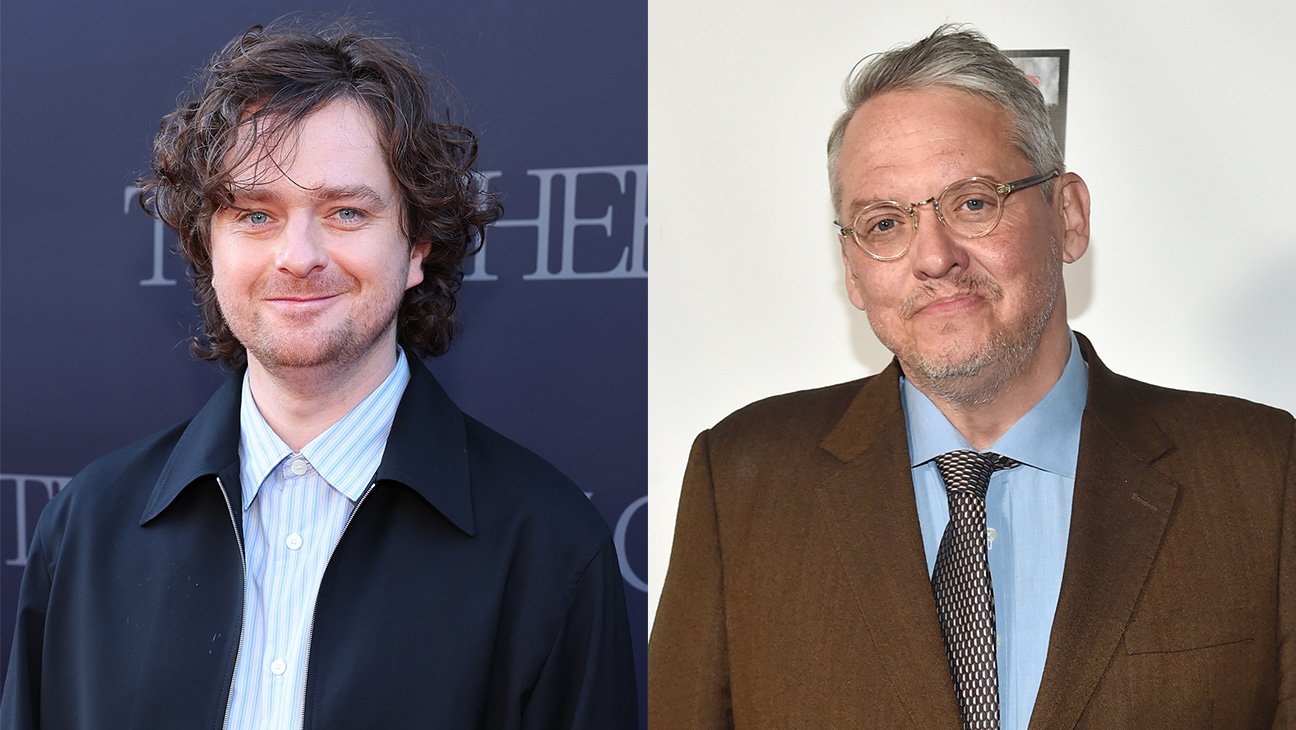
Michael Shanks, the filmmaker behind last year’s cult horror fave Together, has teamed up with Adam McKay, the multi-faceted writer-director-producer behind movies such as Vice and Don’t Look Up, for a mystery project.
Sony Pictures has picked up an untitled sci-fi comedy that will be written by Shanks that has McKay attached to direct.
McKay is producing the feature with Todd Schulman via the duo’s Hyperobject Industries banner.
Andrew Mittman, who is one of the executive producers on Wednesday and involved in the development of Tim Burton’s remake of B-movie classic Attack of the Fifty Foot Woman, is also producing via his 1.21 Pictures. The company’s Kai Dolbashian will exec produce. The two worked in the same capacity with Shanks on Together.
Details on the project are being kept under wraps but it is described as a sci-fi comedy.
Shanks got his start making YouTube and online shorts before making his feature directorial debut with Together, the unique body horror that starred Dave Franco and Alison Brie. The movie premiered at the 2025 edition of the Sundance Film Festival where it sparked a bidding war, with Neon ultimately picking it up in a $17 million deal.
His next film is due to be a feature project titled Hotel, Hotel, Hotel, Hotel, a mind-bending sci-fi thriller set up at A24 and whose script, which he wrote, was on the 2021 Black List. The project was the first team up for the writer-director with McKay and Schulman, who are among those producing Hotel.
McKay, whose films run the genre gamut from Anchorman: The Legend of Ron Burgundy and Talladega Nights to The Big Short and Vice to episodes of Succession and Winning Time: The Rise of the Lakers Dynasty. He last directed 2021’s Don’t Look Up, a satire with an A-list cast that became one of Netflix’s most watched movies.
Hyperobject remains a busy banner. Among its upcoming projects is a mini-series centered on Jeffey Epstein, based on the book Perversion of Justice: The Jeffrey Epstein Story by Julie K. Brown, with Laura Dern on board to star.
Shanks is repped by WME and Untitled. McKay is repped by CAA and Johnson Shapiro.
When Boy Erased was published in 2016, Conley’s account of being forced into conversion therapy read like something from another era. The son of a Baptist pastor in Arkansas, Conley was 19 when he was given an ultimatum: attend a church-run program designed to “cure” his homosexuality or lose his family.
What followed, as he recounts in the memoir, was a system built on confession, control and psychological pressure. He was subjected to six months of “therapy” sessions that demanded he invent sexual histories; assigned bible verses as punishment. At Love in Action, the program he ultimately entered, he attended exercises that mapped “sins” across family trees or required participants to scream at imagined versions of their parents. Teenagers were grouped with adults dealing with everything from marriage issues to more extreme behaviors — including pedophilia — all under the doctrine that “every sin is equal.”
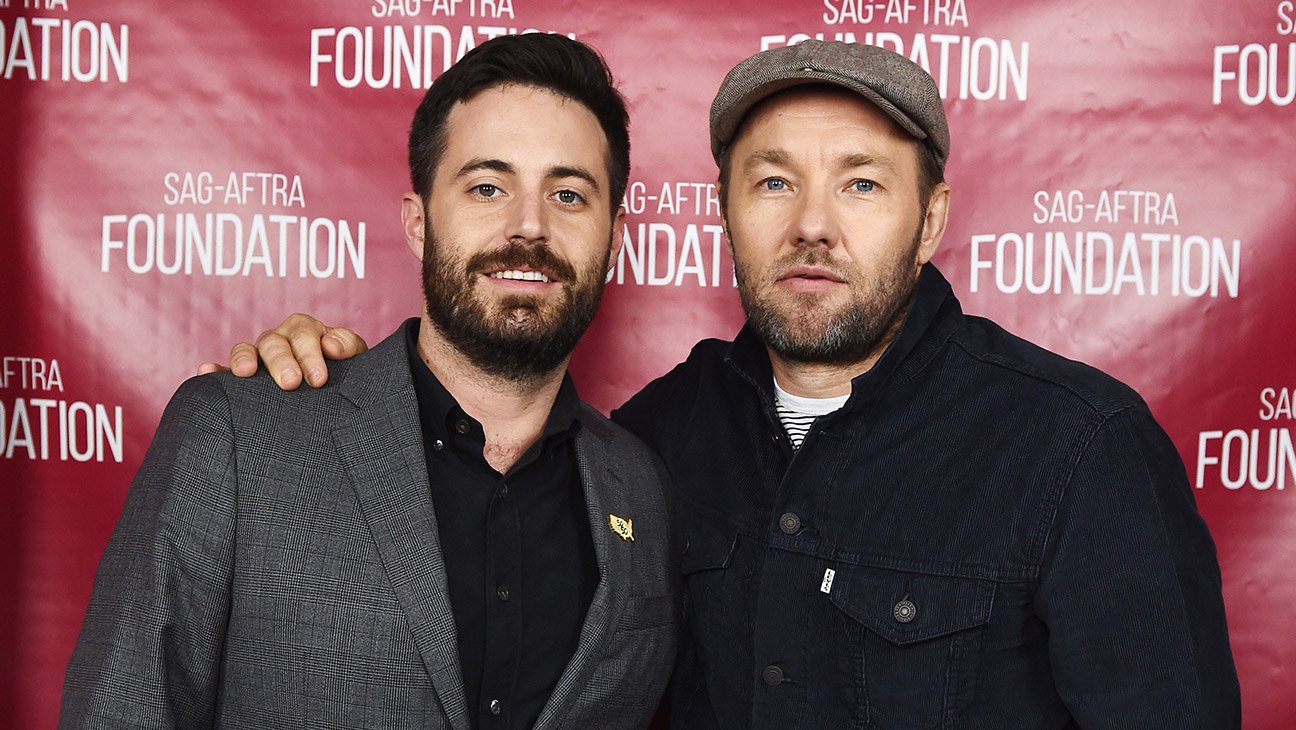
His book was later adapted into a feature in 2018, directed by and starring Joel Edgerton, who played the closeted therapist who oversaw his “conversion.” Lucas Hedges played a loosely fictionalized version of Conley, while Nicole Kidman played his mother.
Conley, meanwhile, became one of the most visible chroniclers of conversion therapy’s harms, his advocacy helping fuel legislative bans across much of the country. The Hollywood Reporter spoke to Conley shortly after the Court released its historic decision.
Take us back to the beginning. What was Love in Action?
So in 2004, after I was outed to my parents, my father gave me an ultimatum: attend the program or lose connection to my family, my friends, my community. I was 19 — legally an adult — but this kind of thinking was something I’d grown up with in the church.
Conversion therapy doesn’t always look like a facility. Before I ever got to Love in Action, I spent six months in one-on-one talk therapy with someone connected to the program. He told me to reveal any sexual fantasies I’d had, in as much detail as possible. His response was always to be disgusted. He would give me a set of Bible verses to memorize for the next session. After a while, it felt like I had to make things up, because he was always suspicious — always suggesting I must have been hooking up with men in public restrooms. These were not things that were in my brain at the time.
And then you went to the program itself.
Love in Action had a scheduled two-week program called “The Source.” But they wanted you to stay much longer. They were encouraging my parents to put my college tuition toward conversion therapy instead and have me drop out.
The program used a 12-step model based on Alcoholics Anonymous to lead people out of what they called “the sin of homosexuality.” We had what were called “rap sessions.” We were placed with people dealing with bestiality, pedophilia, marriage issues, gender confusion, all under the idea that every sin is equal in the eyes of God.
The man who ran the camp, John Smid — who rather famously came out years later and is now married to his husband — his credentials, when my mother finally thought to ask, were that he’d been a marriage counselor and had worked with Alcoholics Anonymous.
There was also an arts and crafts component.
There was. We did what were called genograms — something that real therapists use, a kind of family tree showing patterns of trauma across generations. But in our version, next to your family members, you would write things like “AB” for abortion, a dollar sign for gambling, an “H” for homosexuality. It was meant to show how the sins of the fathers were responsible for why we were there.
And then one day, we were asked to make masks. We were told to show what we presented to the outside world — and then the ugly part inside.
Sounds like a RuPaul’s Drag Race challenge.
(Laughs.) I know, right? Every time I talk about this, it’s just so absurd now with this distance. I really think that if people weren’t completely destroyed by it, they could have made excellent drag queens. You definitely learn to think on your feet.
What was the breaking point for you?
There was something called the lie chair. You were asked to sit across from an empty chair and imagine your father in it, and to tell him how much he hurt you, how much you hated him. The assumption, based on some very watered-down Freud, was that I was gay because my father had been too distant and my mother too close. They were obsessed with how much male touch you received growing up. In any other context, it would have been wonderful. Not in this one.
I’d read 1984 in high school. And I remember thinking, “They’re asking me to hate my father. This is a Christian institution. They want me to hate him so I can be cured.” So when they told me to perform this exercise in front of everyone, I said, “I don’t hate him. I feel really confused about why I’m here and I don’t know why you’re making me do this stupid exercise.” And they said, “You’ve been lying the whole time. You haven’t been applying yourself.”
I got so angry that I stormed out and demanded my belongings back. They take everything when you arrive, your phone, your wallet, to look for what they call “false images.” I said, “I need my phone back.” They said, “Only in an emergency.” I said, “It is an emergency.” I took the phone into the hallway and called my mom.
Tell me about this morning.
I thought I was prepared for the ruling. I’d read all the documents. I’d been involved. But when I saw it in print, what it actually felt like was humiliation. It felt like being told that all of the work — all of it — was somehow unnecessary.
I called my mom and told her. She hadn’t seen the news yet. She said: “I’m just so mad.” And then she said something I couldn’t have put better myself: “What happened to you was speech. And speech does harm — especially from people you put your trust in.”
The ruling was 8-1, including two of three liberal justices.
That hurt more. When I read through the decision, it felt like reading an alien language. Not because it’s difficult, but because I can’t follow the logic. They’ve framed this as a speech case rather than a question of medical regulation. And what that tells me, reading between the lines, is that they’re treating the identity of gay, lesbian, and trans people as an idea that’s up for debate, rather than a scientific truth. Because of that, they’re willing to call this a belief issue.
You’ve been careful about the word “torture.”
I’m careful because I’m not saying every conversation in which someone explores their sexuality constitutes torture. But what I experienced was torture. And I think when someone — especially a licensed professional — tells you, over and over again, that what you’re experiencing is not true, that is a different thing. It closes a door on a person. It doesn’t give them options. It tells them there is only one way to be a healthy human being.
Can movies move Mazdas? The automaker is betting that they can.
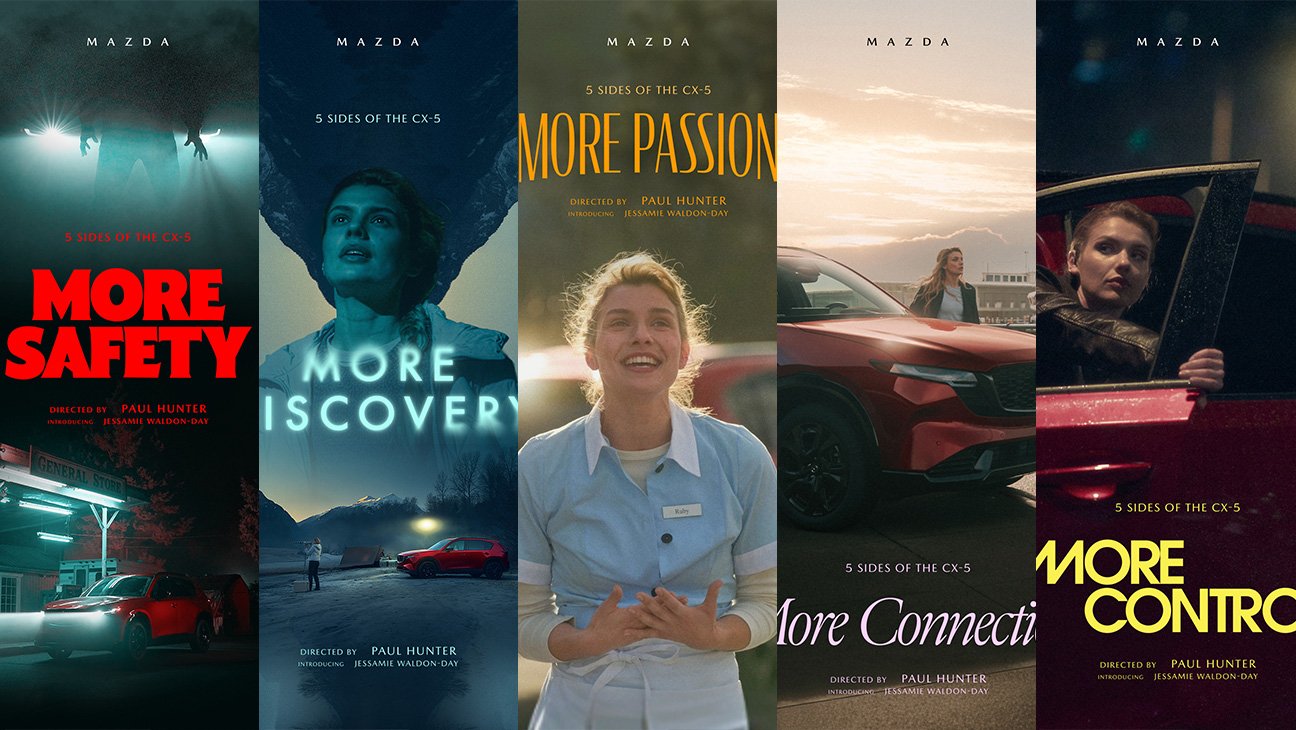
The car company is launching a new version of its CX-5 SUV, and used this year’s Academy Awards to launch a film-themed campaign that it plans to bring to video platforms like YouTube, TikTok and Hulu, with CMO Brad Audet telling The Hollywood Reporter that it is thinking about bringing it to movie theaters as well.
The premise? “5 Sides of the CX-5,” with director Paul Hunter developing five short films (as well as shorter trailer versions) based on five classic film genres: Romance, action, sci-fi, musical and horror. Jessamie Waldon-Day stars in each film (alongside a CX-5, of course).
It’s an intriguing campaign that leverages the reach of broadcast during one of its marquee events (the Oscars), the breadth and depth of digital distribution, and the familiarity and emotional resonance of film.
“The CX-5 competes in a highly competitive category where virtually every couple of months there’s an all new something,” Audet says. “So we couldn’t just come out with another standard automotive spot, we really needed to do something that that broke through.”
Audet says that the target demographic for the CX-5 is female and multi-dimensional, which led to the “aha moment” where his team honed in the film genres as an anchor point for the campaign. The timing of the launch, with coincided with the Oscars and allowed for members of the Film Academy’s Academy Gold mentorship program to help with production, was a coincidence.
But with any marketing effort, particularly one that leans on creating original programming that can stand on its own, is complex and risky. The brand and product need to be featured prominently (the CX-5 campaign includes a different feature of the car in each film), and Audet notes his own initial hesitation with the horror genre.
“I think first and foremost, we had to land the entertainment value, and then obviously the car and the car’s features had to be prominent within each one of those stories,” Audet says. “I think it was a bit of an iterative process.”
Credit, he says, goes to Hunter, who crafted both the films and their trailer counterparts.
“I think most importantly, he saw the potential of the idea and really brought the the idea to life in the five stories, and did a really spectacular job,” Audet says. “He understood the role of the car in the storytelling, as the heroines’ companion in this and the enabler.”
“You have to really commit to the story,” Hunter says. “What’s important is that everything felt lived in, and it was important that everything felt true and honest to to each moment, so that every sort of turning point or every scene had to force you forward into a new scene.”
“No matter what the the the stories were, the genres, we never wanted it to feel like we were asking more or pushing too hard,” he adds. “The stories are built around Mazda, but we didn’t want it to feel like it was necessarily pushing like in a traditional commercial.”
Mazda has released the action and romance films already, with the horror and musical films viewable for the first time below.
So what does an automaker do, now that it has five short films representing five of the movie business’ key genres? Well, it goes to the movies. Audet says that the automaker is thinking of supporting what appears to be a strong 2026 film slate, and placing its films in the previews, likely in front of titles that share similar genres or themes.
“Certainly there’s a lot of lot of eyeballs on film over the summer, and looks like this will be a good summer movie season,” he says. “So I think that’ll be one of our key initiatives.”
Somebody send this guy a congratulatory greeting card.
Darren Abbott has been named president of Hallmark Media, replacing the company’s former president John Matts less than a year into Matts’ tenure at that level. Now Abbott will be responsible for “shaping, operationalizing, and driving the ever-evolving business into the future, while continuing to oversee the ways in which consumers interact with Hallmark’s widely beloved content, products, and experiences,” according to Hallmark.
Abbott was already the company’s chief brand officer. He now adds ad sales, distribution, and research under his purview, which previously included oversight of programming, creative product development, marketing and PR, licensing and brand partnerships.
In his prior role, Abbott launched a Christmas cruise, a Christmas activation near Hallmark headquarters and the new 90-minute live, traveling stage show featuring Hallmark Stars, aptly-titled Hallmark Stars Live. He also developed Hallmark+.
“Darren is a deeply admired and respected leader with a proven track record of creating moments and opportunities that are uniquely and distinctly Hallmark. From fostering each brand touchpoint to elevating how we work with advertisers, distributors, and all external partners who help us deliver on our brand promise, Darren is uniquely suited to build a future where Hallmark continues to bring joy, positivity, and connection to fans and consumers everywhere,” said Hallmark president & CEO, Mike Perry, to whom Abbott will continue to report.
Abbott has been with Hallmark for nearly 30 years, so maybe check the Anniversary section of the aisle as well.
Matts had been Hallmark’s chief operating officer at the time of his promotion; he joined the company in 2022 as its chief financial officer.
Just In Time pulled in more than $2 million last week, its highest tally yet, as Jonathan Groff played his final performance in the musical on March 29.
The show, which chronicles the life of singer Bobby Darrin, has been trending up for the past several weeks, as fans flocked to the show ahead of Groff’s departure, but reached last week’s high as the average ticket price also jumped up to $362.22. Fans were also spotted camped out in front of the Circle in the Square theater in the nights leading up to the show, for a chance at rush tickets the next day. Ryan Reynolds and Blake Lively were reported attendees at the last show.
Matthew Morrison takes over the role for a few weeks starting April 1, with Jeremy Jordan set to take over starting April 21. But it remains to be seen whether they’ll have the same box office draw as Groff.
Just In Time was the third-highestgrossing show of the week, with Harry Potter and the Cursed Child as the highest grossing, bringing in $2.6 million, followed by Hamilton with $2.3 million. The Lion King was the next highest, with $1.9 million, with Wicked as the fifth highest, bringing in $1.8 million.
Five shows, The Rocky Horror Show, Titanique, Fallen Angels, Beaches, A New Musical and The Lost Boys, began previews last week amid the spring rush. Rocky Horror, starring Luke Evans, Stephanie Hsu, Rachel Dratch and more, and The Lost Boys, a musical adaptation of the vampire movie, both played to 100 percent capacity, with Rocky bringing in $460,121 across its first four previews and The Lost Boys bringing in $489,214 across its first two shows. Beaches had a somewhat less auspicious start, with capacity at 88 percent and grossing $217,743 across its first two previews.
Five more shows were in the midst of previews last week, including Cats: The Jellicle Ball, which brought in $901,045 in its first eight-show week and Dog Day Afternoon, starring Jon Bernthal and Ebon Moss-Bachrach,which had a strong showing of $1.3 million last week, across eight previews, ahead of its March 30 opening. The play received largely critical reviews Monday night, but the impact of those on the starry show remains to be seen.
Brunico Communications has shut down its U.S. television events business, including NAPTE and its Kidscreen and Realscreen Summits.
“This decision was deeply considered and stemmed from the market consolidation that continues to progress and have structural impacts on the content production business,” Russell Goldstein, president and CEO of Toronto-based Brunico, said in a statement on Tuesday. The move follows NATPE, a onetime storied trade show, and the Realscreen TV conferences and markets being combined in one Miami event in Feb. 2026 for one last time.
Kidscreen and Realscreen will continue as kids and unscripted content publications, respectively. With the closure of the U.S. events, Claire Macdonald, NATPE’s executive director, and Jocelyn Christie, Kidscreen’s publisher, will leave Brunico.
Napte in Miami returned in 2024 after the assets of The National Association of Television Program Executives were acquired by Brunico, which also operates the Banff World Media Festival. The acquisition followed NAPTE filing for bankruptcy protection in Oct. 2022 after running into a financial wall due to the forced cancellations of the 2021 and 2022 U.S. TV markets amid the pandemic.
NAPTE Global, the flagship U.S. TV market, returning in 2024 also coincided with the TV industry being upended by the 2023 dual Hollywood strikes, emerging streaming platforms and accelerating cord-cutting.
That disruption unleashed another round of industry consolidation as major studios balanced expensive streaming platforms with offsetting linear TV losses. Before picking up the operating rights to the Banff World Media Festival in 2016, Brunico ran the Realscreen Summit and Kidscreen Summit conferences as it operated markets and conferences in the U.S. and elsewhere internationally.
Netflix has given a second season renewal to Age of Attraction after the dating reality series strongly hooked with viewers after a March 25 rookie season wrap.
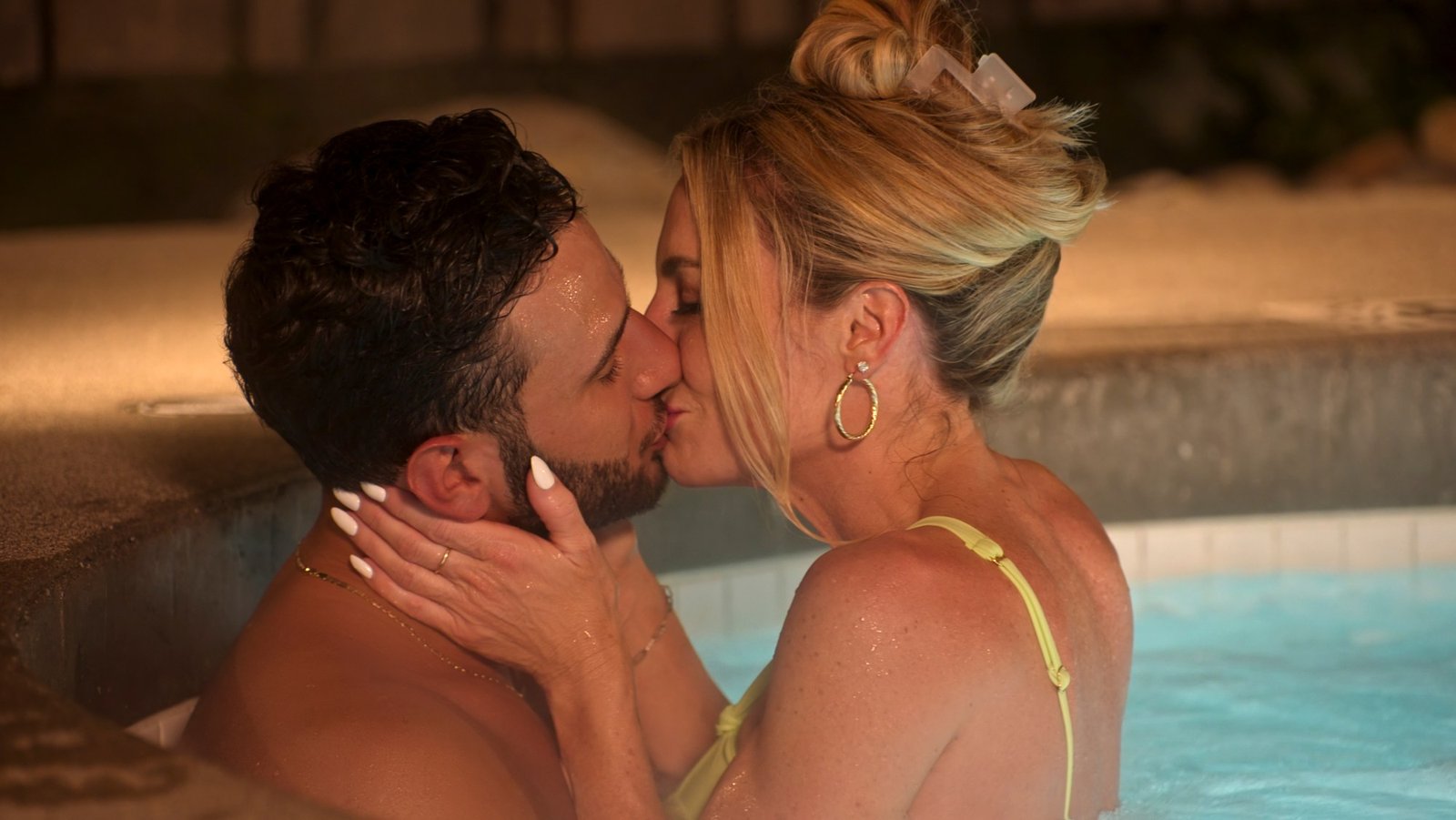
The premise for Netflix’s latest dating series ignores birthdates as Romeo and Juliet rely on sparks and compatibility for a connection before finally revealing their ages in the the so-called Promise Room.
“Age of Attraction throws age out the window as singles search for their soulmates—but will the years come between them? In this reality dating series, connections are put to the test as participants navigate chemistry, life stages, and the question of whether love is truly ageless,” reads a synopsis from producers Velvet Hammer Media.
But while age may or may not matter to the daters, Netflix has noticed audience numbers as its second season renewal follows Age of Attraction making it into the streamer’s English TV Top 10 and reaching the Top 10 in 26 countries after premiering on March 11.
“We love concepts that are impossible to look away from and Age of Attraction nailed that from day one. It’s messy, it’s real and that’s what makes it fun to watch. Huge thanks to Netflix for embracing this dating experiment with us. The response has been incredible, and we’re excited to push it even further in season two,” Jennifer O’Connell and Rebecca Quinn, executive producers and co-founders of Velvet Hammer Media, said in a statement.
The dating series, hosted by Nick Viall and Natalie Joy, is also executive produced by Sam Dean and and David Friedman. Age of Attraction continues Netflix’s audience success with dating series like Single’s Inferno, Perfect Match, Love is Blindand Too Hot to Handle.
What’s the opposite of a mistake? That’s what Netflix pulled off Monday night by taking over L.A.’s hottest restaurant, Max & Helen’s on Larchmont Avenue, for an intimate introduction of the streamer’s new crime comedy series Big Mistakes.
A typical wait to snag a table at the neighborhood diner by Nancy Silverton and Phil Rosenthal still stretches well past an hour (if not closer to two) but with Netflix taking over the host stand for the private tastemakers event, influencers, stars and select press breezed inside only to sprint toward a generous spread of Max & Helen standouts on the diner counter. The menu featured grilled cheese, tallow fries, sourdough waffles with maple butter, beef hot dogs, BLTs, cinnamon rolls and Silverton’s famous chocolate chip cookies, some with custom names to match the show’s characters and plot (like Trusted Accomplices, Sweet Regrets and Pour Decisions).
Bites aside, the main attraction was a delicious conversation between creators Dan Levy and Rachel Sennott. But even they acknowledged the feat of grabbing a seat. “Guys, how happy are we that we all finally got in here?” Sennott asked in kicking off the nearly 40-minute chat before praising the waffle while Levy called the grilled cheese one of the best he’s ever had in front of a crowd that included Dylan Efron, Grimes, Kerri Kenney-Silver, Lisa Rinna and Harry Hamlin, Natasha Lyonne, Sarah Levy, Zoe Lister-Jones and others.
Though they shared duties on creating the show, Sennott was tasked with moderating the Q&A and asking Levy about how he pulled off show running, executive producing and starring in the eight episode series, which marks his first under an overall deal with Netflix for his Not a Real Production Company. But Big Mistakes marks his second original scripted series after Schitt’s Creek, the cultural phenomenon that lasted six seasons and won four Emmys at the 2020 ceremony including best comedy series.
Big Mistakes follows Nicky (Levy) and Morgan (Taylor Ortega), two deeply incapable siblings who are in over their heads when a misguided theft for their dying grandmother accidentally pulls them into the world of organized crime. Blackmailed into increasingly dangerous assignments, they clumsily fail upwards, sinking deeper into chaos they’re ill-equipped to handle. Laurie Metcalf, Jack Innanen, Boran Kuzum, Abby Quinn, Elizabeth Perkins, Jacob Gutierrez, Joe Barbara and Mark Ivanir also star.
Sennott and Levy share the stage.
(Photo by Emma McIntyre/Getty Images for Netflix)
Sennott used Schitt’s Creek as a jumping off point for her first question by asking Levy how he came up with the idea for a crime caper coming off this “amazing, huge, successful and award-winning show.”
“Well, a lot of time had to pass,” Levy answered. “When the show ended, there was this immediate conversation of, like, ‘What are you doing next?’” Turns out he didn’t love that question, calling it “a horrible way of doing business.
“God forbid I nap,” he quipped. “For me, it was like, I needed to take a minute because I knew what the show meant to me and I knew what it meant to other people. And having a show of your own, you’re so proud of what you make and if you’re lucky enough to get, in our case, six seasons of a TV show, you walk away from that really proud of what you’ve done. To jump into something else, it almost does the new project a disservice because you’re constantly going to be comparing it to the one that came before. So, I needed the dust to settle.”
While that dust settled, Levy wasn’t exactly staring at the wall eating grilled cheese. He kept busy with other projects, creating and hosting the HBO Max series The Big Brunch, acting in projects like The Idol (with Sennott), Sex Education, Curb Your Enthusiasm, Smurfs, Unfrosted and Haunted Mansion. He also wrote, directed and starred in Good Grief, a Netflix film about grief and friendship. But he eventually turned his attention toward creating another comedy series by asking himself a question: What scripts am I not reading?
“Like, he’s gay. He’ll never play in an action movie,” he said of challenging himself to play against stereotypes. “So, I was, like, let’s do action. And let’s make it funny and let’s create a kind of genre that is both funny and thrilling and suspenseful and fun. I have always had a phobia of being blackmailed into organized crime. Don’t ask me why. I think it stems from a fear of being trapped.”
That developed further into an idea involving family dynamics, which he explored to award-winning results in Schitt’s Creek. “Well, why don’t we tell a new family story? And I knew I wanted it to be a brother-sister dynamic and you’re the only person I wanted to work on this with.”
They had formed a bond on HBO’s The Idol — when Levy mentioned the show’s title, Sennott jokingly said, “I remember that” and did not elaborate — despite their brief time together. “We only spent four days together, but I’ve been madly in love with everything you’ve ever done and I respect the hell out of you,” Levy explained. “I remember pitching you the idea and being like … So anyway, I thought like maybe we could collaborate on this and you were like, ‘I’m in.’”
Levy said they spent six months writing Big Mistakes together over Zoom, eventually getting together in person for about five days. They hammered out the pilot during a single day. “We got so much coffee, too, I remember, and I brought my weird granola bars to your house. But I just felt so inspired,” Sennott said. “And then we got towards the end of the day and we started playing music.”
Sennott said she was impressed and inspired by Levy’s influences and his detailed research of small town folk who found themselves blackmailed into organized crime. (She also loved his use of Katy Perry’s “Firework,” which Levy said they miraculously got cleared for use on the show.) To give the show an authenticity, they collaborated with a crime expert. “Having a professional is so helpful,” Sennott said. Levy finished the thought: “Not only did he say, ‘Yeah that’s plausible but here are three other ways this person could die.’ And you’re, like, ‘Well, I didn’t think of that but now that’s on the table.”
What Levy left off the table are bad manners. “The family ensemble is tough, too, because you want the right people for the job and part of it is the gut instinct of, ‘Do I like this person?’ Do I want to spend a long period of time with this person? Are they generous of spirit? Are they able to leave their ego at the door? Are they going to be disruptive on set?’ Even if that person is right for the job, if I get a whiff that they’re going to just make people’s lives a living hell on set, I will not hire the person. It is not worth It.”
It’s clear from the conversation that Levy came to Big Mistakes not wanting to make any of his own.
“I knew I wanted it to feel cinematic. I knew I wanted the score to be really intense and it was really just about tempering performances and making sure that we were earning our laughs and making sure that when the crime hit and the tensions were high and the thrills were there, that we went there,” he said as the conversation wrapped up. “How would you, in the darkest depths of your soul, react to this? Because that’s the greatest connection that the audience will have to this show, hopefully, like, what would I do?”
Find out when Big Mistakes debuts April 9 on Netflix. See more from inside Max & Helen’s on Monday night below.
Natasha Lyonne, Zoe Lister-Jones, Rachel Sennott and Grimes
(Photo by Emma McIntyre/Getty Images for Netflix)
Levy and Phil Rosenthal
(Photo by Emma McIntyre/Getty Images for Netflix)
Dylan Efron
(Photo by Emma McIntyre/Getty Images for Netflix)
Harry Hamlin, Levy and Lisa Rinna
(Photo by Emma McIntyre/Getty Images for Netflix)
A custom Big Mistakes menu at Max & Helen’s.
(Photo by Emma McIntyre/Getty Images for Netflix)
The food spread including a cheeseburger deluxe, beef hot dogs, a BLT and tallow fries.
(Photo by Emma McIntyre/Getty Images for Netflix)
The sought after waffles with maple butter and a tray of chocolate chip cookies.
(Photo by Emma McIntyre/Getty Images for Netflix)
Atmosphere inside featuring framed stills and behind-the-scenes images from Big Mistakes.
[This story contains MAJOR spoilers from the Paradise season two finale, “Exodus.”]
Julianne Nicholson didn’t know Sinatra’s fate when she first signed on to play the villain of Paradise. Creator Dan Fogelman likes to keep some mystery even among the cast, so the actress didn’t find out that Sinatra was going to sacrifice herself until they started production on season two.
“Going down with the ship, quite literally and visually, it’s pretty astounding,” Nicholson tells The Hollywood Reporter in the conversation below with Thomas Doherty, who plays Link/Dylan.
You can now perhaps call Doherty her onscreen son — as that revelation was dropped in the season two finale, titled “Exodus,” before Sinatra stayed behind to destroy the bunker she helped create, dying in the process. Paradise answered season two’s big looming question — Who is Alex? — by revealing that “Alex” is a quantum computer that is designed to play with time. When Sinatra meets Doherty’s character — who had been going by the nickname Link until now — she believes that he is her son, who died as a child, and that his existence is proof that Alex works.
“You have to believe in the story — and then go get your PhD in quantum physics and it will all make sense,” says Nicholson with a laugh. “But Samantha believes that Link/Dylan is her son, so that’s what I had to hold onto.”
Below, the co-stars share what the writers explained to them about the AI quantum computer named Alex that will steer Paradise into season three, now that Sterling K. Brown‘s Xavier has been tasked with going to find Alex and saving the world, while Nicholson shares how she’s processing that moving goodbye to Sinatra after two seasons: “She kind of breaks my heart.”
***
Now knowing the connection between you two, did you have a chemistry read before Thomas was cast? Julianne, were you involved in his casting? You two look alike.
JULIANNE NICHOLSON No, we didn’t know that. Dan [Fogelman, creator] did the casting. But that’s the feedback we’ve been getting!
THOMAS DOHERTY People keep saying it’s our eyes.
How much did you know once he was cast about this Link/Dylan role and how it would connect to Sinatra by the end of the season?
NICHOLSON I don’t think I knew right away. I probably knew two or three episodes in what was coming down the road. But then it was trying to make sense of that. How does that work? Which I’m still trying to figure out. (Laughs.)
DOHERTY And then [the writers] try and explain it to you, and it just makes it worse. It’s all quantum physics and mechanics and stuff.
What was your casting story, Thomas?
DOHERTY I wasn’t even going to do the audition. I was a huge fan of Paradise, and then we got the breakdown for the character, and it said, “Burly man.” I don’t generally fall into that category or description. (Laughs.) But, I was burly enough! It was really, really quick. I auditioned a few times in New York. Then I flew out to L.A. to meet with Dan and John [Requa] and Glenn [Ficarra], who directed the first two episodes and who are producers as well. Then I got told that Shailene [Woodley] was going to be playing Annie. I got the job on a Thursday. By Monday, I had moved to LA.
I had a week in L.A. to prepare, but Shailene went into fittings on Wednesday and started shooting on Friday. It was really, really quick.
Nicholson as Sinatra saying goodbye to Thomas Doherty as Link/Dylan in the finale.
Hulu
Did you have the full scope of your character?
DOHERTY No. You have to go to Dan and be like, “Please tell me!” So he told me. He gave me a general idea of the direction that it was heading, which is amazing and quite rare in television. A lot of the time, they haven’t even written the scripts while you’re filming. So that was really good to know directionally where I was going to go.
The beginning of the season did dabble in the time and space realm with those memory flashes. Were you playing that straight in the beginning, where it could be effects from the blast or from radiation, or were you leaning into the Alex of it all?
NICHOLSON I had no idea. The nose bleeds and all those things were a complete mystery to me. It wasn’t until further into the episodes that it started to make sense in terms of alternate timelines, and when people come into your life — you know, the mind of Dan Fogelman.
I looked back on the conversation I had with you, Julianne, and Dan Fogelman after the season one finale, and he confirmed you were not dead after that finale and that you would be in season two, but you didn’t know what that was going to look like. He said he threw some big things at you right before our interview. Did he bring up Alex before our chat?
NICHOLSON Yes. Pretty much. He threw out the idea of Alex but also said, “Don’t say anything” — as I’m reeling and trying to make sense of it myself. (Laughs.)
When did you understand her full arc, and when did he tell you about her fate?
NICHOLSON Pretty early on in the season. The scripts hadn’t been written yet, but I knew how it was going to end and I loved it. Because I feel that Sinatra’s been a little bit misunderstood, and people have been a bit harsh on her. She’s deserved it in some regards. But giving her that humanity and that ultimate generosity was something I loved. I love her, so for her to have that as the way of saying goodbye felt really big and moving. Going down with the ship, quite literally and visually, it’s pretty astounding.
Did you know Sinatra was a two-season role from the start?
NICHOLSON No, I didn’t know. Dan likes to keep a little mystery around for everybody; keep everybody on their toes. But I didn’t need to know. I was very happy to take it as it comes and trust that whatever storylines Dan was coming up with was going to be the right thing for the show and the characters.
She was more of a villain, I would say, in season one. She finds her humanity more in season two, and seems more recognizable to the person we saw in flashbacks. What was that like for you to uncover more layers to her, and how do you feel about her in the end when you think about her?
NICHOLSON I find her whole storyline so genuinely moving. To be able to explore those different colors of a person’s life and to flesh those out was so fun. She kind of breaks my heart, actually. Dan is so good being in the gray area, which is like being a person. We’re not all good. We are not all bad. Obviously, these are extreme circumstances. But I thought Dan did a great job, and I loved doing those last scenes with Sterling and finding that closure.
DOHERTY You’re also so good. Something in your eye changes, and it’s almost like she goes from Sinatra to Samantha.
“Alex,” pictured here, was revealed to be a quantum computer in the finale.
Hulu
When you started getting scripts for the final two, and given this era of AI that we’re currently in, what did you make of Alex? Did she feel too realistic, in an unnerving way? What was your reaction?
DOHERTY For a long time, we discussed just trying to understand it!
NICHOLSON “So, how is he my son? Somebody explain that to me?”
Did you get it explained? Can you explain it to us?
NICHOLSON Yes, it was explained to me a few times, but if you start getting literal, the whole thing goes down the toilet. So you have to believe in the story — and then go get your PhD in quantum physics and it will all make sense. If you hold onto a detail, the whole thing falls apart. You have to give some grace, and just believe it. Samantha believes that Link/Dylan is her son, so that’s what I had to hold onto.
What I was holding onto was Dylan’s reaction when Sinatra called him her son. He didn’t look at her like she was crazy. He looked at her almost with recognition. Can you talk about how you played that scene?
DOHERTY It was that panic. He was bombarded with so much information in that hallway — hearing that you’re my mother, that Annie [Shailene Woodley] was pregnant and has a child, and I have a child, and Annie’s dead. That all happened in a minute. I played it as very, very overwhelmed, but it wasn’t a denial. He built Alex. Link created Alex with the professor and someone stole her. So I think because of Link’s knowledge of Alex, it’s completely feasible and he understands. I like to think there were moments of him thinking about possibilities that this could exist, and be a reality.
Did you have sit downs before these final scenes, where you would have lessons in quantum physics or debates about what was happening?
NICHOLSON There’s always at least one writer on the set, so daily, we would have check-ins and say, “Ok, explain that to me?” And they would explain it so clearly, and it made so much sense that you were like, “Okay. I’ve got it.” Then if you try to describe it to somebody else, or explain how this could possibly be, it’s like sand through the fingers. It sort of falls away.
DOHERTY You’re right, you have to just believe. You have to trust and believe. It’s kind of an unusual thing. I’ve never had to do that before [in acting].
It gives Baby Annie a different layer of importance in this world. Do you have any idea about season three?
DOHERTY I have no idea about season three.
NICHOLSON I have literally heard nothing. So I’m not quite sure.
[Note: Paradise was officially renewed for the third and planned to be final season after this interview.]
Heading into season three, Sterling K. Brown’s Xavier (left, pictured with Doherty’s Link and Baby Annie) was tasked with saving the world, and going to find Alex.
Hulu
In your final move as Sinatra, you task Xavier with saving the world. It seems like Dylan will have a role in that. What excites you about hypothetically teaming up with Sterling K. Brown to go and save the Paradise world?
NICHOLSON I’m imagining you guys flying around the world, popping into places and solving crimes.
DOHERTY Yeah, we’ll have a spinoff show. (Laughs.) But that would be amazing. I didn’t really get a lot of onscreen time with Sterling, and I’d love to love to work more intimately with him. So that would be awesome [if that happens]. And then, hypothetically, with Baby Annie, to play out as well.
Julianne, what was the final scene that you filmed?
NICHOLSON My very last day was that stuff with Sterling down the hallway when we have our goodbye. We filmed me walking through the ruins a little bit earlier. So the wrap on Sinatra was when she hands him the key and shuts the door and locks herself in.
How did you feel once they wrapped? What was it like to say goodbye to her?
NICHOLSON I found it really moving; genuinely moving. You grow to care for your characters. I remember feeling a little bit intimidated — that’s a big ending, and I was wanting to do that justice. I remember feeling like I didn’t know exactly what that was going to look like or feel like. Dan was there and I went over to him, and was like, “Dan, I just need a little help. Tell me something. Why am I saying this to Sterling?” And he said, “Don’t forget: You’re going to go away, but your husband and daughter are still going to be in this world. So you’re asking for help, you need him to help them and keep the world going for them.” That helped me so much to then say goodbye. I also love Sterling. He is so easy to be with, and I really love these two characters together: Sinatra and Xavier. It felt genuinely emotional and deep knowing where they’ve come from to now where they end.
DOHERTY You said it was almost a relief when you saw him alive.
NICHOLSON Yes, because I haven’t seen him for the whole season until the finale. I think Sinatra was genuinely happy to see him. They’re adversaries, yes, but there’s also a respect and admiration and care there, from her side anyway. Even though he does have a gun to her head — again — she’s happy to see him and relieved he made it back.
When you two said goodbye, Sinatra was so confident she’ll see Dylan again. Is there anything in your writers’ conversations that you could share to help make sense of that?
NICHOLSON It’s back to this idea of different timelines happening at the same time, and the possibilities that opens up. I feel like we also just needed some hope. We needed to hold onto love and hope, and whether that means we’re in the same physical plane together again or you go into the spirits, who knows. It’s more open than anything physical that you can put your finger on, I think.
Season one tackled climate issues, and this speaks to our current AI era. What do you hope viewers are thinking about in bigger picture terms, about how we treat and view the world?
NICHOLSON Much like the first season and the way we treat our environment and the climate crisis, it is a wake-up call. It’s alarm bells: Pay attention. And the whole AI thing is to really pay attention. Maybe ChatGPT helps you get your homework done, but there are bigger questions we need to be asking and holding people accountable to.
DOHERTY It’s absolutely petrifying. The climate crisis, and what the government has redacted in terms of policy is even scarier. The AI thing, I’m not smart enough to understand it, so that’s quite terrifying. There is something about this hyper-normalization of everything that’s happening in the world right now, where you become so apathetic because you don’t know what to trust. You don’t know what to believe. It forces you to then say, “Okay, what can I control?” And it’s how you conduct yourself in the world, how you move in the world and how you treat other people. When you can’t trust outside, with all these voices and opinions, it forces you to turn inward and return to yourself, and trust yourself and your gut. I don’t think anything bad can ever come from being more connected to yourself and knowing yourself more. That’s the silver line I can draw.
Julianne, you’ve been doing some comedy. What’s next for you?
NICHOLSON I’m doing a film next, a drama. It takes place in 1989; I play an American who grew up in Berlin. I’d love to do more comedy. It was so fun to break my way into that world.
***
Paradise is now streaming seasons one and two on Hulu.
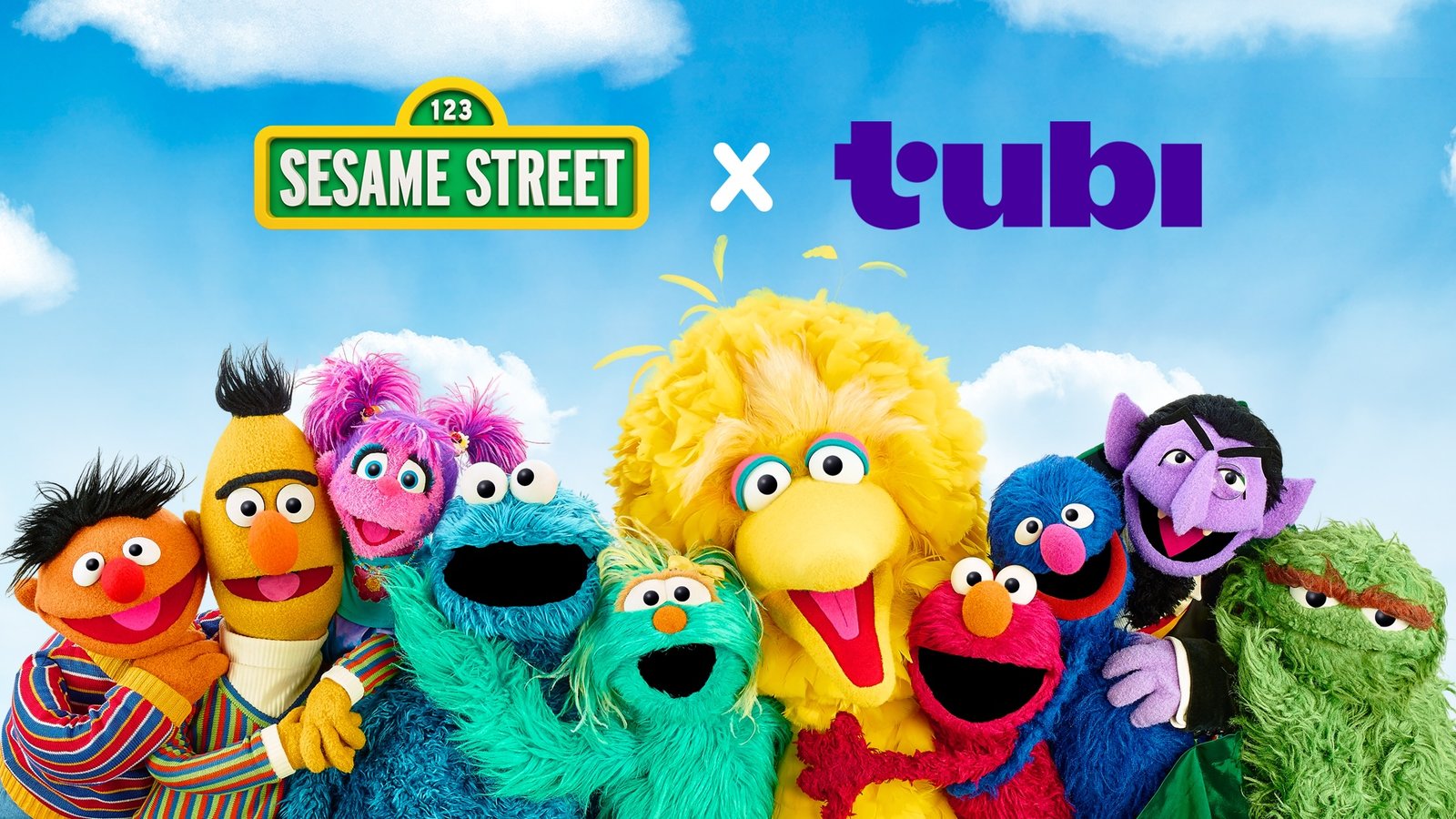
Tubi is betting that viewers are feeling nostalgic for old-school episodes of Sesame Street.
The free, Fox-owned streamer is bringing select episodes of seasons one through 38 of the iconic children’s series to its platform starting Wednesday, April 1, The Hollywood Reporter has learned. Two hundred fifty old-school Sesame Street episodes, aired between 1969 and 2007, will be available on the platform as part of the one-year deal.
Every quarter, 10 percent of the available episodes will be swapped with new ones, bringing additional old-school favorites to the fore.
“Few brands have shaped young minds and sparked imagination quite like Sesame Street,” Tubi’s chief content officer Adam Lewinson said in a statement. “By bringing hundreds of episodes to Tubi for free, we’re giving today’s kids access to joyful, foundational learning while inviting parents to share a piece of their own childhood with the next generation.”
Some notable episodes that will be available on the platform include the series’ 1969 premiere, “Gordon Introduces Sally to Sesame Street.” The 1988 episode when characters Maria and Lewis get married (and Elmo serves as the ring-bearer) will be on offer, as will the 1980 episode when Star Wars characters C-3PO and R2-D2 visited the Street. That’s not to mention one of the series’ first big on-location shoots, 1978’s “Big Bird Goes to Hawaii.”
Sesame Street, produced by the New York-based nonprofit Sesame Workshop, has aired on PBS since its debut in 1969. But streaming platforms have shown deep interest in carrying the series in the last decade or so as well. Starting in 2015, HBO partnered with the series for several years to serve as its first window before the show went to public-access television.
After HBO declined to renew its deal, Netflix stepped in to air new episodes alongside PBS in 2025 while that year YouTube also inked a deal with Sesame Workshop to air classic episodes.
The Tubi deal demonstrates just how enduring the power of Big Bird and Elmo is. The move additionally aligns with polling released by Tubi and The Harris Poll earlier this year that emphasized viewers’ interest in watching nostalgic storytelling. The poll found that 97 percent of respondents were interested to watch projects released more than 10 years ago and that 79 percent of respondents thought streamers should resurface old, beloved projects and not just promote new shows and films.
“For more than 55 years, Sesame Street has been making trusted, joyful learning accessible to every child,” Sesame Workshop chief operating officer Joseph Giraldi said in a statement. “Bringing Sesame Street to Tubi allows us to expand our reach and impact — and we are thrilled that our beloved characters and proven educational media will now be available to even more children, families, and fans.”