Tag: Entertainment-HollywoodReporter

  • How Scriptation Broke Hollywood’s Addiction to Paper

    How Scriptation Broke Hollywood’s Addiction to Paper

    Call him the anti-paperboy.

    Steve Vitolo first came from Boston to Los Angeles as another writer with a dream, starting as an assistant when he began to notice a disturbing trend on set. “On this one show, we kept printing a revised script every single night for 100-plus people, 50 pages. So every single night, it was literally 5,000 sheets of paper that would then be obsolete by the next day,” he recalls, as he was tasked with the script delivery.

    That was more than a decade ago now, with each new line of dialogue or director’s note resulting in massive paper waste — and others around him also waking up to the problem, without much of a solution. Which led Vitolo, who would go on to write for shows including Black-ish and Hot in Cleveland, to ask, “Why are we writing scripts digitally and then printing it on paper? Who uses paper now? We’re all using computers.”

    And so Vitolo — already with a love of tech and background working on websites — co-created Scriptation (and now serves as its founder and CEO). The software allows actors, directors, writers and crews to take notes and mark up their scripts digitally while easily migrating those annotations over to revised versions. The app also enables people to add photos, voice memos and various other personalized features to their documents — appealing even to those who aren’t necessarily making a choice to be sustainable but are drawn in by the ease. It’s always been that two-pronged approach, looking to solve both productivity and environmental problems and reach beyond just the eco-conscious community.

    The company launched in 2016 and gained traction during the COVID shutdown, when people had a moment to learn a new technology. It took time, trying to convert an entire industry one by one — in what Vitolo describes as “this ground-up thing” — but word slowly spread, and today it has 25,000 active monthly users across more than 50 countries.

    From April 2023 to this April, Scriptation users have eliminated more than 120 million sheets of paper from production sets worldwide, according to Vitolo; last year’s total of 48 million sheets alone equates to more than 5,700 trees preserved, more than 5 million gallons of water conserved and 3.3 million pounds of CO2 emissions avoided. On a personal level, each Earth Month, beginning in 2024, Scriptation has sent users a Green Impact Report (à la Spotify Wrapped) to estimate their own personal water, waste and carbon savings.

    And new innovations are coming, as this spring Scriptation launches Playback, a feature that lets users listen to scripts read aloud in customizable voices (via AI). It comes at the request of executives who want to review scripts during their commute and saves them from reading on paper at home.

    Word-of-mouth and listening to industry feedback has been key to Scriptation’s Hollywood success, with Michael B. Jordan, Kathy Bates and the teams behind Hacks, Dexter and Saturday Night Live as effusive supporters.

    Hacks co-creator Lucia Aniello — who along with fellow showrunners Paul W. Downs and Jen Statsky has had a longtime commitment to sustainability on the show — says she learned about Scriptation through her assistant director and was drawn in both by the program’s organizational benefits and the fact that “I have always felt there was too much paper waste” on sets. “There will always be something lovely about having a physical script in your hand, but with the endless revisions needed, it just feels irresponsible to print them out for every iteration,” she adds. “Let’s save the trees for the first and last drafts, in my opinion!”

    Jennifer Phang, a director and member of the DGA’s Sustainable Future Committee, became aware of the software from a VFX supervisor on one of her sets and was impressed by the way “everyone was walking around with their iPads making notes; they looked so cool, everything was so clean and kept-together.” Though she acknowledges the additional step of having to make sure the iPad is charged every day, Phang has been using it on her projects — which include episodes of The Boys and The Flight Attendant for years and adds, “If you see all the paper distributed in any given production office, it can be a lot. You could be saving reams and reams and reams of paper by going paperless on a production.”

    Scriptation also has spread its gospel though the Hollywood guilds and various other industry organizations, putting on educational webinars and giving on-set presentations. Last year, the company launched a Brand Ambassador Program with 40 entertainment professionals and partnered with Green Rider, a U.K.-based movement pushing for sustainability on sets.

    The Green Rider campaign was co-founded by actor-writer Danusia Samal (The Great) and is an agreement — largely focused around travel, energy, waste (where Scriptation comes into play), food and storytelling — “that’s sent to production when the job is offered or as part of the deal process,” Samal explains. It’s not an official contract but more of an approach of using talents’ leverage to make sustainable changes on set. Olivia Colman, Benedict Cumberbatch, Bella Ramsey and House of the Dragon’s Emma D’Arcy are among the stars who have signed on, and the Green Rider is eying an expansion to the U.S. soon after discovering a way to more solidly lock in sustainable commitments.

    Despite the improvement over the past decade, though, it’s been a challenge to fully rid Hollywood of paper.

    “Anyone outside of [the industry] will be like, ‘Why are we still using paper scripts?’ But it is pretty common, and that is honestly our biggest competitor — paper,” Vitolo says. “It’s the way it’s been done, and the industry is a little slow to evolve. We’re [visiting] kids shows, and the kids have paper scripts; it’s like, ‘But they’re the ones on their phones all day!’ ”

    In 2022, Scriptation launched a pledge — with several major stars and directors on board — to get Hollywood paperless by 2030, and its founder is confident the industry can get there, though he sees some still using paper scripts “as a crutch” and resisting the push to learn a new technology.

    “If people are set in their ways and their workflows, you don’t want to say, ‘You have to do this,’ because that’s also bad. It’s like, ‘Here are all the reasons why you should do this,” and you just have to make them feel like that is the obvious choice,” Vitolo says of his approach. “It’s still a battle trying to get people away from their scripts that they hold on to dearly. But we’re working on it — and I’m not against shaming them.”

    This story appears in The Hollywood Reporter’s 2026 Sustainability Issue. Click here to read more.

  • The Secret to Rebuilding in L.A.’s Wildfire Era: “Home Hardening”

    The Secret to Rebuilding in L.A.’s Wildfire Era: “Home Hardening”

    The fires that destroyed his family’s Pacific Palisades home were still burning when Ross Greenberg and his wife made up their minds: They were going to rebuild.
     
    Yes, there were permitting challenges and headaches to soothe along the way, but quick decision-making and a year-plus-long hustle has placed them near the finish line on Iliff Street. “People are shocked when I tell them that we’re almost done,” the TV producer and co-founder of toy and board game IP company Perfect Game says on a recent afternoon over Zoom. “They can’t believe it. We’re getting a lot of, ‘What do you mean you’re almost done? How?’ We’ve worked really hard.”

    “Hard” being the operative word. The work — done in collaboration with Lannen Construction and architect Kevin Oreck — placed an emphasis on sustainability, particularly the notion of “home hardening.” It’s a strategy of retrofitting or building a home using fire-resistant materials and construction techniques designed to protect properties from embers, heat or direct flames.

    “I’m one of the first homeowners nearly complete, so we’ve been faced with so many first-mover problems, but we’ve been able to get it all done,” explains Greenberg of efforts that came after the Palisades and Eaton fires claimed nearly 7,000 homes in L.A. “I’ve basically had to become a mini expert on how to rebuild your home.”

    He credits Lannen Construction’s Lee Horvitz — a former CAA agent who left the industry in 2016 to work first in real estate and then in construction — as a “linchpin” in his rebuild and Oreck (“who we absolutely love”) for guiding them through the process. Greenberg rolls through the measures they took to protect it from future wildfires: no vents or eves; permanent dehumidifiers in the attic; a Class A clay tile roof; an indoor sprinkler system; concrete masonry unit wall; drought-resistant landscaping; stucco exterior with no wood; noncombustible exterior gates; solar and battery features; electric appliances; double-paned, tempered glass windows; underground power lines and more.

    Interior shots of the new home.

    Architect Kevin Oreck

    “I believe that home hardening is the next evolution of sustainability and green building, because a large portion of Los Angeles is in high fire zones,” says Greenberg, whose résumé also includes tenures at Beyond Productions and All3Media America. “In our neighborhood, we never thought in a million years that we were going to lose our house — never. But since it happened, it forces you to really have to consider whether or not a fire could come back. Is it going to try to burn us down again? You have to put in these mitigating efforts, but they work hand in hand with the sustainability efforts. The purpose is really to make sure that your house can withstand whatever’s thrown its way.”

    Greenberg likens it to making the home into a fortress without looking like one. “Our rebuild is beautiful and it looks like a normal house. You want to have all the comforts and conveniences of your last house. There are a just a few things that need to change,” says Greenberg, who is married to Danielle Amerian, an independent producer and writer who previously worked for Di Novi Pictures, Discovery Channel and John Goldwyn Productions.

    Greenberg and his wife purchased their home in 2021, and it had been a journey from the jump. “It was actually a hoarder house,” Greenberg notes. “A woman had lived there for 27 years and it was filled floor-to-ceiling with boxes. Her parents’ remains were in a USPS box in the living room. It was crazy.”

    And unhealthy. “Black mold, fungus, lead,” he added of the home’s dire state. “She really destroyed the place.” But Greenberg and his wife saw the potential and knew how difficult it was to find a prime spot in Pacific Palisades, so they went through with the purchase. They moved in May 2022 and immediately set about renovating and “ripping out all the bad stuff” inside the one-level, Spanish-style home built in the 1940s. They put in months of hard work and ended up loving it there.

    When the fires broke out on Jan. 7, 2025, Greenberg was in Brentwood while his wife was at home. He managed to make it home in time to grab a couple of suitcases — a shared one for him and his wife, and another for their two children — and flee to his in-laws’ home nearby.

    “We were glued to the TV all night,” Greenberg recalls. “I woke up the next day and turned on the news on NBC, and for a split second, I could see they were on my block.” He decided to race to his property and see what he could do as a last-ditch effort. He arrived to devastation. “As I got to our street, everything was on fire. House is completely gone. My car was in the driveway — gone. It was all rubble.”

    Greenberg evidently leaned on his professional experience as a veteran producer and problem-solver and leapt into action rather that crumbling under his emotions. His first call was to his insurance company, and the second was to Horvitz, someone he had known for more than two decades from working in entertainment. He remembers Horvitz reassuring him by saying, “We’re going to take care of you,” and suggesting a first order of business: Hire an architect before demand skyrockets. After a series of calls, Greenberg tapped Oreck, and they got started despite the uncertainty in the air.

    “We don’t know how long it’s going to take or how much money we will get from insurance or how it will all work out, but the decision was made,” he says, adding that they landed on it based on a variety of factors including their children’s school remaining safe nearby, having equity tied up in their home and wanting to stay in the Palisades. “We loved our house and didn’t really want to be anywhere else.”

    The rebuild, a Spanish colonial revival-style home with a courtyard and separate studio house, is nearly complete with final inspections on the calendar. Then come utilities and power, followed by moving trucks, hopefully this summer. “The motivation from the first day has been for our family. We have kids and we want to get them home,” he says. “Our house is in a visible spot, and we’ve had people ask us about the progress when they’ve driven by. It gives our neighbors hope, almost like, ‘You can do it, too.’”

    This story appears in The Hollywood Reporter’s 2026 Sustainability Issue. Click here to read more.
  • Illinois Unveils Green Tax Credit for Movies and TV Shows

    Illinois Unveils Green Tax Credit for Movies and TV Shows

    Illinois is rolling out a sustainability tax credit for films and TV shows, a first in the country.

    Productions that meet certain criteria designed to incentivize sustainable filmmaking practices are eligible for a five percent uplift, making the maximum tax incentive 45% of eligible costs.

    As Hollywood’s presence in Illinois grows, state lawmakers last year expanded the film and TV subsidy program to include the uplift. According to ProPro data released last month, the state, which hosts three NBC Chicago procedurals, started off the year flat but saw a slight uptick in production spend year-over-year. Expenditures reached a record-high $703 million in 2025.

    To qualify, productions must hire a qualified sustainability company and coordinate a set visit by the Illinois Film Office. The company is required to complete a sustainability scoresheet and a carbon calculation report, among other things, within 30 days of the completion of filming. 

    A few examples of practices that could score a production points: minimizing waste, reducing emissions through efficient transport and equipment, smart material use and responsible food practices.

    “The thing about the film industry that’s always bothered me is the waste,” says Illinois Film Office deputy director Peter Hawley. “Food waste. Paper and plastic waste. Fuel waste. It’s always been a problem.”

    Hawley estimates that adopting sustainability practices incentivized by the uplift may cost productions one to three percent more, though it’ll be offset by the five percent bump to the base credit.

    “Illinois is a prime destination for film and television productions, and we’re proud to be the first state in the nation to incentivize sustainability in the industry,” said Gov JB Pritzker in a statement. “Illinois is leading the way toward a greener future – one that promotes economic opportunity and environmentally sustainable productions at the same time.”

  • ‘Grey’s Anatomy’ Star Kevin McKidd to Lead ITV Thriller ‘The Only Suspect’

    Grey’s Anatomy star Kevin McKidd will star in a new ITV thriller, The Only Suspect, adapted by Trigger Point‘s Simon Ashdown from Louise Candlish’s novel.

    Produced by Red Planet Pictures, a Fremantle company, the show is set in a leafy London suburb and follows devoted couple Alex and Beth, whose picture-perfect life hides a devastating truth. “Moving between the present day and mid-90s Camden — at the height of Cool Britannia — the story opens during the sweltering summer of 1995, when a young man buries a body during a violent storm,” reads a plot synopsis.

    It continues: “30 years later, another heatwave grips a very different world. The abandoned railway track where the body was hidden, running behind Alex and Beth’s street, is being transformed into a nature trail, spearheaded by Beth herself. What is a triumph for the neighbourhood instead threatens catastrophe for Alex. Because Alex is the young man who buried the body.”

    The Only Suspect is said to explore obsession, deception, betrayal, the consequences of the recklessness of youth and secrets that refuse to stay hidden.

    McKidd, also known for Trainspotting, said the project feels like a “coming home.” He continued: “As an actor, the complex and multilayered role of Alex is exciting to explore and I can’t wait to collaborate with Farren, the whole team at Red Planet Pictures and an amazing ensemble of great British actors.”

    The four-part drama will be executive produced by Belinda Campbell and Tom Mullens on behalf of Red Planet Pictures, and Polly Hill and Huw Kennair-Jones for ITV.

    The series will be distributed internationally by Fremantle, with filming set to begin in London this spring.

  • ‘Hulk Hogan: Real American’ Review: Netflix Docuseries Is More Interested in Celebrating Donald Trump Than Illuminating the Man Behind the Wrestling Icon

    ‘Hulk Hogan: Real American’ Review: Netflix Docuseries Is More Interested in Celebrating Donald Trump Than Illuminating the Man Behind the Wrestling Icon

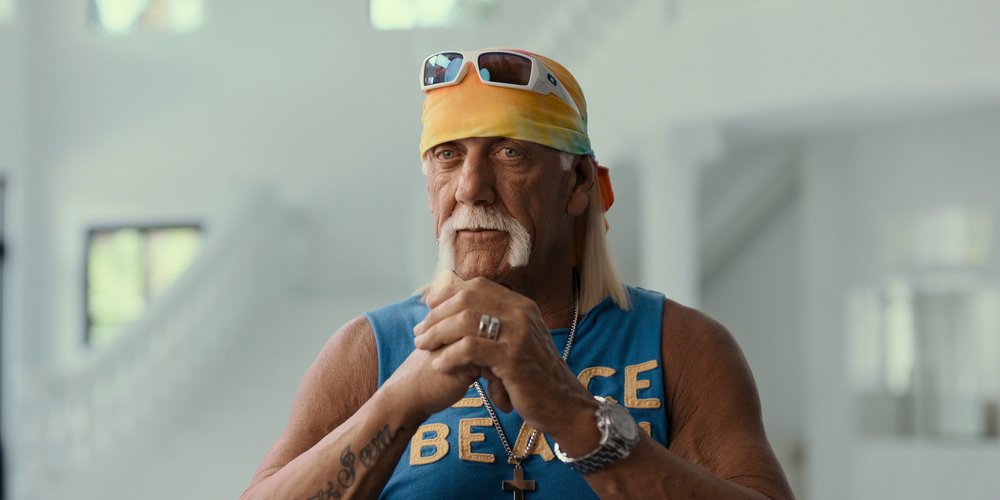
    Netflix‘s Hulk Hogan: Real American, Bryan Storkel’s four-part tribute to the late wrestling legend, is not a documentary for people who especially care about “good” documentaries.

    It’s a documentary for people who care about Hulk Hogan — but only truly care in-depth about the admirable parts of Hulk Hogan’s mythic life and will surely be happier with a mediocre documentary that accentuates those parts, rather than a good documentary that offers substance or depth.

    Hulk Hogan: Real American

    The Bottom Line

    A four-hour puff piece.

    Airdate: Wednesday, April 22 (Netflix)
    Director: Bryan Storkel

    And Hulk Hogan: Real American is absolutely that mediocre documentary, so enjoy!

    Put a different way, here are three key data points regarding Hulk Hogan: Real American: Firstly, the title is wholly in earnest and not an interrogation of what it means to be Hulk Hogan and what it means to be a “real American,” for better or worse. Secondly, the documentary is produced “in association” with WWE Entertainment, which has a lucrative partnership with Netflix. Thirdly, the president of the United States appears in the documentary — a low-energy appearance that would have caused a director with journalistic instincts to ponder, “If I interview the president of the United States and he’s a dismal interview subject, is it okay to cut the president of the United States?” Instead, he’s here amply and substance-free.

    The truth is that I’m probably the only Netflix subscriber to watch Hulk Hogan: Real American primarily because of Storkel’s name. The director, and wife Amy, worked together on the entertainingly silly The Pez Outlaw and the recent SXSW premiere I Got Bombed at Harvey’s, two docs that chronicled eccentric, larger-than-life characters with distinctive style and admirable empathy.

    Hulk Hogan: Real American has no appreciable style to speak of and, instead of empathy, it has admiration; those aren’t the same things — at least not if you’re attempting to create a nuanced portrait of a complicated life. The fourth episode of Hulk Hogan: Real American even trots out Werner Herzog to give a thesis statement for a far better documentary that I wish Herzog had made.

    “In the life of Hulk Hogan, what is reality? What is the real truth? Strangely enough, emotions are always truthful no matter how crazy and implausible the story might be. And searching for truth gives us dignity, gives us meaning,” Herzog says, in exactly the way you’d expect him to say it.

    The suggestion here — and in the Netflix logline for the series that begins “Before he was Hulk Hogan, he was Terry Bollea” — is that Hulk Hogan: Real American is going to dig deeply into performativity, American celebrity and the cult of professional wrestling. Instead, Hulk Hogan: Real American mostly talks about Hulk Hogan, not the human being beneath the bandanas (Terry likes bandanas, too) and yellow tights, and leaves us with the understanding that Terry Bollea was basically Hulk Hogan with the volume turned down by 15 to 20 percent. As revelations within searches for the truth go, it’s anticlimactic.

    Hulk Hogan: Real American does just fine with the easy parts of Hulk Hogan’s life and celebrity — the unprecedented rise and extended plateau, during which he was one of the most recognizable and possibly one of the most beloved men in all of popular culture.

    Boasting large quantities of home movie footage and early wrestling materials, plus exhaustive access to Hogan, including the last interviews he conducted before his death in July 2025, the doc charts his journey from oversized Florida bass musician Terry Bollea to early wrestling personae including The Super Destroyer, Terry Boulder and The Incredible Hulk Hogan. (No mention is made of the legal agreement between Hogan and Marvel regarding use and presentation of the Hulk name, a footnote I’ve always found very amusing.)

    I’m an ’80s boy who watched an ample amount of wrestling from that period, as well as his Saturday morning animated series Hulk Hogan’s Rock ‘n’ Roll Wrestling and his various media-saturating commercials and cameos, so I have no trouble stirring up nostalgia for The Hulkster and the rise of Hulkamania. An awful lot of the biggest names in Hogan’s sphere passed away relatively young, and it’s hard not to miss Andre the Giant and Randy Savage and Roddy Piper, among others.

    A lot of Hogan’s peers make appearances, from Jesse Ventura, on his best behavior to an unconvincing degree, to Jimmy Hart and Bret Hart and Ted Dibiase, while several more contemporaries feature in an extended “People find out Hulk Hogan died and nod sadly” montage in the finale. But for all the respect people hold him in, very few of those contemporaries are all that candid or voluble about Hogan.

    Linda, Hogan’s first wife, is an excitable and constant presence, as is son Nick, but daughter Brooke is nowhere to be seen. It’s one thing for the documentary to say that it wants to introduce us to Terry Bollea as a contrast to Hulk Hogan, but there are very few people here who actually know/knew Terry Bollea — and for most of its first three hours, the doc just conflates the two without qualification.

    A bigger absence is anybody with the last name “McMahon,” particularly Vince. Brooke Hogan and Vince McMahon are heard in unattributed audio, exactly enough so that people who don’t pay attention will be under the impression that they participated in the documentary, even if they definitely did not. A variety of WWE figures, including Bruce Prichard and Paul “Triple H” Levesque, are on hand to talk about Hulk’s importance to the company and the brand. Levesque even gets to discuss the decision to fire Hulk in the aftermath of various mid-’10s controversies, but when he claims that he fired Terry Bollea and not Hulk Hogan, it comes across as a distinction without a difference.

    At some point, it becomes remarkable how tentative the documentary is when it comes to anything genuinely problematic or troubling in Hogan’s life and image. His protracted legal tussle with Richard Belzer over an incident/assault on Belzer’s Hot Properties? Mentioned and acknowledged, but I’m not sure you’d understand why it’s notable. His testimony in Vince McMahon’s 1994 drug trial? Presented mostly as evidence of Hogan’s heroism and, owing to McMahon’s absence, raced through in a way likely to confuse anybody looking for a meaningful takeaway. A 1996 sexual assault accusation and counter-suit for extortion? Definitely not included.

    Those are biographical details that would come before the formal “downfall” segment of the documentary, which is the bulk of the disjointed, heavily glossed-over 78-minute finale. That episode races through the Gawker suit in a superficial and one-sided way that features no voices from the Gawker side and never mentions the name “Peter Thiel.” The documentary has no choice but to acknowledge the “racial slurs” angle of the sex tape story, though if you’re unsure what the “slurs” actually were, nobody says and the audio isn’t played. Hulk has an entire, 10-year second marriage that the documentary mostly pretends didn’t exist, while the affair that contributed to the end of his marriage to Linda is treated as a regretful one-off, talked about less than Linda’s own retaliatory affair.

    Anything dark in Hogan/Bollea’s life was cured by his third wife — as well as finding Jesus and finding Donald Trump. Those two events are treated as parallel, though the latter is more triumphant than the former; Donald Trump is a mumbling talking head here and Jesus is not.

    Hogan’s death, which took everybody — including the filmmakers — by surprise, is acknowledged as at least somewhat a product of the professional wrestling lifestyle, but it also imposes a finality and a reverential tone that does the documentary no favors.

    There’s something poignant about all the footage of an aging Hogan being propped up by younger wrestlers in the ring, but being unable to get out of the spotlight due to financial need and contractual obligations. There’s a version of this documentary that could take a serious look at the toll of wrestling on Hogan and his prematurely aged and deceased colleagues. Maybe that documentary would have pondered the exploitation of these men (and a couple of women) over decades and how that might not have happened if professional wrestlers had successfully unionized in the ’80s. But that would have required Hulk Hogan: Real American to admit that one of the wrestlers who allegedly opposed that unionization effort was Hulk Hogan.

    There’s a smart and pragmatic documentary about Hulk Hogan, professional wrestling and the shaping of fin de siècle American identity (and the rise of Hulk’s buddy in the White House). Instead, we get this gap-filled piece of memorializing, corporate-backed hagiography. The Hulk Hogan: Real American target audience probably is happier this way.

  • Dave Mason, Traffic Co-Founder and “We Just Disagree” Singer, Dies at 79

    Dave Mason, the singer, songwriter and guitarist who first found fame with Traffic and was inducted into the Rock and Roll Hall of Fame as a member of the band, died Sunday. He was 79.

    “On behalf of his family, it is with deep and profound sadness that we share the news of the passing of Dave Mason,” said a statement from the family shared with Rolling Stone. “Dave Mason lived a remarkable life devoted to the music and people he loved.”

    No cause of death was given.

    Mason, who co-founded Traffic and wrote one of their best-known songs, “Feelin’ Alright,” later a hit for Joe Cocker, scored his own solo U.S. hit in 1977 with “We Just Disagree,” co-written with Jim Krueger.

    He recorded and performed with the likes of Paul McCartney, George Harrison, The Rolling Stones, Jimi Hendrix, Eric Clapton, Michael Jackson, David Crosby, Graham Nash, Steve Winwood, Fleetwood Mac, Delaney Bramlett and Cass Eilliot.

    Born May 10, 1946, in Worcester, England, David Thomas Mason fell 20 feet from a ceiling loft at the age of 5, bending a hipbone and contacting a rare disease that landed him in a hospital for 18 months and forced him to learn how to walk again.

    His initial dream was to become a member of the Royal Air Force, but at 16, he began to play guitar and sing, and by the following year, was a working musician in his first band, The Jaguars, before forming The Hellions, striking up a lifelong friendship with Jim Capaldi.

    The two wrote their first song together, “Shades of Blue,” and recorded it as a B-side for their Pye Records single, a cover of Jackie Deshannon’s “Daydreaming of You,” produced by rock gadfly Kim Fowley. The two continued to work as a team, forming yet another group, The Deep Feeling, before hooking up with two Capaldi acquaintances, Winwood and Chris Wood, to form Traffic.

    Traffic’s mythology began when they retreated to a secluded stone cottage in the countryside to write and rehearse material for their classic 1967 debut, Mr. Fantasy. The group’s first single was the Winwood/Capaldi-penned “Paper Moon,” followed by Mason’s “Hole in My Shoe,” which went to No. 2 on the U.K. chart.

    Mason’s whimsical melodies, light feel and mellow vocals provided a contrast to Winwood on his three tracks, “Utterly Simple,” “House for Everyone” and “Hope I Never Fine Me There,” demonstrating his virtuosity on sitar, vocals and guitar.

    Mason suddenly quit the band after their debut album over artistic differences with Winwood, recording a solo single, “Little Woman,” for Island Records in 1969, the B-side of which, “Just for You,” appeared on Traffic’s third album, Last Exit. Mason had rejoined the band briefly during sessions for their second, self-titled album (which included his “Feelin’ Alright”) before leaving again for a solo career and moving to the U.S. in 1968. When Traffic came over for their first stateside tour in March, he rejoined the band for a handful of songs.

    When Traffic broke up again in late ’68, Mason, Capaldi and Wood teamed with Mick Weaver in the short-lived Wooden Frog, while Winwood joined the super group Blind Faith with Eric Clapton and Ginger Baker.

    During this period, Mason was active as a session player, turning his friend Jimi Hendrix on to Bob Dylan’s “All Along the Watchtower” and playing 12-string acoustic guitar on the recorded version. He also appeared, though was uncredited, on the Rolling Stones’ Beggars Banquet through his relationship with Traffic producer Jimmy Miller, and he also played on George Harrison’s All Things Must Pass with Clapton.

    He sang on both Hendrix’s “Crosstown Traffic” and The Beatles’ “Across the Universe.” Other cameos included work with Graham Nash (“Songs for Beginners,” “Wild Tales”), McCartney (“Venus and Mars”), Joe Walsh (“You Can’t Argue With a Sick Mind”), Ron Wood (“Gimmee Some Nick”), Clapton (“Crossroads”) and Stephen Stills (“Thoroughfare Gap”).

    Having relocated to Los Angeles in ‘69, Mason joined Delaney & Bonnie & Friends, playing lead guitar for the band when they opened for Blind Faith, where Clapton took an immediate liking to the group and eventually joined them. Mason’s “Only You Know and I Know” became a No. 2 hit for them and in 1970, he signed with Blue Thumb Records as a solo act, co-producing his debut album with Tommy LiPuma.

    The first result of the sessions was “World in Changes,” a single released in April 1970, followed by the classic Alone Together album in June. The LP peaked in the Top 25, and a second single, Mason’s take on his own “Only You Know and I Know,” became a Top 40 hit.

    While in L.A., Mason struck up a friendship with Cass Elliot, forming a duo that debuted at the Hollywood Bowl and then played the Fillmore East in New York, releasing the 1971 album, Dave Mason & Cass Elliot, before Mason briefly hooked up with a new configuration of Traffic for the live album, Welcome to the Canteen, featuring a version of “Feelin’ Alright” and “Sad and Deep as You,” recorded in the U.K.

    Mason decided to remain in England after the shows and was an original member of Derek And The Dominos prior to the release of the song “Layla,” when he was replaced by Duane Allman after recording several tracks as their second guitarist. “That’s when Eric was pretty fucked up,” said Mason. “And there was just never any rehearsing. I just got bored and returned to the States.”

    Legal issues with Blue Note Records had Mason withholding the follow-up to the successful album Alone Together, resulting in a lawsuit and the label releasing unauthorized “bootlegs” of the material such as “Headkeeper” in 1972 and “Dave Mason Is Alive” in 1973. Leaving Blue Note by declaring personal bankruptcy, he was snapped up by Columbia Records and legendary label exec Clive Davis just prior to his own ignominious departure from the label.

    The first album under the arrangement, 1973’s It’s Like You Never Left, included one of his all-time best ballads, with a harmonica solo from Stevie Wonder on the song “The Lonely One,” but it wasn’t until Let It Flow, released in 1977, that Mason struck paydirt, going platinum on the strength of the hit single, “We Just Disagree,” which peaked at No.12 on the Billboard Hot 100, and was later successfully covered by country singer Billy Dean.

    In 1979, Mason played himself in the roller disco movie Skatetown, U.S.A. opposite Scott Baio, Flip Wilson, Ruth Buzzi and, in his first big screen role, Patrick Swayze, writing and performing two songs, including the film’s theme. His single, “Save Me,” from the 1980 album, Old Crest on a New Wave, featured a duet with Michael Jackson.

    During this time, Mason was a major concert attraction, headlining Madison Square Garden and the L.A. Forum before growing taking a break, thanks to problems with drug and alcohol addiction. He returned to recording with 1987’s “Some Assembly Required,” on the Canadian Maze label (A&M in the U.S.), then hooked up with Voyager/Mca for Two Hearts later that same year. He briefly joined a new Fleetwood Mac lineup in 1994 and 1996 for tours and the 1995 album, Time, which included two songs he co-wrote.

    In 1997, Mason was scheduled to join Ringo Starr & His All Starr Band to perform “Only You Know and I Know,” “We Just Disagree” and “Feelin’ Alright,” but he was dropped from the lineup just before the tour started.

    In 2002, a Dave Mason Live at Sunrise DVD was released, as he continued to tour, performing 100 shows a year with his Dave Mason Band and, more recently, Traffic Jam. In 2004, Traffic and Mason were inducted into the Rock and Roll Hall of Fame by Dave Matthews.

    Mason released 26 Letters, 12 Notes, his first solo album in more than 20 years in 2008 and began to release some of his archival recordings since then, including 2014’s “Future’s Past,” and 2016’s “Traffic Jam,” both featuring new material and rerecorded versions of his most iconic songs.  

    Mason was active in a number of philanthropic pursuits, including an official supporter of Little Kids Rock, a nonprofit organization providing free musical instruments and lessons to public school children throughout the U.S.

    He was also a founding board member of Yoga Blue, which is devoted to teaching yoga and other holistic practices to those recovering from substance abuse. He also was a founder of Rock Our Vets, a charity helping supply food and clothing to homeless veterans and laptop computers for those aspiring to continue their education, as well as a suicide prevention program.

  • ‘Secret Lives of Mormon Wives’ Will Resume Production Following Filming Pause Amid Taylor Frankie Paul Investigation

    The Secret Lives of Mormon Wives will resume production following a pause initiated by an internal investigation surrounding Taylor Frankie Paul and Dakota Mortensen, The Hollywood Reporter has learned.

    Casting details were not made available, leaving Paul’s fate with the show still unclear. Details on when cameras will pick up were also not outlined.

    News that the Emmy-nominated Hulu series halted filming on its forthcoming fifth season broke in mid-March, amid an alleged domestic incident involving The Bachelorette star and her ex.

    At the time, a spokesperson for the Draper City Police Department told People that there is an open “domestic assault investigation” between Paul and Mortensen. They added that “allegations have been made in both directions” and “contact was made with involved parties on [Feb.] 24th and 25th.”

    After the alleged incident was made public, a video of the events leading up to Paul’s prior 2023 arrest was leaked, showing the reality star throwing barstools at Mortensen while her daughter was present. Hours later, ABC decided to pull season 22 of The Bachelorette, three days before its scheduled March 22 premiere.

    The next day after the video was published on TMZ, NBC News obtained audio of a Zoom call held on March 7 with the Mormon Wives cast and three Disney executives, where they voiced concerns of continuing the series with Paul amid the investigation. THR confirmed that Mormon Wives production launched their own investigation into the conflicting claims; Mormon Wives filming was to remained paused until concluded.

    Cameras were not up when Paul’s season of The Bachelorette was pulled by ABC, but that is not the only news from the Mormon Wives cast that has not been filmed amid the production pause. Notably, Jessi Draper’s husband filed for divorce (on the same day Paul’s season was yanked from air).

    The businesswoman and reality star went on Alex Cooper’s Call Her Daddy podcast Wednesday to discuss their split, and she also spoke about the recent headlines surrounding Paul and Mormon Wives.

    Draper spoke about the filming pause, clarifying that there were two breaks in production on season five. She explained that the first pause came from production “when we found out he filed a police report. So this was before it broke,” referring to news that a second domestic assault investigation was initiated by the Draper City Police Department following a February incident involving Paul and Mortensen.

    The second pause in production came from the Mormon Wives cast, Draper said. “A little bit before news broke, but we knew it probably was going to, us girls decided, so we went to production and the network and they were all so supportive,” she said.

    “Me and the girls, we did decide to stop filming when we found this out, because we were starting to hear things a little bit before it leaked, and we just didn’t want to be filming and say the wrong thing on camera, not knowing the whole story yet,” she explained. “We didn’t want to have to process all this information for the first time and then also be speaking about it. So we just thought for everyone’s mental health, let’s take a beat and not film right now.”

    The Mormon Wives star admitted that she does not know what all of the news circling Paul means for the future of the Hulu show, but that they were waiting for the dust to settle before jumping back into filming. However, she noted then that she would potentially feel comfortable to pick up cameras since the information is now public.

    Draper explained, “I think now we’re at a point where we’re like, ‘OK, the world knows and the info’s out there, and so now we’re good and we can speak on the things we know and we can talk about it in a real way,’ rather than before, we were like, ‘We don’t even know if this is gonna get out,’ so we didn’t know if we could even talk about it when we were filming. Now, we can.”

    On March 25, NBC News reported that Paul is under investigation for an alleged third domestic violence incident, also involving her ex Mortensen, that allegedly occurred in 2024. (All three alleged incidents have involved Paul and Mortensen.)

    More to come.

  • ‘Michael’: What Critics Are Saying About the King of Pop’s Biopic

    ‘Michael’: What Critics Are Saying About the King of Pop’s Biopic

    Michael is dancing its way to theaters later this week — and the critics are already talking.

    Following its world premiere, reviews were unveiled, but they appear to be more critical. In the new movie, directed by Antoine Fuqua, the story follows the late Michael Jackson‘s rise to fame from when he was a child in the Jackson 5 in the ’60s to becoming the King of Pop, who was widely recognized as the world’s biggest entertainer, before he died in 2009.

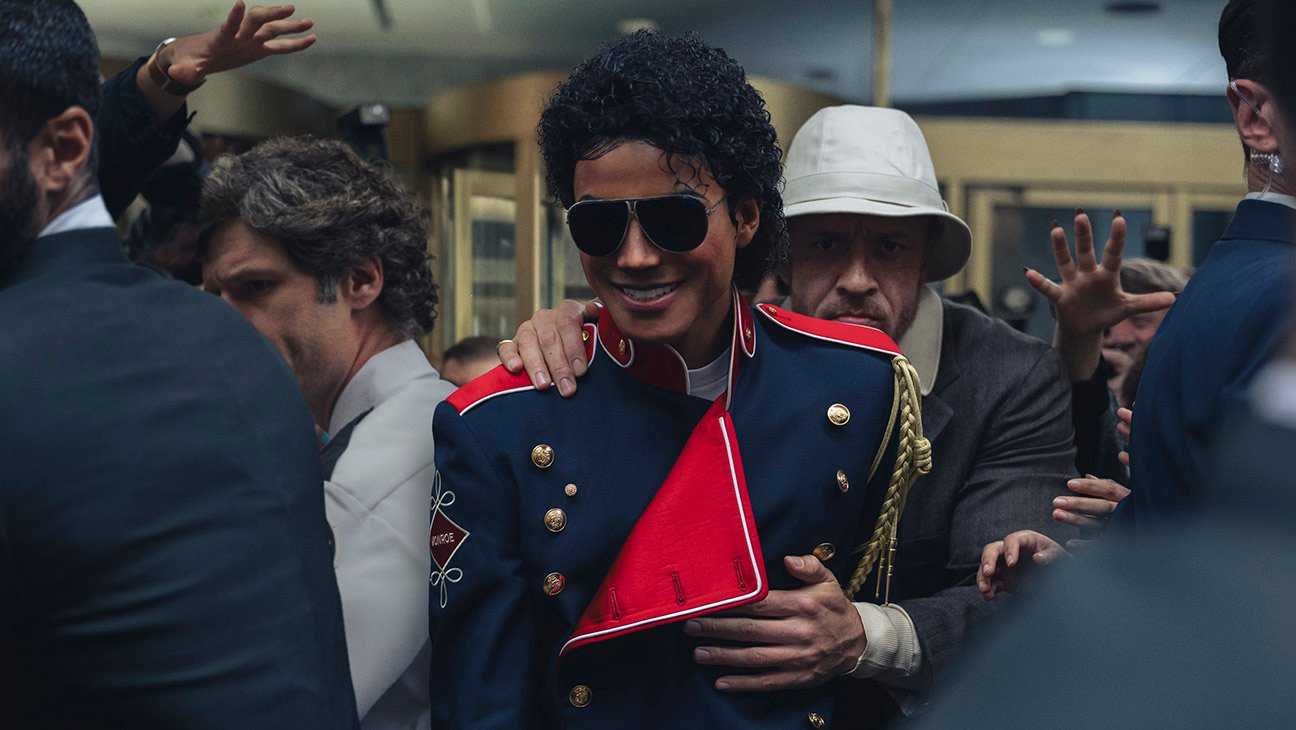
    Michael’s nephew, Jaafar Jackson, son of Jermaine Jackson, plays the superstar, taking over from Juliano Valdi, who opens the film when Michael was 10. More cast members include Miles Teller as attorney John Branca, Colman Domingo as Michael’s father Joe Jackson, Kat Graham as Diana Ross, Nia Long as Katherine Jackson, Laura Harrier as Suzanne de Passe, Kendrick Sampson as Quincy Jones and Amaya Mendoza as young La Toya Jackson. Michael’s sister, Janet Jackson, is notably missing.

    While many members of the Jackson family, who showed up at the Dolby Theatre premiere on Monday night to support the film, Paris Jackson, Michael’s only daughter, was absent. She has been vocal against the movie, previously speaking out about how she wasn’t involved with the movie, after reading a draft and giving notes about “what was dishonest/didn’t sit right with me and when they didn’t address it, I moved on with my life.”

    “It’s very important that everybody in the family was involved and took part in this to make sure you get it right,” La Toya Jackson told The Hollywood Reporter. “A lot of times people think they know the story and they read about things, but when the family’s involved, the family can say yay or nay.” But when asked about Paris Jackson’s comments, she noted, “everybody has their opinion and their choice.”

    La Toya Jackson, however, was seemingly very pleased with the film, especially Jaafar’s performance. “I was flabbergasted. I have to tell you that you think it’s Mike,” she said. “You forget it’s Jaafar, you think it’s Michael.”

    Michael has a 31 percent rating on Rotten Tomatoes as of Tuesday. Below, see what critics are saying about the movie.

    THR’s chief film critic David Rooney agreed with La Toya Jackson’s take, writing in his review, “Jaafar nails the sweet, soft-spoken voice with which Michael projected a childlike innocence and vulnerability, but also the single-minded focus with which he pushed his career forward. We see his natural affinity for children in fan interactions or hospital visits to pediatric cancer wards.”

    He added overall: “The film leaves itself open to accusations of making Michael a saint, which will not sit well with the cancel crowd. If you are unwilling to separate the art from the artist, this will not be a movie for you. But for lifelong fans who cherish the music, the movie delivers. Simply as a celebration of Jackson’s songs and stagecraft, it’s phenomenal, shot by Dion Beebe with visual electricity in the performance sequences. The music has never sounded louder or better.”

    USA Today’s Melissa Ruggieri wrote in her review that the film, “makes clear that Jackson’s arrested development began in childhood, when he reads Peter Pan by flashlight under the covers in the family’s home in Gary, Indiana. Later, he populates the family compound in Encino, California, with animals he views as friends, not pets. Too bad the blatant CGI versions of a llama, giraffe, python and yes, Bubbles the chimp are so cringeworthy that you forget to have empathy for Jackson, the lonely man-boy.”

    She later added, “Jaafar may share his late uncle’s megawatt smile, lithe frame and Bambi eyelashes. But his liquid dance moves – highlighted as he teaches gang members the footwork in the ‘Beat It’ video − and soft-spoken cadence are studied to perfection. This is not about nepotism.”

    Kevin Maher of The Times U.K. teased how Domingo portrayed Joe Jackson, writing in his review, “There are a handful of childhood scenes in which Jackson’s father, Joe is depicted as controlling and violent, which establishes one single dramatic beat for the entire film — will Michael ever escape from underneath Joe’s control?”

    He added a more critical take on the ending, “The music scenes nonetheless are quite brilliant and thrilling — Jaafar is an accomplished impressionist. Jackson was a once-in-a-generation genius and his musical legacy is quite safe — his sales spiked by 10 per cent during the Leaving Neverland controversy. In the end he probably deserved more, for better and worse, than this.”

    The Independent’s Clarisse Loughrey wrote, “While a final card states that ‘his story continues’ in what is for now a planned sequel, what the film does include are multiple sequences of the singer visiting sick children in hospital, alongside heavy references to the Neverland Ranch. But the ultimate question of how Michael chooses to depict Jackson in context of the allegations is surprisingly hard to answer.”

    “This is a frustratingly shallow, inert picture, a kind of cruise-ship entertainment, which can’t quite bring itself to show that Michael was an abuse victim, brutalised by his father and robbed of his childhood,” The Guardian’s Peter Bradshaw wrote in his review. “Perhaps this is because it would have a cause-and-effect implication, gesturing tactlessly at the story’s second half which may or may not happen in a couple of years, the part of Jackson’s life in which his behaviour was increasingly perplexing, dangling a baby over a hotel balcony — as well as facing sexual abuse allegations.”

    The New York Times’ Alissa Wilkinson also addressed the serious subject matter that was left out of the film. “The movie omits the really hard stuff that plagued Jackson; his scalp surgery after experiencing third-degree burns in 1984 now becomes mostly a driver of his success and determination to ‘shine my light, to spread love and joy, to heal,’ but we never witness the painkiller addiction that grew from it,” she wrote in her review, adding, “The movie itself becomes a tale of triumph and glory for someone everyone admired, rather than an estate’s attempt to scrub clean the life story of a star who has been multiply accused, in harrowing terms, of child sexual abuse. That same estate is the reason that an HBO documentary that gives space for two men who have accused Jackson to tell their story has been deleted from its streaming platform; you can’t watch it, because it might as well not exist.”

    “This isn’t really a biopic,” Rolling Stone’s David Fear wrote in his review. “This is the Passion of St. Michael, rendered with great fidelity to and emphasis on both Jackson’s undeniable suffering and equally undeniable talent. Jaafar Jackson does bear an uncanny resemblance to his late uncle, and clearly knows how to replicate his signature moves, his physical fluidity, his beaming smile reserved for fans, animals, and hospital residents. But watching Michael’s greatest hits — the Motown 25 showstopper, the ‘Thriller’ video choreography, the gang-member summit turned dance rehearsal that begets ‘Beat It’ — reproduced with such stunning accuracy is, frankly, a little depressing. You’re reminded of the first time you heard Jackson’s music, and how overwhelming the hooks, the production, the chops, the sheer energy that characterized his live performances and videos earned him the title the King of Pop.”

    Michael releases in theaters on Friday.

  • T-Mobile Deepens Its Promise of Fastest 5G Internet With Same-Day Delivery, Powered by DoorDash

    T-Mobile Deepens Its Promise of Fastest 5G Internet With Same-Day Delivery, Powered by DoorDash

    If you purchase an independently reviewed product or service through a link on our website, The Hollywood Reporter may receive an affiliate commission.

    In December 2025, T-Mobile implemented same-day phone delivery, powered by DoorDash as part of its 15-Minutes to Better program, the mobile provider’s effort to make switching carriers quicker and easier than ever. Now, T-Mobile Home Internet is continuing its DoorDash partnership by similarly offering same day delivery of its 5G Gateway, the small wireless device (used to power 5G home internet) that combines the capabilities of a modem and router (used to power traditional cable internet).

    To get T-Mobile’s fastest internet[1] — now available with same-day delivery powered by DoorDash — customers can take advantage of the new program that launched on April 9. Simply select the T-Mobile 5G Home Internet plan that’s best suited to your needs (more on each option below), with plans starting as low as $35 per month.[2] Once the order is placed, you can track their same-day 5G Gateway delivery in real-time. Once the Gateway device arrives, T-Mobile’s focus on speed and simplicity continues with a simple 15‑minute self‑install, one of the biggest draws of 5G home internet vs. cable.

    Beyond the internet provider’s new DoorDash partnership, T-Mobile is enticing customers to make the switch with a variety of other unique benefits. First, T-Mobile offers a 15-day worry-free test drive, meaning new users can test T-Mobile 5G Home Internet with no penalty. Plus, for customers who are currently under Big Cable contracts, T-Mobile will pay off any early termination fees up to $750.[3] And with the provider’s five-year price guarantee, customers who sign up now will have their rate locked in for at least five years, exclusions like taxes and fees apply.

    As for choosing which T-Mobile 5G Home Internet plan is the right fit, the three offerings are Rely (the most affordable), Amplified (extra value) and All-In (the best value). The plans start at $35 per month, $45 per month and $55 per month, respectively, which already includes a $15/month discount when bundling with voice and AutoPay, plus taxes and fees.

    While cable internet relies on wired connections, 5G instead uses the same cellular network as mobile phones to provide reliable connectivity where wires can’t reach. Check your address’s 5G eligibility here, and visit T-Mobile’s Home Internet landing page to further compare the Rely, Amplified and All-In plans, and to take advantage of DoorDash’s same-day 5G Gateway device delivery.

    1. Based on Ookla Speedtest Intelligence® data, 2H 2025. All rights reserved.

    2. with voice and AutoPay. Plus, taxes and fees.

    3. via virtual prepaid card. Allow 14 weeks from rebate submission.

  • ‘Texas Chainsaw Massacre’: ‘Obsession’ Filmmaker Curry Barker in Talks to Write, Direct

    ‘Texas Chainsaw Massacre’: ‘Obsession’ Filmmaker Curry Barker in Talks to Write, Direct

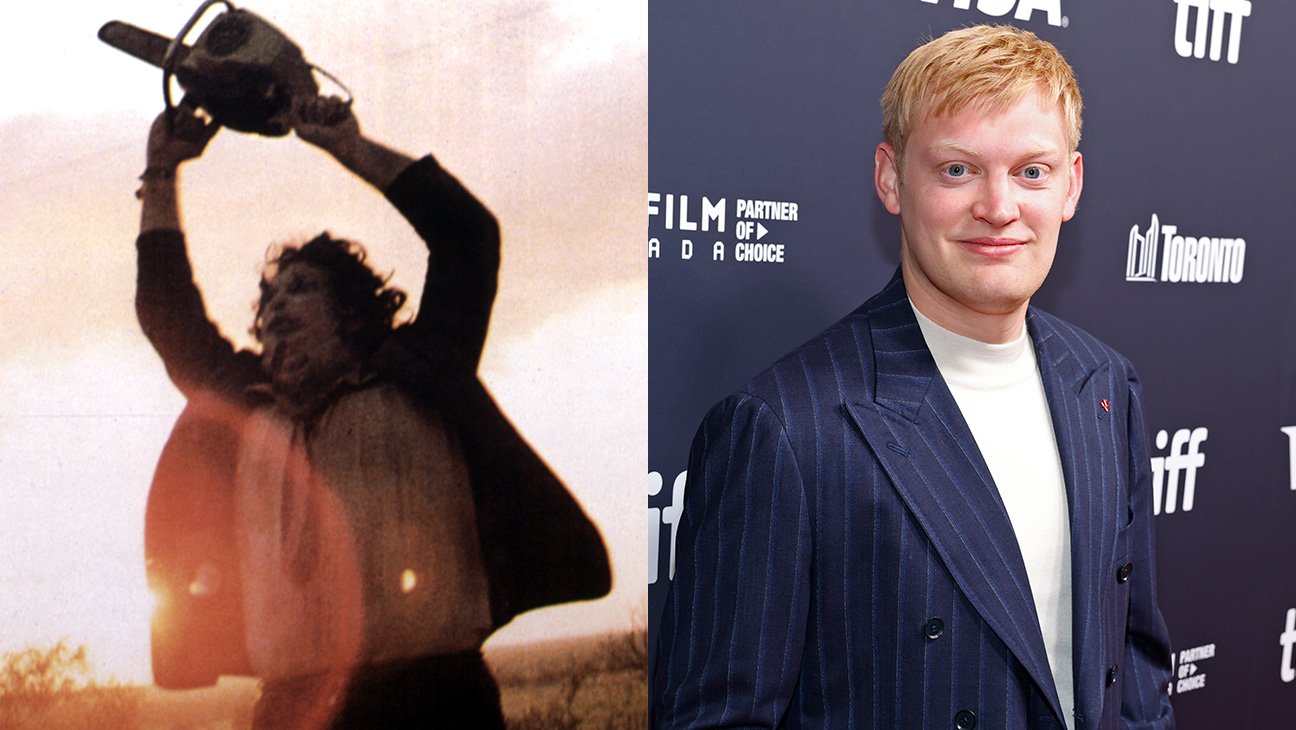
    Curry Barker is gassing up his chainsaw. Though the 25-year-old filmmaker’s much talked-about film Obsession is not yet in theaters, A24 is handing him the feature keys to storied horror property The Texas Chainsaw Massacre.

    Barker is in talks to write and direct his own take on Texas Chainsaw, that will stand separate from an A24 TV series from Glen Powell, Dan Cohen and JT Mollner.

    Barker has been on a rise rarely seen these days in Hollywood. After coming up in the world of YouTube sketch comedy, he shot an $800 horror movie and put it on YouTube for free, where it amassed more than 2 million views and caught Hollywood attention.

    He then became the toast of the Toronto Film Festival last fall, when his under $1 million budgeted movie Obsession became the biggest sale of the fest, going to Focus Features for around $15 million, a sum which makes it won of the biggest indie sales ever in terms of budget to purchase price ratio. The feature, which Barker wrote, directed and edited, is a Monkey’s Paw style tale of a young man who wishes that his friend would love him more than anything in the world, with the results ending in spooky disaster. A24 was among the finalists for Obsession, and the Texas Chainsaw move now puts them in business with the hot filmmaker. The hiring of Barker signals an intention to breath new life into the 50 year old franchise and perhaps speak to a younger audience.

    While Barker has so far gravitated toward original concepts, he has spoken publicly about his love of Texas Chainsaw. Details of his take on the property are not known, but he follows in the footsteps of horror auteur Zach Cregger, who is putting his own spin on Resident Evil over at Sony.

    Obsession opens May 15, and Barker is preparing to embark on a press tour. It’s been a whirlwind, as he just completed principal photography on his sophomore feature, Anything But Ghosts, which he wrote, directed and co-stars in for producers Jason Blum and Roy Lee.

    Lee will produce the new Texas Chainsaw along with his Spooky Pictures partner Steven Schneider. Stuart Manashil and Exurbia Films’ Pat Cassidy, Ian Henkel, and Kim Henkel will also produce. Ben Ross of Image Nation will executive produce.

    Texas Chainsaw is one of the more storied horror franchises in existence, that also happened to have scrappy independent roots. Made for only $150,000 in 1974, the original movie pushed the bounds of the genre and became one of the most profitable movies ever made.

    Numerous films have been made over the decades, some successful, some not, almost always outside the Hollywood system. When A24 landed the rights to the intellectual property, it marked a new chapter as it was now in the hands of a company known for elevated, thoughtful fare that also knows how to appeal to the Gen Z demographic.

    Barker is repped by Underground Management and UTA.