Tag: Engaget

  • iFi’s new GO Link 2 DAC is a cheap way to reap the lossless benefits of your Spotify plan

    iFi’s new GO Link 2 DAC is a cheap way to reap the lossless benefits of your Spotify plan

    Audio company iFi just introduced a new DAC (digital-to-analogue converter) that’s both smaller and lighter than its previous model, and only costs $59. The iFi GO Link 2 connects to a smartphone or other audio-playing device over USB-C and can instantly improve the listening experience on wired headphones.

    Wireless earbuds and music streaming services have normalized listening to your favorite songs at a lower quality. For anyone who doesn’t consider themselves an audiophile, that might not matter, but now that several streaming services offer higher sample rates and lossless audio, you might consider other ways of listening. In order to experience all the benefits of high-res or lossless audio, you need wired headphones, something that’s increasingly difficult when most smartphones only have a USB-C port. That’s where the iFi GO Link 2 comes in. The dongle plugs into a USB-C port and lets you connect a pair of wired earbuds while preserving your high quality audio at the same time.

    An iFi GO Link 2 DAC laid flat on a white background.

    iFi

    iFi’s new DAC is eight percent smaller than the previous GO Link and 29 percent lighter, approaching the size of Apple’s USB-C to 3.5mm Headphone Jack dongle. The GO Link 2’s built-in ESS Sabre DAC chipset is supposed to add “6dB of dynamic range between the loudest and quietest moments” and reduce distortion for clearer sound by up to 62 percent when compared to the original GO Link.

    Via iFi’s companion Nexis app on Android, the GO Link 2 can also be updated on the go and further customized with digital filters. The GO Link 2 supports two digital filters — one hybrid and one linear — so that you can adjust things to your preferred sound profile. You can also use the Nexis app to set volume limits when you’re listening with the DAC attached.

    The previous GO Link made it on Engadget’s list of the best DACs for Apple Music Lossless, and at the same price, the GO Link 2 seems like it could, too. The iFi GO Link 2 is available to purchase now for $59.
  • Netflix backs out of Warner Bros. Discovery bidding war

    Netflix backs out of Warner Bros. Discovery bidding war

    For anyone who has been following the soap opera unfolding between Netflix and Paramount Skydance over the past few months in their financial brinksmanship to acquire Warner Bros. Discovery, the saga may be nearing its end. Today, WBD said its board of directors have determined that the latest offer from Paramount Skydance amounted to the better proposal. The media outfit gave Netflix four business days to match Paramount’s terms, but the streamer didn’t waste any time in declining to raise its own bid.

    “We believe we would have been strong stewards of Warner Bros.’ iconic brands, and that our deal would have strengthened the entertainment industry and preserved and created more production jobs in the US,” the statement from Netflix  co-CEOs Ted Sarandos and Greg Peters said. “But this transaction was always a ‘nice to have’ at the right price, not a ‘must have’ at any price.”

    In addition to the purchase price of $31 per WBD share, Paramount’s latest offer also included a provision that it would cover the $2.8 billion termination fee that WBD would owe to Netflix for dissolving the existing merger agreement between the businesses. So rather than paying $82.7 billion to acquire the Warner Bros. part of the operation, it appears Netflix may walk away with no new content but padding its coffers with an extra nearly $3 billion.

    After Netflix’s initial offer, Paramount Skydance swooped in with a hostile takeover attempt of the entire Warner Bros. Discovery business. WBD rejected it, Paramount tried again. Several additional volleys between the involved parties occurred over the past few weeks. While WBD has not yet formally accepted Paramount’s offer — which will be subject to long-winded regulatory approvals sure to spark more drama — it seems the dust will soon settle for this chapter.

  • Google’s Nano Banana 2 is a faster version of Nano Banana Pro

    Google’s Nano Banana 2 is a faster version of Nano Banana Pro

    Google has launched its new image generation model, the Nano Banana 2, which is powered by Gemini 3.1 Flash Image. The company says the new model has the capabilities, world knowledge and reasoning of Nano Banana Pro, but it can accomplish tasks at “lightning-fast speed.” That enables rapid editing and the quick creation of various iterations using a single prompt.

    Nano Banana 2 will give more people access to capabilities that were previously exclusive to the Pro model. That includes Pro’s ability to pull real-time information and images from web searches to create, say, infographics and diagrams. It will also be able to generate texts on images for marketing materials and greeting cards.

    Google says Nano Banana 2 can maintain character resemblance for up to five characters in a single workflow, which could be especially valuable if you’re using it to create storyboards or visual stories. It can follow precise instructions for complex requests, as well, and can generate input with up to 4K in resolution with richer textures and sharper details than its predecessors could.

    Nano Banana Pro could already generate images so realistic, it’s almost impossible to tell that they were AI-generated. Google even had to limit its use due to high demand. Whether Nano Banana 2 can generate images that are markedly better than what Pro could create — and whether we could still tell if an image was made by AI — remains to be seen. The new model will replace Nano Banana Pro in the Gemini app, but Google AI Pro and Ultra subscribers will retain access to Nano Banana Pro for specialized tasks. It will also be the default model in Search for AI Mode and Lens, as well as in Google’s Flow AI creative studio.

  • The astronaut whose illness forced an early return from the ISS was Mike Fincke

    The astronaut whose illness forced an early return from the ISS was Mike Fincke

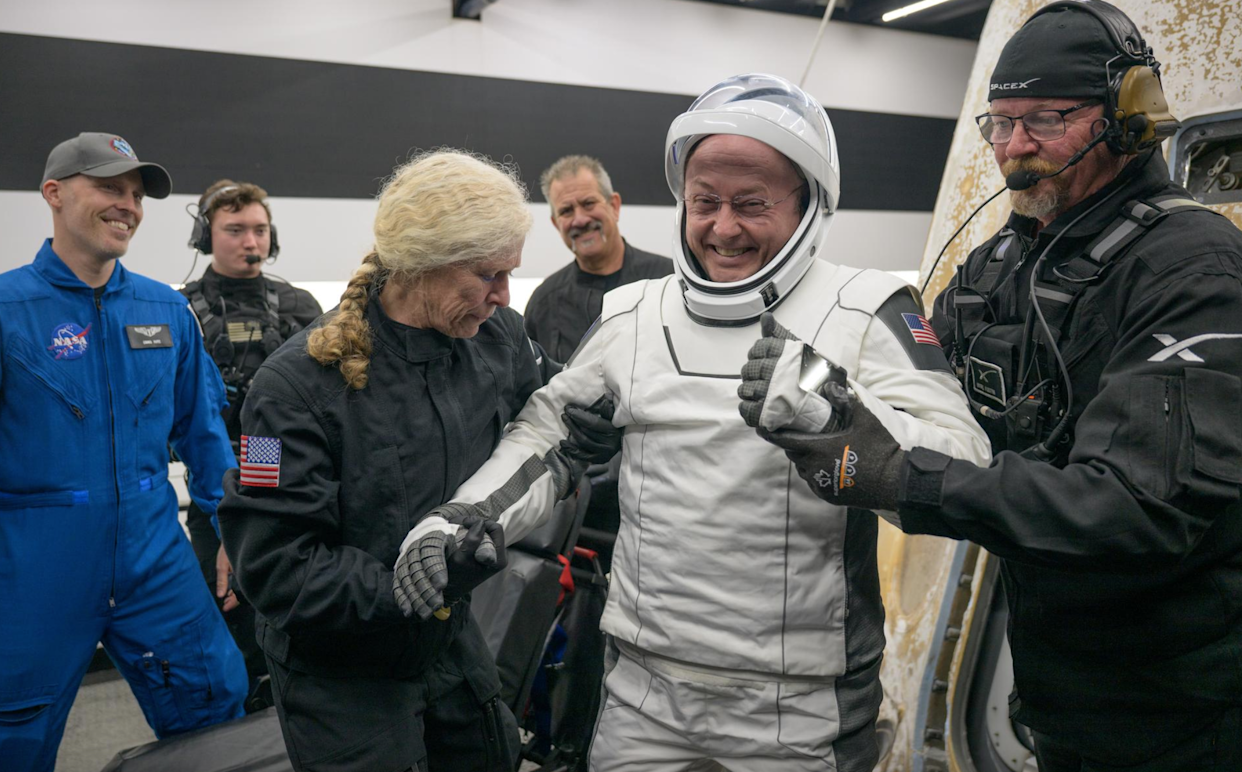
    NASA recently ended a manned mission to the International Space Station (ISS) a month early, citing a medical issue with one of the astronauts. The space agency just revealed that the impacted astronaut was Mike Fincke. This was the first medical evacuation in the history of the ISS.

    NASA wrote a statement saying that the astronaut experienced an unknown medical event on January 7 “that required immediate attention” from his fellow crew members. Fincke added that his “status quickly stabilized” thanks to the “quick response and the guidance” of the flight surgeons.

    However, the incident did force NASA to cancel a spacewalk planned for January 8. Soon after that, the agency announced it would be ending the Crew-11 mission a month early. The four-person crew included Fincke, NASA astronaut Zena Cardman, Japanese astronaut Kimiya Yui and Russian cosmonaut Oleg Platonov.

    They had been living and working aboard the ISS since August and were expected to stay until February. The crew returned on January 15, which was a decision made by NASA’s chief health and medical officer. Once the crew had landed, administrator Jared Isaacman said it was a “serious situation” but didn’t go into any detail.

    Fincke has said he is currently “doing very well” and still participating in standard post-flight reconditioning at NASA’s Johnson Space Center in Houston. “Spaceflight is an incredible privilege, and sometimes it reminds us just how human we are,” he said. “Thank you for all your support.”

    We don’t know what medical issue Fincke is going through, and it’s certainly his business and not ours. In any event, we wish for a speedy recovery.

    NASA also moved up the launch of Crew-12 to replace the prematurely-returned astronauts. That team docked at the ISS on February 14 and are scheduled to stay on the space station for around eight months.

  • AI robotics company started by Alphabet is joining Google proper

    AI robotics company started by Alphabet is joining Google proper

    Robotics company Intrinsic has announced it will be folding into Google as the company bets on the future of physical AI in manufacturing. The company focuses on software tools to make robots more affordable and easier to use, as well as using adaptive intelligence to help the robots perform real-world tasks.

    Intrinsic was started in 2021 as an Alphabet “Other Bets” project, part of a portfolio of high-risk and potentially high-payoff startups, Waymo among them. The project will now run as a “distinct group” within Google where it will leverage Gemini and Google Cloud while working closely with the Google DeepMind team.

    The company describes its platform as “the Android of robotics,” offering a universal canvas where developers can build apps for different robots, cameras, sensors and more. Meta has expressed interest in pursuing a similar business model.

    Also at the intersection of software and physical AI, the company aims to integrate adaptive intelligence into robots, helping them to perform real-world tasks. The goal is robots that can “perceive, reason and react to changes in processes and their environment.”

    The acquisition will complement Google’s past work in robotics like Boston Dynamics, which it sold off in 2017. The Google DeepMind team has also developed Gemini-based models for robotics in the past.

  • Tim Cook confirms a week of Apple product reveals

    Tim Cook confirms a week of Apple product reveals

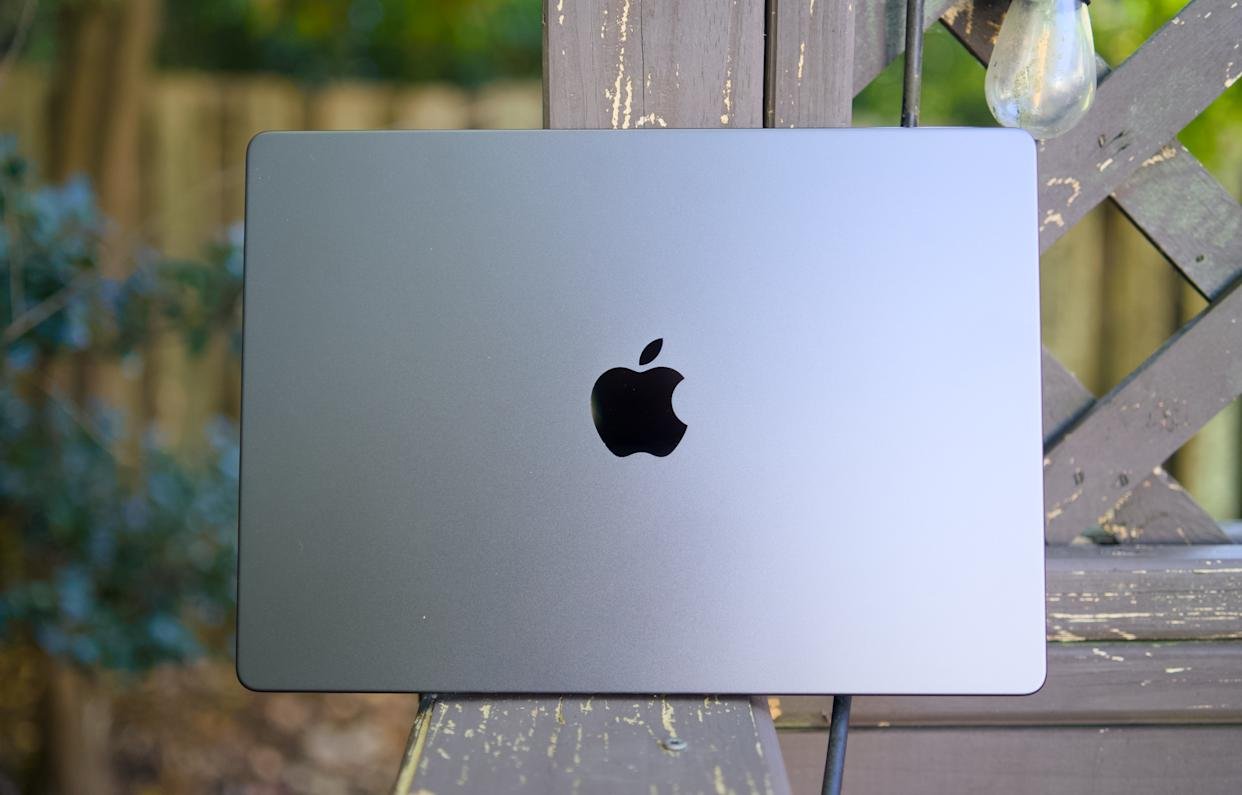
    Apple CEO Tim Cook has teased “a big week ahead” for Apple, starting on the morning of Monday, March 2. The company had already announced an in-person event for media and creators on March 4, while rumors had pointed toward Apple revealing at least five products over three days next week, so it looks like the stars are aligning for that to actually be the case.

    Cook all but confirmed that Apple is about to reveal its newest MacBooks in the coming days. His tweet features a short video of someone shaping an Apple logo on a surface that appears to have the company’s classic space gray colorway.

    We’re expecting to see a new MacBook Air next week, along with updated 14- and 16-inch MacBook Pros. It’s believed that the M5 Pro and M5 Max will debut in the higher-end devices. Apple may also be cooking up an entry-level MacBook that’ll be available in an iMac-style array of bright colorways. New iPads and the iPhone 17e could well be in the hopper too.

  • NVIDIA updates Shield TV after pledging further support

    NVIDIA updates Shield TV after pledging further support

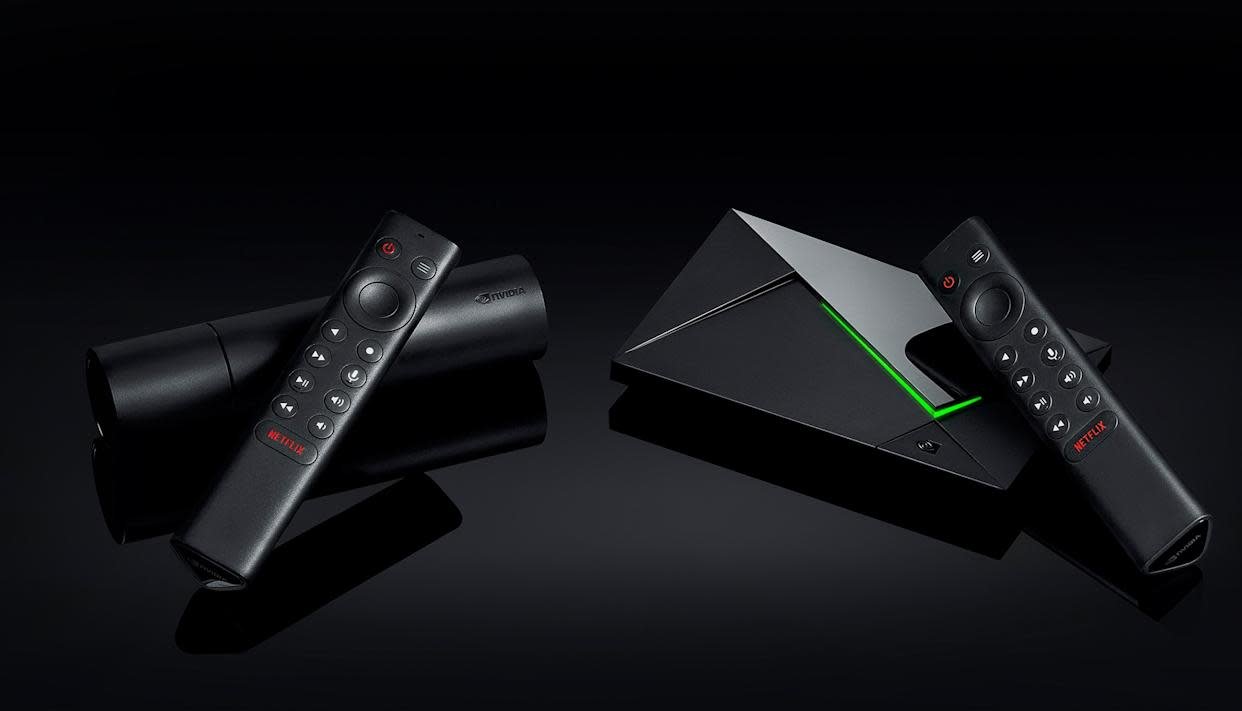
    NVIDIA is a very busy company, and between all the graphics cards and AI-chasing, it wouldn’t be wholly surprising to see the company forget about its more niche offerings, such as the Android-powered NVIDIA Shield TV. Happily for all those who own one of these powerful set-top boxes, that doesn’t appear to be the case.

    Not only is NVIDIA continuing to support its Shield devices, but it’s just rolled out its first proper update in nearly a year. The Shield Experience Upgrade 9.2.4, to give it its proper name, applies to both the Shield and Shield Pro boxes. It’s admittedly light on new features, instead being focused on updating security and fixing various issues, but is nice to see all the same. Here’s the full list of changes.

    Enhancements:

    • Security patches are updated to Jan 2026.

    Resolved Bugs:

    • Resolved Disney+ playback issue.

    • Resolved 3rd party remote connection issue with Xbox after sleep mode.

    • Resolved a crash issue which turns on SHIELD and CEC devices during sleep mode.

    • Resolved 3rd party Bluetooth remote frequent disconnect issue.

    • Resolved Settings page closes when triggering NVIDIA share on top of settings page.

    NVIDIA hasn’t given any strong indication that it’s preparing to launch a new Shield TV, but in a a recent interview with ArsTechnica, Andrew Bell, the company’s senior VP of hardware engineering, said it has no plans to end support any time soon, teasing that it had “played with new concepts.” Bell also said that a first Shield refresh since 2019 would likely support codecs like AV1 and HDR10+, as well as the latest Dolby Vision profiles.

    The existing NVIDIA Shield Android TV Pro remains our pick of the best streaming devices for gamers, thanks to its ability to stream in native 4K and effectively upscale lower-resolution content. And with NVIDIA’s GeForce Now cloud gaming service going from strength to strength, the Shield retains a unique position in the PC gaming ecosystem.

  • Watch the trailer for Louis Theroux’s new documentary ‘Inside the Manosphere’

    Netflix has unveiled a trailer for its upcoming documentary Louis Theroux: Inside the Manosphere set to arrive on March 11th. It will be the first full-length Netflix documentary for Theroux, and see him interview “manosphere” influencers like Sneako, Justin Waller and HS Tikky Tokky, aka Harrison Sullivan. “I’ve made documentaries for over 30 years now, and in a way, this subject feels like the final boss,” the filmmaker told GQ.

    “From Miami to Marbella, meet the men that are reshaping and radicalising young men’s ideas about masculinity and manhood,” Netflix’s description reads. In the trailer, we see Theroux interview the influencers and get the tables turned on himself. “I know that they would be streaming or filming me and would put that content out,” Theroux told Deadline. “And I hoped we’d get this feedback loop where there was a meta narrative that was then affecting my approach to the story.”

    On top of making documentaries (and being famous for Jiggle Jiggle), Theroux is known for his Louis Theroux Interviews… podcast in which he interviews stars like Sean Penn and Florence Pugh. Prior to that, he did stories on conspiracy theories, UFOS and the porn industry, topics that he said were once niche but are now driving the internet and culture.

    “I wouldn’t be the first to point out that a lot of this is down to the influence of social media and the way in which it has given vent to the darkest parts of the human soul. Not just given vent to them, but actively amplified them and pushed them into our feeds. So yeah, this is not a niche subject.”

  • NY AG: Valve’s loot boxes can get kids hooked on gambling

    NY AG: Valve’s loot boxes can get kids hooked on gambling

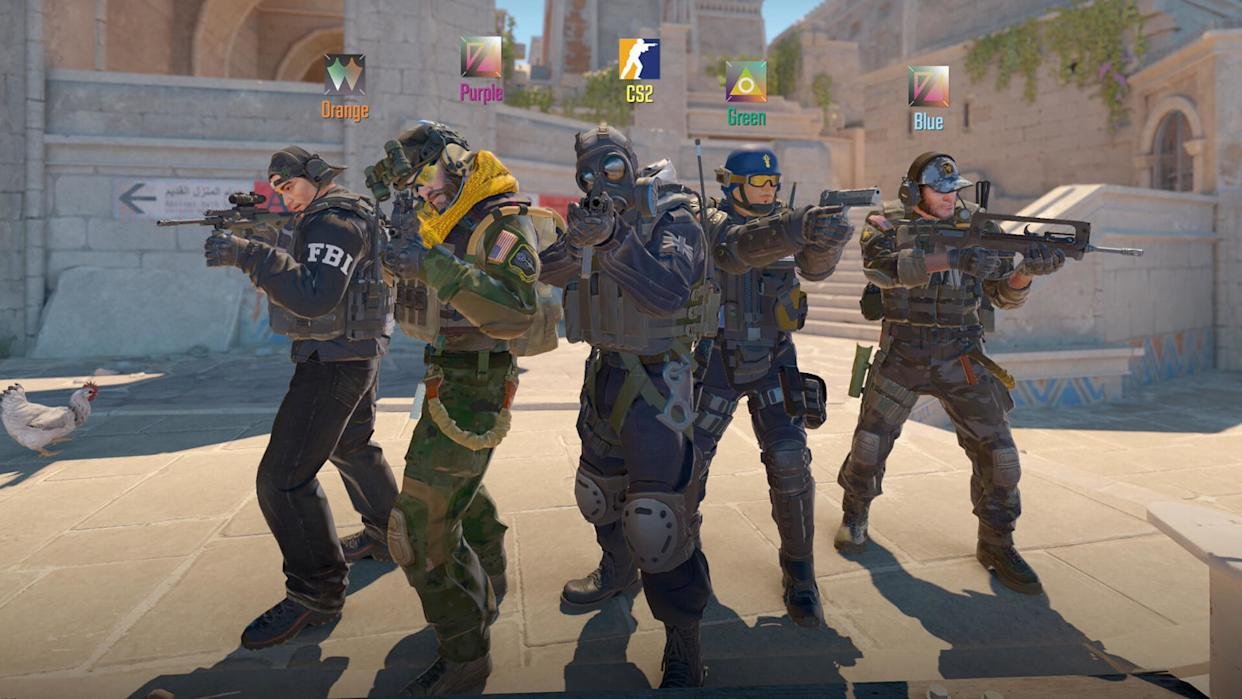
    New York Attorney General Letitia James has accused Valve of promoting illegal gambling through its video games in a lawsuit filed by her office. According to the AG’s announcement, her office conducted an investigation and had concluded that Valve enabled gambling by enticing users to pay for a chance at rare items from loot boxes in Counter-Strike 2, Team Fortress 2 and Dota 2. In the lawsuit, the New York AG stressed that Valve’s loot boxes are “particularly pernicious,” because the games are popular among children and teenagers.

    The lawsuit described the loot box model, which requires a player to open a mystery chest for the possibility of winning rare items, as “quintessential gambling.” It argued that people introduced to gambling at an early age are at a significantly higher risk of developing gambling addictions later on, based on research. In addition, it explained that gambling is mostly illegal in New York.

    Players have to pay for chests or boxes and the keys to be able to open them in Valve’s games, and the company has reportedly sold billions of dollars’ worth of keys for Counter-Strike alone. The lawsuit said that Valve has made tens of millions of dollars in fees from the sale of virtual items on the Steam Community Market, as well. In addition to being able to sell items on Steam for funds directly credited to their Steam Wallet, players can also sell on third-party marketplaces for cash.

    According to James’ office, Valve facilitates and even assists third-party marketplaces in their operations, based on its investigation. Engadget has asked Valve for a statement about the lawsuit, but we have yet to hear back. However, the company previously denied being involved with third-party marketplaces that allow the sales of its game items for real-world money. In a response to an inquiry by the Danish Gambling Authority, Valve explained that those third-party websites create sock puppet accounts to sell and receive items on Steam in exchange for cash. “[T]his behavior is in violation of our terms of service,” Valve said.

    The lawsuit also pointed out that there’s a huge market for Counter-Strike skins and referenced a Bloomberg article from 2025, which reported that the market for those skins had already surpassed $4.3 billion. As an example of in-game items sold for real money, it cited the sale of a Counter-Strike 2 AK-47 skin in 2024 for $1 million. The Attorney General’s Office wants the court to stop Valve from violating New York laws, to give up money it allegedly earned from illegal activities and to pay a fine three times what it allegedly earned from illegal business practices.

  • Instagram will alert parents if teens repeatedly search for suicide or self-harm content

    Instagram will alert parents if teens repeatedly search for suicide or self-harm content

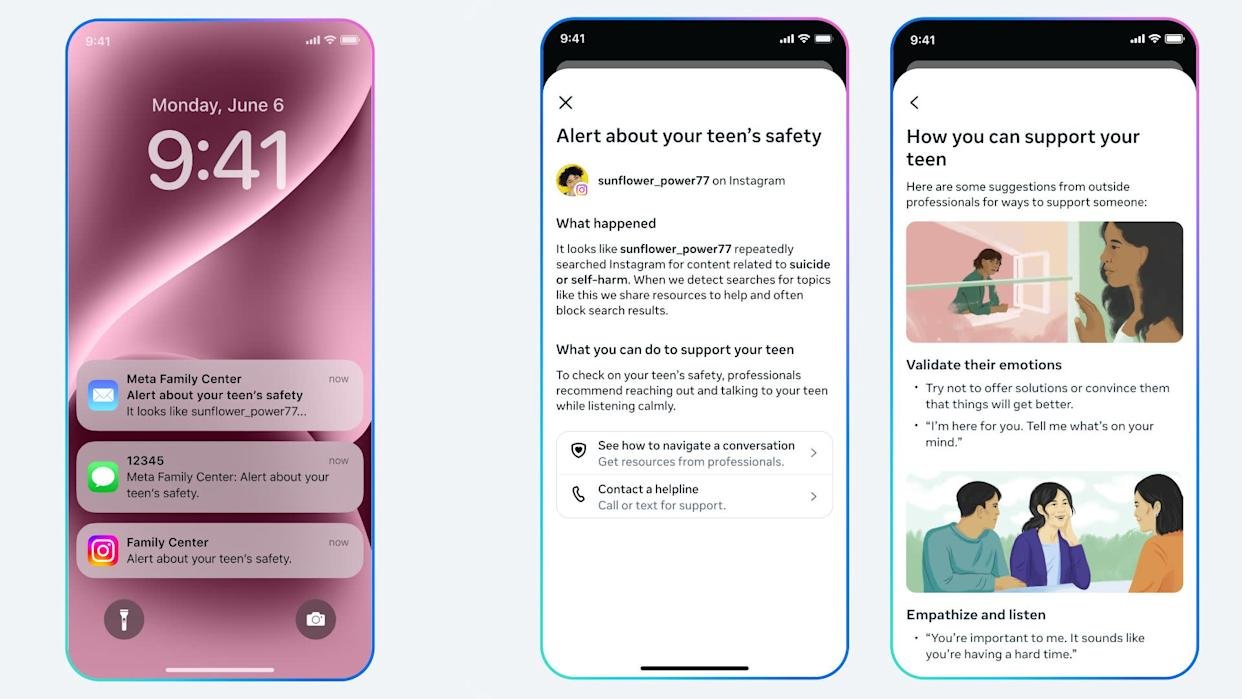
    Instagram is adding a new alert for the parents of teen users of its social media platform. The network will alert the adult if their child repeatedly searches for terms about suicide or self-harm in a short time frame. From that notification, the parent will optionally be able to access resources for having conversations with their teen about these topics. These alerts will begin rolling out for parental supervision users in the US, UK, Australia and Canada next week, with later regions to be added in the future.

    “We chose a threshold that requires a few searches within a short period of time, while still erring on the side of caution,” Instagram’s blog post explains. “While that means we may sometimes notify parents when there may not be real cause for concern, we feel — and experts agree — that this is the right starting point, and we’ll continue to monitor and listen to feedback to make sure we’re in the right place.”

    The platform reiterated that search results for terms connected to suicide and self-harm are blocked for teen younger users, and content about those topics is not shown to them under its current policies. Instagram also noted that a similar parental alert feature is in the works for its AI tools, but news on that isn’t expected until later this year.