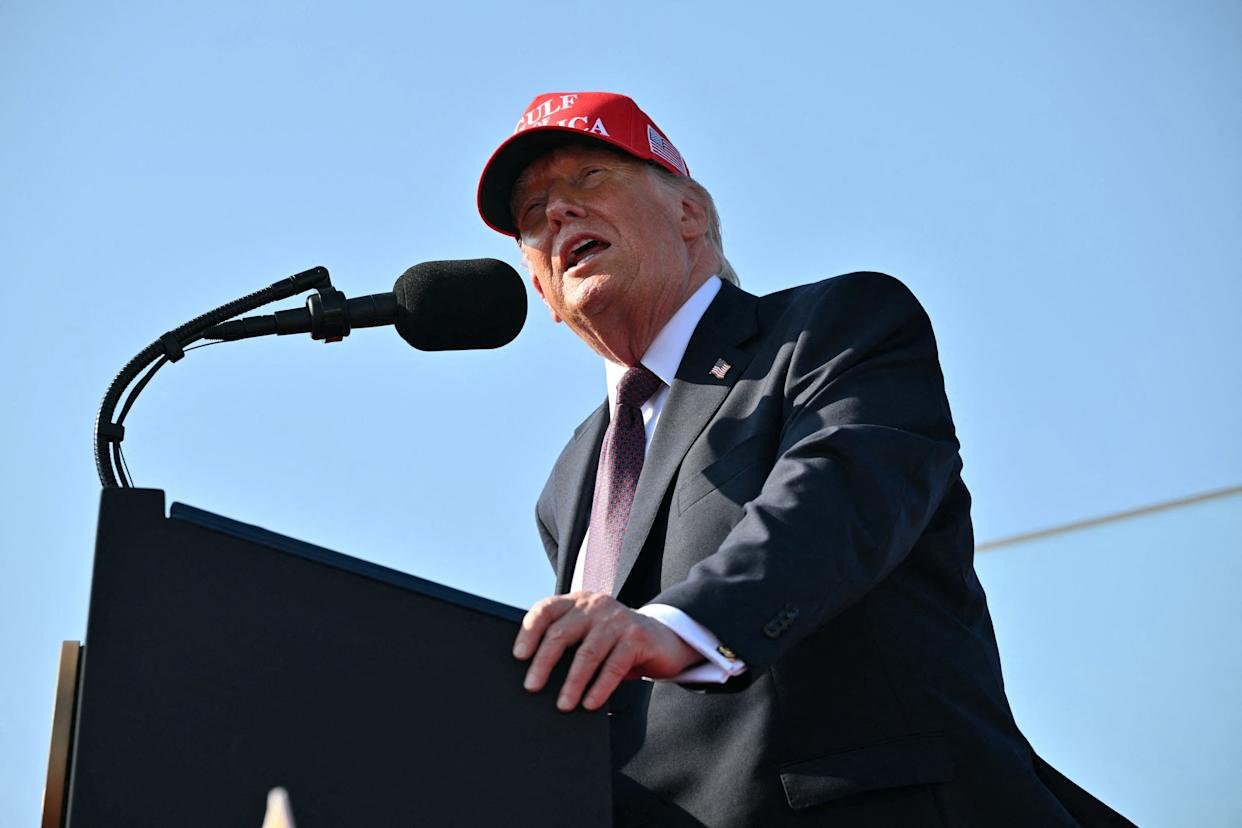
In a lengthy post on Truth Social on February 27, President Trump ordered all federal agencies to “immediately cease all use of Anthropic’s technology” following strong disagreements between the Department of Defense and the AI company. A few hours later, the US conducted a major air attack on Iran with the help of Anthropic’s AI tools, according to a report from The Wall Street Journal.
The president noted in his post that there would be a “six-month phase-out period for agencies like the Department of War who are using Anthropic’s products,” so federal agencies are still expected to eventually move away from using Claude or other Anthropic tech. It’s also not the first time that the US used Anthropic’s AI for a major military operation, as the WSJpreviously reported that Claude was used in the capture of the now-removed Venezuelan president Nicolás Maduro.
Moving forward, the Department of Defense may begin transitioning towards other AI options, especially after reaching deals with both xAI and OpenAI to use their models within the federal agency’s network. However, the WSJ reported that it would take months to replace Anthropic’s Claude with other AI models.
While Honor has already made plenty of product announcements, with tablets, foldables and more, its most interesting device at MWC 2026 is the Robot Phone — and maybe the humanoid robot that came alongside it.
After briefly showing off a model at CES, Honor isn’t quite ready to launch its Robot Phone. However, we got more specs, tech demos and a closer look following the company’s MWC press event in Barcelona. The Robot Phone is currently set to launch later this year.
Image by Mat Smith for Engadget
Honor has put a lot of effort into ensuring its camera gimbal is highly mobile, to the point of creating a tiny personal robot that is, dare I say, adorable? The Robot Phone’s pop-up camera can cock its head, shake to say no, nod to agree, and even “flip” – or at least rotate 360 degrees. According to Honor’s presentation, it can even bop along to songs. A spokesperson told me that it’s got five songs in its repertoire, so it’s not clear whether they’re programmed for these kind of demos, or will be a feature of the final retail device.
Another demo here at MWC showed how you could make the Robot Phone “sleep” by covering its gimbal eye, though it’s odd that the camera is still exposed rather than folded away. My main concern with the Robot Phone is the robustness and durability of its robotic mechanisms. We’ve lived through several waves of smartphones that attempted much simpler mechanical camera functions and the threat of dust or heavy-handed users can’t be ignored.
Image by Mat Smith for Engadget
The company says it’s taken what it learned from foldables, regarding high-performance materials and simulation accuracy, and applied it to shrinking the camera module. On stage, Honor CEO James Li revealed what he calls the industry’s smallest micro motor, much smaller than a 1-euro coin and, he added, 70 percent smaller than existing micro motors.
As this component has been reduced substantially, the Robot Phone’s gimbal will be the industry’s smallest 4-degrees-of-freedom gimbal system. That’s a spec – we finally got a spec! It’ll also offer three-axis stabilization in this tiny camera package, with the primary camera using a 200-megapixel sensor.
The fold-away panel that the primary camera tucks into also reveals more typical cameras, so you’re not forced to use the gimbal if you don’t need it. Still, that’s one very thick camera unit:
Image by Mat Smith for Engadget
Honor has already started building out camera modes and features, with a Super Steady Video mode that enhances stability while swinging the Robot Phone around to capture video. AI Object Tracking will apparently intelligently follow subjects, while AI SpinShot supports intelligent 90-degree and 180-degree rotational movement for more cinematic transitions. We’ve seen these sorts of pre-programmed movements and functions in full-size phone gimbals and action cams. If Honor can nail it in such a tiny form, it’ll be impressive.
Other specifications during Honor’s press event were sparse, although the company announced a collaboration with ARRI Image Science to bring its cinematic smarts to the Robot Phone’s gimbal camera.
In a press release, Honor’s Li said the collaboration would bring ARRI’s “cinematic standards and professional workflows” into mobile imaging. It’s apparently the first time elements of ARRI Image Science are being integrated into a consumer device. Dr. Benedikt von Lindeiner, VP at ARRI, said the goal is to bring a true cinematic aesthetic, such as “natural color, gentle highlight roll-off, and a sense of depth,” to shooting with an Honor smartphone.
Image by Mat Smith
Honor also made a humanoid robot companion for its Robot Phone. The bot took to the stage alongside the Robot Phone, danced alongside human dancers, did a backflip and shook hands with CEO James Li. It didn’t say a thing, but fortunately, during some on-the-rails banter between the robot, Robot Phone and Honor’s CEO, the Robot Phone was particularly chatty.
Like the many humanoid robots we’ve reported on and seen in person, Honor hopes to put it to work in both industrial and domestic settings, pitching it as a central part of the company’s multi-million-dollar push into AI. For now, it’s being called Honor Robot.
MWC 2026 officially gets underway on March 2 and will continue through March 5, but the announcements are already coming ahead of its start. We can always count on the annual tech event to bring tons of new phones, laptops and tablets, and we’re expecting to see some robots and other gadgets too — plus plenty of AI news, of course. In addition to the announcements, MWC is our chance to get hands-on time with some of the most interesting new devices, like the Xiaomi 17 Ultra and Honor’s Robot Phone.
Engadget’s Mat Smith is on the ground in Barcelona, and we’ll be updating this story as the week goes on to keep you in the loop on everything that caught our attention. Keep checking back here for the latest MWC news.
Honor
The Robot Phone. (Image by Mat Smith for Engadget)
Honor teased its Robot Phone this past fall and we just finally got a proper look at it at MWC. And it’s pretty freakin’ cute. The phone is equipped with a camera that’s mounted on a highly mobile 4-degrees-of-freedom gimbal, which tucks away into a compartment on the back when it’s not in use (making for a pretty beefy camera bump). In a demo at MWC, the camera, which behaves like a little robot head, bobbed along to music and showed off some of its gesture skills, like cocking its “head” and nodding in agreement.
Honor didn’t reveal too much spec-wise, but the company says the primary camera uses a 200-megapixel sensor. The gimbal will offer three-axis stabilization, which will be coupled with camera modes such as Super Steady Video and AI Object Tracking. The Robot Phone isn’t quite ready for release at the moment, but the company says it will launch later this year.
Be sure to check out Mat Smith’s writeup on the Robot Phone for a more in-depth look.
Honor’s humanoid robot. (Image by Mat Smith for Engadget) (Image by Mat Smith)
It’s not a humanoid robot reveal without some backflips and a choreographed dance performance. Honor introduced its robot at MWC with all the spectacle we’ve come to expect (though the bot didn’t do any talking). It’s simply called the Honor Robot, and the company has plans for it to be used in both industrial and domestic settings.
Honor Magic V6 (Honor)
The Robot Phone isn’t the only phone Honor showed off at MWC. The company also announced its Magic V6 smartphone, which it says is the thinnest phone in its category, measuring 8.75mm folded and 4.0mm open in the white colorway. The other three colors — black, gold and red — are slightly thicker, at 9mm folded and 4.1mm open.
Not too much has changed from the V5, though, which only came out in August 2025. It does however have the Snapdragon 8 Elite Gen 5, with 16GB RAM and 512 GB storage. As for the cameras, there are two 50-megapixel lenses and a 64-megapixel telephoto, plus a 20-megapixel f/2.2 selfie lens on the cover and internal display.
The international version of the Magic V6 will have a 6660mAh battery with 25 percent silicon content, while the version sold only in China will boast a battery with a rated capacity of more than 7000mAh and 32 percent silicon content. Honor hasn’t yet shared details about pricing and availability.
Honor MagicPad (Honor)
Ahead of MWC, Honor also announced what it claims is the thinnest Android tablet in the world: the 4.8mm thick MagicPad 4. We’re expecting to hear more about this at Honor’s press conference on Sunday, but so far we know it features a 12.3-inch 165Hz OLED display and weighs just 450g. It comes with up to 16GB of RAM and 512GB of storage, and is powered by Qualcomm’s Snapdragon 8 Gen 5 chipset. The thinness doesn’t count the camera bump, Honor notes. The MagicPad 4 has 13MP rear and 9MP front cameras. It also boasts spatial audio, with eight speakers.
Just as the display is slightly smaller than the previous MagicPad, the MagicPad 4 has a smaller battery at 10100 mAh. It comes with a 66W fast charger. The MagicPad 4 will run Honor’s MagicOS 10. We don’t yet know how much it will cost, but we’ll update this after Honor’s press conference (where we’re also expecting to see the company’s robot) with any new details.
Xiaomi x Leica
Mat Smith for Engadget
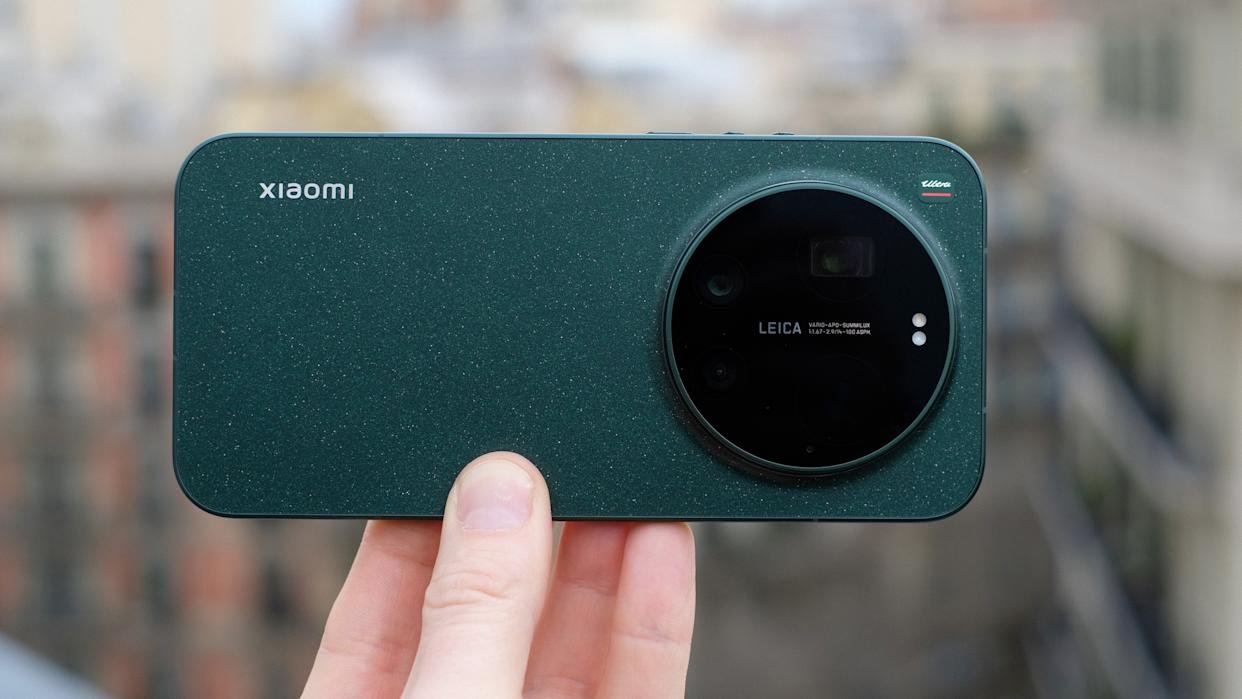
Xiaomi kicked off MWC this year by announcing the global launch of its 17 Ultra smartphone, which debuted first in China back in December. It’s unclear if the phone will ever come to the US, but it’s now rolling out in Europe. Xiaomi teamed up again with Leica to make a photography-focused smartphone, and the 17 Ultra sports a 1-inch 50-megapixel camera sensor with a f/1.67 lens, a telephoto setup with a 200MP 1/1.4-inch sensor, and a 50MP ultrawide camera. There’s also a manual zoom ring around the camera.
Check out our hands on for our first impressions of what it’s like shooting with the Xiaomi 17 Ultra. And there’s more to it than just the camera. The 17 Ultra has a 6.9-inch OLED 120 Hz display that peaks at 3,500 nits of brightness, and a 6000mAh silicon-carbon battery. The Xiaomi 17 Ultra starts at £1,299 (roughly $1,750).
Leica also announced a new phone made in partnership with Xiaomi at MWC. It looks a whole lot like Xiaomi’s 17 Ultra, but isn’t the 17 Ultra, exactly.
Leica Leitzphone by Xiaomi hands-on at MWC 2026 (Image by Mat Smith for Engadget)
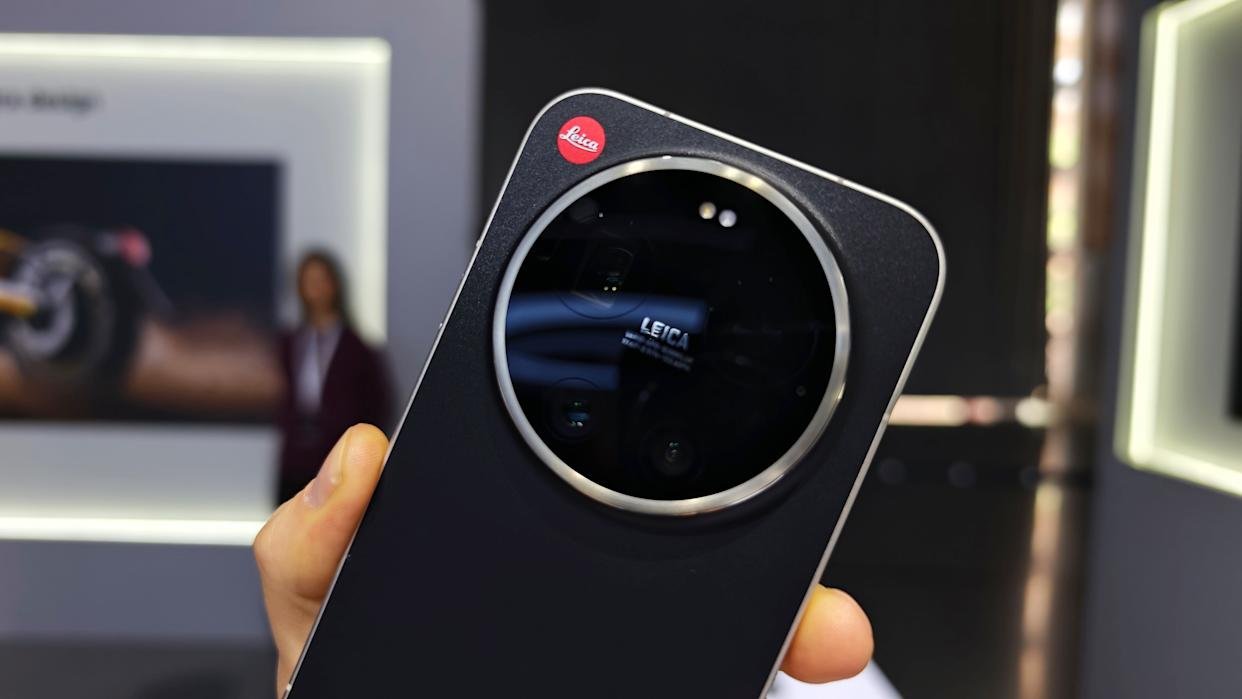
Like the 17 Ultra, Leica’s Leitzphone by Xiaomi has a 1-inch camera sensor and physical controls for zoom and other settings, using a mechanical ring around the camera unit. It features a Leica-designed intuitive camera interface with the option to show just the essentials when you’re shooting, hiding all the modes and labels. There’s a monochrome shooting mode and Leica filters.
The Leica branding is splashed all over it in design and wallpapers, but it’s otherwise pretty similar to the 17 Ultra, with the same specs. Like the 17 Ultra, it has a Snapdragon 8 Elite Gen 5 chip and a 6.9-inch 120Hz display. This one’s priced at €1,999 (roughly $2,362).
The Xiaomi Pad 8 Pro (Xiaomi)
In addition to the 17 Ultra, Xiaomi announced two new tablets at MWC this year: the Xiaomi Pad 8 and Xiaomi Pad 8 Pro. There’s nothing revolutionary here, but they’re lightweight and thin, with both being 5.75mm thick and weighing 485g, and have a 9200mAh battery. The Pro model is powered by a Snapdragon 8 Elite chip, while the regular Pad 8 uses the Snapdragon 8s Gen 4 chipset.
Xiaomi also unveiled a new 5000mAh powerbank, the UltraThin Magnetic Power Bank 5000 15W. The 6mm thick power bank comes in three colors with an aluminum alloy shell: orange, silver and charcoal gray. Along with that, the company introduced the Xiaomi Tag, its own take on the Bluetooth item tracker. The Xiaomi Tag has a built-in hanging loop so it can be attached directly to a keyring, and the company says it will work with both Apple Find My and Google’s Find Hub for Android.
Tecno
Tecno
We can always expect to see some wild phone concepts at MWC, and this year we’re starting with one from Tecno. The company unveiled a modular concept smartphone design that can be as thin as 4.9mm in its base configuration. There’d be 10 modules to choose from based on the announcement, including various camera lenses, a gaming attachment and a power bank, relying on magnets to keep it all together — or Modular Magnetic Interconnection Technology, as Tecno is calling it.
China’s biggest phone makers continue to relentlessly forge ahead with high-spec phones that you may never see in the US. With the Xiaomi 17 Ultra this year, the company has continued its pattern from previous iterations by focusing on powerful camera sensors, huge batteries and… being selective about global availability.
Xiaomi’s 17 series is launching across multiple European territories months after its Asia debut, but at the time of writing, no word yet on US availability. Another logistical point of interest? When we last checked out Xiaomi’s devices, it was the 15 series, and the company has decided to skip 16 and leap straight to 17, conveniently matching Apple’s latest number.
Storied camera brand Leica has been involved with Xiaomi’s phones for a few years and its newest flagship doesn’t disappoint in that regard, because this is another Xiaomi device dedicated to photography.
Image by Mat Smith for Engadget
The 17 Ultra has a huge 1-inch 50-megapixel main camera sensor with a f/1.67 lens, and a telephoto setup with a 200MP 1/1.4-inch sensor and going up to 4.3x optical zoom. Xiaomi claims it’s capable of up to 17x “optical-level zoom,” but quality doesn’t measure up to, say, the Oppo Find X9, with its dedicated telescopic lens add-on. There’s also a 50MP ultrawide camera to round things out.
The main camera is very impressive, delivering plenty of detail and performing incredibly well in low light, seemingly before any computational photography kicks in. A new Light Fusion 1050L sensor features LOFIC HDR technology, delivering stronger control over highlights and more detail in darker areas of your shots. I’ve been impressed by the balanced color tone and contrast, without having to edit or add one of the (many) Leica camera filters.
If anything, the slightly heavy-handed algorithms can sometimes ruin parts of a shot. For instance, by scrambling lettering or capturing blurry, AI-mutated faces where computational photography takes a swing (and a miss) at people in the distance.
Mat Smith for Engadget
The telephoto camera alone is also technically interesting in a few ways. It offers continual optical zoom across the 75-100mm range without in-sensor cropping. This means the lenses physically move to deliver lossless zoom across a range of distances, without jarring leaps between camera sensors and crops. This doesn’t run across the full gamut, but it does roughly cover the 3-4x optical zoom range, which is often used in portrait photography.
The APO (apochromatic) lens design on the telephoto is more immediately useful and effective. An APO lens significantly reduces chromatic aberration by focusing three wavelengths of light (red, green and blue) onto the same focal plane. This lens design means it can correct color fringing and improve image sharpness.
At full optical zoom, this light fitting at Soho Theatre Walthamstow doesn’t bloom or fringe to the extent that most smartphone zooms suffer from. (Mat Smith for Engadget)
At higher zoom levels, fringing and lighting bloom often hamper telephoto photos on smartphones, and Xiaomi’s solution has some appeal. I noticed less fringing than on other zoom-capable Android phones from Samsung, Oppo and Google. It also supports macro photography, but is hindered this time by a minimum focal distance of 30cm (11.8 inches). Most smartphone cameras’ macro modes let you get much closer.
The 17 Ultra can capture up to 8K video (at 30 fps), 4K Dolby Vision up to 120 fps, and 4K 120 fps Log video, ensuring you can make the most of that huge 1-inch sensor in video, too. That said, it seems to struggle with stabilization at times, while its low-light performance doesn’t match its prowess in still photography, lagging behind flagship phones from Apple, Google and Samsung.
There’s also a special Leica edition of the 17 Ultra, which is largely the same, specification-wise, but with a manual zoom ring around the camera unit. It’s a cool gimmick, but felt oddly loose on a few devices I’ve handled.
While cameras may be the highlight, this is a flagship device by any specification metric. With a 6.9-inch display, this expansive OLED display has variable refresh rates (1-120Hz) and peaks at 3,500 nits of brightness.
At that size, the Xiaomi 17 Ultra is in the territory of devices like the iPhone 17 Pro Max and S26 Ultra. A phone this size isn’t for everyone, but it is the thinnest Ultra phone from Xiaomi to date, with a profile measuring 8.29mm. Xiaomi has also reduced the camera unit’s diameter and raised it on the device, making it easier to use and helping keep fingers out of your shots.
Image by Mat Smith for Engadget
Also, I’d be remiss if I didn’t mention the huge 6,000mAh silicon-carbon battery, with support for Xiaomi’s 90W HyperCharge (if you have the right charger) and 50W wireless HyperCharge (which also requires Xiaomi’s own dock) speeds. Other phone makers: Please put a battery this huge in your flagship.
At MWC 2026, the company announced the global launch and rollout of the device across Europe, including the UK where the Ultra will start priced at £1,299 (roughly $1,750). We’re still waiting to confirm US availability and pricing.
While the specs are powerful, “launching” a flagship device that’s already been in the wild for a few months — even if elsewhere in the world — reduces the spectacle.
Alongside a global launch for Xiaomi’s 17 Ultra (read about that right here), the company announced a further deepening of its relationship with Leica. The CEO of Leica, Matthias Harsch, took to the stage to announce a new Leitzphone, which appears to be an even deeper collaboration than 17 Ultra by Leica, which is a different phone. Confused? That’s fair.
Design-wise, Leica has shifted back to a single tone body color, which looks more “Leica” to this camera dilettante’s eyes. And if you’re thinking you’ve heard of the Leitzphone before, you probably have: it was a series of phones made by Sharp that launched in Japan in 2021. They all had a 1-inch camera sensor, as does Xiaomi’s first Leitzphone. It also has a mechanical, physical ring dial around the camera unit to control settings like zoom, exposure and shutter speed.
The camera interface is also designed by Leica. It’s designed to be as intuitive as possible, with an Essential mode in the camera app that strips away all those modes and labels, showcasing whatever you’re looking to shoot. You can switch between a monochrome shooting mode and a more familiar punchy, contrasty Leica filter. And that’s it.
Aside from that there’s no major standout interface or UI changes that I could spot while trying out the Leitzphone briefly at Xiaomi’s MWC keynote. However, if you’re intrigued by the functionality — or the cameras — check out our hands-on coverage and sample photos of the Xiaomi 17 Ultra. The cameras are good.
Image by Mat Smith for Engadget
All three iterations (the regular Xiaomi 17 Ultra , the “by Leica” edition and the Leitzphone) have a Snapdragon 8 Elite Gen 5 chip and a 6.9-inch 120Hz display that can reach up to 3,500 nits of peak brightness. While cameras are naturally the focus, it’s a flagship device by pretty much any metric. It also has a 6,000mAh battery for extended vacation photo shoots.
Barring some Leica-tinged wallpapers and design accents, it’s a lot like the 17 Ultra by Leica, just with different messaging. This is Leica’s phone, made by Xiaomi, but does a rose by any other name still have great low-light photography? Maybe increased Leica branding will be enough to coax its camera fans into making this their next smartphone, perhaps.
Image by Mat Smith for Engadget
After years of collaboration (and cute little badges), this may be the first pure “Leica phone” manufactured by Xiaomi but sold directly by both companies. It’s priced at €1,999 (roughly $2,362), but it’s not known yet whether this phone will launch in the US. Welcome to MWC, everyone.
OpenAI has reached an agreement with the Defense Department to deploy its models in the agency’s network, company chief Sam Altman has revealed on X. In his post, he said two of OpenAI’s most important safety principles are “prohibitions on domestic mass surveillance and human responsibility for the use of force, including for autonomous weapon systems.” Altman claimed the company put those principles in its agreement with the agency, which he called by the government’s preferred name of Department of War (DoW), and that it had agreed to honor them.
The agency has closed the deal with OpenAI, shortly after President Donald Trump ordered all government agencies to stop using Claude and any other Anthropic services. If you’ll recall, the government US Defense Secretary Pete Hegseth previously threatened to label Anthropic “supply chain risk” if it continues refusing to remove the guardrails on its AI, which are preventing the technology to be used for mass surveillance against Americans and in fully autonomous weapons. It’s unclear why the government agreed to team up with OpenAI if its models also have the same guardrails, but Altman said it’s asking the government to offer the same terms to all the AI companies it works with.
Anthropic, which started working with the US government in 2024, refused to bow down to Hegseth. In its latest statement, published just hours before Altman announced OpenAI’s deal, it repeated its stance. “No amount of intimidation or punishment from the Department of War will change our position on mass domestic surveillance or fully autonomous weapons,” Anthropic wrote. “We will challenge any supply chain risk designation in court.”
Altman added in his post on X that OpenAI will build technical safeguards to ensure the company’s models behave as they should, claiming that’s also what the DoW wanted. It’s sending engineers to work with the agency to “ensure [its models’] safety,” and it will only deploy on cloud networks. As The New York Times notes, OpenAI is not yet on Amazon cloud, which the government uses. But that could change soon, as company has also just announced forming a partnership with Amazon to run its models on Amazon Web Services (AWS) for enterprise customers.
The Federal Communications Commission has given the go ahead for two of the US’ biggest cable providers, Charter Communications and Cox Communications, to merge. Charter announced its intention to acquire Cox for $34.5 billion in May 2025, with specific plans to inherit Cox’s managed IT, commercial fiber and cloud businesses, while folding the company’s residential cable service into a subsidiary.
“By approving this deal, the FCC ensures big wins for Americans,” FCC Chairman Brendan Carr said in a statement. “This deal means that jobs are coming back to America that had been shipped overseas. It means that modern, high-speed networks will get built out in more communities across rural America. And it means that customers will get access to lower priced plans. On top of this, the deal enshrines protections against DEI discrimination.”
The FCC claims that Charter plans to invest “billions” to upgrade its network following the closure of the deal, leading to “faster broadband and lower prices.” The company’s “Rural Construction Initiative” will also extend those improvements to rural states lacking in consistent internet service, a project the FCC was heavily invested in during the Biden administration, but has been pulling back from since President Donald Trump appointed Carr. The FCC also claims Charter will onshore jobs currently handled off-shore by Cox employees and commit to “new safeguards to protect against DEI discrimination,” which essentially amounts to hiring, recruiting and promoting employees based on “skills, qualifications, and experience.”
While Carr’s FCC paints a rosy picture of Charter’s acquisition, history has provided multiple examples of mergers having the opposite effect on jobs and pricing. For example, redundancies created when T-Mobile merged with Sprint in 2020 led to a wave of layoffs at the carrier. And funnily enough in 2018, not long after Charter’s merger with Time Warner Cable was approved by the FCC, the company raised prices on its Spectrum service by over $91 a year.
The FCC’s obsession with diversity, equity and inclusion as part of the deal is stranger, if only because it appears to fall outside of the commission’s purpose of maintaining fair competition in the telecommunications industry. It does fit with other mergers the FCC has approved under Carr, however. Skydance’s acquisition of Paramount was approved in 2025 under the condition it wouldn’t establish any DEI programs.
President Donald Trump has ordered all US government agencies to stop using Claude and other Anthropic services, escalating an already volatile feud between the Department of Defense and company over AI safeguards. Taking to Truth Social on Friday afternoon, the president said there would be a six-month phase out period for federal agencies, including the Defense Department, to migrate off of Anthropic’s products.
“The Leftwing nut jobs at Anthropic have made a DISASTROUS MISTAKE trying to STRONG-ARM the Department of War, and force them to obey their Terms of Service instead of our Constitution,” the president wrote. “Anthropic better get their act together, and be helpful during this phase out period, or I will use the Full Power of the Presidency to make them comply, with major civil and criminal consequences to follow.”
Before today, US Defense Secretary Pete Hegseth had threatened to label Anthropic a “supply chain risk” if it did not agree to withdraw safeguards that insist Claude not be used for mass surveillance against Americans or in fully autonomous weapons. In a post on X published after President Trump’s statement, Hegseth said he was “directing the Department of War to designate Anthropic a Supply-Chain Risk to National Security. Effective immediately, no contractor, supplier, or partner that does business with the United States military may conduct any commercial activity with Anthropic.”
Anthropic did not immediately respond to Engadget’s comment request. Earlier in the day, a spokesperson for the company said the contract Anthropic received after CEO Dario Amodei outlined Anthropic’s position made “virtually no progress” on preventing the outlined misuses.
“New language framed as a compromise was paired with legalese that would allow those safeguards to be disregarded at will. Despite DOW’s recent public statements, these narrow safeguards have been the crux of our negotiations for months,” the spokesperson said. “We remain ready to continue talks and committed to operational continuity for the Department and America’s warfighters.”
Advocacy groups like the Center for Democracy and Technology (CDT) quickly came out against the president’s threats. “This action sets a dangerous precedent. It chills private companies’ ability to engage frankly with the government about appropriate uses of their technology, which is especially important in national security settings that so often have reduced public visibility,” said CDT President and CEO Alexandra Givens, in a statement shared with Engadget. “These threats undermine the integrity of the innovation ecosystem, distort market incentives and normalize an expansive view of executive power that should worry Americans all across the political spectrum.”
For now, it appears the AI industry is united behind Anthropic. On Friday, hundreds of Google and OpenAI employees signed an open letter urging their companies to stand in “solidarity” with the lab. According to an internal memo seen by Axios, OpenAI CEO Sam Altman said the ChatGPT maker would draw the same red line as Anthropic.
In a blog post published late on Friday, Anthropic vowed to “challenge any supply chain risk designation in court,” and assured its customers that only work related to the Defense Department would be affected. The company’s full statement is available here, an excerpt is below:
Designating Anthropic as a supply chain risk would be an unprecedented action—one historically reserved for US adversaries, never before publicly applied to an American company. We are deeply saddened by these developments. As the first frontier AI company to deploy models in the US government’s classified networks, Anthropic has supported American warfighters since June 2024 and has every intention of continuing to do so.
We believe this designation would both be legally unsound and set a dangerous precedent for any American company that negotiates with the government.
No amount of intimidation or punishment from the Department of War will change our position on mass domestic surveillance or fully autonomous weapons. We will challenge any supply chain risk designation in court.
Update, February 27, 9PM ET: This story was updated twice after publish. First at 6PM ET to include a link to and quotes from Hegseth about the designation of Anthropic as a supply chain risk. Later, a quote from Anthropic was added, along with a link to the company’s blog post on the subject.
Hundreds of employees at Google and OpenAI have signed an open letter urging their companies to stand with Anthropic in its standoff with the Pentagon over military applications for AI tools like Claude.
The letter, titled “We Will Not Be Divided,” calls on the leadership of both companies to “put aside their differences and stand together to continue to refuse the Department of War’s current demands for permission to use our models for domestic mass surveillance and autonomously killing people without human oversight.” These are two lines that Anthropic CEO Dario Amodei has said should not be crossed by his or any other AI company.
As of publication, the letter has over 450 signatures, almost 400 of which come from Google employees and the rest from OpenAI. Currently, roughly 50 percent of all participants have chosen to attach their names to the cause, with the rest remaining anonymous. All are verified as current employees of these companies. The original organizers of the letter aren’t Google or OpenAI employees; they say are unaffiliated with any AI company, political party or advocacy group.
The open letter is the latest development in the saga between Anthropic and US Defense Secretary Pete Hegseth, who threatened to label the company a “supply chain risk” if it did not agree to withdraw certain guardrails for classified work. The Pentagon has also been in talks with Google and OpenAI about using their models for classified work, with xAI coming on board earlier this week. The letter argues the government is “trying to divide each company with fear that the other will give in.”
OpenAI CEO Sam Altman told his employees on Friday that the ChatGPT maker will draw the same red lines as Anthropic, according to an internal memo seen by Axios. He told CNBC on the same day that he doesn’t “personally think the Pentagon should be threatening DPA against these companies.”
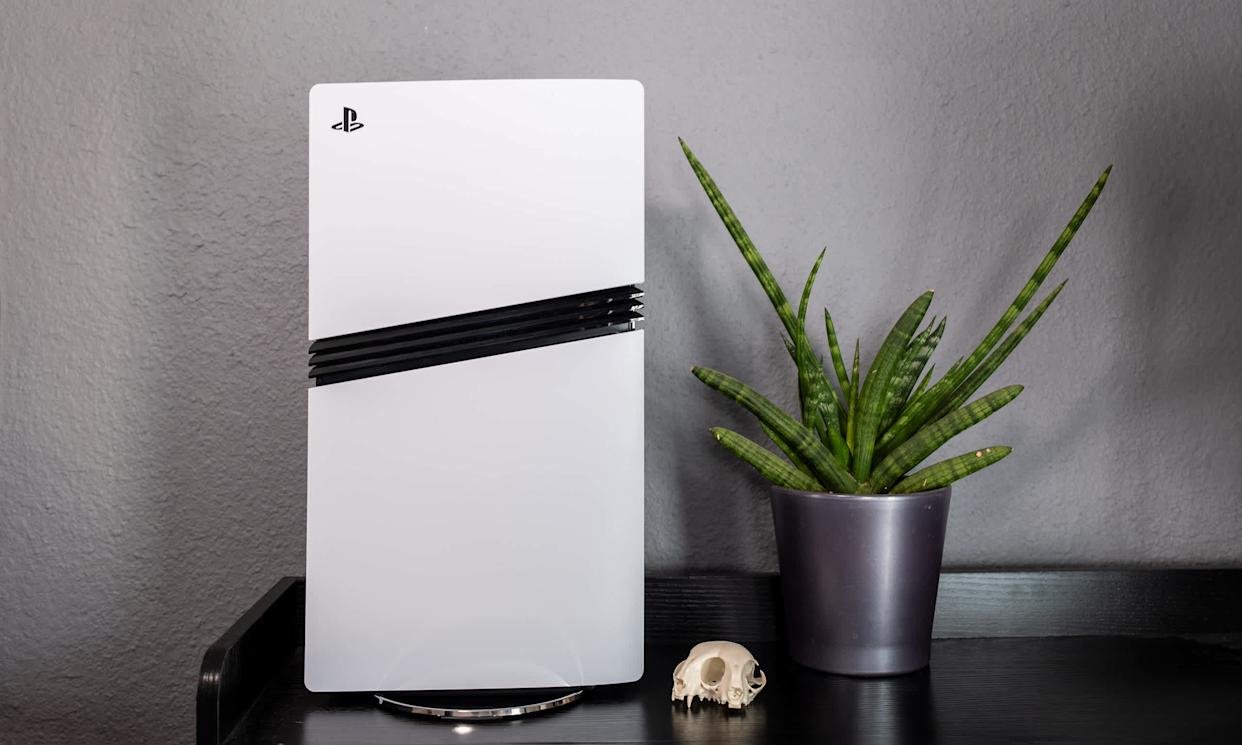
After suggesting a version of AMD’s FSR 4 could be ported to the PS5 Pro last year, it looks like Sony is finally rolling out an update with the upscaling tech in March. Mark Cerny, the lead architect of the PS4, PS5 and PS5 Pro, shared via a blog post that the PS5 Pro will be updated with a new version of the company’s PSSR (PlayStation Spectral Super Resolution) upscaling tech next month, and Resident Evil Requiem is one of the first games to use it.
PSSR is “an AI library that analyzes game images pixel by pixel as it upscales them,” Cerny says, which boosts the visual fidelity of games on the PS5 Pro, while running them at a less demanding resolution. The upgraded version of PSSR “takes a very different approach to not only the neural network but also the overall algorithm,” and is now able to keep both framerate and image quality high when it’s enabled.
Cerny’s blog post includes comparison images if you’re curious about the visual differences the new PSSR is able to achieve. Masaru Ijuin, a Senior Manager from Capcom’s Engine Development Support Section R&D Foundational Technology Department, also provided comments on how the new upscaling tech improves Resident Evil Requiem:
With Resident Evil Requiem, we focused on enhancing the presentation quality of the protagonist through an upgraded version of RE Engine to deepen the player’s immersion in horror. For example, each individual strand of hair and beard is rendered as a polygon, allowing it to move realistically in response to body motion and wind. The way light passes through his hair changes depending on how the strands of hair are overlapped as well. This detailed expression of texture is one of the many details that we would especially love for our fans to see.
The upgraded PSSR has allowed us to elevate our expressiveness by successfully processing these details and textural particularities, which are traditionally difficult to upscale because of their intricacy. We hope you will experience this unprecedented level of horror and visual fidelity, and the new gameplay feel it delivers.
Sony and AMD formally announced “Project Amethyst,” their collaboration to develop machine-learning technology to improve graphics and gameplay, in 2024. The partnership has already benefitted both companies: Cerny says Sony contributed to the development of AMD’s FSR 4 and similar improvements are now trickling back to the PS5 Pro. Both companies’ plans to improve everything from upscaling performance to energy efficiency could also pay further dividends in future consoles and GPUs.
Sony Interactive Entertainment
The upgraded PSSR will roll out to PS5 Pro owners as part of a software update in March, and will be able to be toggled on and off in the console’s settings, according to Cerny. Around the same time, multiple PS5 games are also supposed to be updated to support the upscaling tech. While the graphical improvements are still incremental over a normal PS5, the fact that Sony’s still squeezing more performance out of its console should at least be reassuring to anyone who spent $700 (or now $750) on a PS5 Pro.