Tag: Engaget

  • Big tech companies agree to not ruin your electric bill with AI data centers

    Big tech companies agree to not ruin your electric bill with AI data centers

    Today the White House announced that several major players in tech and AI have agreed to steps that will keep electricity costs from rising due to data centers. Under this Ratepayer Protection Pledge, companies are agreeing to practices that are intended to protect residents from seeing higher electricity costs as more and more businesses create power-hungry data centers. Amazon, Google, Meta, Microsoft, OpenAI, Oracle and xAI have all apparently signed on. A few of the participants — Amazon, Google and Meta — had conveniently timed press releases patting themselves on the back for their participation and touting whatever other policies they have for mitigating the negative impacts of data center construction.

    The main provisions of the federal pledge have tech companies agreeing to “build, bring, or buy the new generation resources and electricity needed to satisfy their new energy demands, paying the full cost of those resources.” It also claims they will pay for any needed power infrastructure upgrades and operate under separate rate structures for power that will see payments made whether or not the business uses that electricity.

    The pledge doesn’t appear to be any form of binding agreement and there’s no discussion of enforcement or a penalty for companies that don’t honor the stipulated provisions. It also doesn’t address any of the other impacts data centers and AI development might be having, either on local communities, on other utilities and resources, or on access to critical computing elements like RAM.

  • Humble Games’ former bosses buy the studio’s back catalog

    Humble Games’ former bosses buy the studio’s back catalog

    Humble Games’ library has returned home, so to speak. Indie publisher Good Games Group (GGG), led by former Humble leaders, has acquired the full back catalog of over 50 Humble Games titles from Ziff Davis. Alongside the purchase, GGG has rebranded to Balor Games, positioning itself as a force in “triple-I” gaming.

    “For the developers we have worked with over the years, this moment is a reunion,” Balor Games CEO Alan Patmore wrote in a statement. “[It has] the same leadership and the same commitment to thoughtful publishing remain in place. What changes is our scale and our focus. Balor Games is built for inventors and backed by believers. To that end, it exists to be a seal of quality for independent games.”

    The Humble Games lineup includes (among others) Slay the Spire, A Hat in Time, SIGNALIS, Forager, Coral Island, Monaco and Wizard of Legend. Separate from the Humble transaction, Balor also bought the complete catalog of Firestoke Games (which shut down last August) and publishing rights to Fights in Tight Spaces. In total, the young studio now owns the publishing rights to over 60 indie titles.

    Humble Games is separate from the Humble Bundle storefront. The latter is still owned by Ziff Davis.

    Alan Patmore (l) and Mark Nash

    Alan Patmore (l) and Mark Nash (Balor Games)

    The seemingly happy ending comes after quite the rocky road. In July 2024, Ziff Davis laid off all 36 employees of Humble Games. But later that year, Humble Games’ former leaders (Patmore and Mark Nash) formed GGG and cut a deal to help manage their old studio’s back catalog. Now, with Ziff Davis in a selling mood, that library is back in Patmore and Nash’s hands. Balor Games, it is.

    The pair view the newly anointed Balor as a developer-friendly publishing house. As for its name, Balor is a supernatural being in Irish mythology. It’s sometimes depicted as having three eyes. Triple-eye, triple-I… Clever devils!

    The triple-I moniker is a more recent addition to the gaming lexicon. It typically means something defined by indie creativity and passion — with a budget far less than AAA but more than a tiny two-person passion project. (Balor says it’s about “high-quality, impactful games.”) You wouldn’t be blamed for wondering how that’s different from AA. But the slant here is to define the genre less by budget and more by “indie” intangibles.

    Nash detailed the company’s vision in an interview with GamesIndustry.biz (which, curiously, is a Ziff Davis property). “We felt that what’s becoming more and more critical is that as game development becomes more diverse, more complicated, and expectations continue to rise, we feel it’s important that a publisher can match the needs of each individual project,” Nash said. “We are spending a considerable amount of time with anyone we are partnering with, figuring out what they need specifically.”

  • Google ends is 30 percent app store fee and welcomes third-party app stores

    Google ends is 30 percent app store fee and welcomes third-party app stores

    Google is officially doing away with its 30 percent cut of Play Store transactions, and rolling out changes to how third-party app stores and alternate billing systems will be handled by Android. Some of these tweaks were proposed as part of the settlement the company reached with Epic in November 2025, but rather than wait for final judicial approval, Google is committing to revamping Android and the Play Store publicly.

    The biggest change is to how Google will collect fees from developers publishing apps on Android. Rather than take its standard 30 percent cut of in-app purchases through the Play Store, Google is lowering its cut to 20 percent, and in some cases 15 percent for new installs of apps from developers participating in its App Experience Program or Google Play Games Level Up program. Google will also now charge a five percent service for developers in the UK, US or European Economic Area using its billing system, and “a market-specific rate” in other regions. Of course, using alternatives to Google’s billing system is also getting a lot easier.

    Developing…

  • Highguard has raided its last fortress, will shutdown on March 12

    Highguard has raided its last fortress, will shutdown on March 12

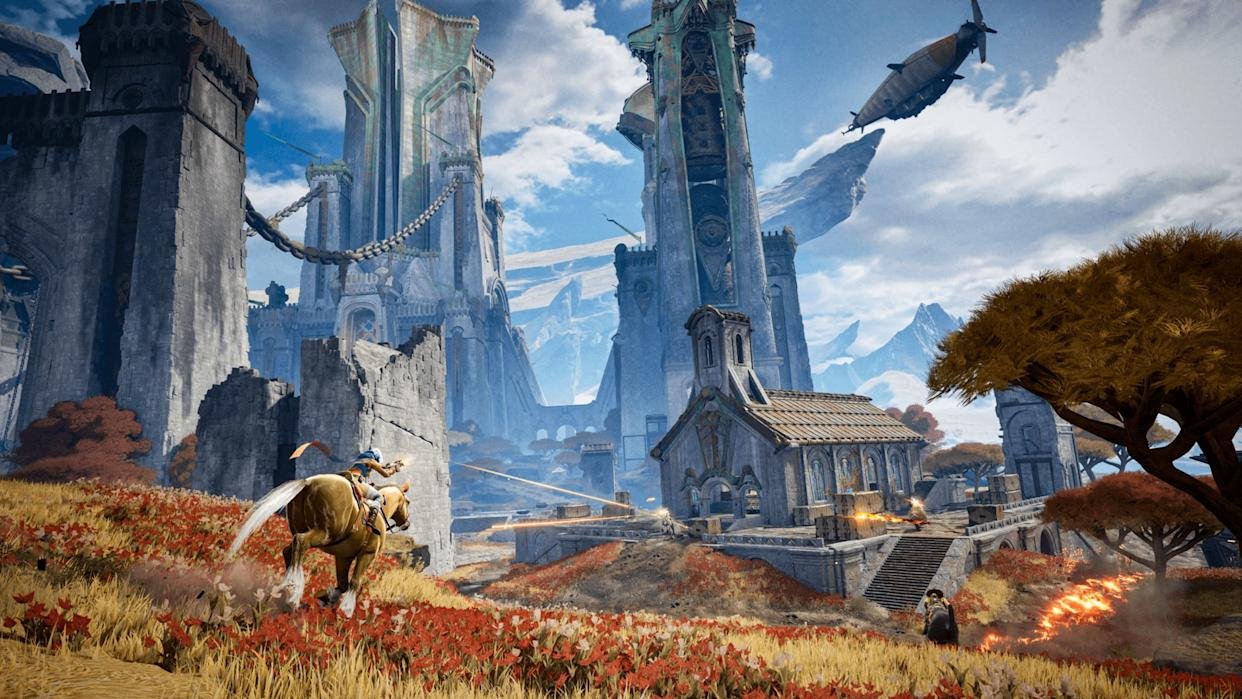
    Highguard, the live-service multiplayer shooter that was announced at the Game Awards 2025, is shutting down on March 12. Developer Wildlight Studios shared that the game would be winding down alongside details of its final update, which include a new character, weapon and skill trees.

    “Today we’re sharing difficult news. We have made the decision to permanently shut down Highguard on March 12,” Wildlight Studios shared via a statement on the Highguard X account. “Since launch, more than two million players stepped into Highguard’s world. You shared feedback, created content, and many believed in what we were building. For that, we are deeply grateful. Despite the passion and hard work of our team, we have not been able to build a sustainable player base to support the game long term. Servers will remain online until March 12. We hope you’ll jump in with us one more time to show your support and get those final great matches in while we still can.”

    When Highguard shuts down next week, it will have been available to play for a grand total of 46 days. That’s longer than the two weeks Concord received, but tragic for an online multiplayer game that was still in some form of active development. Wildlight Studios laid off some of its staff not long after Highguard launched, but a smaller team of developers has been supporting the game with new content since then, adding things like a “5v5 raid mode” and today’s final update.

    While it’s easy to chalk up Highguard‘s failure to a shrinking appetite for live-service games or an inability to find an audience for the game’s mix of competitive hero shooter and MOBA strategy mechanics, the reality is more complicated. The first hint that Highguard‘s launch might be troubled was the dearth of information or marketing shared about the game after its debut at the Game Awards. Wildlight Studios’ staff was full of former Respawn employees who shadowdropped Apex Legends to great success, and Bloomberg reports Wildight’s executives thought they could pull off something similar with Highguard. The difference is, little was known about Apex Legends until after it launched, while players had over a month to stew on the Highguard trailer and form all sorts of opinions.

    Wildlight’s inability to keep players coming back — SteamDB shows the game peaked at over 97,000 concurrent players and is now sitting at around 300 — also hurt its chances. Dwindling player counts reportedly played a role in one of Wildlight’s investors, Tencent, pulling funding, which reduced the runway the studio had to continue working on the game and likely prompted its layoffs. It would be simple if the lesson here was for future studios to give up developing online multiplayer games, but it really seems like not one, but all of these elements led to Highguard‘s ultimate demise.

  • Meta signs a multimillion dollar AI licensing deal with News Corp

    Meta signs a multimillion dollar AI licensing deal with News Corp

    Meta has signed an AI licensing deal with News Corp that will allow the Meta AI maker to use content from The Wall Street Journal and other brands in its chatbot responses and for training of its AI models. News Corp confirmed to Engadget that it had struck a deal with Meta, but didn’t provide specifics on the terms of the arrangement. According to The Wall Street Journal, Meta will pay News Corp. “up to $50 million a year” for a three-year deal that covers content from The Journal, as well as the media giant’s other brands in the US and UK.

    News Corp previously struck a five-year deal with OpenAI that was valued at around $250 million. During a recent appearance at Morgan Stanley’s annual Technology, Media & Telecom (TMT) conference, News Corp CEO Robert Thomson hinted that the media company was in the “advanced stage with other negotiations.”

    He described the company’s overall approach to such arrangements as “a woo and a sue” strategy, depending on whether companies want to pay for content or scrape it without permission. “We have what you might call a woo and a sue strategy,” he said. “We’ll woo you. We’d like you to be our partner. But if you’re stealing our stuff, we are going to sue you. So there’ll be a discount for those who hand themselves in, and there’ll be a penalty for those that resist.”

    A spokesperson for Meta confirmed that the two companies had reached an agreement . The company, which has been reorganizing its AI teams as it looks to create its next model, has struck a number of licensing deals in recent months. It previously signed multi-year agreements with USA Today, People, CNN, Fox News and other outlets. The company said at the time that “by integrating more and different types of news sources, our aim is to improve Meta AI’s ability to deliver timely and relevant content and information with a wide variety of viewpoints and content types.”

    Update, March 3, 2026, 4:18PM PT: This story was updated with additional information from a Meta spokesperson.

  • X to require AI labels on armed conflict videos from paid creators, citing ‘times of war’

    X to require AI labels on armed conflict videos from paid creators, citing ‘times of war’

    X will suspend creators from its revenue sharing program if they post AI-generated videos depicting armed conflicts without disclosing they were made with AI. Head of product Nikita Bier announced the policy change on March 3, saying first-time violators will be cut off for 90 days and repeat offenders would be permanently removed from the program.

    The policy is notably narrow, applying only to creators enrolled in the platform’s revenue sharing program and only to AI-generated videos of armed conflicts, not AI content in general or non-monetized accounts. Violations will be flagged through Community Notes, X’s crowd-sourced fact-checking system, or by detecting metadata from generative AI tools. Bier framed the change as necessary “during times of war,” though the current conflict unfolding between the United States, Israel and Iran has not been formally, or at least not legally, declared a war. Of course, the US has not formally declared war since 1942.

    The quality of AI video generation has progressed at a rapid pace, and generated content has become almost indistinguishable from real footage for most viewers. X already watermarks images and videos generated by its Grok chatbot but has not previously required users to disclose AI-generated content. The platform is separately testing a broader AI labeling toggle that would let users mark any post as containing synthetic content, as first reported by Social Media Today, though X has not shared a timeline for that feature.

  • MacBook Air M5 vs. MacBook Air M4: What’s changed beyond the Apple silicon

    MacBook Air M5 vs. MacBook Air M4: What’s changed beyond the Apple silicon

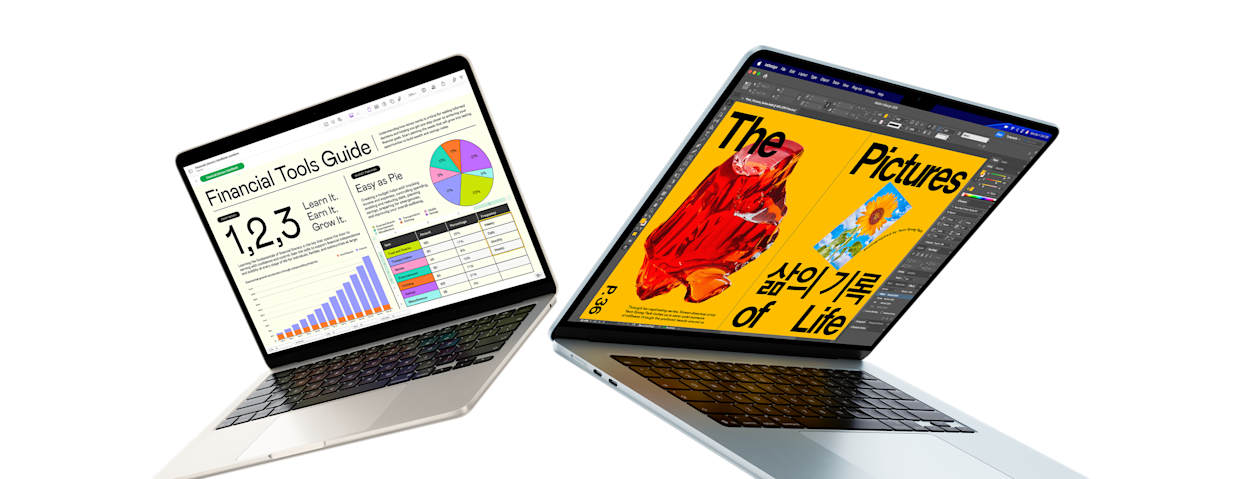
    Apple unveiled a new MacBook Air today, and apart from the new M5 chip, things don’t look remarkably different. Sure, it’s getting a mild refresh, but maybe not in the way most people would want. Namely, it’s more expensive — a $100 price bump across all models. In exchange, the MacBook Air M5 does get faster performance and double the storage.

    If you placed the MacBook Air M4 and the M5 in front of me, I wouldn’t be able to tell which was which. The M5 offers an overall CPU/GPU performance boost, along with some extra storage and double the file transfer speeds. Still, I didn’t expect a radical change, but I wish we got more for that extra $100.

    It’s not worth jumping to the MacBook Air M5 if you’ve got the M4 unit already, but if you’re working with an older model, then it may be worth the switch, especially if you’re a professional. Like the rest of Apple’s new suite of products, pre-orders start at 9:15AM ET on March 4. I’d wait until full reviews are published before committing to spending money, though. Still, if all you care about are the specs and what they mean, we’ve got a pretty good idea of all that.

    MacBook Air M5 vs. MacBook Air M4: Performance and battery life

    Naturally, the biggest difference between the MacBook Air M5 and the MacBook Air M4 is their chipsets. While the price did go up, we also got double the storage in the MacBook Air M5, jumping from 256GB to 512GB at the base configuration for both sizes. Upgraded configurations start at 1TB.

    According to Apple, the MacBook Air M5’s unified memory is 28 percent faster than the M4’s, and the AI performance is 4x faster. Casual users likely won’t feel the impact of the overall performance gains. (You could potentially get more use out of it compared with an M4 chip.) But Apple claims that folks who are rendering 3D in Blender will see a 50 percent increase in speed. That’s pretty significant if you’re a professional looking for a relatively affordable premium laptop with some oomph.

    The MacBook Air got double the storage, but what you might overlook is that it also got double the speed. In theory, the read and write performance should be much faster. In real-world use, you won’t have to wait as long when you’re copying files, importing photos or videos and doing AI-enabled tasks. It could also potentially decrease boot times, meaning your MacBook might be faster at waking up after shutting down, but if so, the improvement may be negligible.

    The MacBook Air M5 is also equipped with Apple’s new N1 chip. This enables the latest standards in connectivity, like Wi-Fi 7 and Bluetooth 6. Unless you’re a power user, it’s unlikely you’ll be using this chip to its full capacity, which can take up 46 gigabits per second of internet speed. If you’re paying your ISP for those rates, you can probably afford a MacBook Pro, which might better suit your needs (you speed demon).

    The battery life of the MacBook Air M5 remains the same as its predecessor. In my experience reviewing laptops, Apple has been killing it with its battery life scores (with the M4 lasting over 18 hours on Engadget’s battery test), so I wouldn’t be too shocked if its claims are accurate. Those are: 18 hours of video streaming and 15 hours of wireless web surfing. I’ve also tested the MacBook Air M4, and that latter time is on point.

    MacBook Air M5 vs. MacBook Air M4: Design, display, audio

    Similar to the iPad Air M4 announcement this week, the MacBook Air M5’s design, display and audio remain unchanged despite the overall price increase. Apart from being frustrated by the higher cost, I was satisfied that everything that’s here is already pretty solid.

    There’s a decent array of colors, with the MacBook Air available in either blue, silver, beige and black. Although, I will always advocate for more, and brighter, colors especially since these hues are so tame.

    The MacBook Air M5 continues to live up to its name with a thin and light design. The 13-inch model comes in at 11.97 x 8.46 x 0.44 inches and 2.7 pounds, while the 15-inch stacks up to 13.4 x 9.35 x 0.45 inches and 3.3 pounds. Unfortunately, since there’s no change in design, we’re stuck with only two Thunderbolt 4 ports and a headphone jack.

    I’d like to complain that the MacBook Air still doesn’t have an OLED panel, but I can’t, since even the Pro MacBooks still have yet to feature one. (There are laptops, like the ZenBook 14, that cost around the same as the MacBook Air and manage to sport an OLED display, so it’s not unreasonable.)

    Despite that, the MacBook Air’s displays are plenty vibrant. Both models come with a Liquid Retina LED panel at 224 ppi, and emit up to 500 nits of brightness. It makes working outdoors possible, but since it’s a glossy panel, I’d still recommend staying inside (or finding shade). The MacBook Air 13 has a 13.6-inch, 2,560 x 1,664 panel, while the 15 is equipped with a 15.3-inch, 2,880 x 1,864 screen. I’ve seen both the 13-inch and 15-inch versions of the MacBook Air M4 in person and they’re pleasantly bright.

    The speakers on both the MacBook Air M4 models produced loud and clear sound, albeit with middling bass. The MacBook Air M5 features the same speaker system, with the 13-inch supporting four speakers and the 15-inch carrying six, so it stands to reason the new laptops will deliver similar experiences on sound.

    macOS Tahoe and Apple Intelligence

    No changes to macOS Tahoe here. Everything you get with the MacBook Air M4 you’ll get on the M5. That includes the controversial Liquid Glass design and Apple Intelligence features like Live Translation in Messages. Speaking of Apple Intelligence, like I said earlier, you will likely benefit from faster processing thanks to the M5 chip. Apple claims AI tasks will be 4x faster, so even those who casually use AI may notice the difference.

    If you’d like to compare for yourself exactly what changes the MacBook Air M5 brings over its predecessor, we’ve compiled this table to make it easier on your eyes.

    MacBook Air M5 vs. MacBook Air M4: Specs at a glance

    Spec

    MacBook Air M5

    MacBook Air M4

    Price

    $1,099 (13-inch), $1,299 (15-inch)

    $999 (13-inch), $1,199 (15-inch)

    Processor

    M5

    M4

    Display

    13.6-inch: Liquid Retina, LED, 2,560 x 1,664, 224 ppi

    15.3-inch: Liquid Retina, LED, 2,880 x 1,864, 224 ppi

    13.6-inch: Liquid Retina, LED, 2,560 x 1,664, 224 ppi

    15.3-inch: Liquid Retina, LED, 2,880 x 1,864, 224 ppi

    RAM

    16GB, 24GB, 32GB

    16GB, 24GB, 32GB

    Storage

    512GB, 1TB, 2TB, 4TB

    256GB, 512GB, 1TB, 2TB

    Battery

    18 hours (video streaming), 15 hours (wireless web)

    18 hours (video streaming), 15 hours (wireless web)

    Dimensions

    13-inch: 11.97 x 8.46 x 0.44 inches

    15-inch: 13.4 x 9.35 x 0.45 inches

    13-inch: 11.97 x 8.46 x 0.44 inches

    15-inch: 13.4 x 9.35 x 0.45 inches

    Weight

    13-inch: 2.7 pounds

    15-inch: 3.3 pounds

    13-inch: 2.7 pounds

    15-inch: 3.3 pounds

  • Apple reveals its new 5K mini-LED Studio Display XDR

    Apple reveals its new 5K mini-LED Studio Display XDR

    Apple continues its gradual unveiling of new products this week with the launch of the Studio Display and an all-new monitor called the Studio Display XDR. The latter is a higher-end model aimed at content creators with a 27-inch 5K Retina XDR display that features a mini-LED display with 2,000-plus dimming zones, up to 2,000 nits of peak HDR brightness and a wider color gamut for improved accuracy. It also has a 120Hz refresh rate, addressing complaints about the relatively anemic 60Hz refresh rate of previous models. Unlike previous Studio Displays, it also comes with a tilt- and height-adjustable stand.

    Along with the higher-end display, Apple also announced a new version of the basic Studio Display with an improved 12MP Center Stage camera. It also now supports Desk View to show your face and an overhead view of your desk at the same, while offering a studio-quality three-microphone array and six speaker sound system with Spatial Audio.

    Both displays now support Thunderbolt 5 connectivity, providing higher-speed connections for accessories and the ability to daisy-chain displays. The Studio Display XDR is now available for pre-order starting at $3,299, while the new Studio Display (with a tilt-only adjustable stand) is also available for pre-order for $1,599.

  • Apple unveils new M5 Pro and M5 Max chips

    Apple unveils new M5 Pro and M5 Max chips

    As part of its big week of announcements, Apple has unveiled a new pair of M5 chips alongside two new MacBooks. The new M5 Pro and M5 Max chips will power the new MacBook Pro that was just announced today, while the new MacBook Air comes with the base M5. According to the company’s press release, the M5 Pro and M5 Max come with an “advanced GPU with Neural Accelerators and higher unified memory bandwidth for a massive increase in AI compute.”

    At the heart of the M5 Pro and M5 Max are what Apple is calling a new “Fusion Architecture” that “combines two dies into a single system on a chip (SoC).” The chips both feature a new 18-core CPU, six of which Apple is now calling “super cores, that are the word’s fastest CPU core.”

    The other 12 are “all-new performance cores, optimized for power-efficient, multithreaded workloads.” ALtogether, Apple says these CPU changes improve performance by “up to 30 percent for pro workloads.” Meanwhile, the GPU is a jump over the next-gen design we saw in the M5, as it goes to up to 40 cores. Each GPU core has a Neural Accelerator in it, and together with the higher unified memory bandwidth, the company says the M5 Pro and M5 Max offer “over 4x the peak GPU compute for AI compared to the previous generation.”

    This story is developing, please refresh for details.

  • OpenAI will amend Defense Department deal to prevent mass surveillance in the US

    OpenAI will amend Defense Department deal to prevent mass surveillance in the US

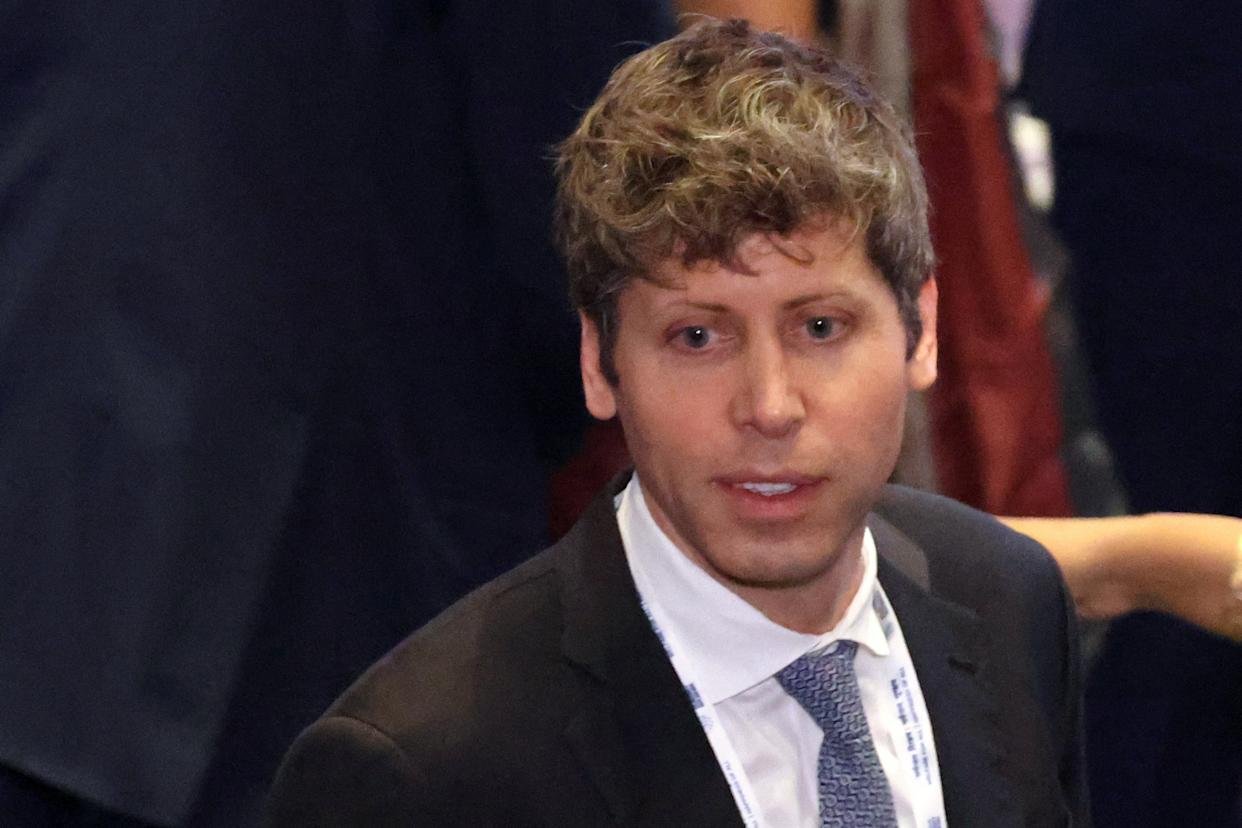
    OpenAI’s Sam Altman said the company will amend its deal with the Defense Department (or the Department of War) to explicitly prohibit the use of its AI system on mass surveillance against Americans. Altman has published an internal memo previously sent to employees on X, telling them that the company will tweak the agreement to add language to make that point especially clear. Specifically, it says:

    “Consistent with applicable laws, including the Fourth Amendment to the United States Constitution, National Security Act of 1947, FISA Act of 1978, the AI system shall not be intentionally used for domestic surveillance of U.S. persons and nationals.

    For the avoidance of doubt, the Department understands this limitation to prohibit deliberate tracking, surveillance, or monitoring of U.S. persons or nationals, including through the procurement or use of commercially acquired personal or identifiable information.”

    Altman has also claimed in the memo that the agency affirmed that its services will not be used by its intelligence agencies, including the NSA, without a modification to their contract. He added that if he received what he believed was an unconstitutional order, he would rather go to jail than follow it.

    In addition, the OpenAI CEO has admitted in the memo that the company shouldn’t have rushed to get the deal out on Friday, February 27, since the issues were “super complex and demand clear communication.” Altman explained that the company was “trying to de-escalate things and avoid a much worse outcome” but it “looked opportunistic” in the end. If you’ll recall, OpenAI announced the partnership shortly after President Trump ordered all US government agencies to stop using Claude and any other Anthropic services. To note, Anthropic started working with the US government in 2024.

    The Defense Department and Secretary Pete Hegseth had been pressuring Anthropic with to remove its AI’s guardrails so that it can be used for all “lawful” purposes. Those include mass surveillance and the development of fully autonomous weapons. Anthropic refused to bow down to Hegseth’s demands and in a statement said that “no amount of intimidation or punishment” will change its “position on mass domestic surveillance or fully autonomous weapons.” Trump issued the order as a result. The Defense Department had also taken the first steps to designate Anthropic as a “supply chain risk,” which is typically reserved for Chinese companies believed to be working with their country’s government.

    Altman said that in his conversations with US officials, he reiterated that Anthropic shouldn’t be designated as a supply chain risk and that he hoped the Defense Department would offer it the same deal OpenAI agreed to. In an AMA session on X over the weekend, Altman clarified that he didn’t know the details of Anthropic’s agreement and how it differed from the one OpenAI signed. But if it had been the same, he thought Anthropic should have agreed to it.

    After the news broke out about OpenAI’s deal, Anthropic climbed its way to the number one spot of the App Store’s Top Free Apps leaderboard, beating out both ChatGPT and Google Gemini. Anthropic, capitalizing on Claude’s sudden popularity, launched a memory import tool to make switching to its chatbot from another company’s easier. Meanwhile, uninstalls for ChatGPT’s jumped by 295 percent day-over-day, according to Sensor Tower.