Capcom revealed during its March 5 Spotlight showcase that Pragmata, its repeatedly delayed dystopian sci-fi adventure game, will release on April 17 for PlayStation 5, Xbox Series X/S, Nintendo Switch 2 and PC via Steam. The game had been set for April 24 since its appearance at The Game Awards in December.
The game’s new trailer shows previously unseen locations and gameplay moments, and new elements within the Shelter, the in-game lunar base. Pragmata was first revealed in 2020 with a 2022 release window. Capcom then delayed it to 2023, then went radio silent on the project before resurfacing with a new 2026 date last year.
A free Sketchbook demo is available now on the PlayStation Store, Xbox Store, Nintendo eShop and Steam. Pre-orders for the game are available now.
Today the US Senate unanimously passed proposed legislation known as COPPA 2.0. This measure, fully named the Children and Teens’ Online Privacy Protection Act, aims to create new protections for younger users online, such as blocking platforms from collecting their personal data without consent.
COPPA 2.0 is a modernized take on the Children’s Online Privacy Protection Act of 1998, attempting to address recent changes in common online activities, like targeted advertising, that could prove harmful to minors. Lawmakers have made several attempts to get this bipartisan bill through. While it has made varying amounts of headway in the Senate, none of the COPPA 2.0 bills to date have gotten past the House of Representatives. Industry groups such as NetChoice have previously opposed COPPA 2.0 and other measures around minors’ online activity such as KOSA, the Kids Online Safety Act. NetChoice members include Google, YouTube, Meta, Reddit, Discord, TikTok and X. Google specifically has since changed its stance to support COPPA 2.0, however.
“This bill expands the current law protecting our kids online to ensure companies cannot collect personal information from anyone under the age of 17,” Senate Democratic Leader Chuck Schumer (D-NY) said in a statement about the latest result. “This is a big step forward for protecting our kids. We hope the House can join us. They haven’t thus far.”
However, there has been a bigger push both domestically and internationally toward restrictions on when and how younger people engage online. Several states — Utah, California and Washington to name a few — have enacted laws requiring some level of age verification, either to access mature content online or to use social media apps at all. Many of these efforts have raised concerns about privacy regarding where and how people’s personal information is stored and protected. COPPA 2.0 might wind up benefitting from the privacy debates since it emphasizes giving teens and parents ways to protect themselves from having their data used against them rather than asking adults to give up data in order to use the internet as usual.
Update, March 6 2026, 11:38AM ET: Article updated with additional context on Google.
It’s been a wild week for Apple. After announcing a slew of new hardware, the company capped things off with its cheapest laptop ever: the $599 MacBook Neo. It’s low on specs, but high on character and value. In this episode, Devindra and Engadget Deputy Editor Nathan Ingraham dive into the MacBook Neo, as well as the refreshed MacBook Air M5, MacBook Pro M5 Pro/Max, iPad Air M4 and iPhone 17e.
Also, Devindra chats with Spencer Ackerman, author of Forever Wars and recent Iron Man comics, about the ongoing battle between Anthropic and the Department of Defense. It turns out the DOD still used Claude for attacks on Iran, after banning Anthropic’/s AI last week. And really, what do these AI companies expect to happen when they jump at military contracts?
Subscribe!
Topic
Apple announces a the MacBook Neo priced at $599 and it’s shockingly great – 0:53
MacBook Air got the M5, MacBook Pro got the M5 Pro and M5 Max, and who needs the new iPad Air now? – 22:31
Anthropic vs. DoD with Spencer Ackerman, author of The Forever Wars – 30:34
Gemini encouraged a man to end his own life to be with his ‘AI wife’ – 58:53
Polymarket nixes bets on nuclear detonation after public outcry – 1:01:55
No Yōtei on PC: Sony closes down first party titles outside of PS5 – 1:03:56
Wildlight Studios’ Highguard shuts down after 46 days live – 1:08:23
Working on: Dell’s XPS 14 will be great when the keyboard fix comes through – 1:15:09
Pop culture picks – 1:15:58
Credits
Hosts: Devindra Hardawar and Nathan Ingraham Guest: Spencer Ackerman Producer: Ben Ellman Music: Dale North and Terrence O’Brien
Life EV has completed a court-approved acquisition of Rad Power Bikes, granting a second life to the troubled e-bike brand.
The Florida-based Life EV now owns Rad’s brand, intellectual property, inventory and certain unspecified operating assets, and will continue to operate as Rad Power Bikes in the US, with plans to expand to “select key markets.”
Rad’s new owner has committed to honoring certain warranties and gift cards purchased prior to the acquisition, and says new bikes will be built in the US going forward. Life EV will adopt a Foreign Trade Zone (FTZ) structure for its manufacturing operations, allowing it to take advantage of special domestic customs procedures when sourcing parts from global suppliers.
“Rad Power Bikes has helped define the e-bike category in North America with its innovative products and passionate rider community,” said Life EV CEO, Rob Provost. “Respecting and preserving that legacy – its brand, vision, and leadership – is foundational to this acquisition. Together, we will build on that trust and create new opportunities for riders nationwide.”
The completed acquisition marks the end of a turbulent period for Rad. Back in December, the company was forced to file for Chapter 11 bankruptcy after the Consumer Product Safety Commission (CPSC) warned Rad’s customers to “immediately stop using” some of its e-bike batteries due to a serious fire hazard. At the time, Rad said it couldn’t afford to recall the at-risk batteries.
Less than two months later, in what can only be described as a strange twist of fate, a fire broke out at a Rad Power Bikes retail store warehouse in Huntington Beach, California. “We’re working with local authorities to review a thermal incident that occurred at our Huntington Beach store Sunday evening,” a Rad Power Bikes spokesperson told Engadget at the time. “The incident was contained and happened while the store was closed. The cause of the fire has not been confirmed.”
Amazon’s website appears to be stabilizing after experiencing technical issues that kept users from logging in and prevented prices from displaying correctly. DownDetector reported a spike of outage reports around 2PM ET, but as of 5:56PM ET, user complaints have fallen significantly.
The Amazon.com homepage currently loads, and Engadgets staff have been able to load product pages and view prices without any problems. During the peak of the site’s issues, neither were loading consistently, and clicking through in some cases showed an error page with text that says “Sorry, something went wrong on our end.” Users also reported being unable to log into their accounts.
“We’re sorry that some customers may be experiencing issues while shopping,” Amazon said in a statement to Engadget. “We appreciate customers’ patience as we work to resolve the issue.” The company shared a similar sentiment with customers on X, confirming that it’s aware there’s a problem and acknowledging that its working on a fix. Amazon has yet to confirm whether the issue is fully resolved.
As a cloud provider through its Amazon Web Services (AWS) business, Amazon has experienced its fair share of outages, including one in October 2025 that took out services like Snapchat and Amazon’s own Alexa voice assistant for hours. The company’s website experiencing issues without a larger AWS outage seems a bit more unusual, and might suggest the problem lies outside of its cloud infrastructure.
Update, March 5, 5:56PM ET: Updated article to reflect improved performance on Amazon.com.
Today, X announced some updates to its creator subscriptions platform. The leading change gives participating accounts the option to make part of tweet threads only visible to subscribers. This new Creator Subscriptions feature is called Exclusive Threads, an ironic name choice given X’s main text-based social media posting competitor is called Threads.
The new tool allows a creator to tease paywalled content, rather than keeping all of the material behind a subscribers-only gate. A gif shared both by the X Creators account and by the company’s head of product, Nikita Bier, show how it will look in practice. Buttons to sign up as a subscriber will be embedded into the post chain, with the hope that the need to see the rest of the thread will be a big enough draw for readers to pay up. X has been making a push to draw content creators, offering other recent features like a ‘paid partnership’ label for sponsored posts.
Netflix has acquired an AI filmmaking startup called InterPositive, according to a report by Variety. This is a company that was founded by actor Ben Affleck back in 2022. Don’t worry if you haven’t heard of it. Affleck has been operating the company in stealth mode for the past few years, so this is pretty much it’s big coming-out party.
The terms of the acquisition haven’t been disclosed, but Affleck will remain on as a senior advisor to Netflix. Additionally, the entire staff will be absorbed into the streaming platform.
Affleck says he started the company after “observing the early rise of AI in production” and realizing how the “models came up short.” The company makes tools that generate AI models based on an existing production’s dailies. This lets filmmakers use the model in the post-production process to do stuff like mix and color, relight shots and add visual effects.
Affleck adds that this tech is “not about text-prompting or generating something from nothing.” Netflix says the company will keep “filmmakers at the center of the process.” The company recently used generative AI tools to whip up a VFX shot in a show called The Eternaut. It’s also been using AI to make ads more intrusive. We’ll have to wait and see if creators do indeed remain at the center of things. Netflix will offer access to InterPositive’s tech to creative partners but has no plans to sell it commercially.
To Affleck’s credit, he seems to have a nuanced understanding of modern AI tools. “We also need to preserve what makes storytelling human, which is judgment,” he said. “The kind that takes decades to build, experience to hone and that only people can have. I knew I had a responsibility to my peers and our industry, to protect the power of human creativity and the people behind it.” However, it’s worth reiterating that the company is no longer in Affleck’s hands, as he is now just an advisor.
Who needs Half-Life 3 or Beyond Good & Evil 2? Roku, in an attempt to gamify content discovery on its platform, has cooked up a gaming announcement for the ages. Behold: Roklue. Yes, that’s a real name that someone with a job title and (likely high) salary came up with.
Roklue (shudder) will quiz players on “the movies and TV shows that everyone is talking about,” along with classic “beloved favorites.” When it references a movie or show, it will provide a link for you to tune in on your device. The initial version is an Oscar season tie-in (“Roklue: Awards Season”) that debuts on Saturday. This inaugural version is produced by B17 Entertainment, a Sony-owned company.
Roku says it will rotate thematic content throughout the year. Varietyreports that those will center around music festivals, the Emmys and holidays.
Apart from that name, which should come with a gag-reflex warning, Roklue sounds harmless enough. You play a trivia game to find new stuff to stream; Roku grows its engagement. Win-win. But with corporate schemes like this, it’s always worth wondering where further monetization might eventually come into play. Think something like linking to series on platforms you don’t yet subscribe to. (Hello, kickback.)
On March 7, you’ll find the free Roklue (ick) game on your Roku home screen, no download required.
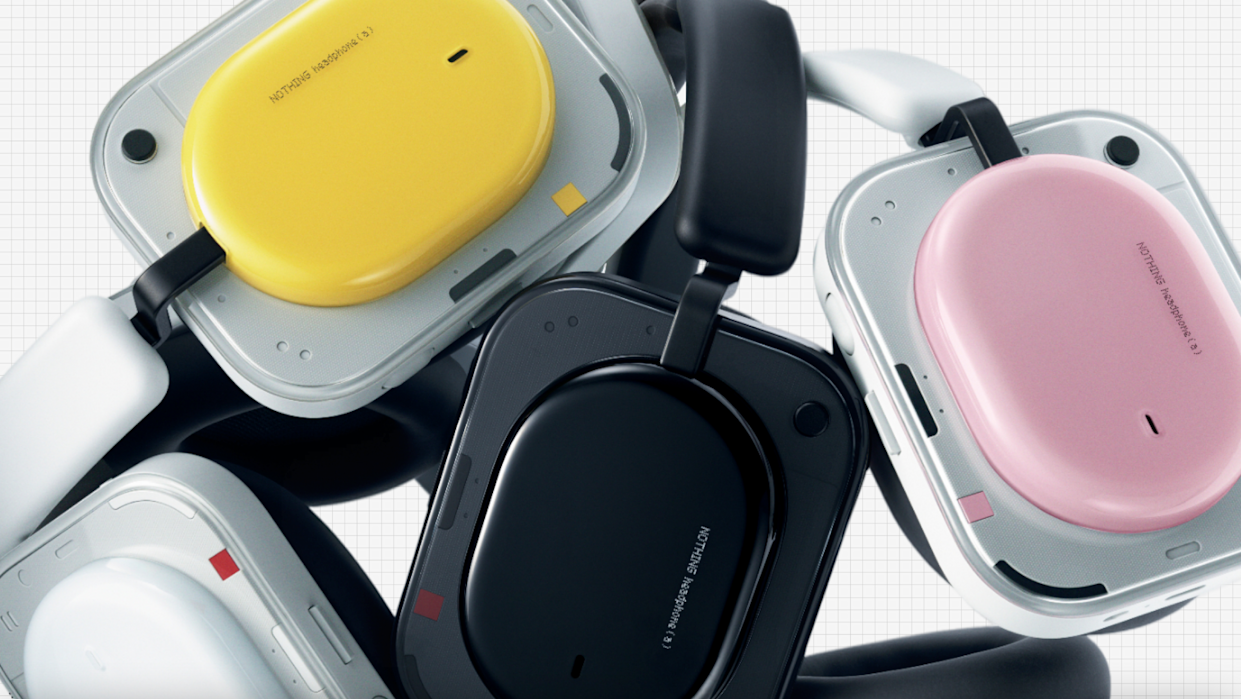
Nothing just revealed a new pair of over-ear headphones as a relatively budget-friendly alternative to the pre-existing Headphone 1. The Headphone (a) earphones feature a similar design language to the company’s previous cans, but with more color. As a matter of fact, these will be available in four colors, including yellow, pink, white and black.
Perhaps the most notable feature here, however, is the battery life. Nothing says these headphones will last over five days on a single charge. That’s not five days of regular use, working out to several hours each day or whatever. It claims 135 hours of life per charge. As a comparison, Sony’s WH-CH520 headphones, which are praised for great battery life, last around 50 hours.
Nothing
Nothing boasts that the headphones can get five hours of juice from just five minutes at the outlet. They are also on the lighter side, at 310 grams, with breathable memory foam cushions that promise a “tailored, snug fit and all-day comfort for every user.”
This new model includes the same tactile controls of the Headphone 1, with buttons, paddles and a roller. This offers a more sensitive way to adjust the volume and skip tracks. A button even lets users swap through different streaming and podcast apps without having to break out the phone. This button can be programmed to do other stuff like snap a photo or start a video
Nothing
Beyond that, the Headphone (a) includes adaptive ANC that makes adjustments depending on ambient noise. This is further assisted by three microphones that monitor for external sounds. They can also approximate spatial audio and integrate with the Nothing X app, which features an equalizer and other goodies.
We don’t yet know how these things sound, which is pretty important, but we also don’t have long to wait. Preorders are open right now, with shipments going out on March 13 for most colorways. The yellow model doesn’t ship until April. They cost $200, which is much cheaper than the $300 price tag accompanying the Headphone 1.
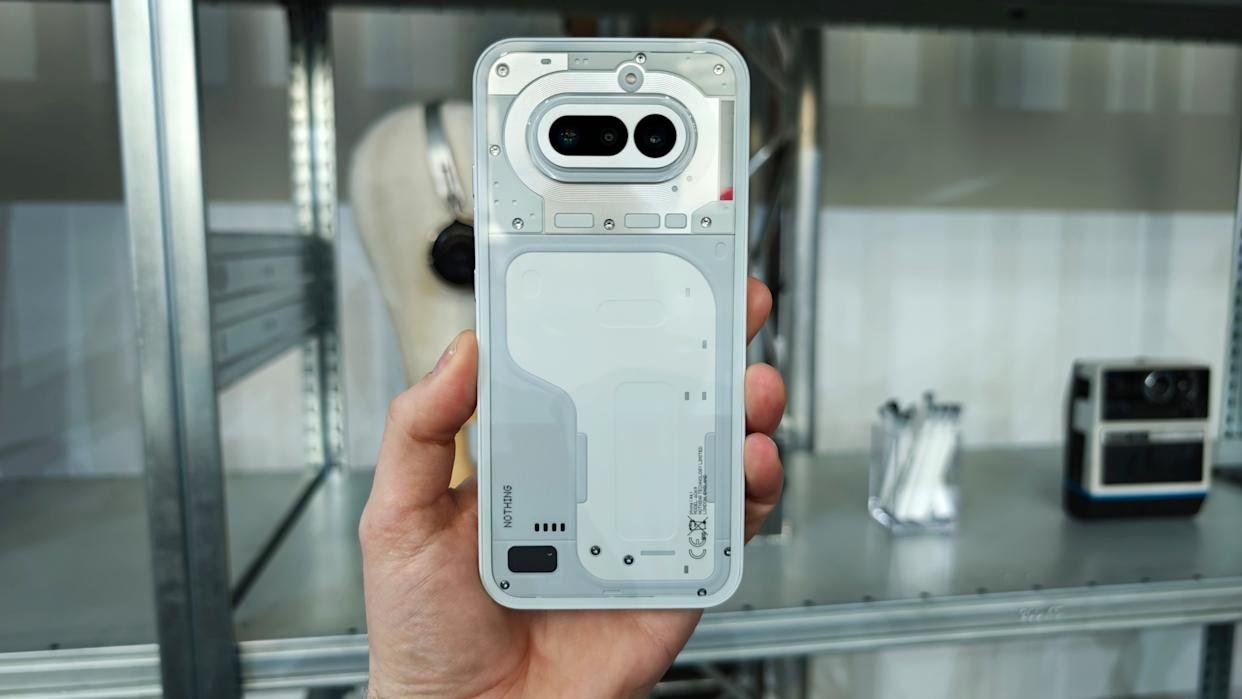
Nothing is back with two new smartphones, the entry-level Phone 4a and the mid-range Phone 4a Pro. With the base 4a in particular, there’s no shortage of substantial hardware upgrades since the 3a, even if the design doesn’t quite stand out as much. This year, that’s apparently the role of the Nothing Phone 4a Pro. That said, the base 4a’s two new color options (blue and pink) are gorgeous additions to the usual monochrome duo of white and black.
There have been many upgrades since 2025’s Phone 3a. It comes with IP64 dust and water resistance, and is also physically tougher: Nothing says it has increased bend resistance by 34 percent, but I always considered all of the company’s phones pretty solid. The display also gets Gorilla Glass 7i, something I’ve wanted to see Nothing improve on its cheapest phones. My Phone 2a’s screen got pretty messed up when I tussled with my keys a few years ago. The 6.78-inch display is also 23 percent brighter than its predecessor, reaching 1,600 nits during outdoor viewing.
The main upgrades are centered around the cameras, marking a major improvement over what the Phone 3a last year. A new tetraprism periscope telephoto camera extends to up to 3.5x optical zoom, further than the base Phone 3a.
Image by Mat Smith for Engadget
Nothing says the main camera, with a new Samsung GN9 50-megapixel sensor, captures up to 64 percent more light than similarly sized camera sensors. The company has also upgraded its computational photography and tone mapping, which help it deliver on a new 70x ultra zoom mode, which beefs up your images with AI smarts. While it’s unlikely to be a regular feature for me, it’s still an option. It works well with straight lines and architecture, but don’t expect faces and nuanced detail at 70x zoom. But hey, sometimes you want that up-close picture of an iconic landmark. Fortunately, you’ll get up to a 7x lossless zoom by combining the 3.5x optical zoom with sensor cropping, which works well.
I’ve been testing the Phone 4a for a few days – because I can’t get enough phones – and noticed that photo image quality is noticeably better compared to the Phone 3a. Images have less noise and more detail, with the Phone 4a being far more capable in poor lighting conditions.
Image by Mat Smith for Engadget
The Phone 4a has a 1.5K (1,224 × 2,720) display, up from the full HD display (1,920 × 1,080) on last generation’s phone. It supports up to 120Hz refresh rates and has a peak brightness of 4,500 nits for HDR content. That resolution boost means Nothing’s meticulously designed UI and icons look sharper and everything is easier to see when using the 4a in the bright spring sunlight.
Nothing says the new Snapdragon 7s Gen 4 processor offers 10 percent better power efficiency, but what will make the Phone 4a go the distance is more likely the 5,080mAh battery – the biggest yet in Nothing’s midrange phones. Even the storage has been upgraded, with 47 percent faster read and 380 percent faster write speeds. I almost immediately clocked the improvement while attempting some light video editing and installing a few games.
This year’s Glyph system has turned into a Glyph Bar. It’s made up of 63 mini-LEDs in seven square lights in a row. These top out at 3500 nits, which is 40 percent brighter than the Phone 3a’s Glyph Interface. Over the years, I go through waves of loving Nothing’s take on notifications through to forgetting they’re there. Nothing is gradually adding more utility each year, and it’ll double as a notification tracker for a few select apps, like Uber, indicating how far away your ride is. The Glyph Bar can apparently double up as a fill light, although I couldn’t get that to work on my pre-release sample. I’ll update this story when I can test it out. Likewise, Nothing’s Playground of fan-made widgets and mini-apps isn’t entirely compatible with the 4a — at least not yet.
Image by Mat Smith for Engadget
The Nothing Phone 4a is an upgrade over its predecessor in every way – and the improvements are tangible, and I noticed them almost immediately – something that can be challenging with other phone refreshes. The display is crisper, as are the photos and video it can capture.
Like previous Nothing phones, despite the “global launch,” this phone won’t be headed to the US. However, in the UK, starting at £349 (roughly $467), it’s only marginally more expensive than its predecessor and you get a lot more bang for your buck. It’s also a good chunk of change cheaper than the $500 Pixel 10a. For those looking for an eye-catching, capable phone at a similar price, the Phone 4a’s biggest competition may be its bigger brother, the $499 Phone 4a Pro. Expect our hands-on for Nothing’s other phone very soon. The Phone 4a is open for preorders now at nothing.tech, going on sale starting March 13 next week.