Tag: Deadline News

  • Judge Says Kennedy Center Must Give Court 30 Days Notice Of Any Demolition Plans After Trump Floats Prospect It Could Be “Ripped Down”

    Judge Says Kennedy Center Must Give Court 30 Days Notice Of Any Demolition Plans After Trump Floats Prospect It Could Be “Ripped Down”

    UPDATED, with judge’s order: A federal judge said that the Kennedy Center must give the court 30 days notice before proceeding on any demolition of the complex.

    U.S. District Judge Christopher Cooper issued his order after President Donald Trump told reporters that the Kennedy Center may be “ripped down” unless a renovation plan is carried out and his administration gets recognition for it.

    Speaking to reporters on Wednesday, Trump cited the center’s financial woes and need for repairs and revitalization.

    “For me to get involved, and to take on long term, and to carry it, I think the Trump administration should certainly have recognition,” Trump said. “Because frankly, if we don’t do that, it’s going to close. It will end up being ripped down.”

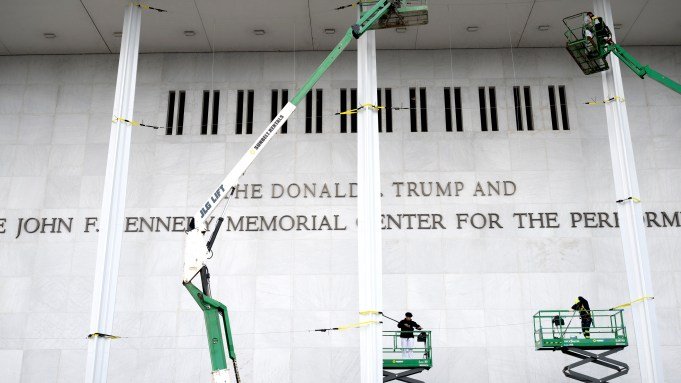
    Trump posted on Truth Social earlier in the week that the renovation will not take place unless courts lift a judge’s order that has prohibited his name from being inscribed on the facade of the complex.

    Attorneys for Rep. Joyce Beatty (D-OH), an ex officio member of the Kennedy Center board who has been challenging its Trump naming plan and its plans for a two-year closure, noted Trump’s comments in a court filing early Thursday. They also submitted a photo of Trump in which he appeared to be reading a placard that read, “Kennedy Center demolished.”

    After the center’s main building was closed on Wednesday, and Beatty filed a motion for an emergency hearing on the action. Her attorneys wrote that the closure may violate Cooper’s order that the center not shutter for two years unless the board has more fully considered its impact. But Cooper denied the request for an emergency hearing.

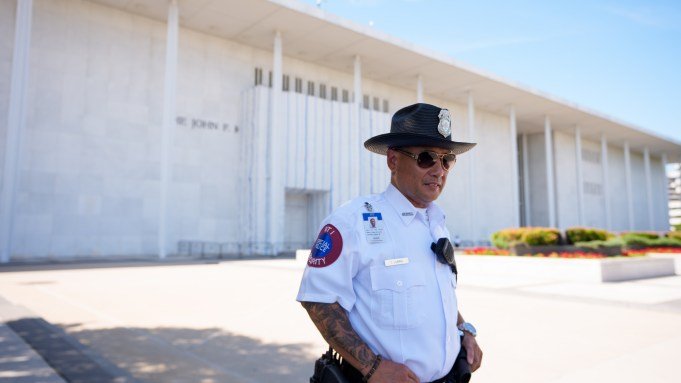
    On Thursday, the center’s DOJ attorneys wrote that this week’s closure was temporary. They submitted a declaration from the center’s executive director and chief operating officer, Matthew Floca, who stated that the closure was due to “acute risks to public safety resulting from continued structural deterioration at the center.” He stated that the closure will last for seven days, unless extended, to assess the safety risks.

    The center has pointed to a recent incident in which a five-by-four-foot piece of one-inch-thick ceiling plaster fell due to water damage following recent heavy rains. They also pointed to an assessment from engineering firm Walter P. Moore that there was more advanced deterioration of 2,500 pound soffit panels that hang above the center’s exterior.

    “This court did not enjoin the center from temporarily closing the building to address significant safety hazards,” the attorneys wrote.

    The DOJ attorneys also indicated that they plan to move to lift the judge’s order prohibiting the two-year closure plan.

    Beatty’s legal team responded by claiming that the “rationale that they are only temporarily closing” the main building “is a plain pretext to justify shutting down the center permanently. The facts before the court are deeply concerning. Defendants announced the closure directly after the president stated that the center would close ‘immediately’ — not temporarily but in response to a board vote held” on Tuesday.

    The congresswoman also asked the judge to “make crystal clear” that his order also prohibits demolishing the structure.

    After his order for 30 days notice, she said in a statement, “It is simply outrageous that we have gotten to the point of consistent judicial intervention to protect this historic institution from getting bulldozed by the president.”

    PREVIOUSLY: After fencing went up around the Kennedy Center and the main building was closed to the public, a House lawmaker on Thursday called for an emergency hearing, warning that the shutdown violates a judge’s order.

    The board, dominated by allies of President Donald Trump, voted Tuesday for a resolution to close the main building of the complex, citing safety issues while the center has been working on plans for a large-scale renovation. The resolution also pointed to a recent incident in which a portion of the ceiling collapsed to the floor following a recent rainstorm.

    But attorneys for Rep. Joyce Beatty (D-OH), an ex officio member of the center board who has been challenging the closure plan, noted that U.S. District Judge Christopher Cooper’s order prohibits a shutdown until he lifted a preliminary injunction, something that he has yet to do. The judge has ruled that renovations could proceed, but a closure could come only after the board made a fuller analysis of its impact.

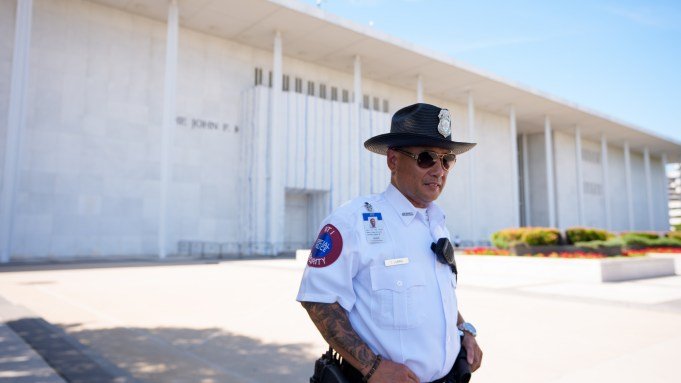
    Per a court filing, a staffer at a law firm representing Beatty sought to enter the main building on Wednesday but was advised by security that it was closed to the public.

    Cooper has given the center until Thursday morning to respond to Beatty’s motion for an emergency hearing.

    The judge on Tuesday prohibited the board’s latest plan to return Trump’s name to the façade of the complex or to designate its grounds for him. Trump, who serves as the center’s chair, posted on Truth Social that they would seek an expedited appeal, but that the renovation would not proceed if courts rule against the naming plan.

    Beatty has said that she is not opposed to a renovation, but previous plans were to keep the center open as the rehab was carried out in phases.
  • House Lawmakers Launch Movies, Music, Entertainment & Sports Caucus

    House Lawmakers Launch Movies, Music, Entertainment & Sports Caucus

    EXCLUSIVE: A group of House lawmakers is launching a new caucus focused on the economic and cultural impact of movies, music, entertainment and sports.

    The Movies, Music, Entertainment & Sports (MoMEntS) Caucus is being launched by Rep. Sydney Kamlager-Dove (D-CA), whose district includes Culver City, and she will co-chair it along with Rep. María Elvira Salazar (R-FL) and Troy Carter (D-LA).

    Kamlager-Dove said in a statement, “America’s creative and entertainment sectors are economic powerhouses, generating more than $1 trillion each year and supporting over five million good-paying jobs. Yet for far too long, Congress has failed to give these industries and the workers and creators who power them the attention and support they deserve.”

    The caucus comes amid an industry push for the establishment of a federal film and TV tax incentive as a way to address the flight of production to other countries.

    The caucus will have a broader focus than TV and film, and also include broadcasting; music; sports and live entertainment; fashion and beauty; gaming, esports, and interactive media; streaming and digital platforms; content creators and the influencer economy; literary and publishing; and visual and performing arts, organizers said.

    Salazar said in a statement that the caucus “will bring lawmakers and creative industries together to better understand the challenges they face, protect creative rights, and keep American talent and innovation leading on the world stage.”

    Carter said the caucus “provides a critical opportunity for us to prioritize America’s creative and entertainment industries, which contribute so much to our nation’s history, economy, and culture.”

    The caucus also will focus on innovation, competition, and responsible platform practices, among other aims.

    Other members of the caucus include Rep. Joe Wilson (R-SC), Rep. André Carson (D-IN), Rep. Gilbert R. Cisneros, Jr. (D-CA), Rep. Jared Moskowitz (D-FL), and Rep. Ted W. Lieu (D-CA).

    Among those praising the formation of the caucus were Recording Academy President Harvey Mason Jr., TKO Group Chief Legal Officer Riché McKnight, TikTok USDS Joint Venture”s head of public policy Nicole Nason and Kathryn Busby, head of orginal programming at Starz.

    Congress also has a Creative Rights Caucus, focused on copyrights, First Amendment rights and intellectual property rights. It is co-chaired in the House by Rep. Judy Chu (D-CA) and Rep. Laurel Lee (R-FL), and in the Senate by Sen. Thom Tillis (R-NC) and Sen. Mazie Hirono (D-HI).

    Rep. Laura Friedman (D-CA) and Rep. Brian Jack (R-GA) appeared on a press call on Tuesday to call for a federal film incentive, telling reporters that legislation is being drafted. President Donald Trump announced his support for a federal film incentive earlier this month.

  • House Lawmakers Form American Film & TV Production Caucus Amid Push For Federal Incentive

    House Lawmakers Form American Film & TV Production Caucus Amid Push For Federal Incentive

    Key House supporters of a federal film & TV incentive are establishing a congressional caucus, as work continues on legislation establishing the nationwide production credit.

    The Congressional American Film & TV Production Caucus will “work to revitalize, strengthen, and expand film production across the United States,” per an announcement on Wednesday.

    The founding members of the caucus include Rep. Brian Jack (R-GA), Rep. Laura Friedman (D-CA), Rep. Nathaniel Moran (R-TX), Rep. Linda Sánchez (D-CA), Rep. Nicole Malliotakis (R-NY) and Rep. Tom Suozzi (D-NY).

    The organizers cited the loss of more than 100,000 film and television production jobs since a 2022 peak, and a fall in production spending by 20% while such output grew in the U.K. and Eastern Europe.

    They cited the lure of subsidies offered by foreign countries, and argued that states are unable to compete on their own.

    Supporters of an incentive are emphasizing support on both sides of the aisle.

    President Donald Trump recently announced his support for a federal incentive, and there are hopes among supporters that will generate momentum for congressional action when Congress returns after the midterms.

    Moran, Sánchez, Malliotakis and Suozzi are members of the Ways & Means Committee, which writes tax law. Jack serves on the Rules Committee, essential to getting a bill to the floor.

    Friedman, a former film producer, said in a statement, “Film and television work is leaving this country because 65 other nations decided to compete for these hundreds of thousands of good-paying jobs. A national film tax credit is how we bring that work home, and this caucus is a key step to build support for it.”

    Moran said, “Every production that sets up here ripples out, supporting the businesses around it and pumping money into local communities. We need to keep that going and keep American storytelling in America.”

    Supporters have not given any timeline for introduction of legislation, but it could be in the coming weeks. Friedman and Jack appeared in a press call on Tuesday organized by the Motion Picture Association to outline the urgency for a production credit.

  • House Lawmakers Launch Movies, Music, Entertainment & Sports Caucus

    House Lawmakers Launch Movies, Music, Entertainment & Sports Caucus

    EXCLUSIVE: A group of House lawmakers is launching a new caucus focused on the economic and cultural impact of movies, music, entertainment and sports.

    The Movies, Music, Entertainment & Sports (MoMEntS) Caucus is being launched by Rep. Sydney Kamlager-Dove (D-CA), whose district includes Culver City, and she will co-chair it along with Rep. María Elvira Salazar (R-FL) and Troy Carter (D-LA).

    Kamlager-Dove said in a statement, “America’s creative and entertainment sectors are economic powerhouses, generating more than $1 trillion each year and supporting over five million good-paying jobs. Yet for far too long, Congress has failed to give these industries and the workers and creators who power them the attention and support they deserve.”

    The caucus comes amid an industry push for the establishment of a federal film and TV tax incentive as a way to address the flight of production to other countries.

    The caucus will have a broader focus than TV and film, and also include broadcasting; music; sports and live entertainment; fashion and beauty; gaming, esports, and interactive media; streaming and digital platforms; content creators and the influencer economy; literary and publishing; and visual and performing arts, organizers said.

    Salazar said in a statement that the caucus “will bring lawmakers and creative industries together to better understand the challenges they face, protect creative rights, and keep American talent and innovation leading on the world stage.”

    Carter said the caucus “provides a critical opportunity for us to prioritize America’s creative and entertainment industries, which contribute so much to our nation’s history, economy, and culture.”

    The caucus also will focus on innovation, competition, and responsible platform practices, among other aims.

    Other members of the caucus include Rep. Joe Wilson (R-SC), Rep. André Carson (D-IN), Rep. Gilbert R. Cisneros, Jr. (D-CA), Rep. Jared Moskowitz (D-FL), and Rep. Ted W. Lieu (D-CA).

    Among those praising the formation of the caucus were Recording Academy President Harvey Mason Jr., TKO Group Chief Legal Officer Riché McKnight, TikTok USDS Joint Venture”s head of public policy Nicole Nason and Kathryn Busby, head of orginal programming at Starz.

    Congress also has a Creative Rights Caucus, focused on copyrights, First Amendment rights and intellectual property rights. It is co-chaired in the House by Rep. Judy Chu (D-CA) and Rep. Laurel Lee (R-FL), and in the Senate by Sen. Thom Tillis (R-NC) and Sen. Mazie Hirono (D-HI).

    Rep. Laura Friedman (D-CA) and Rep. Brian Jack (R-GA) appeared on a press call on Tuesday to call for a federal film incentive, telling reporters that legislation is being drafted. President Donald Trump announced his support for a federal film incentive earlier this month.

  • House Lawmakers Form American Film & TV Production Caucus Amid Push For Federal Incentive

    House Lawmakers Form American Film & TV Production Caucus Amid Push For Federal Incentive

    Key House supporters of a federal film & TV incentive are establishing a congressional caucus, as work continues on legislation establishing the nationwide production credit.

    The Congressional American Film & TV Production Caucus will “work to revitalize, strengthen, and expand film production across the United States,” per an announcement on Wednesday.

    The founding members of the caucus include Rep. Brian Jack (R-GA), Rep. Laura Friedman (D-CA), Rep. Nathaniel Moran (R-TX), Rep. Linda Sánchez (D-CA), Rep. Nicole Malliotakis (R-NY) and Rep. Tom Suozzi (D-NY).

    The organizers cited the loss of more than 100,000 film and television production jobs since a 2022 peak, and a fall in production spending by 20% while such output grew in the U.K. and Eastern Europe.

    They cited the lure of subsidies offered by foreign countries, and argued that states are unable to compete on their own.

    Supporters of an incentive are emphasizing support on both sides of the aisle.

    President Donald Trump recently announced his support for a federal incentive, and there are hopes among supporters that will generate momentum for congressional action when Congress returns after the midterms.

    Moran, Sánchez, Malliotakis and Suozzi are members of the Ways & Means Committee, which writes tax law. Jack serves on the Rules Committee, essential to getting a bill to the floor.

    Friedman, a former film producer, said in a statement, “Film and television work is leaving this country because 65 other nations decided to compete for these hundreds of thousands of good-paying jobs. A national film tax credit is how we bring that work home, and this caucus is a key step to build support for it.”

    Moran said, “Every production that sets up here ripples out, supporting the businesses around it and pumping money into local communities. We need to keep that going and keep American storytelling in America.”

    Supporters have not given any timeline for introduction of legislation, but it could be in the coming weeks. Friedman and Jack appeared in a press call on Tuesday organized by the Motion Picture Association to outline the urgency for a production credit.

  • House Lawmaker Requests Emergency Court Hearing After Kennedy Center Closure

    House Lawmaker Requests Emergency Court Hearing After Kennedy Center Closure

    After fencing went up around the Kennedy Center and the main building was closed to the public, a House lawmaker on Thursday called for an emergency hearing, warning that the shutdown violates a judge’s order.

    The board, dominated by allies of President Donald Trump, voted Tuesday for a resolution to immediately close the main building of the complex, citing safety issues while the center has been working on plans for a large-scale renovation. The resolution also pointed to a recent incident in which a portion of the ceiling collapsed to the floor following a recent rainstorm.

    But attorneys for Rep. Joyce Beatty (D-OH), an ex officio member of the center board who has been challenging the closure plan, noted that U.S. District Judge Christopher Cooper’s order prohibits a shutdown until he lifted a preliminary injunction, something that he has yet to do. The judge has ruled that renovations could proceed, but a closure could come only after the board made a fuller analysis of its impact.

    Per a court filing, a staffer at a law firm representing Beatty sought to enter the main building on Wednesday but was advised by security that it was closed to the public.

    Cooper has given the center until Thursday morning to respond to Beatty’s motion for an emergency hearing.

    The judge on Tuesday prohibited the board’s latest plan to return Trump’s name to the façade of the complex or to designate its grounds for him. Trump, who serves as the center’s chair, posted on Truth Social that they would seek an expedited appeal, but that the renovation would not proceed if courts rule against the naming plan.

    Beatty has said that she is not opposed to a renovation, but previous plans were to keep the center open as the rehab was carried out in phases.
  • House Lawmakers Launch Movies, Music, Entertainment & Sports Caucus

    House Lawmakers Launch Movies, Music, Entertainment & Sports Caucus

    EXCLUSIVE: A group of House lawmakers is launching a new caucus focused on the economic and cultural impact of movies, music, entertainment and sports.

    The Movies, Music, Entertainment & Sports (MoMEntS) Caucus is being launched by Rep. Sydney Kamlager-Dove (D-CA), whose district includes Culver City, and she will co-chair it along with Rep. María Elvira Salazar (R-FL) and Troy Carter (D-LA).

    Kamlager-Dove said in a statement, “America’s creative and entertainment sectors are economic powerhouses, generating more than $1 trillion each year and supporting over five million good-paying jobs. Yet for far too long, Congress has failed to give these industries and the workers and creators who power them the attention and support they deserve.”

    The caucus comes amid an industry push for the establishment of a federal film and TV tax incentive as a way to address the flight of production to other countries.

    The caucus will have a broader focus than TV and film, and also include broadcasting; music; sports and live entertainment; fashion and beauty; gaming, esports, and interactive media; streaming and digital platforms; content creators and the influencer economy; literary and publishing; and visual and performing arts, organizers said.

    Salazar said in a statement that the caucus “will bring lawmakers and creative industries together to better understand the challenges they face, protect creative rights, and keep American talent and innovation leading on the world stage.”

    Carter said the caucus “provides a critical opportunity for us to prioritize America’s creative and entertainment industries, which contribute so much to our nation’s history, economy, and culture.”

    The caucus also will focus on innovation, competition, and responsible platform practices, among other aims.

    Other members of the caucus include Rep. Joe Wilson (R-SC), Rep. André Carson (D-IN), Rep. Gilbert R. Cisneros, Jr. (D-CA), Rep. Jared Moskowitz (D-FL), and Rep. Ted W. Lieu (D-CA).

    Among those praising the formation of the caucus were Recording Academy President Harvey Mason Jr., TKO Group Chief Legal Officer Riché McKnight, TikTok USDS Joint Venture”s head of public policy Nicole Nason and Kathryn Busby, head of orginal programming at Starz.

    Congress also has a Creative Rights Caucus, focused on copyrights, First Amendment rights and intellectual property rights. It is co-chaired in the House by Rep. Judy Chu (D-CA) and Rep. Laurel Lee (R-FL), and in the Senate by Sen. Thom Tillis (R-NC) and Sen. Mazie Hirono (D-HI).

    Rep. Laura Friedman (D-CA) and Rep. Brian Jack (R-GA) appeared on a press call on Tuesday to call for a federal film incentive, telling reporters that legislation is being drafted. President Donald Trump announced his support for a federal film incentive earlier this month.

  • House Lawmakers Launch Movies, Music, Entertainment & Sports Caucus

    House Lawmakers Launch Movies, Music, Entertainment & Sports Caucus

    EXCLUSIVE: A group of House lawmakers is launching a new caucus focused on the economic and cultural impact of movies, music, entertainment and sports.

    The Movies, Music, Entertainment & Sports (MoMEntS) Caucus is being launched by Rep. Sydney Kamlager-Dove (D-CA), whose district includes Culver City, and she will co-chair it along with Rep. María Elvira Salazar (R-FL) and Troy Carter (D-LA).

    Kamlager-Dove said in a statement, “America’s creative and entertainment sectors are economic powerhouses, generating more than $1 trillion each year and supporting over five million good-paying jobs. Yet for far too long, Congress has failed to give these industries and the workers and creators who power them the attention and support they deserve.”

    The caucus comes amid an industry push for the establishment of a federal film and TV tax incentive as a way to address the flight of production to other countries.

    The caucus will have a broader focus than TV and film, and also include broadcasting; music; sports and live entertainment; fashion and beauty; gaming, esports, and interactive media; streaming and digital platforms; content creators and the influencer economy; literary and publishing; and visual and performing arts, organizers said.

    Salazar said in a statement that the caucus “will bring lawmakers and creative industries together to better understand the challenges they face, protect creative rights, and keep American talent and innovation leading on the world stage.”

    Carter said the caucus “provides a critical opportunity for us to prioritize America’s creative and entertainment industries, which contribute so much to our nation’s history, economy, and culture.”

    The caucus also will focus on innovation, competition, and responsible platform practices, among other aims.

    Other members of the caucus include Rep. Joe Wilson (R-SC), Rep. André Carson (D-IN), Rep. Gilbert R. Cisneros, Jr. (D-CA), Rep. Jared Moskowitz (D-FL), and Rep. Ted W. Lieu (D-CA).

    Among those praising the formation of the caucus were Recording Academy President Harvey Mason Jr., TKO Group Chief Legal Officer Riché McKnight, TikTok USDS Joint Venture”s head of public policy Nicole Nason and Kathryn Busby, head of orginal programming at Starz.

    Congress also has a Creative Rights Caucus, focused on copyrights, First Amendment rights and intellectual property rights. It is co-chaired in the House by Rep. Judy Chu (D-CA) and Rep. Laurel Lee (R-FL), and in the Senate by Sen. Thom Tillis (R-NC) and Sen. Mazie Hirono (D-HI).

    Rep. Laura Friedman (D-CA) and Rep. Brian Jack (R-GA) appeared on a press call on Tuesday to call for a federal film incentive, telling reporters that legislation is being drafted. President Donald Trump announced his support for a federal film incentive earlier this month.

  • Judge Blocks Donald Trump’s Name From Being Returned To Kennedy Center Facade

    Judge Blocks Donald Trump’s Name From Being Returned To Kennedy Center Facade

    A federal judge has again weighed in on the Kennedy Center‘s effort to brandish Donald Trump‘s name on the complex, blocking the institution from inscribing his name on its facade and designating its grounds for him.

    “Simply put, Defendants cannot install memorials for President Trump or anyone or anything else at the Kennedy Center without Congress’s blessing,” U.S. District Judge Christopher Cooper wrote in a ruling on Tuesday.

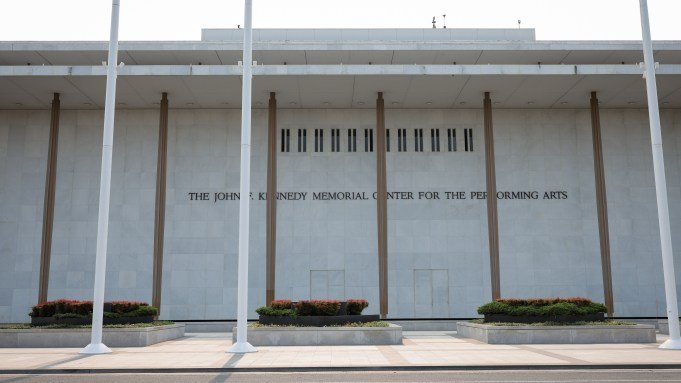
    Last spring, Cooper ruled that the center had to remove Trump’s name from the building and other materials. The board, dominated by the president’s supporters, voted to designate the center as the “Trump Kennedy Center” months earlier. Since complying with his order, a tarp has covered the front facade and its official designation, The John F. Kennedy Memorial Center for the Arts.

    Read the judge’s order on putting Trump’s name on the Kennedy Center.

    In August, the board voted for a new proposal, one that would add Trump’s name as many as three times to the complex.

    On the facade, below its official name, “The John F. Kennedy Memorial Center for the Performing Arts,” there would be an additional line reading “Restored and Renovated by President Donald J. Trump.”

    The board also voted to designate “the physical site and grounds upon which the center sits” as the “President Donald J. Trump Plaza.”

    Cooper did not rule on another proposal adopted by the board to add another line on the facade, reading, “Endowed by the Trump Kennedy Center Fund.” Such a designation is contingent on $100 million being raised for the endowment, and the judge ruled that because such an inscription is not about to happen imminently, the court “need not settle now whether it violates the permanent injunction.” But he expressed skepticism that even that inscription would be allowed, writing that it “appears to be another verboten memorial.” He required the center to give him at least 60 days notice before installing the inscription.

    The Kennedy Center is appealing the judge’s original ruling, which also prohibited the institution from embarking on a plan to close for two years for renovations. Cooper did not bar the center from closing, only that the board had to give a fuller consideration of the impact of such a shutdown.

    In August, the board adopted a new plan to close much of the complex for the renovations, while programming would still take place at The Reach, an extension of the center that opened in 2019. But that venue is only capable of hosting smaller productions, not Broadway scale shows or the National Symphony.

    On Tuesday, the board was expected to meet to consider a new resolution that would immediately close the main building. The resolution cited a recent incident in which a portion of the center’s ceiling collapsed following a rainstorm.

    Board members also were given a draft resolution that presented ten naming proposals for Trump, with an added sense of urgency: The center, it said, was facing financial ruin, and the president has offered to “step in and raise the necessary funds to keep the Center from bankruptcy during its much needed renovation.” The resolution added that the board “is seeking to appropriately recognize and acknowledge President Trump for his well timed proffer of fiscal rescue. The Board understands that without such appropriate recognition it is unlikely that President Trump will provide the fundamental oversight of the renovation of the main building and lead the fiscal rescue of the Center.” The center’s attorneys indicated that the new naming proposal would not come up at Tuesday’s meeting, but that it would focus on closure plans.

    The acknowledgement that the center has run into financial difficulties is not a surprise: There has been little major programming since July. But ticket sales also fell last year, when Trump took control of the center, installed his own board members and president, and ensured that he would become its chairman. He also ousted the previous chairman, David Rubenstein, who had been one of the center’s largest benefactors. After Trump’s name was added to the complex, a number of artists backed out of performances in protest.

    In his latest ruling, the judge accused the DOJ attorneys representing the center of playing “word games,” concluding that Congress designated the complex solely as a memorial to Kennedy. The law prohibits “additional memorials or plaques in the nature of memorials . . . in the public areas of the John F. Kennedy Center for the Performing Arts.”

    The judge wrote that “common sense dictates that the words ‘renovated and restored by President Donald J. Trump’ establish a memorial.”

    He wrote that his injunction “does not just prohibit the Board from renaming the institution the ‘Trump Kennedy Center.’ It also enjoins the creation of any ‘public memorial’ to anyone or anything other than President Kennedy, except in a few statutorily delineated ways that are not relevant here.”

    The judge also concluded that renaming the grounds also would violate the law’s designation for Kennedy.

    “Congress surely did not intend for the Board to auction off naming rights to constituent parts of the campus,” he wrote.

    Cooper also responded to the center’s claims that having Trump’s name inscribed was critical to raising money for the center, and potentially saving it from ruin. He noted that the center’s attorneys had lacked evidence for that contention, and “evidence before the Court pointed in the opposite direction: The renaming of the Center coincided with declines in revenue and contributions, as artists cancelled performances, the Washington National Opera ended its 50-year residency, and ticket sales and viewership of the Kennedy Center Honors broadcast dropped precipitously”

    Trump posted on Truth Social after the latest decision that the center is in “virtual state of collapse.” “The Judge has made us keep it open even though there are no performances, and no people that would have the Courage to even go in. The Board of The Kennedy Center has strongly voted to save it, and they know I’m the only one who can do so, because I have the ability to raise the money, and the ability to construct — that few others have. I also have the strength and power of the Presidency, which will be needed do what must be done, and give it a strong shot at Greatness again! Remember, The Kennedy Center was losing Hundreds of Millions of Dollars when I took over. It was failing badly! It had nothing to do with me, I am only there to help. I just got there to reveal the facts, but especially those concerning Building Safety. A very hostile and conflicted Judge (What else is new?) seems like he won’t let that happen, in which case, unfortunately, the Building is destined to doom. Isn’t that too bad? We have already wasted more than 6 months ‘playing around’ in Court.

  • Donald Trump Says Kennedy Center Will Close Immediately And No Renovations Will Take Place Unless His Name Is Restored To Facade

    Donald Trump Says Kennedy Center Will Close Immediately And No Renovations Will Take Place Unless His Name Is Restored To Facade

    UPDATED: President Donald Trump said Tuesday that the board of the Kennedy Center has voted to immediately close the main complex, while adding that no renovations would take place unless his name is restored to the institution.

    In a Truth Social post, Trump wrote, “The Board of The Kennedy Center today agreed, almost unanimously, to close the Building for Safety reasons, and so that it can begin the process of Reconstruction. The closing will take place immediately, however, the Renovation and Reconstruction, which is a very large and complex job, cannot begin until such time as the D.C. Circuit rules on the Board’s approved name. If the ruling is a negative one, which it should not be, and is not overturned by the U.S. Supreme Court, the Reconstruction and the Renovation of The Kennedy Center will not take place.”

    Congress appropriated more than $250 million for Kennedy Center renovations last year as part of the One Big Beautiful Bill Act.

    Trump also wrote that $17 million that he raised for the center is being put into the Kennedy Center account “to keep it afloat.”

    The board of the Kennedy Center was presented with a resolution to immediately close the main part of the arts complex, with officials citing repair needs and financial woes. The resolution outlined the structural needs of the center and a recent incident in which a piece of the ceiling collapsed amid heavy rains.

    Trump, who serves as the board’s chairman, initially announced the closure plan in February. The board is dominated by members appointed by the president.

    Major programming at the center largely ended in July, as the board had previously set that as the timeline to shutter the facility for two years for renovations, funding by a congressional appropriation of more than $250 million.

    But Rep. Joyce Beatty (D-OH), an ex officio member of the board, challenged the closure plan, and a federal judge last spring ruled that the center’s board had to more fully consider the impact of such an action before shuttering. In August, the board voted in favor of a plan to shut down the main complex but keep open The Reach, an extension that opened in 2019, for limited performances.

    Beatty also challenged the Kennedy Center board’s vote in December to add Trump’s name to the complex. The judge, Christopher Cooper, sided with her, ruling that only Congress could make such a change, and he ordered that Trump’s name be removed. Earlier on Tuesday, Cooper also nixed an alternative plan to add “Restored and Renovated by President Donald J. Trump” to the facade below “The John F. Kennedy Memorial Center for the Performing Arts.” He also ruled that designating the grounds as Donald J. Trump Plaza violates congressional statute that the complex be a memorial to Kennedy.

    The center’s attorneys have argued that giving Trump such recognition is essential to raising money to bring the institution out of financial straits.

    In a draft resolution given to board members over the weekend, center officials said it was facing financial ruin, and the president had offered to “step in and raise the necessary funds to keep the Center from bankruptcy during its much needed renovation.” The resolution added that the board “is seeking to appropriately recognize and acknowledge President Trump for his well timed proffer of fiscal rescue. The Board understands that without such appropriate recognition it is unlikely that President Trump will provide the fundamental oversight of the renovation of the main building and lead the fiscal rescue of the Center.”

    The center, represented by the DOJ, is appealing Cooper’s decision. Trump wrote that they would seek an expedited appeal.

    Roma Daravi, vice president of public relations for the center, said in a statement, “The Board’s decision today reflects sound judgment and a clear prioritization of safety above all else. As the main building closes for urgent renovations — long overdue and desperately needed to protect the safety of patrons, artists and staff — the Center remains committed to pursuing a safe and efficient renovation through all legal means. We intend to appeal today’s Court ruling and move forward with recognizing Chairman President Trump’s historic contributions to the revitalization of America’s Cultural Center.”

    The center has cited extensive repair work needed, including replacement of soffit panels, water damage repair and new electrical infrastructure. According to the center, the slab that fell weighed more than 150 pounds.

    Beatty’s attorneys, Norm Eisen and Nathaniel Zelinsky, indicated that they would challenge the shutdown in court. They have pointed out that the judge’s injunction prohibiting the center’s closure remains in effect.

    They said in a statement, “The unlawful renaming drove audiences and artists away. Now the Board has voted to shut down yet again to hide the terrible mismanagement under its current leadership.”

    In a statement, Beatty said, “For years, the Kennedy Center has planned to undergo phased renovations, in which we both renovate and maintain some performances. This is how major performing arts centers in the country operate. But donors, patrons, and artists all fled after the unlawful attempt to rename this sacred memorial after Donald Trump. Donald Trump only cares about the Kennedy Center for his vanity. That is wrong and it is a breach of his fiduciary duty as a trustee. Congress established the Kennedy Center as a living memorial to President Kennedy, and I am proud to defend this cherished institution.”

    Another reaction came from Kennedy’s niece, Maria Shriver, who wrote on X, “That a sitting president would not let any renovations to a public building go on unless he gets to first put his name in the said building… What a sad state of affairs. What a tragedy. Actually, how small minded, how narcissistic. Actually great men, devoted to public service and the public good do not act like this.”