Tag: Deadline News

  • Oregon AG Drops Demand For Records & Motion To Delay Paramount-Warner Bros. Discovery Merger

    Oregon AG Drops Demand For Records & Motion To Delay Paramount-Warner Bros. Discovery Merger

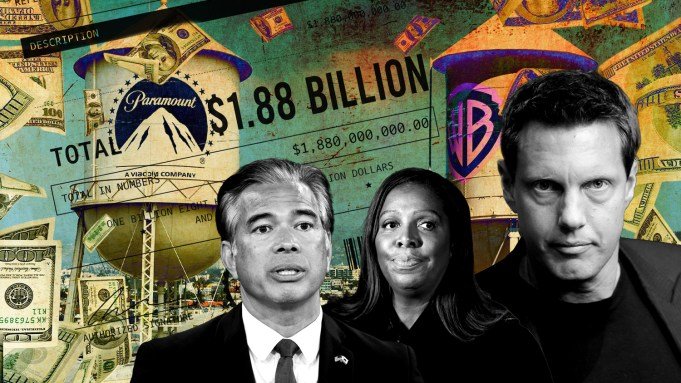
    UPDATED, with comment from AG: Oregon‘s attorney general has dropped a civil investigative demand for Paramount to turn over records related to its efforts to secure federal approval for its merger with Warner Bros. Discovery.

    Oregon Attorney General Dan Rayfield also had asked a state circuit court judge to order Paramount to turn over the materials and to delay Paramount’s closing of its proposed acquisition of Warner Bros. Discovery by 60 days so the documents could be reviewed. A hearing has been scheduled for Monday in Multnomah County Circuit Court.

    A Paramount spokesperson said, “We are pleased that the Oregon Attorney General has withdrawn its motion to delay this transaction. It was the right decision and avoids an unwarranted effort to delay a lawful, pro-competitive merger.

    “Antitrust authorities around the world have carefully reviewed this transaction, clearing it or concluding that it does not violate any competition laws. That regulatory record underscores what the facts, the law and the economics make clear: this transaction will create a stronger challenger to dominant global streaming and technology platforms, expand consumer choice, increase investment in premium content and theatrical distribution, and create more opportunities for creators and workers. We look forward to completing the transaction and delivering those benefits.”

    Jenny Hansson, communications director for Rayfield, said in a statement, “Paramount made it clear that they weren’t going to comply with the investigative demand, and that they think they’re above the law. We’re not going to let them waste Oregonians’ resources on these games. We’ve withdrawn the motion to consider our next steps.”

    California Attorney General Rob Bonta and other state attorneys general are said to be considering a legal challenge to the transaction.

    Rayfield sought Paramount records of lobbying of federal officials, as well as its role in a statement that the DOJ released in support of the transaction. The attorney general also sought documents “related to the formulation and execution of lobbying strategies aimed at obtaining regulatory approval of the proposed merger, which Respond as internally named ‘Project Warrior.’”

    In a court filing, Paramount has objected to the document requests, arguing, among other things, that they impose “burdens and demands which are disproportionate” to the Oregon investigation and are “of such marginal relevance that the value of any materials sought is outweighed by the burden imposed on Paramount in having to provide such information.”

    “Lobbying activities and related communications are wholly irrelevant to whether the proposed acquisition ‘violates Oregon’s antitrust laws,’” the company’s legal team wrote.

  • New York Times Alleges Trump Administration’s  Reverse Discrimination Lawsuit Was Retaliation For Its Reporting On EEOC

    New York Times Alleges Trump Administration’s Reverse Discrimination Lawsuit Was Retaliation For Its Reporting On EEOC

    UPDATED: The New York Times filed a counterclaim to a lawsuit brought by the Equal Employment Opportunity Commission, alleging that the Commission’s litigation was a retaliatory effort because of the newspaper’s reporting on the Trump administration.

    In a filing in federal court in Manhattan, the Times’ legal team wrote, “The Commission filed this action only eight days after The Times published an article reporting that the EEOC is under pressure to use its scarce resources to pursue flimsy (at best) claims of alleged discrimination that ‘fit the Trump administration’s priorities,’ and a mere two days after The Times reported that it was being investigated by the EEOC.”

    Read The New York Times’ counterclaim to a Trump administration lawsuit.

    In May, the EEOC filed a reverse discrimination lawsuit against the Times, alleging that it violated federal law when it passed up a white male employee for a promotion because of his race or sex.

    But in its filing, the Times’ legal team wrote that the person chosen for the role as deputy real estate editor was more qualified than the person who was passed up for the job, Bryant Roussau. The Times’ team wrote that she had extensive experience with service journalism and “articulated a compelling vision for the future of The Times’s real estate coverage that aligned with the Real Estate desk’s goals to focus on service and visually-driven journalism.” The Times also noted that other candidates of color of both sexes had more real estate experience than Rousseau yet were not advanced in the hiring process.

    “Despite conducting an eight-month investigation, collecting more than a thousand pages of documents, and interviewing no fewer than nine witnesses, the Commission was unable to identify any evidence that The Times considered the selected candidate’s race or sex in filling the position,” the Times stated in its filing.

    The Trump administration has gone after private companies — including Disney — over its diversity, equity and inclusion policies, claiming that they are themselves discriminatory. But in its lawsuit, the Times not only defends its policies but notes that it was grounded in initiatives of the EEOC until Trump came back to office.

    The Times contended that the EEOC rested its claim “almost entirely” on a 2021 Call to Action report and subsequent diversity and inclusion reports. The leadership goals laid out in the report, the Times’ legal team stated, “were aspirational in nature and were not established targets or quotas; they were a projection of the expected impact of various legitimate, nondiscriminatory efforts to improve The Times’s culture and strengthen its people practices and were consistent with longstanding EEOC guidance in place at the time.” The real estate deputy editor position was not impacted as it was not a “leadership” position, the Times filing stated.

    The counterclaim also identifies numerous instances in which Trump has attacked the Times, noting that he has, among other things, called it “treasonous.”

    “The Commission’s retaliatory, bad faith use of its authority to target The Times violates the First and Fifth Amendments and the Administrative Procedure Act (‘APA’) and poses a uniquely insidious threat to a free and independent press, and to our democracy,” according to the filing.

    The counterclaim alleges violation of the First Amendment, due process and the Administrative Procedure Act. It seeks dismissal of the EEOC claim and a declaration that the lawsuit was a violation of the First and Fifth Amendment, as well as the APA. It also seeks costs and attorney’s fees.

    An EEOC spokesperson said, “The agency does not comment on ongoing litigation.”

  • Oregon AG Drops Demand For Records & Motion To Delay Paramount-Warner Bros. Discovery Merger

    Oregon AG Drops Demand For Records & Motion To Delay Paramount-Warner Bros. Discovery Merger

    UPDATED, with comment from AG: Oregon‘s attorney general has dropped a civil investigative demand for Paramount to turn over records related to its efforts to secure federal approval for its merger with Warner Bros. Discovery.

    Oregon Attorney General Dan Rayfield also had asked a state circuit court judge to order Paramount to turn over the materials and to delay Paramount’s closing of its proposed acquisition of Warner Bros. Discovery by 60 days so the documents could be reviewed. A hearing has been scheduled for Monday in Multnomah County Circuit Court.

    A Paramount spokesperson said, “We are pleased that the Oregon Attorney General has withdrawn its motion to delay this transaction. It was the right decision and avoids an unwarranted effort to delay a lawful, pro-competitive merger.

    “Antitrust authorities around the world have carefully reviewed this transaction, clearing it or concluding that it does not violate any competition laws. That regulatory record underscores what the facts, the law and the economics make clear: this transaction will create a stronger challenger to dominant global streaming and technology platforms, expand consumer choice, increase investment in premium content and theatrical distribution, and create more opportunities for creators and workers. We look forward to completing the transaction and delivering those benefits.”

    Jenny Hansson, communications director for Rayfield, said in a statement, “Paramount made it clear that they weren’t going to comply with the investigative demand, and that they think they’re above the law. We’re not going to let them waste Oregonians’ resources on these games. We’ve withdrawn the motion to consider our next steps.”

    California Attorney General Rob Bonta and other state attorneys general are said to be considering a legal challenge to the transaction.

    Rayfield sought Paramount records of lobbying of federal officials, as well as its role in a statement that the DOJ released in support of the transaction. The attorney general also sought documents “related to the formulation and execution of lobbying strategies aimed at obtaining regulatory approval of the proposed merger, which Respond as internally named ‘Project Warrior.’”

    In a court filing, Paramount has objected to the document requests, arguing, among other things, that they impose “burdens and demands which are disproportionate” to the Oregon investigation and are “of such marginal relevance that the value of any materials sought is outweighed by the burden imposed on Paramount in having to provide such information.”

    “Lobbying activities and related communications are wholly irrelevant to whether the proposed acquisition ‘violates Oregon’s antitrust laws,’” the company’s legal team wrote.

  • DOJ Subpoenas New York Times Journalists After Report On Trump’s New Air Force One

    DOJ Subpoenas New York Times Journalists After Report On Trump’s New Air Force One

    The New York Times said that a group of its journalists received subpoenas from the Justice Department after their report on the lack of certain security features on Donald Trump‘s new Air Force One.

    The Times said that those who received subpoenas included Julian E. Barnes, Eric Lipton, Tyler Pager and Eric Schmitt, who reported this week that there were security concerns about the new Air Force One, as Trump left the NATO summit in Turkey in the old aircraft. That included the lack of antimissile capabilities in the new aircraft, a Boeing 747-8 that was donated by the government of Qatar.

    The subpoenas, according to the Times, asked the reporters to testify before a grand jury on Wednesday but do not contain many details, other than that they were being sought “in regard to an alleged violation of federal criminal law.” The subpoenas were issued by Jay Clayton, who is the U.S. attorney in Manhattan, the Times reported.

    David McCraw, senior vice president and deputy general counsel at the Times, said in a statement that the “appearance of Federal law enforcement agents on the doorstep of reporters should shock the conscience of any American who believes in the Constitution and the press freedom it protects.”

    McCraw added, “Our journalists report the facts and advance the American public’s right to know how their government is operating and their taxpayer dollars are being used. This brazen act should be seen as nothing more than an attempt to prevent the public from knowing what is happening in their country by intimidating journalists from doing their jobs.”

    Per the Times, an FBI official asked that the story be held, characterizing it as an issue of national security.

    A Justice Department spokesperson did not immediate return a request for comment.

    Few days go by when Trump doesn’t lash out at the media, but in his second term, his administration has been more aggressive in using enforcement and regulatory powers against media outlets.

    In January, federal agents conducted a search of the home of Washington Post reporter Hannah Natanson, seizing such things as her phones and laptops. The search was part of an investigation of a government contractor, but Natanson had reported extensively on Trump’s war on the civil service and the impact on the federal workforce.

    The Times on Friday filed a countersuit against the Equal Employment Opportunity Commission, claiming that a reverse discrimination claim was in fact a retaliatory action because of its news reporting. The Times also has challenged new press restrictions at the Pentagon, and a federal judge has so far found that they violate the First Amendment.