Tag: CRYPTOS FoxBusiness.

  • A $760 mln ‘insider’ move exposes crypto’s sensitivity to an October-style correction

    A $760 mln ‘insider’ move exposes crypto’s sensitivity to an October-style correction

    If you thought market FUD was over, think again.

    At the macro level, the situation around the U.S.–Iran ceasefire remains unclear.

    While U.S. President Donald Trump confirmed that the Strait of Hormuz has reopened, triggering a risk-on move across crypto, the Iranian government disputes this, calling his statement false in an official response.

    From a broader market perspective, this brings uncertainty back into focus.

    The U.S. has yet to respond, but recent price action suggests sentiment is already shifting, especially after reports of $760 million in insider activity, adding fuel to another round of manipulation-driven volatility.

    Source: TradingView (BRENT/USD)

    For context, market participants spotted investors selling a combined 7,990 lots of Brent crude futures, a roughly $760 million bet that oil prices would move lower.

    More notably, this positioning came just 20 minutes before President Trump’s announcement regarding the reopening of the Strait of Hormuz.

    The result? As the chart shows, oil closed the day down 5.9%, slipping back to early March levels. Following the Strait of Hormuz headlines, this $760 million position therefore appears to have been highly profitable.

    Notably, as these events unfolded, the crypto market also saw a spike in volatility, with some participants pointing to another “Friday manipulation” around the news flow.

    In this context, the U.S.-Iran geopolitical narrative continues to add uncertainty, with markets reacting sharply to shifting headlines and positioning.

    Naturally, the question becomes, does this volatility make the recent inflows into crypto temporary?

    Cooling risk appetite raises the risk of a sharp pullback in crypto

    Whenever macro tensions trigger a risk-off move, crypto tends to react more to sentiment than technicals.

    The Crypto Fear & Greed Index highlights this clearly. Soon after President Trump’s announcement, the index jumped 4 points to 62, marking its return to the “Greed” zone for the first time since last October’s crash.

    This shift in sentiment also showed up on the charts. The total crypto market cap closed the day up 1.96%, with nearly $100 billion flowing back into the market.

    As a result, major large-cap assets broke above key resistance levels, with the market now starting to price in a move toward higher resistance zones.

    Source: TradingView (TOTAL/USDT)

    In this context, renewed geopolitical uncertainty couldn’t have come at a worse time.

    Given crypto’s strong reliance on sentiment this cycle, the index slipping back 2 points to 60 could be an early sign of fading momentum and a potential cooling in risk appetite.

    According to AMBCrypto, this is where the $760 million insider trade narrative starts to gain relevance.

    From a psychological lens, it’s beginning to reinforce the idea that Iran’s response may carry more weight than President Trump’s initial claim, at least in how the market is interpreting the information.

    With crypto largely driven by sentiment, the market could therefore face a growing risk of an October-style correction.

    Final Summary

    • Geopolitical uncertainty and shifting narratives are driving sentiment-led volatility, raising questions over whether recent crypto inflows are sustainable or temporary.
    • Weakening sentiment and rising positioning risks could leave crypto vulnerable to a volatility-driven correction or liquidation cascade.
  • Analyst Predicts X Money Will Send XRP To $10 – But What Will Send It To $1,700?

    Analyst Predicts X Money Will Send XRP To $10 – But What Will Send It To $1,700?

    A bold $XRP price forecast is gaining traction among community members, as an analyst predicts the cryptocurrency’s next moves in the coming weeks. The expert has mapped out an aggressive roadmap tied to a sequence of upcoming events, including the launch of X Money, which he expects could potentially drive $XRP’s price toward $10. The projections also point to a much larger breakout phase, fueled by highly anticipated developments that could redefine the digital asset’s market position.

    X Money Projected To Drive $XRP Price To $10

    Crypto market expert The Real Remi Relief has released an incredibly bullish outlook for $XRP, sharing his personal playbook for the cryptocurrency in the next few weeks. His forecast, delivered on X, links several upcoming developments to major price increases, suggesting that each milestone could push $XRP into dramatically higher trading ranges.

    In his post, the first catalyst The Real Remi Relief highlighted is the launch of X Money, a developing financial ecosystem associated with Elon Musk’s X social media platform. According to the analyst’s outlook, if the platform rolls out within the next one to two weeks and generates demand for crypto payment assets, the $XRP price could skyrocket to a range between $5 and $10.

    Notably, X Money has already become a major topic of discussion in broader fintech and crypto circles due to Musk’s long-term ambition to turn the platform into a full financial hub. While official launch details remain limited, recent updates on its features suggest that the system could allow users to facilitate crypto payments and enable transfers between creators, merchants, and users within the X app.

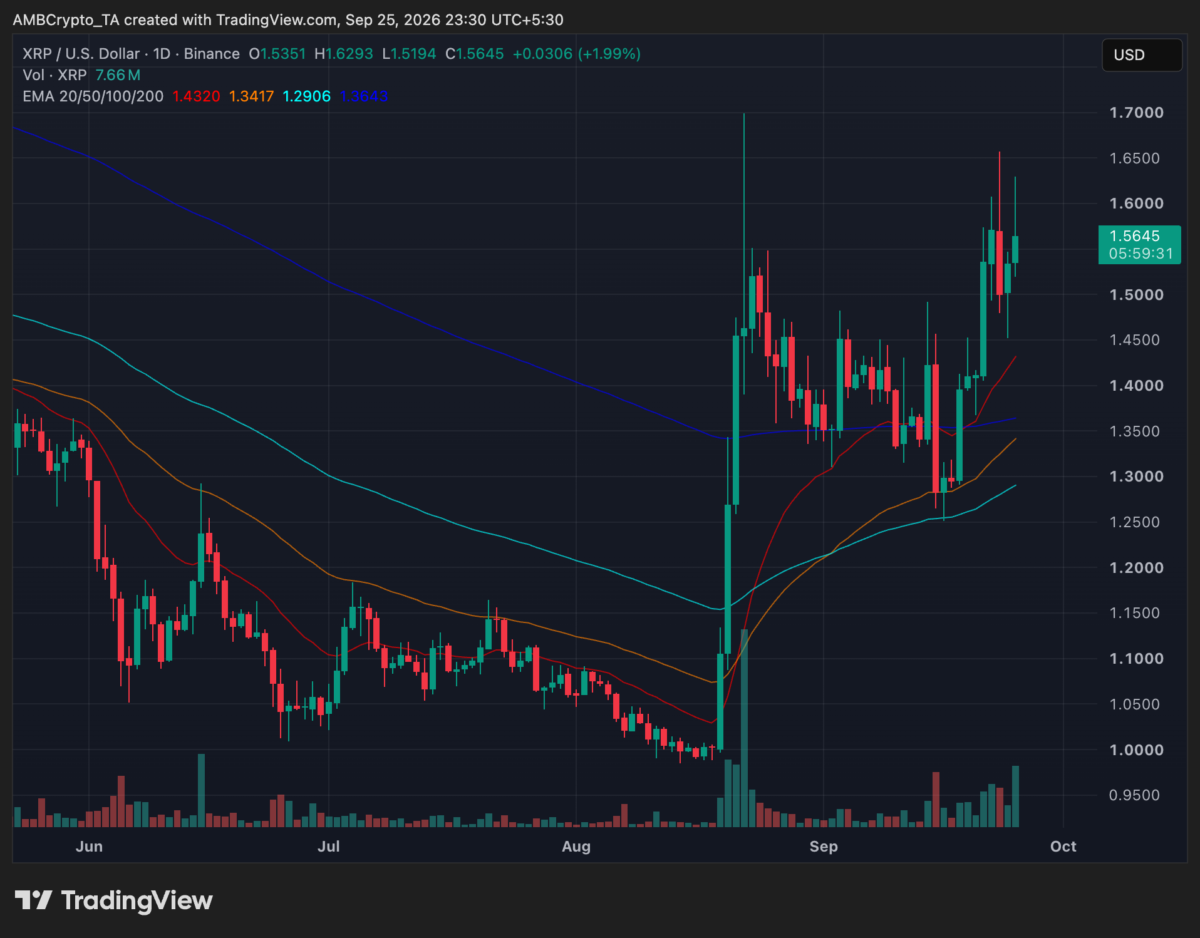
    $XRP is currently trading at $1.43. Chart: TradingView

    These reports have naturally fueled speculation in the crypto space, especially around whether digital assets like $XRP or Dogecoin could eventually be integrated into X Money. Although no confirmed link has been established between $XRP and the payment platform, the cryptocurrency continues to appear in discussions due to its ability to deliver fast and low-cost cross-border settlements. Some analysts also suggest that the hype and infrastructure overlap from X Money could drive the $XRP price higher.

    Other Catalysts That Could Boost $XRP’s Value

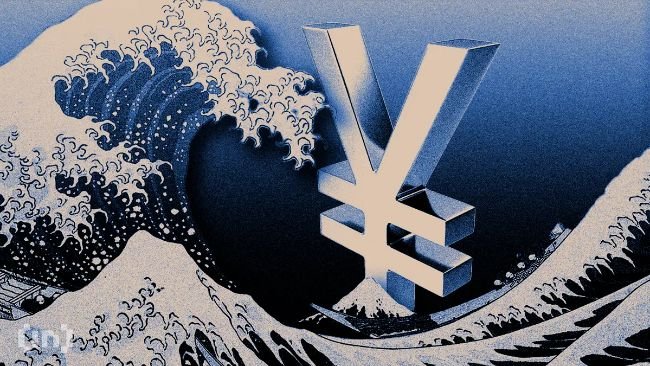
    In his post, The Real Remi Relief highlighted a second catalyst, pointing to a macroeconomic event known as the Reserve Carry Trade (RCT). This event involves rising oil prices and ongoing tensions in the Middle East, which could pressure Japan to raise interest rates to support the yen.

    If this happens, investors who had been borrowing cheap yen may be forced to redirect capital into liquid, high-potential assets like $XRP. The analyst’s projection suggests that this shift in global capital could flow heavily into $XRP, potentially triggering a price surge to $50-$150.

    Concluding his forecast, the market expert believes that the upcoming CLARITY Act could ignite a massive price surge for $XRP. He has projected a parabolic move toward $1,200 and $1,700, effectively launching $XRP’s market value into the quadruple-digit territory.

    Featured image from X/@MarioNawfal, chart from TradingView

  • Uniswap Price Dips as Weak Flows and Bearish Trend Persist

    Uniswap Price Dips as Weak Flows and Bearish Trend Persist

    • Uniswap price fell below $3.40 after an early rebound faded.
    • $UNI spot flows stayed slightly negative, with the latest reading at negative.
    • Technical analysis shows $UNI price still trading in a downtrend despite short-lived rebounds.

    During today’s Asian trading session, Uniswap’s price opened at $3.49. This price did not hold for long, as a dip followed, reducing the weekly gains. This movement has raised questions about the potential price targets that will follow next.

    Uniswap Price Slips to $3.39

    According to CoinMarketCap data at the time of press, Uniswap price traded at $3.39, recording a 1.1% decline over the past 24 hours. Price started near the $3.44 area and slipped briefly before recovering into a stronger upward stretch. That rebound carried $UNI above $3.50 and later pushed it toward the session high near $3.57.

    Source: CoinMarketCap

    After reaching that peak, the upward move lost strength, and the Uniswap-3.13% price began to ease lower. $UNI then moved through a gradual decline, with repeated lower highs forming across the middle part of the session. The price later settled around the $3.45 zone and traded in a tighter range for several hours.

    That stability did not hold into the final stretch. $UNI fell again and moved below the earlier consolidation band, ending near the session’s lower area. The latest decline pulled the price under $3.40 as weakness returned late in the period. Market capitalization stood at $2.16 billion, while 24-hour volume reached $248.72 million. Uniswap price recorded an early rebound, a mid-session fade, and a sharper late pullback.

    $UNI Spot Flows Stay Negative as Recent Exchange Activity Remains Muted

    As prices lean on the downward side, on-chain data shows limited activity as $UNI spot flows remained negative, showing withdrawals. Recent flow activity showed smaller daily changes than earlier periods. Strong inflow surges and deep outflow swings appeared less often across the latest stretch. Instead, $UNI-3.13% recorded a pattern with limited direction.

    Source: Coinglass

    A few positive flow sessions appeared during February and March, but they did not hold for long. Each upward move gave way to renewed withdrawals in the sessions that followed. That sequence kept the broader recent trend tilted to the negative side.

    The latest action, therefore, reflects restrained exchange activity rather than a sharp positioning shift. Netflows stayed narrow, and the most recent session ended in mild negative territory. $UNI’s recent flow pattern pointed to continued caution in the short term.

    Can $UNI Break Free as Bearish Pressure Keeps Recovery Attempts in Check?

    According to TradingView technical analysis, Uniswap has remained in a downtrend despite short-lived rebounds during recent weeks. Recent price action stayed compressed near the lower end of its multi-month range after repeated failed recovery attempts. The market recorded several bearish displacement events earlier, and follow-through kept pushing trading into lower zones.

    Source: TradingView ($UNI/USD)

    A brief recovery phase appeared around March, but that move failed to build a durable trend reversal. Instead, price lost momentum again and returned to the lower cluster, where recent sessions have concentrated. That behavior showed weakness, even as downside slowed compared with the declines seen earlier.

    Recent candles also interacted with prior reclaim areas, yet those interactions did not produce sustained upside continuation. The latest bearish displacement zone remains active, and the price stays beneath the nearby recovery area. That placement has kept near-term structure tilted lower, while trend pressure remains unresolved.

    Still, the market has stopped posting aggressive breakdowns and has begun moving sideways within a tight lower band. That shift marked consolidation rather than confirmed strength, because each rebound stalled before reclaiming higher ground. For now, Uniswap trades with muted recovery energy, pressure, and a bearish structure.

  • Billionaire Who Praised Bitcoin Four Days Ago Secretly Sold BTC Today—At a Loss

    Billionaire Who Praised Bitcoin Four Days Ago Secretly Sold BTC Today—At a Loss

    A noteworthy on-chain development has emerged regarding billionaire investor Tim Draper, known for his long-term bullish outlook on Bitcoin. Following his previous optimistic statements, it is alleged that a sell transaction was carried out from a wallet believed to be linked to him.

    According to data from the on-chain analytics platform Onchain Lens, a wallet associated with Draper transferred 150.84 BTC, which it had held for approximately a year, to a centralized exchange (likely Coinbase). The total value of this transaction is estimated at approximately $11.62 million, but it is claimed that the transfer resulted in a loss of approximately $2.57 million.

    Related News Attention: Serious Allegations of Manipulation Surrounding the RAVE Token, Which Is on Everyone’s Radar

    The transfer is being closely watched by market participants because it comes shortly after Draper’s $250,000 price prediction for Bitcoin. However, while there is no official confirmation as to whether the transfer was directly for sale purposes, it is known that moving assets to an exchange is generally considered a pre-sale step.

    Known for his early-stage investments, Draper has previously invested in many large projects such as Tesla, Skype, Coinbase, Ledger, and Tezos.

    *This is not investment advice.

  • AndX Enters US Crypto Exchange 2026 Market Using BitGo’s Regulated Infrastructure

    AndX Enters US Crypto Exchange 2026 Market Using BitGo’s Regulated Infrastructure

    BitGo announced that AndX USA LLC has launched its US crypto exchange 2026 entry on top of BitGo’s Crypto-as-a-Service infrastructure, giving the global digital asset platform nationwide operations across all 50 states under an OCC-regulated custody framework backed by $250 million in insurance coverage.

    The US crypto exchange 2026 market is increasingly being built not by companies constructing their own custody and compliance systems from the ground up but by platforms that integrate existing regulated infrastructure through API-driven partnerships. The AndX and BitGo launch is the clearest recent example of that model working at scale.

    BitGo’s Crypto-as-a-Service offering provides the technical and regulatory foundation: OCC-regulated custody, transaction monitoring, transfer workflows, and compliance architecture, all delivered through configurable APIs and webhooks. AndX plugs into that stack and focuses its engineering resources on the trading interface, AI-powered tools, and market-facing features that differentiate it with users.

    “Crypto platforms shouldn’t have to choose between speed to market and institutional-grade safeguards,” said Frank Wang, BitGo’s managing director and head of fintech. “BitGo’s Crypto-as-a-Service enables partners like AndX to launch and scale secure trading experiences on top of a regulated infrastructure foundation, with API-driven systems designed for reliability, control, and compliance.”

    Building a compliant US crypto exchange from scratch requires obtaining money transmission licenses in 46 or more states, navigating a BitLicense application in New York, establishing custody arrangements, hiring compliance and AML staff, and building or procuring surveillance systems, all before a single user trade. For a platform entering the US from an international base, the timeline typically runs 18 to 36 months and requires significant capital.

    BitGo’s CaaS model compresses that to the time required for API integration and contract negotiation. BitGo Bank and Trust already holds the regulatory authorizations. Custody insurance of $250 million covers BitGo’s own holdings across the infrastructure, reducing counterparty risk for platform partners. The model has grown alongside the expansion of the US spot ETF market and the incoming CLARITY Act framework, which together are raising the floor of what institutional-grade crypto infrastructure must look like.

    What AndX Brings as a Product

    AndX describes itself as an AI-native Web3 financial platform combining multi-asset trading, tokenization, cross-border payments, real-time financial intelligence, and what it calls a gamified participation layer into a single ecosystem. It has existing user bases in Turkey, the UAE, India, Brazil, the Philippines, and South Africa.

    Raparthi said the company’s goal is to “expand access to financial markets while maintaining the highest standards of security and trust,” framing the BitGo partnership as the mechanism that makes that possible in the US regulatory environment.

    Where It Fits in the Market Structure

    The AndX launch is one of several moves this week that underscore the consolidation of regulated infrastructure as the competitive moat in the US crypto exchange market. Payward’s acquisition of Bitnomial for up to $550 million this week similarly centered on regulatory licensing and clearing infrastructure rather than user acquisition. As the CLARITY Act moves toward markup, the platforms that arrive at that legislative moment with OCC, CFTC, and state-level regulatory coverage will be structurally advantaged over those that do not, which is exactly what partnerships like AndX and BitGo are designed to provide before the regulatory deadlines arrive.

  • 2026’s biggest crypto exploit: Kelp DAO hit for $292 million with wrapped ether stranded across 20 chains

    2026’s biggest crypto exploit: Kelp DAO hit for $292 million with wrapped ether stranded across 20 chains

    A cross-chain bridge holding nearly a fifth of a restaked ether token’s circulating supply just got drained, and the fallout is moving through DeFi faster than Kelp DAO can pause contracts.

    An attacker drained 116,500 rsETH (restaked ether) from Kelp DAO’s LayerZero-powered bridge at 17:35 UTC on Saturday, worth roughly $292 million at current prices and representing about 18% of rsETH’s 630,000 token circulating supply tracked by CoinGecko.

    LayerZero is a cross-chain messaging layer, or the infrastructure that lets different blockchains send verified instructions to each other. Kelp DAO is a liquid restaking protocol, which takes user-deposited $ETH, routes it through EigenLayer to earn additional yield on top of standard Ethereum staking rewards, and issues rsETH as a tradeable receipt.

    The bridge that was drained held the rsETH reserve backing wrapped versions of the token deployed on more than 20 other blockchains.

    The attacker tricked LayerZero’s cross-chain messaging layer into believing a valid instruction had arrived from another network, which triggered Kelp’s bridge to release 116,500 rsETH to an attacker-controlled address.

    Kelp’s emergency pauser multisig froze the protocol’s core contracts 46 minutes after the successful drain, at 18:21 UTC. Two follow-up attempts at 18:26 UTC and 18:28 UTC both reverted, each carrying the same LayerZero packet attempting another 40,000 rsETH drain worth roughly $100 million.

    rsETH is deployed across more than 20 networks including Base, Arbitrum, Linea, Blast, Mantle and Scroll, with LayerZero’s OFT standard handling the cross-chain movement.

    The rsETH held in the bridge was the reserve backing wrapped versions on every layer 2 blockchain, or networks that run atop Ethereum.

    With that reserve drained, holders on non-Ethereum deployments now face the question of whether their tokens have anything underneath them, which creates a feedback loop where panic redemptions on L2s pressure the unaffected Ethereum supply, potentially forcing Kelp to unwind restaking positions to honor withdrawals.

    The contagion list is long and still growing.

    Aave froze rsETH markets on V3 and V4 within hours, with founder Stani Kulechov affirming the exploit was external and Aave’s contracts were not compromised. SparkLend and Fluid froze their rsETH markets.

    AAVE fell about 10% as the market priced potential bad debt.

    Lido Finance paused further deposits into its earnETH product, which carries rsETH exposure, while clarifying that stETH and wstETH are unaffected and the core Lido staking protocol has no involvement in the incident.

    Ethena temporarily paused its LayerZero OFT bridges from Ethereum mainnet as a precaution, saying it has no rsETH exposure and remains more than 101% overcollateralized. The stablecoin issuer said the pause would last roughly six hours while the root cause is identified.

    Kelp, a product under the KernelDAO umbrella, acknowledged the incident in its first public X post at 20:10 UTC, nearly three hours after the drain. The protocol said it was investigating with LayerZero, Unichain, its auditors and outside security specialists. It has not disclosed how the exploit bypassed the bridge’s validation logic.

    Whether rsETH holds peg through the weekend depends on how much of the cross-chain float tries to redeem into $ETH on Ethereum and whether Kelp can recover any portion of the stolen funds before the Tornado Cash trail goes cold.

    The hack lands in an unusually hostile stretch for DeFi. Solana-based perpetuals protocol Drift was drained of about $285 million on April 1 in an attack later linked to North Korea-affiliated actors, and at least a dozen smaller protocols have been exploited in the weeks since, including CoW Swap, Zerion, Rhea Finance and Silo Finance.

    Kelp’s $292 million loss is now the largest DeFi exploit of 2026, overtaking Drift by a few million dollars.

  • Why Michael Saylor’s Strategy decided to make STRC’s dividend bi-monthly

    Why Michael Saylor’s Strategy decided to make STRC’s dividend bi-monthly

    Leading bitcoin treasury company Strategy (MSTR) has proposed shifting the dividend payment schedule on its perpetual preferred equity, Stretch (STRC), from monthly to semi-monthly.

    The amendment, outlined in Strategy’s investor presentation, would keep the 11.5% annualized dividend rate and total annual obligations unchanged (currently $1.2 billion). Holders would receive payouts roughly every two weeks instead of once a month, with the first semi-monthly payment expected on July 15, following the June 8 shareholder vote.

    According to Strategy’s presentation, STRC currently sees an average $0.45 price drawdown after the ex-dividend date (the deadline to own a stock to receive a dividend), with recovery to its $100 par value taking around two weeks. Typically, on the ex-dividend date, the stock price drops by approximately the amount of the dividend payment.

    When STRC trades below its $100 par value, Strategy cannot issue shares through its at-the-market (ATM) program to raise funds for bitcoin purchases. By smoothing the price action, the company aims to keep STRC closer to par, enabling more consistent capital raising.

    Semi-monthly payments are expected to reduce this volatility and time lag.

    Steadier bitcoin buying

    More frequent payouts would also reduce reinvestment lag and spread out the buying pressure more evenly across the month, allowing Strategy to purchase bitcoin at a steadier pace and keep purchases consistent.

    According to the presentation, the shift aligns with the typical twice-monthly U.S. payroll cycle and creates more entry and exit opportunities for shareholders, all aimed at lowering volatility.

    STRC’s historical volatility averaged 13% from August 2025 to March 2026, but dropped to just 2% between March and April 2026, according to Strategy’s data.

    If approved, STRC would become the only semi-monthly dividend-paying preferred in the market, compared with 921 that pay quarterly and 32 that pay monthly, the company said. Nasdaq rules require at least 10 calendar days between dividend declaration and the record date.

    STRC recently fell below $99 following the April 15 ex-dividend date, a drop of more than $1, which is the volatility the company is aiming to reduce.

    Disclosure: The author of this story owns shares in Strategy (MSTR).

    Read more: The one metric investors are overlooking in Michael Saylor’s Strategy

  • From smelters to servers: Alcoa to cash in on crypto’s thirst for energy

    From smelters to servers: Alcoa to cash in on crypto’s thirst for energy

    The largest aluminum producer in the U.S., Alcoa, is close to selling its idle Massena East smelter in upstate New York to bitcoin firm New York Digital Investment Group (NYDIG), as it offloads dormant assets and taps demand for energy-ready industrial sites.

    The company’s chief executive officer, Bill Oplinger, said the company is in advanced talks and expects the deal to close “in the middle part of this year,” Bloomberg reports.

    The site, located along the St. Lawrence River, has sat idle since 2014 when Alcoa shut it down due to high operating costs and global competition.

    The appeal lies in the site’s power, not the metal itself. Aluminum smelters are built to run around the clock, drawing large amounts of electricity through dedicated substations and transmission lines. When they close, that infrastructure remains.

    For bitcoin miners and data center developers, this can cut years off the time required to secure grid access.

    Massena East also has access to hydropower from the New York Power Authority, a draw for firms seeking low-cost and carbon-free energy.

    The deal reflects a broader shift. Earlier this year, Century Aluminum sold a Kentucky smelter to TeraWulf (WULF), which plans to build a digital infrastructure campus supporting high-performance computing and AI.

  • ‘The Numbers Don’t Lie’: Ripple Spotlights XRP Growth as ETFs Eye $4B in First-Year Inflows

    ‘The Numbers Don’t Lie’: Ripple Spotlights XRP Growth as ETFs Eye $4B in First-Year Inflows

    Ripple has highlighted $XRP’s institutional growth since the spot ETFs launch in November last year. The crypto firm noted how the crypto asset has grown through regulatory clarity, which it achieved through the long-running legal battle against the Securities and Exchange Commission (SEC).

  • Bitcoin mining difficulty falls, but projected to rise in next adjustment

    The Bitcoin ($BTC) mining difficulty, the relative challenge of adding new blocks to the $BTC blockchain, fell on Saturday, amid public mining companies selling record amounts of $BTC to cover operating expenses.

    The Bitcoin mining difficulty fell to about 135.5 T, a modest decrease of about 1.1% over the last 24 hours, according to data from CoinWarz. Mining difficulty is also projected to increase in the next adjustment period. CoinWarz said:

    “The next Bitcoin difficulty adjustment is estimated to take place on May 01, 2026, 01:24:54 PM UTC, increasing the Bitcoin mining difficulty from 135.59 T to 137.43 T, which will take place in 1,865 blocks, about 12 days, 18 hours, and 41 minutes from now.”

    Bitcoin mining difficulty between 2014 and 2026. Source: CoinWarz

    Bitcoin miners have faced mounting challenges over the past year, as reduced block rewards, rising energy prices, a crypto bear market and geopolitical shocks create economic headwinds for miners.

    Related: Solo Bitcoin miner bags $210K Bitcoin block reward

    Public mining companies sell record amounts of $BTC

    Publicly traded Bitcoin mining companies sold more $BTC in Q1 2026 than all four quarters of 2025 combined, according to TheEnergyMag.

    Mining companies MARA, CleanSpark, Riot, Cango, Core Scientific and Bitdeer, sold more than 32,000 $BTC in total during Q1 2026, TheEnergyMag said.

    The combined sales surpassed the 20,000 $BTC sold in Q2 2022, the same quarter as the collapse of the Terra-Luna ecosystem, which plunged crypto into an extended bear market.

    Miners periodically sell their $BTC to cover operating expenses, which are denominated in fiat currency.

    However, as the cost of mining a single $BTC increases past spot market prices, many $BTC mining companies are now treading water.

    Mining companies’ cost of mining a single $BTC. Source: TheEnergyMag

    Up to 20% of Bitcoin miners are unprofitable under current economic conditions, according to asset manager CoinShares’ Q1 2026 mining report.

    “Q4 2025 marked the most challenging quarter for Bitcoin miners since the April 2024 halving,” the CoinShares report said.

    The authors cited the “sharp” $BTC correction in October 2025, which slashed $BTC’s price from a high of about $125,000 to about $86,000 by December 2025, and the rising computational difficulty of adding blocks as headwinds for the mining industry.

    Magazine: 7 reasons why Bitcoin mining is a terrible business idea