Tag: CRYPTOS FoxBusiness.

  • Last Week Tonight‘s John Oliver says he won‘t placate prediction markets users

    John Oliver, host of HBO’s Last Week Tonight, targeted prediction market platforms on his show’s latest weekly deep dive.

    In Sunday’s airing of the HBO show, Oliver discussed some of the trivial event contracts on platforms such as Kalshi and Polymarket, including betting whether members of the Trump administration would use certain words in public addresses, to the companies’ controversial partnering with news organizations.

    Specifically, the host questioned Donald Trump Jr.’s relationship with both platforms — an adviser to Kalshi and Polymarket — and how the US Commodity Futures Trading Commission (CFTC) “doesn’t even seem to be trying” to block event contracts on terrorism, assassination and war under Chair Michael Selig.

    For much of the show, Oliver discussed how it is “incredibly easy for individuals to manipulate the outcomes,” citing Coinbase CEO Brian Armstrong rattling off a list of crypto-related words in his third-quarter 2025 earnings call to cause many Kalshi and Polymarket users to win their bets.

    “I’m going to make you a promise tonight,” said Oliver, echoing Armstrong’s statement. “I will never do anything because someone online placed a bet on it. So you can be confident that if I ever say Bitcoin, Ethereum, blockchain, staking and Web3, it won’t be because I’m trying to move markets — it will be because I’m having a stroke.”

    Source: HBO Last Week Tonight

    While user activity and trading volume on prediction markets have increased exponentially in recent months — expected to reach $1 trillion by 2030 — the platforms’ controversial bets and legal status in US states have raised eyebrows for some experts. Gaming authorities in several states are suing companies like Kalshi over alleged illegal sports betting, with Coinbase chief legal officer Paul Grewal and others expecting the legal fight to end up before the US Supreme Court.

    Related: Senate bill to target sports betting ban on prediction markets: WSJ

    Financial giants looking to expand into prediction markets?

    In addition to previously announced partnerships with media giants like CNN, CNBC, Fox News and Dow Jones, traditional financial companies including Charles Schwab and Citadel Securities recently signaled plans to consider prediction markets.

    Charles Schwab CEO Rick Wurster said on a Thursday investors call that the company would “take a hard look at” prediction markets. In a separate event the same day, Citadel Securities President Jim Esposito said that the company was “absolutely keeping an eye on developments” as part of a potential move into the market.

    Magazine: Adam Back says current demand is ‘almost’ enough to send Bitcoin to $1M

  • Bitcoin Rebounds Strongly — Can Bulls Drive Price Toward $79,000

    Bitcoin Rebounds Strongly — Can Bulls Drive Price Toward $79,000

    Bitcoin is showing renewed strength after a sharp rebound, signaling that buyers are stepping back in at key levels. With momentum building and price pushing higher, attention is now shifting toward the $79,000 resistance zone, where a breakout could confirm continued upside and open the door for a stronger rally.

    Selling Pressure After Initial Reaction

    Bitcoin saw an immediate response to yesterday’s developments, facing notable selling pressure as the market processed the news. Analyst Kamile Uray highlights that while the initial reaction was bearish, the possibility for a continued rally remains on the table, provided the immediate low of $73,371 is successfully defended.

    However, a 4-hour candle close below this mark would likely trigger a deeper correction toward the $68,720 level, which represents the critical 0.618 Fibonacci retracement of the most recent upward wave. Holding this support provides the foundation for a fresh leg up.

    Source: Chart from Kamile Uray on X

    On the bullish side, a decisive close above $79,000 would signal a continuation of the broader uptrend toward much higher targets. Uray identifies a major resistance cluster between $98,000 and $107,000–$109,000. Should the price face a rejection at these elevated levels, traders should expect a return to the previous support zones, ranging from $73,371 to the $66,000 region.

    Examining the daily timeframe, the $65,666 level serves as a pivot point. As long as Bitcoin maintains its position above this threshold, the overall structure remains skewed toward a potential rise.

    A failure to hold the $65,666 level would shift the focus to lower support levels at $63,823, $62,433, and $60,000. The most critical warning comes at the $60,000 mark; a daily close below this psychological and technical barrier would likely extend the corrective phase significantly.

    Bitcoin Bounces Strongly As Week Kicks Off

    In his most recent update, analyst Michaël van de Poppe noted a relatively strong upward bounce for Bitcoin on Monday. This movement is particularly significant as it occurs during a period where markets typically trend toward a risk-off stance ahead of the weekly opening. The ability of Bitcoin to push higher against this cautious backdrop suggests underlying strength in current demand.

    A key factor in this analysis is the recent decoupling from traditional safe-haven assets. While Bitcoin has shown resilience and upward momentum, gold has trended downward. Looking at the weekly outlook, the presence of a price gap at the $77,300 level remains a primary focal point for traders. Given the strength of the recent bounce and the existing technical vacuum toward that higher level, Bitcoin is expected to fill this gap and achieve new highs before the current week concludes.

    $BTC trading at $75,130 on the 1D chart | Source: BTCUSDT on Tradingview.com
  • PYUSD Burned: Staggering 301 Million Stablecoin Erased in Major Supply Shock

    In a significant move for the digital asset ecosystem, blockchain tracking service Whale Alert reported on April 2, 2025, that a colossal 301 million $PYUSD—PayPal’s dollar-pegged stablecoin—was permanently burned from circulation. This event, originating from an unidentified wallet, represents one of the largest single stablecoin burn transactions recorded on the Ethereum blockchain to date, immediately drawing intense scrutiny from market analysts and institutional observers worldwide.

    $PYUSD Burned: Unpacking the Transaction Mechanics

    Blockchain data confirms the burn transaction occurred at 14:37 UTC. Consequently, the action permanently removed the tokens from the available supply. The burn mechanism is a fundamental cryptographic process. Specifically, it involves sending tokens to a verifiably unspendable address, often called a ‘burn address’ or ‘eater address.’ This address has no known private key. Therefore, any assets sent there become irretrievable. The Ethereum network publicly records and immutably verifies this action.

    For context, the total circulating supply of $PYUSD stood at approximately 1.8 billion tokens before this event. As a result, this single burn reduced the total supply by nearly 17%. This percentage is substantial for any major stablecoin. Typically, stablecoin issuers like Paxos, which mints $PYUSD for PayPal, manage supply through minting (creation) and burning (destruction) processes. These processes respond directly to user demand and redemption activity. However, a burn of this magnitude, executed in one transaction, is highly unusual.

    Stablecoin Supply Dynamics and Market Impact

    The immediate market implication revolves around basic supply and demand economics. A reduced supply of a stablecoin, all else being equal, can theoretically increase its scarcity value. However, $PYUSD maintains a strict 1:1 peg to the US Dollar. Therefore, its market price should remain stable at one dollar. The true impact lies in the on-chain liquidity available for trading, lending, and decentralized finance (DeFi) protocols. Major liquidity pools on platforms like Uniswap and Curve Finance may experience temporary imbalances.

    Historically, large stablecoin burns often correlate with decreased trading activity or institutional redemptions. For instance, when Tether (USDT) or USD Coin ($USDC) undergo significant burns, analysts typically interpret it as capital moving off-chain back into traditional banking systems. In this case, the burn could signal several scenarios:

    • Institutional Redemption: A large holder, or ‘whale,’ may have cashed out a significant position, prompting Paxos to burn the corresponding $PYUSD tokens.
    • Supply Management: PayPal and Paxos might be proactively managing the supply to align with lower demand or to maintain optimal reserve ratios.
    • Treasury Operations: The action could be part of internal treasury restructuring or the movement of assets between controlled wallets, with a public burn as the recorded outcome.

    Market data following the burn showed no immediate deviation in $PYUSD’s market peg across major exchanges. This stability demonstrates the robustness of the reserve-backed model.

    Expert Analysis on Reserve Transparency and Trust

    Financial technology experts emphasize that such events test the transparency promises of stablecoin issuers. Paxos, as the issuer, publishes monthly attestation reports from independent accounting firms. These reports verify that the outstanding $PYUSD tokens are fully backed by US dollar deposits, US Treasury bills, and similar cash equivalents. Following a burn of this size, the next monthly attestation will be scrutinized to confirm a corresponding reduction in claimed reserve assets.

    Dr. Anya Sharma, a blockchain economist at the Digital Asset Research Institute, notes, ‘A transparent and verifiable burn reinforces the core value proposition of a regulated stablecoin. It demonstrates that the supply contract is functioning as intended—tokens are destroyed when dollars are returned. This action, while large, is a stress test that passed smoothly. The market’s calm response is a positive signal for the maturity of the asset class.’

    This event occurs within a broader regulatory context. Furthermore, global standards for stablecoins are evolving rapidly. The European Union’s Markets in Crypto-Assets (MiCA) framework and pending US legislation place strict requirements on reserve management and redemption policies. Proactive supply management through burns may become a standard compliance practice.

    Comparative Analysis with Historical Stablecoin Burns

    To understand the scale, comparing this event to other major stablecoin adjustments is instructive. The table below highlights significant recorded burns.

    As shown, the $PYUSD burn is notable for its high percentage of the total supply. The Binance USD ($BUSD) burns in early 2024 were larger in absolute value but occurred over multiple transactions due to Paxos winding down the token under regulatory guidance. The concentrated nature of this single $PYUSD transaction makes it a unique case study.

    Conclusion

    The burning of 301 million $PYUSD represents a pivotal moment for PayPal’s stablecoin project. It highlights the active, on-chain management of digital dollar supplies. Moreover, it underscores the responsive mechanisms embedded within regulated stablecoin architectures. For investors and the crypto market, the event passed without disrupting the asset’s peg. This stability reinforces confidence in the underlying technology and reserve models. Ultimately, as stablecoins like $PYUSD mature, transparent supply adjustments through burns will likely become normal operational events. They signal a dynamic market responding to real-world demand and sophisticated treasury management. The focus now shifts to subsequent attestation reports and any potential statements from Paxos or PayPal regarding the rationale behind this substantial supply reduction.

    FAQs

    Q1: What does it mean to ‘burn’ a stablecoin like $PYUSD?
    Burning a stablecoin means permanently removing it from circulation by sending it to a cryptographic address from which funds cannot ever be retrieved. This reduces the total supply of the token and is typically done when the issuer redeems the token for its underlying collateral, like US dollars.

    Q2: Why would someone burn 301 million $PYUSD?
    The most likely reason is that a large holder redeemed the tokens for US dollars with the issuer, Paxos. Following the redemption, Paxos would execute the burn to accurately reflect the reduced liability on its balance sheet and maintain the 1:1 reserve backing.

    Q3: Does burning $PYUSD affect its price or dollar peg?
    In a properly functioning system, a burn should not directly affect the market price, which is maintained by arbitrage and redemption mechanisms. The price should remain at $1.00. The burn primarily affects the available on-chain supply for trading and DeFi use.

    Q4: Who is responsible for the $PYUSD burn transaction?
    The transaction was sent from an unidentified wallet. However, the action is almost certainly authorized and executed by Paxos, the regulated issuer of $PYUSD, as part of its treasury and supply management operations following a large redemption.

    Q5: How can the public verify that the burned $PYUSD is truly gone?
    Anyone can verify the transaction on a public Ethereum blockchain explorer like Etherscan. The tokens are sent to a ‘burn address’ (e.g., 0x000…dead). This address is publicly known to have no accessible private key, providing cryptographic proof the assets are permanently locked.

  • Ripple CTO Emeritus Clears up Misconceptions on Retirement

    Ripple CTO Emeritus Clears up Misconceptions on Retirement

    Months have passed since David Schwartz officially retired from the position of CTO at Ripple around late last year. However, the Ripple veteran has remained extremely active since then.

    His continued social presence concerning Ripple-related matters has sparked curiosity across the crypto community about whether or not Schwartz is still holding his position in the firm.

    “I’m a board member,” Schwartz declared

    After his retirement, Schwartz still holds the title of Ripple CTO Emeritus, sparking speculation about his engagements with the company.

    On Monday, April 20, Schwartz clarified that he remains actively involved across multiple initiatives tied to Ripple and the $XRP Ledger.

    Schwartz made the clarification after an X user questioned his position with sarcasm, asking if Schwartz had fully retired or was still contributing behind the scenes at Ripple.

    Schwartz declared that he is still a board member at Ripple while outlining other engagements he has in relation to the firm.

    According to Schwartz, he is still involved with the $XRP Ledger Foundation and advises $XRP-focused company Evernorth. He also mentioned that he talks to Ripple’s $XRP Ledger tech team as frequently as every two weeks.

    Schwartz discusses asset collateralization risks

    The question appeared sarcastic as it came after Schwartz joined the ongoing debate about asset collateralization risks.

    While the debate raises concerns about whether certain digital assets are truly backed as claimed, Schwartz shared how to determine if an asset is fully collateralized.

    Thus, curiosity about Schwartz’s professional status emerged following ongoing speculation. Nonetheless, his response has drawn the attention of the crypto community as it helped clarify the speculation.

  • SIREN rallies as shorts unwind – Is a 28% breakout in play?

    SIREN rallies as shorts unwind – Is a 28% breakout in play?

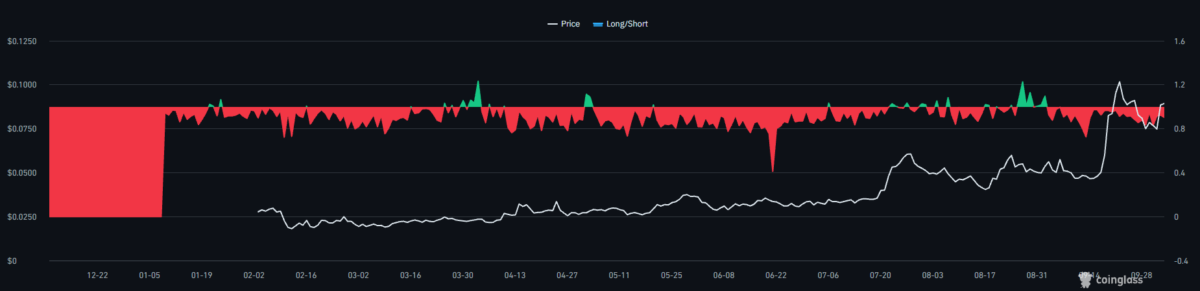
    Siren [$SIREN] rallied sharply over the past 24 hours, rising 17% at the time of writing. The move reflects more than just a short-term surge; it indicates a structural shift in positioning, with bearish bets unwinding and the directional bias tilting to the upside.

    Shorts unwind as positioning flips

    Derivatives data shows a clear contraction in market exposure even as price trends higher. According to CoinGlass, $SIREN’s Open Interest (OI) declined by roughly 15% to $7.59 million over the past day.

    Under normal conditions, falling OI aligns with weakening prices and bearish sentiment. Here, the opposite occurs. Price expansion alongside declining OI suggests that traders, particularly shorts, are actively closing positions rather than being liquidated.

    Liquidations totaled $267,430 over the same period, a modest figure relative to the scale of the move. This reinforces the view that the market is seeing voluntary exits, not forced deleveraging.

    Source: CoinGlass

    Positioning metrics support this shift. At press time, the Weighted Funding Rate relative to OI remained positive at 0.0320%, while the Taker Buy/Sell Ratio stood at 1.06. These indicators show that capital flow and execution volume now favor long exposure.

    Range dynamics frame the next move

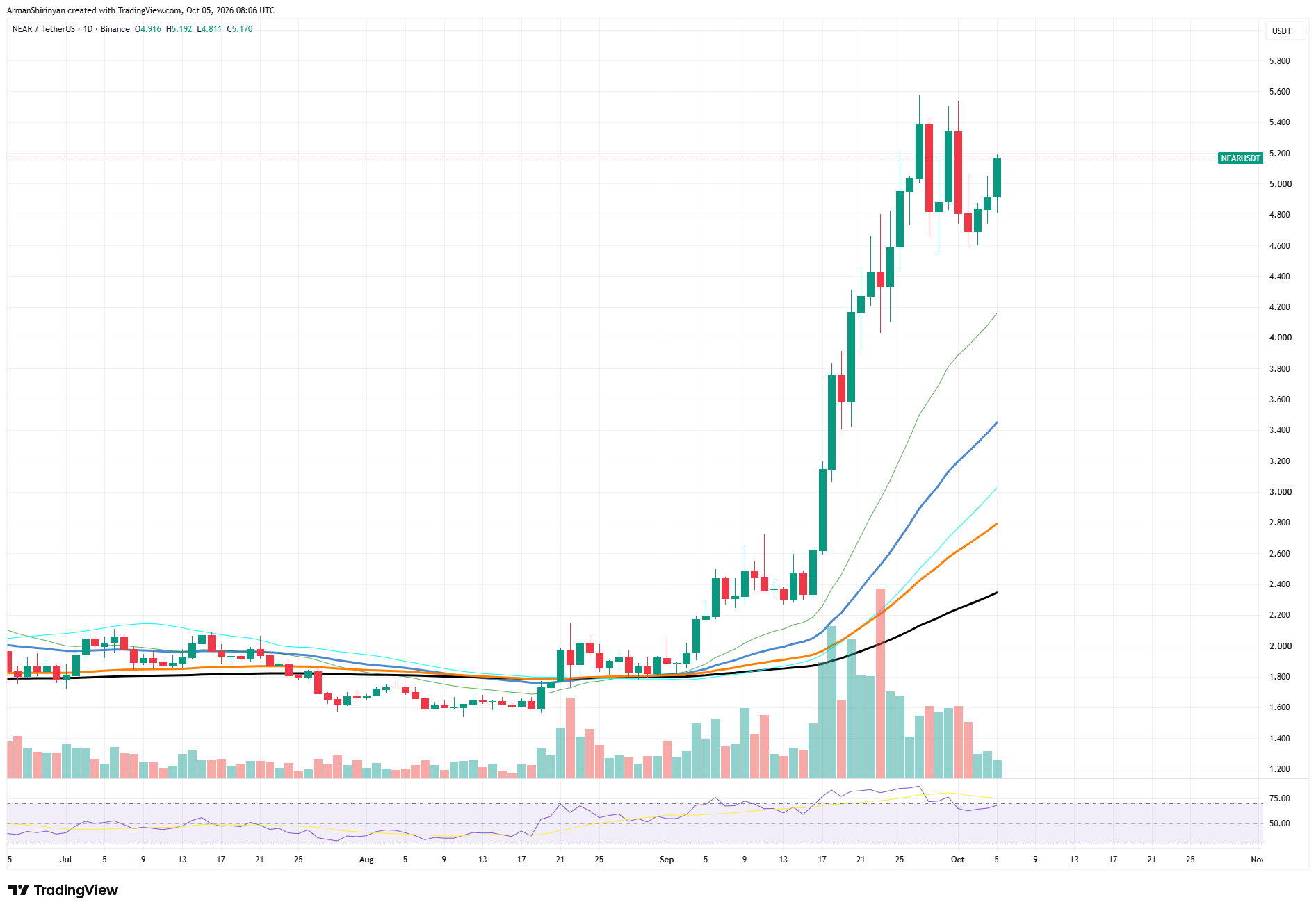
    Price action continues to respect a defined trading range, with the latest rally originating from the lower boundary. This reaction strengthens the case for a continuation move toward higher levels within the structure.

    A push toward the recent breakout zone would imply a potential 28% advance from current levels. A sustained move beyond that region could extend gains toward the 40% range.

    Source: TradingView

    Even a conservative move to the top of the current range represents a 16% upside.

    However, historical price behavior within this range warrants caution. Previous approaches to the upper boundary have resulted in rejection and subsequent pullbacks. The same pattern could repeat if buying pressure weakens near resistance.

    Momentum and inflows support continuation

    Momentum and capital flow indicators continue to align with a bullish outlook.

    At the time of writing, the Money Flow Index (MFI) read 60.46, placing it firmly in positive territory. This suggests that capital inflows remain intact despite a minor retracement in the past day.

    Source: TradingView

    Meanwhile, the Moving Average Convergence Divergence (MACD) reflected a shift in momentum. The histogram has faded from deep red to a lighter shade, indicating that bearish pressure is losing strength.

    At the same time, the MACD line was on the verge of crossing above the signal line, a development typically associated with trend continuation to the upside.


    Final Summary

    • $SIREN posts strong gains as short traders exit positions at scale.
    • Momentum indicators point to building bullish strength, with 16%–40% upside still in play.
  • Aave could face up to $230 million in losses after Kelp DAO bridge exploit triggers DeFi chaos

    The Kelp DAO and LayerZero bridge exploit that occurred over the weekend has left lending protocol Aave facing potential losses of up to $230 million, depending on how the situation is resolved.

    The incident, according to a report from Aave Labs and service provider LlamaRisk published on the Aave governance forum, centers on rsETH, a liquid restaking token issued by KelpDAO. To move rsETH between blockchains, the protocol relies on a bridge mechanism that locks tokens on one chain while issuing corresponding copies on another.

    An attacker exploited that setup by forging a transfer message that appeared valid. The system approved the transfer even though the tokens were never taken out of the sending chain, meaning new tokens were effectively created without backing, releasing 116,500 rsETH from the Ethereum-side bridge.

    Rather than selling the assets on the open market, the attacker deposited 89,567 rsETH into Aave as collateral and borrowed roughly $190 million in $ETH and related assets across Ethereum and Arbitrum, according to the report. This left Aave exposed to collateral whose backing may be significantly impaired.

    Aave Labs said it moved quickly to contain the risk. Within hours, the protocol froze rsETH markets across its deployments, set loan-to-value ratios to zero, and halted new borrowing against the asset.

    The outcome now depends largely on how Kelp handles the shortfall. If losses are spread across all rsETH holders, the token would face an estimated 15% depegging (meaning the value of the staked tokens would not match the value of actual $ETH), resulting in about $124 million in bad debt for Aave. If losses are instead isolated to Layer 2 networks, the impact would be far more severe, with bad debt rising to roughly $230 million and concentrated on networks such as Arbitrum and Mantle.

    The exploit stemmed from weaknesses in how Kelp verified cross-chain messages using LayerZero. By manipulating this process, the attacker was able to make certain assets appear fully backed when they were not, allowing them to extract value from the system. LayerZero itself was not directly hacked, but its messaging layer exposed flawed assumptions in how Kelp validated cross-chain data.

    The incident raised concerns that some positions on Aave were backed by collateral that was mispriced or no longer fully backed, increasing the risk of undercollateralized loans.

    In response, users moved to reduce exposure. Around $6 billion in total value locked was withdrawn from Aave following the incident, reflecting a broad pullback as participants reacted to the uncertainty.

    The episode highlighted its indirect exposure to external systems. The impact was felt through increased collateral risk, pressure on lending positions, and a sharp decline in deposits as users reassessed the safety of interconnected DeFi infrastructure.

    The report said its DAO treasury holds approximately $181 million in assets and that discussions are underway with ecosystem participants to address potential losses. Kelp has not yet outlined how it plans to allocate losses, leaving Aave’s ultimate exposure uncertain as the situation continues to evolve.

    Read more: Kelp DAO claims LayerZero’s ‘default’ settings are what actually caused the massive $290 million disaster

  • Bitcoin bounces above $76,000 as DeFi suffers $14 billion exodus after KelpDAO hack

    Bitcoin bounces above $76,000 as DeFi suffers $14 billion exodus after KelpDAO hack

    Bitcoin held above $76,000 on Monday, rebounding from overnight lows as the broader crypto market remained steady despite Iran war risks.

    The largest cryptocurrency climbed about 2.4% over the past 24 hours, recovering from a dip below $74,000 earlier in the session. Ether (ETH), XRP, Solana (SOL) and other major altcoins also mirrored bitcoin’s move, as the broad-market CoinDesk 20 rose 1.7%.

    That resilience comes against a shaky macro backdrop. U.S. President Donald Trump said Sunday that American forces had fired on and seized an Iranian-flagged cargo ship, warning of further escalation while Tehran refuses to strike a deal. A fragile ceasefire is set to expire later this week.

    Oil prices jumped 6% to near $90, while the S&P 500 and Nasdaq slipped modestly, down around 0.3%-0.4%.

    Crypto equities were mixed. Coinbase (COIN) and bitcoin treasury firm Strategy (MSTR) gained roughly 2%, while Circle (CRCL) and ether treasury Bitmine (BMNR) edged lower by 1%-2%.

    “The fact that prices have not fully retraced despite new tensions suggests some genuine demand,” said Jasper De Maere, trader at Wintermute, pointing to recent spot ETF inflows as a supporting factor. Unlike earlier rallies this year, he said, the current move appears less driven by leverage.

    That said, the path forward remains tied to geopolitics. A renewed ceasefire could push bitcoin back toward $80,000, while further escalation may keep markets under pressure.

    For now, capital continues to concentrate in large-cap assets like bitcoin, De Maere noted, with riskier altcoins lagging, a pattern typical of market environments driven by macro headlines.

    DeFi reels from $292 million KelpDAO hack

    Elsewhere from the current price action, tensions are still high in the DeFi sector following the biggest crypto exploit of the year.

    The $292 million KelpDAO hack cascaded across the market, as a vulnerability allowed the attacker to drain funds that were then used as collateral across lending protocols.

    Because those assets were widely integrated into DeFi, the impact quickly spread, with users rushing to withdraw funds amid fears of bad debt and contagion.

    Total value locked (TVL) across DeFi protocols fell by $14 billion over the past two days, according to DefiLlama data, even as asset prices remained steady.

    DeFi TVL dropped to about $85 billion, its lowest level in a year and roughly 50% below October peaks. Aave, the largest lending protocol that was central in the exploit, saw around $10 billion in deposits withdrawn.

    “There’s a tremendous risk-reward imbalance in DeFi,” David Shuttleworth from Anchorage Digital’s protocol team said. “Users will no longer accept the slightly higher (and sometimes lower) than risk-free rate they get by depositing in lending pools,” especially given the latest wave of exploits across protocols.

    Read more: ‘DeFi is dead’: crypto community scrambles after this year’s biggest hack exposes contagion risk

  • Iran-U.S. Ceasefire in Jeopardy: Bitcoin Holds Steady, Even Bloomberg Analyst Mike McGlone Praised BTC—Here’s What to Expect Next

    As geopolitical tensions escalate in global markets and peace talks fail to yield results, Bitcoin is exhibiting unexpected resilience. Leading figures in the financial world have assessed BTC’s role in this process and its future amidst economic uncertainty.

    Bloomberg Senior Commodities Strategist Mike McGlone highlighted Bitcoin’s position in current market conditions. McGlone stated that Bitcoin is increasingly becoming a form of digital gold rather than a risk asset. According to McGlone, especially as volatility in traditional markets increases, Bitcoin’s limited supply makes it a hedge against inflation and political instability.

    Related News JUST IN: U.S. President Donald Trump Makes a Statement on the Iran Ceasefire – “The Likelihood of an Extension Is Very Low”

    CIO and Macro Strategist James Lavish approached the issue from a broader perspective, emphasizing the global debt crisis. Lavish stated that the collapse of peace talks created a “loss of confidence” in the markets. According to Lavish, as confidence in fiat currencies erodes, investors are turning to decentralized assets outside of government control. He noted that Bitcoin stands out as “sound money” in this process, adding that caution is advised against liquidity crises.

    Peter Tchir, on the other hand, focused on technical levels in the market and investor psychology. Tchir stated that Bitcoin holding onto certain support levels is a psychological threshold. He noted that geopolitical risks are priced in, but continued uncertainty could trigger volatility, adding that investors are cautiously waiting before any large-scale movements.

    *This is not investment advice.

  • China’s PBoC Holds Key Lending Rates Steady for 11th Month in Crucial Economic Signal

    China’s PBoC Holds Key Lending Rates Steady for 11th Month in Crucial Economic Signal

    BEIJING, China – The People’s Bank of China (PBoC) has maintained its key benchmark lending rates unchanged for the eleventh consecutive month, signaling continued monetary policy stability amid global economic uncertainty. This decision keeps the one-year Loan Prime Rate (LPR) at 3.0% and the five-year LPR at 3.5%, marking the longest period of rate stability since the LPR reform implementation in 2019. Financial markets closely watched this announcement for signals about China’s economic management approach through 2025.

    China’s PBoC Maintains Monetary Policy Consistency

    The People’s Bank of China announced its latest rate decision today, continuing a pattern of monetary policy consistency that began in May of last year. Consequently, the central bank has kept both benchmark rates frozen since implementing a 10-basis-point reduction eleven months ago. This extended period of rate stability reflects several key economic factors currently influencing China’s policy decisions.

    Firstly, China’s economic recovery continues to show mixed signals across different sectors. Secondly, global central banks maintain divergent monetary policy paths. Thirdly, domestic inflation remains well within the government’s target range. The PBoC’s decision therefore represents a balanced approach to supporting growth while maintaining financial stability.

    Understanding the Loan Prime Rate Mechanism

    The Loan Prime Rate serves as China’s de facto benchmark lending rate, replacing the previous benchmark lending rate system in 2019. Commercial banks submit their best lending rates to the PBoC monthly. The central bank then calculates the LPR as a weighted average of these submissions, excluding the highest and lowest figures.

    • One-year LPR (3.0%): This rate serves as the reference for most corporate and household loans
    • Five-year LPR (3.5%): This rate primarily influences mortgage pricing and long-term loans
    • Transmission mechanism: Changes in LPR directly affect borrowing costs throughout the economy

    This dual-rate structure allows the PBoC to implement targeted monetary policy. The central bank can influence specific sectors without applying broad changes across the entire economy.

    Economic Context Behind Rate Stability

    Several economic indicators support the PBoC’s decision to maintain current lending rates. China’s consumer price index increased by just 0.3% year-on-year in the latest reading. Meanwhile, the producer price index declined for the seventeenth consecutive month. These inflation metrics provide ample policy space for the central bank.

    Industrial production growth accelerated to 6.7% year-on-year last month. Retail sales expanded by 5.5% during the same period. Fixed-asset investment grew by 4.2% in the first quarter. However, the property sector continues to face significant challenges despite recent government support measures.

    Global Central Bank Policy Divergence

    China’s monetary policy path increasingly diverges from major global central banks. The Federal Reserve maintains elevated interest rates between 5.25% and 5.50%. The European Central Bank recently began a cautious rate-cutting cycle. The Bank of Japan ended its negative interest rate policy earlier this year.

    This policy divergence creates several implications for China’s economy. Capital outflow pressures have moderated in recent months. The yuan exchange rate remains relatively stable against major currencies. Foreign exchange reserves continue to provide substantial policy buffers. The PBoC can therefore focus primarily on domestic economic conditions rather than external pressures.

    Real Estate Sector Implications

    The five-year LPR stability particularly affects China’s property market. Mortgage rates for new home purchases typically reference the five-year LPR with additional basis point adjustments. Maintaining this rate at 3.5% supports the government’s efforts to stabilize the housing market.

    Local governments have implemented numerous support measures for the property sector. Many cities reduced down payment requirements for first and second homes. Some municipalities eliminated purchase restrictions entirely. Developers continue to receive targeted financing support through special lending facilities.

    Monetary Policy Tools Beyond Interest Rates

    The PBoC employs multiple policy instruments beyond benchmark interest rates. Reserve requirement ratios for commercial banks remain at historically low levels. Medium-term lending facility operations provide liquidity to the banking system. The central bank also uses relending and rediscount facilities for targeted sector support.

    These tools allow for precise monetary policy implementation. The PBoC can support specific economic sectors without broad stimulus measures. This approach minimizes potential financial stability risks while addressing economic weaknesses.

    Future Policy Direction Signals

    Financial analysts generally expect continued monetary policy stability through 2025. Most economists predict the PBoC will maintain current lending rates through year-end. However, the central bank retains flexibility to adjust policy if economic conditions change significantly.

    The government’s annual growth target of around 5% remains achievable with current policy settings. Additional fiscal measures may complement monetary policy if needed. Infrastructure investment continues to support economic activity. Consumption stimulus policies show gradual effectiveness.

    Conclusion

    The People’s Bank of China’s decision to maintain key lending rates for the eleventh consecutive month reflects careful economic management amid global uncertainty. China’s PBoC demonstrates policy consistency through the Loan Prime Rate mechanism while retaining flexibility through other monetary tools. This approach supports economic stabilization efforts while minimizing financial risks. The central bank will likely continue monitoring domestic and international developments closely as it guides monetary policy through 2025.

    FAQs

    Q1: What are China’s current Loan Prime Rates?
    The People’s Bank of China maintains the one-year LPR at 3.0% and the five-year LPR at 3.5%, unchanged for eleven consecutive months.

    Q2: How does the LPR affect mortgage rates in China?
    Most new mortgages in China reference the five-year LPR, currently at 3.5%, with commercial banks adding additional basis points based on individual borrower risk assessments.

    Q3: Why has the PBoC kept rates unchanged for so long?
    The central bank maintains rate stability due to moderate inflation, mixed economic recovery signals, and the need to support specific sectors without broad stimulus that could create financial risks.

    Q4: How does China’s monetary policy compare to other major economies?
    China’s monetary policy currently diverges from major Western central banks, with the PBoC maintaining stability while others either keep rates high or begin cautious cutting cycles.

    Q5: What tools does the PBoC use besides interest rates?
    The central bank employs multiple instruments including reserve requirement ratios, medium-term lending facilities, and targeted relending programs to implement precise monetary policy.

  • Bitcoin’s Biggest Test Is Clear: It Came So Close During the Last Rally – “The Real Breakout…”

    Bitcoin’s Biggest Test Is Clear: It Came So Close During the Last Rally – “The Real Breakout…”

    Renowned cryptocurrency analyst Benjamin Cowen, in his new analysis evaluating Bitcoin’s recent rise, stated that the market is at a critical juncture. Cowen noted that Bitcoin has climbed to the “bear market resistance band” (21-week EMA) levels, emphasizing that this region will be decisive for the market’s direction.

    Bitcoin’s price pulled back from $78,361, coming very close to the 21-week Exponential Moving Average (EMA), which is currently around $78,415. Cowen noted that the initial reaction from this level doesn’t yet signify a definitive “rejection,” recalling that in the past (particularly in 2023 and 2024), a real breakout could come several weeks after a wick was placed above this band.

    In his analysis, Cowen drew attention to historical cycles, particularly highlighting parallels with Bitcoin’s performance during US midterm election years. He noted a pattern similar to 2018, where Bitcoin bottomed out in April but maintained that level above February’s, suggesting that this could indicate short-term strength lasting until the end of April.

    Related News JUST IN: U.S. President Donald Trump Makes a Statement on the Iran Ceasefire – “The Likelihood of an Extension Is Very Low”

    He stated that the FED meeting and the Bank of Japan’s interest rate decisions could trigger this “strong stance” narrative in the market.

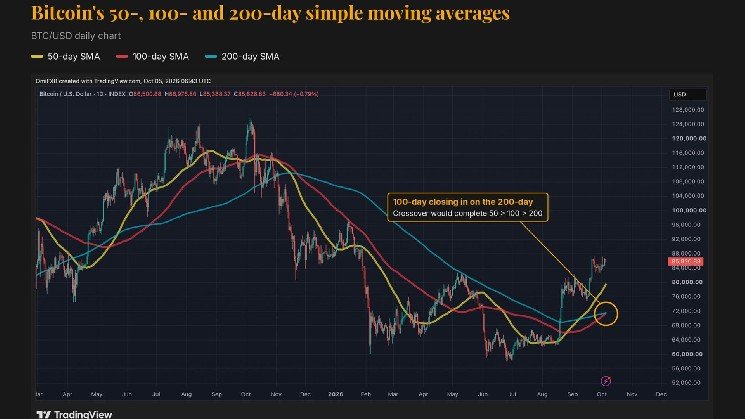
    If Bitcoin manages to break through the bear market resistance band, the next and biggest obstacle, according to Cowen, will be the 200-day moving average. The analyst noted that in past bear markets (2014, 2018, and 2022), this level acted as an insurmountable wall, and that sustained trading above this line is necessary for the current rally to transform into a lasting bull market.

    Despite the short-term rallies, Cowen maintains his macro perspective. He argues that the current rise could be a “counter-trend rally” and that Bitcoin is highly likely to fall to lower levels later in the year.

    The analyst believes we are in a phase where cryptocurrencies continue to lose value against other markets such as stocks, gold, and the energy sector.

    *This is not investment advice.