Tag: CRYPTOS FoxBusiness

  • Binance Announces Addition of 10 New Trading Pairs to its Spot Market Product Range! Here Are the Details

    Binance Announces Addition of 10 New Trading Pairs to its Spot Market Product Range! Here Are the Details

    Binance continues to expand its portfolio in the spot market. The platform, one of the world’s largest cryptocurrency exchanges, announced it will list 10 new trading pairs under its bStocks product family to offer users more trading options. The company also stated that it will reduce the maker trading fee to zero for these newly listed assets for a limited period.

    According to a statement by Binance, the bStocks assets named AAOIB (Applied Optoelectronics), ARMB (Arm), AVGOB (Broadcom), BABAB (Alibaba), HOODB (Robinhood), IBMB (IBM), MRVLB (Marvell Technology), NOKB (Nokia), RKLBB (Rocket Lab), and TSMB (TSMC) will be available for spot trading with $USDT pairs on July 15, 2026, at 16:30. Simultaneously, the Spot Algo Trading Bots service will also be launched for these trading pairs.

    The newly listed trading pairs will be AAOIB/$USDT, ARMB/$USDT, AVGOB/$USDT, BABAB/$USDT, HOODB/$USDT, IBMB/$USDT, MRVLB/$USDT, NOKB/$USDT, RKLBB/$USDT, and TSMB/$USDT. This will allow users to perform both manual trades and utilize algorithmic trading bots for these tokens.

    Binance has also launched a special campaign to support the listing. Accordingly, the maker commission fee for all bStocks trading pairs listed above will be 0% from the listing date until August 31, 2026 at 02:59. This means that investors providing liquidity to the order book will be able to trade without paying maker fees during the campaign period.

    bStocks products stand out as digital assets based on the shares of some major companies in traditional financial markets. Recently, Binance has been expanding this product line, aiming to offer its users blockchain-based investment opportunities in leading companies in the technology and finance sectors.

    Market experts say the new listings could boost trading volume and that the zero-maker commission campaign could particularly appeal to professional investors and market makers. Binance’s move is seen as part of its strategy to strengthen integration between traditional finance and the digital asset ecosystem.

    This is not investment advice.
  • Ledger adds Celo fee abstraction, expands support to 18 token gas payment options

    Ledger adds Celo fee abstraction, expands support to 18 token gas payment options

    Celo has enhanced its collaboration with Ledger by integrating a key network feature into the hardware wallet provider’s platform, offering more flexible transaction fee options to users worldwide.

    Ledger supports Celo’s CIP-64 fee abstraction

    Ledger has implemented support for Celo’s fee abstraction, made possible through the network’s CIP-64 upgrade. This change allows users to pay transaction fees using a variety of Celo-native assets, rather than being restricted to the $CELO token.

    The new functionality builds on Ledger Live’s December 2025 update, where users gained the ability to transact and exchange $CELO and Celo stablecoins through Ledger’s interface.

    With this latest expansion, Ledger’s user base of more than 8 million people in over 200 countries can now settle gas fees in any of 18 supported tokens. These payment options include Tether USD₮, USDC, Wrapped Ether (WETH), and multiple fiat-referenced stablecoins developed by Mento Labs.

    Accepted fiat-backed tokens span a range of global currencies such as the euro, British pound, Japanese yen, Canadian dollar, Australian dollar, Nigerian naira, Kenyan shilling, and South African rand, offering considerably broader payment flexibility.

    Mini dictionary: CIP-64, or Celo Improvement Proposal 64, is an upgrade that enables transaction fees to be paid with approved ERC-20 tokens on the Celo network, rather than requiring users to exclusively use the $CELO token for gas payments.

    Stablecoins overtake $CELO for transactions

    Launched in July 2023 during the network’s Gingerbread hard fork, CIP-64 has allowed users to pay transaction fees with selected stablecoins and other ERC-20 tokens. This approach, now widely adopted across the Celo network, has led to a significant shift in transaction behavior.

    Celo reports that nearly half of all transaction volume on the network now uses stablecoins denominated in US dollars, instead of the network’s native $CELO token.

    By allowing users to handle transaction fees with familiar currencies, Celo aims to lower barriers to entry and streamline the experience of using money across blockchain payments and decentralized finance applications.

    The integration with Ledger is expected to further simplify onboarding, particularly for users interested in exploring Celo payments and DeFi solutions.

    Celo leads in tokenized gold adoption

    Beyond network transactions, Celo highlighted its leading position in the market for tokenized gold. According to network figures, 107,622 users on Celo own Tether Gold (XAUT), positioning the network as the dominant platform for tokenized gold holders.

    Blockchain data estimates a total of 118,500 XAUT holders across seven blockchain networks. Of these, Celo accounts for 90.8%, followed by Solana at 4.5%. Other platforms with measurable XAUT user bases include HyperEVM (1.9%), Arbitrum One (1.8%), Plasma (0.6%), Monad (0.3%), and Ink (0.1%).

    Celo attributes its dominance to a growing ecosystem, including applications such as MiniPay, Squid Router, Uniswap, Featherlend, Morpho, and TheoriqAI, that together drive adoption of real-world asset tokenization.

    Celo, a mobile-first blockchain that aims to make decentralized financial services accessible to anyone with a smartphone, is now advancing into sectors beyond digital-only payments. By making stablecoin-based gas payments easier and leading the charge on tokenized gold, Celo is seeking new use cases for blockchain technology in mainstream finance.

    Celo’s expanding ecosystem and diverse payment options underscore its strategy to position itself as a leading platform for accessible and practical financial instruments on the blockchain.

  • NEAR Governance Vote To Scrap Gas Rebates Puts Developer Incentives Under Review

    NEAR Governance Vote To Scrap Gas Rebates Puts Developer Incentives Under Review

    $NEAR Governance Vote To Scrap Gas Rebates Puts Developer Incentives Under Review is a useful reminder that crypto coverage is not only about token prices. Sometimes the more important story is the infrastructure, regulation, security, or product layer sitting underneath the market noise.

    The immediate point is straightforward: nEAR governance voted to scrap developer gas rebates. That gives readers something concrete to work with, rather than another vague sentiment update.

    TL;DR

    • $NEAR governance voted to scrap developer gas rebates.
    • The change affects developers who relied on protocol gas distributions.
    • It raises a broader question about how chains should reward app builders.

    Why This Matters Now

    The timing matters because $NEAR is already part of a wider conversation across the market. Traders want to know whether the development changes liquidity or risk. Builders want to know whether it changes what can be deployed. Compliance teams want to know whether it changes how platforms operate.

    In that sense, the story is bigger than one headline. It sits inside the ongoing shift from speculative crypto cycles toward more practical questions: who can use these systems, how safe are they, and whether the underlying incentives actually work.

    The best way to read it is with discipline. It is not a guarantee of immediate upside, and it should not be treated as one. But it does add a fresh data point to the way the market is thinking about $NEAR.

    The $NEAR Angle

    For $NEAR, the important part is the specific mechanism. If this is a security issue, the risk sits in dependencies and user protection. If it is a listing or product launch, the question is access and liquidity. If it is a governance or research proposal, the question is whether the idea can survive implementation.

    That is where this update becomes useful. It is not just a label attached to a trend. It gives readers a way to understand what might actually change if the development gains traction.

    Crypto has a habit of turning every announcement into a broad market claim. This one deserves a narrower read. The value is in seeing how it affects the users, developers, institutions, or traders closest to the issue.

    The Risk Side

    There is also a caution attached. Source material can confirm that a development exists, but it cannot prove that adoption will follow. A proposal still needs support. A product still needs users. A chart still needs confirmation. A compliance tool still needs integration.

    That is why the responsible reading is not to oversell the story. The stronger takeaway is that this adds to a pattern. The crypto market is steadily becoming more professional, more technical, and more sensitive to real operational details.

    Readers should also watch for follow-up signals. That could mean developer feedback, exchange support, regulatory response, wallet adoption, liquidity data, or simply whether market participants continue reacting after the first headline fades.

    What Comes Next

    The next stage will decide whether this remains a narrow update or becomes part of a larger market theme. In crypto, that difference matters. Plenty of stories look important for a few hours and then disappear. The ones that last usually show up again through usage, liquidity, enforcement, governance, or developer adoption.

    For now, this gives the market another piece of information to weigh. It is specific enough to be useful, but still early enough that readers should keep the caveats in view.

    That makes it worth covering without pretending it settles anything. The story is a signal, not a final verdict.

    The key is not to confuse coverage with certainty. $NEAR stories can move quickly, especially when they touch security, regulation, listings, infrastructure, or price levels. The useful approach is to track the next confirming detail rather than assume the first update carries the whole market story. That is how traders avoid chasing noise and how readers separate a genuine development from another passing headline.

    This report is based on information from thedefiant.io.

    This article was written by the News Desk and edited by Samuel Rae.

  • Bitmine generated $46M from Ethereum staking last quarter

    Bitmine generated $46M from Ethereum staking last quarter

    Bitmine Immersion Technologies recorded $45.7 million in revenue from Ether staking and validation last quarter, following the launch of its institutional-grade Ethereum staking platform in March.

    Staking revenue accounted for 98% of total revenue for the three months ended May 31, far outpacing the $624,000 from self-mining Bitcoin (BTC) and the $168,000 from consulting services, according to Bitmine’s latest 10-Q filing. On Monday, Bitmine said it had staked 85% of its $ETH holdings, equating to around 4.9 million Ether ($ETH).

    “Bitmine has staked more $ETH than other entities in the world. At scale (when Bitmine’s $ETH is fully staked by MAVAN and its staking partners), the projected $ETH staking reward is $284 million on an annualized basis,” said Tom Lee, chairman of Bitmine.

    The latest quarterly results show how Bitmine’s pivot to Ethereum has reshaped its revenue mix. A year ago, Bitmine recorded just $2 million in total revenue for the quarter ended May 31, 2025, primarily from machine leasing.

    The results also reflect the March launch of MAVAN, an institutional-grade Ethereum staking platform that operates validator infrastructure for its own holdings and external clients.

    Related: Ethereum backers launch nonprofit to lead institutional adoption efforts

    MAVAN, short for “Made in America VAlidator Network,” followed the acquisition of Australia-based non-custodial validator operator Pier Two Holdings. It was originally developed to support Bitmine’s own Ethereum treasury; its scope expanded to serve institutional investors, custodians and ecosystem partners.

    Lee calls Robinhood Chain a “breakaway success”

    On Monday, Lee highlighted the success of the newly launched Robinhood Chain, with dollar volumes exceeding $1 billion since its July 1 launch.

    “Robinhood Chain now has more trading volume than any other decentralized exchange (DEX), demonstrating the outstanding utility and product market fit for Ethereum, which is the underlying chain,” he said.

    “Robinhood Chain uses $ETH as the native gas token. And transaction fees are denominated in $ETH and the finality is settled on Ethereum. Robinhood’s 27 million users are paying crypto fees denominated in $ETH. In other words, everyday users are starting to see $ETH as money,” he added.

    Magazine: Strategy became a symbol of the dot-com crash: Could history repeat?

  • ETH Price Eyes $2,163 Target as Double Bottom Completes on Daily Chart

    ETH Price Eyes $2,163 Target as Double Bottom Completes on Daily Chart

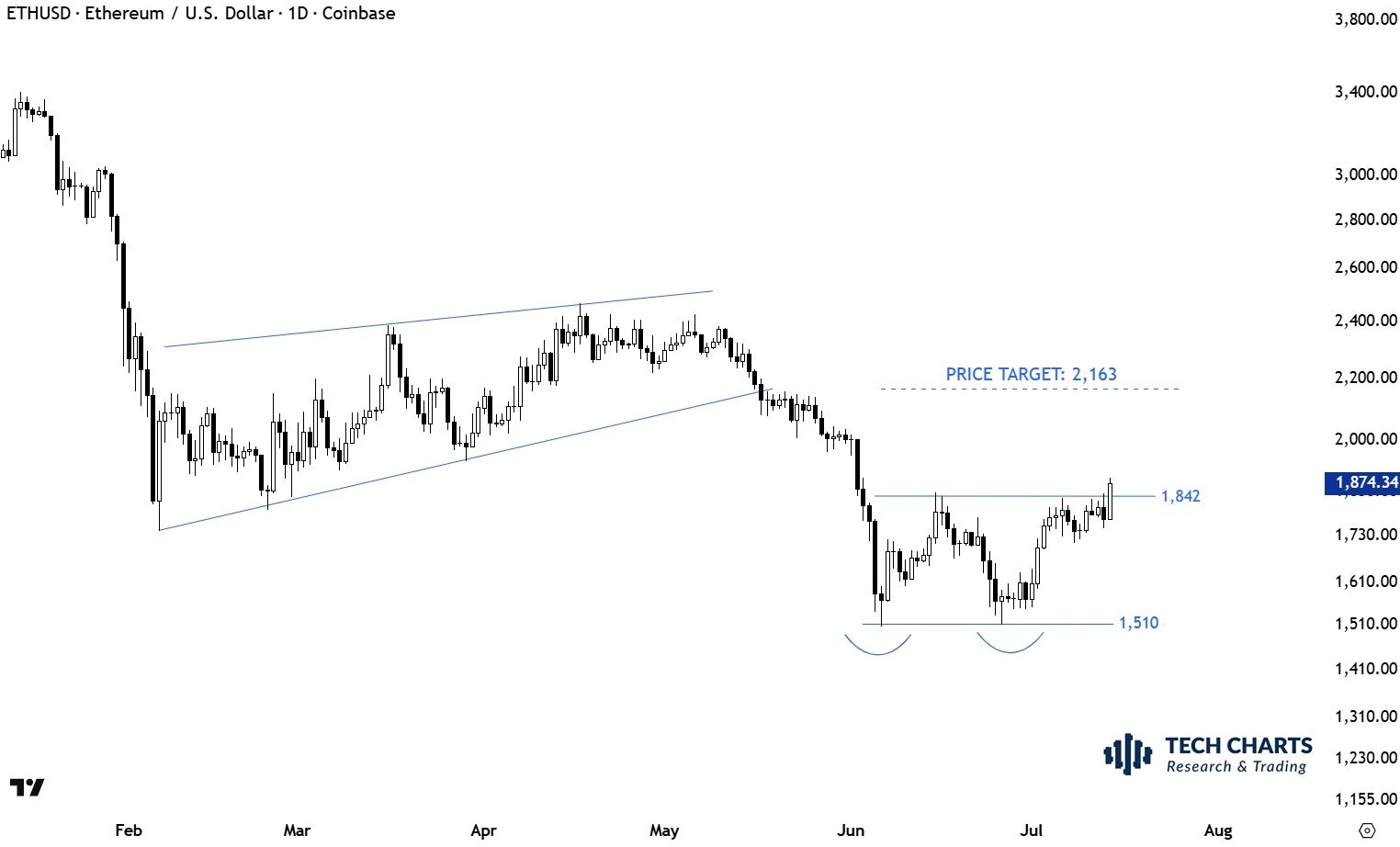
    Ethereum ($ETH) is showing strong technical signs of a short-term bottom reversal, with a projected surge to $2,163.

    Ethereum targets $2,163 following double bottom completion

    As shown in the chart below, $ETH has clearly formed a classic double-bottom reversal pattern near the $1,510 support. Even more, just two days ago, the coin broke above the $1,842 neckline resistance after a period of consolidation. At press time, $ETH was still sustaining this bullish momentum, trading at about $1,883 (+6.88% in the last 24 hours).

    Source: Tech Charts

    According to veteran chartist Aksel Kibar, this setup projects an upside target of $2,163 – calculated from the pattern’s move from the double bottom to the neckline. It also follows a similar short-term bullish prediction made by the analyst just three days ago, indicating continued bullish momentum in the reversal.

    Further supporting this thesis is the rising multi-month trendline, which shows higher lows between February and May. This trajectory means buyers are consistently accumulating even as prices rise, further reinforcing the previously mentioned bullish thrust.

    Recent developments fueling upside bias

    In addition to the above technical analysis, EthSystems, a spin-off from the Ethereum Foundation, recently launched as an independent for-profit research and engineering company. The Ethereum community expressed optimism for the event, as it signaled Ethereum’s commitment to providing blockchain privacy to heavily regulated institutions.

    Furthermore, today’s cooler-than-expected inflationary data encouraged investors to flow into crypto assets. Other than retail investors, institutions continue to accumulate the coin, with Bitmine Immersion Technologies now holding 5.77 million $ETH tokens (about 4.8% of the circulating supply).

    Key levels to watch for

    Important levels to watch out for now include the $1,842-$1,850 double-bottom neckline resistance. A downside penetration below this threshold could invalidate the bullish setup.

    Additional resistance lies between $1,900 and $2,000, which marks the highs hit between May and June just before the sharp decline.

    Breaking above these two zones, coupled with rising trade volumes, would pave the way for the $2,163 target.

  • QuickSwap Goes All-In on Orbs for Perpetual Futures Trading

    QuickSwap Goes All-In on Orbs for Perpetual Futures Trading

    QuickSwap, one of the oldest names in decentralized exchange trading, has officially rolled out Orbs’ Perpetual Hub Ultra 2.0 as the default engine powering perpetual futures across every chain it operates on. The decision wasn’t made behind closed doors. It came after a community vote, “Full Shift of Decentralized Perpetuals to Orbs Network,” which cleared with a decisive 81.8% approval from QUICK token holders.

    The shift effectively retires the Orderly-based Falkor setup that had been running on Polygon PoS, replacing it with the same Orbs-driven architecture that QuickSwap already introduced on Base back in the fourth quarter of 2025. It’s not a cold start, either. QuickSwap and Orbs have been working together for years at this point, with tools like dTWAP, dLIMIT, and Liquidity Hub already live in production on both Polygon PoS and Base.

    Ran Hammer, VP of Business Development at Orbs, framed the announcement as something bigger than a routine infrastructure swap. “This is what the next phase of DeFi looks like: a top-tier DEX running a complete perps stack natively on Layer-3, with liquidity from day one and execution quality that rivals centralized venues,” he said. He also pointed to the vote itself as a signal of where the industry is heading, adding, “An 81.8% community vote says it all – decentralized markets are ready to compete with traditional finance on its own terms.”

    Full-Service Perpetual Trading Stack

    What QuickSwap gets out of the deal, in practical terms, is a full-service perpetual trading stack that doesn’t lean on outside providers. Execution, settlement, hedging, liquidation, pricing, and the trading interface itself are all handled natively through Orbs’ Layer-3 infrastructure. There’s no bootstrapping period to worry about, either; liquidity is pulled in from day one through Orbs’ integrated system, which taps into several deep liquidity sources at once rather than relying on a single pool building up over time.

    Under the hood, the platform runs on a TEE-secured execution environment, meaning trades are processed inside a trusted, hardware-isolated setting rather than out in the open. Price feeds come in cryptographically signed, and the resulting state is periodically committed on-chain through rollup settlement, giving traders a verifiable record without sacrificing speed.

    On the trading side, users get access to the usual order types, market, limit, stop-loss, take-profit, along with more advanced bracket orders. Convenience features like one-click trading, account abstraction, and gasless transactions are also part of the package, lowering the friction that’s historically kept some traders away from on-chain platforms.

    QuickSwap itself needs little introduction to anyone who’s spent time in DeFi. It’s been running since 2020 and remains the top exchange within the Polygon ecosystem, expanding over the years from Polygon PoS into Polygon zkEVM and Base while holding onto its reputation as Polygon’s flagship DEX.

    Like much of its infrastructure, the exchange is steered by its community through QUICK token governance, which is exactly the mechanism that greenlit this latest move. Orbs, for its part, operates as a decentralized Layer-3 network built specifically to handle the kind of complex trading logic that standard smart contracts struggle with.

    Its validator network runs on delegated Proof-of-Stake, backed by more than 1.12 billion ORBS tokens staked across the system. Both teams are pitching this integration as a step toward closing the gap between decentralized and centralized trading venues, not just in terms of speed and cost, but in the overall experience, while still keeping self-custody and on-chain transparency intact for users.

  • CZ’s 1.1B memecoin burn sparks buzz – Can it revive fading demand?

    CZ’s 1.1B memecoin burn sparks buzz – Can it revive fading demand?

    Memecoins often thrive on hype, yet they can lose relevance just as quickly when attention fades.

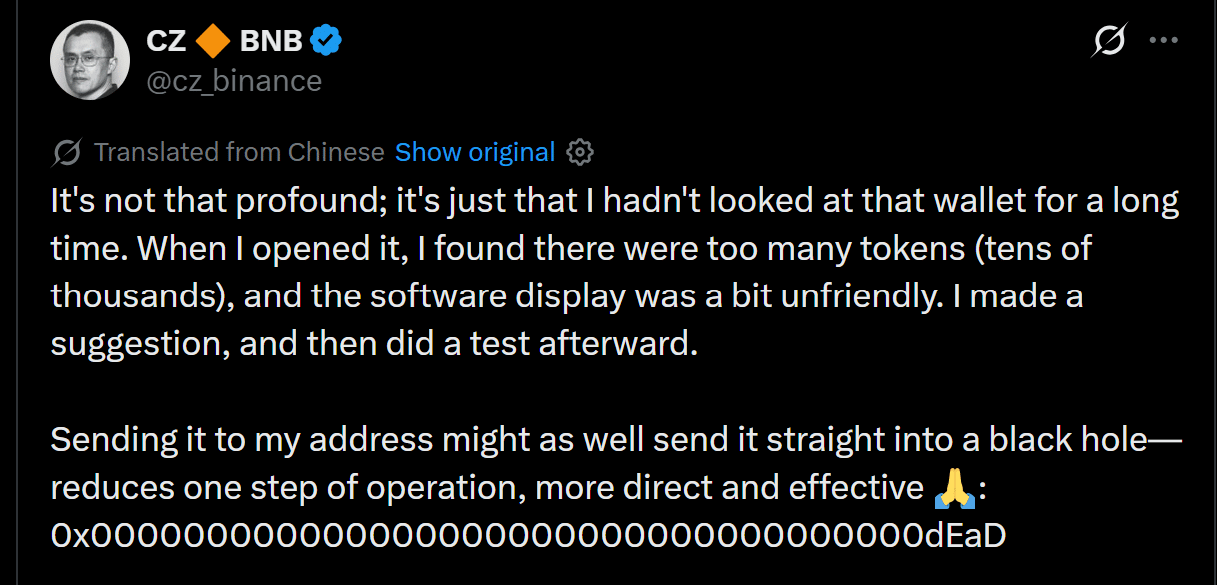
    Binance founder Changpeng Zhao’s (CZ) recent wallet activity initially fueled speculation across the memecoin market. He later clarified the transfers were routine, not valuation‑related.

    Rather than making a statement about token valuations, he simply cleared thousands of unsolicited donations by sending them directly to the burn address.

    In a post on X, CZ noted,

    Source: X

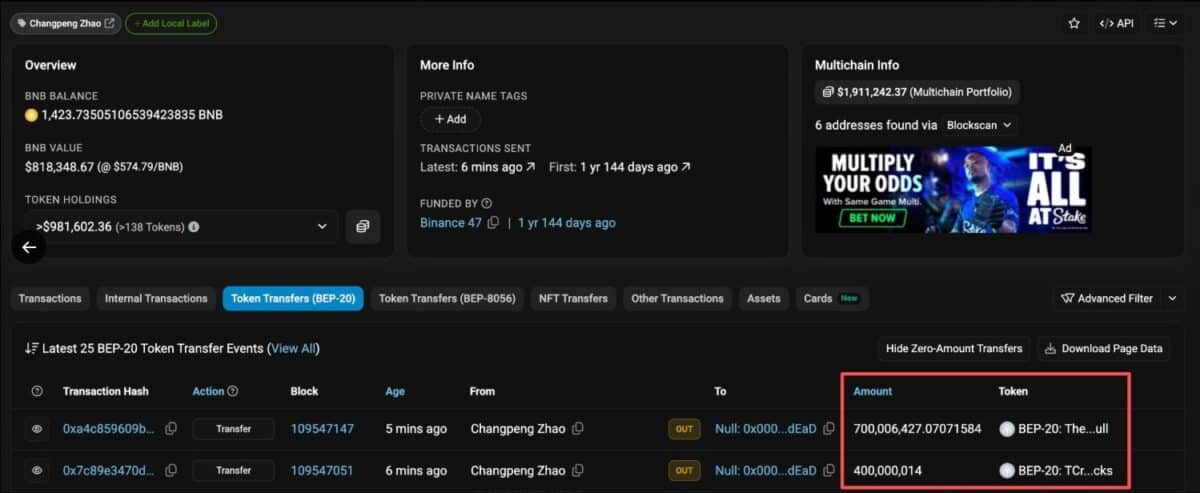
    This move permanently removed roughly 1.1 billion donated memecoins from circulation, including transfers of 700 million and 400 million tokens shown in the wallet activity. However, the broader market impact remains limited because these assets already had little utility or liquidity.

    Source: X

    Instead, the transaction underscores how speculative narratives can quickly overshadow routine wallet management. Ultimately, sustainable valuations will continue to depend on genuine demand rather than symbolic token burns.

    Memecoin demand remains fragile

    CZ’s decision to burn unsolicited memecoins also reflects the broader challenges facing the memecoin sector. While new narratives occasionally attract speculative inflows, sustained demand has remained weak since Bitcoin’s October 2025 peak.

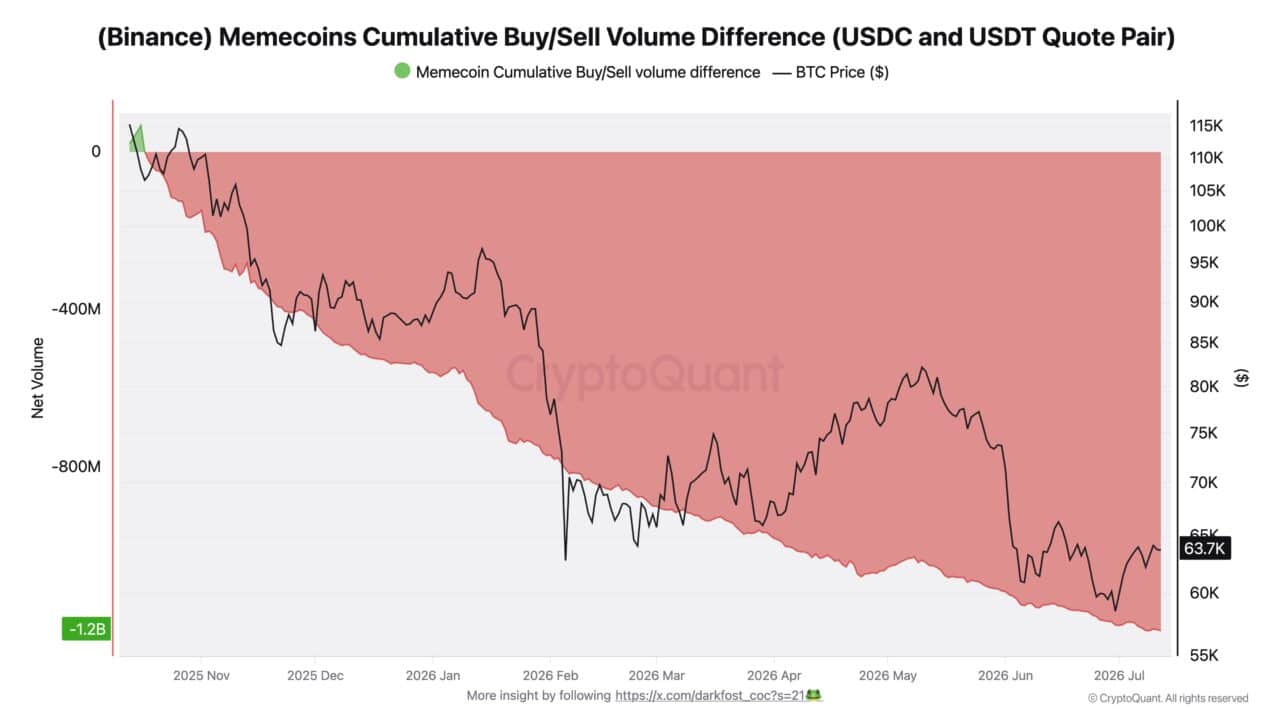
    As Bitcoin [$BTC] plummeted, investors began reducing their exposure to riskier assets. This led to cumulative Binance memecoin net volume declining to -$1.21 billion.

    This suggests that rather than accumulate for long-term growth, traders increasingly view memecoins as assets to exit during uncertainty. Unless risk appetite improves, capital will likely continue concentrating in stronger cryptocurrencies.

    Source: Dakforst on X

    As a result, this leaves memecoins vulnerable to lower liquidity, sharper volatility, and shorter-lived recoveries.

    Rather than signaling isolated selling, the persistent outflows point to a prolonged risk-off environment across the sector. Although Robinhood Chain briefly revived interest in newer tokens, that momentum failed to reverse broader capital rotation.

    Without consistent buying, memecoins will stay driven by short‑lived narratives rather than durable demand.


    Final Summary

    • Memecoins remain driven by speculation, with CZ’s burn carrying limited market impact.
    • Bitcoin [$BTC] weakness continues weighing on memecoins, as persistent capital outflows keep the sector in a prolonged risk-off environment.
  • World’s first operation performed by robot surgeons has been carried out

    World’s first operation performed by robot surgeons has been carried out

    Two teleoperated robots work as a team to perform a laparoscopic gallbladder removal during a pre-clinical trial
    Two teleoperated robots work as a team to perform a laparoscopic gallbladder removal during a pre-clinical trial (Picture: University of California San Diego (UCSD)/Cover Images)

    It’s like the plot of a science fiction film.

    The world’s first operation performed by robot surgeons has been successfully carried out.

    Researchers say the breakthrough could one day allow specialists to carry out life-saving procedures from hundreds of miles away, helping patients in remote communities, disaster zones and military field hospitals.

    The human-shaped robots completed two gallbladder removal operations during a preclinical trial on large animal models.

    One procedure saw a robot operate alongside a human surgeon acting as an assistant. In the second, two humanoid robots worked together as the surgical team.

    The research, published in the journal Nature, was carried out by engineers and surgeons at the University of California San Diego.

    Nicknamed ‘Surgie’, the robots stand around 5ft tall, weigh just 27kg and use standard surgical instruments, meaning they could work in existing operating theatres without the specialist facilities needed for conventional robotic surgery systems.

    A human-robot team made up of a humanoid robot and a human surgeon acting as an assistant successfully performed a gallbladder removal (Picture: University of California San Diego (UCSD)/Cover Images)

    Professor Michael Yip, one of the study’s senior authors, said the technology could help tackle a growing global shortage of surgeons.

    He said: ‘There is a shortage of surgeons alongside growing patient needs, which leads to longer wait times, reduced access and greater healthcare disparities.

    ‘Remotely operated and autonomous humanoid robots have real potential for expanding access to critical surgeries that patients would otherwise not receive.’

    Conventional robotic surgery systems can weigh almost 1,800lb and require specialist operating theatres and large support teams.

    The researchers say humanoid robots are far cheaper, more compact and could be deployed in under-resourced hospitals or temporary medical facilities.

    Dr Shanglei Liu, who remotely controlled one of the robots during the trial, said: ‘It’s a fraction of the cost and it takes a fraction of the space in an operating room. So it’s easy to deploy anywhere from rural areas to the battlefield, and even to space.’

    Ryan Broderick, MD, controls a robot during a gallbladder removal procedure (Picture: University of California San Diego (UCSD)/Cover Images)

    The robots mirror a surgeon’s hand movements using a teleoperation system, allowing procedures to be performed remotely.

    The team says the technology is still in its early stages. The robots needed several recalibrations during surgery and the operations took much longer than those carried out using existing robotic systems.

    But the researchers believe the technology will improve rapidly, pointing out that early robotic keyhole surgery once took six hours but can now be completed in around 30 minutes.

    They hope humanoid robots will eventually work alongside surgeons, helping deliver specialist care to patients wherever it is needed.

  • Analyzing Ether.fi’s slip amid $8.6B market crash: What’s next for ETHFI?

    Analyzing Ether.fi’s slip amid $8.6B market crash: What’s next for ETHFI?

    Ether.fi [$ETHFI] has posted a sharp decline as capital outflows across the broader market drive much of the fall.

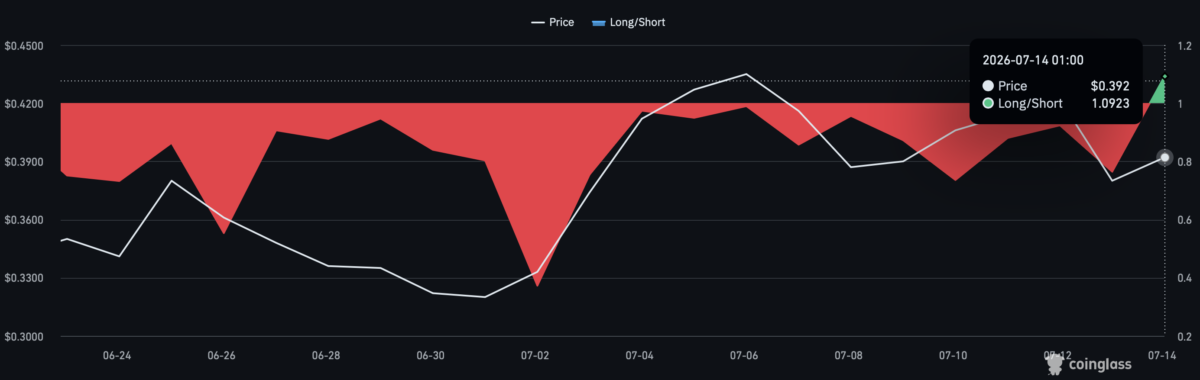
    The asset recorded a double-digit loss in the early hours of Tuesday, extending its price to a low of $0.384 on the chart. Outflows continue to dominate, yet the market is already flashing early signs of a possible recovery and leaves room for a rally to still stretch higher.

    Capital exits $ETHFI’s on-chain economy

    The steepest hurdle facing $ETHFI’s price over the past day has been the on-chain capital exit.

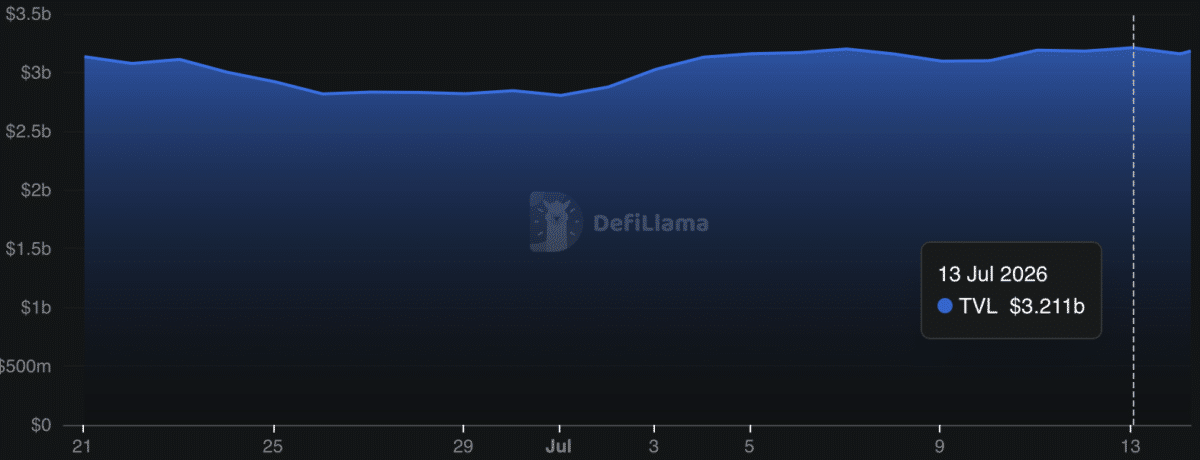
    Total value locked (TVL), which gauges the strength of on-chain capital through the deposits and withdrawals moving through the protocol, shows that roughly $54 million has left the market.

    The metric slid from $3.212 billion to roughly $3.153 billion, signalling that retail holders are exiting the market, likely on concerns over rising volatility.

    Source: DeFiLlama

    On a protocol level, the asset has held up decently, with earnings—the profit that remains once incentives are stripped out—reaching $1.34 million and already nearing half of the $2.79 million generated in June.

    The pattern suggests the recent sell-off reflects a reaction to market sentiment and not a structural bearish trend. That sentiment traces back to the notable decline the crypto market absorbed over the past day, when it shed around $8.61 billion in total capitalization.

    Perpetual contracts keep bears in play

    The clearest gap in the market emerges from $ETHFI’s perpetual contracts, which show that bears still hold some strength after an 11% decline dragged open interest to $62.26 million.

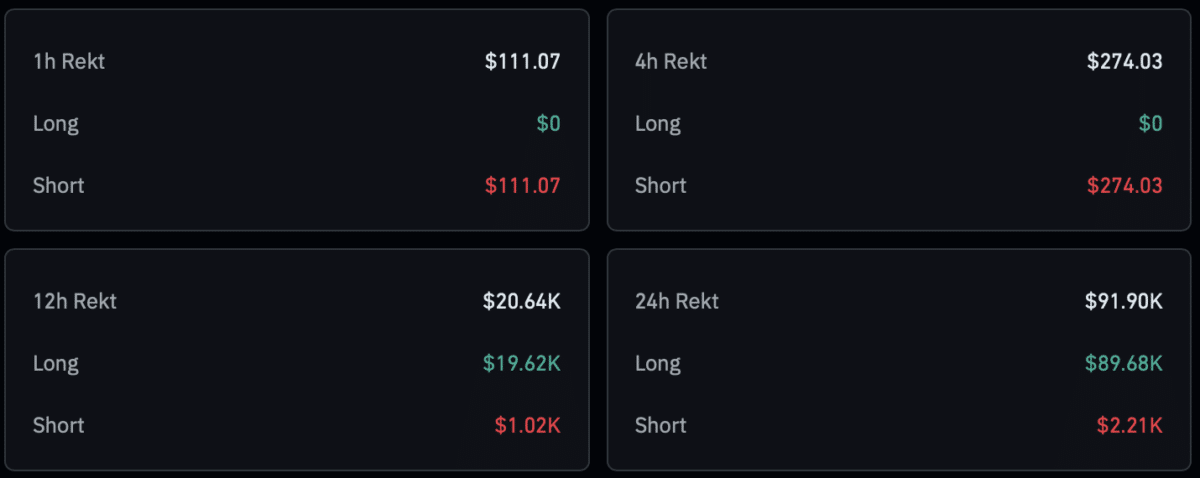
    That gap stems from an imbalance in liquidations, with market data revealing a wide disparity between long and short liquidations. Over the past 24 hours, long traders have lost roughly 40 times more than short traders.

    The liquidation data shows short traders lost just $2,210 against $89,680 for long traders across the same period, and the uneven spread points to the strength of the bears.

    Source: CoinGlass

    On lower timeframes, the liquidation disparity widens further, though the capital lost this time around remains minimal.

    The liquidation heatmap offers no clear directional bias for the asset, instead showing fairly evenly distributed clusters.

    These clusters mark areas on the chart where buy or sell orders sit, and clusters resting above the price usually act as sell zones that pull the price toward them and force selling, while clusters below reverse the dynamic and force buys once the price drops into them.

    For now, there’s no decisive direction, leaving momentum to dictate the next price move.

    Rising long volume hints at $ETHFI accumulation

    While liquidations remain skewed in favour of the shorts, activity on the long-to-short ratio points to rising accumulation.

    At the time of writing, the long-to-short volume ratio on the chart shows more long volume in the market, pushing up to 1.02. A continued climb would imply that buy interest still lingers in the market.

    Source: CoinGlass

    Whether that offers a sufficient basis for a shift in direction remains unclear. The broader crypto market that shaped the sell-off sentiment has begun cooling, and a strong chance remains that $ETHFI benefits from the turn and recovers, flipping momentum against the sellers.


    Final Summary

    • Ether.fi’s token fell 10% after roughly $54 million left the protocol, moving in step with a broader crypto market that shed about $8.61 billion in a day.
    • Buying activity is quietly picking up and a calming market could give $ETHFI room to bounce back.