Tag: Business – Decrypt

  • Banking Regulator Floats New Stablecoin Yield Rules—Do They Hurt Coinbase?

    Banking Regulator Floats New Stablecoin Yield Rules—Do They Hurt Coinbase?

    In brief

    • The OCC proposed rules that would restrict certain stablecoin rewards programs under the GENIUS Act.
    • The language could affect Coinbase’s USDC rewards arrangement with Circle, some industry experts said.
    • But the rules are changeable, and not final, and others believe they won’t outlaw top stablecoin rewards programs.

    A key Treasury Department bureau released preliminary rules this week detailing how it will implement the stablecoin-focused GENIUS Act—and industry experts are split about whether the proposal could impact America’s top stablecoin rewards program.

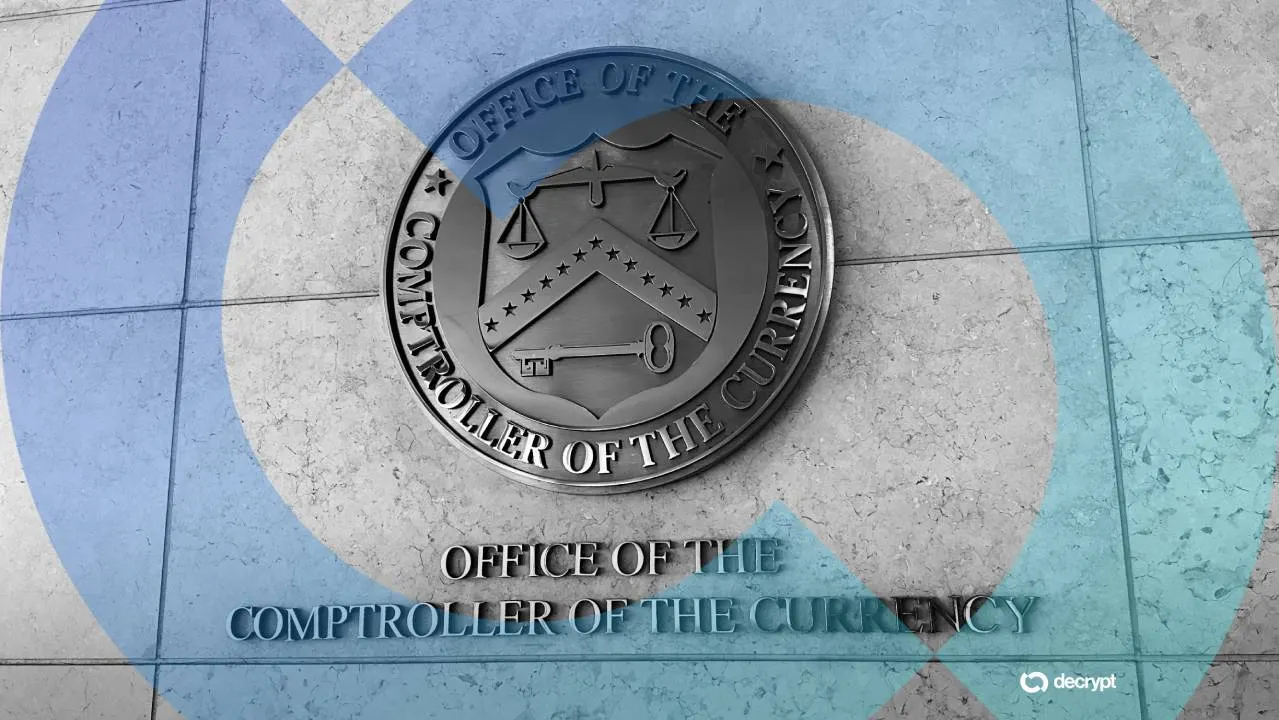
    On Thursday, the Office of the Comptroller of the Currency, the nation’s top banking regulator, released a massive, 376-page proposed rulemaking detailing how it intends to implement the GENIUS Act, which was signed into law by President Donald Trump last summer.

    Among the proposed rules—which are subject to a 60-day public comment period—are multiple sections prohibiting certain types of stablecoin rewards. The prohibitions appear to outlaw certain arrangements between stablecoin issuers and third parties in which the third parties pass yield onto stablecoin holders in connection with their “holding, use, or retention” of the tokens.

    That sounds not so far from the current arrangement between USDC issuer Circle and Coinbase. Both companies share revenue from the yield generated on USDC’s reserves, and Coinbase currently offers users roughly 4% yield, essentially a type of interest payment, on their USDC deposits.

    Multiple crypto policy leaders told Decrypt they think the OCC’s proposed language could impact Coinbase’s current USDC rewards program, but emphasized the complexity of the proposed rule and the possibility that it could be worked around.

    One of the policy leaders said Coinbase was likely always going to need to adjust its USDC rewards program at least somewhat after the implementation of the GENIUS Act. Coinbase did not immediately respond to Decrypt’s request for comment on this story.

    Last year, Coinbase reported $1.3 billion in stablecoin revenue. The company cited its USDC rewards program as its key growth driver in 2025.

    Some crypto executives have denounced the OCC’s proposed rulemaking, deeming it regressive.

    Scott Johnsson, a finance lawyer and crypto-focused venture capitalist, told Decrypt he thinks the language “most likely does” impact Coinbase’s USDC rewards program. But he also expects the rule will be challenged, and changed.

    But others have taken a different tune. Circle’s head of global policy, notably, commended the OCC on its proposed regulations—a sentiment echoed by Circle’s CEO, Jeremy Allaire.

    “This is all part of accelerating U.S. leadership in transforming the economic and financial system and rebuilding it natively on the internet,” Allaire said.

    Perhaps underscoring the possibility that Coinbase and Circle needn’t worry too much about the proposed rules, a banking industry source told Decrypt that the OCC’s announcement does not give them much comfort. The banking lobby has been pushing for months to restrict stablecoin rewards, which it worries could siphon customers away from traditional, low-yield bank accounts. 

    “It really doesn’t solve the problem,” the banking industry source said, alluding to potential loopholes in the OCC’s proposed restrictions. The source emphasized that rulemakings “can always be changed.”

    The banking industry would rather have restrictions on stablecoin yield permanently enshrined in law, the source said. For over a month, banking and crypto representatives have gone back and forth negotiating the issue of stablecoin yield, as part of negotiations on crypto’s stalled market structure bill. The meetings, led by the White House, were intended to arrive at a deal by this weekend—but a deal is unlikely to materialize so soon, Decrypt reported earlier Friday.

    “This doesn’t fix the debate,” Todd Phillips, a law professor at Georgia State focused on bank regulation, said of the OCC’s proposed rules. “This is not going to satisfy the two warring sides.”

    Daily Debrief Newsletter

    Start every day with the top news stories right now, plus original features, a podcast, videos and more.


  • Bitcoin Recovers Following Plunge as US, Israel Begin Bombing Iran

    Bitcoin Recovers Following Plunge as US, Israel Begin Bombing Iran

    The price of Bitcoin rapidly fell overnight as the United States and Israel began joint “major combat operations” in Iran, bombing numerous military targets in what officials said were attempts to end the country’s nuclear and ballistic missile programs, as well as take out key military leaders.

    But while Bitcoin plunged from a price of $65,572 to $63,176 in about an hour overnight following word of the strikes, the leading cryptocurrency has mostly recovered that ground in the hours since.

    It’s currently trading for $65,051, according to data from CoinGecko, still showing an approximately 0.8% loss on the day and 5.2% fall over the last seven days.

    Major altcoins like Ethereum, XRP, and Solana also fell sharply following the overnight attacks, but have similarly made up most of that ground as of this writing, showing daily losses of less than 2% each.

    Crypto liquidations surged overnight amid the rapid market plunge, with CoinGlass showing about $490 million worth of positions liquidated over the past 24 hours, led by Bitcoin and Ethereum longs. Overall, Bitcoin positions make up $196 million worth of the liquidations, with Ethereum following at $132 million.

    At its overnight low, Bitcoin was approximately 50% down from its all-time high mark above $126,000 set last October. The leading cryptocurrency has fallen sharply over the last month, about 23% during that span. Bitcoin started the year at a price around $87,000.

    Crypto prices have historically been impacted by geopolitical turmoil, and this time around is no different. For example, the price of Bitcoin and other assets fell sharply after Russia invaded Ukraine in 2022.

    The overnight strikes led Iran to launch retaliatory attacks against U.S. military assets across the Middle East, while Iran reckons with the fallout from the bombings. News agencies have reported mass civilian casualties in Iran, including a reported 85 deaths after a girls school was struck in the Minah province.

    Users on Myriad—a prediction market operated by Decrypt‘s parent company, Dastan—increasingly believe that the Iranian regime will collapse before October, currently penciling in a 51% chance of that happening. Those odds rose 20% over the last day.

    Daily Debrief Newsletter

    Start every day with the top news stories right now, plus original features, a podcast, videos and more.
  • Banking Giant Barclays Mulls Crypto Payments Push: Bloomberg

    Banking Giant Barclays Mulls Crypto Payments Push: Bloomberg

    In brief

    • Barclays has requested information from technology providers regarding a potential push into blockchain, according to Bloomberg.
    • The banking giant is said to be considering tokenized deposits and stablecoin payments.
    • Earlier this year, the firm made an investment in stablecoin settlement firm, Ubyx.

    Publicly traded banking institution Barclays (BCS) is reportedly gathering information for a potential push into blockchain, according to a Friday report from Bloomberg

    Sources familiar with the matter said the firm has requested information from “technology suppliers” while it considers a path forward. Its utilization of blockchain may include tokenized deposits and stablecoins, the report said.

    The U.K.-based banking institution appears to be warming to crypto, investing in stablecoin settlement startup Ubyx after being named as one of a number of leading international banks exploring the joint issuance of a stablecoin last fall. 

    “Specialist technology will play a pivotal role in delivering connectivity and infrastructure to enable regulated financial institutions to interact seamlessly,” Barclays Head of Digital Assets Ryan Hayward said at the time of the Ubyx investment. 

    Now the firm is further investigating those technologies and could ultimately decide on a provider by April, according to Bloomberg. 

    If the firm ultimately decides to offer tokenized deposits or experiment with stablecoins, it would join a list of major banking institutions that have already entered the crypto space. 

    Last year, JPMorgan launched its tokenized deposit token—JPMD—to the Coinbase-incubated Ethereum scaling network, Base, letting institutional clients make payments using a digital representation of their JPMorgan deposits. The firm expanded the token to the Canton Network earlier this year. 

    That decision followed a report that JPMorgan was working on a framework to allow its clients to use Bitcoin and Ethereum as collateral for loans. Plus, publicly traded US Bank began testing its own stablecoin on the Stellar Network, while Citi and Bank of America have registered their own interest as well. 

    Barclays’ potential involvement in the space has not made a splash with shareholders on Friday, as shares in the firm are trading down nearly 4% as the broader market slides. Nevertheless, shares have risen around 54% in the last year of trading.

    Daily Debrief Newsletter

    Start every day with the top news stories right now, plus original features, a podcast, videos and more.

  • Trump Orders Federal Agencies to Dump ‘Woke’ Anthropic AI After Pentagon Dispute

    Trump Orders Federal Agencies to Dump ‘Woke’ Anthropic AI After Pentagon Dispute

    In brief

    • Trump ordered federal agencies to “immediately cease” using Anthropic’s AI technology.
    • The order follows a dispute between Anthropic and the Pentagon over the use of Claude for unrestricted military use.
    • Trump has given agencies six months to phase out Anthropic systems.

    President Donald Trump has directed all U.S. federal agencies to stop using artificial intelligence technology developed by Anthropic, escalating a dispute between the AI company and the Pentagon over how the military uses the technology.

    In a Truth Social post on Friday, Trump said agencies must “immediately cease” using Anthropic products, with a six-month phase-out period for departments that already use the company’s technology.

    “The United States of America will never allow a radical left, woke company to dictate how our great military fights and wins wars!” Trump wrote. “That decision belongs to your commander-in-chief and the tremendous leaders I appoint to run our military.

    The directive follows Anthropic’s refusal on Thursday to remove safeguards preventing Claude from being used for “mass domestic surveillance” or “fully autonomous weapons,” after Pentagon officials demanded contractors allow their systems to be used for “any lawful use.”

    “The left-wing nut jobs at Anthropic have made a disastrous mistake trying to strong-arm the Department of War and force them to obey their terms of service instead of our Constitution,” Trump wrote.

    President Trump called the situation a threat to U.S. troops and national security.

    “Their selfishness is putting American lives at risk, our troops in danger, and our national security in jeopardy,” Trump said.

    Anthropic has resisted Pentagon demands to grant unrestricted military use of its models, while also recently walking back safety language in its Responsible Scaling Policy.

    On Friday, CNBC reported that OpenAI CEO Sam Altman said he is working to “help de-escalate” the situation. De-escalating the tension could be a heavy lift, however.

    In his post, Trump said decisions affecting U.S. military operations must remain under presidential authority rather than “some out-of-control, radical left AI company run by people who have no idea what the real world is all about,” he said.

    “Anthropic better get their act together and be helpful during this phase-out period, or I will use the full power of the presidency to make them comply, with major civil and criminal consequences to follow,” Trump said.

    Defense Secretary Pete Hegseth chimed in on the matter following Trump’s post, offering similar comments regarding the decision and calling Anthropic’s move a “a master class in arrogance and betrayal as well as a textbook case of how not to do business with the United States Government or the Pentagon.”

    “I am directing the Department of War to designate Anthropic a Supply-Chain Risk to National Security,” Hegseth wrote on X. “Effective immediately, no contractor, supplier, or partner that does business with the United States military may conduct any commercial activity with Anthropic. Anthropic will continue to provide the Department of War its services for a period of no more than six months to allow for a seamless transition to a better and more patriotic service.”

    “America’s warfighters will never be held hostage by the ideological whims of Big Tech,” he added. “This decision is final.”

    Following Trump’s announcement, the nonprofit Center for Democracy and Technology commented on the move in a statement sent to Decrypt.

    “The President is wielding the full weight of the federal government to blacklist a company for taking a narrowly-tailored, principled stance to restrict some of the most extreme uses of AI you could imagine—fully autonomous weapons and the mass surveillance of Americans,” said CDT President and CEO Alexandra Givens.

    “This action sets a dangerous precedent. It chills private companies’ ability to engage frankly with the government about appropriate uses of their technology, which is especially important in national security settings that so often have reduced public visibility,” she added. “Retaliating against a company for setting tailored, principled conditions on its product’s use undermines basic market freedoms and makes us all less safe.”

    Editor’s note: This story was updated after publication to include comments from Hegseth and the CDT.

    Daily Debrief Newsletter

    Start every day with the top news stories right now, plus original features, a podcast, videos and more.

  • Bitcoin Rebound Stalls at $65K as Stocks Fall and Gold Rises

    Bitcoin Rebound Stalls at $65K as Stocks Fall and Gold Rises

    In brief

    • Bitcoin slipped to nearly $65,000, recently trading near half its all-time high of $126,080.
    • CoreWeave stock dropped more than 20% after Macquarie slashed its price target to $90.
    • Block Inc. bucked the trend, surging 14% after announcing a 40% staff cut due to AI.

    After peaking above $69,000 on Wednesday and suggesting a potential rebound for the leading cryptocurrency, Bitcoin dropped more than 3% on Friday to nearly $65,000 as stocks dipped and gold enjoyed a 1.4% bump.

    The S&P 500 has fallen 0.7% and the Nasdaq has slipped 1.15% since the New York opening bell on Friday.

    At the time of writing, Bitcoin was changing hands for $65,222 and has lost 3.5% compared to the same time last week, according to crypto price aggregator CoinGecko.

    The world’s largest cryptocurrency by market capitalization has been trading for nearly half its all-time high price of $126,080 for the better part of the past week.

    Bitcoin had a bumpy week, starting with a sell-off Monday. There was more turbulence mid-week as President Donald Trump’s 10% global tariff went into effect, but a brief window of relief as Nvidia’s earnings steadied tech stocks and crypto markets alike.

    “After reaching the $70K psychological level, upside momentum faded,” analysts at Tokyo-based crypto exchange Bitbank wrote in a note shared with Decrypt. “Since Thursday, in the absence of fresh catalysts, BTC has traded in a narrow range in the mid-to-high $60K area.”

    Other major cryptocurrencies have fallen in line with Bitcoin, with Ethereum dropping more than 5% on the day to $1,918, while XRP is down about 4% to $1.35 and Solana has dipped over 5% to $81.50.

    The price of gold, however, has ticked up to $5,268 as investors seek safe haven assets. Meanwhile, crypto stocks have taken a beating, with some falling much harder than indices indicate.

    CoreWeave (CRWV), a Bitcoin mining firm turned AI-native cloud computing provider, had dropped 21% to $76.92 at the time of writing.

    On Friday morning, analysts at Macquarie dropped their price target for the firm. They explained in a note shared with Decrypt that the company missed on its earnings and needs substantial investment before it can bring additional compute resources online.

    “Execution at this scale could be choppy,” they added, dropping their price target for the stock from $115 to $90.

    Ethereum treasury giant BitMine Immersion Technologies has seen its shares drop 7.3% in the past day, falling to $18.95. The company holds 4.42 million ETH that’s worth approximately $8.2 billion at the time of writing. And its Ethereum treasury competitor, Sharplink, has seen its shares drop 6.7% to $6.73. SBET currently holds over 863,000 ETH, which is worth approximately $1.6 billion at current prices.

    Meanwhile, Jack Dorsey’s payments processor, Block Inc., has seen its shares buck the crypto stock trend. Block, which trades under XYZ, has gained nearly 15% since the opening bell after the company announced that it has cut 40% of its staff in a pivot to rely more on AI.

    Daily Debrief Newsletter

    Start every day with the top news stories right now, plus original features, a podcast, videos and more.

  • Magic Eden Pulls Plug on Bitcoin and Ethereum Support, Doubles Down on Solana

    Magic Eden Pulls Plug on Bitcoin and Ethereum Support, Doubles Down on Solana

    In brief

    • Magic Eden’s multi-chain approach is coming to an end.
    • The NFT marketplace will stop supporting assets tied to Bitcoin and Ethereum.
    • The company is leaning into an iGaming platform.

    Magic Eden co-founder and CEO Jack Lu disclosed on Friday that the NFT marketplace and token trading platform is ending support for Ethereum-compatible and Bitcoin-based assets.

    In less than two weeks, Magic Eden users will no longer be able to trade assets associated with the networks on its platform, Lu said on X. That includes assets minted on Ethereum scaling networks like Polygon and Base, as well as Bitcoin Ordinals and Runes meme coins.

    Magic Eden’s self-custodial wallet will see similar changes, Lu said, with plans to no longer support the assets at the beginning of April. He said the marketplace will continue to support those within Solana’s ecosystem, where the NFT marketplace debuted in 2021.

    The move, which was first reported by Blockspace Media, marks a significant shift in Magic Eden’s approach to user adoption. The company had previously become the largest NFT marketplace by trading volume by pioneering a multi-chain approach, while cornering the once-hot market for Bitcoin-based Ordinals years ago.

    Magic Eden signaled last year that it was building beyond the ever-cooling market for digital collectibles by acquiring Slingshot Finance, a mobile-first crypto trading application. At the time, efforts to break into the market for meme coin trading were poised across multiple chains.

    In January, Lu unveiled Dicey, saying that the crypto casino and sportsbook would position the company to capitalize on a “speculation supercycle.” On Friday, Lu said that the company is continuing to orient itself around  “the massive opportunity in iGaming.”

    As part of the shift, Lu said that the company will no longer conduct NFT buybacks. Meanwhile, the firm will seek to refine how its ME token is used across products, Lu said.

    Magic Eden’s ME token, which can be used to earn rewards and participate in the project’s governance, changed hands around 12 cents on Friday, according to CoinGecko. The token’s value has plummeted 97% from a peak of $5.63 after its debut in December 2024.

    Since its debut, Magic Eden has raised $140 million in total funding, according to Crunchbase. That includes a $130 million Series B funding round in 2022, which valued the firm at a whopping $1.6 billion, and was co-led by venture capital firms Greylock and Electric Capital.

    Magic Eden was among earliest adopters of Ordinals and Runes, racing to support the assets that resemble NFTs and meme coins on Bitcoin before most top-tier exchanges. The company continued to solidify its lead with Ordinals and Runes, even as those markets cooled.

    Last month, Magic Eden generated $576 million in trading volume across digital collectibles, according to a Dune dashboard. Although that activity was mostly centered around NFTs on Solana, $121,000 in trading volume came from Bitcoin-based assets over the period.

    It appears that some projects are ready to take up the mantle as far as Bitcoin-based assets go. Taproots Wizards co-founder Udi Wertheimer said on X earlier this month that a dedicated marketplace for the Ordinals-focused project is “coming soon.”

    Daily Debrief Newsletter

    Start every day with the top news stories right now, plus original features, a podcast, videos and more.
  • Ethereum Tokens Swiped, Returned After South Korean Tax Service Publishes Wallet Seed Phrases

    Ethereum Tokens Swiped, Returned After South Korean Tax Service Publishes Wallet Seed Phrases

    In brief

    • The South Korean National Tax Service (NTS) shared seed phrases from seized crypto wallets in a press release.
    • The contents of the wallets—valued around $4.8 million at face value—were then swiped, but returned.
    • The token was highly illiquid, and the perpetrator would not have been able to get anywhere near the face value.

    The first rule of self-custodying crypto is that you do not tell anyone your seed phrase—a set of 12 or 24 words that unlocks the private key to the wallet, therefore enabling control of the digital assets inside.

    South Korea’s National Tax Service (NTS) broke that rule in a very public fashion this week, publishing a photo of hand-written seed phrases in a press release and enabling an unidentified actor to make off with tokens valued at $4.8 million at face value, according to a local news report from Maeli Business Newspaper. But the highly illiquid tokens have since been returned.

    The incident occurred after the NTS completed a search and seizure of high-value tax delinquents and subsequently photographed some of its haul to share in a press release. In that release, one individual’s lot, labeled as “Case 3,” included multiple Ledger hardware devices and their respective seed phrases, according to the report. 

    “This is like advertising to open your wallet and take your money,” Professor Cho Jae-woo of Hansung University told the publication.

    Upon publication of the release, an individual did just that, pulling contents from at least three wallets into an Ethereum address ending in “86c12” before transferring them again. 

    On-chain data shows that three distinct addresses holding a total of 4 million Pre-Retogeum (PRTG)—valued at $4.8 million based on the token’s current price—were funded with a negligible amount of Ethereum to cover transaction fees before the user transferred their respective PRTG tokens to “86c12.”

    The three addresses, which have not made any transactions since January 2023, held 40% of the total supply of the PRTG token—a defunct Ethereum-based token that boasts only 1,500 holders and 1,600 transfers all-time. 

    While initial reports noted the token’s $4.8 million face value, if the thief tried to sell these tokens, they would have not been able to recoup anywhere near that amount given very limited liquidity. The token lists no trading pairs on decentralized exchanges, and is only listed on one centralized exchange—MEXC—where it registered 24-hour volumes of only $332. 

    According to CoinGecko, the exchange’s liquidity for the PRTG-USDT trading pair is so small that only $59 in volume would send the price down 2%. For comparison, to move Bitcoin down 2% down on MEXC, a trader would need to sell around $2.6 million worth of the top crypto coin.

    Perhaps that understanding is why on Friday morning, about 20 hours after initially moving the PRTG tokens, an address tied to the original “86c12” address transferred all the tokens back to their original wallets

    The hiccup is just the latest in a string of apparent crypto blunders for officials in South Korea. Earlier this week, it was discovered that $1.4 million in BTC went missing four years ago thanks to police not adhering to proper crypto custody guidelines. 

    Plus, South Korean regulators have come under fire after not finding an internal flaw in crypto exchange Bithumb’s system, which led to the firm erroneously distributing $43 billion worth of Bitcoin to users earlier this month rather than sending them small amounts of South Korean won.

    Daily Debrief Newsletter

    Start every day with the top news stories right now, plus original features, a podcast, videos and more.
  • Trump Media Weighs Truth Social Spinoff Following Bitcoin, Crypto ETF Moves

    Trump Media Weighs Truth Social Spinoff Following Bitcoin, Crypto ETF Moves

    In brief

    • Trump Media and Technology Group (DJT) is considering spinning off its social media platform, Truth Social.
    • Shares of the new entity would be provided to DJT holders prior to the firm’s planned merger with TAE Technologies.
    • Details about the impact to the firm’s Bitcoin holdings or crypto initiatives remain unclear.

    Trump Media and Technology Group (DJT) is considering spinning off Truth Social—its free speech-focused social media platform championed by President Donald Trump—into its own public entity, the firm announced on Friday. 

    The move would see Truth Social and other Trump Media businesses become SpinCo, which would then merge with Texas Ventures III. However, some assets and businesses would remain with the Trump Media, though the firm did not indicate which.

    Shares of the new entity would be provided to DJT shareholders prior to the firm’s announced merger with TAE Technologies, a power fusion firm that is still in a pending merger with the Trump Media.

    “The contemplated transaction is intended to create shareholder value through the creation of pure play companies, each with distinct strategies,” the firm’s announcement reads. 

    The news did not immediately register any positive impacts for DJT shareholders though. Shares in the firm are down around 2.10% today as broader markets decline. It has now fallen around 40% in the last six months, recently changing hands around $10.73. 

    While the comment above might suggest that Trump Media’s crypto initiatives would remain alongside Truth Social, details about its crypto-related plans were not immediately clear. A representative for the firm did not immediately respond to Decrypt’s request for comment. 

    Last year the firm sought to “protect itself from discrimination from financial institutions” by adding $2 billion in Bitcoin and Bitcoin-related securities to its balance sheet. 

    It also filed for a Bitcoin ETF last June and later a crypto blue chip ETF, which includes other tokens like Ethereum, Solana (SOL) and Ripple-linked XRP. 

    The firm signaled its intent to bolster its crypto ETF offerings earlier this year, filing for a joint Truth Social-branded Bitcoin and Ethereum ETF, as well as one centered on the Crypto.com-linked token, CRO.

    It is also working with Crypto.com on a digital token that would be airdropped to Trump Media shareholders as it seeks to adopt crypto rails across its business. The deadline for broker participants to provide information on shareholders passed earlier this month, though the token has not yet been distributed.

    Daily Debrief Newsletter

    Start every day with the top news stories right now, plus original features, a podcast, videos and more.

  • Ban on Crypto Privacy Tools Would Be Counterproductive: UK Think Tank

    Ban on Crypto Privacy Tools Would Be Counterproductive: UK Think Tank

    In brief

    • A RUSI paper based on a public-private roundtable discussion has called for greater collaboration between privacy tool developers and law enforcement.
    • Participants at the roundtable repeatedly stressed that banning privacy solutions, such as privacy pools and ZK-proofs, would simply make illicit activity harder to detect.
    • The paper highlights several legitimate uses for privacy solutions, including company confidentiality and protection for potential wrench attacks.

    A report from the world’s oldest defense and security think tank has warned against banning blockchain-based privacy tools, arguing that blanket prohibition would merely result in bad actors using noncompliant services.

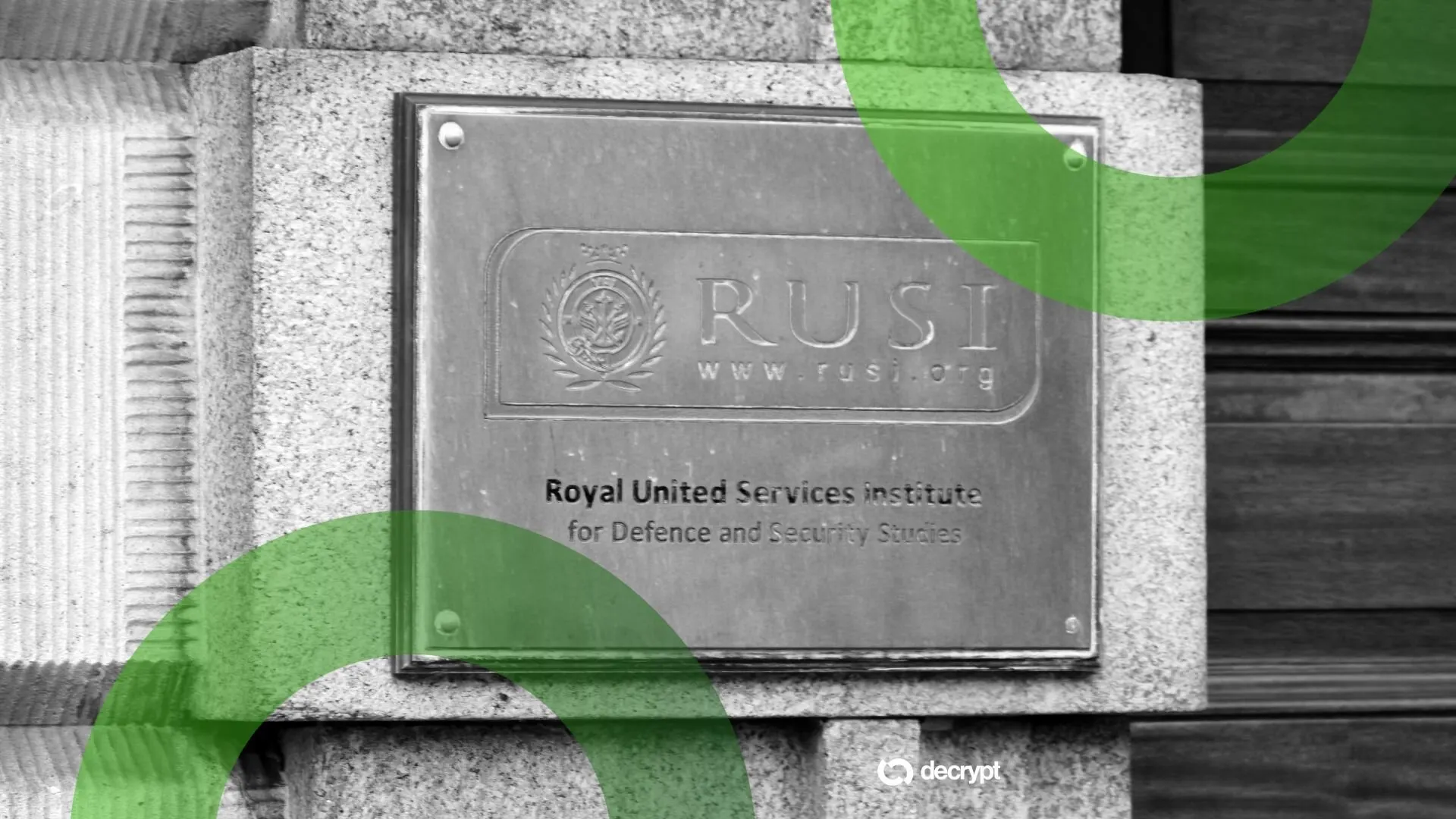
    In a paper titled, ‘Privacy-Enhancing Technologies in the Crypto Industry,’ the London-based Royal United Services Institute (RUSI) highlighted a “need to balance compliance objectives” with the growing role of privacy-related protocols and platforms in the cryptocurrency sector.

    It observed that growing demand for privacy solutions currently derives from four legitimate sources. They include individuals and entities wanting to avoid targeting by hackers, privacy concerns in the face of AI-related data mining by companies; privacy concerns of cryptocurrency businesses; and reducing the risk that high-net-worth and/or prominent individuals will be targeted by criminals or authoritarian governments.

    Based on roundtable discussions convened by the UK Home Office and National Economic Crime Centre in July 2025, the report highlights several blockchain-based privacy technologies, including zero-knowledge proofs, confidential stablecoins and privacy pools.

    While acknowledging that illicit actors are naturally attracted to privacy tools and “succeed by taking advantage of innovation,” the paper reports that roundtable participants—which included industry players as well as regulators and enforcement agencies—made the point “several times” that there was a “need to not ban” privacy solutions.

    “The participants highlighted that banning the technology would result in illicit actors using unregulated services,” the report reads. “As a result, law enforcement would have fewer entities to reach out to and request information from, subsequently limiting options for further investigations.”

    Instead, the roundtable participants agreed on the value of expanding collaboration between officials and providers, and of using privacy-enhancing technologies to aid law enforcement practices and “improve detection of illicit activity.”

    Crypto privacy and compliance

    The report’s author, RUSI Associate Fellow Allison Owen, told Decrypt that it’s important for policymakers and enforcement agencies to work together with developers to ensure that privacy solutions integrate compliance features.

    “From the roundtable, it is clear that the participating companies that integrate PETs and compliance features are willing to engage with the public sector,” she said.

    While accepting that there will always be individuals with bad intentions, Owen emphasized that this shouldn’t “cloud the possibility of responsible actors using the technology to benefit society.”

    Indeed, the report focuses almost exclusively on the legitimate uses of privacy solutions, highlighting their utility in the context of increasingly frequent “$5 wrench attacks,” which in 2025 claimed record losses of $41 million.

    It also discusses other drivers of usage, such as cryptocurrency firms wanting to keep crypto-based salaries confidential, as well as wanting to keep their business practices and fund flows private from competitors.

    Based on such practices, the roundtable’s participants generally believed that privacy-enhancing mechanisms “will continue to grow,” with zero-knowledge proofs in particular being integrated increasingly into business practices by the end of this year.

    However, despite this optimism Owen herself told Decrypt that “extensive” collaboration between developers and the public sector needs to happen before trust in crypto-related privacy solutions reaches a critical mass.

    “Building trust through the integration of compliance features will ultimately expand the use of the technology,” she said. “The roundtable reflects a step forward in driving these discussions around how to balance compliance and user privacy.”

    Daily Debrief Newsletter

    Start every day with the top news stories right now, plus original features, a podcast, videos and more.

  • Amazon, Nvidia Flood OpenAI With Cash as ChatGPT Maker’s Valuation Hits $730 Billion

    Amazon, Nvidia Flood OpenAI With Cash as ChatGPT Maker’s Valuation Hits $730 Billion

    In brief

    • OpenAI announced $110 million in new investment at a $730 billion pre-money valuation.
    • Amazon, Nvidia, and SoftBank invested in the firm, with Amazon and Nvidia also agreeing to strategic partnerships.
    • Microsoft and OpenAI said the addition of new investors and partnerships doesn’t change their deal at all.

    OpenAI has announced $110 billion in new investment at a $730 billion pre-money valuation, securing $30 billion each from Nvidia and SoftBank, with Amazon adding $50 billion to the pot. The ChatGPT maker has also revealed broader strategic alliances with Amazon and Nvidia.

    ChatGPT now has over 900 million weekly active users and 50 million consumer subscribers, OpenAI said in a Friday blog post. The firm added that its Codex AI coding tool has seen its weekly user base more than triple to 1.6 million since the start of the year, suggesting a strong growth area as more people use AI for coding purposes.

    The Amazon partnership focuses on accelerating AI adoption for enterprises and startups, while the expanded Nvidia collaboration includes dedicated inference and training capacity on next-gen hardware systems.

    “We’re pushing the frontier across infrastructure, research, and products to make AI more capable, reliable, and broadly useful,” said OpenAI CEO Sam Altman, in a statement.

    “SoftBank, Nvidia, and Amazon are long-term partners who share our ambition to turn real scientific progress into systems that deliver meaningful benefits for people at global scale,” he added. “Building AI that works for everyone will require deep collaboration across the stack, and we’re excited to do this together.”

    OpenAI said that additional investors are expected in the round, with only the three backers and $110 million investment announced so far on Friday. The raise also boosts the OpenAI Foundation’s stake in the company to over $180 billion, expanding its philanthropic capacity in areas like health and AI resilience.

    “Artificial intelligence is the most consequential technology of our time, and OpenAI is at the forefront,” said Nvidia founder and CEO Jensen Huang, in a statement. “We have been privileged to partner with OpenAI since its earliest days, as it delivered one breakthrough after another. Together, we will continue to push the frontier—building the infrastructure for the age of AI and scaling its benefits to serve industries and societies worldwide.”

    In a separate joint statement, OpenAI and Microsoft said that the addition of new investors doesn’t impact their existing relationship.

    “Microsoft and OpenAI continue to work closely across research, engineering, and product development, building on years of deep collaboration and shared success,” they wrote. “Microsoft maintains its exclusive license and access to intellectual property across OpenAI models and products. Collaborations like the partnership between OpenAI and Amazon were always contemplated under our agreements and Microsoft is excited to see what they build together.”

    Daily Debrief Newsletter

    Start every day with the top news stories right now, plus original features, a podcast, videos and more.