Tag: ABC News

  • Plasma donation company Grifols begins phased reopening of centres after 2-month hiatus

    Plasma donation company Grifols begins phased reopening of centres after 2-month hiatus

    Text to Speech Icon

    Listen to this article

    Estimated 3 minutes

    The audio version of this article is generated by AI-based technology. Mispronunciations can occur. We are working with our partners to continually review and improve the results.

    Grifols is resuming operations at its Canadian clinics after temporarily shutting down all paid plasma collection in mid-August amid public scrutiny.

    The for-profit plasma donation company said in a news release Tuesday that it’s beginning a phased-in resumption of collection activities at its 17 centres, starting immediately with two locations — one on Innovation Drive in Winnipeg and the other on Currents Drive in Edmonton.

    Those locations will reopen with a reduced number of daily donor appointments, which will progressively increase, the release said.

    The decision to reopen is begin done “in alignment with Health Canada,” the release said, and additional locations across the network will gradually reopen as well.

    The plasma collected by Grifols is used to manufacture plasma-derived therapies, which are then administered to patients, Health Canada said. It is not used directly for transfusion into patients.

    Grifols paused operations in Canada on Aug. 14, the same day Health Canada issued a non-compliance rating at its Taylor Avenue clinic in Winnipeg.

    Health Canada said in August that the Taylor Avenue clinic “did not carry out sufficient corrective and preventive actions when required.” It also said some operating procedures were not always followed and that records of “staff qualifications, training or evaluation of their competency” were not always sufficient.

    The licence for the Taylor Avenue site in Winnipeg remains suspended and the terms and conditions imposed on Grifols’ licence for its 16 other plasma collection sites will remain in place until Health Canada is satisfied that sustained compliance has been demonstrated, Health Canada said in a statement Tuesday that confirmed the two reopenings.

    Advocates had been calling on the federal government to crack down on the company after CBC News reported two people died, in October 2025 and January 2026, after donating plasma at different Grifols clinics in Winnipeg.

    A Health Canada inspection released under access to information laws found multiple issues with donor screening and supervision. The federal agency said six serious adverse reactions were reported at centres operated by Grifols since 2018.

    In its news release on Tuesday, Grifols said it has “strengthened operating procedures, documentation practices, employee training and supervision, staffing models, quality review processes and operational oversight” throughout its network ahead of the reopening.

    It has also assumed, as of Sept. 1, full operational control of Canadian Plasma Resources, the company that had managed most of Grifols’ donation centres. The move strengthens alignment across its Canadian operations, the release said.

    Health Canada said the reopening of the Winnipeg and Edmonton locations are being conducted under enhanced oversight.

    Health Canada has visited both locations to verify that corrective actions, staff training and operational controls are in place, the government agency said in its statement Tuesday. It will also continue to conduct scheduled and unannounced inspections to ensure ongoing compliance.

    Health Canada will also perform readiness assessments before any other reopenings.

    Canadian Blood Services, in its own statement on Tuesday, said Grifols has taken “prudent and effective steps” to strengthen its processes.

    The non-profit charitable organization also said it appreciates the “commitment and collaboration” of Grifols and Health Canada in helping build scale and capacity to meet the growing demand in Canada for immunoglobulins.
  • ‘Not out of the woods’: Family rallies around soldier badly burned in CFB Wainwright fire

    ‘Not out of the woods’: Family rallies around soldier badly burned in CFB Wainwright fire

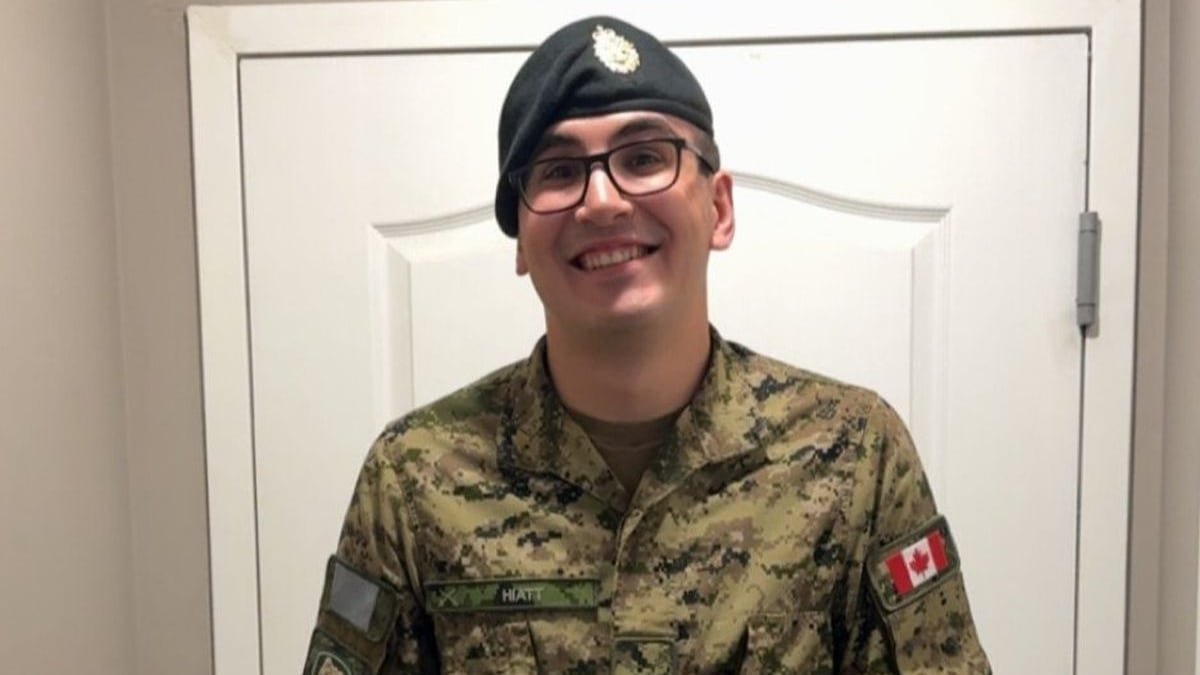
    Before he was airlifted to hospital and intubated, Cpl. Sean Hiatt — the second-youngest in a family of 12 — managed to call his mom and tell her he’d been injured in a training accident at CFB Wainwright.

    The 24-year-old was coherent at the time, according to his sister, and it gave the family hope. 

    Now they’re focused on his immediate care, and taking things 12 hours at a time.

    On Saturday afternoon, Hiatt suffered burns to about half of his body when wind gusts of up to 90 km/h pushed a grass fire one kilometre in less than a minute and onto a group of soldiers doing live-fire training.

    Four soldiers were killed and 39 were injured. Hospitals across the province took in the wounded, including University of Alberta Hospital in Edmonton where Hiatt’s medevac landed. 

    “He was, and still is, sedated and intubated, he was completely wrapped up, they didn’t know the degree at that point because they had to get him stable,” Hiatt’s sister Kelly Patterson said in an interview with CBC News. 

    “It is really rough…. It was a shock to see him like that.”

    Of the injured, 19 are in critical condition, Alberta Premier Danielle Smith said at a news conference on Sunday. 

    One of those is Hiatt, from Edson, Alta., about 200 kilometres west of Edmonton.

    One by one, family members began showing up at Hiatt’s bedside — brothers, a nephew, sisters and parents — to be with the guy they describe as “happy going”and “cheerful.”

    ‘He’s a fighter’

    Patterson says her brother “perked up” with every visit, breathing a little bit better and “looking a little brighter.”

    The road ahead is going to be long and Patterson says Hiatt is “not out of the woods.”

    Doctors are still concerned about lung damage and have yet to begin skin grafts. He faces weeks in the ICU and months longer in hospital. 

    The family is leaning on prayer and the knowledge that Hiatt is “a fighter.”

    “He got out of there so he’s going to make it,” said Patterson. 

    ‘The whole community is feeling this’

    Meanwhile, 200 kilometres from Hiatt’s hospital bed, he and the other injured and fallen soldiers are on the minds of folks in Wainwright, a town deeply connected to its base. 

    “Everyone’s really connected, everyone really cares for each other,” said Grade 12 student Rylan Pow. “It really was heartbreaking honestly.”

    A group of teenagers lay flowers at a clock memorial.

    Grade 12 students showed up Monday morning with bouquets of flowers to pay their respects to those who were injured and killed in Saturday’s fire at CFB Wainwright. (Gilbert Rowan/CBC)

    On Monday morning, with their principal’s blessing, Pow and his entire class from Blessed Sacrament School showed up with their teacher to lay flowers at the town’s memorial clock cenotaph.

    Teacher Janae Wildboer said she was in a panic when she learned of the fatal fire and wondered what she could do to help. 

    “Our school just wanted to do something to honour those who have lost their lives,” said Wildboer. “The whole community is feeling this; it’s heavy and we’re just now supporting where we can.” 

    ‘Still kind of in shock’

    Down the street, outside of the Royal Canadian Legion Branch 29, which was set up Monday as a referendum polling station, David Campbell finished voting and then turned his mind back to the tragedy.

    “Everyone’s still kind of in shock,” said Campbell, who has lived in the area for more than 40 years. 

    “The base is very important, a lot of people work here. We’re farmers and we have cattle in the community pasture, we work with the military all the time, they live in town here, a lot of them.

    “They’re part of the community, we know so many of them. Their kids are in hockey, my grandkids are playing hockey with a lot of the kids. It’s very devastating.”

    Smoke in the air

    As the winds changed direction Sunday night and into Monday, the smell of smoke drifted in and out of the community. Fire Chief Aime Smyl warned that could continue in the days ahead. 

    The fire is still burning but considered contained, said Smyl in his social media post Monday afternoon. It’s not expected to breach the fire guard.

    A man in a suit lays flowers at a memorial.

    Local MP and Conservative Leader Pierre Poilievre attended the Wainwright cenotaph with flowers Monday morning. (Josh McLean/CBC News)

    Smyl also thanked the seven other fire services that stepped up to help with Saturday’s grassfire response.

    “I am also humbled by the number of departments that reached out to help,” he wrote. 

    By Monday morning, some of Smyl’s firefighters had been awake for three days, according to Local MP and Conservative Leader Pierre Poilievre, who showed up at the cenotaph with flowers after a meeting with the fire chief.

    Poilievre thanked the first responders, “who ran towards and not away from the fire” to help. 

    “It has been a phenomenal show of the best of Canada here in Wainwright.”

  • Montreal borough tightens rules on e-scooters as youth injuries skyrocket

    Montreal borough tightens rules on e-scooters as youth injuries skyrocket

    Text to Speech Icon

    Listen to this article

    Estimated 4 minutes

    The audio version of this article is generated by AI-based technology. Mispronunciations can occur. We are working with our partners to continually review and improve the results.

    The Montreal borough of Saint-Laurent has adopted a new bylaw banning electric scooters and other motorized personal mobility devices in public areas that fall within its jurisdiction.

    That includes city parks, trails and sidewalks.

    Vana Nazarian, a city councillor for the borough, says the bylaw was adopted after a series of incidents and near misses over the summer, as the popularity of the devices continues to grow.

    “We’re not banning them, but we want to make sure that with the speeds that these scooters have, they stay more on places where vulnerable populations won’t be at risk,” she told CBC’s Let’s Go.

    Nazarian added the borough is home to many young families and seniors, and they should be able to use parks and trails without being afraid or at risk of a collision.

    She’s hopeful the bylaw will force those who ride e-scooters or e-unicycles and other motorized transportation devices to use them more responsibly.

    The move comes just a little over two months after Quebec decided to extend its e-scooter pilot project, even as doctors warned the rules leave children at risk.

    The original pilot, introduced in 2023, allowed for anyone 14 and older to use the devices on roads where the maximum speed limit is less than 50 km/h, as well as on bike paths. Helmets are required at all times.

    Those rules will still apply along with new restrictions that came into effect on July 18, including a 25 km/h speed limit for e-scooters. Exceeding that limit can result in a $200 fine by police.

    14 times more injuries than in 2023

    Deborah Friedman, the trauma director at the Montreal Children’s Hospital, says that since the pilot came into effect, the number of e-scooter injuries have skyrocketed.

    “We have seen 14 times the number of traumatic injuries related to e-scooters than we did in 2023 when it was first implemented,” Friedman said.

    In 2025, there were about 80 cases in total. So far this year, that number is 112.

    Friedman, who is also the director of the Canadian Hospitals Injury Reporting and Prevention Program (CHIRPP), said the severity of injuries is also increasing, with close to 20 per cent of the cases requiring hospitalization.

    “We’re not talking about little cuts and bruises,” she said.

    The injuries include traumatic brain injuries, multiple fractures to the face, lots of facial dental trauma, complicated fractures of limbs and abdominal trauma.

    Of particular concern is the age of the victims. Friedman says close to 60 per cent of the children that present at the trauma centre are under 14 years old.

    “That’s a problem,” she said.

    WATCH | E-scooters spotted on Quebec highway:

    E-scooters spotted on Quebec highway reignite calls for stricter regulations

    A video of two people riding e-scooters on Highway 125 South in Laval, Que., is prompting safety concerns and calls for stricter rules.

    Stronger regulations, better enforcement needed

    Friedman commended the borough of Saint-Laurent for its new bylaw and encourages other municipalities to follow suit, but she says more needs to be done at the provincial and federal levels.

    Doctors across Canada have been advocating for stronger regulations and better enforcement of the rules.

    Friedman said that in Quebec, they’d like to see the minimum age to use an e-scooter increased to 16, as well as a Class 6D licence made mandatory — the same licence needed to operate a vehicle like a moped.

    Friedman says younger children don’t have the judgment, skill level, height or control to navigate e-scooters on the road, all while following the rules.

    The type of helmets used could also make a difference.

    “You need to have something that’s going to protect the face as well,” Friedman said, saying many injuries they see are a result of children “faceplanting and ending up with profound trauma.”

    Friedman says e-scooter manufacturers also bear some responsibility with the labelling of their products and how they are sometimes marketed as though they are toys.

    With the holidays around the corner, this type of issue is of particular concern, Friedman says.

    “So we’re trying to work at different levels to try to sensitize the public and encourage policymakers to hear our concerns and to base decisions on real data,” she said.

    “Each number that I mentioned is attached to a child, which is attached to a family, which is attached to a community.”

  • Kenya confirms 8th case of Ebola, all infections linked back to 1st patient who died: Health officials

    Kenya health officials have reported a new case of Ebola, bringing the total number of confirmed infections to eight.

    All the cases appear to be linked to the original patient, a Kenyan man who had been living in the Democratic Republic of the Congo (DRC) and traveled to Nairobi. That man subsequently died on Oct. 5, according to authorities.

    Officials said on Sunday that the latest confirmed case is a 49-year-old patient attendant who was already in quarantine.

    The other six cases that have been detected are in isolation and there is currently no sign of community spread, according to Kenya’s Ministry of Health. The risk to the public remains low, it noted.

    Over the weekend, the Office of the Director General for Health in Kenya issued a press release stating that of 130 contacts of the original patient who have been identified, 128 have been traced and are in quarantine.

    People disinfect their hands as a Kenyan health worker checks the temperatures of travelers crossing from Uganda to Kenya as part of measures to contain the spread of Ebola virus, in Busia, Kenya, Oct. 15, 2026.

    Andrew Kasuku/AP Photo

    “Intensive efforts are ongoing to trace and quarantine the two remaining contacts,” the press release said. “In addition, new cases among quarantined contacts are possible until their 21[-day] monitoring period ends.”

    Aden Duale, Kenya’s cabinet secretary of health, said earlier this month that the patient who was Kenya’s first Ebola case had been living in the DRC for the last seven years.

    The Ministry of Health told ABC News at the time that the patient was 40 years old and traveled from Buta, a city in the northwestern DRC.

    Duale said the patient fell ill about a month ago and was treated in several hospitals while in the DRC. He traveled from the DRC to Kampala, the capital of neighboring Uganda, by road, then boarded a Jambo Jet flight, arriving in Kenya’s capital Nairobi on Saturday, Oct. 3.

    Duale said the patient had symptoms including fever, chills, fatigue, weakness, muscle pain, sore throat and painful swallowing. Doctors collected a sample from the patient, which was positive for Ebola and specifically Bundibugyo virus, a rare variant of Ebola behind the current DRC outbreak for which there are no vaccines and no treatments.

    The patient was given supportive treatment but died on Monday, Oct. 5, according to Duale.

    Dr. Patrick Amoth, Kenya’s director general for health, said during the briefing that officials believe the patient knew he was ill and reached out to friends and relatives to transport him from the airport to the hospital directly.

    In a press release on Monday, the humanitarian NGO International Rescue Committee (IRC) said it is ramping up its Ebola response in Kenya, partnering with the country’s Ministry of Health to support screenings at airports and border crossings, as well as provide personal protective equipment to clinics and hospitals.

    ‘Kenya has a chance to stay ahead of an Ebola outbreak in the country,” Irene Bosire, IRC deputy director of programs in Kenya, said in a statement. “We must act fast, stopping any potential spread here and at its source in eastern DRC.”

    It comes as the nearby DRC continues to experience its worst Ebola outbreak on record. As of Oct. 12, 9,144 cases of Ebola and 4,410 deaths have been confirmed, according to the Congo Ministry of Health, with 899 patients in isolation or hospitalized.

    The case fatality rate currently stands at 48.2% while contact tracing stands at 77.6%, an improvement from the earlier days of the outbreak.

  • Guelph psychotherapist urges Ontario to fund long-term supportive therapy with OHIP

    Guelph psychotherapist urges Ontario to fund long-term supportive therapy with OHIP

    Text to Speech Icon

    Listen to this article

    Estimated 3 minutes

    The audio version of this article is generated by AI-based technology. Mispronunciations can occur. We are working with our partners to continually review and improve the results.

    A registered psychotherapist in Guelph has launched a petition asking the province to have long-term supportive psychotherapy covered by the Ontario Health Insurance Plan (OHIP).

    Marinela Trickett, also clinical director of Trickett Psychotherapy, said her clinic receives daily calls from people who aren’t able to access long-term support.

    “Currently, more people than not wait to reach a crisis point in terms of getting their mental health taken care of, in terms of reaching some support, and when that happens, they generally go to hospitals, to emergency rooms, and they do not get their needs met there,” Trickett told CBC Kitchener-Waterloo’s The Morning Edition host Craig Norris.

    Psychotherapy is covered by OHIP only when a medical doctor or a psychiatrist, who is a medical doctor, delivers the process of psychotherapy.

    This coverage excludes private practices with registered psychotherapists, and some people may not be covered by workplace benefits.

    Receiving mental health treatment from a psychotherapist can cost over $100 a session out of pocket. Trickett said the average cost per individual session is $150 to $180.

    With the help of Guelph MPP Mike Schreiner, Ontario’s Green Party leader, Trickett is bringing a petition to Queen’s Park in November that asks the province to:

    • Recognize psychotherapy and evidence-based mental health services as medically necessary.
    • Expand publicly insured coverage to psychotherapy delivered by qualified regulated professionals.
    • Establish a Provincial Mental Health Coverage Framework for equitable access.

    The goal is to reach 5,000 signatures.

    Ontario cites free therapy program

    CBC News reached out to Ontario’s minister of health about why psychotherapy in private practice isn’t funded by OHIP. A spokesperson said they’ve launched the Ontario Structured Psychotherapy program (OSP), which offers free cognitive behavioural therapy for people aged 18 and over.

    “Additionally, through the Roadmap to Wellness, we are investing $3.8 billion over 10 years to build a modern, world-class mental health and addictions system in every corner of the province,” the spokesperson said.

    The funding supports 32 new Youth Wellness Hubs in Ontario for youth aged 12 to 25, and expands the Mobile Crisis Response Team and Rapid Access Addiction Medicine clinics.

    Trickett said the OSP program only covers people who are suffering with anxiety and depression with “specific severity and is limited in number of sessions that are delivered.”

    “Well, in Ontario, we are over 16 million people and not every single struggle has to do with anxiety and depression.”

    According to a report from the Canadian Institute for Health Information (CIHI), in 2024, 41 per cent of adults in Canada with diagnosed mental health conditions were found to have their needs partially or completely unmet.

    In Ontario, CIHI found, 40 per cent of males and 35 per cent of females had a mental health disorder with an unmet need for mental health care.

  • Man who lost legs to MS warming heads and hearts by knitting tuques on custom-made cot

    Man who lost legs to MS warming heads and hearts by knitting tuques on custom-made cot

    Text to Speech Icon

    Listen to this article

    Estimated 3 minutes

    The audio version of this article is generated by AI-based technology. Mispronunciations can occur. We are working with our partners to continually review and improve the results.

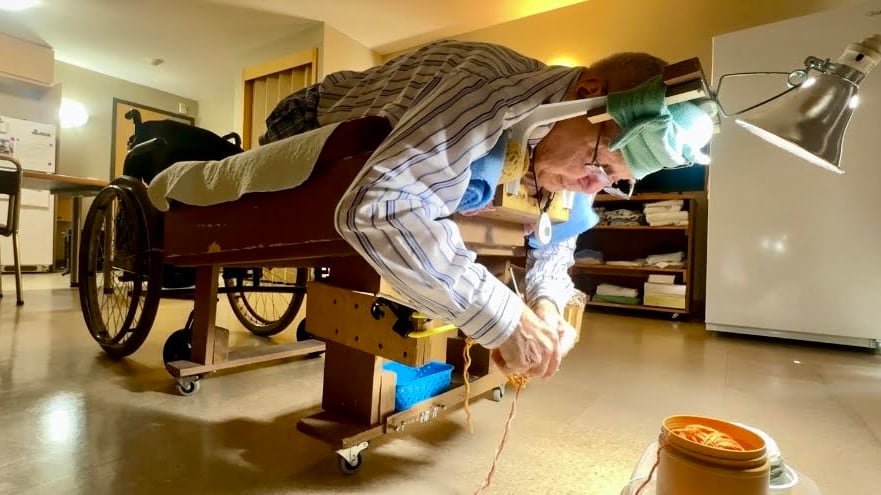
    Before Leonard Foidart starts knitting, he lies face down on his custom-made cot, reaches down to adjust the light, grabs two knitting needles and selects the wool he feels will be just right.

    Foidart, 84, loves to knit but is unable to sit for more than a few hours at a time. He lost his legs in the early 1990s due to complications from multiple sclerosis.

    “The bones don’t like me sitting on them too much,” Foidart said from his home in Notre-Dame-de-Lourdes, Man., about 110 kilometres southwest of Winnipeg.

    He said he has knitted and donated more than 1,000 tuques to numerous charities in the last five years, including Winnipeg’s Siloam Mission and Central Plains Cancer Services in Portage la Prairie. Much of the wool is donated.

    Foidart was diagnosed with bone and prostate cancer a few years ago. His wife, Tharsile, died last year after suffering a stroke.

    “She taught me how to knit. So, every time I knit a tuque, she is right here beside me. In the 20 years, we never had a single argument. We had a good life,” he said as his voice broke with emotion.

    That’s why, Foidart said, he refuses to give up knitting. After his cancer diagnosis, Foidart decided to build a cot. It sits on four wheels and has a comfortable body cushion, and a leather headband so he can rest his head.

    A man wearing glasses is smiling at the camera while holding a basket that has several balls of wool.

    Foidart shows off one of many baskets of donated wool. (Michele McDougall/CBC)

    “I was a letter carrier for 19 years, and in my spare time I did carpentry work. And because I’ve been in this chair for 35 years, whenever a problem came along, this guy solved it,” Foidart said as he tapped the side of his head.

    He keeps meticulous records of each donation, with photos of labelled bags showing the date and number of tuques.

    “You’re here to help people, and that’s my goal, to do the best I can to help people wherever they are and whatever shape they can be in,” Foidart said.

    His most recent donation of 200 tuques was to the Portage la Prairie Community Revitalization Corporation last week. The corporation supports and advocates for vulnerable people in the community.

    Two ladies wearing glasses are smiling at the camera, both are holding knitted colourful handmade toques.

    Kimberly Sharp, left, and Tawnee Kowerchuk from the Portage la Prairie Community Revitalization Corporation hold some of the 200 tuques Foidart delivered last week. (Michele McDougall/CBC)

    Co-ordinator Tawnee Kowerchuk said they got an email from Foidart’s niece preparing them for delivery but she was shocked when he delivered the tuques himself.

    “It was really special. When he showed up and we saw exactly what we were dealing with and how many, we were totally beside ourselves. It was just amazing,” Kowerchuk said.

    “And he was adamant they go to people who are in need. And they will.”

    Foidart is already working on the next batch of tuques. He said he doesn’t set a goal of how many he wants to make in a month or a year but never strays from his schedule.

    “I do the best that I can do today, and maybe tomorrow, even better. And mistakes now are very rare. After 1,200 tuques, they better be rare,” he said as he laughed.

    WATCH | Manitoba senior donating tuques he makes on special cot:

    Manitoba senior with knack for knitting uses custom-made cot

    Leonard Foidart, 84, of Notre-Dame-de-Lourdes, Man., has numerous health challenges, including the loss of both legs, but loves to knit. He built a cot so he could create more than 1,000 tuques to donate.

  • What to know about changes to Medicare plans as open enrollment begins

    Open enrollment for Medicare, the nationwide federal health insurance program primarily for those aged 65 and older, has started.

    Many enrollees in privately run Medicare Advantage plans may need to find new plans as insurers scale back their offerings.

    Additionally, costs may increase for prescription drugs after the Trump administration ended a temporary subsidy program.

    Here’s what you need to know about some of the biggest changes coming this year before open enrollment ends on Dec. 7.

    Fewer Medicare Advantage options

    During Medicare’s open enrollment period, enrollees can choose between traditional Medicare and Medicare Advantage plans for the upcoming year.

    As the Trump administration vows to lower drug prices for Americans, the Centers for Medicare & Medicaid Services contends that its 2027 prescription drug prices will remain stable and the average prescription drug premiums in Medicare Advantage are projected to plummet more than 30%. 

    About 35 million people are enrolled in Medicare Advantage, a Medicare-approved plan run by private insurance companies. The plan must follow rules set by Medicare, such as limiting out-of-pocket expenses and covering all services covered by traditional Medicare.

    A KFF analysis shows that the average Medicare beneficiary can choose from among 35 Medicare Advantage plans in 2027 compared to 39 plans in 2026.

    An aerial of the Centers for Medicare & Medicaid Services building on March 19, 2025 in Woodlawn, Maryland.

    Kayla Bartkowski/Getty Images

    This indicates that insurers are either scaling back or removing Medicare Advantage plans completely and many Medicare beneficiaries will need to find new plans for 2027.

    A separate KFF analysis earlier this month found that some enrollees will be losing their Medicare Advantage prescription drug plans, which are offered at the county level.

    About 1% of Medicare Advantage beneficiaries will have no prescription drug plan available during general enrollment, the analysis found. This includes beneficiaries in 193 counties, up from 123 counties in 2026.

    Elimination of Part D subsidies

    Earlier this year, the Trump administration announced it was ending a key temporary health insurance subsidy program aimed at capping prescription drug plan premiums for seniors.

    Medicare Part D — the government health insurance program’s prescription drug benefit — is used by tens of millions of older or disabled beneficiaries.

    At the time, Dr. Mehmet Oz, administrator of the Centers for Medicare & Medicaid Services, claimed the program, known as the Part D Premium Stabilization Demonstration, benefited corporate insurance companies.

    The program’s subsidies are set to expire at the end of the year. That move will likely result in higher prescription costs and increase premiums for about half of recipients, an administration official told ABC News.

    “Without these extra subsidies in place for 2027, some Part D stand-alone drug plan enrollees could face a larger premium increase for drug coverage next year than in recent years, though plan-specific premium amounts are not yet known,” Juliette Cubanski, vice president and director of the program on Medicare policy at KFF, said in a statement.

    Stock photo of a Medicare card and stethoscope.

    Dny59/STOCK PHOTO/Getty Images

    A March 2026 report from the Medicare Payment Advisory Commission found subsidies provided under the program reduced the average monthly prescription drug plan premium by $26 in 2025 and $16 in 2026.

    “The changes in the subsidies for Medicare Part D are pretty profound and are going to have a pretty big effect,” Timothy McBride, the Bernard Becker Professor in the School of Public Health at Washington University in St. Louis and a health policy analyst, told ABC News.

    In a post on X in July, Oz claimed that most Medicare recipients will not see their premiums go up by no more than $10 and some may see even lower premiums.

    “Every Medicare beneficiary still has access to low-cost plans, and we will continue to lower prescription drug prices for every American patient,” Oz wrote.

    Other changes coming to Part D include the cap on annual out-of-pocket expenses for Medicare Part D drugs. The standard deductible, for example, will increase from $615 to $700.

    “I think people need to be paying attention to not just the premium, but also things like the deductible and the caps because that could significantly impact their out-of-pocket costs,” McBride said.

    ABC News’ Arthur Jones II and Michelle Stoddart contributed to this report.

  • 1 in 4 Ebola deaths are children in Democratic Republic of Congo’s worst outbreak

    1 in 4 Ebola deaths are children in Democratic Republic of Congo’s worst outbreak

    Outside of a treatment centre for Ebola in a northeastern corner of the Democratic Republic of Congo, as the country battles its worst outbreak on record, Neema Nyaloka bounces a baby on her lap. 

    Nyaloka survived Ebola herself. Now, she works with UNICEF to take care of the droves of children isolating from their parents who are being treated for it. 

    UNICEF is operating 12 other child-care centres next to treatment centres full of Ebola patients. Some kids are waiting for their parents to recover, but others have been left stranded after family members passed away. 

    “We have children that are completely orphans, so they lost both parents,” Lucia Elmi, director of global emergency programs at UNICEF, said last week.  

    It’s estimated that at least 1,900 children have been separated from their caregivers because of Ebola. 

    It’s just one more way that children are bearing the brunt of an outbreak which has spread to at least seven provinces in the Democratic Republic of Congo, and outstripped the 2018-2020 outbreak to become the largest and deadliest Ebola outbreak in Congo’s history.

    As of Oct. 15, more than 9,200 cases have been confirmed, while deaths have surpassed 4,400, according to the latest numbers from the D.R.C.’s public health institute.  

    Just over a quarter of those deaths are children. Although most cases are among adults, children have a much higher fatality rate, at 60 per cent compared to 40 per cent for adults, the World Health Organization (WHO) estimates. 

    A young child carries a toddler, swaddled in a blanket, on her back as they walk past large posters on a wall with illustrations and messages about protection from an Ebola virus outbreak.

    Children walk by posters warning people about Ebola on June 24 in Goma, Democratic Republic of Congo. (Daniel Buuma/Getty Images)

    “Children are really impacted by Ebola on so many levels,” Amy Mina, a project leader from Canada with Save the Children, told CBC News. 

    “Sixty-one per cent of the children who died of Ebola are under the age of five.”

    ‘Fighting for your life’

    Children in the region already face high levels of malnutrition and displacement due to ongoing armed conflict. 

    The Ituri province in northeastern Congo, where Mina works, is where the outbreak began, and is still the heaviest-hit region, accounting for 73 per cent of cases.

    Save the Children works with schools and communities to provide supplies and training for staff to recognize symptoms among their students. Every morning since schools opened, the temperatures of every teacher and student are checked as part of this work.

    But attendance has dropped, Mina says, because many parents worry schools could be transmission sites. They’re also avoiding seeking treatment at the hospital for their children for other health issues out of fear of Ebola. 

    “Children aren’t only dying of Ebola,” Mina said. “We are seeing a drop in the number of families and children visiting health centres … and children die of malaria, and dysentery and respiratory diseases.”

    Cholera is also seeing a rise in the west of the country, with more than 51,000 suspected cases reported since the beginning of 2026. 

    A teenage girl, wearing a white and purple long-sleeve top and light blue skirt, runs water onto her hand from a spigot in a green plastic barrel that has a white label on it with a red logo and the words "Save the Children" in black text.

    A 13-year-old student washes her hands outside her school in the Democratic Republic of Congo. Save the Children is working with schools during the Ebola outbreak, supplying infection-prevention kits and training teachers to counter misinformation about the disease. (Submitted/Save the Children)

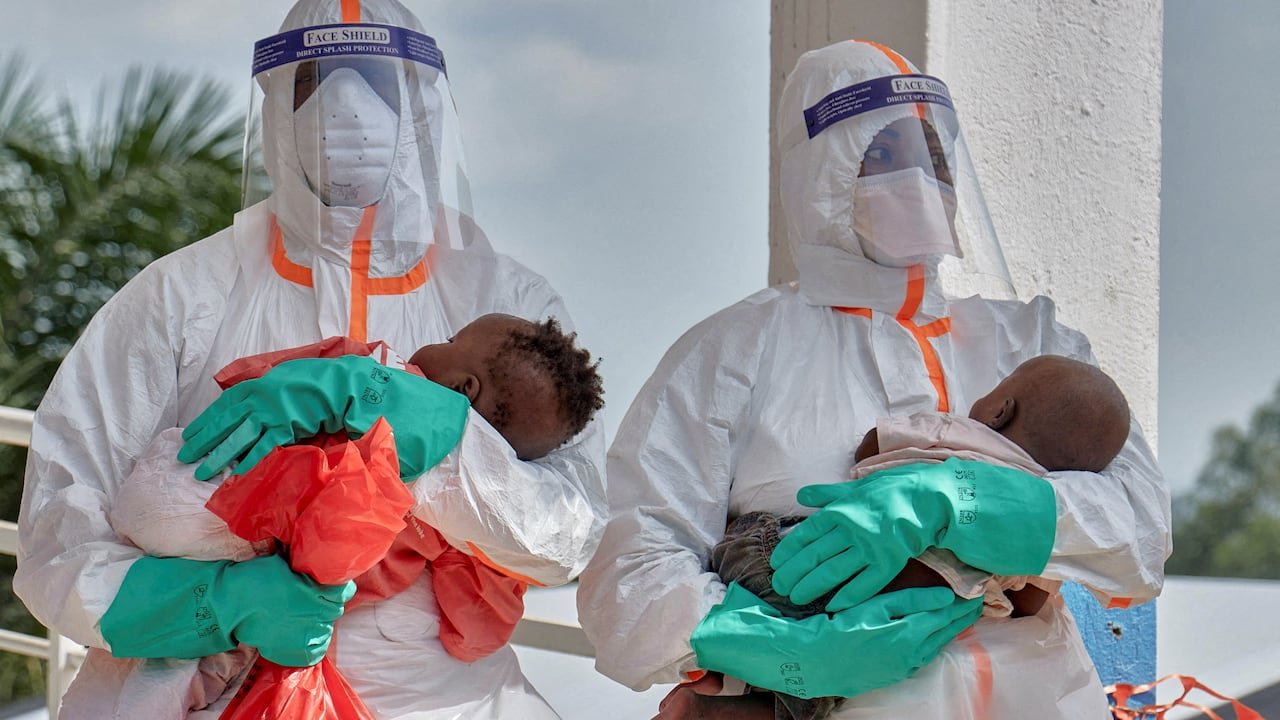
    When children contract Ebola, they have to be entirely isolated to combat the disease just like adults are, interacting only with caretakers dressed head to toe in fully protective gear, which can be terrifying for kids, experts say. 

    Children are already vulnerable to viruses, with fewer reserves to fight off loss of fluids from illness, says Dr. Joanne Liu, director of the Pandemic and Emergency Readiness Lab at the School of Population and Global Health at McGill University. Liu, a pediatric emergency physician, led emergency responses during the 2014-2016 Ebola outbreak in west Africa.

    “Can you imagine fighting for your life on your own without your parents?” she said. “We know that that kind of isolation … creates emotional stress, agitation and irritability in the children.”

    Fractured response

    Amid the surge in Ebola, pregnant women are also avoiding clinics, missing prenatal care and choosing to deliver their babies at home. 

    The UN says, compared to last year, maternal deaths in the region have nearly doubled.

    And most deaths from Ebola are happening outside of treatment centres, meaning medical workers can’t fully track the chains of transmission to stop them. 

    “They’re dying at home, which represents a huge opportunity for more transmission because they’re being cared for by their family, their community members,” said Stephanie Hoffmann, a project co-ordinator with Doctors Without Borders in North Kivu, D.R.C.

    Part of the reason this has gotten so “out of control,” she said, is because of the gutting of the U.S. Agency for International Development (USAID), a foreign aid program dismantled in 2025 due to alleged inefficiency and wasteful spending, according to the Trump administration. Researchers have estimated that the shuttering of services has already caused the deaths of hundreds of thousands of people worldwide. 

    WATCH | Ebola outbreak the deadliest in Congo’s history:

    Ebola outbreak now deadliest in Congo’s history

    The Ebola outbreak in the Democratic Republic of Congo is officially the deadliest in the country’s history, and health officials worry the crisis will only get worse when children return to school.

    When USAID was operating in the region, cases of Ebola were detected earlier on, Hoffmann said, allowing for tracking and isolating. But with less funding and support, cases had already spread dangerously far by the time the outbreak was official. 

    “I can’t say that with the current response, there’s going to be an end in sight.”

    The U.S. announced Friday that it had struck a new deal to supply some of the world’s poorest nations with maternal and child health supplies, including Congo, through UNICEF. 

    Rare strain has no treatment

    The current outbreak is caused by the Bundibugyo strain — a rare strain of Ebola for which there is no approved treatment or vaccine, although clinical trials are underway.

    Congo’s deadly Ebola surge is second only to the 2014-2016 outbreak in Guinea, Liberia and Sierra Leone, which killed more than 11,000 people. 

    Two health workers, clad in light blue protective wear with white plastic hoods over their heads and googles on their faces, carry a child-size brown coffin along a path through tall green grass and bushes.

    Two volunteers wearing personal protective equipment carry the coffin of a three-year-old child, presumed to have died of Ebola virus disease, in Bunia, D.R.C., on June 11. (Benediction Murhabazi/AFP/Getty Images)

    And it’s affecting other regions as well. So far, two people have died of the virus in neighbouring Uganda, which declared itself Ebola free in August. 

    Three cases in Kenya are linked to Congo’s outbreak — authorities confirmed the third patient on Friday, adding that she is a close relative of the first and second cases. The first case was a Kenyan man who died in early October in Kenya after returning from travelling in Congo. 

    Aid groups say while more treatment centres and funding are badly needed to address the health needs in the Democratic Republic of Congo, so is building trust and education.

    “There’s a lot of mistrust about the response in general,” Hoffmann said. “People have a lot of mistrust and a lot of fear about how they’ll be treated in a treatment centre. There is a lack of education and awareness about what happens to the body when you have Ebola, what happens in a treatment centre.”

    It’s another battle health-care workers on the ground are fighting, as they desperately try to save lives. 

  • Could this 93-year-old sprinter’s muscles hold clues to healthy aging? Scientists think so

    Could this 93-year-old sprinter’s muscles hold clues to healthy aging? Scientists think so

    At 93, Emma Maria Mazzenga still gets the jitters before a race.

    “On race day, I’m very tense,” she said. “People ask to interview me, and I tell them: Don’t come near me until I’ve run.”

    Over the last four decades, Mazzenga has won 11 world titles, 31 European championships and 115 Italian races. She currently holds the 200-metre world record in the women’s over-90 category: 50.33 seconds, set in 2024, when she was 91.

    Now she is giving scientists a rare look at just how much of the physical decline we associate with aging may not actually be inevitable.

    Mazzenga ran as a university student in Padua, in northern Italy. She then stopped for three decades while she taught high school biology and raised two children, largely on her own after her husband died.

    In 1986, when she was 53, the president of her old university running club rounded up former athletes for the growing field of masters competitions, for those over age 35.

    “One by one, my friends quit,” she said. “I kept going.”

    A closeup shot of a membership card, being held by an older woman in sunglasses and a blue athletic shirt.

    In this 2024 file photo, a then-90-year-old Mazzenga shows her membership card for the Italian Athletics Federation, ahead of a race in San Biagio di Callalta, Italy. It shows her birthdate: Aug. 1, 1933. (Remo Casilli/Reuters)

    She still trains three times a week, mostly short repeats of 50 to 200 metres. Slow jogging bores her. 

    What drives her isn’t winning, Mazzenga said. In Italy, she has no rivals in her age category. “I come first because I have to. I’m the only one,” she said. “I can’t get any emotion out of that.”

    So she races the clock instead. “If I win with a mediocre time, it gives me no satisfaction.”

    Her proudest moment is still her first world title, the 400-metre W75 race at the World Masters Athletics Championships in Sacramento, Calif., won in 2011.

    “There were just a handful of us Italians. I found myself alone on the podium,” Mazzenga recalled.

    WATCH | Watch Mazzenga compete in 100m race in Florence, Italy, last month:

    Watch Emma Mazzenga, 93, compete in 100-metre race

    Italian sprinter Emma Mazzenga, 93, competes in a women’s 100-metre race in Florence, Italy, in September. Mazzenga is an accomplished runner whose athletic performance is providing new insights into human aging.

    From VO2 to muscle fibres

    But eventually, her performances drew a different audience: Scientists. 

    Two years ago, Antonio La Torre, a scientist at the University of Milan and technical director of Italy’s athletic federation, tipped off two researchers who were studying how the body ages.

    “We were told there was this woman who was able to run 200 metres in a very short time,” said Martino Franchi, an associate professor of human physiology at the University of Padua. “But it was her age that we were really interested in.”

    Mazzegna became the most extreme case in a broader, two-year project called Trajector-Age, which tracked how muscles, nerves, heart and metabolism change in people over 50 to see whether exercise can slow decline.

    Researchers from several Italian universities and the University of Wisconsin-Madison put Mazzenga through a gruelling cycling test and took biopsies from her thigh.

    An older woman in a blue athletic shirt and black shorts is shown mid-breath as she runs along an outdoor track, following another runner dressed in green.

    Mazzenga, then 90, competes in the 100-metre W90 category race in San Biagio di Callalta, Italy, on May 4, 2024. (Remo Casilli/Reuters)

    Franchi says Mazzenga’s maximal oxygen consumption is comparable to that of someone in their 50s. Also known as a VO2 max, it represents the greatest amount of oxygen a body can take in and use — a key measure of cardiovascular fitness.

    “And she’s 90,” he said. “This is fantastic.”

    The bigger surprise was inside her muscles, said Franchi. Mazzenga has lost some of the fast-twitch fibres used for explosive movement, although fewer than expected. But her slow-twitch fibres — the ones that resist fatigue — are extraordinary.

    “They are as big as a girl in her 20s,” he said. “That’s unique.”

    A closeup image of a medical image on a computer screen, with the hands of someone gesturing at it.

    Martino Franchi gestures toward a screen showing a microscopic view of muscle fibres at his lab at the University of Padua, in Italy. (CBC)

    Researchers think those unusually large fibres may help her hold her pace and compensate, at least partly, for the fast fibres lost with age.

    Aging has happened, Franchi said, “but in a slower way.” And so many years of training means that her body runs almost on auto-pilot when her feet hit the track.

    The research was published earlier this year as two cases in the Journal of Applied Physiology, with a rendition of a Mazzenga landing on the cover. Lead scientist Marta Colosio received an award for the work at the American Physiology summit.

    The team is now analyzing a second round of biopsies, along with genetic and molecular data, trying to tease apart what Mazzenga inherited versus what decades of training may have preserved.

    An older woman and a man talk and gesture while walking together at an outdoor athletic field.

    Mazzenga walks with Martino Franchi, one of the researchers who has studied the 93-year-old’s muscles and athletic performance to glean new insights into human aging. (CBC)

    ‘A bit of a rarity’

    Mazzenga has her own theory. “I always say that if I had been sitting on the sofa, I would have aged differently.”

    With the running came fame — eventually. “No one paid much attention to me in my 80s, but after 90, yes,” she jokes. “They look at me as a bit of a rarity.”

    She now speaks regularly at public events, most recently at la Repubblica’s Festival di Salute, an annual health festival that draws Nobel laureates, scientists and sports champions.

    As friends die and family members get busy with their own lives, Mazzenga says those connections — along with her masters teammates — matter almost as much as the training.

    An older woman with short hair and glasses, wearing a blue athletic shirt, smiles as she stands next to a pair of track shoes hanging from the wall. Behind her are bookcases.

    Mazzenga shows off her first pair of track shoes, when she first took to racing in her early 50s, at her home in Padua, Italy. (Megan Williams/CBC)

    Franchi has his own reason for pushing exercise.

    During the COVID-19 lockdowns, he noticed his father, then in his 70s, struggling to get up from the sofa. So Franchi printed out graphs linking inactivity to mortality.

    “I said, ‘Dad, I study sarcopenia. This is it,’” said Franchi, referring to the loss of muscle mass, strength and function with age. “He got scared, so he went back to the gym.”

    Today, Franchi’s father can pull off full lunges and hikes several times a week.

    Franchi likes to tell the story to his students, telling them that physical activity is important — but be sure to keep doing it when you’re older. 

    Asked what she’d tell someone 80, or even 90, thinking about taking up a sport, Mazzenga laughs. “You’d want to start a little earlier.” 

    For those still able, she says, see a doctor, find a coach and match your body to the effort.

    She herself has no plans to slow down. At a recent club final, she ran faster than she had two years earlier. “I was very pleased.”

    A closeup photo of a display showing medals and a picture of three athletes on a podium, with the second and third place winners holding up the first-place winner.

    Mazzenga, centre, is seen in a photo with two fellow racers when she won the European Championship in 1998. (Megan Williams/CBC)

  • Measles outbreak declared over in Manitoba

    Measles outbreak declared over in Manitoba

    Text to Speech Icon

    Listen to this article

    Estimated 3 minutes

    The audio version of this article is generated by AI-based technology. Mispronunciations can occur. We are working with our partners to continually review and improve the results.

    ​A measles outbreak first declared in Manitoba more than a year and a half ago is now over, the province says.

    Public health officials declared the outbreak over on Friday, with the province saying the last case of the highly contagious disease confirmed in a laboratory was identified in August.

    The outbreak, which began in February 2025, led to a total of 1,038 reported measles cases — 931 confirmed and 107 probable cases, according to provincial data.

    The province has led the country in measles cases in 2026, with 680 reported this year — more than half of the 1,121 cases reported in all of Canada as of Oct. 3, according to federal monitoring.

    Manitoba saw a monthly peak of 177 confirmed cases and 34 probable in February 2026, but case numbers dropped each month following, with two confirmed cases reported in August and none in September.

    There were 52 measles-related hospitalizations, including six intensive care unit admissions, in Manitoba during the outbreak, the provincial government said.

    Eighty-seven per cent of Manitoba’s measles cases during the outbreak involved people who were either not vaccinated against the disease or had an unknown immunization status, according to the province.

    Expanded eligibility criteria for measles vaccination, which allowed babies in some hot spot regions of the province to get vaccinated, is no longer in effect now that the outbreak has been declared over, the province said in Friday’s bulletin.

    The province said children should now follow Manitoba’s immunization schedule, which recommends a first vaccine dose at 12 months old or older.

    There were 5,462 measles cases reported in Canada in 2025, the vast majority in Ontario and Alberta. Manitoba had 358 cases last year.

    Ontario and Alberta each reported one death from measles last year, both involving pre-term babies who contracted the disease congenitally.

    Measles outbreaks in Alberta, British Columbia, Saskatchewan and Nova Scotia were all declared over earlier this year, according to federal data. New Brunswick and Ontario declared their outbreaks over in September and October last year, respectively.

    Manitoba’s Friday bulletin said while there are now no measles outbreaks in Canada, transmission remains high in some parts of the world and outbreaks continue in the U.S. The province encouraged people to ensure their measles immunizations are up to date.