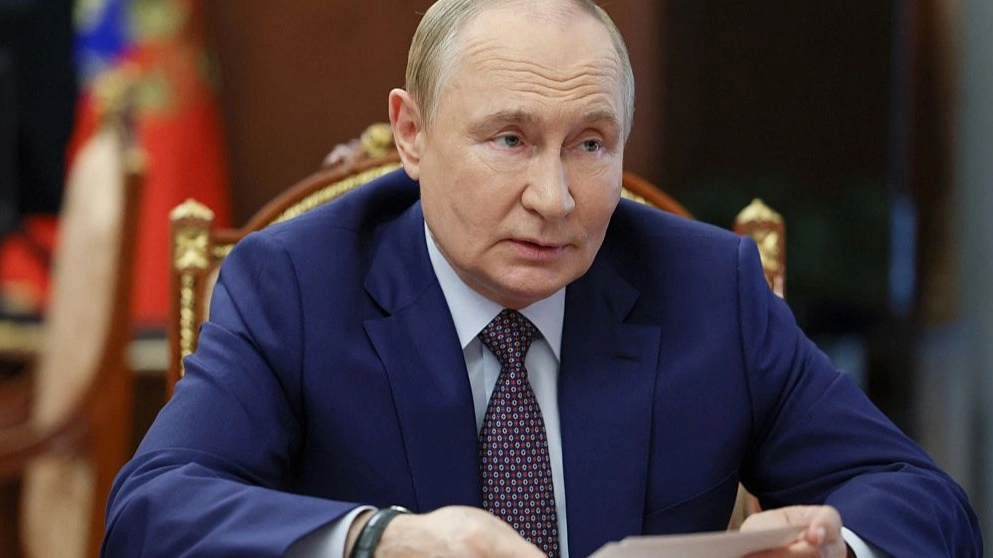
Vladimir Putin has issued a fresh demand to Britain as the price of a peace deal towards ending the war in Ukraine.
Moscow has called on Britain to give up part of its role as a nuclear protector of Europe, demanding the UK stops extending its deterrent to its allies as a condition of peace.
This is a significant demand because it goes further than deciding Ukraine’s borders, but is actually an attempt at using negotiations to reshape European security and NATO.
The UK remains one of only three NATO nuclear-armed powers, alongside the United States and France after formally committing its nuclear deterrent to the defence of allies since 1962.
Article 5 states an attack on one NATO member is considered an attack on all, however each country decides what action it considers necessary – and this isn’t automatically nuclear war.
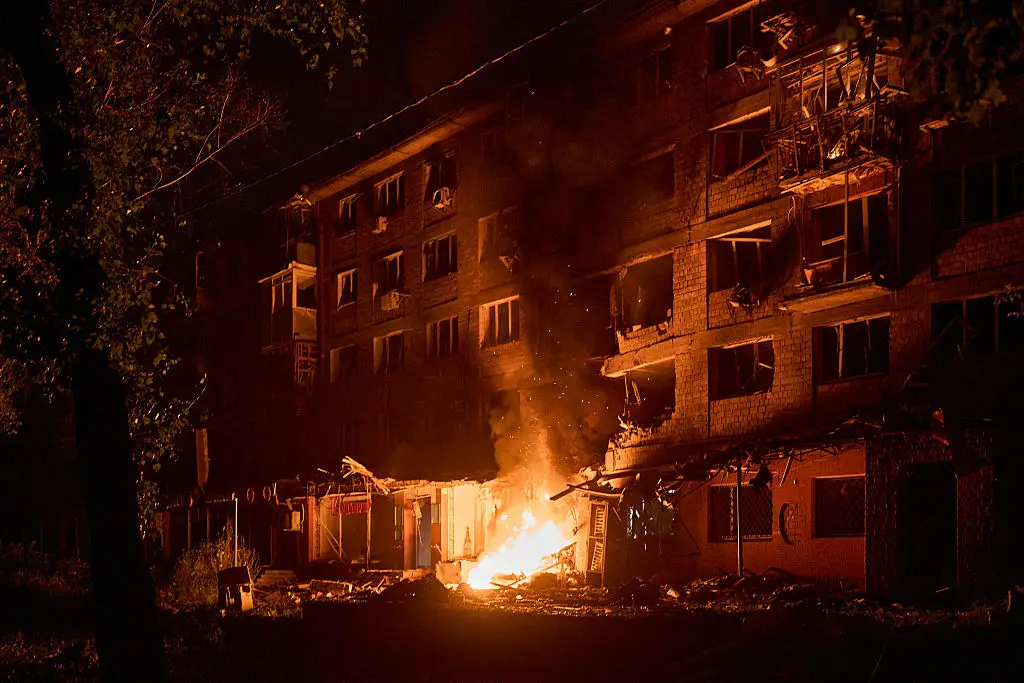
The aftermath of a Russian drone attack in Kyiv ( Kostiantyn Liberov/Libkos/Getty Images)
However Britain’s nuclear deterrent is designed to make an adversary like Russia think twice before attacking NATO locations in the first place.
Moscow demands conditions for peace
Russia has revived the demands for the withdrawal of military forces to 1997 positions and sought new restrictions on the nuclear deterrence amid peace talks.
As per the Telegraph, Putin’s conditions for peace in Ukraine include the removal of Trident ‘umbrella’ from NATO states, a way of describing how Britain’s nuclear weapons help protect other countries that don’t own nuclear weapons themselves.
The proposal is included on a list of requirements drawn up by Russian negotiators in talks about the possibility of bringing an end to the ongoing war.
According to reports, the document makes calls for NATO to withdraw forces from Eastern Europe and the Baltic states and to commit to not sending troops to Ukraine before Vladimir Putin would then consider peace and a ceasefire.
The paper says it seeks to end ‘the supply of any type of Western weapons and military equipment and products to Ukraine’ and blocking Ukraine from joining NATO and afterwards would retain control of large territories it has occupied.
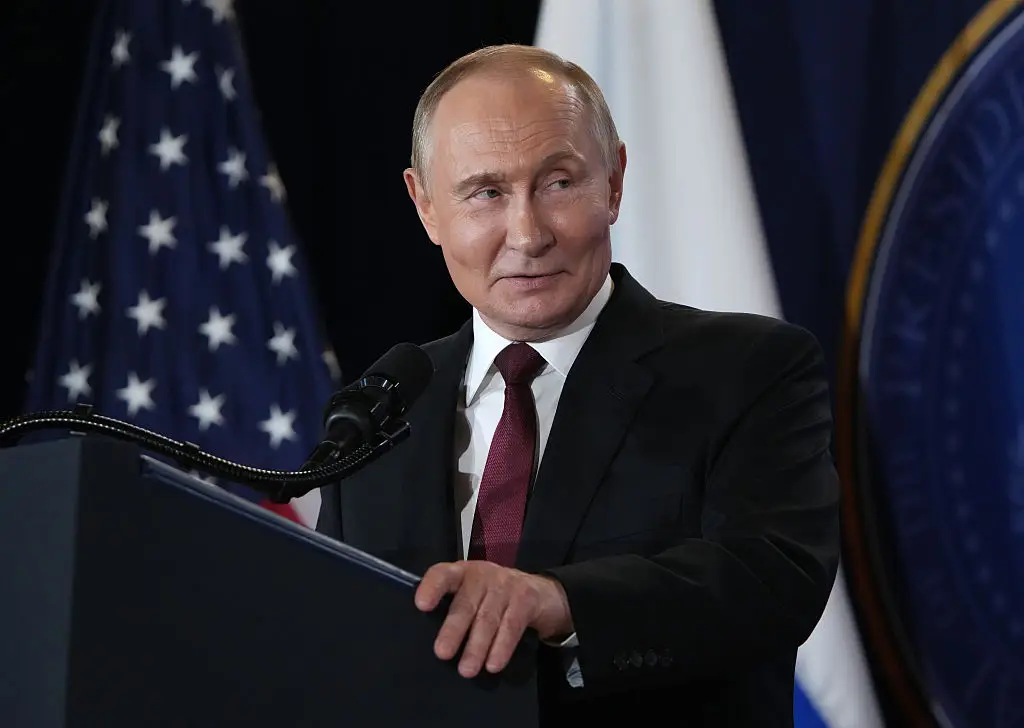
Vladimir Putin (Andrew Harnik/Getty Images)
In return, Russia, which has over 4,000 nuclear warheads available for use, could then accept Ukraine joining the European Union, providing Ukraine stays outside the EU’s common defence arrangements.
However the demands mean Russia is therefore essentially asking Ukraine and Western allies to accept a much weaker security position in exchange for peace.
NATO member states meanwhile have continued to focus on military and security assistance to Ukraine, including through the NATO-Ukraine Council, rather than immediate full membership while the war is still ongoing.
The document dated 10 November repeats a number of demands Moscow made in December 2021, just months before Russia launched it’s invasion in Ukraine.
The New York Post had reportedly obtained the document from a person involved in the negotiations.
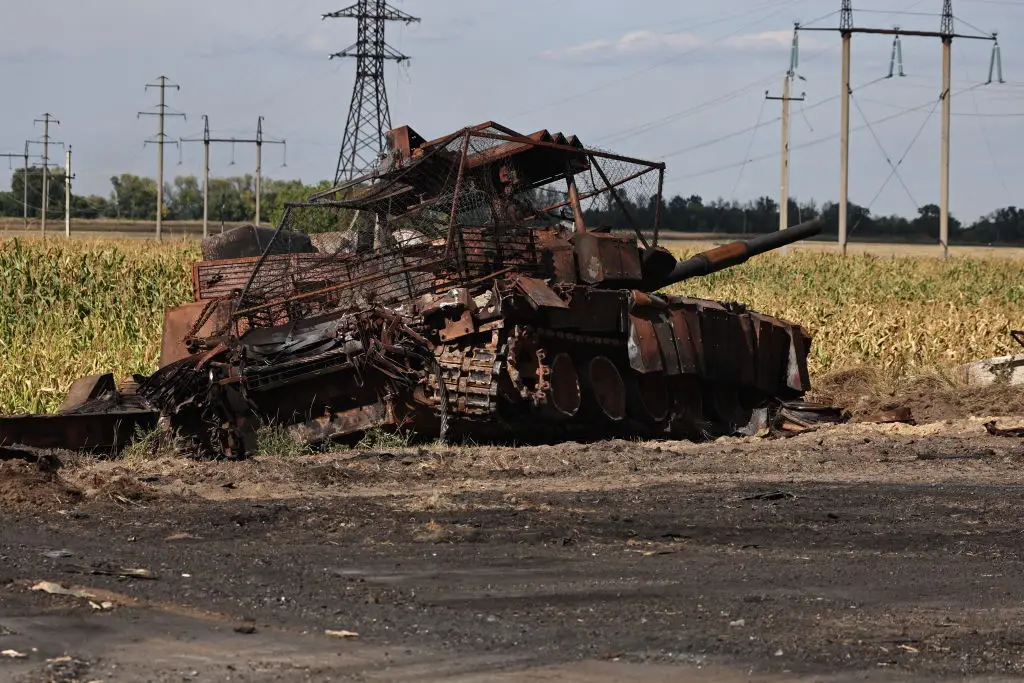
A destroyed Russian tank outside Ukrainian-controlled Russian town of Sudzha (YAN DOBRONOSOV/AFP via Getty Images)
UK vows to protect NATO allies
Outlining a ‘new era of threat’, the UK Government previously explained the obligation of protecting NATO states, writing in August: “The threats that the UK and our NATO Allies face are increasing in scale, complexity, and diversity. In an evolving, and deteriorating, global security environment our nuclear deterrent has never been more important.
“Other nuclear-armed states continue to modernise, increase, and diversify their arsenals. They are investing heavily in the development of new nuclear technologies and capabilities.
“The UK must show it can and will defend itself and its Allies in all circumstances, even the most extreme.”
On Russia, the alert explained: “Russia has become increasingly aggressive, undermining international standards of cooperation and using irresponsible nuclear rhetoric.
“It is investing heavily in modernising its nuclear forces and expanding its novel and disruptive dual-capable weapon systems – meaning these can be armed with both conventional and nuclear warheads – and has used these systems in Ukraine.
“Russia currently has over 4,000 nuclear warheads available for use. It can deliver nuclear weapons to long ranges from its strategic ‘nuclear triad’, and to shorter ranges from a range of land, sea and air-based platforms.”
Leave a Reply