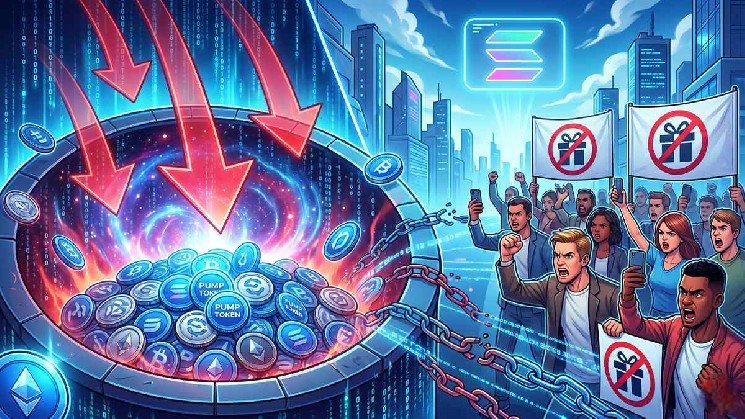
- The platform permanently destroyed approximately 127 billion tokens, equivalent to about 370 million dollars, through verified transactions on Solscan.
- The team argues that this measure seeks to build long-term trust and eliminate confusion regarding the use of funds from buybacks.
- A large portion of users criticizes the decision, as they expected these assets to be redistributed through incentives or a massive community airdrop.
The memecoin ecosystem is in the midst of an intense controversy following the burn of 36% of the $PUMP supply by the Pump.fun platform. This action, which involved the irreversible removal of approximately $370 million in assets, generated deep unrest among traders who anticipated a redistribution of those funds.
The future of $PUMP
We have burned ALL bought back $PUMP tokens, around $370M worth of purchases (~36% of circulating supply), to gain trust with our community.
On top of that, we have initiated a programmatic buyback *and burn* scheme at 50% of revenue for the next year to…
— Pump.fun (@Pumpfun) April 28, 2026
The protocol’s administration justified this move as a “cleanup” strategy to strengthen the transparency of its economic model. The team indicated that burning the repurchased tokens aims to avoid misunderstandings regarding the implementation of its financial policy and ensure the project’s viability over the coming year.
On the other hand, the technical execution was carried out through the Squads program via treasury-controlled transactions. On-chain records confirmed that the destruction was immediate and irrevocable, preventing any entity from putting those assets back into circulation in the future.
Conflict of interest: Sustainability vs. immediate rewards
Despite the platform’s intentions to improve predictability, the most active users feel betrayed by what they consider a loss of deferred value. Because many expected these funds to be used to finance an airdrop, the news has widened the gap between the company’s strategy and retail market expectations.
To address the criticism, the team presented a new programmed buyback-and-burn model that will use 50% of future revenue. The remainder will be allocated to infrastructure development and ecosystem expansion, aiming to position the firm for long-term scalability and reduce ambiguity in its operations.
However, for critics of this restructuring, the measure eliminates the community-aligned incentives that originally fueled the platform’s rapid rise. Consequently, brand perception now oscillates between those who see necessary economic discipline and those who denounce a lack of attention toward their most loyal followers.
The success of this strategic shift will depend on whether the supply reduction manages to offset the discontent over lost rewards. The market will closely monitor if this programmed scarcity boosts the token’s value or if, conversely, the lack of direct incentives ends up driving away investors seeking quick gains in the memecoin sector.
Leave a Reply