Blog

  • Jane Fonda, Demi Moore, Serena Williams, Andy Cohen Set SXSW Keynote Conversations

    Jane Fonda, Demi Moore, Serena Williams, Andy Cohen Set SXSW Keynote Conversations

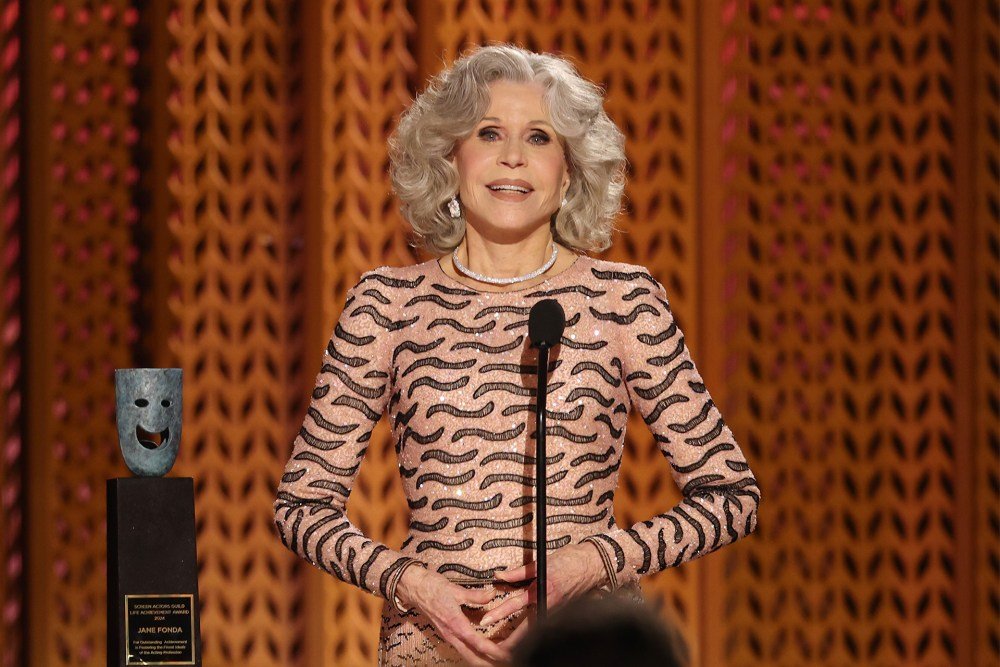
    SXSW has enlisted boldface names, including Jane Fonda, Demi Moore, Serena Williams, Keke Palmer and Andy Cohen, to deliver keynote addresses at the annual Austin-set festival.

    This year’s edition will be held from March 12-18. Among the films slated to premiere are horror comedy “Ready or Not 2: Here I Come,” Boots Riley’s comedic look at professional shoplifters “I Love Boosters” and John Carney’s “Power Ballad” with Paul Rudd and Nick Jonas as a past-his-prime wedding singer and a young rockstar. On the TV side, there’s David E. Kelley‘s “Margo’s Got Money Troubles,” an adaptation of Rufi Thorpe’s bestselling novel led by Elle Fanning, Michelle Pfeiffer, Nick Offerman and Nicole Kidman, as well as the long-awaited Season 3 premiere of “The Comeback” from Michael Patrick King and Lisa Kudrow.

    “SXSW has always been the ultimate convergence of culture and innovation, but this announcement takes it to a new level,” said Greg Rosenbaum, senior VP of programming at SXSW. “Between the business moguls, the political giants, and the entertainment legends our team has assembled, the collective star power coming to SXSW might actually be visible from space.”

    See below for SXSW’s description of the newly added keynotes and featured sessions:

    Say It Louder: Artists, Activism & the First Amendment—In this Keynote, Committee for the First Amendment founder Jane Fonda, comedian W. Kamau Bell and the ACLU’s Jessica Weitz discuss the vital link between culture and action, sharing how the First Amendment empowers artists to challenge power and how every individual can take concrete action to protect free speech when democracy is at stake.

    A Talk About Life, Sibling Rivalry and The Lonely Island—Do you like discussions about art, comedy and music? So do we! Join Jorma Taccone and Asa Taccone, two Emmy Award winning brothers (for Dick In A Box, don’t get too excited), as they discuss their work together with The Lonely Island, Electric Guest and a gang of other topics, probably. Be there or be square, nerd!

    Baby, This is Keke Palmer Live—Join Keke Palmer and the cast of I Love Boosters, Naomi Ackie, Taylour Paige, Eiza González, Poppy Liu and Demi Moore, for a live podcast recording of her hit podcast, Baby, this is Keke Palmer.

    Bob Odenkirk: Entering His Action Hero Phase and the State of Action Films with the Team Behind NORMALCollider’s Perri Nemiroff joins Bob Odenkirk, director Ben Wheatley, writer Derek Kolstad and producer Marc Provissiero to discuss their kinetic neo-Western action film, exploring the future of the genre and Odenkirk’s evolution into an undeniable action lead.

    Breaking Barriers, Building Solutions: Meet the Changemakers Transforming Health Innovation—Presented by Serena Williams and Reckitt Catalyst, this conversation spotlights underrepresented founders reshaping health through community-driven innovation and scalable change: Catherine Casey Nanda, Kwamane Liddell, Mika Eddy and Ryan Dullea.

    Chaos, Craft, and Chris Fleming—Fresh off his HBO special, Chris Fleming brings his fearless, absurdly precise comedy universe to SXSW for a celebratory deep dive into the creative process and wild physicality behind his singular storytelling.

    Clips & Conversation with Riz Ahmed on BAIT—Join Emmy and Oscar-winning actor Riz Ahmed for a preview and live conversation around his upcoming Prime Video comedy series, BAIT, about a struggling actor who auditions for the role of a lifetime, only to see his life spiral out of control over four frenetic days.

    Founder-Led Growth: Turning Audience Signal into AI-Powered Commerce—Phoebe Gates and Sophia Kianni, cofounders of shopping agent Phia, share their experience building an AI-native commerce app while prioritizing meaningful community engagement to inform product roadmap.

    Matt Strauss & Andy Cohen: Community, Culture & the Future of EntertainmentMatt Strauss and Andy Cohen, in conversation with S.E. Cupp, will explore the evolution of entertainment beyond platforms, exploring how immersive experiences and fandom-building transform shows into expansive worlds and viewers into active participants.

    Networth and Chill with guest Governor Gavin Newsom—Join Your Rich BFF Vivian Tu for a live-taping of her podcast, Networth & Chill, where she gets up close and personal about the good, bad, and ugly of how money impacts our lives. In this special episode on the SXSW Keynote stage, Vivian will interview Governor Gavin Newsom about why politics matters for our pocketbooks.

    Not All Superheroes Wear Capes: Out of the Kitchen, Into the Comic—Following the success of Feeding Dangerously, a graphic novel about his humanitarian organization World Central Kitchen, José Andrés will sit down with writer Steve Orlando and Marvel Comics editor Nick Lowe to discuss the universal appeal of food and comics.

    Play It Live: How Livestreaming is Rewriting the Rules of Music—Twitch’s Head of Community Mary Kish sits down with Tierra Whack and DJ Dave to explore how artists are bypassing algorithms to redefine the music industry, utilizing live streaming as a real-time studio, stage, and fan hub that prioritizes authentic, collaborative creation.

  • Should ‘The View’ Bring Back Elisabeth Hasselbeck as Its Conservative Commentator?

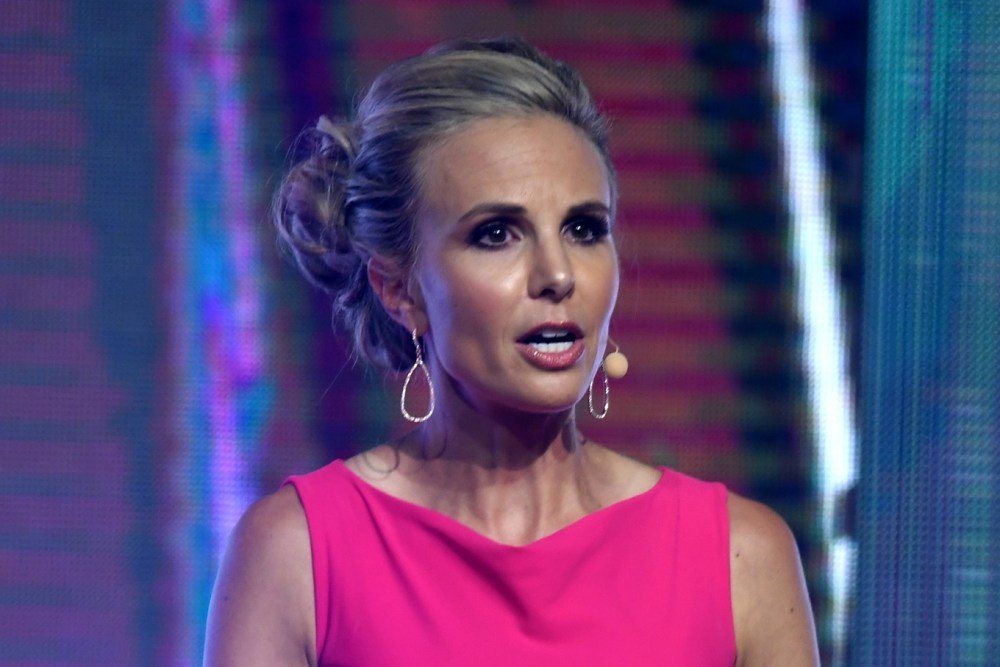
    Should ‘The View’ Bring Back Elisabeth Hasselbeck as Its Conservative Commentator?

    This week, “The View” has been feeling different from how it has in years. Suddenly, it’s relevant. 

    One might think this is nothing new — after all, in the first Trump presidency, and before that for much of its history, the panel show was a clearinghouse for fiery debates about politics and policy. Sure, maybe the producers went a little far placing co-panelists Rosie O’Donnell and Elisabeth Hasselbeck in a literal split-screen for their infamous 2007 fight over Iraqi casualties (the argument that directly led to O’Donnell quitting the show). But it was all in service of generating a conversation that looked, onscreen, a bit like the ones Americans were having out there in our multifarious country. From a certain angle, the rancor could look like part of the fun. 

    Which is why Hasselbeck’s return, this week, has been so welcome. It’s not that this viewer agrees with the points Hasselbeck makes — far from it! (I did root for her on 2001’s “Survivor: The Australian Outback,” back when she was a 23-year-old shoe designer. The politics stuff came later.) But “The View” has lately been lacking energy in general and a genuine broadcast talent to put forward what is a mainstream point of view in particular. Hasselbeck has given the show the jolt it needed; I hope the producers find a way to bring her back for longer than a week.

    Consider, for instance, the legitimate bit of news Hasselbeck made in condemning Megyn Kelly. “How dare you, Megyn Kelly,” Hasselbeck said, excoriating the podcast host for her claim that U.S. servicemembers who died after strikes on Iran did not die for the benefit of American interests. “I’m not afraid of her,” Hasselbeck continued. “I have my heart with my friends in the military — you do not get to authorize who they died for.”

    The two women, both Trump voters and both former Fox News talent (Hasselbeck went to “Fox & Friends” for two years after her “The View” tenure ended in 2013), would seem to have plenty in common, but the circular-firing-squad quality of conservatism at this moment means that the fissures are all on display. Which is not to say that Hasselbeck was entirely training her fire on her own side! Watching her claim that Kristi Noem’s Congressional testimony, in which Senators on both sides of the aisle ripped into her language around ICE actions, paled in comparison to the success of Noem’s record was, at least, novel. Seeing her read it to camera unchallenged would have been noxious. Seeing it catalyze an actual response from co-hosts who’ve lately been sleepwalking through agreeing with one another was like a time-travel trip back to when this show sat at the center of culture. I never thought I’d be so happy to hear the phrase “Let me finish”! 

    This all has so much more heat than watching Joy Behar and company agree with one another and then move on. The last true token conservative on the program was Meghan McCain, whose complicated relationship with both Trump’s policies and with her own stardom lent the show a sparking, combustible energy — one truly did not know what would happen as she continued to drive the conversation. After her 2021 departure, Ana Navarro and Alyssa Farah Griffin — one of whom is an apostate Republican who publicly deplores Trump, the latter of whom worked in his first administration before denouncing him after Jan. 6, 2021 — have put forward a perspective that exists far more widely among the national media than among elected officials or, seemingly, people in our world, that of the Never-Trumper Republican. The great challenge of the Trump era, and one that the media has generally struggled to meet, has been to acknowledge the reality that Trump voters represent a transformative political force in this country, and that this era is not going to end anytime soon. Placing Hasselbeck on “The View” is less platforming her ideas (they already have a platform, in the form of the presidency) than forcing them to be interrogated rather than just treated as someone else’s problem. 

    Hasselbeck first left “The View” early in Barack Obama’s second presidential term; ratings had slowed, and producers faced pressure from ABC to turn down the show’s political tenor. (Hasselbeck was replaced by Jenny McCarthy, who — views on vaccines aside — is not one to speak on policy.) But Hasselbeck’s return has lent “The View” a high-stepping energy it hasn’t had in years. Behar and especially Goldberg seem invigorated by the opportunity to parry with Hasselbeck, in part because (at least for TV) they have a relationship rooted in some kind of mutual respect. (It seemed apparent, by the end of McCain’s tenure, that this was not the dynamic at all.) They can argue to the end of the “Hot Topics” segment and, with nothing settled, return and restage the argument the next day. I’m not sure that’s moving the discourse forward, but it’s at least more illuminating as to where we are as a nation than I’ve lately seen. And it makes the case for, should she want it, Hasselbeck’s full-time return — as long as she’s met by co-panelists willing to challenge her, too.

  • Humble Games’ former bosses buy the studio’s back catalog

    Humble Games’ former bosses buy the studio’s back catalog

    Humble Games’ library has returned home, so to speak. Indie publisher Good Games Group (GGG), led by former Humble leaders, has acquired the full back catalog of over 50 Humble Games titles from Ziff Davis. Alongside the purchase, GGG has rebranded to Balor Games, positioning itself as a force in “triple-I” gaming.

    “For the developers we have worked with over the years, this moment is a reunion,” Balor Games CEO Alan Patmore wrote in a statement. “[It has] the same leadership and the same commitment to thoughtful publishing remain in place. What changes is our scale and our focus. Balor Games is built for inventors and backed by believers. To that end, it exists to be a seal of quality for independent games.”

    The Humble Games lineup includes (among others) Slay the Spire, A Hat in Time, SIGNALIS, Forager, Coral Island, Monaco and Wizard of Legend. Separate from the Humble transaction, Balor also bought the complete catalog of Firestoke Games (which shut down last August) and publishing rights to Fights in Tight Spaces. In total, the young studio now owns the publishing rights to over 60 indie titles.

    Humble Games is separate from the Humble Bundle storefront. The latter is still owned by Ziff Davis.

    Alan Patmore (l) and Mark Nash

    Alan Patmore (l) and Mark Nash (Balor Games)

    The seemingly happy ending comes after quite the rocky road. In July 2024, Ziff Davis laid off all 36 employees of Humble Games. But later that year, Humble Games’ former leaders (Patmore and Mark Nash) formed GGG and cut a deal to help manage their old studio’s back catalog. Now, with Ziff Davis in a selling mood, that library is back in Patmore and Nash’s hands. Balor Games, it is.

    The pair view the newly anointed Balor as a developer-friendly publishing house. As for its name, Balor is a supernatural being in Irish mythology. It’s sometimes depicted as having three eyes. Triple-eye, triple-I… Clever devils!

    The triple-I moniker is a more recent addition to the gaming lexicon. It typically means something defined by indie creativity and passion — with a budget far less than AAA but more than a tiny two-person passion project. (Balor says it’s about “high-quality, impactful games.”) You wouldn’t be blamed for wondering how that’s different from AA. But the slant here is to define the genre less by budget and more by “indie” intangibles.

    Nash detailed the company’s vision in an interview with GamesIndustry.biz (which, curiously, is a Ziff Davis property). “We felt that what’s becoming more and more critical is that as game development becomes more diverse, more complicated, and expectations continue to rise, we feel it’s important that a publisher can match the needs of each individual project,” Nash said. “We are spending a considerable amount of time with anyone we are partnering with, figuring out what they need specifically.”

  • ‘Forever Chemicals’ Causing Faster Aging For Men in Their 50s, Study Finds

    ‘Forever Chemicals’ Causing Faster Aging For Men in Their 50s, Study Finds

    Middle-aged male looking in a mirrorShare on Pinterest
    Research has found that “forever chemicals” may lead to faster aging in middle-aged men. Image Credit: Gabriel Mello/Getty Images
    • A new study suggests that certain “forever chemicals” may quietly accelerate biological aging at the cellular level.
    • Researchers found that higher levels of specific PFAS were linked to several years of accelerated aging, especially among middle-aged men.
    • The findings raise new concerns about long-term health risks, given the widespread PFAS exposure in the United States.

    “Forever chemicals” are linked to accelerated aging at the cellular level, particularly among middle-aged men, a new study suggests.

    The findings add to growing concerns about widespread exposure to PFAS chemicals.

    PFAS are used in products such as nonstick cookware, waterproof clothing, stain-resistant fabrics, and some firefighting foams. This is because they repel water, oil, and heat, making materials more durable and resistant to damage. The nickname reflects the fact that these chemicals break down very slowly and can linger for years in the environment and in human bodies.

    Epigenetic aging estimates biological age at a cellular level based on chemical markers found on DNA. Researchers also found that specific PFAS compounds affected individuals differently. While the association was present across the broader study population, it was most pronounced among middle-aged men.

    “While the study does not prove causation, it suggests that PFAS exposure may be linked to molecular changes related to aging and long-term health risk,” Xiangwei Li, PhD, professor of epidemiology at the Shanghai Jiao Tong University School of Medicine and senior author of the research, told Healthline.

    While most research on forever chemicals has focused on two compounds, PFOS and PFOA, those chemicals are now considered “legacy” PFAS because they were largely phased out in the United States in the early 2000s.

    Researchers are now shifting their focus to other PFAS compounds that, like legacy chemicals, are also persistent in the environment and potentially toxic, but less well studied. This study examined two additional PFAS compounds: perfluorononanoic acid (PFNA) and perfluorosulfonic acids (PFSA).

    The findings track with prior research in this area, said Andres Cardenas, PhD, assistant professor of epidemiology and population health at Stanford University. Cardenas wasn’t involved in the research.

    “Our group looked at exactly this data and question before in 2025. Similarly, we found strong evidence that PFNA accelerated multiple epigenetic clocks in males,” he said.

    Blood samples were tested for several PFAS chemicals, including PFNA and PFSA, which were detected in more than 95% of participants.

    The team then examined epigenetic “clocks,” tools that estimate biological age based on chemical markers attached to DNA. Specifically, they measure DNA methylation patterns, which signal how fast the body is aging at a molecular level.

    “Unlike chronological age, epigenetic age keeps track of the molecular ’wear and tear’ of genomic control,” Cardenas said.

    Different epigenetic clocks have been developed over time to capture distinct biological processes linked to aging, such as inflammation and mortality risk.

    The GrimAge clock, for example, is designed to predict risk of death and age-related disease, incorporating signals tied to inflammation and cardiovascular risk. LinAge, on the other hand, is linked more closely to life span prediction and fat metabolism.

    Using these clocks, the researchers calculated whether a person’s biological age appeared older or younger than their actual years and tested whether higher PFAS levels were associated with faster biological aging.

    The researchers found that higher levels of PFNA were associated with 2 to 4 years of accelerated aging, as measured by GrimAge. This association was strongest in adults ages 50 to 64 and in men.

    PFSA showed a distinct association with LinAge-accelerated aging, suggesting that different PFAS chemicals may influence aging via distinct biological pathways.

    The study does not explain why this association is strongest in middle-aged men, but Li has some hypotheses.

    “Midlife is often a period when cardiometabolic function, inflammation, and stress-response systems begin to change more rapidly,” he said. “Together, these factors may make aging-related molecular pathways more responsive — or more vulnerable — to environmental stressors in midlife.”

    Men may be more susceptible to the deleterious effects of PFAS than women due to biological differences such as hormones, body composition, and metabolism.

    While the study cannot prove these chemicals cause faster aging, it suggests that certain PFAS may be linked to measurable changes in the body’s biological aging process, particularly during midlife.

    Nearly all Americans have some level of PFAS in their blood. However, the levels of some specific chemicals, such as the legacy chemicals PFOS and PFOA, have declined significantly over time.

    Since 2000, blood PFOS levels have declined by more than 85% and PFOA levels by more than 70%.

    “Complete avoidance of PFAS is unrealistic, but exposure can be reduced,” said Li.

    Since drinking water can be a source of forever chemicals, using certain water filters can help reduce exposure. Reverse osmosis and granular activated carbon filters can help, but effectiveness will vary.

    “Drinking water and diet are likely major exposure routes for the majority of the population. Checking your water quality report from the municipal source or city is helpful in making decisions about potential filters to use if you live in an area affected by PFAS contamination,” said Cardenas.

    • Swap out nonstick cookware (especially old scratched pans) for steel or glass.
    • Eat less takeout and fast food (PFAS are commonly found in wrappers and containers)
    • Avoid waterproof and stain-resistant clothing, furniture, and upholstery.

    “In general, choosing greener consumer products and PFAS-free products, such as cookware or consumer products, is a good step,” Cardenas said.

  • Google ends is 30 percent app store fee and welcomes third-party app stores

    Google ends is 30 percent app store fee and welcomes third-party app stores

    Google is officially doing away with its 30 percent cut of Play Store transactions, and rolling out changes to how third-party app stores and alternate billing systems will be handled by Android. Some of these tweaks were proposed as part of the settlement the company reached with Epic in November 2025, but rather than wait for final judicial approval, Google is committing to revamping Android and the Play Store publicly.

    The biggest change is to how Google will collect fees from developers publishing apps on Android. Rather than take its standard 30 percent cut of in-app purchases through the Play Store, Google is lowering its cut to 20 percent, and in some cases 15 percent for new installs of apps from developers participating in its App Experience Program or Google Play Games Level Up program. Google will also now charge a five percent service for developers in the UK, US or European Economic Area using its billing system, and “a market-specific rate” in other regions. Of course, using alternatives to Google’s billing system is also getting a lot easier.

    Developing…

  • CEO of crypto investment firm Keyrock says bitcoin is undervalued, entering ‘transition year’

    CEO of crypto investment firm Keyrock says bitcoin is undervalued, entering ‘transition year’

    Bitcoin $BTC$73,261.36 should be trading higher than it is today.

    That’s the view of Kevin de Patoul, CEO and co-founder of crypto investment firm Keyrock, who argues that the market is misreading both macro conditions and structural progress in digital assets.

    The world’s largest cryptocurrency was trading around $73,000 at the time of publication. Bitcoin is down about 18% year-to-date, having reached an all-time high of around $125,000 in early October last year.

    “If you go back to early 2025 through 2026 and look at all the positive developments such as regulatory progress and institutional adoption, most people would have said that should make the price explode,” de Patoul said. “Increasing macro uncertainty should increase bitcoin demand, and yet it hasn’t.”

    Instead, $BTC has spent much of the past nine months under pressure, still behaving like a risk-on asset rather than the risk-off hedge many proponents claim it to be. Capital that flowed aggressively into bitcoin over the past 18 months, largely institutional, now appears more tactical than ideological.

    “It’s still priced as a risk-on asset. Last in, first out in terms of capital allocation,” he said. “If investors perceive it that way, then in periods of stress they reduce exposure.”

    Crypto assets have delivered a muted performance over the past six months, with bitcoin drifting well below its prior highs and much of the altcoin market struggling to sustain momentum. Trading volumes have thinned, volatility has compressed and broad-based rallies have failed to materialize, marking a sharp contrast to the speculative surges of previous cycles. Even as institutional adoption and tokenization efforts advance in the background, price action has remained subdued, reflecting cautious capital flows and a market searching for its next catalyst.

    De Patoul stops short of saying the market is wrong. But he struggles to reconcile the pullback with the broader backdrop. “Nothing really explains the recent drop unless there’s a misunderstanding of the type of asset it’s supposed to be.”

    That disconnect is emblematic of what he sees as crypto’s current moment: not a breakout cycle, but a structural transition.

    “We’re not issuing stablecoins or taking retail deposits, but we’re connected to everything and provide liquidity across all venues,” de Patoul said. “That gives us a front-row seat to the evolution, and lets us participate in the market as it shifts toward digital assets and tokenized infrastructure.”

    A tale of two markets

    From Keyrock’s vantage point, working with banks, asset managers, issuers and exchanges, 2026 feels less like stagnation and more like rewiring.

    “2026 feels like a transition year rather than a breakout one,” de Patoul said. “A lot of what defined crypto in previous cycles is dying out faster than expected, while the parts that actually make sense are still being built, like real finance moving onchain.”

    In his view, two largely uncorrelated markets are developing in parallel.

    The first is the crypto-native ecosystem: decentralized finance (DeFi), altcoins and the familiar cycle of liquidity and hype. Here, sentiment is subdued. The rising tide that once lifted all tokens has receded. Broad-based speculative rallies are harder to sustain, replaced by “very precise opportunities that make sense,” he said.

    The second is the digitization of traditional finance. Tokenized money market funds, stablecoins, onchain funds and new market infrastructure. On that side, he says, he remains as enthusiastic as ever.

    “When I speak to institutions, nothing has changed. The level of enthusiasm, the level of building, none of that drive has slowed,” de Patoul said. “The aim is to make crypto assets more accessible to clients and to rewire parts of financial markets.”

    These institutional efforts are less sensitive to bitcoin’s price swings. Stablecoins, tokenized funds and settlement rails are about upgrading financial plumbing, not speculating on crypto’s next rally. Circle’s (CRCL) IPO and partnerships like Apollo’s tie-up with DeFi protocol Morpho reflect multi-year commitments, he noted.

    But while the assets have been tokenized, the utility layer is still under construction.

    Built, but not yet useful

    The past 18 months marked a leap from concept to product. Funds were tokenized. Stablecoins proliferated. Infrastructure was deployed.

    Yet liquidity remains thin in many tokenized money market funds and real-world assets (RWAs). The tokens exist, but often function as wrappers rather than transformative instruments.

    “They’ve built the token. Now the question is: where can it be used? Who accepts it? Can it be used as collateral? Can it bring liquidity at scale?” de Patoul said.

    Tokenizing a fund can, paradoxically, cut it off from traditional capital pools without immediately unlocking digital-native benefits. The bridge between traditional institutions and onchain markets, the ability to use tokenized assets seamlessly across both worlds, takes time.

    “We’re stuck in an in-between phase,” he said. “The pieces are there. The next step is putting them together to bring liquidity at scale.”

    That’s why he sees 2027 and 2028 as the real inflection point.

    Traditional capital markets are orders of magnitude larger than crypto. Even a small percentage migrating onchain could eclipse crypto’s previous peak.

    “In the course of 2027, we could get to a situation where RWAs grow to be as big as the whole of crypto was in the past,” de Patoul said. “It’s going to play out over the next two to three years.”

    Digital finance, in other words, may outgrow crypto, though not necessarily in the form of a price-led boom.

    “If the utility were fully there today, we’d probably have a booming market,” he said. “But it’s not. This is a transition phase.”

    Keyrock’s Bet

    Founded eight years ago on the thesis that all assets would eventually be digital and onchain, Keyrock is positioning itself as a bridge between traditional and digital finance.

    Historically rooted in capital markets and market-making, the firm continues to expand its crypto-native offerings, derivatives trading, liquidity provision and tailored strategies for investors. In September, it launched Keyrock Asset Management, adding a second pillar to the business. Assets under management remain modest given the recent launch, de Patoul said.

    The broader ambition is to evolve from tokenization toward functionality: making digital assets genuinely useful at scale.

    “A very big focus for us is how you move from tokenizing products to making those assets useful, and tokenizing at scale,” he said.

    Regulatory clarity remains a gating factor. De Patoul points to the proposed Clarity Act as a “yellow flag,” not because he doubts its eventual passage, but because timing matters. “If it’s derailed for two years, it will have a meaningful impact,” he said. “Regulations getting passed is a massive deal for institutions. That’s when they can invest at scale.”

    For now, crypto’s price action may feel uninspiring. But from de Patoul’s vantage point, the quiet build-out of digital market infrastructure is far more consequential than a short-term rally.

    “The foundations are going in,” he said, “but the scale is yet to come.” This is why he sees “2027 and 2028 as the real inflection point for digital markets.”

    Read more: JPMorgan bullish on crypto for rest of year as institutional flows set to drive recovery

  • Binance Founder CZ Praises Another Cryptocurrency Project

    Binance Founder CZ Praises Another Cryptocurrency Project

    Another notable acquisition has taken place in the cryptocurrency sector. A prediction market platform…

    PredictFun announced the strategic acquisition of the on-chain prediction platform Probable. While the financial details of the deal were not disclosed, Binance founder Changpeng Zhao (CZ), a leading figure in the industry, also shared a message of support regarding the development.

    CZ expressed his positive view of the agreement in a statement on social media, saying, “Congratulations, it’s great to see two powerful projects joining forces.”

    Probable, the acquired company, is known as an on-chain prediction platform that initially received investment from PancakeSwap and YZi Labs. The platform offers a structure that allows users to trade based on probability predictions for various events.

    Launched in December 2025, PredictFun quickly achieved a significant trading volume. According to platform data, over 120,000 users have conducted transactions totaling $1.5 billion to date. During the same period, over 3.3 million transactions were recorded on the platform.

    Following the acquisition of Probable, PredictFun aims to strengthen its infrastructure technology and make its market structure more efficient. The company states that this merger will enable it to improve its technological architecture, increase transaction efficiency, and optimize capital utilization.

    *This is not investment advice.

  • Loose cow prompts lockdown at Nebraska school

    Loose cow prompts lockdown at Nebraska school

    Odd News // 4 weeks ago

    Trip to the doctor’s office leads to $350,000 lottery jackpot

    Feb. 4 (UPI) — A pair of Illinois friends on their way to a doctor’s appointment stopped for a lottery ticket and ended up winning a $350,000 jackpot.

  • Demi Moore, Keke Palmer, Bob Odenkirk, Andy Cohen, Jane Fonda, More Among SXSW Innovation, Music and Film/TV Speakers

    Demi Moore, Keke Palmer, Bob Odenkirk, Andy Cohen, Jane Fonda, More Among SXSW Innovation, Music and Film/TV Speakers

    SWSW revealed a plethora of keynotes and featured sessions for the 2026 innovation, music and film & TV conferences, plus artists and showcases for the music festival lineup for the 40th edition of the festival taking place on March 12-18, on Wednesday.

    Demi Moore, Keke Palmer, Bob Odenkirk, Andy Cohen, Jane Fonda and Serena Williams are among the speakers slated to partake in SXSW‘s innovation, music and film & TV conferences.

    Additional speakers announced on Tuesday include Gavin Newsom, Jorma Taccone, Naomi Ackie, Phil Schiller, Poppy Liu, Riz Ahmed and Taylour Paige.

    Artists who have been added to the music festival include Alanis Morissette, Benny the Butcher, Ella Langley, Ingrid Andress, Jack Johnson & Hermanos, Gutiérrez, St. Vincent (DJ Set), Ty Dolla $ign, Vic Mensa and ZHU; while BIGSOUND, HYBE’s Sin Silencio and Sony Music U.S. Latin were added as showcase presenters.

    “SXSW has always been the ultimate convergence of culture and innovation, but this announcement takes it to a new level. Between the business moguls, the political giants, and the entertainment legends our team has assembled, the collective star power coming to SXSW might actually be visible from space,” said Greg Rosenbaum, svp of programming at SXSW. “With our new format this year, the collaboration and crossover between our Conferences and Festivals has never been stronger. Get ready for seven action-packed days in Austin.”

    The comedy festival shared three additions on Wednesday, including a taping of Bill Burr’s The Monday Morning Podcast; Devon Walker and Alex English with their standup show DAD; and Dropout with Improv Does A Pretty Flower.

    And on the podcast side, Vox Media has announced the talent lineup and schedule for its third annual podcast stage at the Hilton Austin from March 13-15, which will feature Jonathan Glazer, Lisa Kudrow, Mark Cuban and Spike Jonze, among others.

  • Trump Bought Netflix Debt Amid Paramount’s Fight for Warner Bros.

    Paramount may have won the battle for Warner Bros. Discovery, but President Donald Trump continues to bet on the financial stability of Netflix.

    As Paramount sought to pry Warner Bros. away from the streaming giant, Trump was adding more Netflix bonds to his personal portfolio, financial disclosures released by the White House on Wednesday show.

    The disclosures show that President Trump bought between $600,000 and $1.25 million worth of Netflix debt in January, adding to the $500,000 to $1 million in Netflix bonds that he purchased in December, shortly after Netflix’s megadeal for Warners was announced.

    The Netflix buys were just two of dozens of purchases and sales disclosed by the President on Wednesday. The filing was signed by Trump on Feb. 26, but the purchases were made on Jan. 2 and Jan. 20.

    Notable: While the December disclosure also showed Trump acquiring bonds from Warner Bros. Discovery, the new disclosure does not include any WBD debt. It does however show purchases of bonds from SiriusXM, also valued at between $600,000 and $1.25 million.

    Trump also acquired municipal bonds, and corporate bonds from companies like General Motors, Occidental, Boeing, and Coreweave, among many others. His last full-year financial disclosure, which covered 2024, shows that he also held a modest (five figure) amount of Netflix stock.

    A White House official tells The Hollywood Reporter that the President’s investments are meant to replicate established indexes, and that “neither President Trump nor any member of his family has any ability to direct, influence, or provide input regarding how the portfolio is invested or when investments are bought or sold. All investment decisions are made entirely by independent managers.”

    Still, the acquisition of Netflix debt amid the Warners fight adds a layer of intrigue to the whole thing, especially because Netflix’s deal fell apart as CEO Ted Sarandos was in Washington D.C. for a White House visit. According to Axios, Sarandos’ meeting with Trump and chief of staff Susie Wiles was canceled at the last minute due to a last-minute scheduling conflict.

    Netflix subsequently opted not to raise its bid for Warners, effectively ending its pursuit of the company. Axios reported that Trump and Sarandos connected by phone later that evening, after Netflix made the decision to back away from the deal.

    Netflix, of course, walked away from the deal with a $2.8 billion break-up fee, and an investment grade credit rating (unlike both Warners and Paramount).

    Trump does, however, have an ongoing financial relationship with Warner Bros.

    Trump’s last full-year financial disclosure included a payment from Warners totaling $333.31. It was a residual check, for cameo appearances he made in the 2002 romantic comedy Two Weeks Notice, and the sitcoms Suddenly Susan and The Fresh Prince of Bel-Air.