Blog

  • States Seek Injunction to Prevent Paramount-Warner Bros. Deal From Closing

    States Seek Injunction to Prevent Paramount-Warner Bros. Deal From Closing

    California and 11 other states have filed for a temporary restraining order and a preliminary injunction to prevent the Paramount-Warner Bros. deal from closing while the states pursue an antitrust lawsuit.

    In a motion filed on Monday evening, the states asked a federal judge to act by July 22. Paramount has previously informed the states that it will not close the transaction before that date.

    “The Transaction will eliminate competition between Paramount and Warner Bros. and enable the combined entity to raise prices and reduce output,” the motion states. “Plaintiff States have an interest in enforcing antitrust laws and their citizens face the risk of profound and irreversible injury in the absence of an injunction.”

    The states filed a lawsuit earlier in the day, alleging that the $111 billion transaction violates federal antitrust law in three markets: wide-release theatrical distribution, blockbuster film distribution, and basic cable TV distribution. The states argued that the deal would hurt consumers as well as theater owners and cable and satellite companies.

    Paramount Skydance quickly responded, saying the states had a “fundamentally flawed” understanding of the facts and the law.

    “Delaying this transaction will only harm entertainment workers who have already suffered over recent years as technology has disrupted their livelihood and cost California tens of thousands of entertainment jobs,” the company said.

    To get an injunction, the states will have to persuade a judge that the case has a likelihood of success, and that they will suffer “irreparable harm” in the absence of an injunction. The states argue that if the deal is allowed to close — and subsequently ruled unlawful — it will impossible to “unscramble the egg” at that point.

    The California attorney general’s office had said earlier on Monday that it would seek an injunction if Paramount did not agree to pause the merger while the case is pending. As expected, the company did not agree to that, prompting the filing.

    “These titans of industry must not move to merge until a court properly evaluates our claims,” Attorney General Rob Bonta said in a statement Monday evening. “Today, alongside a coalition of attorneys general, I’ve filed an emergency motion asking the court to immediately stop this merger. I will not let Warner Bros. and Paramount merge without a fight.”

    The injunction ruling will be an early test of the strength of the states’ case. In March, a similar coalition was able to obtain an order blocking the Nexstar-Tegna merger from taking effect. That ruling is now on appeal.

  • CLARITY Act gets new police backing before August deadline

    CLARITY Act gets new police backing before August deadline

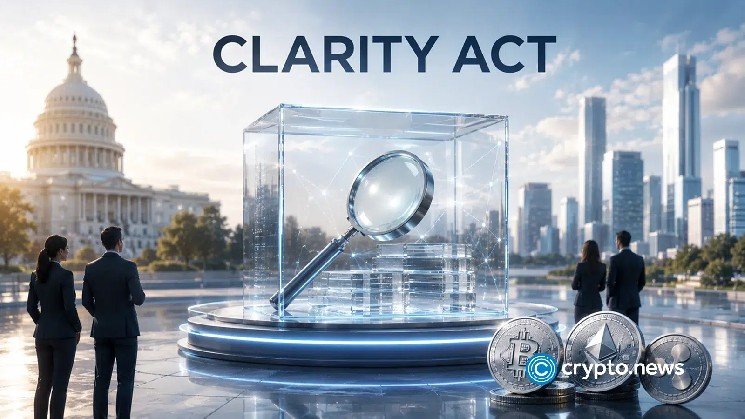
    The Digital Asset Market Clarity Act has secured support from a second law enforcement organization before a Senate push.

    The Federal Law Enforcement Officers Association said it supports H.R. 3633 but wants lawmakers to revise several provisions before passage.

    In a July 10 statement, FLEOA said the bill “represents meaningful progress” toward balancing digital asset development with public safety. The group represents more than 34,000 active and retired federal officers across over 65 agencies.

    FLEOA backs the bill but seeks DeFi changes

    FLEOA asked the Senate Banking Committee to make accountability clearer in decentralized finance, or DeFi. It also wants language that prevents companies from avoiding regulation by presenting controlled services as decentralized. The association urged senators to replace the bill’s “specific intent” test with an existing knowledge standard.

    The group also asked Congress to state clearly that the legislation does not reduce current federal investigative powers or block lawful court processes. FLEOA said agencies must retain authority covering criminal cases, anti-money laundering rules, sanctions and counterterrorism financing. National President Mathew Silverman said officers need tools to investigate complex financial crimes.

    Endorsement adds to a divided law enforcement debate

    The support follows the National Organization of Black Law Enforcement Executives’ endorsement earlier in July. As previously reported, NOBLE became the first major law enforcement group to publicly back the bill.

    Ji Kim, CEO of the Crypto Council for Innovation, said FLEOA’s position showed the measure was strong on consumer protection and law enforcement.

    Significant. @FLEOAORG expressing support for CLARITY and confirming what many of us know–this bill is strong on consumer protection and law enforcement. The time is now to pass CLARITY to ensure the U.S. has these strong guardrails in place. https://t.co/DOBfOKjz0X

    — Ji Kim (@_jikim) July 13, 2026

    Other organizations have raised concerns about Section 604. The provision would protect some software developers and non-custodial service providers from being treated as money transmitters when they do not control customer funds. As reported by crypto.news, four law enforcement groups warned that broad protections could make some crypto crime investigations harder.

    In addition, the Department of Justice later challenged parts of those claims.The agency viewed some warnings about lost enforcement powers as inaccurate. The Major County Sheriffs of America also moved from opposition to a neutral position after further talks over Section 604.

    Senate faces a narrowing August window

    The Senate’s published 2026 schedule places its August state work period from Aug. 10 through Sept. 11. That leaves Aug. 7 as the final scheduled session day before the break. As of July 14, the Senate’s public floor schedule did not list a vote on the CLARITY Act.

    President Donald Trump urged the Senate to pass the measure on July 13, linking the appeal to the late Senator Lindsey Graham.The request came as negotiators worked to complete a merged draft before recess.

    Senator Cynthia Lummis said on July 8, “This is likely our last chance to get real legislation for digital assets on the books before 2030.” She warned that other countries could set the rules if Congress fails to act.

    This is likely our last chance to get real legislation for digital assets on the books before 2030. If we fail to pass the Clarity Act, we are ensuring another country will write the rules for digital assets and we spend the next decade catching up.

    — Senator Cynthia Lummis (@SenLummis) July 8, 2026

    Senate staff still need to align Banking and Agriculture Committee language before a final floor vote. The bill also needs bipartisan support to clear the Senate’s 60-vote threshold.

    FLEOA’s endorsement gives supporters another law enforcement voice during negotiations. Its requested revisions show that questions over DeFi accountability, developer protections and investigative authority remain active before the scheduled summer break.

  • ‘The Hunt for Gollum’ Star Anya Taylor-Joy Has Not Read the ‘Lord of the Rings’ Books Yet, but Is ‘About to’ Soon

    ‘The Hunt for Gollum’ Star Anya Taylor-Joy Has Not Read the ‘Lord of the Rings’ Books Yet, but Is ‘About to’ Soon

    Anya Taylor-Joy was a strict “Harry Potter” fan as a child, but now, having been cast in “The Lord of the Rings: The Hunt for Gollum,” she’s ready to dive into the world of J.R.R. Tolkien.

    “I’m about to read the books now, actually,” Taylor-Joy told Variety at the Monday night premiere of Apple TV’s “Lucky.” “So as a child, I had a misguided idea that you could only be a ‘Harry Potter’ fan or a ‘Lord of the Rings’ fan. Nobody told me that. I just came up with that on my own. Luckily, throughout COVID, I then watched all of ‘Lord of the Rings,’ and turns out you can love both, and you should.”

    When asked about her initial reaction to getting cast in “The Hunt for Gollum,” Taylor-Joy said, “It’s so fun. I mean, if my tombstone can say ‘Lethal Elf, I feel like I did a good job on this planet. So yeah, I’m excited.”

    In June, it was revealed that Taylor-Joy was joining “The Hunt for Gollum” as Seren, a Sindar Elf of the Woodland Realm, who is described as “a trusted and lethal agent of King Thranduil.” She joins fellow “LOTR” newcomers Kate Winslet, Leo Woodall and Jamie Dornan. Dornan is taking over the role of Aragorn for Viggo Mortensen.

    Directed by Andy Serkis, who will also reprise his role as Gollum, the film follows Aragorn during the time between “The Hobbit” and “The Fellowship of the Ring,” during which he searched for the ring-obsessed creature. Ian McKellen (Gandalf), Elijah Wood (Frodo) and Lee Pace (King Thranduil) are all set to return.

    Despite being replaced by Dornan, Serkis recently told the “Happy, Sad, Confused” podcast that Mortensen is “thrilled” about the direction of the film.

    “I really, really don’t want to go into it right now because I do want to save that for, you know, further down the line,” Serkis said. “I’m gonna save all discussion about casting. Other than that, we are thrilled that Jamie’s doing it. I mean, we’re, you know, we’re absolutely thrilled. And, by the way, so is Viggo.”

  • Binance users add 7,715 BTC as ETH and USDT balances fall

    Binance users add 7,715 BTC as ETH and USDT balances fall

    Binance has released its 44th proof-of-reserves report, showing that customer Bitcoin holdings increased during June while Ethereum and Tether balances declined.

    The report used a snapshot taken on July 1 and compared the figures with customer balances recorded on June 1.

    Customer Bitcoin holdings rose 1.22% to about 640,000 $BTC, an increase of 7,715 $BTC. Ethereum holdings fell 1.41% to around 4.08 million $ETH, a decline of 58,591 $ETH. Customer Tether holdings dropped 1.51% to about 33.7 billion $USDT, falling by roughly 510 million $USDT.

    Binance customer Bitcoin holdings continue rising

    The July figures extend the rise in customer Bitcoin balances reported one month earlier. Binance users added 25,838 $BTC in May, lifting their total holdings by 4.26% to about 630,000 $BTC in the exchange’s 43rd proof-of-reserves report.

    The latest increase was smaller than the previous month’s gain, but it kept customer $BTC balances moving higher. The report does not show whether the change came from purchases, deposits, transfers between Binance services, or movements from other assets. It records balances at one point in time rather than individual customer activity.

    Ethereum and $USDT balances decline

    Ethereum moved in the opposite direction after recording a strong increase in the previous report. Customer $ETH holdings had risen 10.17% in May to about 4.14 million $ETH. The July snapshot showed that the total fell by 58,591 $ETH during June.

    $USDT balances also declined for a second monthly report. Binance users held about 34.3 billion $USDT in the June 1 snapshot after balances fell by roughly 460 million tokens in May. The latest decrease brought the total to about 33.7 billion $USDT. Lower stablecoin balances do not confirm that users converted $USDT into Bitcoin or withdrew funds.

    A similar pattern recently appeared at other major exchanges. As reported by crypto.news, Bybit and OKX recorded higher customer Bitcoin holdings while $USDT balances fell in their latest reserve snapshots. However, the reports did not identify the reasons behind the balance changes.

    Binance says customer assets remain backed

    Binance states on its proof-of-reserves page that it holds customer assets on a 1:1 basis, along with additional reserves. The exchange uses Merkle Trees and zero-knowledge proofs to let customers check whether their account balances were included in the total liabilities covered by each report.

    A proof-of-reserves report can show whether listed wallets hold assets linked to customer balances at the time of a snapshot. However, it does not provide a complete financial audit or explain every off-chain liability. A recent proof-of-reserves explainer noted that useful disclosures should remain recent, frequent and matched against customer liabilities.

    The figures should therefore be read as a record of asset backing and customer balances on a specific date. They do not show the exchange’s complete financial position or the reasons customers moved assets between accounts, platforms or private wallets.

    Report follows braoder changes at Binance

    The latest reserve report arrived after a month of active derivatives trading. Binance recorded about $1.63 trillion in futures trading volume during June, its highest monthly total of 2026, according to CryptoQuant data.

    Binance also introduced service changes for some European users when the European Union’s MiCA transition ended on July 1. As previously reported, the exchange said affected users could continue using options already communicated to them, including withdrawals where available. The date matched the snapshot used for the latest reserve report.

    Earlier reserve rankings placed Binance ahead of other major exchanges. As reported by crypto.news, CoinMarketCap data ranked the platform first in January 2026 with about $155.6 billion in proof-of-reserve assets. The July report adds a new monthly view of customer balances, with $BTC rising while $ETH and $USDT moved lower.

  • Crypto Veteran Warns: A Handful of Sellers Can Wipe Out Meme Coins in Minutes

    Crypto Veteran Warns: A Handful of Sellers Can Wipe Out Meme Coins in Minutes

    Long-time crypto trader Ogle warned on July 13 that small meme coins with limited liquidity can collapse within minutes when a few large holders decide to sell.

    Pointing to recent losses around the latest sensation in the space, $CASHCAT, the market watcher reiterated the risks in chasing fast-moving tokens, where paper gains can disappear really fast when leverage, thin markets, and concentrated ownership collide.

    Why a Few Wallets Can Move the Whole Market

    In a post on X, Ogle made a basic observation about this market: that a lot of people are sitting on hundreds of thousands, sometimes millions of dollars in gains that they have not actually cashed out. According to him, if even two or three of these traders were to sell, it would trigger a major price drop, especially for smaller meme coins.

    “When a ton of people have made hundreds of $k or $m in a token, unrealized, in this type of market, it only takes 2-3 of them to sell (if the token is small, especially a meme with little liquidity) for everything to collapse quickly,” he wrote.

    The analyst explained that the problem became even worse if the token was listed on perpetual futures exchanges, where traders often borrowed funds to place large bets.

    He gave an example of $CASHCAT, the meme coin built on the Robinhood Chain, that jumped more than 3,200% over the past week and briefly pushed its market cap to around $226 million about a day ago when its price hit an all-time high ($ATH) of $0.2288 per CoinGecko data.

    According to Lookonchain, that rally saw a few winners, including one trader who bought 15 million $CASHCAT tokens for about $838 and turned that into a profit of over $1 million. However, had they waited a few more days, they would have walked away with nearly $2.9 million. Another trader spent $69 and sold for $711, which, while a tidy 10x on their investment, would have been worth $2.7 million had they also waited.

    However, things may have also gone south for those traders since, as Ogle noted, the asset experienced some pretty big liquidations, which came right after the launch of a perpetual contract on Hyperliquid.

    You may also like:

    • Scammer Makes $135K After Hijacking SpaceX, Starlink Accounts to Shill Meme Coin
    • ZachXBT Turns Unwanted Meme Coin Donations Into $41K for Venezuela Relief
    • New Federal Data Reveals Donald Trump Holds $50 Million in Bitcoin in Cold Wallet

    Data from CoinGecko shows $CASHCAT’s value crashed by approximately 60% with about 90% of long positions liquidated, intensifying selling pressure and volatility. At the time of writing, the meme coin had made some recovery and was trading just below $0.16, although that price still represented an over 18% dip in 24 hours, pushing the coin more than 30% below its $ATH.

    Utility Tokens vs. Short-Term Meme Bets

    In his X post, Ogle, who’s an advisor for the Trump family-backed World Liberty Financial, said that while meme coins can produce quick returns, his trading experience had seen him make the biggest gains from utility-focused assets such as Solana, BNB, Ethereum, Litecoin, and Bitcoin.

    According to him, those investments are slower plays that require patience, and many traders often lose interest before the assets can deliver larger returns.

  • Paramount’s David Ellison Meets With House Members On Federal Film Tax Incentive; Meeting Comes Hours After State AG Merger Challenge

    Paramount’s David Ellison Meets With House Members On Federal Film Tax Incentive; Meeting Comes Hours After State AG Merger Challenge

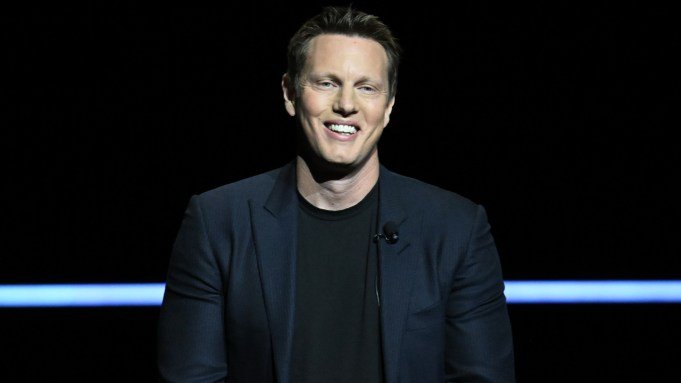
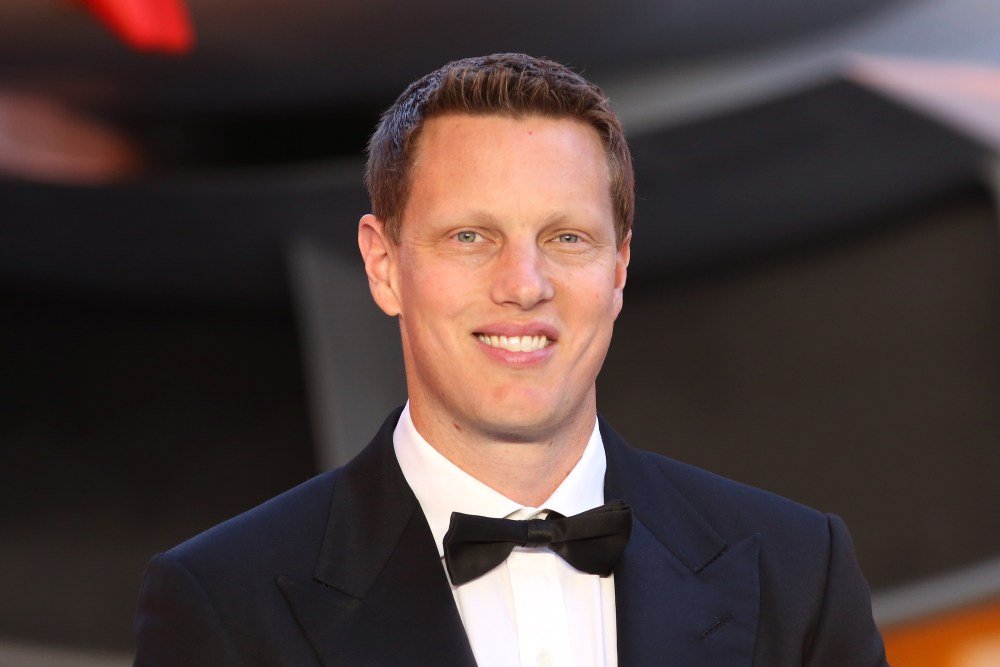
    Paramount CEO David Ellison was meeting on Monday with members of the House Ways & Means Committee to promote a federal film tax incentive, sources said.

    Ellison and Chief Legal Officer Makan Delrahim were among those meeting with the lawmakers. The idea of establishing a more robust federal incentive has drawn support from members on both sides of the aisle, amid concerns over the flight of productions overseas.

    The Ellison meeting is taking place on the same day that California’s attorney general, Rob Bonta, led 11 other states in suing to block Paramount’s proposed merger with Warner Bros. Discovery. Paramount has said that the combination actually would boost a needed rival to Netflix, but the lawsuit claims that it will give the company more market power to extract favorable terms from theatrical exhibitors and cable distributors.

    Sen. Adam Schiff (D-CA) has been working on legislation, but has not yet introduced a bill. He said in March that “state programs simply cannot substitute for the kind of globally competitive federal tax incentive that is needed to bring production back to American soil and stop its offshoring.”

    Representatives from guilds and unions also have been lobbying for a federal incentive, along with figures like Noah Wyle and producer Chris Fenton. Politico first reported on Ellison’s meeting.

    A challenge for any incentive bill would be the legislative calendar this year, as lawmakers have just a couple of weeks before summer recess, then return to face another end-of-fiscal year government funding deadline on Sept. 30. Congress is expected to be out of session in October for midterm campaigns.

    Lobbying for an incentive has picked up since President Donald Trump threatened to try to impose tariffs on film productions, although there is some question of whether he has the authority or means to do so. Industry groups have instead tried to direct the administration to the carrot rather than the stick, urging the president to consider an incentive instead.

    At the recent Mark Twain Prize at the Kennedy Center, Secretary of Commerce Howard Lutnick told Deadline that the administration is still studying the issue, while noting the bevy of state film incentives. For years, different states have been in a race to offer the more generous incentive packages, hoping to lure productions from California, but increasingly concerns have centered on jobs going to other countries.

    “The federal government is a national thing, and the states are particular, and you got to find the right balance,” Lutnick said. “We are a country with federal laws and state laws, and trying to find the right balance, that that’s what we’re studying.”

  • Amid a 12-State Backed Lawsuit, David Ellison Jets to D.C. to Fight for Hollywood Tax Credit

    Amid a 12-State Backed Lawsuit, David Ellison Jets to D.C. to Fight for Hollywood Tax Credit

    It’s been clear for months that David Ellison is a supporter of the idea of a federal film tax incentive, which has been gathering support in the legislature. Why wouldn’t he be? As the head of one studio and the aspiring leader of a combined Paramount-Warner Bros. Discovery, his entertainment empire stands to benefit from the U.S. offering a stackable incentive on top of states’ individual tax credit programs.

    But on Monday, the same day that California attorney general Rob Bonta and 11 other state regulators filed suit to block the proposed $111 billion Paramount-Warner Bros. merger, new details of Ellison’s actions to support such a bill came to light beyond his former declaration of support.

    The Paramount Skydance CEO and his chief legal officer, Makan Delrahim, are meeting with Republican members of the House of Representatives’ Ways and Means Committee about a bipartisan bill on Monday night, The Hollywood Reporter has confirmed. (Politico’s Daniel Miller was the first to report on the trip.) The trip is one of several that Ellison has been making in support of the bill, a source in D.C. confirmed.

    Previously, Sen. Adam Schiff and Rep. Laura Friedman were gathering support for a federal tax incentive bill, though President Donald Trump’s enmity with Schiff was largely seen in the industry as a liability. While it was unclear on Monday night which legislators would be carrying the bill that Ellison is lobbying for, a separate source noted that Friedman and Schiff are still involved.

    While it’s not surprising that Ellison is backing the initiative, his involvement may be helpful in swaying Trump to consider the idea. Since proposing a “100 percent tariff” on movies made in other countries a couple of times in 2025, the president has been largely silent on the topic of domestic film and TV production. Still, he appears to remain interested in domestic entertainment production, in May meeting with one of his “special ambassadors” to Hollywood, actor Jon Voight and his team of Steven Paul and Scott Karol, about the federal film incentive idea.

    Trump remains friendly with David and his father, Larry Ellison, in June of 2025, calling David “great” and saying he would “do a great job” running a combined Paramount-Warner Bros. Discovery. On June 12, the Department of Justice signed off on the proposed transaction, though the lawsuit filed Monday by 12 state attorneys general throws a wrench in Ellison’s plans.

  • Paramount CEO David Ellison Backing Bipartisan Federal Film Tax Incentive

    Paramount CEO David Ellison Backing Bipartisan Federal Film Tax Incentive

    Paramount Skydance CEO David Ellison has been quietly backing a bill to launch a federal film tax incentive, with lawmaker support on both sides of the aisle, multiple sources told Variety.

    Ellison has spent at least six months in exploratory meetings for the proposed legislation, two sources added, and on Monday evening was present in Washington, D.C. to break bread with top Republican leadership, where the matter will be discussed.

    Names of politicians from both parties involved in the bill were not immediately available. More than one source noted the irony of Ellison’s Monday night meeting occurring the same day that a group of state attorneys general filed suit to block the mogul’s acquisition of Warner Bros. (his general counsel, Makan Delrahim, is at his side in D.C.)

    A federal film tax incentive would provide significant financial relief to content producers fleeing the U.S. for rebates around the world. A federal program would also sweeten the deal in Hollywood’s home state of California, whose AG Rob Bonta is leading the charge on the searing antitrust lawsuit waged today against Ellison over Warner Bros.

    Hollywood’s labor unions — including the DGA, IATSE and SAG-AFTRA — have also taken up the mantle on a federal incentive. In its just-negotiated contract, the DGA stipulated that top studio execs must participate in lobbying for more favorable domestic filming incentives.

    California has a TV and film tax credit worth $750 million, but no such program exists on the national level.

    Bonta, along with a coalition of 12 other states, alleged in their antitrust suit that the $111 billion merger between the two legacy studios violates the Clayton Act by weakening competition in three markets: wide-release theatrical distribution, “top-grossing” theatrical distribution, and basic cable licensing. If Paramount and Warner Bros. merged, the suit argues, the combined company would control 27% of the wide-release theatrical distribution market, 30% of the submarket comprising “anticipated blockbuster films” and 27% of the basic cable bundle.

    “The unlawful merger of these two entertainment behemoths would lead to higher prices, lower quality, and less content for film and television, harming movie theaters, basic cable distributors, and ultimately, audiences on every sofa and movie theater seat in the U.S.,” Bonta said in a statement on Monday.

    Paramount, of course, fired back with a scathing statement after the suit was filed. The company said in the statement, “The lawsuit filed by the state attorneys general, in the most generous light, reflects a fundamentally flawed application of the antitrust laws and is wrong on both the facts and the law. Delaying this transaction will only harm entertainment workers who have already suffered over recent years as technology has disrupted their livelihood and cost California tens of thousands of entertainment jobs.”

    The Department of Justice already approved the deal in March, essentially clearing the way for Ellison to complete his plans for a combined Paramount-Warner Bros. Hollywood unions and stars have not been keen on the transaction, and fear an already struggling Hollywood could be further pushed underwater by a historically ineffective tactic of mega-merging two media behemoths.

    Politico’s Daniel Miller was the first to report Ellison’s interest in the federal film incentive.

  • Scammer Makes $135K After Hijacking SpaceX, Starlink Accounts to Shill Meme Coin

    Scammer Makes $135K After Hijacking SpaceX, Starlink Accounts to Shill Meme Coin

    A hacker made off with over $135,000 after hijacking the X accounts of SpaceX and Starlink to promote a meme coin.

    The profiles were used to shill a Robinhood-based token that briefly hit a $2 million market cap before crashing to almost zero.

    SpaceX and Starlink Fall Victim to Compromise

    Screenshots circulating on social media show both accounts reposting content from the token’s profile, with the posts featuring a Sam Altman (SCATMAN) meme coin and tags claiming they were associated with SpaceX.

    On-chain data shows the hacker created 10 trillion tokens and sold the entire stash, converting it into 59 Ether ($ETH) worth around $108,000 shortly after the posts went live.

    According to Lookonchain, a separate wallet linked to the attacker made another sale of 59.28 million SCATMAN tokens for 14.7 $ETH, valued at approximately $27,000, bringing the total profit to roughly $135,000. The on-chain analytics platform also identified the two addresses used by the hacker.

    Per GeckoTerminal data, SCATMAN’s market cap surged to over $2 million before being immediately rug-pulled. Meanwhile, both companies have since deleted the fake posts and regained control of their accounts.

    Rug Pulls Remain Common in Crypto Space

    Prominent social media account takeovers have become common in the crypto space, many of which have been used to pump and dump low-cap cryptocurrencies.

    You may also like:

    • Was It a Hack or Governance? BONK’s $21M Treasury Vote Divides Crypto
    • ZachXBT Turns Unwanted Meme Coin Donations Into $41K for Venezuela Relief
    • New Federal Data Reveals Donald Trump Holds $50 Million in Bitcoin in Cold Wallet

    For instance, Scroll co-founder Ye Chen’s X account was hijacked in January 2026, with attackers impersonating platform staff and sending phishing messages about copyright violations that tricked crypto leaders into clicking malicious links.

    A couple of months later, Pepe creator Matt Furie’s account was used to promote a scam token. Around the same time, WinRAR’s official account was also compromised to push a fake Solana meme coin to its followers.

    The most notable breach came in May when Keith Gill, popularly known as Roaring Kitty, had his dormant account breached. In this case, hackers launched Red Kitten Crew (RKC) on Solana and walked away with more than $600,000 in half an hour.

    Each case followed a pattern seen in crypto several times, where influencers create hype, developers cash out, and retail traders are left dealing with losses.

  • Jito proposes permanent JTO burns through sweeping revenue overhaul

    Jito proposes permanent JTO burns through sweeping revenue overhaul

    Jito has proposed a governance overhaul that would direct 100% of the DAO’s JTX revenue share toward open-market $JTO buybacks and permanent token burns through at least Q4 2027.

    According to a governance proposal published by Jito on July 13, the protocol has introduced JIP-38, which would formally classify Jito as a token-centric network where nearly all major network revenue flows to the decentralized autonomous organization and remains under the control of $JTO token holders.

    JIP-38 is now live.

    Value should live with the Network. This proposal formally establishes Jito as a token-centric network, committing 100% of the Jito DAO’s revenue share from @JTX_trade to programmatic buyback and burns of $JTO for at least 1 year from JTX launch.

    — Jito (@jito_sol) July 13, 2026

    The proposal triggered an immediate market reaction, with Jito ($JTO) climbing as much as 8% shortly after its release, according to data from crypto.news.

    Revenue would be redirected to $JTO holders

    Under JIP-38, Jito proposes using the DAO’s entire share of JTX revenue to buy $JTO tokens on the open market before permanently removing those tokens from circulation. According to the proposal, this arrangement would remain in place for at least one year, extending through the fourth quarter of 2027.

    One exception remains in the framework. The proposal states that 20% of JTX platform fees would continue to be reinvested into JTX development rather than being allocated to buybacks and burns. Jito said the remaining major revenue streams would continue flowing through the DAO under governance controlled by $JTO holders.

    To carry out the program, the proposal calls for buybacks to be executed automatically through a Rev Splitter mechanism overseen by the project’s Dev Council. Alongside the automation process, Jito plans to update its governance documentation so the protocol’s operating model formally recognizes the token-centric structure.

    According to JIP-38, existing revenue allocation commitments would be completed before a comprehensive review of protocol fee streams takes place in Q4 2027.

    During that review, governance participants would evaluate the performance of token buybacks, ecosystem incentives, and other capital allocation methods before $JTO holders vote on the network’s next long-term revenue framework.

    Governance changes extend beyond token burns

    Beyond the buyback program, JIP-38 outlines several operational changes intended to support the new revenue structure. According to the proposal, the Rev Splitter would become progressively more automated while governance records would be updated to match the revised economic model.

    Jito also stated in the proposal that the framework is designed so value generated across the network accrues to the $JTO token instead of external corporate entities. Any future changes to revenue allocation after Q4 2027 would require approval through governance voting by $JTO holders.

    The proposal arrives as Jito continues expanding its presence across the Solana ecosystem. Earlier this year, as previously reported by crypto.news, 21Shares launched the 21Shares Jito Staked SOL ETP (JSOL) on Euronext Amsterdam and Euronext Paris.

    The issuer said the product provides regulated exchange-traded exposure to Solana through JitoSOL while embedding staking rewards, allowing investors to access the asset through traditional brokers and banks without managing wallets or staking infrastructure.

    Institutional support for the protocol has also grown over the past year. As previously reported by crypto.news, Andreessen Horowitz’s (a16z) crypto division invested $50 million in Jito to help expand the Solana staking protocol’s ecosystem.

    The investment included an allocation of $JTO tokens to the venture firm, adding another high-profile backer as the protocol seeks approval for its latest governance proposal.