Blog

  • Israeli attacks on Lebanon aimed to undermine ceasefire, critics say

    Israeli attacks on Lebanon aimed to undermine ceasefire, critics say

    Just hours after the United States and Iran announced a ceasefire in the war that has dominated news headlines around the world and pushed oil prices to new heights, Israel bombarded Lebanon on Wednesday, killing hundreds, injuring thousands and prompting Iran to reimpose its blockade of the Strait of Hormuz.

    The bone of contention: whether or not Israel’s relentless strikes on Lebanon were included in the ceasefire at all. Pakistan, which brokered the agreement, said they were. Israel said they weren’t.

    Recommended Stories

    list of 4 itemsend of list

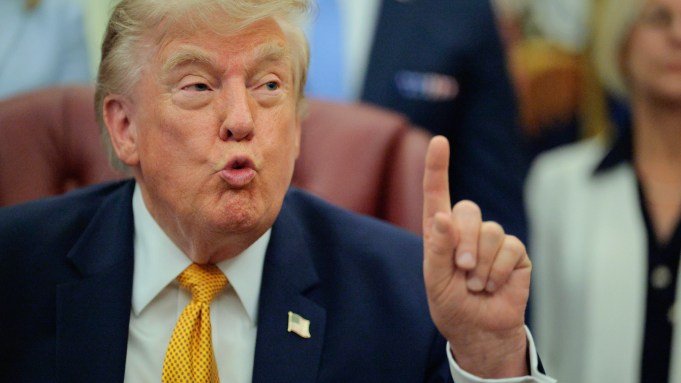
    Later on Wednesday, the US sided with Israel, with President Donald Trump calling the violence in Lebanon “a separate skirmish” even though Hezbollah had entered the war in defence of Iran.

    In Israel, Prime Minister Benjamin Netanyahu has come under intense political pressure since the US and Iran signed the ceasefire, which had little or no active involvement from Israel.

    None of Israel’s war aims, which Netanyahu had assured his country were the basis for what he framed as an existential battle with Iran, had been achieved, angering those who supported the war.

    Furthermore, under the terms of the truce published yesterday, a 10-point peace plan put forward by Iran has been accepted as a starting point for negotiations due to begin this weekend in Islamabad.

    Under early descriptions of the Iranian plan, Iran would retain its nuclear stock and could benefit financially from levies charged on shipping traffic through the Strait of Hormuz and from tariffs and sanctions relief promised by Israel’s ally, US President Donald Trump, on his Truth Social account.

    This is far from the 15-point list of demands the US previously put forward to Iran, which would have seen the strait completely reopened without conditions, and Iran giving up its enriched uranium stocks, ending its ballistic missiles programme and promising to stop arming proxy groups in the region, such as the Houthis in Yemen, Hezbollah in Lebanon and a flurry of armed groups in Iraq.

    Arguing that Lebanon is exempt from the ceasefire agreement, Israel launched the most extensive bombardment on its neighbour in recent months on Wednesday. In the space of about 10 minutes, the Israeli military carried out more than 100 strikes on what it claimed were Hezbollah targets, hitting Beirut, southern Lebanon and the eastern Bekaa Valley, killing at least 254 people, 91 of them in the capital, Beirut, alone.

    The attacks have been condemned by numerous nations and international organisations, including Spain, France, the United Kingdom, the United Nations and Pakistan, which brokered the ceasefire deal and stated explicitly that Lebanon was included.

    Responding to the strikes, Iranian state media announced that its government was now considering walking away from the truce and has already announced that restrictions on the economically vital Strait of Hormuz will be reimposed.

    For its part, Israel says it is not trying to kill the ceasefire by launching strikes on Lebanon. Charles Freilich, Israel’s former deputy national security adviser, told Al Jazeera that the motivation for the strikes arose solely from the “opportunity to hit numerous mid to high-level Hezbollah fighters, not spoil the ceasefire, which both the US and Israel maintain does not include Lebanon”.

    ‘Provocateurs-in-chief’

    Some analysts are sceptical, however.

    “Israeli officials will no doubt claim that this was a super sophisticated operation against necessary security targets, perhaps embellishing those arguments with claims of deep intel and technological penetration and sophistication, and you will probably have the usual mainstream Western media outlets slavishly parroting the Israeli line,” former Israeli government adviser Daniel Levy told Al Jazeera, before explaining that such operations typically combine two principal features.

    “The first is, sadly, an Israeli devotion to death and destruction, largely for its own sake, to spread terror and upend state capacity in various places in the region, and to upend civilian life,” he said. “And, secondly, a very transparent attempt to prolong the broader war against Iran, to collapse any ceasefire prospects, and to act as provocateurs-in-chief.”

    Politically, support within Israel for the war may have weakened, however. Many of those who initially supported the war on Iran have been unsparing in their criticism of a potential pause in the conflict negotiated by the other two parties at Israel’s apparent expense.

    Posting on X, opposition leader Yair Lapid claimed that Prime Minister “Netanyahu has turned us into a protectorate state that receives instructions over the phone on matters pertaining to the core of our national security”.

    Democrats leader Yair Golan was equally scathing. “Netanyahu lied,” he wrote on X. “He promised a ‘historic victory’ and security for generations, and in practice, we got one of the most severe strategic failures Israel has ever known.”

    Israeli opposition leader Yair Lapid addresses the Knesset, Israel's parliament.
    Israeli opposition leader Yair Lapid has been unsparing in his criticism of Prime Minister Benjamin Netanyahu following a ceasefire he claims Israel was excluded from [Evelyn Hockstein/Pool via AP]

    “Netanyahu is in real trouble, and he thinks he has to wreck the ceasefire to get out of it, just as he did previously in Gaza,” Member of the Knesset Aida Touma Sliman of the left-wing Hadash party, which has opposed the war from the start, told Al Jazeera. “The ceasefire has lost him a lot of support, even among those who backed the war. None of his war aims have been achieved and it looks like he is losing control to the Trump administration,” she said.

    “Don’t forget, we’re heading towards elections,” she added, referring to the vote currently slated for October, “and Netanyahu’s dropping in the polls. He needs something he can claim is a victory.

    “And that’s why he did what he did,” she said, of Wednesday’s barrage on busy Lebanese neighbourhoods that killed hundreds, including women, children and medical workers, according to emergency workers on the ground. “He conducted a massacre in Lebanon.”

  • AlphaTON raises $43 million to build sovereign AI and privacy infrastructure

    AlphaTON raises $43 million to build sovereign AI and privacy infrastructure

    AlphaTON secures about $43 million from Vertical Data to build sovereign AI and privacy computing infrastructure for $TON, Telegram and Animoca‑linked applications.

    AlphaTON Capital has entered a strategic financing agreement worth approximately $43 million with Vertical Data to accelerate its AI and privacy computing infrastructure build‑out. The $TON‑focused financial firm said the collaboration centers on AI hardware deployment to speed up its “privacy computing” roadmap and sovereign AI infrastructure stack. According to AlphaTON, the goal is to support integrated development across AI, digital assets, and confidential computing on top of the $TON ecosystem.

    The company added that its planned AI and privacy computing infrastructure will provide base‑layer computing power for applications built by partners such as Telegram and Animoca Brands, positioning the stack as shared infrastructure rather than a siloed product play. In its announcement, AlphaTON framed the project as a way to align high‑performance AI hardware with end‑to‑end encrypted and privacy‑preserving computation, arguing this is necessary to reconcile regulatory demands with scalable AI and Web3 services. Vertical Data’s role, as outlined in the deal, is to bring capital and hardware deployment expertise to the partnership as demand for AI compute continues to outstrip traditional data‑center capacity.

    By explicitly branding the stack as “sovereign AI infrastructure,” AlphaTON is tapping into a growing narrative that AI models and data pipelines should run on infrastructure that is both jurisdictionally aligned and privacy‑preserving. This overlaps with the rise of confidential computing, which uses hardware‑based enclaves and cryptographic techniques to process sensitive data without exposing it in the clear. In the context of digital assets, such infrastructure could underpin use cases like private on‑chain recommendation engines, encrypted identity scoring, or AI agents that can transact while shielding user‑level data.

    The participation of partners like Telegram and Animoca Brands signals that AlphaTON is targeting high‑volume consumer and gaming applications rather than purely institutional workloads. Telegram brings a massive messaging and social graph, while Animoca Brands sits at the intersection of gaming, NFTs, and metaverse‑style experiences. Their involvement suggests AlphaTON’s infrastructure is expected to support not only generic AI workloads but also on‑chain gaming, social, and digital asset applications that need both throughput and privacy guarantees.

    For internal linking, you can connect this piece to three relevant Crypto.news articles, for example: a feature on confidential computing and crypto vouchers, a report on AI‑driven Web3 infrastructure raises, and an article on Telegram‑linked $TON ecosystem development (all linked on single keywords like “confidential,” “AI infrastructure,” and “$TON”). Additionally, for any tokens mentioned (for instance, Toncoin or others used in the final edit), link their names to the corresponding Crypto.news price pages from the market‑cap section, ensuring each token name in the body is a single‑word link to its price page.

  • CLARITY Act: Ethics Concerns Resurface as Democrats Probe TRUMP Coin’s Mar-a-Lago Conference

    CLARITY Act: Ethics Concerns Resurface as Democrats Probe TRUMP Coin’s Mar-a-Lago Conference

    Ethics reportedly remains a threat to the CLARITY Act’s progress, despite the stablecoin yield clash currently taking center stage. This development comes as Democrats probe the $TRUMP Coin conference holding later this month, with U.S. President Donald Trump reportedly set to attend.

  • Sister’s reminder leads Maryland woman to $50,000 lottery prize

    Sister’s reminder leads Maryland woman to $50,000 lottery prize

    Odd News // 3 weeks ago

    Prosthetic leg, surfboard among Los Angeles Metro’s Lost & Found

    March 13 (UPI) — The Los Angeles Metro revealed some of the most unusual items in its Lost & Found, including a surfboard, a prosthetic leg and a 55-inch TV.

  • Podcast: Harrison Ford on the “Serious Shit” of ‘Shrinking,’ How Depression Led Him to Acting and Why He’s “Terribly Concerned” About the Future of Moviegoing

    Podcast: Harrison Ford on the “Serious Shit” of ‘Shrinking,’ How Depression Led Him to Acting and Why He’s “Terribly Concerned” About the Future of Moviegoing

    Harrison Ford, the guest on this episode of The Hollywood Reporter’s Awards Chatter podcast, has, over the course of more than 50 years in Hollywood, arguably entertained more people than anyone else, and inarguably become a living legend.

    Ford is, of course, best known for his work on the big screen. He played a trio of everymen-turned-heroes around whom some of the biggest film franchises in history were built: Han Solo of Star Wars, Indy of Indiana Jones and Deckard of Blade Runner. And he also showcased his chops and box-office appeal in a host of other classics including American Graffiti, The Conversation, Witness, Working Girl, The Fugitive, Air Force One and 42.

    Collectively, his films have grossed more than $10 billion worldwide. The National Association of Theatre Owners selected him as the Star of the Century, Empire magazine placed him at No. 1 on its list of the top 100 movie stars of all time, the Wall Street Journal described him as “a living reminder of shared movie moments that perhaps billions of people across generations and continents hold deeply” and the New York Times described him as “one of the last true movie stars, a man whose name alone could sell tickets.”

    Over the last five years, however, he has devoted much of his time and attention to the small screen — and has done some of his best work yet, particularly on Shrinking, the Apple TV comedy on which he plays Dr. Paul Rhoades, the acerbic senior member of a psychotherapy practice in Pasadena, who is battling Parkinson’s disease. Last year, the show’s second season brought him the first Emmy nomination of his career; this year, its third season — which just finished rolling out this week — might well bring him his first Emmy statuette.

    Jason Segel and Harrison Ford on season three of Shrinking

    Apple TV

    Over the course of a 90-minute conversation at the Barker Hangar in Santa Monica, the 83-year-old reflected on how depression during college led him to acting; the fateful events that resulted in him moving to Hollywood, becoming a contract player at the tail-end of the studio system, and landing his life-changing role in Star Wars; why he quickly developed a desire to escape being a “leading man” and to instead play “character parts,” and what he made of the opportunity to do so in projects such as The Mosquito Coast, 42 and Shrinking; what it is about Shrinking that he finds so challenging and rewarding; how he feels about the future of moviegoing; plus much more.

    Here are a few key excerpts of the conversation (lightly edited for clarity or brevity), which you can listen to in its entirety at the top of this post or via any major podcast app…

    On how clinical depression led him to acting…

    “I had a single room and I had classes to go to, but I rarely ventured out. I would get up out of my single bed, go to a phone, order a pizza, go back and lay down in bed until the pizza came. I would eat the pizza, throw the wrappers in the corner, go back to sleep. And on the rare occasion I did go to the classroom, I would often touch the door on the outside of the building, and turn around and walk back. I was more than depressed. I think I was ill. I was socially ill, psychologically not well. And I never found a community at college until I accidentally — in an attempt to get my grade-point-average up — took a class called ‘drama’ without reading the full description of the class. It started out in the description talking about reading and analyzing plays, but I didn’t read the part where it said that you had to actually be in them as well, so that was a surprise. I’d never done anything like that. And I was surprised that the people that I had considered to be fellow geeks and misfits were, in fact, some of the most interesting people I knew. They were doing something that I hadn’t really understood, and they were telling stories about life and life, and some of them were exceptional in their capacity to understand human behavior. And so I think I simply found my place amongst storytellers. It really changed my world, changed my life.”

    On a fateful meeting — arranged by the man who wrote the incidental music for a play in which Ford was appearing, Ian Bernard — with a casting director at Columbia Pictures…

    “He suggested that he had a friend or he knew somebody at Columbia Pictures who might help in my career, and so he made an appointment for me. I had not been a big movie fan, and really didn’t know the names of the major motion picture studios, so this was the first time I was ever in a studio. I was ushered into a waiting room with an English secretary and walnut walls and waited for about 45 minutes to be seen by a man who was sitting behind a desk on two telephones… I was ushered into the office for a minute or two while he went through this routine, and then he turned to me and he said, ‘Who sent you?’ I said, ‘Ian Bernard’… He didn’t know who it was. He took out a little three-by-five card and he said, ‘How tall are you?’ I said, ‘Six feet.’ ‘How much do you weigh?’ ‘175 pounds.’ ‘Can you ride a horse?’ ‘Oh yeah, I can ride a horse. Sure.’ And, ‘Can you speak Spanish?’ Which came out of nowhere. ‘No, I can’t speak Spanish.’ ‘Well, if we find anything, we’ll let you know.’ I was out of there in five minutes. I went down the hall, pressed the button for the elevator, realized I had to take a pee. The men’s room was right next to the elevator. I went into the men’s room, I did my business, and I came out of the room seconds later to the guy who had been behind the desk running down the hall saying, ‘Come on back, he wants to talk to you!’ And I went back and he said, ‘How would you like to be under contract?’ I didn’t know what that meant. I said, ‘What does that mean?’ He said, ‘It means $150 a week to start.’ ‘Oh, wow!’… Now I was under contract at Columbia Pictures for seven years.”

    On how he wound up in two very different projects directed by George Lucas four years apart, American Graffiti and Star Wars

    “He [Lucas] had made it clear to the agents of all of the performers in American Graffiti that he would not be using anybody [again in Star Wars] — he was looking for new faces. [Post-American Graffiti] I was working at Francis Ford Coppola’s offices installing an elaborate millwork portico to his office, an entrance. I had been working there for a couple of weeks at night — I refused to work during the day, because I didn’t want to confuse people about who I was and what I was doing — and one morning I was sweeping up and finishing up for the day, and in walks George Lucas with Richard Dreyfuss, who figured quite prominently in American Graffiti, and he was there for the first interview for Star Wars, and there I was, with a broom in my hand and my carpenter’s tool belt! But fortune continued to smile on me. I was asked by Fred [Roos, the casting director] if I would do them a favor and read with the actors that were reading for the parts, without any indication that I might be under consideration, so I did that. People would come in and they’d be given two pieces of paper, some lines to read, and they’d read it, and they’d look at me and say, ‘What is this? What’s this about?’ And I would explain to them, in as few words as possible, because a lot of people were coming through. I mean, I read with everybody… And then at the end, they told me that they wanted me to do it.”

    Mark Hamill, Carrie Fisher and Harrison Ford in Star Wars

    Courtesy of Everett Collection

    On wanting to escape ‘leading man’ roles and play character parts…

    “When the part can be described as a ‘leading man,’ you have certain responsibilities. You have to make the audience happy to be with you. You usually end up supplying an easy answer to a difficult dilemma that’s been driving the film, and then you end up with a soft solution, as it were… I always wanted to be a character actor. I had never thought that I would be a leading man… I got to play leading parts because the films I was in had success, and that success carried me along.”

    On the joy of making Shrinking

    “I find it really fulfilling doing what I do, and I enjoy it as much as I ever, ever could possibly have imagined. Now I’m doing something I never thought that I would be doing: a television show now in its fourth season, a comedy, playing a shrink? Come on!… There are a few things that really make it fun. You work faster, and that’s fun for me — I like getting there, getting the work done, and going home. I love the challenge. I love the danger, if you will, of the work that I’m able to do. And I like the company.”

    On sharing scenes with Michael J. Fox during season three of Shrinking

    “Here I am now, playing a guy with Parkinson’s, and I’m sitting next to Michael J. Fox. This is serious shit, man. This is not insignificant for me.”

    On the future of the theatrical moviegoing experience…

    “I’m terribly concerned. I came up at a period of time when the movie business was at its zenith, when the movie business captured the zeitgeist of a culture, and there was a transference, a cross-feeding, and the culture captured the zeitgeist of the movies. There is no zeitgeist anymore. We’ve been disassociated. We’ve been purposefully disaggregated into serviceable political economic units. There is an empty center that needs to be filled, to bring the culture back together, to bring the culture and the movie business back together, for the movie business to be useful in the consciousness of an audience, a culture, a community.”

    Harrison Ford and Michael J. Fox on season three of Shrinking

    Apple TV+

  • Lukas Dhont’s ‘Coward’ First Look Shows Soldiers in Battle Ahead of Cannes Competition

    Lukas Dhont’s ‘Coward’ First Look Shows Soldiers in Battle Ahead of Cannes Competition

    A first look photo from Lukas Dhont’s Coward, the Belgian director’s latest feature headed to Cannes in competition, was released on Thursday by The Match Factory.

    “I am deeply honored to once again take part in the competition at the Cannes Film Festival. Coward is the work of many and my most ambitious project yet. A film about love and death, creation and destruction. A film about survival and how, sometimes, even in darkness, something beautiful manages to grow. Coward is a tribute to those who, throughout the centuries, were sent to fight—and those who tried to escape it at any cost,” Dhont said in a statement on news of his return to Cannes.

    The first photo for the First World War drama (shown above) reveals Pierre, a young Belgian soldier, as he grapples with cowardice and heroism on the battlefield. Behind the frontlines, Pierre meets Francis, who is asked to find a way to boost morale, according to a synopsis from the producers.

    After delivering back-to-back Cannes darlings with the Camera d’Or winner Girl (2018) and Grand Prix-winning Close (2022), Dhont is returning to Cannes with his third feature and his first period piece. Coward reunites the director with longtime co-writer Angelo Tijssens and is produced by Michiel Dhont under the Reunion banner founded by the Dhont brothers.

    Coward is also produced by Lumen, Topkapi Films & Versus (Opus), as part of a co-production with Cine+ OCS, France 2 Cinéma, VTM, RTBF, Proximus, BeTV & Orange. In the Benelux, the film is distributed by Lumière and in France by Diaphana Distribution.

    The Match Factory is handling international sales. 

  • Djibouti elections: Who’s running against Guelleh and what’s at stake?

    Djibouti elections: Who’s running against Guelleh and what’s at stake?

    As the small East African coastal nation of Djibouti prepares for presidential elections on Friday, longtime leader President Ismail Omar Guelleh is expected to win the polls with little to no challenge.

    Djibouti, a country of just about one million people that neighbours Eritrea, Ethiopia and Somalia, is politically relevant in the Horn of Africa region. It is also internationally important due to its strategic location right at the Bab al-Mandeb Strait, which provides access to the Red Sea from the Gulf of Aden and through which a large portion of global trade between Asia and the West passes.

    Recommended Stories

    list of 3 itemsend of list

    Djibouti hosts important military bases for the United States, France, China and other powers, earning it the tag of the country with the most foreign military bases. It is also an important port hub for bigger inland landlocked countries like Ethiopia.

    Incumbent candidate Guelleh is running for his sixth term as president. Though originally ineligible due to term limits and age, lawmakers removed age limits last year, paving the way for another term in office.

    Formerly named French Somaliland under colonialism, the country continued to maintain large numbers of French troops following independence in 1977, but it was the September 11, 2001, attacks in the US that saw it garner new attention as Washington sought proximity to armed groups in Somalia and Yemen.

    Djibouti was also a strategic military launchpad for naval units during the anti-piracy fights of the mid-2000s when the US, European Union, and other allies sought to battle pirates off the coast of Somalia.

    Both French and Arabic are official languages in Djibouti. Somali and Afar are also widely spoken by Somalis, who make up about 60 percent of the population, and people from the Afar group, who comprise about 35 percent.

    About 94 percent of people in Djibouti practise Islam. The local currency is the Djiboutian franc.

    Here’s what to know about Friday’s election:

    Who is eligible to vote?

    About a quarter of the population, or 243,471 people, are registered to vote in the polls, according to the International Foundation for Electoral Systems. That’s up from the last presidential election in 2021, when about 215,000 were registered.

    Voter turnout on average is about 67 percent.

    Polls are expected to open early on April 10 and close in the evening.

    Although Djibouti is described by monitors as an “electoral autocracy”, election observers from the Intergovernmental Authority on Development (IGAD), an eight-country regional bloc, arrived there on Tuesday.

    IGAD said 17 observers from Ethiopia, Kenya, Somalia, South Sudan and Uganda will be deployed across all regions, and will release a statement after the vote on April 12.

    Djibouti
    Djibouti’s President Ismail Omar Guelleh casts his ballot during the presidential elections at the Ras-Dika district polling centre in Djibouti, on April 9, 2021 [File: Abdourahim Arteh/Reuters]

    Who is running?

    Ismail Omar Guelleh: The 78-year-old incumbent, known as “IOG”, is running for his sixth term as president. He was first voted into power in 1999. His party is the ruling People’s Rally for Progress.

    Guelleh’s latest bid came after lawmakers in November unanimously amended the constitution to remove a 75-year-old age limit. Back in 2010, parliament had scrapped term limits in a constitutional reform.

    Guelleh has been criticised for ruling with an iron fist and holding on to power unconstitutionally. However, he is also credited with maintaining a relatively stable hold in a region that’s usually rife with instability.

    Under his rule, Djibouti, which has no natural resources, has signed infrastructure deals with China and lucrative military hosting pacts with Western powers by leveraging its location.

    Djibouti Finance Minister Ilyas Dawaleh in 2017 said the country makes $125m a year from hosting US, French, Chinese, Italian and Japanese military bases, with Washington paying almost half of that.

    The US base, Camp Lemonnier, is the only permanent US military base in Africa.

    Guelleh, donning his party’s leaf-green colours, spoke to hundreds of his supporters during campaign rallies that were held in the capital this month.

    In one campaign, he said the elections and the choices available to voters “are consistent with democracy” in the country and promised more “significant success” if elected. His supporters held up banners that read “national unity and social cohesion”.

    Mohamed Farah Samatar: Guelleh’s only rival is a former member of the ruling party. He is running under the Unified Democratic Centre party.

    Samatar rallied in Tadjourah and Obock regions with his supporters, claiming that “another Djibouti is possible”.

    Sonia le Gouriellec, a Horn of Africa expert at Lille Catholic University, told the AFP news agency: “There’s not much at stake [in the election]. It’s just a token competition.”

    Omar Ali Ewado, head of the Djibouti League of Human Rights (LDDH), called the vote a “masquerade” and said it is a “foregone conclusion”.

    “The person who will challenge President Guelleh is a member of a small party subservient to those in power,” he told AFP.

    Map of Djibouti.

    What are the key issues?

    Shrinking democratic freedoms

    Guelleh’s critics are increasingly sounding the alarm about the shrinking of civic space in the country.

    Elections have been described as merely ritualistic, with Guelleh winning more than 90 percent of votes in the 2021 polls. Since 2016, opposition parties have boycotted elections.

    Guelleh’s government is also accused of high levels of corruption and nepotism, with some speculating that his stepson and the secretary-general of the prime minister’s office, Naguib Abdallah Kamil, is being prepared for the top job.

    The country is regularly singled out by human rights organisations for its repression of dissenting voices. It is currently ranked 168th out of 180 in the 2025 press freedom index published by Reporters Without Borders (RSF).

    One aspiring presidential candidate, Alexis Mohamed, who formerly served as presidential adviser until he resigned in September, told reporters he was “unable” to pursue his candidacy because he had no “security guarantees” if he were to return to the country from his current location abroad.

    Mohamed, who served in an official capacity for 10 years, accused Guelleh of “patronage-based management of the state”.

    According to the International Federation for Human Rights, elections in Djibouti are “not free”.

    Rising debt

    Many accuse Guelleh of brandishing shiny infrastructure projects built by China, such as a railway to Ethiopia, but point to the country’s stagnating economy and rising debts to Beijing.

    By 2026, the country owed China $1.2bn from loans, as well as several others. The International Monetary Fund said in a report in 2025 that Djibouti’s debt profile is “in distress and unsustainable”.

    Some of these costly infrastructure projects have not had an impact on lowering poverty rates. About 73 percent of the country’s young population is unemployed due to a dearth of jobs, for one example.

    Meanwhile, a major source of the country’s revenue is under threat: Djibouti’s ports almost entirely handle Addis Ababa’s maritime imports and exports for about $2bn annually.

    However, in 2024,  Ethiopia is seeking to reduce that independence. The country signed a port deal with autonomous Somaliland, a case that has caused tensions with Djibouti as well as Somalia, which considers Somaliland part of its own territory.

    Following Turkiye-led mediation, Ethiopia and Somalia reached a preliminary understanding in late 2024 to resolve their dispute. Ethiopia has agreed to pivot to “reliable and sustainable” sea access with Somalia rather than with Somaliland.

  • ‘Wednesday’ Season 3 Casts Lena Headey, Andrew McCarthy, James Lance

    ‘Wednesday’ Season 3 Casts Lena Headey, Andrew McCarthy, James Lance

    Wednesday” Season 3 has added three to its cast in guest star roles.

    Lena Headey (“Game of Thrones,” “The Abandons”), Andrew McCarthy (“St. Elmo’s Fire,” “Brats”), and James Lance (“Ted Lasso”) will all appear in the third season of the hit Netflix series, which is currently in production.

    The trio join previously announced new cast members Eva Green, who will play Morticia’s sister, Winona Ryder in an undisclosed role, and Chris Sarandon, Noah Taylor, Oscar Morgan, and Kennedy Moyer.

    As with past seasons, the third is being shot in Dublin, Ireland. Jenna Ortega will return in the role of Wednesday Addams, who viewers last saw riding off with her Uncle Fester (Fred Armisen) to attempt to rescue her friend and roommate Enid (Emma Myers) from being trapped as an alpha werewolf.

    Aside from Ortega, Myers, and Armisen, the cast of “Wednesday” includes: Hunter Doohan, Joy Sunday, Moosa Mostafa, Georgie Farmer, Isaac Ordonez, Billie Piper, Luyanda Unati Lewis-Nyawo, Victor Dorobantu, Evie Templeton, with Luis Guzmán, Catherine Zeta-Jones, and Joanna Lumley.

    The show is based on characters created by Charles Addams. Alfred Gough and Miles Millar developed the show and serve as executive producers and showrunners. Tim Burton serves as director and executive producer. MGM Television is the studio.

    Headey is repped by TMT Entertainment, CAA, and Kraditor & Haber. McCarthy is repped by CAA, Liebman Entertainment, and Hirsch Wallerstein. Lance is repped by United Agents and Industry Entertainment.

  • What is Iran’s Strait of Hormuz protocol and will other nations accept it?

    What is Iran’s Strait of Hormuz protocol and will other nations accept it?

    The Strait of Hormuz, which links the Gulf to the Gulf of Oman, has held global attention since Israel and the US began their war on Iran in February.

    Until fighting began, the narrow channel, through which 20 per cent of the world’s oil and liquefied natural gas (LNG) supplies are shipped from Gulf producers in peacetime, remained toll-free and safe for vessels. The strait is shared by Iran and Oman and does not fall into the category of international waters.

    Recommended Stories

    list of 4 itemsend of list

    After the US and Israel began strikes, Iran retaliated by attacking “enemy” merchant ships in the strait, effectively halting passage for all, stranding shipping, and creating one of the worst-ever global energy distribution crises.

    Tehran continued to refuse to re-open the strait to all traffic at the start of this week, despite US President Donald Trump’s threats to bomb Iran’s power plants and bridges if it did not relent. Trump backed away from his threat on Tuesday night when a two-week ceasefire, brokered by Pakistan, was declared.

    That followed a 10-point peace proposal from Iran that Trump described as a “workable” basis on which to negotiate a permanent end to hostilities.

    As part of the truce, Tehran has now issued official terms it says will guide its control of the Strait going forward. The US has not directly acknowledged the terms ahead of talks set to begin in Islamabad on Friday. However, analysts say Tehran’s continued control will be unpopular with Washington, as well as other countries.

    During the crisis, only a few ships from specific countries deemed friendly to Iran and those which pay a toll have been granted safe passage. At least two tolls for ships are believed to have been paid in Chinese yuan, in what appears to be a strategy to weaken the US dollar, but also to avoid US sanctions. China, which buys 80 percent of Iran’s oil, already pays Tehran in yuan.

    Here’s what we know about how shipments will work from now on:

    INTERACTIVE - Strait of Hormuz - March 2, 2026-1772714221
    (Al Jazeera)

    Who is controlling the strait now?

    On Tuesday, Iran’s Foreign Minister Abbas Aragchi said Iran would grant safe passage through the strait during the ceasefire in “coordination with Iran’s Armed Forces and with due consideration of technical limitations”.

    On Wednesday, the Islamic Revolutionary Guard Corps (IRGC) released a map of the strait showing a safe route for ships to follow. The map appears to direct ships further north towards the Iranian coast and away from the traditional route closer to the coast of Oman.

    In a statement, the IRGC said all vessels must use the new map for navigation due to “the likelihood of the presence of various types of anti-ship mines in the main traffic zone”.

    Alternative routes through the Strait of Hormuz have been announced by Iran's Islamic Revolutionary Guard Corps (IRGC), providing new entry and exit pathways for maritime traffic.
    Alternative routes through the Strait of Hormuz have been announced by Iran’s Islamic Revolutionary Guard Corps (IRGC), providing new entry and exit pathways for maritime traffic [Screen grab/ Al Jazeera]

    It is unclear whether Iran is collecting toll fees during the ceasefire period.

    However, Trump said on Tuesday the US would be “helping with the traffic buildup” in the strait and that the US army would be “hanging around” as the negotiations go on.

    The Strait will be “OPEN & SAFE” he posted on his Truth Social media site on Thursday, adding that US troops would not leave the area, and threatening to resume attacks if the talks don’t go well.

    It’s not known to what extent US troops are directing what happens in the strait now.

    Delhi-based maritime analyst C Uday Bhaskar told Al Jazeera that there is a lot of “uncertainty” about who can sail through the strait, and that only between three and five ships have transited since the war was paused.

    How does Iran’s 10-point plan affect the Strait?

    Among Tehran’s main demands listed on its 10-point plan are that the US and Israel permanently cease all attacks on Iran and its allies – particularly Lebanon – lift all sanctions, and allow Iran to retain control over Hormuz. The plan has not been fully published but is understood to be a starting point for talks.

    Iranian media say Iran is considering a plan to charge up to $2m per vessel to be shared with Oman on the opposite side of the strait. Other reports suggest Iran could charge $1 per barrel of oil being shipped.

    Revenues raised would be used to rebuild military and civilian infrastructure damaged by US-Israeli strikes, Tehran said.

    Oman has rejected the idea. Transport minister Said Al-Maawali said on Wednesday that the Omanis previously “signed all international maritime transport agreements” which bar taking fees.

    Interactive_Iran_US_Ceasefire_April8_2026

    What does international law say about tolls on shipping?

    Critics of Iran’s plan to charge tolls say it violates international law guiding safe maritime passage, and should not be part of a final ceasefire agreement.

    The United Nations Convention on the Law of the Sea (UNCLOS) says levies cannot be charged on ships sailing through international straits or territorial seas.

    The law allows coastal states to collect fees for services rendered, such as navigation assistance or port use, but not for passage itself.

    Neither the US nor Iran has ratified that particular convention, however.

    Even if they had, there could be ways to get around this law anyway. Analyst Bhaskar told Al Jazeera that if Iran instead charged fees to de-mine the strait and make it safe for passage again, that could be allowable under maritime laws.

    There is no precedent in recent history of countries officially taxing passage through international straits or waterways.

    In October 2024, a United Nations Security Council report alleged that the Iran-backed Houthis in Yemen were collecting “illegal fees” from shipping companies to allow vessels to pass through the Red Sea and the Bab-el-Mandeb strait, where it was targeting ships linked to Israel during the Gaza war.

    Last week, a top adviser to Supreme Leader Mojtaba Khamenei suggested the Houthis could shut the Bab al-Mandeb shipping route again in light of the war on Iran.

    INTERACTIVE - Bab al-Mandeb strait red sea map route shipping map-1774773769
    (Al Jazeera)

    How might countries react to a Hormuz toll?

    Tolls for passage through the Strait of Hormuz would likely most affect oil and gas-producing countries in the Gulf, but ripple effects will spread to others as well, as the current supply shocks have shown.

    Gulf countries, which issued statements calling for the reopening of the passage and praising the ceasefire on Wednesday, would also face a continuing degree of uncertainty, analysts say, as Iran could again disrupt flows in the future.

    Before the ceasefire was announced, Bahrain had already proposed a resolution at the UN Security Council calling on member states to coordinate and jointly reopen the passage by “all necessary means”. It was backed by Qatar, the UAE, Saudi Arabia, Kuwait and Jordan. On April 7, 11 of 15 UNSC members voted in favour of that resolution.

    But Russia and China vetoed the resolution, saying it was biased against Iran and did not address the initial strikes on Iran by the US and Israel.

    Beyond the region, observers say the US is unlikely to accept indefinite toll demands by Iran as part of the negotiations expected to begin on Friday.

    A toll to pass through the Strait of Hormuz “is not going to go down well with President Trump and his expectations that the strait should be open for everyone”, Amin Saikal, a professor at the Australian National University, said.

    Other major powers have also voiced opposition. Ahead of the ceasefire, Britain had begun discussions with 40 other countries to find a way to reopen the strait.

    Practical realities in the strait might see a different scenario play out with ship owners losing millions each day their vessels remain stranded seeking to get them out quickly and undamaged experts say. They are more likely to comply with Iran, at least for now.

    “If I were the owner of a VLCC [very large crude carrier] which weighs about 300,000 tonnes, whose value could be a quarter billion dollars…I would believe the Iranians if they said we have laid mines,” Bhaskar said.

  • Meta Launches Muse Spark, Its Most Capable AI Yet—But Gemini 3.1 Pro Still Leads the Pack

    Meta Launches Muse Spark, Its Most Capable AI Yet—But Gemini 3.1 Pro Still Leads the Pack

    In brief

    • Meta’s new Muse Spark marks a shift to closed, natively multimodal AI with agent-based reasoning.
    • Meta reports strong benchmark gains in health and search, but still trails Gemini on core reasoning and coding.
    • Built in nine months with far less compute, this points to a new efficiency-driven AI strategy.

    Meta launched Muse Spark on Wednesday, marking the first model built by Meta Superintelligence Labs—the team assembled nine months ago under Chief AI Officer Alexandr Wang after Meta’s $14 billion Scale AI acquisition. It’s live now at meta.ai and the Meta AI app, with a rollout to Facebook, Instagram, and WhatsApp coming in the next few weeks.

    This isn’t just another chatbot upgrade or a new version of Llama. Muse Spark is natively multimodal—it processes images, text, and voice from the ground up, rather than bolting vision onto an existing text model. It comes with visual chain-of-thought, tool-use support, and something Meta is calling “Contemplating mode”: a setup that runs multiple AI agents in parallel to tackle harder problems. That’s Meta’s answer to the extended thinking modes from Google’s Gemini Deep Think and OpenAI’s GPT Pro.

    “Muse Spark is the first step on our scaling ladder and the first product of a ground-up overhaul of our AI efforts,” Meta wrote in an official announcement. “To support further scaling, we are making strategic investments across the entire stack—from research and model training to infrastructure, including the Hyperion data center.”

    The company worked with more than 1,000 physicians to curate training data for Muse Spark’s medical reasoning. The results on HealthBench Hard—an open-ended health queries benchmark—are striking: Muse Spark scored 42.8, compared to 40.1 for GPT 5.4 and just 20.6 for Gemini 3.1 Pro. That’s not a marginal difference.

    On agentic search (DeepSearchQA), Muse Spark also leads with 74.8, beating Gemini (69.7) and GPT 5.4 (73.6). On CharXiv Reasoning—figure understanding from scientific papers—it scored 86.4, the highest across the models in the comparison.

    For those into jailbreaking AI, the model was cracked open within minutes:

    But good isn’t the same as great. The overall benchmark picture shows Gemini 3.1 Pro still running ahead on most categories. The gap is most visible on ARC AGI 2, the abstract reasoning puzzle benchmark: Gemini scored 76.5 to Muse Spark’s 42.5.

    On coding (LiveCodeBench Pro), Gemini’s 82.9 outpaces Meta’s 80.0. On MMMU Pro—multimodal understanding—Gemini scored 83.9 versus 80.4. Meta’s own blog acknowledges current performance gaps in long-horizon agentic systems and coding workflows.

    There’s also a notable strategic shift baked into this launch. Muse Spark is a closed model—its architecture and weights won’t be made public. That’s a sharp departure from Llama, which built Meta’s reputation in open AI circles. After Llama 4’s underwhelming reception earlier this year, Meta appears to have decided the next chapter needs to be written differently.

    The company says it hopes to open-source future versions of Muse, but for now the code stays inside Meta. The tech giant’s stock climbed nearly 9% on Wednesday following the announcement, and finished the trading day up 6.5% to a price of $612.42.

    “Contemplating mode” uses parallel agent orchestration to push the model’s ceiling higher. In that configuration, Muse Spark hit 58% on Humanity’s Last Exam and 38% on FrontierScience Research—territory that makes it competitive with the most capable versions of Gemini and GPT, rather than their standard releases.

    Meta is also rolling out a shopping assistant that compares products and links directly to purchases, and plans to bring Muse Spark to Facebook, Instagram, and WhatsApp in the coming weeks—following the same script implemented since Llama 3, putting it in front of more than 3.5 billion users. A private API preview is opening to select developers.

    The model was built in nine months, internally codenamed Avocado, with Meta claiming that its new pretraining stack can reach the same capability level as Llama 4 Maverick using over 10 times less compute.

    Muse Spark is described internally as a “small and fast” first step in the Muse family. A more capable version is already in development.

    Daily Debrief Newsletter

    Start every day with the top news stories right now, plus original features, a podcast, videos and more.