TL;DR: Get GitMind Basic lifetime access for $49.99 and turn PDFs, videos, audio, websites, and images into AI-generated mind maps, summaries, diagrams, and organized notes.
Keeping track of information gets harder the more sources you use. GitMind Basic aims to solve that by turning documents, videos, websites, audio recordings, and images into organized mind maps, summaries, and diagrams—all with AI.
Instead of manually building visual maps from scratch, you can upload a PDF, paste a YouTube link, add a web page, or import an image and let GitMind organize the information for you.
It also supports AI chat, document analysis, OCR, transcription, and diagram generation, making it useful for research, planning, brainstorming, and everyday note-taking.
The platform works well for a wide range of users. For instance, creators and educators can quickly turn ideas into visual workflows.
The lifetime plan is available to both new and existing users, replacing recurring subscription costs with a single $49.99 payment. If you regularly work with large amounts of information, GitMind offers a practical way to organize it without constantly switching between multiple productivity apps.
Prices subject to change. PCMag editors select and review products independently. If you buy through StackSocial affiliate links, we may earn commissions, which help support our testing.
About Our Expert
StackCommerce Team (Sponsored)
Experience
Products featured in these stories are selected by our partners at StackCommerce. If you buy something through links on our site, PCMag may earn an affiliate commission.
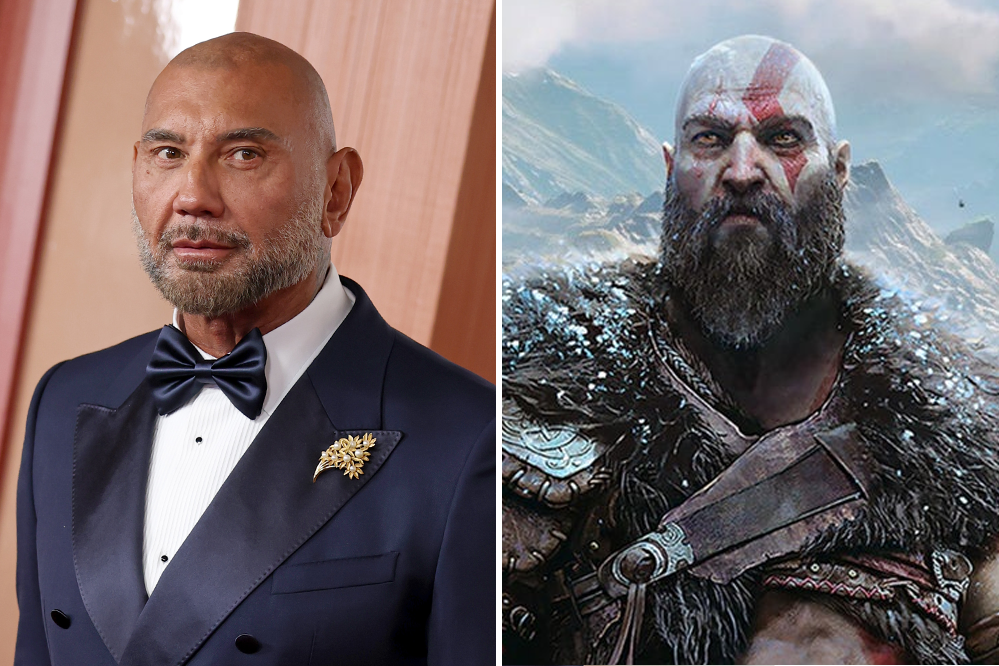
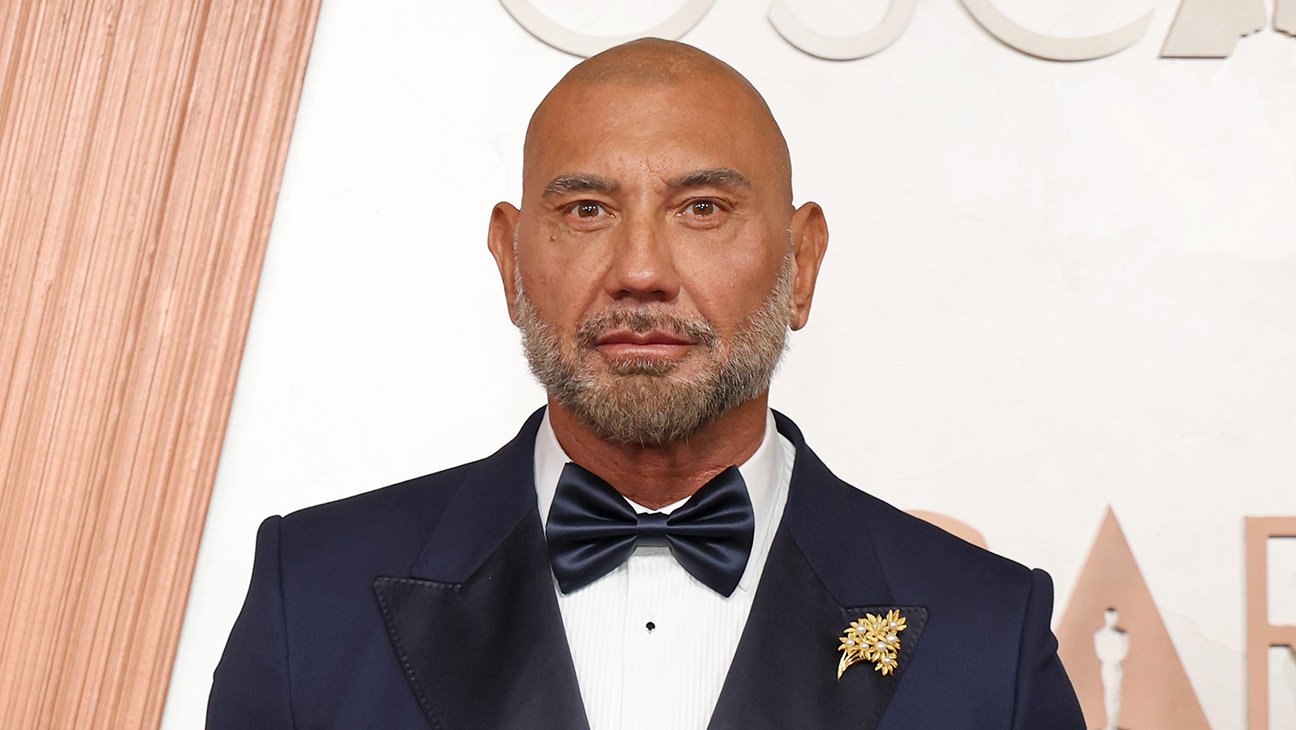
Dave Bautista could be the next “God of War.” Variety has learned from sources that Bautista is currently in talks for the role of Kratos in the Amazon Prime Video series based on the popular video game franchise.
The news comes after it was reported that Ryan Hurst, who was originally cast in the role of the titular god in January 2026, suffered a torn bicep on the set of the series that would have delayed a return to production until 2027, ultimately leading Amazon and Sony to recast the part. The plan is to get the production back up and running by the fall.
Reps for Amazon declined to comment.
There are few better suited for the role of Kratos than Bautista. Aside from the fact he is an accomplished actor, he is one of few in Hollywood who could step into the role on short notice in the physical shape it requires. Kratos is known for his incredibly muscular physique in the games, and Bautista has been in remarkable shape throughout his career. Thus, he would not need months of prep time to prepare for the role.
He also has an existing relationship with Amazon MGM Studios. He previously starred in the Amazon movies “The Wrecking Crew,” “My Spy,” and “My Spy: The Eternal City,” while he is set to appear in both “Road House 2” and the remake of “Highlander” for Amazon.
Bautista first broke out as a star in WWE before he transitioned to a highly successful and diverse acting career. He has played Drax in the Marvel Cinematic Universe across six movies, while he also appeared in the first two “Dune” films from Denis Villeneuve. He also recently lent his voice to the animated film “Avatar Aang: The Last Airbender,” and has previously starred in films like “Blade Runner 2049,” “Knock at the Cabin,” “Spectre,” and “Army of the Dead.”
He is repped by WME and Jackoway Austen Tyerman.
Prime Video has given “God of War” a two-season order. As previously reported, the series will pick up with the story of the two most recent “God of War” games, in which Kratos must raise his ten-year old son Atreus while battling gods of the Norse pantheon. Per the logline, “Father and son Kratos and Atreus embark on a journey to spread the ashes of their wife and mother, Faye. Through their adventures, Kratos tries to teach his son to be a better god, while Atreus tries to teach his father how to be a better human.”
Callum Vinson remains attached to play Kratos’ son Atreus. Additional cast members include Max Parker as Heimdall, Ólafur Darri Ólafsson as Thor, Mandy Patinkin as Odin, Alastair Duncan as Mimir, Danny Woodburn and Jeff Gulka as as brothers Brok and Sindri, and Ed Skrein as Baldur.
Ronald D. Moore is the writer, executive producer, and showrunner on “God of War” under his Tall Ship Productions banner.
Frederick E.O. Toye will direct the first two episodes of “God of War.” Maril Davis of Tall Ship also executive produces alongside Cory Barlog, Naren Shankar, Matthew Graham, Asad Qizilbash, Jeff Ketcham, Hermen Hulst, Roy Lee, and Brad Van Arragon. Joe Menosky, Marc Bernardin, Tania Lotia, and Ben McGinnis serve as co-executive producers on the series. The series is co-produced by Sony Pictures Television and Amazon MGM Studios in association with PlayStation Productions and Tall Ship Productions.
Prime Video‘s God of War series may be on the way to finding a new lead actor to replace the injured Ryan Hurst.
Dave Bautista is in talks to take on the role of Kratos in the series, which is based on the long-running video game franchise. Hurst (The Odyssey, Sons of Anarchy) was originally cast in the role but had to step aside after tearing a bicep while performing a stunt on set.
Prime Video declined comment.
Bautista would be a known quantity to both viewers — via Marvel’s Guardians of the Galaxy films, Glass Onion: A Knives Out Mystery and Dune Part Two, plus his time as a WWE star — and Amazon MGM Studios, which is producing God of War with Sony Pictures Television. Bautista has appeared in Amazon MGM’s two My Spy movies and The Wrecking Crew and has roles in the studio’s forthcoming features Highlander and Road House 2.
Should Bautista’s deal go through, the goal is to get God of War back into production in Vancouver in the fall. The show’s cast also includes Callum Vinson, Mandy Patinkin, Ed Skrein, Max Parker, Ólafur Darri Ólafsson, Teresa Palmer, Alastair Duncan, Jeff Gulka and Danny Woodburn.
The series will follow Kratos and his son, Atreus, as they “embark on a journey to spread the ashes of their wife and mother, Faye,” per the show’s logline. “Through their adventures, Kratos tries to teach his son to be a better god, while Atreus tries to teach his father how to be a better human.” The series will be based primarily on the two most recent installments of the game franchise, which introduced Atreus.
Ronald D. Moore (For All Mankind, Outlander), who has an overall deal at Sony, is the showrunner and executive produces with Maril Davis, Cory Barlog, Naren Shankar, Matthew Graham, Asad Qizilbash, Jeff Ketcham, Hermen Hulst, Roy Lee, and Brad Van Arragon. Joe Menosky, Marc Bernardin, Tania Lotia, and Ben McGinnis are co-EPs. Frederick E.O. Toye is set to direct the first two episodes. Sony and Amazon MGM are producing God of War with PlayStation Productions and Moore’s Tall Ship Productions.
Did you think landing Imax 70mm tickets to “The Odyssey” was hard? Trying landing those tickets and snagging one of the limited-edition popcorn buckets tied to the recent release of Christopher Nolan’s epic, which included designs of the iconic Trojan Horse and a replica of the Imax camera (complete with a real viewfinder!) that the film was famously shot on by Hoyte van Hoytema.
The craze around these popcorn buckets, and the conversations they spark on social media, is nothing new. Just this past weekend, the box office juggernaut that is “Spider-Man: Brand New Day” came with its own set of popular buckets, including a replica of Spider-Man’s head and a drink-popcorn combo featuring a web-slinger shooting out of Peter Parker’s hand.
The craze has gotten so overwhelming that these premium buckets can sell out in minutes after dropping online. For “The Odyssey,” Imax got involved with movie merchandise for the first time to bring a realistic replica of its 15/65mm camera to life. But this growing excitement has also caused some theater chains to limit how many buckets guests can purchase per visit for certain releases, and scalpers have taken to eBay to sell these limited-edition items for increasingly high price tags — and have seen success in doing so.
With the box office on track to have its strongest year since 2019, premium popcorn buckets have only become bigger money drivers for theater chains, which heavily rely on merchandise and concession sales since they typically only keep around half the revenue generated from ticket sales. In 2025, AMC Theatres reported $80 million globally from merchandise sales (including their international Odeon Cinemas) and is on track for a $100 million gross for 2026, according to Nels Storm, AMC’s VP of food and beverage.
“It’s become a vehicle for the future of moviegoing,” Storm tells Variety. “These are tangible movie memories. They’re the concert T-shirts of our industry.”
Chains like Regal estimate that the total number of premium buckets they offer throughout the year will total 50, and that figure extends to over 100 when including collectible popcorn tins.
The level to which directors get involved with designs can vary. “The Odyssey” Imax bucket is a key example of how theater chains and studios are celebrating the filmmakers getting audiences excited to go to the movies again, as Imax has become synonymous with Nolan’s brand over the years.
“The persona rubs off, and it’s like a parasocial relationship,” says Russell Belk, a professor of marketing at York University. “Cross marketing is usually part of the plan from the start. The film studios and now the actors involved are trying to get a piece of the action as well.”
Storm says: “There is so much respect for moviemaking that went into this camera. When you think about how a director like Christopher Nolan likes to film his movies and likes for them to be shown, this was a natural transition to be able to do something like this.”
Imax CEO Rich Gelfond says the camera bucket sold out in 90 minutes, and they had to borrow more from China to meet the high demand: “The scope of this is larger than anything we’ve done before, and it certainly shows the promise of a bigger merchandising effort among Imax fans. I’m a really optimistic guy, but the crazy interest in Imax among the fans would have been hard to predict.”
Courtesy of AMC Theatres
Kristy Breneman, Regal’s director of food and beverage activations, confirms that filmmakers are involved with the bucket designs: “As we’re seeing these concepts, if any changes are asked for, we do hear that everything has to go through the filmmaker for approval on certain projects.”
Going to the movies and buying a tub of hot popcorn have long gone together. But these collectible buckets aren’t always the most practical for moviegoers hoping to actually munch on some food throughout a long movie — a frequent topic of discussion online.
“The rule is it has to hold popcorn, and that’s where the rules stop!” Storm says with a laugh, referencing the tiny Bowser key chain that was sold with the release of “The Super Mario Galaxy Movie” earlier this year.
However, not being able to fit much popcorn into certain buckets doesn’t seem to make a difference in which designs fly off the shelves.
“We try to think about what comes after. It may be a piggy bank for somebody, it may be a toy bucket for someone, and it may be a really neat, sculpted item to put on a shelf,” says David Haywood, Cinemark‘s SVP of food and beverage. “We never try to box people into how they’re going to use it.”
Haywood, of course, adds that Cinemark gives out extra popcorn to guests buying certain buckets to ensure that no one leaves the theater on an empty stomach.
Since a majority of these buckets are sold across all the major chains, one way for competing theater chains to distinguish themselves is by securing an exclusive on certain designs that then get promoted online. This comes from locking in a certain number of buckets they want to buy far in advance, according to Haywood.
AMC’s biggest exclusive this year has been the bucket shaped entirely around Spider-Man’s head, which goes for $34.99 and is currently sold out on the theater’s website. “This is the first time that vessel has existed in this way ever,” Storm says, with Marvel and Sony’s input making sure it was as size-accurate as possible.
Courtesy of AMC Theatres
Another popular bucket, the iconic “Devil Wears Prada 2″ purse, started out as a Cinemark exclusive before becoming more widely available, selling online for $39.95.
Courtesy of AMC Theatres
Popular membership programs like AMC A-List and Regal Unlimited, which encourage frequent moviegoing, also provide greater incentives for guests to spend money on these buckets since they’re not paying out-of-pocket for individual tickets each time they go to the theater.
“Not to give too much away about what we’re planning, but we absolutely want to incentivize those loyal customers who do purchase more,” Breneman teases.
But just as scalpers have snatched up coveted tickets for big blockbuster releases, they have found their way into the popcorn bucket craze. For “The Odyssey’s” Trojan Horse, for example, one eBay seller has it currently listed as high as $165, compared to its original $69.99 listing, and has actually sold some at or near that inflated price tag. The same can be said of the “Spider-Man” buckets, which are listed for up to $110.
“That’s been a big topic of conversation recently,” Breneman says. “It’s definitely a challenge for us and we are continuing to learn from these different experiences. Whenever you have products that are limited to a specific release, there’s naturally going to be strong interest from collectors. From our perspective, our priority is to make sure the guests have the opportunity to purchase these items as part of their visit to the theater.”
To meet the high demand for “The Odyssey,” Regal instituted a one-bucket-per-guest limit — something they’ve never had to do before. “And it is possible that it’ll be something we implement moving forward,” Breneman says.
Belk adds that having a short supply of limited-edition items can be a strategic tool to encourage customers to spend more on a whim.
“If you have a limited-time option and you’re not announcing when that’s going to be ahead of time, people that are young and don’t have jobs have a lot of time to hang out online and wait for it,” he says. “You need to find ways to make it seem scarce. It’s a way of generating excitement.”
As these buckets are typically made from plastic, Storm says that theater chain owners and manufacturing companies like Zinc, Golden Link and Snap have been conscious of designing them to “not be disposable,” when asked about any potential pushback from environmental groups.
That points to perhaps the biggest appeal of these popcorn buckets — they’ve become some of the hottest collector items on the market, designed to sit on someone’s shelf for years to come as a token of their favorite moviegoing experiences. Add them next to your favorite Funko pop!
“The fans are now making the moviegoing experience more personal than they ever have before, and these collectibles give them a tangible way to extend that experience all the way to their house,” Haywood says. “People always say, ‘If you don’t show it, it didn’t happen!’”
But with the increasing out-there designs, from the infamous “Dune: Part Two” sandworm-mouth popcorn bucket to the overwhelmingly giant Trojan horse, is there growing pressure for studios and theater chains to keep topping themselves in order to generate online conversation, especially for upcoming major releases like “Dune: Part Three” and “Avengers: Doomsday?”
“The excitement and reaction on social media has definitely raised the bar for everyone involved,” Breneman says. “That doesn’t necessarily mean we need to make things bigger and more elaborate every time. But when there is that opportunity to have something more interactive, if it really goes with the storytelling and is authentic to the film, I do see them pressing the limits.”
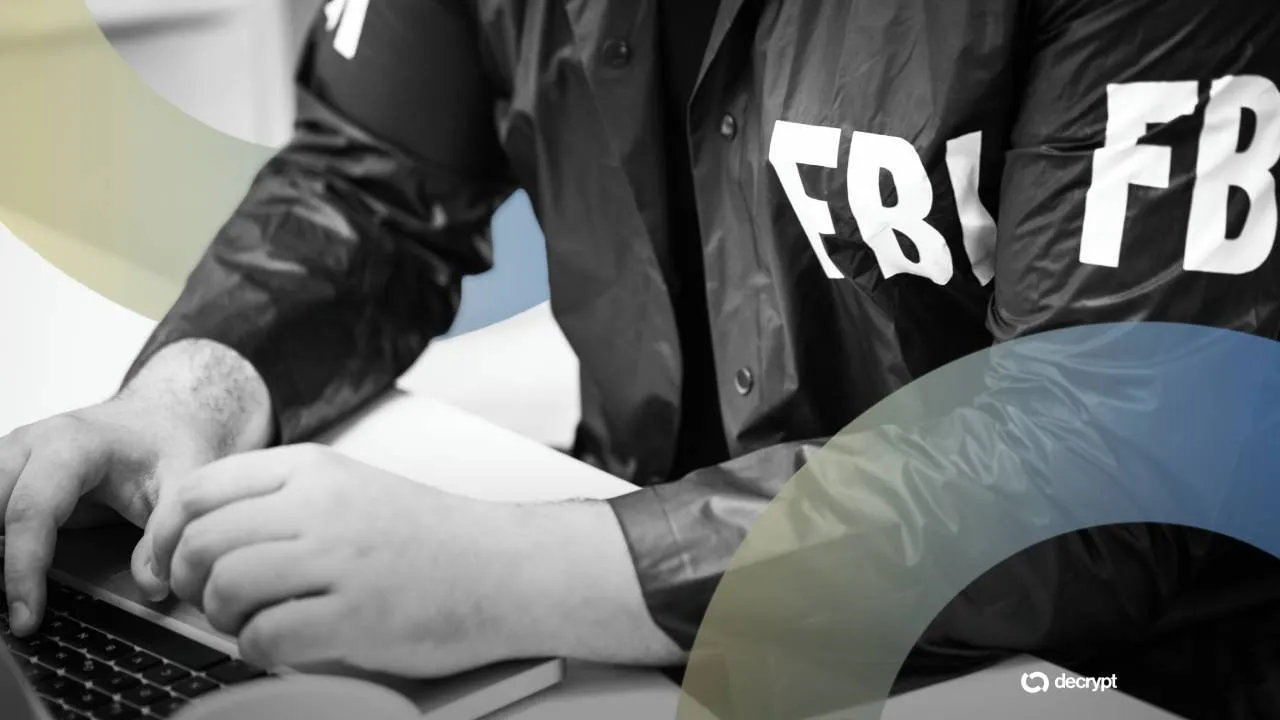
A former FBI supervisory special agent has been charged with stealing nearly $1 million in cryptocurrency.
Prosecutors say he transferred funds from wallets tied to FBI investigations into his own accounts.
Court filings say he later asked ChatGPT for advice on investing the money and moving to Europe.
A former FBI supervisory special agent has been charged with stealing nearly $1 million in cryptocurrency from wallets tied to FBI counterintelligence investigations, according to court documents that also detail how he later asked ChatGPT for advice on investing the money and relocating overseas.
On Friday, Patrick Steven Yaroch was charged with interstate transportation of stolen goods and receipt of stolen goods. Prosecutors allege the thefts occurred between early 2025 and July 2026 while Yaroch worked in the FBI’s Counterintelligence and Espionage Division and held a Top Secret security clearance.
“During the afternoon of July 28, 2026, Yaroch contacted DOJ Employee 1 via Signal and requested to meet to discuss personal matters,” prosecutors said in the complaint. “Upon meeting DOJ Employee 1 at FBI headquarters, Yaroch immediately started to break down as he told his story.”
According to investigators, Yaroch admitted he accessed FBI systems to obtain cryptocurrency wallet seed phrases connected to investigations involving an unnamed foreign adversary. He allegedly memorized the recovery phrases, created his own cryptocurrency wallet, and transferred funds into accounts under his control about 10 times. He told investigators the holdings eventually grew to about $1 million.
During searches of his home and devices, investigators recovered a Trezor hardware wallet and handwritten cryptocurrency seed phrases. According to the affidavit, agents found a Kraken account with a balance of about $188,570, including roughly $166,000 in U.S. dollars and nearly $18,000 in USDC, along with small amounts of Bitcoin and other cryptocurrencies.
Investigators also recovered several ChatGPT conversations from Yaroch’s phone. According to the affidavit, on May 28 he asked how he should invest or spend $1 million “to maximize profit and return.” Less than a week later, he asked what someone with about $1 million should do to leave the U.S. and become a resident or citizen of a European Union country. Later searches included whether Americans need a visa when connecting through Turkey and help drafting a follow-up email about a job opportunity and life in Greece.
Investigators also found evidence of a planned family trip to Portugal, power-of-attorney documents related to Portugal, and what prosecutors described as previously unreported foreign travel. Prosecutors argue the evidence, along with Yaroch’s admissions and the recovered cryptocurrency, established probable cause for his arrest on July 31.
“FBI WF Agents mentioned to Yaroch that they located the power of attorney forms for Portugal. “Yaroch stated he was not planning to funnel money into Portugal,” the complaint said. “Yaroch told FBI WF Agents that his family had a trip planned to Portugal in September 2026 to meet friends. Yaroch realized he might not be able to attend the trip but stated he hoped his wife and child would still go on the trip.”
Daily Debrief Newsletter
Start every day with the top news stories right now, plus original features, a podcast, videos and more.
Indian banks are increasingly integrating blockchain into core banking operations to speed up payments, trade finance, and securities settlement while the country continues to keep cryptocurrencies at arm’s length. Instead of building around public crypto networks, lenders have largely focused on permissioned blockchain networks developed for regulated financial services.
The shift comes as banks gain practical experience from the RBI’s Digital Rupee pilot and expand the use of distributed ledger technology across more financial services. While blockchain is finding wider acceptance inside the banking system, policymakers continue to take a cautious approach to cryptocurrencies because of concerns over financial stability and regulation.
Banks Separate Blockchain From Cryptocurrency
Indian banks are using blockchain to solve practical business problems instead of expanding into cryptocurrencies. The technology is helping lenders cut paperwork, speed up trade finance and reduce the risk of document fraud or duplicate financing. Inland letters of credit, which have traditionally taken more than a week to process, can now move much faster on shared digital networks while giving all participants a clearer view of each stage of the transaction.
The RBI has consistently drawn a clear line between distributed ledger technology and cryptocurrencies. While supporting blockchain in regulated financial services, the central bank has warned that cryptocurrencies could threaten financial stability, weaken monetary policy and increase the risks of money laundering. It has also maintained support for policies “leaning towards prohibition” on banks’ exposure to crypto assets and privately issued stablecoins.
That cautious approach extends beyond the central bank. Reuters reported that government officials continue to favor tighter oversight of virtual digital assets even though India has yet to introduce a comprehensive crypto law. Cryptocurrencies have operated in a regulatory grey area since the Supreme Court overturned the RBI’s banking restrictions in 2020, but policymakers continue to weigh the potential benefits of innovation against concerns over financial stability.
Digital Rupee Gives Banks Practical Experience
The RBI’s Digital Rupee (e₹) pilot has become one of the country’s largest real-world tests of distributed ledger technology in payments. It introduced the wholesale pilot in October 2022 and rolled out the retail version a month later. Since then, the project has expanded steadily. By 2025 and into 2026, about 19 banks were participating in the retail pilot, which had attracted an estimated six to seven million users.
Customers of major lenders such as SBI, ICICI Bank, HDFC Bank, Axis Bank and Bank of Baroda can use e₹ wallets to load, redeem and spend the digital currency. Beyond basic transactions, banks have experimented with programmable payments, offline transfers and government benefit disbursements. Those trials have helped banks understand how distributed ledger technology could support everyday banking.
The wholesale program has followed a different path. Instead of focusing on consumer payments, it has examined how banks settle transactions with one another and whether tokenized financial assets can be exchanged more efficiently.
Some of the work has also explored cross-border payment scenarios. As the trials have progressed, banks have built technical experience that can be applied to blockchain projects outside the Digital Rupee initiative, including future settlement and tokenization efforts.
Consortium Model Expands Enterprise Blockchain
India’s adoption of blockchain in banking has also expanded through industry-wide collaboration. In 2021, 15 major lenders formed the Indian Banks’ Blockchain Infrastructure Company (IBBIC) to develop shared digital networks for financial services. The organization was later renamed the Indian Banks’ Digital Infrastructure Company (IBDIC) as it expanded its work to trade finance, payments, lending and compliance.
One of its flagship projects digitizes the entire trade finance process, from issuing letters of credit and verifying documents to financing and settlement. Early pilot programs reduced processing times by as much as 75%, cutting transactions that once took eight or nine days to as little as two or three days. The platform has also lowered messaging costs while reducing fraud by assigning every transaction a unique digital identity.
ICICI Bank was among the first Indian lenders to deploy blockchain for trade finance. It further developed the TradeChain technology as a paperless platform for handling the Indian letter of credit process. Other big banks, like SBI, HDFC Bank, Axis Bank and Bank of Baroda, still support IBDIC initiatives while being participants of the RBI Digital Rupee program.
However, the IBDIC consortium has moved forward beyond trade finance. In 2025, its financing system based on blockchain technology successfully passed the RBI Regulatory Sandbox. The platform transforms invoices issued by approved suppliers into digital tokens and enables the banks to offer better financing to micro, small and medium-sized enterprises working with larger companies.
Tokenization Emerges as the Next Phase
As banks gain experience with distributed ledger systems, attention is gradually shifting from payments toward tokenized versions of traditional financial assets. As part of that work, the RBI is testing tokenized certificates of deposit alongside wholesale Digital Rupee settlements. The trials are designed to examine how digital versions of traditional financial instruments could function within the country’s regulated banking system without depending on public cryptocurrencies.
Government officials have also recognized that the global financial system is changing. Speaking at the Kautilya Economic Conclave in October last year, Finance Minister Nirmala Sitharaman said stablecoins “are transforming the landscape of money and capital flows,” adding that countries may soon have “to make binary choices: adapt to new monetary architectures or risk exclusion.”
The RBI has taken a more guarded view. Reuters reported that internal documents prepared by the central bank warned that stablecoins could create parallel payment networks and weaken India’s financial system. The documents also recommended against introducing legislation that would legitimize cryptocurrencies. Union Minister Piyush Goyal has echoed that cautious approach, saying, “While there is no ban [on crypto], we don’t encourage it.”
Together, those positions illustrate India’s approach to financial innovation. Banks are moving ahead with blockchain, tokenization and central bank digital currency projects under regulatory oversight, while policymakers continue to keep cryptocurrencies outside the core of the country’s financial system.
Related: India’s Gen Z Is Fueling Record Crypto Adoption; Here’s How They’re Investing
Country music is ruling the roost like never before, at least when it comes specifically to the Billboard Hot 100. For the first time in history, country songs are claiming all five of the top five slots on the Hot 100. That’s thanks to Ella Langley and Morgan Wallen, who currently stand at No. 1 on the singles and albums charts, respectively… and to Taylor Swift‘s return to country for a hit soundtrack… and to newcomer Stella Lefty officially joining the ranks of hitmakers.
To no one’s surprise, Langley’s “Choosin’ Texas,” the biggest single of 2026 so far, maintains its No. 1 perch in chart results reported by Billboard on Monday. Wallen’s new single, “Been by Now,” premieres at No. 2. Taylor Swift’s “I Knew It, I Knew You” gets pushed down one spot on this week’s chart, now landing at No. 3. In the fourth position is a duet between Langley and Wallen, “I Can’t Love You Anymore.” And coming in at No. 5 is Lefty’s career-making “Boston,” down two slots from last week, but still with plenty of room to grow.
So many statistical anomalies are included in this top 5, it’s hard to know where to begin, although the aforementioned stat about this congregation of songs establishing a collective chart record is a good place to start.
The headline any other week might be about Langley’s ongoing winning streak at the top of the chart. This is the 16th week at No. 1 with “Choosin’ Texas,” which puts Langley in ever-more-rarefied territory. “Texas” is now tied for a historic fourth place for the number of weeks spent at No. 1. The three singles it is tied with for that sweet 16 number are Wallen’s “Last Night,” Mariah Carey’s and Boyz II Men’s “One Sweet Day” and the Luis Fonsi/Daddy Yankee/Justin Bieber monster “Despacito.”
So, what are the next thresholds for “Choosin’ Texas” to cross? If Langley holds on to No. 1 for just one more week — which is a highly likely prospect — then she will still be in fourth place on the all-time streak chart, just no longer tied for it. The next tier for her would be meeting or surpassing the two songs that are tied for second, at 19 weeks each — Shaboozey’s “A Bar Song (Tipsy)” and Lil Nas X and Billy Ray Cyrus’ “Old Town Road.” If she gets to 20 weeks at No. 1, she will hold the record for the most weeks for a non-holiday song. Then, the final frontier would be whether she could beat Mariah Carey’s annual perennial “All I Want for Christmas,” which, at 22 nonconsecutive weeks, is a tough one for anyone to beat. Tagging on seven more weeks to the current 16 to claim the all-time record sounds impossible, but the song has surpassed so many expectations already that it might be foolish to bet against it.
Looking at the top 10 for this week, country has six out of those 10, since Langley’s second-most-popular track, “Be Her” is in at No. 9.
The non-country songs rounding the top 10 this week are Tame Impala and Jennie’s “Dracula” at No. 6, Olivia Dean’s “So Easy (To Fall in Love)” at No. 7, Ariana Grande’s “Hate That I Made You Love Me” at No. 8 and Dean’s “Man I Need” at No. 10.
Dean having two songs in the top 10 and Langley having three (one of them a Wallen collaboration) may provide a glimpse of what the Grammy competition holds in store a few months from now. Voters in the four general categories have turned up their noses at country contenders for years, but Langley will provide the true test of whether the Recording Academy can really keep snubbing country or whether her dominance will mean it’s time to cry uncle.
LayerZero is no longer just a protocol for moving crypto between blockchains. The interoperability network says it has processed more than $200 billion in value across 165 blockchains, making it one of the largest pieces of infrastructure connecting the digital asset economy.
That scale is drawing comparisons beyond crypto. LayerZero’s historical transaction volume now exceeds the roughly $62 billion sent annually through the US-Mexico remittance corridor, the world’s largest single remittance route.
While the two figures measure different things—LayerZero reports cumulative value transferred, whereas remittance data is annual—they illustrate how blockchain settlement networks are approaching the scale of major payment corridors.
Beyond Bridges
LayerZero started life as an interoperability protocol, allowing applications to send messages and assets between blockchains.
Its best-known product is Stargate, the cross-chain liquidity network that has handled more than $70 billion in historical transfer volume and now supports hundreds of digital assets across dozens of blockchains.
Today, however, the company is pitching something much bigger. Instead of focusing on crypto bridges, LayerZero increasingly describes itself as infrastructure for stablecoins, tokenized deposits and cross-border settlement.
Recent partnerships include PayPal, Paxos, Ondo Finance, Tether and Keeta, while financial infrastructure companies such as Worldpay have launched verification services on the network.
Stablecoins Are Driving the Shift
The timing reflects a broader change in how digital assets are being used. Stablecoins have become one of the fastest-growing payment rails in finance, with institutions increasingly exploring blockchain settlement for treasury operations, foreign exchange and international payments.
Rather than replacing banks, many projects now focus on connecting regulated financial infrastructure with public blockchains.
LayerZero has positioned its Omnichain Fungible Token (OFT) standard at the centre of that strategy, allowing issuers to move assets across multiple blockchains while maintaining a single token supply.
The protocol says it now carries roughly 70% of all cross-chain stablecoin flows, making interoperability a growing part of institutional digital asset infrastructure.
From Crypto to Financial Infrastructure
LayerZero’s ambitions now extend well beyond decentralized finance. The protocol underpins Tempo, the payments blockchain backed by Stripe and Paradigm, where MoneyGram serves as the anchor remittance validator to help connect stablecoin settlement with real-world payment flows.
Earlier this month, LayerZero also partnered with Keeta to make tokenized commercial bank deposits transferable across Ethereum, Solana, Base and the Keeta Network, another sign that banks are beginning to treat interoperability as core financial infrastructure rather than experimental blockchain technology.
For years, interoperability was viewed as a crypto problem. LayerZero is betting it becomes a payments problem instead.
UPDATE, with Trump statement: President Donald Trump is sticking with his go-to explanation of vandalism for the peeling lining of the Reflecting Pool that U.S. Attorney Jeanine Pirro has concluded was the result of the no-bid contractor’s botched installation.
On Truth Social today, Trump writes, “I disagree 100% with Jeanine Pirro, the U.S. Attorney for the District of Columbia, on the Reflecting Pool. I don’t know what she was thinking? To me, it was a pure case of VANDALISM, that included the grass, which had a big 86 47 emblazoned in giant letters on it, and other elements of the surrounding area. There may have been some contractor difficulty, but the major damage was caused by VANDALS! President DJT”.
Trump, in the post, is conflating the Reflecting Pool damage with an apparent marking of the number 8647 on the nearby National Mall last month. No evidence has been presented that the two situations were connected. Trump maintains that the number is an assassination threat.
PREVIOUS: Contradicting claims made repeatedly by President Donald Trump, U.S. attorney Jeanine Pirro now says she will seek to dismiss a felony charge against former Olympic canoeist David Hearn who had been accused of ripping up a small square piece of new blue lining from the renovated Lincoln Memorial Reflecting Pool.
In a motion filed Friday evening, federal prosecutors conceded that damage to the pool was “the result of a botched installation and not vandalism.” In the build-up to the Trump-renovated pool’s intended July 4 unveiling, the new blue lining began peeling as the water turned green with algae bloom – the very problem the Trump-ordered restoration project was to have fixed.
Just last month following Hearn’s indictment on July 2, Pirro stated that prosecutors had “tremendous evidence” of Hearn’s guilt and that he faced up to 10 years in prison. Hearn has consistently denied the accusations.
The cost of Trump’s pool renovation has ballooned to more than $14 million.
Yesterday, federal prosecutors blamed the contractors hired by the the Interior Department on a no-bid contract for the mess, saying that the renovation itself had caused “widespread damage” to the lining. Pirro now accuses he Interior Department of misleading prosecutors on key facts, including that the Department withheld evidence that the lining had begun to peel within two days of the project’s completion. Pirro said the Department had insisted that “nearly all of the damage” had been the work of vandals.
Pirro’s new stance on the matter marks a significant break from her usual lockstep siding with Trump. The former Fox News on-air personality said in her motion last night that contractor Atlantic Industrial Coatings rushed “to complete the [renovation] project prior to events associated with the America 250 celebration.” Trump had repeatedly said the newly blue pool would be unveiled before the July 4 celebration.
“Given all of this newly discovered information,” Pirro writes, “it is difficult to attribute the widespread damage to the Reflecting Pool to vandalism.”
Of the seven people that had been arrested on vandalism charges in connection to the pool, only Hearn was charged with felony destruction of property. A trial was supposed to have started September 28.
On Friday, lawyers representing Hearn said in a statement that the dismissal of charges “does not erase the abuse of government power in arresting and charging a patriotic American who did nothing wrong. The government’s approach was ready, fire, aim. The administration owes Mr. Hearn an apology.”
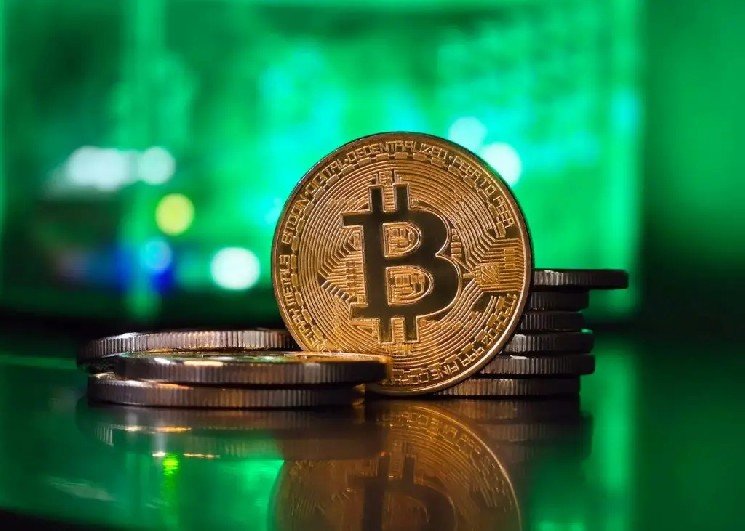
Crypto analyst Luke Martin noted that Bitcoin’s volatility over the past 30 days has fallen below that of technology stocks, indicating a rare signal in the market.
According to Martin, Bitcoin’s realized volatility falling below that of the QQQ fund, which tracks the Nasdaq 100, stands out as a development seen only once or twice a year. The analyst stated that Bitcoin has remained unusually calm during a period when other assets have exhibited similarly sharp movements to the cryptocurrency market.
According to shared historical data, Bitcoin rose by an average of 20.58% over a seven-day period following 12 instances where this signal emerged. The average 30-day return after the signal was 141.81%, showing that Bitcoin gained value in all 12 instances examined.
Related NewsBREAKING: Michael Saylor Comments on Today’s Bitcoin Sale – “I Said I Would Never Sell Any of My ‘Personal’ Bitcoins”
Looking at longer-term data, the 60-day average return was recorded at 359.72%, and the success rate at 91.67%. In the 90-day period following the signal, all 11 events examined showed an increase, with an average return of 635.94%. In the 180-day period, all 10 events resulted in a positive outcome, with an average return of 731.96%.
Martin argued that similar periods in the past have favored Bitcoin bulls, describing the current low volatility as “the calm before the storm.”
However, it should be remembered that past performance does not guarantee future price movements and high ratios are based on a limited number of historical observations.