Blog

  • Bitget Launches IPO Prime With Tokenized SpaceX Access Through Republic

    Bitget Launches IPO Prime With Tokenized SpaceX Access Through Republic

    Bitget has launched IPO Prime, a new product that gives eligible users access to tokenized pre-IPO offerings through a subscription model.

    • The first asset under the program is preSPAX, a digital instrument tied to the economic performance of SpaceX.

    Bitget is moving into tokenized private market access with a product that aims to bring pre-IPO exposure closer to retail users, not just institutions and private wealth circles.

    The exchange said Friday that its new offering, called IPO Prime, will begin with preSPAX, a digital asset linked to the economic performance of SpaceX. The private rocket company is currently valued at $1.54 trillion on secondary trading venue Nasdaq Private Market, according to the report.

    Bitget and Republic push pre-IPO access into tokenized form

    IPO Prime is powered by Republic and built around a subscription model. Eligible users apply for allocations in tokenized offerings, with allocation limits determined by user tier.

    Higher VIP levels receive access to larger thresholds, which gives the product a familiar exchange-style structure even though the underlying theme is private market investing.

    Once the subscription phase ends, the digital assets move into an over-the-counter market on Bitget, where they can continue trading. That is an important detail. The pitch here is not only early access, but also liquidity. Traditional pre-IPO exposure is usually defined by waiting. Bitget is trying to shorten that distance.

    The first use case, tied to SpaceX, gives the product immediate visibility. SpaceX is one of the most closely watched private companies in the world, and demand for indirect exposure has been strong for years.

    The bigger bet is on how private market investing gets distributed

    Bitget chief executive Gracy Chen said the product is meant to shift access to pre-IPO opportunities beyond institutional investors. That is the core argument behind IPO Prime. Let users participate earlier in a company’s growth cycle, then give them ongoing trading flexibility rather than locking them into a static private market position.

    There is a broader industry angle here too. Crypto exchanges have spent years trying to prove they can offer more than token speculation. Products like this suggest the next phase may involve using crypto infrastructure to repackage traditional private market access in a more liquid, app-based format.

  • Analytics Company Examines Critical Metric, Reveals Timeline for Bitcoin’s Bottom!

    The leading cryptocurrency, Bitcoin (BTC), surged above $70,000 following the ceasefire agreement between the US and Iran.

    With this rise fueling talk of Bitcoin reaching $80,000 and above, a CryptoQuant analysis revealed that the bear market in Bitcoin is far from over and outlined a timeline for Bitcoin’s next “bottom.”

    According to new CryptoQuant analysis, Bitcoin could find a bottom around $55,000 in the second half of 2026.

    In their latest analysis, CryptoQuant analysts examined the Bitcoin MVRV Z-score metric. According to their findings, the MVRV Z-score still needs to match previous bear market lows to signal a trend reversal in Bitcoin.

    Historically, for the MVRV Z-score to signal a bear market bottom, it needs to fall below zero into negative territory.

    “This metric is showing a decline, but it hasn’t yet entered the negative/below-value zone.”

    Because, at every low point in history, this value has fallen below zero. Right now, the market is just cooling down, it’s not in despair.”

    At this point, a CryptoQuant analyst stated that the last time the MVRV Z-score dropped below zero was the bottom of Bitcoin’s last bear market in 2022, adding that for 2026, this date aligns with October and December.

    “The target for Bitcoin is the $55,000-$60,000 range. This range aligns with a sub-zero MVRV Z-Score and historical data.”

    *This is not investment advice.

  • Stranded porpoise returned to open waters in Guernsey

    Stranded porpoise returned to open waters in Guernsey

    Odd News // 3 weeks ago

    Prosthetic leg, surfboard among Los Angeles Metro’s Lost & Found

    March 13 (UPI) — The Los Angeles Metro revealed some of the most unusual items in its Lost & Found, including a surfboard, a prosthetic leg and a 55-inch TV.

  • Al Gore to Lead Keynote Conversation at 2026 Sustainability in Entertainment Honors Hosted by THR and the Sustainable Entertainment Alliance

    Al Gore to Lead Keynote Conversation at 2026 Sustainability in Entertainment Honors Hosted by THR and the Sustainable Entertainment Alliance

    Three of the year’s most buzzed-about small-screen stories will receive big kudos at The Hollywood Reporter’s inaugural Sustainability in Entertainment Honors event taking place on April 23 in partnership with the Sustainable Entertainment Alliance.

    The invitation-only celebration will be held at the Bel-Air Hotel and highlight three hourlong series for their trailblazing work in crafting onscreen narratives that bring sustainability issues to the forefront, and behind-the-scenes sustainable production practices.

    The awards given will include: Legacy of Sustainable Storytelling, presented to ABC’s Grey’s Anatomy; Achievement in Sustainable Storytelling, presented to Hulu’s Paradise; and Achievement in Sustainable Production, to the Duffer Brothers’ upcoming Netflix series The Boroughs, which debuts May 21.

    Longtime Grey’s stars Chandra Wilson and James Pickens Jr. are confirmed to present their show’s award to Grey’s executive producer and showrunner Meg Marinis and Shondaland chief content officer Allison Eakle. Paradise executive producer/writer John Hoberg and writer Stephen Markley will accept on behalf of their show from series star Sarah Shahi. And the showrunners, creators and EPs of The Boroughs, Jeffrey Addiss and Will Matthews, will receive their series’ honor. Additional program talent will be announced before the event.

    “We are thrilled to partner with The Hollywood Reporter to shine a spotlight on remarkable leaders across film and television who are raising the bar for sustainability, both in how stories are made and in the stories themselves,” says Sam Read, executive director of the Sustainable Entertainment Alliance. “These three series exemplify the unique power of entertainment to connect with broad audiences by reflecting the world we live in, and the one we want to build.”

    Says THR editor-in-chief Maer Roshan, “We are proud to once again partner with the Sustainable Entertainment Alliance to celebrate great work being done to help make Hollywood and the entertainment industry more sustainable. And our fourth annual sustainability digital issue, publishing April 22, is the perfect editorial companion to these efforts.”

    Former Vice President Al Gore, who narrated and starred in director Davis Guggenheim’s Oscar-winning 2006 documentary An Inconvenient Truth, will appear at the event to mark the film’s 20th anniversary and take part in a conversation on the state of sustainability.

    The program will also feature a lively panel discussion among leading Hollywood sustainability-focused executives and creatives.

    The Sustainability Honors event marks the next phase in THR’s growing partnership with the Sustainable Entertainment Alliance, which kicked off at the 2025 Toronto International Film Festival.

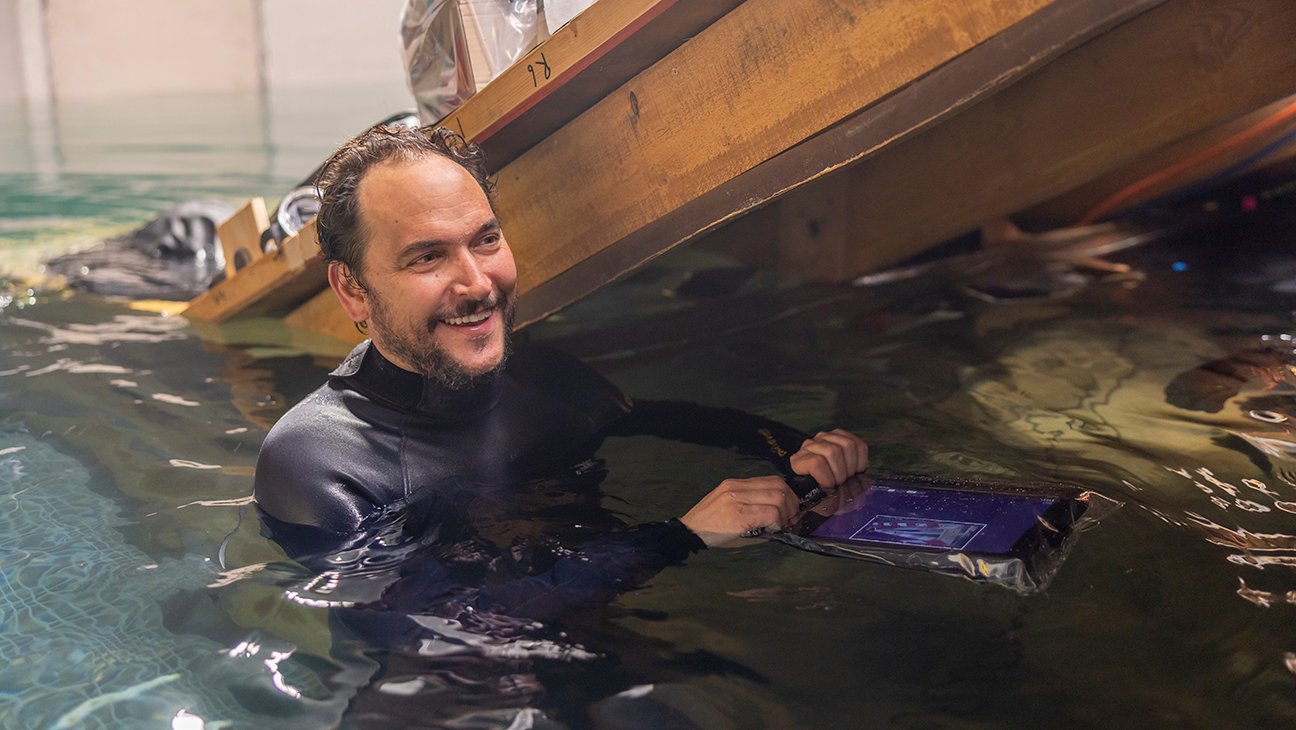
    Writer, director and producer Guillermo del Toro and his 2026 Oscar-winning Netflix film Frankenstein received awards at a special TIFF ceremony for Sustainable Production, while filmmaker Clint Bentley and star-producer Joel Edgerton received an award for Sustainable Storytelling for their 2026 Oscar-nominated Netflix film Train Dreams.

  • Lionsgate Promotes Laurel Pecchia, Expands Corp Comms Role

    Lionsgate Promotes Laurel Pecchia, Expands Corp Comms Role

    Lionsgate’s Laurel Pecchia is climbing at the Hollywood studio with a promotion to senior vp, corporate communications.

    Having joined in June 2022 as vp of corporate communications, Pecchia in her expanded role will work with Lionsgate’s Motion Picture and Television Groups on communications around film and television slates and its 20,000-title library sales.

    She will also manage communications for the studio’s AI, live and location-based entertainment, digital media and 3 Arts talent management and production efforts. Lionsgate is the studio behind John WickThe Hunger Games and other movie franchises. 

    “Laurel is an exceptionally talented and versatile spokesperson whose responsibilities have expanded across the full range of our communications activities,” Lionsgate chief communications officer Peter Wilkes said in a statement on Friday. “She combines a strong grasp of our fast-changing business environment with a remarkable work ethic, and she is well liked and highly regarded by her Lionsgate and media colleagues alike.”

    Her promotion follows Lionsgate having separated from the Outlander premium network Starz to create two standalone companies and comes as the studio potentially may participate in the current round of industry consolidation in Hollywood.

    Pecchia will also work on Lionsgate’s corporate media relations strategy, executive communications, employee communications and preparing quarterly board of directors presentations and earnings calls. 

    That follows Pecchia previously handling corporate and client media relations, writing executive scripts and press releases and managing internal communications at WME. Before that, Pecchia handled publicity at CBS Films. She holds a B.A. in Communications and French at Stanford University.

  • Cuban president defiant despite Trump pressure to resign

    Cuban president defiant despite Trump pressure to resign

    Cuba’s Diaz-Canel vows to resist US pressure to resign as Trump escalates threats, tightens oil blockade on the island.

    Cuban President Miguel Diaz-Canel says he will not bow to pressure by the United States to resign.

    “Stepping down is not part of our vocabulary,” he said in an interview with US broadcaster NBC News on Thursday.

    Recommended Stories

    list of 4 itemsend of list

    The president described communist-ruled Cuba as a “free sovereign state” with the right to “self-determination,” adding that the island is not “subject to the designs of the United States”.

    “In Cuba, the people who are in leadership positions are not elected by the US government,” he said.

    The president since 2018 faces increasing pressure and demands for regime change from President Donald Trump’s administration.

    Trump has hinted that Cuba could face the same fate as Venezuela and Iran.

    “I built this great military. I said, ‘You’ll never have to use it.’ But sometimes you have to use it. And Cuba is next,” the US president said last month.

    Cuba’s main oil supply was cut off after Trump ousted Venezuelan leader Nicolas Maduro in January. The US has since imposed an oil blockade on the island and threatened tariffs on any country that sells oil to Cuba.

    ‘Hostile policy’

    Diaz-Canel condemned the US “hostile policy” that has left Cuba reeling from widespread power blackouts, fuel shortages and disruptions to water and food distribution.

    He also said the Trump administration has “deprived the American people from a normal relationship with Cuba.”

    Since returning to office last year, Trump has labelled Cuba an “unusual and extraordinary threat” to US national security and threatened a “takeover” of the island.

    Current tensions stretch back to the Cold War, when the US took an adversarial stance against left-wing governments across the Americas.

    The Cuban Revolution in the 1950s led to the overthrow of a US-backed military government. By the early 1960s, Washington had imposed a comprehensive trade embargo aimed at weakening revolutionary leader Fidel Castro.

    ‘We cannot betray Cuba’

    Despite US pressure, Russia has remained a close ally of Cuba.

    “We cannot betray Cuba. That is out of the question. We cannot leave it on its own,” Russia’s Deputy Foreign Minister Sergei Ryabkov said at a news conference in Havana on Friday.

    Last month, a Russia-flagged tanker carrying 730,000 barrels of oil docked in Cuba – the first to reach the island in three months.

  • ‘Closer to a break than ever’: Can NATO survive if Trump pulls the US out?

    ‘Closer to a break than ever’: Can NATO survive if Trump pulls the US out?

    Donald Trump’s disdain for NATO allies dates back to even before he became United States president the first time. From anger over their relatively low defence spending to — more recently — threats to take over Greenland, the territory of fellow NATO member Denmark, the American leader has long left the alliance on edge.

    But the decision of NATO allies not to join Trump’s war on Iran has deepened the fracture to unseen levels, say analysts. This week, Trump called their lack of support a stain on the alliance “that will never disappear”. Chancellor Friedrich Merz of Germany put it even more bluntly, hours later: The conflict “has become a trans-Atlantic stress test”.

    Recommended Stories

    list of 3 itemsend of list

    That back and forth underscores a central question exposed by the Middle East crisis that experts say NATO can no longer put off: can the transatlantic alliance survive, especially if the US pulls out?

    “There will be no return to business as usual in NATO, during neither this US administration nor the next one,” said Jim Townsend, adjunct senior fellow at the Center for a New American Security. “We are closer to a break than we have ever been.”

    Trump can’t pull the US out of the alliance on a whim.

    To formally do so, he needs a two-thirds majority in the US Senate or an act of Congress — scenarios that are unlikely to come to pass any time soon, with NATO still enjoying broad support among many legislators in both major American parties.

    But there are other things Trump can do. The US has no obligation to come to the aid of allies should they come under attack. The treaty’s Article 5 states members’ collective‑defence obligation, but it does not automatically force a military response — and there is scepticism among allies over whether Washington would ever come to help.

    The US can also move the about 84,000 American troops spread across Europe out of the continent. The Wall Street Journal reported on Wednesday that Trump was considering moving some US bases from countries deemed unhelpful during the Iran war and transferring them to more supportive countries. He could close down US military bases and cease military coordination with allies.

    Since US security guarantees to Europe have undergirded NATO since its founding, such disengagement would do enough damage.

    “He doesn’t need to leave NATO to undermine it; by just saying he might, he has already eroded its credibility as an effective alliance,” said Stefano Stefanini, former Italian ambassador to NATO from 2007 to 2010 and former senior adviser to the Italian Presidency.

    Still, allies are not helpless. Russia’s invasion of Ukraine revealed the weakened state of European defence industries and their deep reliance on the US. That, coupled with the numerous diplomatic crises in the US-NATO partnership – including Trump’s threat to take control of Greenland – has pushed European allies to invest more in defence capabilities. Between 2020 and 2025, member states’ defence expenditure increased by more than 62 percent.

    However, areas where Europe suffers from overdependence on the US include the ability to strike deep into enemy territory, intelligence, surveillance and reconnaissance, space-based capabilities such as satellite intelligence, logistics and integrated air and missile defence, according to a report by the International Institute for Security Studies (IISS).

    These challenges remain considerable. It will take the next decade or more to fill them and about $1 trillion to replace key elements of the US conventional military capabilities. Europe’s defence industries are struggling to ramp up production quickly, and many European armies can’t hit their recruitment and retention targets, the IISS report said.

    Still, some experts believe a European NATO is possible. Minna Alander, an analyst at the Stockholm Centre for Eastern European Studies of the Swedish Institute of International Affairs, says NATO has, over the years, become a structure for military cooperation between European countries.

    “NATO can therefore survive the Iran war — and even a US withdrawal — as European members have an incentive to maintain it, even if in a radically different form,” Alander said.

    For some, the deadline is 2029. That is when Russia may have reconstituted its forces sufficiently to attack NATO territory, according to estimates by Germany’s chief of defence, General Carsten Breuer. “But they can start testing us much sooner,” Breuer said in May last year, ordering the German military to be fully equipped with weapons and other material by then. Others estimate that Moscow could pose that threat as early as 2027.

    And what about the US — would it do better without NATO?

    According to Stefanini, the former ambassador, the debate about NATO is often “twisted” to portray the alliance’s raison d’être as solely in function of protecting Europe from Russia, as a US favour to the continent.

    NATO was a network of alliances born at the onset of the Cold War against the Soviet Union. For decades, the US fought to attract into the alliance as many countries as possible, treating those that refused as friends of the enemy.

    Following the September 11, 2001, attacks on the US, NATO invoked for the first and only time Article 5 to rally behind Washington and sent troops to fight in Afghanistan. Thousands of servicemen died there, including nearly 500 from the United Kingdom, and dozens from France, Denmark, Italy and other countries.

    And during the war in Iran, European bases were beneficial staging sites for the US military — even if many countries publicly distanced themselves from the conflict.

    “NATO served US interests and Trump comfortably overlooks these aspects,” said Stefanini. “Europe has its own responsibility by not investing in defence and creating strong dependence, but thinking that NATO serves only European strategic interests is simply not true.”

  • ‘All the Evil in the World’ Doc, About Murder of Leftist Italian Student in Egypt, Sparks Political Storm After Being Denied Government Funding

    ‘All the Evil in the World’ Doc, About Murder of Leftist Italian Student in Egypt, Sparks Political Storm After Being Denied Government Funding

    An investigative documentary titled “All the Evil in the World” — about the murder of leftist Italian graduate student Giulio Regeni, who in 2016 was tortured to death in Cairo, allegedly by Egypt’s secret police — is sparking outrage in Italy over the fact that it has been denied government funding by a commission appointed by the country’s right-wing government.

    The doc, directed by Simone Manetti and produced by Italy’s Ganesh productions and Domenico Procacci‘s Fandango, reconstructs the still ongoing quest for judicial truth about the kidnapping, torture and murder of Regeni. Regeni was in Cairo to do research for his doctorate at Cambridge on Egypt’s independent labor unions that operate outside the Egyptian state-controlled trade union federation. His brutalized body was found in a gutter on the side of the Cairo-Alexandria highway on Feb. 3, 2016.

    Reports suggest Regeni was under surveillance in Egypt before his death and suspected of being a spy. Egyptian officials have repeatedly denied having had a hand in Regeni’s death. 

    In parliament on Thursday, Italy’s culture minister Alessandro Giuli rejected accusations of government interference, or even censorship, being prompted by the commission’s recent failure to provide retro-active support for the completed doc. Three members of the government-appointed commission have also resigned in protest.

    “I disagree with the selection committee’s decision on the documentary film about Regeni, both morally and in ideological terms,” Giuli said, responding to a question from the opposition Democratic Party about why funding support for the doc was nixed.

    Meanwhile, undersecretary for culture Lucia Borgonzoni, who oversees the country’s cinema department, has said she expects members of the government-appointed commission that denied funding for the film to stand down.

    “All the Evil in the World” — the title of which is a quote from Regeni’s mother when she saw the marks on her son’s body in a Cairo morgue — tells the murdered student’s story from the point of view of his parents, Claudio Regeni and Paola Deffendi, “who challenged the military dictatorship of [Egyptian President Abdel Fattah el-Sisi] to uncover the truth,” as the synopsis puts it.

    The doc includes an exclusive interview with Alessandra Ballerini, the lawyer who assisted the Regeni family in their long legal battle that has led to a trial being held in Italy of four Egyptian national security agents, without the defendants being physically present. The trial, which started in 2024, is expected to reach a verdict later this year.

    Controversy in the media over denied public funds for “All the Evil in the World” has now prompted the doc to be re-released by Fandango after its event outing in Italian cinemas in early February. Fandango and indie exhibitor Circuito Cinema is releasing the doc on 60 screens in Italy this weekend.

    “Putting the film back in cinemas is the best response to those who are hellbent on this documentary becoming a one-sided [political] battle,” Fandango chief Procacci said in a statement.

    The doc, which is being sold by Fandango Sales, is now also set to screen in more than 70 Italian universities and, on May 5, will get a special screening at the European Parliament in Brussels.

  • Microsoft starts removing unnecessary Copilot buttons in Windows 11

    Microsoft has rolled out a Notepad update for Windows Insiders that removes the Copilot branding and icon from within the app, Windows Central has reported. The old Copilot menu has been replaced with “writing tools,” but it’s worth noting that the tools are still powered by AI and are pretty much identical to the selection found in the old menu. Microsoft has just replaced the Copilot button with a pen icon. In addition, the company has removed mentions of AI in the Settings menu and has placed the option to disable the AI-powered writing tools within the “Advanced features” section.

    The company first announced that it was dialing back its Copilot branding last month, most likely in response to all the criticisms against the AI assistant. It’s not very well-liked, with people complaining that Microsoft is forcing them to use the assistant inside all its apps and that Copilot doesn’t provide a consistent experience across different applications. “You will see us be more intentional about how and where Copilot integrates across Windows,” said Windows and Devices EVP Pavan Davuluri. Microsoft also promised to remove “unnecessary Copilot entry points,” starting with Notepad, Snipping Tool, Photos and Widgets. According to The Verge, Microsoft has already stopped showing the Copilot button when selecting areas to capture with the Snipping Tool, as well. Clearly, the company has been making good progress on yanking at least the visual reminders of Copilot from its apps.

  • A Proposal Submitted That Would Bring Radical Changes to XRP-Based Altcoins! If Accepted, It Could Significantly Reduce Token Inflation!

    A Proposal Submitted That Would Bring Radical Changes to XRP-Based Altcoins! If Accepted, It Could Significantly Reduce Token Inflation!

    Flare ($FLR), an XRP-based DeFi ecosystem, has introduced a governance model that will reduce $FLR inflation by 40%.

    According to CoinDesk, Flare has proposed a governance reform.

    Accordingly, Flare proposed a governance change to define the Maximum Retrievable Value (MEV) at the protocol level and reduce the annual $FLR inflation from 5% to 3%.

    With this, Flare plans to reduce the annual token inflation rate from 5% to 3% and lower the cap on the token supply. This move aims to support value stability by reducing the number of tokens entering the market.

    If the proposal is accepted, the changes will take effect immediately. These include reducing the annual $FLR export limit from five billion to three billion and increasing the base gas fee twentyfold, from 60 gwei to 1,200 gwei.

    This fee increase is expected to raise the amount of $FLR burned annually from approximately 7.5 million to 300 million. Even after the increase, a standard Flare operation will still cost a fraction of a few cents.

    Flare ($FLR), which has increased by 2.3% in the last 24 hours, continues to trade at around $0.007.

    *This is not investment advice.