Blog

  • ‘Big Mistakes’ Creator Dan Levy on That Shocking Finale [SPOILER] and a Darker Season 2: ‘There’s No Way Out Now’

    ‘Big Mistakes’ Creator Dan Levy on That Shocking Finale [SPOILER] and a Darker Season 2: ‘There’s No Way Out Now’

    SPOILER ALERT: This story contains spoilers from Season 1 of “Big Mistakes,” now streaming on Netflix.

    Dan Levy knows exactly what keeps him up at night, as the possibility of being blackmailed into committing crimes has haunted him for years. So naturally, he made a TV show about it.

    Six years after “Schitt’s Creek” wrapped, Levy has returned to television with “Big Mistakes,” a darkly comic crime thriller he co-created with Rachel Sennott. The show follows Nicky (Levy) and Morgan Dardano (Taylor Ortega), a pastor-and-teacher sibling duo from New Jersey who stumble into organized crime after Morgan steals a necklace from a postal store to bury with their dying grandmother. What follows is a season-long descent into grave robbing, drug running and enough accessory-to-murder charges to keep the Dardano family lawyer very busy. However, the deeper they sink, the better they get. “The worse they were, the better they got at their jobs,” Levy tells Variety. “And the more they were needed.”

    Dan Levy, Boran Kuzum and Taylor Ortega

    Courtesy of Spencer Pazer/Netflix © 2025

    The chaos is matched only by the cast assembled to deliver it. Laurie Metcalf plays Linda, the siblings’ mother and accidental mayoral candidate, whose parallel bid for local office manages to feel just as high-stakes as the organized crime subplot. Abby Quinn rounds out the family as Natalie, the well-behaved sister who got the good genes — and Elizabeth Perkins delivers a season-ending shocker as Annette, whose reveal as the crime boss orchestrating everything is the kind of twist that sends viewers immediately back to Episode 1 to uncover what they missed.

    Levy spoke with Variety about building his follow-up to “Schitt’s Creek,” the very pre-planned criminal path ahead and what a potential second season might look like for two siblings who are now, definitively, in too deep.

    You’ve spoken about taking a real break after “Schitt’s Creek” before developing this. What was the creative kernel that got you moving?

    You really have to sit with the question of what excites you. We were lucky enough to get 80 episodes of “Schitt’s Creek,” and I knew how much I loved working on it — I wanted that same love for whatever I did next. I never go into something assuming it’s just going to be one season, so I needed to find an idea that would excite me enough to keep telling the story. I just kept thinking about being blackmailed into crime. It scares the shit out of me; I would not do well if I ever found myself in that situation. And at its core, a random person finding themselves blackmailed into crime is just endlessly entertaining. I wanted a buddy comedy, a brother-sister dynamic, a whole new family story — and I knew I wanted a female perspective on Morgan. I called up Rachel Sennott, who I just assumed would also not fare very well in the face of organized crime. She said yes, we spent six, eight months figuring out the show, brought it into Netflix, and they loved it. And that was it.

    You’re clearly a fan of Rachel Sennott’s. Any chance we’d ever see you on her show “I Love L.A.”?

    I don’t even know what I would play on that show.

    Anything — anything would be believable. 

    If she ever wants to write me in, just say the word. I’ll do it.

    Why was the family dynamic so important to carry over from “Schitt’s Creek”?

    I just think family dynamics are the funniest. Families in times of insane crisis — that can be the funniest times. I’m often laughing in times of insane crisis, so I’m endlessly fascinated by it. I think it’s also just a really excellent way of revealing character. So I knew I wanted to make another family show. And that’s also why I wanted to involve Rachel, because I love her comedy, I admire her comedy, but it’s a little bit different than mine. Our voices overlap, but they’re also very different. So I wanted to really push the possibility of what the tone of this show could be. Between the two of us, we found this really nice place of chaos and comedy and suspense. I do think there has to be some comedic thread to the way that I write. I just love dialogue.

    Courtesy of Spencer Pazer/Netflix © 2025

    The show balances the crime world against something as comparatively mundane as a local mayoral race — and somehow both feel equally high-stakes. How did you connect that?

    This is a family that has inherited anxiety from their mother’s mother. You see Nona pass away in the first episode — that’s sort of where it all stemmed from. She was nuts, and it’s all trickled down through the family tree. A lot of this show is an examination of what we inherit from our family, from our parents, from their parents. We are a byproduct of our family tree. So anxiety runs rampant in this family. Not handling stress runs rampant in this family. Linda running for mayor, and Natalie helping her — that is the be-all, end-all for them. There is nothing more important, and the stakes are high. And I just found there to be a lot of comedy in that as well. The more seriously people take things, the funnier it is.

    Nicky and Morgan keep failing upward — the worse they are, the more indispensable they become. Was that dynamic intentional?

    As much as they wanted to get out, it’s like an undertow. The more you swim towards shore, the more you’re pulled out. The worse they were, the better they got at their jobs, and the more they were needed. And then by the end, they are fully in.

    Courtesy of Netflix © 2026

    You mentioned you already know how the entire series ends. How mapped out is this world?

    There is a very pre-planned criminal path that has already been laid out. We just need the opportunity to get there.

    You’ve talked about circumstance shaping character — how does the crime world change Nicky and Morgan specifically?

    I love the idea that circumstance makes people better. On “Schitt’s Creek,” moving to a small town made that family a better family. In the same way, I hope that parts of this world will make Morgan and Nicky more fully realized versions of themselves. For Morgan, she’s always been a rebellious person. She’s always wanted the spotlight, always wanted attention — and I think she’s getting it in this world. There’s a part of her that really enjoys it and gets thrills out of it. For Nicky, he’s not there yet. But my hope is that at some point it’ll force him out of his shell a little more, give him more confidence, make him feel a little more accomplished.

    The season-ending reveal — Annette as the crime boss — is a big swing. When did you and Rachel decide that was where the story was going?

    Rachel and I knew from the start of developing this season.

    I didn’t see that coming. Were there signs that I missed?

    I think if you were to go back and watch knowing how it ends, there are signs. Annette is a very savvy businesswoman, and when you operate in organized crime, you need to get your fingers in a lot of political pots. As soon as the tide turned on the election, she knew exactly who was going to be at the forefront of that race, and that’s when certain things shifted and she came on board. My hope is always that if someone chose to rewatch, there would be a lot there for them — we did weave in a lot of little hints. But I mean — your in-laws being a huge crime boss.

    What does Season 2 for Morgan and Nicky look like then?

    A Season 2 would just be: There’s no way out now.

    Laurie Metcalf, Elizabeth Perkins and Jack Innanen

    Courtesy of Netflix © 2026

    That kind of negates my point that Nicky and Morgan kept succeeding due to their own charisma. In actuality they survive because Annette says so, and because of Morgan’s relationship to her son. Does Max know any of this?

    She needs to keep him happy. Morgan and their dynamic, their relationship, is a great way of keeping her son happy. She can’t mess that up. And also — Nicky and Morgan know too much now. So even if they wanted to leave, they have a lot to answer for.

    So Max has no idea.

    [Levy shrugs]

    This interview has been edited and condensed.

  • Bitcoin signals potential seller exhaustion as realized losses decline

    Bitcoin signals potential seller exhaustion as realized losses decline

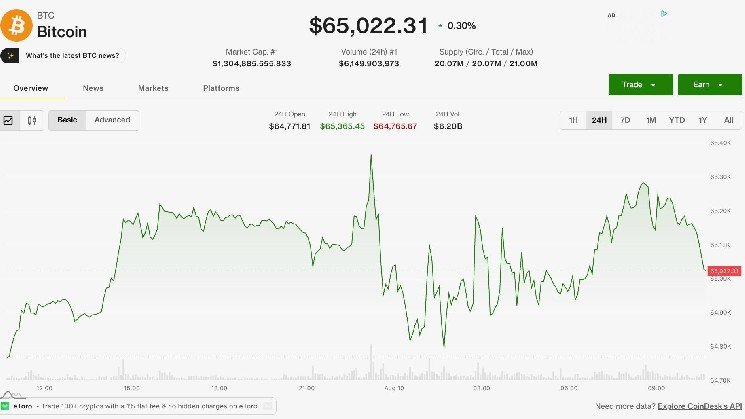
    Bitcoin may be entering a phase of seller exhaustion. After bottoming near $60,000 on Feb. 5, the asset has spent more than two months consolidating, gradually grinding higher toward the $70,000 level. This came alongside macro uncertainty with the Middle East conflict pushing oil prices well above $100 a barrel.

    Data from CheckonChain suggests that selling pressure is beginning to ease. Realized losses are currently around $400 million per day, still elevated compared to previous years, but trending lower in recent weeks.
    Realized losses had spiked to as much as $2 billion on Nov. 21 and Feb. 5, reaching levels not seen in several years and surpassing those seen during the 2022 bear market, according to the data.

    “Spot markets are shifting from aggressive selling to net buy side pressure, realized profits and losses are both declining,” said CheckonChain.

    Glassnode data reinforces this trend. On a seven-day moving average, realized profits are around $300 million per day, near twelve-month lows. This suggests that investors who accumulated bitcoin at $60,000 are now marginally in profit and beginning to take some gains.

    Meanwhile, the realized profit-to-loss ratio has risen to 1.4, its highest level since January, according to Glassnode data. This metric, which compares the value of coins moved at a profit to those moved at a loss, shows that realized profits now outweigh losses.

    These indicators point toward a market where selling pressure is fading, raising the likelihood that bitcoin is approaching a phase of seller exhaustion.

  • Starting 5: Hawks clinch, Ant locks down Rockets, Wemby’s 40, East top-4 set

    Starting 5: Hawks clinch, Ant locks down Rockets, Wemby’s 40, East top-4 set

    Jonathan Kuminga and the Atlanta Hawks defeated the Cavaliers to move into the No. 5 seed in the Eastern Conference Friday.

    A high-flying Friday decided four more postseason seeds.

    Coming up Sunday?

    A regular season finale stacked with suspense, with 15 games tipping off — 2 on ESPN — and 10 seeds still up for grabs.


    5 STORIES IN TODAY’S EDITION 🏀

    April 11, 2026

    Sunday’s Stakes: A breakdown of what Friday’s 15 games decided, and what’s still at stake for the finale

    Stars Settle West: Wemby’s 40, Ant & KD’s duel locks 5th, LeBron keeps Lakers in hunt for 3rd

    East Playoff: Hawks clinch top-6 seed, Celtics, Knicks & Cavs lock in seeds 2-4

    East Play-In: Raptors’ loss sets up final day 3-team melee for 6-seed with Magic & Sixers

    Friday Roundup: Blazers pass Clips in West Play-In seeding while Warriors tune up, history for Bucks & Jazz


    1. PLAYOFF PICTURE: FRIDAY’S IMPACTS & WHAT’S STILL AT STAKE SUNDAY

    Friday's scores

    What we learned from Friday’s 15-game slate:

    • The 5th-place Hawks clinched a Playoff spot, with a 1 game lead over the 6th-place Raptors
    • The Raptors dropped from 5th to 6th, holding the East’s final Playoff spot via tiebreaker over the 7th-place Magic, and stayed 1 game up on the 8th-place Sixers
    • The Hornets remained in 9th and are locked into the SoFi NBA Play-in Tournament, a game up on the 10-seed Heat
    • The East’s top-4 is now set, with the Celtics clinching the 2nd seed, and the Knicks and Cavaliers slotting behind
    • The Nuggets earned their 11th straight win to remain in 3rd place, a game up on the victorious 4th-place Lakers
    • The Rockets’ eight-game win streak ended, locking them into the West’s 5-seed
    • The Blazers’ win moved them above the Clippers for 8th via a better conference record, as both teams are 41-40 and split their season series 2-2

    Standings

    Eastern Conference Snapshot:

    • Playoff Seeds Set: (1) Pistons, (2) Celtics, (3) Knicks, (4) Cavaliers
    • Playoff Teams: Hawks
    • Play-In Teams: Hornets, Heat
    • To Be Determined: Raptors, Magic, Sixers
    • Postseason Seeds Open: 5, 6, 7, 8, 9, 10

    Western Conference Snapshot:

    • Postseason Seeds Set: (1) Thunder, (2) Spurs, (5) Rockets, (6) Wolves, (7) Suns, (10) Warriors
    • Playoff Teams: Nuggets, Lakers
    • Play-In Teams: Blazers, Clippers
    • Postseason Seeds Open: 3, 4, 8, 9

    Sunday's schedule

    What’s at stake Sunday in the regular-season finale after today’s off-day:

    • 3 Teams, 1 Spot: The Raptors, Magic and Sixers all have a shot at the East’s final Playoff spot:
      • Raptors: Win and in, it’s that simple. Toronto can also move up to 5th with help
      • Magic: Can clinch 6th with a win and a Raptors loss
      • Sixers: Can clinch 6th with a win and losses from the Raptors and Magic
    • A Hornets win would secure home court vs. the Heat in the 9/10 Play-In game. A Heat win and a Hornets loss would give Miami the 9-seed and home court
    • A Hawks win clinches the 5-seed and a date with the Cavs in the First Round. A Hawks loss and a Raptors win would move Atlanta to 6th, facing the Knicks
    • If the Nuggets close the season on a 12-game winning streak, they’d secure 3rd
    • If the Lakers win and the Nuggets lose, L.A. claims the 3-seed via tiebreaker, while Denver drops to 4th
    • If the Blazers win, they’ll finish 8th and visit the Suns in the SoFi NBA Play-in Tournament
    • The Clippers need a win and a Blazers loss to jump back into 8th. Otherwise, they’ll host the Warriors in the West’s 9/10 game

    Playoffs Picture

    In tomorrow’s Starting 5, we’ll break down every potential scenario for Sunday’s 15-game slate to close out the regular season.

    Up Next: The SoFi NBA Play-In Tournament tips off on Tuesday.

    • Tuesday: No. 7 vs. No. 8 in each conference with the winner earning the No. 7 seed in the Playoffs and the loser living to play on Friday
    • Wednesday: No. 9 vs. No. 10 in each conference with the winner still alive and loser eliminated
    • Friday: 7/8 Loser vs. 9/10 Winner in each conference face off – the winner earning the No. 8 seed in the Playoffs
    • One Week Away: The 2026 NBA Playoffs presented by Google tip off on Saturday, April 18

    2. SUPERSTARS SHINE AS WEST PLAYOFF SEEDING TAKES SHAPE

    Anthony Edwards

    As the last team to have beaten the Rockets, Minnesota bookended Houston’s eight-game win streak Friday with another clutch takedown.

    Wolves 136, Rockets 132: Terrence Shannon Jr. (23 pts, 5 3s) led Minnesota scorers for a second straight game, this time pacing seven Wolves in double figures, overcoming a career-high 41 from Amen Thompson (9 reb, 7 ast) and 33 more from Kevin Durant. | Recap

    • Anthony Edwards (22 pts) and KD dueled back-and-forth in the 3rd, each netting 12 points, with Houston building a 10-point lead and Minnesota erasing it in under 3 minutes with a 15-4 run
    • The Wolves ran again in the 4th, taking their own 10-point lead with a 27-12 flurry. And with that edge cut to 4 with under a minute to play, Ant’s triple sealed the win

    “I was kinda cold, but it felt good to hit that one at the end,” Ant said after pleading his case for a jersey swap with KD, who had another noteworthy outing.

    • Durant surpassed 2,000 points in a season for the 8th time, tied for 5th-most 2K+ point seasons ever. This is the first in NBA history for a player age 37 or older
    • More History In Houston: Thompson logged the Rockets’ first-ever 40+/5+/5+ game with 75+% shooting, going 17-for-22 (77.3 FG%) from the floor
    • Amen & The Dream: He also joined Hakeem Olajuwon as the only players in franchise history to score 40+ points on at least 75% shooting before age 24

    The 6-seed Wolves’ win, paired with wins by Denver and L.A., locked the Rockets into the West’s 5th seed.

    On the second night of a back-to-back, with seeding on the line, LeBron James set the tone early.

    L.A. reaped the benefits, securing a top-4 seed for home court advantage in the Western Conference’s first round of the playoffs.

    Lakers 101, Suns 73: LeBron (28 pts, 6 reb, 12 ast, 4 stl) scored or assisted on nine of the Lakers’ first 10 field goals on the way to a 14-point 1st quarter and 16-point lead, as L.A. held Phoenix to season-lows with a 25-point 2nd half and 73-point total. | Recap

    • King’s Streak: James tallied 54 points on 63.6% shooting (21-33) in back-to-back wins, and is the first player age 40 or older to log three straight games with 25+ points and 10+ assists
    • “I had to tap back into a role that I’ve been accustomed to in the past,” James said postgame. “I’m just trying to feed off my teammates.”
    • Feeding History: Among the opening flurry was the 12,000th assist of LeBron’s career, becoming just the fourth player ever to reach that milestone

    Denver win streak

    Denver showcased its depth to stay ahead a game up on the Lakers in 3rd.

    Nuggets 127, Thunder 107: Jonas Valančiūnas (17 reb) and Branden Carlson (12 reb) each scored season-highs of 23 points to lead their squads, with Denver’s 21-5 start to a 37-22 4th quarter making the difference to clinch home court advantage in its 11th straight win. | Recap

    • Driver’s Seat: A 12th straight win Sunday in San Antonio to finish the regular season would clinch the 3-seed for Denver and lock the Lakers into 4th

    Victor Wembanyama (ribs) was strong in his return Friday, dropping 40 on fellow top-pick Cooper Flagg’s Mavs for the second time this season.

    Spurs 139, Mavericks 120: Wemby (40 pts, 13 reb, 5 ast) and Flagg (33 pts, 6 reb, 5 ast) dueled early, with 16 points in the 1st quarter and 24 in the half for Wemby, and 16 in the 2nd and 25 before halftime for Coop.

    De’Aaron Fox (18 pts, 10 ast) then took over with 14 points in a 40-point Spurs 3rd that decided the game. | Recap

    • Alongside The Admiral: Wemby joined David Robinson as the only Spurs players with multiple 40+/10+/5+ games in franchise history
    • Coop, Melo & LBJ: Flagg passed Carmelo Anthony with his 11th 30+ point game as a teenager, 2nd-most ever behind only LeBron (20)

    3. EAST PLAYOFF TEAMS LOCK IN SPOTS AND SEEDS 

    Hawks clinch

    Following four straight seasons in the Play-In tournament, Atlanta has earned a top 6 Eastern Conference seed and a First Round series.

    Hawks 124, Cavaliers 102: After CJ McCollum drained six 1st-half triples and piled up 25 of his 29 points by halftime, Atlanta took off with a 35-17 3rd quarter to avenge Wednesday’s loss in Cleveland. | Recap

    • TD For DD: Dyson Daniels (13 pts, 10 reb, 12 ast) collected his 2nd-career triple-double, both coming this season
    • The Land Will Host: James Harden (20 pts, 5 ast) led the way for Cleveland without Donovan Mitchell (ankle), as the Cavs lock into the East’s 4th seed
    Jalen Duren, LaMelo Ball

    Brock Williams-Smith/NBAE via Getty Images

    With the league’s 3-point leaders needing a win to stay in the mix for a Playoff seed, the East’s top rated defense (108.9) flexed its top-seed strength.

    Pistons 118, Hornets 100: Leading by 3 to start the 4th quarter, Detroit’s 18-2 run broke the game open, as the defense held Charlotte to its lowest-scoring quarter (10 pts) of the season. Jalen Duren (20 pts, 9 reb) and Duncan Robinson (19 pts) led the way. | Recap

    • One Hot Hornet: LaMelo Ball scored 20 of his game-high 27 points in the 1st half, and sank six of Charlotte’s 13 triples (27.7 3P%)
    • Historic Hive: Brandon Miller (22 pts) hit two triples to cross the 200 mark, making Charlotte the fourth team in NBA history to have three players make 200+ 3s each in a season (Kon Knueppel: 268, Ball: 261)
    • Handling Business: Top-seed Detroit goes for a 60th win Sunday in Indy, and could see Charlotte again soon, as the loss locks the Hornets into the Play-In tournament
    Jaylen Brown, Jalen Brunson

    Brian Fluharty + Pamela Smith /NBAE via Getty Images

    Rebounding from Thursday’s loss in New York that kept the door open for the Knicks, Boston put an end to its battle for the 2-seed Friday.

    Celtics 144, Pelicans 118: Jaylen Brown (23 pts) returned with a 10-point 1st quarter, matching Payton Pritchard (21 pts, 10 ast, 5 3s) as Boston dropped 44 in the first frame and 100 the rest of the way, powered by an NBA record-tying 29 made 3s, to clinch the East 2-seed. | Recap

    • Fears Joins Flagg: Jeremiah Fears followed up Tuesday’s franchise rookie record 40-point outing with 36 in Boston, joining Cooper Flagg as the only rookies since 2020 to total 76+ points over a two-game span

    With Boston clinching 2nd, New York locked in the 3-seed by dealing out the only loss to a top-6 East team Friday.

    Knicks 112, Raptors 95: New York started the 2nd quarter with a 10-0 run and won the period 29-15 to stay ahead for good for a 5th consecutive win and 13th straight over Toronto. Jalen Brunson (29 pts) and Karl-Anthony Towns (22 pts, 10 reb, 5 ast) fueled the W. | Recap

    • Brandon Ingram was held to 16 points after his season-high 38 Thursday, as the Raptors’ loss sets up a three-team battle Sunday for the East’s final Playoff spot

    4. THREE-FOR-ONE: EAST PLAY-IN COMES DOWN TO FINAL DAY

    Franz Wagner, Tyrese Maxey, Simone Fontecchio

    NBAE via Getty Images

    A fifth straight win kept Orlando’s Playoff series hopes alive.

    Magic 127, Bulls 103: Franz Wagner (25 pts) led all scorers and Jalen Suggs hit four triples for all 12 of his points in a decisive 3rd quarter that boosted Orlando’s lead from 11 points to 20, as the 7th-place Magic pulled even (45-36) with the tiebreaker-owning Raptors in 6th. | Recap

    Philly kept pace in the 3-team race with a win in Indy.

    Sixers 105, Pacers 94: Not even the buzzer could stop Tyrese Maxey (8 reb, 5 ast), who led the way with 32 points, with Paul George adding 21 more to stay ahead of Jarace Walker (17 pts) and the Pacers, as 8th-place Philly stays within reach of the 6th seed. | Recap

    10-seed Miami gained a game on 9th-place Charlotte and could still swap places with a win and some help Sunday.

    Heat 140, Wizards 117: All eight Miami scorers logged double figures, with Simone Fontecchio (24) tying his career-high for 3s in a game (6), as the Heat never trailed by more than 2 points. | Recap

    • 91 Combined: Fontecchio was one of four 20+ point scorers for the Heat, joining Bam Adebayo (20 pts, 11 reb, 8 ast) and reserves Jaime Jaquez Jr. (23 pts, 8 ast) and Pelle Larsson (24 pts)
    • Record Heat: Miami surged to 140+ points for the 11th time this season, tying the 2023-24 Pacers for the most in a single season by any team in NBA history

    5. WEST PLAY-IN TUNES UP, RECORDS FOR JAZZ & BUCKS

    Deni Avdija

    Cameron Browne/NBAE via Getty Images

    Portland earned an edge in the West’s other remaining seeding battle.

    Blazers 116, Clippers 97: With an 86-84 lead entering the final quarter, Portland limited LA to its lowest-scoring 4th since 2021, taking the period 30-13. Deni Avdija scored 15 of his game-high 35 there, outdueling Kawhi Leonard (24 pts, 8 reb, 5 ast). | Recap

    • “Sky’s the limit. I know we’ve had some downs, we’ve had some ups. We have the talent, we have the players,” Avdija said. “Hopefully we’ll do a lot of great things.”
    • West Play-In Seeding: The win splits the season series between the Blazers and Clips 2-2. With identical 41-40 records, Portland moves up to 8th via conference record (28-23) with one deciding game left

    Portland or LA will host a 10-seed Warriors team that’s getting healthy at the right time.

    Kings 124, Warriors 118: Devin Carter (29 pts, 9 reb, 6 3s) led four 20+ point Kings scorers to spoil Brandin Podziemski’s career-high 30 points, as Steph Curry and Kristaps Porziņģis added 11 apiece in their second game together, tuning up for the Play-In tournament. | Recap

    • Kings’ Core: Maxime Raynaud (23 pts, 9 reb), Nique Clifford (20 pts, 6 reb, 6 ast) and Daeqwon Plowden (20 pts, 9 reb) combined with Carter for 92 points
    • Curry’s Climb: Steph Curry (26,497 points) passed Tim Duncan to move into 19th place on the all-time scoring list

    Steph Curry

    Jazz 148, Grizzlies 101: In a contest full of career-highs, Bez Mbeng (27 pts, 11 reb, 11 ast) and John Konchar (11 pts, 11 reb, 10 ast) became the first Utah teammates to record triple-doubles in the same game, overpowering a third from Memphis’ Jahmai Mashack (13 pts, 15 reb, 14 ast). | Recap

    Bucks 125, Nets 108: AJ Green hit a Bucks-record 11 3-pointers and notched a career-high 35 points, complimenting a career-high 28 from Cormac Ryan as Milwaukee took its home finale over Tyson Etienne (career-high 23 pts) and Brooklyn. | Recap

  • Coachella’s “Golden” Moment: EJAE, Rei Ami and Audrey Nuna Join KATSEYE for Surprise Performance

    Coachella’s “Golden” Moment: EJAE, Rei Ami and Audrey Nuna Join KATSEYE for Surprise Performance

    KATSEYE and the ladies of Huntrix, EJAE, Rei Ami and Audrey Nuna worked to seal the Honmoon during night one of the Coachella Valley Music and Arts Festival.

    The six-member girl group, currently performing as a five-member group, as member Manon is on hiatus, made their Coachella debut on Friday. The group took over the Shara stage during the 8 p.m. slot.

    In a surprise move, KATSEYE brought out the ladies of Huntrix, the fictional girl group from KPop Demon Hunters, comprised of singers EJAE, Ami and Nuna. The newly formed supergroup performed Demon Hunters’ award-winning anthem “Golden” during KATSEYE’s set, making for a touching moment among all the women.

    KATSEYE’s Coachella debut comes just a day after the release of their latest single, “Pinky Up.” The girl group, comprising members Daniela, Lara, Manon, Megan, Sophia and Yoonchae, had a whirlwind 2025, ending the year with two Grammy nominations, including a best new artist nod.

    Both KATSEYE and “Golden” were honored at music’s biggest night. The Demon Hunters’ song picked up a Grammy win, a first for the genre of K-pop, and KATSEYE performed during the best new artist mashup at the award show’s broadcast ceremony.

    KATSEYE’s mainstream profile exploded last year, largely in part due to the group’s viral single, “Gnarly,” which took social media by storm after videos of the group’s energetic and eye-catching performances were shared online. Their follow-up single, “Gabriela,” which scored them their second Grammy nomination, solidified their success. The songs also landed the group their first entries on the Billboard Hot 100. “Gabriela” spent 28 weeks on the chart.

  • How to Watch ‘Kara Swisher Wants to Live Forever,’ New Investigative Series on the Longevity Industry

    How to Watch ‘Kara Swisher Wants to Live Forever,’ New Investigative Series on the Longevity Industry

    If you purchase an independently reviewed product or service through a link on our website, The Hollywood Reporter may receive an affiliate commission.

    Kara Swisher is investigating the booming longevity industry in a new six-parter, separating fact from fad as she dissects everything from anti-aging treatments and the biohacking buzz to how wealth, access to healthcare and social connection shape who benefits from these breakthroughs. The series premieres on April 11, at 9 p.m. PT/ET, and airs for six consecutive Saturdays on CNN, meaning cord-cutters can watch live on any streamer that carries the network, including DirecTV (with a five-day free trial), Sling and Hulu + Live TV.

    At a Glance: How to Watch Kara Swisher Wants to Live Forever

    • Premiere: Saturday, April 11, 9 p.m. PT/ET
    • Episode release schedule: Weekly on Saturdays until May 16 finale
    • Channel: CNN
    • Stream online: DirecTV, Sling, Hulu + Live TV

    Throughout the series, Swisher tests a variety of biotech breakthroughs and wellness trends for herself (think ketamine, red light and sound therapy). She also sits down with some of the biggest names in the longevity game: Bryan Johnson, Sam Altman and Scott Galloway, to name a few.

    Since select streamers are offering free trials and limited-time discounts, viewers can watch the latest episodes of Kara Swisher Wants to Live Forever at no cost; keep reading to learn more about each option.

    Where to Watch Kara Swisher Wants to Live Forever: Air Date and Time, Stream Free Online

    The six-partner premieres on Saturday, April 11, at 9 p.m. PT/ET, with new episodes airing weekly during the same time slot until the docuseries’ May 16 finale. Since Kara Swisher Wants to Live Forever is broadcast on CNN, cord-cutters can watch new episodes on any live TV streaming service that carries the network, including DirecTV (with a five-day free trial), Sling and Hulu + Live TV. While the easiest way to watch CNN online at no cost is through DirecTV’s free trial period, The Hollywood Reporter is further outlining each streaming option ahead.

    Five-day free trial; packages from $19.99 per month

    CNN is included in any of DirecTV’s signature packages: Entertainment, Choice, Ultimate and Premier. Plus, DirecTV is offering a five-day free trial for its streaming service, meaning new subscribers can catch the performance at no cost.

    Learn more about each plan option, including how to build your own channel lineup (starting at just $19.99 per month), at directv.com.

    Half off first month for select plans

    CNN is included in both Sling’s Blue Plan (40+ channels) and Sling’s Orange Plan (30+ channels), each starting at $45.99 per month.

    For the best bang for your buck, opt for Sling’s Orange & Blue plan, which gives subscribers access to everything both the Blue and Orange plans have to offer, and starts at $60.99 per month. Visit Sling.com for the full channel breakdown of each package.

    Three-day free trial; packages from $89.99 per month

    Watch CNN for free with a three-day trial to Hulu + Live TV, which comes bundled with Disney+ and ESPN+, and starts at $89.99 per month.

  • Elon Musk’s xAI Sues Colorado Over AI Law as Fight Over State Regulation Intensifies

    Elon Musk’s xAI Sues Colorado Over AI Law as Fight Over State Regulation Intensifies

    In brief

    • Elon Musk’s AI company filed a federal lawsuit seeking to block Colorado’s AI law before it takes effect on June 30.
    • The case reflects a broader conflict over whether states or the federal government should regulate artificial intelligence.
    • The company faces separate lawsuits and investigations tied to Grok’s image-generation tools.

    Elon Musk’s artificial intelligence company, xAI, has filed a federal lawsuit seeking to block Colorado from enforcing a new law regulating high-risk AI systems.

    In court documents filed on Thursday, Musk’s lawsuit targets Colorado Senate Bill 24-205, scheduled to take effect on June 30, which requires developers of AI systems to disclose risks and take steps to prevent algorithmic discrimination in areas such as employment, housing, healthcare, education, and financial services.

    According to the complaint, the company argues the measure would force developers to modify how AI systems operate and could restrict how models generate responses.

    “SB24-205 is decidedly not an anti-discrimination law. It is instead an effort to embed the State’s preferred views into the very fabric of AI systems,” attorneys for xAI wrote. “Its provisions prohibit developers of AI systems from producing speech that the State of Colorado dislikes, while compelling them to conform their speech to a State-enforced orthodoxy on controversial topics of great public concern.”

    The lawsuit asks a federal court to declare the law unconstitutional and block its enforcement, which xAI says violates the First Amendment by forcing changes to Grok’s outputs to align with the state’s views on diversity and equity. The lawsuit also argues that SB24-205 improperly regulates activity beyond Colorado, and is too vague to enforce fairly, and favors AI systems that promote “diversity” while penalizing those that do not.

    “By requiring “developers” and “deployers” to differentiate between discrimination that Colorado disfavors and discrimination that Colorado favors, SB24-205 compels Plaintiff xAI—a “developer” under the law—to alter Grok, forcing Grok’s output on certain State-selected subjects to conform to a controversial, highly politicized viewpoint,” the lawsuit said. “But the State “may not compel [xAI] to speak its own preferred messages.”

    The legal challenge comes amid a growing conflict between technology companies and government officials over how artificial intelligence should be regulated. Several states, including Colorado, New York, and California, have introduced rules addressing risks posed by generative AI tools. At the same time, the Donald Trump administration has moved to establish a national AI regulatory framework.

    The lawsuit also arrives as scrutiny of xAI’s chatbot Grok continues to increase.

    Several lawsuits filed in 2026 accuse the company of allowing Grok to generate non-consensual deepfake images. In March, a class-action complaint filed by three Tennessee minors alleged that Grok produced explicit images depicting them without consent. The city of Baltimore also sued, claiming Grok generated up to 3 million sexualized images in a matter of days, including thousands depicting minors.

    xAI did not immediately respond to a request for comment by Decrypt.

    Daily Debrief Newsletter

    Start every day with the top news stories right now, plus original features, a podcast, videos and more.

  • The CIA Let AI Write Its First Intelligence Report—And AI ‘Coworkers’ Are Up Next

    The CIA Let AI Write Its First Intelligence Report—And AI ‘Coworkers’ Are Up Next

    In brief

    • CIA Deputy Director Michael Ellis confirmed the agency produced its first-ever fully AI-generated intelligence report.
    • Ellis outlined a roadmap for AI “coworkers” in analyst workflows—and within a decade, officers managing teams of AI agents.
    • The disclosure came as the CIA distanced itself from Anthropic, whose tools the Trump administration has ordered federal agencies to phase out.

    The CIA recently used AI to generate an intelligence report without a human analyst driving it. Deputy Director Michael Ellis confirmed the milestone Thursday at a Special Competitive Studies Project event, marking a shift from quiet experimentation to a public declaration of ambition.

    Ellis said the agency ran more than 300 AI projects last year, Politico reports. Somewhere in that stack, a machine produced an intelligence product entirely on its own—a first in the agency’s history.

    The near-term roadmap is more incremental. Analysts would get AI “coworkers” embedded in agency analytics platforms to handle drafting, editing for clarity, and benchmarking outputs against tradecraft standards. Humans would still ultimately sign-off on the results. But the goal is speed—getting intelligence products out faster than a human-only pipeline allows.

    Within a decade, Ellis said, CIA officers will manage teams of AI agents operating as “autonomous mission partners,” a hybrid model that scales intelligence gathering in ways no human workforce can match alone.

    The CIA has been building toward this for years. In 2023, the intelligence agency announced its own AI chatbot to help staffers parse surveillance data. By 2024, CIA Director Bill Burns and MI6 Chief Richard Moore jointly disclosed they were actively using generative AI for content triage, analyst support, and tracking how foreign adversaries deploy the technology. Ellis’ remarks push that public timeline forward considerably.

    Earlier this year, Anthropic declined to relax restrictions barring its tools from domestic surveillance or fully autonomous weapons applications. Defense Secretary Pete Hegseth responded by designating Anthropic’s products a “supply chain risk.” President Trump then ordered every federal agency to phase out Anthropic tools. The company has legally challenged the move.

    Ellis didn’t name Anthropic, but the message landed clearly. The CIA “cannot allow the whims of a single company” to constrain its use of AI, he said, and the agency is actively diversifying across vendors to stay operationally flexible.

    Ellis also flagged that the CIA doubled its technology-focused foreign intelligence reporting, tracking how adversaries like China are deploying AI across semiconductors, cloud computing, and R&D. The agency’s Center for Cyber Intelligence was elevated to a full mission center—a move Ellis described as critical, given that “the battle of cybersecurity will be a battle of artificial intelligence.”

    Daily Debrief Newsletter

    Start every day with the top news stories right now, plus original features, a podcast, videos and more.

  • Machete-wielding man killed by police in New York’s Grand Central station

    Machete-wielding man killed by police in New York’s Grand Central station

    Three elderly victims were wounded at the transit hub, and the alleged attacker is in critical condition, police said.

    A man wielding a machete was fatally shot by police in New York City’s Grand Central station, after allegedly wounding three elderly individuals, according to the local police department.

    Police responded to a call about a man with a knife at the iconic transit hub at 9:40am United States Eastern time (13:40 GMT) on Saturday.

    Recommended Stories

    list of 3 itemsend of list

    One police officer opened fire, striking the man, who was taken to a local hospital in critical condition.

    Three individuals — an 84-year-old man, a 70-year-old woman and a 65-year-old man — were wounded before police arrived at the scene, according to a New York Police Department (NYPD) spokesperson.

    All three victims were hospitalised in stable condition. Further details of the incident were not immediately available.

    In a statement, New York City Mayor Zohran Mamdani said the attacker later died from the wound.

    He said police had opened fire when the man “did not drop the machete”.

    “I’m grateful to the NYPD for their quick response and for preventing additional violence,” he said.

    “The NYPD is conducting an internal investigation and will release body-worn camera footage, as it does in all incidents involving the discharge of an officer’s firearm.”

    The suspect’s identity and what motivated the attack were not immediately known.

    Grand Central station is one of the best known and travelled transit hubs in the United States.

    Located in Midtown, Manhattan, it is a nexus of several New York City subway lines, as well as the regional Metro-North Railroad system.

    Known for its Beaux-Arts architecture, the terminal is also one of the most visited tourist attractions in the world, with an average of 750,000 travellers and visitors a day.

  • Steven Soderbergh on ‘The Christophers,’ ‘The Hunt for Ben Solo’ and His Controversial AI Comments: ‘I’m Just Not Threatened By It’

    Steven Soderbergh on ‘The Christophers,’ ‘The Hunt for Ben Solo’ and His Controversial AI Comments: ‘I’m Just Not Threatened By It’

    The Christophers,” the story of a past-his-prime painter (Ian McKellen) and the mysterious assistant (Michaela Coel) he hires to destroy some priceless works of his half-finished art, defies easy categorization. It’s funny and sad, veering between a crime thriller and a character drama, as it examines the precarious nature of talent. Why, it asks, do some artists lose their creative spark?

    “We didn’t really think about genre,” says Steven Soderbergh, the film’s director. “Human behavior was our compass. Our characters’ evolution as people determined the film’s trajectory.”

    Soderbergh is scrunched next to Ed Solomon, the writer of “The Christophers,” at a comically small desk at the Warren Street Hotel in Manhattan. The two have worked together previously on the noir thriller “No Sudden Move” and the twisty mysteries “Mosaic” and “Full Circle.” It’s the day before “The Christophers,” their latest collaboration, opens in limited release on April 10, and the men are finishing off the promotional rounds for the low-budget indie.

    It’s a press tour that courted controversy after Soderbergh, one of the most candid and thoughtful A-list directors in Hollywood, was open about using AI on an upcoming documentary about John Lennon and talked about its creative possibilities. His remarks sparked a torrent of criticism on social media, where some commentators faulted him for embracing technology that could kill jobs in the entertainment industry.

    But Soderbergh is never one to shy away from a debate. In our discussion, he doubled down on his views about AI’s potential, while also talking about his working relationship with Solomon, the artistic anxieties that “The Christophers” explores and the “Star Wars” project he was forced to abandon.

    Who came up with the idea for “The Christophers”?

    Steven Soderbergh: It started with a one-sentence pitch to Ed over drinks. Basically it was, there’s an older artist at the end of his career, and a young apprentice-type rolls up, and there’s something not on the level about her presence. In my mind, she was more of a Tom Ripley character. Ed immediately started filling that idea out. He was like: “What if there are children? What if there’s some issue about the value of the estate?” Over time he shoved these deeper themes of mentorship, insecurity and ego into it. It really became about asking the question, what is a legacy?

    Ed Solomon: I hadn’t even planned to write something. It emerged after I asked, what are you thinking about? And then we just started throwing stuff around. I drew on the emotional relationships I’d had with quite a few different artists — directors, writers, comedians — and how fame could turn into a prison for them. But sometimes there are things that enter from the subconscious. Like two weeks ago, I turned to Steven and said, “Oh my God, my mom’s a painter!” It’s funny how sometimes you don’t realize what you’re writing about.

    Julian, the character that Ian McKellen plays, was a major painter who squandered his talent after becoming a reality show judge. Have you seen people who achieved at a very high level and then lost their creative way?

    Soderbergh: That’s the terror for every creative person. I call it the slackening. It’s night sweat material for me. I’m very interested in the lives of artists. How can somebody maintain their output right up to the end? What is it about their personality that enabled them to keep their level high? And why does the opposite happen? What makes someone incapable of sustaining that quality? Nobody wants to be described as an artist whose stuff fell off. But also, how do you determine that? Sometimes critics are wrong. Sometimes your work showed up too soon, and you were ahead of the audience. I focus on what I can control, which is the method of making things. I set up circumstances and environments with trusted collaborators that allow for the alchemy that creates good stuff to take place. All I can do is bring the ingredients together in a pot. That’s the best chance you’ve got of making something that tastes good.

    Last year, you released the spy thriller “Black Bag.” It had two big stars in Cate Blanchett and Michael Fassbender. Critics loved it, but it struggled at the box office. Did its commercial failure make you recalibrate anything about how you choose projects?

    Soderbergh: Well, yeah. It made me realize I need to find material that I like and that has a shot of reaching a sizable audience. “The Christophers” is a very accessible movie, but it’s not going to turn into “Weapons,” right? But going forward, I want to find something that has scale, because it’s been a while since I’ve made a movie of real size, and has a hook that gets people to go to the theaters in big numbers. I want to find something that I can event-ize, that I also love.

    Ed, your previous collaborations with Steven, like “No Sudden Move” and “Full Circle,” were intricately plotted. “The Christophers” feels more like a chamber piece where two razor-sharp characters circle each other, often jousting verbally. Do you find it easier to work out the plot of the film or to write the dialogue?

    Solomon: When it works best, everything is intertwined and coming together at the same time. What I’m interested in is finding truthful moments that are surprising. To do that, I have to constantly go back to the question, what would actually happen here, and what would this character say or do that feels truthful and not stock? That requires getting into the emotional space of a person. Once I feel what they’re feeling, I know where they need to go. When I get too plot-oriented, characters start to become little more than chess pieces you’re moving around. That’s a problem with how they teach screenwriting. More and more, they teach it as a structural event. Now, there is an inherent structure in movies. You need a beginning, a middle and an end. But the more time I spend doing this, the more I go back to the most basic questions, why is this person here? What do they want? And what’s the truth of the situation?

    Ian McKellen is so wonderful in this film — he’s vibrant and larger-than-life, but also vulnerable and insecure. He had a terrible accident in 2024 and injured himself falling off the stage. Do you think that experience influenced his performance?

    Soderbergh: I didn’t see any lingering physical manifestation from the fall. But it’s a type of event that anybody would be affected by. There’s a sense of precarity that it must conjure up.

    Solomon: Before we started filming, there was this moment when Ian said, “I don’t know what I would do if I weren’t acting.” We were talking about how meaning and purpose get funneled through a creative person’s work. He didn’t say anything explicitly about the fall, but he did admit how scared he would be if he couldn’t perform any longer. I’m guessing that an accident like that puts everything in stark relief and that the feelings he was having were, in some way, related to the character of Julian. They both were asking, “Who am I if I don’t have my art?”

    Steven, what made you think of Michaela Coel for this film?

    Soderbergh: I was just blown away by her show, “I May Destroy You.” It was an entirely new thing. She’s a thoroughbred. She’s got all the tools. It’s kind of ridiculous how talented she is.

    I’ve seen the movie twice. The first time, Julian’s children (James Corden, Jessica Gunning) seemed like miserable, greedy wretches. The second time, I felt a lot of sympathy for them. They obviously had no love growing up.

    Soderbergh: In the film, Julian glibly dismisses their upbringing. It is indicative of what they experienced. As a child, you’re wired to seek the approval of your parents and at no stage of their lives were they given any approbation or affection from him. And that corrodes you. They’re feral because nobody taught them to be different.

    Solomon: My heart breaks for them in a strange way. At the same time, we didn’t want to do the typical, let’s resolve that relationship thing, because we also wanted it to stay honest. We wanted the changes these characters experience to be internal, and not overt and tectonic.

    Soderbergh: The same thing is true with Julian. He hasn’t changed much by the end of the film. He’s only come to a place where his behavior has changed around Michaela’s character. He can be with her in a way that he isn’t with other people, and probably never has been. That’s as far as he’s able to go. He’s still a jerk.

    Steven, congratulations on getting into Cannes with your documentary “John Lennon: The Last Interview.” Your recent comments about using AI on the film have been heavily criticized. What do you make of the debate?

    Soderbergh: [Pauses] This is mystifying to me.

    Are you unaware of the blowback?

    Soderbergh: No, I’m aware. I found out from people looking at me like they’d seen my chest X-ray. I was like, “What’s up?” And they’re like, “These AI comments!” And they read me back what I had said, and I honestly felt, “Where’s the smoke here?”

    You used AI on that film and said you are going to use it on an upcoming film about the Spanish-American War. Clearly, you see it as a useful tool?

    Soderbergh: I’m just not threatened by it. I’m only scared of things I don’t understand. So I felt obligated to engage with it, to figure out what it is and what it can do. It turned out to be a very good tool for certain passages of the Lennon documentary where I needed surrealistic imagery that was impossible to shoot. It allowed me to solve a creative problem about how to visualize what John and Yoko are speaking about philosophically. Ten years ago, I would have needed to engage a visual effects house at an unbelievable cost to come up with this stuff. No longer. My job is to deliver a good movie, period. And this tool showed up at a moment when I needed it. I don’t think it’s the solution to everything, and I don’t think it’s the death of everything. We’re in the very early stages. Five years from now, we all may be going, “That was a fun phase.” We may end up not using it as much as we thought we were going to. There are some people that I have absolute love and respect for that refuse to engage with it. That’s their privilege. But I’m not built that way. You show me a new tool. I want to get my hands on it and see what’s going on.

    Ed, as a writer, what do you think of AI?

    Solomon: I’m not interested in using it as a writing tool because it takes away from what I love about what I do, which is the process. It makes it result-oriented. I’m not scared of it. I just don’t see myself using it in any kind of a significant creative way.

    Steven, your “Star Wars” film, “The Hunt for Ben Solo,” got cancelled. What did you learn from the process of trying to get that movie made?

    Soderbergh: That there’s no such thing as wasted creative time. It was great to work on that with Adam Driver and [writers] Rebecca Blunt and Scott Burns. Sometimes that’s just the way things go. I know what we came up with was good. I think it would have excited audiences. Working with smart people, trying to solve shit, is how you get better. Adam felt bad for having gotten me into it. I think he felt like he wasted my time, and I made it clear to him, “Dude, that was not wasted time.” It’s a problem solving experience that will get applied to everything I do going forward. I’m not upset. I feel positive about everything that we did together.

    What movie would you recommend someone watch to get in the right frame of mind for “The Christophers”?

    Soderbergh: Making this, I thought a lot about the great John Schlesinger. His film, “Sunday, Bloody Sunday,” is one of my favorites. It’s a great London film. And I was influenced by his treatment of the characters. They’re so complex and he has this willingness in his movies to allow all the various shades of people to be expressed. He never judges his characters, and that’s what we tried to do with “The Christophers.”

  • Prescription Drug Content On Social Media Often Misleading, Study Finds

    Prescription Drug Content On Social Media Often Misleading, Study Finds

    Young female scrolling on her phone in a subway stationShare on Pinterest
    A recent study found that social media influencers who promote prescription drugs may often share misleading information. Image Credit: Lucas Ottone/Stocksy
    • A recent review suggests that social media influencers touting prescription drugs are often spreading misinformation.
    • The research shows that audiences have difficulty recognizing promotional intent when the marketing is embedded in personal narratives.
    • The findings highlight a need for updated regulatory guidance and stronger, more standardized disclosure requirements.

    The rise of social media influencers has changed how many people get information about many products and services.

    A recent review published in JAMA Network Open examined how social media influencers affect how users obtain information and approach prescription medications.

    The researchers found that the promotion of prescription medications by social media influencers is often accompanied by misleading information. It was shown that this type of promotion can be connected to outdated regulatory oversight.

    “Existing rules and disclosure requirements have not kept pace with social media,” Heiss told Healthline.

    The review also found that audiences may have difficulty recognizing promotional intent when it’s embedded in personal narratives.

    “Personal stories can also make promotional content feel trustworthy and authentic, even when it is incomplete or misleading,” Heiss said. “As a result, followers may trust influencers because they emotionally connect with their stories and may not recognize that the content is advertising.”

    Prescription drug companies are increasingly partnering with social media influencers, or people who attract a large number of followers and may influence them by sharing content. These influencers are often patients, and may be referred to as “patient influencers.”

    Patient influencers may post personal stories and experiences, which makes them highly persuasive.

    These types of collaborations can spread misleading information and potentially lead to the misuse of medications and harmful interactions.

    The researchers note that this is especially problematic when promotions are made by healthcare professionals.

    “Social media influencers promoting prescription medication are blurring the lines between sound clinical advice and trend following,” said Kanwar Kelley, MD, who is triple board certified in otolaryngology, head and neck surgery (ENT), obesity medicine, and lifestyle medicine, and co-founder and CEO of Side Health in Orinda, CA. Kelley wasn’t involved in the study.

    “In today’s social media, that content is nearly indistinguishable from professional advice and can skirt the skepticism that people apply to traditional prescription marketing,” Kelley told Healthline.

    The promotion of prescription drugs by influencers also raises an important public health concern, amplifying the demand for pharmaceuticals with the potential to encourage inappropriate use or prescribing.

    “In some cases, especially when influencers are patients themselves, they can provide valuable support and help people feel less alone,” said Heiss.

    “However, our review suggests that these ‘parasocial’ relationships can also make people less likely to recognize when they are being marketed to and more likely to see the advice as credible. This becomes a problem when promotional content is not clearly disclosed or when personal experience is mistaken for medical evidence,” he continued.

    The review analyzed data from 12 peer-reviewed journal articles.

    These articles addressed topics such as contraceptive advertising, performance-enhancing drugs, and broader pharmaceutical promotion.

    All 12 articles showed the same recurring themes of:

    • ineffective regulatory oversight and inconsistent disclosure practices
    • misinformation that stems from influencers’ limited expertise in the context of audiences’ low health literacy
    • parasocial narratives that blur the distinctions between personal testimony and paid promotion

    The researchers note that the evidence base is small and fragmented. However, they add that the findings highlight an urgent need for updates to regulatory guidance, for enforceable and standardized disclosure requirements, for targeted digital literacy initiatives, and for stronger platform accountability.

    Nissa Keyashian, MD, board certified psychiatrist and author of “Practicing Stillness,” who wasn’t involved in the research, said that she would recommend people consider what, if any, clinical education and training a social media influencer has.

    “Regardless of the influencer’s medical background, people should also strongly consider whether the person has any conflicts of interest related to corporate sponsorship or partnership, and if they are disclosing these conflicts clearly and openly,” she told Healthline.

    Heiss said that social media can be a useful place to hear about other people’s experiences. However, it should not be treated as a substitute for medical advice.

    “People should be cautious whenever an influencer promotes a prescription drug, regardless of whether the sponsorship is disclosed,” he said.

    “People should be especially careful when influencers only emphasize benefits, downplay risks, or embed drug recommendations in emotional personal stories. Before making decisions based on advice seen online, people should discuss it with a doctor or pharmacist,” Heiss continued.

    Kelley added that it is important to remember “anecdotal evidence, while important, is not clinical evidence.”

    “Social media has effectively outpaced the frameworks we use to ensure pharmaceutical advertising is transparent. Disclosure of conflicts of interest and mandatory discussion of risks, benefits, and alternatives are important aspects of oversight that should be addressed,” said Kelley.

    “We need to create space for patients to bring in what they’ve seen online and have open, nonjudgmental conversations about it. Ultimately, strengthening dialogue between patients and physicians and refining frameworks for digital advertising are key steps to ensuring patient safety and trust in the evolving media landscape,” he said.