Nine PBS, a public service broadcaster based in St. Louis, has filed a lawsuit which alleges a cloud storage vendor is preventing it from accessing huge volumes of its historically important footage.
The station claims its access was abruptly cut off early this year by Open Source Storage in the lawsuit filed in Denver District Court, first reported by industry publication Current.
The lost footage, said to amount to roughly 50 terabytes of data, reportedly included historical items shot over roughly 70 years of the station’s programming. These include the history of East St. Louis, the COVID-19 pandemic and the Great Flood of 1993, which caused widespread damage to the Mississippi and Missouri rivers.
“We are committed to ensuring we can recover and restore full access to this valuable content, which Nine PBS rightfully owns, as it holds significant historical importance for St. Louis,” said Nine PBS VP and CCO Leah Freeman in a statement to Current.
OSS reportedly had an agreement with information technology firm Iron Mountain to provide data storage, but went “defunct.” As a result, the data was left stranded in one of Iron Mountain’s data centers. Iron Mountain has reportedly so far refused to return the materials to the station because its client, OSS, technically owned “the physical services housing the data” within Iron Mountain.
The judge sided with Nine PBS in a preliminary hearing earlier this week. However Iron Mountain has insisted that recovering the data isn’t a simple matter. Iron Mountain told Ars Technica following the decision that OSS still owns “the physical services housing the data,” and it only provides physical infrastructure, network connectivity, power, and the building itself.
Recommended by Our Editors
“Our customers rent space for their servers and other hardware. These are the client’s assets. We don’t have access to the data on the hardware/servers because they belong to our customers,” an Iron Mountain spokesperson told Ars.
The company also claimed that attempting to recover the data would violate basic data privacy protocols, for example, exposing the confidential data of other clients. Despite technical hurdles, Nine PBS and Iron Mountain must provide updates to the court by September 14.
About Our Expert
Experience
I’m a reporter covering weekend news. Before joining PCMag in 2024, I picked up bylines in BBC News, The Guardian, The Times of London, The Daily Beast, Vice, Slate, Fast Company, The Evening Standard, The i, TechRadar, and Decrypt Media.
I’ve been a PC gamer since you had to install games from multiple CD-ROMs by hand. As a reporter, I’m passionate about the intersection of tech and human lives. I’ve covered everything from crypto scandals to the art world, as well as conspiracy theories, UK politics, and Russia and foreign affairs.
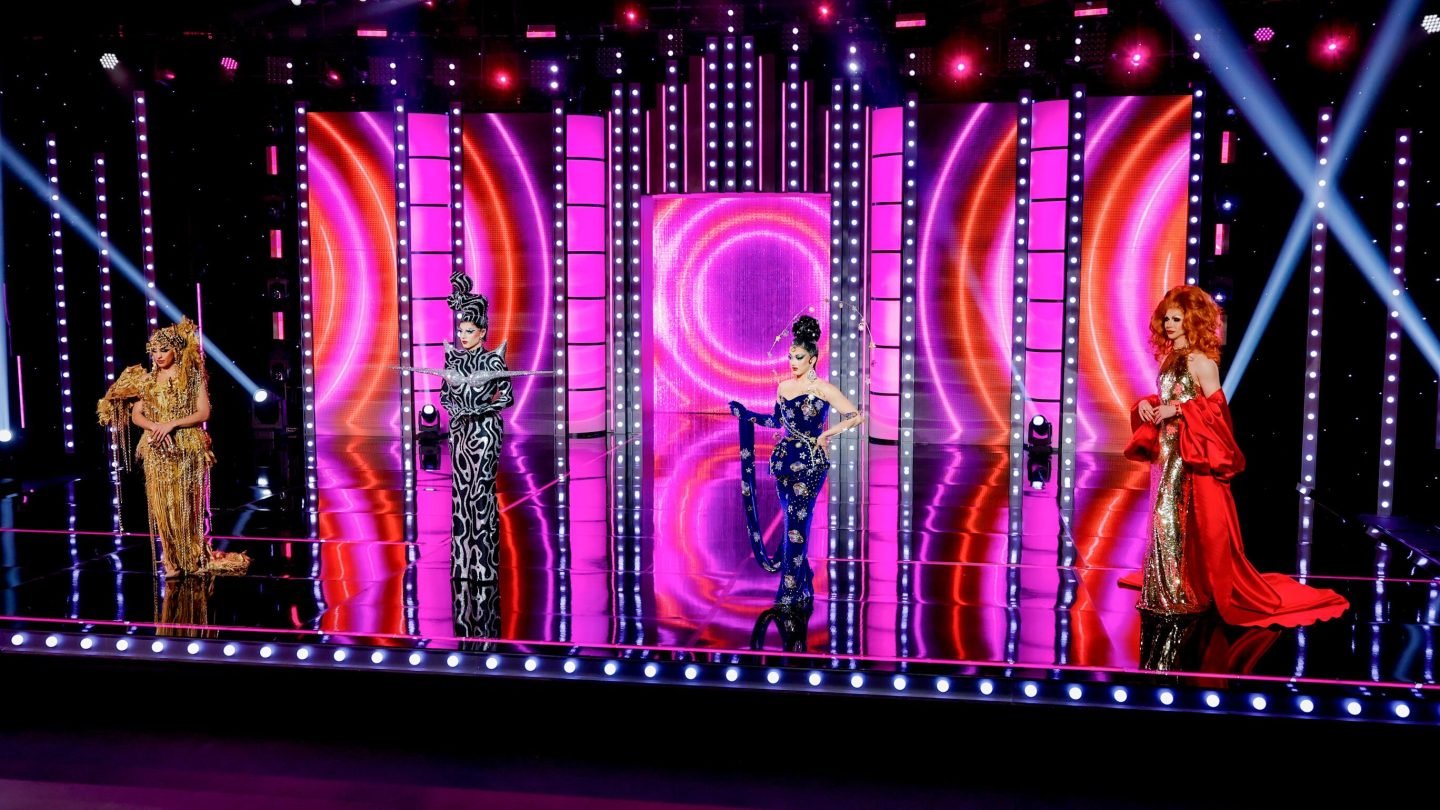
She’s back, back, back again! MTV has renewed RuPaul’s Drag Race for its upcoming 19th season, while Paramount+ has additionally greenlit new seasons of the All Stars spinoff.
The renewals come after the mainstay series celebrated its 18th season, where Myki Meeks was crowned America’s Next Drag Superstar. RuPaul’s Drag Race also recently received 11 Emmy nominations this awards season, with RuPaul earning his 11th consecutive nomination for outstanding reality or reality competition program host. Season 18 notably delivered double-digit growth over the previous season and set a new franchise premiere viewership record.
RuPaul’s Drag Race All Stars wrapped its season 11 on Paramount+ in July, with Crystal Methyd winning and becoming the first person of Mexican descent to win the mainstay series.
With the renewal announcement came additional orders for Untucked, the companion series that takes viewers behind-the-scenes of the show. RuPaul’s Drag Race, RuPaul’s Drag Race: Untucked,RuPaul’s Drag Race All Stars and RuPaul’s Drag Race All Stars: Untucked are produced by World of Wonder Productions.
“Nearly twenty years later, what began as a dream has become an extraordinary global movement. We owe endless thanks to our partners at MTV and Paramount+, along with every queen, judge, crew member, and fan who has built RuPaul’s Drag Race,” World of Wonder said in a statement. “Drag brings people together in powerful ways — and we are honored to keep celebrating new voices and sharing iconic moments with the world.”
RuPaul’s Drag Race has won the esteemed best reality competition program Emmy five times; it was the category’s powerhouse before The Traitors began its dominance in 2024. Michelle Visage, judge and executive producer, told The Hollywood Reporter that Drag Race reclaiming the best reality competition series Emmy this year would be “a statement without saying it’s a statement.”
“I think it would be a championship in a way that voices are being heard without saying things. It’s a statement without saying it’s a statement, do you know what I mean?” Visage said. “Especially with what’s going on in the political climate. But, we are grateful just being in that class of people that we’re in; being nominated, being included, being thought of is truly an honor. We spread the love. We’re still celebratory, but if we did [win], it’s definitely a ‘We’re not going anywhere’ type of statement.”
Though the curves at the vertical panel edges are the biggest change to the revised case’s shape, the H6 RGB+ also gains a bunch more vent holes and a whopping four more fans. The right side panel’s profuse perforations are shaped into stripes and the name “NZXT” embossed and ventilated. And the curve between that panel and the adjacent 45-degree-angled fan panel represents the union between two parts that were separate on the 2024 version of the case.
The front connectors remain the same: two USB Type-A (Gen 1) and one USB Type-C (Gen 2×2) ports, and a four-pole headset jack that also works with stereo headphones. The new power button is larger and surrounded by an inward-curved bezel; the curve affords a better view of the illuminated power indicator ring.
The H6 RGB+ has just one removable fan filter. It covers the bottom air intake. The other intake fans rely solely on the very fine size of their cover panel’s perforations to capture incoming dust. The filter is removable from the side with the case sitting upright, but I had slight difficulty getting its leading edge to align with the three catch tabs on the case’s underside while reinserting it. Flipping the case on its side made it a lot easier.
Also, note in the image below that the middle screw holes in the fan mounts have no screws in them. That’s because the three intake fan-blade units here share a single 120mm-by-360mm frame.
(Credit: Thomas Soderstrom)
A traditional inset PCIe slot panel lets PC builders drop graphics and other expansion cards straight in without having to finagle around obstacles, though it does reduce the case’s interior space from 16.2 to 15.6 inches. NZXT rates card clearance just short of that, at 390mm. Almost any modern card should fit just fine in here.
From this angle, you can also see that the power supply bay is directly behind the top of the motherboard, and that the back of the top panel has a tab you pull up to remove it. Look closer, and you might note that NZXT uses reverse-curve blades on all six of the intake fans (three side, three bottom) to conceal their motor frames on the side that isn’t showing. That’s a subtle touch well worth noting. The only fan here in standard orientation is the rear (exhaust) unit.
(Credit: Thomas Soderstrom)
A group of access holes punched for an ATX motherboard’s perimeter allows the H6 RGB+ to support concealed motherboard headers for Asus BTF, Gigabyte Stealth, and MSI Project Zero reverse-connector boards. Additional holes above, below, and in front of the motherboard are designed to pass cables to the headers of standard boards.
(Credit: Thomas Soderstrom)
Designed with a height-adjustment screw at the bottom and a damping pad on top, an L-shaped miniature card brace that protrudes from the front of the motherboard tray limits the maximum motherboard depth to around 10.8 inches when installed.
(Credit: Thomas Soderstrom)
That might seem significant, since the case isn’t rated as Extended ATX. Given that most retail “EATX” motherboards are only 10.5 to 10. 7 inches deep, that removable card brace could be the only thing to prevent a determined builder from installing one here. Just know that since the forward-facing portion of that brace stands around 4mm proud of the tray, boards with deeply offset back-bracing/stiffening panels, like my 10.5-inch-deep Asrock X870E Taichi, won’t sit all the way down on the front column of standoffs. (Conversely, that motherboard’s backplate-free “Lite” version fits perfectly.) Proceed with caution if you plan to install anything bigger than regular ATX.
(Credit: Thomas Soderstrom)
Also not on NZXT’s list is the case’s 280mm-format radiator capability, but you can see the extra row of fan mounts at 140mm spacing right along those of the rated 120mm spacing. With the H6 RGB+ having ample room (more than 65mm) between the top of the motherboard and the top radiator mount, most closed-loop coolers of typical 52mm-to-54mm thickness fit easily within the 410mm length of the panel’s interior.
(Credit: Thomas Soderstrom)
One place you won’t be putting a radiator is behind the front/side fan assembly. There’s simply no space above or below the fans for the end caps of the radiator, which are necessary to hold fittings on one end and to redirect coolant at the other.
(Credit: Thomas Soderstrom)
Slide tabs on the back panel hold the H6 RGB+’s drive cage between its power supply shelf and its bottom panel. Secured to those tabs via a single knurled screw, the cage can hold a single 3.5-inch drive on its inner portion and two 2.5-inch drives on its outer portion.
(Credit: Thomas Soderstrom)
Behind the removable drive cage is NZXT’s Control Hub Lite. This module connects NZXT’s proprietary fans to the company’s own CAM software through an internal USB 2.0 motherboard header cable. Drawing current from our power supply’s SATA drive power cable, it also appears to add an ARGB input to enable motherboard ARGB lighting pass-through, though the case does not include an extension cable to reach any of those motherboard headers.
Banks filed a lawsuit against Netflix in June, where she argued she was falsely represented in the docuseries, arguing that her comments were “stripped of context and reassembled to support a false and defamatory narrative unrelated to what she actually expressed.” She participated in a three-and-a-half hour long interview, outlining that just 16 minutes of her footage was used for Reality Check.
Netflix’s motion, which was filed Friday, argues that Banks’ complaints are “about ordinary editorial decisions.”
The motion confirms that Banks sat for a three-and-a-half-hour interview, adding that “After the interview, [Banks] signed an agreement granting the filmmakers the right to edit her interview footage, acknowledging she had ‘no right to review or approve’ the finished documentary, and releasing claims arising from it — including for defamation and false light. She now alleges the documentary, Reality Check: Inside America’s Next Top Model (the ‘Documentary’), defames her — not because it says anything false about her, but because she wanted advance notice of what another interviewee would say, more of her interview included, and her perspective presented differently.”
In Banks’ lawsuit, she specifically cited how she was shown in the docuseries responding to cycle two contestant Shandi Sullivan’s alleged sexual assault during filming. She was shown being asked “You remember the story with Shandi?” in Reality Check, to which she responded “um,” before the screen cuts to black, creating a “devastating and deliberate” implication that Banks couldn’t remember the assault, she argued in her suit.
“And when Banks is asked whether she remembers Sullivan’s story, the Documentary shows her answer: ‘I do remember her story.’ A documentary expressly showing Banks remembering does not imply that she forgot,” Netflix’s motion reads in response.
“Banks understands editorial discretion. She created, hosted, and executive produced 24 seasons of ANTM, making the same kinds of editorial decisions she now attacks — what footage to include, what to omit, and how to present competing narratives,” the motion continues. “The Documentary simply turned that editorial lens back on ANTM and Banks. Her disagreement with the resulting portrayal does not make it defamatory.”
A Netflix spokesperson told ABC News in a statement Friday they plan to “vigorously defend” the docuseries and those behind it.
“Directors Daniel Sivan and Mor Loushy are respected documentarians who thoroughly interviewed the people behind America’s Next Top Model,” the statement reads. “Tyra Banks was given the opportunity to speak openly about her experience and the creators fairly presented her perspective alongside those of every other participant shown in this documentary. We stand behind Reality Check: Inside America’s Next Top Model and will continue to vigorously defend it.”
The Hollywood Reporter has reached out to Banks’ lawyer for comment.
Saturday evening in Anaheim’s Honda Center, The Walt Disney Co. turned to Neil Patrick Harris to serve as a master of ceremonies for what is surely one of its most scrutinized events: The Disney Experiences showcase presentation at D23.
D23 of course is Disney’s in-house fan convention, and the showcase panels are used to reveal new projects and make news.
Disney turned to a late night theme for the event, with Harris hosting, joined by a live band, opening the event with a monologue full of Disney-related quips, like noting that the last host of the Experiences was Josh D’Amaro.
“Wait a minute. If my math is correct, I am 24 months away from being CEO, and 48 months away from owning the Lakers,” Harris quipped, before launching into an animatronic-themed, cameo-filled musical number.
Of course, it is D23, so it was the announcements that the fans wer eager to see.
Saturday’s showcase ended with a pair of showstoppers for Disney theme park fans, a refresh of Figment, one of Epcot’s original rides, including the return of the Dreamfinder character, and a revitalization of Disneyland‘s Tomorrowland, one of Walt Disney’s original visions. The concept: “New attractions, new open spaces, new places to dream about the future.”
“This particular Tomorrowland here at Disneyland was the one that was originally thought of and designed by Walt himself,” says Thomas Mazloum, the chairman of Disney Experiences, in an interview with The Hollywood Reporter. “If you think about it, so much of that at the time was based on optimism: Optimism about the future, and this is going to be our North Star as we approach this particular work. It doesn’t mean we’re not going to change things. It just means we respect where we came from, but we use that optimism to carry us in the future, and in the case of this particular project, I think it proves we are listening carefully to what our guests are telling us while investing also in new generations.
“We’ve done a lot, as you know, on Disney California Adventure, and we’re going to continue to do more. But we also know we need to listen equally as carefully and harmonize what this icon, especially Disneyland, did to the world when it first opened,” Mazloum continued. “And so the way I approach this is really not to be beholden by the past, to respect it, but to take Walt’s original positiveness, this optimism, and use that as our inspiration for the creative that we’re going to introduce.”
Of course that wasn’t the only news Disney had to share. There were updates on new lands and projects announced two years ago like the Cars-themed area and Villains Land at Magic Kingdom, cruise ship updates, and plenty more. Mazloum spoke to THR ahead of the event to lay the groundwork for what the company is teeing up over the coming months and years, and his first few months leading the division succeeding D’Amaro, who is now Disney’s CEO.
“It’s been very simple and very smooth, Alex. Truth be told, even in my prior roles, I’ve reported to Josh D’Amaro, and in this role I continue to report to him. I’m very familiar with our businesses, and it was very exciting for me, frankly speaking, to travel,” Mazloum says, noting that he went to every Disney resort around the world, and many of its cruise ships, after taking the top job. “Recently, I shared a note with our team around the world, and I said to them in my final sentence, and I meant this: ‘This is the privilege of my lifetime.’
“The reason why I feel that way is traveling around the world made me once again realize we truly are having more projects currently happening than at any single point in our history, and it isn’t just the volume — and we’re going to share this obviously with our fans this week — it’s the creativity. And what I always think about is our founder Walt’s quote when he said, ‘Disneyland will never be completed if there is enough imagination left in the world,’ and imagine me traveling all around the world, looking at each side, seeing everything starting to come to life.”
While D23 in 2024 served as an unveiling for a barrage of projects that will bring new Disney IP to its theme parks and resorts around the world, this year’s event put more focus on the parks’ own IP. That includes Tomorrowland, of course, but also fan favorites like Figment, the dragon at who has become something of a mascot for Epcot in Orlando, and the yeti animatronic on the Expedition Everest ride at Animal Kingdom, which has been broken since shortly after the ride opened.
“What that really means to me is that we’re listening to all of our fans and our guests, and specifically that means harmonizing the various demands,” Mazloum says. “You might be familiar with what we do here at Disneyland, with Avengers Campus, Coco, the first-time attractions and IPs that not only satisfy our existing audience, but I believe will also appeal to new audiences, while harmonizing the need to pay attention also to what our existing fans that have been loyal for many years and often decades demand of us, and to do that is to make sure that we revitalize fan favorites and keep them nice and fresh and new, while also working on new lands, and it’s about really harmonizing these tools.
“What you will see is all the new lands and updates on everything that we have announced, and how we follow through, and how we put the creativity at work to create a world-class experience, but then you will also see as we talk about Figment, as we talk about Yeti, as we talk about Tomorrowland, you will see the focus on the existing guests that have been longing for this for a long time,” he added.
Things like the yeti animatronic might seem like small potatoes in the grand scheme of things, but Mazloum frames them as a core piece of the Disney magic, getting families to return again and again, generation after generation.
“We are immensely focused on attention to details, and our guests, our fans, they genuinely care about our places, our parks, our cruise ships. They genuinely care about the stories,” he says. “They understand our commitment to tell our stories in an authentic way, the way only Disney can, and they hold us to a high standard. And our goal is to meet and exceed that standard.
“Whether it’s a nostalgic ride, whether it’s something like the Yeti, it may just be one small thing, but this is really something — a relationship between us and our fans that that we treasure and that is paying off,” he adds.
Disney’s Carousel of Progress at Disney World, for example, will be updated next year not only with new scenes, but also new voices, with Jamie Lee Curtis and Bryan Cranston set to voice characters on the attraction.
There will also be updates on the Disney Cruise Line, which has become a major source of investment for the company, with a flurry of new ships set to be delivered over the next half decade, including a new lightly smaller class of ships that Mazloum says will enable the company to add new locations in Alaska and Europe to its itineraries.
“It gives us a ton of flexibility, which we really want and need as we expand the cruise line both domestically and globally,” Mazloum says. “I always tell everyone it’s three vacations in one. You get the convenience of a cruise, especially for multi-generational travel, you get the Disney stories, and then you get your beach vacation or the beautiful destinations.
“So it’s a really incredible value proposition, and with our growing portfolio of parks around the globe — in future years, as you know, we also are working on another park in Abu Dhabi — but when you think about our global portfolio of parks right now, what the ships enable us is to a reach more people in the world that are Disney fans, and at the same time also connect them to our parks,” he adds. “Then you couple that with the fact that there’s still a sizable amount of the population that have never cruised, and on Disney Cruise Line in particular, we attract one of the highest amount of new to cruise guests in the industry.”
The next Wish-class ship, the Disney Believe, will include a statue of Moana in its atrium.
Ultimately Mazloum is betting that D23 will underscore how the company is leaning into what its theme park fans want, and can set the stage for his own tenure atop the most important experiential entertainment business in the world.
“What I’m really hoping that the fans will see, especially at this D23, is the creativity that we’re applying to all the new experiences we’ve announced, and how much we are listening to them, and how important their thoughts and their feelings are to us in in us reimagining some of their most favorite attractions, characters, or lands,” he says. “We’re gonna prove to the world and to our fans that we are following through on all the announcements we made two years ago. That we haven’t just announced it, we’re actually following through.”
TL;DR: Through August 20, you can get Windows 11 Pro on sale for $9.97.
Thinking of replacing your PC? Before you do, see if upgrading the operating system will give it some new life. Normally, it would be $199 to get Windows 11 Pro, but through August 20, it’s only $9.97.
Microsoft ended support for Windows 10 almost a full year ago—which means no more security updates, patches, or tech support, but that’s not the only reason Windows 11 Pro is a solid upgrade.
You’ll get access to:
DirectX 12 Ultimate for ray-traced graphics and high frame rates
Auto HDR to add contrast and color to even older games
DirectStorage (with compatible hardware) for lightning-fast game load times
Windows 11 Pro also offers improved window management, faster boot times, and a more intuitive layout designed to streamline your workflow. This OS upgrade is engineered to work with your PC, not against it, so your system finally runs like the engine it was made to be.
Recommended by Our Editors
Until 11:59 p.m. PT on August 20, you can get Windows 11 Pro on sale for just $9.97.
Prices subject to change. PCMag editors select and review products independently. If you buy through StackSocial affiliate links, we may earn commissions, which help support our testing.
About Our Expert
StackCommerce Team (Sponsored)
Experience
Products featured in these stories are selected by our partners at StackCommerce. If you buy something through links on our site, PCMag may earn an affiliate commission.
James, the NBA’s all-time leading scorer, is launching a YouTube Golf channel “chronicling his journey with the sport,” The Hollywood Reporter has learned. The name of the YouTube Channel will simply be “LeBron James.”
“LeBron and his friends will play a round at some of the world’s greatest golf courses, dine at local restaurants and have a little fun while enjoying everything the game of golf has to offer,” THR is told.
If you simply can’t wait a minute longer for such content, well, we’ve got more good news for you.
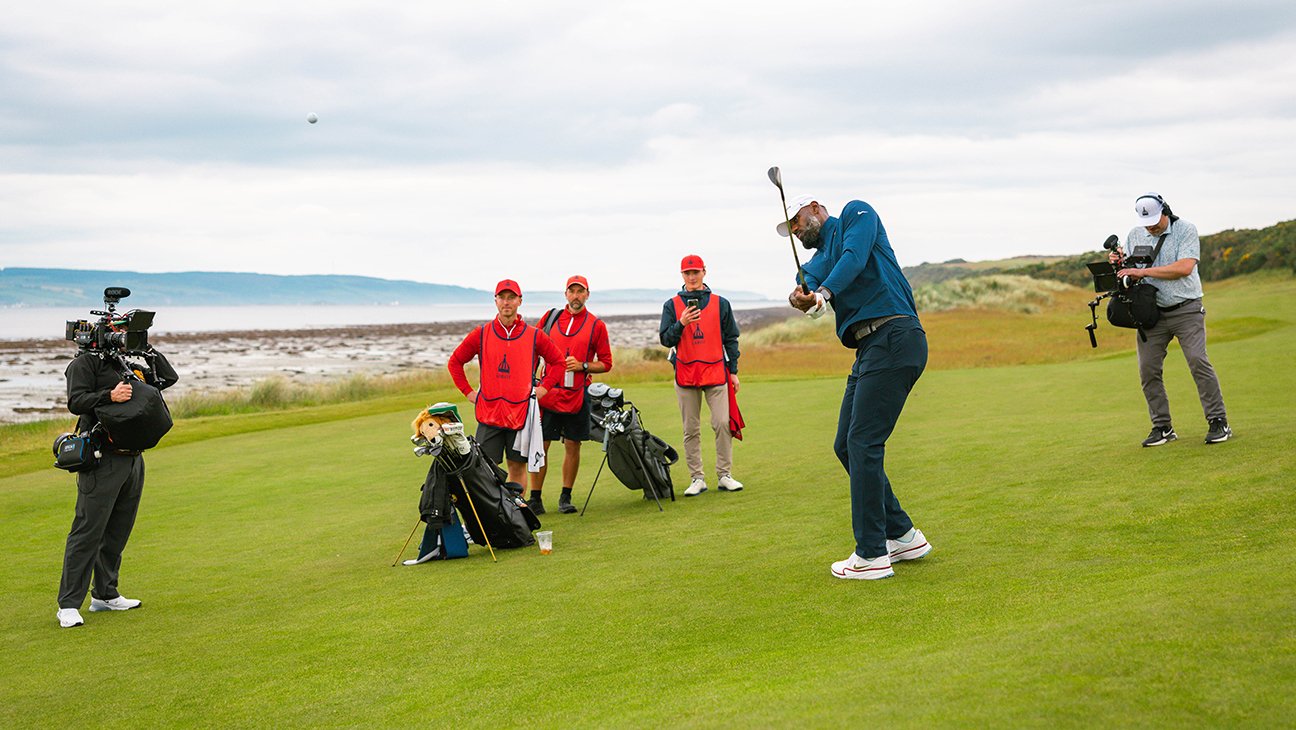
The channel launched timed to the publication of this story; its debut episode “follows James and members of the storied 2016 Cleveland Cavaliers championship team as they celebrate the 10-year anniversary of their historic comeback that brought the franchise its first title.”
James, Kevin Love, J.R. Smith, Richard Jefferson, Tristan Thompson, Channing Frye and famously not Kyrie Irving picked a great place to start: Castle Stuart Golf Links at Cabot Highlands in Scotland. There, the “reminiscing, wine and hilarious commentary are flowing,” according to the episodic description.
“I’m looking forward to people seeing this first episode, which was the trip of a lifetime with my teammates. We got to play golf and catch up in some of the most beautiful settings I’ve ever been in,” James told THR. “It’s been a lot of fun out on the course, learning and loving all the nuances of the game, and I’m excited about bringing everyone along with me on this journey through my channel.”
James’ YouTube Golf channel will release new episodes monthly, always on a Saturday.
Ahead of today’s launch, James told THR that he’s “around a 22 handicap right now.”
“Golf has given me the challenge I need as a competitor,” James said. “Just having a lot of fun, learning the game, practicing and playing as much as I can.”
James recently departed the Los Angeles Lakers for a two-year deal with the Philadelphia 76ers. In the courting process, private country clubs in the Philly area offered free memberships to the basketball superstar entering his 24th(!) professional season — clubs in the cities that ultimately didn’t land LeBron did the same. Not that the billionaire needs a handout.
Watch the trailer for episode one:
James and his business partner Maverick Carter founded production company SpringHill Entertainment in 2007. In 2020, it became part of SpringHill Company, which also includes a marketing company founded by James and Carter. Last year, SpringHill Company merged with British TV and film production house Fulwell 73.
British stars George MacKay and Rosy McEwen can admit: Mission was one of the least conventional shooting experiences they’ve ever had. It also happened to be one of the most liberating.
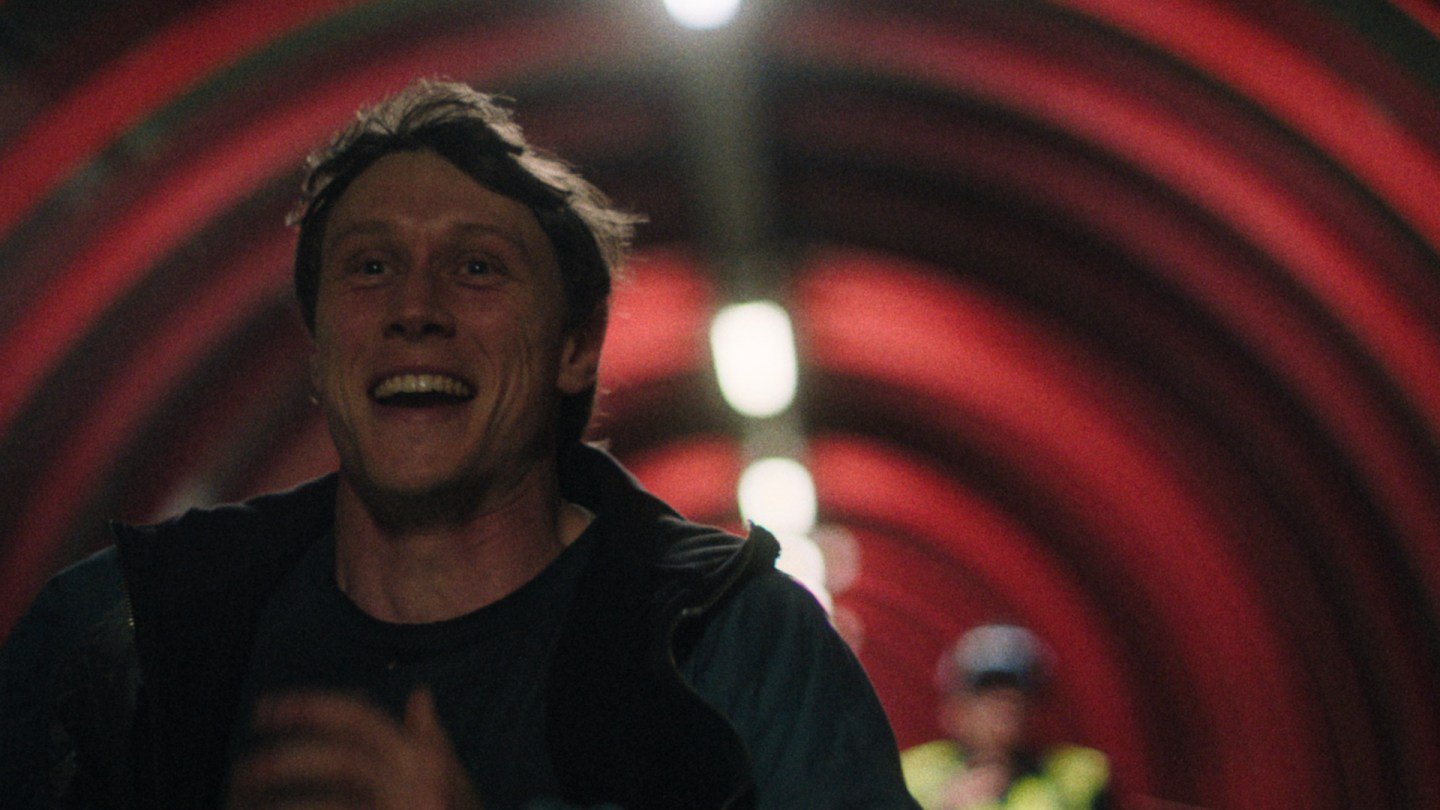
Director Paul Wright (Arcadia) throws caution to the wind in his latest feature film, set to premiere in competition at Edinburgh Film Festival on Saturday. The Glasgow-set Mission follows Dylan (MacKay), a young Scot who has reached the end of his tether with a dead-end job and lonely, unfulfilling existence. Over the course of a week, he seeks meaning in the wake of extreme chaos — such as breaking a monkey out of the local zoo, attacking a police officer and experimenting in some X-rated BDSM — as he attempts to feel alive. Dylan regularly gets in touch with his sister, Claire (McEwen), who is shocked by her sibling’s existential angst and frenetic energy.
The final product is, impressively, mostly improv. Wright didn’t have an initial script. “Paul made a huge lookbook of images to give a sense of the film tonally,” MacKay explains, “and then there were a series of circumstances and incidents for the characters to be in.” Much of the meaning of this film — to MacKay’s delight, having had his life “changed” by Wright on the set of 2013’s For Those in Peril — was discovered in the making of it. “[We were] exploring how much of a story or a character we could create by almost making an archive of material, and then have him discover a lot of it in the edit,” says MacKay. “It was, creatively, a really interesting idea.”
McEwen had never quite done a job like it. “You’d have a slight context for the scene — we knew exactly what was happening and what our characters were feeling — [but] there was so much scope to play with,” she tells The Hollywood Reporter ahead of the film’s world premiere. “The freedom of that I’ve never experienced before. Just not knowing where it was going to go and the options being limitless.”
The pair also just so happen to be two of the most in-demand Brits working right now. MacKay, star of 1917, has the hotly anticipated Sense and Sensibility adaptation out in October, as well as Margot Robbie’s untitled Ocean’s Eleven prequel coming up. Blue Jean and Black Mirror‘s McEwen, meanwhile, is currently playing a young Nicole Kidman on Prime Video’s Scarpetta. Below, they talk to THR about ad-libbing, absurdism and what keeps bringing them back to independent film: “These big studio [films], it’s a totally different beast… The freedom you get on these smaller sets. This is where I become a better actor. And if you’re not growing, what are you really doing?”
George, I know that you and Paul have worked together before. Was that a big draw for you with Mission?
GEORGE MACKAY It was everything. The film we did together was a wee while ago now. It was called For Those in Peril, and it genuinely was life-changing. It was such a wonderful working experience. It was so exciting and invigorating and creative and I’m so proud to be a part of that film. I think the film itself is really great and it went on to do cool things. It went to the Directors Fortnight in Cannes and Paul and I just became and stayed firm friends. It taught me so much about a way of working and his directing style. With that first film, there was a fair amount of improv with certain sequences, and he shot quite economically, but shot a lot of footage. Rather than do six two-minute takes, we’d do one 10-minute take, and so you learn that a lot of this won’t be used. You felt comfortable to really explore beyond what your first offering would be, but it also had that momentum.
So when this came around, I think we both felt that there was an element of [experimentation]… something that was made really with process [prioritized] ahead of what it would be after. [There was] this film he made, Arcadia, which was this archive documentary where he found the narrative out of archive material. Exploring how much of a story or a character we could create by almost making an archive of material, and then have him discover a lot of it in the edit as well, was just, creatively, a really interesting idea. That was a big part of wanting to do Mission.
What a playground for you guys. Rosy, did you find it was quite a different directorial style to what you’re used to?
ROSY MCEWEN Yes, and one of my favorite experiences ever. It was so freeing, so liberating. Firstly, the crew was really small. The whole thing felt very intimate. I was only there for a few days at the beginning and a few days at the end. So I didn’t even really get the whole experience. But my days that I was there, I felt like I lived a whole life because sometimes it would just be Paul and then the DOP and you in a room, and he would just roll, and 20 minutes would go by. You’d have a slight context for the scene — we knew exactly what was happening and what our characters were feeling — [but] there was so much scope to play with. The freedom of that I’ve never experienced before. Just not knowing where it was going to go and the options being limitless.
Rosy McEwen as Claire in ‘Mission.’
Courtesy of EIFF
Going back to the writing of this, what attracted you to the script?
MACKAY The initial idea was not to have a script. The first thing was a series of images. Paul made a huge lookbook of images to give a sense of the film tonally, and then there were a series of circumstances and incidents for the characters to be in… And as the film becomes a reality, you have to narrow what you’re doing because of all the logistical elements. Like, okay, to do that, we need to book that location. What kit do we need to make that location? Do we really need that? So things get distilled.
Then the narrative is born out of the trajectory of the character. So the initial idea was very energetic. It was images and tone and character more so than a fixed narrative, and then we came to hone it into a script for the practicalities of shooting. Then you put your thumb on the end of the hose trying to get the accuracy and the pressure of the story.
How unconventional. Were you ad-libbing a lot? Was there a lot of improv? There was so much realism to Claire and Dylan’s interactions, especially.
MACKAY Yeah, yeah. Loads of improv. There’s the big scene we have at the end, and that was very scripted. But there’s so much of it that is improv, really.
MCEWEN And I would come back to set and hear wild stories about what George had done, because the setup of the scene would be like, you were in a zoo, and then suddenly [crew members] were like, “George got in this thing, and then suddenly he was running down the street, and then there was a monkey!” (Laughs.) We never quite knew where it was going to end up, and the freedom of that, that’s all down to Paul because you have to be inspired to be able to be that free. You can’t just plop someone in a room and be like, “Go for it.” The idea behind it — these people who just want to break free of convention — was fizzing inside. I imagine you felt the same thing, George, but Paul had just set us up so well that it was always easy to just let the flow take over.
George, do you recall how Paul relayed to you the journey that Dylan is going on through in this film? What is he trying to depict, at its core?
MACKAY At its core, it’s someone who’s trying to get back to [something]. I think he reached a high in his early years. He had a spiritual experience, for want of a better term, that took him to the edge of life, and there was something so extraordinary about that. He’s just in the time in between — in the workings of the world and the world he exists in hasn’t been able to ever get close [to that experience]. He’s been moving the opposite way of getting close to reaching that extraordinary feeling again. I think it’s as pure as that. So he basically gives himself a window of time, and the mission is to commit to feeling as much as possible — at whatever cost — and then the story is about [what happens] once you commit to that. It sounds easy and flippant, but the reality of what that involves… The reality of that chaos is quite troubling, even if you’re wanting it. He’s simultaneously lost and totally clear on what he wants to do.
How do you begin to find relatability there? What do you tap into as an actor, and how do you shake that off at the end of the day? I can imagine this was pretty intense at times.
MACKAY I wouldn’t go as far as Dylan goes in my own life, but I think there is a lot to question. Also, Paul is so incredibly well-read. He got me to read a bunch of books and texts and [listen to] music. I think so much of the extraordinary discoveries in history about people pushing beyond boundaries and going, “Well, why is it only this? Why not this way?” There are so many things like that. In my own head, I’m confounded by it still. I’m trying to think of the term. (Pauses.) I’m on the hamster wheel as much as everyone else, trying to make a good living, do good work and the steps that that takes. But reading the text, capitalism does not make sense. It’s a race to the bottom, and so many things that we participate in… we do that knowingly. What I loved about this story is it really looks at someone who’s deemed, essentially, to be off the track and wayward for having a very clear understanding of [his path].
So much of what we do does not make sense and I think if you put it to most people, they would agree. How we live our lives, what we value, how we value it, the means with which we go about it. The imbalance of the world is so extraordinary and yet we are thrilled to continue participating it, and I include myself in that bracket. But this is why the character was so interesting, because there’s a bunch of things which I think I feel, but don’t go towards. It’s so worthwhile to explore them in this rather extreme example. [Mission] is almost at the end of the story. It becomes about an understanding of compromise and things that were maybe there all along, or things that went too far. But the attraction of Dylan was, I guess, playing an extreme example of someone who was committed to a way of thinking and experimenting within that, without saying it’s right or wrong necessarily.
And Rosy, what angle is Claire coming at this from? How do you envision they’ve become estranged?
MCEWEN I think they are examples of people feeling probably the same thing, but dealing with it in very different ways. I don’t think Claire has the fearlessness that Dylan ends up personifying. I think she feels probably more saddened by life. I see the irony of that, because obviously what happens to Dylan at the end, but I think she accepted her fate, and she feels like quite a sad person to me because of that. I think she feels like life is about going through the motions, and, “Yes, I feel everything that you’re feeling, Dylan, but there’s nothing that you can do about that. This is just life.”
We talked a lot about what trauma they have been through. I don’t know if we ever put full buttons on exactly what they’d experienced, but there was obviously something there in their childhood which had bonded them and dampened any magic that they’d found as kids. There are a lot of layers there. She’s probably a bit jealous of Dylan that he deals with it in the way that she doesn’t really know how to break free from. And when we were shooting a lot of the scenes of Claire in her bedroom, there was a lot of crying and there was a lot of screaming and there was a lot of internalizing everything that Dylan externalizes in the end. I think they’re cut from the same cloth. But yeah, they’re just two examples of how you cope. Neither one right nor wrong, really.
Had you guys worked together before this?
MACKAY We hadn’t! Had we even met? I think it was the first time.
MCEWEN No! It was the first everything. George and Paul are the reason I did it. I didn’t know anything about it. I hadn’t seen the script. They were like, “Do you want to do a few days on a film with George?” and I was like, “Yeah, absolutely. I think I can do that. When do you need me?” Then I learned about everything, I got up there and it was explained [to me]. I didn’t even really know how it was going to be shot. I didn’t know the freedom we were going to have. So the whole thing was this very beautiful surprise.
Also: A great Scottish accent from both of you in this. Did you guys have an accent coach?
MACKAY Yes, yes, but also that was one of the biggest things about working with Paul the first time. I played a Scottish character in Paul’s first film many, many moons ago. It was the first time that I did an accent for a whole job. From when I got in the car to leaving the set, I was always in the accent. So there was a fundamental Scottish connection with Paul. It was nice to dust it off.
MCEWEN I’m sure [MacKay’s] is much better than mine.
MACKAY No, no! You’re sweet.
MCEWEN I think there were many times during this that I was like, “Paul, this is really bad. You’ll cut it, right?” So I think the editors helped me out.
What do you hope resonates with audiences watching Mission in Edinburgh?
MACKAY I hope that people question a way of being. There are no answers in it really, just more questions. I think genuinely, the biggest thing is about a process of work. Whatever people think of the film, it was endeavored to be made with purely with the process at its heart. The most important thing was the way the film was made, rather than what the film became, and I think that is so so valid. And films like that need festivals to hold them because they are harder to grasp some of the time. I’m so grateful that Edinburgh is celebrating it and championing it. But I hope that people are thrilled by the experimentation.
MCEWEN I think you’re right. I hope people leave with questions. And to me, the film is about freedom. Are you asking yourself questions about the way you’re living your life? Are you actually happy? Are you doing the things you really want to be doing? I think the literal context of what Dylan gets up to is not necessarily the most important nor the right answer, as you said. But I think it’s more like, what if I just said that thing that I’m really wanting to say? What if I actually break up with that person? We can get so subdued in the monotony of life and big changes feel scary. I hope it helps people ask themselves questions about freedom.
Both of you have extremely big projects currently out or coming out — big studio stuff. George, you have Sense and Sensibility. Rosy, you have Scarpetta. What pulls you back to independent film?
MACKAY For me, this project was really about Paul. I’m so grateful to Paul for the first project that we did together 14 years ago. It really did change my life in four weeks. It was so special. So I always want to work with Paul, and I feel so privileged that he’d asked to work with me again. In terms of independent film, the very nature of independent film is they are oftentimes smaller, and inherently in the way they’re put together, you can be a bit autonomous in your creative choices. Because you’re not bound financially to a higher power, and that has its merits for creative experimentation. And I think it’s really important that we keep experimenting, whether those experiments always come off perfectly or not. The value is in the experimentation in itself. Without those experiments, you don’t get new stuff. So I think that’s a reason to always come back to it
MCEWEN To be honest, I think you’d be hard-pressed to find an actor who wouldn’t want to solely do great indie films. I just feel like that’s actually most people’s dream. But the reality of life is that you have to make money. And I’m not downplaying these studio things. We endeavor to pick jobs that inspire us, but these things that happen in a more intimate setting — that is where I learn. You’re right, George. Experimentation. It’s where I feel like I grow. That’s where I feel like I’m not just moving through the motions. These big studio ones, it’s a totally different beast. It uses a different skill set, whereas the freedom you get on these smaller sets. This is where I become a better actor. And if you’re not growing, what are you really doing?
This interview has been shortened and edited for clarity. The 2026 Edinburgh International Film Festival runs Aug. 13-19.
“Spider-Man: Brand New Day” led the box office again on Friday despite competition from Anne Hathaway and a horde of hungry dinosaurs.
The Warner Bros. sci-fi thriller “The End of Oak Street” landed in second place on opening day with $8.1 million from 3,446 North American theaters. Rivals estimate the film will earn about $18.7 million domestically by Sunday. That’s a soft start since “Oak Street” cost more than $80 million to produce. Reviews (84% on Rotten Tomatoes) and word-of-mouth (”B” grade on CinemaScore exit polls) have been positive, so there is a chance “Oak Street” sticks around in theaters and justifies its price tag.
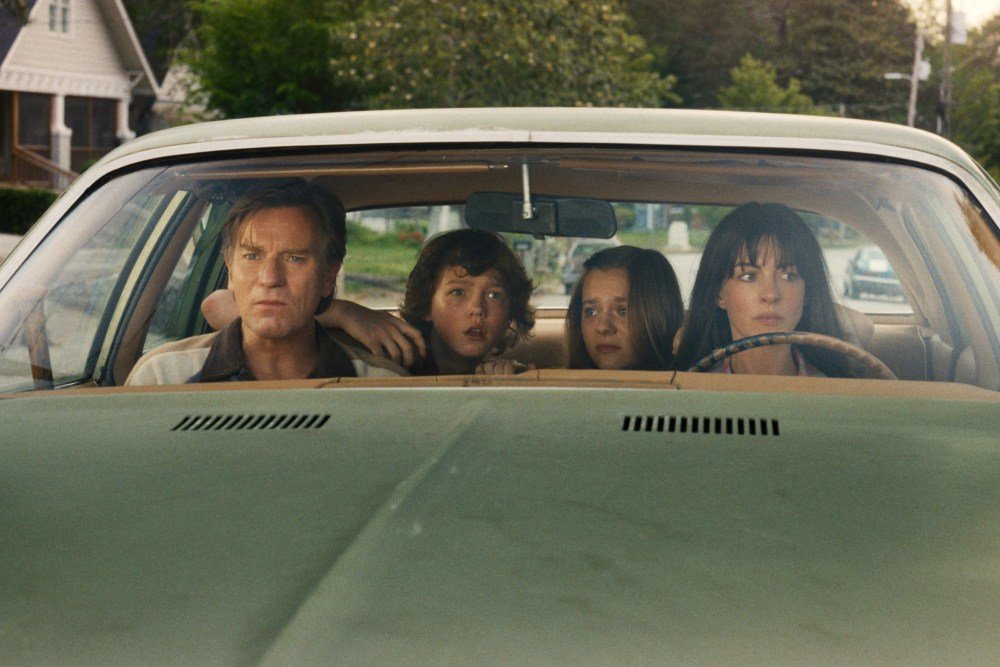
“It Follows” filmmaker David Robert Mitchell wrote and directed “The End of Oak Street,” which chronicles a suburban family whose neighborhood is suddenly blipped to prehistoric times. Hathaway stars alongside Ewan McGregor, Maisy Stella, Christian Convery and Jordan Alexa Davis.
This weekend’s other major newcomer, “PAW Patrol: The Dino Movie,” took third after earning $7.35 million on Friday from 3,545 North American cinemas. The animated family adventure should dig up about $20 million for Paramount through the weekend. That projection aligns with its predecessor, “The Mighty Movie,” which opened with $22 million and grossed $205 million by the end of its run.
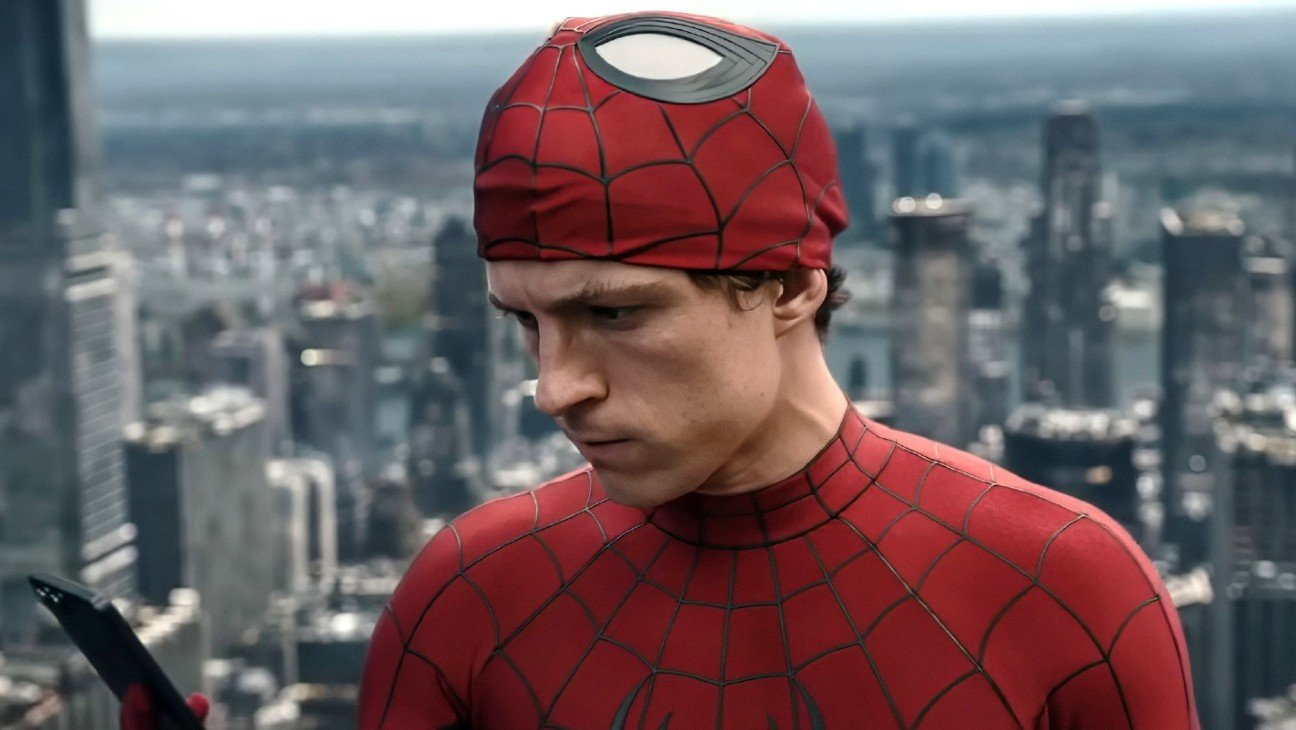
“Spider-Man: Brand New Day” still reigned supreme with $19 million domestically on Friday. Through its third weekend, the Marvel-Sony tentpole is targeting $67 million, which represents about a 53% decline from last week’s numbers. That would push “Brand New Day’s” North American revenues to roughly $783 million.
Christopher Nolan’s “The Odyssey” is still holding strong at No. 4 through its fifth weekend. The Greek epic added $6.5 million domestically on Friday and is expected to pull in $23 million through the weekend. That would put the film’s North American haul at $504 million.
Finally, in fifth was “Katseye: Wild Hearts.” The documentary, which offers a behind-the-scenes look at the global girl group, made an estimated $2.2 million on Friday from just 724 theaters. By Sunday, it’s expected to gross about $3.8 million.
Sony Pictures‘ Brand New Day pulled in $19 million on Friday as it heads to $67 million, which will top the domestic box office for its third consecutive frame. This would bring the Tom Holland-led feature’s North American total to $782.8 million for its first 17 days to stand at No. 5 on the all-time domestic chart, just behind Avatar at $785.2 million and topping the No. 6 total of $718 million for Top Gun: Maverick.
Warner Bros.’ dinosaur-centric sci-fi survival feature The End of Oak Street grossed $8.1 million on Friday, including Thursday previews, as it eyes an opening weekend around $20 million. Earning a B CinemaScore from audiences, David Robert Mitchell‘s film launched in 3,400 North American theaters and carries an $80 million production budget.
Anne Hathaway and Ewan McGregor star in the movie about a family in the early 1980s whose suburban neighborhood has landed in a place teeming with prehistoric predators. It holds an 85 percent Rotten Tomatoes approval rating from critics, while its audience score stands at 77. In his review of The End of Oak Street for The Hollywood Reporter, chief film critic David Rooney called the movie “mindlessly entertaining in a big-dumb-fun kind of way.”
PAW Patrol: The Dino Movie chased down $7.3 million on Friday, including previews on Thursday and last Saturday, as Paramount Pictures now expects it to also land in the vicinity of $20 million domestically for its opening weekend. Earning an A CinemaScore from audiences to match what the previous sequel PAW Patrol: The Mighty Movie received, Dino Movie opened in more than 3,500 locations in North America and has added $38.3 million from 52 overseas markets. It has a $39.5 million production budget.
Carter Young, Mckenna Grace, Terry Crews, Jennifer Hudson and Snoop Dogg are among the voice stars for director Cal Brunker’s film that brings the Paw Patrol canine heroes to a world containing dinosaurs. The previous sequel, 2023’s The Mighty Movie, opened to $22.7 million domestically in late September. That project’s $205 million global run improved upon the $144 million worldwide total for 2021’s original PAW Patrol: The Movie, which adapted the series that first launched on Nick Jr. in 2013.
PAW Patrol: The Dino Movie holds an 84 percent critics score on Rotten Tomatoes. THRcritic Frank Scheck wrote that, “while the material is thoroughly juvenile, the films impart valuable messages to their impressionable viewers.”
With Oak Street and Dino Movie battling it out for third place, Universal’s The Odyssey will remain at No. 2 in its fifth weekend as it looks to collect $23 million to bring its domestic cume to $504.4 million.