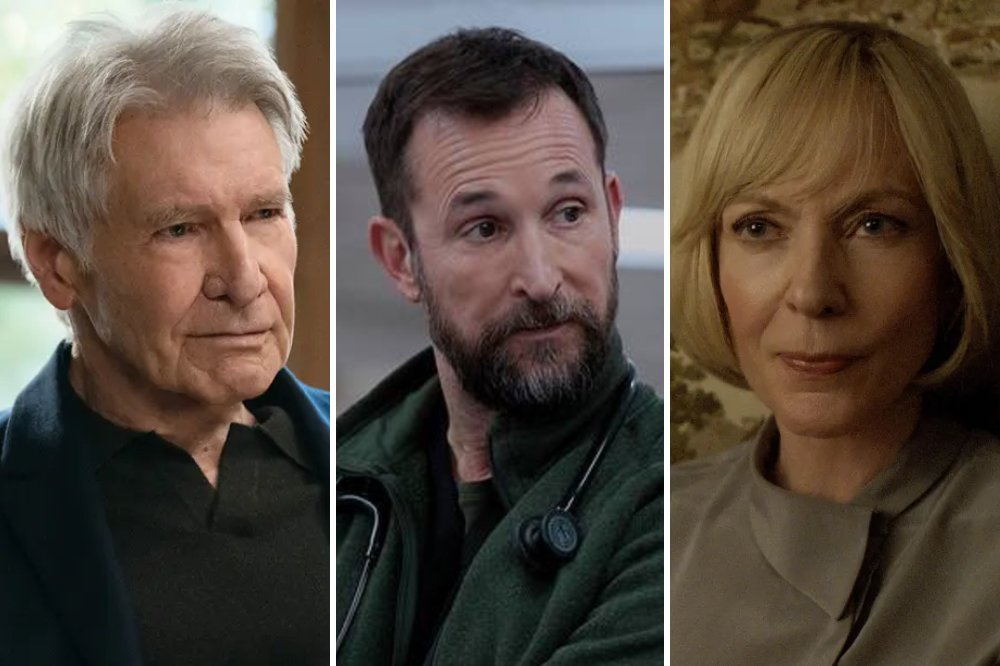
Final Emmy voting is now open.
More than 20,000 Television Academy members have the final ballots in hand for the 78th Emmy Awards, with voting remaining open through Wednesday, Aug. 26, at 10 p.m. PT. When the envelopes begin opening — first during the two-night artisans ceremony, formerly known as the Creative Arts Emmys, on Sept. 5 and 6, and then during NBC’s Sept. 14 telecast from the Peacock Theater — some of the longest-standing records in Emmy history could fall.
HBO Max enters the final stretch as the most-nominated network, led by two of the year’s biggest contenders: reigning drama champion “The Pitt” and the fifth and final season of “Hacks.” But the night could produce history well beyond the top program races. Two actresses could tie the all-time record for acting wins on the same night. A limited series could accomplish something no program has done in the category’s history. The competition could produce just the fourth three-peat ever — or the first for a show celebrating its 50th season. And perhaps the most poignant possibility sits in guest actor in a comedy series, where Rob Reiner is nominated posthumously alongside Michael J. Fox. Either outcome would rewrite the record book.
Here’s a rundown of the records, milestones and fun facts among some of the nominees this year, category by category.
-
Drama Series

Image Credit: Apple TV - RECORD: If “Slow Horses” or “Pluribus” wins, Apple TV claims its first drama series Emmy ever. The streamer has conquered comedy twice over — “Ted Lasso” and “The Studio” — but has never taken TV’s most prestigious prize.
- MILESTONE: If “The Pitt” wins, it becomes the 11th drama ever to win the top prize for its first two seasons — and the first since “Mad Men” (2008-09). The others include: “The United States Steel Hour,” “Playhouse 90,” “The Defenders,” “Mission: Impossible,” “Upstairs, Downstairs,” “Hill Street Blues,” “Picket Fences,” “The Practice” and “The West Wing.”
- FUN FACT: If “Pluribus,” “A Knight of the Seven Kingdoms” or “Task” wins, it would mark back-to-back freshman champions, following “The Pitt” last year.
-
Comedy Series
Image Credit: Apple TV - MILESTONE: If “Widow’s Bay,” “Shrinking” or “Margo’s” wins, it would be the fourth statue for Apple, one less than HBO’s five. If “Hacks” wins, they would tick up, still in fourth place overall behind NBC (26), CBS (22) and ABC (11).
- MILESTONE: If “Only Murders in the Building” wins, the Hulu whodunit finally lands the top prize on its fifth consecutive series nomination — it’s 0-for-4 to date despite seven Emmys elsewhere.
- MILESTONE: If “Abbott Elementary” wins, Quinta Brunson’s sitcom also breaks through on its fifth straight series nomination, becoming the first broadcast comedy to win since “Modern Family” in 2014.
- FUN FACT: With reigning champ “The Studio” sitting out this cycle, a new winner is guaranteed. If “The Bear” or “Hacks” wins, each claims its second series title (2023 and 2024, respectively). If “Widow’s Bay” or “Margo’s Got Money Troubles” wins, it’s the second consecutive freshman champion after “The Studio.”
-
Limited or Anthology Series
Image Credit: Netflix - RECORD: If “Beef” wins, it makes history: no program has ever won the limited/anthology series Emmy twice. In roughly seven decades of the category’s various incarnations, every winner has been a one-and-done either because they needed to move to one of the recurring categories, or just never returned.
- FUN FACT: Anything else wins — “All Her Fault,” “The Beast in Me,” “DTF St. Louis” or “Love Story: John F. Kennedy Jr. and Carolyn Bessette” — and it’s a first-time winner, as all four are freshman entries.
-
Lead Actor, Drama
Image Credit: Disney - MILESTONE: If Sterling K. Brown wins for “Paradise,” he becomes just the third man ever to win lead drama actor for two different shows, joining Robert Young (“Father Knows Best,” “Marcus Welby, M.D.”) and James Spader (“The Practice,” “Boston Legal”). It would also be his third acting Emmy for a third different program.
- MILESTONE: If Noah Wyle wins, he becomes the fifth actor to win lead drama for a show’s first two seasons — after E.G. Marshall (“The Defenders”), Bill Cosby (“I Spy”), Daniel J. Travanti (“Hill Street Blues”) and Bryan Cranston (“Breaking Bad”) — and the first since Cranston in 2009. Wyle is also nominated for directing “The Pitt,” making him a threat to double.
- FUN FACT: If Gary Oldman wins for “Slow Horses,” the Oscar winner lands his first Emmy at 68 after three noms.
-
Lead Actress, Drama
Image Credit: Courtesy of Eddy Chen/HBO - RECORD: If Zendaya wins, she becomes the youngest performer in history — man or woman — to win three lead drama Emmys, at 30 years and two weeks. Cosby was 30 years and 10 months when he claimed his third in 1968. She’d also be the fifth woman with three or more, after Barbara Bain, Michael Learned, Tyne Daly and Edie Falco, and the first since Falco in 2003. She already owns the category’s youngest-winner mark (24, in 2020).
- RECORD: If Keri Russell wins — she’s 0-for-5 in acting nominations across “The Americans” and “The Diplomat” — and longtime partner Matthew Rhys converts either of his two lead nominations, for “Widow’s Bay” or “The Beast in Me,” they become just the third real-life couple to win acting Emmys in the same year, and the first in 40 years, following two married pairs: Alfred Lunt and Lynn Fontanne (1965, both for “The Magnificent Yankee”) and William Daniels and Bonnie Bartlett (1986, both for “St. Elsewhere”). Russell and Rhys, partners for more than a decade though not legally married, would be the first couple to do it for different shows — and Rhys’ lone Emmy so far came for playing her on-screen husband in “The Americans.”
- MILESTONE: If Chase Infiniti wins, the 26-year-old “The Testaments” breakout becomes the second-youngest lead drama actress champion ever, behind only Zendaya — on her first career nomination.
- MILESTONE: If Rhea Seehorn wins, the “Pluribus” star claims a long-awaited first Emmy, three years after “Better Call Saul,” which is all-time most-losing series with 0-for-53.
-
Lead Actor, Comedy
Image Credit: Hulu - RECORD: If Martin Short wins for “Only Murders in the Building” — his fifth straight nomination for Oliver Putnam — he lands his first acting Emmy in eight attempts and, at 76, becomes the oldest lead comedy actor winner ever, passing Eugene Levy (73, in 2020 for “Schitt’s Creek”). His trophy shelf isn’t bare: his Emmys to date are for writing.
- MILESTONE: If Steve Carell wins for “Rooster,” he also breaks a 0-for-7 acting slump — famously including six losses as Michael Scott — for his first acting Emmy at 64. He has additional noms as a producer in other categories.
- MILESTONE: If Matthew Rhys wins for “Widow’s Bay,” he becomes the first man since Carroll O’Connor in 1989 to hold lead acting Emmys in both comedy and drama and keep an eye on his limited series nomination below.
-
Lead Actress, Comedy
Image Credit: HBO Max - RECORD: If Jean Smart wins, her eighth acting Emmy ties the all-time record for a performer, shared by Julia Louis-Dreyfus and Cloris Leachman. It would also be her fifth lead comedy actress win — tying Mary Tyler Moore and Candice Bergen for second-most, behind Louis-Dreyfus’ seven — and her third straight, the category’s first three-peat since Louis-Dreyfus’ 2012-17 run.
- RECORD: If Elle Fanning wins — with sister Dakota also nominated in supporting actress (limited) — and both convert, they become the first sisters ever to win acting Emmys in the same year. As far as the record shows, no two sisters have ever both held acting Emmys, period.
- RECORD: After winning this category when “Hacks” was on hiatus, if Quinta Brunson were to triumph again for “Abbott Elementary,” she becomes the first Black woman to hold multiple comedy-acting statuettes. She became the second Black woman to win the category after Isabel Sanford for “The Jeffersons.”
- MILESTONE: If Lisa Kudrow wins, it caps one of the great slow burns in Emmy history: she’s been nominated for playing Valerie Cherish in “The Comeback” in 2006, 2015 and now 2026 — the same role across three decades. It would be her first Emmy since “Friends” in 1998.
-
Lead Actor, Limited Series or Movie
Image Credit: COURTESY OF NETFLIX - MILESTONE: Oscar Isaac would make history for Latinos if he wins for “Beef.” Only one Latino actor has won the lead actor (limited) award — Jharrel Jerome for the 2019 Ava DuVernay crime drama “When They See Us.” Since then, the only Latino performers recognized in the category have been Lin-Manuel Miranda (“Hamilton”) and, coincidentally, Oscar Isaac with his 2022 nomination for “Scenes From a Marriage.”
- RECORD: If Matthew Rhys wins, note the rare feat that got him here: dual lead nominations in the same year, in comedy (“Widow’s Bay”) and limited (“The Beast in Me”). No performer has ever won two lead acting Emmys in a single year. If Rhys sweeps both, he does something genuinely unprecedented. He becomes the first man to complete the lead trifecta of comedy, drama and limited wins. The only performer with victories across all three fields is Barbara Stanwyck, whose “comedy” trophy came in a genre-blind 1961 category.
- MILESTONE: If Jason Bateman wins for “Black Rabbit,” it’s his first acting Emmy after a 0-for-7 career — and he’s got three chances at hardware this year, doubling as a supporting nominee for “DTF St. Louis” and a directing nominee for “Black Rabbit.”
- MILESTONE: If Riz Ahmed wins, his second lead limited victory ties James Woods’ category-best two.
-
Lead Actress, Limited Series or Movie
Image Credit: Courtesy of Netflix - RECORD: If Sally Field wins, she becomes — by a matter of months — the oldest winner in the category’s history, sneaking by Jessica Tandy, who was 79 when she won in 1988 for “Foxfire.” Field will turn 80 in November. It would be her first Emmy since 2007 and her third different show winning her acting hardware, after “ER” and “Brothers and Sisters.”
- MILESTONE: If Claire Danes wins, she joins the three-different-shows club (“Temple Grandin,” “Homeland,” “The Beast in Me”) with her fourth acting Emmy.
- FUN FACT: If Carey Mulligan or Sarah Pidgeon wins, it’s a victory on their first career nominations.
-
Supporting Actor, Drama
Image Credit: Apple TV - MILESTONE: If Shawn Hatosy wins, he claims a second straight Emmy for Dr. Abbot on “The Pitt” — having won guest actor last year — and joins the roughly dozen performers who’ve won two different acting categories for the same series. Those names include Allison Janney’s C.J. Cregg (“The West Wing”), Uzo Aduba’s Suzanne Warren (“Orange Is the New Black”), Jennifer Coolidge’s Tanya (“The White Lotus”) and Claire Foy’s Queen Elizabeth (“The Crown”). He’d be the third man in the modern era to do it, after Christopher Lloyd and Jon Cryer.
- MILESTONE: If Billy Crudup wins, his third supporting drama Emmy for “The Morning Show” ties Aaron Paul for the most in the category this century, one shy of Peter Dinklage’s all-time four for “Game of Thrones.”
- FUN FACT: If Jack Lowden (“Slow Horses”), Tom Pelphrey (“Task”) or Carlos-Manuel Vesga (“Pluribus”) wins, it’s their first Emmy. Regarding Vesga on a first nomination, he would be the fourth Latino winner ever, and the first since Jimmy Smits for “L.A. Law” in 1990.
-
Supporting Actress, Drama
Image Credit: Netflix - RECORD: If Allison Janney wins, she matches Jean Smart’s math: an eighth acting Emmy, tying Louis-Dreyfus and Leachman’s all-time record. If both Janney and Smart win on Sept. 14, the record book gets two new co-holders in one night. Janney would also become a winner for four different shows (“The West Wing,” “Mom,” “Masters of Sex,” “The Diplomat”) — matching the all-time mark of four, shared by seven performers: Ed Asner, Tyne Daly, Alfre Woodard, John Lithgow, Betty White, Helen Mirren and Laura Linney. Remarkably, five different nominees this year — Janney, Michael J. Fox, Cherry Jones, Merritt Wever and Bradley Whitford — could each join that exclusive club.
- MILESTONE: If Katherine LaNasa wins, she goes back-to-back for the first two seasons of “The Pitt” — only Allison Janney (“The West Wing,” 2000-01) and Blythe Danner (“Huff,” 2005-06) have ever done that in this category. It would mirror Wyle’s potential repeat and give the medical drama a shot at repeating both of its 2025 acting wins.
- MILESTONE: If Julianne Nicholson wins, she claims Emmys in consecutive years for different shows in different categories (“Hacks” guest, “Paradise” supporting) — and becomes just the ninth woman with acting wins for three different programs in three different categories, joining Barbara Stanwyck, Tyne Daly, Allison Janney, Alfre Woodard, Betty White, Cloris Leachman, Jean Smart and Merritt Wever.
- FUN FACT: If one of LaNasa’s “Pitt” castmates beats her — Taylor Dearden, Fiona Dourif or Sepideh Moafi — the show would crown different winners in the same category in its first two seasons, exactly what “The Bear’s” women did in comedy (Ayo Edebiri in 2023, Liza Colón-Zayas in 2024, but notably Edebiri moved to lead in 2024). In this category, it’s happened twice, via “thirtysomething” (1988-89) and “The Practice” (1998-99).
-
Supporting Actor, Comedy
Image Credit: Apple TV - RECORD: If Harrison Ford wins, the 84-year-old collects the first Emmy of his career — months after receiving SAG-AFTRA’s Life Achievement Award — and obliterates the category’s oldest-winner record, held by Henry Winkler (72, in 2018), by a dozen years. If Stephen Root wins instead, the 74-year-old character-actor institution also breaks Winkler’s mark, with a career first win.
- FUN FACT: If Tyler James Williams wins, the “Abbott Elementary” star converts on his fourth nomination. Williams would be the second Black man to win this category since Robert Guillaume for “Soap” in 1979, and would be the first broadcast win in this category since Alec Baldwin for “Saturday Night Live” in 2017.
-
Supporting Actress, Comedy
Image Credit: Courtesy of Apple TV - MILESTONE: If Janelle James (“Abbott Elementary”) or Jessica Williams (“Shrinking”) wins, she becomes the fourth Black woman to win the category, after Jackée Harry (1987), Sheryl Lee Ralph (2022) and Ayo Edebiri (2023) — three of the four coming within five years. A James win would give “Abbott” its second winner here after Ralph.
- MILESTONE: If Michelle Pfeiffer wins for “Margo’s Got Money Troubles,” the three-time Oscar nominee claims the first Emmy of her career at 68, on her second Emmy nom.
- FUN FACT: If Hannah Einbinder wins, she goes back-to-back for “Hacks.” She would be the 12th two-timer, seven of which were consecutive including Julie Bowen, Allison Janney, Kate McKinnon and Betty White.
-
Supporting Actor, Limited or Anthology Series
Image Credit: Netflix - RECORD: If Charles Melton wins for “Beef,” the Korean American actor becomes the first Asian performer ever to win the category — a door “Beef” itself has been knocking on, having sent three Korean American actors into this race across its two seasons, after Young Mazino and Joseph Lee were both nominated for Season 1. Melton, also a nominated producer on the limited series ballot, would be a winner there.
- MILESTONE: If Richard Gadd wins for “Half Man,” the “Baby Reindeer” creator joins Laurence Olivier, Hume Cronyn and Beau Bridges as the only men to win both the lead and supporting acting Emmys on the limited side — two years after sweeping series, lead actor and writing in a single night. Richard Jenkins, the 2015 lead limited winner for “Olive Kitteridge,” would enter the same club with a win for “DTF St. Louis.”
- MILESTONE: If Nick Offerman wins — he’s double-nominated this year, here for “Death By Lightning” and in supporting comedy for “Margo’s Got Money Troubles” — either trophy is his second acting Emmy after his “The Last of Us” guest win. And if he converts both, he becomes the first performer since Allison Janney in 2014 to win two acting Emmys in a single year, and the first man to do it since Christopher Lloyd in 1992.
-
Supporting Actress, Limited or Anthology
Image Credit: Courtesy of Sarah Enticknap/PEACOCK - RECORD: If Youn Yuh-jung wins for “Beef,” the “Minari” Oscar winner becomes the first Korean — and first East Asian — performer to win the category; Shohreh Aghdashloo, the Iranian-born 2009 winner for “House of Saddam,” is its only Asian winner to date.
- RECORD: If Dakota Fanning wins for “All Her Fault” — her second nom in the category in three years, after “Ripley” — this is where her half of the sisters record gets decided. If Elle also converts in lead comedy actress on Sept. 14, they become the first sisters ever to win acting Emmys in the same year.
- MILESTONE: If Laurie Metcalf wins for “Monster: The Ed Gein Story,” it’s her fifth acting Emmy, in a third different category for a third different show — the same three-show, three-category group Julianne Nicholson is chasing in supporting drama. And Metcalf, like Offerman, is double-nominated: if she also takes guest comedy for “Hacks,” she’d be the first performer since Allison Janney in 2014 to win two acting Emmys in one year.
- FUN FACT: If Linda Cardellini wins for “DTF St. Louis,” it’s a first Emmy on her fourth career nom, spanning “Mad Men” and “Dead to Me.”
-
Guest Actor, Drama
Image Credit: HBO Max - RECORD: If Jonathan Pryce wins, the 79-year-old lands his first Emmy ever and becomes the category’s oldest winner by nearly a decade, over Gerald McRaney’s 70.
- RECORD: If Bradley Whitford wins, he becomes a winner for four different shows (“The West Wing,” “Transparent,” “The Handmaid’s Tale,” “The Diplomat”), matching the all-time mark.
- MILESTONE: If Colman Domingo wins, his second guest drama victory for “Euphoria” ties Patrick McGoohan’s category record of two.
- FUN FACT: If Jeff Kober wins, the Daytime Emmy winner (“General Hospital,” 2022) pulls off the rare Daytime-Primetime acting double — joining Cloris Leachman, whose nine combined acting Emmys include one from daytime, among the few performers honored by both Academy orgs. He’s 72 and on his first Primetime nomination; castmate Ernest Harden Jr., 73, is also a first-time nominee.
-
Guest Actress, Drama
Image Credit: HBO Max - RECORD: If Merritt Wever wins, she becomes a winner for four different shows (“Nurse Jackie,” “Godless,” “Severance,” “The Gilded Age”) — matching the all-time mark — and goes back-to-back in the category. She won last year for “Severance.”
- FUN FACT: If any of “The Pitt’s” three nominees wins — Brittany Allen, Tal Anderson or Tina Ivlev — it’s their first career noms converted. Anderson would be, to the best of our knowledge, the first autistic performer to win the statuette in this category.
-
Guest Actor, Comedy
Image Credit: FX - RECORD: If Rob Reiner wins for “The Bear,” it’s a posthumous victory nine months after his death in December — the first posthumous on-camera acting win since Raul Julia in 1995, and it would come 52 years after his first Emmy and 48 years after his most recent nomination, the longest gap between acting nominations in Emmy history. He broke Lloyd Bridges’ 41-year record the moment nominations were announced. One fact that comes with it is that he is breaking his father, Carl Reiner’s record, who won this exact category in 1995.
- RECORD: If Michael J. Fox wins, the 65-year-old — returning to acting after his Parkinson’s-related retirement — collects his sixth acting Emmy, his first in 40 years, and becomes a winner for four different shows (“Family Ties,” “Spin City,” “Rescue Me,” “Shrinking”), matching the all-time mark.
- RECORD: If Connor Storrie wins, the 26-year-old “SNL” breakout becomes the youngest winner in the category’s history, breaking Justin Timberlake’s record of 28.
-
Guest Actress, Comedy
Image Credit: HBO Max - RECORD: “Hacks” already made history here: five of the seven slots (Leslie Bibb, Cherry Jones, Laurie Metcalf, Kaitlin Olson, Lauren Weedman) — the most nominations any show has earned in this category in a single year, beating the record of four set by, yes, “Hacks” in 2022.
- RECORD: If Cherry Jones wins, she becomes a winner for four different shows (“24,” “The Handmaid’s Tale,” “Succession,” “Hacks”), matching the all-time mark.
- FUN FACT: If Laurie Metcalf wins, it’s her fifth acting Emmy and second in this category. If Jamie Lee Curtis wins, it’s her second guest trophy for “The Bear.”
-
Directing
Image Credit: HBO Max - RECORD: If Salli Richardson-Whitfield wins directing drama (she has two of the six slots, for “The Gilded Age” and “Task”) — she becomes the first Black woman ever to win the drama directing Emmy. The same is true if Hanelle M. Culpepper wins for “Paradise.” Remarkably, three of the six nominations belong to Black women. Only four women have ever won the category: Karen Arthur (1985), Mimi Leder (1995), Reed Morano (2017) and Jessica Hobbs (2021).
- RECORD: If Hiro Murai wins the directing Emmy for the “Widow’s Bay” first episode, he would be the first Asian ever to win in the comedy directing category. He was previously nominated in this category for “Mr. and Mrs. Smith” and “Atlanta.”
- MILESTONE: If Vince Gilligan wins for “Pluribus,” it’s the first individual directing or writing Emmy of his career after six previous nominations stretching back to “The X-Files” in 1997. His “Breaking Bad” Emmys all came as a producer.
- MILESTONE: If Noah Wyle wins for “The Pitt,” TV’s favorite ER doctor adds a directing Emmy to last year’s acting win — becoming just the sixth person with both acting and directing Emmys, after Alan Alda, Betty Thomas, Charles S. Dutton, Donald Glover and Seth Rogen, and only the fourth to hold both for the same series (Alda for “MASH,” Glover for “Atlanta,” Rogen for “The Studio”).
- MILESTONE: If Christopher Storer wins for “The Bear,” his third comedy directing victory for “The Bear” ties Todd Holland’s record for the most by any director in the category.
- MILESTONE: If Lucia Aniello wins directing comedy, it’s her second directing Emmy for “Hacks” — making her just the second woman to win the category twice, after Gail Mancuso (“Modern Family,” 2013-14). Joey Soloway, who is nonbinary, also won it back-to-back for “Transparent.”
- MILESTONE: If Jason Bateman wins for “Black Rabbit,” he becomes a two-time directing winner for two different shows, after “Ozark” in 2019 — while still hunting his first acting trophy. Only four directors have ever won across two scripted genres: Jeff Bleckner, Thomas Schlamme, David Nutter and Ryan Murphy. Bateman would be the fifth.
- RECORD: If Mariska Hargitay wins for the documentary “My Mom Jayne,” this year’s Emmy host becomes the first acting-Emmy winner ever to win an Emmy for directing a documentary — a two-decade bridge from her 2006 “SVU” trophy to the other side of the camera. Either this category or the documentary special would make her the first person in Emmy history to pair an acting win with a documentary win.
- FUN FACT: If Lawrence Kasdan wins for “Marty, Life Is Short,” the screenwriter behind “Raiders of the Lost Ark” and “The Empire Strikes Back” collects his first Emmy at 77.
- RECORD: If “Saturday Night Live” wins (Liz Patrick), its 14th victory extends the most lopsided record in this story: no program has won any directing category more.
- FUN FACT: If “The Late Show” wins (Yvonne De Mare), it goes back-to-back after Jim Hoskinson’s 2025 trophy — the first Emmy the Colbert era ever won.
- FUN FACT: All five nominated variety specials directors are first-timers.
-
Writing
Image Credit: Courtesy of HBO - MILESTONE: If Vince Gilligan wins for “Pluribus,” it’s the same story as his directing bid.
- MILESTONE: If “The Pitt” wins — it holds two of the six slots — the reigning drama champ adds the writing trophy that eluded it last year, when “Andor’s” Dan Gilroy took it.
- FUN FACT: If Will Smith wins for “Slow Horses,” it’s his second writing drama Emmy for the spy series.
- RECORD: If Quinta Brunson wins, it’s her second writing Emmy for “Abbott Elementary,” four years after her first — making her the first Black woman to win the category twice. Lena Waithe (2017) is the only other Black woman to win it, and Brunson’s four noms are already the most ever for a Black woman in the race.
- MILESTONE: If Lisa Kudrow and Michael Patrick King win, Kudrow could take writing and acting trophies for “The Comeback” 21 years after its premiere — as good a redemption arc as the Emmys have ever offered. A win in each would make her the ninth performer with acting and writing Emmys for the same series, a lineage running from Alan Alda (“MASH”) through Tina Fey (“30 Rock”), Phoebe Waller-Bridge (“Fleabag”), Quinta Brunson (“Abbott Elementary”) and, last year, Seth Rogen (“The Studio”).
- RECORD: If Lee Sung Jin wins, his second writing victory for “Beef” ties William Hanley’s category record — and completes a potential first-ever anthology repeat across series, directing and writing. Lee already owns three Emmys, all won in a single night for “Beef’s” first season; a full repeat would push him to six, extending his standing among the most decorated Asian creators in Emmy history, where multiple wins remain scarce (Steven Yeun, Ali Wong, Aziz Ansari and composer Ramin Djawadi each have two).
- RECORD: If Geoffrey C. Ward wins for “The American Revolution,” the 85-year-old Ken Burns collaborator extends his own category record to five wins.
- RECORD: If “Last Week Tonight With John Oliver” wins, its 11th consecutive victory extends both of its own records — most wins and longest active streak in the category. It has never lost since entering the race.
- MILESTONE: If “Jimmy Kimmel Live!” wins, the ABC mainstay claims this category for the first time in more than two decades on the air.
- FUN FACT: If “The Muppet Show” wins, the revival special delivers the franchise’s first Emmy in 45 years — since 1981, when the original won for, fittingly, writing.
-
Reality and Competition Programs
Image Credit: Robert Voets/CBS - RECORD: If “Survivor” wins competition program, the show that built the genre finally claims the category for the first time ever, in its milestone 50th-season year — it’s 0-for-7 all time, having watched “The Amazing Race” feast during its prime.
- MILESTONE: If “Dancing With the Stars” wins, the ballroom warhorse breaks a 0-for-12 drought for its first competition Emmy in two decades on the air.
- MILESTONE: If “The Traitors” wins, it completes a three-peat — only the fourth in the category’s history, after “The Amazing Race” (seven straight, 2003-09), “The Voice” (2015-17) and “RuPaul’s Drag Race” (2018-21).
- FUN FACT: If “Top Chef” wins, it’s the Bravo staple’s first victory since 2010 — still the only year anything interrupted “The Amazing Race’s” first decade of dominance.
- FUN FACT: If “Welcome to Wrexham” wins unstructured reality, its third victory ties “United Shades of America with W. Kamau Bell” for the most in the category’s history.
- RECORD: If “Queer Eye” wins structured reality, its eighth victory extends its own record as the most awarded show in the category’s history — and makes it back-to-back for the Fab Five. If “Shark Tank” wins, the ABC stalwart collects its sixth. If “Antiques Roadshow,” “Love Is Blind” or “Diners, Drive-Ins and Dives” wins, it’s a first-ever victory — including Guy Fieri’s first trip to Flavortown’s trophy case.
-
Documentary
Image Credit: HBO Max - RECORD: If “My Mom Jayne: A Film by Mariska Hargitay” wins documentary special, the “Law & Order: SVU” star makes history twice over. Hargitay, a credited producer and the film’s director, would become the first person ever to win both an acting Emmy and a documentary Emmy — no performer has crossed that line in the awards’ 78-year history. The closest anyone has come: Stanley Tucci, whose “Searching for Italy” wins came in the separate hosted nonfiction category. And the timing is poetic — the documentary trophies are handed out at the Creative Arts ceremonies Sept. 5 and 6, meaning Hargitay could walk onto the Peacock Theater stage Sept. 14 as this year’s Emmy host and its newest Emmy winner. She’d be the first person to host the Emmys in the same year they won since Jeff Probst in 2008, and Probst shared the stage with four co-hosts; Hargitay is flying solo.
- FUN FACT: If “Mel Brooks: The 99 Year Old Man!” wins documentary special, Judd Apatow collects his third documentary Emmy as a producer-director, honoring comedy’s most decorated centenarian-in-waiting.
- FUN FACT: All five nominees in the documentary or nonfiction series category — “The American Revolution,” “Mr. Scorsese,” “Rafa,” “Sean Combs: The Reckoning” and “The Yogurt Shop Murders” — are first-time nominees, guaranteeing a first-time winner. Ken Burns’ “The American Revolution” arrives as the heavyweight, while Rebecca Miller’s “Mr. Scorsese” gives the master his own awards-season close-up.
-
Variety Series
Image Credit: Scott Kowalchyk /CBS - MILESTONE: The talk and scripted variety fields have been merged into a single race, and we could have multiple winners now that it’s an “area award.” If “The Late Show With Stephen Colbert” wins, the farewell is complete. Canceled by CBS and signed off May 21 after 33 years, the show went 0-for-31 at the Emmys before finally winning its first two trophies last September — including outstanding talk series — in the wake of the cancellation news. A win would be a final victory lap for the Colbert era in the newly unified category.
- RECORD: If “The Daily Show” wins, the franchise pushes its total in TV’s top variety races to 12 — extending the all-time record it already holds, built on the 10-year Jon Stewart dynasty (2003-12) plus its 2024 talk series win.
- MILESTONE: If “Saturday Night Live” wins, it takes the flagship variety series prize for the first time since 1993 — its more recent series-level trophies came in the now-retired sketch category.
- MILESTONE: If “Last Week Tonight With John Oliver” wins, it reclaims a throne it held for eight straight years in the talk race (2016-23).
-
Animated Program
Image Credit: Paramount - RECORD: If “The Simpsons” wins, Springfield’s 13th victory extends the record for the most category wins by any program in Emmy history. Matt Groening’s personal total would climb to 15.
- FUN FACT: If “South Park” wins, it’s a sixth trophy and first since 2013.
- FUN FACT: If “Smiling Friends” wins, the Adult Swim upstart claims the category on its first nomination.
-
Other Potentials
Image Credit: Getty Images - RECORD: In the narrator category, David Attenborough — who turned 100 in May — is nominated twice, against himself, for “Ocean With David Attenborough” and “A Gorilla Story.” If either wins at the Creative Arts ceremony, he becomes the oldest Emmy winner in history, surpassing Norman Lear and Dick Van Dyke, who each won at 98. It would be his fourth Emmy as a narrator.
- RECORD: Fox’s “The Simpsons” — a 13th animated program win extends the all-time record for category victories by any show. It pushes Matt Groening’s personal haul to 15.
- RECORD: Netflix’s “Queer Eye” — an eighth-structured reality win extends its own category record, back-to-back.
- RECORD: FX’s “Welcome to Wrexham” — a third unstructured reality win ties “United Shades of America with W. Kamau Bell” for the category’s most.
- MILESTONE: Dave Porter — the “Breaking Bad” and “Better Call Saul” composer has never won an Emmy; he’s double-nominated for “Pluribus” (score and main title).
- MILESTONE: Bad Bunny’s Super Bowl LX halftime show — a music direction win makes it back-to-back Super Bowls in the category after Kendrick Lamar’s team last year.
- FUN FACT: Comedy Central’s “South Park” — a sixth animated win would be its first since 2013.