Blog

  • EU Carbon Taxes Push Bitcoin Mining to Russia, Study Claims

    Study Suggests High EU Carbon Pricing Causes Mining Migration To Russia

    The strict controls that the European Union (EU) exerts over carbon emissions might be a factor in the migration of these industries, at least operationally, to jurisdictions without carbon emissions taxes.

    The “Does Carbon Pricing Displace Crypto-Mining Emissions? Quantile Evidence on Carbon Leakage from EU27, Russian and Rest-of-World Power Grids” study, published by Pham Ngoc Toan, Le Tran Trung Hieu, and Nguyen Vu Trung Nguyen, three Vietnamese investigators, examined whether carbon pricing in the EU could be a relevant cause behind bitcoin mining operations moving to Russia.

    To this end, the study examined daily power sector emissions from the EU, the rest of the world, and Russia from 2019 to 2025 and linked them to bitcoin daily closing prices.

    The results found a statistical correlation between carbon pricing in Europe and carbon emissions in Russia, concluding that bitcoin mining operations “migrate” to Russia at off-peak times when both bitcoin and EU carbon allowance prices grow higher.

    The same statistical relationship was not present when examining the same relation between the EU and the rest of the world, making the finding more relevant.

    Unlike the EU, Russia has no carbon pricing structure, meaning that mining operations can be more profitable there.

    Nonetheless, as the study did not observe physical relocation of mining machinery to Russia, it stresses that the phenomenon might have an operational origin: companies with hardware in both jurisdictions shut down equipment in the EU and turn it on in Russia to maximize their profit margins.

    Even so, the study also acknowledges several limitations, including the negative effect of May 2021’s Chinese bitcoin mining ban on the established link and disregard of other relevant factors.

    Also, starting in 2025, the Russian government implemented a crypto mining ban in certain regions, with an expansion to Moscow approved this year, which could complicate the operational relocation of these activities to Russia, reducing the possibilities for mining companies.

  • Trump has ‘run out of options’ in Iran war: Stephen Walt

    Political scientist Stephen Walt says President Donald Trump promised to make the US stronger, but many of his policies are making it weaker.

    United States President Donald Trump’s unpredictability isn’t strengthening the US position in the Iran war, as “the Iranians have no reason to believe anything Trump tells them”, argues Stephen Walt, professor of international relations at Harvard University.

    Walt tells host Steve Clemons that the war is now in a “hurting stalemate” where “neither side really wants to escalate; they’re just waiting for the other side to crack”.

    On the Palestinian-Israeli front, Walt doesn’t see an opening for a genuine political solution, as neither US party is willing to exert pressure on Israel, where “there’s still a very strong commitment to ‘Greater Israel’”.

  • ‘Tucci in Italy’ Cinematographer Matt Ball on Making Italy Look Delicious

    ‘Tucci in Italy’ Cinematographer Matt Ball on Making Italy Look Delicious

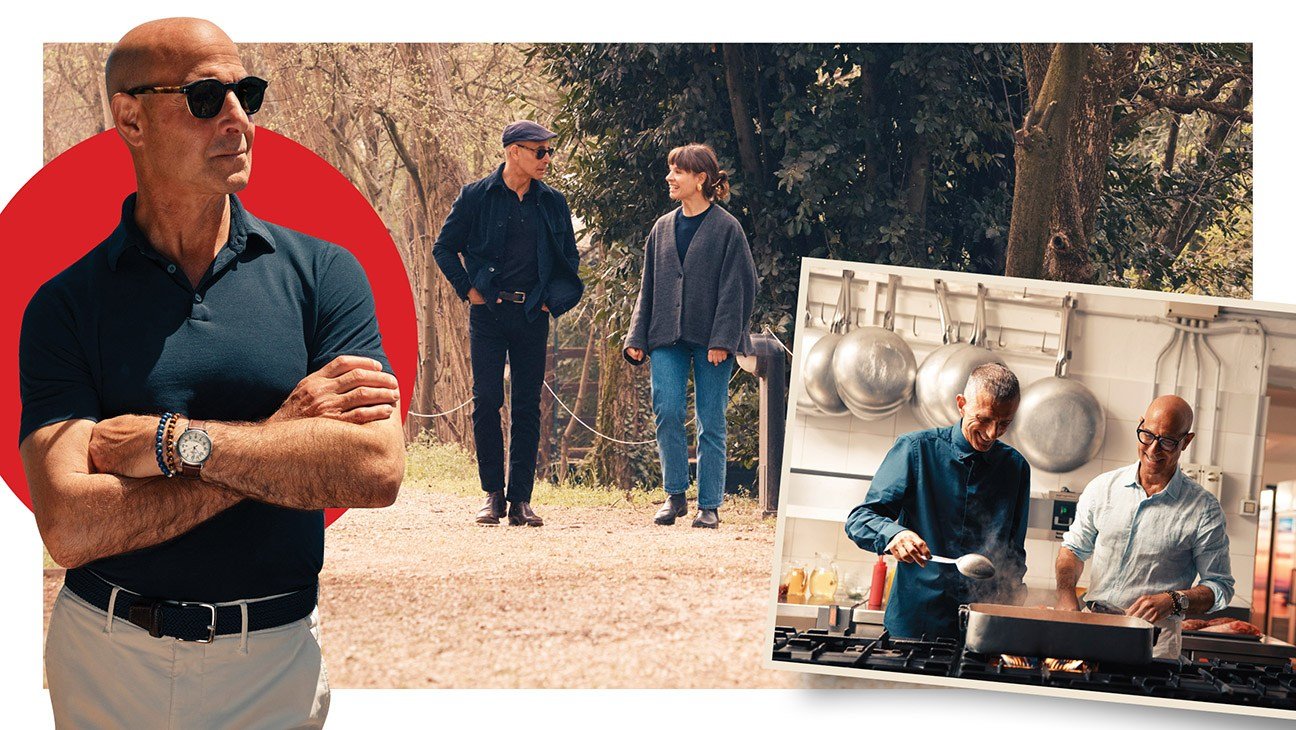
    Tucci in Italy is swarming with handsome images: a mouthwatering dollop of spaghetti and clams inspired by a Neapolitan chef’s 94-year-old mother, majestic Renaissance-era palaces and quaint villages where the show’s host, Stanley Tucci, enlists locals to expound on Italian culture. But director of photography Matt Ball isn’t always looking for polish — he wants candor.

    “It’s not necessarily a show about how beautiful everything looks,” Ball says. “The primary goal is to get authenticity. And then we shoot around it and try to make it look as nice as we can.”

    Ball’s cinematography led to one of the three Emmy nominations that Tucci in Italy received this year, alongside a sound mixing citation and outstanding hosted nonfiction series or special. He met Tucci as a camera operator on Stanley Tucci: Searching for Italy, which ran for two seasons on CNN. When National Geographic picked up the retitled version, Ball was brought on as DP. They’re currently in production on another spinoff, this time set in Great Britain.

    Before shooting, Tucci, producer Lottie Birmingham and their research team map out a roughly seven- to 10-day stint in each city being featured that season. They find cooks, farmers, food producers and culinary experts to show off the region’s cuisine and landscapes. Ball, who collaborated with two camera operators and two assistants on Tucci in Italy, then designed shots as unobtrusive as possible so the contributors could feel comfortable.

    “The work of making it look beautiful has been done for me already,” Ball says, downplaying his aptitude for capturing the vistas of Sicily, Tuscany or Sardinia so elegantly.

    If Searching for Italy prioritized major destinations such as Rome and Milan, Tucci in Italy sought out less touristy locales, like Ball’s personal favorite stop, Le Marche. There, at the seaside restaurant Da Emilia, Tucci tried a spaghetti and mussels dish the chef’s eponymous grandmother had taught her to make years earlier. The Devil Wears Prada actor dined with the chef at a long outdoor table overlooking the Adriatic Sea — an example of the charisma that Ball encountered everywhere he went.

    “It looked fantastic,” he says. “The light was coming off the water, and it was a beautiful day. It was really lovely.”

    Ball, for his part, gets to sample many of the dishes, too. Some of that intake depends on how much offal, for example, he’s willing to eat.

    Ball’s food-oriented résumé is accidental, though. It started with a gig as a camera operator on the long-running Barefoot Contessa, where he met his wife. He’s since shot Be My Guest With Ina Garten as well as shows with celebrity chefs Jamie Oliver and Lorraine Pascale. He says he’ll stay on with Tucci as long as Tucci wants to continue his savory travels.

    “Everywhere we go,” he says, “you’ll always hear somebody whisper, ‘That’s Stanley Tucci!’ ”

    This story first appeared in an August stand-alone issue of The Hollywood Reporter magazine. To receive the magazine, click here to subscribe.

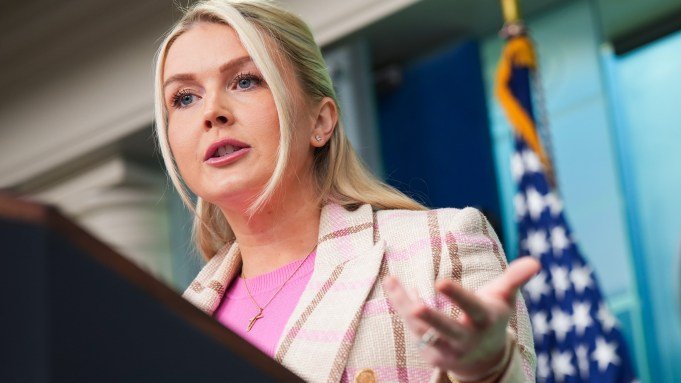
  • Karoline Leavitt Announces Post-White House Job

    Karoline Leavitt Announces Post-White House Job

    “Karoline will now be one of my top outside advisors, and an influential voice within the Republican Party,” President Donald Trump said in a statement earlier this week announcing the departure of White House Press Secretary Karoline Leavitt. Turns out, he was right.

    Leavitt told reporters on Friday that she is returning to work for Trump’s super PAC, MAGA Inc. She was the spokesperson for the PAC before joining the Trump campaign. Reporting last month from Politico put the organization’s war chest at $350M.

    When she announced her departure, Leavitt indicated her tenure would end with the month of August. On Friday, she confirmed to reporters aboard Air Force One that their trip that day to Myrtle Beach for a campaign rally would be her last as press secretary.

    She also indicated that she would join Trump for the Republican Convention in September.

    “You guys will still see me all the time,” she told reporters.

    Commenting on her departure earlier this week, Leavitt said her recent maternity leave left her with a new perspective.

    “The truth is since returning to the White House after the birth of my daughter, I have felt in my heart that I cannot be the best mom my two young children deserve while devoting the constant time, energy, and attention required of the White House Press Secretary — and that is why I have ultimately made the bittersweet decision to depart the White House and embark on a new chapter in my life,” wrote Leavitt on X.

    No successor has been named. When she was on maternity leave, various administration figures including Vice President JD Vance, Secretary of State Marco Rubio and Treasury Secretary Scott Bessent led the briefings.

  • Enjoy ChatGPT, Gemini, and Claude Inside One Easy $60 Platform for Life

    Enjoy ChatGPT, Gemini, and Claude Inside One Easy $60 Platform for Life

    TL;DR: Get lifetime access to 20+ AI models, side-by-side comparisons, file chat, image generation, and more for just $59.97 (MSRP $619).

    When you are working with AI, a lot of the time you need to compare more than one answer to feel confident in the result. ChatPlayground AI helps with that by letting you run multiple AI models side by side in one place, instead of jumping between tools. A lifetime subscription is on sale now for $59.97 (MSRP $619).

    ChatPlayground AI sends any prompt to several models at once and lines up the responses in one window, so you can see how they differ and pick what works best. The platform supports more than 25 models, including ChatGPT, Gemini, Claude, DeepSeek, Llama, and Perplexity. That means you can use the same workflow for chat, coding help, content drafts, or image ideas and compare model output without copying and pasting everywhere.

    You can tweak a prompt, run it again, and see how each model changes the answer. Prompt engineering tools help you refine and reuse effective prompts. ChatPlayground AI also lets you upload images and PDFs, then ask questions about them, so you can check how different models handle the same document or screenshot. Saved chat history keeps longer projects and useful prompts easy to revisit.

    The Unlimited Plan is a lifetime subscription with unlimited messages each month. It’s aimed at prompt engineers, startups, and teams that test or use AI heavily and need room to experiment. You can use it on any desktop that runs a recent version of Chrome, Edge, or Firefox, with no set limit on how many devices you sign in from.

    Recommended by Our Editors

    Get a ChatPlayground AI Lifetime Subscription on sale for just $59.97 through August 25.

    ChatPlayground AI

    Lifetime Subscription (Unlimited Plan)


    $59.97
    at StackSocial

    $619.00
    Save $559.03


    Get Deal

    Prices subject to change. PCMag editors select and review products independently. If you buy through StackSocial affiliate links, we may earn commissions, which help support our testing.

    About Our Expert

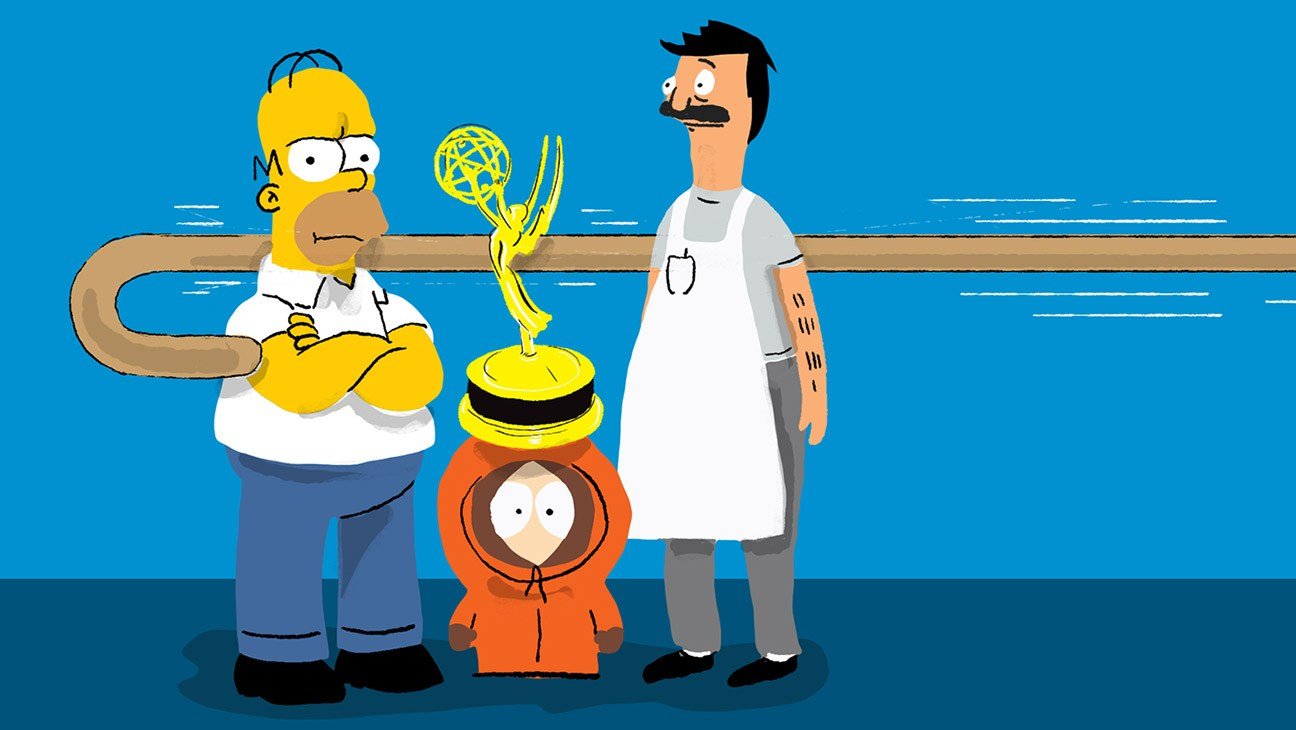
  • There Are Scores of Great New Animated Shows. The Emmys Won’t Nominate Them.

    There Are Scores of Great New Animated Shows. The Emmys Won’t Nominate Them.

    One of the great creative innovations America has given the world in the past 30 years is TV animation.

    That sounds like hyperbole, but it’s true. The Simpsons changed how we look at the American family (and current events). Rick and Morty changed how we looked at comedy and the tragedy behind it. (“Wubba lubba dub dub.” Also, current events.) South Park changed how we looked at each other (and current events).

    The problem is that those shows all started doing that a very long time ago. Rick and Morty is nine seasons in. South Park is 28. The Simpsons is 37 damn seasons deep. There are children who weren’t born when the series debuted who now have children who themselves are old enough to think Bart has got this whole life thing figured out.

    All three of those shows are nominated for outstanding animated program this year. So is Bob’s Burgers, which just completed its 20th season. Now, a charitable view would hold that such shortlisting reflects the durability of these shows — how they manage to maintain their creative spark through so many changing winds.

    There is something to that — it’s not easy to do anything well for three decades, let alone maintain character freshness.

    But I fear the fact that animated characters don’t age — and that they’re basically money-minting machines for a few networks (especially Fox) — has led us to a pretty calcified place. No show should so regularly take a place on the Emmys stage. The Simpsons and Bob’s Burgers have been nominated every year since the Obama days. Nothing is that good for that long.

    What isn’t on the animated shortlist this year? Dark sci-fi like Owen Dennis’ Among Us on Paramount+. The acquired taste but still bold stylings of Raphael Bob-Waksberg’s time-jumping family series Long Story Short on Netflix. Joe Cappa’s Adult Swim single-dad delight Haha, You Clowns. These are all newish shows from the past year or two with great energy and original takes. But to look at the Emmys noms is to not even know they exist (and indeed, many viewers won’t without the exposure).

    A little breath of fresh air in the category comes via Smiling Friends, Adult Swim’s truly wacky take on a nonprofit and what it means to do good/be happy. And while I would hardly call anything in the George Lucas-verse fresh in 2026, Star Wars: Visions at least uses varied artists and styles in a way that feels original. But these shows seem token-y amid the Simpsons and South Park oak trees and probably won’t win anyway.

    What can the Emmys do to fix this? Fortunately, there are a few things.

    For starters, stop with just nominating a single episode. Unlike TV Academy convention elsewhere, the Emmys don’t award a show — they award an episode. That means that the kind of newer, zanier material that takes months to really settle into is completely disadvantaged — you’re not going to appreciate something weird and new if you just try to watch one episode. You’re just going to go back to something you know and like, such as The Simpsons or South Park.

    Of course, the irony is that The Simpsons and South Park were themselves once oddball and required a multi-episode commitment to appreciate. But now that they are appreciated, voters just keep rubber-stamping them. I mean, Rick and Morty hasn’t really been good in several years. But voters just keep checking the box without thinking there might be a new Rick and Morty waiting out there.

    The other irony is that many of the characters on these very shows would hate this kind of lazy legacy thinking and would balk at it. A category that is literally designed to celebrate subversiveness champions the sclerotic.

    Another fix: Stop with the international ghettoizing. My colleague David Canfield just covered this on the live-action side, but it applies on the animated side, too. Bluey is one of the best shows on television these past 10 years. And many people in America watch it. Find a way to make it eligible for the primetime Emmy.

    While we’re on the topic of Bluey, get rid of the “Eligibility in animation is for programming that targets an audience age 13 and above” rule. This is just not how people watch television anymore.

    And finally, open up the Phase II voting beyond just the animation branch to the whole TV Academy. Animation is one of two realms that has this limitation. And it’s having a bad effect. People in the animation branch work in the field, which means they tend to vote for the shows of folks they know or have worked with. So we get the 30-year veterans.

    I get why this exclusionary voting rule was first drafted: Animation is a specialized craft, and specialists should vote on their specialty. Also, there is a fear that the, ahem, unwashed masses who don’t work in animation won’t really know the shows because they’re too busy watching the live-action stuff. But if that was ever true, it’s not anymore. Everyone watches everything.

    All of these might seem like big changes, hard to implement, but they’re really not. They’re possible and would make a world of difference. And if you doubt it, there’s a group you can ask that will help. A group that looked at the world as it is and said, “Maybe there’s another, more daring way to view it.” They are, of course, called animators.

    This story first appeared in an August stand-alone issue of The Hollywood Reporter magazine. To receive the magazine, click here to subscribe.

  • Anna Paquin and Melissa Gilbert Call for Protection of Child Actors After Hayden Panettiere’s Death: “Where Is the Collective Outrage?”

    Anna Paquin and Melissa Gilbert Call for Protection of Child Actors After Hayden Panettiere’s Death: “Where Is the Collective Outrage?”

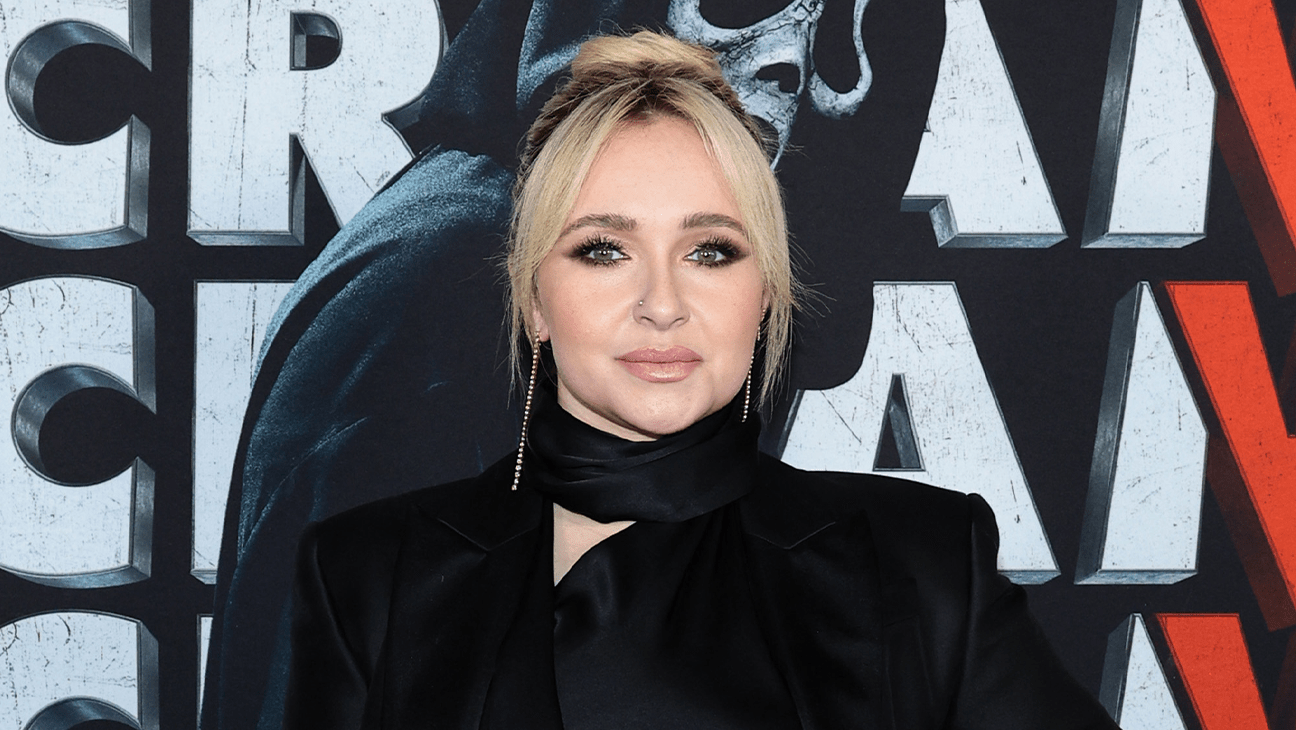
    Anna Paquin, Christy Carlson Romano and Melissa Gilbert are calling on Hollywood to protect child actors following the deaths of Hayden Panettiere, Michelle Trachtenberg and Daveigh Chase.

    Panettiere’s death at age 36 last Sunday prompted the three actresses, who were child stars themselves, to take their concerns public. Trachtenberg died at 39 in February 2025, while Chase died in July at age 35.

    “It’s not a coincidence that so many former, specifically pre-sexualized female, child ‘stars’ have profoundly sad lives and untimely ends. We were not as protected by the ‘systems’ that look great on paper, as we are supposed to be,” Paquin wrote on Instagram Friday. She rose to fame at 11 years old with her film debut in 1993’s The Piano, which earned her an Oscar for best supporting actress.

    “RIP HP, MT, DC and too many others. It’s a strange small club we belong to and you are worthy of support no matter how our industry makes us feel,” Paquin continued. “Literally DM me. I believe you and I will stand by your side. You aren’t alone. Let’s have each other’s backs. It might make public disclosure less terrifying.”

    The True Blood alum added in a separate post, “One more thing– As an adult I’ve had the pleasure of working on productions where the welfare and mental health of young performers was handled incredibly carefully. Especially around material that was intense. It is possible to holistically look after the kids on set and tell complex and sometimes upsetting stories. It just has to be the top priority of the production.”

    Earlier in the week, Elle published an essay by Romano — who appeared in 1996’s Everyone Says I Love You as a child before becoming a teen Disney star with her role in Even Stevens and voicing Kim Possible — where she compared child stardom to the degenerative brain disease chronic traumatic encephalopathy (CTE).

    “The former child actor exists in a category the world does not know how to hold. We are children when the public wants to feel protective of us, professionals when the industry wants to profit from us, and spoiled celebrities when we eventually show symptoms of having been both,” Romano wrote in part. “Early fame is like CTE. Not as a diagnosis. As a way of thinking about repeated impact. We now have language for youth sports: protocols, helmets, parents worried about concussions. But we have almost no language for what happens when stress, scrutiny, rejection, adult pressure, and the collapse of privacy become the architecture of a childhood.

    She added, “Young performers are still treated as exceptions. Lucky exceptions. Cute exceptions. Talented exceptions. Exceptions whose labor powers one of the most profitable storytelling machines in the world, while their mental needs are treated as inconvenient or irrelevant. Social work be damned.”

    Gilbert also shared a lengthy post on Substack Saturday, where she asked, “Why are these three sweet, wildly talented, vibrant, vital young women gone?” Gilbert landed her breakout role at just nine years old, playing Laura Ingalls Wilder on Little House on the Prairie from 1974 to 1983.

    “I did not know Hayden personally and only worked briefly with Mishy and Daveigh. It feels personal because I was them,” Gilbert wrote. “We are all members of the same tribe; Female Former Child Performers, and when one of us dies, it runs through all of us like an electrical current. When three of us die so close together, something is very, very wrong. We all know the stories of how the entertainment industry uses, abuses, exploits and then throws away it’s youngest, but for some reason, this trend is getting worse.”

    She later added, “Where is our Union in all of this? Where is the collective outrage? Where are the regulations? Where is the protection of privacy?”

    “It really seems like no one cares enough to enact real change. At least, not until the next death and everyone talks about how sad they are and how we must do something and then they forget and get on with their lives until it happens again and again and again,” Gilbert continued. “Yes, addiction is a real disease. Family dysfunction is real. PTSD is real. In actors, all those things are assets. They enable us to access emotion and share it with an audience. But when it comes through children, it should be treated tenderly, protectively, respectfully and in a way that is as limited as possible.”

    Gilbert’s post comes as her husband, Timothy Busfield, awaits trial in Albuquerque, New Mexico, after being accused of child sex abuse on the set of the former Fox/Warner Bros. Television series The Cleaning Lady. Gilbert has defended Busfield, who has denied the allegations.

    Panettiere started working in Hollywood at a young age, appearing in the soap opera One Life to Live at just four years old before starring in 2000’s Remember the Titans at 10, among other projects. As for Trachtenberg, she appeared in the Nickelodeon series The Adventures of Pete & Pete as a child, as well as 1996’s Harriet the Spy and 1999’s Inspector Gadget. Chase was known for voicing Lilo in 2002’s Lilo & Stitch when she was younger as well as starring in the 2002 horror film The Ring.
  • Ridley Scott Says ‘I’m Not a Filmmaker, I’m an Influencer’

    Ridley Scott Says ‘I’m Not a Filmmaker, I’m an Influencer’

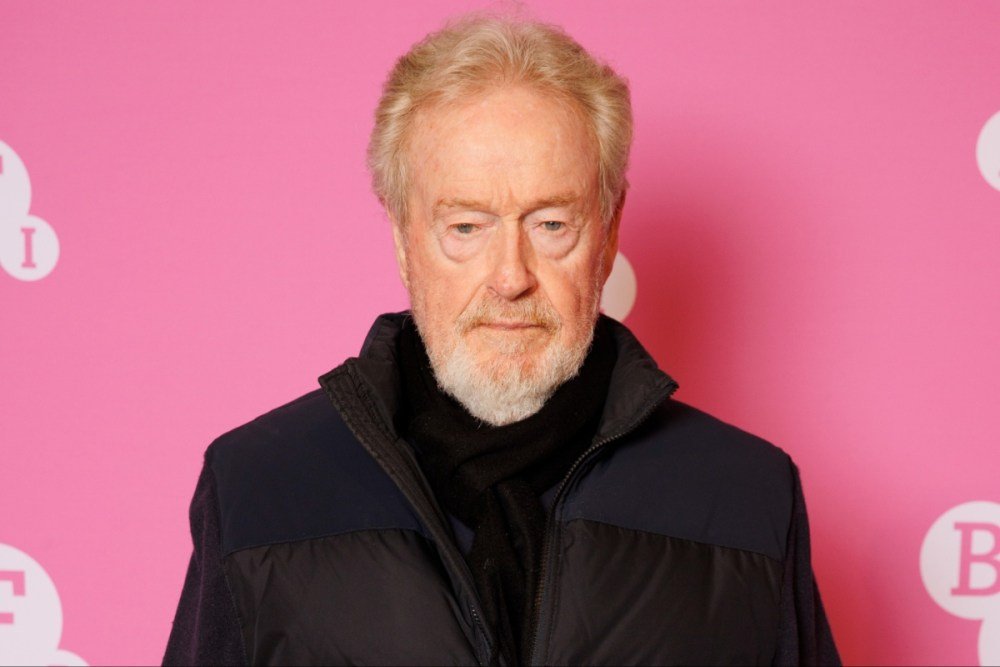
    Ridley Scott recently told The Times of London that he sees himself not as a “filmmaker,” but as an “influencer.”

    “Every time, you are vulnerable,” Scott said when asked to identify a through line in his work. “Also, I never want to repeat myself and all my films have been on the money. I’ve been ahead of the game frequently and, if you’re ahead of the game, you’re an influencer. So I’m not a filmmaker, I’m an influencer.”

    Scott, a three-time Oscar-nominated director, has certainly flexed his influence throughout his years in Hollywood with immortal classics like “Blade Runner,” “Alien,” “Thelma & Louise,” and “Gladiator.” Earlier in the sit-down, he noted there are things he has yet to cross off his career checklist.

    “I’ve never done a Western,” he said. “I have cast Hugh Jackman for my ‘Treasure Island’ adaptation. I want to do a musical and, also, have a marvelous film about the African elephant.”

    Scott’s next film is “The Dog Stars” with Jacob Elordi, Margaret Qualley and Josh Brolin. He deemed his leading man Elordi “a big star” and said they “got on great.” He went on to imply that the reason he directed “The Dog Stars” was because he sensed tedious sameness in the type of stories coming out of Hollywood.

    “Look, everything now is about a murdered girl in the woods, or an FBI agent who is better than anyone else — or a superhero,” Scott said. “Fuck me! There have to be other stories to tell.”

    Scott will soon receive an honorary Oscar at November’s Governors Awards. Other recipients include Glenn Close and Disney’s first Black animator, Floyd Norman.

  • The List of the Most-Searched Altcoins in Recent Hours Has Been Revealed

    The List of the Most-Searched Altcoins in Recent Hours Has Been Revealed

    Cryptocurrency tracking platform CoinGecko has announced the most searched cryptocurrencies by users in the last three hours. The Interfold (FOLD) topped the list, while Bitcoin ($BTC) and Pump.fun ($PUMP) were the next most popular assets.

    According to CoinGecko data, The Interfold stood out with a 40.5% increase in value over the last 24 hours. Pump.fun rose 14.7% during the same period, while the change in Bitcoin price was limited to 0.1%. One of the most notable movements on the list was recorded by CyberLeek (CYBERLEEK), which increased by 1,973.7% in the last 24 hours.

    The most searched cryptocurrencies and their total market capitalization on CoinGecko in the last few hours are listed below, in the given order:

    1. The Interfold (FOLD): $37.63 million
    2. Bitcoin ($BTC): $1.552 trillion
    3. Pump.fun ($PUMP): $2.08 billion
    4. Lighter (LIT): $814 million
    5. Pipedog (PIPEDOG): $26.64 million
    6. Ethena (ENA): $1.73 billion
    7. Hyperliquid (HYPE): $18.04 billion
    8. CyberLeek (CYBERLEEK): $23.68 million
    9. Official Trump (TRUMP): $649.61 million
    10. Bittensor (TAO): $2.18 billion
    11. $XRP ($XRP): $94.11 billion
    12. Stacks (STX): $435.56 million
    13. Zcash (ZEC): $13.90 billion
    14. Aave (AAVE): $2.08 billion
    15. Solana (SOL): $55.35 billion

    *This is not investment advice.

  • ‘Sentimental Value’ Star Anders Danielsen Lie and Anne Marie Ottersen Inducted Into the Haugesund Walk of Fame: ‘It Feels Full Circle’

    ‘Sentimental Value’ Star Anders Danielsen Lie and Anne Marie Ottersen Inducted Into the Haugesund Walk of Fame: ‘It Feels Full Circle’

    Norwegian actors Anders Danielsen Lie and Anne Marie Ottersen were inducted into the Haugesund Walk of Fame.. 

    The unveiling taking place during the first weekend of this year’s Norwegian Intl. Film Festival Haugesund, Danielsen Lie and Ottersen were recognized for contributing to “building the professionalism and high standards of Norway’s acting community, both on the theatre stage and in the film and television industry,” noted the committee. They join the ranks of Liv Ullmann, Pål Sverre Hagen and Renate Reinsve.

    “Do I look back? I haven’t had much time to reflect on this yet because my life is so hectic at the moment. But I do remember releasing [his 1990 acting debut] ‘Herman’ in Haugesund more than 30 years ago, so it feels full circle to receive this honor here,” Anders Danielsen Lie told Variety.

    “I think I dreamed of becoming a great actor when I was a young adult, but I abandoned that dream when I started med school. It was Joachim Trier’s first film that restarted my career,” he said.  

    “I think there are several ‘before’ and ‘after’ moments in my career, with the first being ‘Reprise’. If it weren’t for that film, I would never have worked as an actor.”

    While “Oslo, August 31st” was probably “the biggest turning point” in his career, smash hits “The Worst Person in the World” and “Sentimental Value” – also directed by Trier – introduced him to an even bigger audience. 

    “It’s always hard to say exactly why a film is loved by the audience, but they both tell stories that are relatable to many people. They are very entertaining films, but they also have an almost therapeutic quality to them,” he noted, adding: “I’m a bit surprised I have an international career, because I’ve always been ambivalent about acting – but hopefully that adds an extra layer of complexity to my work!” 

    Following “Sentimental Value’s” Oscar win – and nine nominations – Norwegian films definitely have an international momentum at the moment, he noted. 

    “I think there are several reasons for that. One is that we have great funding opportunities for films with limited commercial potential. I think Norwegian cinema as a whole has much more self-confidence now, which has been built up over many years. What we see now is the end result of a long evolution.” 

    Anne Marie Ottersen was surprised by the recognition. 

    “It was totally unexpected, but [it made me] very happy. In theater, most of what we do is gone with the wind once the performance is over. But now I’m written in stone, and that will last almost forever,” she said. 

    Ottersen joined the National Theatre in 1970, and won the Amanda Award for “Wives – Ten Years Later.” Her latest film, “The Pension Heist” directed by Gunnbjörg Gunnarsdóttir, will be released in October.  

    “The best thing I can say about my career is that I have been lucky to do so many different things. There have been difficult periods, of course, but I have the best job in the world, and I’m still working. I’m so happy about that.”

    The Walk of Fame was established in 2015, when actors Kristoffer Joner and Ane Dahl Torp became the first recipients.

    The Norwegian Intl. Film Festival Haugesund runs Aug. 22-28.