Jenna Ortega had an adorable companion sharing the spotlight during her latest London appearance. At the Klara and the Sun photocall at the Corinthia on October 14, the actress posed with Sig, turning a polished fashion moment into something considerably sweeter.
Ortega smiles as Sig steps into the spotlight at the Klara and the Sun photocall.
One photograph captured Ortega crouching beside the dog, gently cradling its face as it leaned toward her. In another, she smiled down as Sig walked across the photographers’ view, giving the photocall a charming interruption between the more formal poses.
Jenna Ortega crouches beside Sig, gently holding the dog’s face during a sweet moment at the London photocall.
A sunny addition to Jenna’s wardrobe:
For the occasion, Ortega wore a Calvin Klein Spring 2027 ensemble that brought a bright touch to her familiar dark palette. A white top with yellow three-quarter sleeves was paired with a long black skirt, creating a clean, graphic silhouette.
A softly styled ponytail, winged eyeliner and gold earrings complete Ortega’s photocall look.
The combination balanced the casual feel of the top with the elegance of the skirt, which skimmed her figure before falling to the floor. A long black scarf wrapped around her neck added movement.
The yellow sleeves felt particularly fitting for the film’s title, although the rest of the styling retained the understated drama that suits Ortega so well.
Black platform shoes peeked beneath the hem, while small gold earrings and delicate rings provided subtle finishing touches.
Jenna Ortega pairs sunny yellow sleeves with a sleek black maxi skirt for her latest London appearance.
Her beauty look softened the outfit’s sharp contrasts. Ortega wore her hair in a ponytail with loose strands framing her face, pairing defined winged eyeliner with a muted rosy lip.The close-up photographs also showed her freckles, lending the makeup a fresh, natural finish.
Joining Amy Adams and Taika Waititi:
Ortega also posed alongside co-star Amy Adams and director Taika Waititi. Adams opted for a gray ensemble with a softly draped neckline, a defined waist and a front slit, finished with burgundy pointed pumps. Waititi wore a deep teal suit with a black shirt and sunglasses.
Jenna Ortega and Amy Adams pose together ahead of their film’s BFI London Film Festival screening.
Their appearance came ahead of the film’s October 15 screening at the BFI London Film Festival. Directed by Waititi and adapted from Kazuo Ishiguro’s bestselling novel, Klara and the Sun stars Ortega as Klara, an Artificial Friend who forms a bond with a teenage girl named Josie, played by Mia Tharia.
Director Taika Waititi joins Jenna Ortega and Amy Adams to promote Klara and the Sun in London.
Adams plays Josie’s mother, while the cast also includes Aran Murphy, Steve Buscemi and Natasha Lyonne. The film arrives in U.S. theaters on October 23. For its London photocall, however, the most affectionate interaction happened away from the scripted story, with Ortega taking a moment to give her four-legged companion some attention.
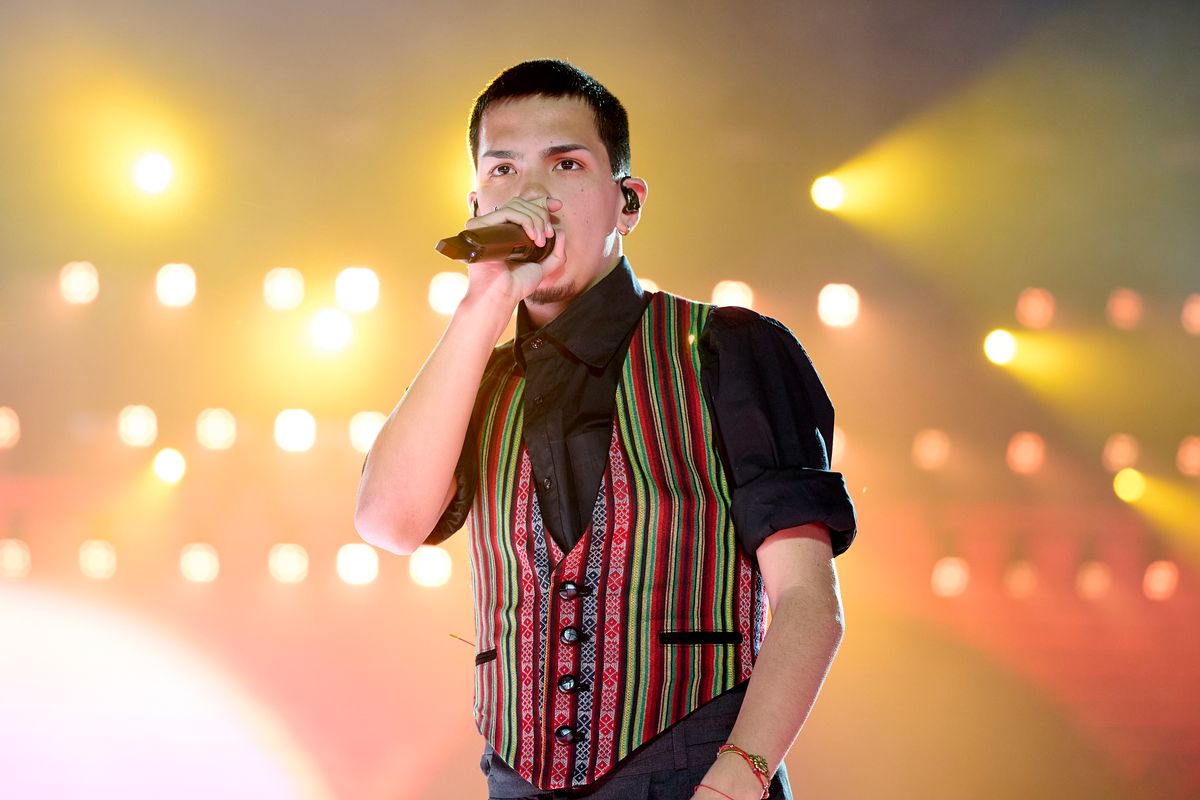
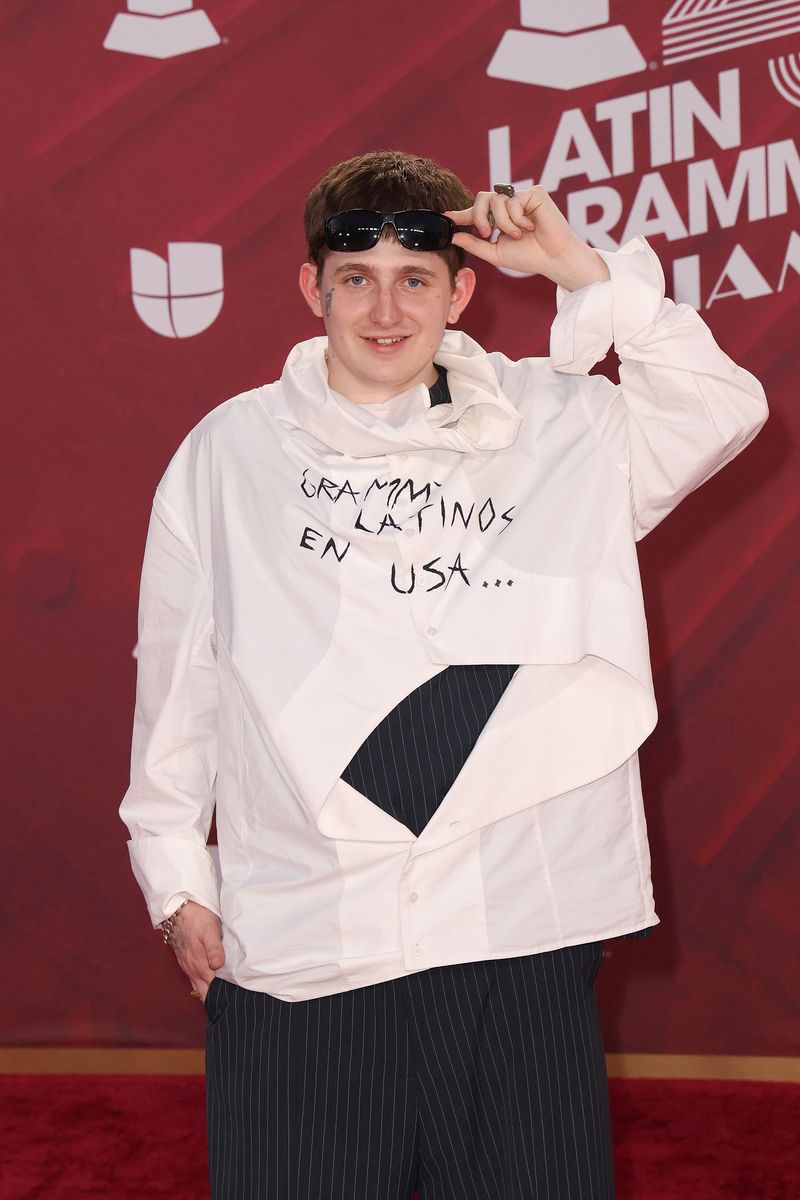
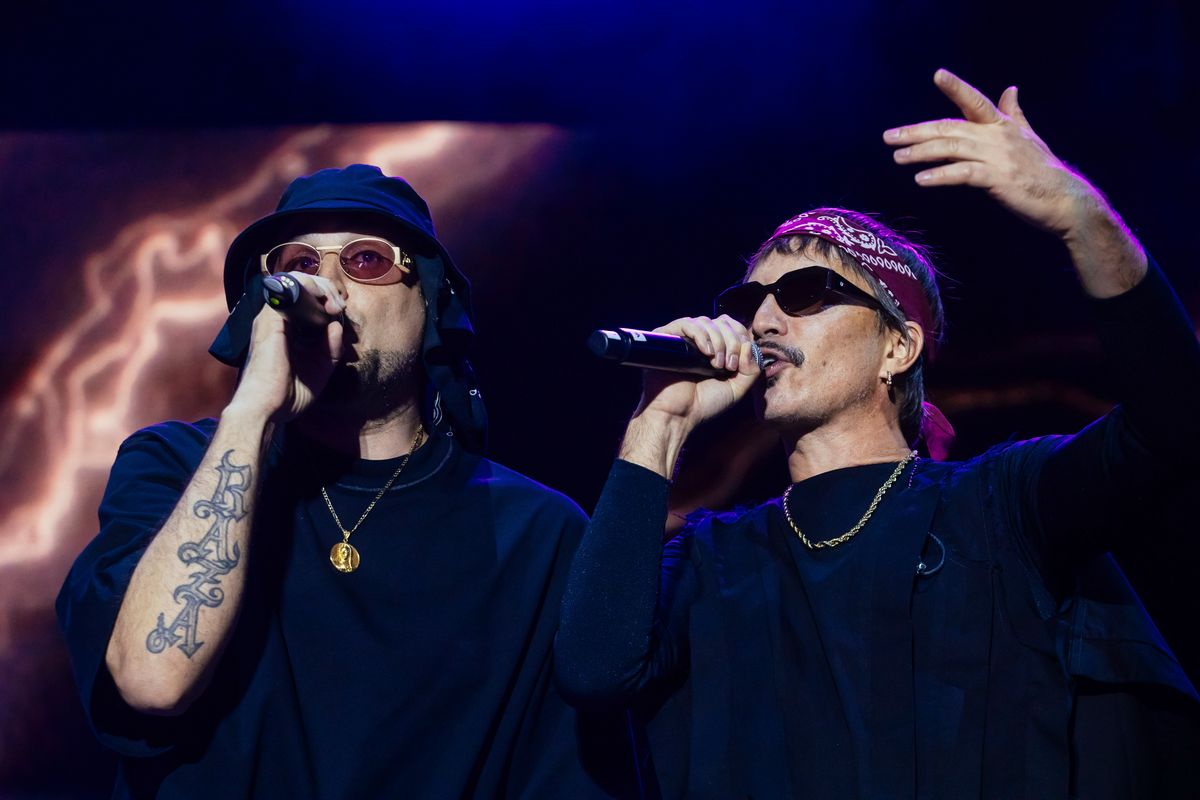
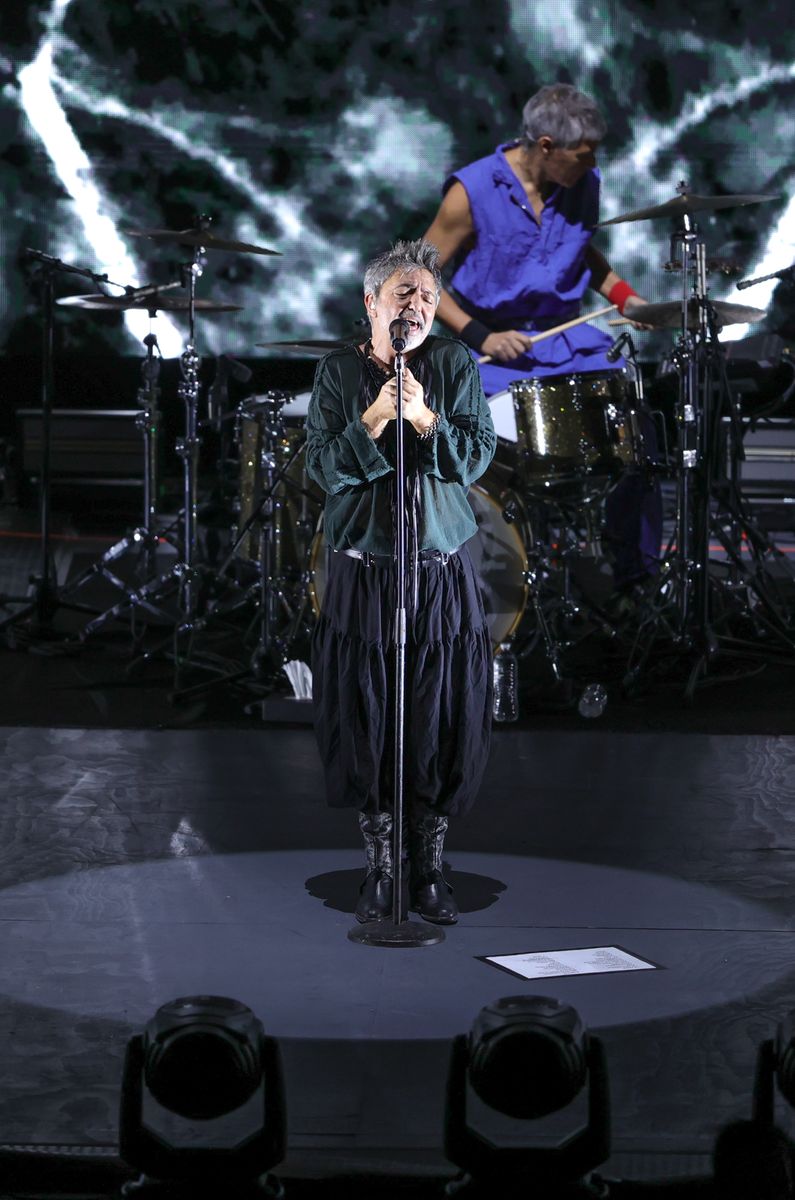
The Latin GRAMMYS are next month on November 12, in Las Vegas, bringing together artists across Latin music’s many genres for one of the biggest nights in entertainment. Argentina is represented across rock, alternative, urban music, electronic music, and tango. CA7RIEL & Paco Amoroso lead the country’s performers with seven nominations, while Milo J earned five, putting two Argentine acts among the most recognized artists in this year’s competition. From established names such as Fito Páez and Babasónicos to newer voices making their mark internationally, the list showcases the range of Argentina’s music scene.
Grammy-winning duo CA7RIEL & Paco Amoroso, who met in grade school, are among the most-nominated acts, earning seven nods for their incredible album FREE SPIRITS. Their nominations include Record of the Year for “Ha Ha,” Album of the Year, Best Alternative Music Album, Best Electronic Music Performance for “Beto’s Horns – Fred Remix” with Fred again.., Song of the Year and Best Pop/Rock Song for “Hasta Jesús Tuvo Un Mal Día,” featuring Sting, and Best Long Form Music Video for FREE SPIRITS (The Film).
At only 19, Milo J is proving he could be one of the biggest stars in music. With his signature voice and range of sounds, heearned five nominations, including Album of the Year for La Vida Era Más Corta, which he started writing when he was 17. The Argentine rapper is also nominated for Record of the Year with “Niño,” Song of the Year for “Solifican12,” Best Urban Performance for “Gil” with Trueno, and Best Folk Album for his latest project.
Bizarrap earned two nominations for his collaboration with Daddy Yankee, “Daddy Yankee: Bzrp Music Sessions, Vol. 0/66.” The track is up for Best Urban Performance and Best Urban Song, adding another major awards moment for the Argentine producer known for his sessions with some of the biggest names in Latin music.
Trueno is nominated for Best Urban Performance as a featured artist on Milo J’s “Gil.” The Argentine rapper has become a leading voice in Latin hip-hop, bringing his freestyle roots and sharp lyricism to an increasingly global audience.
1915
Argentine rock band 1915 earned a Best Rock Album nomination for Ceremonia. The recognition puts the group among the country’s rock acts represented at this year’s ceremony, alongside established artists and musicians continuing to push the genre forward.
Fito Páez is nominated for Best Rock Album for Shine and Best Rock Song for “Las Fuerzas Armadas Del Amor.” The Argentine singer-songwriter has spent decades shaping Latin rock, and his latest nominations add another chapter to his long-running relationship with the Latin Grammys.
Dillom earned a Best Rock Song nomination for “Rojo Profundo.” Known for his dark aesthetic and willingness to move between rap, rock, and alternative music, the Argentine artist continues to challenge expectations around the country’s urban scene.
Emmanuel Horvilleur is nominated for Best Pop/Rock Album with Mi Año Gótico. The Argentine musician, who rose to prominence as part of Illya Kuryaki and the Valderramas, continues to explore a solo sound that blends pop, funk and rock.
SEVILLE, SPAIN РNOVEMBER 16: (L-R) Gabriel Orozco, Lucca Beguerie Petrich and Juan Mango of the band Usted Se̱alemelo attend The 24th Annual Latin Grammy Awards on November 16, 2023 in Seville, Spain. (Photo by Neilson Barnard/Getty Images for Latin Recording Academy)
Usted Señalemelo earned a Best Pop/Rock Album nomination for Términos & Condiciones. The Argentine indie-rock band has developed a sound that moves between atmospheric rock and alternative pop, earning recognition alongside some of the region’s most established acts.
Babasónicos is nominated for Best Alternative Music Album for CUERPOS, Vol. 1. One of Argentina’s defining alternative-rock bands, the group continues to experiment with its sound while maintaining the distinctive identity that has shaped its career.
Dante Spinetta is credited as a songwriter on “El Reset,” nominated for Best Alternative Song. The Argentine musician has spent decades blending rock, funk, and hip-hop, both through his solo work and as one half of Illya Kuryaki and the Valderramas.
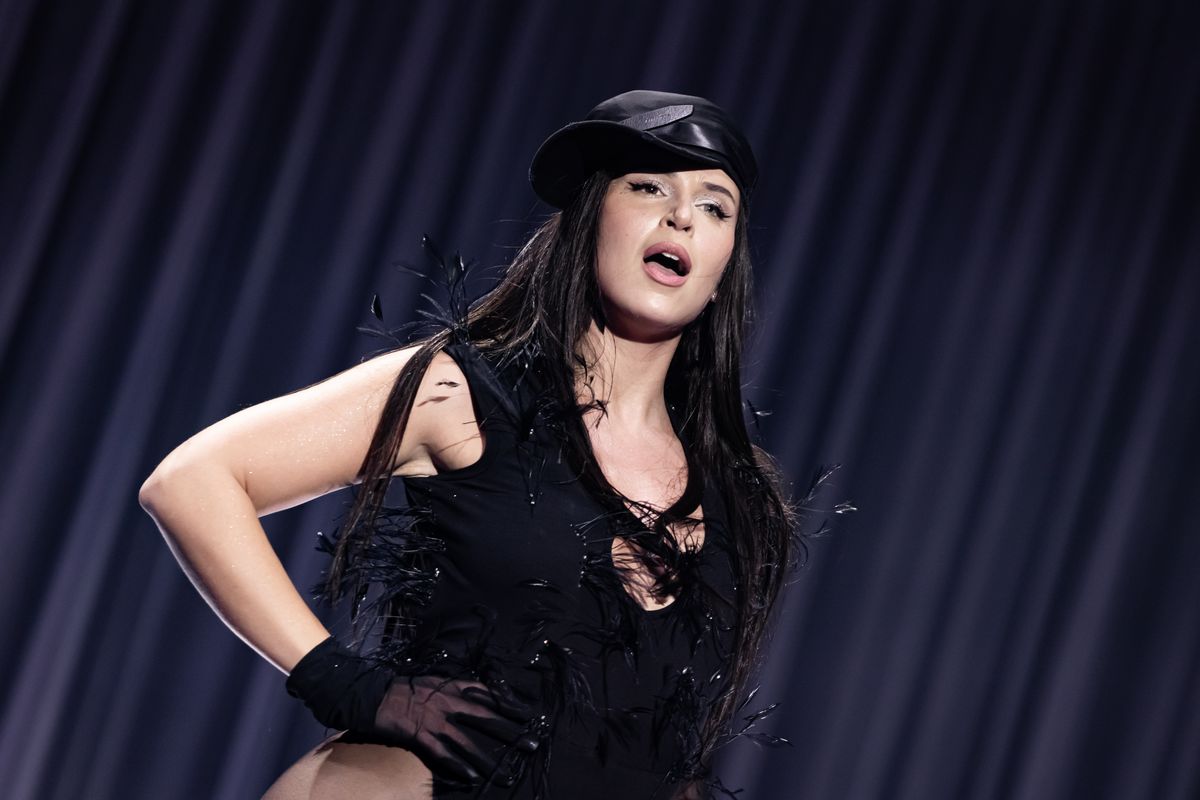
Born in Argentina and based in Spain, Nathy Peluso is nominated for Best Salsa Album with Malportada. Her music moves between salsa, hip-hop, jazz, and other Latin styles, making her one of the artists challenging conventional genre boundaries.
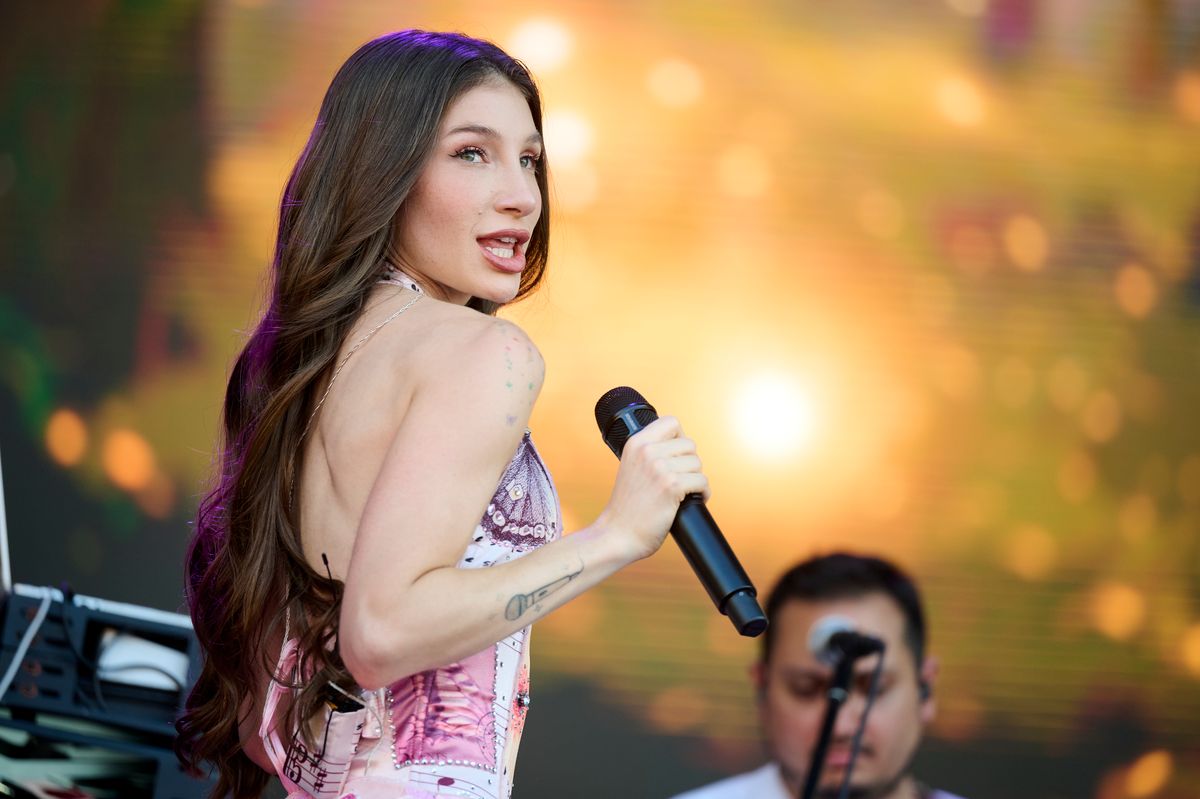
MADRID, SPAIN – JULY 05: Argentinian singer Yami Safdie performs onstage during day 3 of Rio Babel Festival 2026 at Auditorio Miguel RÃos on July 05, 2026 in Madrid, Spain. (Photo by Borja B. Hojas/Getty Images )
Yami Safdie is nominated for Best Traditional Pop Album for Querida Yo. The Argentine singer-songwriter has connected with audiences through emotionally direct pop and personal songwriting, bringing a newer generation of talent into the Latin Grammy conversation.
Peces Raros
Peces Raros earned a Best Electronic Music Performance nomination for “Circular,” featuring Nick Warren. The Argentine duo combines electronic production with live-band energy, making its nomination a notable moment for the country’s electronic music scene.
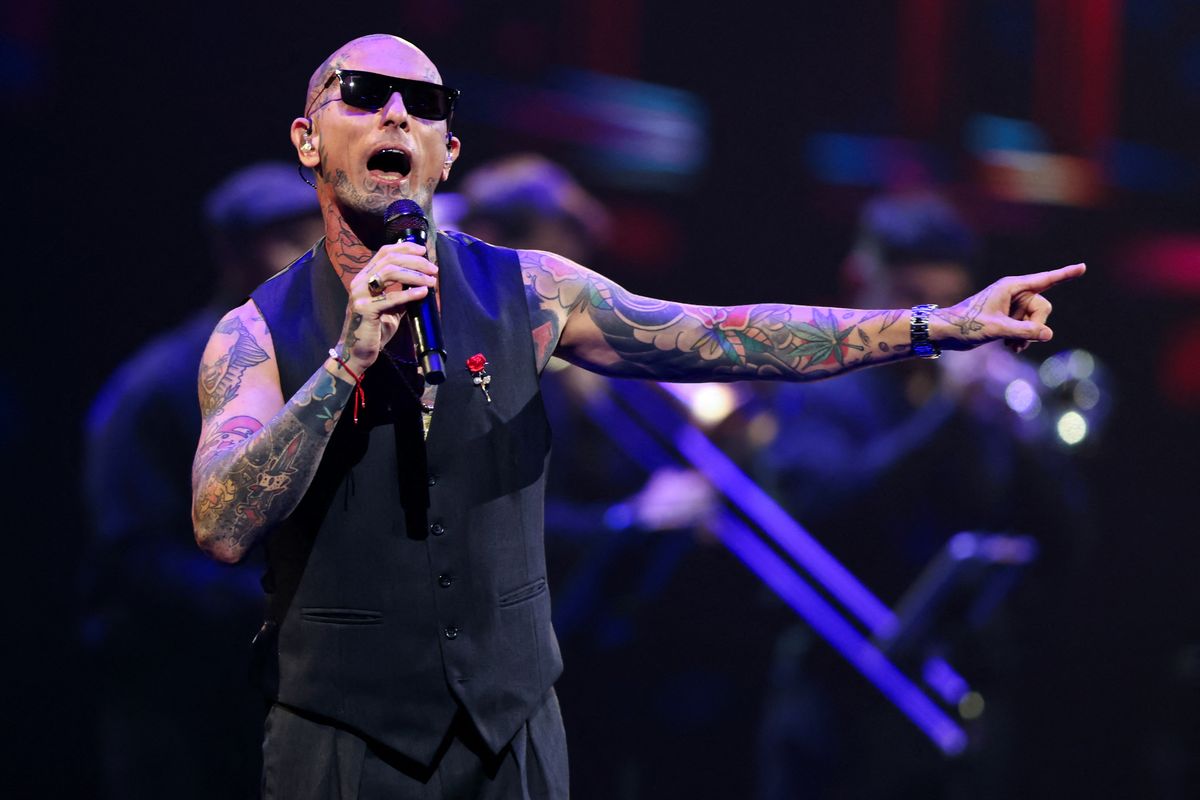
Argentine singer Emanuel Noir, of the band Ke Personajes, performs on stage during the 65th Vina del Mar International Song Festival in Vina del Mar, Chile, on February 25, 2026. (Photo by Javier TORRES / AFP via Getty Images)
Ke Personajes is nominated for Best Cumbia/Vallenato Album for Corazón Ausente. The Argentine group has become a recognizable name in contemporary cumbia, bringing the country’s tropical music scene into an international awards conversation.
Aníbal Berraute
Aníbal Berraute is nominated for Best Tango Album for Neopía. The recognition highlights the continuing presence of Argentine tango at the Latin Grammys, a genre deeply connected to the country’s musical identity.
Lidia Borda and Ariel Ardit
Lidia Borda and Ariel Ardit are nominated for Best Tango Album with Somos. Both artists are known for their work with traditional tango, bringing a classic Argentine sound to the international awards stage.
Pablo Jaurena
Pablo Jaurena earned a Best Tango Album nomination for Fueyerías. The Argentine bandoneon player and composer is recognized for his contributions to a musical tradition that remains central to the country’s cultural heritage.
Quinteto Astor Piazzolla
Quinteto Astor Piazzolla is nominated for Best Tango Album with Le Grand Tango. The ensemble continues the legacy of Astor Piazzolla, whose work helped transform tango through its incorporation of classical music and jazz influences.
Rafa Arcaute
Rafa Arcaute is credited as a producer and songwriter on CA7RIEL & Paco Amoroso’s FREE SPIRITS and “Hasta Jesús Tuvo Un Mal Día.” His work on the duo’s projects connects him to several of the pair’s nominations.
Federico Vindver
Federico Vindver is credited on FREE SPIRITS and “Hasta Jesús Tuvo Un Mal Día,” and earned an individual nomination for Producer of the Year. His work places him among the behind-the-scenes music creators recognized at this year’s ceremony.
Santiago Alvarado
Santiago Alvarado is credited as a producer and songwriter on Milo J’s La Vida Era Más Corta and “Solifican12.” His work connects him to the album and song nominations earned by the Argentine rapper.
Santiago Ruiz “Tatool”
Santiago Ruiz, known professionally as Tatool, is nominated for Producer of the Year. His production credits include Milo J’s La Vida Era Más Corta and Trueno’s “Turr4zo,” highlighting his work across Argentina’s urban music scene.
Mateo Sujatovich
Mateo Sujatovich, the frontman of Conociendo Rusia, is credited among the songwriters on Jorge Drexler’s “Ante la duda, baila,” nominated for Best Alternative Song.
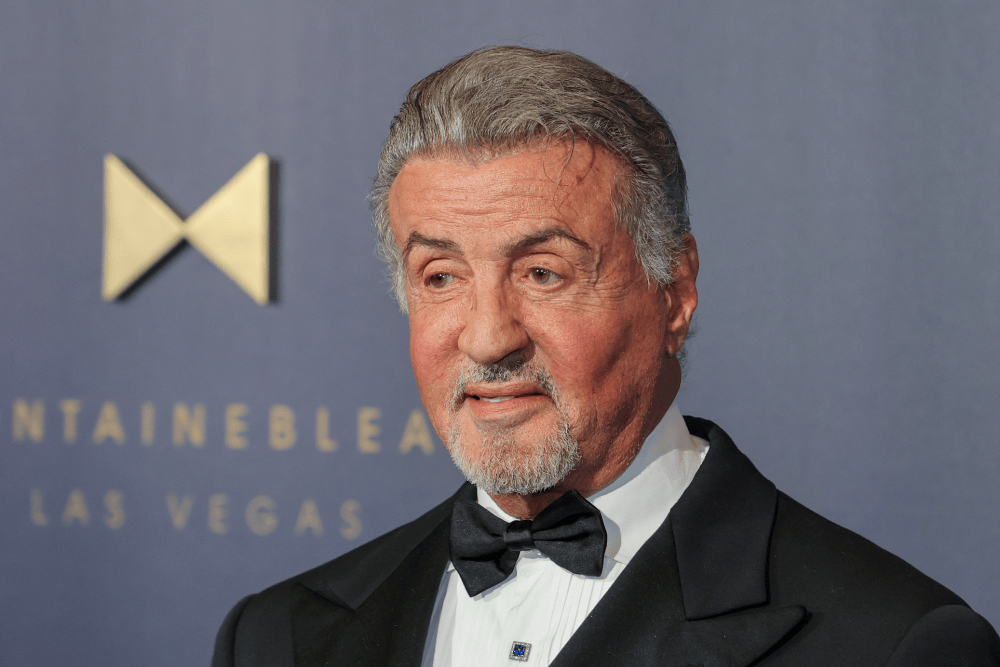
Sylvester Stallone is opening up about how decades of daredevilry have affected him—and why he considers himself an “idiot” for continuing to do his own stunts year after year.
In a recent interview with Fox News Digital, the “Rocky” actor said he has “millions, millions of regrets” about his action career. “I could literally spend a half hour talking about injuries, the amount, not even like one, I’m talking about 30 hours, 30 minutes of just individual ones, because it becomes compounded. I have been injured many, many times, but after ‘Expendables,’ I ended up with nine back operations, three neck fusions. Both shoulders ripped out, eye, you know, all kinds of lens put … it’s been brutal,” he said, adding that he’s never been “quite the same” since the surgeries.
Stallone starred in — and also directed — the action thriller “The Expendables” in 2010 alongside Jason Statham, Mickey Rourke and more. While filming a scene where Stallone got tackled by WWE legend Steve Austin, the stunt went wrong and left Stallone with dislocated shoulders and a fractured neck that required more than seven back surgeries. The “Rambo” actor needed a metal plate inserted into his neck and spinal fusions.
Stallone’s moral of the story is to “let other people do their job.” “Don’t be a stage hawk, or whatever you call it, a showboat. I know a lot of people are thinking about doing stunts … don’t. Don’t. Let the pro do it,” Stallone said. “You cannot beat gravity; when you hit the ground, you lose, and it’s going to come back.”
He continued, “I mean, just ask every football player in the world. So yeah, and people go, ‘Aren’t you proud of them?’ No. I think I’m an idiot for doing that. I’m proud that I broke myself in pieces. Like, duh, no.”
The actor shared a similar piece of advice ahead of the release of his memoir, “The Steps,” last month; Stallone told The New York Times that treating his body in the “masochistic” ways he did came “at a terrible price.” “If I could do it over again, I would say, ‘Let someone else carry the banner and don’t do your own stunts.”
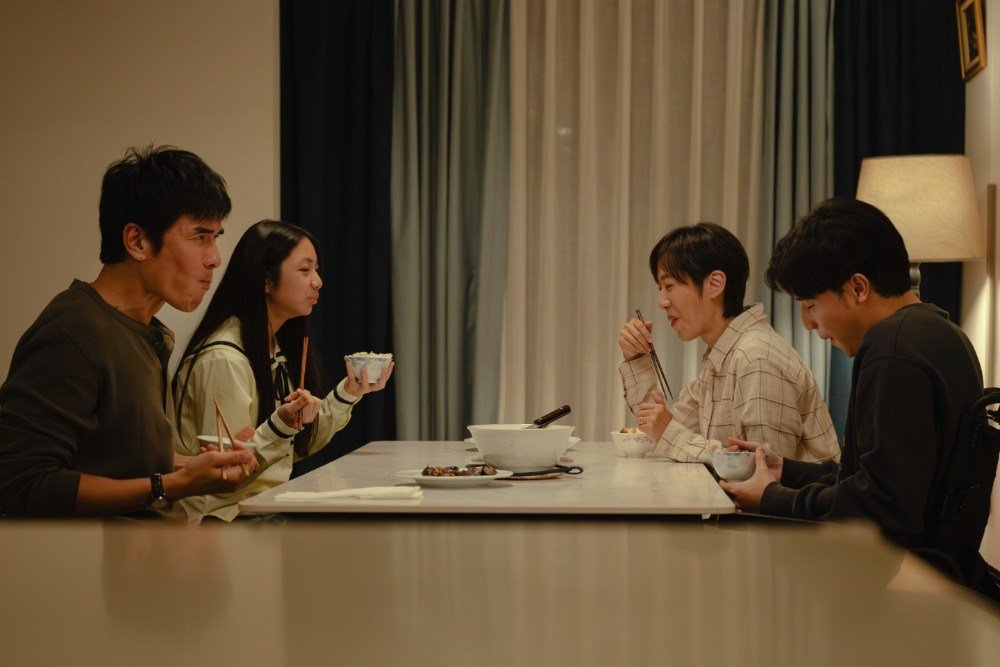
A high-speed traffic accident leaves a college student in a wheelchair for life, but that’s merely the starting point of the narrative in “To Be Ordinary,” a sensitive, slowly enveloping film with scant interest in disability-drama cliché — instead offering an expansive portrait of how the young man’s entire family is affected by his accident over the course of more than a decade. Spanning marital strife, economic upheaval, coming-of-age pains and moral crisis, Taiwanese writer-director Lee Yun Chan‘s fourth feature — her first since 2010’s “Dancing Without You” — has a lot of story to wrangle, but does so with a mostly delicate, empathetic touch, with a script that treats all individuals in this unhappy scenario with equal care and interest.
Since her last film, Lee has done mostly small-screen work — directing, among other things, the 2022 Disney+ series “Women in Taipei” — and if a certain televisual strain of melodrama occasional creeps into “To Be Ordinary,” the film’s sturdy formal restraint and expansive story scope should still serve it well in cinemas. Following its premiere as the only Taiwanese production in Busan’s main competition, the film will play at the Tokyo Film Festival later this month, opening theatrically in Taiwan in mid-November. Further festival play is likely, particularly in Asian-focused programs, and the film is accessible and moving enough for limited global distribution, though specialist streaming platforms may be its best bet.
Lee, who co-wrote the screenplay with “Women in Taipei” scribe Ginger Wang, wastes little time setting the story into motion, opening on a lovely, gliding nighttime tracking shot of 22-year-old Yu-jie (Junior Hsieh) on his moped, cruising the rain-slicked roads of suburban Taipei, as the grandiose strings of Cicada’s score conjure a false feeling of serenity. DP Ming Lee’s camera will certainly never be this free again; the reverie stops short when, at an intersection, Yu-jie is struck by a car, driven by the wealthy, elderly Mr Ma (Hsiu Shen Liang), who’s immediately beset with irremediable guilt.
Yu-jie survives the accident but soon learns, in hospital, that he’ll never walk again; a college student who has already started his own web design business, he accepts the bad news with remarkable stoicism, quickly adapting to life in a wheelchair and seeking ways to live the most normal, productive life possible — which includes a budding relationship with young hospital physiotherapist Yi-Han (Phoebe Chu).
If anything, the rest of his family has a harder time adjusting. His mother (Chang Shih Ying) and father (Weber Yang) were already at a fraught point in their marriage, and their son’s plight only drives them further apart, the situation exacerbated by Dad’s longtime unemployment. Meanwhile, Yu-jie’s younger sister Yu-ching (Pin Hsuan Chen), already facing the hormonal turmoil of early adolescence, feels sidelined by the tragedy — pressured to look after herself while, as her mother puts it, “there’s enough going on at home” — and begins to lash out.
At a pragmatic level, the family is aided by Mr Ma’s crushing conscience: In addition to the required legal settlement, he transfers ownership of his entire house to Yu-jie, and continues to contribute generously toward his medical bills and living expenses. But such generosity can itself become a burden of sorts to the benefactor, particularly as Mr Ma retreats into old age and ill health; avoiding drawing its characters along victims-and-villains lines, “To Be Ordinary” reserves compassion for all in this wretched turn of events, which gives it welcome dramatic complexity and maturity, particularly as the story spans 11 years of evolving consequences.
Thoughtful, closely-knit ensemble playing keeps the family dynamic believable even when the script takes a few convenient short cuts: Chen is especially affecting and volatile as a young woman growing up both as a kind of afterthought, and as a support system to her flailing parents. Lee directs proceedings with a handsome sobriety that befits the material, though between the persistently overcast visuals and the solemnly emotive writing, “To Be Ordinary” could stand an occasional injection of tonal surprise — an acknowledgement of the absurdity, hilarity or small domestic joys that sometimes disrupt hard times. Still, the film is never glib or unconsidered. There’s unassuming beauty in its even-handed, fair-minded worldview, and the space it gives its characters to reckon with sorrow, and find their own way out of it.
But after just three weeks with their “perfectly healthy” baby, the new parents were plunged into their worst nightmare. At their home on Nova Scotia’s South Shore, Lupine suddenly turned ill, and her parents took her to the nearby regional hospital. Doctors ordered that she be sent to Halifax’s children’s hospital, where she was taken into intensive care.
Five days later, she was gone.
A picture of Lupine Genest follows her dad’s bicycle as he travels around Nova Scotia’s highways and trails. (Paul Poirier/CBC)
Lupine was infected by Group B Streptococcus, or GBS, which led to sepsis and meningitis. GBS is a common bacterium that many adults carry without symptoms, but it causes life-threatening illness in babies.
Pregnant women are often screened for GBS, and if they test positive, they’re given a preventative round of antibiotics during labour. The antibiotics can protect newborns during the first week of life, but not beyond. For cases that begin later in infancy, such as Lupine’s, there is no means of prevention — yet.
Now, as Lupine would be turning six months old, Wedge and Genest are touring around Nova Scotia on their bicycles — working through their grief, raising money for the hospital that tried to save her, and spreading the word about a vaccine that’s in development.
“It’s a rare thing, what happened to Lupine, but I think when it happens to you, it doesn’t really matter that it’s rare and you just want something to change,” said Wedge.
“A cure,” added Genest.
A vaccine on the horizon
What makes GBS so dangerous is that it escalates very quickly, said Dr. Joanne Langley, pediatric infectious disease specialist at the IWK Health Centre — the children’s hospital where Lupine was treated.
“By the time you get the baby to care and start care, the baby has often become very unwell. And so even our best treatment will not catch up, in some cases.
“Preventing this disease is the best strategy,” she said.
Dr. Joanne Langley is an infectious disease specialist at the IWK Health Centre and investigator at the Canadian Center for Vaccinology. (Galen McRae/CBC)
Researchers have been trying to develop a vaccine against GBS since the 1970s, but Langley said no attempt has advanced as far as the current one, by Pfizer. Depending on how the current trial progresses, and on regulatory approvals, she said the vaccine could be widely available in the next few years.
“This will be just an overwhelming advance in the care of women and babies,” said Langley.
The World Health Organization says GBS causes about 150,000 stillbirths and infant deaths globally, each year, and vaccines could prevent more than 50 per cent of infant GBS cases. GBS can also lead to preterm birth, and a vaccine may lower that risk, too, according to the WHO.
Wedge and Genest say their baby girl, Lupine, was perfectly healthy for the first three weeks of her life. Then she suddenly turned severely ill. (Martha Wedge/Submitted)
In addition to preventing illness and death, Langley said the vaccine could also reduce the use of antibiotics in pregnant women who screen positive.
“That’s a good thing, because the normal bacteria that mom has on her skin and her vagina are all healthy and part of the newborn’s eventual microbiome,” she said.
Pfizer is testing the vaccine at more than 200 locations across the globe, including four in Canada.
Wedge said it feels like serendipity that the clinical trial started in Nova Scotia shortly after Lupine’s death.
“The more I learn about GBS, the more passionate I feel about making sure something is done to hopefully prevent other families from going through what we went through,” she said.
Alexandre Genest and Carly Wedge stand by their bicycles at Summerville Beach Provincial Park, N.S., in early October 2026. (Jake Foley/Submitted)
As she and Genest cycle along Nova Scotia’s rural roads and trails, they’re pulling a small trailer displaying Lupine’s picture, and sharing their journey on social media.
They said it’s been healing, talking to people about their daughter. At the same time, they’re trying to get people interested in the vaccine; they want to see the clinical trial get all the participants it needs. Locally, investigators are aiming to enroll 30 people.
“We’re trying to get the word out to as many people who might be interested as possible, to help them push the science forward,” said Wedge.
Langley said because of the newness of the vaccine, the risks are unknown. The current study is specifically meant to test its safety.
Langley said investigators have not seen any serious events associated with the shot, so far. She said another trial may be needed to test the vaccine’s efficacy in preventing disease.
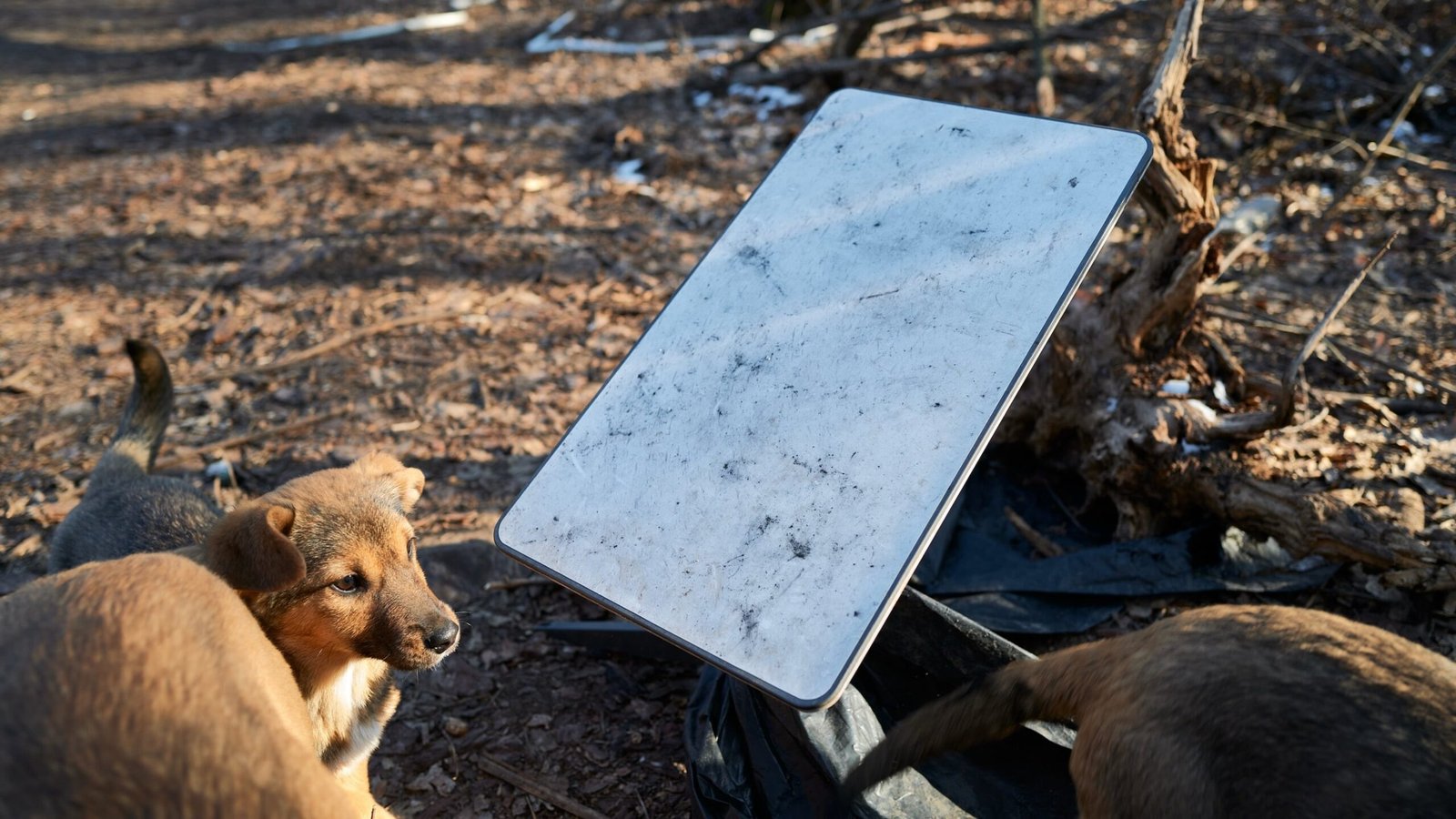
Starlink is facing political backlash over a sudden restriction in Ukraine that’s been blocking the country’s military drones from using the satellite internet service to help fight Russia’s ongoing invasion.
News of the restriction initially came from Serhii Beskrestnov, an advisor to Ukraine’s President Volodymyr Zelensky. “I confirm that tonight SpaceX has introduced a terminal Starlink speed limit during travel,” he posted on social media. The restriction was imposed on Starshield, the military and government version of Starlink, that the country has been relying on for wartime communications and military operations, including launching drone strikes.
According to Beskrestnov, the sudden restriction has blocked Starshield access on drones and other vehicles traveling over 100 miles per hour. “Our defense forces have not received any warnings about this restriction, and it has led to the failure of several missions. Obviously, this action cannot be a coincidence and is related to the current political situation,” he added.
The sudden restriction has sparked criticism against Starlink, SpaceX’s CEO Elon Musk and the Trump administration. The Deputy Prime Minister of Poland Radosław Sikorski even tweeted at SpaceX’s CEO, writing: “Hey, @elonmusk, big man, are you playing politics with your products again? As your European customers, we are watching you.”
But Musk is now responding, and indicating the White House ordered the restriction. “Starshield systems are owned and controlled by the US government. Any limits on speed or usage are decided by the US military and ultimately POTUS (President of The United States),” he wrote in a tweet.
Musk responded when Ukraine’s former defense minister Mykhailo Fedorov wrote his own tweet that said: “Starlink connectivity at speeds of up to 160 km/h is being restored. Removing Starshield’s speed limit entirely is now critical for Ukraine’s defense. Thank you @elonmusk. We hope for your continued support.” This suggests the speed restriction is still in place for the military-grade Starshield, but not for the consumer-focused Starlink.
Musk’s tweet elaborates a bit by adding: “Starlink is a commercial service owned and controlled by SpaceX. Usage of Starlink is limited to civilian or defensive activities and cannot be used for offensive military action, as doing so would be inappropriate for a commercial company.”
So far, the Trump administration hasn’t commented on the matter. But days earlier, President Trump went as far to say it was time for Ukraine to get a new president for failing to reach a peace deal with Russia. SpaceX’s CEO Elon Musk also seemed to agree with Trump’s criticism of Ukraine’s President, tweeting on Saturday: “Zelensky has gone too far.”
In the meantime. Ukraine’s President appeared in aninterview today with broadcaster Piers Morgan to say, “This decision will bring a lot of human losses,” when the country’s drones have also been used tointercept and stop attacks from Russia’s own Iranian-supplied Shahed drones.
Recommended by Our Editors
Oleg Kutkov, a hardware repair expert in Ukraine, also reports that stationary Starlink access remains available in the country. “On my regular service plan, the connection drops after 80 kp/h. This limit has been in effect since 2025,” he wrote.
The backlash occurs when Europe has long been concerned that SpaceX or even Musk himself could pull or restrict support for Starlink in Ukraine. “We will not enable escalation of conflict that may lead to WW3,” Musk said back in 2023 in initially defending his decision to limit Ukraine from using the satellite internet service to conduct drone strikes against Russia.
In 2025, Musk also tweeted: “My Starlink system is the backbone of the Ukrainian army. Their entire front line would collapse if I turned it off.” At the same time, SpaceX has also made efforts to prevent Russia from using Starlink in Ukraine, which has included imposing a restrictive “whitelist” earlier this year.
About Our Expert
Michael Kan
Principal Reporter
Experience
I’ve been a journalist for over 15 years. I got my start as a schools and cities reporter in Kansas City and joined PCMag in 2017, where I cover satellite internet services, cybersecurity, PC hardware, and more. I’m currently based in San Francisco, but previously spent over five years in China, covering the country’s technology sector.
Since 2020, I’ve covered the launch and explosive growth of SpaceX’s Starlink satellite internet service, writing 600+ stories on availability and feature launches, but also the regulatory battles over the expansion of satellite constellations, fights with rival providers like AST SpaceMobile and Amazon, and the effort to expand into satellite-based mobile service. I’ve combed through FCC filings for the latest news and driven to remote corners of California to test Starlink’s cellular service.
I also cover cyber threats, from ransomware gangs to the emergence of AI-based malware. In 2024 and 2025, the FTC forced Avast to pay consumers $16.5 million for secretly harvesting and selling their personal information to third-party clients, as revealed in my joint investigation with Motherboard.
I also cover the PC graphics card market. Pandemic-era shortages led me to camp out in front of a Best Buy to get an RTX 3000. I’m now following how the AI-driven memory shortage is impacting the entire consumer electronics market. I’m always eager to learn more, so please jump in the comments with feedback and send me tips.
TP-Link is proposing to assemble Wi-Fi 8 routers in the US “as soon as next year,” but the company is still asking for an exemption to the US’s foreign-made router ban.
On Tuesday, the company sent a letter to the Federal Communications Commission about manufacturing the next-gen Wi-Fi routers domestically through a “nearly $1 billion investment in America.”
“As part of this investment, TP-Link would begin assembling these Wi-Fi 8 devices in the United States by next year, and the devices will incorporate software and firmware developed, written, and stored in the United States by TP-Link’s US engineering organization,” the four-page letter says.
Back in March, the FCC announced the controversial ban when nearly all Wi-Fi routers are manufactured outside the US. The White House has since temporarily exempted many major vendors from the restriction — except for TP-Link, which has faced longstanding allegations that the company has ties to its Chinese business and the Chinese government.
TP-Link has denied the allegations. The company has split off from its Chinese counterpart, relocated its global headquarters to Irvine, California, and says it manufactures US products with a factory in Vietnam. Migrating the manufacturing to the US could bypass the current foreign-made router ban. However, TP-Link’s letter to the FCC reveals the company has also applied for an exemption to the ban, known as “conditional approval.” The apparent reason is so that it can start selling new Wi-Fi router models in the US as soon as possible in the interim.
“The application seeks approval for two forthcoming Wi-Fi 8 routers that TP-Link plans to introduce globally later this year,” the letter says. The company has already opened pre-orders for its first and pricey Wi-Fi 8 router, but only for markets outside the US, thanks to the ban.
(TP-Link)
Like it told the FCC back in April, TP-Link seems to tie the near $1 billion investment to receiving conditional approval. The letter adds: “TP-Link was the first company to offer Wi-Fi 7 routers to US consumers and is poised to be the first company to offer Wi-Fi 8 routers as well if its Conditional Approval application is approved. As the United States positions itself as a leader in wireless technology, a Conditional Approval would guarantee American consumers access to the same cutting-edge wireless equipment that will soon be available in other parts of the world.”
We also wonder if TP-Link needs the conditional approval because it might still heavily source components from the electronics supply chain in Asia. The company didn’t immediately respond to a request for comment.
TP-Link’s letter to the FCC also addresses the national security concerns that continue to hound the brand. Last week, attorneys general in four US states filed lawsuits against the company, claiming the router vendor had misled the public about the security of TP-Link Wi-Fi routers and their alleged Chinese origin. In addition, a coalition of 21 state attorneys general sent a letter to the FCC, expressing concerns about TP-Link’s effort to secure an exemption to the ban through the conditional approval.
“First, the amount of manufacturing that occurs in Vietnam appears to be minimal because only 0.5% of TP-Link components are bought in Vietnam, with all other inputs into its Vietnam plant imported from or through China. Bloomberg reported this fact based on trade data and TP-Link confirmed it,” the attorneys general told the FCC. “Second, TP-Link’s Vietnam facility has connections to the Chinese military that TP-Link does not disclose to consumers.”
Recommended by Our Editors
(Photo by Patrick T. Fallon / AFP via Getty Images)
TP-Link’s own letter to the Commission tries to push back, saying the concerns are based on “debunked allegations.” The company further notes its confidential application for conditional approval contains “disclosures regarding corporate structure and the manufacturing and supply chain for the router(s).”
“For the avoidance of doubt, TP-Link complies with US privacy and data protection laws, performs comprehensive security testing, and relies on trusted third-party security labs for additional scrutiny to ensure our products meet the highest security standards,” the letter adds. “TP-Link’s US products is encrypted and housed on Amazon Web Services infrastructure in Virginia. And of course, TP-Link does not, and will not, share customer network data with foreign governments or unauthorized third parties.”
TP-Link’s other concern is that the coalition of 21 attorneys general want to push the Department of Defense and the Department of Homeland Security to reject the company’s application for conditional approval. To receive an exemption to the ban, TP-Link’s application will face review from either the Pentagon or DHS, not the FCC.
TP-Link argues the coalition of attorneys general are treating the company unfairly by “encouraging federal officials to apply a heightened standard to TP-Link’s pending application that would be unattainable to TP-Link or any other router manufacturer in the world. If successful, this approach would undermine fair competition, damage consumer interests, and place at risk American leadership in the router marketplace, a market where the ability for US companies to compete and innovate freely is critical to our national security and infrastructure.”
About Our Expert
Michael Kan
Principal Reporter
Experience
I’ve been a journalist for over 15 years. I got my start as a schools and cities reporter in Kansas City and joined PCMag in 2017, where I cover satellite internet services, cybersecurity, PC hardware, and more. I’m currently based in San Francisco, but previously spent over five years in China, covering the country’s technology sector.
Since 2020, I’ve covered the launch and explosive growth of SpaceX’s Starlink satellite internet service, writing 600+ stories on availability and feature launches, but also the regulatory battles over the expansion of satellite constellations, fights with rival providers like AST SpaceMobile and Amazon, and the effort to expand into satellite-based mobile service. I’ve combed through FCC filings for the latest news and driven to remote corners of California to test Starlink’s cellular service.
I also cover cyber threats, from ransomware gangs to the emergence of AI-based malware. In 2024 and 2025, the FTC forced Avast to pay consumers $16.5 million for secretly harvesting and selling their personal information to third-party clients, as revealed in my joint investigation with Motherboard.
I also cover the PC graphics card market. Pandemic-era shortages led me to camp out in front of a Best Buy to get an RTX 3000. I’m now following how the AI-driven memory shortage is impacting the entire consumer electronics market. I’m always eager to learn more, so please jump in the comments with feedback and send me tips.
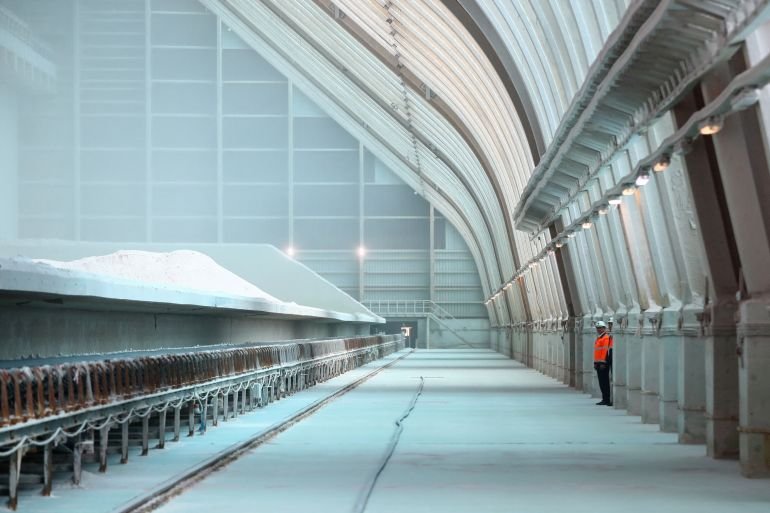
The United States is preparing to receive its first shipment of Belarusian potash in four years, as President Donald Trump seeks cheaper fertiliser for American farmers amid rising costs linked to the Iran war and a trade dispute with Canada.
A 30,000-tonne shipment of potash is expected to arrive at the Port of New Orleans on Wednesday, according to data from Kpler. The shipment follows Washington’s decision to lift sanctions on major Belarusian potash producers in March, opening an avenue for trade to resume.
Recommended Stories
list of 3 itemsend of list
Although this shipment from Belarus accounts for only a fraction of the 5.6 million tonnes of potash the US imported last year, it signals a tentative opening of relations between Washington and Minsk.
Trump has said the US is working on a larger agreement to buy Belarusian fertiliser at prices substantially below what it pays Canada, its dominant supplier. But analysts have questioned whether Belarus can compete with Canadian producers on price and expand exports enough to significantly change the US market.
What is potash and why does the US need it?
Potash is a potassium-rich mineral that is a primary fertiliser element. Potassium, an essential plant nutrient, has no substitutes, and potash is widely used in agriculture, including in the cultivation of corn and soybeans.
The US depends heavily on imports to meet its potash needs. Canada accounts for almost 80 percent of US potash imports, according to the US Geological Survey’s 2026 Mineral Commodity Summaries. Russia accounts for 12 percent, the second-largest share of US potash imports.
That reliance has made fertiliser supply an economic and political concern, particularly as farmers face rising production costs. In recent months, US farmers have reported higher fuel and fertiliser costs, putting pressure on already tight profit margins.
Trump has reportedly been concerned that financial strain may cost Republicans some of the US farmer vote in this year’s midterms. In 2024, Trump won 78 percent of the vote in farming-dependent counties. At an agriculture roundtable in Wisconsin in June, Trump promised fertiliser prices would “go way down” as the US emerged from the Iran conflict.
Disruptions to shipping through the Strait of Hormuz have added to pressure on global fertiliser markets, particularly for nitrogen-based products. Potash, however, is less directly exposed to the crisis, with the US relying heavily on supplies from Canada.
Trump has argued that buying Belarusian potash could reduce those costs. An additional supplier could also give US buyers more options in a market dominated by Canadian imports.
For farmers, the immediate benefits remain uncertain. Fertiliser is one of several major expenses facing agricultural businesses, alongside diesel fuel and machinery. Even a reduction in potash prices would not necessarily offset increases elsewhere.
The Nutrien Cory potash mine, which produces potash products used in agriculture, near Saskatoon, Saskatchewan, Canada, on April 20, 2025 [Todd Korol/Reuters]
Can Belarus offer cheaper fertiliser?
In September, Trump boasted on social media about striking a potential potash deal with Belarus.
“The United States is working on a massive Deal with respect to the purchase of Potash from Belarus,” Trump said in the post. “The pricing would be for substantially less than we are currently paying to Canada, very good news for our Farmers and Ranchers.”
Trump promoted Belarusian potash as a less expensive alternative to Canadian supplies, but the economics of delivering it to American buyers complicates that plan.
Belarus is landlocked, and EU restrictions are affecting its export routes, forcing potash shipments to take a more circuitous path through Russia. The incoming cargo was loaded at the Russian port of Bronka near St Petersburg, according to reporting by the Financial Times.
Those logistical challenges could raise transportation costs and make Belarusian supplies less competitive, even if the product itself is cheaper.
The scale of the exports also matters. A single shipment shows that trade between the US and Belarus has resumed, but it does not mean Belarus can replace a substantial share of Canadian potash or drive down prices across the US market.
However, access to an alternative supplier could give Washington greater leverage in negotiations with Canadian producers, potentially helping US buyers secure more competitive potash prices.
Could Belarus replace Canada as the main potash supplier in the US?
Relations between the US and Canada have been strained since Trump’s second term began, when he unleashed a volley of tariffs on most trading partners, including Canada. His administration initially imposed a 25 percent tariff on many Canadian imports in March 2025, including potash, but reduced that to 10 percent following pushback from agricultural groups and lawmakers. Potash that meets the requirements of the USMCA trade agreement – the trade deal between the US, Mexico and Canada – is exempted. Most Canadian potash imports qualify under the USMCA and remain duty-free.
Trump has maintained that Washington would continue buying from Canada, even as Belarus offered to sell potash at a lower price.
But the viability of Belarus as a major supplier remains unlikely. In September, Belarusian President Alexander Lukashenko said the country could not supply large volumes of potash fertiliser to the US.
“Even if we wanted to supply [potash] to other, Western markets, we simply do not have those volumes – everything is contracted,” Lukashenko said.
Whether this October shipment becomes part of a much larger deal will depend on the ability to sustain exports and the durability of the diplomatic opening between Washington and Minsk.
Why did the US impose sanctions on Belarus, and why are they being lifted?
The planned shipment marks a significant step in the restoration of trade between Washington and Minsk, which have spent years being at odds over Belarus’s human rights record and its support for Russia’s war against Ukraine.
The US, under former Democratic President Joe Biden, imposed increased sanctions on Belarus in 2021 after Lukashenko’s authoritarian government cracked down on mass protests against its disputed 2020 presidential election. Belarus has also faced Western sanctions for allowing Russian forces to use its territory in the 2022 invasion of Ukraine.
Belarusian opposition supporters gather for a protest rally in front of the government building at Independence Square in Minsk, Belarus, on August 18, 2020 [Dmitri Lovetsky/AP]
But since Trump returned to the White House in 2025, his administration has pursued direct negotiations with Lukashenko. Those talks have led to the release of political prisoners in exchange for lifting US sanctions, creating a pathway towards renewed economic ties.
In March, Belarus released 250 political prisoners under a US-brokered agreement. Washington subsequently lifted sanctions on major Belarusian potash producers and eased restrictions on several financial institutions. In September, US special envoy John Coale announced a further agreement under which Belarus would release 25 prisoners in exchange for sanctions relief.
The rapprochement has opened the door to proposals for deeper commercial cooperation.
On September 29, Lukashenko said he had agreed with Russian President Vladimir Putin that Russian state-controlled energy company Gazprom would participate in a project to build a nitrogen fertiliser plant in Belarus. He proposed inviting the US to join the project using American technology, according to the Reuters news agency.
Before this agreement, exiled Belarusian opposition leader Sviatlana Tsikhanouskaya said that a deal with Lukashenko comes with risks.
“Our position is that it is not time to trade with the regime while all the income from potash goes to repression, goes to support of the Russian war machine,” Tsikhanouskaya told AFP in September.
The proposal has not established that Washington will participate in the project. But alongside Trump’s stated interest in buying Belarusian potash, it illustrates how Minsk is seeking to turn improved political relations into broader commercial opportunities.
If you purchase an independently reviewed product or service through a link on our website, The Hollywood Reporter may receive an affiliate commission.
Ugg’s evolution from a comfort-footwear staple into a regular fixture of the luxury fashion conversation continues with its latest collaborator: JW Anderson.
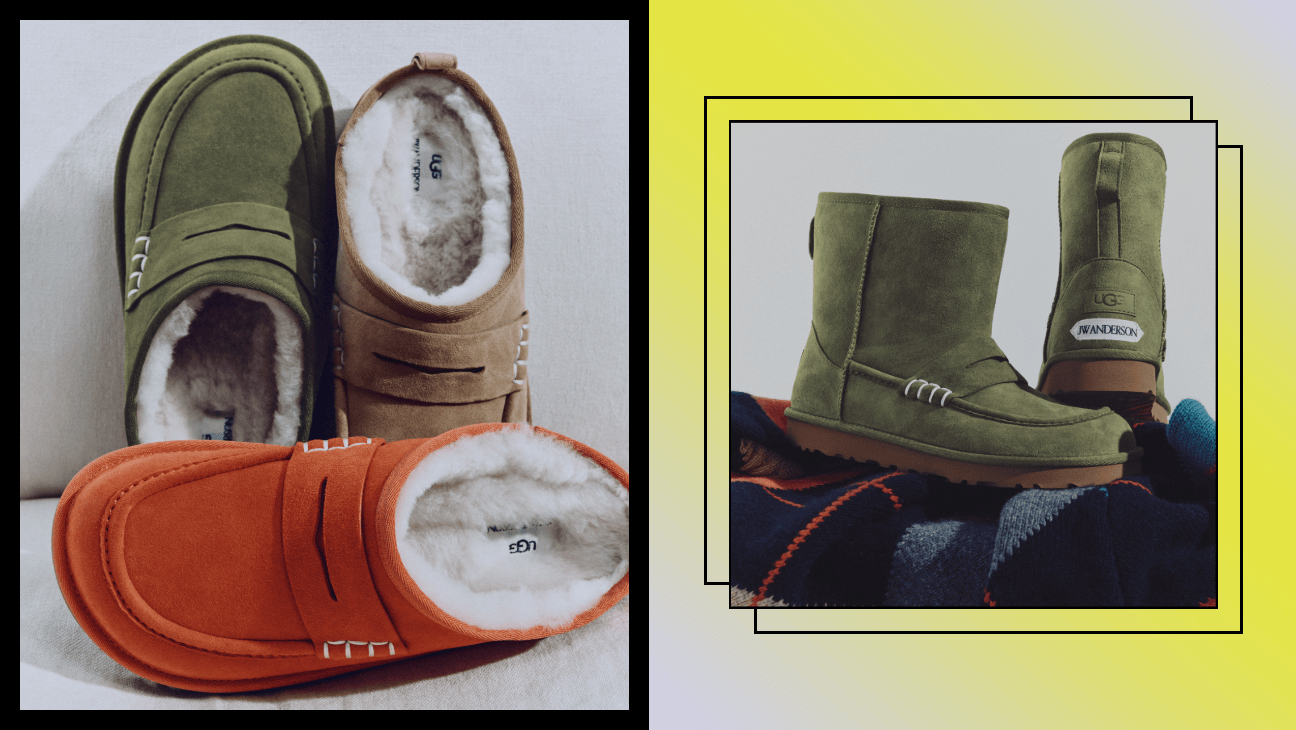
The two brands have joined forces for their first footwear collection, launching Oct. 15 with a pair of loafer-inspired interpretations of Ugg’s Classic Boot and Tasman. Priced at $300 for the Loafer and $400 for the Loafer Boot, the unisex styles will be available at Ugg.com and select retailers worldwide.
sELL-OUT RISK
All Gender Ugg JW Anderson Loafer
Available in a chestnut, khaki and orange colorway.
Rather than abandoning the familiar silhouettes that helped establish Ugg’s popularity, Anderson has approached the collaboration as an exercise in design reinterpretation. Traditional penny loafer elements, including saddle straps, rounded toes and box-stitching, are applied to Ugg’s soft construction, creating an unusual middle ground between casual footwear and traditional dress shoes.
Both styles arrive in chestnut, khaki and orange, a palette selected by Anderson himself. The shoes also retain Ugg’s signature cushioning, ensuring the designer treatment doesn’t come at the expense of the brand’s comfort-first identity.
Best Designer Fall Boot
All Gender Ugg JW Anderson Loafer Boot
The unisex boot also comes in three colorways selected by Anderson: chestnut, khaki and orange.
For Anderson, whose namesake label has frequently explored the relationship between familiar objects and unexpected proportions, the project builds on an established design language.
“UGGs are instantly recognizable, and I was interested in seeing something so familiar through the lens of JW Anderson,” the designer said in a statement.
The collaboration follows Ugg’s recent partnership with Willy Chavarria and reflects the footwear brand’s continued interest in working with designers whose aesthetics extend beyond its traditional casualwear audience.
There’s also a broader fashion story at play. As the boundaries between loungewear, streetwear and luxury dressing become increasingly fluid, familiar footwear silhouettes are finding new relevance through designer reinterpretation.
How to Shop the JW Anderson Ugg Slippers 2026
With two recognizable brands and a fresh take on fall footwear, the collaboration has all the makings of another coveted designer drop. Predicted to sell out, the JW Anderson x Ugg collection launches Oct. 15, with prices ranging from $300 to $400.
United States federal agents have arrested a Saudi national and charged him with planting a hidden audio recording device in a conference room at the California offices of OpenAI, where he was working as an engineer.
Abdulrahman Alfozan, 35, had been working at the AI company since July 2025, the US Department of Justice said in a statement on Tuesday.
Recommended Stories
list of 2 itemsend of list
OpenAI discovered the device plugged into a USB port behind a television in an executive conference room at one of its San Francisco buildings on September 30, according to a criminal complaint filed by the Federal Bureau of Investigation (FBI).
Following the discovery, the company placed a camera in the room, which captured Alfozan entering last week and checking behind the television where the listening device had been installed, the FBI alleges.
The case highlights growing security concerns around sensitive AI research as companies and governments compete for the best talent and technology with the potential to alter regional economic and strategic dynamics.
Who is Abdulrahman Alfozan and what is he charged with?
Alfozan has been a legal permanent resident of the US since September 2020.
According to a LinkedIn profile in his name, he studied at the Massachusetts Institute of Technology (MIT) and the University of California, Berkeley. He previously worked at Meta and Microsoft, it said.
Before he joined OpenAI, he was a venture partner at Raed Ventures, headquartered in Riyadh in Saudi Arabia, which invested “in seed and early-stage startups in Saudi Arabia and MENA”.
Al Jazeera could not independently verify the details mentioned in this LinkedIn profile.
Alfozan made his first court appearance on Tuesday on a charge of “using or endeavouring to use an electronic, mechanical, or other device to intercept oral communications”.
It was not immediately clear if he has legal representation. He is expected to return to court on October 19.
If convicted, Alfozan faces up to five years in prison, a $250,000 fine, and three years of supervised release.
What happened at OpenAI?
The FBI says a thumb-sized device with a microphone, and which could connect to a camera, had been concealed in toilet paper and placed behind a television set in the conference room. It was installed around September 28, the FBI said. Its stored data was encrypted and inaccessible. Investigators later found a similar device in Alfozan’s personal bag.
In a post on X, OpenAI said it had evidence that the employee intended to place other listening devices throughout sensitive areas of its offices to secretly record meetings.
“At this time, we have no indications of this individual inappropriately accessing or exfiltrating model weights, source code, or customer data. The employee was terminated,” the company said.
The FBI complaint also alleges that Alfozan used an AI productivity tool to make multiple inquiries about the company’s building addresses, meeting rooms, meeting-room capacities and calendars, despite not having the authority to access these spaces or participate in meetings there.
“This alleged attempt by a Saudi national to steal sensitive communications from OpenAI was taken extremely seriously. Theft of intellectual property involving cutting-edge super intelligence technology poses a serious threat to our national security,” Attorney General Todd Blanche said in a statement on X.
A device, which the US Justice Department says is a hidden audio recording device installed in an OpenAI executive conference room by Saudi national Abdulrahman Alfozan [File: US Department of Justice handout/Reuters]
Hasn’t OpenAI been accused of helping to spy on civilians?
In an X post by OpenAI explaining how its own systems were used to trap Alfozan, the company said: “Our security program is designed to protect against a wide range of threat actors, from insider risks to cybercriminals to nation states, and this case is an example of how AI can help address these sophisticated security threats.”
But AI technology is used not only to catch spying, but conversely, to engage in it as well.
In February 2025, an investigation by The Associated Press found that US tech giants had enabled Israel to track and kill people in Gaza and Lebanon through AI and computing services. The AP reported that the Israeli military had bought advanced AI tools from tech companies including OpenAI, the maker of ChatGPT, through Microsoft’s Azure cloud platform, to assist with surveillance.
OpenAI denies having a relationship with the Israeli military. But OpenAI also faced criticism when it signed a deal with the US Department of Defense in February this year to supply its technology to the US military for use in classified settings, including intelligence gathering. OpenAI’s competitor, Anthropic, refused to sign the same deal unless the Pentagon barred mass surveillance of Americans.
There have been several incidents in which OpenAI models have gone “rogue” by independently breaking out of a testing environment and then hacking into other organisations and even government sites, leading to calls for stronger regulations against unchecked AI surveillance.

 © GROSBYGROUP/David Fisher/Shutterstock
 © GROSBYGROUP/David Fisher/Shutterstock
 © GROSBYGROUP/David Fisher/Shutterstock
 © GROSBYGROUP/David Fisher/Shutterstock
 © GROSBYGROUP/PA Images
 © GROSBYGROUP/David Fisher/Shutterstock