Changpeng Zhao (CZ), founder and former CEO of Binance, commented on investment opportunities in the cryptocurrency markets. Zhao stated that the market offers investors numerous opportunities to both buy and sell, emphasizing that the key is making the right decision.
Changpeng Zhao, in a short post on X, stated, “The market offers many opportunities for entry or exit. All you have to do is make the right decision.” Zhao’s statement highlighted the importance of timing and decision-making for investors in a period of constantly changing market conditions.
The statement by Binance’s founder aligns with assessments that price movements in cryptocurrency markets offer investors the opportunity to implement different strategies. Especially during periods of high volatility, investors can view price dips as buying opportunities and price increases as opportunities to reduce positions or exit.
Zhao did not specify a particular cryptocurrency, price level, or investment strategy in his post. Instead, he pointed out that the nature of the market inherently offers investors opportunities to enter and exit at different times.
Investment decisions in cryptocurrency markets are influenced by numerous factors, including price movements, liquidity, trading volume, macroeconomic developments, and investor sentiment. Zhao’s statement, rather than directly recommending a specific asset, emphasizes the need to properly assess the opportunities presented by market conditions.
Zhao, as the founder of Binance, is among the most well-known figures in the cryptocurrency sector, and his social media posts continue to be closely followed by market participants.
UPDATED with statement from Iowa AG Brenna Bird: When all is said and done, the antitrust clash between Paramount Skydance and a dozen blue states may be best articulated by a certain Earth, Wind & Fire tune and remembering a day or two in September.
In a move that could be read as a lifeline or a death knell depending on your POV, the Supreme Court just told California Attorney General Rob Bonta and 11 of his colleagues that they have two weeks to respond to a challenge by Iowa and Montana to their efforts to kneecap the $111 billion ParaBros merger.
“Upon consideration of plaintiffs’ motion for expedited consideration, it is hereby ordered that defendants are allowed until September 25, 2026, to file responses to the motion for leave to file a bill of complaint,” the SCOTUS said in an order Wednesday.
While the edict doesn’t mean the conservative High Court is taking up the red states’ request for Motion For Leave to File a Bill of Complaint, it doesn’t mean they’re not either. Today’s order could suggest the Supreme Court is considering Iowa and Montana’s request for “expedited consideration” in the partisan matter. Still, even if the red states get their way if might be months before any hearing in DC — time that will surely deepen and harden already Mariana Trench-deep animosity between the Melrose lot-based Paramount and the various state capitols.
Also, the September 25 deadline puts the coalition of Arizona, California, Colorado, Connecticut, Massachusetts, Minnesota, Nevada, New Jersey, New Mexico, New York, Oregon, and Washington in a bit of a bottleneck. The SCOTUS deadline is one day after the dozen blue states are set to argue against the David Ellison-owned Para’s desire for a $1.88 billion bond in front of a federal judge in Oakland. It also comes just a few days before a $7 million a day ticking fee to Warner Bros Discovery shareholders kicks in for Team Ellison. That ticking fee, which is the basis of Paramount’s protest of “extraordinary losses” out of the court case and its March 2, 2027 trial start date, adds up to over $635 million a quarter — so do the math.
Waving off MAGA-chummy Para’s leaked threats of leaving California for a kinder red state and more as “blackmail,” Golden State AG Bonta, in an August 10 guest column for Deadline, called the long anticipated July 13 filing against Paramount and WBD “a straight up antitrust enforcement case. One that is very cut and dry.” David Ellison and crew disagree, pointing to midterms real politick and CNN ownership as the true cause of the move to stymie a deal that has been approved by “good friend” Donald Trump‘s DOJ, the UK, the EU, Canada, and many more.
In her promise to take the matter to the Supreme Court, Iowa AG Brenna Bird, while seeing no sin in the DOJ white glove sign-off on the merger earlier this year, condemned Bonta and the other 11 AGs on August 25 as “more hostile to this pro-competition merger than Europe and China.”
“Attorney General Bird sued California because California is trying to raise Iowans’ costs,” Bird’s office said in a statement Tuesday to Deadline. “Today’s order for California to respond quickly shows the United States Supreme Court is taking our request seriously. We look forward to California trying to justify why it is so committed to raising prices for streaming and entertainment for Americans across the country.”
Bonta’s staff at the California Department of Justice have not responded to Deadline’s request for comment on the order by the John Roberts-led SCOTUS. Paramount reps also were as quiet as church mice on what could be a defining moment in this big stakes, big egos battle.
Or, to put it in a dance move mode, with a bit of tweak: “Do you remember/the twenty-fifth night of September? ..how the stars stole the night away?”
Among many D.C. lobbyists, when the bet is on whether a piece of legislation will pass Congress or not, the rule of thumb always is to take the latter. Yet, a long-desired federal film and television tax incentive that’s suddenly coming to life with the recent backing of Donald Trump could prove the exception. Maybe.
Lawmakers on both sides of the aisle are drafting legislation, with current plans for a 20% incentive and an additional 5% to 10% for rural areas or spread across several states. A bill could be introduced this month, with some announcement on the status expected when Congress returns next week, and the details are not set in stone.
“This is the best opportunity now we’ve had to get this done in really decades,” Sen. Adam Schiff (D-CA) said on CNN this week. On Tuesday, Schiff complimented talks among the White House, House members and some of his fellow Senators, but cautioned a deal is not yet done. “Negotiations are ongoing,” Schiff, who Trump has long attacked personally and politically, told Deadline.
So far, the anticipated multibillion-dollar federal incentive also has the advantage of backing by some members of the House Ways & Means Committee, which controls the purse strings, and that support is bipartisan. Among those said to be working on legislation are two members — Rep. Nathaniel Moran (R-TX) and Rep. Linda Sanchez (D-CA) — each from a state that has a lot of production in its past, present and hopefully future.
That said, even though proponents see the best prospects in years for passage of something, there still is a long way to go despite the backing of a fickle POTUS and the other good intentions.
Here are some of the hurdles ahead:
Timing
With so few days left in the legislative session before the midterms, there just isn’t time left to pass legislation before then, especially a bill that is still in the works. Advocates including studio representatives and union officials are expected to up their PR campaign in the coming weeks, particularly if there is a concrete proposal on the table.
That leaves the question of when. The lame-duck session will likely focus on whether an agreement can be reached on an overall bill to fund the government, with an expiration of December 11. If the past is any guide, it’s much more likely that the bill would be attached to some end-of-year funding measure than as stand-alone legislation.
Midterm results
While a number of Republicans and Democrats are said to be on board with the legislation now, the question is what the sentiment will feel like after November 3. Would polarization only harden after a Democratic rout? What’s the appetite for bipartisan legislation if the election results are contested? That said, there is a strong desire to pass incentives legislation this year, rather than restart the process in the next Congress, when priorities could very well shift.
Getty Images
Cost
Supporters of state tax incentives long have held that the benefits greatly outweigh the costs, but there will be plenty of scrutiny on the bottom line. That typically comes via an analysis from the Congressional Budget Office, so expect to see a lobbying push to outline how the incentive will save or restore jobs.
A key factor will be whether the ultimate incentive figure is large enough to persuade producers to forgo the UK or Australia or even Canada and locate in the United States. One of the big criticisms of California’s early incentive program was that it was too little, too late, especially with states like New York and Georgia offering much heftier sums of money. Proponents will have to make the case that the incentive will have to be large enough to be meaningful.
Indications are that the bulk of what is being discussed behind closed doors is based in large part on the format and execution of California’s annual program, now at $750 million. A goal of any federal incentive is to snag relocating productions, series or films first made outside the country or content that had already been assured foreign credits but haven’t yet started production.
With a few words from his pal Jon Voight, the president threw his support behind an incentive earlier this month, undoubtedly generating some momentum for getting something passed. But he also could change his mind. It’s not out of the realm of possibility that something will trigger him — particularly entertainment-related — that would cause him to shift course.
Among proponents, there’s also a push to highlight support among Republicans, in part to emphasize that the legislation would not just benefit California and New York. That could counterweight the visibility of one of the champions of a federal incentive, California’s junior senator Schiff, one of the president’s biggest foes. He recently told CNN: “Just because it’s this president, if it’s a good idea, I’m not going to oppose it. In fact, I fully support this.”
Asked by Elex Michaelson whether his relationship with the president would make passage more difficult, Schiff said, Schiff noted that Trump has “mentioned bipartisan support, mentioned my support for it, so he didn’t deterred at all by it. He thought that that was a positive.”
The entertainment industry is an easy punching bag, especially on the right, and it’s not hard to see the incentive being cast as a bailout to an elite industry dominated by the left. The Wall Street Journal editorial page quickly weighed in last week, with the headline, “Handouts for Hollywood — Really? Adam Schiff and Donald Trump unite to subsidize the rich and famous.”
“A production tax credit would provide a short-term stimulus for one industry, which primarily supports Democrats,” the Journal‘s editorial team wrote.
That’s why the support of lawmakers in red states such as Texas, Louisiana and Tennessee might be critical, even with Trump’s backing, as well as the emphasis on legislation as a jobs bill, benefiting an aspect of the manufacturing sector and across different parts of the country.
The Motion Picture Association knows the territory well, as it has sought to make issues like piracy and copyright relevant to the average public whose impressions of the entertainment industry tend toward red carpets and awards show glamour. “The use of the word ‘Hollywood’ has got to stop,” says one booster.
MacGuill, Dan. “How 9/11 Heralded Decades of Internet Conspiracy Theories.” Snopes, 10 Sep. 2021, https://www.snopes.com//news/2021/09/10/september-11-conspiracy-theories/.
“Toxins and Health Impacts.” Centers for Disease Control and Prevention. 9.11 World Trade Center Health Program, https://www.cdc.gov/wtc/exhibition/toxins-and-health-impacts.html.
The claim that serial killer Jeffrey Dahmer, who cannibalized parts of his victims’ bodies, said he didn’t eat people with tattoos because “tattoos taste terrible” is unproven.
The rumor stems from numerous posts on Instagram and Facebook affiliated with tattoo artists or tattoo parlors of a meme facetiously encouraging people to get tattoos.
We looked through numerous recorded interviews and FBI reports about Dahmer and found no evidence he ever mentioned tattoos in connection with his crimes.
Snopes will update this report if additional information surfaces.
In August 2026, an online quote spread online claiming serial killer Jeffrey Dahmer, who ate the flesh of some of his victims, said he didn’t cannibalize people with tattoos because the ink tasted bad. The rumor spread on Instagram, Reddit and Facebook.
Snopes readers have been sending us this particular Dahmer anecdote for years. Some asked us to confirm whether Dahmer actually said, “I ate someone with a tattoo once. Made the meat taste like s***.” A post on Instagram stated Dahmer said that “tattoos taste terrible” and used it facetiously to encourage people to get tattoos and save themselves from cannibals.
(Instagram user @dark_grey_tattoo)
Snopes looked closely at interviews, FBI reports and documentaries detailing Dahmer’s crimes and found no evidence he ever made such a comment. We did find, however, that the claim is often posted by tattooartists and studios as an advertisement encouraging people to get tattoos. Until we learn more, we will leave this claim as unproven.
In interviews with the news media and FBI agents, Dahmer spoke of eating his victim’s hearts, livers and thigh meat, and one time ate a bicep as a way of keeping them “a part of me.” FBI agent Robert Ressler interviewed Dahmer, who described his actions as a “perverse sexual practice.”
In 1993, Inside Edition conducted an interview with Dahmer while he was in prison. He didn’t say anything about tattoos.
The Netflix documentary series “Conversations with a Killer: The Jeffrey Dahmer Tapes” shed more light on his inclinations. Interviews with law enforcement showed he liked certain body types and offered to take his victims’ photographs. In one instance he cut off and preserved a victim’s head and genitals. He also took photos of body parts of victims he liked. Dahmer described having sex with the insides of a person in his interview recordings with investigators.
We were unable to find evidence that Dahmer confessed a preference for eating untattooed skin in any of those sources.
Snopes has covered numerous claims about Dahmer, including the true story of how Milwaukee police returned a victim, Konerak Sinthasomphone, to Dahmer after accepting the serial killer’s explanation that the injured 14-year-old boy was his lover.
Sources
Dahmer on Dahmer: A Serial Killer Speaks Part Two. https://athome.fandango.com/content/browse/play/909071/ADVERT_CONTENT?cmp=OrganicSearch~Vudu~GoogleWatch. Accessed 8 Sept. 2026.
Feb. 17th, 1992: Serial Killer Jeffrey Dahmer Sentenced – CBS News. 17 Feb. 2016, https://www.cbsnews.com/news/on-this-day-february-17th-1992-serial-killer-jeffrey-dahmer-sentenced/. Accessed 8 Sept. 2026.
Ibrahim, Nur. “Did Police Return Jeffrey Dahmer’s Victim to Him, Whom He Then Murdered?” Snopes, 28 Sept. 2022, https://www.snopes.com//fact-check/police-return-victim-to-jeffrey-dahmer/. Accessed 8 Sept. 2026.
“Inside the Mind of Jeffrey Dahmer: Serial Killer’s Chilling Jailhouse Interview .” YouTube, Inside Edition, 27 Nov. 2018, https://www.youtube.com/watch?v=iWjYsxaBjBI. Accessed 8 Sept. 2026.
Petreca, Victor G., et al. “Criminal Cannibalism: An Examination of Patterns and Styles.” Aggression and Violent Behavior, vol. 56, Jan. 2021, p. 101531, https://doi.org/10.1016/j.avb.2020.101531. Accessed 8 Sept. 2026.
Watch Conversations with a Killer: The Jeffrey Dahmer Tapes | Netflix Official Site. https://www.netflix.com/title/81173345. Accessed 8 Sept. 2026.
U.S. President Donald Trump posted an animated video of himself repeatedly hitting Canadian Prime Minister Mark Carney on his Truth Social account in September 2026.
Rating:
Context
Trump did not post the animated video. However, he did post a still, cartoon image of himself standing over Carney, both wearing hockey gear, with the Canadian prime minister on the ground and the U.S. president telling him, “Get up, Governor.” This image was the basis for the animation.
In late summer 2026, amid an escalating trade war between the United States and Canada, U.S. President Donald Trump ramped up attacks and threats directed at Canada and its leaders.
As tensions between the two countries increased, a claim circulated in September that Trump posted an animated video of himself repeatedly hitting Canadian Prime Minister Mark Carney with a hockey stick.
For example, one Bluesky user shared the clip (archived) and wrote, “Trump is getting worse. He posted this on Truth Social. My God, somebody remove him from office!”
(Bluesky user @andrewmfounder.bsky.social)
The animation, and its attribution to Trump, was also shared on Reddit (archived) and in several X posts (archived, archived). Multiple Snopes readers sent us emails asking if Trump really posted it.
In short, while Trump did post a still, cartoon image of himself in hockey gear standing over Carney, which was the basis of the animation, Trump did not post the animated version himself. Therefore, we’ve rated this claim mostly false.
The timestamp visible on Trump’s alleged post featuring the video reads, “Sep 06, 2026, 4:08 PM.”
At 4:08 p.m. PDT, Trump did post (archived) to his Truth Social account a still, cartoon image of himself standing over a fallen Carney. Both men are shown wearing hockey gear. A speech bubble shows Trump’s character telling the Canadian prime minister to, “Get up, Governor.”
Trump’s Truth, an archive of Trump’s current and deleted Truth Social posts, shows (archived) the U.S. president posted eight times between 4:07 PDT and 4:09 PDT on Sept. 6, 2026. (Trump’s Truth uses U.S. Eastern time for timestamps, so on the website the posts are listed between 7:07 p.m. and 7:09 p.m.)
At no point did Trump post the full animation that was shared elsewhere on social media.
Trump frequently posts and reposts AI-generated content on his Truth Social accounts, including many such posts that Snopes has fact-checked.
The animation falsely attributed to Trump features an unofficial watermark stating “Animated by Grok.” It was not possible to confirm whether Grok was used to create the video as it was not possible to locate the person who originally created and shared the clip.
It was also not possible to determine with certainty whether the original image Trump posted was AI-generated. Snopes contacted the White House for confirmation. We also asked whether Trump ever posted the animation in question. We will update this report if we hear back.
For further reading, in August 2026 we published a collection of 24 fact checks about things Trump actually posted to social media.
The success of Lan Hongchun’s Dear You has brought him to Venice this year, one stop on a global festival tour where the Chinese filmmaker has been sharing the story behind his movie’s unlikely rise to a $300 million hit back home.
Lan’s small-scale but emotionally effective drama became a sensation on release earlier this year, tapping into themes of family and love that resonated in China — and are now resonating with the Chinese diaspora as the film finds a global release. Lan, who made Dear You for around $2 million, has been using his newfound platform to encourage audiences to take advantage of these favorable conditions and start creating themselves.
“I feel like we’re in an era where creators have so many more channels at their disposal,” says Lan, speaking on the sidelines of Venice. “Whether it’s the equipment they use or the platforms to showcase their work, the options are incredibly diverse. That’s why I believe it’s a time full of opportunities for everyday creators.”
Some of the latest examples of both the equipment — and the channels that are offering just that — have been front and center along the red carpet at Venice this year.
While the lion’s share of attention has obviously fallen, as usual, on the festival’s parade of stars — George Clooney and Maggie Gyllenhaal among them — Chinese smart device developers Honor has positioned two of its latest products behind the velvet ropes, hoping to turn the heads of a new generation of content creators as well as the talent.
Honor is the “official imaging strategic partner of the international promotion program for Chinese-language films” at Venice this year, with the program’s organizers inviting Lan to the festival to help make the push. But Honor is also using the occasion to unveil their Magic9 Pro Max at a film festival for the first time, showing it off alongside the company’s new Robot Phone, which generated buzz both at Cannes back in May as well as in Shanghai in June.
Developed through a creative collaboration between Honor, headquartered in the southern Chinese tech hub of Shenzhen, and the famed Munich-based camera and lens-makers Arri, both devices are designed to “push the boundaries of creation,” Honor says in a statement, while making “cinematic creation more accessible without compromising creative freedom.” Indeed, Honor calls the Robot Phone “a new species of smartphone.”
Both devices are being marketed as portable cinema cameras, and they’ve been hard to miss along the red carpet. Magic9 Pro Max’s moss-green back and Arri logo makes it look like a smaller version of one of the German brand’s famed movie cameras, and the Robot Phone delivers exactly what it promises: a mechanical robotic arm with a gimbal system that stabilizes the movement of a 200MP camera.
“The future is not simply about more pixels. It is about control. It is about empowering creators to capture beautiful images,” was the take from David Bermbach, chief product officer of Arri, in announcing the Magic9 Pro Max would feature at Venice. “Honor brings expertise in mobile imaging, powerful processing, and robotics. Arri contributes more than a century of trusted leadership in image science and professional production workflows. We come from different industries, but we share one ambition: to expand what creators can achieve with the tools they carry every day.”
Lan Hongchun’s Dear You
Damai Entertainment
For tech heads, there’s a lot here to dig into. The Magic9 Pro Max is down for an official launch in late September and Honor says the device will “further showcase Arri imaging capabilities and bring professional-grade cinematic imaging to a new generation of mobile users.” The Robot Phone comes with features that include that 4DoF gimbal, AI Object Tracking and the AI SpinShot. The claim with that robotic arm is that it “can rotate up to 180 degrees and track movements automatically for smooth, cinematic shots.”
For those less tech-savvy, the idea being pushed here is that these devices are light, portable and they produce cinema style content — “a serious tool in professional filmmaking,” according to Bermbach.
The Robot Phone’s appearance this year continues the hype being driven around the use of robotics in China. The country’s state-run media has been touting government investment in the field, with Morgan Stanley research predicting the industry will be worth $108 billion by 2028 — up from $47 billion in 2024. The technology has in the meantime been shifting away from the high-profile development of performative androids and into more everyday use in cameras and desktop computers.
There’s a similar buzz around how the country has embraced AI — an industry currently worth around $175 billion — and has likewise expanded its use into the by-now ubiquitous hand-held devices that help organize and entertain us day by day.
Honor has been introducing its devices to the public by rolling them out across a number of festivals so far in 2026. At Cannes in May, the China Night gathering was shown the Robot Phone’s features — including its robotic gimbal system, and the quality of content it can be used to produce. At the Shanghai Film Fest in June, the phone was used to make video portraits of the festival’s jury members.
“Looking back at a century of imaging, every major leap has come from the evolution of both light capture and intelligent processing,” says James Li, CEO of Honor, when talking up the Arri collaboration in a press release back in August. “Hardware sets the foundation for image quality, while algorithms deliver the leap. But technology is only the foundation, what ultimately defines great imaging is aesthetics. A century of filmmaking has shown us the power of precise control over light and shadow, a deep understanding of color and emotion, and the ability to make every frame tell a story.”
Banijay‘s Pokeepsie Films and Amazon Prime Video continue to build out the “House of Ron,” the audiovisual empire of bestselling Argentine-born Spanish YA romance author Mercedes Ron.
The film adaptations of her popular enemies-to-lovers Culpables romance trilogy (Culpa Mía, Culpa Tuya, Culpa Nuestra) became not only the most-watched Spanish, but also the most-watched international original, for the streamer ever, with a combined 100 million views worldwide as of the summer.
The company also made and previously premiered the English-language versions My Fault: London and Your Fault: London, with the third and final installment, Our Fault: London, just announced for a 2027 premiere exclusively on Prime Video. Plus, the first film adaptation for Ron’s Dímelo trilogy, Tell Me Softly (DímeloBajito), premiered on Prime Video last year. This summer, Ron signed a first-look deal with Amazon MGM Studios.
On Wednesday, Prime premiered the first of two planned films based on another one of her hit novels in more than 240 countries and territories. Drawn Together is a romantic thriller, directed by Óscar Pedraza, that stars Ester Expósito (Elite, The Wailing) and Hugo Diego Garcia (Death and Other Details, The Substance). Expósito portrays Marfil Cortés, the New York City-based scion of a rich Spanish businessman. After being kidnapped, her father hires Sebastián Moore, played by Garcia, as a bodyguard to watch her. A strong mutual attraction develops as they deal with multiple threats back in Spain. Here is a trailer for the film.
Just like the Culpables trilogy, Drawn Together is produced by Pokeepsie, founded by Spanish director Álex de la Iglesia and actress-producer Carolina Bang, who is also de la Iglesia’s wife.
In between promotional activities, Ron and Bang caught up with THR about Drawn Together, the importance of onscreen chemistry, and what else is next for the “House of Ron.”
What elements does Drawn Together have that Mercedes Ron fans will enjoy — and is there anything different that maybe we didn’t see as much in the Fault trilogy or in Tell Me Softly?
MERCEDES RON Yes, I think this story is really different from My Fault. Drawn Together was the second story that I published, and I really wanted to bring something different to the table. I think this story is more mature, more adult. It has a lot of action in it, and the story is more complex.
It was a challenge for me, and I really enjoyed that. I’m really happy that a lot of people who have read all of my books have said, “This is your best book.”
No pressure?
RON So yeah, the pressure is there, but I think it was the best book to take to screen because of all the action components, all the thriller [elements] and the darkness and everything else. And I think the movie turned out really, really, really good.
How actively do you work on the film adaptations?
RON I’m very involved in the whole process, mostly in casting and the script, where I feel I can give more input.
How do you approach casting for your films? Is it all about romantic or sexual chemistry between the lead stars like Ester and Hugo, or what are you looking for?
RON I knew that I wanted Ester in the movie to play Marfil. She was amazing. I talked to Prime Video and asked, “Can we have Ester? Can you talk to her? Maybe she could be interested in doing this movie.” She was doing completely different movies, but she said yes. So that was a huge achievement.
And then we started casting Sebastián and [picked] Hugo. He is an amazing actor; he’s good-looking, and he knows how to fight in real life. So that was something that came with him that was brilliant. And yes, there is the chemistry between the two. When we saw that, we knew straight away that he was Sebastián.
Your stories are often described as attracting younger female audiences. Do you see your novels and films as being for them or for a broader audience?
RON I write for everyone. The audience is mostly female; I think 85 percent or 90 percent. But there are a lot of men who also really enjoy these kinds of movies. The action component, especially in this film, helps.
When I do a book signing and guys come in and say that they love my books, I’m really happy. I think now everything is changing, and maybe there are a lot of guys who really want to read romance and now they feel the confidence to say, “I love romance, and I enjoy it.” So that’s really good.
Tell me a bit about your creative partnership with Álex and Carolina at Pokeepsie! How did you first connect and why do the results look like such anatural collaboration?
RON They were the first ones to be interested in buying the book rights to My Fault, which was amazing. And I found out later that Álex’s daughters were really fans of my books, so I think I owe them everything because they were the first ones to go to their dad and tell him, “You have to make this movie!”
So, I met them six years ago now. Working with them has been amazing, and they understood completely how this whole world works. And I wanted to repeat that with Drawn Together. It’s easier when you know the team and the people, so it’s been it’s been really, really good.
Carolina, do you remember how, and at what age, your daughters first mentioned her works?
CAROLINABANG We have a very big family and spend a lot of time around teenagers, so Mercedes’ books were always lying around the house. I couldn’t tell you exactly how old they were, but I remember Culpables being everywhere and everyone talking about the trilogy. One day, I got curious, read the books and immediately thought, “There’s a movie here.”
After that, I kept reading Mercedes’ books just like any other fan. The next one that really caught my attention was Drawn Together. I could see a movie in that. It had the feel of the great romantic comedies of the ’90s, but with a lot of action. It was a genre I really wanted to explore, and it reminded me of the movies I grew up watching.
What’s different in Drawn Together from Culpables?
BANG For me, Drawn Together grows up alongside the fans of Culpables. Many of those readers are women now, and we’re going on that journey with them. It still has everything they love about Mercedes’ world — the passion, the impossible love, the intensity — but the characters are at a different stage in their lives, and the story is told from a more adult perspective.
Mercedes, do you still find time to write more?
RON A few months ago, the fourth book of the Culpables “trilogy” was out. I was writing the story while I was traveling the world because I’ve been traveling nonstop with all the movies and all the promotion and everything. Right now, I’m not writing anything, but I really want to write another book, maybe for next year. I don’t know. I have a lot of ideas.
Will we maybe see a film based on that fourth book?
RON That book was kind of a gift to my readers. My life changed because of the Culpables series. So I really wanted to give something back, and my fans were asking for this book for so long. It’s been almost 10 years since I published the first one. So, there’s not a movie in the making right now, but who knows, maybe one day.
Let me return to Drawn Together for a moment. Is the second film in that duology already being shot or in the works?
RON Yes, we did them both together. I think that was better. It’s amazing that the second movie is already finished. It’s already wrapped up. So it’s just about seeing when it’s going to be released. I don’t know yet when it’s going to be released, but yes, most of my movies are already filmed.
Carolina, what was the benefit of shooting both Drawn Together films in one go for you?
BANG It made a huge difference. First of all, you have the same crew and cast throughout the entire shoot, which allows you to approach the two movies as one story told in two parts. You’re not making one film and then coming back two years later, when you’re in a completely different place and barely remembering what it felt like to shoot the first one. This way, we were able to maintain the same energy, tone and connection between the characters.
And from a production standpoint, of course, it helps enormously. You can make much better use of the crews, locations and all the resources you need to make both movies
What else is next for the “House of Ron”?
RON Actually, Tell Me With Kisses [the third film in the Tell Me series] was finished, I think, a month ago. And what’s coming next, apart from the films that are already filmed, is 30 Sunsets to Fall in Love [(30 Sunsets Para Enamorarte) from Ron’s Bali duology as the first U.S. adaptation of her work]. That’s going to happen in the U.S. So, I’m really, really excited.
I really want to keep working with Prime Video and bringing them ideas and maybe work on [material] from other authors.
Could your fans maybe even see you write a film or story directly for the screen?
RON Yeah, I would love to. There are so many good stories out there that could make amazing movies, so yeah, that’s one of the things that I would love to do.
How do you explain the popularity of Mercedes’ stories, Carolina?
BANG I think her success speaks for itself. Mercedes connects with her readers in a very direct way because she writes about feelings and concerns that really resonate with a generation.
At the same time, her stories reach across generations. Culpables hasn’t connected only with younger audiences; a lot of adults have responded to it too. That’s something I love about her books, and I think we’ve managed to bring it to the movies. They’re intense, romantic and also a lot of fun. You can watch them with your mother, your sister, your friends, or on your own.
Before I let you get back to your busy schedule, Mercedes, is there anything else you’d like to highlight?
RON Something I want to share is that Drawn Together, the book, came out three weeks ago in the English-speaking world. I’m so happy for that. So if you want to know how the book is, go check it out. And yeah, we have the movie coming out.
So, I’m excited for Drawn Together. And I am loving what I do. So, it doesn’t feel like work.
International media executive and producer Yoko Higuchi-Zitzmann and AI filmmaker Mark Wachholz have launched Dreamkite Studios, a Munich- and Berlin-based AI-native film studio, developing premium films, high-end TV series and IP-based short-form content.
Dreamkite will combine generative AI with traditional filmmaking, employing professional directors and actors to create AI-first and hybrid productions.
The company said it aims to become “one of the leading European premium film studios at the forefront of the rapidly evolving AI entertainment ecosystem, combining exceptional human storytelling, leading creative talent and a strong focus on European sovereignty and IP library.”
Higuchi-Zitzmann, the company’s CEO and founder, is one of Germany’s most internationally experienced media executives and producers. She served as CEO of Telepool, then part of Will Smith’s Westbrook. Before that, she was managing director of Matthias Schweighöfer’s Pantaleon Films and head of international acquisitions, sales and co-productions at Constantin Film.
Her career includes internationally successful titles including the Oscar-winning “La Vie En Rose,” “Asterix at the Olympic Games,” “My Blind Date With Life,” which sold to 54 countries, and the RTL+ event series “Herzogpark.”
Wachholz, who is chief creative director and co-founder, has worked as a writer across various media and genres for over 20 years, including television, video games and three fantasy novels. In the past three years, he has become a leading creative voice in AI filmmaking.
His 2025 AI film “The Cinema That Never Was” attracted attention from leading filmmakers such as Alex Proyas and John Gaeta, and won major international AI film awards, including Grand Prizes at the Omni International AI Film Festival, whose jury was headed by George Miller, and the Artefact AI Film Festival, chaired by Cédric Klapisch.
At Dreamkite, Wachholz will “shape the studio’s core creative and aesthetic vision and develop ambitious original projects together with its international network of AI filmmakers and creative talent,” the company said.
Higuchi-Zitzmann said: “Human creativity is the most valuable thing we have, and AI is a powerful new tool for outstanding storytelling. Dreamkite Studios brings together exceptional creative talent, premium IP and cutting-edge technology to build a new generation of European entertainment. We want to use this technology responsibly, strengthen European sovereignty and create stories that inspire audiences around the world.”
Wachholz added: “A new world needs new stories. We are living in a time of rapid transformation and increasing speculation — about the present, the future, what we thought was true and what we hold dear. Stories are humanity’s way of capturing reality, creating truth and generating meaning. AI technology finally allows us to become much more ambitious, independent, and bold in the worlds we create and the projects we imagine. At Dreamkite, we believe that the future of cinematic storytelling has only just begun.”
CREATIVE TALENT ON BOARD Dreamkite is developing projects with a network of AI filmmakers, directors and creative technologists – spanning AI filmmaking, animation, directing, commercial and advertisement production and creative technology. These include:
Sylvia Nitzsche: A Berlin-based director and creative technologist specializing in AI-supported storytelling. Her work includes projects for clients such as Axel Springer and Universal Music.
Albert Bozesan: A Munich-based filmmaker, writer and former head of creative technology at Storybook Studios. His work spans bestselling audio storytelling, animation and AI-based productions, including “Space Vets” and “Tarmac.”
Eike Swoboda: A Hamburg-based director and composer, who trained under Wim Wenders. Specializing in AI-generated filmmaking, his work includes the sci-fi epics “Expiration Day” and “Echo Chamber” for Jeff T. Thomas’ Los Angeles AI studio NeoCinema and the folk horror short “It Used to Be Different.”
Florian Meimberg: A commercials director and early pioneer of AI-driven filmmaking. After 12 years as a creative director at agencies including BBDO, he developed hybrid AI productions for major brands including Persil and Lidl.
Shamila Lengsfeld: A German-Iranian director, AI filmmaker and creative technologist. Her superheroine short film “Blake” is now being developed by Dreamkite as an original series.
PROJECTS IN DEVELOPMENT Dreamkite launches with a slate of original AI-native and hybrid projects currently in development. These are:
Wachholz’s “Céremony”: A “visually groundbreaking near-future conspiracy feature in a world where the suffering of children is publicly sanitized.” The story will expand the universe and characters of his 2025 short film of the same name, a Top 12 Finalist in the $1 million AI Film Award by 1BFS & Google Gemini.
Wachholz’s “The Day the World Prayed”: A high-concept global political thriller in which irrefutable proof that Jesus Christ never existed as a historical figure triggers a worldwide crisis of faith that can only be resolved by his supernatural return to Earth. Developed as a “paradigm-breaking” limited TV show, it will explore the systems and powers behind history, storytelling and religion.
Wachholz’s “Children of a Dead Star”: A Cold War sci-fi thriller in which East Germany intercepts an alien message that turns out to be a language virus capable of rewriting human thought and reality. Wachholz was born in East Germany and grew up close to the Berlin Wall. The story will “transform personal experiences into a timely reflection of today’s post-truth world.”
Lengsfeld’s “Blake”: A female-led superhero series set in a dystopian sci-fi world, combining action and striking visual storytelling with a powerful story of female and LGBTQ+ representation.
One of Dreamkite’s first major projects is the hybrid feature adaptation of the bestselling novel “The Color of Stars” (Die Farbe der Sterne) by Curtis Briggs and Stefan Lukschy. The crime comedy will combine cutting-edge AI filmmaking with outstanding live-action performances by professional actors.
Briggs said: “I am thrilled to see ‘The Color of Stars’ enter this new creative dimension. Dreamkite Studios shares our ambition to tell the story at the highest possible level while exploring entirely new cinematic possibilities. I believe this hybrid approach can create something truly unique for audiences around the world.”
Further projects will be announced soon, including the AI-animated adaptation of a high-profile bestselling European IP, as well as a cooperation with one of the world’s leading gaming companies, with whom Dreamkite is in advanced talks.
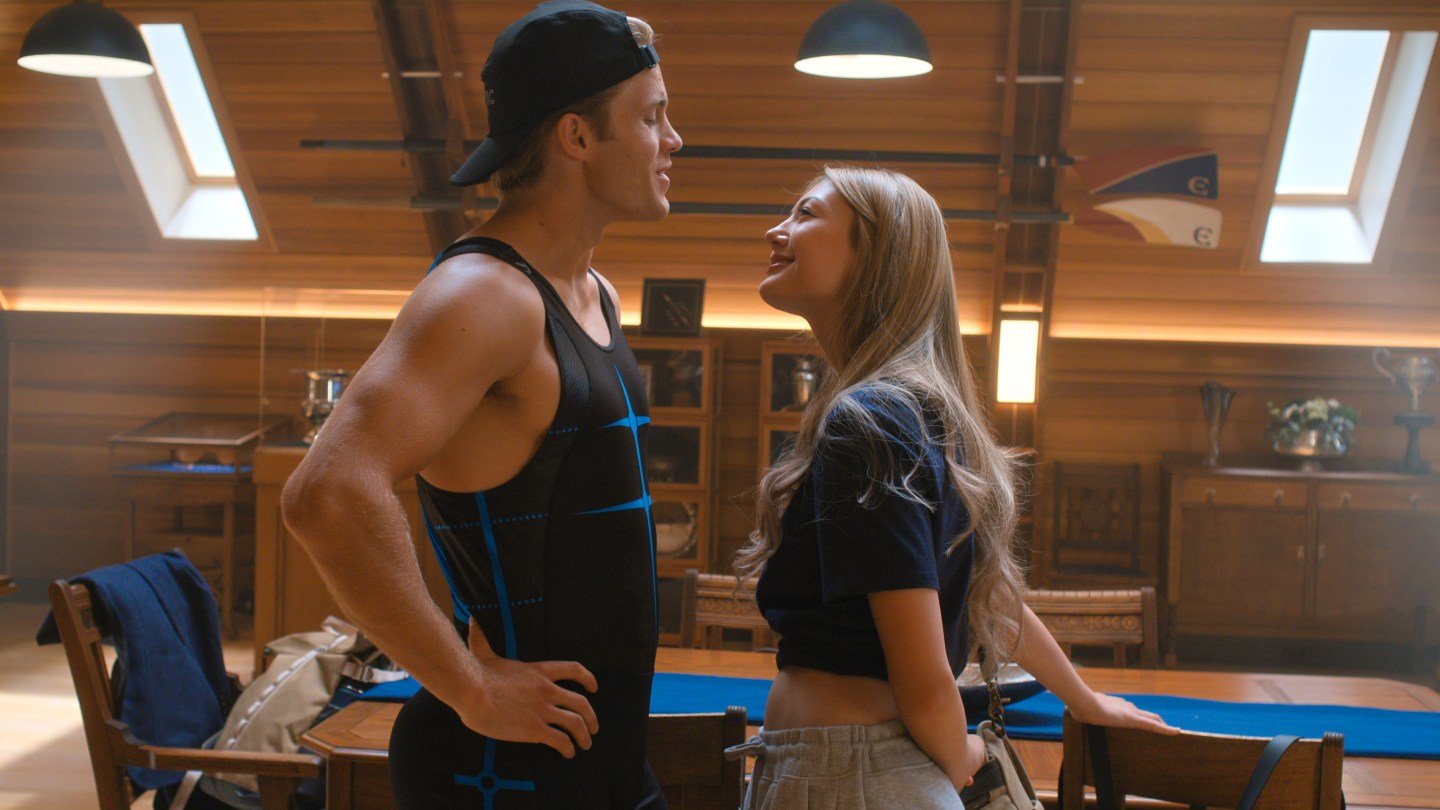
As far as bingeable YA dramas go, Crew Girl is probably good enough. Following an elite teenage rower, Teagan (Miku Martineau), who joins the varsity boys’ crew team at a new school, Vivian Lin and Morwyn Brebner’s new Netflix series hits all the expected marks — filthy-rich mean kids, intrafamily feuds, an angsty love triangle and many pretty shots of lakes — breezily enough to consume over a weekend for viewers who can’t get enough of this specificandveryprolificgenre.
But as Teagan and her ultra-competitive teammates know, “good enough” is far from the same thing as “elite.” While the show can be endearing in flashes — and while its affection for the sport shines brightly enough that you might find yourself daydreaming about taking up an oar yourself — underdeveloped characters and an under-explored world leave it short of a transporting experience.
Crew Girl
The Bottom Line
Good enough to binge, not elite enough to remember.
Airdate: Thursday, Sept. 10 (Netflix) Cast: Miku Martineau, Jessica Paré, Sam Braun, Kyle Clark, Thomas Cadrot, Jude Wilson, Connor Paton, Niall Matter, Olga Petsa Creators: Vivian Lin, Morwyn Brebner
Unlike some sports shows (even some very good ones), the series does not treat athletics as incidental, but as the very sun around which this entire verdant and sun-dappled universe revolves. The premiere shows us the inside of an Easton Prep classroom for the first and last time, and does the expository work of explaining that since this only recently coed institution has no girls’ rowing program for Teagan to join, her only way of getting on a boat is to serve as coxswain (the non-rowing member who helps steer and coordinate the team) for the boys.
How precisely this furthers Teagan’s lifelong goal of getting recruited to Stanford as a solo female rower is somewhat unclear. But it makes for an ideal excuse to treat us to many drone shots of serene fir-ringed lakes, or action shots of athletes heaving back and forth in satisfying unison — as well as to surround Teagan with eight cute, ripped, frequently shirtless fellows obligated to hang on her every word, though the two she’s primarily concerned with are Josh (Sam Braun), the stereotypical wealthy asshole whose family name hangs over the school’s boathouse, and Cam (Kyle Clark), the stereotypical working-class townie painfully aware of how little he fits in among this blue-blooded milieu.
The love triangle that inevitably forms between Teagan and the two of them is standard-issue stuff on paper and not much more interesting in execution, as the scripts struggle to express why any of these people might be attracted to each other beyond the fact that teen-drama formulas dictate it. Perhaps to compensate, Martineau plays Teagan’s attraction to both potential suitors with an overwrought sultriness that feels out of sync with how long it’ll take the character to actually be getting around to smooching one of them.
Besides, all three involved seem in agreement that whatever their hearts or hormones are pushing them toward is less important than the sport to which they’ve all dedicated so much of their lives, and upon which they’ve pinned all their hopes and dreams. If nothing else, the show’s prioritization of the athletic angle, with the close-knit team dynamics and regular bouts of competition it entails, sets it apart from so many otherwise similar YA series.
It can yield some sweet moments predicated on the idea that, as Teagan puts it, “people who wouldn’t be your people become your people” by virtue of being on the same team. I was touched by a minor storyline in which Baloo (Jude Wilson), the outgoing one, shyly asks his boat bros to help pick out a thirst trap to send to a hot dude online, and amused by another in which Noah (Off Campus’ Riley Davis), the nerdiest of the bunch, struggles to make this group of strapping jocks play along with the Roaring ’20s murder mystery he has so misguidedly organized for their post-race afterparty.
It’s in trying to build out the world outside of crew that Crew Girl stumbles. When I say everything in this series comes back to competitive rowing, I mean everything: the bitter Succession-lite infighting between Josh and his slightly less blue-blooded cousin, Ryder (Connor Paton), Cam’s family’s financial struggles, Baloo’s eventual romance with the internet guy. Even Teagan’s choice between her two would-be suitors seems to be understood by all three of them as being as much about who she considers a better athlete as who she thinks would make a better boyfriend and/or hookup buddy.
Any plot element not directly involved with crew is sidelined or outright ignored (if Teagan so much as cracks open a laptop to do some homework, I don’t remember it). This narrow focus does a disservice to intriguing subplots like that revolving around Teagan’s mother Ella (Jessica Paré), who’s forced to start rock bottom in the hometown she hates after being abandoned by her wealthy but criminal husband. Paré is quite good when she’s onscreen, serving a layer cake of forced optimism, barely concealed disappointment and proud determination, and she conjures a believably loving chemistry with Martineau. But her growing confidence as a single working mom plays out in broad, irregular beats with little room for nuance.
Teagan is granted exactly one non-crew friend — an artsy classmate named Juliet (Olga Petsa), who makes a literally fiery first impression by setting fire to her own car in the premiere as a cry for attention from her emotionally distant parents, and then disappears for such long stretches that it’s a surprise when the show occasionally reminds you they’re besties. Especially since otherwise, Crew Girl positions Teagan as the somewhat tiresome cliché of the cool girl who can hang — in sharp opposition to girly girls like Josh’s sweetheart Britney (Sage Linder), who is portrayed as unreasonably jealous, ruthlessly ambitious and one-dimensionally unpleasant.
It’s a fantasy, I guess, to be the girl who gets to be one of the boys and the subject of all their adoration at the same time. I’m not even sure if it’s the one Crew Girl means to advance, or if it’s simply too thinly written to support characters and relationships more complex than the familiar tropes they’re built on. Either way, Crew Girl goes over about as smoothly as a shell slicing through a silver lake on a breezeless morning. It also leaves behind about as many lasting ripples.