Calls are growing for an independent investigation into ICE after agents were filmed attacking protesters who were trying to prevent arrests in a residential area in Frederick. ICE has arrested more than 50,000 people in August, averaging 1,642 arrests a day.
Among many D.C. lobbyists, when the bet is on whether a piece of legislation will pass Congress or not, the rule of thumb always is to take the latter. Yet, a long-desired federal film and television tax incentive that’s suddenly coming to life with the recent backing of Donald Trump could prove the exception. Maybe.
Lawmakers on both sides of the aisle are drafting legislation, with current plans for a 20% incentive and an additional 5% to 10% for rural areas or spread across several states. A bill could be introduced this month, with some announcement on the status expected when Congress returns next week, and the details are not set in stone.
“This is the best opportunity now we’ve had to get this done in really decades,” Sen. Adam Schiff (D-CA) said on CNN this week. On Tuesday, Schiff complimented talks among the White House, House members and some of his fellow Senators, but cautioned a deal is not yet done. “Negotiations are ongoing,” Schiff, who Trump has long attacked personally and politically, told Deadline.
So far, the anticipated multibillion-dollar federal incentive also has the advantage of backing by some members of the House Ways & Means Committee, which controls the purse strings, and that support is bipartisan. Among those said to be working on legislation are two members — Rep. Nathaniel Moran (R-TX) and Rep. Linda Sanchez (D-CA) — each from a state that has a lot of production in its past, present and hopefully future.
That said, even though proponents see the best prospects in years for passage of something, there still is a long way to go despite the backing of a fickle POTUS and the other good intentions.
Here are some of the hurdles ahead:
Timing
With so few days left in the legislative session before the midterms, there just isn’t time left to pass legislation before then, especially a bill that is still in the works. Advocates including studio representatives and union officials are expected to up their PR campaign in the coming weeks, particularly if there is a concrete proposal on the table.
That leaves the question of when. The lame-duck session will likely focus on whether an agreement can be reached on an overall bill to fund the government, with an expiration of December 11. If the past is any guide, it’s much more likely that the bill would be attached to some end-of-year funding measure than as stand-alone legislation.
Midterm results
While a number of Republicans and Democrats are said to be on board with the legislation now, the question is what the sentiment will feel like after November 3. Would polarization only harden after a Democratic rout? What’s the appetite for bipartisan legislation if the election results are contested? That said, there is a strong desire to pass incentives legislation this year, rather than restart the process in the next Congress, when priorities could very well shift.
Getty Images
Cost
Supporters of state tax incentives long have held that the benefits greatly outweigh the costs, but there will be plenty of scrutiny on the bottom line. That typically comes via an analysis from the Congressional Budget Office, so expect to see a lobbying push to outline how the incentive will save or restore jobs.
A key factor will be whether the ultimate incentive figure is large enough to persuade producers to forgo the UK or Australia or even Canada and locate in the United States. One of the big criticisms of California’s early incentive program was that it was too little, too late, especially with states like New York and Georgia offering much heftier sums of money. Proponents will have to make the case that the incentive will have to be large enough to be meaningful.
Indications are that the bulk of what is being discussed behind closed doors is based in large part on the format and execution of California’s annual program, now at $750 million. A goal of any federal incentive is to snag relocating productions, series or films first made outside the country or content that had already been assured foreign credits but haven’t yet started production.
With a few words from his pal Jon Voight, the president threw his support behind an incentive earlier this month, undoubtedly generating some momentum for getting something passed. But he also could change his mind. It’s not out of the realm of possibility that something will trigger him — particularly entertainment-related — that would cause him to shift course.
Among proponents, there’s also a push to highlight support among Republicans, in part to emphasize that the legislation would not just benefit California and New York. That could counterweight the visibility of one of the champions of a federal incentive, California’s junior senator Schiff, one of the president’s biggest foes. He recently told CNN: “Just because it’s this president, if it’s a good idea, I’m not going to oppose it. In fact, I fully support this.”
Asked by Elex Michaelson whether his relationship with the president would make passage more difficult, Schiff said, Schiff noted that Trump has “mentioned bipartisan support, mentioned my support for it, so he didn’t deterred at all by it. He thought that that was a positive.”
The entertainment industry is an easy punching bag, especially on the right, and it’s not hard to see the incentive being cast as a bailout to an elite industry dominated by the left. The Wall Street Journal editorial page quickly weighed in last week, with the headline, “Handouts for Hollywood — Really? Adam Schiff and Donald Trump unite to subsidize the rich and famous.”
“A production tax credit would provide a short-term stimulus for one industry, which primarily supports Democrats,” the Journal‘s editorial team wrote.
That’s why the support of lawmakers in red states such as Texas, Louisiana and Tennessee might be critical, even with Trump’s backing, as well as the emphasis on legislation as a jobs bill, benefiting an aspect of the manufacturing sector and across different parts of the country.
The Motion Picture Association knows the territory well, as it has sought to make issues like piracy and copyright relevant to the average public whose impressions of the entertainment industry tend toward red carpets and awards show glamour. “The use of the word ‘Hollywood’ has got to stop,” says one booster.
Former NCAA swimmer Riley Gaines called WNBA fans in Minneapolis a “bunch of disgruntled lesbians.”
Rating:
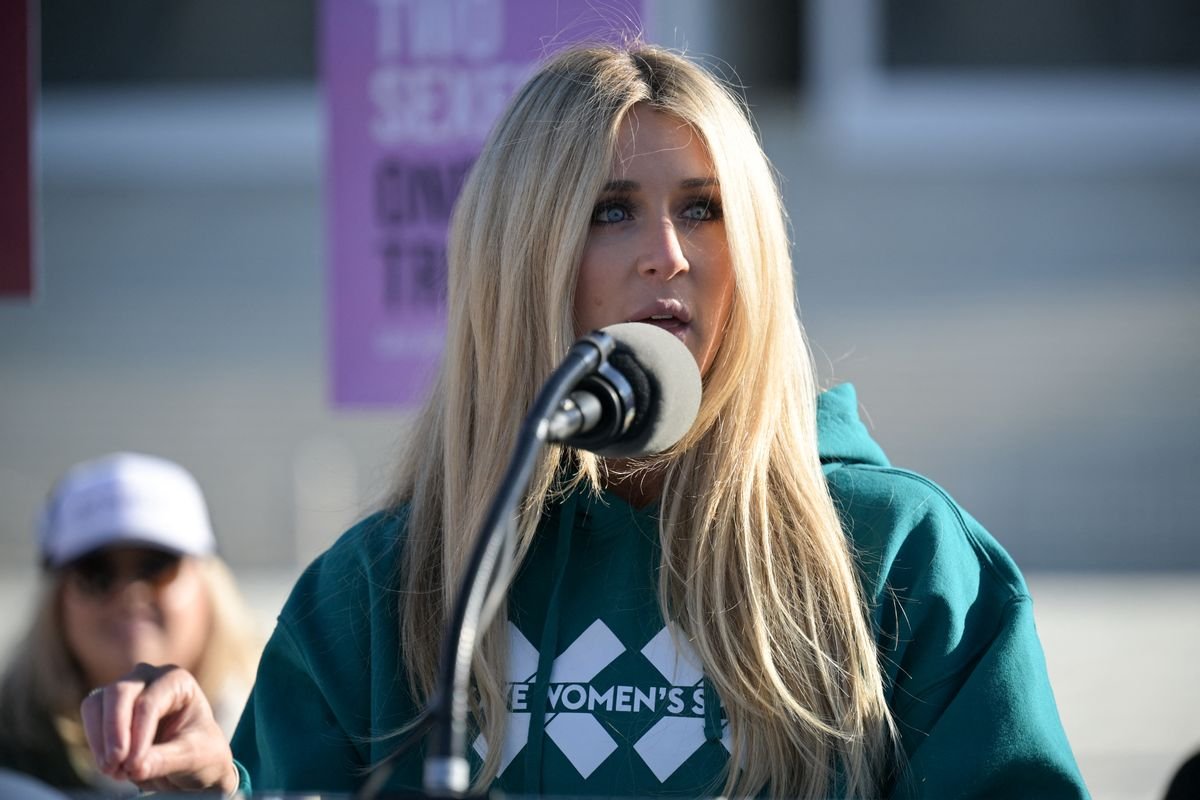
In September 2026, a claim circulated online that former NCAA swimmer Riley Gaines, who is now a conservative pundit, called Women’s National Basketball Association fans in Minneapolis “a bunch of disgruntled lesbians.”
I went to the WNBA game in Minneapolis… it was a bunch of disgruntled lesbians. It felt like the entire arena was booing Sophie Cunningham.
Gaines did indeed make the above remarks on Fox News’ “The Big Weekend Show” on Sept. 5. As such, we’ve rated this claim as a correct attribution.
Gaines was responding to a question from host Tomi Lahren, who asked why the WNBA wouldn’t define a “woman.” We have reproduced the exchange below (emphasis ours):
Lahren: …but what I find here so interesting is the WNBA with a “W” in their name, they won’t define a woman. And I can’t figure out if it’s because they have players that are currently playing that wouldn’t fit that definition … or is it because they don’t want to anger what they feel is a large part of their fanbase that is LGBTQ? Or is it a little bit of both?
Gaines: I’m sure it’s a little bit of both. I can tell you. I went to the WNBA game in Minneapolis. Which you can expect … what the fanbase as it pertains to the WNBA in that city looks like. And it was a bunch of, like, disgruntled lesbians. And I think that the WNBA as a league, organizationally they recognize that. It felt like virtually everyone in that arena, first of all, you audibly heard it, anytime Sophie was subbed in, stepped on the court, touched the ball, threw up a shot, her name was announced on the loudspeakers … you heard the entire arena boo. It felt like they had been advised to only put people on the jumbotron who were draped in their trans flag … And the general public knows that is not indicative of real life.
The full episode has been archived and the exchange takes place after 2:38 p.m.
Gaines was referring to Sophie Cunningham, a WNBA player with the Indiana Fever, who has expressed opposition to transgender players’ participation in women’s sports. Gaines and Cunningham have also been photographed (archived) together.
For further reading, Snopes has covered numerous satirical posts and claims about Gaines.
Sources
Izzo, Jack. “Simone Biles Was Suspended from Team USA over Comments to Riley Gaines?” Snopes, 10 June 2025, https://www.snopes.com//fact-check/riley-gaines-simone-biles-team-usa/. Accessed 9 Sept. 2026.
“Love Her or Hate Her, Sophie Cunningham Won’t Be Ignored.” ESPN, 21 July 2026, https://www.espn.com/wnba/story/_/id/49306657/sophie-cunningham-finger-point-indiana-fever-wnba. Accessed 9 Sept. 2026.
The Big Weekend Show : FOXNEWSW : September 5, 2026 2:00pm-3:00pm PDT. With FOXNEWSW, 5 Sept. 2026. Internet Archive, http://archive.org/details/FOXNEWSW_20260905_210000_The_Big_Weekend_Show. Accessed 9 Sept. 2026.
The voter registration website VoteSafe.org was funded by Elon Musk’s America PAC and it collects and shares users’ personal information.
Rating:
In September 2026, social media users circulated warnings about a website called VoteSafe.org, an online voter registration hub that allegedly collects and shares users’ personal information.
Posts on platforms such as Facebook (screenshot), Threads and Bluesky also claimed America PAC — the political action committee tech billionaire Elon Musk founded — operates and funds VoteSafe.org. Snopes readers contacted us to verify this claim.
VoteSafe.org is, indeed, funded by Musk’s America PAC, and according to the website’s privacy policy, it may collect and share users’ personal information. (VoteSafe.org also offers a way for users to opt out of having their personal information shared with third parties.)
As such, we have rated this claim as true.
The VoteSafe.org privacy policy page lists only one third party by name that it shares data with: a “business partner” called Western Creative Group. The company has no online presence; its Wyoming business license lists a law firm as its agent and organizer. The Washington Post reported in 2024 that Musk passed $20 million to “an advertising firm called Western Creative Group” to promote the idea that U.S. President Donald Trump “opposed a federal ban on abortion.”
We reached out to the law firm, Bailey Stock Harmon Cottam Lopez, to ask about its association with Western Creative Group and will update this story if we hear back. Snopes also asked America PAC for a list of third parties the political action committee shares information with. We await a response.
It is also worth noting at least one Snopes reader asked whether Musk pays for Vote.org. Vote.org, another voter registration website, was established longbefore Musk’s VoteSafe.org. Unlike VoteSafe.org, Vote.org is run by a nonpartisan, nonprofit organization, and its tax filings and list of board members indicate that Vote.org has no affiliation with Musk.
The similarly named official government voter registration page is vote.gov, as the “.gov” domain indicates.
Elon Musk’s America PAC linked to Vote Safe website
The America PAC website (archived) prominently features a description on its homepage that says, “PAC Founded by Elon Musk.” According to Federal Election Commission data, the vast majority of America PAC’s funds come from Musk.
The America PAC website also includes a banner that sends users to the VoteSafe.org webpage.
On the VoteSafe.org webpage (archived), there are several additional indicators that America PAC funds VoteSafe.org. For example, the copyright notice at the bottom of the webpage says “AMERICA PAC.” Underneath the notice, a disclaimer reads:
Paid for by America PAC. Not authorized by any candidate or candidate’s committee. www.theamericapac.org.
More on VoteSafe.org’s privacy policy
VoteSafe.org’s privacy policy, last updated Aug. 29, 2026, says America PAC “may collect, use and disclose” contact information and data about users political interests, employment, demographics, social media and internet activity to third parties, including but not limited to its “business partners.”
For example, here’s the privacy policy’s explanation on what America PAC may do with contact information:
Contact Information. This may include your name, physical address, email address or telephone number.
How We May Collect It: Directly from you; passively; or from third parties.
How We May Use It: To provide and improve our Platform; to understand your interests; to communicate with you; for marketing purposes; for legal and security purposes; to combine information; as otherwise permitted by you or as we may notify you; or as directed by you.
How We May Disclose It: Internally; on our Platform; with our business partners; with our service providers; with third parties for marketing purposes; with any successors to all or part of our business; to comply with laws or to protect ourselves; for other reasons we may describe to you; or as directed by you.
We may share this information with our business partners for targeted marketing purposes or sell this information to our business partners. For more information about your right to opt out, please click here.
While the VoteSafe.org privacy policy references selling user information, it’s unclear whether America PAC directly sells information to third parties for monetary gain. That’s because — as the privacy policy notes — some U.S. privacy laws have broadened the “sale” of information to mean more than just a monetary exchange.
In California, for example, the “sale” of information can involve any exchange of a consumer’s information “by a business to a third party” for any “valuable consideration.”
There’s no clarification in the VoteSafe.org privacy policy about whether America PAC sells consumer information for money or for other reasons, aside from “targeted marketing purposes.”
It is unclear how many third parties have received information from America PAC. The political action committee’s privacy policy notes that under California law, the state’s residents have the right to ask once a year “whether we have shared personal information with third parties for their direct-marketing purposes.”
“To make a request, please submit a request via info@theamericapac.org,” the policy says.
As shared in September 2026 social media posts, a black bear took a raccoon and later a fox to a wildlife center where it had previously been treated.
Rating:
In September 2026, a rumor circulated online about a black bear that apparently took a wounded raccoon, and later a wounded fox, to a wildlife center where the bear itself had been treated.
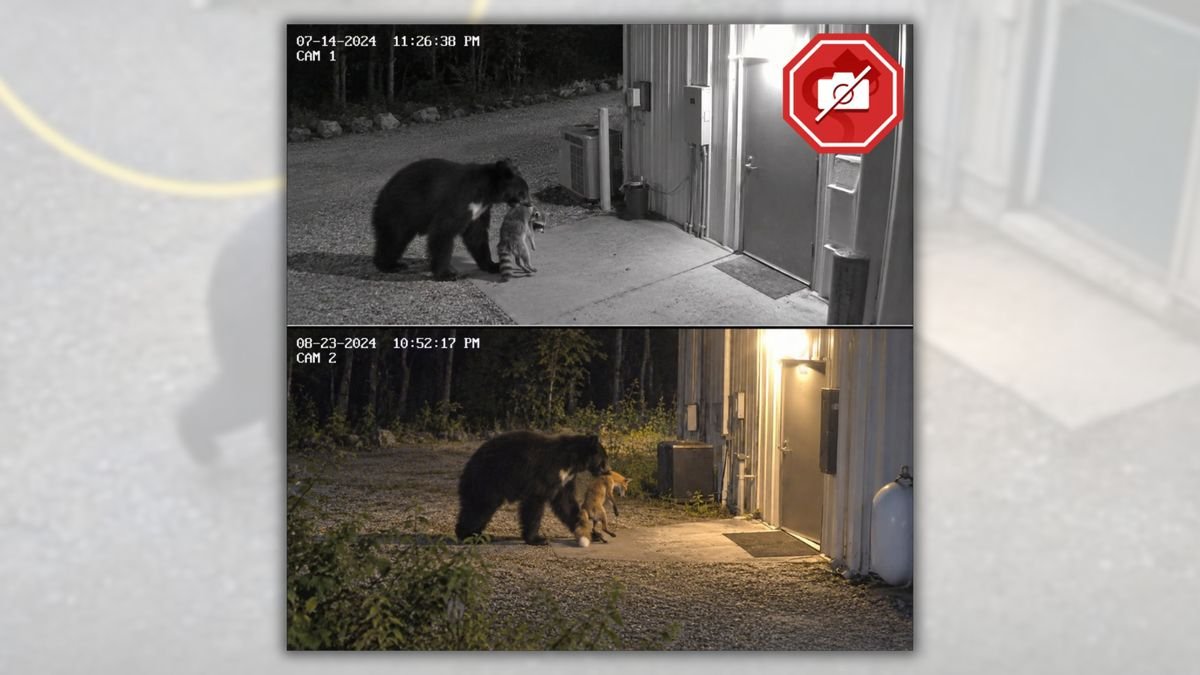
The first time, nobody believed it. Security cameras at a wildlife center captured a black bear approaching a rear entrance carrying a wounded raccoon in its mouth. It placed the animal gently beside the door. Then disappeared into the woods.
[…]
Several weeks later, cameras recorded a bear approaching a side entrance with an injured fox. Same careful approach. Same gentle placement near the door. Same quiet exit into the trees.
Both animals were found alive and received treatment.
Workers compared the two recordings. Both bears had the same unusual white mark on their chest. Same bear. Two deliveries. Two injured animals brought to the one place that could help them.
Staff searched old photographs and records of bears previously treated at the facility. That’s when everything clicked.
Years earlier, the same bear had been rescued, treated at that very wildlife center, and released back into the wild. He had been a patient there. And now he was bringing patients back.
Officials believe the bear remembered where it had once been helped and returned because it somehow understood that injured animals would be safe there.
Snopes readers sent emails and searched the website wondering whether the story was true.
There’s no evidence supporting the rumor that a black bear took a wounded raccoon and a fox to a wildlife center it had previously received treatment at. It was posted online by a page with a history of posting heartwarming — though fictitious — animal stories generated with artificial intelligence tools.
Snopes also used Google Lens to conduct a reverse image search on multiple different images posted alongside the story purportedly taken at the unidentified wildlife center.
That search revealed the story appeared to originate from the Facebook page StoryTime, which posted (archived) prior to the other social media posts linked in this fact check.
StoryTime’s history
Snopes has been fact-checking StoryTime’s animal rumors for more than a year. The page frequently posts fictitious, AI-generated animal stories supported by AI-generated images that are usually purposefully grainy and/or blurry, all meant to generate clicks because of their surprising or heartwarming nature.
At one time, the intro section on StoryTime’s Facebook page read, “story (noun) – an account of imaginary or real people and events told for entertainment.” At present, the page’s intro section reads, “Animal rescue storytelling from around the world 🌎🐾 Real moments, inspired stories, and emotional second chances ❤️.”
Facebook users can subscribe to the page using real money, which gives the page incentive to continue pumping out the animal stories it’s known for, regardless of their reality.
AI-generated text
StoryTime’s version of the claim begins with the headline “Wildlife Center Releases Statement After Bear Saves Two Injured Animals.” StoryTime, much like the other Facebook pages telling the story, doesn’t name the wildlife center or the worker quoted, or describe any geographic details about where these events took place. (Even without those identifiers, the wildlife center’s statement, which isn’t directly quoted in the post, should have showed up in search engine results, if real.)
When we input the text of StoryTime’s version of the claim and that of another version of it into Pangram, which is widely considered the most reliable AI-text detection tool available as of this writing, it concluded that 100% of both versions were written or assisted by AI.
It’s important to note that even the best AI detection tools can be fallible. Snopes cautions against using them to find definitive answers on the authenticity of texts or images without additional corroborating evidence.
AI-generated images
Each of the four Facebook posts linked in this story uses a different pair of images of the black bear carrying the raccoon and fox to the wildlife center, which is already a major red flag for the tale’s authenticity.
In one version, the size of the object at the bottom left of the building’s wall is sized differently in the pair of images presented.
In another version, the building is different in each of the two images presented. The bottom of the pair appears to depict a door opening inward from the right even though the door’s handle is on its left side.
In a third version, the building and its door are once again inconsistent from one image to the other.
In StoryTime’s version, neither the building, the stone patio nor the gravel-covered grounds around the building are the same between the pair of images.
The general lack of consistency between images is a telltale sign of AI generation, as artificial intelligence tools usually generate each image from scrap and therefore sometimes struggle in keeping details consistent when trying to emulate multiple images of the same place.
StoryTime does not keep its DMs open, leaving Snopes unable to contact the page for comment. StoryTime has not replied to past attempts by Snopes to contact the page’s administrators, either.
After eight seasons, the beloved British spinoff of RuPaul’s franchise-spawning competition has been dropped by the BBC, with the broadcaster citing “significant financial pressures.” In April, the BBC announced a plan to cut 1,800 staffers in a bid to save £500 million ($678m).
A representative told The Hollywood Reporter on Thursday: “As the BBC continues to navigate significant financial pressures and deliver the savings required of us, we have had to make some very difficult choices, none of which have been taken lightly.”
The series currently runs on BBC Three and iPlayer. The rep continued that future shows — and its spin-off, RuPaul’s Drag Race UK Vs The World — will instead be broadcast on Wow Presents Plus, a platform owned by Drag Race UK production company World of Wonder.
“The BBC is incredibly proud of all eleven series of this groundbreaking show and we would like to thank RuPaul, World of Wonder and everyone involved, both on and off screen,” the rep added. “We are certain that viewers will enjoy the eighth [season].”
Since 2019, Drag Race UK has catapulted some of the biggest drag queens in Britain to stratospheric stardom, launching the careers of Baga Chipz, Bimini Bon-Boulash, Tayce and The Vivienne. Tia Kofi went on to become a member of the Eurovision presenting team, La Voix featured on EastEnders and StrictlyCome Dancing, and Ginger Johnson won Celebrity MasterChef last year.
The format involves amateur and professional drag queens competing in a series of challenges to win over judges RuPaul, Michelle Visage, Graham Norton and Alan Carr, and celebrity guest judges such as Jade Thirlwall, Lucy Punch, Hannah Waddingham, Andrew Garfield, Anne-Marie, Thandiwe Newton and Cat Burns.
At its peak, per BBC News, the show averaged around 1.5 million viewers per episode. Viewers will be able to continue watching existing seasons of RuPaul’s Drag Race UK and RuPaul’s Drag Race UK Vs on BBC iPlayer.
If you thought iPhone prices were going to drop this fall, you’re in for an unpleasant surprise. Unlike in previous years, Apple has raised prices across its entire smartphone lineup by $100 after launching its latest iPhones, instead of lowering them.
The hikes were a long time coming, due to rising global memory and component costs. Former CEO Tim Cook dropped hints about “unavoidable” price hikes in mid-June, and the company immediately bumped prices on Macs, HomePods, iPads, and Vision Pro.
iPhones were spared from the first round of Apple hikes, but now they’ve been hit too. The newly launched iPhone 18 Pro models cost $100 more than their iPhone 17 Pro counterparts did at launch last year. Apple has now discontinued the older 17 Pro models and slapped $100 price hikes on all other existing models, including the regular iPhone 17, iPhone Air, and iPhone 17e.
Here’s a look at the new and old prices of all the iPhones currently available for purchase at Apple, excluding the first-ever iPhone Duo ($1999):
iPhone 18 Pro: Starts at $1,199 (up from $1,099 for iPhone 17 Pro)
iPhone 18 Pro Max: Starts at $1,299 (up from $1,199 for iPhone 17 Pro Max)
iPhone 17: Increased from $799 to $899
iPhone 17e: Increased from $599 to $699
iPhone Air: Increasedfrom $999 to $1,099
iPhone 16: Increased from $699 to $799
Alongside the hikes, Apple has also released the trade-in values for the iPhone 17 series. For the iPhone 17 Pro and 17 Pro Max, you can get a maximum value of $885 and $785, respectively, while for the iPhone Air and iPhone 17, you can receive a maximum credit of $585.
In case you’d like to reduce the upfront cost of your iPhone purchase without trading in your older device, you can check out the new Apple Upgrade leasing program as well. For example, leasing starts at $34.99 per month for 24 months on the iPhone 18 Pro. The 18 Pro Max starts at $37.99 per month.
At the end of your plan, you can pay off the remaining balance and keep the device, leave the program and return the device, or upgrade to a newer model and start a new lease.
Recommended by Our Editors
Preorders for the iPhone 18 Pro models begin on Sept. 12, with shipments starting Sept. 18. Preorders for the iPhone Duo, meanwhile, begin on Oct. 16, with shipments starting Oct. 23.
Stay tuned to PCMag’s coverage for detailed reviews of all of these devices, as well as the new Apple Watches and AirPods.
About Our Expert
Experience
Jibin is a tech news writer based out of Ahmedabad, India. Previously, he served as the editor of iGeeksBlog and is a self-proclaimed tech enthusiast who loves breaking down complex information for a broader audience.
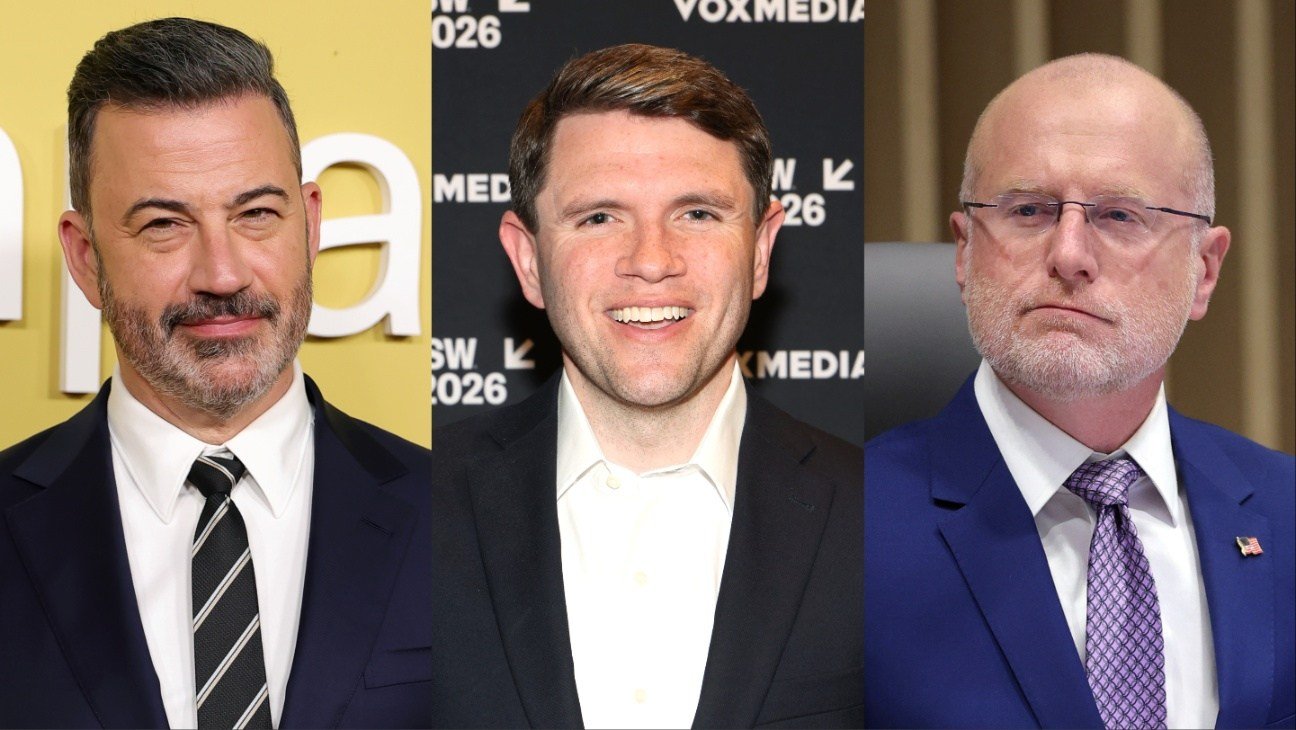
Kimmel made the announcement during his monologue on Wednesday’s episode of his late night show.Discussing the Texas senate race, Kimmel said that he would interview Democratic candidate Talarico on Thursday “under unusual circumstances,” and then alluded to ABC’s ongoing issues with the Federal Communications Commission.
“You know, for a lot of years, for the whole 20-plus years of our show, in fact, I’ve been interviewing Americans who are running for office with no problem at all, just like Letterman did, Leno did, Arsenio, etc. etc., I’ve interviewed a lot of political candidates. From Hilary Clinton, to Ted Cruz to Donald Trump,” Kimmel said. “I interviewed Donald Trump when he was running for president in 2015, and at that time, when he was the one sitting next to me, he seemed to have no problem with the idea of talk show hosts interviewing candidates. In fact, he was very eager to come back for another interview, which he did just before he became the nominee in 2016. But for some reason, and I can’t seem to figure out what that reason is, something has changed.”
“Now that [Trump is] president, his FCC has threatened me, threatened our show, threatened our network, ABC, our affiliates [and] our local stations based on simple traditional editorial decisions, guest bookings, it would seem, [that] they don’t like,” Kimmel added, referring to ABC’s ongoing battle with the FCC and in particular with the agency’s chair Brendan Carr.
In September 2025, in the aftermath of the assasination of Charlie Kirk, Carr condemned Kimmel for comments he made during one of his monologues about Kirk’s death and the FCC chair intimated that regulatory action or license reviews for ABC affiliates could happen if Kimmel wasn’t made to apologize. After Kimmel was temporarily suspended over the matter, a firestorm engulfed ABC’s owner Disney. Kimmel became a cause celebre in Hollywood and he was eventually reinstated but that didn’t stop the FCC continuing to target ABC, Jimmy Kimmel Live! and the daytime talk show The View over claims they didn’t meet the agency’s equal time requirements. In August this year, ABC said it was suing the FCC over the agency’s efforts to challenge its broadcast licenses and the content of The View, saying that it is a free speech violation by the Trump administration.
On Wednesday, Kimmel confessed that ABC’s ongoing issues with the FCC meant that the Talarico interview would instead air online. “Out of consideration for our local stations, especially our ABC affiliates in Texas who would have to deal with this nonsense, my interview tomorrow with James Terico will not air on television. It will be posted on YouTube instead. It will not be on TV. So if you want to learn about a candidate for the Senate tomorrow, you will have to go to the Jimmy Kimmel Live! YouTube channel where you will see it in its entirety. And thank goodness we have that because in the America we live in right now, that is the best that we can do until November.”
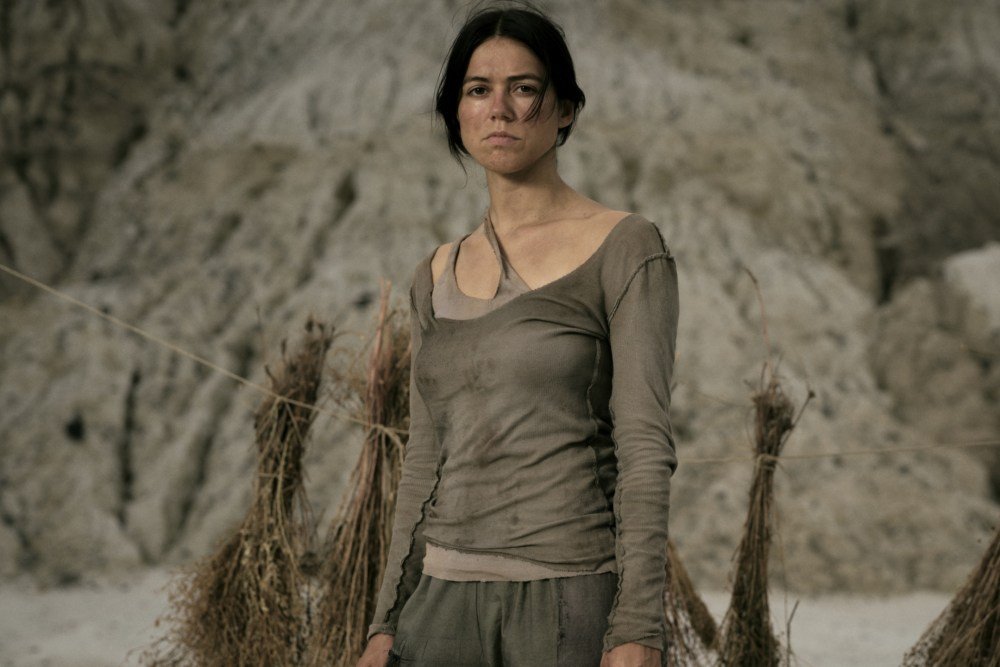
Vertical has acquired U.S. distribution rights to “Sanctuary,” an English-language, post-apocalyptic thriller starring “The Handmaid’s Tale’s” Nina Kiri.
According to the synopsis, “Sanctuary” is set on a post-apocalyptic Earth, where the discovery of a cryogenically suspended woman provokes fear in a desperate village, sending a young warrior and the mysterious woman on a quest for a lost city and answers that could restore humanity.
Directed by Filip Kovačević (“Incarnation”), the film is produced by Đorđe Stanković, Filip Kovačević and Vukota Antunović for Void Pictures and TS Media, the production arm of telecommunications giant Telekom Srbija. It stars Kiri alongside Dutch actor Jonas Smulders (“Luka,” “Paradise Drifters”) and Serbia’s Darko Perić (“Money Heist”). World sales are being handled by Sublimity, which has also secured several other international deals.
Kovačević, who previously directed the 2016 action thriller “Incarnation,” described “Sanctuary” as an attempt to give “a fresh take on dystopian sci-fi, with an original story that takes place in a distinct ‘semi-far future.’”
“The time is near enough so the events that led to the collapse of civilization are still relevant, but far enough that they have been shrouded in mystery and myth,” the director said. “The intent was to make an entertaining genre film that explores the cyclical nature of history and the individual’s role inside it.”
Variety has been given access to an exclusive teaser for the film, which you can watch here:
Producer Đorđe Stanković, of Belgrade-based Void Pictures, said that the filmmakers “set out to make an ambitious science-fiction film from Serbia that could speak to an international audience without losing its own identity.”
“Producing the film was an enormous undertaking, but also proof that genre cinema of this scale can come from this part of Europe,” he said. “We’re incredibly proud of what the team created and excited for the film to now begin its journey to audiences around the world.”
Void’s Vukota Antunović added: “From the beginning, ‘Sanctuary’ was driven by a shared belief in the story and the world we were building. Bringing together an international and domestic cast and a remarkable Serbian crew allowed us to make something that feels both rooted here and genuinely global.”
The ambitious, English-language feature marks a big swing for Telekom Srbija’s TS Media. In a statement provided to Variety, the company said that “Sanctuary” “represents a notable shift in scale and ambition for Serbian production.”
“The film is also part of a wider strategic ambition: to move Serbian scripted production further into the international marketplace, not only as a filming destination but as a source of original IP, creative talent and globally marketable projects,” the statement read.
“With experienced international actors, an English-language screenplay, U.S. distribution already in place and global sales representation, the project offers a case study in how production companies from smaller European markets can approach international genre filmmaking from day one.”
Commenting on the acquisition, Sublimity co-founder Alfredo Lara Orbezo said: “We’re thrilled to have secured key international distribution partners and a terrific U.S. home for a film of ‘Sanctuary’s’ scope and ambition. Its immersive world-building, remarkable production values and unforgettable performances carry the spirit of iconic sci-fi cinema.
“Bringing this film to market alongside Telekom and Void Pictures has been an incredible journey, and we’re proud to share it with audiences worldwide soon.”
Telecommunications giant Telekom Srbija is looking to position itself as not only the leading production hub in Serbia but a regional juggernaut for the countries of the former Yugoslavia, exporting local content while attracting international productions to the Balkan nation.
“Our next chapter is a deeper connection with our international partners, and presenting not only Telekom Srbija, but the whole Serbian creative industry, to the global market,” says the company’s chief multimedia and content officer, Aleksandra Martinović.
Speaking to Variety from Belgrade, Martinović outlines Telekom Srbija’s blueprint for the coming years, building on its explosive growth in the past decade, in which the company has produced more than 300 titles, including more than 180 seasons of scripted drama.
That output was part of a production boom in a country that’s been the dominant hub of film and television production in the Balkan region since the break-up of the former Yugoslavia. In recent years, the Serbian industry has grown by leaps and bounds, thanks in large part to competition between the telecom heavyweight and rivals including United Media and public broadcaster Radio Television of Serbia.
For Martinović, that period has witnessed a transition at Telekom Srbija from a “traditional ecosystem” for film and TV content to “a very open-minded and sophisticated regional production ecosystem in the last eight or nine years.”
In some respects, that’s meant scaling back, with the company producing fewer shows that are nevertheless more suited for the global market. That includes bigger swings on series like the Serbian Spanish crime drama “Scar,” an ambitious co-production created by Plano a Plano and produced by Cicatriz A.I.E. and Dopamine, in association with RTVE, Prime Video Spain, Telekom Srbija, Canal Plus Poland and RTL Hungary; or the forthcoming romantic dramedy “Crosscurrents,” which is filmed in Montenegro and produced as a regional co-production with that country’s public broadcaster, RTCG.
Such series illustrate what Martinović characterizes as a strategy “to make choices more wisely and make choices more oriented to potential international partnerships and potential distribution to international markets.” One of the company’s most successful shows, the spy thriller “Civil Servant” (pictured), which is now entering its fourth season, has sold to Disney+ Hotstar in India, Brazilian streamer Globoplay, Telemundo and FlixLatino.
Next up is perhaps the company’s biggest gamble to date: the English-language, post-apocalyptic thriller “Sanctuary,” featuring “The Handmaid’s Tale” star Nina Kiri.
Martinović describes the film, which is directed by Filip Kovačević (“Incarnation”) and has been acquired for North America by Vertical, as “a huge risk and a huge challenge” for the company. “It’s very challenging, not only in the sense of authenticity, but also financing,” she says, adding that “international partners and distributors recognizing the value of that project” has been a boon for its backers.
It also illustrates how Telekom Srbija is punching above its weight, according to Martinović. “We are completely aware that we come from a small country,” she says. “Having the kind of content which we were able to sell to HBO, Disney+ and others, for us is very important praise and proof [of what we can do].”
Telekom Srbija’s Aleksandra Martinović
Courtesy Telekom Srbija
Along with its prolific production arm, TS Media, Telekom Srbija is betting big on its streaming platform, MOVE — described by Martinović as a “regional Balkan Netflix” — while also “investing more in every element of the production chain,” most notably with the acquisition earlier this year of the Belgrade-based Firefly Studios.
“We have a [360-degree] approach regarding production,” says Martinović. “It’s production, distribution, offering infrastructure through our Firefly Studios, and, of course, selling our own content to international partners.”
The Firefly purchase underscores Telekom Srbija’s ambition to become “a one-stop shop in this part of Europe,” Martinović says, highlighting Serbia’s 25% cash rebate on local spend and some of the most skilled and experienced crews in the region. Among the recent success stories to come out of the country is “Martin Scorsese Presents: The Saints,” the Fox Nation docudrama series executive produced and narrated by Scorsese and produced through Lionsgate Alternative Television. Parts of the project were filmed in Serbia, both at Firefly Studios and locations in and around Belgrade and Pančevo.
This has been a tumultuous time in Serbia, which has faced roiling protests for nearly two years in the wake of a devastating train station tragedy that claimed 16 lives. The turbulence has spread to the country’s film and television industries, with many professionals claiming they’ve been shut out by state-backed media over their political beliefs.
Martinović rejects such criticism. “We are completely aware of the social and political situation, but it doesn’t affect our general strategy,” she says. “We are fighting for the whole creative industry in Serbia. And we open the door for the whole creative industry in Serbia through international projects, through selling our own projects to international broadcasters, through trying to attract international partners…to come here and see what we have to offer.
“Not ‘we’ only as TS Media, but ‘we’ as the Serbian creative industry,” she continues. “We are fighting for all of us — not only for Telekom Srbija, but for all of us. Through Telekom Srbija, which is the biggest player, we are trying to [lift] our whole creative industry and to present them on the global scene.”