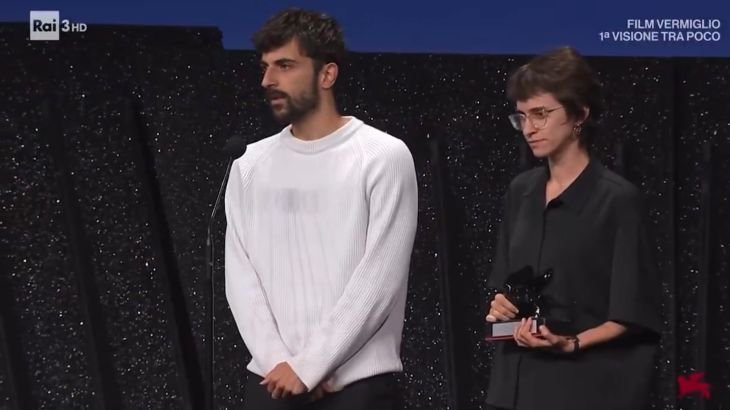
‘NAZA’, a documentary about Israel’s genocide in Gaza, has won the Special Jury Prize at the Venice Film Festival. Co-director Yuval Abraham said Israeli intelligence officers described the mass killing of Palestinians as ‘not by accident, but by design’, and accused the US and Europe of enabling it.
Zack Snyder sat in the back of a cramped, beat-up van, drenched in sweat. Perspiration waterfalled down his face. His back was soaked. He was on the verge of passing out.
It could have been the triple-digit jungle heat. He was in the southern reaches of Colombia after all. It could have been from the triple-digit degree fever that he didn’t know he had. (He would later find out he contracted COVID.) But he had a camera on his shoulder and what he did know was that he could not afford to stop shooting the scenes he needed to get that day. He was in the middle of finally making his passion project, The Last Photograph, and he was both director and cameraman. The movie was figuratively and literally on his shoulders.
When he returned to Leticia, Colombia’s southernmost city that sits on the Amazon River, a woman offered a trembling Snyder cough drops. “Halls is the answer?!” he thought to himself. “OK, fine. Fuck it.”
When I ask him if he tried wearing a mask, Snyder scoffs, “There are no masks in the Amazon. They don’t… there’s no masks. That’s hilarious.”
It’s now just under a year later. Snyder is sitting in his sleek, modern, aerie office high in the hills of Pasadena, prepping to go to the Toronto International Film Festival where Last Photograph will premiere Sunday. The score from Escape from New York is playing on a record player, adding mood to a day that surprisingly becomes rainy.
It’s been a 20-year journey to make the movie and in that time, Snyder went from a commercials and video director to a big Hollywood studio director, to then directing some of the biggest-budgeted, most heavily scrutinized movies of the century, Warner Bros.’s DC movies of the 2010s. His journey still not done, he endured a personal tragedy and the loss of control of DC mega-movie Justice League, followed by the storied affair of the #SnyderCut, and then a return via a pair, or maybe a trio, depending on how you want to count, of Netflix movies, Army of the Dead and the two-part Rebel Moon.
But Last Photograph saw Snyder working in a way he has never been before: As an independent filmmaker. There is no studio or streamer backing him. The scale is small, the budget smaller than some of the commercials he worked on earlier in his career.
“There’s no agenda to the movie. When you make a big studio movie, there’s a lot of things to consider about the product that you’re creating. Because it really is like a product much more than a thing that’s really a tone poem, you know what I mean?” he says.
He continues, “Like, the stakes are lower, right? You’re not trying to sell the audience something. You’re just giving them an experience and that experience doesn’t necessarily have to end with a sequel. I’m not trying to get them to go to another movie or buy a toy. The why of the movie is completely different.”
Making Last Photograph, he says, “was really singular and intimate and that was cathartic for me, to get the experience of making a movie that was really just true to itself and owed nothing but to the moments that we were trying to create.”
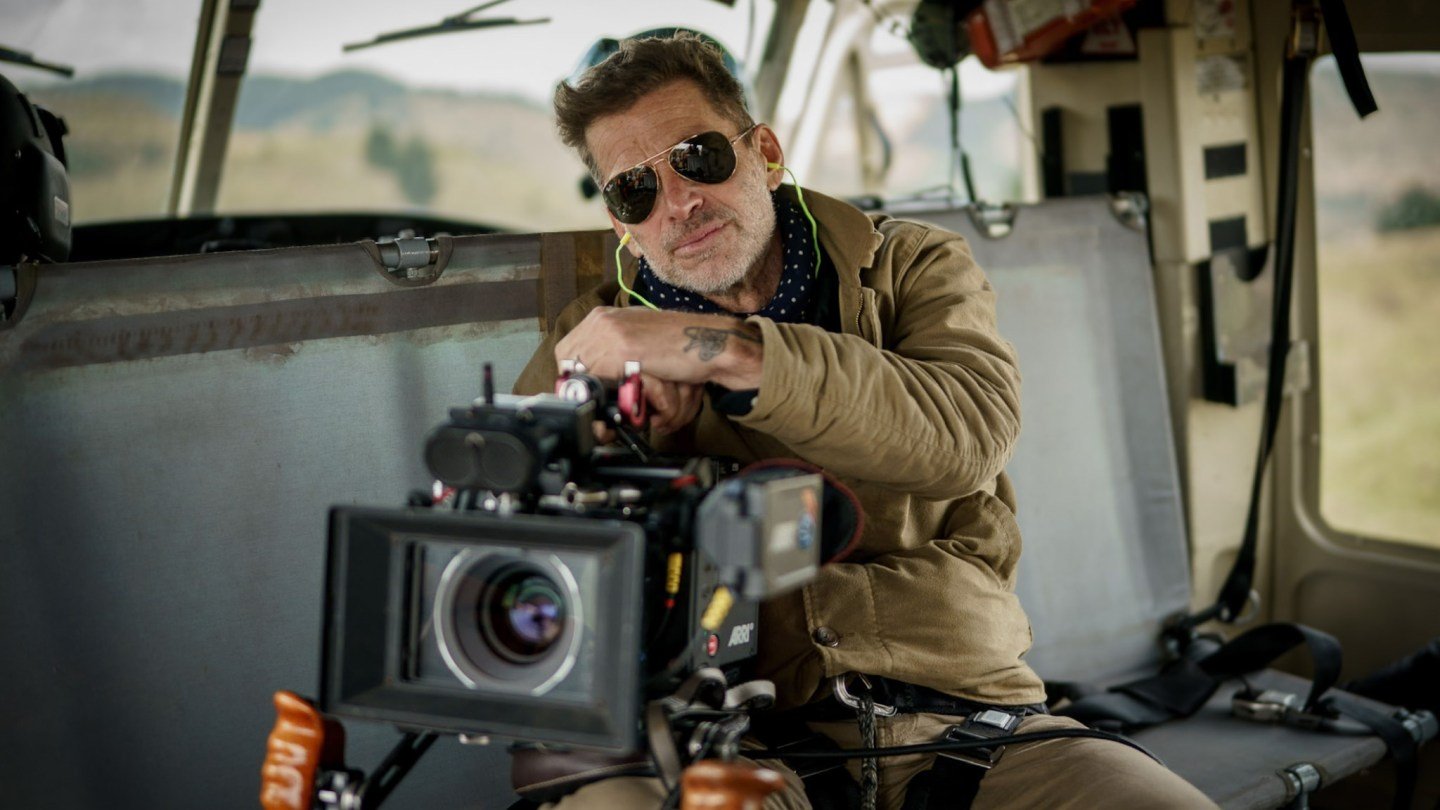
Snyder filming The Last Photograph in Colombia.
Daniel Billington
The story is set in an unnamed South American country and follows a heroin-addled war photographer who is the surviving witness to a mass murder that included a diplomat and his wife. When the diplomat’s brother shows up, the two men find themselves on a journey that takes them further and further away from the city and civilization, in search of the family’s kidnapped children. There is almost a mist-shrouded Knights of the Round Table searching for the Holy Grail quality at times, with the pair looking for their own Grail that can heal them.
Last Photograph began life as more of a spy or war thriller, but it was always a two-hander. At one point, it had A-listers like Sean Penn and Christian Bale attached to star, when it was set up at Warner Bros., Snyder’s once-longtime production home. But after the suicide of his daughter Autumn in 2017, however, and in the years after leaving the studio, Snyder began approaching the material differently.
“Yes, the framing is very similar and the events are similar, but what it became was a meditation on death and redemption,” he explains, “And, for me, about how people see the world in different ways.”
Snyder acquired the rights to Last Photograph back from Warners (the studio let it go after it was clear Snyder would not be taking it to a competitor). Unshackled from a studio, and with a limited budget, he assembled a small crew, marshaling his longtime partners — wife and producing partner Deborah Snyder and executive Wesley Coller — along with Gianni Nunnari, the Italian producer with whom he worked on the 2007 adaptation of Frank Miller’s 300. For his leads, Snyder tapped Scottish actor Stuart Martin and Irish actor Fra Fee, both co-starred in Snyder’s Rebel Moon.
In Last Photograph, none of the well-worn Snyder hallmarks appear: no slow motion or green-screen shot. (There is, however, a commando raid where a helicopter gets blown up.) The movie is beautifully photographed and artfully composed. Snyder decided he wanted act as cinematographer, something he did when he was starting out and directing commercials and finally returned to with Army of the Dead.
“The budgets got bigger, the movies got bigger, and he would find himself further and further away from the camera,” says Deborah Snyder, who has produced her husband’s projects since first working with him on a Reebok commercial in the ’90s. With Snyder behind the camera, there was an intimacy to the shoot.
“It almost harkens back to his commercial and music video roots,” she says. “You have this smaller crew, but your visuals still look stunning. He knows how to make beautiful visuals, but you just don’t need all the bells and whistles, and all the people. You can move faster and shoot more. And I feel like that’s the evolution of him as a filmmaker.”
She adds, “When [the movies] got so big, you think you have more creative freedoms, but you actually have less, because you can’t move with agility.”
And agile Snyder was. It was a 32-day shoot, “the shortest by half of any movie I ever made,” he says. The crew averaged 40 set-ups a day.
“On our first day of shooting, I did 72 real camera [setups],” he says enthusiastically. “That’s insane. On Justice League, there were times when I did just four setups a day.”
Most of the movie is shot handheld, minus a dolly or two. Forget about any crane shots. Or a video village. Snyder remembers, “No trailers, no chairs, no nothing. It was just me and the camera, and literally a handful of people.” There was craft services, and the hotel everyone was staying in would offer live beetle grubs once a week for breakfast.
In our conversation, Snyder is energetic, bounding up and describing capturing a shot on the river against a setting sun. He reenacts shooting the commando raid and goes into detail about the process of using gas guns. And he talks about how Harvey Penick’s The Little Green Golf Book can also apply to filmmakers, especially the part about how you have to be good enough to give luck a chance. Luck and skill were on hand in the making of Last Photograph, even getting through the 100-plus degree fever.
“I really see in Zack a general,” says Nunnari, who recalls Snyder working through a sick wintery set in Montreal during the making of 300. “He knows he has to create something and he does it.”
Past the premiere of Last Photograph, Snyder is already putting the pieces in motion to return to IP filmmaking, currently puzzling over how to do a remake of the John Carpenter classic Escape from New York. (See, there was a reason why he had the movie’s record lying about.) The original, made in 1981, was set in a dystopian future in 1997. Snyder’s will also be set in 1997, a sort of futuristic period movie. The original captured his imagination as an impressionable 13-year-old Snyder and never let go.
“It is genre-defining and genre-defying at the same time because no one’s really been able to duplicate the kind of audacity that the movie has,” he notes.
He recently returned to Warner Bros for a special screening of one his favorite movies, John Boorman’s Excalibur. It was part of the private on the lot screening series led by studio heads Pam Abdy and Michael De Luca conduct. He was thrilled to be back — “I’m a huge fan of the vibes of that lot,” he says — and even subjected himself to an hour-long Q&A.
“There was some hard-hitting questions, too, like ‘What adversity have you faced in your career?’” Snyder thought about the irony of being asked this on the very studio lot where he lost his superhero universe. “I was like, ‘That’s a strange question to ask me in this room, but it’s cool.’”
One thing he has not fully returned to is watching DC movies. He has not, for example, watched James Gunn’s Superman.
“I just haven’t gotten around to it yet,” he says, letting out a little laugh. He quickly adds he is a supporter of Gunn’s and wants the DC division to do well.
Just as Last Photograph finds Snyder at his most contemplative, so too are his views on his DC legacy and the popularity of Marvel movies. Batman, Superman and Wonder Woman are the most popular and most recognized superheroes in the world, with the exception of Spider-Man. That should, theoretically, make them easier to sell to audiences.
In his view, Marvel has cracked the code on how to bend its characters into a very marketable way. He, on the other hand, was interested in what he believed was their inner and iconic core.
“[Marvel is] like an amusement park ride, right? The ups, the drops, the kind of cruising part, and then another drop. At the end, you’re like, ‘Wow, that was crazy, that was awesome.’ I had no interest in that. And you know, maybe that was a mistake. But I don’t think that way. I can’t do that. I’d rather just kind of talk about the mythology of them. And maybe that’s not as fun,” he muses.
Director Lan Hongchun’s plan was to make a small drama about the Chinese diaspora, then hope the audiences would connect with its tale of family, of love and loss.
Little did he know what he was in for.
Lan’s Dear You has this year been an unprecedented success in China and beyond. Made for around $2 million, the film has grossed around $300 million across its run on the Chinese mainland and then found impressive numbers as it rolled out across Asia — including Hong Kong, Singapore and Malaysia.
Audiences everywhere warmed to its tale of romance and sacrifice and have connected with the fact that is centered around families separated because of fate.
“Seeing such enthusiastic responses is deeply moving,” says the director. “To genuinely see that a story we carefully crafted has truly touched countless hearts and brought to light the family memories hidden within so many people — it makes all the creative effort worthwhile.”
Dear You comes to Toronto this week as part of the China Film Showcase of six features after being released across North America on September 4. The slate at TIFF will be screening from September 14-16 at the TIFF Lightbox, under the guidance of China Film Administration and being hosted by the China Film Co-production Corporation. It reflects a growing diversity in content emerging from China that industry watchers have tagged as a direct response to an audience that’s increasingly looking to be entertained by more than simply the blockbusters that first drove the market as it emerged as a global force around 15 years ago.
‘Dear You,’ courtesy of Blade Vista Public Relations
Courtesy of TIFF
Alongside Dear You’s quiet dramatics, the showcase features the likes of the comedy-drama The Lychee Road, set in the Tang Dynasty (618-907) and based on a successful novel about a lowly servant with big dreams. There’s also the inspiring coming-of-age drama Big World, which stars the former pop idol Jackson Yee in his breakthrough dramatic role as a boy born with cerebral palsy.
Lan — who’s previous films, such as 2022’s Back to Love, have also focused on China’s ethnic Teochew community — believes the success of these smaller-budgeted films has been driven in no small way by the way contemporary filmmakers are presented with information about movies.
“With the rise of internet recommendation algorithms, these small-scale, personalized, niche-story films can find more space,” says Lan. “It also gives more creators the chance to make small-budget stories that can more precisely reach their audiences. So I believe there are more opportunities for individualized narrative expression.”
The China Film Showcase comes to Toronto as the industry back home is increasingly making noise about a post-pandemic claw-back in revenue. While the Chinese government has thrown its weight behind the industry, the numbers over these past few months are cause for optimism.
‘Dear You,’ courtesy of Blade Vista Public Relations
By last month, China’s box office hit $3.57 billion, down 31.8 per cent from the same time last year. But state-run media last week noted summer office revenue was up from the same period in 2025 — marginally — to $1.84 billion from $1.78 billion, with admissions rising to 340 million from 321 million in 2025. Still way off the records for summer set in 2023 — close to $3 billion in revenue with 504 million admissions — but a welcome change, nonetheless, that media put down to “the quality and diversity of this year’s film slate” and as “a bright spot after several sluggish seasons.”
Lan believes his own film’s success was boosted by the resonance felt both in China and beyond. Dear You uses the cultural phenomenon of qiaopi — or letters or money sent home from overseas — as the foundation of his story. It traces the path of a young man (Wang Yantong) who travels to Thailand to find his grandfather, only to find the man’s story is not what he was led to believe.
Many families in modern China — especially among the Teochew community in which the film is set — have either first-hand experiences of, or have heard countless stories around the kitchen table about, the stresses and loneliness of immigration.
“It’s a story about migrating to Southeast Asia, and that phenomenon was a grand historical event across China’s southeastern coastal areas, involving millions of people and directly connected to many Chinese families in those regions,” explains the filmmaker. “So in China’s qiaoxiang [the hometowns of overseas Chinese], the story evokes strong resonance — audiences easily associated with their own ancestors’ experiences and naturally empathize with it.”
‘Dear You,’ courtesy of Blade Vista Public Relations
Adds Lan: “Many viewers, after watching the film, would voluntarily share their own family histories with us, saying that the story told in the film felt just like the past of their own grandparents and ancestors. In a sense, this film carries the shared memories of many Chinese families who migrated to Southeast Asia.”
The film has also continued a recent phenomenon in China of turning the places where it is either set or shot into tourist attractions — both domestic and international — much like other recent hits likw the sports comedy Pegasus 3 (shot in Delingha) and the comedy Her Story (Shanghai).
“It has significantly boosted the visibility and popularity of the Chaoshan region,” says Lan. “In the past two to three months, there has also been a noticeable increase in overseas Chinese returning to China to reunite with their families, and online you can see many real stories of overseas Chinese descendants coming back to Chaoshan to trace their roots and successfully finding their relatives. The film has spurred a tourism boom in Chaoshan, with visitor numbers surging in recent months.”
Dear You has also already proved a hit on the international festival circuit — before arriving at TIFF it closed the New York Asian Film Festival to much acclaim.
Says Lan: “The biggest feeling I get is still surprise. And also a fuller confidence in what I have always insisted on — earnestly portraying individual destinies and sincerely sharing my own life experiences. Screening at festivals and receiving recognition and encouragement from many jurors has proven that our creative approach is not wrong. It makes us more determined to continue on the same path we’ve been taking.”
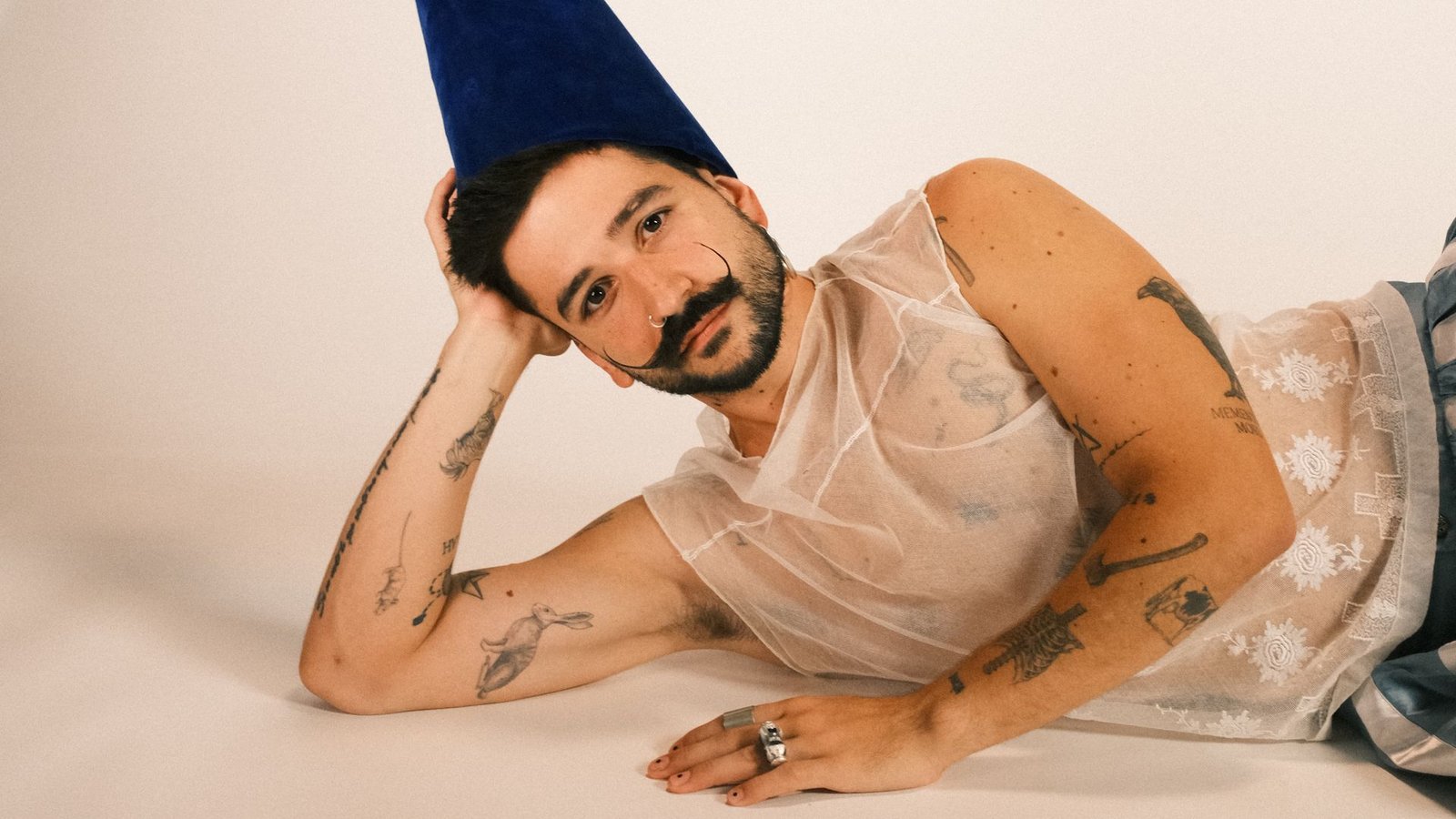
CA7RIEL & Paco Amoroso are on their Free Spirits World Tour until November, but they’ll be hitting the state again in 2027 for one of the biggest milestones of their career. On Thursday, Harry Styles dropped the dates for his Together, Together 2027 tour, and fans quickly noticed the Argentine duo’s name.
CA7RIEL and Paco Amoroso are one of the most unique acts in music right now
Styles will be in six cities on the North American leg of the global stadium tour before heading to Europe. CA7RIEL & Paco Amoroso will be joining them on April 9 and April 10 for their shows in Dallas, Texas, at AT&T Stadium.
The duo met in first grade after sitting next to eachother by chance
The duo, often mistaken for brothers due to their shared surname, consists of Catriel Guerreiro (aka Ca7riel) and Ulises Guerriero (aka Paco Amoroso). They met way back in primary school when they were six.
Catriel said in an interview with Arte that they sat next to each other. “It was first grade. Just one of those f***ing coincidences in life; we ended up sitting next to each other,” he explained.
Since the beginning, people thought they were siblings, and they started trolling together immediately. “The teacher was taking attendance and said, ‘Okay, Ulises Guerriero?’ He raised his hand. ‘Catriel Guerreiro.’ I raised my hand. “Oh, are you brothers?” she asked. And we said yes,” he said.
CA7RIEL & Paco Amoroso performs on stage at Movistar Arena on May 28, 2025 in Madrid, Spain
They sat in music workshops together, one strumming guitar, the other violin, eventually forming a rock band called Astor y las Flores de Marte in 2010. They officially became a duo in 2018, shifting into the experimental-trap/funk/hip-hop/pop world, and are among the first wave of Urban musicians in Argentina.
Now, they’ve practically become blood. “We’re not brothers, but we’re basically brothers,” Catriel told Arte.
They dropped their debut studio album, Baño María, in April 2024. But everything changed when they lit up the international scene with their viral Tiny Desk session, released on October 4, 2024, which has garnered over 55 million views at the time of this publication.
Riding the wave of success, they went on tour, opened for Kendrick Lamar, and have played at the world’s biggest music festivals, venues, and stadiums.
The artists won 5 Latin GRAMMYS
In 2025, they were the stars of the show at the Latin GRAMMYS. Tied with Mexican legend Edgar Barrera for the second most nominations after Bad Bunny, they won 5 awards at the Latin GRAMMY Premiere Ceremony: Best Alternative Song, Best Long Form Music Video, Best Alternative Music Album, Best Short Form Music Video, and Best Pop Song. They also made out.
Summer is quickly coming to an end, but there’s still time to have some fun in the sun, especially since it seems to just be getting hotter. This week, there were some great releases that will have you dancing, thinking about your ex-situationship, and ready to party. Get your playlist ready and let’s have some musical fun.
Jota Rosa, Alvaro Diaz – Detective
Puerto Rican artist and producer Jota Rosa steps in front of the mic for the first time with “DETECTIVE,” a Latin Alternative collaboration with Álvaro Díaz. The smooth and infectious track kicks off a new chapter for Jota Rosa, who turns the confusion of a complicated relationship into a playful investigation of mixed signals, red flags, and unanswered questions. “DETECTIVE” also serves as the first look at his upcoming project and a new side of the artist beyond production.
Ryan Castro – LA SAPIÓ
Colombian superstar Ryan Castro is back in full perreo mode with his new single “La Sapió,” a catchy reggaetón track produced by longtime collaborator SOG. The song taps back into the raw energy of his El Cantante del Ghetto era while teasing what’s ahead on his upcoming album. The release comes as Castro celebrates a 2026 Billboard Latin Music Awards nomination for Latin Rhythm Song of the Year for “La Villa” with Kapo and Gangsta.
Chuwi – Bashiata
Puerto Rican quartet Chuwi is turning everyday burnout into bachata with “Bashiata,” a hauntingly beautiful track about the pressure to work, consume, and constantly keep up. Rather than romanticizing the grind, the song captures the frustration of feeling stuck in the same cycle and the realization that something has to change.
Camilo, Evaluna Montaner – La Medalla
Camilo is entering a new chapter with Para Cuando Sean Mayores, his fifth studio album. The release comes a week after he took the stage, performing “El Árbol” at Premios Juventud. The 13-track project is inspired by fatherhood and a desire to reconnect with his inner child, and explores love, time, and living in the present. It includes one collaboration, “La Medalla,” featuring his wife Evaluna. The album will hit the road October 9 with the Para Cuando Sean Mayores Tour, beginning in Miami before traveling across the U.S., Latin America, and Mexico
Dalex – Calendario
Dalex gets smooth and sexy with “Calendario.” The Puerto Rican artist taps into the nostalgia of a past relationship for a track that will have you in your feelings, trying to stop yourself from texting your ex. “Calendario” follows his EP Cuarto Rojo and continues his signature R&B-driven sound.
You may also like
Continue reading
Lenny Tavárez – SATISFExXxO
After surpassing 1 billion streams, Puerto Rican singer Lenny Tavárez explores eight different chapters of love on his new EP 8, his latest and most personal project. The eight-track release blends his urban sound with salsa, cumbia, and afrobeat, with “Satisfecho” serving as the focus track and marking the first time he brings his real-life love story with wife Natasha Nazario into the project.
ROBI, Arón Piper – De Sueño En Sueño
Puerto Rican pop star ROBI teams up with Spanish actor and singer Aron Piper for “De Sueño En Sueño,” an intimate alternative-pop track about the memories and feelings that linger long after someone is gone. “I love that ‘De Sueño En Sueño’ speaks to something I think a lot of us have experienced: believing you’ve moved on from someone, only to realize they still exist somewhere inside you,” ROBI says. “They may no longer be part of your everyday life, but they show up in a memory, in a song, or when you fall asleep.”
Marcos Villalobos, Martinwhite – Bésame
Get ready to dance with Mexican singer Marcos Villalobos and Chilean artist MartinWhite and their new track “Bésame.” The sultry song will have you instantly moving your hips and blends electronic music, guaracha, trap, and urban sounds. The song follows Villalobos’ *P3* and *P7* bundles and recent single “Mon Mon” as he continues building toward his debut studio album.
Ricky Martin, Grupo Frontera – Tu Recuerdo
Ricky Martin is revisiting some of the songs that defined his decades-long career with ReVivo, a new EP that reimagines his musical legacy for a new generation. The project includes a new version of one of his most beloved songs, “Tu Recuerdo” with Grupo Frontera.
Alex Rose, De La Ghetto – Fueras
Alex Rose is bringing his 2018 Latin R&B roots into the present with “Fueras,” his new collaboration with De La Ghetto. The track arrives alongside LA ROSA, Rose’s six-track EP inspired by the era that helped shape his career, blending melodic R&B with reggaetón and trap. “Fueras” also gets an official music video, adding another visual chapter to the project’s story.
There’s a lot of stuff to stream nowadays. In hopes of helping you watch more good movies and TV, we compile some of the most exciting titles streaming across all platforms in our weekly column, What To Watch.
Ben Shelton and Carlos Alcaraz shaking hands on day ten of the US Open
The US Open is concluding this week, making it the must-watch event of the weekend, featuring unmissable matches. The women’s finals will be played between Aryna Sabalenka and Elena Rybakina. In the case of the men’s, Ben Shelton will play against Francis Tiafoe. The winner will play against the winner of the semifinal between Alexander Zverev and Karen Jachanov.
The Paper (Peacock)
The Paper is back for a second season. The sequel to The Office, following the same documentary crew as they explore a new workplace setting: this time, at the Toledo Truth Teller, a fading newspaper run by volunteer reporters.
The Drop (Hulu)
Set in the ’90s, “The Drop” is a spin-off from “Snowfall,” following two of the original characters as they try to break into the era’s rap scene in Los Angeles.
Supergirl (HBO Max)
The new DC movie is available on HBO Max, serving as the introduction to Kara Zor-El (Milly Alcock), Superman’s cynical cousin. Her adventure takes her across space as she hunts a mercenary and teams up with Lobo and other superheroes.
A Killer Story (HBO Max)
HBO’s new documentary series follows an investigative journalist on a six-year hunt into the case of Dana Chandler, a woman who was charged with murdering her ex-husband and his girlfriend.
Colin From Accounts (Paramount+)
The new season of “Colin From Accounts” is available on Paramount+. The beloved TV show continues the story of two singles in Sydney, Australia, brought together by a car accident and a stray dog.
Practical Magic (HBO Max)
Now that “Practical Magic 2” is out in theaters, it’s the perfect time to catch up with the original, streaming on HBO Max. The movie follows the Owens sisters, played by Sandra Bullock and Nicole Kidman, as the descendants of a long line of witches. They live with a curse that results in every man who falls in love with them meeting an early death.
There are lots of different kinds of computers out there, from palm-sized productivity machines to desktop towers. While we do a lot of stuff on a laptop, there’s no substitute for a full-bore PC with all of the trimmings, and major manufacturers build and release numerous different models every year. If you’re shopping for one, it’s a tough time for prices, but deals are out there if you know where to look—and we do.
At PCMag, we review desktops more thoroughly than anywhere else, and with over 40 years in the business, our system can’t be topped. We evaluate desktops using a transparent system of metrics, factoring in price, features, design, and performance for work and play. We compare capabilities with ever-evolving benchmark tests, as well as run real-world applications and games, to determine the real value of each system and how the deals compare.
Best Home and Office Desktop Deals
These desktop towers prioritize reliability and value over high-octane gaming performance. Major brands like Dell, HP, and Lenovo specialize in these PCs, which usually cost around $1,000 for worthwhile models.
If you have nostalgia for the glory days of wood-paneled computer rooms and the AOL dial-up noise, HP’s OmniDesk towers combine vintage aesthetics with current-gen performance in an affordable package. We have a CES preview of this line, where we noted that the wood-grain front panel conceals surprisingly effective cooling fans and tons of ports. The footprint is also relatively small, but a ton of tech is packed inside, so it’s not lightweight enough to be considered portable. Inside the case, you get a capable Intel Core Ultra 7 processor that easily tackles everyday productivity and entertainment. RAM and storage are light, but the price is right, as Best Buy has a nice discount on this configuration right now.
For a slightly slimmer profile with solid performance, Lenovo’s IdeaCentre tower PCs have always been a good option. We don’t have a full review of this model, but we were impressed by its 2023 iteration, with top features including a compact chassis, good connectivity, and an install refreshingly free of bloatware. This loadout ships with an Intel Core Ultra 7 265 processor, coupled with 16GB of RAM for smooth operation on most major productivity apps. Port selection is another strong point, with seven USB ports and an HDMI 2.1 output for your monitor of choice. While the integrated Intel UHD graphics aren’t cutting-edge, it even works for casual gaming.
Best All-In-One Desktop Deals
All-in-one desktops pack all of the computing components inside the monitor housing for easier setup and less cable management, and what they lose in customization, they make up for in convenience. We have discounts on a few solid Windows all-in-ones for work and play.
We gave an Editors’ Choice award to the latest iteration of Dell’s all-in-one desktop in our review, commenting that it hit all the marks we expect for a general-purpose home desktop with ease, starting with a cutting-edge Intel Core Ultra Series 3 processor and following it up with plenty of RAM and storage for everyday productivity. The 27-inch FHD screen is touch-enabled, bright, and crisp, with surprisingly assertive stereo speakers. Connectivity is also terrific, with Wi-Fi 7 and Bluetooth 6 along with plenty of ports, although we wish more of them were on the front edge of the screen. The included wireless mouse and keyboard are high quality, and it comes with Windows 11 Pro installed.
For a Windows alternative, Lenovo’s IdeaCentre has a bigger screen and more onboard storage than the iMac above. We had a mixed but ultimately positive time reviewing this all-in-one. Our reviewer noted that it was well-constructed with lots of ports on multiple sides, and the included wireless keyboard and mouse were comfortable. The 10-core Intel Core i7-13620H processor is suited for everyday productivity, as well as streaming video and surfing the web. Although the FHD screen isn’t the highest resolution, it’s pleasurable to use for long stretches thanks to an antiglare coating and hardware-based blue light reduction. Snagging this one for under $900 is a fantastic bargain.
Best Mini PC Deals
Squeezed for space? A mini PC might be the answer. They pack tons of power into cases around the size of a stack of CDs, and are surprisingly capable. We have a Dell compact that’s designed for businesses, as well as a creative powerhouse from Kamrui.
More mainstream companies also make compact PCs, and this Dell OptiPlex is a solid choice for most productivity-oriented applications. It tackles spreadsheets and presentations with ease, and a plethora of ports let you connect up to four individual monitors in up to 4K resolution (not all at once, of course). It comes with Windows 11 Pro installed and virtually no manufacturer bloatware, so you can have it up and running in minutes. The 14th-generation Intel i3 processor isn’t the most impressive chip on the market, but it’s capable enough for most everyday office use.
Chinese company Kamrui produces a wide range of mini desktop loadouts, and they’re impressive from a value proposition, with high-quality components and sturdy design. Amazon has a 19% price cut on the Hyper H2 Mini, which is targeted toward content creators with 32GB of RAM and a full 1TB SSD, along with multi-monitor 4K support thanks to HDMI, USB-C, and DisplayPort outputs. The cooling system is up to the task as well, with centrifugal fans, twin copper heat pipes, and two fin-stack cooling modules. See where it clocks in on our rundown of the best Windows mini PCs.
Finally, here’s a nicely-priced MSI mini that really gets the job done. You can read our extensive review of the Cubi NUC to see how it performed in our benchmarking tests, but the short version is that it’s got a speedy 14-core processor with integrated neural processing unit for Copilot AI, and solid design to work in tight spaces with peak efficiency. Port selection is diverse, with plenty of USB connections on the front and Thunderbolt, HDMI, and a pair of 2.5G Ethernet ports on the back. It even has a corded power button so you can mount it on a wall or in a hard-to-reach spot and still turn it on and off easily. For the money, this is one of the better mini PCs on the market.
Gaming desktops need high-capability components to be worthwhile, including dedicated GPUs, lots of onboard RAM, and powerful fans to keep it all cool. We’ve got a few good gaming tower offers right now, notably a pair of battlestations from iBuyPower and HP.
HP might not be the first name you think of when it comes to gaming hardware, but its Omen line consistently tests well in the midrange space, with cost-effective builds perfect for 1440p play. We gave an Editors’ Choice award to the Omen 35L desktop in our review, noting that it had an ultra-efficient cooling system that kept it running silently even under heavy load, and the easy-access case and industry-standard part selection made it a great pick for upgrading and customizing. The Blackwell-series GeForce 5060 is tuned for medium-resolution performance at fast frame rates, and a full 1TB SSD is beefy enough for your save files. It looks cool, too, with a ceramic white metal case and tempered glass side panels.
For an AMD-powered gaming machine that pushes the envelope at a reasonable price, this prebuilt from iBuyPower is worth a look, especially with a $300 price drop from Walmart. We gave the RX 9070XT graphics card an Editors’ Choice award in our review, noting that it combined vastly improved ray-tracing performance with great cooling and a reasonable price, competing very capably with Nvidia’s current-generation cards. The rest of the silicon loadout is solid for the price, including a speedy Ryzen 9 processor and 32GB of DDR5 RAM for seamless multitasking and content creation. The liquid CPU cooling system and RGB fans keep the whole enterprise stable under pressure.
Walmart is really bringing the smoke this week with gaming desktop deals, and snagging a potent performer like MSI’s Codex Z2 with the new RTX 5070 Ti at a $500 price drop is worth the final spot on our list. Running off of the Ryzen 7 8700F processor, it’s absolutely fast enough to handle all of today’s latest games, and the GPU and RAM combination will give you fast framerates at 1440p and even stretch into 4K for aspirational resolution hounds looking to overclock a bit. The chassis is a cool piece of tech as well, with attractive RGB lighting and well-designed airflow, although the fans can run a bit loud.
Your money goes further with desktop PCs and their components than with laptops. You can find complete mini PCs for less than $400 and perfectly serviceable small towers for $500 to $600. Gaming desktops with dedicated graphics cards start at around $700. You can also find all-in-one (AIO) desktops, with the display and all of the computing components built into a single device, starting at around $600. The sky’s the limit once you get into high-end gaming PCs and business-workstation power desktops, but the prices above are in the right range for most mainstream buyers.
How Much Does a Good Budget PC Cost?
Expect to pay at least $500 for a basic, competent small tower for day-in/day-out productivity and web work. You’ll find plenty of models for less than $500, especially in the mini PC class, but you should insist on at least 8GB of system memory for any PC, with 16GB required at minimum for AI tasks. For anything beyond basic productivity work, look for an Intel Core i5 (or Ultra 5) or AMD Ryzen 5 processor at least.
Which Brands Offer the Best Desktop Discounts?
Some brands post deals and discounts on their products more often than others, particularly Acer. Dell, HP, and Lenovo also do this, but you should always double-check exactly what you’re getting and whether you can buy it for less at other retailers. Brands like Lenovo adjust their prices frequently, making assessing the raw value of deals you see there difficult. Notably, Apple has improved its image as a value-focused brand, permanently dropping prices on some of its laptops and often hosting limited deals on shopping holidays.
What Is the Best Desktop Under $800?
Our experts have named the Acer Aspire TC-1775-UR11 their top budget pick for, “packing a 14th Gen Core i7 processor, Wi-Fi 6E, USB-C, and a compact design that tucks under your desk.” We’ve seen this model go for as low as $557 on Amazon. For more budget options, check out our top picks for the best cheap desktop PCs.
What Is the Best Gaming Desktop Under $1,000?
Finding a really good model under a grand is a big ask. Your best bet is going to be the Asus TUF Gaming T500, which pairs a mobile processor with a discrete graphics card inside a small-footprint desktop. Our experts said, “This cute, efficient rig excels for 1080p gaming, but its CPU, motherboard, power supply, and cooling scheme limit its future upgradability.” Right now it’s going for around $959.99 at Best Buy.
About Our Experts
K. Thor Jensen
Contributing Writer
Experience
K. Thor Jensen is a writer and cartoonist living in the Pacific Northwest. He has contributed to dozens of prestigious outlets, including PCMag, Tested, Clickhole, and Newsweek. His second graphic novel, Cloud Stories, was released in 2017.
After starting my career at PCMag as an intern more than a decade ago, I’m back as one of its editors, focused on managing laptops, desktops, and components coverage. With 15 years of experience, I have been on staff and published in technology review publications, including PCMag (of course!), Laptop Magazine, Tom’s Guide, TechRadar, and IGN. Along the way, I’ve tested and reviewed hundreds of laptops and helped develop testing protocols. I have expertise in testing all forms of laptops and desktops using the latest tools. I’m also well-versed in video game hardware and software coverage.
When she isn’t perusing online stores for deals, Jade enjoys playing video games (mostly JRPGs and roguelikes), sorting board game components neatly into containers, and building Gundam models. Her love of electronics has persisted through her youth and has resulted in a collection of gaming peripherals including keyboards and controllers, scale figures, and art work. Jade lives in blissful harmony with her wife, cat, and two chinchillas—as well as a host of houseplants.
A years-in-the-making initiative by the Canadian government and industry financiers has led to a historic close-up for Indigenous filmmakers at this year’s Toronto Film Festival.
“What we’re seeing is continued momentum that is real and is only increasing in the diversity of filmmaking and the success of (indigenous) filmmakers themselves,” Kerri Swanson, CEO of the Indigenous Film Office (ISO), tells The Hollywood Reporter after her organization helped finance eight First Nations filmmakers with movies premiering at TIFF this year.
Those include Cody Lightning’s hockey drama Smudge The Blades, Marie Clements’ Los Angeles-set drama How We Stand, Alexandra Lazarowich’s Turtle Island RAP and Nyla Innuksuk’s In the Heart of the South.
Federal Canadian government financing has been key to supporting ongoing efforts to fund First Nations filmmakers, including higher film budgets than in decades past, and to foster reconciliation between Indigenous and non-Indigenous Canadians after historical racism and injustices. “It’s about indigenous peoples telling your stories in your voices, and often in your languages, and that’s indispensable to showing the beauty of Indigenous culture,” Canadian minister of identity and culture Marc Miller told a TIFF event on Saturday morning hosted by the ISO.
Gail Maurice, who was at TIFF last year with the world premiere of her second feature, Bloodlines, about a Métis same-sex romance led by actor Dana Solomon, insists ISO support has been key to launching and sustaining her as a director, including for her debut feature Rosie. “The ISO has backed me up right from the beginning of my career. Without them, I don’t think I would have made my first feature film,” Maurice tells THR.
She adds that legends-led storytelling by indigenous filmmakers requires Canadian industry funders and distributors to be aware of different First Nations cultural backgrounds and communities from across Canada, coast to coast. “We have our own beliefs, and much of the world bunches us up into what they remember from Westerns. We’re so much more than that and we’re seeing that representation in films at TIFF,” Maurice added.
Annual funding for indigenous filmmakers in Canada offers support on a number of fronts, from script development to support at major film festivals like Toronto, Cannes and Berlin. ISO’s Swanson points to increased collaborations with U.S. partners, such as with Reservation Dogs, the coming of age series created by Taika Waititi and Sterlin Harjo and which featured an all-Indigenous lead cast and creative team filled with Canadians.
“They have shared relations, a shared history and the (U.S.-Canadian) border is arbitrary for the indigenous peoples of Turtle Island,” Swanson argues.“There’s a natural desire to work together and the cross-border collaboration is something that the ISO has been really advocating for since the beginning and for a flexibility to allow us to work together across the border, not just in Canada.”
The Toronto Film Festival continues through to Sept. 20.
Amid a busy fall festival season, all eyes were back on the Lido Saturday night as Woman Unknown won the Venice Film Festival‘s coveted Golden Lion for best film.
The honors were handed out by the international jury, headed up by U.S. filmmaker Maggie Gyllenhaal, as stars dressed to the nines one last time for this year’s final, glitzy Lido red carpet. Among the other big winners were DAU director Ilya Khrzhanovsky, who took home the Silver Lion for best director; Lee Chang-dong’s Possible Love, which won the Silver Lion Grand Jury Prize; and NAZA, which received the Special Jury Prize.
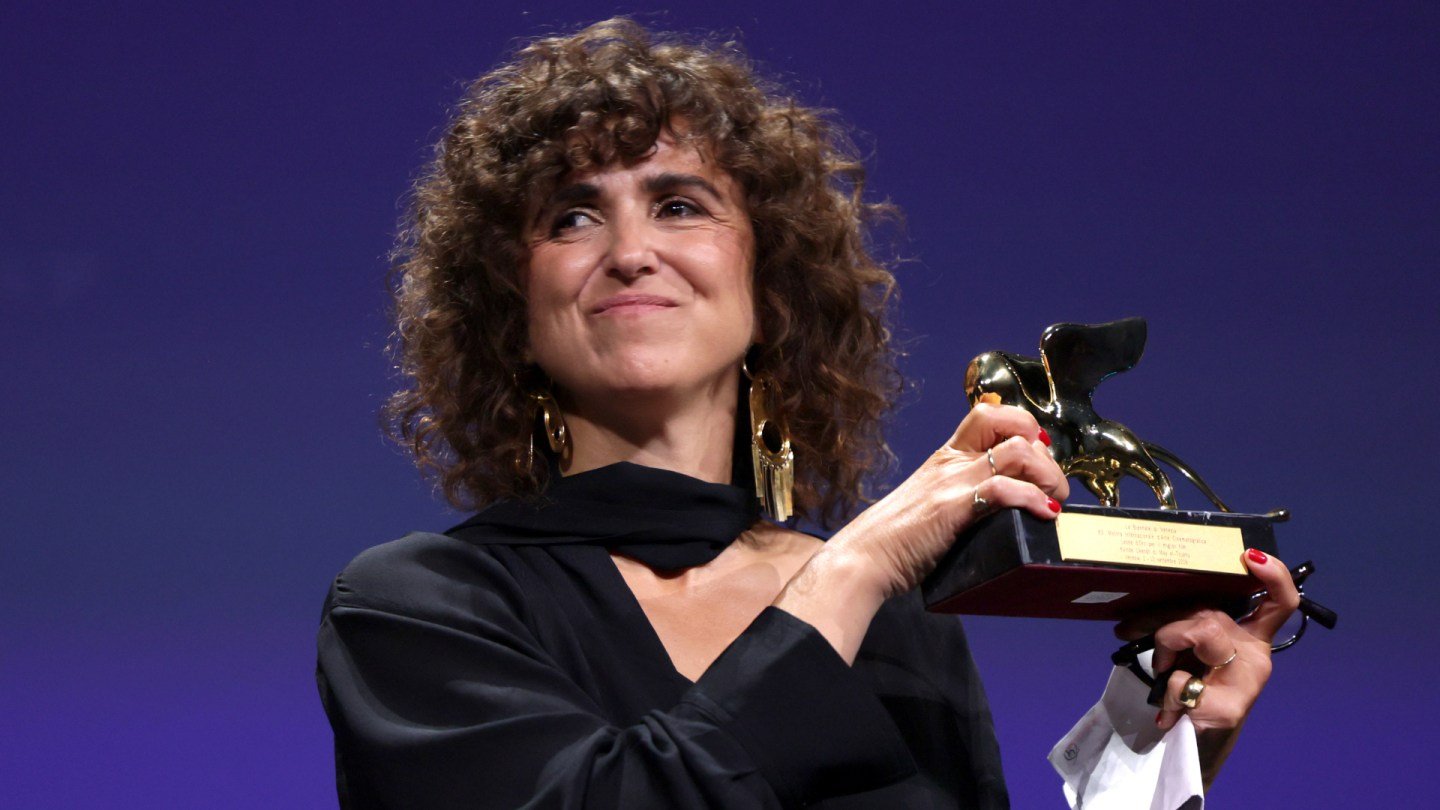
May el-Toukhy’s stylish depiction of post-World War II Denmark came out the most triumphant of all. The film focuses on a maid (Mathilde Arcel) whose past during the Nazi occupation threatens to unravel her future. El-Toukhy, just one of two female filmmakers in competition this year, told THR in a sit-down pre-festival interview: “I’ve worked 16 hours a day for more than a year. I’ve spent all my savings. I’ve used every part of me to make this film and all the resources, all the muscle power I have.”
The Danish filmmaker continued onstage: “Making films is very collaborative, which requires sacrifices, and so thank you all for helping me tell the story. For me personally, Woman Unknown talks about the woman’s body as a battlefield. At the same time, the film tells the story of invisible women who are not and who do not have a voice … Thank you to the jury for this wonderful honor,” she added. “Thank you especially to you, Maggie, because you use your voice [to talk about] the lack of equal opportunities for the directors in the [competition].
Gyllenhaal told Venice at the jury’s early presser about the lack of women in competition: “There’s a systemic problem […] It’s much harder for women to get their films financed. Also, could it be possible that the things that women, having had a different experience of being alive in the world, want to make movies about are not always deemed high art?”
Woman Unknown has won the Golden Lion in Venice
Venice Film Festival
Elsewhere during Saturday’s awards, acclaimed Korean auteur Lee Chang-dong won the Silver Lion, Grand Jury Prize for social drama Possible Love. Following a struggling working-class family and the well-to-do documentarian who picks them as a subject for her new film, his film received some of the best reviews out of Venice, with most critics, like THR‘s David Rooney, singling out the film’s “superlative ensemble” including veteran Korean actors Jeon Do-yeon and Sul Kyung-gu alongside rising stars Zo In-sung and Cho Yeo-jeong.
Netflix and producer Anonymous Content will be confident of its award-season chances for the feature, which has been selected by South Korea as its submission for the Oscars’ best international feature category. “Without the patience and faith of so many people, this film would not have been possible,” Lee said while collecting the award. (Check out an exclusive first look at the film, released by THR ahead of Possible Love‘s Venice debut.) Possible Love also won the international film critics’ Fipresci award for best film in Venice.
Ilya Khrzhanovskyreceived some overdue flowers for DAU. The Russian filmmaker built a sealed world in Ukraine, populated it with thousands of participants and filmed them for three years. Two decades, 14 films and innumerable scandals later, his original epic finally arrived in Venice — and he took THR inside it all earlier this week.
NAZA, a documentary from Israeli directors Yuval Abraham and Rachel Szor, and a late addition to the Venice lineup, won the Special Jury Prize after a record-breaking 25-minute standing ovation at its Thursday night premiere. The Venice sensation features testimony from 24 Israeli military officers outlining the systems and protocols they allege Israel uses to target and kill civilians in Gaza. Its title, NAZA, comes from an acronym the Israeli military uses as a shorthand for civilian casualties.
“It’s honestly not very easy to stand here,” began Abraham as he and Szor accepted the trophy to raucous applause. “I’m thinking of all the people — the Israeli politicians, the journalists back home — who are now attacking this film, denying it, without even seeing it. And so much is being done to not look at reality.”
“The reality is that since this festival started, just over these 10 days, Israel killed six Palestinian children in Gaza at least, a three-year-old girl at a school that was bombed, a seven-year-old with her father in a car, two sisters at home sleeping. The Israeli intelligence officers we spoke with talked to us about how this mass killing is systemic. Not my accident but by design,” he continued.
“Actions and murder that are based on total dehumanization of the Palestinians. I want to be very clear: This truth has been documented and is known from the very first day, thanks to Palestinian journalists, [and] more than 200 [journalists] have been killed in Gaza by the Israelis; their voices were silenced and denied,” he said. “We believe that the denial of a crime is what helps it persist, and that’s why it’s important for us that the Israelis see this film … [and] especially here in Italy because your government and the German government are blocking pressure on Israel that can end this. That Americans watch it because that country is funding much of the killing,” Abraham added, before giving thanks to the doc’s producers.
Riding the wave of immense Oscar buzz, John Malkovich claimed the prestigious Volpi Cup for best actor for his performance in Martin McDonagh’s Wild Horse Nine. The pitch-black buddy comedy, starring Malkovich and Sam Rockwell as CIA operatives in Chile in the 1960s, was arguably the biggest crowd-pleaser in Venice this year. The movie is going out worldwide via Searchlight Pictures and boasts a great outing from Malkovich, who gives a sharp and surprisingly touching performance as a veteran CIA agent facing a self-reckoning.
John Malkovich wins best actor in Venice for Wild Horse Nine.
Diego Araya Corvalán/Courtesy of Searchlight Pictures
Malkovich wasn’t in attendance to accept the prize in person. He told the crowd via a pre-recorded video: “I am really glad to have been chosen for this award which has been given to many actors. […] Thanks to Martin McDonagh for having written an incredible screenplay and for his exceptional direction and for having given me, in fact, the opportunity to play this fantastic role. Thanks to all my colleagues, especially Sam Rockwell,” he added. “I’m sorry, unfortunately, I can’t be there with you. I would have loved to be there, but I am currently filming another film.”
Danish star Arcel picked up the Volpi Cup for best actress for her role in el-Toukhy’s Woman Unknown. “This is my first lead role and it’s the first time I’ve participated in a film festival, and so I’m really extremely honored, and I’m really lucky to be here,” said an emotional Arcel. “I am truly fortunate to be in Venice with you, people who are really the best filmmakers, actors and actresses in the world, whom I’ve watched all my life.”
Meanwhile, A Good Little Soldier from Stéphane Brizé, Coralie Amédéo and Olivier Gorce took home the award for best screenplay.
The big winner from the Horizons (Orizzonti) section was Ann Sirot and Raphaël Balboni’s Diane in the Loop, a Belgian feature about a woman who sets out to avenge her mother when she finds out she was raped three years before Diane’s birth. Riccardo Scamarcio won Horizons’ best actor award for Children of the Monkey; Laleh Marzban became emotional upon receiving the best actress prize for Falling House, and Jacqueline Lentzou nabbed best director for A Day in the Life of Jo: Chapter Phaedra, a film inspired by the real-life killing of a teenager by police in Athens in 2008.
See below the full list of winners from the 83rd Venice International Film Festival:
Golden Lion for Best Film
Woman Unknown, May el-Toukhy
Silver Lion, Grand Jury Prize
Possible Love, Lee Chang-dong
Silver Lion for Best Director
Ilya Khrzhanovsky, DAU
Special Jury Prize
NAZA, Yuval Abraham, Rachel Szor
Award for Best Screenplay
A Good Little Soldier, Stéphane Brizé, Coralie Amédéo and Olivier Gorce
Volpi Cup for Best Actor
John Malkovich, Wild Horse Nine
Volpi Cup for Best Actress
Mathilde Arcel, Woman Unknown
Marcello Mastroianni Award for Best New Young Actor or Actress
Malou Khebizi, A Place to Heal
Luigi De Laurentis Award for Debut Film
House of the Wind, Auguste Bernard Kouemo Yanghu
Armani Beauty Audience Award
I Matter, Alina Serban
Horizons, Best Film
Diane in the Loop, Ann Sirot and Raphaël Balboni
Horizons, Best Director
Jacqueline Lentzou, A Day in the Life of Jo: Chapter Phaedra
Horizons, Special Jury Prize
House of the Wind, Auguste Bernard Kouemo Yanghu
Horizons, Best Actor
Riccardo Scamarcio, Children of the Monkey
Horizons, Best Actress
Laleh Marzban, Falling House
Horizons, Best Screenplay
Children of the Monkey, Tommaso Landucci
Best Short Film
A Few Moments of Happiness, Shaden Safieddine Tazi
Venice Classics, Best Restored Film
Long Night of 1943, Florestano Vancini
Venice Immersive, Grand Prize
The Pigeon Ring, Shixin Tao and Yuqi Zhang
Venice Immersive, Special Jury Prize
Out of the Ashes, Rory Mitchell and Nonny de la Peña
Venice Immersive, Achievement Prize
Empire at Sea, Peter Flaherty
Golden Lion for Lifetime Achievement (previously announced)
George Clooney, Ellen Burstyn
This story was first published on Sept. 12 at 9:56 a.m.
The UK is just behind China and the US when it comes to the level of funding it is pouring into AI development. Following Sen. Bernie Sanders introducing a bill to preemptively stop the creation of artificial superintelligence (ASI), lawmakers in the UK are now making similar proposals.
Over 70 British lawmakers have written to Prime Minister Andy Burnham calling on him to back a ban on the creation of artificial superintelligence (ASI). This is a theoretical AI system that would significantly outperform all humans on essentially all cognitive tasks.
Alex Sobel MP introduced an Artificial Superintelligence Security Bill in collaboration with ControlAI in the British parliament last week. The bill suggests a basket of measures, including restricting the supply chain of materials such as semiconductors. Meanwhile, Lord Tim Clement-Jones has separately proposed an amendment to the UK’s upcoming Cyber Security and Resilience Bill, currently being voted on by lawmakers, which would create a ‘kill switch’ that could be activated in an emergency to shut down a rogue AI. For example, this could mean shutting down the UK’s data centres.
The letter, organized by lobbying group ControlAI, comes after former Anthropic employees went viral earlier this week for alleging the company was “gambling” with human lives by “racing straight to self-improving superintelligence.”
The letter calls on the UK to lead “an international agreement prohibiting the development of superintelligent AI, while preserving strategic AI ambitions,” citing recent incidents of “rogue AI systems taking unsanctioned action on the internet.” This may be a reference to July’s Hugging Face attack, where 700 OpenAI agents breached the security of the open source AI platform, making 17,000 separate actions according to the forensic logs.
“There is no question that AI is the crucial technology of the 21st century, vital to military and scientific applications,” wrote the letter. “Superintelligent AI, however, is different.
Recommended by Our Editors
“These systems would be so autonomous and capable that they would replace and outcompete humans across domains.”
Critics have already pointed out issues with the recent proposals. Unlike the US, Britain has no major frontier AI lab of its own, causing some UK think tanks to question the UK’s ability to regulate AI development. The UK government’s Cabinet Office told the BBC that the UK “cannot simply turn AI off,” in reference to demands for a kill switch, adding that “blocking access to models in the UK would not prevent them being developed or misused elsewhere.”
About Our Expert
Experience
I’m a reporter covering weekend news. Before joining PCMag in 2024, I picked up bylines in BBC News, The Guardian, The Times of London, The Daily Beast, Vice, Slate, Fast Company, The Evening Standard, The i, TechRadar, and Decrypt Media.
I’ve been a PC gamer since you had to install games from multiple CD-ROMs by hand. As a reporter, I’m passionate about the intersection of tech and human lives. I’ve covered everything from crypto scandals to the art world, as well as conspiracy theories, UK politics, and Russia and foreign affairs.