In Super Macklemore 64, players are chased by a giant Ed Sheeran, dodge tiny billionaire Robert Krafts and summon musicians to chant “Free Palestine”. Creator Jonathan Mann says it highlights the “absurdity” of Macklemore being dropped from Sheeran’s concerts and Israel’s genocide in Gaza.
Images authentically showed U.S. President Donald Trump viewing a large printout about the demolition of the John F. Kennedy Center for the Performing Arts.
Rating:
Context
It’s unclear whether the Trump administration would follow through on any plans to demolish the Kennedy Center. Snopes reached out to the White House for comment and awaits a reply.
In September 2026, after the John F. Kennedy Center for the Performing Arts announced it would close its doors due to financial difficulties and the need for renovations, an image circulated online that social media users claimed (archived) showed U.S. President Donald Trump viewing a large, illustrated printout about the demolition of the Washington, D.C. landmark.
For example, the Instagram page Occupy Democrats posted images of Trump and the printout, writing, “BREAKING: A sharp-eyed photographer unearths Trump’s plan to DESTROY the Kennedy Center – catching him staring at a placard that says ‘Kennedy Center Demolished’ through the window of his plane!”
Several social media posts correctly credited images of Trump looking at the printout to the Agence France-Presse photographer Brendan Smialowski. One photo, published by Getty Images on Sept. 16, showed Trump viewing a printout with lettering at the top that read “dy Center DEMOLISH.” Another image showed the start of the printout read “Kennedy.” Getty Images and AFP are both reputable photo repositories and trusted sources.
As such, we rate claims that Trump viewed a printout about the demolition of the Kennedy Center true.
We contacted the White House Press Office to ask what the printout showed and whether Trump planned to demolish the Kennedy Center and await a reply.
Photos circulated amid tensions surrounding Kennedy Center name
Getty Images wrote that Smialowski took the photos of Trump looking at the “Kennedy Center” printout through a plane window after the president landed at Joint Base Andrews, Maryland, on Sept. 16.
Earlier the same day, C-SPAN aired video footage of Trump telling reporters in North Carolina that his administration should be recognized for its work fixing and subsidizing the Kennedy Center, which he claimed had lost “hundreds of millions of dollars” before he stepped in to help.
The president added (time code 06:01): “I think that the Trump administration should certainly have recognition because frankly if we don’t do that it’s going to close, it’ll end up being ripped down.” He was likely referring to fundraising for the center’s renovation work.
The day before, on Sept. 15, a federal judge ordered that the Kennedy Center Board of Trustees, which Trump heads, could not “install memorials for President Trump or anyone or anything else at the Kennedy Center without Congress’s blessing.” Judge Christopher R. Cooper wrote the order as part of a lawsuit brought by U.S. Rep. Joyce Beatty, an Ohio Democrat, who sued Trump in Dec. 2025 to stop the renaming of the Kennedy Center after Trump.
That same day, Trump announced on Truth Social that the Kennedy Center’s board had voted to close the building to carry out “Renovation and Reconstruction” work. However, he wrote, that work would not be carried out unless and until courts allowed “the Board’s approved name.”
The board voted in December 2025 to rename the Kennedy Center to the “Donald J. Trump and John F. Kennedy Memorial Center for the Performing Arts” or “Trump Kennedy Center.” Cooper blocked this change in May 2026 and ordered the center to remove Trump’s name from public view. The center appeared to comply with this order in June 2026, erecting scaffolding to cover Trump’s name on the building facade.
Court ordered 30-day notice period for demolition work
It was unclear at the time of this writing whether the “Kennedy Center DEMOLISH” printout Trump viewed on Sept. 16 was related to his remarks about the center being “ripped down” without “recognition” for his administration, or to what degree it represented the administration’s plans for the center.
According to court documents filed in a separate lawsuit against the Kennedy Center Board of Trustees that sought to stop “demolition, new construction, major reconstruction, major renovation, or major aesthetic transformation” of the Kennedy Center without congressional approval, lawyers for the board said the Center’s position in August 2026 was that “the building will not be demolished and that no new structure will be constructed.”
Lawyers for the Kennedy Center’s Board of Trustees pledged to tell plaintiffs and the court in that case if the center’s position changed.
Following the publication of Smialowski’s images, Cooper ordered defendants in the Beatty case, which included Trump and the Kennedy Center Board of Trustees, to give “more than 30 days notice” if the center changed its position that the building would not be demolished or have a new structure added.
Neither Trump nor the Kennedy Center Board of Trustees, who were defendants in both lawsuits, had given such notice of by the time of this writing.
For further reading, Snopes previously investigated whether a forklift repeatedly hit the Kennedy Center pillars on Sept. 16, 2026, and whether the Trump administration cut down the center’s weeping willows.
‘Board of Trustees’. The Kennedy Center, https://www.kennedy-center.org/about-us/leadership/trustees/.
‘Complaint – #1 in DC PRESERVATION LEAGUE v. BOARD OF TRUSTEES OF THE JOHN F. KENNEDY CENTER FOR THE PERFORMING ARTS (D.D.C., 1:26-Cv-00981) – CourtListener.Com’. CourtListener, https://www.courtlistener.com/docket/72528661/1/dc-preservation-league-v-board-of-trustees-of-the-john-f-kennedy-center/. Accessed 18 Sept. 2026.
‘Meet and Confer Statement – #62 in DC PRESERVATION LEAGUE v. BOARD OF TRUSTEES OF THE JOHN F. KENNEDY CENTER FOR THE PERFORMING ARTS (D.D.C., 1:26-Cv-00981) – CourtListener.Com’. CourtListener, https://www.courtlistener.com/docket/72528661/62/dc-preservation-league-v-board-of-trustees-of-the-john-f-kennedy-center/. Accessed 18 Sept. 2026.
‘Order on Motion for Injunction – #77 in BEATTY v. TRUMP (D.D.C., 1:25-Cv-04480) – CourtListener.Com’. CourtListener, https://www.courtlistener.com/docket/72069932/77/beatty-v-trump/. Accessed 18 Sept. 2026.
‘Order on Motion for Partial Summary Judgment – #49 in BEATTY v. TRUMP (D.D.C., 1:25-Cv-04480) – CourtListener.Com’. CourtListener, https://www.courtlistener.com/docket/72069932/49/beatty-v-trump/. Accessed 18 Sept. 2026.
‘President Donald Trump Is Seen Aboard Air Force One Checking a…’ Getty Images, 17 Sept. 2026, https://www.gettyimages.co.uk/detail/news-photo/president-donald-trump-is-seen-aboard-air-force-one-news-photo/2295121247.
‘President Trump Speaks to Reporters Before Rally in North Carolina’. C-SPAN, 16 Sept. 2026, https://www.c-span.org/program/white-house-event/president-trump-speaks-to-reporters-before-rally-in-north-carolina/685306.
Semones, Evan. ‘Kennedy Center Closes amid Financial Crisis and Trump Name Dispute’. Al Jazeera, https://www.aljazeera.com/news/2026/9/15/kennedy-center-closes-amid-financial-crisis-and-trump-name-dispute. Accessed 18 Sept. 2026.
‘US President Donald Trump Is Seen Aboard Air Force One Checking a…’ Getty Images, 17 Sept. 2026, https://www.gettyimages.co.uk/detail/news-photo/president-donald-trump-is-seen-aboard-air-force-one-news-photo/2295088970.
A proper gaming headset can go a long way. Not only will it keep you immersed in your games, but can provide you with vital audio cues that can give you the edge against your opponent in tournaments. The field is rather competitive, so having solid audio is the least a gaming headset can have, but when paired with a good deal, you’ll definitely want to hop on. The Logitech Astro A50 gaming headset is on sale for $239, which is down from its original $299.99 price tag. That’s $61 in savings!
As of September 18, the Logitech Astro A50 gaming headset is on sale for 20% off. According to CamelCamelCamel, this is the lowest price it’s been at for several months. So if you missed out the first time, you don’t want to miss it again.
This Astro A50 headset connects with all major platforms, including PlayStation, PC, Nintendo Switch/Switch 2, and Xbox. This way, you won’t have to compromise on where you play your games! You can even tap between three of them at once via the on-ear control for easy convenience. It has 40mm diameter with live edge technology, which helps separate location and timing so that you can pinpoint where your opponents are in a game, allowing you to cinch a win. On the communications side, it has a 48 kHz boom mic that makes your voice clear and booming so that your teammates can hear you.
When playing single-player games, the headset uses seven-core DSP, creating powerful audio that transfers between your systems so you don’t lose that immersive headspace. You can also tailor your listening experience through the Advanced G Hub and G App Control, with settings like EQ, noise-gate, and stream output mixing. The battery lasts up to 24 hours, and there’s a magnetic base included so that the headset is always powered up and ready to go.
Recommended by Our Editors
Our expert Will Greenwald awarded it an “Excellent” rating. In our in-depth review, he said, “The latest Astro Gaming A50 wireless gaming headset feels and sounds excellent, but it’s a pricey option in an increasingly competitive field.”
Actor Christian Bale helped build 12 homes in a $22 million village in Palmdale, California, that aims to keep siblings in the foster-care system together.
Rating:
In September 2026, a heartwarming claim (archived) circulated online that “Batman” actor Christian Bale helped build 12 homes in a $22 million village in Palmdale, California, that aimed to keep siblings in the foster care system together.
For example, one Threads post about the alleged project was captioned:
I absolutely LOVE this. Christian Bale spent roughly 17 years fighting to make this happen. This week, his foster-care village opened in Palmdale, California: 12 homes built specifically to help keep siblings together when they enter foster care.
The claim was true. Bale and Together California, a charity founded by the actor; his wife, Sibi; and UCLA Dr. Eric Esrailian, broke ground on the project in 2024, and Bale cut the ribbon on the homes on Sept. 9, 2026.According to Together California, the village, located near Palmdale, features 12 homes and a community center. It was expected to start welcoming children from October 2026. The project was estimated to cost $22 million at the time of the groundbreaking, according to internationalmedia.
Bale told (archived) The Associated Press at the ribbon-cutting that the project had been underway for almost 20 years and that he was originally inspired to take part by his daughter. Bale said:
Just looking at my little girl, she was 3 at the time, she’s 21 now, took that long to get this together, but to know, imagine if she got taken and then on top of that getting split from siblings, know, absolutely shameful.
CBS News reported in 2025 that “trained foster parents” would take care of the children living in the village.
According to AC Martin, the architects on the project, Together California’s “Village for Brothers and Sisters” would feature 12 townhouse units for children in foster care, two studio units for young adults transitioning out of the foster system, a 7,000-square-foot community building and outdoor space.
Sources
Actor Christian Bale Opens Together California, Foster Care Village in Palmdale Aimed at Keeping Siblings Together | Abc7.Com. https://abc7.com/amp/post/actor-christian-bale-opens-together-california-foster-care-village-palmdale-aimed-keeping-siblings/19816433/. Accessed 15 Sept. 2026.
DALTON, ANDREW. “Christian Bale Breaks Ground on Foster Homes He’s Fought for 16 Years to See Built.” AP News, 7 Feb. 2024, https://apnews.com/article/christian-bale-foster-homes-palmdale-dark-knight-0f7e046c7bd1c636efd78d44947fc1a6.
Gardner, Chris. “Christian Bale Breaks Ground on 16-Year Passion Project: 12 New Homes for Foster Children.” The Hollywood Reporter, 8 Feb. 2024, https://www.hollywoodreporter.com/lifestyle/lifestyle-news/christian-bale-foster-children-village-together-california-1235819256/.
“Our Village.” Together California, https://togethercalifornia.org/our-village/. Accessed 19 June 2025.
McLean, Tessa. “After 17 Years, Christian Bale’s California Housing Village Is Close to Opening.” SFGATE, 29 Jul. 2025, https://www.sfgate.com/california/article/christian-bale-building-housing-complex-california-20789971.php.
Shoard, Catherine. “Christian Bale Unveils Plans to Build 12 Foster Homes in California.” The Guardian, 8 Feb. 2024. The Guardian, https://www.theguardian.com/film/2024/feb/08/christian-bale-to-build-12-foster-homes-in-california.
Smith, Tracy, and Jennifer Earl. Christian Bale’s on a Mission to Keep Foster Siblings Together. For Him, It’s the Role of a Lifetime. – CBS News. 18 May 2025, https://www.cbsnews.com/news/christian-bales-on-a-mission-to-keep-foster-siblings-together-for-him-its-the-role-of-a-lifetime/.
Together California. “Together California Had the Incredible Opportunity to Sit down with CBS Sunday Morning and Speak about the Mission That Drives Us Every Day. .” Facebook, 7 June 2025, https://www.facebook.com/togetherca/posts/pfbid02fFJzkhfyKMsDxxF2SGJThzf9T7UWNyqjSFCZE2XvwNHue2d1G63hkZyg6HVH6c2Cl.
Together California: A Village for Brothers & Sisters. https://www.acmartin.com/portfolio/together-california-village-brothers-sisters. Accessed 19 June 2025.
Williams, Martha. “Christian Bale Breaks Ground on 12 Foster Homes in California.” Mail Online, 9 Feb. 2024, https://www.dailymail.co.uk/news/article-13066491/bruce-wayne-christian-bale-foster-homes.html.
U.S. President Donald Trump’s administration is considering a deal that would give a piece of Yosemite National Park to a private developer.
Rating:
A rumor is circulating that U.S. President Donald Trump’s administration is pushing a deal that would give a piece of Yosemite National Park to a private developer. The claim stemmed from an August 2026 investigation by The Washington Sun (formerly NOTUS), which reported: “If the deal goes through, the Trump administration would be breaking with 150 years of American precedent at the birthplace of the national park system.”
After the Sun released its story, other reputable news outlets such as The Washington Post and New York Times published their own reports. According to those articles, a Nevada-based real estate developer that currently owns property adjacent to Yosemite wants the land — a quarter-mile strip — to build a new road connecting its property to the national park.
It’s true that, under Trump, the National Park Service is working with that developer, Kingsbarn Realty Capital, on an agreement that would give the company a part of Yosemite in exchange for an unidentified piece of land in California, based on Snopes’ review of federal records, court documents and statements from parties involved.
What’s less clear is Trump officials’ level of influence on the project. The Sun based its reporting in part on interviews with anonymous sources who are “directly familiar with discussions” about the deal. At least one claimed leaders within Trump’s Interior Department were putting unusual pressure on the park service to make the land exchange happen. But due to their anonymity, Snopes was unable to track down those people to independently verify their accusations.
A spokesperson for the park system said claims that those conversations were happening in “secret” or under “political pressure” were untrue.
Kingsbarn Realty Capital bought its land next to Yosemite in 2024, property records show. That land’s previous owner pushed a similar proposal to get the piece of Yosemite years earlier, though the park service and courts rejected it.
Under U.S. President Donald Trump’s administration, the National Park Service is working with a private developer on a land exchange deal that would give the company a strip of land in Yosemite National Park, according to Snopes’ review of federal records, court documents and statements from parties involved.
We began looking into the matter after seeing posts on socialmediasites that accused (archived) the administration of “quietly” working on the agreement, and numerous readers reaching out to us to investigate whether that was true. A Facebook page that advocates for protecting lands and monuments under the park service’s jurisdiction, Alt National Park Service, claimed:
The Trump administration is considering giving a private developer access to land inside Yosemite National Park so they can build a road to an 83-acre property they want to develop right outside the park. The National Park Service already rejected the same request years ago, and the previous owner even lost in federal court trying to force access through Yosemite. Now suddenly it’s back on the table.
Some members of Congress and conservation groups condemned the alleged project, accusing leaders of the Interior Department of breaking their promise to protect national parks. For example, in an interview with The Guardian, a spokesperson for Save Our Parks described the land exchange deal as part of a broader “push to sell off public lands and privatize America’s national parks” by Interior Secretary Doug Burgum.
According to those articles, a Nevada-based real estate developer that currently owns property adjacent to Yosemite wants the land — a quarter-mile strip inside the park’s western boundary — to build a new road connecting its property to the national forests.
“If the deal goes through, the Trump administration would be breaking with 150 years of American precedent at the birthplace of the national park system,” the Sun wrote. “The federal government has historically strived to expand the crown-jewel national parks, not give up land within them.”
Below, we lay out what’s true about the claim and the context surrounding the project:
Our investigation
According to evidence obtained by Snopes, it’s true that, under Trump, the park service is working with that private developer, Kingsbarn Realty Capital, on an agreement that would give the company a part of Yosemite in exchange for an unidentified piece of land in California.
What’s less clear is Trump officials’ level of influence on the project.
The Washington Sun based its reporting in part on interviews with anonymous sources who are “directly familiar with discussions” about the deal. At least one claimed leaders within Trump’s Interior Department were putting unusual pressure on the park service to make the land exchange happen.
Due to those sources’ anonymity, Snopes was unable to track them down and corroborate the Sun’s reporting. We rely on primary evidence for our fact-checking, which means we consider all other news outlets’ reporting questionable until we can confirm (or debunk) it ourselves, with our own sources.
In an email to Snopes, a spokesperson for the park system said claims that those conversations were happening in “secret” or under pressure from the Trump administration were untrue.“There has been no political pressure to reach a predetermined outcome,” the spokesperson wrote.
The White House declined to comment on the matter and directed us to the Interior Department. We reached out to that department and didn’t receive a response, as of this writing.
According to The Washington Post, the company is planning to build short-term rental accommodations for tourists on the land. Google Earth satellite images from May 2025, the most recent available, showed the site was undeveloped without any sign of construction. It’s unclear whether that’s changed.
Meanwhile, according to The Washington Sun, the park service has been working with Trump officials to grant the strip of land inside Yosemite, adjacent to Kingsbarn’s property, to the real estate firm since spring 2025. That outlet reported:
The private developers own an 83-acre plot of land just outside the western boundaries of Yosemite, about five miles from one of the park’s defining ancient sequoia groves. Jeff Pori, the CEO of Kingsbarn, wants to build a short road connecting the property to one of Yosemite’s central thoroughfares. The new road would give the land exceptionally rare private access to a park that is otherwise almost entirely buffered by national forests.
(General Land Office Records (Bureau of Land Management), National Park Service and Snopes Illustration.)
Jeff Pori, chief executive of Kingsbarn, told the Post its property can be accessed only by an 11-mile road through neighboring Stanislaus National Forest right now, and that could be a safety issue in the winter.
Should the land exchange deal with the park service go through, the new road would connect Kingsbarn’s property to the park highway, he said. The Post reported:
Even once connected to the highway, the development would be a 45-minute-plus drive to Yosemite’s valley floor or any of the other major attractions of the park, he said. The development would be hidden by a berm and not visible from the highway.
Pori said in the interview that while the development has yet to be designed, “it would not be a private ‘compound for rich guys’ to live in, as some are trying to characterize it.”
As of this writing, it’s unclear where, precisely, the quarter-mile strip would fall within Yosemite.
Snopes attempted to talk to representatives of Kingsbarn ourselves, though we did not receive answers to requests.
The property’s history
Before Kingsbarn, developer Lewis Geyser owned the parcels adjacent to Yosemite (labeled NWNW and NENW on the map above). According to The New York Times, Geyser proposed building a resort called Hazel Green Ranch.
To confirm the property’s ownership history, we reviewed Mariposa County deed documents showing Hazel Green Ranch transferred the land to a Las Vegas limited liability corporation, Sanctuary at Yosemite, on Feb. 1, 2024. According to the documents, Sanctuary at Yosemite’s address is the same as Kingsbarn’s.
Court documents from 2007 show Geyser’s company attempted to acquire the land inside Yosemite through legal means after talks with the the park service and Interior Department fell through. Also seeking to build a road connecting the national park to the private property, he was unsuccessful.
That developer’s failed attempts should have ended the matter, members of the California Legislature wrote in a September 2026 letter addressed to Burgum. “The same underlying proposal has returned,” the letter read. “Not through the courts this time, but through a land exchange negotiated directly with officials in your Department.”
The developer’s strategy
Fast forward to 2026, and there is no indication that Kingsbarn has trie to secure the land through the legal system. Instead, it appears the company is working directly with federal officials on the proposed land swap.
Lanny Davis, an attorney representing Kingsbarn, said in an August statement (archived):
Over the last six months, Kingsbarn Realty Capital and I have been working directly and cooperating with National Park Service staff at Yosemite National Park in California to provide safe access from the Hazel Green property to the park entrance – which is supportive of environmental values, since it will reduce air pollution from the longer, less safe route. […] This land exchange mechanism is expressly provided for under federal law and will not reduce the land area of the park.
We wrote to Davis seeking more information, including whether the company is hoping to build anything beyond a road on the site and whether that thoroughfare would be accessible to the general public. We have not received a response.
However, according to The Washington Post, the park service generally makes the deals only with congressional approval, “with possible limited exceptions for minor adjustments to park boundaries, so long as the ultimate goal is conservation.”
For this proposed land swap, the park service would transfer the title of the federal land to Kingsbarn in exchange for non-federal property anywhere in California.
The spokesperson for the park service told us:
Any land exchange or access proposal involving National Park Service lands would be subject to all applicable federal laws, regulations and Departmental policies, including required environmental review and public notification processes. No final decisions have been made.
If a proposal advances, the Department will follow established procedures to ensure appropriate coordination, transparency and public involvement consistent with federal law. Anonymous speculation does not change those facts.
A 2026 budgeting proposal for the agency mentioned the project, describing it as possible under the Land and Water Conservation Fund, a program established by Congress in 1964 to conserve the country’s public lands.
That budget document stated, “NPS does not have legal authority to grant an interest in land and therefore, has been working with the landowner on a land exchange.” It also said:
The Hazel Green Ranch is located outside Yosemite National Park and within the boundary of Stanislaus National Forest. In order to proceed with a planned commercial development, the landowner has requested an interest in land over federally owned property within the park boundary in order to connect their property with an NPS road called Big Oak Flat Road. The road, which is federally owned, provides access to the park and is a major route to Yosemite Valley.
Congressional opposition
As of this writing, it’s unclear whether the land exchange will happen.
Sens. Lisa Murkowski, an Alaska Republican, and Jeff Merkley, an Oregon Democrat — leaders of the Senate Appropriations Subcommittee, which oversees the Land and Water Conservation Fund — did not approve funding for the proposal.
In an email to Snopes, a spokesperson for Merkley said he objects to the Yosemite proposal.
Other lawmakers oppose the idea, too. U.S. Rep. Chellie Pingree, a Maine Democrat and ranking member of the House Appropriations subcommittee on interior, environment, and related agencies, wrote in a Sept. 10, 2026, letter to Burgum that the department has deemed the project a priority “to advance a private transaction rather than a public purpose.”
“The Land and Water Conservation Fund exists to safeguard land for the American people — not to serve as a federal concierge for a private landowner’s real estate ambitions,” she wrote.
On Sept. 15, 157 members of Congress signed another message to Burgum condemning the land exchange and asserting that “political leadership at DOI is pressuring career staff to approve the exchange.”
It’s possible the project could move forward, regardless of funding from the Land and Water Conservation Fund or congressional support.
“A land exchange does not necessarily require a congressional appropriation if the proponent agrees to cover all associated costs,” Interior Department spokesperson Elizabeth Peace told The Washington Post. “Depending on the appraised values of the properties involved, congressional notification or approval may be required before an exchange could be completed.”
Should the deal go through, environmental and conservation groups will likely challenge it in court.
In new civil court filings, lawyers for incarcerated Nick Reiner continue to fight for access to his trust money to pay for his criminal defense as he stands accused of killing his parents Rob and Michele. Reiner, 32, wants to rehire Alan Jackson, who has represented the likes of Harvey Weinstein and Karen Read. The star attorney previously withdrew from the Los Angeles case for lack of funding. (Prosecutors recently stated they wouldn’t seek the death penalty after consulting Reiner’s siblings.)
The trust’s fiduciaries cited a California law known as the “Slayer Statute” as their rationale for not dispersing the money. It prohibits people from receiving an inheritance from those they kill.
Reiner’s team has previously argued that the trustees didn’t release a required portion of the funds when he turned 30, before the murders, and their client has yet to be proven guilty of his double-homicide charge. Now, they point out that “a substantial portion” of the disputed funds in the trust — at least $325,000 — is money from his grandfather, Carl Reiner, who died in 2020.
“Nick is not accused of causing his death,” the new filing notes. “Money that was left to Nick by his grandfather is not money received by Nick from or through his parents. To the extent the funds Nick received from his grandfather are Nick’s personal assets, they remain Nick’s and should be segregated and released from this trust. Even if they were properly held by the trust, the ‘Slayer Statute’ does not supply a basis for withholding them.”
Reiner’s lawyers say that this civil court dispute over non-payment has so far caused the fiduciaries to pay lawyers more than $250,000 out of his trust to defend themselves. They note that this is itself “nearly half” the size of the age-30 distribution — $558,000 — which Reiner contends he’s overdue. (The trust is valued at $1.6 million.) They’ve told the court that the trustees “have refused to release any money to Nick. He still has not received $1 of his own trust money for basic support and hygiene items while in jail.”
Reiner is suing both the now-former fiduciary in charge of his trust, as well as the current one: Jodi Montgomery, who served as Britney Spears’ conservator from 2019 until it was dissolved in 2021, after Spears’ father was removed from the role.
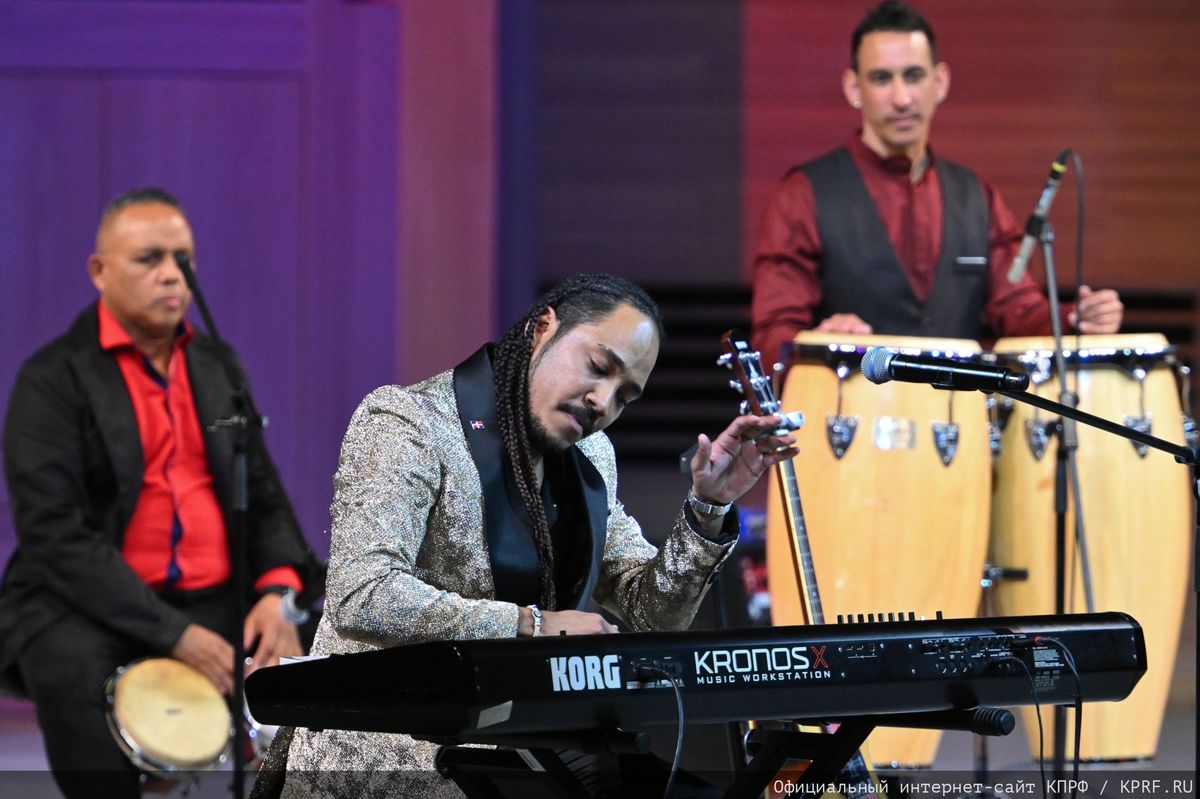
A Russian singer performing Dominican merengue in Moscow is attracting attention far beyond Russia, giving one of the Caribbean’s most recognizable musical genres an unexpected international spotlight.
Regina Roskina, a singer associated with Dominican musician Yanco Santana and his Moscow-based Orquesta EL DOMI, has emerged as a distinctive voice for merengue in Russia. Her performances of Dominican music, including repertoire associated with merengue star Miriam Cruz, have recently drawn attention.
Regina Roskina, a singer associated with Dominican musician Yanco Santana and his Moscow-based Orquesta EL DOMI, has emerged as a distinctive voice for merengue in Russia
On September 17, the Dominican program Al Medio Día con Mariotti & Compañía included the performance among its trending entertainment stories, describing the moment as a Russian singer surprising audiences by singing merengue by Miriam Cruz.
You may also like
Continue reading
The viral moment is part of a much bigger story. Dominican merengue and bachata have been steadily finding an audience in Moscow, with Roskina and Orquesta EL DOMI helping bring the sounds of the Dominican Republic to Russian stages.
Who is Russian merengue singer Regina Roskina?
Roskina has been identified in recent reports as the first Russian woman to establish herself as a merengue performer in the country.
Her introduction to the genre was not simply a matter of learning the lyrics to a few Spanish-language songs.
The Armenian-Russian singer spent four months rehearsing, studying Spanish, and training in Caribbean musical style before making her official debut
According to a January 2026 report on a concert by Orquesta EL DOMI in Moscow, the Armenian-Russian singer spent four months rehearsing, studying Spanish, and training in Caribbean musical style before making her official debut with the orchestra. During that performance, she sang music associated with another Dominican merengue icon, Milly Quezada, including the Christmas classic “Volvió Juanita.”
HOLA! spoke with Yanco Santana who described Roskina as “the first female merengue singer in Russia.” Reports also suggest she had become known as the “Reina del Merengue en Rusia,” or “Queen of Merengue in Russia.” That title has continued to follow her.
Russian singer Regina Roskina draws attention performing Miriam Cruz merengue in Moscow as Dominican music finds a growing audience across Russia.
Miriam Cruz’s merengue reaches a new audience in Russia
The connection to Miriam Cruz makes Roskina’s latest attention particularly significant for Dominican music fans.
Cruz is one of the best-known female voices in Dominican merengue. Born in Santo Domingo, she became the lead singer of the influential all-female group Las Chicas del Can before launching her own musical project in 1992.
Her solo-era repertoire includes songs such as “Te Propongo,” written by Juan Luis Guerra, and “La Loba,” written by Ramón Orlando. Cruz has previously described the latter as a defining record in her career. “’La Loba’ was the song that put me on the map. Thanks to this track people knew I was alive,” Cruz said in comments published by Acento.
Decades later, her music finding an interpreter in Moscow illustrates just how far Dominican merengue continues to travel.
Dominican music is gaining ground in Moscow
Roskina’s performances are not happening in isolation. At the center of the growing Dominican music scene in Moscow is Yanco Santana, a musician, composer and multi-instrumentalist from Higüey, Dominican Republic, who moved to Russia in 2021. Santana founded “Un dominicano en Moscow,” y Orquesta EL DOMI in Moscow on February 10, 2023, as a project dedicated to promoting Dominican and Caribbean music.
The orchestra brings together musicians of several nationalities while performing merengue, bachata, mambo and other Caribbean styles.
Santana has made his mission clear. “I want anyone who listens to merengue or bachata anywhere in the world to be able to recognize that behind these rhythms there is a culture, a history, and a people,” he said in September. “Bringing our music to Russia is also bringing a little piece of the Dominican Republic with me.”
That mission recently reached a considerably larger Russian audience. Santana and Orquesta EL DOMI appeared on Доброе утро (Good Morning) on Russia’s Channel One, where they presented Dominican music on national television. Roskina joined the musicians for the appearance, alongside Dominican dancers Elvinson Veloz and Indira Hernández. “This moment represents much more than a television appearance,” Santana said following the performance. “It is the result of a dream: that Dominican music can travel around the world.”
national
Merengue in Moscow has been growing for years
Dominican music’s presence in Russia has developed through concerts, cultural events and collaborations rather than through one viral performance.
In March 2025, EL DOMI celebrated its second anniversary with a Moscow concert featuring bachata, merengue and mambo. The event even incorporated the Russian balalaika into a performance, creating a musical connection between Russian and Dominican traditions.
Another major cultural moment came when Dominican composer and musician Ramón Orlando presented symphonic merengue with musicians from Moscow’s Tchaikovsky Conservatory in March 2025. The concert was organized as part of events commemorating 80 years of diplomatic relations between the Dominican Republic and Russia.
The performances show that Dominican music in Moscow is developing on several levels, from dance-oriented merengue and bachata concerts to symphonic arrangements and national television appearances.
The concert was organized as part of events commemorating 80 years of diplomatic relations between the Dominican Republic and Russia.
Her connection with EL DOMI has also moved beyond live covers. In April 2026, Yanco Santana released “Una noche contigo” featuring Regina Roskina, giving the singer a recorded collaboration connected directly to the Moscow-based Dominican music project.
For Santana, that kind of cultural crossover appears to be central to the project. After an earlier Moscow concert, he described the orchestra’s progress as something bigger than his individual career.
In mid-September 2026, music streaming company Spotify removed the music of Ed Sheeran from its platform.
Rating:
A rumor spread in mid-September 2026 that Spotify removed the music of Ed Sheeran from its platform after musician Macklemore was dropped as an opening act on his tour. Macklemore had expressed support for the Palestinian cause during a concert.
For example, an Instagram post claimed on Sept. 16: “Spotify has removed Ed Sheerans songs from the platform. Macklemore was removed from Ed Sheeran’s U.S. tour after making pro-Palestinian statements onstage. Several venues reportedly objected to keeping him on the lineup” (archived):
(Instagram user ragebaitnews)
Some users seemed to interpret the claim that Spotify had reacted to Macklemore’s cancellation from Sheeran’s tour by removing Sheeran’s music from its streaming platform as true. Snopes readers searched the website to confirm its legitimacy.
To check whether the claim was true, we first used search engines such as DuckDuckGo, Google and Yahoo. If Spotify had really taken down Sheeran’s music, journalists with reputable news outlets, such as The Associated Press or Reuters, would have widely reported on it, and those search inquiries would have uncovered such evidence. This was not the case.
We identified the claim’s original source: an X account that recounted the scenario about Spotify banning Sheeran’s music described its content as “parody & satire.”
Snopes reached out to Hoops Crave for its response to the fact that some people mistook the satirical story as real news. We also attempted to contact Sheeran and Spotify for their responses to the false story circulating online. We will update this story if we receive responses.
Snopes has debunked similar pieces of media before. For example, in August 2026, we alerted readers to a fake story about Disney buying Dollywood, with comparable origins.
The week is for working, and the weekend is for shopping. I don’t make the rules! If you’ve been grinding away at your 9-to-5 to make the cash you need to buy the tech of your dreams, I’m here to help. Every Friday, I comb through all the major retailers as well as the PCMag deals page to spotlight the five deepest discounts on well-reviewed items. We’re talking major price drops on products from brands like Beats, JBL, and LG with Editors’ Choice awards and stellar reviews. Read on and save.
Shopping for a new TV this football season? Even if you’re not into sports, this big, beautiful LG screen is one of the best deals of the week, with Amazon delivering a steep 41% price cut. The LG C6 delivers on every possible aspect for a modern-day TV, earning an Editors’ Choice award in our review thanks to its pristine picture quality, improved brightness, and strong streaming features. PCMag expert Will Greenwald declared that it was “the best midrange OLED TV out this year.” LG’s WebOS software comes with all the major streamers preinstalled and supports local streaming through Apple AirPlay, Google Cast, and Miracast/WiDi. It also includes a hands-free voice assistant for Google Hub and Matter devices. Finally, it’s awesome for gaming as well, with a refresh rate of up to 165 hertz and support for AMD FreeSync Premium and Nvidia G-Sync.
More TV Deals
*Deals are selected by our commerce team
Beats Studio Buds Headphones Deal
Beats Studio Buds Headphones
Bluetooth, active noise cancellation, 8 hours battery life
Looking for a new pair of headphones that deliver solid audio quality at a nice price? Woot has a massive discount on the Beats Studio Buds, a capable and comfortable set of earbuds that sound good in any situation, especially if you’re a fan of deep bass. You can read our full review for all the details, but they check off all of the boxes we expect, including capable active noise cancellation, one-touch pairing with Android and iOS devices, and effective on-ear controls. Apple fans also get spatial audio compatibility and Find My Device. The built-in multi-mic array also delivers good sound reproduction for phone calls. For this price, you’ll be hard-pressed to find better earbuds, but it’s Woot, so they could vanish at any time.
Here’s an easy way to get a smart security system up and running at a sweet sticker price. Amazon’s Ring devices are easy to set up and offer a robust set of features. This deal gets you both a versatile video doorbell and a pocket-sized camera that you can position to cover just about any interior area. In our review of the Ring Battery Doorbell, we were impressed by how simple installation was, noting that its wide field of view gave us head-to-toe images of visitors and packages, and support for Alexa and IFTTT smart systems made larger integrations a breeze. Note that to unlock certain advanced features and store videos in the cloud, you’ll need a Ring subscription, but you’re saving enough here to cover a year of it.
Looking for home theater audio that matches your new TV’s visual sizzle? The JBL Bar 1300X is a potent system that packs a ton of presence into just a few small components. We gave this one an Editors’ Choice award, impressed by its rich, accurate spatial audio with multiple height channels, potent subwoofer-driven bass, and wireless rear satellites that can be removed from the main unit and positioned around the room for even more engrossing surround sound. Connectivity is also impressive, with wired HDMI eARC and optical audio joining Bluetooth 5.0 and Wi-Fi 6 with Alexa Multi-Room Music (MRM), Apple AirPlay, and Google Cast. You can read our full review for all the details, but our only real sticking point was the list price, so a serious 36% discount at Amazon handles that.
Walmart has some surprising deals on laptops right now, so if you’re interested in getting into PC gaming but don’t want to spend your retirement savings, this Gigabyte machine is well worth your time at a little over a thousand bucks. Just from pure component costs, you’re already getting your money’s worth, with a peppy 13th-generation Intel Core i7 processor more than capable of running whatever you throw at it, along with a full 1TB SSD. Graphics-wise, you can read our review of the Blackwell-series RXT 5060 to learn more about how well it performs, but to summarize, it’s one of the best GPUs on the market for 1080p and light 1440p gaming. Throw in a good-looking screen, a backlit keyboard, and plenty of ports, and you have a real contender.
More Gaming Laptop Deals
*Deals are selected by our commerce team
Want to save even more? Our deals page has hundreds of outrageous offers.
About Our Expert
K. Thor Jensen
Contributing Writer
Experience
K. Thor Jensen is a writer and cartoonist living in the Pacific Northwest. He has contributed to dozens of prestigious outlets, including PCMag, Tested, Clickhole, and Newsweek. His second graphic novel, Cloud Stories, was released in 2017.