Blog

  • Spotify Now Lets Parents Block Kids’ Music From Polluting Their Recommendations

    Spotify Now Lets Parents Block Kids’ Music From Polluting Their Recommendations

    Does Spotify think you absolutely love “Baby Shark” because your kids have listened to it hundreds of times — and as a result recommends similar stuff? If you’ve ever encountered this conundrum, here’s good news: Spotify is finally letting parents keep nursery rhymes, Disney princess songs and other kiddie tunes out of their own music recommendations.

    Starting Sept. 15, Spotify is giving parents the ability to exclude kids and family music from their recommendations, including the annual Wrapped marketing campaign. In promoting the new feature, the company is telling subscribers to “Keep your recommendations yours.”

    “Parents love using Spotify to play music for their families. But parents don’t always share the same taste as their young children,” the company noted (rather obviously) in announcing the feature.

    The new ability to toggle off kids and family music from influencing a Spotify user’s taste profile is rolling out globally on mobile to Free and Premium users. When you turn the setting off, “you can still search for, listen to, and build playlists of kids and family music — but those streams won’t affect what Spotify suggests for you,” per Spotify. “That means experiences like Discover Weekly, Daily Mix, and Wrapped more accurately reflect your taste.” The feature also applies retroactively, so kids’ music you’ve already listened to won’t be factored into your Wrapped top song or artist, for example.

    Kids and family music on Spotify includes the following, according to the company: animated and live-action film soundtracks; theme songs and music from family TV shows; music from family entertainment brands and characters; family-friendly covers of popular songs; nursery rhymes and lullabies; sing-along, educational and activity music; and novelty and parody tracks for families.

    The new feature is “the latest step in our ongoing efforts to give parents and guardians more control over how they and their kids listen,” according to Spotify.

    The company’s existing tools provide the ability to exclude specific tracks or playlists from your taste profile. Meanwhile, in 2024, Spotify first launched managed accounts, designed to let parents with kids 13 and under their own space to discover music while maintaining control over their listening environment. In addition, the company offers the stand-alone Spotify Kids app, available to Spotify Premium Family plan subscribers, which provides a walled-off experience for young children.

    Here’s how to toggle off kids and family music from your Spotify profile:

    • Navigate to “Settings and privacy” by tapping your profile picture in the top left corner of the app.
    • Select “Content and display.”
    • Switch off the toggle next to “Include kids and family music in taste profile.” (It may take up to 48 hours for the change to be reflected in personalized recommendations.)

    And here’s an image from Spotify’s publicity campaign about the new feature:

  • BlackRock Buys $1 Billion in Bitcoin

    BlackRock Buys $1 Billion in Bitcoin

    BlackRock has remained relentless in expanding its Bitcoin holdings as it continues to fortify its position as one of the largest Bitcoin-holding corporations.

    Amid its consistent Bitcoin accumulation, the latest data from Arkham Intelligence shows that BlackRock has seen steady demand for its Bitcoin investment product among institutional investors.

    BlackRock’s IBIT records steady capital influx

    Notably, the data shows that BlackRock has made a total Bitcoin purchase of about $1.08 billion over the last 20 days as its iShares Bitcoin Trust (IBIT) saw a large capital influx during the period.

    This reflects heightened demand for Bitcoin among institutional investors who have chosen to gain exposure to the asset through BlackRock.

    The data further showed that the Bitcoin buying activity from BlackRock occurred on seven days out of the last monthly ETF trading sessions.

    With over $1 billion now added to BlackRock’s Bitcoin stash, the firm now boasts a massive 785,900 BTC worth about $61 billion in its holdings.

    Grayscale sells Bitcoin

    Unlike BlackRock, Grayscale’s trading performance moved in the opposite direction over the same period, suggesting that investors are less convinced about its Bitcoin investment product.

    Notably, the data showed that the Grayscale Bitcoin Trust recorded about $254.7 million in net outflows over the same period as investors continued to move money out of the fund.

    This suggests that Grayscale and other major funds have continued to face heightened selling pressure amid unstable market conditions, while BlackRock continues to dominate with consistent Bitcoin accumulation.

  • Hawai’i Film Festival to Open With ‘The Navigator,’ Names ‘Drifter’ as Centerpiece (EXCLUSIVE)

    Hawai’i Film Festival to Open With ‘The Navigator,’ Names ‘Drifter’ as Centerpiece (EXCLUSIVE)

    The Hawai’i International Film Festival presented by Halekulani will open its 46th edition, HIFF46, with the world premiere of “The Navigator,” directed by Jordan Manley, at the historic Hawai’i Theatre Center.

    “The Navigator” is a made in Hawai’i documentary centered on Nainoa Thompson, who nearly half a century ago became the first Native Hawaiian in 600 years to sail from Hawai’i to Tahiti using no modern instruments. The documentary follows him on a 2,400-mile return voyage accompanied by a new generation of trainee wayfinders, drawing on wisdom instilled by master navigator Mau Piailug. The screening also marks HIFF’s first opening night held at the Hawai’i Theatre Center since the COVID-19 pandemic began.

    “It is a tremendous honor for HIFF to open our 46th Festival with the world premiere of ‘The Navigator,’ a film that could not be more deeply connected to Hawai’i and to who we are as a festival,” said Jean H. Lee, HIFF executive director. Lee added that Nainoa Thompson’s legacy “represents the reclamation and perpetuation of ancestral knowledge, a living connection across Oceania, and the responsibility to pass that knowledge to the next generation.”

    HIFF46’s centerpiece presentation is the Hawai’i premiere of “Drifter,” the feature directorial debut of actor and filmmaker Sung Kang, who also wrote, produced and stars in the film. Set against the drifting subculture, the story centers on a lone racetrack janitor carrying old wounds, who gets one shot at redemption behind the wheel if he can learn to trust those around him.

    The festival features 84 films in total, including 34 world premieres, six North American Premieres, 12 U.S. premieres and three international premieres, alongside selections from Cannes, Sundance, Berlin and Busan. The program also includes 86 short films; HIFF is the only Academy Award-qualifying film festival in the state of Hawai’i for short films.

    The festival’s 24 individual premiere titles include world premieres “Beyond the Smiles: Yani Tseng,” “Making the Line,” “Niu Forever,” “Orphan Myth,” “Sukiyaki” and “Protecting Kahoʻolawe: 50 Years of Aloha ʻĀina”; North American premieres “The House on the Moon,” “The Mage,” “Ugly Duckling Ms. Maeng” and “Will You Still Be My Friend?”; U.S. premieres “Big Little Things,” “Chura Vita,” “Fruit Gathering,” “Lomu,” “Los Vampires,” “Satoko Always,” “Sgt. Haane,” “Sukundimi Walks Before Me,” “We Are Born Good” and “You Are the Film”; and international premieres “2 Valid IDs,” “Guided by Horses” and “Shadow Work.”

    The lineup also brings in festival selections from Cannes, Sundance, Berlin and Busan, including “Josephine,” “Bedford Park,” “Take Me Home,” “All of a Sudden,” “Coward,” “Fatherland,” “La Bola Negra,” “Minotaur,” “The Station,” “9 Temples to Heaven” and “We Are Aliens,” alongside a studio slate featuring Netflix’s “Ink,” “14th” and “Possible Love”; A24’s “Club Kid” and “The Debut”; IFC Films’ “Tangles” and “Mouse”; Searchlight Pictures’ “Behemoth!” and “Wild Horse Nine”; Amazon MGM Studios’ “I Play Rocky”; and Neon’s “Once Upon a Time in Harlem” and “Clarissa.”

    Alongside its film program, HIFF46 presents the second annual HIFILM industry conference, featuring conversations with filmmaker Destin Daniel Cretton, “Romanticals” creator Jonah Feingold, producer Walter Hamada, Desert Eclipse CEO Jason Chen, actors Holt McCallany, Henry Ian Cusick, Alex Tarrant and Amy Hill, and writer-producer Dana Ledoux Miller, among others.

    “At its core, HIFF has always been about where we are,” said Anderson Le, HIFF artistic director. Le noted that the festival can present “an awards contender from Cannes or Sundance one night, a world premiere from Hawai’i the next, and then a new filmmaker from Korea, Japan, the Philippines, Taiwan, Hong Kong, Aotearoa or across Oceania – and they all belong in the same conversation.”

    The festival runs Oct. 21-Nov. 5 on Oahu and continues through Nov. 15 on Maui, Molokai, Lanai and the Big Island of Hawai’i.

  • Coinbase Announces! Critical Date Approaching for Bitcoin and Ethereum: $16.6 Billion at Risk!

    Coinbase Announces! Critical Date Approaching for Bitcoin and Ethereum: $16.6 Billion at Risk!

    Bitcoin, the leading cryptocurrency, is trading at $76,900 a day before the Fed’s September interest rate decision. While a cautious and downward trend prevails for $BTC, a new report has emerged from Coinbase.

    $16.6 Billion Worth of Options Approaching Expiration in the Crypto Market!

    While the market is monitoring the Fed and macroeconomic developments, the third-quarter options expiration date, which can affect prices, is also approaching.

    According to data shared by Coinbase Markets, there is approximately $16.6 billion in open positions in the Bitcoin and Ethereum options markets with days remaining until the expiration of third-quarter contracts.

    According to Coinbase Markets analysts, the significant weighting of call options over put options in both Bitcoin and Ethereum reflects investors’ expectations that prices could rise to higher levels.

    These options are expected to expire on September 25, 2026.

    $14.73 Billion Worth of Positions Held in Bitcoin Options!

    According to data shared by Coinbase Markets, the total in-depth value of Bitcoin options is approximately $14.73 billion, while the number of open contracts is around 186,000. The put/call ratio in Bitcoin is 0.52, indicating that long positions are stronger in the market.

    According to the data, the “maximum pain” price for Bitcoin is calculated at $72,000. The most concentrated call option positions are around $70,000. In addition, there are significant long-term open positions at the $85,000, $90,000, and $100,000 levels.

    Ethereum’s $3,000 Level Attracts Attention!

    In Ethereum options trading, the total in-depth value is approximately $1.92 billion, while the number of open contracts exceeds 756,000. The put/call ratio is stated as 0.57, and the maximum open price is around $2,200.

    The largest concentration of call options on Ethereum is observed at a strike price of $3,000, with approximately 43,000 contracts.

    The fact that call options outnumber put options in both ETH and $BTC suggests that investors are expecting higher price levels ahead of the third-quarter expiration. However, as option expiration approaches, volatility may increase, particularly around strike prices where large open positions exist.

    *This is not investment advice.

  • PYUSDx Platform Passes $100 Million

    PYUSDx Platform Passes $100 Million

    PayPal, M0 and MoonPay have launched PYUSDx, a platform that allows companies to issue custom stablecoins backed by PayPal USD ($PYUSD). The platform has already processed more than $100 million in volume since its launch.

    Saturn, Concrete, and Cap are the first projects using PYUSDx. They apply the same infrastructure to different products in credit, investments, and DeFi.

    • Saturn is a structured finance protocol focused on Bitcoin-backed digital credit. Its USDat stablecoin, issued through PYUSDx, is used for liquidity and settlements. Around $65 million of USDat is currently in circulation.
    • Concrete provides infrastructure for on-chain vaults and uses automated systems to manage DeFi strategies. Through PYUSDx, the company launched ConcUSD, a reward-bearing stablecoin that allows users to receive part of the returns generated by its strategies.
    • Cap operates a credit platform where depositors provide capital and institutional borrowers use it to generate returns. Part of Cap’s cUSD stablecoin was migrated to PYUSDx. The total circulating supply of cUSD is around $92 million.

    M0 provides stablecoin issuance technology, while MoonPay handles token issuance and distribution. PYUSDx combines both systems with PayPal’s $PYUSD infrastructure.

    Image: Magnific

  • US repeals pollution limits for fossil fuel power plants

    US repeals pollution limits for fossil fuel power plants

    The US Environmental Protection Agency is ending a rule that limits greenhouse gas emissions from coal and gas power plants. The Trump administration says the rollback of climate regulation will save companies ‘trillions’ of dollars.

  • Athletes share ‘what women in sport look like’ to rebut Sydney Sweeney ad

    Athletes share ‘what women in sport look like’ to rebut Sydney Sweeney ad

    Female athletes are pushing back against a sports-betting ad featuring actress Sydney Sweeney, which is being slammed for sexually objectifying women in sport.

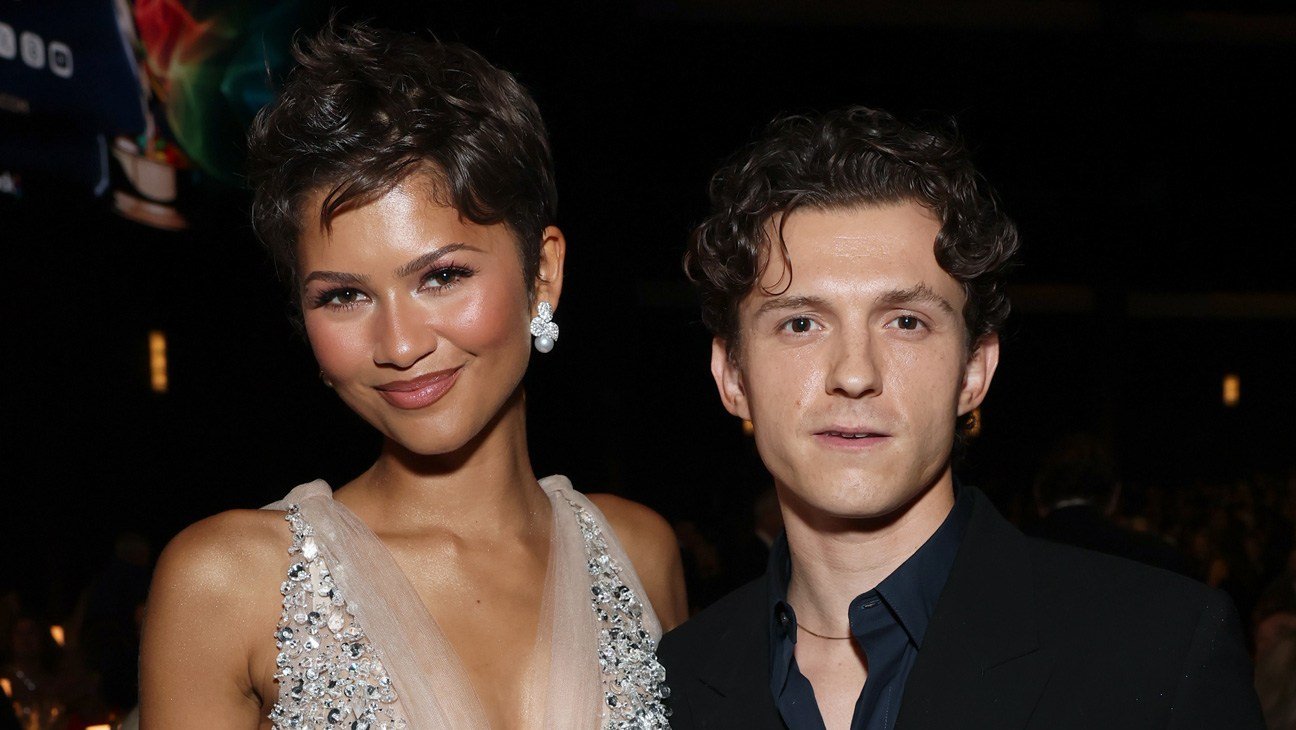
  • Inside Zendaya’s 2026 Emmys: Date Night With Tom Holland, Surprise Dinner Invite and That Pixie Cut

    Inside Zendaya’s 2026 Emmys: Date Night With Tom Holland, Surprise Dinner Invite and That Pixie Cut

    While Zendaya didn’t go home with an award at the 2026 Emmy Awards, it appeared the star had a fun date night with Tom Holland.

    Zendaya first hit the blue carpet solo, sporting a new pixie haircut and wearing Prada with Mikimoto jewels.

    Inside Los Angeles’ Peacock Theater, Zendaya was both a presenter and nominee. She took the stage to present the award for lead actress in a comedy series, which ultimately went to Jean Smart for her fifth Emmy win for Hacks.

    Later in the night, Zendaya was spotted chatting with Mark Ruffalo, Odessa A’zion, Quinta Brunson, Ayo Edebiri, Chase Infiniti and others, while Holland was by her side.

    When Saturday Night Live castmember Marcello Hernández took the stage to present, he had a special invitation for the couple.

    “I wanna say hi to Zendaya! You’re a beast and you’re amazing, and I saw you and I wanted to play it cool and I’ve decided I can’t do that. So I would like to invite you and Spider-Man to have dinner at my house,” Hernández said, as Zendaya and Holland laughed.

    Zendaya was also nominated for best actress in a drama series for the third and final season of HBO’s Euphoria, in which she plays Rue Bennett. Her fellow nominees included Carrie Coon (The Gilded Age), Chase Infiniti (The Testaments), Keri Russell (The Diplomat) and Rhea Seehorn (Pluribus), with Seehorn taking home the award.

    This marked the third time Zendaya was nominated in the best drama actress category at the Emmys. The 30-year-old previously won the award in 2020 and 2022.

    In addition to Euphoria season three’s premiere in March, Zendaya is coming off a stacked year of releases with The Drama, The Odyssey and Spider-Man: Brand New Day, the latter two of which also star Holland. Up next, she will be seen in Dune: Part Three, set to release in theaters Dec. 18

    Find the complete winners list here and see all of the stars who walked the red carpet here.

    See photos of Zendaya’s night, below.

    Zendaya at 2026 Emmys.

    Emma McIntyre/WireImage

    Ayo Edebiri, Zendaya and Quinta Brunson.

    Todd Williamson/NBC via Getty Images

    Zendaya

    Chloe Kern/WireImage

    Odessa A’Zion, Law Roach and Zendaya

    LISA O’CONNOR / AFP via Getty Images

  • The Michael J. Fox Tribute, Mariska Hargitay Singing, and Other Highs and Lows From an Ungainly, Ill-Flowing Emmys Telecast

    The Michael J. Fox Tribute, Mariska Hargitay Singing, and Other Highs and Lows From an Ungainly, Ill-Flowing Emmys Telecast

    If you’re producing an awards show and you’re running short as you head into the final category of the evening — this is a thing that has never happened before, so it’s a strange hypothetical — it must be a blessing to have Matthew McConaughey and Woody Harrelson as your last presenters.

    The longtime pals, collaborators and possible siblings have an undeniable rapport and a total lack of shame. So if you tell them, “Go out there and vamp,” they’re more than capable of babbling incoherently for five or 10 minutes, and there’s almost no risk that they’re going to wake up in the morning and feel any regrets or have any memories of what they said.

    Actually, I have no memory of what McConaughey and Harrelson said either. I think they set up the premise of their upcoming Apple TV comedy Brothers?

    I was too busy pondering how an awards telecast in 2026 could possibly fail to fill a three-hour programming block, as I flashed back to choices like moving several not-insignificant awards — acting prizes for David Harbour and Linda Cardellini, mostly — to the Creative Arts Emmys last weekend and the bizarre decision to start playing Lead Actress in a Drama winner Rhea Seehorn off when her speech threatened to go a few seconds long.

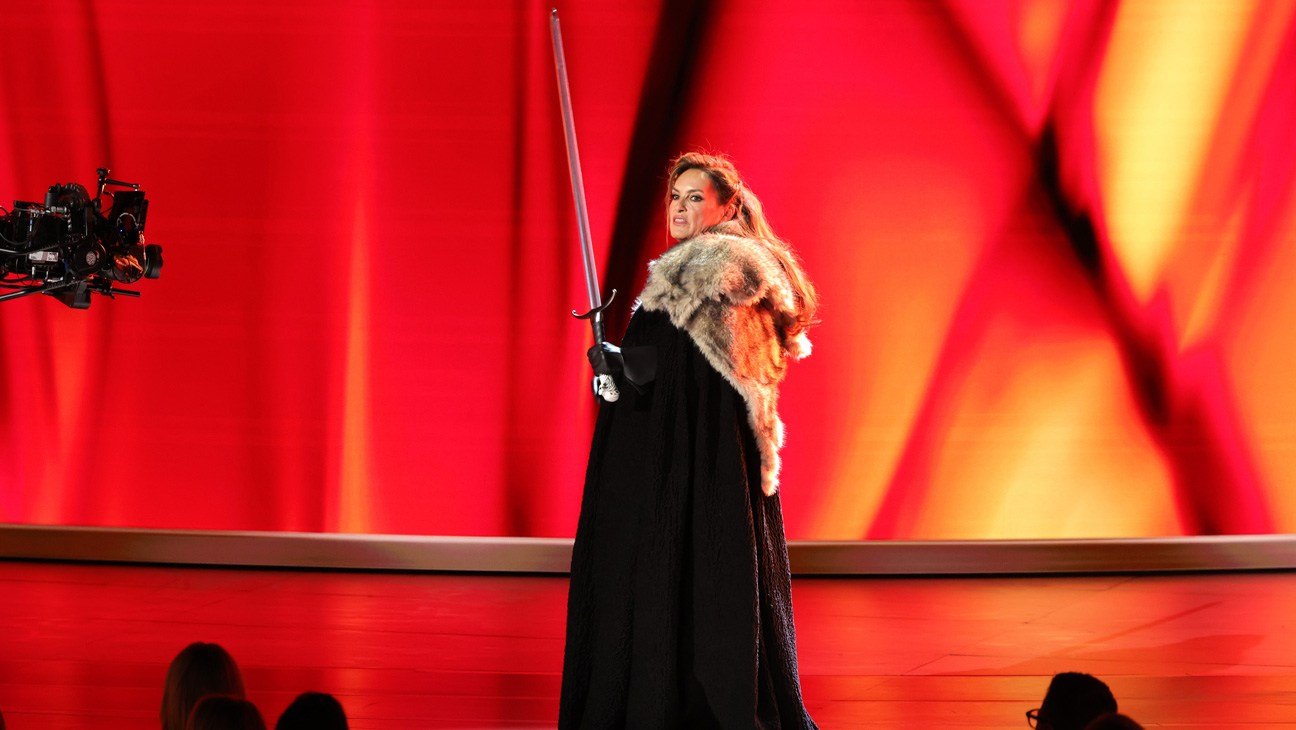
    Look, there were things I loved in Monday’s NBC broadcast of the 78th Primetime Emmy Awards. But if your show concludes five minutes early with Mariska Hargitay standing around awkwardly, and that’s despite giving Hargitay not one, but two musical numbers, plus a seemingly endless filmed sketch (eventually featuring a game Taylor Swift), plus an extended tribute to Dolly Parton that somehow managed to exclude mention of anything Dolly did on television in a career that actually featured a lot of work on the small screen … something very, very strange has occurred.

    Normally I don’t seek out the post-mortem “victory lap” interviews that award show producers do in publications like ours, but things happened behind the scenes of Monday’s telecast and I’ll be very curious if there are clear answers on what went askew — I’m hesitant to say “wrong,” though it clearly wasn’t “right” — with the telecast.

    It was an ungainly and ill-flowing night.

    I came into the show invested in three potential winners: Kate O’Flynn for supporting actress in a comedy, Rhea Seehorn for lead actress in a drama (even though Pluribus is a dark comedy) and Harrison Ford for supporting actor in a comedy. By 42 minutes into the telecast, all three categories had been presented, with the first two winning and Ford losing to Stephen Root as part of the Widow’s Bay juggernaut. It’s the second straight year that Ford has lost an Emmy that, in my opinion, he deserved to win, which would normally make me grouchy except that Root is a national treasure and should have won an Emmy for NewsRadio and Jeff Hiller is well and truly beloved in the creative community for good reason.

    By 90 minutes in, almost all the awards had been presented. Somebody made the choice in structuring the telecast that the first half of the show would be awards and speeches (under the threat of truncation, though only Seehorn was impacted) and the second half would be tributes, memorials and other stuff to make people cry.

    Was the assumption that the tributes would go longer? That the standing ovations would be more extended? Were there comic bits that got cut? Additional tributes that got trimmed? Somehow, the show simply got away from the producers and they were left with Harrelson and McConaughey giving an accurate simulation of what it would be like to be sober and sitting in the corner of their porch watching them riff. The audience in the theater was either amused or confused, but at that point, who could say for sure? I don’t know if there was a stage manager off to the side giving them the, “Keep on spinning!” signal or if whoever occupied that capacity had surrendered and gone to an afterparty already.

    Positive guy that I am, I want to offer some praise before I return to scratching my head.

    I loved the tribute to Michael J. Fox, winner of the Bob Hope Humanitarian Award.

    I will never understand why the Academy Awards decided that the lifetime achievement awards should be given in some obscure secondary ceremony rather than as a centerpiece of the main telecast. These shows are the industry patting itself on the back; why would that not include annual celebrations of industry legends, front and center?

    The extended standing ovation for Fox, whose clip package leaned heavily and inexplicably into his film work, is what a back-patting ceremony should be about. You can’t undersell the significance of Fox’s career in television and the significance of Fox to the multiple generations who grew up alongside him and entertained by him, but it would be just as wrong to undersell the significance of Fox’s appearance in terms of Parkinson’s visibility and disability awareness. Putting that man — on the “Nobody can say a single bad thing about them” Mt. Rushmore along with the likes of Betty White and Dolly Parton — in that spotlight and on as many televisions as were still on was important and powerful, and I do not get why every single award show doesn’t have a comparable moment.

    The Emmys tried to shoehorn several of those moments into the telecast, with uneven results.

    David Boreanaz and Sarah Michelle Gellar were on-hand to subtly chide Hulu for not picking up the Buffy the Vampire spinoff, obliquely mention the recent deaths of several Buffy the Vampire Slayer cast members (but not Buffy producer Dolly Parton) and ostensibly celebrate the show’s 30th anniversary. But with no clips and only two cast members, it wasn’t much of a reunion. And the show’s 30th anniversary is next year anyway.

    Jaclyn Smith, Cheryl Ladd and Kate Jackson showed up to acknowledge the 50th anniversary of Charlie’s Angels, but they weren’t given anything to do and, again, there were no clips or tangible celebrations of the show.

    Normally, you don’t find me wishing for a 90-second clip package as part of an award show, but normally award shows don’t require Woody Harrleson and Matthew McConaughey to kill time.

    I liked Reba McEntire’s performance of “Appalachian Memories” in tribute to Dolly Parton. But by ignoring so much of what Parton actually did on television — The Porter Wagoner Show, a wide assortment of TV movies, the aforementioned Buffy — it felt like the TV Academy was paying tribute to Parton out of fear that there would have been criticism if they didn’t, rather than because she warranted that tribute. Which she did.

    Macaulay Culkin, Annie Murphy and Dan Levy sweetly honored Catherine O’Hara, while Jamie Lee Curtis gave rushed tributes to both James Burrows and Rob Reiner. But if you told me that the Burrows/Reiner tributes were wholly unplanned and somebody had just pushed Curtis out onto the stage and told her to do the best she could, I’d believe you.

    Almost all those moments came in the second half of the show — a half that also featured a more traditional, but well-executed necrology with Noah Kahan doing “Bridge Over Troubled Water” and the audience blissfully muted through the entire segment.

    The second half of the show and the first half felt completely disconnected, as if to acknowledge that some viewers watch award shows for silly comedy bits and some watch for sincerity, while implying that nobody watches for both. This is not true. The artistry of award show producing is creating an emotional ebb and flow stretching across three+ hours. That’s a standard by which the Emmys were a total failure.

    It’s normally the host’s responsibility to establish the flow, to bridge sad and silly and uncomfortable moments with a consistent voice and presence.

    Mariska Hargitay was never going to be a traditional award show host. She’s not a comedian, and she isn’t an experienced improviser of the sort that the job normally requires. What she is, fortunately, is a good sport, and she maintained her own energy admirably throughout — which is not the same as maintaining the show’s energy, I’m afraid.

    Hargitay had an okay, if completely forgettable, monologue that was admirably brief, and a few pieces of crowd work that succeeded based on how well-liked she is, which comes from nearly 30 years of steady work in broadcast television.

    She was also stuck in two dreadful music numbers, either of which could easily have been cut. Except that then the show would have been 2.5 hours and NBC’s affiliates would have revolted.

    OK, you couldn’t have cut the “I Love TV Screens” number set to “I Love Rock ’n’ Roll,” because the sponsors — United Airlines and Marriott in particular — would have freaked out. But does anybody even remember anything about the limp parody of Supertramp’s “Goodbye Stranger”? It related to TV shows that ended during this Emmy cycle, except it included The Bear, which will still be eligible at next year’s telecast. Look, you can’t use one calendar to justify a premature 30th anniversary for Buffy and a different one for the end of The Bear.

    Hargitay was enthusiastic and willing to joke about her limitations and, in truth, I blame almost all her failings on the writing. She was at the mercy of what she was given, as opposed to John Mulaney who came out and did John Mulaney things for five minutes, reminding us what a tight, carefully considered set feels like in this context. I don’t know if Mulaney is hesitant to take on the responsibility of a full hosting stint or if the Oscars, Emmys, Grammys, Globes and Tonys are hesitant about him, but it’s mighty obvious he can do the job.

    Outside of what the producers could control, the show was fine. There were a lot of well-deserving winners throughout, including the near-sweep for Widow’s Bay, multiple wins for Matthew Rhys, record-tying triumphs for Jean Smart and Allison Janney, the limited series win for DTF St. Louis, Seehorn’s long-overdue first Emmy and a surprising fifth win for Vince Gilligan.

    For better or worse, depending on your ideological perspective, it was a bizarrely politics-free evening, which I guess is what happens when Noah Wyle beats Mark Ruffalo and Kate O’Flynn tops Hannah Einbinder. Sally Field, taking home her fourth Emmy for a Netflix movie with an octopus, was the only person to express veiled caution about the Paramount/Warner Bros. deal and one of a few winners to get applause by mentioning Canada. There were some salutes to human creativity, presumably at the expense of AI, but nobody wanted to say “AI.”

    But Tom Pelphrey likably celebrated pregnant partner Kaley Cuoco, Stephen Colbert received a fully expected final send-off win for The Late Show, and Widow’s Bay creator Katie Dippold gave folks on social media several opportunities to share her famous/notorious Babadook tweet.

    And with an early-ending show, I filed ahead of my deadline. So there’s that.
  • ‘Practical Magic 2’ Casts a Spell Over U.K., Ireland Box Office as Oasis Doc Rocks No. 2

    ‘Practical Magic 2’ Casts a Spell Over U.K., Ireland Box Office as Oasis Doc Rocks No. 2

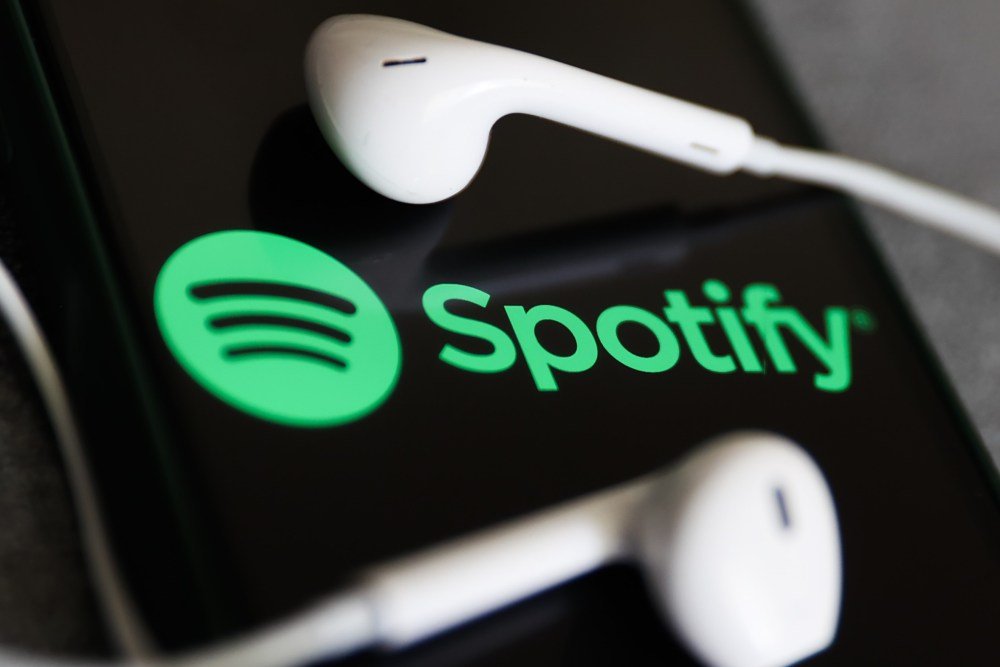
    Warner Bros.’ “Practical Magic 2” cast a winning spell over the U.K. and Ireland box office, dethroning “Spider-Man: Brand New Day” after a six-week reign to claim the top spot with an opening weekend of £2.7 million ($3.7 million).

    Disney followed closely in second position with the cinema rollout of “Oasis: Don’t Look Back in Anger,” which captured $3.5 million across its debut frame. 20th Century Fox’s thriller “Pressure” rounded out the new release trio at the summit, taking third place with $2.7 million.

    Universal’s “The Odyssey” held firm in fourth place during its ninth week on release, collecting $1.2 million. The tentpole pushed its cume to $114.3 million.

    Sony’s superhero juggernaut “Spider-Man: Brand New Day” moved to fifth position in its seventh frame, generating $1.1 ,illion. The blockbuster’s running total reached $132.7 million, overtaking “Spider-Man: No Way Home,” “Avatar,” and “No Time to Die” to claim the No. 3 spot on the all-time U.K. and Ireland box office chart, trailing only “Star Wars: The Force Awakens” and “Skyfall.”

    Signature Entertainment’s survival sequel “Fall 2” opened in sixth place with $648,421. “Insidious: Out of the Further,” distributed by Sony, followed in seventh position in its fourth week, adding $619,084 to raise its running total to $9.9 million.

    Entertainment Film Distributors’ action thriller “Runner,” starring Alan Ritchson and Owen Wilson, bowed in eighth place with $517,727. Paramount landed the ninth spot with the 45th anniversary 4K re-issue of “Raiders of the Lost Ark,” which grossed $326,263. Altitude Film Distribution’s “Coyote vs. Acme” rounded out the top 10 in its fourth frame, collecting $188,463 to push its cume to $2.6 million.

    Looking ahead to the upcoming theatrical frame, rollouts begin mid-week with Seventh Art Productions’ “Exhibition On Screen: James McNeill Whistler 2026,” followed Move Over Productions’ documentary “The Route to Cappyness.”

    Wide commercial openings on Friday across 300+ locations are led by “Resident Evil,” distributed by Sony, and Paramount’s “Bad Apples,” starring Saoirse Ronan.

    Releases also include Screenbound Pictures’ music documentary “50 Years of Punk,” Entertainmeny Film Distributors’ “De Gaulle: Part 2 – Liberté,” Aardman’s “Shaun the Sheep: The Beast of Mossy Bottom,” from Studiocanal, Dogwoof’s “The Cycle of Love,” Curzon’s “Queen at Sea,” Other Parties’ “Barrio Triste,” Sonorous Films’ “Premature,” Shane O’Sullivan’s documentary “The Watergate Caper: Richard Nixon and the Death of the American Dream,” from E2 Films, Mubi’s “Pulp: What Do You Do For An Encore?” and Anime Ltd’s “Whisper of the Heart.” The weekend concludes on Saturday with the event cinema broadcast of “Twenty Years of the Met in Cinemas: An Anniversary Celebration” from Trafalgar Releasing.