Blog

  • Ken Urker, Gypsy-Rose Blanchard’s Partner, Dies at 34

    Ken Urker, Gypsy-Rose Blanchard’s Partner, Dies at 34

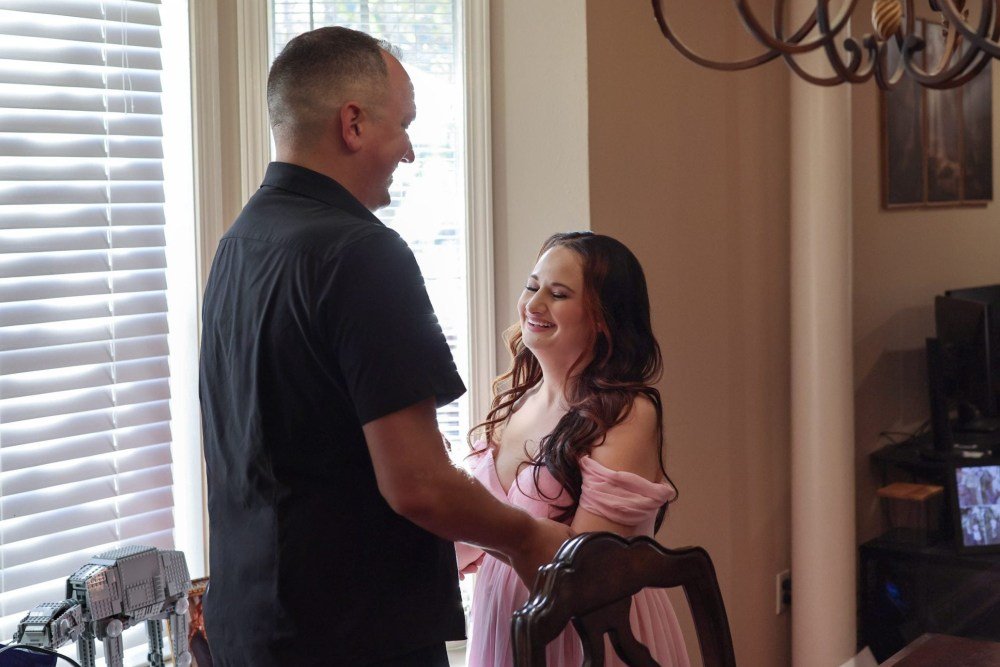
    Ken Urker, the partner of Gypsy-Rose Blanchard and father of their child, was found dead Thursday in Raceland, Louisiana. He was 34.

    Captain Brennan Matherne of the Lafourche Parish Sheriff’s Department said in a statement to Variety, “We responded to a residence at 107 Double H Drive, Lot 4, in Raceland today after receiving a call at 6:15 p.m. Kenan Urker, 34, was found dead upon arrival. At this time, we are continuing the death investigation.”

    A source close to the family told People magazine that he was discovered unresponsive by a family member inside a home on his 34th birthday.

    Urker appeared on the reality series “Gypsy Rose: Life After Lockup,” which ran for two seasons on Lifetime. Variety‘s review of the series noted, “The limelight can certainly feel glorious following a lifetime in the shadows, but it’s also a very precarious and often unsustainable place to be.”

    Blanchard and Urker first got together through a penpal program when she was in prison for her role in the murder of her mother Dee Dee Blanchard. After they broke off their engagement, Blanchard married and divorced Ryan Anderson. After reconciling in 2024, Urker and Blanchard had a baby girl, Aurora, in December 2024.

    After alleging that her mother abused her for many years, Blanchard pleaded guilty to second degree murder of her mother in 2015 while her boyfriend Nicholas Godejohn was sentenced to life in prison for first degree murder. She served eight and a half years in prison.

  • Uphold Launches Vault Inheritance for Bitcoin, XRP and Hedera Holders

    Uphold Launches Vault Inheritance for Bitcoin, XRP and Hedera Holders

    How the inheritance claim works

    A Vault customer invites a beneficiary directly from the dashboard, and that person is notified and guided to set up an Uphold account to receive the assets later. The beneficiary gets no access while the owner is alive, and the designation can be changed at any time. After the owner passes, Uphold’s compliance team verifies the legal documentation before transferring control into the beneficiary’s Uphold wallet. The company says the beneficiary needs no prior crypto knowledge. Uphold Vault itself launched in December 2023, pairing self-custody with built-in key replacement and instant access to trading.

    Pricing and the estate-planning gap

    Vault Inheritance costs $19.99 a month. Existing Vault customers will see the new plan reflected after December 31, 2026, while U.S. users get a free 30-day trial. “Crypto has become a real part of how people build their financial future, but unlike traditional assets, there are few ways to pass it on securely — especially for $XRP holders,” said Nancy Beaton, Uphold’s president of consumer.

    A growing self-custody trend

    The launch lands months after Kresus introduced its own crypto inheritance service for self-custody users in July, a sign that wallet providers are moving to close the estate-planning hole as crypto matures into a long-term holding. Analysts have long warned that billions of dollars in crypto could vanish into dead wallets, and inheritance features are one of the first product-level answers to that risk.

  • SEC Proposes Letting Advisers and Funds Self-Custody Crypto Assets

    SEC Proposes Letting Advisers and Funds Self-Custody Crypto Assets

    “Since the advent of Bitcoin in 2008, the crypto asset market has grown from a niche curiosity into a multi-trillion-dollar asset class to which investors actively seek exposure. Unfortunately, our rules and regulations have not kept pace.”

    Self-Custody and Trust Companies Face Safeguards

    Eligibility for direct safekeeping would require quarterly reassessment, while security systems would undergo reviews at least annually. Transfers would need authorization by at least two people, and each customer’s holdings would occupy separate blockchain addresses. Investors would receive quarterly statements and sign agreements treating the tokens as financial assets under applicable state law.

    State trust companies, institutions chartered by state banking regulators, could provide outside safekeeping subject to initial and annual checks of their authorization and security policies. Advisers or funds would also review audited financial statements and internal control reports, while customer holdings would remain separate from the custodian’s own assets.

    State supervision already addresses asset separation, including under New York’s Department of Financial Services guidance issued Sept. 30, 2025, emphasizing separate accounting and segregation of customer crypto assets. Those safeguards apply to licensed virtual currency businesses and New York limited purpose trust companies engaged in crypto custody.

    Federal treatment of these institutions also prompted disagreement among SEC commissioners over crypto custody protections. In September 2025, staff offered conditional assurances against recommending enforcement action. Commissioner Hester M. Peirce supported the flexibility, while Commissioner Caroline A. Crenshaw criticized its legal basis and investor safeguards.

    SEC Proposes Audit and Recordkeeping Changes

    The proposed amendments also extend beyond crypto safekeeping to financial statement audits for registered investment advisers and broker-dealer custodial services for regulated funds. Broker-dealers are firms that buy and sell securities for customers or their own accounts. The changes fall under the Investment Advisers Act of 1940 and the Investment Company Act of 1940.

    An adviser taking direct custody would obtain an independent accountant’s internal control report within six months and annually thereafter. The package also would update recordkeeping and disclosures, including conditional use of blockchain records and reporting on tokenized fund shares, which represent fund ownership using blockchain technology.

    The amendments entered White House review ahead of the October proposal in August, when the Office of Information and Regulatory Affairs assessed the draft. That office operates within the White House Office of Management and Budget.

    Atkins subsequently outlined his request for rules permitting conditional adviser self-custody during Sept. 14 remarks at the Solana Policy Institute Summit. He also sought to permit state trust companies to safeguard advisory and fund holdings.

    Public comments will remain open for 60 days after the SEC’s proposing release appears in the Federal Register, the government’s official publication for federal rules and notices.

  • NEAR Intents says its identified the hacker, gives 48-hour ultimatum

    $NEAR Intents said it has identified the individual behind a security breach that resulted in the loss of $3.8 million in user funds on Thursday, giving them 48 hours to return the funds under “responsible disclosure.”

    “We have identified you, sir,” $NEAR Intents general manager Alex Shevchenko said in an X post on Friday, as he shared three different wallet addresses to receive Bitcoin, BNB and Solana.

    “You know better than most how responsible disclosure works — this is the last window to use it. After 48 hours, that window closes.”

  • Iraq’s Kurdish forces look to a new era after US withdrawal

    Iraq’s Kurdish forces are entering a new era following the withdrawal of US-led international forces that had been in the country to fight ISIL (ISIS).

    On Wednesday, the United States announced the formal end of Operation Inherent Resolve, its name for the 12-year-long campaign to defeat ISIL, and the completion of the withdrawal of its military forces from Iraq.

    Recommended Stories

    list of 3 itemsend of list

    Other partners in the war against the armed group also withdrew from Iraq, in accordance with a September 30 deadline set by Washington and Baghdad two years prior.

    For years, Iraq’s Kurdish forces – known as the Peshmerga – have relied on close military support from coalition forces, and the US in particular, to safeguard their autonomy and defend against ISIL.

    Their withdrawal has posed new political and security challenges for Iraq. Where does the Peshmerga stand today?

    The challenge of unification

    Days before the coalition’s withdrawal, on September 21, the Erbil-based Kurdish Regional Government (KRG) – which presides over Iraq’s semi-autonomous Kurdistan region – announced that it had finally merged Kurdish armed factions into a unified fighting force.

    In his speech at the ceremony marking the event, KRG President Nechirvan Barzani characterised it as a major national step towards consolidating the region’s institutions.

    “Kurdistan needs one force, one ministry, and one command,” he said. “The Peshmerga must be a national force, free from party interference and disputes. Today, we take a major step towards achieving this goal.”

    Barzani announced that the forces affiliated with his Kurdish Democratic Party (KDP) and its historic rival Patriotic Union of Kurdistan (PUK) were now under one structure. The KDP and PUK represent the two dominant Kurdish Iraqi factions.

    Zeidon Alkinani, a Middle East political analyst and founding director of the Doha-based Arab Perspectives Institute, told Al Jazeera that the unification would help stabilise Iraq.

    “Iraq’s most damaging rivalries have been within communities, intra-Shia and intra-Kurdish, not between them,” he said.

    He says reducing the role of the Erbil-based KDP and the Sulaymaniyah-based PUK party structures within the Peshmerga “strengthens Iraq’s stability and gives Erbil firmer legal footing with Baghdad”.

    However, the work is far from finished. Barzani, in his speech, warned that the unification marked the start of a phase that “may be even more difficult” than past Kurdish struggles, requiring the Peshmerga to stand above party loyalties.

    “The test is whether [unification] survives, given the persistence of two geographically distinct commands”, Alkinani says.

    Retired Lieutenant General Jabbar al-Yawar, former secretary general of the Ministry of Peshmerga in the KRG, told Al Jazeera that these parties were embroiled in a number of political disputes, including governance of Kurdistan and relations with Baghdad.

    These disputes, he says, could extend to military institutions if the forces remain tied to political parties.

    Kurdistan Region President Nechirvan Barzani [File:Azad Lashkari/Reuters]
    Iraq’s semi-autonomous Kurdistan region President Nechirvan Barzani [File:Azad Lashkari/Reuters]

    Readiness

    On the ground, the Ministry of Peshmerga insists that its forces are ready for the new era.

    Spokesperson Major General Othman Mohammed told Al Jazeera that the Peshmerga “has always been on full alert,” touting its role in repelling the ISIL in 2014 despite having limited means.

    He pointed to the relationship between the Peshmerga and Iraq’s other security forces, noting that commanders from both sides enjoyed very good cooperation and coordination.

    This coordination has become more important now that the international coalition has ended its mission, with Iraqis now relying on their own capabilities to detect and stop ISIL activity.

    Kurdish Peshmerga fighters take position on the Qarachogh Mountain in the Makhmur district, about 60 kilometres south of Erbil, capital of Iraq's autonomous northern Kurdish region, on September 30, 2026.
    Kurdish Peshmerga fighters take position on the Qarachogh mountain in the Makhmur district, about 60 kilometres (37 miles) south of Erbil, on September 30, 2026 [Safin Hamid/AFP]

    Despite this readiness, Mohammed Salih, a non-resident senior fellow at the US-based Foreign Policy Research Institute and an expert on Iraqi and regional affairs, says there is “considerable uncertainty and concern among Kurds surrounding the US withdrawal”.

    Many are asking whether the departure of US troops means the end of Washington’s commitment to Kurdish security, he told Al Jazeera, given that the US has been “a key security guarantor for the Kurdistan region for the past three decades”.

    Importantly, the US took with it key air defence systems when it withdrew, creating serious concern for Erbil, which has come under several drone and missile attacks since the start of the US war on Iran.

    Balanced relations

    Erbil has signalled its intention to continue cooperating with Baghdad as before, under Iraq’s federalist framework.

    The day after coalition forces withdrew, KDP leader and former KRG President Masoud Barzani touted “very strong coordination with the Iraqi federal government to confront any kind of threat or danger, whether it comes under the name of ISIS or any other name”.

    In Baghdad, he backed the federal government’s efforts to fight corruption, disarm Iran-aligned forces and settle outstanding disputes with Erbil under the constitution.

    Iraqi federalism and unity “depend on communication, coordination and respect for the rule of law among political parties, not on foreign troops”, Alkinani of the Arab Perspectives Institute said, in relation to the coalition withdrawal.

    Baghdad faced a dilemma when Washington demanded it disarm Iran-aligned Iraqi armed groups. The armed groups refused, pointing to the US presence in Iraq even as it waged war on Iran.

    The withdrawal may help the cause of federalism by removing this justification, he said, “but only if Iraqis replace it with dialogue and law rather than force”.

    Supporters of Iran-aligned armed factions gather for a rally celebrating the withdrawal of forces of the US-led coalition against the Islamic State from Iraq, in Baghdad on September 30, 2026.
    Supporters of Iran-aligned armed factions gather for a rally celebrating the withdrawal of forces of the US-led coalition against ISIL from Iraq, in Baghdad on September 30, 2026 [Ahmad Al-Rubaye/AFP]
  • Christa Pike execution fails: What next when a lethal injection is botched?

    Christa Pike execution fails: What next when a lethal injection is botched?

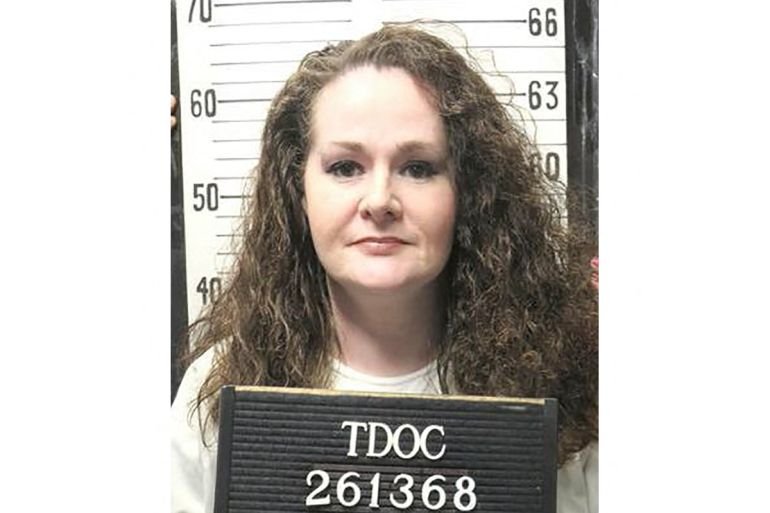
    Two doses of a lethal injection drug have failed to kill Christa Gail Pike, a 50-year-old woman who was due to be executed on Wednesday. Pike was taken to hospital after it was found that her heart was still beating following the procedure.

    Pike would have been the first woman in more than 200 years to be put to death in Tennessee and was the only woman on the state’s death row. Her attempted execution with doses of the sedative pentobarbital went ahead despite a last-minute stay by a federal appeals court on Wednesday, which was overturned just an hour before her execution by the Supreme Court.

    Recommended Stories

    list of 3 itemsend of list

    Human rights experts said the botched execution illustrates why the death penalty is inhumane and should be abolished.

    Clive Stafford Smith, a human rights lawyer who has represented many American death row inmates as well as detainees held at the notorious Guantanamo Bay detention centre, told Al Jazeera: “I’ve been in the execution chamber with six of my clients and it’s never the clinical process they’d have you believe. And it’s always a desperate midnight struggle to stop it.”

    He added: “In the end, you have to question whether this makes the world a better, more civilised place. Why, indeed, do we kill people to prove that killing people is wrong?”

    Ahead of the planned execution, Morris Tidball-Binz, the UN special rapporteur on arbitrary executions, told the UK’s Times newspaper: “If executed, Christa Pike would be a victim of torture to death. This will be a gross violation of human rights.”

    Here’s what we know about what happens when an execution goes wrong.

    What is the case against Pike?

    Pike was found guilty of the murder of another young woman she had viewed as a romantic rival, when she was aged 18, more than 30 years ago.

    In January 1995, Pike, her 17-year-old boyfriend Tadaryl Shipp and 18-year-old Shadolla Peterson lured Colleen Slemmer, 19, into a wooded area and tortured and killed her. All four were students at a Job Corps vocational centre in Knoxville.

    The case attracted huge public interest, especially after it was revealed that the attackers had carved a pentagram into Slemmer’s chest, which Shipp later admitted to doing. Pike, who delivered the killing blow to the victim’s head, smashing her skull, kept a piece of Slemmer’s skull afterwards.

    Pike and Shipp confessed and were convicted of first-degree murder in 1996. Pike was sentenced to death; Shipp, who was 17 at the time and therefore ineligible for the death penalty, received life with the possibility of parole.

    Her case is highly unusual in that she is a woman and was a teenager when she carried out the murder. Other death row inmates who were convicted at the age of 18 – all men – have had their sentences commuted to life in prison without parole.

    “Christa is a 50-year-old remorseful woman who understands her actions,” her lawyers wrote. They also argued that Pike had been the victim of appalling childhood abuse – including two rapes when she was aged 11 and 17.

    Stafford Smith told Al Jazeera: “Very few women are executed, but fewer still in Tennessee – it has been 200 years. So, this is a step back to about 1820. Christa was just a teenager, and had undergone horrendous abuse as a child. Now she is 50, a totally different person. It is so pointless – will this really make the world a more civilised place?”

    Slemmer’s mother, May Martinez, however, has spoken out in support of the execution.

    On Wednesday, a federal court temporarily put the planned execution on hold, on legal and technical grounds. But an hour before the midnight deadline for her execution was to expire, the US Supreme Court overruled the stay on her execution, paving the way for jail authorities to proceed.

    Pike had asked to be shot by an all-female firing squad instead of by lethal injection, which she said she feared would be too painful.

    Her lawyers had also argued that the injection would be torturous for her as she has “small veins”. This request was denied, however.

    INTERACTIVE - Women death penalty execution-1790756758

    How did the execution go wrong?

    Following the Supreme Court’s order to go ahead with the execution, Pike was administered two doses of the sedative pentobarbital at the Riverbend Maximum Security Institution in Nashville, Tennessee, on Wednesday evening, according to media witnesses.

    From outside the prison, The Associated Press journalist Kim Chandler reported that, initially, when the injections were administered, Pike appeared noticeably awake.

    “The blinds were closed for the first time to the execution chamber at 7:46pm (23:46 GMT), they opened again at 7:49pm (23:49 GMT),” Chandler said.

    “Her mouth fell open a few times, and she began to loudly snore. She gasped a few times,” she noted.

    “The curtain to the execution chamber closed for the final time at 8:06pm (00:06 GMT), and she could be heard loudly snoring, clearly very alive, in the chamber until media witnesses were told to leave the area at about 8:53pm (00:53 GMT),” Chandler added.

    The Tennessee Department of Correction did not immediately explain why the execution had not been completed.

    According to NBC News, late on Wednesday, Pike’s lawyers had filed a federal court motion during the process seeking again to halt her execution, citing witnesses’ accounts that “executioners had injected both syringes of lethal injection chemicals and Pike is still alive and snoring”.

    “Ms Pike has not lost consciousness and still has a heartbeat and is audibly snoring,” they said, according to the court documents seen by the media.

    Her lawyers also told US media that while she was being treated at a hospital, she needed “immediate medical care”.

    INTERACTIVE - Methods of execution death penalty-1790756756

    Why didn’t the execution work?

    Tennessee authorities have not explained this yet.

    However, Stafford Smith, who has attended several executions in support of clients in the past, told Al Jazeera that there are two probable reasons why the injection failed to kill Pike.

    “The first is that the drugs were probably out of date. Something that we’ve been observing a lot for the last 10 years is that they administer drugs that are no longer valid,” he said.

    Stafford Smith noted that there is, however, a valid reason for this, which is that drug companies make sedatives like pentobarbital to help people and save lives and are often opposed to their drugs being used to execute people.

    “So the states have a real problem getting drugs to kill people and they’ve gone to extraordinary extents with very unreliable providers. So you can suspect that they just had an invalid batch of drugs in Pike’s case,” Smith explained.

    “The other thing about Pike is that, as is very common with people who end up in her situation, they’ve been through a lot of abuse and drug abuse. So it might have been very hard to find her veins and get a needle into it. Moreover, doctors are also not allowed to take part in this process in the US. So they have incompetent people administering such drugs, which could have resulted in the injection failing,” he added.

    Defending its handling of the case, the Tennessee Department of Correction said in a statement late on Wednesday that the agency had “followed every step of the state’s lawful, established execution protocol approved by the Attorney General’s Office”.

    “The lethal injection chemical in the protocol has consistently been effective, and the protocol does not allow for additional procedures beyond what was carried out this evening. Christa Pike has been transported to an off-site medical facility,” the statement concluded.

    What happens to Pike next?

    At the moment, it is unclear, as Tennessee Governor Bill Lee has paused all remaining 2026 executions in the state following Wednesday’s incident with Pike and has called for a comprehensive, third-party review. She is currently in hospital. She may return to death row, but Stafford Smith said this is uncertain.

    INTERACTIVE - Which US states have the death penalty execution-1790756760

    Has this happened before?

    Yes. Botched executions do happen but the frequency varies substantially by method, according to data compiled by legal scholar Austin Sarat and the Death Penalty Information Center.

    In his 2014 book, Gruesome Spectacles: Botched Executions and America’s Death Penalty, Sarat noted that from 1890 to 2010, 8,776 people were executed in the US and 276 of those executions (3.15 percent) went wrong in some way. Sarat also noted that lethal injection was the method that had the highest rate of botched executions at 7.2 percent in this period.

    Previous botched lethal injection cases include the case of murderer Alva Campbell in November 2017 in Ohio. According to the Death Penalty Information Center, “the execution team first worked on both of Alva Campbell’s arms for about 30 minutes.. while he was on a gurney in the state’s death chamber and then tried to find a vein in his right leg below the knee. … About 80 minutes after the execution was scheduled to begin, the 69-year-old Campbell shook hands with two guards after it appeared the insertion was successful.”

    “About two minutes later … Gary Mohr, head of the Ohio Department of Rehabilitation and Correction … called off the execution after talking with the medical team, [saying] ‘It was my decision that it was not likely that we’re going to access veins.’” But a few months later, in March, 2018, Campbell died on death row due to terminal medical conditions.

    “Botched executions have happened many times. I’ve had six of my clients executed over the years. Two were with the gas chamber, two with the electric chair and two with lethal injection, and there’s almost always some form of botching,” Stafford Smith said.

    “But it’s just an uncivilised process carried out by people who are pretty uncivilised,” he added.

  • HIV prevention drug hailed as breakthrough, but who gets access?

    HIV prevention drug hailed as breakthrough, but who gets access?

    A medicine injected just twice a year could transform the fight against HIV.

    In a 2024 clinical trial involving more than 2,000 young women in South Africa and Uganda, no participants who received lenacapavir contracted HIV.

    Recommended Stories

    list of 4 itemsend of list

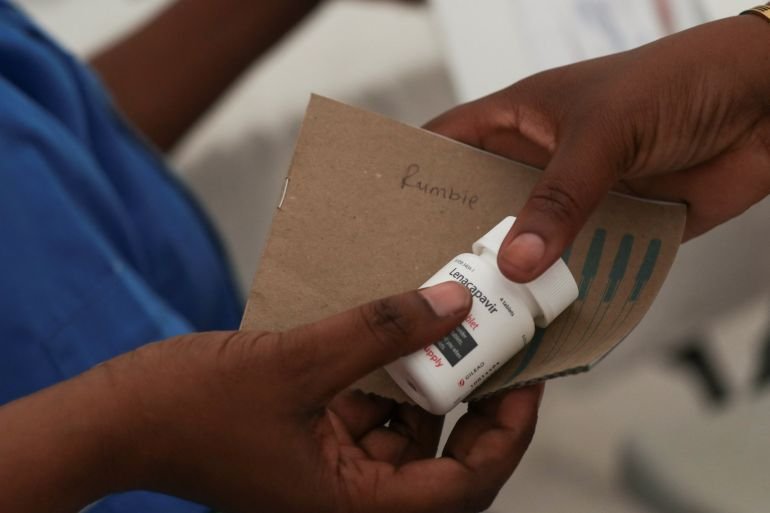
    Developed by United States pharmaceutical company Gilead Sciences, the injectable drug can be used to prevent HIV.

    “It’s the most innovative tool that has reached the HIV arena for the last decade, because it’s the closest we have [to] a vaccine,” Carlota Baptista da Silva, global HIV lead at Doctors Without Borders (known by its French initials, MSF), told Al Jazeera.

    The World Health Organization has recommended the long-acting injectable as an additional form of pre-exposure prophylaxis, or PrEP – medicine to reduce the risk of getting HIV.

    But the arrival of the drug comes at a challenging juncture in the global fight against HIV.

    International funding for HIV fell 18 percent in 2025, to $7.3bn, its lowest level in nearly two decades, according to the United Nations programme on HIV/AIDS (UNAIDS). The squeeze has already hit prevention programmes: The number of people receiving medicine to reduce risk fell from 1.4 million in 2024 to 1.1 million in 2025.

    That makes the arrival of a highly effective, twice-yearly prevention option significant. The question of who can access it is now more urgent.

    For MSF, the scientific question has largely been answered: lenacapavir can prevent HIV with remarkable efficacy.

    The fight now is whether the rules governing manufacture, price and supply will allow that scientific breakthrough to reach the people who need it.

    Why some countries are excluded

    In the United States, lenacapavir costs about $28,000 per person annually. Generic versions are expected to cost about $40 a year.

    A generic version is a copy of the original drug made by another manufacturer after the patent holder licenses the technology. It contains the same active ingredient, but it can be produced and sold at a much lower price.

    In June 2025, the US Food and Drug Administration (FDA) approved lenacapavir for HIV prevention, giving people the option of an injection twice a year. But in several low- and middle-income countries, access to cheaper versions is not expected at scale until 2027.

    Gilead is supplying its own version of lenacapavir at no profit for programmes supported by the Global Fund and the US President’s Emergency Plan for AIDS Relief (PEPFAR), with rollouts under way in countries including South Africa, Kenya, Zambia, Nigeria and Eswatini.

    These are not the cheaper generic versions expected to cost about $40 per person a year. Gilead has licensed six manufacturers to produce those, with large-scale generic rollout expected in 2027.

    At least 26 middle-income countries are excluded from Gilead’s generics agreement, MSF says, including countries with rising HIV infections and some that helped test the drug. Among them are Brazil, Mexico, Argentina and Peru.

    “People should not really help generate the evidence for breakthrough medicine and then find that their country is excluded from affordable generic access,” da Silva said.

    According to MSF, countries excluded from the licence accounted for close to 23 percent of new HIV infections globally in 2023.

    Gilead has since announced a separate agreement with the Pan American Health Organization, creating an access pathway for 14 Latin American and Caribbean countries outside its generic licensing territory, including Brazil, Mexico, Argentina and Peru.

    MSF argues that leaves those countries dependent on Gilead rather than able to automatically buy the cheaper generics.

    MSF says it still cannot buy the drug

    For more than a year, MSF says it has sought permission to purchase lenacapavir directly from Gilead for its medical programmes, without demanding a discounted price.

    “Despite those requests, Gilead has not allowed MSF to purchase this medicine directly,” da Silva said.

    That matters particularly in humanitarian emergencies, she argues. People displaced by conflict or disaster may struggle to take a prevention pill every day, while sexual violence and other vulnerabilities can increase the risk of HIV.

    Daily PrEP pills are already available as an alternative to the injection. But unlike lenacapavir, they need to be taken consistently to provide protection. An injection offering six months of protection could be particularly valuable.

    “People living through conflict [and] humanitarian crises cannot be the last in line for medical innovation,” da Silva said.

    Gilead declined Al Jazeera’s request for an interview due to scheduling constraints.  In its emailed statement, it said its access strategy combines no-profit supplies, royalty-free licensing and regional agreements. It didn’t reply to questions about why it won’t sell its drug to MSF, or why certain countries were excluded from its generics agreement.

    The company plans to provide enough lenacapavir for up to three million people through 2028 as generic manufacturers scale up production, with large-scale generic rollout expected in 2027.

    MSF says that is nowhere near the scale required, pointing to projections that close to 20 million people worldwide need access to PrEP to substantially reduce new HIV infections. That includes all forms of PrEP, not just lenacapavir.

    But countries left outside Gilead’s generic licensing deal may have another option.

    Can governments bypass the patent barriers?

    World Trade Organization (WTO) rules allow governments, in some cases, to bypass a drug company’s patent so cheaper versions of a medicine can be made or imported without the company’s permission.

    They can also authorise government use of patents and challenge patents they consider weak or unjustified. The 2001 Doha Declaration affirmed WTO members’ right to use such safeguards to protect public health.

    Brazil has used them before in the fight against HIV. In 2007, after negotiations with pharmaceutical company Merck over the price of the HIV drug efavirenz failed, Brazil issued a compulsory licence allowing it to access cheaper generic versions of the medicine.

    Nearly two decades later, activists are urging Brazil to consider using those powers again for lenacapavir if patent barriers prevent affordable generic access.

    MSF says governments excluded from Gilead’s licence could consider those same legal safeguards for lenacapavir, including compulsory licensing, government-use authorisations and challenges to patents.

    It is also calling on Gilead to ensure its agreements with generic manufacturers do not prevent them from supplying countries where patent barriers have been removed through such measures.

    For MSF, the stakes go beyond lenacapavir. The way the drug is made available could determine whether one of the greatest advances in HIV prevention in decades reaches people based on need, rather than where they live or what their health systems can afford.

    “For a humanitarian medical organisation, we should not have to spend more than a year trying to find a way to buy a WHO-recommended medicine,” da Silva said.

  • Fox Business To Debut ‘Big Money In The Morning’ To Replace Maria Bartiromo’s Show

    Fox Business To Debut ‘Big Money In The Morning’ To Replace Maria Bartiromo’s Show

    Fox Business Network will launch Big Money in the Morning, with a lineup including Dagen McDowell, Brian Brenberg, Taylor Riggs and Barron’s Josh Schafer, later this month.

    The new show will take the 6 a.m. to 9 a.m. ET time slot formerly occupied by Mornings with Maria, which was hosted by Maria Bartiromo pulled from the air early last month. The new show will debut on Oct. 12.

    McDowell and Brenberg will move to the mornings from The Bottom Line, the 6 p.m. ET show which will end its run. Repeats of Kudlow will take its place. Meanwhile, the noontime The Big Money Show will add rotating co-hosts Cheryl Casone, Marcus Lemonis and Lou Basenese along with current host Jackie DeAngelis. Liz Claman will launch a new Friday night series, Claman’s Power Players, on Friday nights at 7 p.m. ET.

    Big Money in the Morning will be the network’s signature show in advance of the trading day. McDowell has been with Fox News since 2003 and was a founding anchor of Fox Business Network when it launched in 2007. Brenberg joined Fox Business Network in 2020, and Riggs joined in 2022. Schafer is a contributor across the network and is Barron’s Investor Circle Newsletter editor.

    The Big Money Show‘s DeAngelis has been co-host of the show since 2023. Casone was part of the team that launched Fox Business in 2007; Basenese, who joined the network last year, is executive vice president of market strategy at Prairie Operating Co. and founder of the financial news site TheBigSkinny.com. Lemonsis joined Fox earlier this year, and is executive chairman and CEO of Beyond.

    Fox News Media announced on Sept. 3 that Bartiromo was “no longer with” the network. Donald Trump’s trade adviser, Peter Navarro, wrote an op ed in which he said that Bartiromo shared a text from a Fox Business executive calling on producers to not highlight the president’s July speech on election interference. Most of the networks were concerned that the president would use the primetime address to bring up unfounded claims that the 2020 election was rigged.

  • Nithya Raman Reaches Out To David Ellison To Make Sure L.A Production & Jobs Return Now That ParaBros Deal Is Done

    Nithya Raman Reaches Out To David Ellison To Make Sure L.A Production & Jobs Return Now That ParaBros Deal Is Done

    Leading in polls in the Los Angeles mayor’s race, Nithya Raman went on a charm offensive Thursday with the film and TV industry, and Paramount‘s CEO David Ellison in particular.

    “To David Ellison, to his co-CEO, I don’t just want those dollars that you’ve committed to productions to be spent in America — I want them to be spent in Los Angeles,” the two-term councilmember said today at the Bloomberg Screentime conference, which is taking place in her Hollywood district. Raman said that though she was opposed to $111 billion merger of Paramount and Warner Bros Discovery, now that the deal has been approved she has no interest in “relitigating this into eternity.”

    As has been the case many times in the past, the home of Hollywood has some unlikely bedfellows when it comes to the bottom line. It is unknown whether Raman has directly reached out to Paramount brass since U.S. District Judge Araceli Martínez-Olguín signed off Tuesday on the antitrust settlement between the Ellison-run company and a dozen state attorneys general. Paramount reps did not respond to Deadline’s request for comment on any communication between the councilmember and the CEO.

    David Ellison

    Paramount CEO David Ellison

    Getty

    In full campaign mode, Raman emphasized during today’s panel interview that she will be a “relentless advocate” for uncapping the state’s current $750 million a year film and TV tax incentive program as a further move to get production back to California and L.A. With a room full of execs before her, the spouse of TV comedy scribe Vali Chandrasekaran also reiterated she would “ensure that we had a film office in the mayor’s office that was liaising with other jurisdictions, that was making it as simple to shoot here as possible, as low cost to shoot here as possible, and that work would be established almost immediately.”

    To that, with production significantly on the decline over the past six years and more than 50,000 jobs lost, Raman followed the headlines as Ellison and his newly minted co-CEO Ynon Kreiz prepare to meld the two iconic Hollywood companies.

    “If I get to be mayor, I want to work with you and ensure and fight as hard as I possibly can to make sure that every single one of those shoots are happening here in Los Angeles,” the candidate said, addressing Ellison and Kreiz directly in absentia. “And I will do everything in my power to make sure that happens.”

    Although Raman leads incumbent Mayor Karen Bass by double digits in many polls, the fact is one-third of voters in the City of Angels remain undecided just more than a month before the election. To that, the candidate has to win over a portion of those who voted for ex-The Hills regular Spencer Pratt in the three-way primary earlier this year — and she had a pitch.

    “To every voter who voted for Spencer Pratt in the primary who is disappointed that he’s not in this general election, I want to speak directly to you,” Raman said of the Donald Trump ally. “I want to speak directly to them, and to say that I share your frustration with City Hall, and I will work with every molecule of my being to ensure that this city is working for you.”

    Among his various post-primary endeavors, former Palisades resident Pratt has been instrumental, by all bipartisan accounts, in the crafting of federal film and TV tax incentive legislation — a bill Raman has said she also supports.

    Leaning into her own outsider status, even with years on the L.A. City Council, Raman added, again addressing Pratt voters: “The frustrations that Angelinos have with the direction of our city is warranted. We have, under this mayor’s leadership, we have moved in the wrong direction and and away from actually delivering the kinds of services that we were able to deliver just a few years ago because of fiscal mismanagement under her leadership.”

    “So, to those Pratt voters, I just want to say to you, I will do better for you,” she said.

  • Fox News Tops September And Q3 Ratings; MS NOW Sees Gains, CNN Shows Uptick In Some Categories

    Fox News Tops September And Q3 Ratings; MS NOW Sees Gains, CNN Shows Uptick In Some Categories

    Fox News again handily topped the September and third quarter ratings, although as its viewership was down versus the same periods in 2025.

    MS NOW saw gains in the most recent figures, and CNN also showed uptick in September and in certain dayparts for the quarter.

    In primetime in September, Fox News averaged 1.72 million viewers, down 32% from the same month in 2025. MS NOW averaged 839,000, up 3.6% from a year earlier. CNN posted 539,000, down 0.7% from 2025. In the 25-54 demo, Fox News averaged 156,000 viewers, down 44.3% from a year earlier, compared to 90,000 for CNN, up 3.4%, and 79,000 for MS NOW, up 16.2%.

    In total day in September, Fox News averaged 1.11 million, down 31.1% from 2025. MS NOW averaged 544,000, up 6.7%, and CNN posted 373,000, down 7%. In the 25-54 demo, Fox News averaged 106,000, down 40.8%, compared to CNN with 53,000, down 14.5%, and MS NOW with 52,000, up 15.6%.

    In the third quarter primetime, Fox News averaged 2.06 million viewers, down 17% from a year earlier, compared to 930,000 for MS NOW, up 16%, and 607,000 for CNN, up 12.8%. In the 25-54 demo, Fox News averaged 183,000 viewers, down 24.7%, compared to CNN with 101,000, up 16.1%, and MS NOW with 84,000, up 27.3%.

    In third quarter total day, Fox News averaged 1.32 million, down 15.8% versus 2025, compared to MS NOW with 592,000, up 20.3%, and CNN with 426,000, up 7.6%. In the 25-54 demo, Fox News averaged 120,000, down 24.5%, compared to CNN with 61,000, flat, and MS NOW with 56,000, up 36.6%.

    Fox News’ The Five was the top cable news show in September, averaging 2.79 million viewers, followed by Jesse Watters Primetime with 2.4 million, Gutfeld! with 2.12 million, Hannity with 2.06 million and Special Report with Bret Baier with 2.04 million.

    In the 25-54 demo, The Five was tops with 273,000, followed by Gutfeld! with 214,000, Jesse Watters Primetime with 212,000, Hannity with 204,000 and MS NOW’s The Rachel Maddow Show with 186,000.

    Each network touted certain aspects of the figures. Fox News said that they were on track to have its highest rated midterm year ever. MS NOW promoted double digit viewership increases.

    Among other networks, NewsNation said that its primetime viewership was up 12% in primetime in the third quarter and 8% in adults 25-54. NewsNation averaged 120,000 viewers in primetime during the third quarter, and 13,000 in the demo.

    Newsmax averaged 185,000 in primetime for the quarter and 9,000 in the demo.

    MS NOW’s top rated show in September was The Rachel Maddow Show, averaging 1.79 million viewers. CNN’s top show was NewsNight, averaging 610,000, and NewsNation’s was Cuomo, averaging 167,000. Newsmax’s top show was Rob Schmitt Tonight, averaging 305,000.