Blog

  • Venice Film Festival Reveals 2026 Lineup (Updating Live)

    Venice Film Festival Reveals 2026 Lineup (Updating Live)

    The Venice Film Festival is about to reveal its 2026 lineup, promising a plethora of buzzy titles from international directors.

    Like Cannes this year, Venice is expected to have a lighter Hollywood presence than in previous editions. But that does not mean there won’t be a robust roster of awards contenders.

    As previously announced, the festival will open with the world premiere of Danny Boyles “Ink,” which will also compete for the festival’s prestigious Golden Lion. The 1960s-set biographical drama stars Guy Pearce as divisive business magnate Rupert Murdoch and Jack O’Connell as Larry Lamb, the editor of Murdoch-owned U.K. tabloid The Sun. Netflix recently acquired the U.S. rights to the film.

    Closing Venice this year is “Dio Ride,” the latest work from Italian filmmaker Giovanni Veronesi, in the out of competition section. The film, whose title translates to “God Laughs,” stars Pierfrancesco Favino (“Maria,” “World War Z”) as a friar in 17th-century Tuscany who manages to speak about God in a more joyful way. However, his light-hearted approach provokes the hostility of the church.

    “The Bride” and “The Lost Daughter” director Maggie Gyllenhaal is set to preside over the competition jury, the third woman to do so in the past five years following Isabelle Huppert, Julianne Moore and Cate Blanchett. She will be joined by Hong Kong filmmaking giant Johnnie To, Tunisian director Kaouther Ben Hania, Afghan filmmaker Shahrbanoo Sadat, French director and screenwriter Xavier Giannoli, “The Brutalist” composer Daniel Blumberg and U.S.-based Italian film academic Francesco Casetti.

    George Clooney and Ellen Burstyn will be honored with lifetime achievement awards.

    The 83rd Venice Film Festival runs from Sept. 2 to 12.

    See the full lineup below, updating live.

    COMPETITION

    “Ink,” Danny Boyle (opening film)

    VENICE OPEN (OUT OF COMPETITION — FICTION)

    “Dio Ride,” Giovanni Veronesi (closing film)

    OUT OF COMPETITION — NON-FICTION

    FILMS ON FILMS

    OUT OF COMPETITION — SHORTS

    OUT OF COMPETITION — SERIES

    HORIZONS

    Elsa Keslassy contributed to this report.

  • BONK Launches Circus on Robinhood

    BONK Launches Circus on Robinhood

    $BONK, the Solana-based token project, has launched Circus, a new platform for issuing tokens that could become available on Robinhood. The launch expands $BONK’s growing product ecosystem and aims to give Robinhood users access to newly issued digital assets.

    Details about the platform remain limited. $BONK has not yet announced which tokens will debut on Circus or explained how allocations and listing criteria will work. The project has only described the broader concept of bringing a crypto-native launchpad model to a platform mainly used by retail investors.

    The launch follows the rapid growth of $BONK’s other products. BONKtrade, the project’s trading platform, recorded more than $400 million in monthly volume in June. BONKBot, a trading automation tool that works through chat, processes around $1.5 million in transactions per day.

    Image: Magnific

  • ‘Brave New Love’ Dives Into Lust, Infidelity, Motherhood, Shame and Societal Norms (Exclusive Clip)

    ‘Brave New Love’ Dives Into Lust, Infidelity, Motherhood, Shame and Societal Norms (Exclusive Clip)

    Can you be happily married while leading a double life? Especially if that double life involves another person? One way to explore that question is to watch Kate, the protagonist of Brave New Love, the new feature film from writer-director Maria Bäck (I Remember When I Die, Psychosis in Stockholm) that will world premiere on Aug. 9 in the international competition of the 79th edition of the Locarno Film Festival in Switzerland.

    But be warned: things may get awkward at times.

    After all, Kate, a hypnotherapist, lives happily with her husband, Orla, and their daughter, Athena. But she also shares a secret romantic relationship with another man, Andreas. “After years of secrecy, the fragile balance of her double life begins to unravel,” reads a synopsis. “As a role model to her daughter, she struggles to navigate her existential quest – a journey filled with body fluids, intimacy, Greek mythology, laughter, madness, and clumsiness.” In the process, Kate struggles to redefine love.

    Kathrine Thorborg Johansen (Post Mortem: No One Dies in Skarnes) stars as Kate, Simon Sears (Shadow and Bone) is husband Orla, and Anders Danielsen Lie (Sentimental Value, Everybody Digs Bill Evans, The Worst Person in the World) portrays Andreas. Young Noemi Carbone Mannov plays Athena, and Angeliki Papoulia (Dogtooth, The Lobster) also features in the cast.

    Produced by Anna-Maria Kantarius, Brave New Love features cinematography by Maria Von Hausswolff, with editing handled by Julius Krebs Damsbo. Reinvent Yellow is in charge of International sales.

    “There are so many rules and inherited expectations attached to love,” Bäck says about the film. “I wanted to explore these often absurd ideas through wit and sensuality, and create a mirror for the loneliness and power of a heart set on fire.”

    THR can now exclusively premiere a clip from Brave New Love that introduces you to Kate in a scene that is likely to take your breath away – and not necessarily in the way you may expect.

    You might remember that Madonna, in her 1998 hit “Frozen,” sang: “Love is a bird; she needs to fly.” Well, the scene here fits in with that line – but again, not necessarily in the way you may expect. Watch the exclusive clip from Brave New Love right here.

  • Ripple MiCA Authorization Opens A Wider European Payments Lane

    Ripple MiCA Authorization Opens A Wider European Payments Lane

    Ripple MiCA Authorization Opens A Wider European Payments Lane

    Ripple has secured full MiCA authorization in Europe, giving the company a clearer regulatory path to expand crypto-enabled payment services across EU and EEA markets.

    The authorization applies to Ripple’s corporate payment entity and allows compliant operations under the European Union’s Markets in Crypto-Assets framework. That is an important distinction. This is not a blanket regulatory endorsement of $XRP trading itself. It is a licensing milestone for Ripple’s business activities under MiCA.

    Still, the development matters for $XRP watchers because Ripple’s payments business remains central to the token’s broader narrative.

    If Ripple can operate more cleanly across Europe, it may strengthen the company’s ability to work with banks, payment firms, fintechs, and institutional clients in one of the world’s most important regulatory blocs.

    TL;DR

    • Ripple has secured MiCA authorization for European crypto-asset services.
    • The approval supports Ripple’s compliant payment operations across EU and EEA markets.
    • The authorization applies to Ripple’s corporate payment entity, not direct regulatory clearance for $XRP trading.

    Why MiCA Matters For Ripple

    MiCA has become one of the most important crypto regulatory frameworks in the world.

    Instead of forcing firms to deal with fragmented rules across every European country, MiCA creates a more unified regime for crypto-asset service providers. That can make it easier for licensed firms to scale across member states while still meeting compliance obligations.

    For Ripple, this is particularly relevant.

    The company has spent years positioning itself as a payments and settlement infrastructure provider. Its core pitch has always depended on working with regulated institutions, not simply appealing to retail token traders.

    A MiCA authorization can therefore make business conversations easier.

    Banks and payment companies are more likely to work with a crypto firm when the regulatory status is clear. Compliance teams can point to a recognized framework. Legal departments can assess obligations more directly. Operational partners can understand the boundaries of what is permitted.

    That is exactly the kind of clarity Ripple needs if it wants to expand deeper into European payment corridors.

    What This Means For $XRP

    The $XRP market will naturally pay attention to the authorization, but the connection needs to be framed carefully.

    Ripple’s regulatory progress can improve the environment around its payment business. That may support the broader $XRP narrative if the company’s products continue to involve $XRP-related liquidity or settlement tools.

    But the authorization itself does not mean regulators have approved $XRP as an investment product. It does not mean all $XRP trading has received blanket clearance across Europe. It does not guarantee token demand.

    The strongest read is more measured: Ripple has gained a clearer legal route for its European crypto-asset service operations.

    That matters because institutional adoption depends on trust, licensing, and compliance. $XRP’s long-term utility case is stronger when Ripple can operate in major markets without constant regulatory uncertainty.

    Still, token price impact depends on actual usage, liquidity, and product adoption.

    Europe Is Becoming A Crypto Licensing Battleground

    Ripple’s MiCA approval also fits into a wider industry trend.

    Crypto companies are racing to secure European regulatory footing because MiCA offers something the US still lacks: a comprehensive digital asset rulebook. The framework is not light-touch, but it is relatively clear.

    That makes Europe attractive for firms that want certainty.

    Exchanges, custodians, stablecoin issuers, payment firms, and infrastructure providers all need to decide where to base operations and how to structure services. MiCA creates a pathway, but it also raises the bar.

    Firms that secure authorization early may gain an advantage.

    They can approach institutional clients with a stronger compliance story while rivals are still working through approvals. For Ripple, that could be meaningful given the company’s focus on cross-border payments.

    The Real Test Is Adoption

    Regulatory approval is useful, but it is not the finish line.

    Ripple still needs to turn authorization into real payment volume, partnerships, and institutional usage. Licenses create permission. They do not automatically create demand.

    The next thing to watch is whether Ripple uses the MiCA approval to announce new European clients, expanded corridors, or deeper integration with banks and payment providers.

    That is where the story becomes more important for $XRP holders.

    If authorization leads to more payment activity, the market may view it as a practical step forward. If it remains mostly a compliance milestone, the immediate effect may be limited.

    Either way, it is a positive development for Ripple’s European strategy.

    Crypto markets have spent years asking for regulatory clarity. In Europe, that clarity is now becoming operational. Ripple’s MiCA authorization shows how larger crypto companies are beginning to use that framework to expand regulated services rather than wait for perfect global rules.

    For Ripple, Europe just became a more navigable market.

    This article is based on Ripple and ESMA materials.

    This article was written by the News Desk and edited by Samuel Rae.

    This report is based on information released in official primary source disclosures at primary source documentation.

  • ‘The Wild Robot’ VFX Studio STIM Sets Canary Islands Operation, Planning to Create More Than 100 Jobs

    ‘The Wild Robot’ VFX Studio STIM Sets Canary Islands Operation, Planning to Create More Than 100 Jobs

    French animation and visual effects company STIM – whose credits include “The Wild Robot,” “The Garfield Movie” and “Coyote vs. Acme” – is opening a production center in Spain’s Canary Islands, with plans to create more than 100 jobs as it expands its European operations.

    STIM Tenerife is set to begin operating in August and expects to employ 60 people by the end of 2026. Recruitment is already underway for character modelers, set and prop modelers, look-development artists and supervisors, among other high-skilled positions.

    The company has chosen to establish the operation within the Canary Islands Special Zone, or ZEC, a low-tax regime for qualifying companies operating in the Spanish archipelago.

    “The opening of STIM Tenerife in the Canary Islands marks a strategic stage in STIM’s evolution,” said STIM Tenerife CEO Amélie Houpline. “We have found an environment here that brings together talent, strong development potential and a dynamic creative community.”

    The new base, she added, will allow STIM to increase its production capacity “without compromising the artistic and technical excellence that defines our identity.”

    Founded by Félix Ferrand, Jordan Soler and Benoit Gielly, STIM specializes in 3D animation, VFX and digital production for film, TV and advertising. With operations in France and Belgium, it has evolved from a character-focused studio into a company capable of handling projects from design and pre-production through to final delivery.

    STIM collaborated with DreamWorks Animation on the facial and body rigging of several characters for “The Wild Robot.” Its other credits include the Sony release “The Garfield Movie,” Warner Bros.’ “Coyote vs. Acme,” FX’s Emmy-winning “Shōgun” and the Annecy-selected Franco-Belgian toon feature “Girl in the Clouds.”

    ‘Coyote vs. Acme’

    “Coyote vs. Acme”

    The Tenerife operation will expand the company’s production capacity while supporting financing structures spanning France, Belgium and the Canary Islands. STIM said that footprint could give producers additional options for assembling European animation and VFX financing.

    “Our ambition is not limited to producing international projects from the islands,” Houpline said. “We want to build a studio with a long-term future, generate highly qualified employment and contribute to the development of the Canary Islands ecosystem.”

    STIM’s arrival comes as the archipelago continues to build its animation, VFX and digital-arts sector. According to figures provided by the ZEC, the Canary Islands now host more than 30 specialist companies and close to 2,000 professionals, up from a comparatively small industry less than a decade ago.

    ZEC President Pablo Hernández

    ZEC President Pablo Hernández

    Companies operating in the islands include Fortiche, the studio behind “Arcane,” as well as Atlantis Animation, 3 Doubles Producciones, Tomavision, Gigglebug, Amuse Studios and Ánima Kitchent.

    Recent expansion has also included Surfing Giant Studios’ Tenerife operation and DNEG’s investment in Ánima Kitchent, backed by the Spanish government’s SETT, as part of a broader effort to scale the sector.

    “A few years ago, there was practically no animation industry in the Canary Islands,” said ZEC President Pablo Hernández. “Today, we have dozens of studios, close to 2,000 professionals and projects for some of the world’s largest entertainment companies.”

    STIM’s arrival, he added, shows that the archipelago “has ceased to be a promise and has become an established reality within the international animation industry.”

    Hernández said the significance of the latest investments goes beyond attracting individual companies or productions.

    “We are seeing the creation of a genuine industrial ecosystem, with local talent, specialist training and companies capable of leading global productions,” he said. “We have moved from attracting specific projects to attracting permanent centers for decision-making, production and creative development.”

    The next phase, according to Hernández, will involve strengthening local intellectual property, developing original content and attracting larger-scale international investment.

    Industry projections suggest the Canary Islands could reach between 3,000 and 4,000 specialized animation and digital-arts jobs over the coming years.

  • Bitcoin, Ethereum-linked protocols lose $35 million in multiple attacks hours apart

    Bitcoin, Ethereum-linked protocols lose $35 million in multiple attacks hours apart

    A bridge is a blockchain-based tool that lets assets move between two networks that otherwise cannot interact with each other. It holds real tokens on one side and issues claims against them on the other, and its safety depends entirely on correctly verifying that every withdrawal is genuinely backed by assets locked on the other chain.

    The Verus flaw let an attacker trigger payouts on the Ethereum side that were never properly backed on the Verus side, so the bridge released real money against a claim worth almost nothing.

    The attacker returned most of the funds in exchange for a bounty after the May attack. Verus then redeposited the recovered money into the same bridge on July 8, according to onchain records compiled by security researchers, and the bridge was drained again two weeks later.

    The cost of that trust is visible in the protocol’s own numbers. Verus held close to $100 million in total value locked at the start of 2025, according to DefiLlama. It holds about $9 million as of Thursday, a slow bleed punctuated by a fresh drop this week as the latest hack landed.

    (Shaurya Malwa/CoinDesk)

    Such repeated failures do not just cost the money stolen in any single attack, but drain the confidence that keeps assets on the platform at all.

  • Courtney Stodden Is Fighting for Something Bigger Than Jason Alexander’s Apology

    Courtney Stodden Is Fighting for Something Bigger Than Jason Alexander’s Apology

    It took fourteen and a half years, but Jason Alexander finally apologized.

    On Wednesday, the “Seinfeld” actor issued a public apology to Courtney Stodden for a “comedy” sketch the two filmed together wherein Alexander, who was 52 at the time, fondled a 17-year-old Stodden’s breasts with a cell phone and said that when she turned 18, he would take her behind the couch and have his way with her.

    “Looking back at the comedy sketch in which Ms. Stodden and I participated in 2012, I completely agree that it was inappropriate and I truly regret it,” Alexander said in a statement to Variety. “But more importantly, I am deeply sorry for any harm or distress it has caused Ms. Stodden. I offer her my sincerest apologies.”

    The sketch, a parody of “Dr. Phil” dubbed “The Donny Clay Show” with Alexander playing a creepy talk-show host, was released in Jan. 2012 on the Funny or Die website and its YouTube channel (it has since been taken down). Stodden is featured in the video alongside Doug Hutchison, a journeyman actor who notoriously married her in 2011 when he was 51 and she only 16. At the time, the media mainly treated Stodden as a punchline while failing to hold Hutchison accountable for his predation. Alexander gave his apology after Stodden, who is now 31 and divorced from Hutchison, made an Instagram post recounting how “alone” and exploited she felt making that video.

    Stodden tells Variety she was pleasantly surprised that Alexander took responsibility for his role in the disturbing sketch, which he also co-wrote, but could take it a step further. “I’m very taken aback that an adult was actually able to take accountability because I haven’t heard a lot of adults take accountability,” Stodden explains. “When I first got word that he publicly apologized I was grateful because I think that’s the first step in change. At the same time, I think it would be even better if he put that into action, so I would urge Jason Alexander to support AB 1267 and support what’s happening in California or even donate to Unchained at Last.”

    Recently, Stodden has been working with the group Unchained at Last, the only nonprofit in the U.S. dedicated to ending child marriage, to convince California to pass AB 1267, a bill that would effectively ban child marriage by making the legal minimum age to wed 18 years old.

    “It’s really frightening that there’s no minimum age for someone to get married in California,” Stodden asserts. “There are only two other states that allow this, Mississippi and New Mexico, and to think that California allows this is shocking.”

    As for the Funny or Die sketch, Stodden says it was only years after appearing in the video that she realized just how foul it was. The realization came as she was watching “Pretty Woman” for the first time and arrived at the scene where Jason Alexander’s villain assaults Julia Roberts’ prostitute in a hotel suite.

    “I was in shock,” she says of watching the “Pretty Woman” scene. “It felt very close to home, and like he pulled from ‘Pretty Woman’ and thought it would be funny to recreate that with a child. I didn’t know he was going to be feeling me up on set.”

    Stodden continues, “I was very manipulated. Even if I didn’t look like a child, or what a ‘victim’ should look like, there was a child buried under there. I really just trusted the adults around me, and this is the effect of that. Looking back on it, it’s really damaging. This isn’t about revisiting my past but changing the experiences for minors going forward so they don’t have to experience what I had to experience.”

    Even though she’s received public apologies from Chrissy Teigen for cyberbullying her, and now Jason Alexander, Stodden never received any sort of mea culpa from Dr. Drew Pinsky who, when she was only 16 years old, performed an ultrasound on Stodden’s breasts on his show “Lifechangers” to prove they were real.

    “Dr. Drew actually doubled down and had his wife sarcastically invite me on his podcast to further exploit me,” Stodden recalls. “Getting an apology from an actor and not a doctor is kind of diabolical.”

    Stodden, along with a group of other survivors affiliated with Unchained at Last, will be visiting the California State Capitol again next month to speak to legislators about ending child marriage in the state she calls home. She’s also focused on finishing her memoir and may be participating in a docuseries chronicling her fight to end child marriage.

    “At the end of the day, I don’t want to be remembered for what happened to me,” Stodden states. “I want to be remembered for helping make sure that this doesn’t happen again to another child.”

  • AI, China, ‘dark factories’ and the future of the US auto industry

    AI, China, ‘dark factories’ and the future of the US auto industry

    AI, China, ‘dark factories’ and the future of the US auto industry

    NewsFeed

    Economist Mary Lovely dismisses claims that getting automakers to produce more cars in America is proof that tariffs work. She warns the US could end up building more auto plants, but because of automation, employ even fewer workers.

  • Cardano (ADA) Founder Charles Hoskinson Speaks Out for the First Time Following the Hack

    Cardano (ADA) Founder Charles Hoskinson Speaks Out for the First Time Following the Hack

    Cardano founder Charles Hoskinson made a statement following the security incident in the Midnight ecosystem that led to a sharp drop in the price of the $NIGHT token. Hoskinson stated that the attack did not affect the Midnight protocol or the $NIGHT smart contract on Cardano, but rather the problem occurred in the third-party bridge infrastructure.

    Hoskinson stated, “Midnight itself wasn’t hacked. $NIGHT’s smart contract on Cardano wasn’t hacked. What was hacked was the third-party bridge.”

    Hoskinson stated that initial findings indicate the incident is entirely limited to the Wanchain infrastructure, noting that the system has four core components—on-chain and off-chain—running on Cardano and BNB Chain. He emphasized the need for a comprehensive audit to determine which component was affected and how the vulnerability was exploited.

    Hoskinson stated that they were awaiting an explanation from the Wanchain team, saying, “Questions must be answered and audits must be conducted. We will get to the truth about why this happened, who is responsible, how much the loss is, and how the damage will be remedied.”

    Cardano’s founder also warned that similar attacks could become more frequent in the future due to advancements in artificial intelligence technologies. Hoskinson stated that AI has made significant progress in the field of information security, noting that vulnerabilities in systems can be found and fixed much faster than humans can.

    Related News Following a Hacking Attack, the Value of an Altcoin Dropped to Nearly Zero

    Hoskinson, who noted that he has been in the cryptocurrency sector for 15 years, said that the sector has started to become desensitized to these events due to the constant attacks and bridge security problems. Stating that this situation seriously undermines consumer confidence, Hoskinson argued that there is a need for next-generation financial infrastructures.

    According to Hoskinson, the $NIGHT project aims to combine the regulatory mechanisms, insurance products, and asset recovery capabilities of the traditional financial system with the features of cryptocurrencies, such as individual custody and self-sovereign identity. Hoskinson stated that this model aims to give users back control over how their money works.

    Hoskinson stated that the $NIGHT token has begun to recover after the sharp drop, indicating that the Midnight ecosystem has overcome its first major crisis. Hoskinson commented, “$NIGHT experienced its first major event and emerged stronger. Midnight has begun to recover and has passed its first major test.”

    *This is not investment advice.

  • US attacks Iran for 12th night as the House approves defence spending

    US attacks Iran for 12th night as the House approves defence spending

    NewsFeed

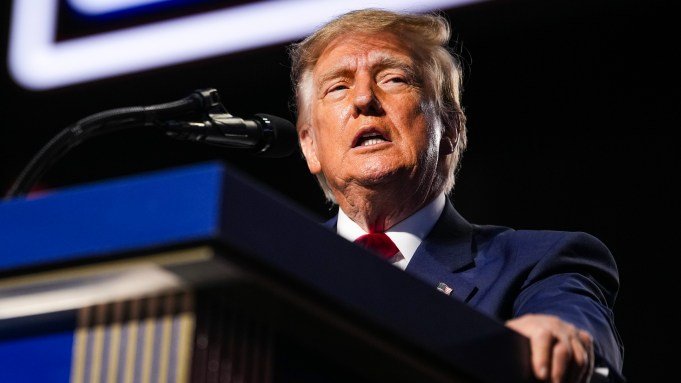
    Strikes from the US on Iran are raining down for the 12th night in a row, as President Donald Trump is reportedly considering expanding US attacks. Shortly before strikes began, the House of Representatives approved $95B in war funding. Al Jazeera’s Kimberly Halkett reports.