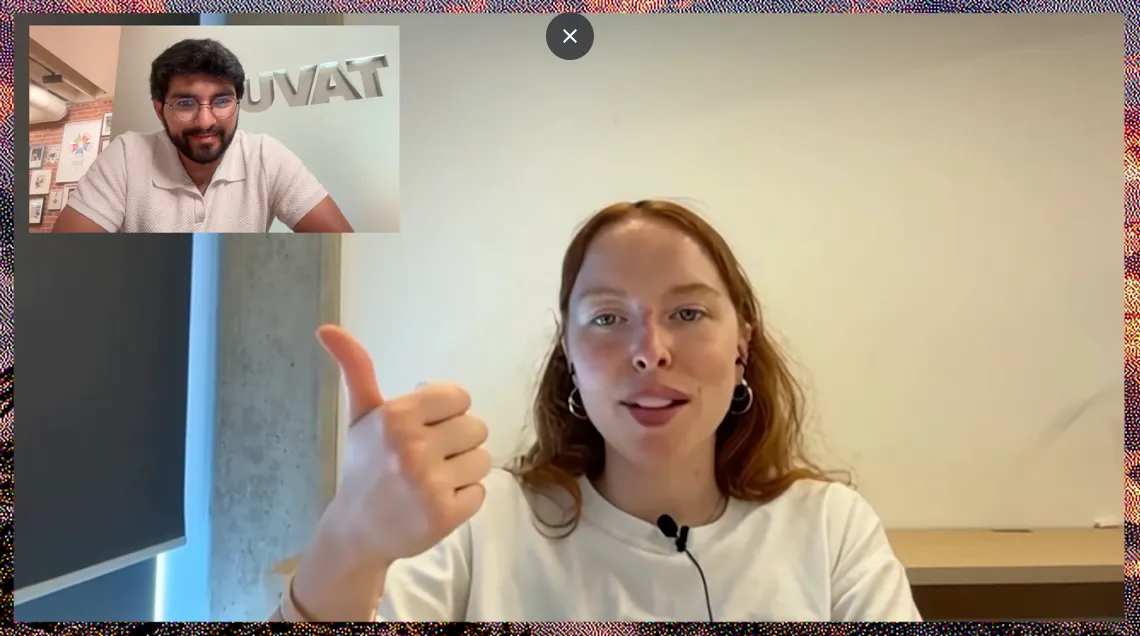
A young woman who developed a rare form of blood cancer has shared her story as a reminder for others to stay on top of their health.
When Rowan Bland developed a sore throat last year, she was diagnosed with tonsillitis after a visit to her doctor and was prescribed a course of antibiotics.
With symptoms which often resemble the flu, tonsillitis lasts around a week and impacts up to millions of Brits each year.
However, Rowan’s symptoms did not ease up, with the 28-year-old developing random bruises across her body as well as bleeding gums and blood blisters in her mouth.
The creative writing student also suffered from extreme fatigue, meaning that she often felt dizzy when walking, as well as clusters of rashes and extremely heavy periods.
Rowan was sent for further blood tests for suspected glandular fever – only to be diagnosed with acute promyelocytic leukaemia (APL), a rare form of acute myeloid leukaemia.
For weeks, Rowan believed her acute promyelocytic leukaemia (APL) was tonsillitis (SWNS)
Reflecting on the life-changing diagnosis, the Edinburgh native explained that she hadn’t previously known anything about the disease, which is a group of blood cancers which attack the white blood cells in your bone marrow.
“I was pretty happy with the assumption of glandular fever because a lot of unspecified illness in people my age, I thought, kind of tracks,” she said, adding that she’d believed the misconception that ‘leukaemia is for babies’.
“And cancer is always like a lump. That was my mindset.”
She added: “Just because you’re young, it doesn’t mean you can’t get a serious illness. I was a bit naive in my health. I just took it for that.”
Once diagnosed, the cancer is considered highly treatable, with the 28-year-old now in remission (SWNS)
“I was feeling worse and worse.”
Informed by doctors that she was seriously ill, Rowan was transferred to the Beatson West of Scotland Cancer Centre in Glasgow the following day after arriving in A&E for further diagnositc tests.
It was revealed that her blood counts were extremely low and she immediately needed blood and platelet transfusions.
She would remain in hospital for around six to seven weeks, undergoing treatments such as induction treatment, intravenous arsenic and ATRA tablets every day.
Despite complications such as sepsis and blood clots, the treatment worked, and Rowan was now in remission, meaning that she was allowed to undergo six months of chemotherapy as an outpatient.
She completed the cycle in November 2025, with a subsequent bone marrow biopsy in January revealing that she had no evidence of the disease. Rowan now has monthly blood tests to monitor her health.
Rowan has since taken up running and wants to raise awareness about cancer in young people (SWNS)
“If you feel like something isn’t right, you need to push harder.”
Still in remission, Rowan says the diagnosis has left her feeling like a ‘completely different person’. She has since completed a 5K Race for Life in Glasgow, is currently training for a 10K and hopes to raise awareness about cancer in young people.
“If you feel like something isn’t right, you need to push harder,” she said. “I would just tell people to really push for things like blood tests.
“I went undiagnosed for over a month and that could have ended very badly for me.”
Del Toro took to X to call out naysayers of Alejandro G. Iñárritu’s film ahead of its Friday release. “Entirely Petty headline,” the director wrote in response to a review of Warner Bros.’ R-rated black comedy. “Love it or not. And yes, I do. The film delivers in scale, ambition and reach at a theatrical screen level. Daring, bold and cinematically complex. Decidedly a theatrical experience.”
Del Toro has also reposted others’ positive reviews, including one praising Tom Cruise’s performance as the film’s lead.
“Funny, I go into the platform and without even scrolling down, these are popping at the top of my timeline…” he wrote alongside the repost. “So… I will just keep posting them. Tune in or drop out—” In another repost, he wrote, “Dig or Die – c’mon!”
Funny, I go into the platform and without even scrolling down, these are popping at the top of my timeline… So… I will just keep posting them. Tune in or drop out- https://t.co/sEgiticKRa
Del Toro also compared the negative reviews of “Digger” to those of “The Big Lebowski,” “The King of Comedy,” and “The Counselor,” all of which drew scrutiny at release but later found appreciation with audiences.
I remember the review for BIG LEBOWSKI and KING OF COMEDY and a few more… to me (I know it is still not accepted) THE COUNSELOR and all the ones in your list. https://t.co/1dnvUdlzKj
“Digger” is currently at just 51% on Rotten Tomatoes. Variety’s chief film critic Owen Gleiberman said that, although the film feels like a comedy, it failed to actually be funny. “I’m not sure that ‘Digger’ is going to connect, because it’s so full of itself — so top-heavy with importance,” Gleiberman wrote in his review. “The movie cost north of $125 million to make, and that figure is not only too big to probably justify itself; it’s a testament to the arrogance of the filmmakers — to the assumption that we’ll turn out in droves for this ponderous absurdist lecture.”
The film generated just $3.4 million domestically at the box office on Friday following a slew of negative reviews and divided word of mouth ahead of its opening. The film is shaping up to be one of the year’s biggest flops, with estimates of just $7.5 million domestically in its opening weekend.
Cruise also took to X on Saturday in support of “Digger,” writing that he was “honored to have had the opportunity to create this film alongside such talented artists.”
DIGGER is officially in theaters and I am so honored to have had the opportunity to create this film alongside such talented artists. Thank you to the entire cast and crew for your dedication, hard work, and joy. The experience was truly unforgettable and I’m so proud of what we… pic.twitter.com/3YBblCnL3E
Tavus says 26 of 54 participants (48%) believed Griffin-Lite was a real person after a one-minute video call, versus 1 of 41 for its previous system.
Griffin-Lite ranks first on Nvidia’s VideoFDB benchmark, scoring 3.83 out of 5 on generation against 2.80 for the next-best system and 3.92 for a human reference.
The results come from Tavus’ own research page, participants were told they would meet another person, and Griffin-Lite is limited to select trusted testers while Tavus works on safety measures.
AI startup Tavus says its new model, Griffin, convinced 48% of the people who talked to it on a live video call that they were speaking with a real human.
The company unveiled it on October 1 and calls it the first Human Interaction Model, an AI built to understand and generate face-to-face conversation, paying attention to expressions and pauses as well as words. Its previous system scored 2.4% on the same test.
Griffin-Lite, the version Tavus tested, faced 54 people, and 26 of them said afterward they believed their partner was a real person. The older system faced 41 people and got exactly one believer.
Tavus explains that participants were told they would be matched with another person for a one-minute video call about what they were looking forward to this year. Only at the end were they asked whether it had crossed their mind that their partner might not be real.
That’s not the classic Turing test, proposed in 1950 by British mathematician Alan Turing, where a judge talks to a hidden human and a hidden machine and has to work out which is which. Nobody on the call was told a bot might be on the other end.
The results come from Tavus’ own research page, and participants were recruited through what it calls an independent research platform. A community note on X has already flagged that the results are not independently verified and do not follow a standard protocol. Tavus says the people who grew suspicious usually did so within 20 seconds.
AI companies building towards this has been a thing for a while. A UC San Diego study found OpenAI’s GPT-4.5 convinced judges it was human in 73% of conversations, when prompted to play an introverted, internet-savvy young person. That test was text only.
Griffin adds a face and a voice, in real time.
On NVIDIA’s VideoFDB benchmark, a test of live audio and video conversation, Tavus says Griffin-Lite ranks first. Its generation track, which grades how natural and expressive a model’s responses are, gave Griffin-Lite 3.83. The next-best system got 2.80, and the human reference scored 3.92.
The perception track, which checks whether a model understands what it sees and hears, shows where it still trails people. Griffin-Lite scored 3.73 against 3.44 for the strongest baseline, while the human reference hit 4.20. Tavus says NVIDIA ran the evaluation independently.
BitcoinBTC · USD
$84,710+0.66%
Sep 26Sep 28Sep 30Oct 2Oct 3
$86.8k$85.4k$84.0k$82.7k
24h HighHigh$85,014
24h LowLow$84,441
VolVol$564.6M
Market projectionsOdds by Myriad
→
Griffin is also full-duplex, meaning it listens, watches and talks at the same time, like a phone call instead of a walkie-talkie. In a Tavus demo, it coaches a man through a Rubik’s cube based on what it sees in his hands, and waits when he goes quiet to think. Audio-to-video delay averages 0.43 seconds on NVIDIA H100 chips, the kind used in AI data centers, which Tavus says is half that of the next fastest method.
Why should anyone outside tech care? Well, for one thing, because scammers already work on video calls.
Back in January, North Korea-linked hackers used deepfakes, AI-made video that imitates a real person, on Zoom or Teams calls to pose as trusted contacts. Security researchers attribute the intrusion to BlueNoroff, a Lazarus Group subsidiary. Victims get talked into installing malware disguised as an audio fix.
David Liberman, co-creator of Gonka, a decentralized network for AI computing, said in that report that photos and video can no longer be trusted as proof that something is real. Those models were not as advanced as this one.
Companies already improvise their defenses. In 2025, Kraken flagged a suspected North Korean job applicant after its security team asked spontaneous questions, like requesting government ID and the names of local restaurants. The candidate struggled.
We tried Tavus’ models and the results were… disappointing. After some research, it turns out Griffin-Lite is not available to customers, only to select trusted testers as a research preview, and the company says it is working on disclosure features and with AI safety organizations.
This is because Tavus says Griffin needs safety measures before a public release.
Tavus raised a $40 million Series B in November 2025, led by CRV. The system that scored 2.4% stitched together three separate models, one each for visuals, dialogue and perception.
Trusted testers can request access to Griffin-Lite by submitting a form on the Tavus site.
Daily Debrief Newsletter
Start every day with the top news stories right now, plus original features, a podcast, videos and more.
The CryptoJobsList data for 2025 also shows no comparable August-September surge as would be expected if the end of summer was such a prominent factor. That said, 2025 was a subdued year for crypto hirings from start to finish. The most active month was October, with a mere 373 listings. The figures were flat throughout July, August and September.
While listings may have surged in September this year, applications have not. CryptoJobsList recorded 25,700 applications in July, 24,631 in August and just under 20,000 in September.
The platform interprets this divergence as evidence that competition for specialist workers is tightening, though its data alone doesn’t establish why application numbers have gone the opposite way to listings.
The comparison of listings nevertheless provides some indication of where demand lies. Finance was the largest job category over the past three months, followed by engineering and trading, with stablecoins, AI, security and compliance all also in the top 10. Bitcoin was the most frequently sought blockchain familiarity, followed by Ethereum and Solana, as would be expected being the three largest networks in the crypto industry.
CryptoJobsList’s data suggests the crypto job market enters the fourth quarter with a lot more openings than any time previously this year, but not necessarily more applicants chasing them for the time being.
Lyrical Animation is developing a new animation series based on “RuneScape” in partnership with creator Charlie “MoistCr1TiKaL” White and game developer Jagex, the company’s CEO Jon Bellamy announced on stage at RuneFest in Birmingham, UK, on Saturday.
The project will bring the world of Gielinor to the screen, and marks a new step in Jagex’s ambition to expand the “RuneScape” world beyond the gaming ecosystem.
“For 25 years, our players have helped shape ‘RuneScape’s’ extraordinary world, its characters and its stories,” said Bellamy. “When we talk about the future of ‘RuneScape,’ we don’t just mean games. We see huge potential to bring Gielinor to life in new ways, both for the millions who already know and love it and for a whole new audience. It’s early days, but we’re excited to explore that potential with Charlie and the team at Lyrical Animation, and we wanted our players to be the first to know.”
Jagex first released “RuneScape” in 2001, and it has grown into a massively popular fantasy multiplayer online role-playing game. Through quests, combat, exploration and cooperative adventures, players can forge their own paths through the medieval fantasy world of Gielinor. The franchise now includes “RuneScape,” “Old School RuneScape” and “RuneScape Dragonwilds.”
White is a longtime member of the “RuneScape” community and has amassed more than 25 million followers across his channels and platforms. “I’ve been playing RuneScape for 22 years, and it’s one of my favorite IPs ever,” said White. “I’m so excited to be working with the team on this project.”
“RuneScape has such a unique storytelling voice, at once laugh-out-loud funny and effortlessly insightful,” said Daniel Dominguez, creative director of Lyrical Animation. “To be allowed to help bring that to life for its millions of fans alongside our dear friend Charlie again is a dream come true.”
Lyrical Animation will produce the project alongside White’s Meatier Productions. Development is in its early stages, and the company expects to reveal more details in 2027.
Gambardello also noted that strong inflows into spot ETFs, expectations of a crypto-friendly political environment, and high market interest played a significant role in Bitcoin previously surpassing its all-time high. However, the analyst stated that he does not consider this rise to be the “true crypto bull market,” arguing that a stronger movement could begin in the coming period as economic expansion accelerates.
The analyst supported his thesis not only with Bitcoin but also with assets sensitive to economic growth, such as the copper-gold ratio and the Russell 2000. According to Gambardello, these assets weaken during periods of economic contraction and strengthen during periods of expansion. The cryptocurrency market, however, is located at the more extreme end of the risk curve, and therefore reacts to economic recovery more slowly than other asset classes. Gambardello believes that the sideways movement seen in the altcoin market, particularly outside of major cryptocurrencies, throughout 2026 can be explained by this delay.
Another point Gambardello highlighted was the end of the monetary tightening process. According to the analyst, after the Fed’s quantitative tightening ends in December 2025, a normalization process will begin in the markets, and the economic cycle will turn back towards expansion. Gambardello stated that their self-developed US Business Cycle Index also recently signaled expansion. He said that the index combines the monthly manufacturing surveys of five regional Fed banks and generates a signal of economic expansion if it remains above certain thresholds for three consecutive months.
The analyst also believes that AI-driven productivity increases could accelerate economic growth in the coming years. Gambardello stated that an economic environment similar to the strong productivity period of the 1990s could emerge, and that Bitcoin and crypto assets could play a significant role in this process with trends such as institutionalization, tokenization, and the AI economy moving onto the blockchain.
Visser stated that macroeconomic conditions could also become more supportive of Bitcoin, noting that interest rates don’t necessarily need to fall sharply. According to the analyst, the key is the end of a period of consistently rising bond yields. Visser suggested that the weaker-than-expected core PCE data and weakening labor and wage data could help offset the upward pressure on interest rates. He believes such an environment could support appetite for risky assets.
Related NewsChief Market Strategist Comments Highly Bullish on Bitcoin
Another point Visser highlighted is the potential rotation of capital from AI investments to cryptocurrencies. Recalling his previous statement that gains from AI stocks could eventually return to Bitcoin, Visser noted that this rotation may have already begun on a small scale. According to the investor, the AI theme will not disappear, but market participants may simultaneously begin to show renewed interest in Bitcoin and cryptocurrencies.
Visser also believes that AI agents could significantly expand the use cases of blockchain technology. Arguing that the current financial infrastructure may be insufficient for AI agents to perform fast and automated transactions, Visser states that blockchain-based payments, stablecoins, and tokenization could play a crucial role in this. According to the analyst, the widespread adoption of AI agents could lead to a significant increase in token transaction volumes.
Describing these developments as the “Micron moment” of the crypto market, Visser believes that investors underestimate how quickly technological change can occur. He states that stablecoin payments, tokenization, and the impact of AI agents could lead to strong growth in token volumes, and that the acceleration of this process by AI agents is one of the main reasons for his optimism towards crypto.
According to Visser’s assessment, the convergence of all these factors makes the last quarter of 2026 a remarkable period for Bitcoin and the broader cryptocurrency market.
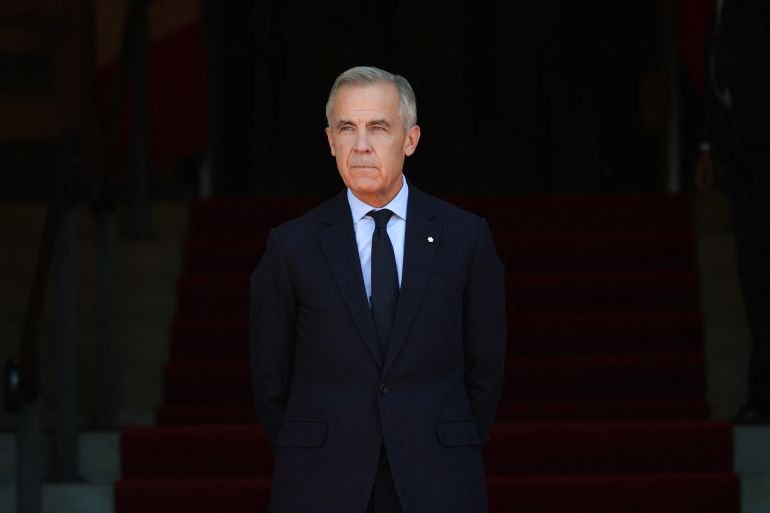
Toronto, Canada: As Canadian Prime Minister Mark Carney races to make the country less dependent on the United States, attract billions in new investment and get major projects built faster, his economic overhaul is running into resistance from a group that says it wants many of the same things: organised labour.
The latest clash, over the right to strike, comes after months of mounting pressure on Ottawa from Washington, DC.
Recommended Stories
list of 4 itemsend of list
US President Donald Trump, since taking up a second term in office last year, has imposed steep tariffs on Canadian goods and weakened trade agreements – perilous moves as Canada has historically sent close to 80 percent of its exports to its southern neighbour. He has repeatedly piled on with the tariff threats to make Canada the 51st US state.
Canada has responded with retaliatory tariffs, while a broader movement to “Buy Canadian” has taken hold. The hockey-inspired “elbows up” — meaning a readiness to defend against an opponent — has become a national rallying cry.
With trade talks stalled since August, Carney has moved with urgency to shore up the economy and invite new investments. Last month, he announced Bill C-39, known as the Building Canada Strong Act, promising to bring “speed, certainty and predictability” to investors.
Along with measures to speed up approvals for major projects, the bill would also give Ottawa clearer powers to intervene in legal strikes and lockouts in federally regulated workplaces — a provision that has put Carney on a collision course with unions.
Canada’s largest unions have come together against the changes. The largest, the Canadian Union of Public Employees (CUPE), had its national executive go as far as voting to defy the bill’s proposed limits on the right to strike if it passes Parliament without amendments.
CUPE National President Mark Hancock credited Carney’s handling of Trump and said the union’s 800,000 members, who work everywhere from hospitals to schools to municipal services, want to be part of “Team Canada”.
“But at what cost?” he said in an interview with Al Jazeera.
A fight over the right to strike
The controversy centres on Section 107 of the Canada Labour Code, which already gives the Labour Minister broad powers to step into disputes if needed to maintain “industrial peace”, end work stoppages and force the two sides into a binding arbitration.
Beginning in 2024, Ottawa used the provision eight times to intervene in disputes involving airlines, Canada’s two largest railways, three major ports and Canada Post and again during the Air Canada dispute in 2025 when flight attendants went on strike.
Unions have challenged the use of that law in court and had hoped the proposed C-39 would restrict, if not repeal, that clause while businesses wanted it strengthened.
The bill does neither. Instead, it introduces two conditions that the government would have to fulfil first before turning to Section 107.
Before stepping in, the government would have to appoint a special mediator, wait for a public report and consider whether a work stoppage is hurting the “national interest”.
Once a strike or lockout is underway, the minister could direct the Canada Industrial Relations Board to get operations running again and impose a binding process, such as arbitration.
A protester carries an effigy depicting Canada’s Prime Minister Mark Carney as people march to protest against the Canada Investment Summit in Toronto in September [File: Carlos Osorio/Reuters]
The government says those steps put clearer guardrails around a power that already exists, and Carney has said the bill “absolutely reinforces the right to strike”, according to the Canadian Broadcasting Corporation.
Unions have rejected this defence, pointing out that the meaning of “national interest” would ultimately be decided by the minister. They also argue that the prospect of government intervention is bound to change what happens at the bargaining table.
“The political lesson that employers will draw from it is simple,” Larry Savage, a professor of labour studies at Brock University, told Al Jazeera. “Hold out long enough, emphasise the economic damage, and then Ottawa will remove the union’s leverage for you.”
Disruption, Savage said, is precisely what gives a strike its power. “Every effective strike is disruptive,” he said.
Unions say they have already seen employers expect Ottawa to intervene.
Teamsters Canada alleges the Canadian National Railway (CN) and the Canadian Pacific Kansas City (CPKC) railroad companies were counting on Ottawa to step in when they locked out thousands of workers in 2024. Section 107 was invoked within hours.
“Companies have gotten used to the idea that if there is a labour dispute, they can just wait for the government to intervene,” Christopher Monette, Teamsters Canada’s director of public affairs, told Al Jazeera.
CUPE said it saw a similar dynamic at Air Canada in August 2025. Hancock said bargaining stalled after more than 10,000 Air Canada flight attendants voted overwhelmingly to strike because the airline was “expecting the government of Canada to step in and end the strike” — an account Air Canada disputed.
Less than 12 hours after workers walked out, Ottawa invoked Section 107. Air Canada CEO Michael Rousseau later told BNN Bloomberg the airline had expected the provision to be enforced and did not expect a strike.
“That was why they didn’t have a strategy on how to deal with the strike,” Hancock said.
Building Canada faster
The fight over the right to strike is also part of a much bigger argument taking shape around Carney’s economic agenda: Who gets a say in how Canada should change, and how quickly, in the name of making itself less vulnerable to the US?
Critics accuse Carney of using the economic threat from the US to push through changes that go well beyond responding to Trump’s trade war.
New Democratic Party leader Avi Lewis has accused him of using the “fear and disorientation around the trade war to push through a series of unpopular measures that he did not run on, has no mandate for and would never get away with under normal circumstances”.
A protester carries an effigy depicting Canada’s Prime Minister Mark Carney outside the Canada Investment Summit in Toronto [File: Carlos Osorio/Reuters]
That tension was on display in Toronto just a week before C-39 was introduced. Inside Canada’s first national investment summit, hundreds of global investors met with government officials and executives as Carney pitched a country ready to build.
Outside, hundreds of protesters marched through downtown towards the summit’s opening gala under the banner “The Many vs The Money”. The rally brought together labour, Indigenous, environmental and migrant-rights groups, with signs and speeches taking aim at everything from fossil fuel and military projects to AI and the use of public money to attract private investment.
For unions, C-39 has sharpened that debate, pitting the government’s promise of greater certainty for investors against workers’ ability to exert pressure through strikes.
But Jim Stanford, an economist and director of the Vancouver-based Centre for Future Work, questions how much of an economic threat strikes actually pose.
While work stoppages can be costly for individual companies, Stanford said, “It is very, very rare that you would see a noticeable and sustained impact on GDP, employment or incomes.”
Production and transportation are often delayed rather than permanently lost, he added, with businesses catching up once work resumes.
Stanford also questioned the idea that strikes are driving away investment, noting that more than 95 percent of collective bargaining ends without a work stoppage and saying there is “no empirical evidence whatsoever” that strikes have reduced investment.
“This is more of the government giving some icing on the cake for business. It’s not that this has to happen or else our investment won’t work,” he said.
There is also an economic cost to weakening the right to strike, Stanford argued. Workers need bargaining power to win higher wages, which can support consumer spending, productivity and worker retention.
“It may seem like labour peace is a good thing, but if it means that a worker’s share of the pie shrinks, then this actually hurts the economy.”
For labour leaders, that’s where Carney’s economic push goes too far.
“Canada’s unions are part of Team Canada. We have our elbows up,” Canadian Labour Congress President Bea Bruske said in a statement. “But we can’t have our elbows up against Trump with our hands tied at the bargaining table.”
Savage said the government’s “Team Canada” rhetoric risks treating workers’ bargaining power as a national liability.
“I don’t think Canada becomes stronger by telling workers in ports or railways or airlines that their rights have to be surrendered whenever employers invoke competitiveness or the national interest,” he said.
Smit Machchhar recalls mid-air disaster after co-pilot’s attack on flydubai flight to Tel Aviv.
Published On 2 Oct 20262 Oct 2026
Indian pilot Smit Machchhar, who was stabbed by his co-pilot in an alleged attempt to crash a Flydubai flight to Tel Aviv, has shared a public account of how he managed to open the cockpit door and let passengers take control of the plane despite his injuries.
Speaking on Friday from a hospital bed in Abu Dhabi via video call with Indian Prime Minister Narendra Modi, Machchhar said that he knew the aircraft was going down as he lay bleeding on the floor.
Recommended Stories
list of 3 itemsend of list
“I had suffered so many injuries that I had collapsed. At that time, I could feel that the aircraft was going down. I knew this was the last push, that the door was right there,” he said in a nearly 10-minute video released on the prime minister’s social media channels.
He added: “I was being hit even then, but I just opened the door and everyone came in.”
Machchhar, who has 17 years of aviation experience, including 11 as a captain, said that experience helped him grasp what was happening even while wounded.
He told Modi he had recited a Hindu devotional prayer during the ordeal.
“I know God himself saved me,” he said, in an emotional exchange with Modi, who is from the same home state of Gujarat.
Modi praised Machchhar’s bravery, saying his presence of mind had saved lives and the reputation of Indian pilots.
Machchhar said he allowed passengers and crew to overpower the co-pilot and let a second pair of Flydubai pilots take control and land the plane in Tabuk, Saudi Arabia.
The Flydubai flight was carrying 174 people as it briefly plunged around 17,000 feet (5,180 metres) before it was brought back under control.
UAE presidential adviser Anwar Gargash has called the incident a “terrorist act”, while Israeli Prime Minister Benjamin Netanyahu said the co-pilot had undergone “Islamist radical indoctrination” and appeared “suicidal”.
US President Donald Trump has warned that Iran would be “hit very hard” if found to be linked to the attack.
Judy Reyes has spent more than three decades building a career. From New York theater to beloved television roles in Scrubs, Devious Maids, and Claws, and now High Potential, she is nothing short of a true success story. At the Critics Choice Association’s Celebration of Cinema & Television: Honoring Latino and Hispanic Achievements, the Dominican-American actress had a chance to stop and look at just how far she has come.
Judy is one of the most successful Latinas in Hollywood
Reyes was honored with the Trailblazer Award, a recognition that brought her back to where her story began – the Bronx, her Dominican family, and the people who made it possible for her to dream bigger.
“I come from a long line of trailblazers, Dominican immigrants who could resist the risk and the temptation to live the dream and make a better life in the Bronx,” Reyes said during her acceptance speech.
Speaking with us on the red carpet, Reyes reflected on what she hopes the next generation of young Latinas won’t have to struggle with in the same way she did.
“I would say I don’t want them to be afraid,” she said. “I don’t want them to let fear stop them or hold them back, or rejection convince them that they don’t belong here because we do.”
That message is personal for Reyes, who recalled that her own mother initially worried about the risks of pursuing acting. Reyes ultimately trusted herself and built a career that has taken her from theater to some of television’s most recognizable shows.
You may also like
Continue reading
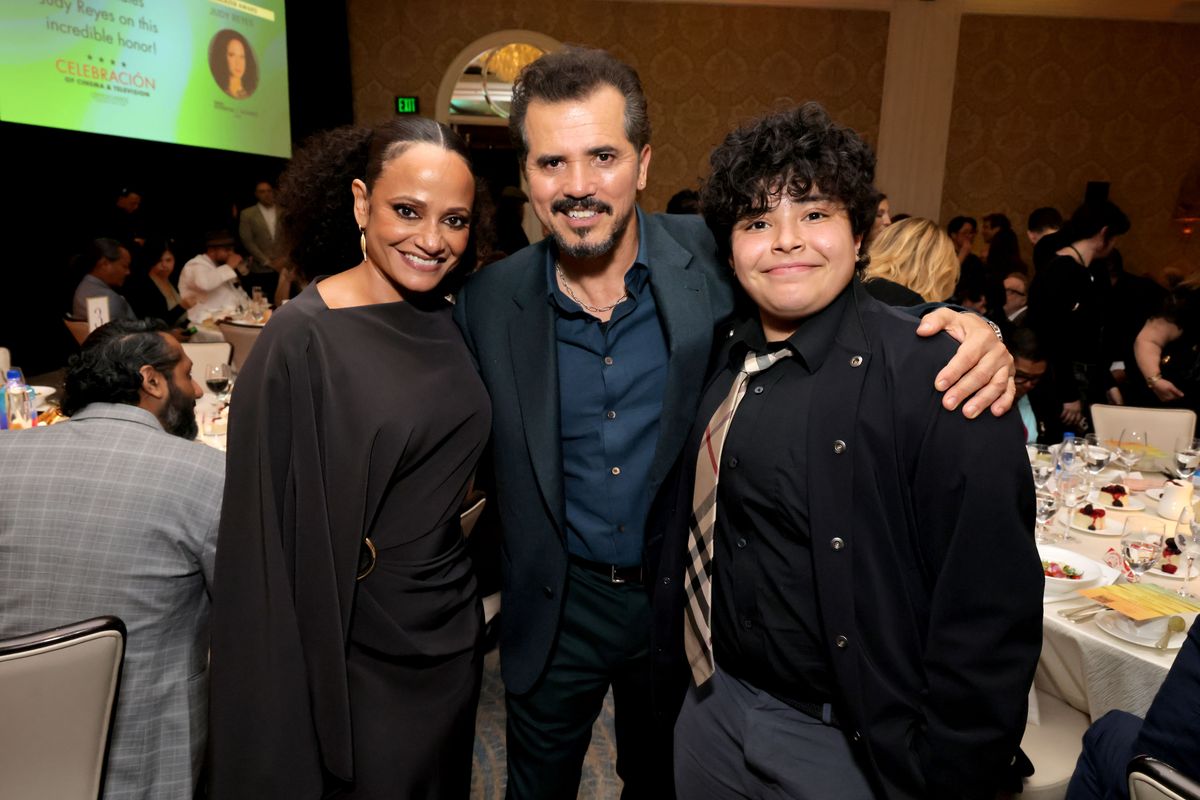
Her son is now following his own creative path, preparing to pursue musical theater, and he was right there to celebrate his mom’s milestone. “He’s here, and he’s beside himself,” Reyes told us. “He’s so excited because he’s seeing all the people that he loves and all the people that he grew up with. And he’s so proud of me. And he’s like a super fan of everything.”
The proud mom also gave him a special shoutout from the stage, thanking her “obscenely supportive son” alongside her husband George Valencia and the people who have stood by her throughout her career.
Reyes went on to share that representation has always been about more than simply seeing a Latino face on screen. It is about recognizing yourself as someone who belongs in the story.
In her speech, she remembered growing up surrounded by music and performance, from her mother singing at church, Thanksgiving and Christmas to her father building speakers, collecting records and encouraging the family to sing, dance and put on performances. Then she saw an Afro-Latina performer and something clicked. “I was like, oh snap, I can do this,” Reyes recalled.
That realization helped push her toward acting. At 19, after performing in a seven-hour talent show filled with Latinos, she had what she described as an epiphany. She didn’t know if she would become an actor, “but nothing was going to stop me from trying.”
After spending so much of her career “keeping it moving,” Reyes admitted during her speech that she hadn’t always stopped to appreciate the body of work she had created. “I’ve been so busy keeping it moving that I haven’t really noticed the body of work that I’ve built,” she said. “I’m standing here being proud of myself.”
That pride extended beyond her own career. Reyes used the moment to make a larger statement about why representation matters, particularly for immigrant communities.
“Being a trailblazer is to me being part of the story, and as success begets a platform, telling our own stories, whatever it takes, as we are blatantly being arrested and abused and deported and disappeared and violated and murdered,” she said passionately. “Art is important. Art is a legacy. Art is history, and as immigrants, especially art is how we tell our stories.”